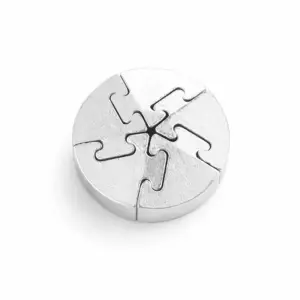
Quick Answer: 3D Wooden Puzzle Gift for Son: The Age-by-Age Parent Guide
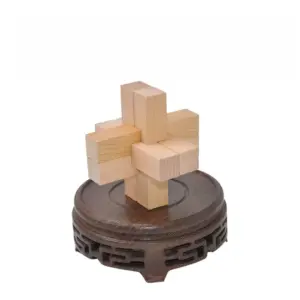
For a son aged 4–6, pick a chunky wooden brain-teaser with under 20 pieces and no swallowable parts. For ages 7–10, choose a working 3D model with 30–80 pieces — a truck, clock, or treasure box he can open. For ages 11+, pick a desk-worthy brain-teaser he returns to: the 12 Piece Crystal Luban Lock Set ($28.88, check the product page for the current price) is the top pick, because 12 interlocking pieces solve into a shape he can display and reset for the next person who picks it up.
Three checks before you click buy:
- Age symbol on the box — the manufacturer’s printed range is the safest floor, not the toy’s complexity rating.
- Piece count and size — chunky parts for ages 4–6; fine laser-cut parts only for steady hands aged 7+.
- Does it have a “moment” afterward? A model that opens, rolls, ticks, or unlocks gets played with. A static shape gets shelved by day three.
| Age band | Top pick (this guide) | Pieces | What to check on the box |
|---|---|---|---|
| 11+ brain-teaser / display | 12 Piece Crystal Luban Lock Set | 12 | Age range, small-parts warning, display size |
| 7–10 model kit | 3D Wooden Puzzle Tanker Truck Kit | Check box | Working parts (wheels, doors), assembly time, parent-co-build note |
| 4–6 starter | Luban Lock Set 9 Piece or 7 Color Soma Cube | 9 or 7 | Chunky pieces, no swallowable parts, rounded edges |
Match the kit to the builder, not the other way around. A 6-year-old handed a 200-piece truck quits by minute 15; a 14-year-old handed a chunky shape puzzle sets it down. Pick the tier that fits your son, build it with him if he’s under 10, and let him show you when it’s done — that moment is the real gift.
01. The 3-Minute Parent Checklist Before You Buy Any Kit
Three checks filter out the wrong kit before it arrives on your doorstep: the printed age range on the box, the piece count against your son’s hands, and whether any part is small enough to swallow. If any of those three fails, put the kit back regardless of how good it looks online.
Check one: the age symbol. Most 3D wooden puzzle manufacturers print a recommended age band somewhere on the package, but not always on the front. Look at the bottom-right corner, the back panel, or the side flap. The age band is a safety floor, not a difficulty rating. A “6+” kit may be easier to build than a “4+” kit, but the 6+ label is there because the parts are too small or too sharp for a younger child. Treat that printed number as the youngest age that should touch the box without a parent watching.
Check two: piece count against the hands holding it. Piece count doesn’t tell you how hard a build is, but it does tell you how long the build will take. A 10–20 piece kit is roughly a 20–45 minute build for a child working alongside a parent; 50–100 pieces is a weekend project across two afternoons; 200+ pieces is a multi-day build with the manual open the whole time. The piece count that matches your son’s age also changes what the box should feel like in his hand. For a 4–6 year old, look for chunky, rounded parts at least 3 cm on the longest side — the kind you can grip with a fist. For a 7–10 year old, laser-cut birch plywood parts the size of a fingernail are fine. For an 11+ builder, the thinner and more numerous the parts, the better the challenge.
Check three: small parts. This is the check most parents miss, and it’s exactly what a parent in the r/Jigsawpuzzles community flagged after buying a kit for their four-year-old son — tolerances and small parts meet small hands, and the result is frustration for the builder and a real choking risk for any younger sibling nearby. Most 3D wooden kits ship as punch-out pieces on laser-cut sheets, so the part you pop out is the part your son handles. The simple rule of thumb: hold the smallest piece up next to a toilet-paper roll. If the piece is small enough to drop inside, treat the kit as a choking risk for any child who still mouths toys, and skip it no matter what the front of the box claims. When in doubt, eyeball the smallest piece and choose a kit where every part is bigger than a grape.
Check four (the bonus that decides whether the gift gets played with after day three): static vs. moving-parts. A static decorative model — a tower, a vase, a finished shape — is beautiful and gets displayed. A mechanical puzzle with gears that turn, doors that open, wheels that roll, a clock that ticks, or a lock that releases gets played with. A 3D wooden brain teaser like the 12 Piece Crystal Luban Lock Set sits at the “unlock and reassemble” end of this scale, which is why the 11+ tier above leans that direction — repeat play matters more than display. If the kit doesn’t open, roll, click, or unlock, the finished model will end up on a shelf rather than in your son’s hands.
The action: take a sticky note, write your son’s age on it, and hold it next to the box’s printed age band before you commit. If the band’s lower edge sits at or below your son’s age, the kit is the right one for now. If the lower edge sits above his age, save it for next year. If the band overlaps his age only at the upper edge — meaning the manufacturer has already told you the kit is a stretch — skip it and let him earn the upgrade when his hands are ready.
02. The Age-by-Age Shortlist: What Fits a Son at Each Stage
Pick the tier that matches your son’s current age, not the tier that impressed you on the shelf. A 3D wooden puzzle that thrills a 5-year-old will frustrate the same child at age 7; a kit that delights a 12-year-old will sit unopened on a 9-year-old’s floor. Three bands cover the parent-gift decision, and at each one the piece count, the mechanism, and the theme all shift — get the band right first, then look at the picture.
Ages 4–6 (Toddler/Preschool): under 80 pieces, parent sits with him
The lower edge of the box’s age band should sit at or below your son’s age, every part should be larger than a grape, and the theme should be one he already shouts about. Punch-out sheets of 20–60 chunky pieces shaped like trucks, fire engines, farm animals, or dinosaurs let a preschooler snap parts into pre-cut slots without reading the manual. The build is a parent-and-son project — you do the slot alignment, he presses the pieces home. Expect 20–40 minutes of focused attention, often split across two sittings.
What to check: avoid small interlocking parts at all costs. If the kit includes beads, axles, or pins smaller than his thumb tip, set it aside. The Reddit parent who opened a 3D wooden kit for a four-year-old son and watched the tolerances get the better of him had the right instinct — younger children need kits with very low piece counts and parts they can grip. At this age, a 3D wooden brain teaser should mean a chunky shape-sort, not a disentanglement puzzle.
Ages 7–10 (Grade School): 80–250 pieces, partial solo build
Here the kit starts rewarding a child who can follow a numbered sequence on his own — but “on his own” still means you sit at the same table. The piece count climbs into the 80–250 range, the mechanism becomes functional (gears that turn, wheels that roll, a clock hand that ticks), and the theme shifts toward things boys show off: race cars, dinosaurs, robots, fighter jets. A vehicle-shaped build like the 3D Wooden Puzzle Tanker Truck Kit sits in this band as a parent-and-son project that finishes as a displayable model. Expect 2–4 hours of build time, often split across a weekend.
What to check: the mechanism type. If the gears, axles, or springs are pre-installed (snap-fit only), a 7-year-old can manage. If the manual asks him to thread a rubber band through a hidden channel or sand a piece to fit, plan on a parental rescue on roughly one step out of every ten. The 15-minute rule belongs here — sit with him for the first 15 minutes of any session, then let him drive solo and step back in when he calls for you. The risk at this age is not the small parts (the kits are designed for his hands now) — it is the moment he hits a step the manual explains badly and quits. That is the moment to lean in, not finish it for him.
For a calmer build at this age — one that exercises spatial thinking without mechanical assembly — a wooden cube puzzle like the 7 Color Soma Cube Puzzle below works as a sitting-down challenge he can return to over weeks.
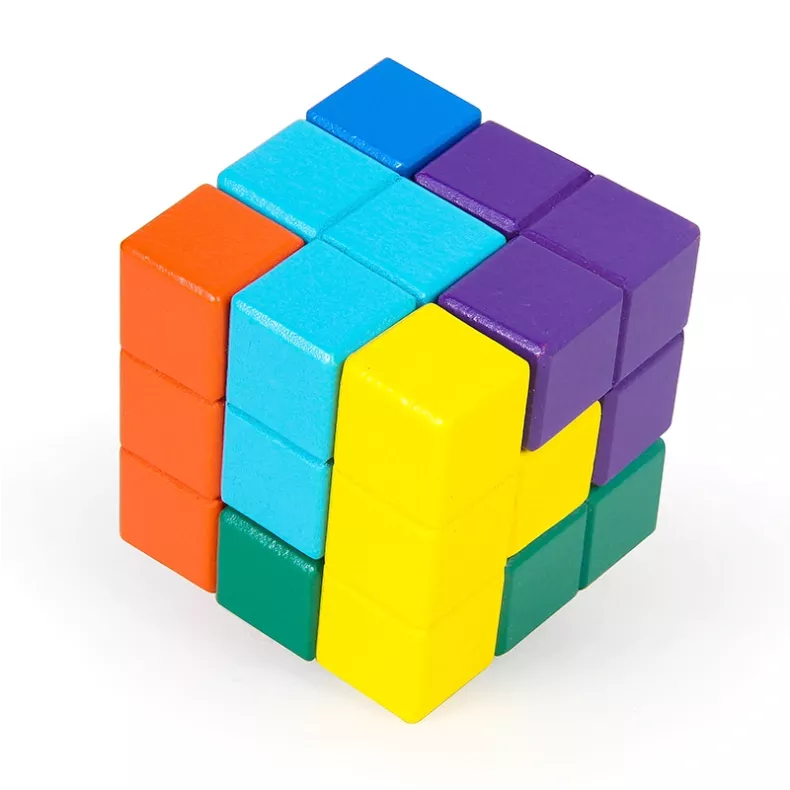
7 Color Soma Cube Puzzle — $21.88
Ages 11+ (Tween/Teen): 300+ pieces, mechanical or unlock-repeat
By this age, the kit stops being a parent’s gift and becomes his project. Piece counts cross 300, tolerances get tighter, the mechanism becomes the point — a working transmission, a marble run that powers itself, a book nook that lights up, or a lock that opens only when the right sequence of pieces is moved. For the unlock-and-reassemble end of the scale, the 12 Piece Crystal Luban Lock Set below gives a tween a finished object he takes apart and rebuilds again and again — the value of a brain-teaser luban lock is not the first build, it is the twentieth. The 3D Wooden Cello Puzzle Model Kit, the 3D Wooden Mechanical Pistol Kit, and the 3D Wooden Puzzle Clock DIY Kit all sit in this band as single-mechanism projects that finish as displayable objects.
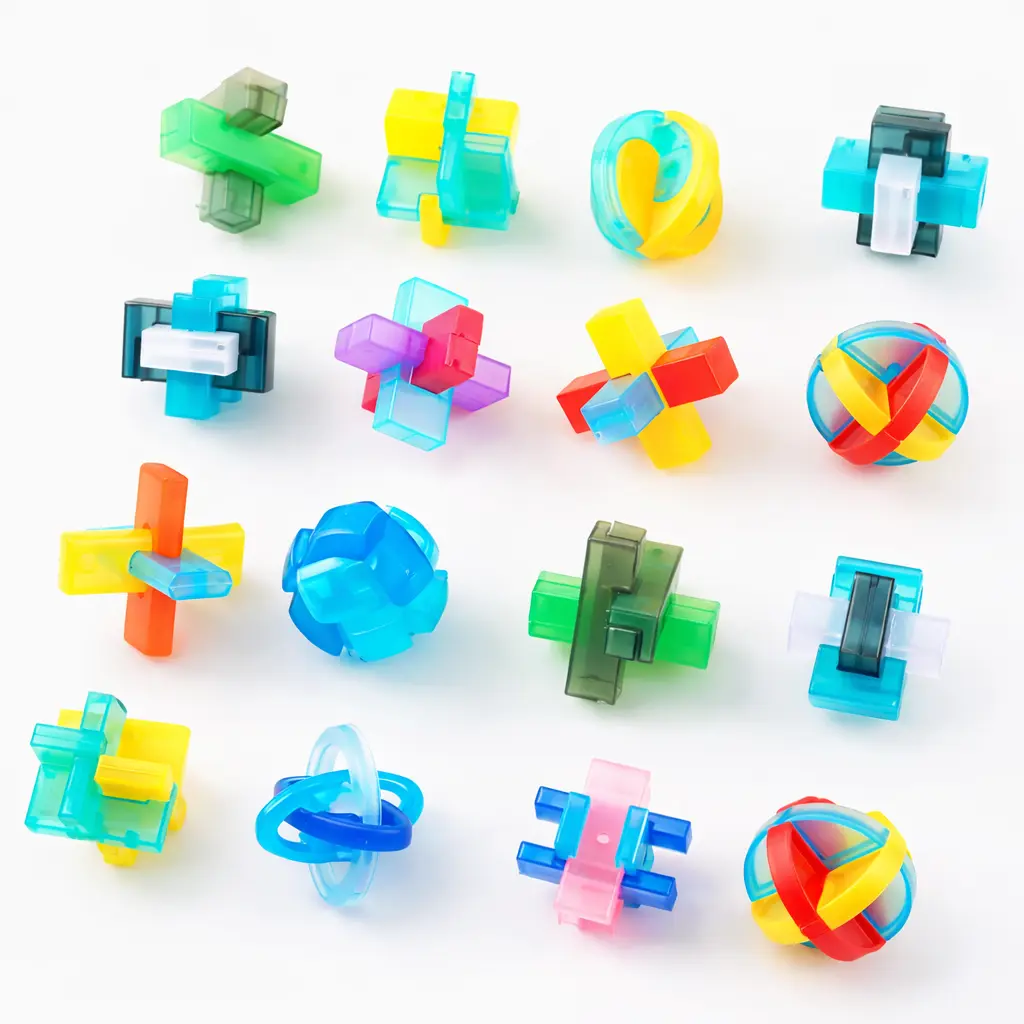
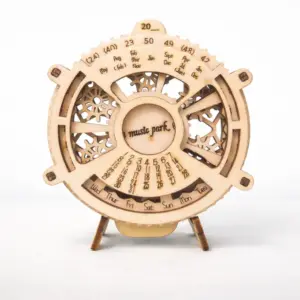
What to check at this age is the opposite of the 4–6 check. Here, you want the piece count, the manual thickness, and the absence of cartoon styling — your son will walk away from anything that looks like it was made for a 7-year-old. The 3D Wooden Perpetual Calendar Puzzle and the 3D Zodiac Owl Mechanical Clock Puzzle both deliver adult-feeling mechanics in a teen-appropriate project length. The teenage brain tolerates a 6–10 hour build if the mechanism is genuinely interesting; it will not tolerate a model that just sits there when it is done.
How the four big-name brands fit these bands
Robotime, ROKR, UGears, and Hands Craft each own a different slice of the age spectrum, and the brand on the box is a useful — but not perfect — proxy for difficulty. Robotime and its ROKR sub-line cover the widest range: simple car kits for grade schoolers, full marble runs and book nooks for teens. UGears leans mechanical-transmission and tends to land in the 10+ and adult bands, with tolerances a preteen’s hands may struggle with. Hands Craft makes punch-out kits in the 30–100 piece range that suit the 6–10 band well, plus a handful of decorative models for older builders. Wooden.City sits in the same family, with a children’s sub-line that targets the 4–7 band and a main catalog that climbs into 200–500 piece mechanical territory.
The honest caveat: the brand is a starting point, not a guarantee. A Robotime kit labeled for ages 14+ will still stump an advanced 11-year-old on a fiddly step. Read the piece count, look at the mechanism type, and check the lower edge of the age band — the same three checks the rest of this guide rests on.
The one next action: pick the tier that matches your son’s age, not the tier that impressed you on the shelf. If he’s 4, sit with him. If he’s 8, sit for the first 15 minutes, then let him drive. If he’s 12, hand it over and let him come to you when he wants to. The kit will get finished in every case; the wrong tier is what turns a thoughtful gift into a shelf ornament.
03. Themes Boys Actually Finish: Vehicles, Dinosaurs, Space, Marble Runs
Theme drives engagement more than piece count does, and a boy who finishes a kit he loves will reach for a second one. Once you know his age band from Section 02, the next decision is which world to build — because a 9-year-old who adores marble runs will abandon a pristine dinosaur kit on day two, and a 5-year-old who loves trucks will push a 300-piece spaceship into a drawer before step 20. Match the theme to his existing interests, not to what looks impressive on the shelf.
Vehicles: ages 4–10. Cute punch-out cars, tankers, and construction trucks hold the widest age range because boys return to them in stages. At 4–6, the appeal is the shape — chunky wheels, bright color, a vehicle he recognizes from the road. At 7–10, the appeal shifts to mechanism: a working gearbox, a hinged door, a steering column that turns. A vehicle kit that starts as a toy and ends as a display piece survives both phases.
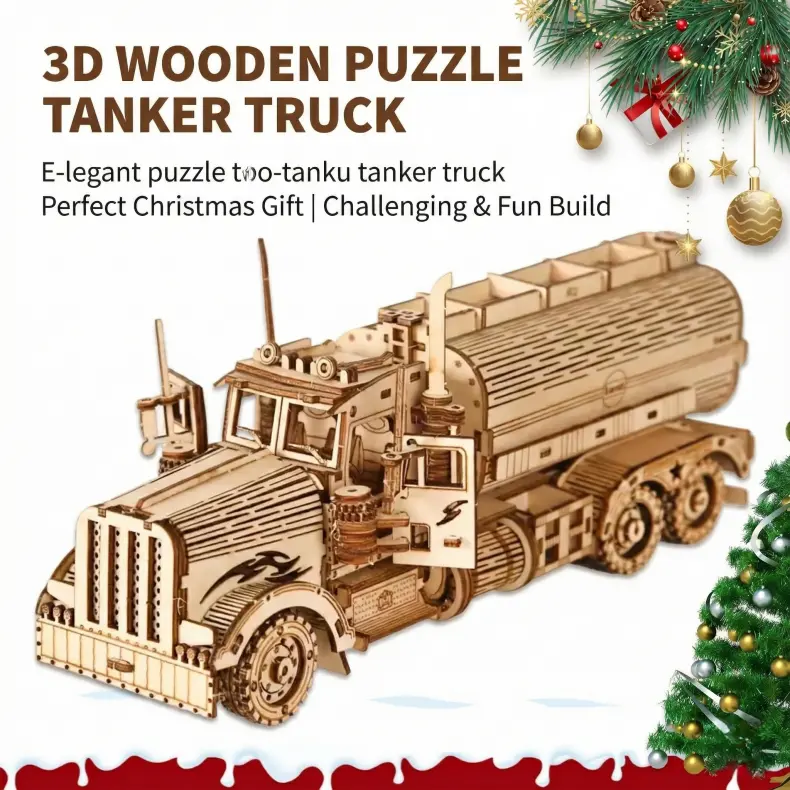
The 3D Wooden Puzzle Tanker Truck Kit sits squarely in this band — a vehicle theme with a recognizable silhouette, listed at $22.99, and a build a grade-schooler can finish across a weekend with light parent support on the first few steps.
Animals and dinosaurs: ages 5–9. Dinosaurs bridge the gap between preschool and early grade school better than almost any other theme because the fascination is durable: a 5-year-old wants the shape, a 9-year-old wants the articulation (jaw opens, tail swivels, legs move). 3D wooden dinosaur puzzles tend to keep boys engaged through both passes, which is why parents in hobby threads report that dino kits rarely get abandoned.
Space and robots: ages 7–12, but only with motion. A static rocket or robot is a one-evening build that ends up on a shelf and gets forgotten. A space kit with a rotating solar array, or a robot with a working gearbox, gives the “click-and-watch-it-move” reward that holds attention across multiple sittings. Without that mechanism, move this theme down the list.
Marble runs and mechanical transmission: ages 9 and up. This is where the “click-and-watch-it-move” reward fully replaces cartoon styling. Hobbyists in r/Hobbies describe returning to marble-run builds specifically because each completed lift, ramp, and drop offers immediate visual feedback. For a 9–12-year-old who already likes taking things apart, a marble run beats any static model — but it demands patience and a clear workspace.
The one rule: do not buy a theme you find impressive if your son has not already shown interest in it. Ask which kit he lingered over in the store, which YouTube build he rewatched, which display model in a friend’s room made him go quiet. That signal matters more than any age band or piece count on this page.
04. The Parent-and-Son Build Protocol: 15-Minute Rule and Frustration Reset
Once the theme is right, the next failure point is the build itself. A 3D wooden puzzle becomes a chore the moment your son hits a step he cannot read or undo, so the parent’s job is to time-box the session, not finish the kit. The 15-minute rule keeps it a gift instead of homework: sit together for 15 minutes, hand the manual over when he finds his rhythm, and step in only when he asks or when a mechanism needs adult fingers.
Where to stop and hand the manual over. Watch for the moment he starts narrating his own steps — “this goes here, then this snaps in” — and quietly shift from co-builder to assistant. Read the next instruction aloud if the diagrams are dense, but let him place the piece. Save your involvement for the steps that show a gear, axle, or spring that needs two hands and a flat surface. Everything else, let him run.
When a piece snaps or splits. Laser-cut birch plywood is thin and can crack along the grain if a child forces it sideways instead of straight out of the frame. Many kits include 5–10% spare parts for exactly this situation, but the count varies by brand and set — check the small-parts bag or the back of the manual before you assume spares exist. If a critical piece breaks and no spare is included, contact the manufacturer directly; in hobbyist threads, the major kid-friendly wooden-puzzle brands all respond to replacement-part requests. Do not reach for superglue on a structural part — it changes the fit of every piece that touches it.
The “he got bored halfway through” problem. This is the most common parent complaint after a kit is opened, and the fix is not to push harder. Pause the build for up to two weeks — leave the pieces and manual together on a tray, and do not mention it. When the kit reappears, most boys return to it because the partial build is already visible and the finish line is the same distance away. Forcing the build on day three is what turns a gift into a chore. The exception is a kit that has sat untouched for a month: at that point, take it apart, store the pieces, and move on without comment.
The display shelf is part of the reward. Once the model is finished, the build is not over. A completed wooden car, clock, or marble run that sits on his shelf gets pointed out to friends and becomes the social payoff he actually wanted. If it goes straight into a drawer, the hours of work feel like they vanished, and he remembers the frustration, not the accomplishment. Clear a spot before he finishes, not after.
When he asks for help, do less than you think. The instinct is to grab the piece and finish the step. Instead, point at the diagram and ask, “What does the picture show goes there first?” He usually knows and just needs a second to find it. The goal is for him to feel he solved the step himself, even when you both know you walked him to the answer.
For a phase-by-phase walkthrough of what each build stage looks like at the table, see the 57 essential 3D wooden puzzle assembly tips.
05. Decision Table: Which 3D Wooden Puzzle Type Matches Your Son
The display shelf is where the gift earns its keep, but only if the model you chose matches the way your son actually plays. If you already know his age band but haven’t picked a mechanism yet, the four rows below narrow the choice to one.
| Puzzle Type | Age Band | Piece Count Band | Mechanism | What to Check |
|---|---|---|---|---|
| Static decorative (clock, instrument, calendar) | 8+ | 80–200 | None, or simple wind | “Age 8+” symbol; laser-cut plywood grade; manual in your language; finished dimensions fit the display spot you already cleared |
| Moving-parts vehicle (car, truck, pistol) | 8–14 | 100–250 | Wheels turn, gears click, trigger works | Printed age band, not “collector”; small-parts count; rolling or trigger test on a flat surface after build |
| Marble run / mechanical motion | 10+ | 200–400+ | Marbles travel track via ramps, lifts, wheels | “Age 10+” or higher; tolerance comments from buyers; count of marble pieces before opening; step diagrams for the mechanism |
| Book nook / miniature scene | 12+ | 200–500+ | Static, sometimes LED | “Age 12+” or adult label; finished depth matches shelf width; LED battery access if included; whether glue is required |
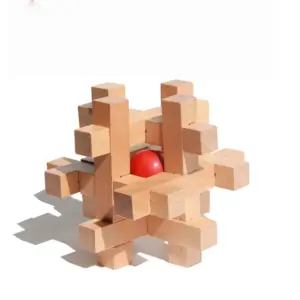
If your son is the type who abandons a half-built model in favor of something he can finish in one sitting, skip the build entirely and reach for a portable brain-teaser. Interlocking sets such as the 12 Piece Crystal Luban Lock Set, the 6-in-1 Wooden Brain Teaser Set, or the 7 Color Soma Cube Puzzle deliver the same hands-on satisfaction in fifteen minutes and live on his desk instead of the shelf. Puzzle types like these skip the multi-day build stage and trade the display-shelf payoff for repeat-play value, which is often the better fit for a son who loses interest after the first sitting.
Next action: Pick the row that matches your son’s age and the theme he already loves, then verify the printed age range on the box before you check out. If the printed age band sits one year below his actual age, he will likely finish solo; one year above means a parent-and-son build. When none of the four rows fits, the brain-teaser column on the right is the alternative path.
06. Parent Questions: Safety, Build Time, Glue, and Solo Assembly
A 3D wooden puzzle is safe for a 4-year-old only if the printed age range on the box starts at “4+”, every punch-out piece exceeds 3 cm, and you verify the small-parts list on the back panel before opening it. The eight questions below cover the other parent concerns — best kit by age, build time, glue, solo assembly, brand fit, themes, boredom, and display — in the order parents actually ask them.
What’s a good 3D wooden puzzle for a 4–6 year old boy?
A kit with under 80 punch-out pieces, no sub-3cm detachable parts, a theme he already loves, and a printed age range that starts at “4+”. The 12 Piece Crystal Luban Lock Set or the 6-in-1 Wooden Brain Teaser Set also fit this age — they replace multi-day building with a 10–15 minute challenge that lives on a shelf rather than in a box.
How long does a child take to build one?
Plan 30–60 minutes for under 80 pieces, 1.5–3 hours for 80–250 pieces, and 3–6+ hours for 300+ mechanical or marble-run kits — usually across two or three sittings.
Does it need glue or tools?
Most modern kits are no-glue snap-fit in laser-cut birch plywood; a small file helps with tight tolerances but isn’t required. “Glue included” usually signals a display-only or lower-tier build, not a kid-friendly kit.
Can my son build it alone?
A 4–6-year-old can co-build a 30–60 piece kit. A 7–10-year-old usually solos 100–200 pieces with a diagrammed manual. An 11+ tween can solo 200–400 pieces but may stall on a 500+ mechanical transmission without a reference photo.
Robotime vs. ROKR vs. UGears vs. Hands Craft — which fits kids?
Robotime and ROKR run the kid-friendly line; UGears and Hands Craft lean into intricate mechanical models that impress on the shelf but frustrate younger builders. Match brand to age band: Robotime or ROKR for grade-school sons, UGears or Hands Craft for teens who want a display piece.
Which themes actually hold a boy’s attention?
Vehicles (trucks, cars, tanks) and animals or dinosaurs lead repeat-build lists on r/Hobbies; marble runs and space themes follow. Generic decorative models finish once, then sit.
My son got bored halfway through his last kit — how do I prevent that?
Match the piece count to his attention span first, not his age on paper. A 7-year-old who quits at the 90-minute mark needs a 50–80 piece kit, not a 200-piece transmission. Build in 20–30 minute sessions with a clear stopping point, and let him own the final step so the finish feels earned.
Where does the finished model go?
A bookshelf, desk corner, or display shelf within his line of sight — not a shared closet. The display is the payoff; out of sight, the model gets tossed in six months. The guide on the real way to display wooden puzzles walks through shelf-ready placement if you want the build to last.
Next action: Pick the age tier from section 05, confirm the printed age range and piece count on the box, then place the order. Block a 90-minute window on the first weekend after the unwrapping — that single sitting is where the build either becomes a habit or a forgotten kit, and the printed age range on the packaging is the one number that predicts which one.
For a side-by-side look at how the major kid-friendly 3D wooden puzzle makers stack up against each other, the 6 premium wooden puzzle brands compared breakdown is a useful next read.
Where to Start
If the recipient and occasion checks above match, start with 12 Piece Crystal Luban Lock Set. Check the current product page for the specifications that matter to your choice.
Sources and verification
- Product details and current specifications: Tea-Sip product page
Last updated: August 8, 2026