Quick Answer: 3D Wooden Puzzle Tanker Truck Kit Gift for Adults: Worth It?
Yes — a 3D wooden tanker truck puzzle is worth it for adults who enjoy 2–6 hours of hands-on assembly. Skip it for instant-display recipients. The kit must pair a working drivetrain with 400+ pre-cut plywood pieces. The three checks below decide the rest.
Pick this if:
- The recipient likes trucks, gears, or mechanical tinkering and has patience for a 4–6 hour first-time build.
- You want a screen-free project that ends in a self-propelled display piece, not a box of leftover parts.
- The gift is for a man who collects die-cast trucks or model vehicles, or a hobbyist who already owns wooden mechanical kits.
Skip it if:
- The recipient wants a 30-minute afternoon project with no fiddly gear assembly.
- Your shelf or desk cannot fit a finished tanker roughly the length of a laptop.
The 3 checks that change the pick
- Mechanical drivetrain, not just a static shape. Look for a kit whose engine actually turns the rear wheels through a working gear assembly, not a glued block shaped like a truck.
- Piece count and wood quality. Kits under 300 pieces often cut corners; confirm the plywood is 1.5–2 mm thick and that tabs are laser-cut clean, so nothing snaps mid-build.
- Build time and finished footprint. A first-timer should expect 4–6 hours; a hobbyist finishes in 2–3. Measure the desk before you buy — most assembled tankers stretch 30+ cm.
| Decision factor | What to check | Why it matters |
|---|---|---|
| Mechanical function | Does the engine drive the rear wheels? | Separates an engineering-grade kit from a decorative toy |
| Piece count | 400+ pre-cut pieces | Lower counts usually mean a thinner, flimsier frame |
| Build time | 4–6 hours for a first-timer | Matches a realistic weekend project window |
| Wood quality | 1.5–2 mm plywood, clean tabs | Prevents snapped parts and warped boards |
| Finished size | 30+ cm assembled length | Confirms it fits the recipient’s display space |
| Tools required | No glue required, no scissors needed | Verifies the “out of box” build claim |
For a wooden mechanical-model tanker in Tea Sip’s catalog, the direct starting point is the 3D Wooden Puzzle Tanker Truck Kit.

01. What Makes a 3D Wooden Tanker Truck Kit Adult-Grade Instead of a Toy
A 3D wooden tanker truck kit earns adult-grade status when it pairs a working mechanical puzzle drivetrain with 400+ pre-cut plywood pieces and a gear assembly the builder can actually watch move; skip kits under 200 pieces or any that rely on a sticker sheet instead of interlocking tabs, because those are display novelties, not engineering projects.
The Quick Answer above set the bar at a working drivetrain, roughly 400 pieces, and a recipient who wants a multi-hour build. This section unpacks what each of those three checkpoints actually means on the table, and where kits quietly fail when the photos look polished but the tabs snap on day one.
The three checks that separate an adult kit from a children’s toy
1. A real mechanical drivetrain, not a decorative shell.
The kits worth an adult’s time have a gear train that transfers motion from a hand crank, a push, or a wind-up key to the wheels, and ideally to a secondary mechanism. On the well-known Ugears Tanker, that secondary mechanism is the can-holder: the same input that rolls the truck also rotates a cradle behind the cab, so a standard drink can rides along. A working engine on a 3D wooden truck puzzle means a visible gear stack with at least three to four interacting gears, axles that turn freely, and a transmission that does not bind when you change the model’s orientation. If a listing only shows the truck sitting pretty on a shelf with no moving parts demonstrated, treat it as a static model, not a mechanical one.
2. A piece count above roughly 400.
A 3D wooden puzzle in the 100–200 piece range is usually a flat-pack decoration or a junior kit. The threshold where a wooden mechanical truck puzzle starts to feel like a project, not a craft, sits around the 400-piece mark. The 594-piece Ugears Tanker sits well above that, which is why its assembly reads as a real build: there are enough sub-assemblies (cab, chassis, tank, gear box, rear cradle) that you finish each in 30–60 minutes and feel momentum. When you compare a 460-piece variant against a 585-piece one, the extra pieces almost always go into more detailed interior structure, not filler, and the build time stretches accordingly.
3. Quality pre-cut plywood with friction-fit tabs.
“No glue required, no scissors needed” is a real claim on laser-cut kits, but only when the manufacturer has done the cutting correctly. The pieces pop out of a thin plywood sheet, and each connection is a tiny tab-and-slot joint that grips under finger pressure. What that label does not tell you is how often cheaper kits ship with boards slightly warped in the box, tabs lasered too thin and snapping on the first push, or a single missing gear that stalls the whole drivetrain. The plywood on adult-grade kits feels around 2–3 mm thick, has a clean birch-tone finish, and the tabs resist a firm squeeze without cracking.
Where these kits commonly fail
Three failure modes show up again and again across the category: tabs snapping out of the board when you push too hard, a single warped board preventing the gear box from seating flat, and a printed manual that numbers pieces in a way only the designer understands. Any one of these turns a 4–6 hour gift into a frustrating evening. The first two are material issues; the third is documentation, and it is the easiest to catch before checkout by previewing a sample page from the manual if the seller provides one.
Three questions to ask the seller before you buy
- Plywood thickness and tab integrity. Ask for the ply thickness in millimeters and whether spare sheets ship in the box, because a spare board is the difference between a recovered build and a bricked one.
- Gear count and a working-parts video. Request the number of gears in the drivetrain and a short clip showing the finished model rolling with its can holder rotating, so you can confirm “working engine” is engineering and not marketing.
- Manual preview and replacement-part policy. Look for a sample page from the instructions and a written replacement-parts policy, since a missing gear in week one is otherwise unrecoverable.
02. Ugears Tanker vs ROBOTIME, Wooden City, and Generic Clones: How They Actually Compare
Judge these kits by mechanical complexity, not price. Two tanker puzzles at the same dollar amount can differ wildly in gear count, drivetrain depth, and whether the finished truck actually rolls under its own power. The reference product most adult buyers encounter first is the Ugears Tanker at 594 pieces with a working engine and a can-holder mechanism that rotates when the model moves; it is the standard the rest of the category gets measured against. With the seller questions from the previous section in hand, this comparison sorts the field quickly.
| Brand / Model | Piece count | Working drivetrain | Can-holder / moving-parts feature | Manual quality | Adult gift positioning |
|---|---|---|---|---|---|
| Ugears Tanker (reference) | 594 pieces | Working engine confirmed | Yes — can-holder rotates with drivetrain | Numbered, diagram-heavy; ask seller for a sample page | Marketed for adults and Father’s Day |
| ROBOTIME tanker variants | What to check: confirm 400+ pieces and ask seller for exact count | What to check: request a short clip of the model rolling under its own power | What to check: ask if any rotating or driven accessory is included | What to check: confirm language options and pictogram clarity | Marketed for adults and teens |
| Wooden City truck puzzles | What to check: listings show 460–585 range; verify before checkout | What to check: ask whether gears are exposed or hidden inside the chassis | What to check: most focus on shape accuracy, not driven accessories | What to check: illustrated booklets — request a preview | Marketed for adult hobbyists |
| Cuteefun-style generic clones | What to check: piece count often 300–460; ask the seller | What to check: many clones show static display models; verify before buying | What to check: typically absent on clone kits | What to check: the most common complaint is mislabeled parts | Positioned as a mechanical model kit for adults to build; birthday gift |
What separates the reference kit from the rest is engineering depth, not wood thickness. Ugears publishes gear counts and drivetrain diagrams, and that transparency is why the 594-piece total includes a real gear train rather than decorative panels. ROBOTIME tanker variants occupy a middle tier — they use similar laser-cut plywood, but the documentation is sometimes translated poorly, and a buyer should ask the seller for a sample manual page before purchase. Wooden City leans into truck silhouettes and finish quality rather than mechanical depth, so the model looks right at a desk but typically does not move under its own power. Cuteefun-style generic clones usually undercut the others on price because they cut corners on the gear train, the manual, and the spare-part policy that a real hobby kit includes.
For the buyer comparing the Tea-Sip 3D Wooden Puzzle Tanker Truck Kit against the bigger names, the practical check is the same: confirm piece count, the number of working gears, and whether the finished model actually rolls. The Tanker Truck Kit in the Tea-Sip wooden-puzzles catalog sits in the same adult DIY lane as the Ugears reference — both are wooden mechanical-model kits that target a gift-giver shopping for a man who likes hands-on projects. Where the reference product earns its reputation is verifiable engineering depth; where the clones fail is documentation and spare-part support. Use the table as the questions list, ask the seller for the answers, and the comparison sorts itself out. For a broader read on how wooden 3D puzzles compare for adult gift-givers, the 7 best wooden 3D puzzles for adults in 2025 tested roundup covers the wider category.
03. Who a 3D Wooden Tanker Truck Puzzle Is Actually Right For as a Gift
A 3D wooden tanker truck puzzle is the right gift when the recipient enjoys hands-on mechanical assembly and will tolerate a 2–6 hour project; it is the wrong gift when the recipient wants instant display value, has limited desk space, or expects a remote-control toy. Match the kit to the person, not the marketing. The 3D Wooden Puzzle Tanker Truck Kit earns its slot when the four recipient checks below line up.
1. The mechanical-engineering hobbyist. This is the closest match. An adult who already tinkers with gear-driven fidget toys, takes clocks apart for fun, or assembles PC rigs will read the working drivetrain as the entire point. The visible gear train, the rubber-band engine, and the can-holder mechanism are why they buy the kit, not the truck shape. For a recipient in this lane, the 3D Wooden Puzzle Tanker Truck Kit sits in the same wooden mechanical-model category covered above. If the recipient prefers a compact hand challenge over a full truck build, a smaller mechanical brain-teaser sits in the same adult DIY category at a lower time budget.
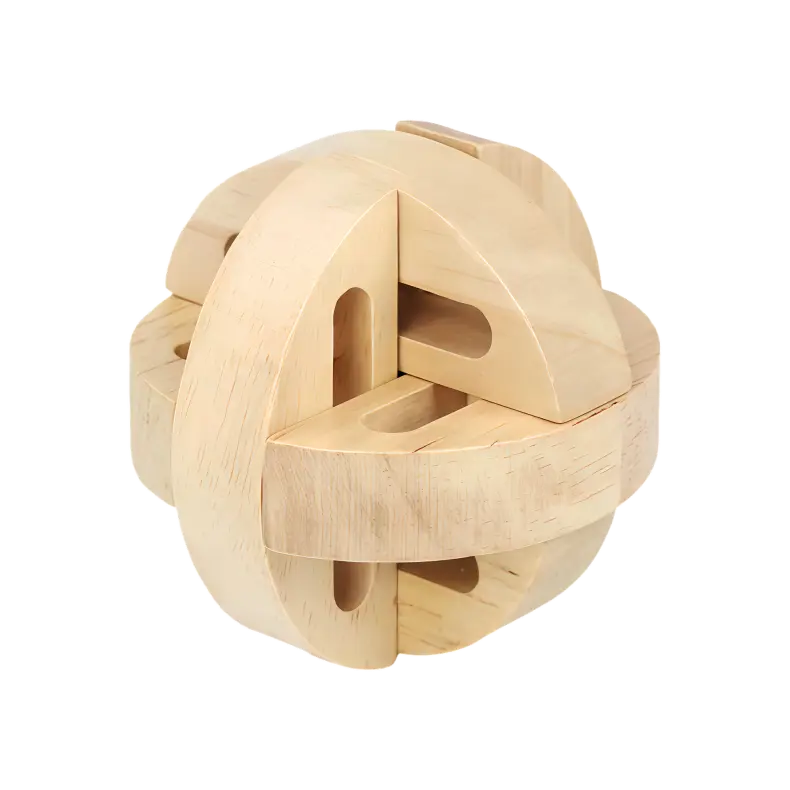
The Mystic Orb Lock — $16.99
2. The truck or pickup enthusiast. Classic-truck fans are a second strong fit. Adults who own a vintage pickup, follow restoration channels, or model semis as a hobby respond to the tanker silhouette and the rolling wheels. The recognition factor matters: the kit has to read as a tanker, not an abstract shape. Verify the assembled length on the product page before buying — most adult-grade kits land at 30+ cm, and a desk without that depth turns the gift into a shelf-storage problem. The Tanker Truck Kit sits in this adult mechanical-puzzle lane and fits the truck-enthusiast profile.
3. The Father’s Day or retirement recipient. The kit works as a milestone gift when the recipient has both the patience and the workspace. A 2–6 hour build is a feature, not a bug, for a dad who has retired and wants a screen-free project. Skip this lane if the recipient is in a busy life season with no two-hour blocks to spare. The Tanker Truck Kit pairs naturally with a smaller follow-up puzzle for a longer hobby arc — the Wood Knot Puzzle runs in the same Tea-Sip wooden-puzzles catalog and is short enough for a second-session reward.
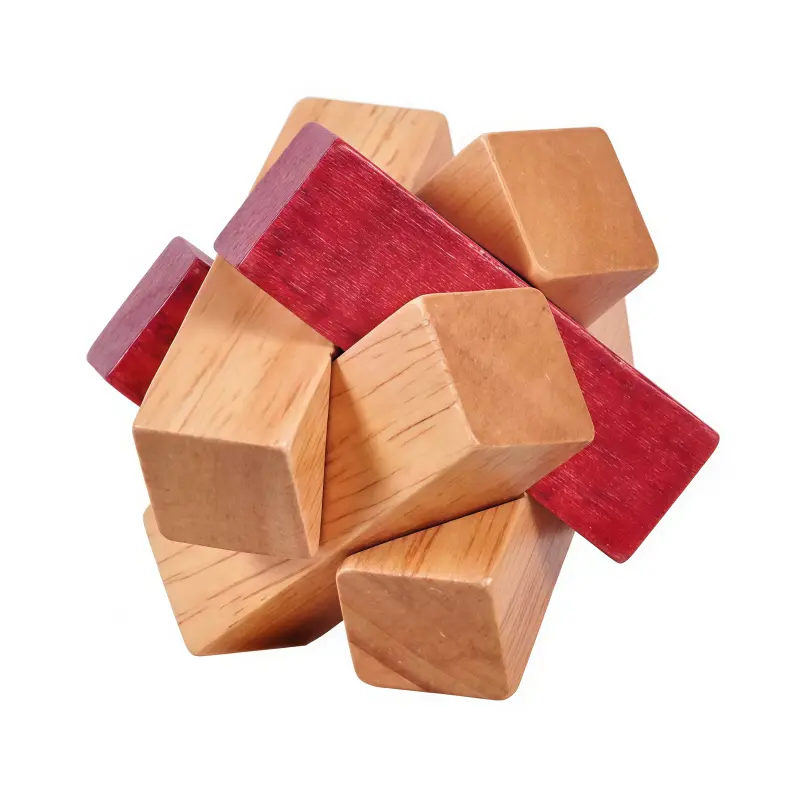
Wood Knot Puzzle — $16.99
4. The shared weekend project. Couples or parent–teen pairs who already build together treat the kit as a co-op, not a solo build. A 500+ piece count (the reference Ugears Tanker sits at 594 pieces, with comparable adult kits nearby) divides cleanly into two roles: one person reads the manual, the other sorts the pre-cut plywood sheets. The finished model becomes a display piece both hands touched. A pair who isn’t already comfortable reading instructions together will turn the build into a small argument — that’s the mismatch to watch for.
Skip the kit when any of these three conditions are true. First, the recipient opens gifts for instant display value. A 2–6 hour build is a feature, not a bug, but a recipient who wants the gift on a shelf within five minutes will feel short-changed. Second, the recipient has no 30+ cm of clear desk or shelf depth for the assembled model — finished tankers are large, and a packed bookshelf will stress the gear train during storage. Third, the recipient expects a remote-control truck. A self-propelled wooden model rolls when wound; it does not steer, brake, or respond to a controller. “Working engine” is accurate engineering, not a marketing label for a motorized toy.
The practical next step is a 30-second check: confirm the recipient tolerates a 2–6 hour project and has the display space. Both answers decide the gift before you reach the product page.
04. What the Build Actually Looks Like: Time, Tools, Pieces, and Finished Size
Budget 4–6 hours for a first-time adult builder and 2–3 hours for someone with prior mechanical-model experience. No kit in this category needs glue, scissors, or specialty tools; the only things on the table should be a sharp pocket knife, a candle or piece of sandpaper for cleaning rough tabs, and patience. That time window is the single most important variable a gift-giver can plan around, because it determines whether the recipient treats the kit as a relaxing weekend project or a frustrating chore.
The piece count is the first honest signal of build time. A 594-piece kit like the Ugears Tanker will eat 5–6 hours from someone who has never pressed a wooden gear onto a plywood axle before, while a 460-piece variant typically lands closer to 3–4 hours. The Tea-Sip roster includes the 3D Wooden Puzzle Tanker Truck Kit for shoppers browsing the wooden mechanical-model category. Generics in the 200-piece range usually finish in under 90 minutes, which is closer to a kid’s afternoon project than an adult’s evening engagement.
What “no glue required” actually means is that every part is laser-cut from thin plywood and connected by slotted tabs, gear teeth, and rubber-band axles. The tabs press-fit together, the gears mesh by alignment, and the rubber bands provide the spring tension. Where these kits commonly fail is at the tabs: a hurried builder can snap a tab off the board, and once it’s gone, the only fix is a tiny dab of wood glue and a steady hand. A warped sheet is the second common failure mode; it bends during shipping and refuses to seat flat. The reader can verify sheet flatness before opening the sealed bag by holding each board up to a lamp and looking for light gaps along the edges.
The phrase “working engine” on a 3D wooden truck puzzle means a spring-loaded or rubber-band drivetrain, not an electric motor. The builder winds a key or stretches a rubber band during assembly, and that stored energy transfers through a sequence of interlocking gears to the rear wheels. The truck rolls forward under its own power for 3–5 meters on a smooth surface before the spring relaxes. “Self-propelled” is accurate engineering for this mechanism. “Remote control” would be a lie; there is no radio, no battery compartment, and no steering. A gift-giver who hears a recipient say “I want a truck I can drive” should redirect toward a different category entirely, because a wooden mechanical model rewards engineering curiosity, not throttle-and-brake play.
The can-holder mechanism is the one feature that separates a real tanker from a pickup-truck kit. A working can-holder is a small hinged cradle on the rear of the model that actually accepts a standard beverage can and locks it in place with a lever. It looks like a party trick on the box, but it functions. The reader can verify this by checking the parts list for a cradle frame, a hinge pin, and a locking arm in the instructions PDF before buying; if those three parts exist, the can-holder is real, and it tends to be the detail a truck fan remembers most.
Pieces alone do not predict difficulty. A 500-piece kit with a simple drivetrain is easier to build than a 300-piece kit with a complex gear stack, because the fiddly part is always the gear assembly, not the panels. Plan on roughly 30–45 minutes for the gear-and-axle phase, and treat the rest as straightforward panel-snapping. The Tea-Sip roster pairs naturally with this build: the Electric Wooden Marble Run Kit sits in the same wooden mechanical-model category, so a recipient who enjoys one will likely enjoy the others.
The finished tanker is large. Assembled length is typically 30–34 cm, and height sits around 12–15 cm with the cab. That is the size of a large desk lamp base, and it needs a clear shelf or desk footprint the gift-giver should plan for. A packed bookshelf will stress the gear train during storage, and a windowsill in direct sun will yellow the plywood over time. The display-readiness check is a one-minute measurement: does the recipient have a 35 cm deep shelf with a backstop? If yes, the model will sit happily for years.
The one practical action before buying is the time-and-space audit. Confirm the recipient has 4–6 free hours and a 35 cm display surface. Both answers decide the gift before you reach the product page.
Frequently Asked Questions
Five questions cover what adult gift-givers actually ask before committing to a 3D wooden tanker truck kit. The answers below settle the time commitment, the tool list, the can-holder claim, the age range, and the price question — so the time-and-space audit you just ran is enough to choose.
How long does it take to assemble a 3D wooden tanker truck puzzle?
Plan 4–6 hours for a first-time builder working at a comfortable pace, and 2–3 hours for someone who has already assembled a mechanical kit with a gear stack. The slow phase is always the gear-and-axle assembly (around 30–45 minutes), not the panel-snapping. Most recipients break the build across two evenings rather than sitting down for a single marathon session.
Is the Ugears Tanker truck puzzle hard to build?
Difficulty sits in the middle of the adult mechanical range — easier than a 600-piece clock movement, harder than a 200-piece tugboat. The pieces pop out of pre-cut plywood boards, and the instructions use numbered diagrams that match the part numbers laser-etched on each piece. The catch is the gear train: one mis-seated axle tooth and the self-propelled drive will not engage, so the gear phase rewards patience over speed. A recipient who has assembled flat-pack furniture or a Lego Technic set can handle it.
Do 3D wooden puzzle kits for adults need glue?
No glue is required for the structural assembly. The pieces lock together via laser-cut tabs and slots, and rubber bands (included in most kits) provide tension for moving parts. The only tool that helps is a pair of tweezers for popping small interior pieces out of the boards, and a craft knife for cleaning any stubborn burrs. The “no glue required” claim is accurate for the assembly itself; some builders add a tiny drop of wood glue to axle ends that loosen with play, but that is optional and not standard practice.
Can you actually put a can in the Ugears Tanker?
Yes — the can-holder mechanism is a real feature, not a marketing label. A standard 330 ml soda can (about 66 mm in diameter and 115 mm tall) fits in the cylindrical cradle at the rear of the model, held in place by rubber-band tension from the gear train. The can does not pour or dispense; the kit is a decorative display piece with a working prop, not a functional drink holder. The can-holder framing means the model demonstrates the lifting-and-tilting mechanism that real tankers use, not that you serve drinks from it.
What age are 3D wooden mechanical puzzles for, and are they worth the money?
Most 3D wooden mechanical kits list 14+ as the recommended age, though the real gate is dexterity and patience rather than a birthday. A focused 12-year-old will do fine; a distracted 60-year-old will struggle. On value, the kits earn their price when the recipient finishes the build and displays the result — a $20–30 kit that becomes a permanent desk piece pays back its cost over years of daily visibility. The Tea-Sip 3D Wooden Puzzle Tanker Truck Kit is listed in the wooden-puzzles category; check the product page for the current price, included parts, and any add-on bundles. A natural follow-up gift for a recipient who finishes the tanker and wants more is the Electric Wooden Marble Run Kit, which sits in the same wooden-puzzles category and offers a taller display format.
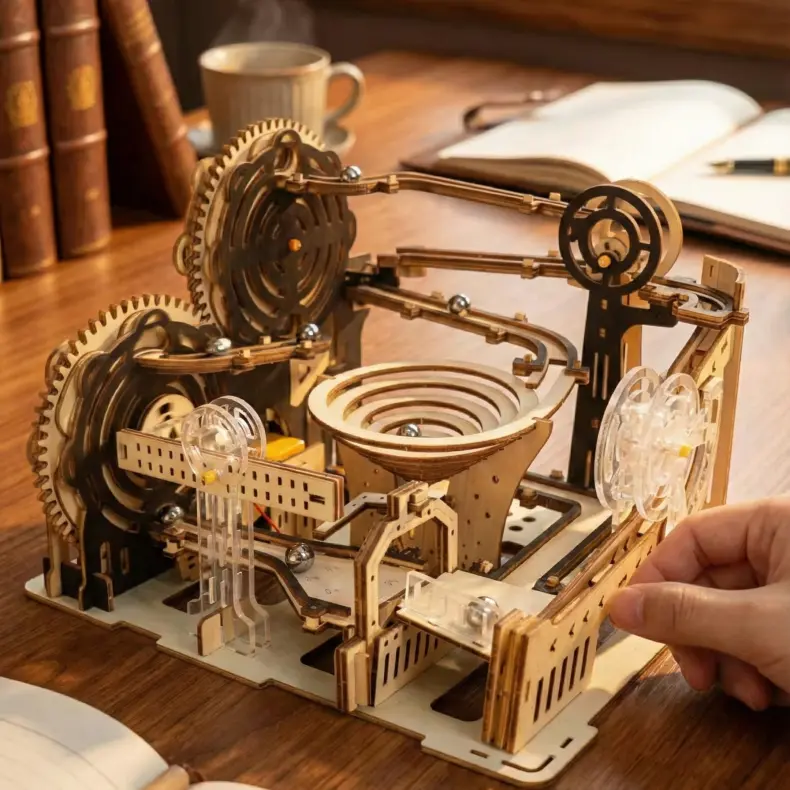
A practical next step
If the time-and-space audit came back positive, the only remaining decision is whether the recipient wants a one-time build or a permanent hobby. A one-time build is the tanker kit alone. A permanent hobby is the tanker kit plus a follow-up wooden-puzzle from the same Tea-Sip catalog — the Electric Wooden Marble Run Kit pairs naturally as a second build. Either path is a satisfying gift; the choice depends on whether you want one quiet weekend at the table or a recurring project on the desk. When the audit is green and the budget is set, the 3D Wooden Puzzle Tanker Truck Kit product page is the place to confirm the current price and lock in the order.
Where to Start
If the recipient and occasion checks above match, start with 3D Wooden Puzzle Tanker Truck Kit. Check the current product page for the specifications that matter to your choice.
Still comparing options? Re-check the same decision criteria against any other kit on your shortlist, rather than restarting the search from scratch.
Sources and verification
- Product details and current specifications: Tea-Sip product page
Last updated: August 27, 2026