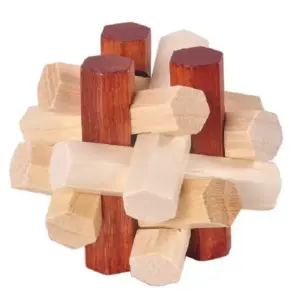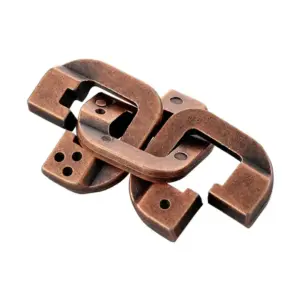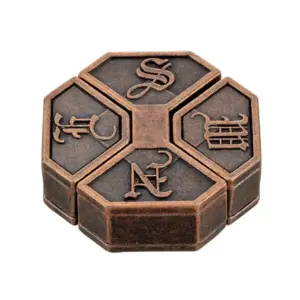
The third time the internal brass pin slipped past my thumb, I set the box down and made coffee. My kitchen clock ticked with an annoying, rhythmic precision that felt like a mockery of my own failure. I had been “fiddling”—that dangerous, half-attentive state—with a prototype for forty-five minutes, and I was no closer to seeing the interior than when I started. This is the central tension of the hobby: the best wooden puzzle boxes for adults aren’t just containers; they are physical lessons in patience that punish the “brute force” instinct we’ve all developed in a world of instant digital gratification.
After testing over 200 mechanical challenges in my career, I’ve learned that the true value of a puzzle isn’t in the difficulty rating on the side of the cardboard. It’s in the mechanical honesty of the build. My thesis for this report is simple: a superior puzzle box should reward observation over luck and punish impatience with a very specific kind of silence. If you can force it open, the designer failed. If it opens with a whisper because you finally understood a hidden internal gravity-pin, the designer won.
The Anatomy of a High-Quality Solve
Most people shopping for a “wooden puzzle box for adults” fall into a trap. They buy something that looks like a treasure chest but operates like a cheap drawer. In my collection, the boxes I return to are those that utilize the historical principles of mechanical puzzles to create a narrative. You aren’t just moving pieces; you are unfolding a story told in plywood and friction.
When you hold a well-machined piece, you can feel the tolerances. I’ve had boxes on my desk for three weeks where I could feel the seam with my fingernail, but the wood was so perfectly joined that I couldn’t tell which way the panel was supposed to slide. This is where the psychology of tactile satisfaction comes into play. Our brains crave the “click”—that moment of haptic feedback that confirms a theory was correct.
The Mechanical Gem: The 3D Wooden Puzzle Treasure Box

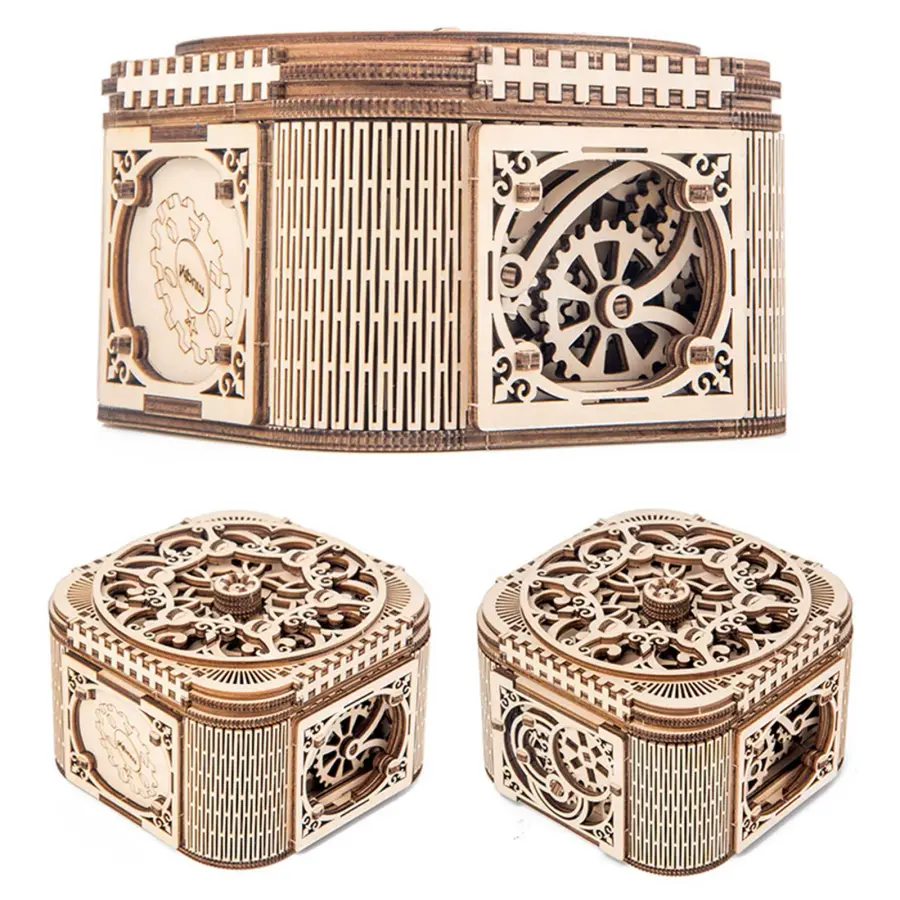
If you want to understand why adults are flocking back to analog hobbies, look no further than the 3D Wooden Puzzle Treasure Box. Priced at $29.99, this isn’t a “trick box” in the sense that it arrives pre-assembled and mysterious. Instead, it’s a mechanical kit that forces you to understand the “why” before you get the “how.”
I spent roughly three hours assembling this, and the experience provided cognitive benefits most puzzle sellers won’t mention. You are building a functional jewelry box with visible gear mechanisms. The beauty here is transparency. Most boxes hide their secrets; this one puts them behind a lattice of laser-cut wood. You can see the gears rotate as the lid lifts. It’s a perfect entry point for someone who appreciates engineering but doesn’t want to spend $200 on a solid-oak Japanese Himitsu-Bako. The only limitation? The instructions require a steady hand; if you rush the gear alignment, you’ll feel a “grind” that ruins the smooth opening later.
Why Your “Engineer Brain” Might Be a Disadvantage
I’ve watched mechanical engineers struggle with simple burr puzzles while ten-year-olds solve them in minutes. Why? Because adults tend to over-analyze. We look for a logical sequence of 1-2-3, while many wooden puzzles—especially those based on ancient designs—rely on 1-3-2 or even simultaneous movements.
Take the Luban Lock Set 9 Piece ($39.99). These are the “grandfather” of the modern puzzle box. They don’t have secret compartments for rings; they are the puzzle itself.
The Traditionalist’s Choice: Luban Lock Set
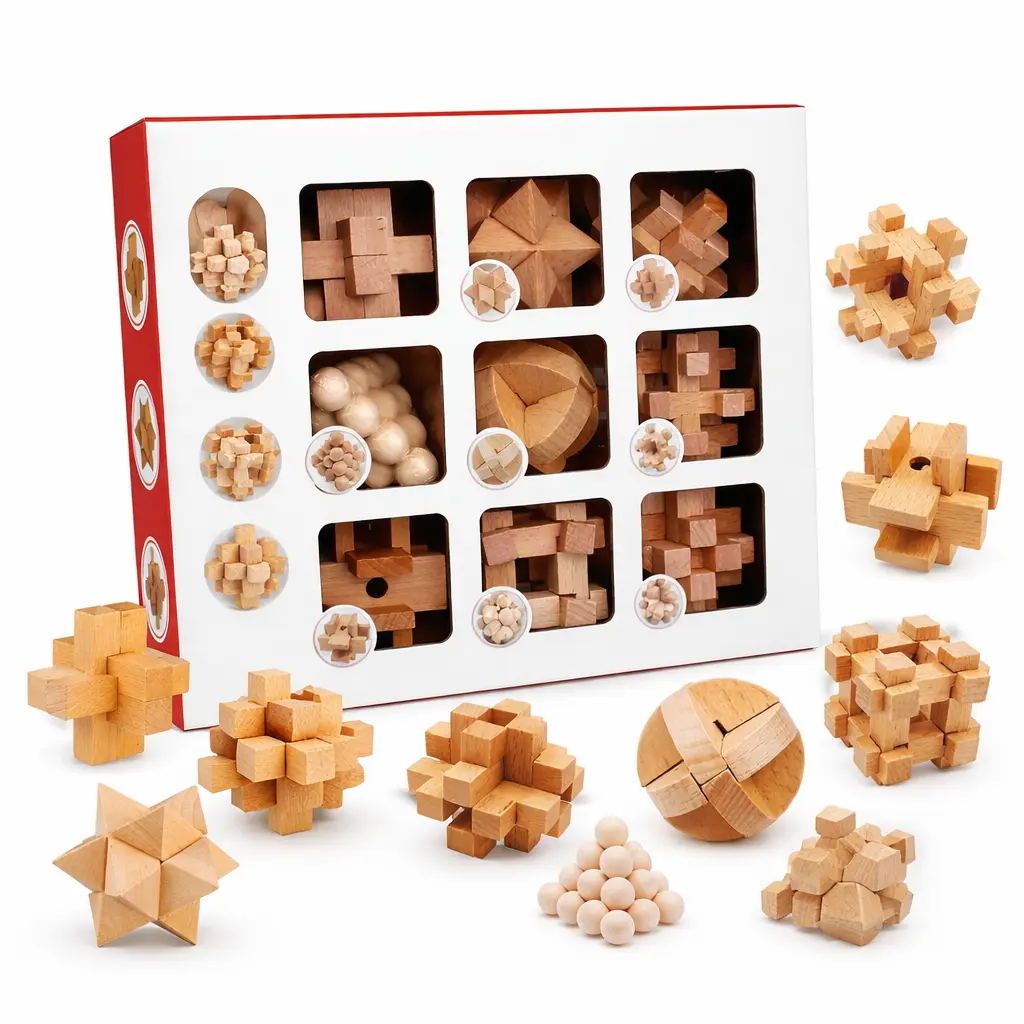
This set recreates designs attributed to Lu Ban from 500 BCE. When I first handled these, I was struck by how much they teach you about structural integrity. Each of the nine puzzles uses mortise-tenon joinery. There are no nails. There is no glue. It is just geometry.
I recommend starting with the simplest cross-shaped burr before moving to the more complex spheres. My brother-in-law spent twenty minutes with the “Ball in Cage” puzzle at Thanksgiving before giving up, claiming it was “glued shut.” It wasn’t. He just hadn’t found the one piece that serves as the key. These are excellent “fidget” puzzles for a home office, though the finish on the wood is a bit raw compared to high-end collectibles. At just under forty dollars for nine puzzles, it’s the best value for someone who wants to understand the first-hand reports from veteran solvers regarding traditional Chinese joinery.
The PEAK: The “False Feedback” Trap in Modern Design
Here is the exclusive insight I’ve gained after opening thirty-plus trick boxes this year: the most “difficult” puzzles aren’t the ones with twenty steps. They are the ones with two steps and a “false feedback” mechanism.
A false feedback loop is when a designer includes a sliding panel that moves about 2mm and then stops with a solid “thud.” Your brain immediately registers this as a dead end. You think, “Okay, that’s not it,” and you move on. In reality, that 2mm slide might have unlocked a secondary pin on the opposite side of the box.
I recently tested a box where the solution required holding it upside down while sliding a side panel—a move that defies our standard “table-top” logic. This is why I always tell people to use safe techniques for stubborn mechanisms; if you feel resistance, it’s rarely because the wood is stuck. It’s because the internal logic hasn’t been satisfied. The moment the last panel clicks into place because you finally stopped fighting the wood and started listening to it—that is the peak emotional payoff of this hobby.
Beyond the Box: Mechanical Kits and Desktop Art
Sometimes the “puzzle” is the assembly itself. While a secret box hides a void, a mechanical kit like the Mechanical 3D Wooden Globe ($28.88) hides a function.
I’ve had this globe on my shelf for six months. It’s a 3D puzzle that transforms flat plywood into a rotating map of the Earth using a gear-drive system. It isn’t a “trick box” in the traditional sense, but the assembly is a massive spatial reasoning challenge. If you enjoy the process of engaging the whole household in a solve, this is a better weekend project than a standard trick box. It’s also surprisingly durable; I’ve spun the gears daily, and they haven’t lost their “snap.”
If you prefer something more whimsical, the Layered Butterfly Wooden Music Box ($28.99) offers a similar mechanical satisfaction.
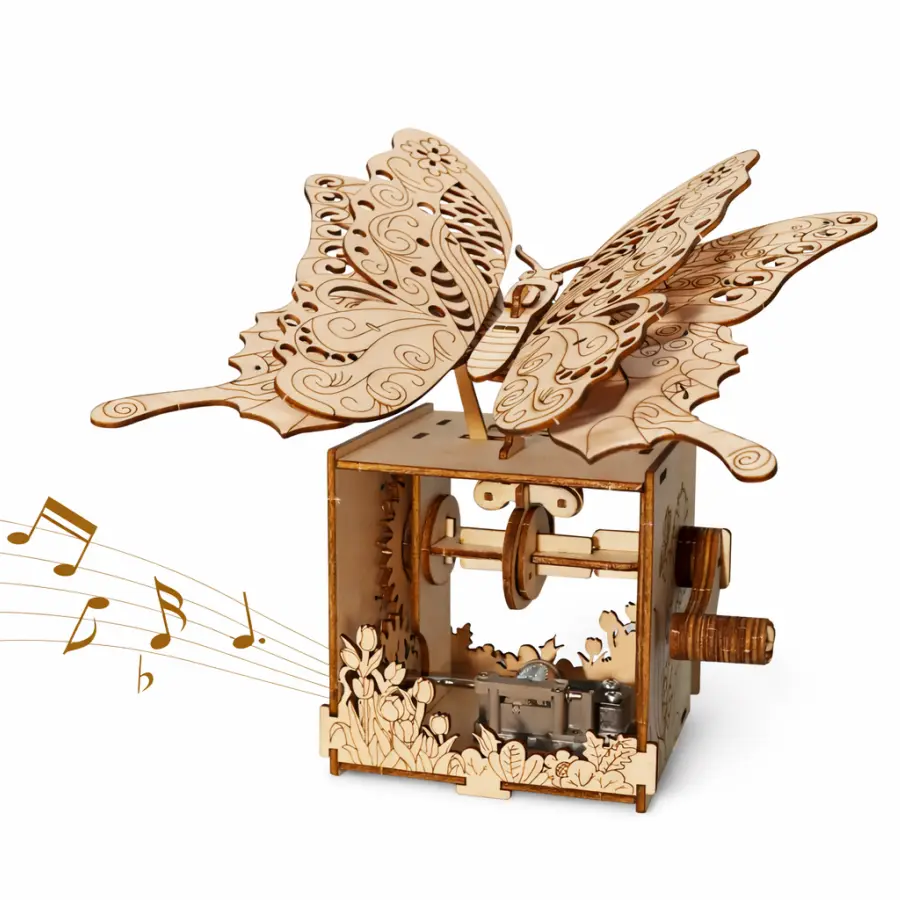
It’s a visible gear box where the wings flutter as the music plays. It’s less of a brain-buster and more of a “meditative build.” I often suggest this for people who find traditional advanced sequential discovery designs too frustrating. Sometimes you just want to see how a steel comb plucks a pinned cylinder without having to solve a riddle first.
The Security Factor: Can You Actually Use These?
A common question I get is: “Can I actually hide my watch in this?” The answer depends on the mechanism. If you are looking for a functional “safe,” you need something with a combination.
The Desktop Vault: 3D Wooden Puzzle Safe
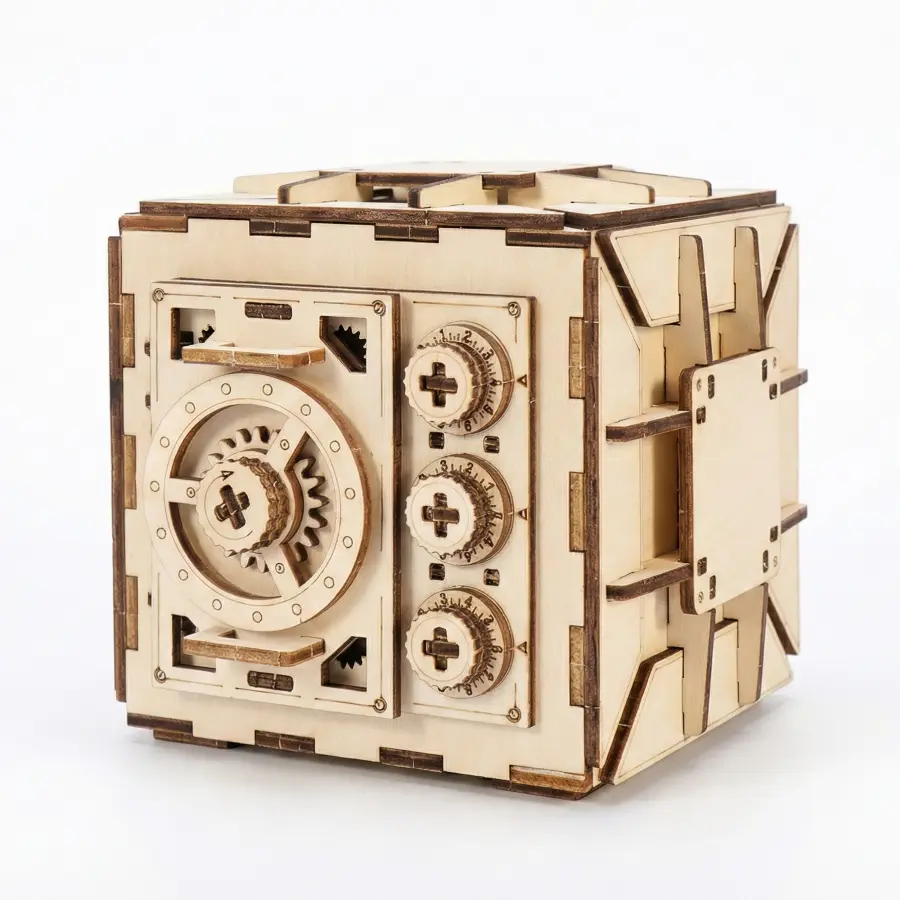
The 3D Wooden Puzzle Safe with Combination Lock ($30.99) is one of the few kits that feels like a real piece of security hardware once finished. It features a fully functional 3-digit combination lock.
During my test, I found the 111-piece assembly to be surprisingly intuitive, taking about 90 minutes. The “snap-fit” plywood is precise enough that you don’t need glue, which is a blessing because glue can often seep into the tumblers and ruin a lock. It’s a great way to store small treasures, though I wouldn’t put my passport in it—at the end of the day, it’s still made of wood. If you’re a fan of classic strategy alternatives, you’ll appreciate the logical “if-then” progression required to set the code.
For those who want utility without the high-stakes locking mechanism, the Wooden Desk Organizer with Perpetual Calendar ($19.99) is a smarter choice.
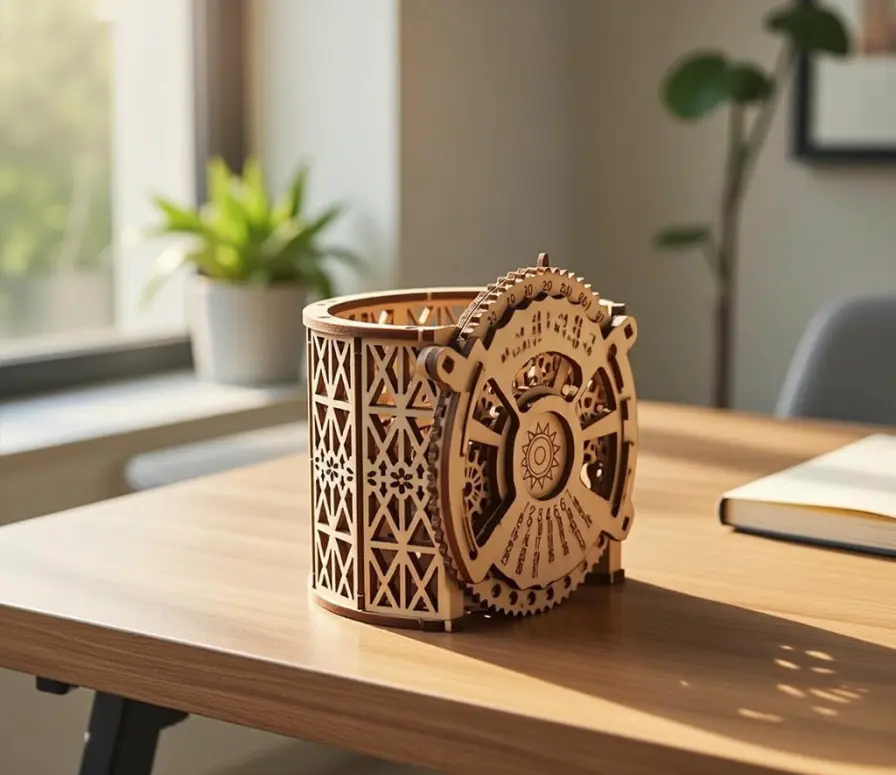
It’s a puzzle you use every day. The perpetual calendar covers 2023 to 2050, and the assembly is simple enough for a lunch break. It’s a “desk toy” in the best sense of the word.
Comparing the Top Wooden Puzzles for Adults
Before we get into the heavy-duty FAQs, let’s look at how these spotlighted products stack up in terms of the actual experience on your workbench.
The High-End Build: Wooden Ferris Wheel Music Box Kit

If you have a free Saturday and a very large cup of tea, the Wooden Ferris Wheel Music Box Kit ($59.99) is the “boss fight” of this list. Most music boxes are simple affairs, but this one features two music movements. Building this is a lesson in patience; the gears must be perfectly aligned or the wheel will wobble. It’s a miniature tribute to George Ferris’s 1893 masterpiece, and it even includes a hidden drawer in the base. It’s the kind of project that reminds me of why I started this collection—it’s complex, it’s beautiful, and it actually does something once you’re finished.
For those who find the Ferris Wheel too daunting, the Galleon Ship 3D Wooden Puzzle Model Kit offers a similar aesthetic payoff with a focus on historical naval architecture.

It isn’t a “trick” puzzle, but fitting the rigging and the hull requires a level of dexterity that most adults find rewarding. It’s a great way to take a digital logic break without the frustration of a locked box.
Frequently Asked Questions
How do I open a wooden puzzle box without breaking it?
The cardinal rule of mechanical puzzles is: never force it. If you have to strain your fingers, you are doing it wrong. Most wooden puzzles for adults rely on gravity pins, sliding panels, or centrifugal force. Try rotating the box in different orientations or gently tapping it against your palm to see if a pin drops. I’ve seen many a resource for identifying different box types suggest that “shaking” is the first step, but I prefer “listening.” A loose pin has a distinct metallic or wooden clack that tells you exactly where the lock is located.
Are these puzzles too hard for beginners?
Not necessarily. Difficulty is subjective. A Six-Piece Burr Puzzle ($17.99) is a fantastic entry point.
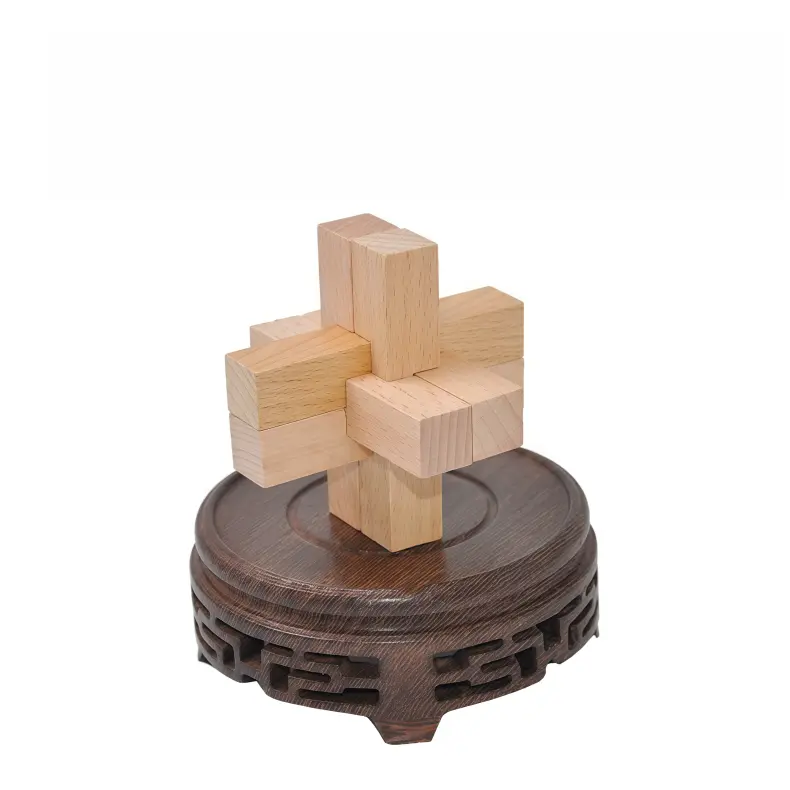
Six-Piece Burr — $17.99
It looks simple—just six pieces of wood—but it teaches you the fundamental language of interlocking puzzles. Once you understand how these six pieces occupy the same space, you can move on to complex kits like the 3D Wooden Puzzle Tanker Truck Kit ($22.99).

The truck is more of a model-puzzle hybrid, but it gives you that satisfying “snap” of precision engineering that builds confidence for harder trick boxes.
Why are some wooden puzzle boxes so expensive?
You are paying for tolerances. A cheap box has loose panels that might “accidentally” solve themselves if you drop it. A high-end box, often handcrafted from exotic hardwoods, uses seasonal wood that has been cured to prevent warping. In the mid-range market, you are paying for the complexity of the laser-cut design. The Wooden Ferris Wheel Music Box Kit ($59.99) is priced higher because of the dual music movements and the sheer number of moving parts.
Do I need tools or glue for these 3D wooden puzzles?
Most modern laser-cut kits, like those from tea-sip.com, are designed to be “press-fit.” This means they use the natural tension of the wood to stay together. However, as a veteran, I’ll tell you a secret: keep a small piece of sandpaper and some candle wax nearby. If a wooden gear is sticking, a little wax on the teeth works wonders. You should rarely need glue, and in fact, glue is often the enemy of a moving puzzle mechanism.
Can these puzzles help with cognitive decline?
While I’m a reviewer and not a doctor, research available at the National Museum of American History suggests that mechanical puzzles have been used for centuries to maintain spatial reasoning. Engaging with three-dimensional problems forces your brain to “rotate” objects mentally, which is a different neural pathway than solving a crossword or a jigsaw puzzle.
What is the difference between a “Trick Box” and a “Sequential Discovery” puzzle?
A trick box usually has one or two hidden moves to open it. A sequential discovery puzzle is a journey. You might find a small wooden peg hidden in a panel, which you then use as a tool to poke a hole in another panel, which releases a key. It’s like an escape room in the palm of your hand. Most of the products on this list lean toward the “mechanical kit” or “interlocking” side, which are great precursors to the $500 sequential discovery boxes you see on YouTube.
How do I maintain my wooden puzzle box?
Wood is alive. It breathes. If you live in a very humid environment, the wood may swell, making the puzzle nearly impossible to open. Conversely, in very dry heat, it can shrink and become too loose. I keep my collection in a room with stable humidity. If a box gets stuck due to humidity, don’t force it. Put it in a sealed container with a few silica gel packets for 24 hours. It usually shrinks just enough to move again.
Is the Luban Lock set appropriate for seniors?
Actually, it’s one of the best choices. The pieces are large enough to handle without needing jeweler’s tools, and the logic is purely tactile. It’s a great way to keep the hands moving and the mind sharp without the frustration of tiny, microscopic parts found in some model kits.
Can I reset the combination on the 3D Wooden Safe?
Yes, but you have to do it during the assembly phase. Once the safe is fully built and the panels are snapped in, changing the combination would require partially disassembling the locking mechanism. This is why I tell people to double-check their tumbler alignment before they finish the final door panel!
Why do some puzzles have a “burnt” smell?
That is the smell of the laser cutter. Most enthusiasts actually grow to like it—it’s the scent of precision. If it bothers you, leave the pieces out of the box for a day before you start building; the smell dissipates quickly once the wood is exposed to air.
What should I do if I lose a piece?
This is the nightmare scenario. For the interlocking burrs like the Luban Lock Set 9 Piece, losing one piece means the entire puzzle is non-functional. For the kits, I always recommend working on a large, flat tray with a lip. If a piece goes missing, check your “scrap” wood sheets first—sometimes a small connector piece is still stuck in the frame.
Are these puzzles a good gift for someone who “doesn’t do puzzles”?
I’ve found that the Wooden Desk Organizer with Perpetual Calendar is the best “gateway drug.” It looks like a functional office accessory, so it doesn’t feel like a “toy.” Once they experience the satisfaction of the assembly, they usually end up asking where they can get something more challenging.
The Final Click: Why We Keep Solving
The first time I solved a complex burr, I didn’t feel like a genius. I felt like a student who had finally stopped shouting at the teacher. That is the secret of the wooden puzzle box for adults: it is a conversation between you and the wood. If you approach it with aggression, it will lock you out. If you approach it with a light touch and a keen eye for the seams, it will eventually yield its secrets.
If you’re ready to start your own collection, I genuinely recommend beginning with the 3D Wooden Puzzle Treasure Box ($29.99). It’s the most honest representation of what modern mechanical puzzles can be—complex, beautiful, and ultimately solvable through logic rather than luck. It taught me more about the relationship between gears and patience than any textbook ever could.
Next, explore the psychology of tactile satisfaction to understand why your brain is so wired to find that final, elusive click. In a world that feels increasingly out of our control, there is something profoundly grounding about a problem that can be solved entirely with your own two hands.