The third time the notched beechwood pin slipped past my thumb and sent six interlocking pieces clattering across my hardwood floor, I didn’t swear. I just set the pieces down, walked to the kitchen, and made a fresh pot of oolong.
I’ve spent the better part of fifteen years reviewing mechanical puzzles—over 200 of them have crossed my desk, from $5 flea market finds to $500 limited-edition brass enclosures. Most people approach a cube puzzle like a math problem to be solved with brute force or a memorized algorithm. They want to know how to solve the puzzle cube in ten minutes so they can put it on a shelf and never touch it again.
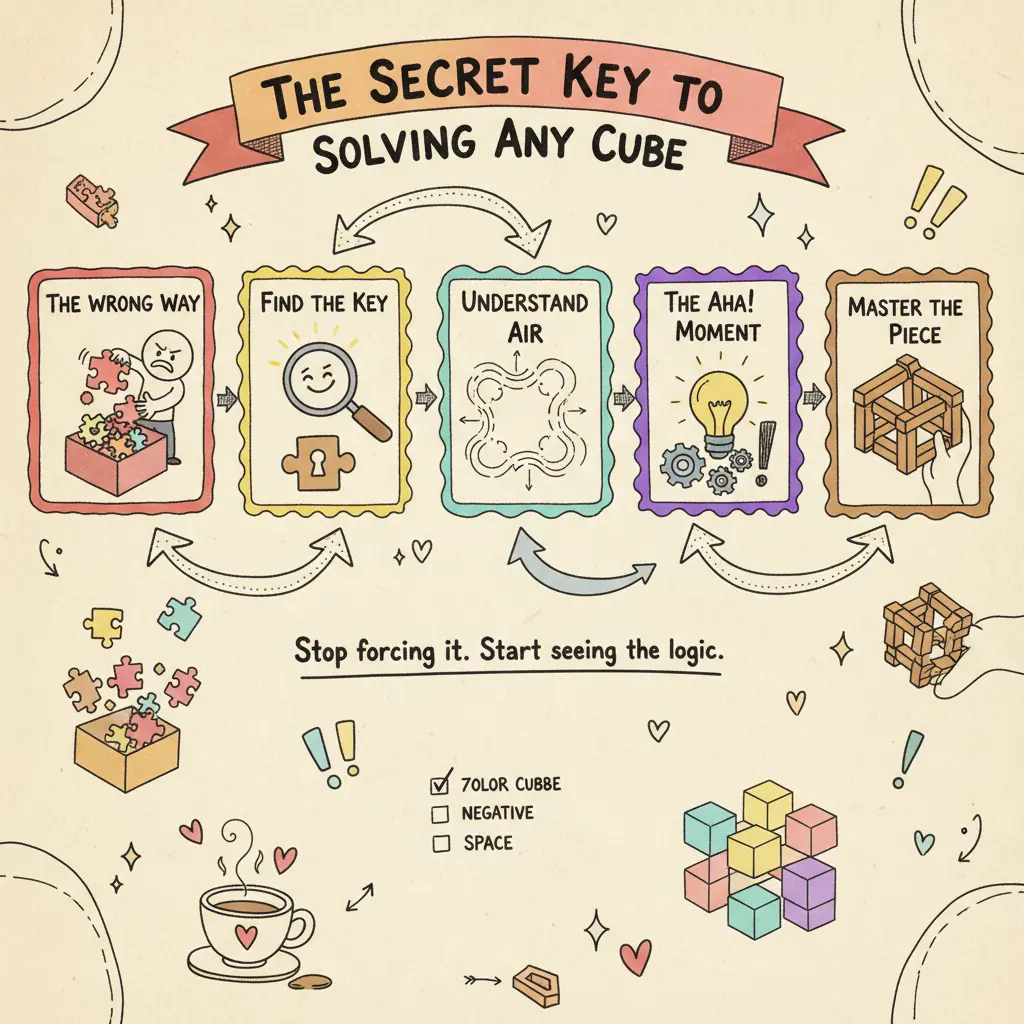
But after a decade of fiddling with these objects, I’ve realized that the best puzzle cubes aren’t about speed. They are lessons in negative space. Whether you are holding a classic 7 Color Soma Cube Puzzle or a complex interlocking burr, the secret isn’t in the pieces themselves. It’s in the air between them. My thesis is simple: The most rewarding solves happen when you stop trying to “fix” the cube and start trying to understand the “key piece”—that one specific element that dictates the entire geometry of the object.
Why Your First Solve Will Be an Accident
Most beginners fail because they treat every piece as equal. In a standard 3×3 wooden cube, they aren’t. There is almost always a “prime mover”—a piece that must be placed first, or a “locking piece” that must be slid in last.
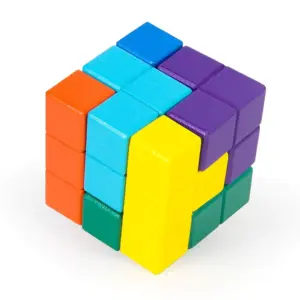
When I first unboxed the 7 Color Soma Cube Puzzle ($21.88), I made the mistake of trying to build from the bottom up. It’s a common trap. You see seven uniquely shaped polycubes and assume it’s just a 3D version of Tetris. It’s not. The Soma cube, invented by Piet Hein during a lecture on quantum mechanics, is designed to be counter-intuitive.
7 Color Soma Cube Puzzle
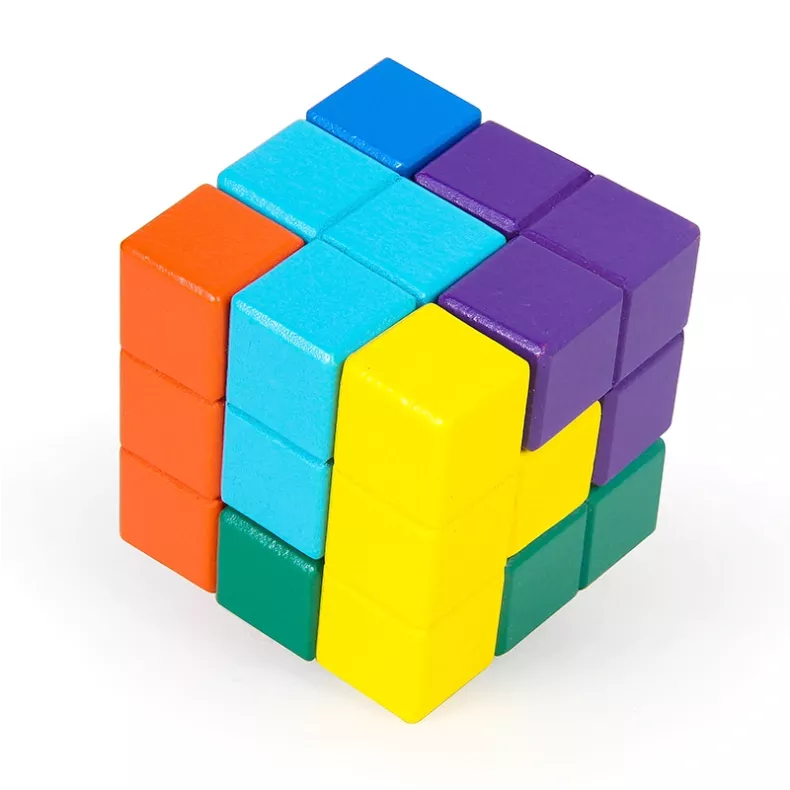
This isn’t your standard plastic speed cube. The 7 Color Soma Cube Puzzle is a tactile, wooden 3x3x3 challenge that feels substantial in the hand. I’ve had this specific set on my coffee table for three weeks, and it’s the only thing that consistently pulls my guests away from their phones. The pieces are smooth, brightly colored, and have a satisfying weight that makes the “clink” of a successful fit feel like a genuine victory.
The trick to this one? Focus on the most irregular piece first—the “V” or the “L” shapes. If you save the awkward shapes for last, you’ll find yourself staring at a 2×1 hole that no remaining piece can fill. This puzzle is a perfect entry point because while there are 240 distinct ways to form the cube, there are thousands of ways to fail. It teaches you that spatial reasoning is a skill you can build rather than a talent you’re born with.
The Secret Language of Wooden Joinery
If the Soma cube is about filling a volume, interlocking burr puzzles are about structural integrity. This is where the challenge moves from “fun” to “obsessive.”
I recently spent a rainy Sunday with the 6-in-1 Wooden Brain Teaser Set ($38.88). These are palm-sized puzzles based on the Lu Ban lock—a traditional Chinese joinery method that has held buildings together for centuries without a single nail. When you hold these, you aren’t just holding a toy; you’re holding a piece of architectural history.
6-in-1 Wooden Brain Teaser Set
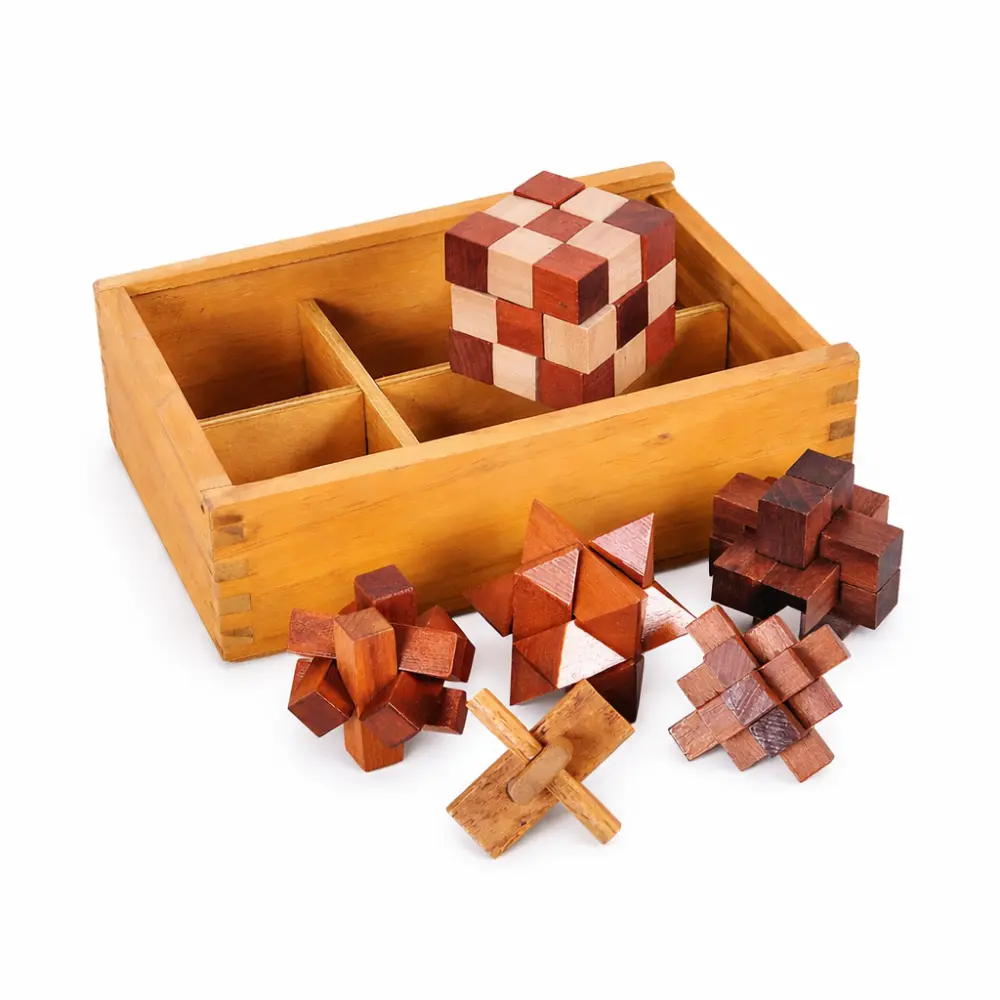
What I love about this set is the variety. You get six different challenges, each teaching a slightly different mechanical principle. One might require a “key piece” to be pulled out vertically, while another requires a simultaneous slide of three different sections. I handed the “Star” puzzle from this set to a mechanical engineer friend, and it took him twenty minutes just to find the first move.
The beechwood is precision-cut, which is vital. In cheaper sets, the wood swells or shrinks with humidity, making the solve impossible or too loose. These have just enough friction to stay together but slide smoothly when you find the right path. For under forty dollars, this is the best value-per-hour of entertainment you can find for a desk toy. If you enjoy these, you might also find that simpler wooden disentanglement tasks offer a similar “reset” for your brain during a long workday.
The Logic of the “Key Piece”
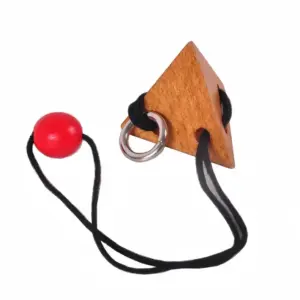
In the 6 Piece Wooden Puzzle Key ($12.99), the lesson is even more distilled.
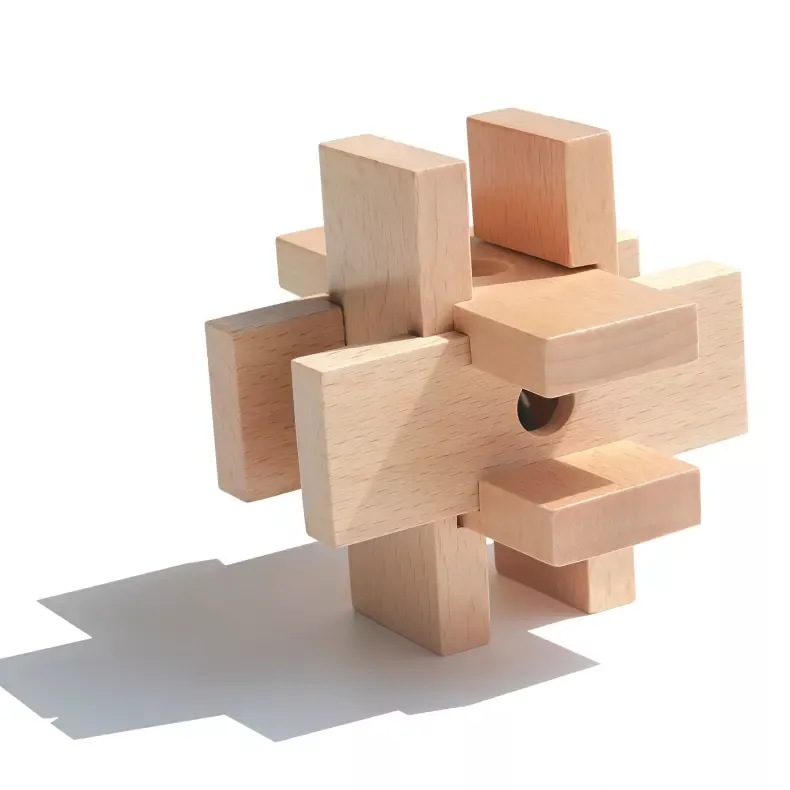
6 Piece Wooden Puzzle Key — $12.99
This is what I call a “pocket closer.” It’s six hardwood pieces that look identical until you start looking at the notches. The solve here is purely about identifying the one piece that has a slightly shallower cut. That is your anchor. Once you find it, the rest of the cube (or in this case, the key shape) reveals its logic. It’s a great example of “Wu Wei” or effortless action—the moment you stop forcing the pieces, the pattern emerges.
I’ve found that locking puzzles often hide their secrets in the most mundane-looking parts. In the 24 Lock Puzzle ($16.99), the sheer number of pieces (twenty-four!) makes it look intimidating, but it actually follows the same “key piece” logic as the smaller sets.
24 Lock Puzzle
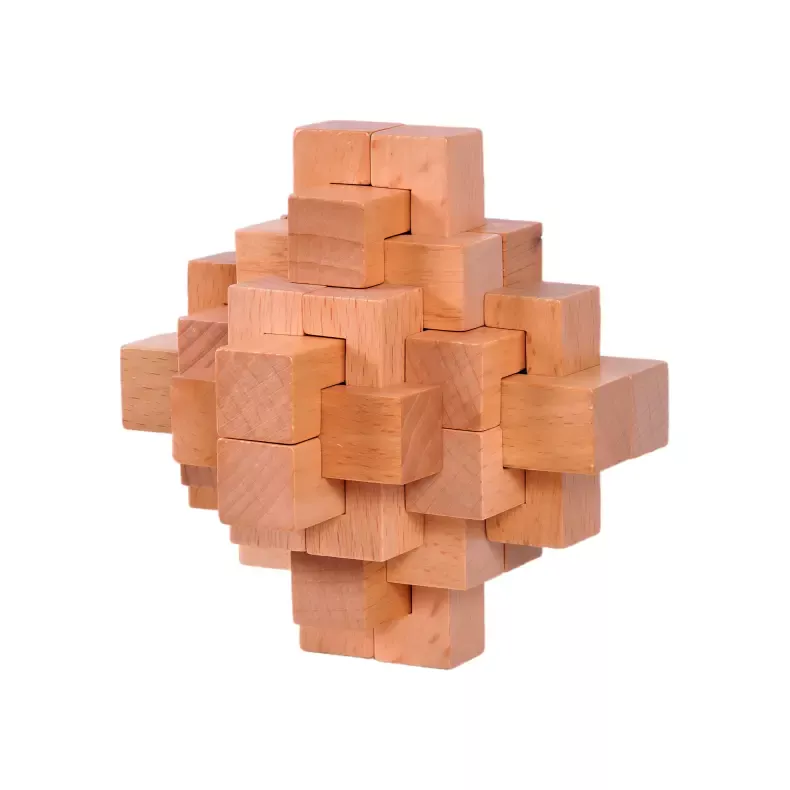
This is a premium brain teaser that demands dexterity. If you have large hands, you’ll need to be careful—it’s about finesse, not force. The 24 Lock Puzzle is an immersive experience. I’ve had this one on my desk for months, and I still find the reassembly more challenging than the disassembly. Taking it apart is a lesson in gravity; putting it back together is a lesson in patience. It’s the kind of object that makes you appreciate the “wordless teaching” of ancient strategy.
The Peak: Why Your Brain Loves the “Aha!” Moment
Here is the exclusive insight I’ve gained after opening hundreds of these: The difficulty of a puzzle is inversely proportional to how much you think.
Most people approach a cube by trying to visualize the final result. But your brain isn’t actually that good at 3D rendering in real-time. The “peak” moment of a solve—the second where the last piece clicks into place—doesn’t happen because you calculated it. It happens because you stopped thinking and started feeling.
I’ve tested this with kids and adults. I gave a 10-year-old and a 45-year-old the same interlocking puzzle. The 10-year-old solved it in four minutes because they just kept moving things until it “felt” right. The 45-year-old spent twenty minutes trying to explain the “mechanics” of why it wasn’t working.
The data shows that puzzles actually support cognitive health by forcing the brain to build new neural pathways for visuospatial cognition. But you only get that benefit if you actually let the puzzle teach you. When you hit that wall of frustration, that’s your brain trying to use an old map for a new territory. The “Aha!” moment is the sound of a new map being drawn.
Transitioning to Metal: The Tactile Shift
Once you’ve mastered the wooden cube, the next step is metal. Metal puzzles, often called “Cast” puzzles, bring a different set of challenges: weight, sound, and tighter tolerances.
The Brass Cube Maze Puzzle Keychain ($16.99) is a perfect example of a cube that isn’t about pieces, but about a hidden path.
Brass Cube Maze Puzzle Keychain
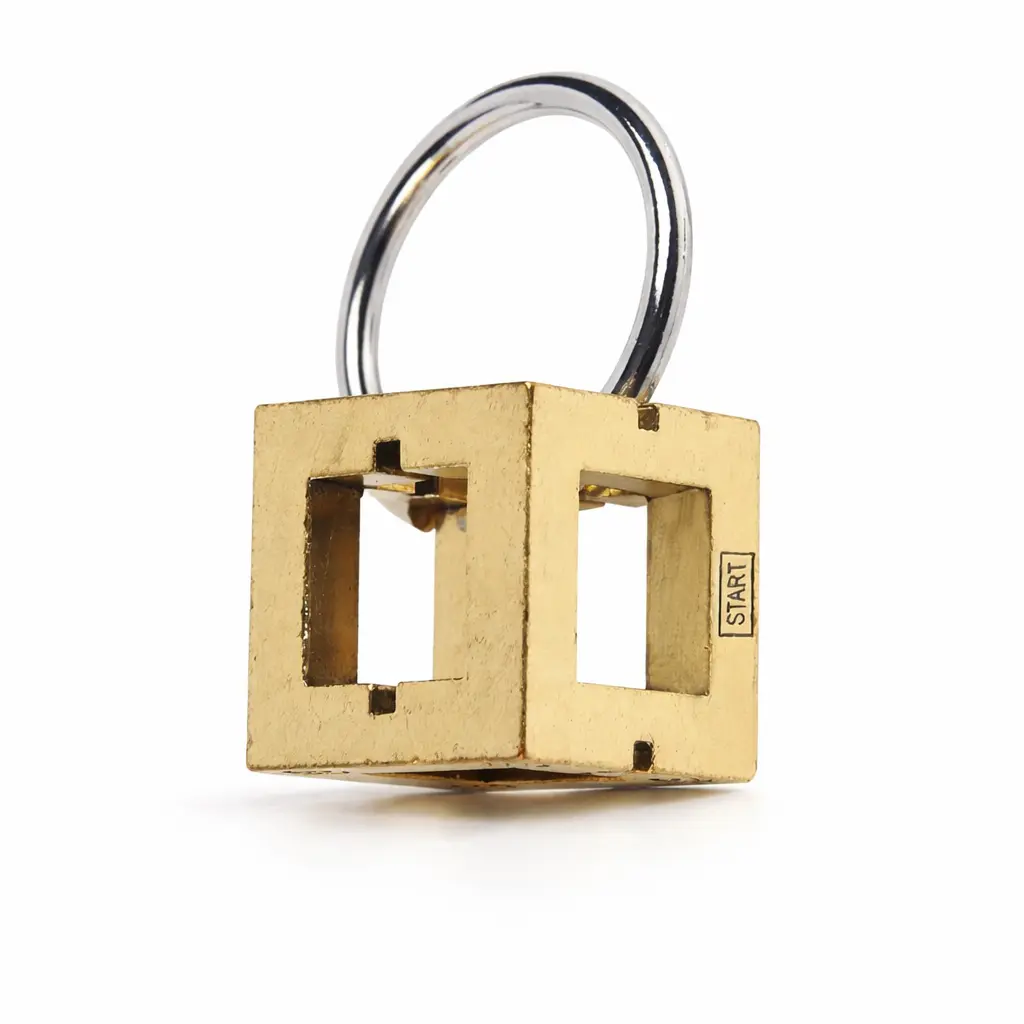
I keep this on my keys. It’s a 31mm polished brass cube with a chrome ring that you have to navigate through an internal maze. Unlike the wooden cubes where you can see the joinery, this one is a “blind” solve. You have to feel the notches through the ring. It’s a brilliant piece of EDC (Everyday Carry) gear. The brass has a slight warmth as you hold it, and the click of the ring hitting a dead end is oddly soothing. It’s a beginner-to-intermediate challenge that rewards spatial thinking without requiring you to be a genius.
If you find yourself enjoying the cold, precise feel of metal, you might also like the Interlocking Metal Disk Puzzle ($14.99).
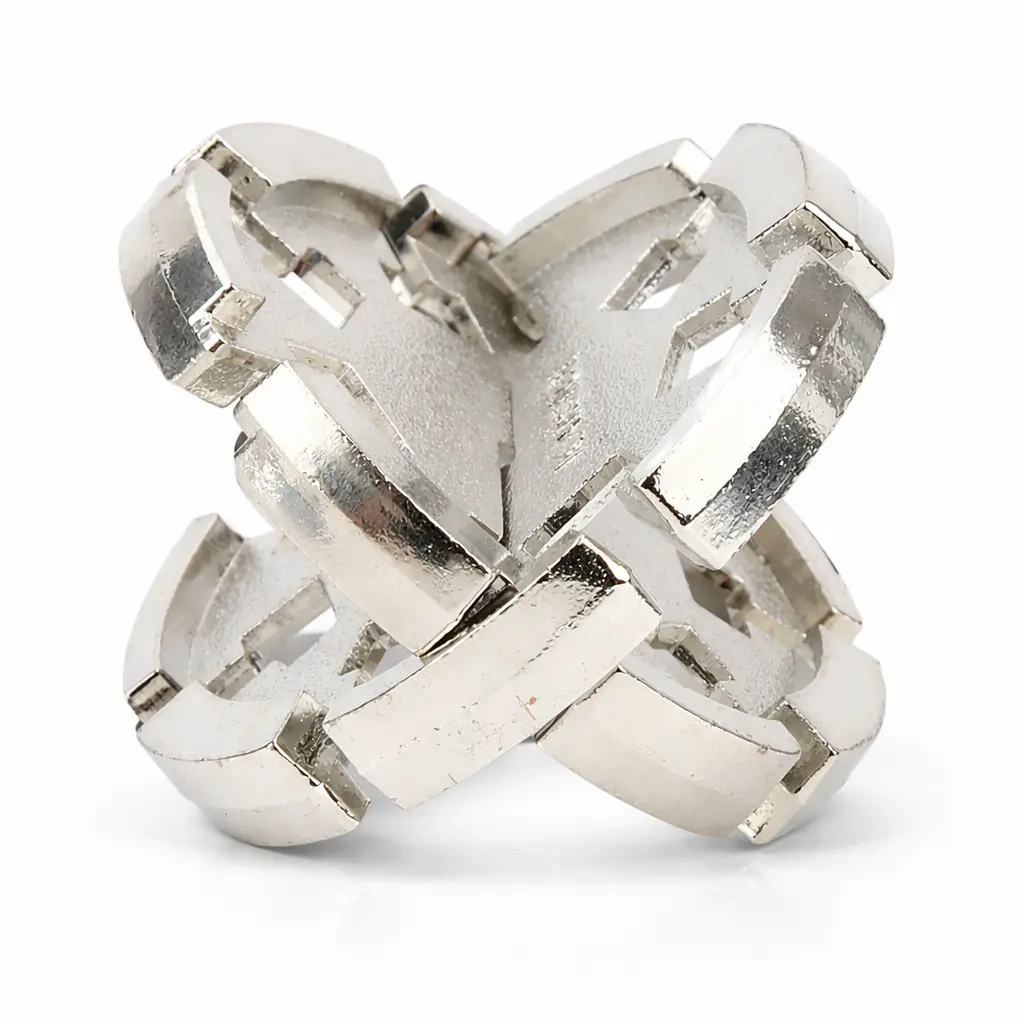
It’s not a cube, but it uses the same rotational logic. Two pieces rotate through slotted positions. I use this as a “desk reset.” When a long email chain starts to give me a headache, I pick this up for two minutes. It’s small (1.8 inches), doesn’t clutter the desk, and provides a clear sequence of moves that calms the mind. It’s a no-screen way to get your focus back.
When the Cube Becomes a Machine
The ultimate evolution of the cube puzzle is when it moves from a static object to a functional machine. This is where the 3D Wooden Puzzle Safe with Combination Lock ($30.99) lives.
3D Wooden Puzzle Safe with Combination Lock
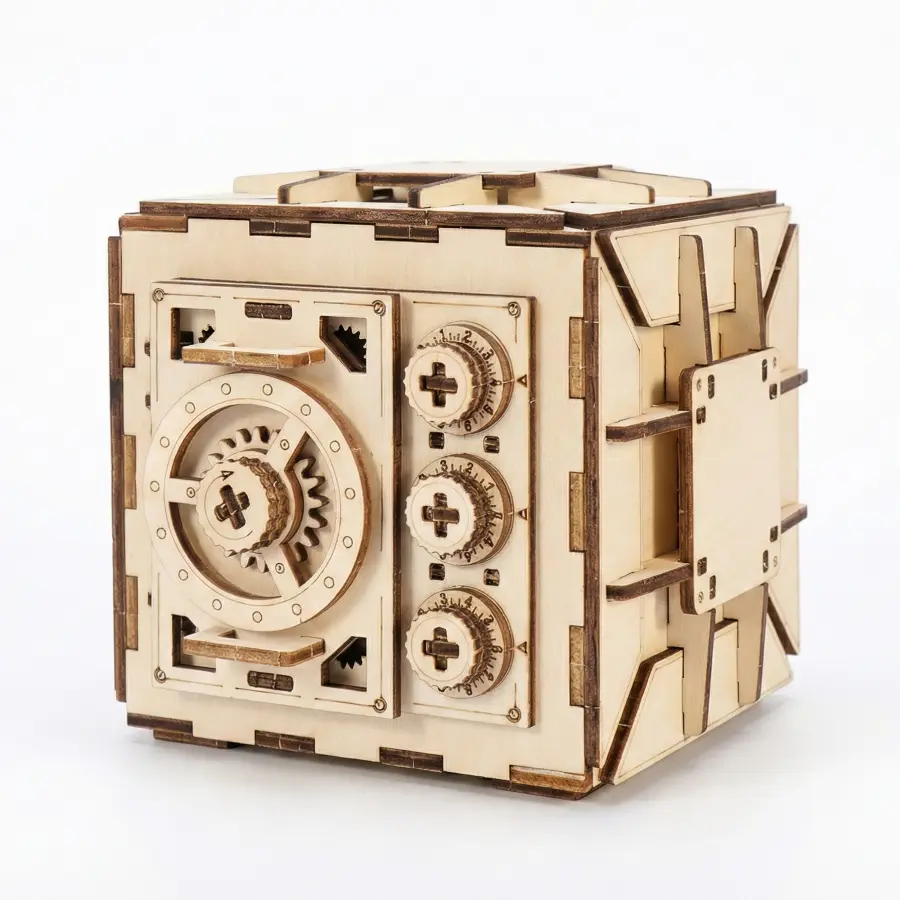
I spent about an hour and a half assembling this 111-piece kit. It’s not a “solve” in the traditional sense, but a “build.” However, the logic of the cube is still there—every piece of precision-cut plywood must be perfectly aligned for the 3-digit combination lock to function.
The finish is surprisingly high-quality for the price point. No glue is required, which I appreciate; glue is the enemy of mechanical puzzles. Once it’s built, you have a functional safe with a visible gear system. It’s a great way to show a teenager how a real safe works. If I’m being honest, the instructions can be a bit dense in the middle sections, but if you take your time and don’t force the gears, the payoff is worth it. It turns the “puzzle cube” concept into a piece of functional art.
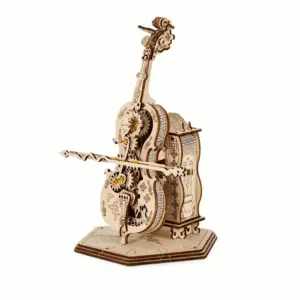
For those who want something even more artistic, the 3D Wooden Cello Puzzle Model Kit ($29.99) offers a similar mechanical build experience.
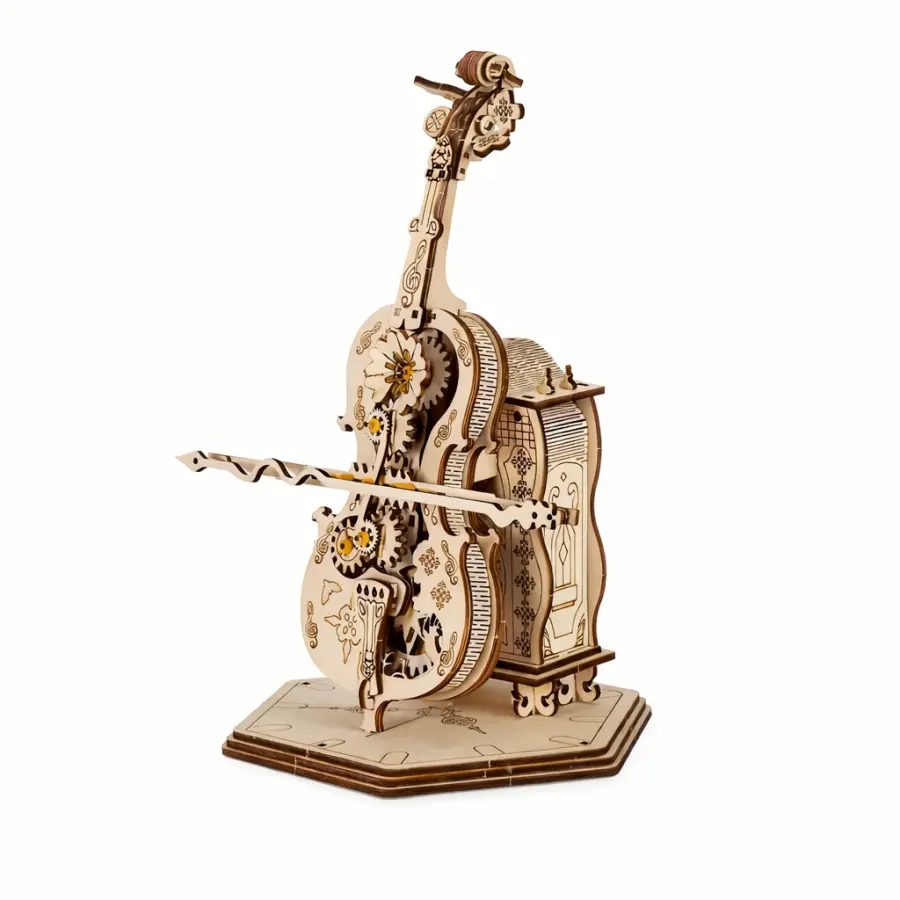
It’s less of a “brain teaser” and more of a tribute to craftsmanship, combining steampunk gears with Victorian engravings. It’s the kind of thing you build on a Saturday afternoon while listening to a podcast.
The Outliers: Crystal and Keyholes
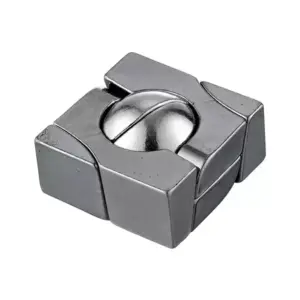
Sometimes, the “cube” isn’t a cube at all, but it uses the same interlocking logic. Take the Cast Keyhole Gold & Silver ($13.99).
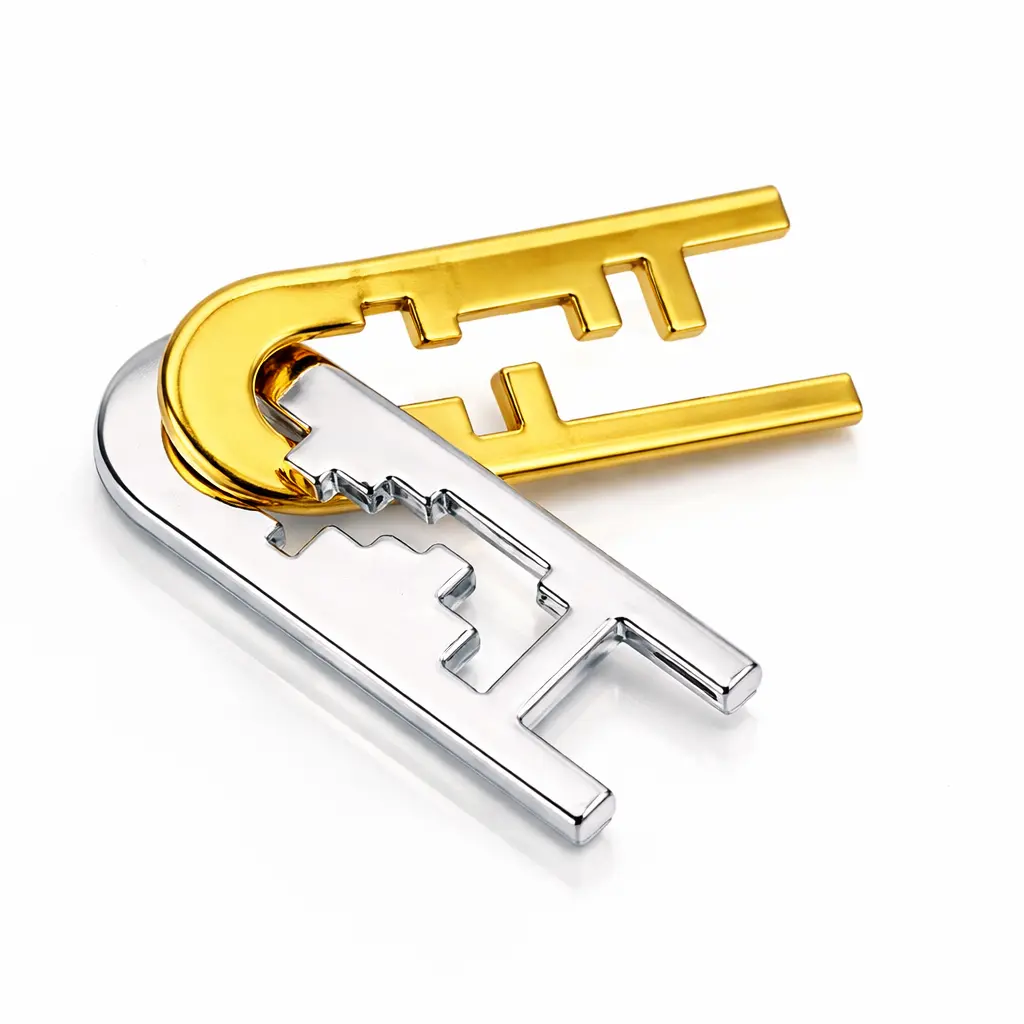
Cast Keyhole Gold & Silver — $13.99
At first glance, it looks like two flat pieces of metal. But once you slide them together, they form a 3D maze. This is one of those puzzles where “confidence goes to die.” You think you’ve solved it in thirty seconds, only to realize you’ve actually locked the pieces even tighter. It’s pocket-sized and has a beautiful polished chrome and gold-tone finish. It’s the most “Wirecutter” of the bunch—durable, affordable, and does exactly what it promises.
And then there’s the 3D Crystal Rose Puzzle ($19.99).
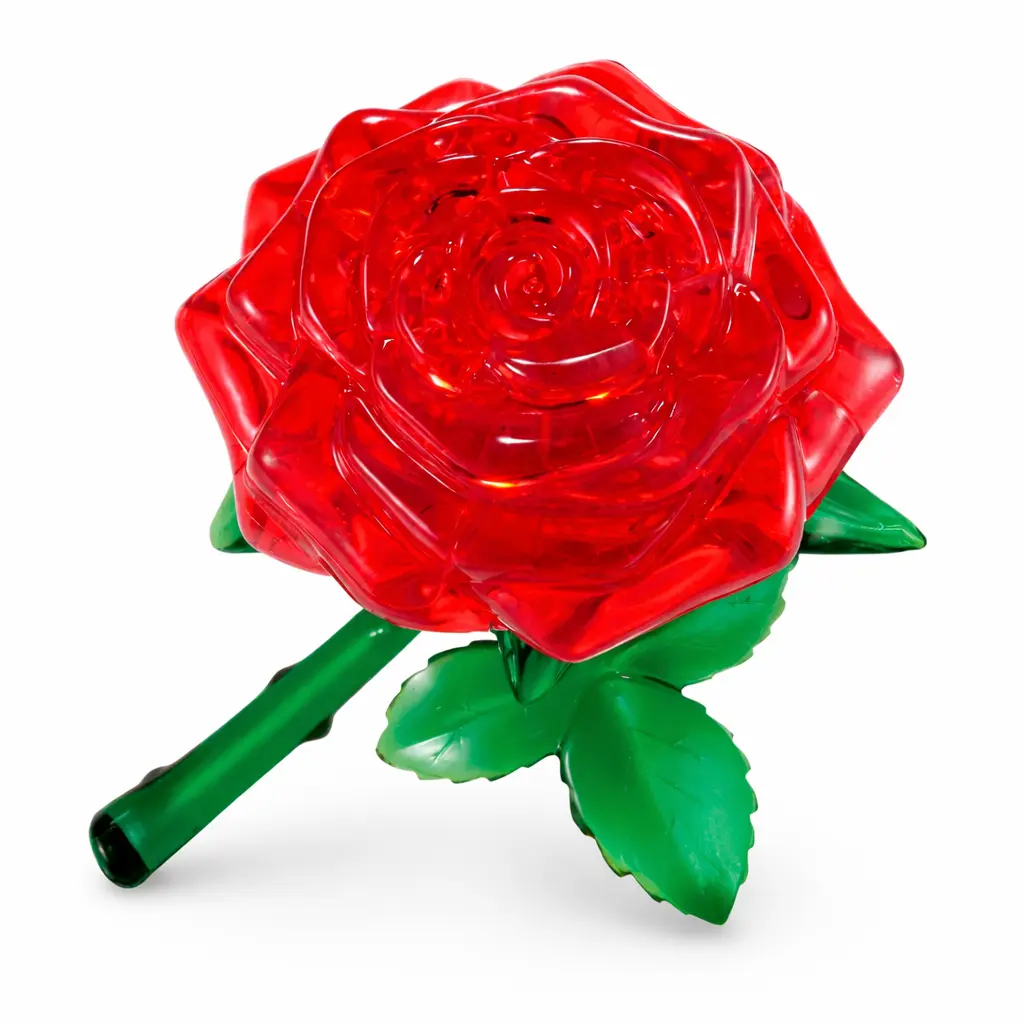
3D Crystal Rose Puzzle — $19.99
This is a 44-piece translucent puzzle that assembles into a rose. It’s a different beast entirely. While wooden cubes rely on friction and metal ones on mazes, crystal puzzles rely on visual overlapping. You have to look through the pieces to see how they fit. It’s a great gift for someone who finds traditional wood puzzles too “masculine” or “clunky.” It looks like glass but is made of durable plastic that catches the light beautifully on a windowsill.
Quick-Reference Comparison Table
FAQ: Everything You Wanted to Ask While Stuck
How do you solve a Rubik’s cube for beginners?
While I specialize in mechanical and wooden puzzles, the logic for a Rubik’s cube is different. You solve it in layers: first the cross, then the corners, then the middle layer, and finally the top face. It’s about memorizing algorithms (sequences of moves). If you find that too tedious, mechanical cubes like the 7 Color Soma Cube Puzzle are often more rewarding because they rely on logic and intuition rather than rote memorization.
What is the easiest way to solve a 3×3 puzzle cube?
The easiest way is to identify the “locking piece.” In almost every wooden or metal interlocking puzzle, there is one piece that moves before the others. Don’t try to pull everything at once. Wiggle each piece gently; the one that moves the most is usually your starting point. If you’re looking for a digital break, sometimes playing a simple logic game like Snake can help reset your spatial awareness before you dive back into a physical solve.
My kid took my puzzle apart and I can’t put it back. Any hints?
This is the most common plea for help! If it’s a Soma cube, remember that the largest, most awkward pieces should be placed toward the center of the cube. If it’s a burr puzzle (like the ones in the 6-in-1 set), look for the piece that has no internal notches—that is almost always the last piece to slide in.
Are wooden puzzles better than metal ones?
It depends on what you value. Wooden puzzles have a warmth and a history that metal can’t match. They are also more “honest”—you can usually see the joinery. Metal puzzles, like the Cast Keyhole Gold & Silver, often use hidden internal mazes or magnets. If you want a tactile, traditional experience, go wood. If you want a sleek, modern challenge that fits on a keychain, go metal.
Can these puzzles help with anxiety or focus?
Absolutely. I’ve found that having something like the Interlocking Metal Disk Puzzle on my desk acts as a grounding tool. It forces your brain to move from “abstract worry” to “concrete geometry.” Many people find that using tactile focus tools helps them stay present during long meetings or stressful workdays.
How durable are these? Will they break if I force them?
Never force a puzzle. If you have to use more than a gentle thumb’s worth of pressure, you’re doing it wrong. These are precision-machined objects. Forcing a wooden puzzle can snap the grain, and forcing a metal one can burr the edges, making the true solution impossible to find later. If you’re stuck, put it down and walk away.
What age are these appropriate for?
Most of the puzzles I’ve mentioned are great for ages 10 to 100. The 3D Wooden Puzzle Safe is better for 14+ due to the complexity of the assembly. For younger kids, the 7 Color Soma Cube Puzzle is perfect because the colors help them track the pieces.
Do I need tools to solve these?
No. A well-designed mechanical puzzle should never require tools, glue, or sandpaper. If you find yourself reaching for a screwdriver, stop. You’re about to ruin a perfectly good enigma.
Why are some puzzles so much more expensive than others?
You’re paying for tolerances. A cheap wooden puzzle might have 1-2mm of “play,” which makes it easy to accidentally solve. A high-end puzzle has tolerances of less than 0.1mm. The Brass Cube Maze Puzzle Keychain is a great example of mid-range quality—it’s affordable but precisely machined so the ring doesn’t snag where it’s not supposed to.
Is there a “definitive” solution to every cube?
For many, yes. But for the Soma cube, there are over 240. That’s the beauty of it—you can solve it today and find a completely different way to solve it tomorrow. It’s one of the few puzzles with genuine replayability.
How do I store my collection?
Keep wood puzzles away from direct sunlight and extreme humidity. I’ve seen beautiful 24 Lock Puzzles warp because they were kept next to a radiator. Metal puzzles are more forgiving but can tarnish over time; a quick wipe with a microfiber cloth keeps them looking new.
What should I buy if I’m a complete beginner?
Start with the 7 Color Soma Cube Puzzle ($21.88). It’s the most “forgiving” solve because there are so many ways to get it right. It builds the foundational spatial logic you’ll need for more advanced interlocking burrs.
I’m bored with cubes. What’s next?
If you’ve mastered the 3D geometry of cubes, try moving into sequential discovery or 2D logic challenges. Sometimes a change of pace, like a session of Kurodoko, can sharpen the specific part of your brain that deals with constraints and grid-based logic.
The One Puzzle That Teaches You How All the Others Work
If you’ve read this far, you’re likely looking for that one “perfect” starting point. After testing over 200 of these, I keep coming back to the same conclusion: the 7 Color Soma Cube Puzzle ($21.88) is the gold standard. It’s the puzzle that taught me that the “void” is just as important as the “solid.” It’s the puzzle that taught me to stop swearing at pieces of wood and start listening to them.
Solving a cube isn’t a race to the finish line. It’s a conversation between your hands and a designer who lived decades, or even centuries, ago. When you finally slide that last piece into place, you aren’t just “fixing” a toy; you’re aligning your mind with a physical truth.
Start with the 7 Color Soma Cube Puzzle—it taught me more about patience and spatial awareness than any textbook ever could. And once that clicks, the rest of the collection is just waiting for you to find the next key piece. The air between the pieces is where the solution lives; you just have to be quiet enough to hear it.