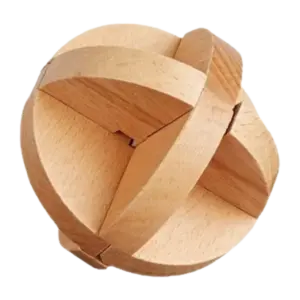
The third time the crimson sphere rolled off my mahogany desk and under the radiator, I stopped. My coffee had gone cold. My fingertips felt slightly raw from the friction of precision-cut wood. I realized I wasn’t fighting the Twelve Sisters Puzzle; I was fighting my own impatience. This is the fundamental truth of the mechanical puzzle hobby. We buy these objects to “solve” them, but the best ones actually solve us.
After testing over 200 mechanical challenges ranging from cheap plastic cubes to thousand-dollar sequential discovery boxes, I’ve returned to the basics. Wood offers a tactile warmth that metal cannot replicate. It has a “give” and a grain that demands a conversation between your hands and the material.
The core thesis of this guide is simple: the most rewarding brain twister wooden puzzle rewards observation over force. If you find yourself white-knuckling a joint, you’ve already lost the game. True mastery in this niche requires a “soft” mind. You must meet the wood where it is, rather than where you want it to be.
Why Your First Solve Will Be an Accident
Most people approach a wooden puzzle like a door they need to kick down. They pull, they pry, and they hope for a miracle. Among the mechanical disentanglement community, we call this “brute-forcing.” It is the antithesis of the hobby.
When I first picked up the 6 Piece Wooden Puzzle Key, priced at a modest $12.99, I spent twenty minutes trying to slide the central bar. It wouldn’t budge. I assumed the wood had swollen due to the humidity in my office. I was wrong. The solution required a subtle rotation I hadn’t even considered because I was too busy applying pressure.
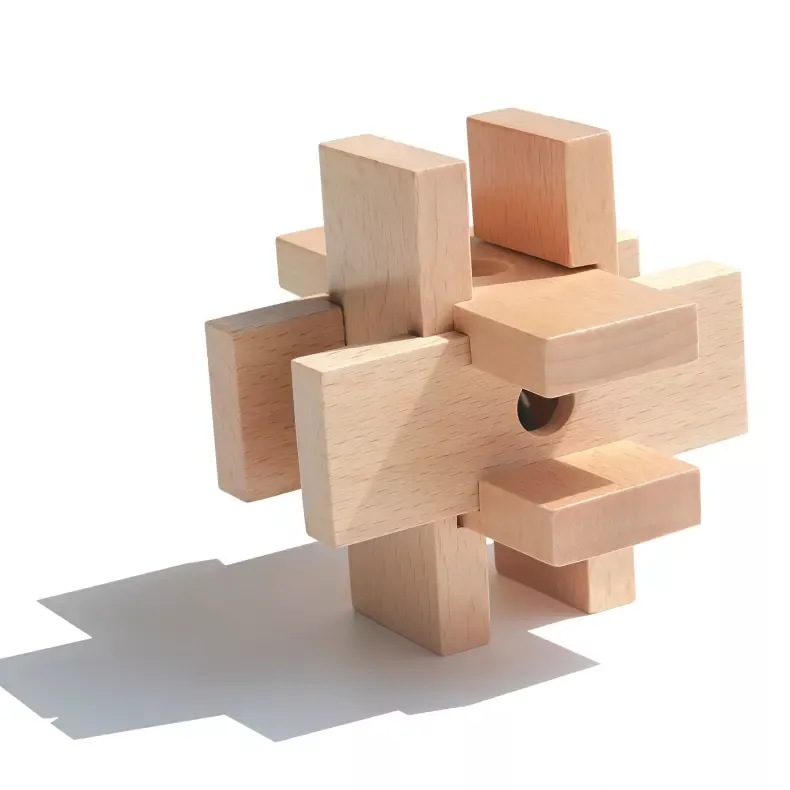
6 Piece Wooden Puzzle Key — $12.99
The 6 Piece Wooden Puzzle Key ($12.99) is the perfect introduction to this philosophy of “Wu Wei” or effortless action. It consists of six hardwood pieces that form a solid, interlocking block. There are no electronics or hidden magnets here. It is pure geometry. I often keep this one on my desk during long Zoom calls. It’s small enough to fiddle with one-handed, yet complex enough to keep the “monkey mind” occupied. If you’re looking for a gift that doesn’t feel like a plastic throwaway, this is the entry point. It proves that complexity dissolves into simplicity once you stop forcing the issue.
The Physics of the Click: Wood vs. Metal
There is a specific sound a brain teaser makes when the final piece seats itself. In metal puzzles, it’s a sharp, clinical clack. In wood, it’s a muffled, organic thud. That sound is the result of centuries of joinery evolution.
Many of the puzzles we enjoy today are modern iterations of the “Luban Lock,” named after the legendary Chinese carpenter Lu Ban. These structures rely on the same principles as ancient architecture: balance and friction. Unlike a jigsaw puzzle which is two-dimensional and visual, these are three-dimensional and structural.
Take the Jiutong Lock ($16.99). It’s an heirloom-quality piece that uses three skeletal strips and five unique blocks.
Jiutong Lock
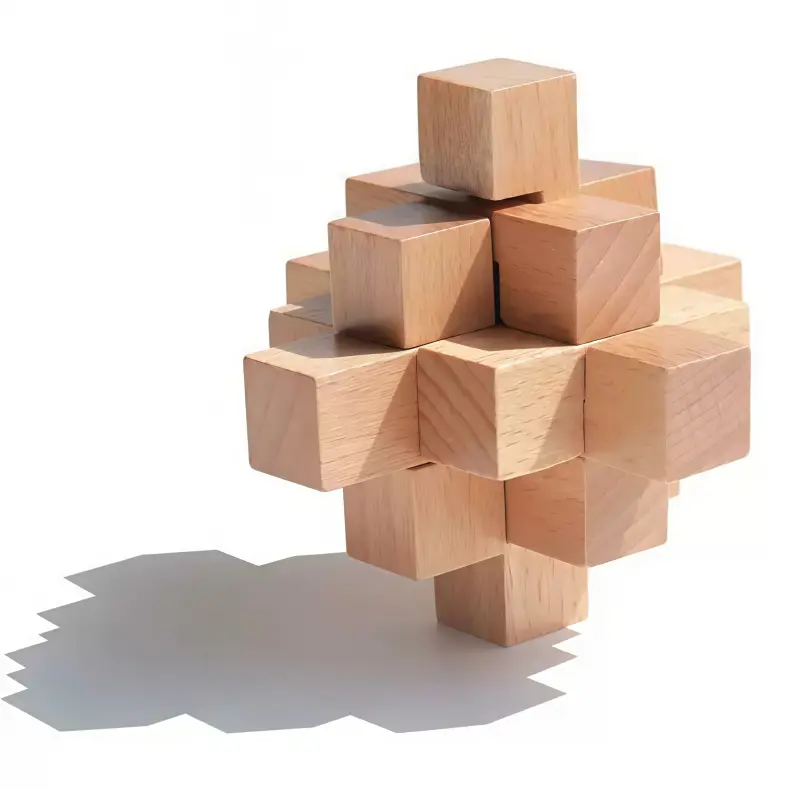
The Jiutong Lock ($16.99) is a masterclass in skeletal design. Most burr puzzles are solid, but the Jiutong uses open frames that allow you to see the internal “locking” blocks. This visibility is actually a trap. It makes you think you understand the path, but the “master key” piece is hidden in plain sight. I’ve handed this to engineers who spent an hour trying to map the internal voids before realizing the solution was a simple, elegant slide. The craftsmanship is premium, with a finish that feels smooth rather than splintery. It’s a meditative object. It reminds me that profound discoveries often come from focused contemplation rather than frantic movement.
The 3D Geometry of Interlocking Burrs
If you want to understand how these things work, you have to think about “axes of movement.” A standard six-piece burr puzzle ($17.99) usually moves along three axes. But as you move into “twister” territory, those axes get blurred.
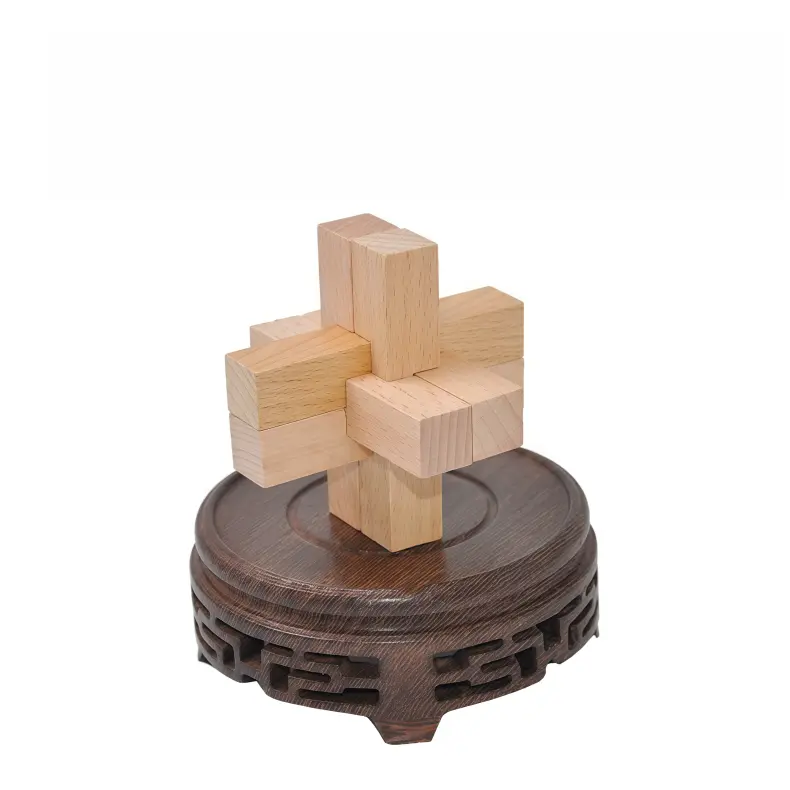
Six-Piece Burr — $17.99
The Six-Piece Burr ($17.99) is the “Old Reliable” of my collection. I’ve had mine for years, and even though I know the solution, I still take it apart once a month. There’s something about the way the six pieces play vital roles—no excess, no shortcuts. It’s a screen-free way to reset your brain after a day of looking at spreadsheets. It’s also one of the few puzzles I’ve found that works well for both my ten-year-old nephew and my seventy-year-old father. It teaches patience without being demoralizing.
When you move beyond the standard burr, you encounter things like the Double Cross Cage Puzzle ($18.88). This is where the geometry gets truly mind-bending.
Double Cross Cage Puzzle
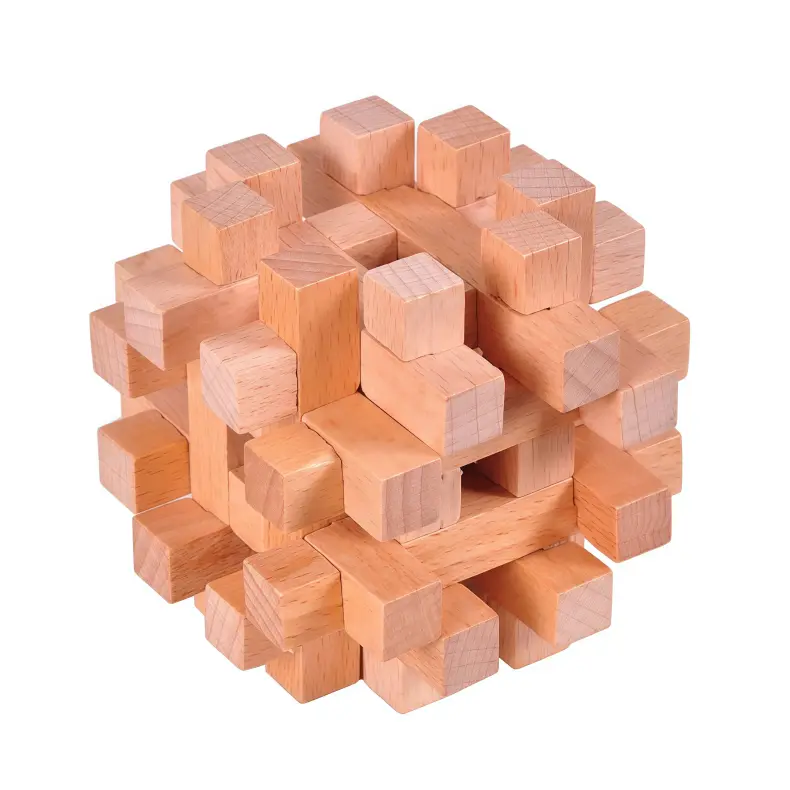
The Double Cross Cage Puzzle ($18.88) uses twenty-four identical pieces to create a structure that looks like a small wooden sunburst. This is a “high-piece count” challenge that tests your fine motor skills as much as your logic. The difficulty isn’t just in figuring out where the pieces go, but in keeping the first twenty pieces in place while you try to slot in the twenty-first. It’s a tactile meditation on alignment. I found that using a small rubber band to hold the base together during the early stages of assembly (my “cheat” for high-piece count burrs) was unnecessary if I just slowed down my breathing. It is proof that knowing when to yield—and how to balance—is the ultimate power in solving.
My “Aha!” Moment: The Twelve Sisters Breakthrough
This is the peak of my testing journey. If there is one paragraph you should remember from this guide, it’s this: the moment of “The Click” is a neurological reward that can’t be bought; it must be earned.
I spent an entire Saturday afternoon with the Twelve Sisters Puzzle ($19.99). This is not your average desk toy. It features twelve thick rods, each with five precision holes, twelve interlocking sticks, and a single crimson center sphere.
Twelve Sisters Puzzle
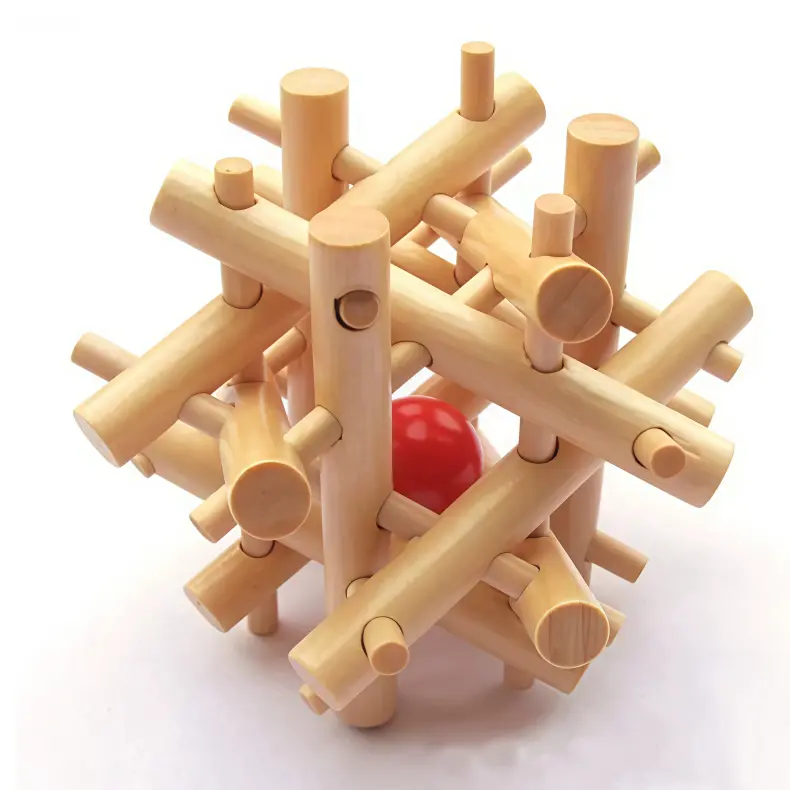
The Twelve Sisters Puzzle ($19.99) is the “Final Boss” of wooden interlocking challenges. Disassembly takes seconds, which is a cruel joke because reassembly can take an entire afternoon. The rods must be woven together in a specific sequence to form a cage that traps the center sphere. About two hours in, I realized I was trying to build the structure from the outside in. The secret is the center. By mastering the fundamental internal structure, the complex outer pattern reveals itself naturally. It’s a beautiful metaphor for life: when the core is solid, the rest follows. The $19.99 price point is a steal for the sheer amount of “head-scratching time” you get in return.
The “Aha!” moment happened when I stopped looking at the individual sticks and started looking at the voids between them. In sequential logic challenges, the space where a piece isn’t is just as important as the piece itself. When the last rod slid through the precision holes and locked the sphere in place, the satisfaction was physical. I actually felt my heart rate drop.
The Desk Toy Dilemma: Engagement vs. Distraction
Not every puzzle needs to be a four-hour odyssey. Sometimes you just need something to “clear the cache” of your brain between meetings. This is where smaller, more “fiddly” puzzles shine.
I’ve found that ghost-style enclosures and spheres are excellent for this. They don’t require a large workspace, and they don’t have twenty pieces that can get lost in the couch cushions.
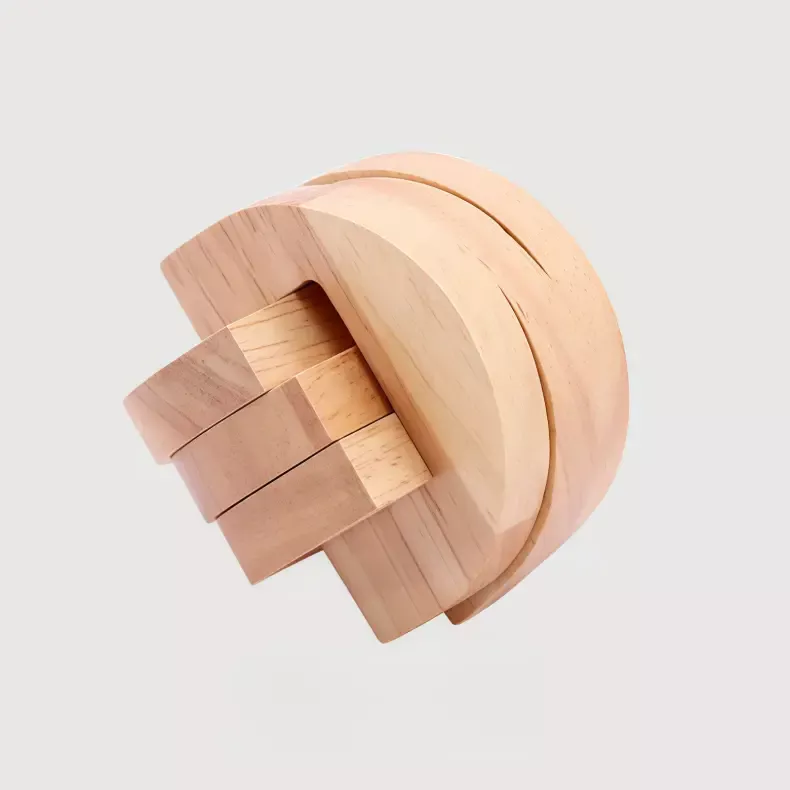
Interlock Puzzle Sphere — $17.99
The Interlock Puzzle Sphere ($17.99) is a perfect example. It’s a seamless sphere made of six unique pieces. Because it’s round, it feels more like a worry stone in your hand. The solve is ego-free; you have to meet each piece where it is. If you’re looking for a tactile learning system to help with focus, this is a top-tier choice. I’ve noticed that when I’m stuck on a coding problem, five minutes of disassembling and reassembling this sphere often triggers the breakthrough I need.
Similarly, the Circular Lock ($16.99) is a three-piece wonder.
Circular Lock
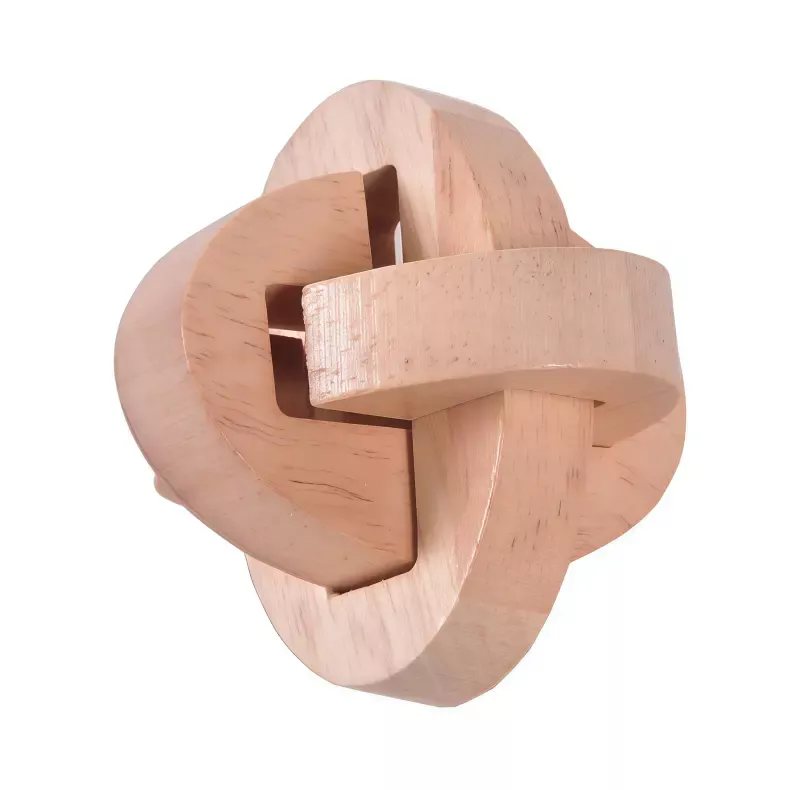
The Circular Lock ($16.99) is surprisingly difficult for having only three pieces. Most people assume that fewer pieces mean an easier solve. This is a fallacy. This puzzle uses smooth, sliding motions that require you to think in circles—literally. It’s a meditation in motion. I’ve had this on my coffee table for months, and it’s the one guests always pick up first. It teaches that mastery begins small. If you can refine your focus on three pieces, you can handle thirty. It’s a great “reset” button for a chaotic day.
Solving the Unsolvable: A Comparative Look
When you’re choosing your next challenge, you need to decide what kind of frustration you enjoy. Do you like the “How does this even fit?” mystery of a pyramid, or the “Why won’t this slide?” friction of a lock?
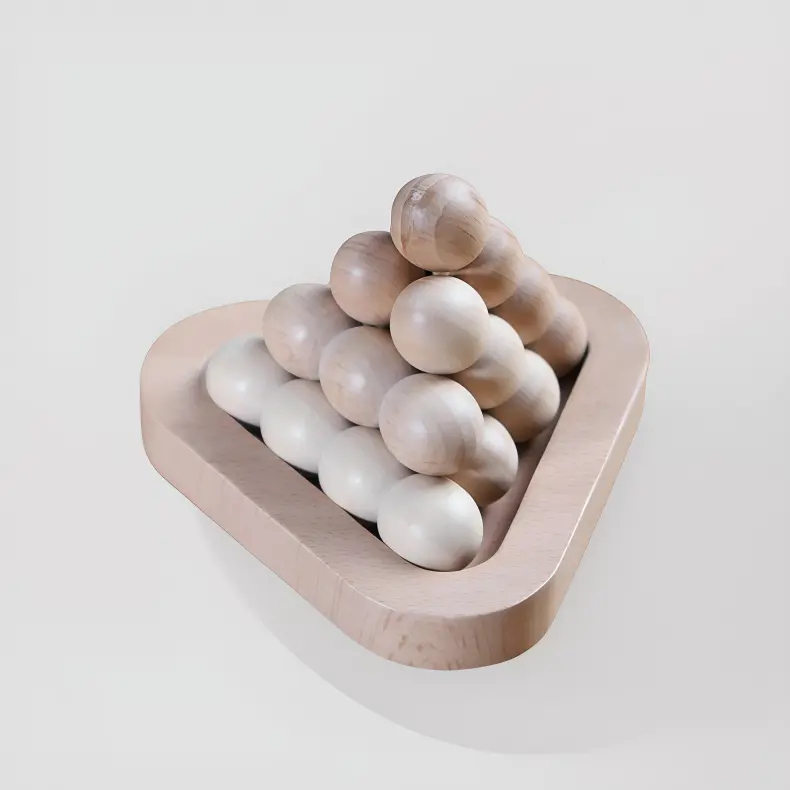
Wooden Bead Pyramid — $18.88
The Wooden Bead Pyramid ($18.88) falls into the spatial reasoning category. It consists of six strands of beads that must be stacked into a perfect 3D pyramid. It reminds me of the T puzzle in its deceptive simplicity. You look at the pieces and think, “This should take two minutes.” Thirty minutes later, you’re still staring at a pile of beads. It’s a sophisticated brain teaser that rewards patient insight. It’s also quite beautiful as a display piece; the geometry is inherently satisfying to the eye.
Contrast that with The Twin Star Puzzle ($17.88).
The Twin Star Puzzle
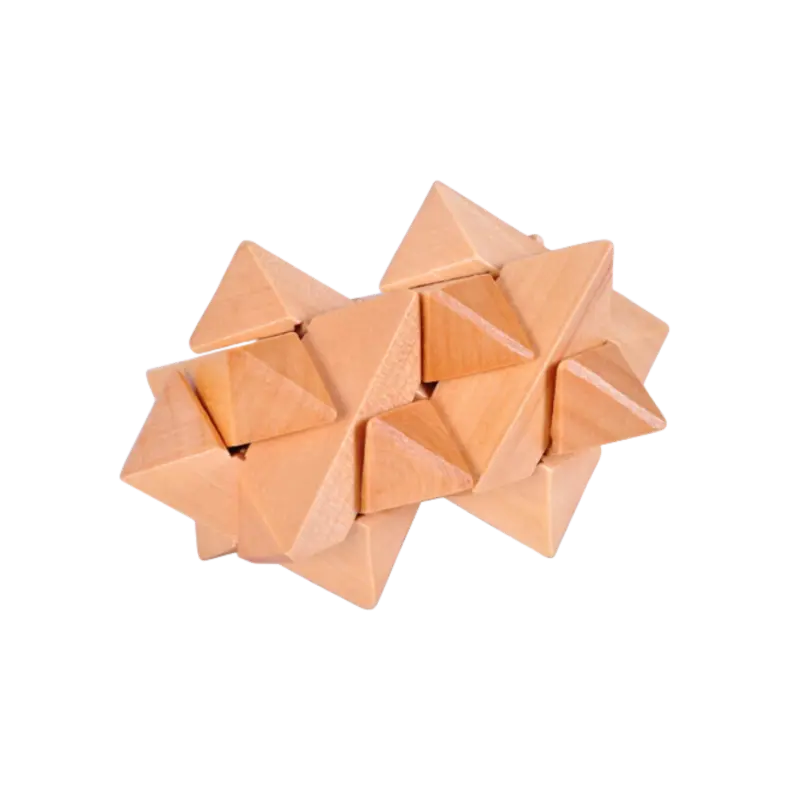
The Twin Star Puzzle ($17.88) is an 11-piece beast. It features three distinct block types: a core, diamond double-pyramids, and two “twisted” pieces. Those twisted pieces are the stars of the show. They require a rotational movement that defies standard linear logic. This is the puzzle I give to people who claim they are “good at puzzles.” It humbles them quickly. The craftsmanship is excellent—the pieces have a precision that ensures they only fit when they are exactly right. No forcing allowed. It embodies the philosophy that mastery emerges from understanding the inherent order of things.
For those who prefer a more “mystical” aesthetic, The Mystic Orb Lock ($16.99) offers a different tactile experience.
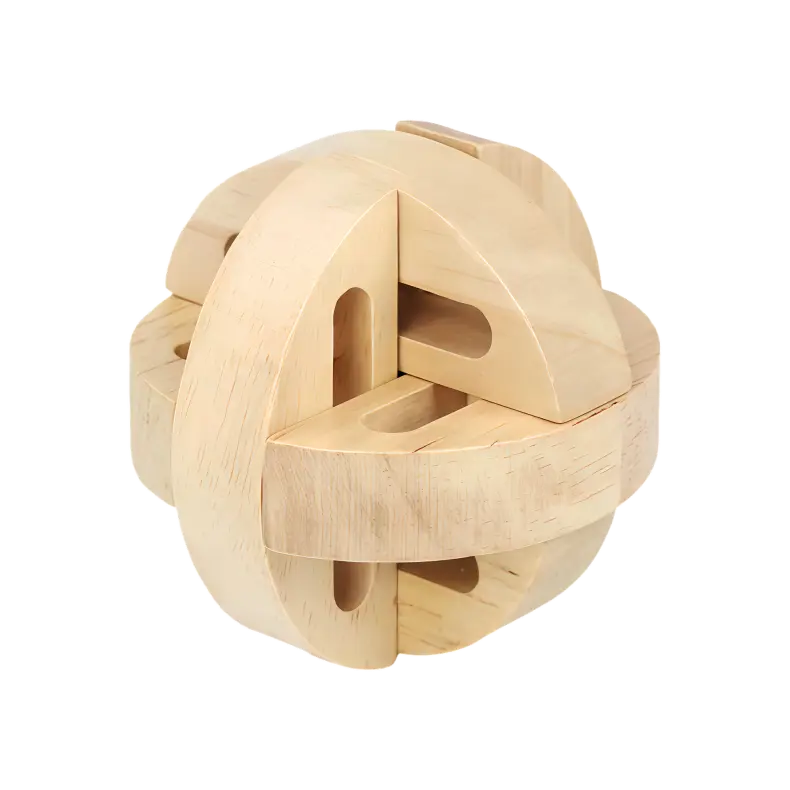
The Mystic Orb Lock — $16.99
The The Mystic Orb Lock ($16.99) uses six semi-circular pieces with precision grooves. It’s all about finding the “hidden vulnerability”—the one piece that controls the rest. It’s a very Daoist approach to problem-solving: find the gap where there is no resistance, and the whole structure opens. The sliding and snapping motion is incredibly satisfying. It’s one of those rare puzzles that feels as good as it looks.
Comparison Table: Finding Your Perfect Solve
FAQ: Everything You Need to Know About Wooden Brain Twisters
How do I solve a wooden 3D brain teaser without the instructions?
The first step is always observation. Don’t pull. Instead, gently wiggle each piece to see which one has the most “play.” Usually, one piece—the “key”—will move more than the others. If you’re really stuck, I recommend taking a “burst” of photos during disassembly so you have a reverse-map for reassembly. Many veterans also use a small tray to keep pieces organized. If you’re looking for a different kind of mental break, you might enjoy digital logic games to vary your cognitive load.
Are wooden puzzles better than metal ones?
“Better” is subjective, but I prefer wood for its sensory feedback. Wood has higher friction than metal, which means you can feel the solution coming. Metal puzzles, like the Hanayama series, are often about finding a single hidden path. Wooden puzzles are about structural integrity. Wood also ages beautifully; over time, the oils from your hands will give it a unique patina. For those who want more storage-based challenges, check out this manual for trick containers.
What is the hardest wooden puzzle for adults?
In my experience, the Twelve Sisters Puzzle is the most difficult because it requires you to hold multiple pieces in a specific orientation simultaneously. It’s less about a “trick” and more about structural mastery. High-piece count puzzles like the Double Cross Cage Puzzle are also notoriously difficult due to the dexterity required.
Can these puzzles help with memory or ADHD?
While I’m not a doctor, I’ve found that mechanical puzzles provide a “fidget” outlet that actually improves focus. They require “deep work”—a state of concentration where you lose track of time. This is why many people use them as tactile learning systems. They provide a clear goal and immediate feedback, which is very satisfying for a brain that craves stimulation.
What do I do if a piece is stuck?
Never use force. Wood is an organic material that expands and contracts with humidity. If a piece is stuck, try moving the puzzle to a cooler, dryer room for a few hours. Sometimes, a tiny drop of dry lubricant (like graphite) can help, but usually, a “stuck” piece is actually just locked by another piece you haven’t moved yet. Patience is your best tool.
Are these suitable for children?
Most of the puzzles listed here are rated for ages 12 and up due to complexity and small parts. However, simpler burrs like the Six-Piece Burr can be great for younger kids with supervision. They help develop spatial reasoning and fine motor skills. If you want something more educationally focused for younger kids, educational math tools are often a better starting point.
How do I maintain my wooden puzzles?
Keep them out of direct sunlight, which can fade the wood and make it brittle. A light wipe with a microfiber cloth is usually all they need. Avoid water or liquid cleaners. If the wood starts to look dry, a tiny amount of food-grade mineral oil on a cloth can restore the luster, but be careful not to overdo it, as you don’t want the pieces to become greasy.
Why are some wooden puzzles so expensive?
You’re paying for precision. If a burr puzzle is off by even half a millimeter, it won’t slide properly. The best puzzles, like those from SiamMandalay, are hand-crafted and tested for fit. Cheap knock-offs often have splinters or loose joints that ruin the experience.
What is a Luban Lock?
It is an ancient Chinese interlocking puzzle that doesn’t use nails or glue. It’s named after Lu Ban, a legendary carpenter from the Zhou Dynasty. The genius of the Luban Lock is that the pieces hold each other in place through geometric pressure. It’s the foundation for almost every brain twister wooden puzzle on the market today.
Can I buy these as gifts?
Absolutely. They make excellent “fidget” gifts for office desks. They are conversation starters. I’ve found that people who enjoy hidden compartment boxes almost always enjoy interlocking puzzles as well. They are timeless and don’t require batteries or software updates.
Do they come with solutions?
Most do, but I always recommend throwing the solution sheet away immediately. The value of the puzzle isn’t the solved state; it’s the process of discovery. If you use the solution, you’ve basically paid $15 to follow a set of Ikea instructions. Where’s the fun in that?
What’s the best “first” puzzle to buy?
I always recommend the 6 Piece Wooden Puzzle Key. It’s affordable ($12.99), satisfying to hold, and just difficult enough to give you that “Aha!” moment without causing a breakdown.
The One Puzzle That Teaches You How All the Others Work
If I could only keep one puzzle from my collection, it wouldn’t be the most expensive or the most complex. It would be the 6 Piece Wooden Puzzle Key ($12.99). It’s the one I always go back to when I need to remember why I started this hobby. It’s not about winning; it’s about the quiet, focused conversation between your brain and your hands.
We live in a world that constantly demands our attention through screens and notifications. These wooden enigmas offer a sanctuary of silence. They remind us that some problems can’t be solved by clicking “refresh” or “undo.” They require us to sit still, look closely, and wait for the pattern to emerge.
Start with the 6 Piece Wooden Puzzle Key ($12.99). It taught me more about patience than any self-help book ever could. Once you’ve mastered that, the manual for trick containers will show you how these principles apply to even more complex, hidden structures.
The wood is waiting. The only question is whether you’re ready to listen to what it’s trying to tell you. Don’t force the slide; wait for the click.