Before You Force It: The Puzzle Box Mindset
You’re holding a beautifully crafted wooden box. It feels solid, seamless, and utterly impenetrable. You’ve pushed, prodded, and maybe even felt a surge of temptation to reach for a hammer, just like that Reddit user who famously (and regrettably) smashed one open. The frustration is real. Posts titled “How do I open this wooden box puzzle? There are hardly any seams” or “Stuck Puzzle Box (I know how to open it though 😅)” are a testament to a universal experience: the moment of being utterly, delightfully, and infuriatingly stuck.
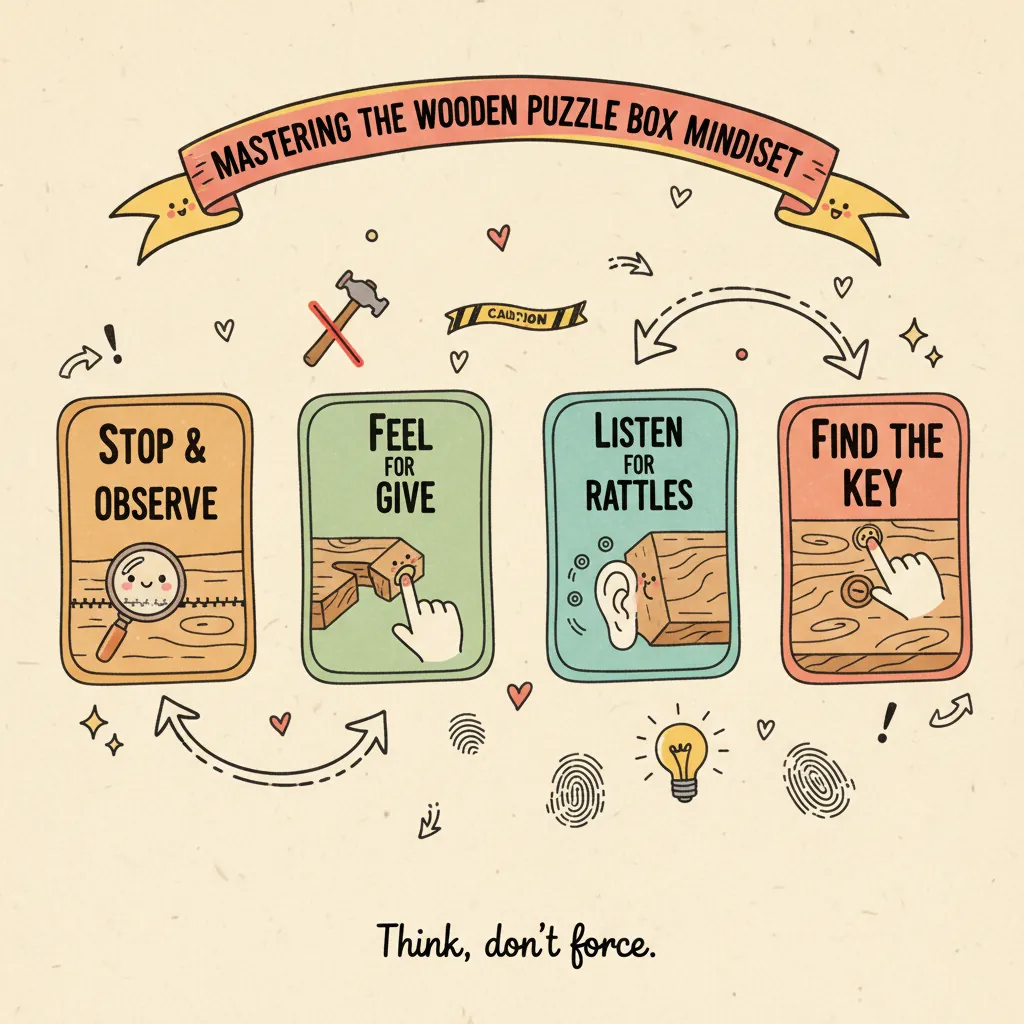
This is the first and most critical step. Stop trying to force it. A true puzzle box is not a locked container; it’s a mechanical conversation. Its creator designed it to be solved through wit and observation, not brute strength. Forcing it risks breaking delicate internal mechanisms, warping wood, and turning a clever puzzle into a pile of splinters—permanently defeating its purpose.
Before your fingers start searching for a solution, adjust your mindset. Approach the box not as an obstacle, but as a system to be understood. This requires three things:
- Observation: Look at it from every angle. Run your fingers along every seam, no matter how faint. Feel for variations in texture, temperature, or give. Does a side panel have a slightly different grain? Is one corner less perfectly aligned? As noted in puzzle-solving communities, sometimes the key is a piece that is “slightly looser than the rest.” Pay attention to weight distribution and sounds. Does it rattle? A faint sound might indicate a ball bearing inside, suggesting a gravity lock mechanism where you must tilt the box to guide the ball to a specific spot to release the latch.
- Patience: The “Aha!” moment is the reward. It might take minutes, hours, or even days. Walk away if you’re frustrated. Your subconscious will keep working on the problem, and you’ll often return with fresh eyes that spot what you missed.
- Understanding Mechanism Types: While designs vary wildly, most puzzle boxes fall into a few broad categories. Recognizing which you might have narrows down your approach:
- Sliding Panel/Sequential Movement Boxes: The classic. You must slide specific panels in a precise order—sometimes a sequence around the box—to release a hidden drawer or lid. The solution is a mechanical algorithm.
- Gravity/Maze Boxes: These contain a loose object (like a metal ball) inside a hidden internal maze. You must tilt and rotate the box to navigate the ball to a trigger point.
- Secret Button or Lever Boxes: A disguised component, often blending perfectly with the decoration, acts as a release. It could be a carved detail you press, a magnet disguised as a knot, or a panel that pivots.
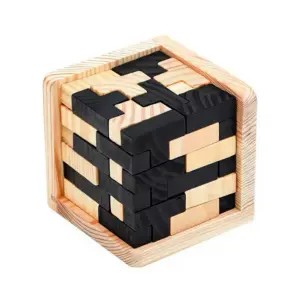
- Modular/3D Puzzle Boxes: These are assembled by you, creating a deeper understanding of their workings. For example, building a kit like the 3D Wooden Puzzle Treasure Box teaches you how interlocking layers and moving parts create a secure, secret compartment. The act of construction is the ultimate lesson in how to solve it.
Adopting this mindset transforms the experience from a test of strength to a test of intellect. It’s the difference between breaking a lock and discovering a secret passage. The satisfaction isn’t just in accessing the hidden space—it’s in the elegant click of understanding. For more foundational strategies to cultivate this patience, our guide on how to solve a puzzle box without losing your mind is a great place to start. Now, with patience as your tool, you’re ready to begin the systematic investigation.
Your Detective Toolkit: How to Examine Any Puzzle Box
Now that you’re in the right mindset, it’s time to get hands-on. Think of yourself as a detective surveying a crime scene. Your goal isn’t to force entry, but to gather every possible clue. This systematic inspection is where 90% of the puzzle is solved. Follow this workflow, and you’ll almost certainly find the path forward.
Step 1: The Visual Scan (Look for the Lie)
Hold the box under good light. Your first job is to challenge its appearance.
* The “Solid Block”: Some boxes are masterpieces of deception, looking like a seamless, solid cube of wood with no obvious seams. Don’t be fooled. Look for subtle variations in wood grain that don’t line up, or a tiny gap that appears only when you view it from a specific angle. These are your first hints of a sliding panel or a false wall.
* The “Paneled” Box: Others clearly show a grid of vertical and horizontal pieces. As noted in the wikiHow guide, one of these pieces is often the key. Your visual scan here is to identify any piece that looks slightly different—a different shade, a unique knot, or a minutely wider gap around it.
Step 2: The Tactile Investigation (Feel for the Give)
This is the most critical step. Close your eyes. Your fingers are now your primary sense.
* Run your fingertips slowly over every surface. Apply gentle, even pressure. You are feeling for any piece that has the slightest movement—a wiggle, a give, or a subtle click. As the guides suggest, one vertical or horizontal slat will often be slightly looser than the rest. Don’t just press; try sliding pieces up, down, left, and right.
* Sequential Pressing: If nothing feels obviously loose, methodically press every panel, side, and decorative element in sequence. Start at a corner and work your way around. You’re searching for a hidden button or a panel that depresses.
* Warning: If the wood feels thin or cheap, be extra gentle. As some Quora users pragmatically note, forcing a fragile box with tools can destroy it before you ever see the secret. Your touch should be inquisitive, not forceful.
Step 3: The Auditory & Kinetic Test (Listen and Tilt)
The box will talk to you if you listen.
* The Shake Test: Gently shake the box near your ear. Do you hear something rolling or sliding inside? This is a classic sign of a gravity lock or an internal maze, a common mechanism mentioned in Reddit threads. A small ball bearing must be guided to a specific spot to release the lock.
* The Tilt Maneuver: If you heard something, this is your next move. Slowly and deliberately tilt the box in every possible orientation—upside down, on each corner, on each side. While tilting, continue trying to slide any lid or panel. You are trying to let gravity position the internal weight to unlock the mechanism.
* Listen for Clicks: As you press and tilt, listen intently for a soft click or snick. This is the sound of a latch disengaging. It’s your green light.
Step 4: Identify the False Front (The Art of the Seam)
Many puzzle boxes have a false seam. What looks like the lid’s opening is often glued shut or is a decorative fake. The real opening is elsewhere.
* Trace the visible seams with a fingernail. Does one “seam” feel like a painted-on line, while another has a genuine, albeit tiny, gap?
* The secret compartment often slides out from what appears to be the solid bottom or side. After your tactile investigation, the piece with the most imperceptible movement is likely the true drawer face.
This toolkit works for everything from a simple secret box to an intricate buildable model. For instance, constructing a Wooden Ferris Wheel Music Box Kit trains you in this very logic. As you assemble the gears and layers, you see how a hidden compartment might be released by aligning specific structural components, reinforcing that the solution always lies in understanding the construction. For a deeper dive into spotting these masterful deceptions, explore our guide on the art of examining invisible seams.
By completing this four-step examination, you’ve gathered all the evidence. You’ve identified the suspect panel, heard the clue of a rolling ball, or felt the telltale click. Now, you’re ready to execute the solution.
Cracking Common Mechanisms: From Sliding Panels to Hidden Buttons
Now that you’ve examined your box like a detective, you’ve likely identified a clue: a slightly loose piece, a faint click, or the sound of something rolling inside. These clues point to one of a few common locking mechanisms. Here’s how to solve each type, step-by-step.
1. The “Loose Piece” Sliding Panel
This is the classic mechanism detailed in many guides. The box appears to be made of solid, interlocking beams, but one piece is the key.
* The Clue: During your examination, one vertical or horizontal wood strip felt slightly looser or had a more pronounced seam than the others.
* The Solution: Apply firm, direct pressure to that specific loose piece. Don’t just push; try sliding it up, down, left, or right. Often, it will slide a few millimeters in one direction. This action retracts a hidden internal pin or latch. Once moved, an adjacent panel—often on the top or bottom—will become free. You can then slide this newly freed panel open to reveal the compartment.
2. The Sequential Slide or Press
Some boxes require a specific sequence of actions, like entering a combination.
* The Clue: The box has multiple panels or sides that seem movable, but pressing them individually does nothing. You may hear faint internal clicks as you explore.
* The Solution: You must press or slide panels in the correct order. A common sequence is to press the left side, then the right, then the front. Another is to slide top panels in a specific pattern (e.g., center left, then far right). The sequence is often a logical pattern. If you get it wrong, you typically must start over. Patience and systematic note-taking are key. Try pressing all sides sequentially in one direction, then experiment with simple two-step combinations.
3. The Gravity or Maze Lock
Frustratingly common, this lock uses a small metal ball or weight inside a hidden internal track.
* The Clue: You hear a distinct rolling or clicking sound when you tilt the box. The main lid or drawer feels completely stuck.
* The Solution: The goal is to guide the internal ball to a specific spot, usually a detent or hole, which releases the lock. Tilt the box slowly in all directions—forward, back, side-to-side, and diagonally. Listen for the ball to drop into place, often signaled by a solid thunk or a sudden loosening of the lid. At that exact moment, try to slide the drawer open without leveling the box. If it doesn’t work, the ball may have rolled away; you must find the “sweet spot” again and be quicker.
4. The Hidden Button or Catch
This mechanism relies on a cleverly disguised trigger.
* The Clue: The box appears seamless, but you may spot a tiny, almost imperceptible divot, a wood grain pattern that looks like a button, or a magnetic spot.
* The Solution: Use your fingertip to apply direct, inward pressure on the suspected spot. If it’s a true button, it will depress with a soft click. For a magnetic catch, you might need to press and hold while simultaneously sliding a panel. Sometimes the “button” is a specific corner or a decorative inlay. If pressing doesn’t work, try pressing and holding it while using your other hand to slide every other panel.
Understanding these mechanisms demystifies the process. For example, a 3D Wooden Puzzle Safe with Combination Lock combines several of these principles: you must solve sequential slides to set a combination before a final panel is released. It’s a fantastic trainer for this logical, mechanical thinking.
If you’re still stuck after trying these methods, don’t resort to force. Instead, consult a dedicated resource like our guide to more detailed wooden puzzle box solutions, which details these and other less common mechanisms. Remember, the solution is always in the mechanics. Your job is to discover the sequence the designer built in.
When You’re Really Stuck: Advanced Troubleshooting & Reset Techniques
Even with a solid grasp of common mechanisms, you can hit a true impasse. The wood feels fused, a slide won’t budge, or you’ve triggered a lock mid-sequence and can’t proceed. This is the critical moment before frustration leads to force. Let’s work through advanced, non-destructive methods first.
Addressing Physical Obstructions: Warping and Stiction
Wood is a living material. Changes in humidity can cause it to swell, subtly warping panels and jamming mechanisms.
* The Gentle Tap: If a specific panel is stuck, hold the box firmly on a soft surface. Using the heel of your hand or a rubber mallet, give the opposite side of the box a few firm but controlled taps. This can realign internal components without impact. Never strike the stuck panel directly.
* Climate Control: If the air is humid, place the box in a room with a dehumidifier or air conditioning for 24 hours. If the air is very dry (common in winter), a light application of a dry lubricant like graphite powder (from a pencil lead) into the finest visible seam can help. Avoid oils or silicone sprays, as they can attract dust and permanently gum up the delicate works.
The Strategic Reset: Backtracking Your Steps
Many puzzles, especially sequential ones, can be locked in an intermediate state. Your goal is to reset it to the start.
1. Stop and Reverse: Carefully attempt every move you’ve made, but in reverse order. Did you slide Panel A, then press Button B? Try releasing Button B first, then sliding Panel A back.
2. Reassembly Logic: This is where principles from guides on solving and reassembling Japanese puzzle boxes are invaluable. The closing sequence is often the opening sequence in reverse. If you can’t move forward, mentally walk back through your actions. Sometimes, applying gentle pressure to all sides of the box while attempting to reverse a step can disengage an internal catch.
3. The Overnight Reset: Put the box down. Your muscle memory and frustration are working against you. After a break, you’ll often approach the reset with fresh, more observant hands.
The Ethical Last Resort & Recognizing a Broken Box
The infamous Reddit story of someone using a hammer within an hour is a cautionary tale. Force should only be considered if you believe the box is mechanically broken, not just puzzling.
* Signs of True Damage: A mechanism that moved but now doesn’t, accompanied by the sound of a loose piece rattling inside, suggests a broken internal pin or catch. A visibly warped or cracked panel is another clear sign.
* Non-Destructive Exploration: Before drastic measures, consult a specialized resource like our guide on how to open a trick box without breaking it, which covers last-ditch diagnostic techniques.
* If You Must Intervene: The goal is to minimize damage. Use thin, rigid tools like a palette knife or a thin metal ruler. Insert it into the largest seam and gently twist to pry, focusing on spreading pressure evenly. This is how some users on forums have successfully loosened a seized drawer without destroying the artwork. Consider this a repair operation, not a solving technique.
A well-made puzzle box is designed to be solved. The 3D Wooden Puzzle Treasure Box, for instance, has a precise, reliable mechanical sequence. If it sticks, it’s almost always a matter of missed alignment, not failure. When you’re truly stuck, your patience and diagnostic skills become the final, most rewarding part of the puzzle. For a philosophical approach to overcoming this kind of block, consider the wisdom in our piece on ancient principles to stop forcing a solution.
A Guided Solve: The Wooden Ferris Wheel Music Box Kit in Focus
Let’s shift from abstract principles to a concrete, beautiful example. The Wooden Ferris Wheel Music Box Kit represents a fascinating evolution of the puzzle box concept. It’s not a container you open once to retrieve a trinket; it’s a kinetic sculpture you build to unlock its function. The “puzzle” is the assembly process itself, and the “secret compartment” is the fully realized, working music box mechanism hidden within the structure. This journey perfectly blends the satisfaction of solving with the joy of crafting, resulting in a permanent display piece that addresses key buyer desires: reusability (as a decorative music box), aesthetic value, and a deeply engaging hands-on experience.
Your solving journey begins not with a sealed box, but with a set of laser-cut wooden sheets. This is your first examination phase. Lay out all the pieces and the instruction manual. Unlike a traditional puzzle box, the manual is your guide, but don’t just follow it blindly. Observe the pieces first. You’ll notice different types: structural frames, intricate gear wheels, decorative panels for the Ferris wheel gondolas, and the key component—the music box movement. This initial survey is crucial. Identify which pieces have moving parts pre-cut, like the large central gear or the tiny axle holes. Understanding what each part does before assembly makes the process intuitive and prevents frustrating errors.
The assembly sequence is the locked mechanism. Each step must be completed in the correct order, as earlier pieces often lock later ones into place, much like solving a sequential-move puzzle box. For instance, you might assemble the central support column, then slide the main gear onto its axle before attaching the side panels that enclose it. If you try to put the gear in after the panels are on, you’ll be literally locked out—the core principle of a puzzle box in action. The construction requires you to think several steps ahead, anticipating how the freedom of movement of one part will be restricted by the addition of the next. This is where your detective skills from general puzzle box examination pay off: you’re constantly looking for seams, alignment pins, and logical mechanical pathways.
The most critical and satisfying “aha!” moment in this kit is the integration of the drive mechanism. The Ferris wheel doesn’t spin by magic; it’s turned by a clever series of interlocking gears that ultimately connect to a hand-crank. Assembling this gear train is the pinnacle of the puzzle. You must ensure every tooth meshes perfectly, and that the final gear engages smoothly with the crank’s pinion. A single misaligned gear will jam the entire system—a classic puzzle box stall. The solution is always careful backtracking, checking alignment, and ensuring no obstructions, mirroring the troubleshooting of a stuck sliding panel.
The final reveal is the culmination. Once the last decorative panel is glued into place (the final “lock”), you insert the music box mechanism into its dedicated chamber and attach it to the gear train. Turning the crank now performs the magic: the gears turn, the Ferris wheel rotates gracefully, and the music plays. You haven’t just opened a box; you’ve built the key. The functional, whimsical display piece you now possess is the treasure. This process answers the common buyer question about “what’s inside?” The answer is twofold: during the build, the reward is progressive understanding and mechanical harmony; afterward, it’s a timeless piece of art that can be wound up and enjoyed anytime.
For those intrigued by this blend of music, mechanics, and assembly, the principles learned here apply to similar complex kits. The journey of logical sequencing, precise alignment, and mechanical troubleshooting is directly applicable, as explored in our guide on similar guided solve for a 3D wooden music box. The Wooden Ferris Wheel Music Box Kit demonstrates that modern puzzle boxes can be immersive, multi-stage experiences where the true secret isn’t hidden in a compartment, but in the joyful process of bringing intricate mechanics to life.
Why We Love Puzzle Boxes: More Than Just a Trick
The frustration of a stubborn, unyielding box is real. But so is the profound click of a hidden latch giving way, the smooth slide of a panel you’ve been searching for, and the quiet satisfaction of solving a silent, wooden riddle. This emotional journey—from confusion to clarity—is the core of why puzzle boxes captivate us. They are more than clever containers; they are physical metaphors for problem-solving, offering a rare, tactile satisfaction in a digital world.
Their history is long and cross-cultural, rooted in the human desire to conceal, protect, and challenge. From intricate Japanese Himitsu-Bako (secret boxes) used to hold personal treasures to the cunning trick boxes of European craftsmen, they represent a fascinating branch of mechanical puzzles. These objects demand interaction, turning the user from a passive observer into an active participant in unlocking their secret. You can’t just look at the answer; you must feel for it, listen to it, and reason with it.
This hands-on engagement is why they make such memorable gifts and powerful mindfulness tools. In a state of focused play, the outside world fades. Your attention narrows to the grain of the wood, the subtle give of a piece, and the logic of the mechanism. It’s a form of meditation that rewards patience and observation, pulling you into the present moment. The common objections—the fear of breaking it, the frustration of being stuck—aren’t flaws; they are part of the contract. The tension makes the eventual release of solving it all the more rewarding. As we explored in the secret language and enduring appeal of puzzle boxes, this fiddling is a dialogue with the puzzle, a necessary process of gathering clues through touch and repetition.
Modern puzzle boxes have evolved beyond single-compartment secrets. Kits like the Ferris Wheel Music Box represent the next level: a puzzle you first build and then operate. The “Aha!” moment is distributed across the entire assembly process, culminating in a functional piece of art. This evolution speaks to a deeper desire for creation and lasting engagement.
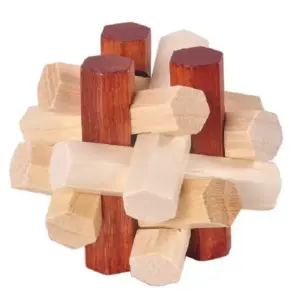
For those who fall in love with the pure logic and craftsmanship of traditional interlocking puzzles, the journey often leads to classic brain teasers. A set like the Luban Lock Set 9 Piece distills the essence of the puzzle box into its most concentrated form. Each lock is a self-contained secret, a wooden enigma that challenges spatial reasoning and dexterity without any hidden compartment at all. Solving one provides the same core satisfaction—the triumphant moment when a seemingly solid mass of wood gracefully comes apart in your hands, revealing the elegant simplicity of its interlocking design. It’s proof that the true treasure was never inside the box; it’s the fleeting, brilliant moment of understanding you get to carry with you.
Your Puzzle Box Questions, Answered (FAQ)
We’ve scoured forums, Reddit threads, and real user pleas to compile the most common, urgent questions from people just like you, holding a sealed wooden box. Here are practical, encouraging answers.
What if none of the pieces feel loose?
This is a common frustration. “Loose” is relative. Instead of pressing hard, run your fingertips lightly around every seam and edge. A piece might have a slightly different texture, temperature, or a nearly imperceptible gap. Try applying gentle, even pressure to each side panel in sequence—sometimes the mechanism requires a specific order, not just one loose piece.
My box has a ball inside—what do I do?
You likely have a gravity or maze lock. The ball is a blocking pin. You need to tilt and rotate the box to guide the ball into a specific channel or away from the lid’s latch. Listen for it to roll. Try tilting the box in all orientations while gently applying pressure to the sliding lid. Patience is key; you’re navigating an invisible maze.
Is it okay to look up the solution?
Absolutely. The goal is enjoyment, not suffering. If frustration is ruining the experience, seeking a hint or full solution is a valid choice. Many find that understanding one mechanism deepens their appreciation and helps them solve the next box independently. Consider it learning the “language” of puzzles.
How do I close it again once it’s open?
Carefully! Reversing the steps is usually the way. Work slowly and watch how the internal components re-engage. If it’s a sliding panel box, ensure all panels are perfectly aligned before attempting to slide them back. Forcing it can damage delicate internal catches. If you get stuck, a quick search for “[your box name] close” often yields a video.
Can I lubricate a sticky wooden puzzle box?
Use extreme caution. For a box that’s simply tight from newness or humidity, a tiny amount of pure talcum powder or graphite powder (from a pencil lead) dusted into the seams can reduce friction. Never use liquid oils or WD-40; they can swell the wood and attract dust, permanently gumming up the mechanism.
Are all puzzle boxes solved the same way?
No. This is the most important thing to remember. A Japanese Himitsu-Bako requires a precise sequence of slides. A Celtic knot box might need twisting. A modern secret compartment box may have a magnetic or button release. Your first task is to identify the type. Look for the most obvious feature—is it all sliding panels, or does it have a distinct lid?
I think I’ve broken it. Now what?
First, don’t panic. Set it down. Many boxes have a “reset” state. Gently try to return all movable parts to their original positions. If a piece is truly jammed, applying gentle, alternating pressure (push/pull) on adjacent pieces can sometimes free it. Forcing it with tools should be an absolute last resort.
The instructions are lost! How do I start?
Start with a systematic inspection. Examine every surface for differences: color variations, tiny holes, seams that look wider, or pieces that sound different when tapped. Methodically try moving every element—slides, twists, pushes, tilts. Document what you try. Often, the first move is the most cleverly disguised.
Why does everyone say “be patient”?
Because forcing a puzzle box almost always leads to damage. Wood is delicate. The mechanisms are precise. Patience allows you to observe subtle clues—a faint click, a millimeter of movement—that brute force destroys. As discussed in our piece on ancient puzzle principles, the mindset of observation and gentle manipulation is the true key. This philosophy is embodied in elegant standalone puzzles like the Circular Lock, where the solution lies in understanding precise rotations and alignments, not force.
Is there a trick to finding the first move?
Yes: look for the exception. In a grid of identical-looking pieces, one will be different. It might be oriented slightly off-grain, be a different wood type, or have a minuscule fingerprint wear mark. This piece is almost always your entry point.
How can I get better at solving them?
Practice and pattern recognition. Start with simpler boxes to learn common mechanisms. Each box you solve teaches you a “move” that might appear in a more complex form later. Engaging with a community, like the r/mechanicalpuzzles subreddit, can also provide invaluable hints and perspectives.
What’s the point if I just look up the answer?
The “Aha!” moment is still satisfying, and seeing the clever mechanism in action is its own reward. It transforms the box from a frustrating object into a piece of functional art you can appreciate and share. The journey from confusion to understanding, however you get there, is the real treasure.
Your Next Step: From Solving to Building
You’ve unlocked the secret. The drawer is open, the mechanism is revealed, and that wave of satisfaction has washed over you. So, what now? The world of wooden puzzles doesn’t end with a single solved box; it branches into two equally rewarding paths. Your next step depends on what you enjoyed most about the process.
If you loved the “Aha!” moment of discovery and want to create something lasting…
Consider building your own intricate mechanism. The logical progression is to move from solving a hidden sequence to constructing one. This is where a build-it-yourself kit shines, combining the step-by-step logic of a puzzle with the profound satisfaction of creating a beautiful, functional object. Imagine a project that challenges your spatial reasoning during assembly and then rewards you with a working secret compartment or a charming mechanical motion. For a perfect entry into this world, a detailed, guided kit provides the structure and the payoff.
If you crave another pure, traditional puzzle box to conquer…
Your journey has just begun. The principles you’ve learned—searching for the loose piece, applying sequential pressure, listening for clicks—are universal. Dive deeper into the craft by exploring different styles, from Japanese Himitsu-Bako with their precise sliding panels to modern boxes with magnetic or gravity locks. Resources like our main hub for all puzzle box guides and curated lists such as more puzzle boxes that reward patience are excellent places to find your next challenge. For real-time camaraderie and hints, communities like r/PuzzleBox and r/mechanicalpuzzles on Reddit are invaluable.
Ultimately, the choice is yours. Do you want to build the secret or discover it? Both paths celebrate patience, cleverness, and the joy of a problem beautifully solved. Whichever you choose, you’re no longer just someone with a stuck box—you’re a puzzle solver, ready for your next adventure.