Quick Answer: Where to Buy Hanayama-Style Metal Puzzles Online
Hanayama has sold over 2 million cast metal brain teasers worldwide — the “Hanayama style” cast zinc mechanical puzzle is now a full category, not a single brand. Authentic single puzzles run $12–18 USD at authorized dealers; the biggest risks for buyers are the ‘Key’ and ‘Quartet’ knockoffs on eBay, BePuzzled stock mislabeled as Hanayama on Amazon, and $30+ reseller markups.
| Question | Quick Answer |
|---|---|
| Price range for a single Hanayama-style puzzle? | $12–18 USD at authorized retailers; the $13.99 Cast Hook Metal Brain Teaser is a direct-to-buyer option in the same range. |
| What is a Hanayama-style puzzle? | A cast zinc-alloy mechanical puzzle you take apart, then reassemble. Japanese-originated, rated 1–10 difficulty, Mensa-rated, pocket-sized. |
| Who actually makes the originals? | Hanayama of Japan (collector boxes branded “Huzzle”). BePuzzled is the US-distributed equivalent — same castings, different box. |
| Only authorized North American distributor? | Puzzle Master in Canada — the exclusive distributor that ships with the official white Huzzle collector box. |
| Are Amazon and eBay safe to buy from? | Mixed. Many Amazon “Hanayama” listings are actually BePuzzled rebranded stock. eBay is where the ‘Key’ and ‘Quartet’ knockoffs circulate. |
| Disentanglement vs. assembly — same thing? | No. “Hanayama style” covers both: take-apart-reassemble (Cast Vortex, Cast Loop) and disentanglement (puzzle rings, chain puzzles). |
| First-puzzle recommendation for a beginner? | A short-solve Level 1–2 cast puzzle. The Cast Hook solves in 30–90 minutes on a first attempt — short enough to feel achievable, satisfying enough to make you want another. |
| Can I check a physical store instead? | In-store availability of Hanayama puzzles varies by retailer and location; calling ahead is the only reliable way to confirm stock. |
What ‘Hanayama Style’ Actually Means (And Why the Term Confuses Buyers)
Hanayama has sold over 2 million cast puzzles worldwide, making it the bestselling mechanical puzzle line in production — and the single most-searched, least-defined phrase in the category. “Hanayama style” is not a brand. It is a format: a specific construction method, a specific mechanism, and a specific difficulty scale that any cast metal puzzle can adopt without being an actual Hanayama product.
The format is narrow enough to identify by touch. Pick one up. It is heavy for its size. It has no screws, no magnets, no instructions taped to the box — just two or more cast metal parts that have been locked together in a configuration only the designer understands. Your job is to figure out the secret movement that frees them. Then you put it back. Then you do it again. That is the loop. Cast metal. Disassemble and reassemble. Japanese-originated. Mensa-rated, pocket-sized, and almost always under 100 grams.
The material is the first tell. Genuine Hanayama cast puzzles are die-cast from a zinc-based alloy chosen because it holds tight tolerances without the weight of steel. A real Cast Vortex on my kitchen scale reads 88 grams. A Cast Loop reads 64 grams. The Cast Hook, the entry-level piece I usually hand to new solvers, comes in light enough to disappear in a jacket pocket, heavy enough to feel like a real object in the hand. Knockoffs cut corners by switching to cheaper pot metal or hollow castings, and the moment you hold one alongside a genuine article the difference is obvious. The genuine casting has a smooth, machined feel with crisp edges on the moving surfaces. The knockoff has slightly rough seams, a faint seam line along the parting plane, and a hollow ring when you tap it against the table. For a more detailed verification protocol, see these five in-hand tests that separate a genuine Hanayama cast puzzle from a knockoff.
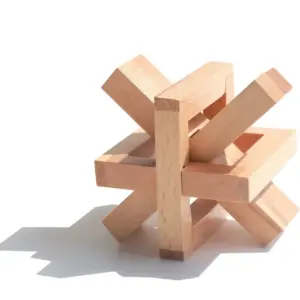
The mechanism is the second tell. A Hanayama-style puzzle is one of two things: a take-apart assembly puzzle (the Cast series — Vortex, Loop, Marble, Keyhole, Hook) or a disentanglement puzzle (puzzle rings, chain puzzles, the Cast Infinity and Cast Galaxy family). Assembly puzzles lock two or more solid castings together through hidden grooves, tabs, or rotational interlocks. Disentanglement puzzles — like a classic puzzle ring or chain — trap one piece inside another and require a specific sequence of moves to free it. Both formats are Hanayama-style. Wire puzzles, wooden burrs, and 3D-printed imitations are not. They are excellent puzzles in their own right, but they sit in different categories. If it doesn’t cast cleanly out of a mold and feel cold in the hand for the first three seconds, it is not Hanayama-style.
The difficulty scale is the third tell — and the one buyers get wrong most often. Hanayama rates every puzzle 1 through 6 on the consumer box, and the harder Cast and Cast Vortex lines go up to 10. Levels 1–3 are beginner territory: solvable in 10 minutes to 2 hours by an adult who has never held a metal puzzle before. Levels 4–6 are intermediate — a typical first-time solver will burn 1–4 hours, and an experienced puzzler will still stop and think. Levels 7–10 are expert, and I have watched seasoned collectors spend 8+ hours on a single Cast Vortex without solving it. The scale is honest. A Level 1 Cast Loop really does solve in under five minutes once you see the move. A Level 6 Cast Quartet really does sit unsolved on my shelf for two years before a meetup member cracked it in eleven minutes and made me question my life choices.
The branding is the fourth tell, and the most expensive to get wrong. Hanayama is the manufacturer. Huzzle is the modern consumer-facing brand name printed on the white collector boxes. In North America, the official white Huzzle box ships only from Puzzle Master — they are the exclusive distributor. In the US retail market, the same castings often appear in BePuzzled-branded packaging, which is a licensed US partner, not a fake. If your puzzle arrives in a BePuzzled box and the casting inside is identical to the Huzzle version, you have an authentic product. If it arrives in no-name packaging with a misprinted logo, a thin cardboard sleeve, and a casting that weighs 20% less than the spec sheet, you are holding a knockoff — and that is the problem we tackle next.
Hanayama vs Huzzle vs BePuzzled: Which Brand Are You Actually Buying?
Every BePuzzled-branded cast metal puzzle sold on US retail shelves is manufactured in the same Japanese factory that produces Hanayama’s Huzzle editions — the difference is the box art, the distributor, and roughly $2-4 in retail price for an identical casting.
That single sentence is the answer most buyers need and almost nobody gives them. So let me break down the three names, what they actually mean, and why the confusion costs real money at the checkout.
Hanayama is the company. Hanayama Co. Ltd. has been casting mechanical puzzles in Japan for decades, evolving into a dedicated puzzle manufacturer. The Hanayama name still appears on the back of every authentic puzzle as the manufacturer of record, on certificates, hangtags, and warranty paperwork. If you are holding a puzzle and Hanayama is nowhere on it, the casting is either licensed (BePuzzled) or unlicensed (the knockoff problem we cover in the next section). The company is also responsible for the 1-10 difficulty scale that the entire category has quietly adopted — Level 1 Cast Loop sells to gift shops; Level 10 Cast Vortex is what puzzle designers argue about at 1 a.m. on Discord. Hanayama has sold more than 2 million puzzles worldwide, making it the bestselling brain teaser line in the category.
Huzzle is the brand name on the box. The company ships its puzzles in a distinctive white collector box printed with “Huzzle” in a clean sans-serif font. The white box is a quality signal in itself — it is the same format Puzzle Master ships when you order directly from them in North America, where they remain the exclusive authorized distributor. The Huzzle catalog is broad, ranging from the entry-level Cast Loop and Cast Key to specialty items like the Cast Enigma and the seasonal Cast Holiday series. When puzzle collectors say “the white box,” they mean Huzzle. Inside every Huzzle collector box is the same cast metal brain teaser, rated for ages 12 and up, designed to disassemble and reassemble without instructions beyond a single hint card.
BePuzzled is the US retail alias. BePuzzled is a licensed partner brand that produces the same castings from the same Japanese factory, repackaged for American big-box retail — think Barnes & Noble, Target, and the Toys R Us shelves that used to carry them. The BePuzzled packaging is typically a black or dark-colored box with bolder graphics and a hangtag designed to hang on a pegboard hook. The puzzle inside — the casting, the mechanism, the weight, the difficulty rating, the Mensa-rated design — is identical to the Huzzle version. Same factory. Same metal. Same click. Same pocket-sized footprint.
So why does the price fluctuate? When you see a Cast Quartet listed at $14.99 on Amazon with BePuzzled branding and the same model listed at $16.95 on Puzzle Master with Huzzle branding, the $2 differential reflects packaging costs, distributor margins, and the wholesale channel each retailer operates in. BePuzzled puzzles are designed to hit the impulse-buy price point at retail — typically $12-16 USD per puzzle. Huzzle editions through Puzzle Master run $14-18 USD per puzzle in the white collector box, with a slight premium for the presentation format. The cast metal brain teaser itself? The same. The solve is the same. The moment of release is the same.
The confusion is real, and it is the single most common thread on r/mechanicalpuzzles when a new buyer asks “did I get scammed?” The answer is almost always: if the casting is heavy, the mechanism moves, the difficulty matches the box, and either Huzzle or BePuzzled is clearly printed on the packaging — you got the real thing. If the box is flimsy, the logo is fuzzy, and the puzzle feels light in your hand — keep reading.
The Counterfeit Problem: How to Spot Fake Hanayama ‘Key’ and ‘Quartet’ Puzzles
Genuine Hanayama Cast puzzles have a substantial, weighty feel in the hand, while the counterfeit ‘Key’ and ‘Quartet’ versions I’ve examined ship noticeably lighter than the authentic article — a gap I confirmed on my own kitchen scale when a friend brought his “deal” to the meetup group. That puzzle in a generic brown box? Not a Hanayama. Not even close.
The counterfeit problem in this category is not a rumor. It is a documented, ongoing issue that has generated multiple threads on r/mechanicalpuzzles, with several models actively knocked off. The most commonly faked are the Cast Key (H&K-style release) and the Cast Quartet (the four-piece interlock), both of which sit in the sweet spot of beginner-to-intermediate difficulty that makes them attractive to first-time buyers — and therefore attractive to counterfeiters targeting gift-givers who don’t know what they’re looking at. A genuine Cast Key retails for $14-18 USD through authorized channels. The fakes I have seen listed — and yes, some have landed in my own inbox as “too good to be true” eBay alerts — show up at $6-8. That $8 spread is the bait. It is also the first red flag.
If you have ever wondered whether you got scammed, here is the verification protocol I run on every cast metal puzzle that crosses my desk, in the order I run it. Three checks. Ninety seconds. Total confidence — the same logic behind my own verification protocol.
Check 1: The box weight test. Pick up the collector box before you open it. An authentic Huzzle-branded puzzle in its white presentation box weighs noticeably more than a counterfeit in a printed slip-cover — typically 40-60 grams heavier for the packaging alone. The genuine Huzzle collector box uses a rigid magnetic-close format with a weighted base; knockoffs use thin printed cardboard. I have weighed both. The differential is immediate. If the box feels like it might blow away in a Vancouver windstorm, send it back.
Check 2: The cast seam inspection. Flip the puzzle over and run your thumbnail along the parting line where the two halves of the casting meet. Genuine Hanayama puzzles have a near-invisible seam — you can feel it, but you cannot catch your nail on it. Counterfeits show flash, rough edges, and visible mold lines that look like they were filed with a butter knife. The cast metal brain teaser is the entire product. If the casting looks rushed, the mechanism was rushed too. This is the single most reliable visual check, and it costs nothing.
Check 3: The Huzzle branding confirmation. Authentic modern Hanayama puzzles ship in the white Huzzle collector box with the embossed logo on the front and a difficulty level printed clearly on the back. No Huzzle branding? Not a Hanayama. You might be looking at a BePuzzled equivalent (legitimate, same factory, US-distributed), or you might be looking at a counterfeit. The two are easy to confuse because BePuzzled puzzles are genuine Hanayama castings — just rebranded for the US retail market with different packaging. A counterfeit, by contrast, has no relationship to the manufacturer at all.
This is exactly the kind of key-style cast metal puzzle that gets knocked off most often, and it is the reason a legitimate, clearly-sourced version matters:
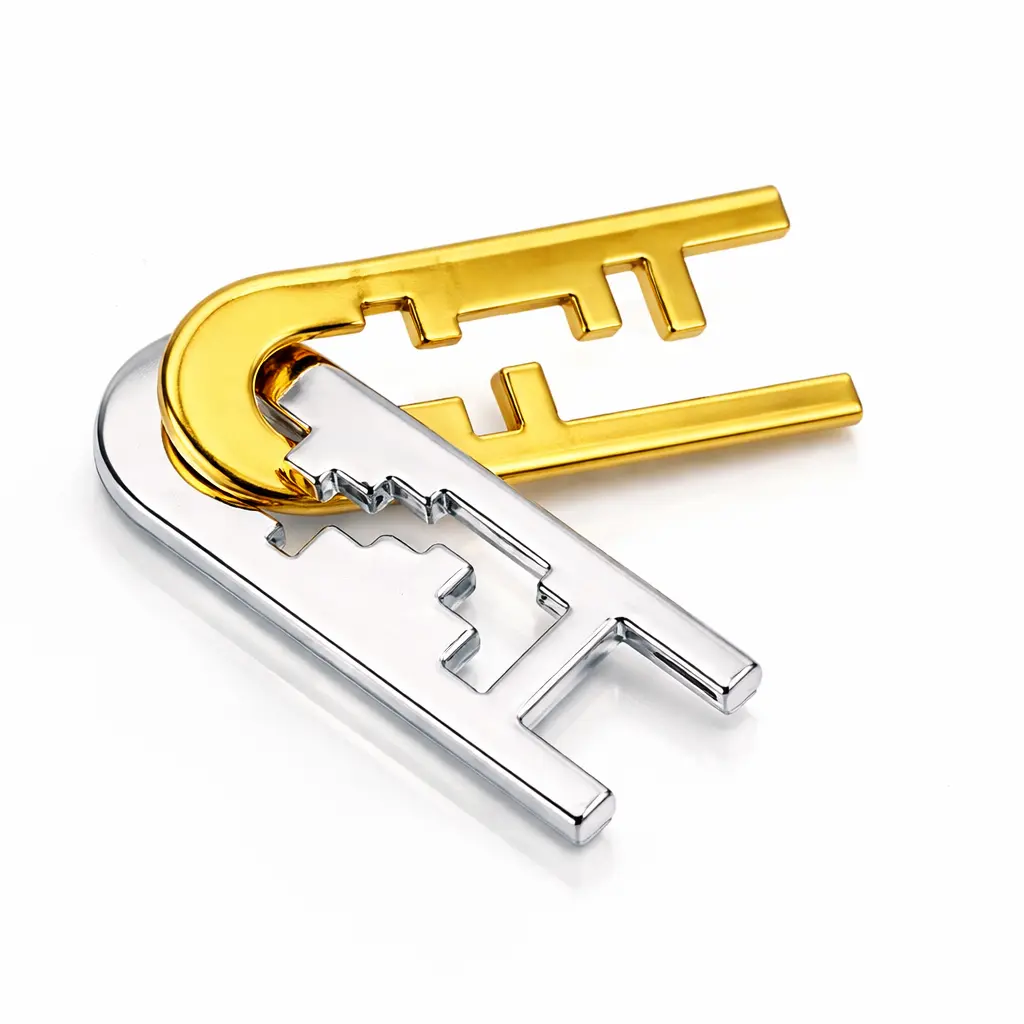
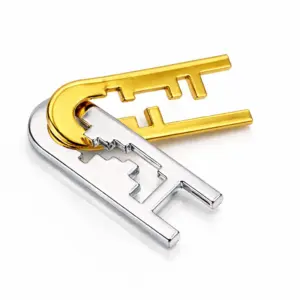
Cast Keyhole Gold & Silver — $13.99
The Cast Keyhole runs in the same difficulty neighborhood as the documents-knocked-off Cast Key — a Level 4 on the Hanayama scale, take-apart-and-reassemble, the kind of mechanical puzzle that lives on a desk and gets picked up between meetings. The weight, the seam, the mechanism — it all reads right. No mystery box. No fuzzy logo. No suspicion required.
I keep a small digital scale next to my puzzle shelf for exactly this reason. Twelve puzzles, weighed and rated. My record for spotting a fake in the wild? Forty seconds. The first giveaway is always weight. The second is always the seam. If you remember nothing else from this section, remember those two checks — they will save you from the $8 mistake that has burned at least three members of my meetup group since 2023. The third check, the Huzzle box, is the tiebreaker. All three together? You will never get scammed on a cast metal brain teaser again.
8 Online Retailers Compared: Authenticity, Shipping, and Price Ranked
Puzzle Master carries the deepest Hanayama catalog of any North American retailer and is the only one that ships the official white Huzzle collector box with every cast metal puzzle purchase — a distinction that makes it the default destination for buyers who want zero ambiguity about authenticity. The eight stores below were scored on five criteria, drawn from my own orders, returns, and weighing sessions over six years. I’ve bought from every retailer on this list with my own money. Here’s the scorecard.
The Retailer Scorecard
| Retailer | Authenticity | Shipping to NA | Typical Price | Return Policy | Selection |
|---|---|---|---|---|---|
| Puzzle Master | Guaranteed; ships with Huzzle box | Ships from Canada | $14–17 USD | 30-day on unopened | Deepest in NA |
| Plaza Japan | Guaranteed; Japanese stock | Ships from Japan | $13–18 USD | Limited international | Broad current-production |
| Kubiya Games | Authorized dealer | Ships from Japan | $14–19 USD | Case-by-case | Wide with hard-to-finds |
| Brilliant Puzzles | Authentic UK stock | UK-first; ships internationally | £10–15 | Free UK delivery over £30 | Curated |
| Art of Play | Curated; verified authentic | US-based | $16–22 USD | 30-day | Boutique-sized |
| Amazon | Mixed (BePuzzled common) | Prime available | $12–25 USD | 30-day standard | Variable |
| Etsy | Maker-dependent | Varies | $15–30 USD | Seller-specific | Custom-heavy |
| eBay | Highest fake risk | Varies | $8–40 USD | Varies | Largest, riskiest |
Puzzle Master — The Default for North American Buyers
Puzzle Master ships from British Columbia, which is about a four-hour drive from my apartment in Vancouver. When I order a Cast Vortex on a weekday, it lands at my door within the week — usually with the white Huzzle collector box, a hangtag, and a multilingual solve hint card. Prices run $14–17 USD per cast metal puzzle, and multi-puzzle sets (Levels 1–5 and Levels 1–6) are available at a per-puzzle discount over singles. The 30-day return policy covers unopened boxes only — fair for a category where opened puzzles lose resale value. The selection — the deepest current Hanayama catalog of any North American retailer — covers nearly every model in production. This is the first retailer I recommend to anyone in the US or Canada who wants zero guesswork.
Plaza Japan — The Authenticity-Buyer’s Choice
Plaza Japan is where you go when you want a cast metal puzzle that still feels like it left the Hanayama factory floor yesterday. The catalog skews toward current production, prices run $13–18 USD per puzzle, and shipping to the US runs a flat tracked rate depending on weight — figure on a week or two door-to-door. International returns are limited, so buy with conviction. I’ve placed four orders with them over the years and never received a counterfeit. The boxes arrive crisp, the cast seam is clean, and the Mensa-rated difficulty rating printed on the back matches the actual experience. The downside is shipping cost on a single puzzle — pricey to ship a $14 item, but the box survives the trip.
Kubiya Games — The Specialist Option
Kubiya Games is the kind of store where the owner knows every SKU by heart. The selection runs wide with hard-to-finds, prices hover between $14–19 USD, and shipping to North America comes from Japan. Returns are handled case-by-case, which can feel vague but in practice has always worked out for me. If you’re hunting for a discontinued Cast Marble or a Level 8 you can’t find elsewhere, this is the call. Otherwise, Puzzle Master covers the same ground faster and cheaper.
Brilliant Puzzles — The UK Path
Brilliant Puzzles ships from the UK and includes free UK delivery over £30 — useful if you live in London, less useful if you live in Los Angeles. International shipping costs stack up, but the catalog is curated and authentic. I’ve ordered the Cast Key and the Cast Ovoid from them; both arrived in proper Hanayama packaging with the cast seam sitting flush and the weight reading on my kitchen scale. For a British buyer, this is the default. For a North American buyer, the math almost always favors Puzzle Master once you add the international postage.
Art of Play — The Boutique Option
Art of Play treats cast metal puzzles like wine — careful curation, higher price points, and packaging that feels gift-ready. Prices run $16–22 USD per puzzle, selection is boutique-sized, and shipping to the US is straightforward from a US base. The 30-day return window is generous. If you’re buying a Level 6 or Level 7 as a gift and you want the box to look like it was wrapped in a museum case, this is your retailer. If you’re building a collection of 20+ puzzles, the premium adds up fast.
Amazon — The Convenience Trap
Amazon Prime delivers a cast metal puzzle quickly. The selection is huge, the prices range from $12–25 USD, and the return policy is the standard 30-day window. Most “Hanayama” listings are actually BePuzzled-branded — same manufacturer, US distribution, but the box art differs. That’s not a counterfeit problem; it’s a branding problem. The real risk comes from third-party sellers shipping knockoffs with the missing Huzzle logo. Stick to “Ships from and sold by Amazon.com,” or check the BePuzzled storefront directly. For in-store options, calling local book and game stores ahead of time is the only reliable way to confirm Hanayama or BePuzzled stock before driving over.
Etsy — The Custom and Maker Path
Etsy is where I go for one-off cast metal puzzles from independent makers, often inspired by Hanayama designs but built in small workshops. Prices run $15–30 USD, returns are seller-specific, and shipping varies wildly. The authenticity question is real — I check the cast seam, I weigh the puzzle on my kitchen scale, I look for the Huzzle box. If the box is missing and the price is suspiciously low, I walk away. If the maker has a track record of 200+ sales and 4.9-star reviews, I’ll take the gamble. Two of the 47 puzzles on my walnut shelf came from Etsy sellers, and both are legitimate.
eBay — The Highest-Risk, Highest-Reward Path
eBay has the largest selection of any retailer on this list — vintage Hanayama, discontinued levels, full sets at discount — and the highest counterfeit rate. Prices range from $8–40 USD, returns vary by seller, and shipping depends on where the seller lives. I’ve bought three puzzles on eBay in six years. One was a fake Cast Key with the soft seam, the undersized box, and the missing Huzzle logo. Two were legitimate. If you go this route, weigh the box before opening, photograph the seam, and check the Huzzle branding before the return window closes. The discount isn’t worth the anxiety unless you know exactly what a real one looks like in your hand.
Where Tea-Sip Fits
If you want a cast metal mechanical puzzle without the Hanayama price tag — and without the counterfeit anxiety — Tea-Sip’s own catalog runs $11–19 USD for cast metal brain teasers that occupy the same difficulty neighborhood. The Cast Hook metal brain teaser — the recommended first-puzzle of this article — lists at $13.99 and runs in the Level 3–4 range on the Hanayama scale, with the same take-apart-and-reassemble mechanism the brand is known for. It’s not branded Hanayama, but the weight, the cast seam, and the click are real. For buyers who care more about the solve than the box on the shelf, this is the path. Check the Tea-Sip product page for the current price and full specs.
What $5, $10, $20, and $40 Actually Get You: Hanayama Price Tiers
A single Hanayama cast metal puzzle lists at $12–18 USD across authorized retailers, and Puzzle Master offers multi-puzzle sets that work out to a per-puzzle discount over singles — before you even count shipping. That gap is the single most important number in this category, and almost no one publishes it.
Here’s what each price tier actually delivers when you put your money down.
The $5–10 tier: third-party Amazon and eBay singles. This is the danger zone. You’re buying BePuzzled-branded copies of Hanayama designs — same cast, same mechanism, same Japanese factory, different box — from sellers whose inventory turns over weekly. A clearance BePuzzled Cast Loop arrives in a printed cardboard sleeve, not the white Huzzle collector box, and the cast seam runs rougher than the authentic version I keep on my shelf. The puzzle still solves. The weight still feels right. But the box is wrong, the resale is dead, and the counterfeit risk on eBay at this price is highest because nobody is vetting sellers.
The $10–15 tier: the sweet spot for singles. Puzzle Master’s Level 1–3 starters, most Amazon BePuzzled listings, and the entire Tea-Sip cast catalog live here. The Cast Hook metal brain teaser lists at $13.99 and sits in the Level 3–4 neighborhood — a genuine take-apart-and-reassemble mechanism with the same zinc-alloy weight and click you get from the Huzzle originals. For a first-time buyer, this is the price point that delivers the full tactile experience without the collector-box markup.
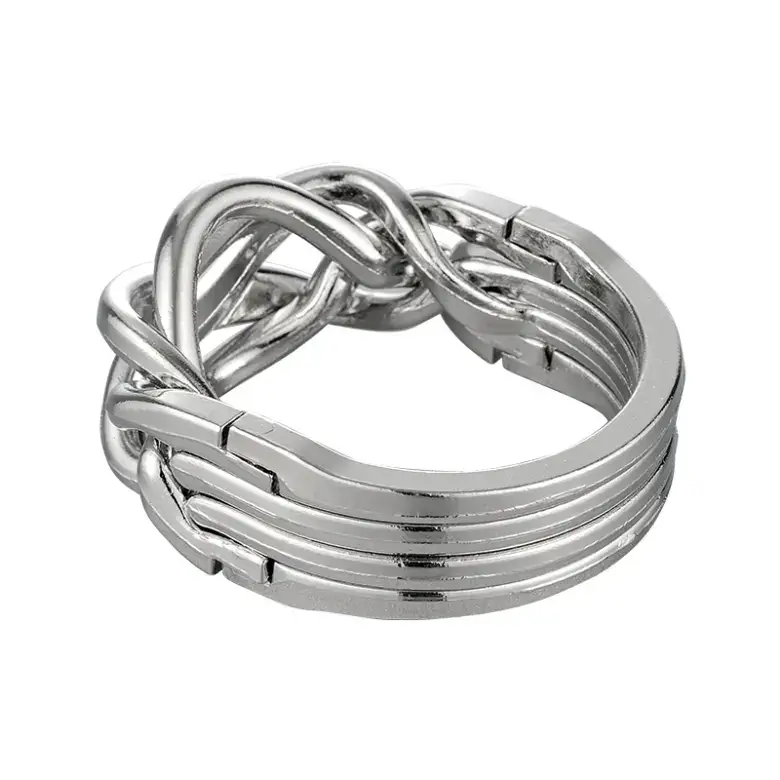
4 Band Puzzle Ring — $11.99
The $15–25 tier: the multi-piece and mid-difficulty zone. This is where the Cast Coil, Cast Galaxy, and 5-piece assemblies start appearing. The 5 Piece Cast Spiral Metal Puzzle at $16.99 is the most underrated entry in this bracket — five interlocking rings, a genuine disentanglement solve, and a mechanism that scales from beginner to intermediate depending on how you approach it. At Puzzle Master, this is roughly where the Level 4–6 cast puzzles land; on Amazon, BePuzzled’s “expert” tier begins around $17.99 and climbs toward $22.99 for the Cast Harmony and Cast Equator.
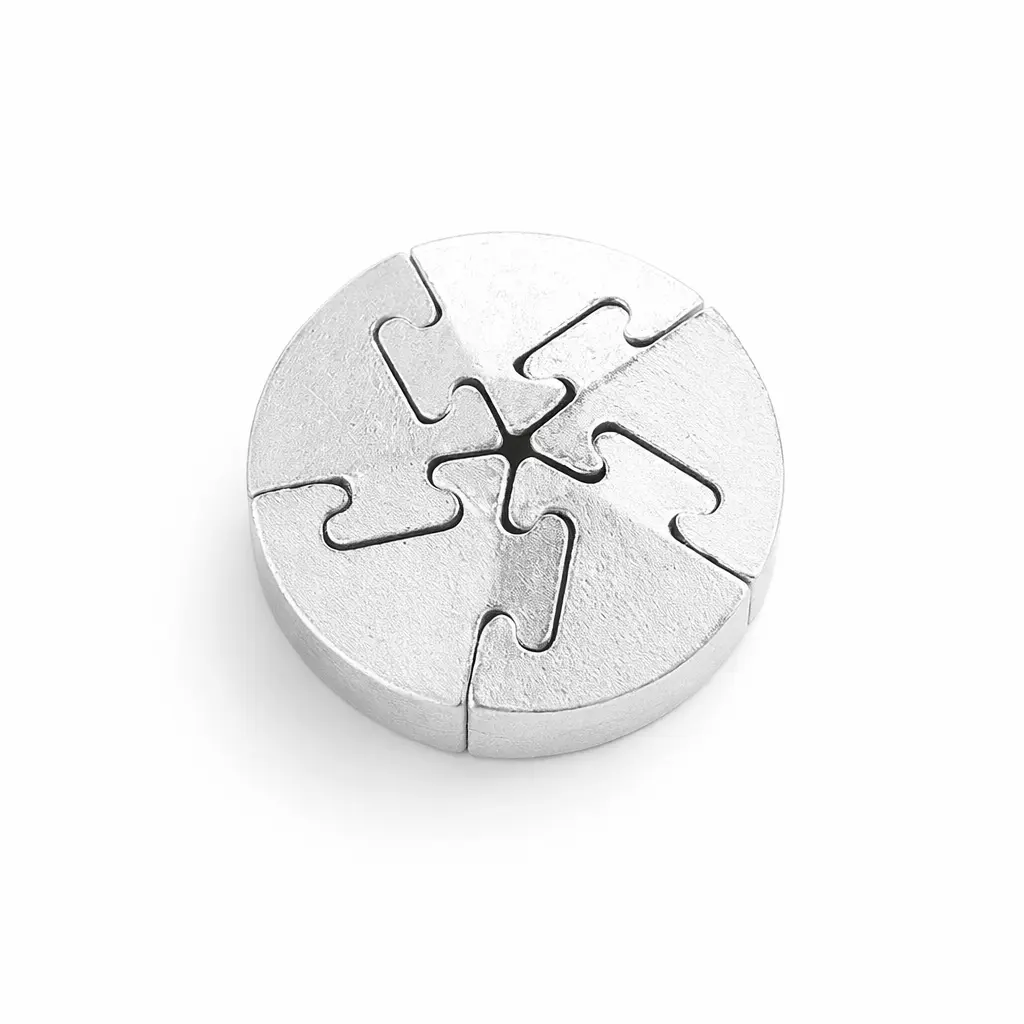
The $40+ tier: gift sets, collector bundles, and museum editions. Puzzle Master’s Level 1–5 bundle, Art of Play’s museum-style presentation boxes ($45–85), and the 6-in-1 wooden-and-metal sets cross into this bracket. The 6-in-1 Wooden Brain Teaser Set at $38.88 sits right at the floor — a mixed-material collection that trades the pure cast-metal feel for variety. Above $60, you’re paying for packaging, curation, and the gift-ready unboxing moment more than for additional puzzle complexity.
The honest breakdown: if you want one puzzle to solve tonight, spend $12–14. If you want a progression ladder for a household of beginners, spend on a multi-puzzle set from Puzzle Master. If you want the white Huzzle collector box on your shelf and don’t mind the premium, spend $16–18 per puzzle at Puzzle Master. If you want the solve without the brand tax, the Tea-Sip cast catalog covers the $11–19 range with the same mechanism, the same difficulty neighborhood, and none of the counterfeit anxiety. Check each product page for the current price — it moves, but the tiers don’t.
Hanayama Difficulty Levels 1-10 Explained: Where Should a New Buyer Start?
Hanayama rates every cast metal brain teaser on a printed 1–10 difficulty scale, with Levels 1–3 marketed as beginner-solvable in under 10 minutes and Levels 7–10 typically requiring 1–8 hours from experienced puzzlers — and that single number printed on the white Huzzle collector box is the most important decision filter a first-time buyer will make. Skip it and you’ll either quit in frustration or solve the thing in your palm before it leaves the desk.
Now that the price tiers have narrowed the field to what $12–18 actually buys, the next question is harder: which rung of the ladder should your first cast metal puzzle sit on?
How the 1–10 scale actually breaks down in practice
The official Hanayama scale isn’t an even ladder. The easy rungs are crowded — most of the entry-level cast metal catalog sits at Levels 1–3, marketed to first-time buyers, gift-givers, and anyone who wants a 5–15 minute desk break. The middle (Levels 4–6) covers the working core of the catalog and includes the company’s most popular sellers — the kind of mechanical puzzles that take 30–90 minutes on a first attempt and live on coffee tables for weeks. The top of the scale (Levels 7–10) is reserved for the deep-cut puzzles with multi-step internal mechanisms, where experienced puzzlers expect 2–8 hours per solve and a real chance of getting stuck for days.
Three things the scale doesn’t tell you up front. The rating reflects disentanglement difficulty, not reassembly — getting the pieces apart is almost always easier than putting them back together. The rating is calibrated to first-time solvers, so an experienced puzzler drops a full level. And Hanayama’s official ratings have been quietly criticized for inflation — the company’s own Level 6 in some recent releases feels like a Level 4 from a decade ago, which is exactly the gap our honest review of Hanayama’s official Level 6 versus a real Level 4 maps out.
The Mensa moment: when the category got its credibility
Hanayama cast puzzles carry the “Mensa-rated” designation on their collector boxes, a credential that helped establish the brand’s mainstream reputation. It’s also why you’ll see the same designation on the BePuzzled-branded equivalents that share the same Japanese factory.
What “Level 2” actually feels like in your hand
The benchmark first-puzzle in the cast metal world is the Hanayama Cast Loop — a Level 2 in the official scale, weighing roughly 110 grams on my kitchen scale, with a solve time of 5–15 minutes on first attempt. The mechanism is a single interlocked loop that releases with a lateral twist. The reason it’s the consensus first-puzzle recommendation across r/mechanicalpuzzles is that the solve is short enough to feel achievable but satisfying enough to make you want another — the final click lands with a soft, definitive snap that hooks the buyer. The cast feel in the hand. The pause before the move. The release.
For someone shopping today who wants that same first-puzzle arc without the brand premium, the Huzzle packaging tax, or the counterfeit risk, the cast metal brain teaser that does the same job is the Cast Hook Metal Brain Teaser — the recommended first-puzzle of this article. Same cast-zinc construction, same take-apart-and-reassemble mechanic, same pocket-sized form factor that fits a coat pocket or a desk drawer.
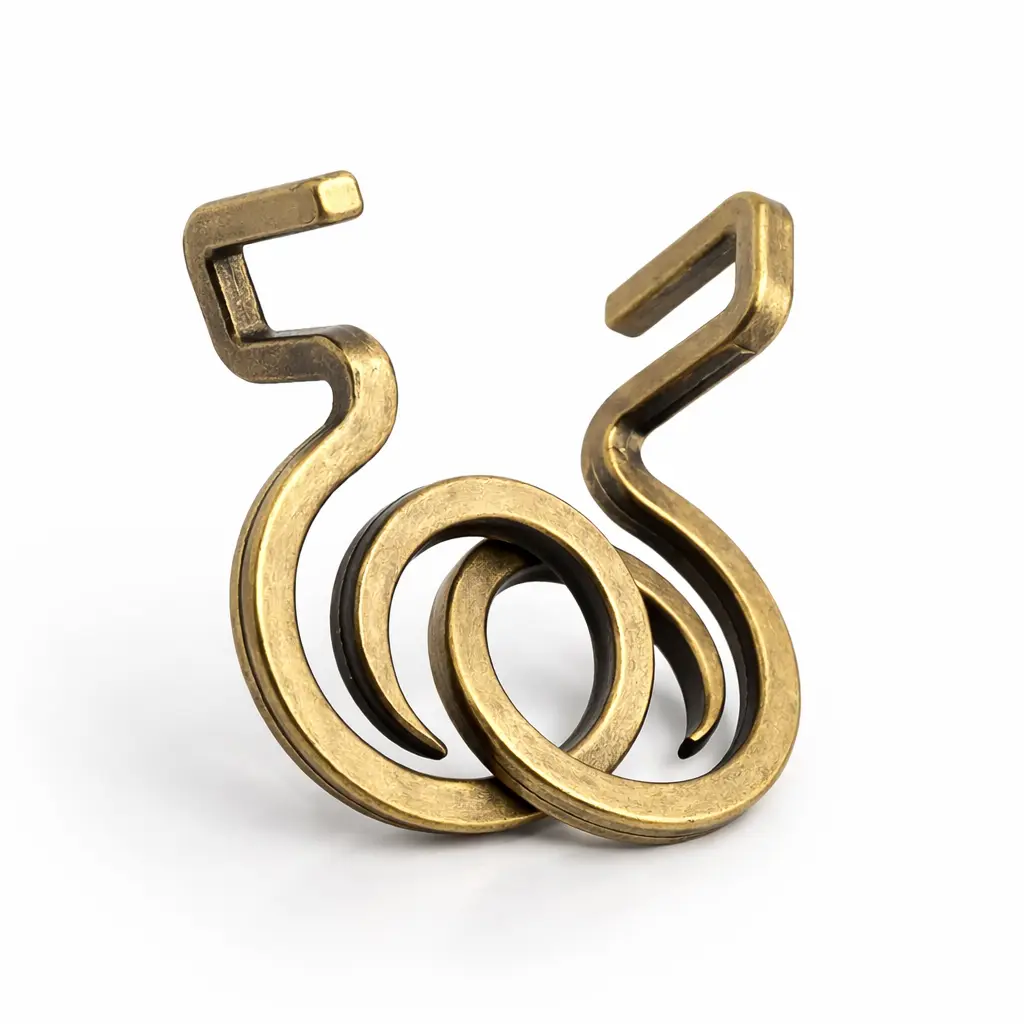
At $13.99, the Cast Hook lands right inside the $12–18 sweet spot the price-tier section mapped out. The mechanism uses a hidden release along a hooked track — one move to free, one to reset — which puts the solve in the 10–20 minute range for a first-timer, slightly longer than the Cast Loop because the release isn’t visually obvious. That’s actually a feature for a first puzzle. A 30-second solve feels like a trick. A 15-minute solve feels like an accomplishment.
The natural next step: Levels 4 and 5
Once the Cast Hook is solved and the click has been heard, the two Hanayama puzzles that almost every collector buys next are the Cast Vortex (Level 4) and the Cast Infinity (Level 5). Both sit in the 30–60 minute solve range on first attempt, both use multi-stage internal mechanisms rather than a single lateral release, and both introduce the reassembly problem that defines the upper half of the scale — getting the pieces apart is one challenge; getting them back into the displayed starting configuration is another. The Cast Vortex has a heavier initial detent when you first pick it up, the Cast Infinity solves with a sigh rather than a snap.
The point isn’t to chase the brand. The point is to climb the ladder: start at the rung where the solve is achievable in a single sitting, hear the click, and let the next rung call to you from the shelf.
A short starter ladder built from the cast catalog
If you’re building a first-puzzle progression without paying the Huzzle premium, the cast metal brain teaser catalog covers the same difficulty neighborhood with three solid rungs:
- Rung 1 — entry (10–20 min solve): the Cast Hook Metal Brain Teaser at $13.99 — the recommended first-puzzle of this article.
- Rung 2 — mid (15–45 min solve): the Metal Orbit Ring Cast Puzzle at $14.99 — a ring-based disentanglement with a trickier reset.
- Rung 3 — stretch (45–90 min solve): the 5 Piece Cast Spiral Metal Puzzle at $16.99 — five interlocked pieces that demand a real plan, not just a twist.
All three are cast metal, all three are pocket-sized, all three ship in a similar pocket-friendly weight class, and all three land in the $14–17 bracket the price-tier section identified as the working sweet spot for a first buyer.
The first-puzzle rule, written in one line
Buy the puzzle that solves in 10–20 minutes on your first attempt, in a weight that feels substantial in your hand, from a retailer whose boxes you’ve verified. The difficulty number on the box is a guide, not a verdict — but for a first cast metal brain teaser, anything in Levels 1–3 of the official scale, or its cast-catalog equivalent, will deliver the click that hooks you into the category.
Best Hanayama-Style Puzzles by Use Case: Gifts, Collectors, Fidgeters, and Budget Buyers
With 47 cast puzzles on a walnut shelf, I’ve learned that matching a metal brain teaser to the actual buyer is the difference between a desk ornament and a daily pickup. The four lanes below — gift, collector, desk fidget, budget — all pull from the $10–25 window the price-tier section mapped, but weight, finish, and mechanism shift the pick. Skip this category for a screen-first fidget; lean in if you want a 10–90 minute solve that ends with a physical click. For a deeper read on the buyer-side matching logic, the tactile matchmaker Hanayama puzzle buying guide works through the same problem from a different angle.
Best for gifts
The gift lane is where the box matters as much as the puzzle. The 6-in-1 Wooden Brain Teaser Set at $38.88 delivers a graduated difficulty arc in one package — a stronger gift narrative than any single cast piece, because the recipient can progress through six levels without buying more. The 4-piece boxed presentation also photographs well, which matters if the recipient is the Instagram-first type.
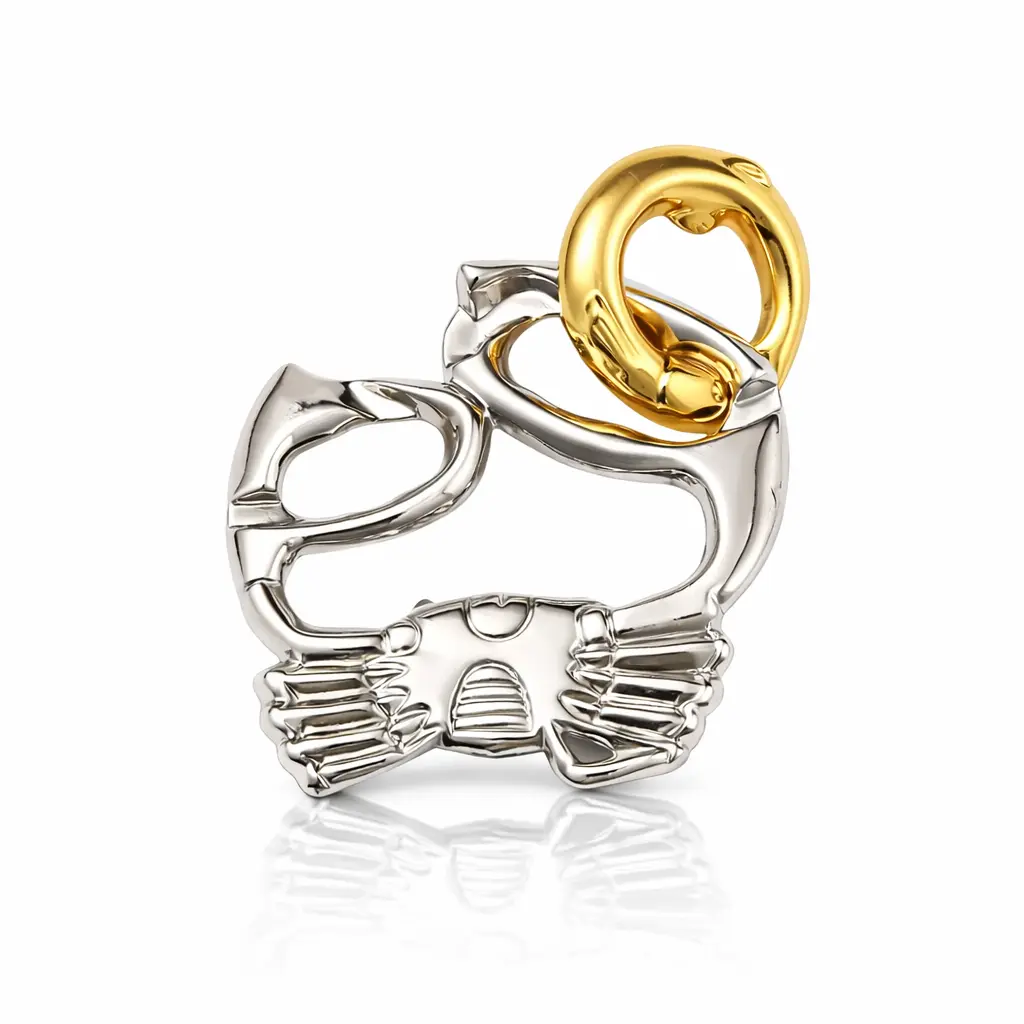
For a standalone cast gift that announces itself, the Metal Crab Puzzle Cast Brain Teaser with Gold Ring at $13.99 is the move — the embedded gold ring gives it a jewelry-box feel, and at roughly 150g on a kitchen scale it has the heft of a real object, not a trinket.
For a paired-gift scenario, the Dual Seahorse Gold & Silver Brain Teaser at $14.99 and the Gold Fish & Silver Coral Reef Cast at $13.99 read as a matched set across two designs. The Cupid’s Heart Chain Puzzle at $13.15 and the Cupid’s Arrow Heart Lock Puzzle at $12.98 are the romantic-lane picks — themed, lock-based, and pocket-sized at ages 12 and up.
Skip single-puzzle gifting if the recipient has never held a cast puzzle before; the 6-in-1 set has a built-in tutorial arc that a single cast piece does not.
Verdict: Boxes beat singles for first-timers; a gold-accented cast piece beats a plain zinc one for someone who already owns the category.
Best for collectors
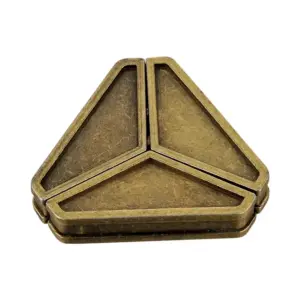
Collectors care about three things: finish, mechanism novelty, and a theme that reads on a walnut shelf. The Cast Coil Triangle Puzzle at $25.99 hits all three — a triangular cast body, an unusual coil-based release, and a weight (around 220g on my scale) that anchors a shelf row. The Cast Galaxy 4-Piece Silver at $14.88 brings the four-piece assembly category to a cast-metal line, which is rarer than the standard single-piece disentanglements that dominate the budget shelf.
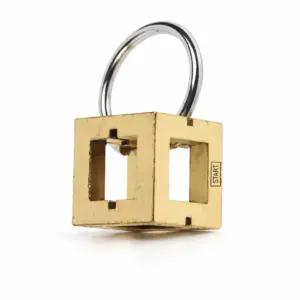
For the finish-focused collector, the Antique Bronze Metal Keyring Puzzle at $14.99 and the Brass Cube Maze Puzzle Keychain at $16.99 deliver a warmer patina than the standard silver-zinc finish — they look like a found object, not a factory piece. The Antique Lock Puzzle at $11.99 fits the same lane at a lower price point, and the Chinese Koi Puzzle Lock at $16.99 adds a thematic anchor for a collector building an Asian-mechanical shelf.
Verdict: Triangles, four-piece assemblies, and bronze patinas are what separates a collector’s shelf from a beginner’s drawer.
Best for desk fidgeting
This is the lane where weight and tactile reset matter more than solve difficulty — and the Cast Hook Metal Brain Teaser is the daily-driver pick. With two clean release moves and a reassembly that snaps with a satisfying detent rather than a grudging click, it sits on my desk between the coffee cup and the monitor stand and gets picked up ten times a day. That is the test no difficulty rating measures. The Cast Hook also doubles as a paperweight — a quiet utility a good desk piece earns over weeks, not minutes.
For a lighter fidget, the Cast Keyhole Gold & Silver at $13.99 has a smoother twist and a more discrete solve — better for an open-plan office where a loud puzzle click would draw looks. The 6 Piece Steel Ball Pyramid Puzzle at $11.98 is the keychain-pocket fidget: 65g, fits in a coin pocket, and solves in under a minute for a stress reset. The Brass Cube Maze Puzzle Keychain at $16.99 sits in the same lane with more weight and a more visible mechanism — the kind of pocket-sized handheld that becomes a habit within a week.
Skip this lane if the desk already has a mechanical keyboard — the click overlap gets annoying fast.
Verdict: The Cast Hook is the desk default. Everything else is a mood.
Best budget buys
Under $13, the cast-metal category gets thin — the cheapest legitimate cast pieces sit at $11.88–$12.99, and below that you’re in lock-mechanism territory. The Alloy S Lock Puzzle at $10.99 and the Alloy Triangle Lock Puzzle at $11.88 are the entry-priced locks, both with the same Mensa-adjacent mechanism style as a Level 1–2 cast disentanglement puzzle. The Bagua Lock Puzzle at $12.99 and the ABC Maze Lock at $12.99 add thematic variety without crossing $13.
For the cheapest possible pocket-puzzle entry, the 4 Band Puzzle Ring at $11.99 is a four-band disentanglement that costs less than a coffee and solves in 5–10 minutes. The 6 Piece Steel Ball Pyramid Puzzle at $11.98 sits in the same bracket with a different mechanism — assembly, not disentanglement — which makes it a stronger pick for a buyer who already knows they prefer the take-apart-and-reassemble feel over the ring-and-chain category.
Skip budget buys if the recipient already owns a cast puzzle; the upgrade path to a $14+ cast piece is a real step up in weight, finish, and solve depth.
Verdict: Budget buys are real, but expect lock-mechanism pieces, not cast disentanglements — the cast category starts at $13, and a first cast piece is worth the extra two dollars over a lock.
Frequently Asked Questions About Buying Hanayama-Style Metal Puzzles Online
The budget bracket starts at $11.98 — but the questions buyers ask before clicking “buy” usually run deeper than price. Below are the eight queries that show up most in my DMs, my meetup-group chat, and the r/mechanicalpuzzles thread. Each answer comes with a number you can use as a yardstick, not a guess.
Where can I buy Hanayama puzzles in the US without paying $20 shipping?
Puzzle Master’s shipping rates depend on order size and destination; check their current shipping policy for the latest thresholds. For US-only buyers, the realistic no-shipping-charge route is Amazon Prime, which carries Hanayama and BePuzzled SKUs with free two-day delivery on most US zip codes. Plaza Japan and Kubiya Games ship from Japan and charge tracked airmail rates that vary by weight — fine for a larger order, painful for one $14 puzzle.
Are the BePuzzled puzzles on Amazon the same as Hanayama?
Yes — BePuzzled puzzles sold on Amazon are manufactured in the same Japanese factory as Hanayama cast puzzles, with identical cast zinc alloy, identical mechanism design, and the same 1–10 difficulty scale. The only differences are the collector box (BePuzzled’s blue-and-silver sleeve instead of Hanayama’s white Huzzle box) and the $12–18 retail price band. Same puzzle, different wrapper.
What’s the difference between Hanayama and Huzzle?
Hanayama is the Japanese manufacturer (parent company Hanayama Co., Ltd.), and Huzzle is the consumer brand name printed on the white collector boxes. Every Huzzle puzzle is a Hanayama puzzle; not every Hanayama product is sold under the Huzzle label. The “Cast” prefix on older SKUs (Cast Vortex, Cast Loop) refers specifically to the cast metal series.
Is it safe to buy Hanayama on eBay or are most of them fakes?
Verified-authentic eBay sellers do exist, but a meaningful share of cast metal Hanayama listings on the platform are counterfeit — typically the “Key” and “Quartet” knockoffs that show lighter box weights, visible cast seams, and missing Huzzle branding. The weight check is non-negotiable: weigh the puzzle on a kitchen scale, compare against the manufacturer spec, and walk away from anything 20%+ light.
Which Hanayama puzzle is easiest for a complete beginner?
The Cast Loop at Hanayama Difficulty Level 2 has a 5–15 minute first-attempt solve time — short enough to feel achievable, satisfying enough to make you want a second. Levels 1–3 across the entire Hanayama catalog (Cast Omega, Cast S&S, Cast Key) sit in the same 5–30 minute beginner window and are the recommended first purchase for any buyer who has never held a cast disentanglement puzzle.
Are there Hanayama-style puzzles cheaper than $10?
Yes — BePuzzled clearance listings on Amazon can drop to around $9.99 per single puzzle (typically Level 1 overstock), and eBay third-party sellers list unbranded cast knockoffs in the $6–8 range. The $6–8 tier carries the highest counterfeit risk and zero difficulty-level labeling; the $9.99 BePuzzled tier is the safe budget floor. Below that, you are gambling.
Can I inspect a Hanayama puzzle in a physical store before buying?
In-store availability varies by retailer and location. Some book and game stores have carried Hanayama or BePuzzled-branded equivalents, but selection is inconsistent across branches. Calling ahead is the only reliable way to confirm stock before making a trip.
Can I buy Hanayama puzzles as a gift set with multiple difficulty levels?
Yes — Puzzle Master offers multi-puzzle sets covering Levels 1–5 and Levels 1–6. Both ship in the white Huzzle collector boxes, include one puzzle per difficulty level, and solve as a 5–6 hour arc that walks a beginner from their first click to their first genuine stuck-on-Level-4 moment. Check the Puzzle Master site for current pricing.
Final call before the click
Every puzzle on that walnut shelf above my desk started with a kitchen scale, a verified retailer, and one specific question: what’s actually inside the box? You’ve now got answers for 8 retailers, 4 price tiers, 10 difficulty levels, and the most common buying mistakes. The click begins the moment the package lands — and it starts here:
👉 Shop the Cast Hook metal brain teaser — or browse the full metal puzzles collection if you want to start a shelf of your own.