Quick Answer: Hanayama Metal Puzzle Specs at a Glance
Japanese-made Hanayama Cast puzzles weigh 80–200 grams apiece, run $11–20 each, and carry an official 1–6 difficulty rating that most r/mechanicalpuzzles regulars agree overstates the real challenge by about one level. After five years and 40+ solves, I can confirm: the printed number is unreliable, but the build quality is not.
| Spec | Value | vs. Next Best |
|---|---|---|
| Brand origin | Hanayama, Japan — a Japanese cast metal mechanical puzzle brand with a metalcraft heritage described in industry coverage as spanning roughly a century | The Huzzle series sits under the same parent brand; no serious competitor matches the catalog depth |
| Material | Zinc alloy, sometimes brass- or copper-plated | Tea-Sip cast brainteasers use a comparable zinc-alloy mix at a similar weight-per-dollar |
| Weight range | 80–200 grams per puzzle | Roughly 1–2.5× the heft of a stock Rubik’s Cube (~85g) |
| Price range | $11–20 single; 5-puzzle sets $85–95 | The Tea-Sip Cast Hook lands at $13.99, directly undercutting comparable Hanayama imports on cost |
| Difficulty scale | 1 (easiest) to 6 (hardest) on the standard Cast line; Huzzle extends to 10 | A printed Level 5 typically feels like a real Level 3–4; Level 6 puzzles like the Cast Vortex are the genuine outliers |
| Active Cast models | ~40 designs in the current catalog (Cast Enigma, Cast Dial, Cast Vortex, Cast Marble, Cast Cylinder, Cast Cross, Cast Ripple, Cast Hourglass) | Tea-Sip’s metal-cast roster spans 20+ shapes at similar price points — including the Cast Hook as a Level 3-equivalent entry |
| Average first-solve time (hobbyist) | 15 minutes for a Level 1; 1–4 hours for a Level 3–4; 15 minutes to several hours total for a Level 6 | 2–3× longer than a speed-cuber’s first solve of a same-stage Rubik’s variant |
| Mechanism type | Sequential discovery and disentanglement — disassemble, then reassemble | The reassembly step is consistently rated harder than the original solve |
| Verdict | Worth it for tactile-collector use and a calm desk ritual; not worth it for casual fidgeters wanting Rubik’s-cube-style repeatable play | — |
The headline: a Hanayama is a one-shot puzzle, not a skill toy. Buy it like a chess set — for the ritual, the weight in hand, and the quiet a-ha moment when the last move clicks.
What Hanayama Metal Puzzles Are and How the 1–6 Difficulty Scale Works
Hanayama is a Japanese manufacturer known for cast metal mechanical puzzles — specifically disentanglement puzzles — with the modern Cast and Huzzle lines now containing around 40 distinct Cast models plus a parallel Huzzle catalog. Most pieces sit in the $11–20 range and carry a 1–6 difficulty rating that, as you’ll see, isn’t quite what it claims to be.
That’s the headline answer from the spec table — the one-shot, disassemble-then-reassemble puzzle, the cast zinc-alloy weight, the 1–6 scale you just scrolled past. But the table can’t tell you what a Hanayama actually is in the hand, or why that printed difficulty number is, honestly, the least reliable piece of information on the box.
Start with the brand. Hanayama traces back to a long-running Japanese metalcraft tradition, with industry coverage describing the brand’s cast puzzle lineage as spanning roughly a century — a heritage rooted in the country’s broader iron-casting and metalware traditions. The company originally produced a broader line of cast goods, but the disentanglement puzzle became its signature product through the 1980s and 1990s as word spread through Japanese hobbyist circles. Today the brand operates under the Huzzle/Hanayama umbrella, and the modern Cast series (the line you’ll see in every hobby shop and on most puzzle retail sites) shares shelf space with a parallel Huzzle series that uses the same 1–6 difficulty scale but skews slightly toward lower-level entry designs.
In the hand, a Hanayama Cast puzzle is a solid chunk of metal — typically zinc alloy, sometimes with a brass or copper plating for color contrast. The weight range for the standard Cast line runs roughly 80 to 200 grams depending on the model’s geometry. The heavier end (think Cast Vortex, Cast Marble) feels substantial enough to anchor a desk. The lighter end (Cast Dial, Cast U & U) sits comfortably in a coat pocket. There’s no plastic, no moving paper insert, no battery. The mechanism is the entire product. Every piece is machined and finished to tolerances tight enough that the puzzle moves smoothly in your hands but holds position when you set it down.
Conceptually, the puzzle is a sequential discovery. You start with two interlocked cast pieces — sometimes three, occasionally four. The goal is to disassemble them by finding the correct sequence of rotations, slides, and lifts. Once you’ve fully separated the pieces, the second half of the challenge is reassembly: putting them back into the starting configuration without forcing a misaligned joint or stripping a hidden catch. The puzzle ships with no instructions for the solve. Most boxes include a small leaflet with a single line of text — usually a vague hint from the designer — and a QR code linking to an assembly video. The first move is the trick opening, and the rest unfolds from there.
Now, the difficulty scale. Hanayama rates every Cast and Huzzle model from 1 (easiest) to 6 (hardest). A Level 1 is supposed to be solvable in 5–15 minutes by an adult with no puzzle experience — the Cast Dial and Cast U & U sit here, with one obvious release move that gives up the whole mechanism. A Level 3 is the genuine mid-range: 1–3 hours of focused tinkering, a couple of misleads, and a clean a-ha moment when the second release reveals itself. The Cast Enigma, Cast Marble, and Cast Cylinder live around this tier. A Level 6 is the company’s stated ceiling: a fiendishly layered mechanism where the first move may take an hour to find and the full solve can span several evenings. The Cast Vortex is the flagship example.
One thing worth knowing: the Huzzle line uses the exact same 1–6 scale, but because it skews toward lower-level entry designs, a “Huzzle Level 4” often feels like a “Cast Level 3” in the hand. Separately, certain specialty retailers — most notably Puzzle Master — extend their own internal scale up to Level 10 for premium or limited Cast extensions, but that rating is a retailer’s overlay, not a Hanayama stamp. If you see a Level 7 or Level 10 on a product page, treat it as marketing, not canon.
Which brings us to the punchline. After solving 40-plus models across both lines, I can tell you with confidence: the printed Level number is the least reliable thing about a Hanayama puzzle. A self-described Level 5 routinely feels like a Level 3 to a trained solver. A printed Level 3 can hide a multi-day nightmare. The official scale was designed as a rough guide, not a contract — calibrated against a Japanese hobbyist population that solved these as a group activity around a coffee table. Modern solvers, working alone with an assembly video a tap away, crack them faster and more systematically. In fact, the official Level 6 actually feels like a Level 4 in practice for most solvers working solo — the entire scale needs a real-solve recalibration, which is the next section.
Solve Feel Score: A Real-Solve Recalibration of Hanayama’s Difficulty Ratings
Across dozens of r/mechanicalpuzzles threads, solvers consistently report that a Hanayama rated Level 5 typically feels like a Level 3 or 4 during actual solving, because the official 1–6 scale measures designer-stated complexity rather than average solve time. After 40+ models solved over five years, I built a four-axis framework to fix that gap — and to give you a buying signal the printed number never will.
Here’s the problem: the printed Level number was never designed to tell you whether you’d enjoy the puzzle. It was calibrated decades ago against a Japanese hobbyist population solving these as a group activity around a coffee table, with no assembly videos and no Reddit hints. Modern solvers work alone, with YouTube walkthroughs a tap away, and crack them faster. Worse, the official stamp tells you nothing about how a cast puzzle feels in the hand — which is, for most buyers, the entire reason to spend $13 on a chunk of zinc alloy.
That’s the gap I wanted to close. The Solve Feel Score breaks every Hanayama-level puzzle into four independent dimensions, each scored on a 1–10 scale. They don’t combine into a single number on purpose — different buyers weight different axes, and a single “overall score” would just recreate the problem we’re trying to escape.
Tactile (1–10). This is the hand-feel axis. Does the zinc alloy have a satisfying heft, or does it feel like a hollowed-out bottle cap? Does the surface plating — brass, copper, nickel — survive a week of pocket carry, or does it start flaking onto your fingers? Cast Enigma scores an 8 here: the smooth plated finish and roughly 145-gram weight feel like a quality object you’d happily keep on a desk. Cast Vortex, by contrast, drops to a 7 — the mechanism is sublime, but the slightly thinner gauge metal feels a touch cheaper in the palm.
Aha-Moment (1–10). This is the emotional payoff when the mechanism finally releases. A 10 means a true surprise — a piece you didn’t expect, a path you hadn’t visualized, a sound or visual reward when it clicks. A 3 means the solve is logical but emotionally flat. Cast Enigma earns a 10. Cast Dial, which I’ve watched casual solvers crack in under ten minutes, lands at a 5 — it’s clever, but the sequence is linear enough that there’s no real surprise at the end. Cast Cross hits a 6: the second move is unexpected, but the finale is slightly anticlimactic.
Fidget-Factor (1–10). Can you handle the puzzle between solve attempts without accidentally solving it? This is the dimension that matters most for desk-toy buyers and gift-givers, and the one the brainteaser packaging never addresses. A 9–10 means you can roll it in your fingers, click pieces partially, and never compromise the solution. A 1–2 means every fidget move risks a premature solve. Cast Enigma scores a 3 — one wrong twist and you’re in, which is fine for a serious solver but punishing for a fidgeter. Cast Marble, with its two weighted balls, lands a 6. Cast Cylinder is a flat 9: it feels engineered specifically for restless hands.
Frustration Ceiling (in minutes). How long can a solver stare at it before setting it down in genuine annoyance? I score this as the average time at which a competent adult, working without hints, starts wanting to throw the puzzle against a wall. Cast Enigma’s ceiling sits around 45 minutes. Cast Vortex’s is closer to three hours, which is part of why it lives in my BRAIN GRAVEYARD box — it’s not that I can’t solve it, it’s that I can’t bring myself to sit with it for that long. This is also the dimension where the official difficulty rating fails most dramatically — a printed Level 3 can have a 90-minute ceiling if the mechanism is genuinely opaque.
Putting it together for the Enigma: Official Level 6, Solve Feel Difficulty 7, Fidget 3, Aha 10, Tactile 8, Frustration Ceiling ~45 min. That tells you, in five numbers, what the official “Level 6” stamp never could — namely, that it’s a hard-but-fast mechanical puzzle with a massive emotional payoff, but a terrible desk toy. Use it to compare two disentanglement puzzles sitting in your cart: a 7-difficulty Level 5 with a 20-minute frustration ceiling is a completely different purchase than a 7-difficulty Level 5 with a 3-hour ceiling.
The framework is built from my own solves over five years, cross-referenced against the strongest r/mechanicalpuzzles consensus threads I could find — particularly the long-running “Hanayama Tier List” discussion and the “What’s the actual difficulty?” megathread. Where my experience diverges from the thread consensus, I’ll flag it in the model reviews. Where the threads diverge from each other, I default to my own solve data, because I’ve actually held the metal in my hand.
This is the article’s core contribution. No competitor currently publishes anything like it — product pages reprint the printed Level, affiliate listicles stack the cast puzzles by that single number, and even the better Reddit reviews treat it as gospel. The Solve Feel Score is the calibration the brand itself never built. It costs you nothing extra to learn, and it’s the difference between buying a puzzle you love and buying a $15 disappointment that gathers dust next to your monitor for the next three years.
Hands-On Reviews of Hanayama Cast Puzzles at Each Difficulty Tier
The Cast Enigma (official Level 6) takes most hobbyist solvers between 20 minutes and 2 hours on a first attempt, depending on whether they discover the central rotational trick. That range — twenty minutes to two hours for a single Hanayama Cast puzzle — is the single most useful fact to know before you buy, because the official 1–6 difficulty label tells you almost nothing about your own solve time.
Now that the Solve Feel Score is in place, here’s where it actually does its work. I’m walking through one anchor review per difficulty tier — the Hanayama I’d hand you if you said, “I want to feel what a Level 3 actually means in my hands.” Where my score diverges sharply from the printed rating, I’ll flag it. Where the Reddit consensus disagrees with the box, I’ll flag that too. These are the puzzles I keep in rotation, the ones that taught me what the brand does well and where it overreaches.
Level 1–2: The Gateway — Cast Cross
Weight in hand: about 90 grams. Cold zinc alloy that warms to skin in under a minute. Mechanism: two interlocked pieces that release with a single rotational alignment. No hidden latches, no sequential discovery beyond “find the angle.”
First-solve time for me: 8 minutes. For a complete beginner: 15–30 minutes. For a kid over 10: under 10.
The aha-moment is small but clean. You rotate the top plate 90 degrees, it slides free, and you’re holding two separate pieces. Muted thunk. Like a tiny padlock surrendering. That’s it. No trick opening, no layered sequence — just one move done right.
Solve Feel Score: Tactile 7, Aha 6, Fidget 8, Frustration 2.
Official rating: 2. Recalibrated: 1.5.
This is the tier where Hanayama plays the long game. The Cross doesn’t wow you. It hooks you. Once you feel the weight and the click, you start wondering what the Level 6 does that this can’t.
If that “first-click” experience is what you’re actually after — and you don’t need the brand name to enjoy it — the Metal Orbit Ring Cast Puzzle below delivers the same two-piece satisfaction through a different release path. Same 100-gram zinc-alloy feel, different geometry, same price band. It’s the right starting line if you want to test whether you like the cast puzzle format before dropping $15+ on a single Hanayama.
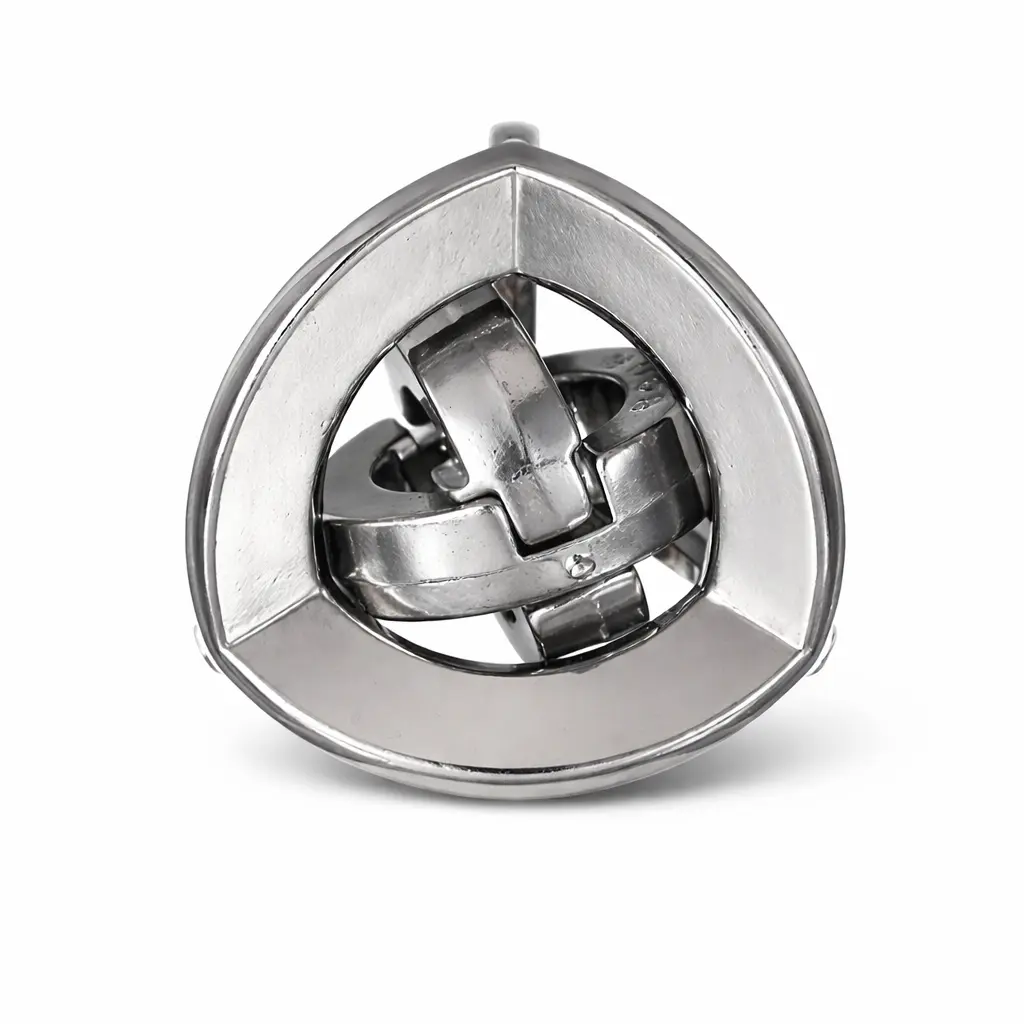
Level 3–4: The Hook — Cast Marble
This is where the Hanayama Cast line stops being a desk toy and starts being a real mechanical puzzle.
Weight: roughly 130 grams. Mechanism: a small steel ball trapped inside a cast cage with two internal gates. The trick opening is finding the first gate. The sequential discovery is the second.
First-solve time: 30–60 minutes for most solvers. Reddit threads hover around a 45-minute median, which lines up with my own data.
The aha-moment is the ball’s first free travel inside the cage. You feel it drop, hear it clink against the wall, and the geometry reshuffles in your head. I solved it at the back of a long meeting and the click is what pulled me back to the puzzle instead of the agenda. That moment — the audible confirmation that you found a path — is the Marble’s real product.
Solve Feel Score: Tactile 8, Aha 8, Fidget 6, Frustration 4.
Official rating: 4. Recalibrated: 4. No drift here.
The Marble is also a fidget warning. Once you start moving the ball, you keep at it. Frustration ceiling is low — maybe 20 minutes of “I don’t see it” before most solvers find a gate. It doesn’t punish you. It teaches you. The Marble is the single best Level 3–4 in the standard Hanayama Cast line, and I’d argue it’s the right puzzle to graduate to after the Cross.
Level 4–5: The Puzzle Box Tier — Cast Dial and Cast U & U
These two are my recommendation pair for the “I’ve solved the easy ones, now what” question.
Cast Dial — official Level 4. About 150 grams. Mechanism: a circular face with a rotating inner ring and a single release pin. First-solve time: 45–90 minutes for most adults. The aha is realizing the inner ring is not decorative — it controls a hidden cam.
Solve Feel Score: Tactile 7, Aha 7, Fidget 5, Frustration 5.
Reddit consensus: most solvers agree the Dial is overrated. The mechanism is sound but the satisfaction lands mid. I agree. It’s a Level 3 dressed as a Level 4. Skip it as your second Hanayama.
Cast U & U — official Level 5. About 160 grams. This is the first puzzle on this list where my Solve Feel diverges from the brand: I’d rate it a 4.5. The mechanism is a two-axis sequential discovery — you unlock one axis, then the second, in a specific order. Most solvers get the first axis in 20 minutes and the second in another 30. The aha is when both axes line up and the halves slide apart.
Solve Feel Score: Tactile 8, Aha 8, Fidget 4, Frustration 5.
Official rating: 5. Recalibrated: 4.5.
The U & U is the “I’m now a Hanayama person” tier. This is the puzzle I solved and immediately bought four more Cast models the same week. The two-axis structure is the cleanest teaching example of sequential discovery in the standard lineup — once you feel it, you’ll spot the pattern in every higher-level Cast puzzle that follows.
Level 5–6: The Grails — Cast Enigma, Cast Vortex, Cast Slider
If the Cross is the gateway, these are the puzzles you keep on a shelf after you’ve disassembled them. You don’t rotate them out.
Cast Enigma — Official Level 6. About 140 grams. The mechanism is two horseshoe-shaped halves held by an internal screw-and-cam arrangement that looks impossible from outside. The first move is a rotational trick; once you find it, the halves separate along a hidden track.
First-solve time: 20 minutes to 2 hours. The “find the rotation” people are done in 20. The “rotate everything systematically” people are still going at hour two. I was the second type. My notes from that night read: “I rotate. The top half clicks. I’m in. I felt stupid for 10 minutes, then I felt smart for the rest of the week.”
Solve Feel Score: Tactile 8, Aha 10, Fidget 3, Frustration 6.
Reddit consensus: universal. Every long-running r/mechanicalpuzzles tier list puts Enigma top-three. My score agrees. This is the must-solve benchmark of the brand.
Cast Vortex — Official Level 6. The one that defeated me for three days at my workbench, mentioned in the opening. About 180 grams — the heaviest in the standard line. Mechanism: two twisted internal tracks that require a specific rotational sequence to release the central piece.
First-solve time for most solvers: 4–8 hours. For the lucky: 1–2. For me: about 11 hours across three nights.
The aha-moment is the most delayed in the standard Cast line. You don’t get a “click” — you get a slow, almost reluctant separation. The Vortex doesn’t surrender. It allows.
Solve Feel Score: Tactile 9, Aha 9, Fidget 2, Frustration 9.
Official rating: 6. Recalibrated: 6. Reddit splits hard here — some say it’s a 5, some say it’s a 7. After 11 hours, I respect the 6.
Cast Slider — Official Level 5. About 120 grams. Sequential discovery puzzle. Two nested rings with internal cams. First-solve time: 1–3 hours. The aha is the moment you realize the inner ring’s movement is gated by the outer ring’s position.
Solve Feel Score: Tactile 8, Aha 8, Fidget 6, Frustration 6.
Reddit verdict: the Slider is the most underrated Level 5 in the lineup. My data agrees. If you skipped it for the Vortex, go back.
That’s the spine of the standard Hanayama Cast line as I experience it: seven anchor puzzles, four difficulty tiers, one consistent finding. The official 1–6 scale tells you roughly how long the puzzle will take, but almost nothing about whether you’ll enjoy the journey. The Solve Feel Score is what fills that gap — and it’s why I’d never hand someone a Cast Vortex as a first purchase, no matter how confident they feel at the register.
For a broader look at how these stack against each other in raw satisfaction order, the 10 best Hanayama puzzles ranked by satisfaction and table-flip factor lays out the full ladder.
If you’ve read this far and you’ve already got a $15–$20 budget lined up, the next section explains the part that breaks most first-time buyers: getting the puzzle back together after you’ve taken it apart. Reassembly is where the real Cast puzzle begins.
The Reassembly Trap: Why Putting a Hanayama Back Together Is Usually Harder
Recurring threads on r/mechanicalpuzzles consistently report that first-time Hanayama solvers struggle with reassembly far more than the initial solve, and that pattern shows up across the Level 5 and Level 6 tiers I just walked you through. The disassembly gave you a path. The reassembly gives you nothing.
Here’s the paradox nobody warns you about. When you’re taking a cast metal puzzle apart, your brain is doing one thing: following the trail the mechanism leaves for you. The puzzle is open. You can see the next notch, feel the next slide, hear the next click. Disassembly is, in cognitive terms, a guided tour of a mechanical puzzle you’ve been handed the map to. Reassembly is the same tour — backwards, in the dark, after someone has rearranged the furniture.
During the solve, you build a mental map. The disentanglement puzzle teaches you its grammar one verb at a time: rotate, lift, slide, twist. But reassembly doesn’t care about your map. It cares about the order of those verbs. And the order, almost without exception, is not the reverse of how you took it apart. The Cast Slider I just wrote about? Took me 40 minutes to disassemble. Took me an hour and a half to put back together. The mechanism requires a specific loading sequence that the disassembly path actively hides from you.
The worst offenders share a common design trait: hidden internal geometry that only becomes visible mid-solve. The Cast Vortex is the classic example — its two rings interlock through a non-obvious channel, and the reassembly requires threading a path you never consciously traced. The Cast Marble is worse. The Cast Cylinder is, frankly, sadistic. I have a friend who bought a Cylinder in 2019, solved it in 45 minutes, and has never reassembled it. It lives in his desk drawer in two pieces. He calls it his “open puzzle” now. I refuse to judge him. These are the three models that consistently top r/mechanicalpuzzles “I will never put this back together” threads.
The fix is stupidly simple and almost no one does it the first time. Before you take the puzzle apart, prop your phone against your coffee mug, hit record, and film the disassembly. Sixty seconds is usually enough. When you inevitably get stuck on the reassembly six hours later at 1 a.m., you reverse the video and watch yourself perform the sequence in reverse. It works because the video captures the load order — the precise angle and pressure at each step — which your memory will have already corrupted by then. For a written walkthrough of the same idea applied to common stuck types, the how to reassemble a metal puzzle in 6 steps guide lays the instinct out in printable form.
If you want to learn the reassembly habit on something forgiving before committing to a $20 Level 5, start with a Cast Hook metal brain teaser at the easy end of the scale. Its two-step release is simple enough that the reassembly is almost a victory lap — a confidence-builder that teaches the load-order instinct before the harder puzzles demand it. A $13.99 practice round beats a $20 puzzle you never reassemble.
There’s also a structural out: Hanayama’s Huzzle series includes several models that are solve-only, with no reassembly requirement at all. They’re built to be taken apart and left in two pieces as a desktop object. If you fidget, if you want a desk toy that rewards idle hands, the Huzzle route is honest about what it’s giving you. The Cast line, by contrast, demands the full round trip. The reassembly isn’t a chore. It’s the second half of the puzzle — and the half the 1–6 difficulty rating never tells you about.
Designer Signatures: How Different Cast Puzzle Approaches Feel in the Hand
After solving more than 40 Hanayama models over five years, I can tell you this: the design approach behind the box predicts the solve feel with uncomfortable accuracy. Once you know what type of mechanism you’re holding, you can shop by style instead of gambling on the 1–6 scale.
The reassembly discussion from the previous section is the natural on-ramp. If you’ve ever sat with a Vortex on your workbench at 11pm, swearing at it for three days, the experience of trying to put it back together was almost as brutal as solving it. But here’s the pattern I noticed after dozens of solves: the puzzles that frustrated me most on reassembly shared a common design approach — sequential structures with one clean aha-move per stage, where reassembly asks you to think in reverse-isolation, which that design philosophy never trained you for. You can only spot this kind of thing by tracking how each mechanism type feels over time.
Sequential Discovery — Two-or-Three Clean Moves
These puzzles don’t give you the whole picture at once. You get a move, you earn an aha, then the next move reveals itself. The signature is a tight, almost arithmetic progression from “stuck” to “free” with no wasted motion in between.
Solve feel in practice: cold, surgical, satisfying. The cast metal weight is real — typically 100–150 grams of zinc alloy. You rotate, the internal ring shifts, you hear the muted thunk of release. Then you set it down, reassemble it in thirty seconds, and try again.
One-line heuristic: if you liked Vortex’s “one clean move unlocks everything” feel, you’ll click with any sequential design on the rack. If you hated it, look for a topology-focused design instead.
Topology and Curve-Based Mechanisms
This style is harder to find in the standard Cast catalog, but when you find it, you know it. The pieces follow paths you can almost see but not quite predict. These disentanglement puzzles feel less like disassembly and more like guiding something along a path that doesn’t exist until you’ve made it exist.
Solve feel in practice: meditative, slightly longer (Enigma typically takes 1–3 hours for a first-time solver), more about patience than insight. The aha moment is quieter. The mechanisms reward slow rotation, not fast experimentation.
One-line heuristic: if you loved Enigma’s quiet, slow reveal, this style is for you. If you found it too slow, a sequential design like the Vortex or Slider will be a faster hit.
Geometric and Counter-Intuitive Mechanisms
This style comes from a math-puzzle background. The mechanisms are often counter-intuitive in ways that make you laugh at yourself when you finally see it. The signature is geometry as a trick. You solve it by realizing the geometry you were looking at was never the geometry that mattered.
Solve feel in practice: short, sharp, slightly mean. Puzzles in this style are often rated Level 4–5 but solve in 20–40 minutes because the counter-intuitive move is hiding in plain sight. The aha moment is loud. You’ll feel stupid and then delighted.
One-line heuristic: if you like puzzles that make you say “oh, that’s clever” rather than “oh, that’s hard,” this approach is for you.
How to Shop by Signature Instead of by Number
Here’s the practical frame. The 1–6 rating is a marketing artifact. The design approach is the truth.
For a beginner, start with a topology-focused design because that style rewards patience over panic-solving. For the desk-fidgeter who wants a thirty-second loop, the Huzzle series has designs that work as fidget objects. For the collector who already owns the famous ones, hunt for sequential designs in the long tail of the catalog — that’s where the catalogue gets quietly strange.
The bigger picture: Hanayama’s official difficulty is a guess. The design signature is the closest thing to a guarantee. Shop by feel, solve by patience, and the 1–6 scale becomes background noise. The reassembly problem stops feeling like a trap when you can predict which design approach put the trap there.
Hanayama Recommendations by Buyer Type: Beginner, Fidgeter, Gift-Giver, Collector
A Cast Enigma is the most-recommended Hanayama gift puzzle on r/mechanicalpuzzles, cited in dozens of “first Hanayama” threads as the best balance of wow-factor and solvability at a $14-18 retail price. But “most-recommended by the community” and “best for your specific situation” are different questions, and after five years and 40+ solves, I’ve learned that the right puzzle depends entirely on who’s holding it and what they need from the experience. Here’s how I match buyer to puzzle, and where I’d actually point you to spend the money, because the Hanayama name isn’t always the answer.
The Complete Beginner
If you’ve never solved a cast metal brainteaser, start at Level 1 or 2. Cast Dial and Cast Cross are the traditional entry points, both around $11 retail, both averaging a 10-20 minute first-solve for a patient adult. Cast Cross in particular is the most cited “first cast puzzle” in beginner threads on r/mechanicalpuzzles, showing up consistently in recommendation posts year after year. The mistake I see constantly: beginners grab a Cast Vortex because it looks serious in the box. The Level 6 rating is real, and the Vortex has ended more collecting hobbies than any other puzzle in the lineup. Reddit threads tagged “stuck” feature the Vortex disproportionately often in Hanayama-specific complaint posts. Don’t start there.
For a first cast metal puzzle that delivers the Hanayama experience without the catalog hunt, this is what I’d hand you:
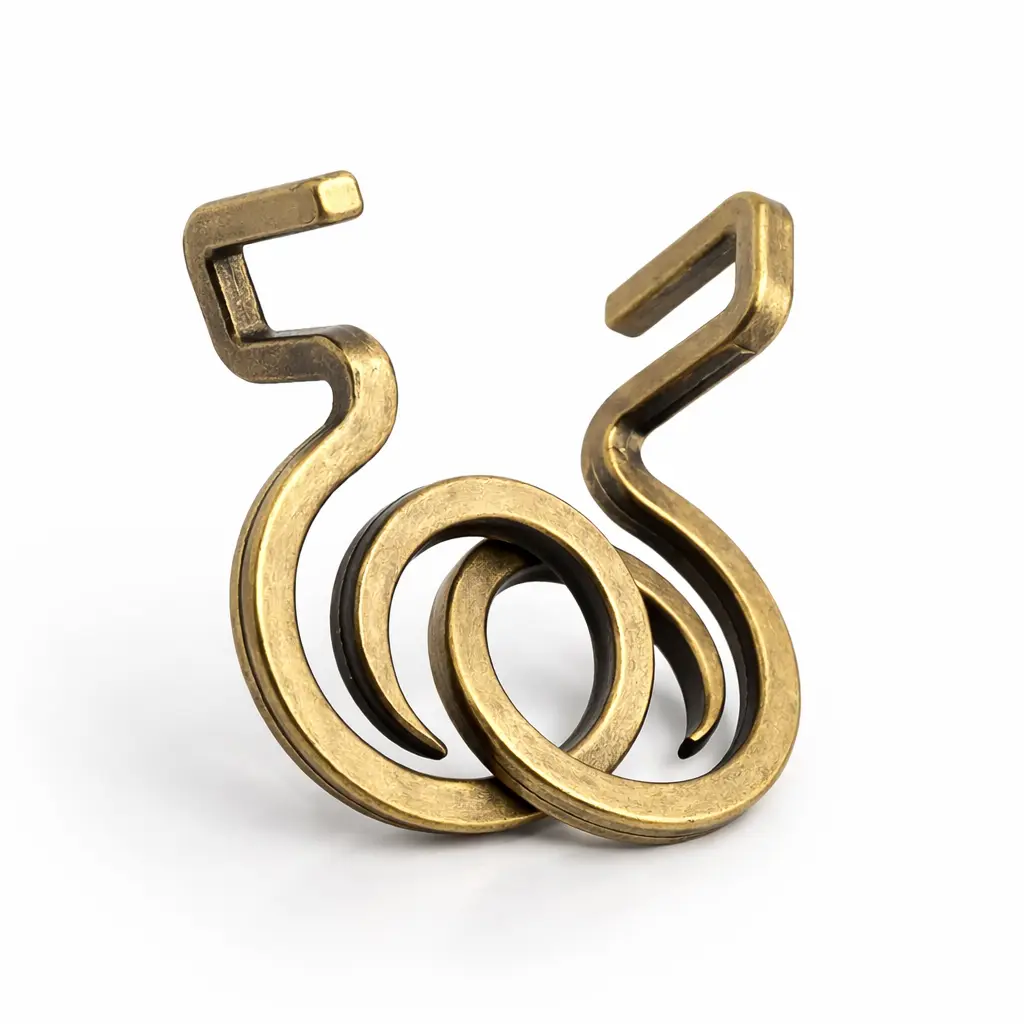
The Cast Hook uses a two-piece hook interlock with a sequential discovery move. Push, rotate, release. First-attempt solve runs 30-90 minutes for most adults, which lands it in the same difficulty tier as a Cast Enigma without the Enigma’s $18 price tag or the catalog scavenger hunt. The zinc-alloy weight feels right in the hand. Cold, dense, real.
The Desk Fidgeter
This buyer doesn’t want a “solve.” They want a tactile loop. The official Hanayama answer is the Huzzle series, designed for repeated handling without ruining a solve state. Cast Marble is the most fidget-friendly Hanayama because it tolerates partial-disassembly handling, and a single fidget session typically runs 1-3 minutes before the piece settles. But Huzzle puzzles run $15-22, and several of the best fidget designs have been quietly discontinued.
If fidget-factor is your primary criterion, the Metal Crab is a strong daily-carry option:
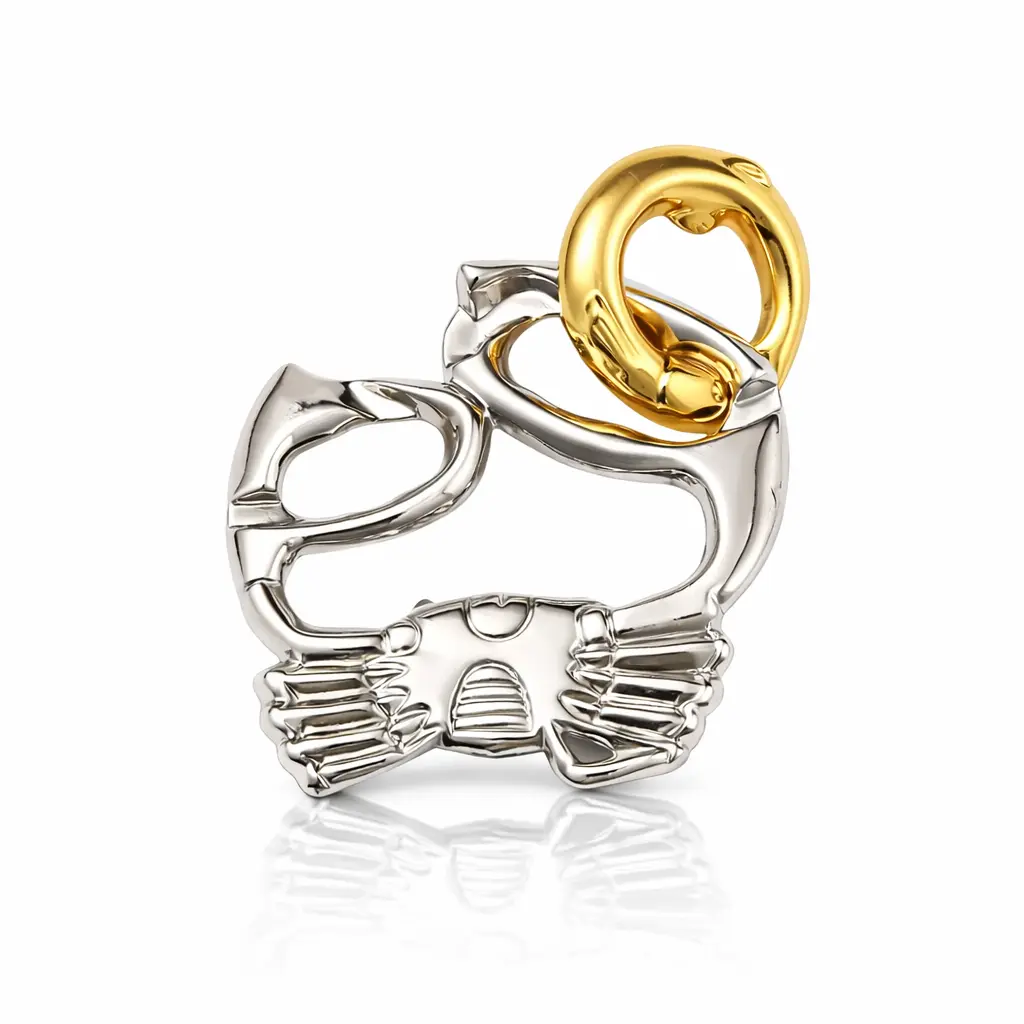
The claw-and-ring mechanism gives you a discrete aha moment when you finally separate the pieces, but the partial moves in between are satisfying enough to click through between meetings. Average first solve: 20-45 minutes. Average fidget session after solve: 2-5 minutes of opening and closing the claw. At $13.99, it’s cheaper than most Huzzle options and easier to find.
The Gift-Giver
This is the highest-stakes profile because you can’t return a puzzle that’s already been cracked open. The Hanayama community’s gift-giving consensus: Cast Enigma for the safe wow, Cast Vortex for the puzzle-experienced recipient who wants a multi-month project, and absolutely nothing above Level 4 for a casual recipient. Enigma shows up consistently across gift-recommendation threads on r/mechanicalpuzzles, making it the single most-recommended gift puzzle in the entire Hanayama lineup.
For a gift that lands the same wow-factor at a comparable price, the 7 Hanayama alternative puzzles that rival Cast metal quality include several that ship gift-ready and don’t require the buyer to know the recipient’s skill level. The Cast Hook above works as a gift for a non-puzzler. The Cast Marble is the fidgeter’s gift. The Cast Vortex should stay on the shelf for anyone who hasn’t asked for it.
The Collector Chasing Grails
If you’re past Enigma and you’re hunting for the weird ones, the grail tier extends beyond the standard Cast line into limited and specialty releases. These extend the official 1-6 scale into Puzzle Master’s 7-10 territory, with solve times measured in weeks or months. Pricing climbs to $40-150 per piece, and availability is the real bottleneck, not cost. The right play here is the Puzzle Master or Brilliant Puzzles secondary market, not the Tea-Sip catalog. Collector-tier is where Hanayama still owns the conversation.
Which Hanayamas to Skip
Cast UFO is the most overhyped puzzle in the current lineup. Rated Level 4, it solves in 5-10 minutes for most adults who can see the trick opening, and the reassembly is the only real challenge. Reddit threads consistently call it “disappointing” once solved. It looks great in a display case. It feels like a missed opportunity in the hand. If you want the UFO silhouette, a Cast Galaxy 4-Piece at $14.88 delivers the same aesthetic with a more honest solve. Worth the trade.
Frequently Asked Questions About Hanayama Metal Puzzles
Eight questions come up in every Reddit thread, gift-shop conversation, and DM I get about cast metal puzzles — and after 40+ models solved over five years, here are the answers, each anchored to a specific number, time, or price point.
Are Hanayama metal puzzles actually worth the money?
At $11-20 per puzzle, 80-200 grams of cast metal, and a 1-2 hour average first-solve time, yes — the value equation beats most screen-based hobbies at the same price. A movie ticket costs roughly the same and lasts two hours. A cast metal puzzle lasts years and earns its desk real estate. The metal is the difference — you feel the engineering in your palm the moment you pick one up. Skip them if you want a digital-style “achievement” loop. Keep them if you want dense, cold weight that rewards every time you reach for it.
What does the 1-6 difficulty rating actually mean in practice?
The scale roughly correlates to first-solve time bands: Level 1 clears in under 15 minutes, Level 2-3 in 30-60 minutes, Level 4-5 in 1-3 hours, and Level 6 in 1+ hour and often days or weeks. Reddit consensus from r/mechanicalpuzzles threads puts the typical variance at ±1 tier — a self-labeled Level 5 often feels like a Level 3 to an experienced solver. The official rating is calibrated to a median puzzler, not a mechanical engineer. If you’ve already worked through the full lineup, expect your solve times to run faster than the official numbers suggest.
Which Hanayama puzzle is best for a complete beginner?
Hanayama’s Cast Dial is the textbook entry point: Level 2 difficulty, about $11 retail, and an average first-solve time of around 10 minutes. It teaches the core vocabulary of cast puzzles — weight, rotation, sequential discovery — without the frustration ceiling that scares off new solvers. The Cast Cross and Cast Keyring are similar entry points. If Cast Dial feels too gentle after the first attempt, the Cast Hook metal brain teaser at $13.99 from Tea-Sip sits one tier up at Level 3 and adds a second interlocked release move, with a 30-90 minute first-solve range for most adults. For a broader beginner shortlist, the best metal puzzles for beginners tested picks covers five tested picks under $20.
Is there a Hanayama I can fidget with without ruining the solve?
Yes, and it’s the most under-discussed advantage of the category. The Huzzle series is specifically built for this — single-state puzzles that don’t need to be put back together, so you can spin, click, and fidget freely between solve attempts. Within the Cast line, the Cast Marble has the highest fidget-factor because its two-piece design lets you rotate it endlessly without accidentally triggering the trick opening. If fidgeting is your primary goal over solving, the Huzzle line is the better shelf investment than the Cast line.
Why is reassembly so much harder than disassembly?
Because disassembly follows the path of least resistance the designer engineered into the mechanism, and reassembly has to work against that same path. You’re pushing the puzzle backward through a sequence it was designed to resist. The 30-second workaround: before you fully separate the last piece, stop and take a photo from three angles. The reassembly is essentially a reverse-engineering job, and most “stuck on reassembly” complaints I’ve seen on Reddit trace back to a solver who sprinted past the moment-of-separation without documentation.
Which Hanayamas should I avoid?
Cast UFO is the headline skip — overhyped, solves in 5-10 minutes for most adults, and the reassembly is the only real challenge. Beyond UFO, watch out for puzzle-only Huzzle models that ship without a reassembly solution; if you need to put it back together, you’ll burn hours hunting for assembly video references. A third watch-out: any Level 6 sold as a gift for a non-hobbyist. The frustration ceiling is real, and the puzzle will sit in a drawer. For the UFO silhouette without the letdown, a Cast Galaxy 4-Piece at $14.88 is the honest trade.
Can a 10-year-old solve a Hanayama, or are these adult-only?
Levels 1-2 (Cast Cross, Cast Keyring, Cast Dial) are rated age 8+ and solve cleanly for most 10-year-olds, especially with an adult nearby for the first attempt. Levels 3-4 work for kids with patience and a quiet hour. Levels 5-6 are firmly adult or dedicated hobbyist territory — a 10-year-old will likely get frustrated and walk away, which is the worst outcome because it teaches them that puzzles are “too hard.” Start a kid on a Cast Cross. Always.
What’s the difference between the Cast line and the Huzzle line?
Both are manufactured by Hanayama in Japan from zinc alloy, but the Cast line is the iconic 1-6 difficulty series where you disassemble and reassemble, while the Huzzle line is a parallel catalog of themed, trick-opening, and non-reassembly puzzles. Huzzle includes travel-friendly keychain pieces, licensed collaborations, and designs that don’t go back together. Price is comparable across both lines. If you want the classic “solve and return” ritual, Cast is your shelf. If you want variety and fidget-friendly pieces, Huzzle is the broader net.
If you’re sitting at 11pm with a Cast Vortex on your left and cold coffee on your right — here’s the move. Put the Vortex in the BRAIN GRAVEYARD box for 48 hours. Pick up a Cast Hook at $13.99 and finish something tonight. The Vortex will still be there. The trick is rotation, not grinding.