Quick Answer
Pick a 3D wooden puzzle by recipient first and style second: a compact wooden brain-teaser set for an adult who wants a desk-sized challenge, a gear-driven mechanical model for the tinkerer, a music box or book nook for the display-lover, and a simple animal or vehicle kit for kids 6–10. Match the kit to the recipient’s age, patience, and the “wow moment” you want — a mechanical gear puzzle for the tinkerer, a music box or book nook for the display-lover, and a simple animal or vehicle kit for younger kids. The four checks that change the pick are age, mechanism (gear, music module, or static model), display vs. play, and build time.
Start with age, because the right piece count and tolerance on a laser-cut plywood kit are tightly tied to it. Then choose the mechanism: a mechanical gear drive rewards patience and produces a satisfying chain of clicks on the first wind; a music box module plays a tune the moment the assembly closes; a book nook diorama is built to sit on a shelf and be looked at, not wound up. A simple animal or vehicle kit gives younger builders a quick win in under an hour.
For a recipient who likes a hand-held challenge they can solve, reset, and pass around at a birthday dinner, the top pick is a Luban-style lock set — small, screen-free, and the kind of object that lives on a coffee table long after the cake is gone.
Recipient × Mechanism × Red Flags
| Recipient | Best-fit style | Why it works | Red flag to watch |
|---|---|---|---|
| Kids 6–10 | Animal / vehicle kit | Short build, big payoff, no glue | Pieces that snap instead of slot, or instructions only in pictures |
| Tweens / teens | Gear-driven mechanical model | Hands-on “how does it work” appeal | Loose gear tolerances, missing-tab pre-cuts |
| Adults (desk display) | Music box or book nook | Plays or lights up on the first try | Music modules with no replacement-parts policy |
| Hobbyist / collector | Marble maze, karakuri-style box | Replayable challenge, conversation piece | No listed wood grade or ply thickness |
| Anyone who likes a quick puzzle challenge | Compact wooden lock / brain-teaser set | Hand-held, no glue, solves in minutes | Kits with warped plywood or unclear piece count |
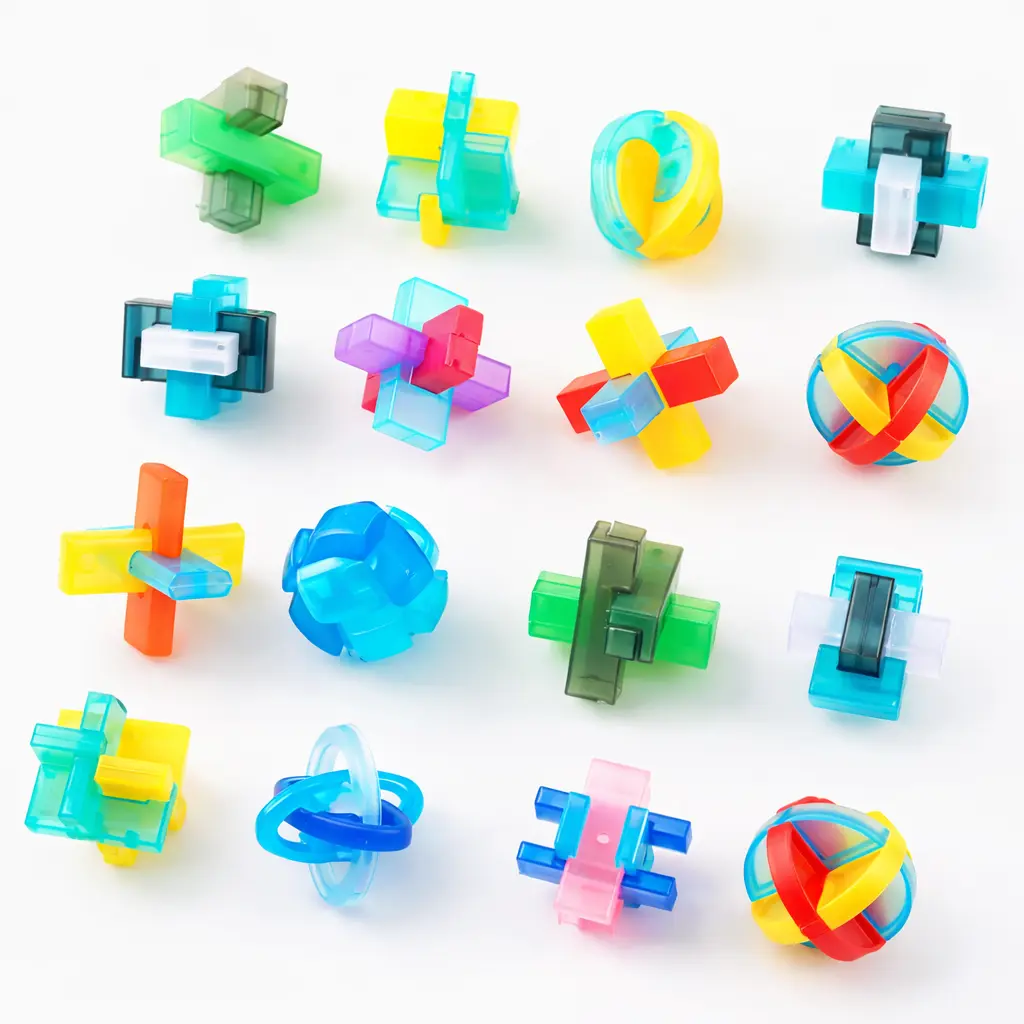
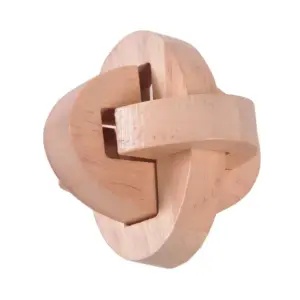
The 12-piece crystal Luban lock set fits the adult, the tween who likes a logic challenge, and the friend who already owns too many shelf models — it solves in minutes, needs no glue, and travels well in a gift bag. A closer breakdown of the mechanism and how it compares with the other styles in the roster sits in the next section.
For a closer look at the locks themselves and how each one moves, see our full hands-on review of the 12-piece crystal luban lock set.
01. Match the Puzzle to the Recipient: Age, Patience, and What They Already Love
Match by recipient lane before you match by style. A child opening a 300-piece gear build loses interest in ten minutes; a collector finds a 30-piece animal kit underwhelming in five. The rule: kids 6–10 get a no-glue animal or vehicle kit with large tabs; tweens and teens get a mechanical gear puzzle or single-solve brain teaser; adults get a music box, book nook, or display model; collectors get a karakuri-style box with a hidden release. One check: does the recipient open the box and want to start within five minutes?
Kids 6–10: low piece count, chunky tabs, no small parts
For a six- to ten-year-old, the build is the birthday, not the display. A kit with 20 to 50 laser-cut plywood pieces, chunky press-out tabs, and no glue or tools lets the child finish in one sitting and carry the finished model to show a parent. The piece count is the most useful proxy for frustration level: under 30 pieces is a same-afternoon project, 30 to 60 is a parent-supervised weekend, and anything over 100 is almost always too long for the age group’s attention span. Skip the 200-piece gear sets. Skip anything with a winding music box module — small parts and a delicate mechanism are not where a seven-year-old’s attention wants to land. A simple vehicle, animal, or miniature building produces an “I built that” moment before the cake is cut.
Who should skip: gift-givers who want the model to live on a shelf forever. Most kid-sized kits prioritize a fast finish over display durability, and a finished truck with a slightly bent axle is part of the charm.
Tweens and teens: a visible mechanism or a single-solve brain teaser
The tween-to-teen lane rewards a puzzle that clicks, moves, or solves in a satisfying way. A mechanical gear puzzle with a hand-cranked wheel, a marble run, or a single-solve interlocking brain teaser fits the brief — the recipient opens the box, sees a finished photo on the cover, and has a target. Build time for this lane usually runs 30 to 90 minutes, short enough to finish before dinner and long enough to feel earned. The unboxing moment is the cover image, not the parts tray.
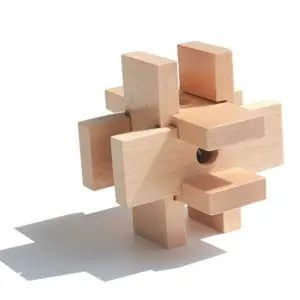
The 54‑T Cube Puzzle is a clean fit for a tween or teen who already likes logic challenges. It solves in minutes once the recipient spots the sequence, which makes it a strong “open and play on the spot” gift rather than a weekend project. At $18.99 it sits in the stocking-stuffer range, and it travels well in a backpack for the friend who likes to fidget between classes.
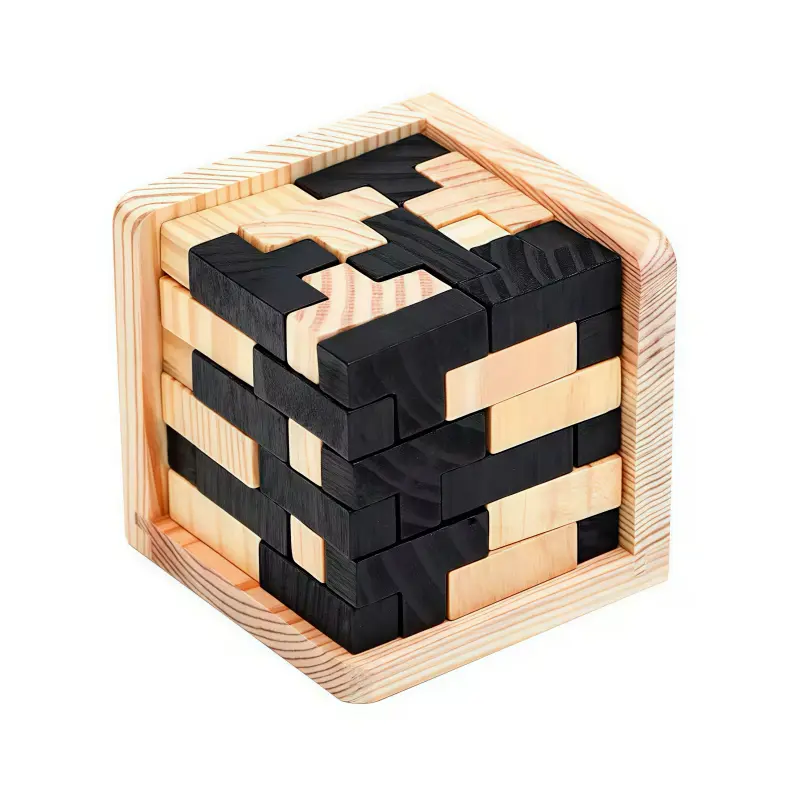
54‑T Cube Puzzle — $18.99
Adults: a display-worthy finish or a graduated set
For an adult recipient — partner, parent, colleague — the kit has to earn its place on a shelf or desk after the build. The adult lane is where music boxes, book nook dioramas, mechanical clocks, treasure boxes, and architectural models live. The birthday-moment payoff is the first crank, the first light, or the first open of a hidden compartment, which is why the cover image and the sound of a working module matter more here than the piece count. Build time typically runs two to six hours, so the recipient is committing to a project, not a quick amusement. Display footprint is worth checking before you buy: a finished model that is wider than a paperback or taller than a coffee mug will need a dedicated spot.
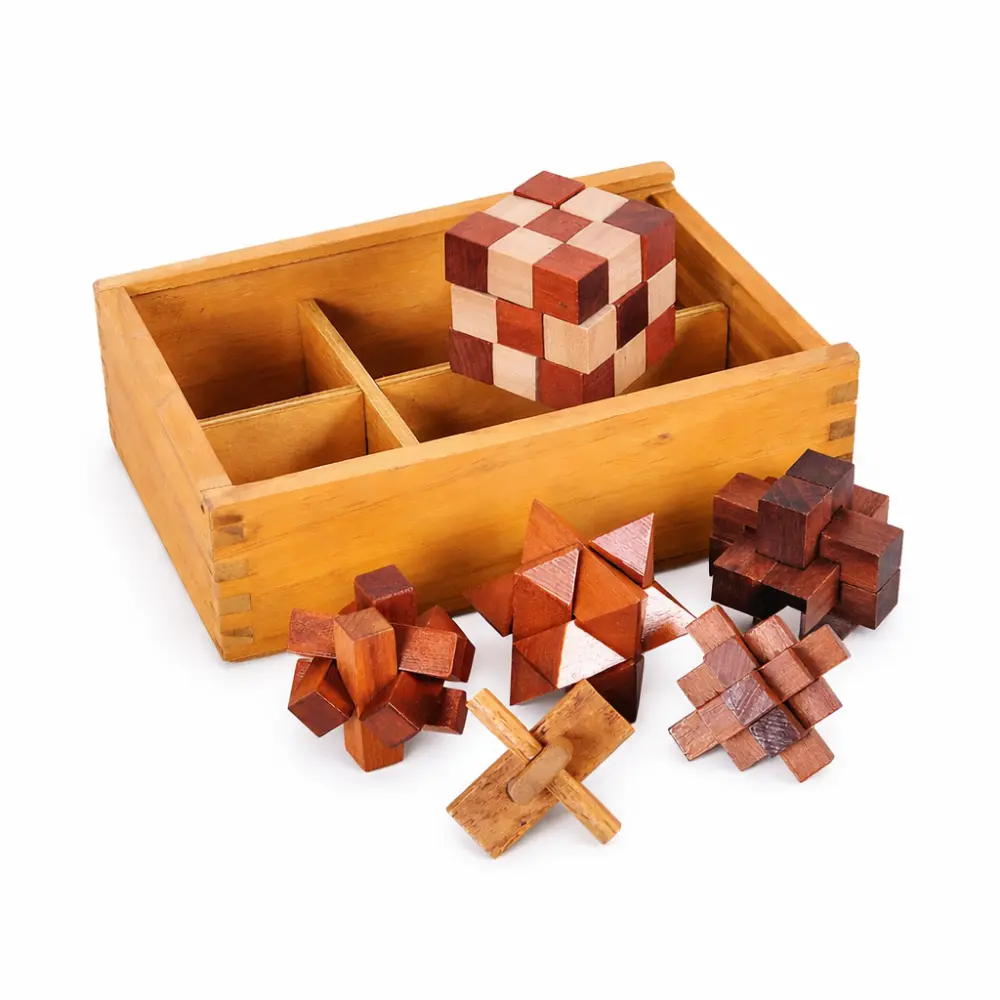
A 6-in-1 Wooden Brain Teaser Set sits in an interesting spot in this lane: it is a multi-puzzle gift that lets the recipient work through graduated difficulty over weeks, which suits the adult who already owns a few shelf models and wants something interactive rather than purely decorative. At $38.88 it is also a workable “shared” gift for a couple or a parent-and-teen afternoon, since the six puzzles do not all have to be solved in one sitting.
Hobbyist collectors: hidden mechanisms and locked boxes
For the recipient who already owns a shelf of mechanical models, the gift is the unsolved object. A karakuri-style wooden puzzle box, a multi-step interlocking lock, or a sequential disentanglement puzzle gives the collector something that resists the first five minutes. The collector lane rewards a kit with a hidden release and a non-obvious first move. The cheap-kit red flags matter most in this lane because a collector will spot warped plywood and sloppy tolerances immediately.
Who should skip: gift-givers who want to watch the recipient solve it on the spot. This lane is built for repeat handling, not a single birthday reveal, and a puzzled look on opening day is a feature rather than a failure.
The five-minute check before you buy
Before you commit, run one gut check: will the recipient open the box, look at the parts, and want to start within five minutes? If the answer is yes for the age lane above, the kit will land on the birthday. If the answer is no — if the recipient is more likely to set the box aside for “later” — the kit is a mismatch, and a smaller brain teaser or a single-solve lock is the safer bet. A closer look at the most common gift-giver mismatches walks through where readers usually over- or under-shoot the recipient’s patience. The mechanism comparison that drives that next decision is in the section that follows.
02. Mechanism Style: What Produces the Right Birthday Moment
Now to the mechanism comparison itself. Choose the mechanism before you choose the theme. A mechanical gear drive, music box module, book nook diorama, architectural model, or simple animal/vehicle kit each produces a different birthday-moment reaction — some click and move within minutes, others require hours of assembly before the payoff. The mechanism is what the recipient sees and hears when the wrapping comes off.
Instant-payoff vs delayed-payoff: the single useful check
Before anything else, decide whether the kit should deliver a reaction in the first ten minutes or the first ten hours. Robotime’s product page describes its 3D wooden puzzles as having “complex gear mechanisms” that “offer great happiness, and a sense of accomplishment” — that happiness is real, but it lands after the build, not on the birthday morning. A music box module plays the moment the recipient turns the crank, which is why a music box kit is the safer pick when the unboxing reaction matters more than the build itself.
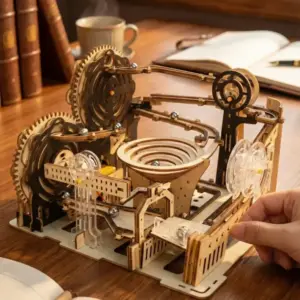
A book nook diorama with an LED module is a middle case: the light works as soon as it is plugged in, but the finished shelf scene comes after hours of careful layering. For a recipient who values display over play, a book nook or wall clock puzzle gives them a finished object on day one and a project to return to on weekends. A marble run or a complex mechanical gear drive is delayed-payoff — the action is satisfying, but it asks for patience before the first run.
Five mechanisms, five opening-day reactions
Mechanical gear drive. The recipient cranks a handle and interlocking gears lift, rotate, or trigger a sequence. ROKR’s Vintage Gramophone and Robotime’s gear-driven clocks sit here. The opening reaction is the first successful crank. Who should skip: gift-givers who want the recipient visibly delighted inside ten minutes. The kit rewards the build, not the box.
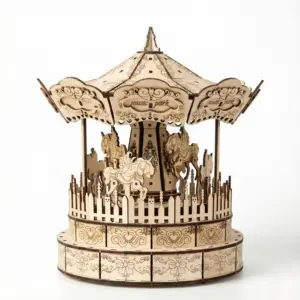
Music box module. A wind-up movement plays a tune — Emperor Waltz, Canon in D, Für Elise, and similar pieces are common. The music is the birthday moment. Some kits pair the music box with a small rotating figure. The build is usually moderate; the music does the emotional work. Who should skip: anyone expecting a serious tactile challenge.
Book nook diorama. A miniature scene designed to slot between books on a shelf, often with LED lighting. Wooden.City notes its 3D wooden puzzles are “crafted from certified birch plywood” — material quality matters here because the diorama lives on a shelf for years. The build is layered and slow, and the lighting is the unboxing payoff.
Architectural model. A building, bridge, or landmark assembled from laser-cut plywood. The reaction is the silhouette, not motion. A recipient who likes architecture, travel souvenirs, or display objects will appreciate this; a recipient who wants to interact will not. Piece count runs high, build time is long.
Animal or vehicle kit. The entry-level and kid-friendly lane. A simple vehicle can be built in an afternoon; a hobbyist can spend a weekend on a more complex kit in the same family. The birthday moment is completion, not motion.
Display vs play: the second check
After the instant-payoff question, ask whether the recipient wants a kit to look at or a kit to use. A music box and a book nook are display-first — they sit on a shelf and are handled occasionally. A marble maze, a gear drive, and a hand-cranked vehicle are play-first — they live on a table and get touched often. The most common gift mismatch is mixing these two: a recipient who loves building but hates clutter will be happier with a small mechanical kit than a large architectural model.
If you’re weighing a Lego Technic-style build against a wooden mechanical puzzle, a Lego Technic vs wooden mechanical puzzle build comparison lays out the trade-offs in feel, piece count, and reusability that change the pick.
Mechanism-to-recipient shortcut
| Recipient | Mechanism that lands | Why it fits |
|---|---|---|
| Child 6–10 | Animal or vehicle kit | Low piece count, short build, no-glue assembly |
| Tween or teen | Music box or simple mechanical | Novelty on opening day, moderate build |
| Adult display-lover | Book nook or architectural | Visual payoff, shelf-worthy result |
| Tinkerer or hobbyist | Complex mechanical gear drive | The build is the gift |
| Collector | Karakuri or sequential lock | Repeat handling, hidden release |
If the mechanism is wrong, the theme doesn’t save the gift. A dinosaur kit for someone who dislikes dinosaurs is still a dinosaur kit.
03. Quality and Durability Checks: The Cheap-Kit Red Flags to Avoid
A 3D wooden puzzle fails as a birthday gift the moment warped plywood, missing pre-cut tabs, or Chinese-only instructions appear. Before clicking “buy,” check the product page for plywood grade, laser-cut precision, glue requirement, manual language, and a replacement-parts policy. Any single red flag is reason to pass — a gift that breaks on day one lands worse than no gift at all.
The mechanism shortcut gets you close. Quality checks are what keep the kit that arrives from falling apart on the kitchen table.
Four red flags that disqualify a birthday-gift listing
1. Plywood grade and warping. The strongest kits name their material. Wooden.City, for example, states its puzzles are made from certified birch plywood — a hard, layered wood that holds laser cuts cleanly and resists the humidity warps that bend a flat sheet overnight. If the page says only “wood” with no call-out, the kit is probably MDF or poplar substitute. Those snap at the tabs and absorb moisture in transit.
2. Laser-cut fit and missing tabs. The pre-cut tabs are what hold the mechanism together. Intrism ships kits where “parts fit together tightly with little to no sanding” — a click-fit result. A listing that shows only the finished model, not the raw sheets, is a warning sign. Pieces arriving with tabs half-cut, or already snapped off, mean a birthday morning on customer support instead of building. Verification step: zoom into the product photos for the plywood sheet layout. If only the finished puzzle is shown, cut quality is probably not a selling point.
3. Manual language and clarity. A book nook or marble run is hard enough with good instructions. Without them, it becomes a parts-bin mystery. Listings that show the manual only in Chinese, or say “instructions included” with no sample page, are the most common complaint in r/modelmakers and r/PuzzleBox. A translated English manual with numbered steps and a parts list is the standard. For a gift-giver who may not be the builder, this matters more than piece count.
4. Replacement-parts policy. Even good kits lose a tab in shipping. The question is whether the brand responds. A clear missing-piece policy — free replacement within 30 or 60 days, an email address, a parts request form — is the difference between a gift that gets finished and one that sits in a drawer. Small-maker listings often bury this in fine print or skip it entirely.
The glue question
Most 3D wooden puzzles are no-glue assembly — parts press-fit together and hold by friction, the format Wooden.City uses for its children’s line and Intrism uses for its marble mazes. Clean to build, forgiving if the recipient wants to disassemble.
Some mechanical gear sets and music box kits ask for a small amount of wood glue at the joints where moving parts create friction wear. That’s a feature, not a flaw — the difference between a kit that lasts one birthday and one that gets cranked on a desk for years. The check: the listing should say either “no glue required” or specify which joints need adhesive. If the page is silent, assume some is needed.
Pre-buy checklist
Scan the product page for these five things before you commit:
- Material call-out — birch plywood is the strong default; “wood” alone is a yellow flag
- Sheet photos — visible plywood sheets with clean tabs signal cut quality
- English instructions — numbered steps, parts list, ideally a video link
- Piece count and build time — a 200–400-piece gear set is several hours; a 60-piece animal kit is one evening
- Replacement-parts policy — stated, with a contact path
Any one missing is reason to scroll. Two or more, and the kit is almost certainly the kind that ends up in a parts bin by the cake-cutting.
For a broader read on which brands survive a longer test, a 50-hour hands-on review of Chinese-made puzzle toys pulls apart the same red flags with a specific maker breakdown.
The cheap kit is rarely cheap twice — once on the receipt, once on the return shipping. The point of all this checking is to make sure the kit that arrives matches the version in the photos, and the recipient spends their birthday building, not troubleshooting.
04. Decision Table: Recipient × Mechanism × Red Flag to Skip
The pre-buy checks filter out the kits that arrive warped, mis-tabbed, or with instructions in the wrong language. The remaining question is the matching itself: which mechanism fits which recipient, and which red flag inside that match is the deal-breaker. This table is the short read that turns the earlier four checks (age, mechanism, display vs. play, build time) into one decision.
| Recipient | Best mechanism | Why this style works | Red flag / what to check |
|---|---|---|---|
| Kids 6–10 | Animal or vehicle kit, no-glue snap fit | Short build, immediate “look what I made” payoff | Age rating on the box, small-parts warning, English instructions |
| Tweens & teens | Music box or light-up model, mid piece count | Music or light delivers a payoff inside one evening | Whether the music box module is included or sold separately |
| Adult tinkerer | Mechanical gear drive, perpetual calendar, wall clock | Real gear mechanics match a “figure it out” mindset | Gear count on the product page, English PDF, replacement-parts policy |
| Adult display-lover | Book nook diorama, music box, decorative clock | The finished model earns shelf or desk space | Finished dimensions, whether it stands freely or needs mounting |
| Hobbyist collector | Puzzle box, Luban lock set, brain teaser set | Solvability, not assembly, is the gift; a solved set returns to the hand | Material call-out (laser-cut plywood is the strong default), whether a solve guide ships with it |
If the recipient fits one row, column two is the shortlist. If they fit two, take the row that matches the trait the recipient would use to describe themselves.
The Tea-Sip shortlist, in the order the table would land them:
- For the adult who wants a reveal, a desk-display object, and a repeatable solve, the top pick is the 12 Piece Crystal Luban Lock Set ($28.88). Twelve distinct locks mean the gift doesn’t end at one birthday — the set stays in rotation for weeks of solves.
- For a collector who already owns a starter set and wants a step up, the Luban Lock Set 9 Piece ($39.99) is the right call. The nine-piece format keeps the box display-worthy when fully assembled.
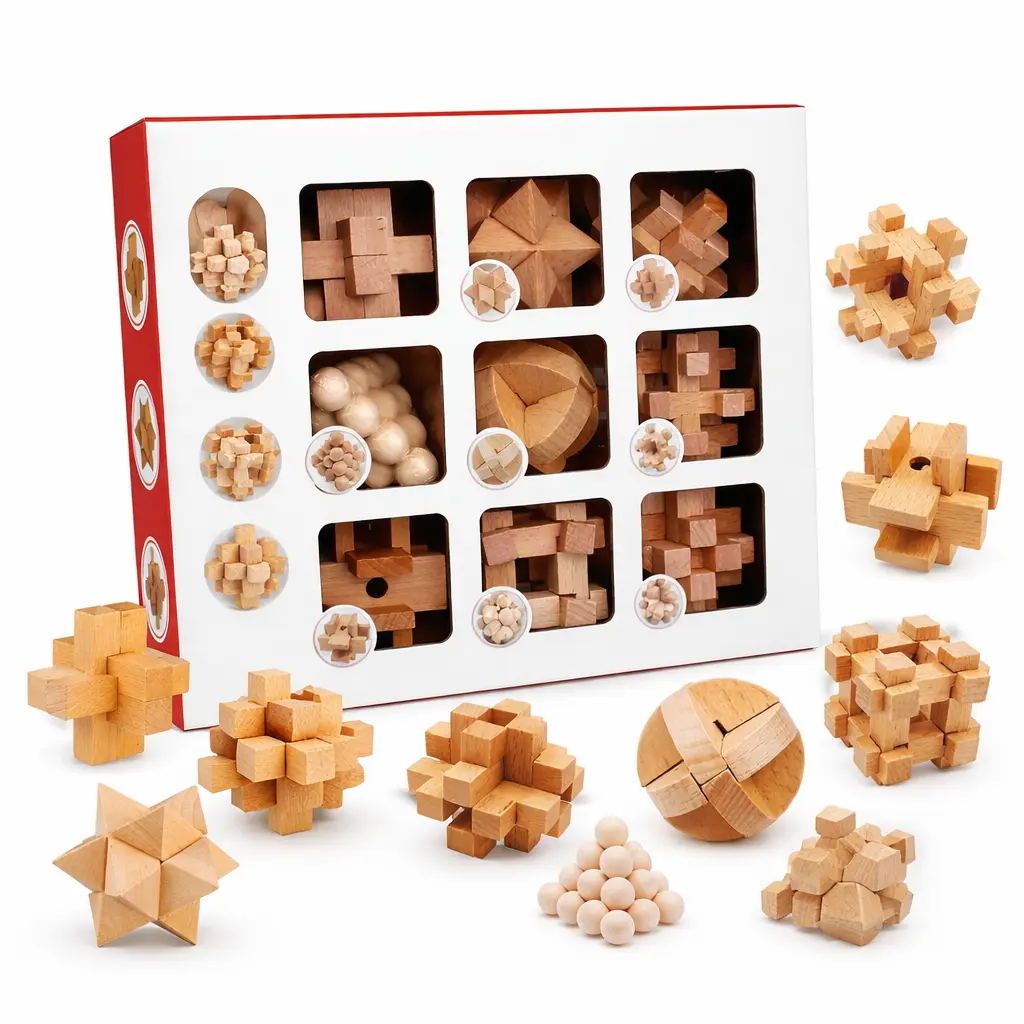
- For an adult or parent-and-teen pair who wants a graduated challenge on the desk, the 6-in-1 Wooden Brain Teaser Set ($38.88) is the right call. Six separate puzzles in one box mean the recipient works through them over weeks rather than finishing in one sitting.
- For a tween or teen who wants a visual-spatial solve with color-coded pieces, the 7 Color Soma Cube Puzzle is the match. The seven-color format turns the classic Soma solve into a faster, more visual challenge that fits in a backpack.
- For a kid or tween who likes a color-matching challenge with a clear visual goal, the Kongming Lock Color Match is the right fit. The color-match format shortens the solve and gives a younger builder a fast “I got it” moment.
The cheapest kit on the table is rarely the best one. The best kit is the one that survives a birthday, sits on a shelf without warping, and gives the recipient a reason to come back to it a second time.
Frequently Asked Questions
A 3D wooden puzzle is a “real” birthday gift when the style matches the recipient and the kit survives the first build — the most common buyer questions come down to age fit, tools required, missing-piece policy, and whether the finished model earns shelf space or ends up in a drawer.
What age are 3D wooden puzzles suitable for?
Most kits list an age range on the box — small wooden kits with chunky pieces and glue-free assembly often start at age 6, while gear-driven and music-box kits are typically rated 14+ because of small parts and longer build times. The age stamp is a safety floor, not a skill ceiling; an adult beginner can enjoy a kit rated for older builders, and a patient tween can handle simpler “adult” kits. Check the product page, and if the recipient sits between brackets, lean toward the simpler style.
Do 3D wooden puzzles need glue?
Many do not — no-glue assembly is a common selling point, with kits using laser-cut slots and tabs that press together and hold by friction. Some larger architectural or music-box kits include a small tube of wood glue for joints that take weight or repeated movement. Read the description for “no glue” or “glue included” before ordering, especially if the recipient dislikes sticky fingers.
How long does it take to build a 3D wooden puzzle?
Simple animal or vehicle kits often run one to two hours for a first-time builder; mid-range gear or music-box kits typically take three to six hours across an afternoon; and complex architectural or karakuri-style boxes can stretch across multiple sessions. For a one-session builder, choose a kit under 200 pieces with a “beginner” label and check the product page for an estimated build time.
Can a beginner build a 3D wooden puzzle?
Yes, with the right entry point — look for kits that ship with clear instructions and tight part tolerances. Tea-Sip’s 6-in-1 Wooden Brain Teaser Set turns six separate small challenges into a single gift that takes minutes per puzzle rather than hours. Choose a kit with a “beginner” label, under 150 pieces, and no-glue build so the first experience ends in a finished model.
What happens if a piece is missing?
Policies vary by seller. Direct-to-consumer shops like Tea-Sip typically replace missing or damaged parts on request when you email the order number; marketplace listings sometimes route the request to a third-party manufacturer and the response is slower. Before ordering, scan the product page for any mention of “replacement parts,” and keep the original packaging until the build is finished. A published missing-piece policy is one of the clearest signals the brand stands behind the kit.
Are 3D wooden puzzles good gifts — or do they end up in a drawer?
They land as a real gift when the build fits the recipient’s time and the finished model earns shelf space. A gear-driven perpetual calendar or music box gets opened often; a two-hour vehicle kit that rolls across the desk also gets played with. The drawer outcome happens with kits that are too long, too fiddly, or finished in a style the recipient doesn’t actually like.
What about a Luban lock set for a birthday?
The 12 Piece Crystal Luban Lock Set ($28.88) is a compact version of the traditional Chinese disentanglement puzzle and fits a recipient who likes a hand challenge that lives in a pocket or on a desk. A multi-lock set lets the recipient compare and rank them — a different kind of birthday moment that lasts across weeks rather than a single afternoon. The Luban Lock Set 9 Piece ($39.99) is the step-up for someone who already owns a starter set.
Next step: Pick one recipient, choose the mechanism style that matches the birthday moment you want, and order from the Tea-Sip wooden puzzles collection so the kit, the build time, and the recipient’s patience are aligned on the first try.
Where to Start
If the recipient and occasion checks above match, start with 12 Piece Crystal Luban Lock Set. Check the current product page for the specifications that matter to your choice.
Still comparing options? Use the matching Tea-Sip collection to compare the same decision criteria, rather than restarting the search from scratch.
Sources and verification
- Product details and current specifications: Tea-Sip product page
Last updated: August 8, 2026