Quick Answer
A cast metal puzzle makes a strong gift for a daughter when you match difficulty to age (Level 1–2 for ages 8–12, Level 3–4 for teens, Level 5–6 for adult collectors) and choose a keepsake-quality design she can display, not just solve. For a curious 9–12-year-old with no puzzle habit yet, the Cast Hook Metal Brain Teaser at $13.99 is the cleanest entry: pocket size, forgiving mechanism, displayable silhouette. The recommendation shifts if she’s under 8, dislikes patience puzzles, or wants a wearable keepsake.
Decision Table: Quick Fit Check
| Her profile | Pick | Why it fits |
|---|---|---|
| Ages 9–12, first puzzle | Cast Hook Metal Brain Teaser — $13.99 | Entry-level difficulty, pocket size, display-worthy silhouette |
| Ages 9–12, likes animals or themed objects | Metal Crab Puzzle with Gold Ring — $13.99 | Recognizable form, tactile solve, decorative finish |
| Ages 6–8, with adult supervision | 4 Band Puzzle Ring — $11.99 | Wearable keepsake, short solve, lowest entry cost |
| Ages 13–17, ready for a longer solve | 5 Piece Cast Spiral Metal Puzzle — $16.99 | Assembly challenge, sculptural finished shape |
| Adult collector or advanced teen | Cast Coil Triangle Puzzle — $25.99 | Higher difficulty, statement display piece |
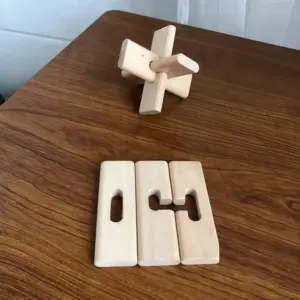
Two checks that change the pick: if she’s under 8, skip cast metal and start with a wooden or larger-piece puzzle instead — small cast parts pose a choking concern. If she dislikes patience, a beginner-tested disentanglement pick that takes under 10 minutes beats a 30-minute assembly challenge.
01. Why a Cast Metal Puzzle Works as a Daughter Gift
A cast metal puzzle succeeds as a daughter-gift when it functions as a keepsake object rather than a disposable toy, because its weight, finish, and solved-once memory give it a place on a shelf long after the challenge fades. It fails when chosen for difficulty alone, with no thought to whether she’ll want to display what she untangled.
That distinction matters more than any difficulty rating. A flimsy puzzle becomes clutter within a week. A well-cast piece becomes a small sculpture on her desk, a conversation piece when friends visit, a tactile reminder of a moment. The gift lands because the object stays.
The cognitive layer is real, even if it isn’t the headline. Cast metal puzzles invite repeat solving — the same object can be taken apart and reassembled many times, which is what makes a cast metal puzzle a keepsake rather than a one-time diversion. She doesn’t just solve it; she masters a sequence and keeps the artifact of that mastery.
The aesthetic layer is what most buyers underestimate. Quality cast pieces develop a soft patina with handling, so the puzzle she solves every few weeks begins to look like something hers rather than something generic. The casting carries visible character — the grain of the mold, the weight in the hand, the way light catches an edge. These are the qualities that move a puzzle from a desk drawer to a bookshelf.
The emotional layer is the one a parent is actually buying. Cast metal puzzles invite a solving ritual: she sits, she turns the piece, she asks for a hint or doesn’t, she gets the satisfying click of separation, and then she puts it back. If you solve it with her, that shared ten-minute silence becomes a memory attached to the object. Years later, the puzzle on her shelf still carries that moment. A puzzle she’ll solve. A sculpture she’ll keep.
The Keepsake Test: Four Physical Checks
Run a candidate through these four. If it fails two or more, it’s a toy, not a keepsake — choose a different piece.
- Substantial metal weight. It should feel like something in the hand, not hollow. Pieces under roughly 50 grams tend to read as trinkets rather than objects.
- Smooth casting with no sharp seams. Run a fingertip along every edge. Flash, burrs, or mold lines signal low-grade finishing; she will notice and so will her friends.
- Mechanism integrity after solving. The separation and re-assembly should feel precise, not loose. A good cast puzzle clicks into its solved state the same way every time.
- Form-factor that sits on a shelf. It should have a stable base or a recognizable silhouette — a shape she can name (hook, coil, orbit, crab) so it earns display space rather than drawer space.
If you want to understand what separates a display-worthy cast piece from a cheap imitation, the process of how cast puzzles are made from molten zinc to smooth metal explains why weight and finish vary so widely between brands at similar prices.
The category itself is broad: cast disentanglements, wire-and-ring assemblies, interlocking bands, lock-and-key curiosities. For a daughter-gift, the cast disentanglement is the strongest starting point because it pairs a tactile solving moment with a form she can identify, hold, and eventually name when someone asks what it is. That naming is when a gift becomes a keepsake.
02. Age-to-Difficulty Map: Matching Level 1–6 to a Daughter’s Age Band
Once a puzzle passes the keepsake test, the next decision is harder: matching its difficulty to her age. The cast metal puzzle market borrows Hanayama’s six-level scale, but the numbers alone don’t tell you which level a daughter of a given age can solve — they only tell you how hard the designer thinks the puzzle is. Match the level to her age band first, then the mechanism to her patience.
| Age Band | Recommended Level | Mechanism Type to Look For | Safety Note |
|---|---|---|---|
| 6–8 | Level 1 only, with adult | Simple disentanglement (one clear path to separation) | Small metal parts pose a choking hazard; supervise every session |
| 9–12 | Level 1–2 | Disentanglement or basic 2-piece assembly | Check product age rating; cast pieces can chip if dropped on hard floor |
| 13–17 | Level 2–4 | Disentanglement, multi-piece assembly, or interlocking bands | Generally safe; inspect for sharp mold lines on cheaper casts |
| 18+ | Level 4–6 | Any mechanism, including complex interlocking, lock-and-key, multi-stage | No safety concerns beyond standard handling care |
The level column is the easy part — a Level 1 should take a child minutes, a Level 6 may take an adult days. The mechanism column is where most gift guides go wrong. A Level 2 disentanglement puzzle and a Level 2 assembly puzzle feel completely different in the hand. A disentanglement asks for fiddling, trial and error, spatial rotation. An assembly puzzle asks for sequencing, observation, and a quiet moment. A teen who hates fiddling may prefer a Level 4 assembly puzzle over a Level 2 disentanglement — the higher number does not mean a worse fit. Match the play style before you match the number.
A practical way to estimate her play style without asking directly: if she already enjoys jewelry clasps, hair-tie tangles, or taking pens apart to see how they work, disentanglement will feel natural to her. If she prefers Lego, model kits, or jigsaw puzzles, an assembly puzzle will feel natural. Neither preference is better; they are different doors into the same cognitive reward.
On the safety side, read the age rating on the product page before you buy, not after. The BePuzzled Hanayama Cast Metal Brain Teaser Amazon listing rates the product for “Kids & Adults Ages 12 & Up” — that age floor exists because cast metal puzzles contain small separable parts that do not pass toddler-safe thresholds. A 10-year-old who is responsible and coordinated is generally fine with a Level 1–2 cast puzzle, but a 6-year-old should only handle one with an adult present, and the puzzle should be put away (not left on a nightstand or shelf edge) after each session. If the listing does not state an age rating, treat that as a signal to verify on the product page before gifting.
Two more checks before you move on. First, solve time is not standardized across brands, so if a quick solve matters for the gift moment, look for “Level 1” or “beginner” in the product description, then verify the listed solve time on the product page — published solve times vary widely even within a single difficulty level. Second, if your daughter sits between bands — say, an 11-year-old who reads at an adult level — default to the mechanism match, not the number. A 9–12 assembly puzzle will hold her attention longer than a 13–17 disentanglement she finds frustrating, and a keepsake earns its shelf space by being finished, not abandoned. For a closer read on what those labels actually cover, see what age labels on metal puzzles really mean.
03. Six Cast Metal Puzzle Picks Organized by Age Band and Interest
Match the puzzle to her age band first, then to her interest. A 6–8-year-old needs a low-difficulty, large-piece cast puzzle she can hold and finish in one sitting. A 9–12-year-old handles compact disentanglement and assembly designs in the $11–$14 range. Teens 13–17 gravitate to themed assembly challenges, and an 18+ recipient earns a display-grade piece with weight and finish. The mechanism that matches her play style matters more than the number printed on the box.
Hanayama-style cast puzzles are widely cited as the conventional starting point for new collectors — the r/mechanicalpuzzles community repeatedly recommends them as a first cast purchase, and retailers like Brilliant Puzzles price their beginner Hanayama pieces (Vortex, Cast Loop) at $14.99 for that reason. The picks below are organized by age band and the puzzle’s role in her life: starter challenge, themed keepsake, pocket fidget, or desk sculpture. Each is a Tea-Sip cast or metal puzzle chosen for the same tolerance and display logic, with a mechanism that fits the way she actually plays.
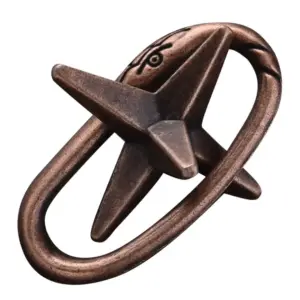
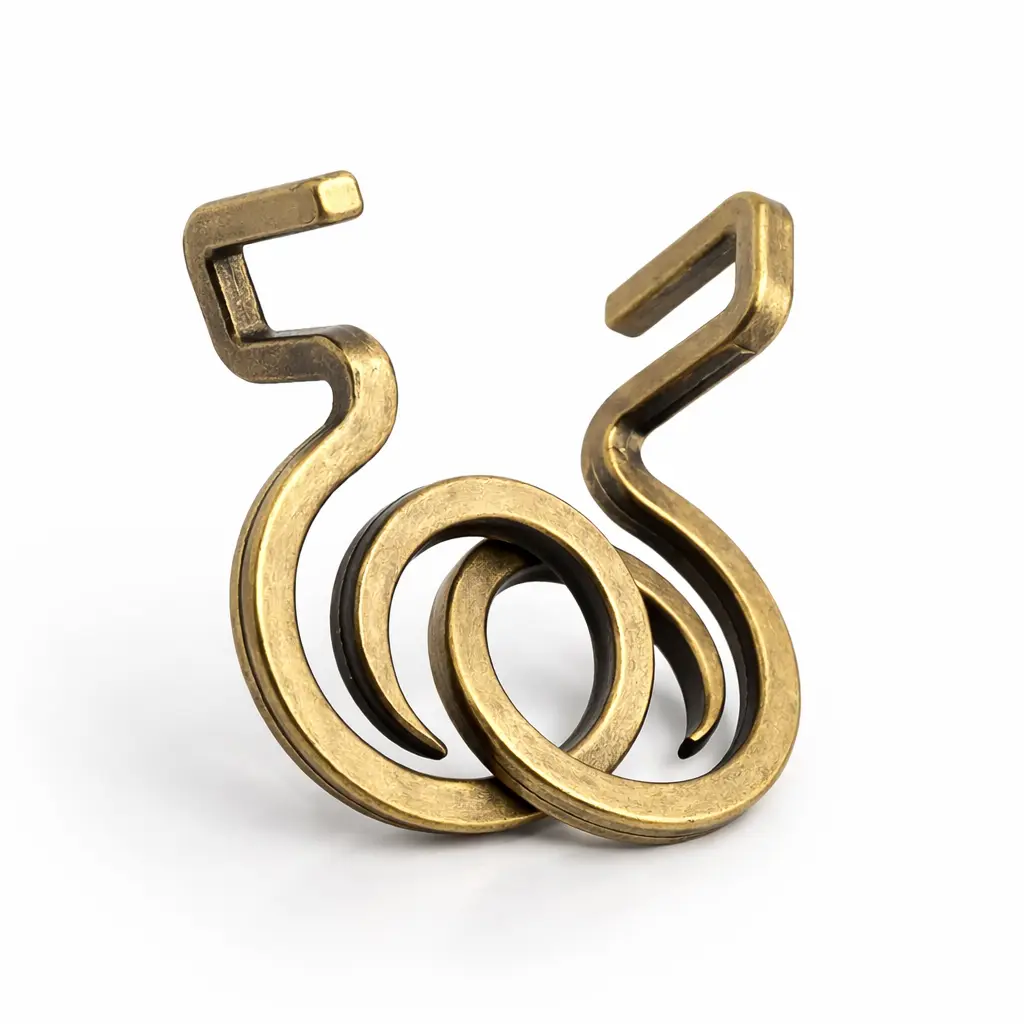
1. Cast Hook Metal Brain Teaser — Top Pick for Ages 9–12
The Cast Hook Metal Brain Teaser is a compact disentanglement puzzle priced at $13.99 that fits a 9–12-year-old’s hands and attention span. It separates two interlocked metal pieces through a single, satisfying move that mirrors the beginner pattern, but with a shape she can name and recognize. Why it fits her: the mechanism is repeatable (she can disassemble and reassemble), the weight feels grown-up without being heavy, and the design stands upright on a shelf. The first cast puzzle should be forgiving enough to finish, displayable enough to keep, and priced low enough to replace if a piece is lost.
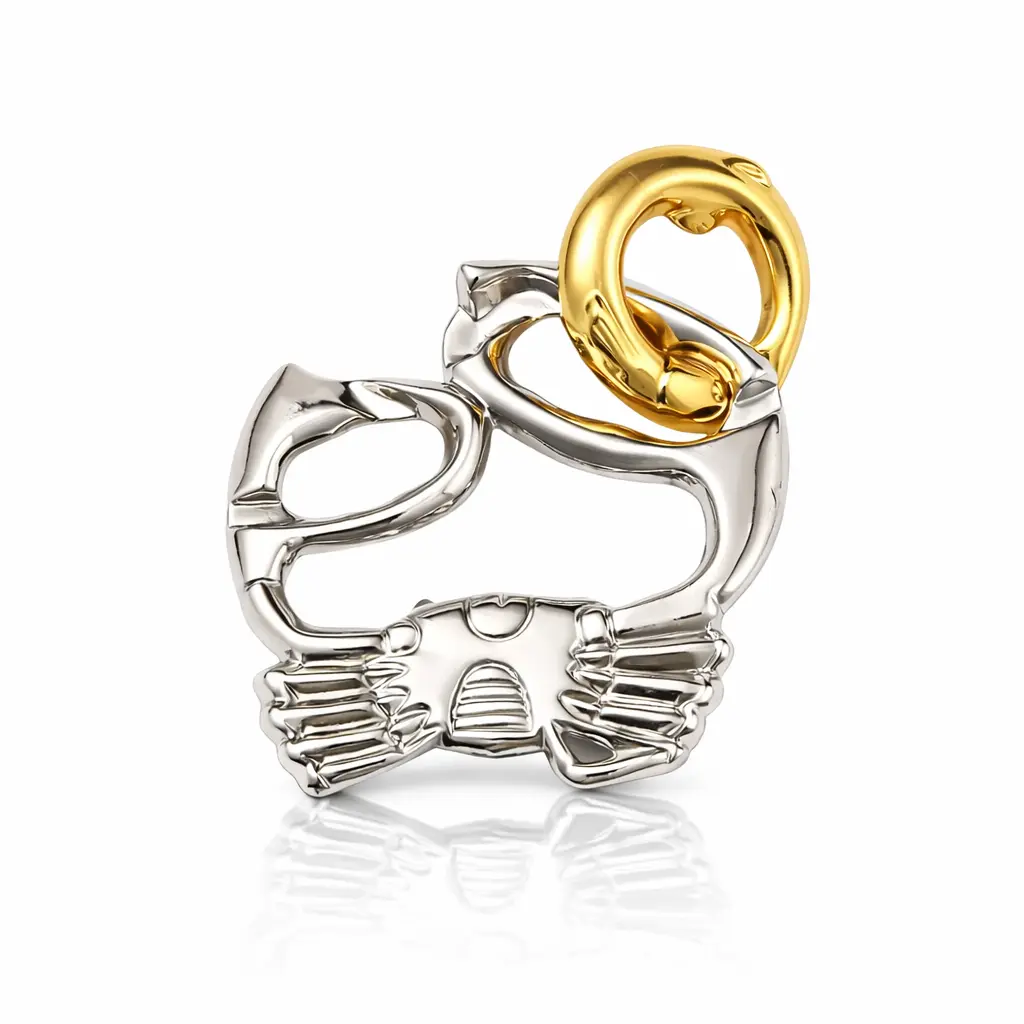
2. Metal Crab Puzzle Cast Brain Teaser with Gold Ring — Ages 9–12 with an Animal or Ocean Theme
If she gravitates toward animals, ocean life, or themed objects, the Metal Crab Puzzle ($13.99) reframes the same beginner mechanism as a collectible figurine. The crab form is recognizable, the small gold ring is a tactile focal point, and once solved, it reads as a desk sculpture rather than a toy. Why it fits her: the shape gives the puzzle an identity beyond the solve, which is the gift outcome you are paying for.
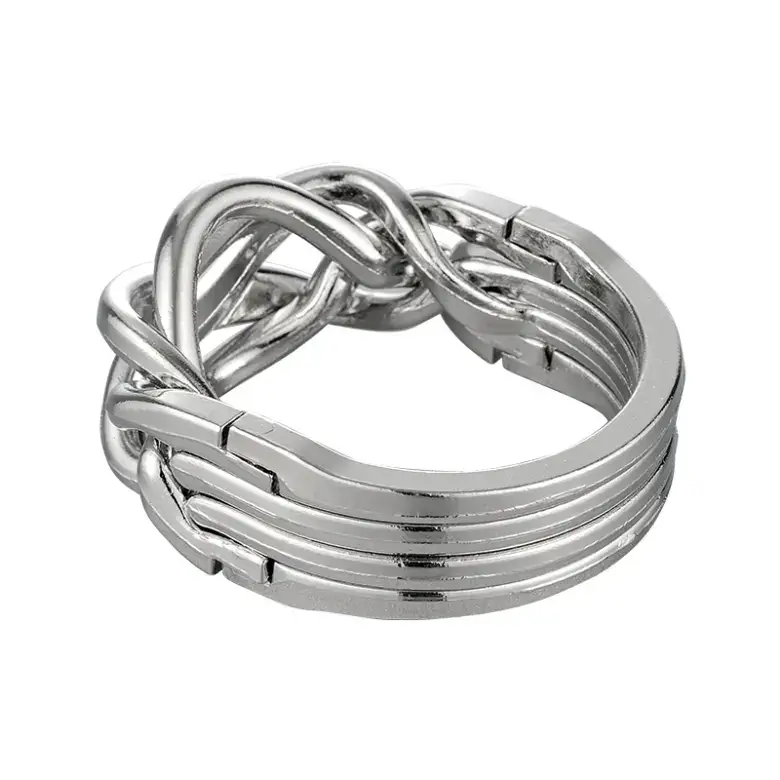
3. 4 Band Puzzle Ring — Ages 6–8 (with adult) and Wearable Fans of Any Age
The 4 Band Puzzle Ring at $11.99 is the lowest-cost entry on this list and the most forgiving to small hands. Four interlocking bands form a single ring, and the solve is short enough that a 6–8-year-old can finish with light adult guidance. Older daughters who like jewelry or fidget objects will wear it after solving. Why it fits her: the puzzle becomes a wearable keepsake, not a forgotten object, which is the gift outcome you are actually paying for.
4 Band Puzzle Ring — $11.99
4. 5 Piece Cast Spiral Metal Puzzle — Ages 13–17 with a Pattern or Geometry Interest
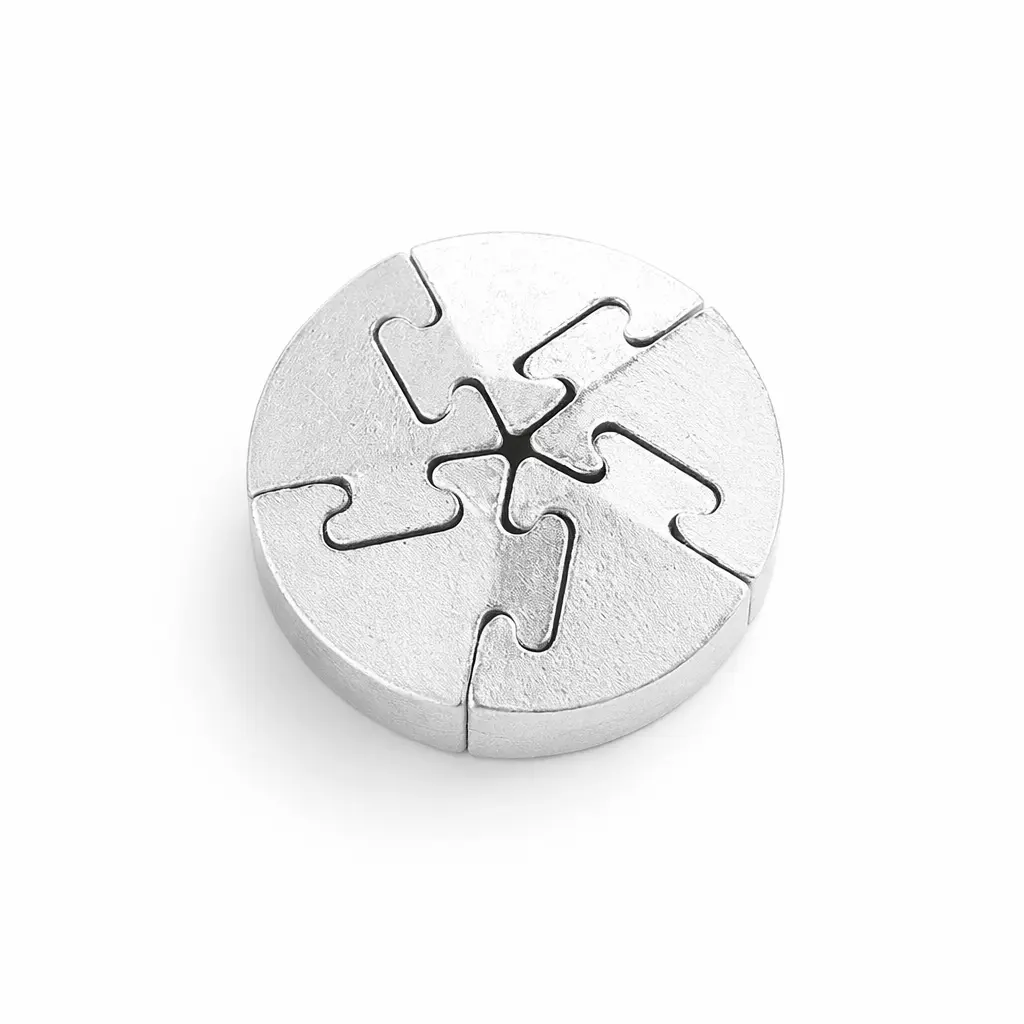
The 5 Piece Cast Spiral at $16.99 is an assembly puzzle in the mid-difficulty range, with five interlocking spiral pieces that form a single sculptural shape when solved. A 13–17-year-old who likes geometry, architecture, or tactile objects will spend longer with this than with a single disentanglement. Why it fits her: the assembly mechanic rewards patience, and the finished form holds its shape on a shelf or in a hand. Verify the listed difficulty and age rating on the product page before gifting, since the assembly count changes the time investment.
5. Metal Orbit Ring Cast Puzzle — Ages 13–17 Who Like Rings and Fidget Objects
The Metal Orbit Ring at $14.99 is a ring-shaped disentanglement puzzle with a smoother mechanism than a wire puzzle, which suits teens who fidget or rotate objects while thinking. The “orbit” name is literal: two metal rings travel along a guided path, and the solve is short enough to repeat. Why it fits her: the puzzle lives in a pocket or a pencil cup, and the form factor makes it feel like jewelry rather than a brain teaser.
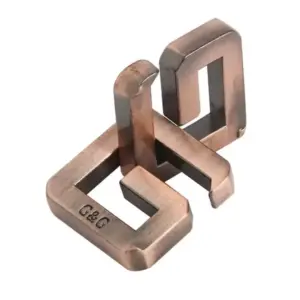
6. Cast Coil Triangle Puzzle — Ages 18+ for Display-Grade Gifting
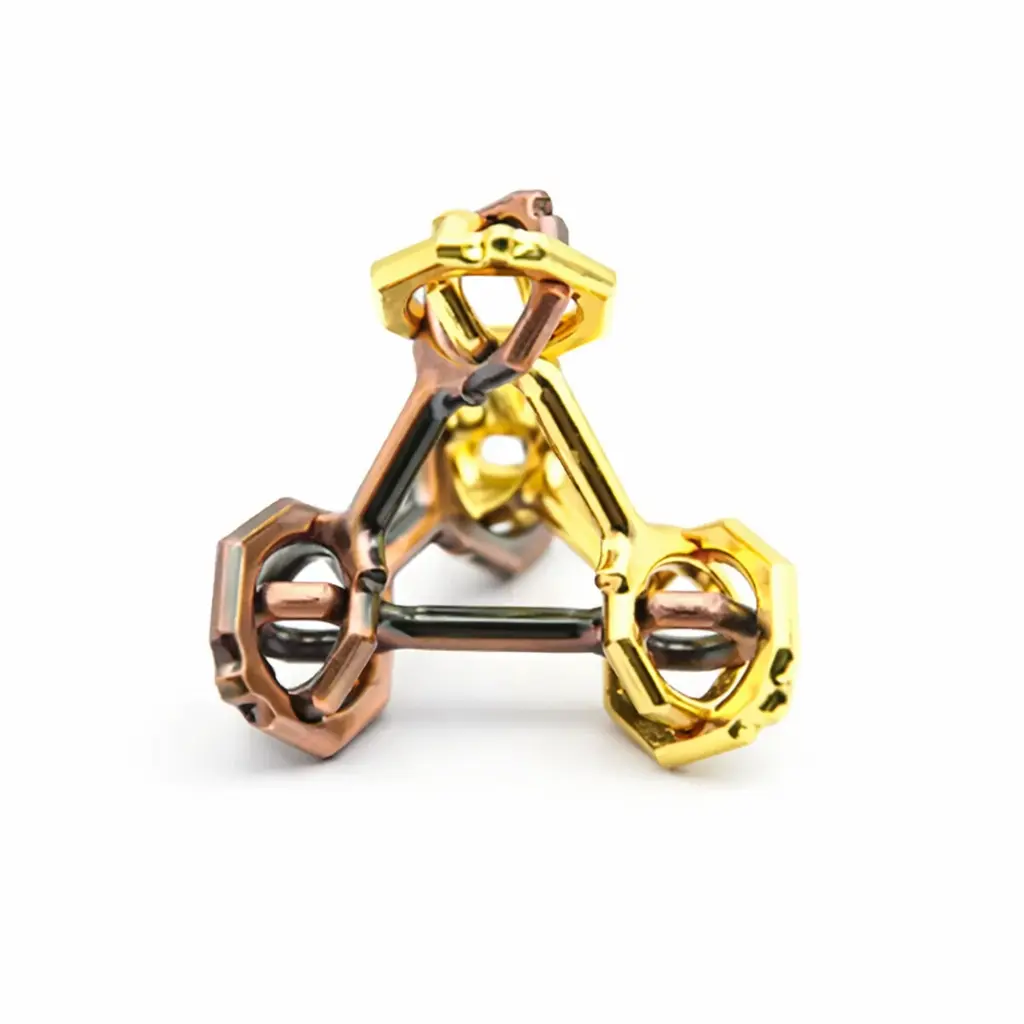
The Cast Coil Triangle at $25.99 is the premium pick on this list — a triangular cast puzzle with a denser mechanism and a finish that reads as sculpture. A daughter at 18+ who collects objects, displays books, or arranges a desk will keep this visible after solving. Why it fits her: the triangle form is architectural, the weight is substantial, and the design language fits a shelf between books and a vase. The price reflects the casting and finish, not the difficulty.
A quick check before you commit: the puzzle you choose should match the way she spends a quiet ten minutes. If she reads, a disentanglement works. If she builds or arranges, an assembly puzzle fits. If she wears jewelry or carries a fidget, a ring-style puzzle is the better buy. For the first puzzle in the gift, the Cast Hook Metal Brain Teaser is the strongest all-around pick for a 9–12-year-old — mechanism is forgiving, the form is displayable, and the price is right for a first cast puzzle. Confirm the listed age rating on the product page before checkout, since age bands here are a starting filter, not a guarantee. For a closer look at how mechanism type shapes the solving experience, see the tactile Hanayama buy guide.
04. All Picks Compared and the Four Checks Before You Buy
Run four pre-purchase checks before committing to any cast metal puzzle gift: confirm the age-rating label, match the mechanism to her patience, verify gift-ready packaging, and read the retailer’s return policy. The right pick changes the moment one of these four fails, so treat this section as the final filter.
All picks at a glance
| Pick | Age band | Mechanism | Display value | What to check |
|---|---|---|---|---|
| Cast Hook Metal Brain Teaser | 9–12 | Disentanglement | High (compact, hook form) | Confirm age rating on product page |
| Metal Crab Puzzle with Gold Ring | 9–12 | Disentanglement | High (animal sculpture) | Check small-parts warning for under-12 |
| 4 Band Puzzle Ring | 6–8 (with adult) | Band assembly | High (wearable) | Confirm ring size if worn |
| 5 Piece Cast Spiral Metal Puzzle | 13–17 | Assembly | Medium (sits flat) | Confirm difficulty on listing |
| Metal Orbit Ring Cast Puzzle | 13–17 | Disentanglement | High (ring form) | Confirm ring size |
| Cast Coil Triangle Puzzle | 18+ | Assembly | Very high (architectural) | Confirm collector-level difficulty |
Check 1 — Safety and the 12+ reality
The BePuzzled cast metal line is rated 12 and up for a reason: cast pieces are small, dense, and can separate during solving. A daughter under 12 should only handle a cast metal puzzle with an adult present, and the smallest pieces (sub-3 cm) belong on a desk, not a floor. For a daughter under 9, a wooden or lock-style puzzle is the safer starting point.
Check 2 — Mechanism versus patience
Disentanglement puzzles reward continuous fiddling — pick, twist, retry — while assembly puzzles ask for sequential moves and a longer attention span. A daughter who reads or doodles for ten quiet minutes usually prefers disentanglement. A daughter who builds, arranges, or follows step-by-step craft instructions usually prefers assembly. Match the mechanism to her temperament, not just the difficulty number.
Check 3 — Gift-ready packaging
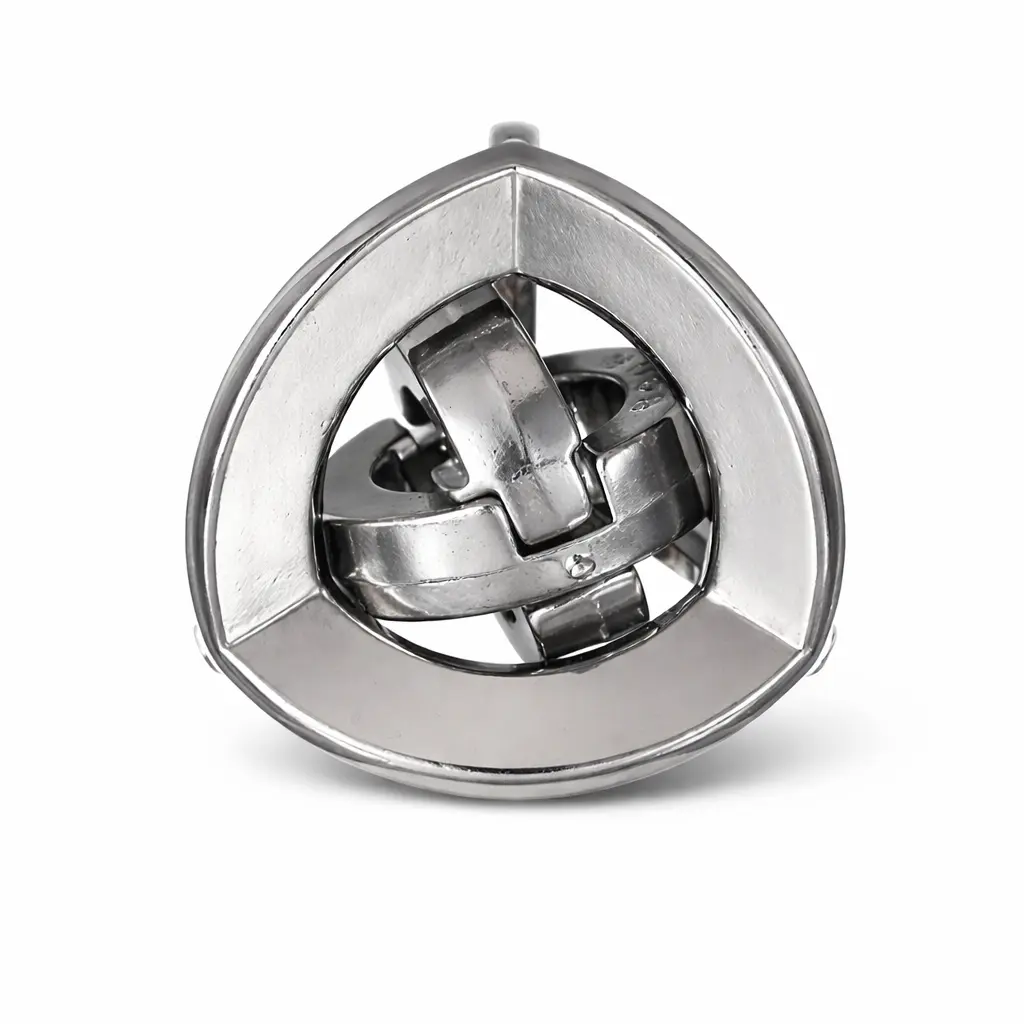
A retail blister sleeve reads as an afterthought. A boxed puzzle with a printed sleeve, an inner tray, and a separate solution envelope reads as a gift. If the listing only shows a plastic blister, plan to repackage it in a small kraft box with tissue before handing it over.
Check 4 — Return policy
Opened puzzles are often non-returnable. Read the retailer’s return page before checkout, especially if the difficulty level is uncertain and the recipient might prefer a different mechanism. The Cast Hook Metal Brain Teaser remains the safest first-puzzle bet for a 9–12-year-old because the mechanism is forgiving and the form is displayable — but verify the listed age rating and return window on the product page before you finalize.
For a closer look at how brand-level quality differences show up at the same price point, see how Hanayama compares to generic cast puzzles.
05. Presentation Ideas That Turn a Puzzle Into a Gift Moment
The four checks confirmed the puzzle fits. What separates a daughter-gift from a stocking-stuffer is the ten minutes around it. Pair the cast metal puzzle with a small presentation layer — a keepsake box, a handwritten “first puzzle” card, and a joint-solving ritual on the first evening — and a $15–$30 object becomes the gift she remembers a year later.
Start with the box. A retail blister sleeve reads as a purchased item dropped into a gift bag. A small kraft or wooden box, lined with tissue and a ribbon, reads as chosen. Many cast metal puzzles ship retail-ready; if the listing shows only a plastic sleeve, plan to repackage before wrapping.
Then write the card. One sentence is enough: name the level you chose and the reason. “Level 2 because you outgrew Level 1 last summer” lands harder than generic “Happy birthday.” For a milestone year — 10, 13, 16, 18 — the card can become the first page of a small solving journal.
Finally, sit down with her. The first ten minutes of a cast metal puzzle are the hardest, especially for a Level 2 or higher. A parent working the opening moves beside her signals that the challenge is shared, not graded. For a higher-difficulty piece like the Cast Coil Triangle Puzzle, this ritual matters even more — the triangle form invites both hands, and a calm opening sets the tone for the week of solving that follows.
Cast Coil Triangle Puzzle — $25.99
Two details to skip. Do not hand over the solution envelope with the puzzle — slip it inside the card instead, so she earns the reveal. And do not announce the difficulty level aloud before she starts; let her discover the number on the box after the first attempt. The surprise of “oh, this is a Level 2” is itself part of the moment. For the broader approach to making the gift land, see the no-fluff way to gift a puzzle she will actually open.
A puzzle she’ll solve. A sculpture she’ll keep.
Frequently Asked Questions
What age is a cast metal puzzle appropriate for my daughter?
A cast metal puzzle fits a daughter when the difficulty level matches her patience, not her grade. Choose Level 1–2 for ages 8–12, Level 2–3 for early teens, and Level 3–4 for older teens who already like logic games. When in doubt, start one level lower than you think she can handle.
Are cast metal puzzles safe for younger kids?
Small parts and hard metal edges are the concern. The BePuzzled Hanayama cast puzzle listing rates its Level 3 model for ages 12 and up, which is a reasonable floor for independent solving. For a daughter under 10, choose a larger disentanglement puzzle with smooth, rounded pieces and stay nearby during the first attempt. Check the product page for the specific age rating before you commit.
Which level is right for a beginner or a teenager?
Beginners of any age do best starting at Level 1. The early win builds confidence and teaches the basic manipulation patterns that Level 2 and 3 puzzles build on. Teenagers with no puzzle experience still benefit from a Level 1 or 2 start, then graduate to Level 3 once they finish the first one without frustration.
How long does solving actually take?
A Level 1 cast puzzle typically takes 5–30 minutes, a Level 2 takes 30–90 minutes, and a Level 4 can run from an hour to several days of casual effort. These ranges are common community estimates from forums like r/mechanicalpuzzles, but actual solve time depends on the specific mechanism and the solver’s familiarity with the style. Set aside a relaxed evening rather than a tight schedule, and don’t be surprised if she leaves it on her desk for a week before returning to it.
Is a metal puzzle too impersonal as a birthday gift?
A puzzle on its own can feel thin, which is why the presentation layer matters as much as the puzzle itself. A keepsake card explaining the mechanism, a handwritten note, and a gift box turn a modest puzzle into a gift with a story. Pair it with a second, easier puzzle for solving together, and the moment becomes shared rather than transactional.
What’s next?
Match her age band, pick the design that fits her style, and pair the puzzle with a card and box to make the moment last. The Cast Hook Metal Brain Teaser is the strongest starting point for most ages if you want to add a second puzzle for solving together.
Where to Start
If the recipient and occasion checks above match, start with Cast Hook Metal Brain Teaser. Check the current product page for the specifications that matter to your choice.
Still comparing options? Review the picks above to compare the same decision criteria, rather than restarting the search from scratch.
Sources and verification
- Product details and current specifications: Tea-Sip product page
Last updated: August 17, 2026