Quick Answer
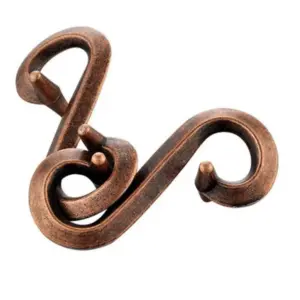
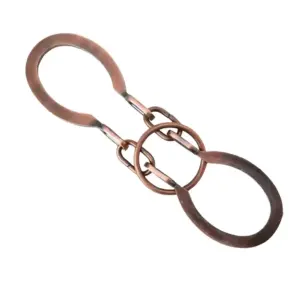
Yes — a cast metal puzzle is a strong corporate gift in the $20–$80 per-unit band, and the Cast Hook Metal Brain Teaser is the default starting pick at $13.99. It works when the recipient keeps it on a desk and fails when the gift must narrate a specific achievement. Three conditions decide the fit: the recipient’s desk environment, the presentation tier your budget supports, and the scale of the order alongside engraving or drop-ship requirements.
The three checks before you order:
- Audience reading. Will the recipient keep the puzzle on a desk, or will it disappear into a drawer? Desk-display objects retain visibility and recall; pocket-sized puzzles serve trade-show volume.
- Presentation tier. Standard retail packaging fits an under-$30 budget. Branded gift boxes and engraving push per-unit cost into the $40–$80 range.
- Scale logistics. Drop-shipping to multiple addresses, MOQ for engraving, and lead time for custom packaging are procurement questions, not afterthoughts.
| Scenario | Tea-Sip pick | Listed price | What to check |
|---|---|---|---|
| Client appreciation ($20–$30 all-in) | Cast Hook Metal Brain Teaser | $13.99 | Engraving area on the base; packaging add-on cost |
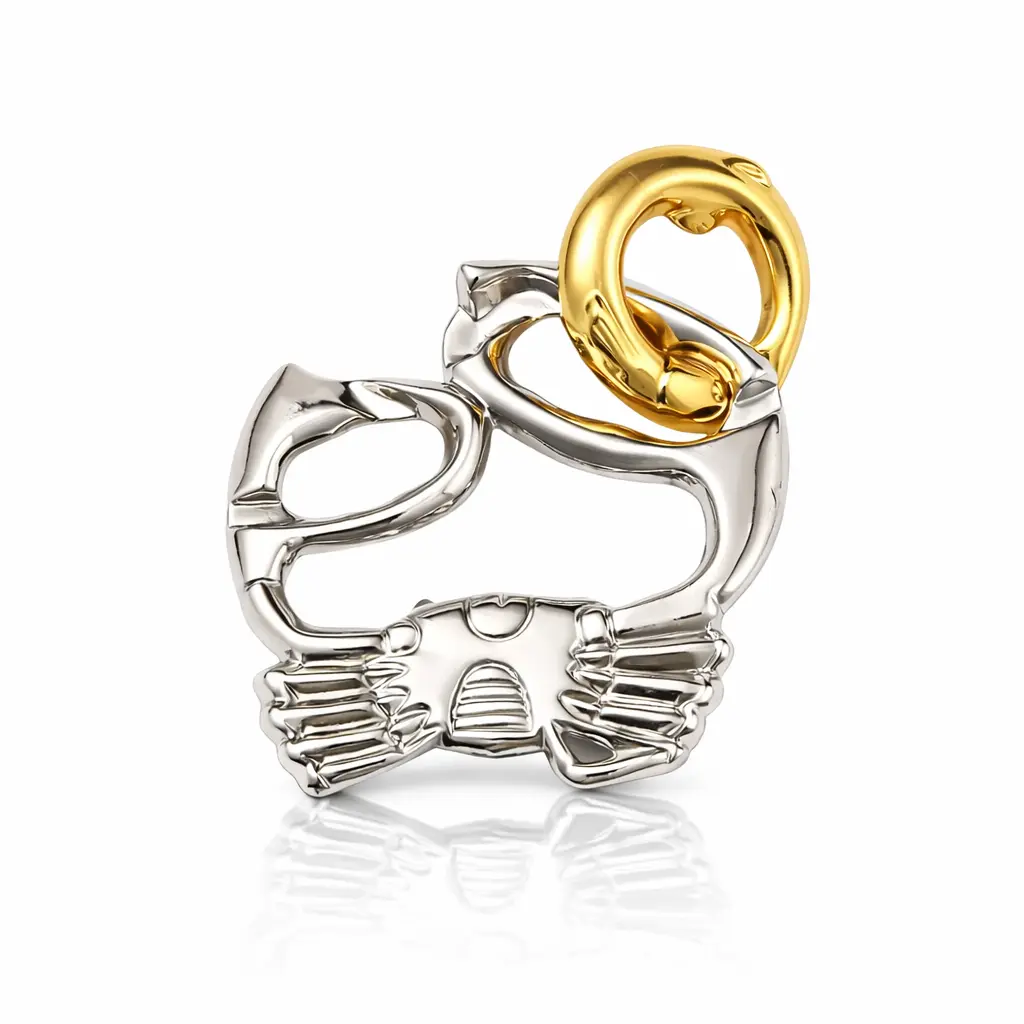
| Employee milestone ($30–$50 all-in) | Cast Coil Triangle Puzzle | $25.99 | Branded gift box MOQ and lead time |
| Trade show or onboarding volume ($15–$25) | Metal Orbit Ring Cast Puzzle | $14.99 | Case-pack count and inner box availability |
For a buyer sourcing client appreciation gifts, the Cast Hook Metal Brain Teaser is the starting point: it sits in the price band where corporate gifting programs have budget, presents well in a standard gift box, and the disentanglement mechanism creates a conversation moment that generic branded merchandise does not. For a deeper shortlist of metal puzzle corporate gift ideas that actually get used, the linked guide pairs each puzzle category with the use case it serves best.
If all three checks pass, move to scenario selection; if any check fails, this category is the wrong fit and the rest of the guide will save you the wrong order.
01. Which Cast Metal Puzzle Fits Each Corporate Gifting Scenario?
Choose the cast metal puzzle by the business moment the gift has to mark, not by which shape photographs best. New client onboarding rewards a fast disentanglement challenge; year-end client appreciation suits a more sculptural object; an employee milestone calls for higher weight and keepsake feel; trade show capture needs visual magnetism; executive retirement demands multi-step discovery; partner thank-yous benefit from display-ready pieces. The mechanism you pick is the message you send, and choosing the wrong mechanism asks the recipient to perform a task the moment does not call for.
Scenario 1 — New client onboarding. The puzzle functions as a first tactile handshake. You want something the recipient can hold, turn, and partially solve during a coffee meeting without feeling embarrassed. The Cast Hook Metal Brain Teaser fits this slot. At a list price of $13.99, it leaves room in the per-unit budget for packaging upgrades, a handwritten card, or bulk-tier shipping — costs that would push higher-priced options past the executive-gift ceiling. The disentanglement loop is forgiving enough to attempt in a meeting and substantial enough to remember afterward, which is the combination this scenario depends on.
Scenario 2 — Year-end client appreciation. The object must read as “we thought about you” rather than “we cleared inventory.” A figurative cast piece like the Metal Crab Puzzle Cast Brain Teaser with Gold Ring presents as a small desk sculpture on first glance and reveals its puzzle nature only on closer inspection. That dual reading is the value: the recipient engages with the ornament first, then with the challenge, and the reveal becomes the gift.
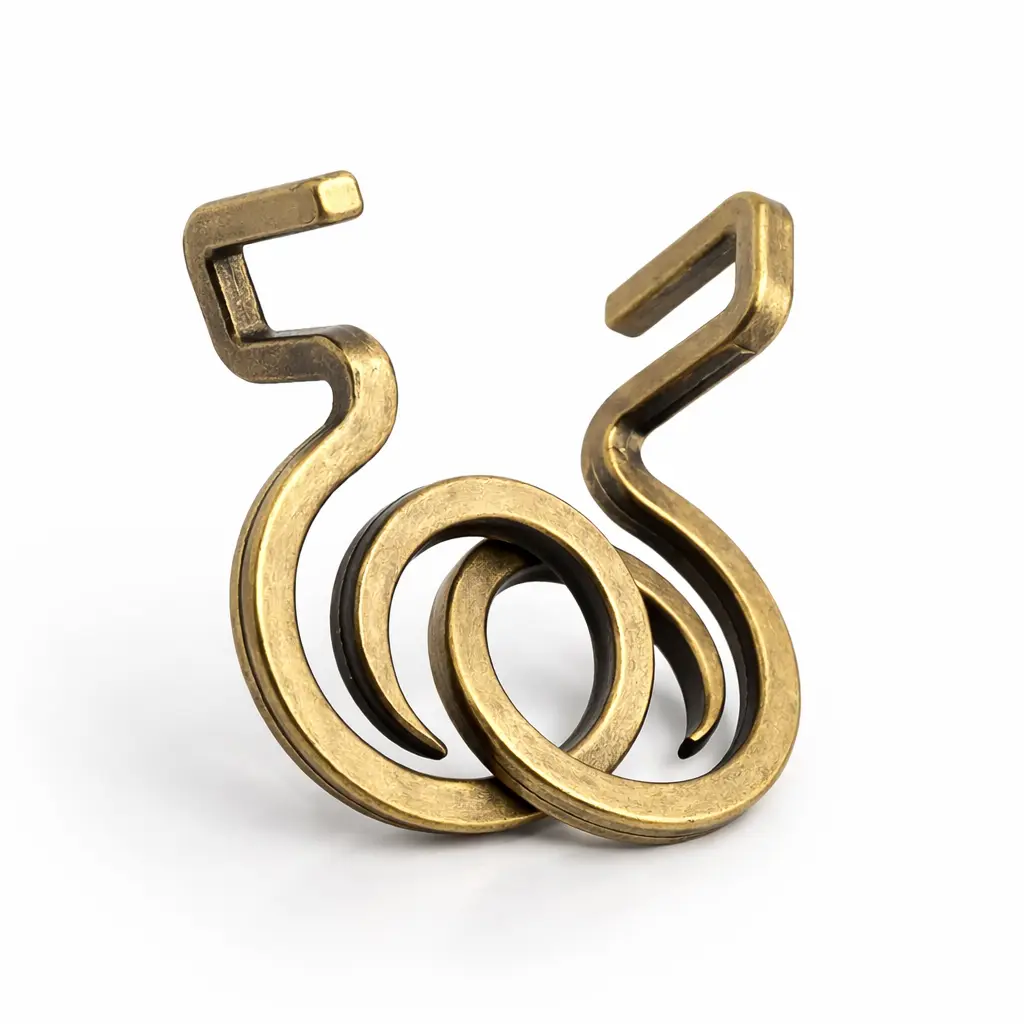
Scenario 3 — Employee milestone (5, 10, 20 years). A service-award pin is forgettable; a cast object that lives on a desk is not. The Cast Coil Pocket Puzzle at $18.99 carries enough weight to feel like a memento and enough portability to move between offices without ceremony. Pair it with a small engraving plate to mark the tenure year, and the recipient has a keepsake rather than another branded trinket. Weight here is the language of recognition, and the puzzle earns its place by holding it.
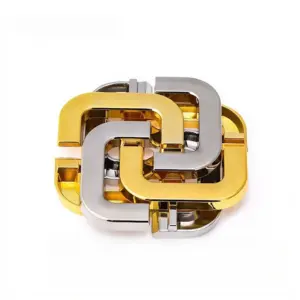
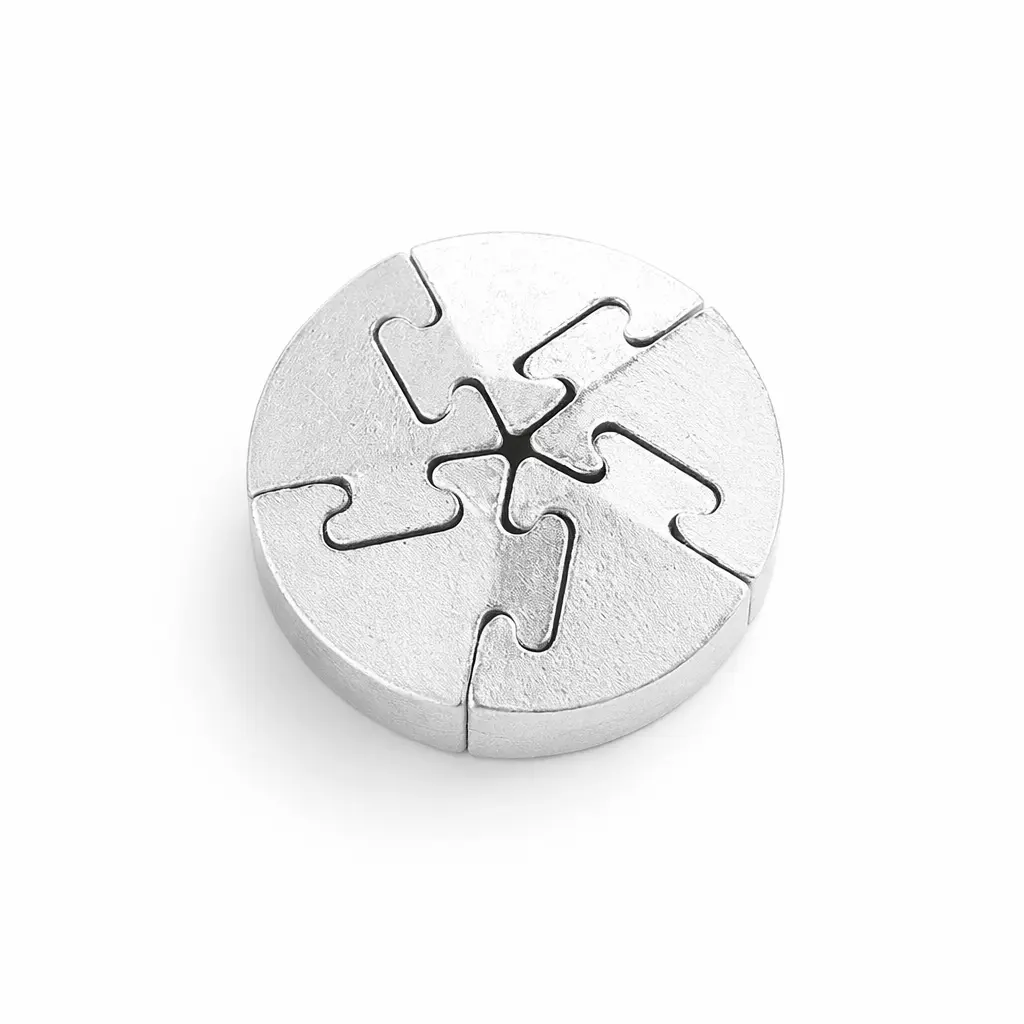
Scenario 4 — Trade show lead capture. You need something that stops a prospect mid-stride and invites a question, not a pitch. The 5 Piece Cast Spiral Metal Puzzle, with its visible moving parts and kinetic form, is the closest the category gets to a demonstration object. The multi-piece construction invites the hand, and the hand is the entire purpose of the booth. Booth staff can hand the puzzle across the table and let the object do the selling while they capture the lead.
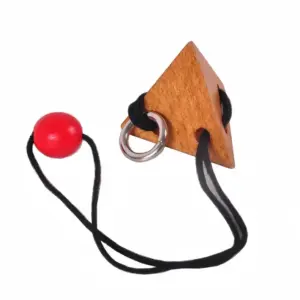
Scenario 5 — Executive retirement. This is the keepsake scenario. The gift must be substantial enough to retire to a study shelf and to function as a long-term reminder of a career. The Cast Coil Triangle Puzzle, at the top of this category’s price range at $25.99, is the option for a retiree. Its triangular geometry reads as deliberate and finished, not playful, and the heavier cast feel supports a moment of weight and ritual when the gift is presented. Pair it with a printed citation, and the object carries the ceremony for years rather than weeks.
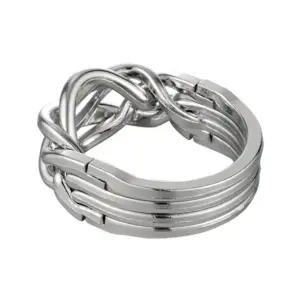
Scenario 6 — Partner and thank-you gifting. When the relationship is ongoing and the gift may travel between offices, a compact cast object that reads well at rest works best. The Metal Orbit Ring Cast Puzzle at $14.99 is sized and shaped to live indefinitely on a credenza without becoming clutter, and its interlocking ring form signals continuity rather than a one-off gesture. Portability and permanence are both requirements here, and the orbit form satisfies both.
When the puzzle is the wrong fit. A cast metal puzzle offers engagement, not commentary. If the scenario demands that the gift itself narrate a specific outcome — a promotion, a record close, a contract win — this category is not the primary instrument. Pair the puzzle with a printed citation, a nameplate, or a handwritten note that carries the meaning, and let the puzzle handle the tactile second beat.
One practical next action. Write your top three scenarios from this list on a Post-it, set them on your desk, and circle the puzzle type that matches each one. The match is the buy; the rest of the list is a shopping trip you do not need to take.
02. How to Judge a Cast Metal Puzzle Against Other Executive Gifts
That Post-it exercise narrows the field, but it does not prove the cast metal puzzle is the right gift category at all. The next decision is whether a puzzle outperforms the other objects a procurement officer is already considering in the $20–$80 bracket. The comparison must be made on observable gift mechanics, not on category reputation.
Judge the gift on three observable axes: display value on an executive desk, conversation potential during the unboxing moment, and longevity measured in years rather than weeks. Each axis answers a different procurement question — display value defends the price, conversation potential defends the unboxing, and longevity defends the after-the-thank-you-note period when most gifts are forgotten.
Display value is what the object does when no one is touching it. A cast metal puzzle in the several-hundred-gram weight class holds presence on a credenza in a way a promotional pen or branded notebook sleeve does not. For a desk-specific shortlist, the executive-grade metal puzzles curated for the office desk guide narrows the field to pieces that hold presence in a quiet office without dominating it. Conversation potential is what happens at the moment the gift is opened — does it invite a question, a pause, a request for the solution? Longevity separates a keepsake from a consumable: will this object sit on the desk in two years, or will it have been recycled with the wrapping?
The table below places cast metal puzzles against the four categories most often shortlisted in this budget band.
| Axis | Cast Metal Puzzle | Premium Pen ($40–$80) | Leather Desk Accessory | Branded Whiskey/Wine Set | Tech Accessory (e.g., wireless charger) |
|---|---|---|---|---|---|
| Display value | High — solid object holds presence on a desk zone | Moderate — used, then capped and stored | Moderate — padfolio reads as functional | Low after unboxing — bottle empties | Low to moderate — blends into cable clutter |
| Conversation potential | High — “how does that come apart?” moment at unboxing | Low — opened, admired, set aside | Low — familiar object category | Moderate — shared consumption moment | Low — utility object, no narrative |
| Longevity (years on desk) | 5–10+ years if mechanism stays intact | 2–3 years before refill cycle | 3–5 years if leather is maintained | Consumed in days or weeks | 1–2 years before tech obsolescence |
| What to check before ordering | Confirm mechanism is solvable without instructions on the box | Verify refill availability and brand warranty | Inspect stitching and edge finish in person | Confirm shipping restrictions for destination state | Check compatibility with recipient’s device ecosystem |
What to check on any cast metal puzzle before bulk ordering: confirm the mechanism is solvable by the recipient without instructions printed on the box. A puzzle that looks unsolvable reads as a chore, not a gift. The sweet spot is a mechanism that takes five to thirty minutes to separate and reassemble — challenging enough to register as clever, easy enough to feel like a win rather than homework. Difficulty ratings vary by manufacturer, so verify the level on the individual product page before committing to volume.
The mismatch to avoid. A cast metal puzzle offers engagement, not commentary, and that is the wrong primary instrument when the gift has to narrate a specific achievement — a promotion, a closed account, a retirement. Against the other $20–$80 executive gift categories, the puzzle wins on display value and conversation potential but loses on direct narrative. In that case, a presentation box with an engraving plate, a leather portfolio with a nameplate, or a handwritten note does the narrating, and the puzzle steps back to keepsake role.
One practical next action. Shortlist two or three puzzles within the budget band your scenarios require, then cross-check each against the three axes above. The leading reference point for desk-grade corporate gifting in this category is the Cast Hook Metal Brain Teaser at $13.99 — compact, visually distinctive, and well inside the $20–$80 band. If any puzzle scores high on all three axes for the specific recipient, it is the buy. If a competitor category scores higher on even one axis for the same use case, reconsider before placing the bulk order.
03. How to Handle Bulk Orders, Engraving, Packaging, and Shipping
Once the shortlist is set, the procurement step decides whether the gift feels premium or arrives looking like an afterthought. Treat the puzzle purchase as four separate line items — unit, customization, packaging tier, and shipping profile — and resolve each before the PO is cut. Every puzzle brand treats these differently, and the cheapest unit price can double once a presentation box and laser engraving are layered on.
Minimum order quantity (MOQ). MOQ is set per supplier and varies by customization method. Stock puzzles with no branding often ship in single units. Add a laser-engraved logo or recipient name, and the MOQ typically jumps to 25–50 units because the supplier must set up the engraving bed and calibrate the file. Molded or cast-in branding — where the logo becomes part of the metal itself — requires higher volumes (often 100+) to justify the mold cost. Check each supplier’s MOQ page directly before committing, and ask whether the threshold changes for repeat orders.
Engraving area dimensions. This is the constraint that derails most first-time corporate orders. The flat surface on a typical cast disentanglement puzzle measures roughly 15mm × 30mm — enough for a compact monogram or short word, not a full corporate lockup. A recipient name plus a small icon fits comfortably; a company logo with a tagline does not. If the brand mark is non-negotiable, consider adding a separate engraving plate to the presentation box rather than the puzzle itself. Confirm exact dimensions on the product page or by requesting a digital mockup before production.
Packaging tiers. Most puzzle suppliers offer three packaging levels: a bulk mailer (puzzle in a padded envelope, lowest cost), an individual gift box (puzzle in a printed carton with a foam insert), and a premium presentation box (rigid two-piece box with a printed sleeve, magnetic closure, or drawer pull). For client-facing gifts and executive milestones, the individual gift box is the minimum professional standard. The premium tier adds roughly $5–$15 per unit but transforms the unboxing moment. For trade show giveaways where recipients grab and go, the bulk mailer is acceptable.
Lead times. Lead time splits into production and shipping. Production runs 5–15 business days for stocked puzzles with laser engraving, longer for custom-molded branding. Shipping adds another 3–7 business days domestically and 7–21 days internationally, depending on the carrier and customs clearance. For a 50-unit client onboarding cohort targeting a specific arrival date, plan a four-week buffer from PO to delivery. For international recipients, worldwide shipping logistics for metal puzzles covers carrier options, tracking visibility, and customs documentation requirements.
International shipping reality. Cast metal puzzles are non-perishable and unbreakable in transit — they survive global drop-shipping without insulation or fragile stickers. The complication is customs paperwork for branded goods. A logo-engraved puzzle may need a commercial invoice declaring the unit value for duty calculation, and some destinations require an importer of record. Confirm these requirements with the recipient’s procurement contact before shipping, or work with a supplier that pre-clears branded merchandise.
One practical next action. Build a procurement checklist: confirmed MOQ, verified engraving area with a mockup, selected packaging tier, production lead time plus shipping buffer, and customs status per destination. When all five are answered, the order is ready to place.
04. How to Match Puzzle Difficulty to Recipient Persona
With the logistics framework locked, the next decision is harder than it looks: how hard should the puzzle actually be? Cast metal puzzles work as corporate gifts when difficulty matches the recipient’s relationship to problem-solving, not their job title. A senior executive who has never asked for a puzzle wants a decorative, low-friction mechanism; a staff engineer who already keeps a precision tool on the desk wants something that genuinely challenges. Match the recipient’s daily exposure to problem-solving, and the rest of the choice follows.
The decision rule. Buy a lower-difficulty mechanism when the gift is meant to signal taste. Buy a higher-difficulty mechanism when the gift is meant to signal respect for the recipient’s capability. Seniority is the wrong axis; the recipient’s actual habits are the right one.
C-suite executives: mechanism as aesthetic
Pick a sculptural, lower-difficulty puzzle. The recipient is unlikely to spend an afternoon on it; the object must read as a polished desk ornament between meetings.
- Observable signal: does the desk already show a fountain pen, paperweight, or other non-utilitarian object? If yes, a cast metal puzzle fits the same category.
- Expected first-solve time: under five minutes once the shape is understood.
- Recommended pick: the Cast Hook Metal Brain Teaser — the flagship of the cast metal puzzle line, listed at $13.99 (check the product page for the current price), with a sculptural hook geometry that displays as a desk object even before it is solved.
Sales team members: mid-difficulty, repeated desk use
Pick a pocketable, mid-difficulty puzzle. Sales staff cycle through stressful calls and idle minutes; a five-minute reset object earns its place through repeated handling.
- Observable signal: do they already keep a fidget object, spinner, or stress ball at their station? If yes, a metal puzzle reads as a premium upgrade.
- Expected first-solve time: ten to twenty minutes.
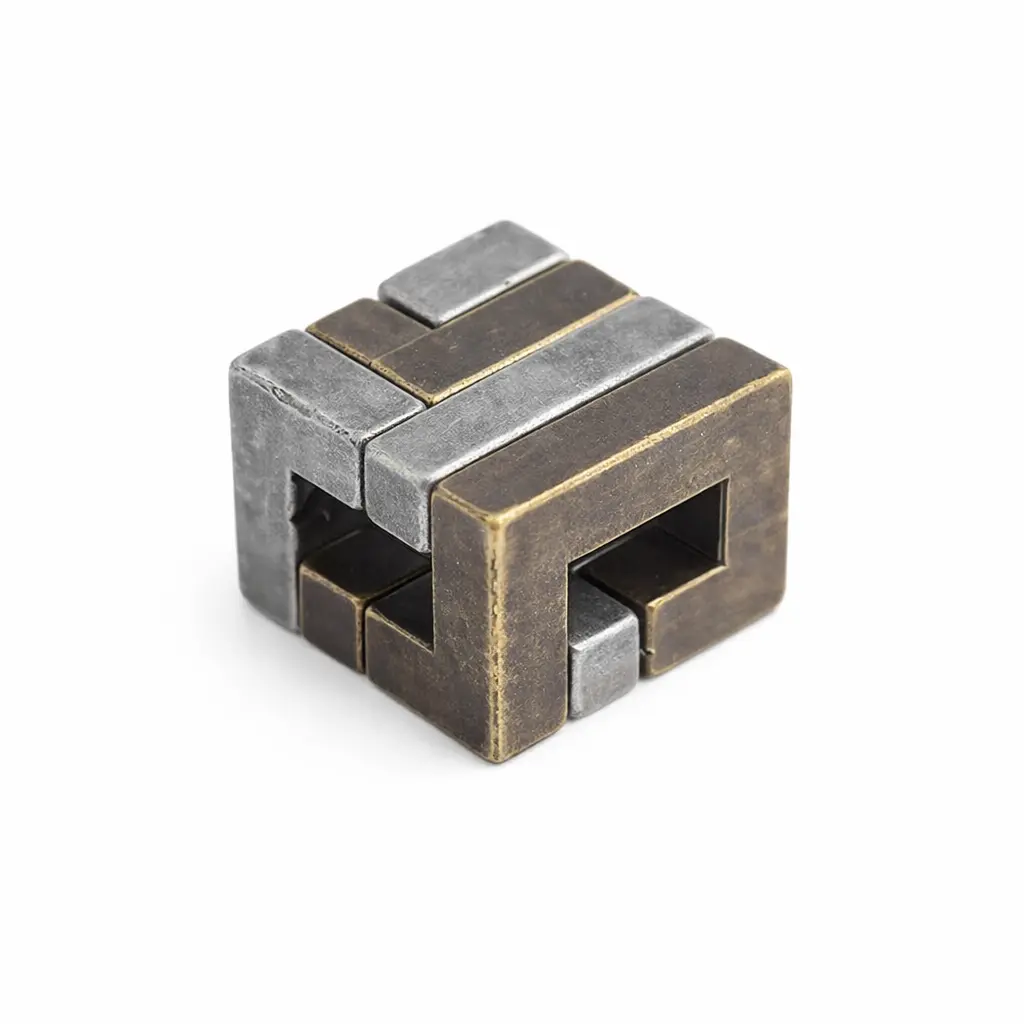
Cast Coil Pocket Puzzle — $18.99
The Cast Coil Pocket Puzzle at $18.99 suits the sales-desk use case directly: compact, weighted enough to feel premium in the hand, and solvable in a single coffee break.
Technical staff and engineers: mechanism as credibility
Pick a higher-difficulty mechanism where the solve requires genuine sequencing. The gift signals “I assumed you could handle this.”
- Observable signal: does the workspace include calibration tools, electronics teardown kits, or maker objects? Puzzle hobbyists keep these visible.
- Expected first-solve time: twenty minutes to over an hour.
- Recommended pick: the 5 Piece Cast Spiral Metal Puzzle — a multi-piece mechanism at $16.99 where the solution requires four or five distinct moves in sequence.
Long-tenured clients: ongoing engagement
Pick a mid-to-high difficulty puzzle that rewards the recipient returning to it. The gift becomes a recurring touchpoint rather than a one-day unboxing.
- Observable signal: have they received a puzzle from you before? If yes, step up one difficulty tier.
- Expected first-solve time: fifteen to forty minutes.
- Recommended pick: the Metal Orbit Ring Cast Puzzle at $14.99 — a two-piece ring mechanism that re-solves cleanly each time it is picked up.
What to check before ordering above 25 units
Difficulty ratings are supplier-graded, not industry-standardized. A Level 3 from one vendor and a Level 3 from another can describe very different solve experiences — the full breakdown of why a Level 4 cast puzzle can be harder than a Level 6 covers how manufacturers actually calibrate their grading scales. Request a single evaluation unit, have the intended recipient or a colleague time the first solve, and compare the result against the persona expectations above before the full production run ships. The Cast Hook Metal Brain Teaser works as that evaluation unit for most mixed-persona orders, because its solve time is short enough to test within an afternoon and its mechanism is representative of the broader cast metal category.
05. How Tax Rules and Compliance Affect Corporate Puzzle Gifting
The same procurement logic that governed difficulty selection governs tax treatment: one recipient, one annual aggregate. For U.S. buyers, cast metal puzzles typically qualify as deductible business gifts when their per-unit cost falls under the IRS annual de minimis threshold, but that threshold is a per-recipient cap, not a per-item cap, and it resets every January. Confirm the current figure with a tax professional before the order is placed.
Once that ceiling is set, every line item on the invoice counts toward it. The puzzle, the presentation box, the engraving plate, and the drop-ship fee all aggregate into the same annual number for a single client or employee. A $25.99 Cast Coil Triangle Puzzle in a $15 sustainable gift box with a $10 laser-etched logo becomes a $50.99 gift for tax purposes, not a $25.99 one. Procurement teams that track this in a spreadsheet rather than a receipt folder avoid the most common audit pattern: gifts that stay individually modest but collectively breach the cap when a second or third package ships later in the same calendar year.
Three compliance flags deserve attention before the order moves to production.
- Logo-loaded merchandise may be reclassified. A puzzle with a permanent company logo or branded packaging can be treated by the IRS as advertising or promotional expense rather than a business gift, which changes the deduction category and the documentation trail. Keep branded items on a separate purchase order so the accounting stays clean and the expense lines map to the right tax form.
- Timing matters for year-end runs. A December bulk order intended for January delivery may not actually be deductible in the intended tax year if the invoice posts early. Coordinate the delivery date with the accounting close rather than the marketing calendar, and ask the supplier to backdate the invoice to the receiving date when possible.
- State and international rules diverge. U.S. federal thresholds set the floor, but some states apply lower per-recipient caps, and any gift shipped across a border may trigger VAT, GST, or customs valuation that affects how the deduction is reported. Cross-reference the destination rules before a multi-address drop-ship.
The practical next action: pull the recipient list, total the planned gift value per person including packaging and engraving, and flag anyone approaching the threshold before checkout. That single check converts tax compliance from a year-end scramble into a pre-purchase filter, and it pairs cleanly with the evaluation-unit step from the previous section, so the entire procurement run stays within one verification loop.
Frequently Asked Questions
The compliance checklist closes one loop, but the operational questions that determine whether a cast metal puzzle shipment actually arrives on time open the next. Most procurement friction shows up after the scenario is chosen and before the purchase order is cut — MOQ, engraving area, packaging tier, shipping, lead time, and the per-recipient cap are the questions buyers ask first. The answers below reflect what a supplier typically confirms at the quote stage rather than universal rules.
What is a good bulk order quantity for corporate gifts?
Most suppliers and platforms treat single-unit purchases as standard retail. For branded packaging, custom engraving, or co-branded runs, minimum order quantities (MOQs) typically start higher than retail minimums. Request the MOQ in writing before finalizing the recipient list, and ask whether mixed-model orders (different puzzles under one PO) qualify for the same threshold.
Can these puzzles be engraved with a company logo or recipient name?
Engraving availability depends on the supplier and the puzzle geometry. Die-cast and cast metal puzzles support laser engraving on flat or gently curved surfaces, and the supplier confirms the maximum engraving area per model. Always request a digital proof on the specific puzzle before bulk production to verify the logo scales correctly and the finish — whether brushed satin, polished, or antique — reads well at the proposed engraving depth.
What price range works for client appreciation gifts?
Client appreciation gifts typically fall between $20 and $80 per unit. Most Tea-Sip cast metal puzzles, including the Cast Hook Metal Brain Teaser at $13.99 and the Cast Coil Triangle Puzzle at $25.99, sit at or below that range, leaving budget headroom for presentation boxes, engraving upgrades, and shipping.
Are cast metal puzzles suitable for international shipping?
Yes. The cast metal format is durable, non-perishable, and compact, which makes it well-suited for cross-border drop-ships. Confirm destination-country import rules, any applicable customs valuation thresholds, and whether the recipient’s organization requires a commercial invoice format before placing a multi-address order.
How do I match difficulty to the recipient?
Difficulty ratings typically run from beginner (Level 1) to expert (Level 6, Mensa-rated, according to Hanayama’s published scale). Match C-suite recipients to mid-range difficulty for a satisfying single-session solve, technical and engineering staff to Levels 4–6, and broad audiences such as trade show leads to entry-level models that solve in under five minutes.
What packaging options are available for premium corporate presentation?
Options generally include a standard sustainable gift box, a magnetic-closure presentation box, and a custom-branded outer sleeve. Request a packaging sample at the quote stage so the unboxing moment can be evaluated against the scenario tier (client appreciation vs. executive milestone vs. trade show giveaway) before committing to a production run.
What is the typical lead time for a bulk order?
Lead times depend on engraving and packaging tiers. The supplier confirms the production window at the quote stage; build a buffer of two to three weeks beyond the quoted date for first-time orders to absorb proof approvals and any freight variance.
Do cast metal puzzles count as tax-deductible business gifts?
In the U.S., business gifts are generally deductible up to $25 per recipient per year, subject to the rules covered in the tax section above. The listed puzzle price counts toward that cap; packaging and engraving upgrades may or may not, depending on how the invoice is structured. Confirm the treatment with a tax advisor before a high-value run.
To convert plan to purchase order: Shortlist three scenarios from Section 01, match each to a Tea-Sip puzzle, and request MOQ, engraving area, packaging tier, and lead time in a single supplier email. That one action converts scenario planning into a purchase order, and it closes the loop from the opening condition — audience fit, presentation tier, and scale logistics — into a single procurement-ready request.
Where to Start
If the recipient and occasion checks above match, start with Cast Hook Metal Brain Teaser. Check the current product page for the specifications that matter to your choice.
Still comparing options? Compare the same decision criteria against the other Tea-Sip cast metal puzzles, rather than restarting the search from scratch.
Sources and verification
- Product details and current specifications: Tea-Sip product page
Last updated: August 20, 2026