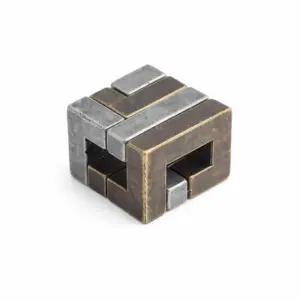
Quick Answer: 3D Wooden Puzzle Gift For 10 Year Old: Practical Gift Guide
For a 10-year-old, the best 3D wooden puzzle gift is one that takes roughly 45–90 minutes to assemble, requires no glue and only a small manual tool, and produces a model sturdy enough to display on a shelf. Choose a mechanical/working model (vehicle, robot, marble run) when the child likes cause-and-effect play; choose a detailed animal, building, or vehicle sculpture when they like quiet, focused building. The checks below tell you which to pick.
Five conditions that change the pick:
- Movement vs. still model. Moving-parts kits reward cause-and-effect kids; static sculptures reward quiet builders.
- Glue-free vs. craft kit. Snap-fit gifts cleanly out of the box. Glue adds wait-and-mess.
- Assembly time. 15–30 min (quick), 45–90 min (typical), 2+ hours (complex). The first two suit solo; the third needs a partner.
- Adult help. Most can do the first 20 minutes alone, then want a partner—especially at a party.
- Small parts. Skip kits with many loose tabs if a toddler or pet shares the home.
| Type | Tea-Sip pick | Best for | Assembly | Adult help | Check before buying |
|---|---|---|---|---|---|
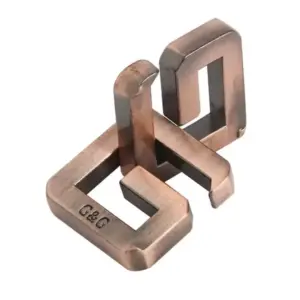
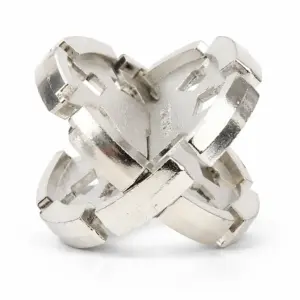
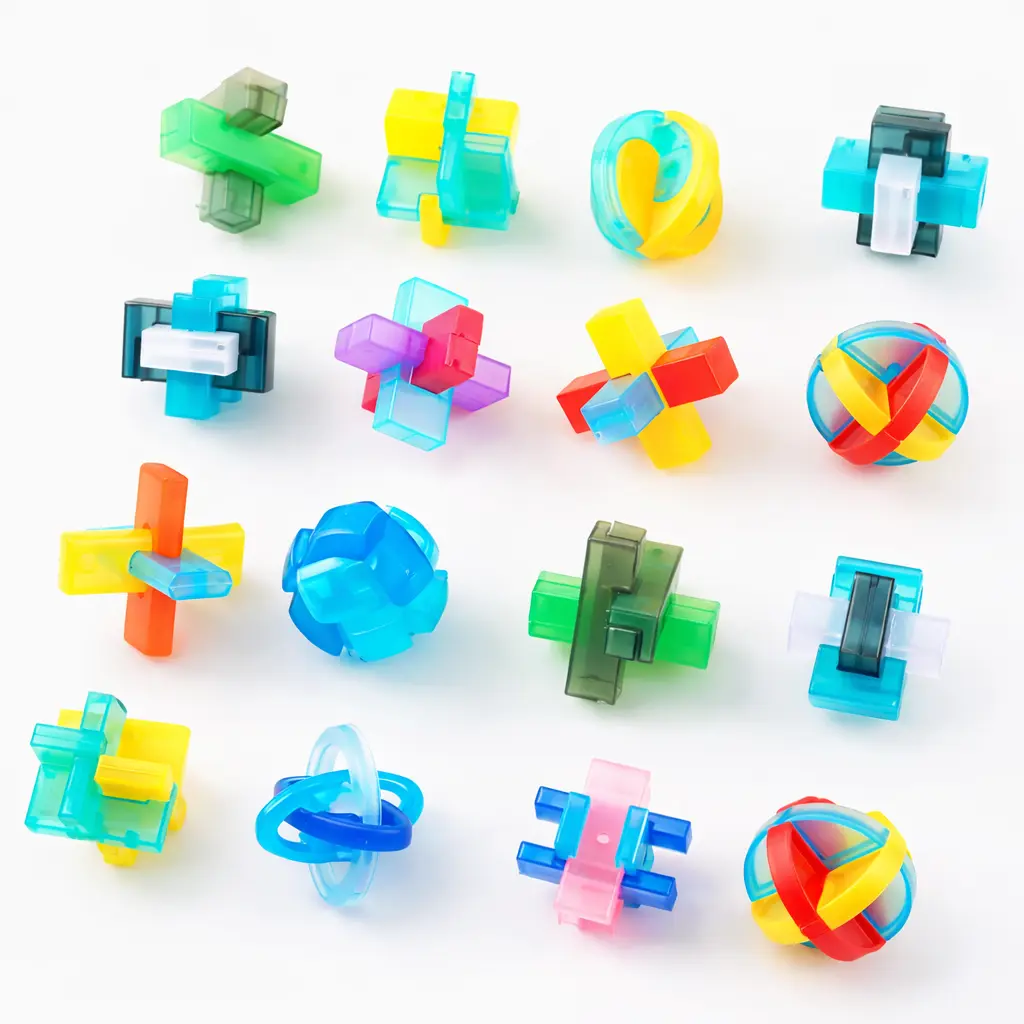
| Brain-teaser lock set | 12 Piece Crystal Luban Lock Set ($28.88) | First-time 10-year-old; solo challenge; display piece | Quick (15–30 min bucket) | None | Piece count, age 10+ label |
| Multi-puzzle set | 6-in-1 Wooden Brain Teaser Set ($38.88) | Curious builder who wants variety | Quick per puzzle | None to light | Puzzle count, wood vs. acrylic |
| Color-match | Kongming Lock Color Match ($16.99) | Quieter child who likes pattern logic | Quick | None | Colorfast finish |
| Step-up lock set | Luban Lock Set 9 Piece | Child who’s finished a simpler lock and wants more pieces | Quick | None | Piece count, material spec on product page |
| Color cube | 7 Color Soma Cube Puzzle ($21.88) | Visual-spatial solver who likes color cues | Quick | None | Colorfast finish |
| Single cube | 54‑T Cube Puzzle ($18.99) | Quiet focus, shelf display | Quick | None | Finished dimensions |
The 12 Piece Crystal Luban Lock Set is the safe starting route—12 pieces, no glue, fits a 10-year-old’s attention span, and sits in a typical birthday-gift price band. Move down the table only if the child already loves one of the more specific categories.
01. What a 10-Year-Old Actually Needs from a 3D Wooden Puzzle
Most 3D wooden puzzle listings lump ages 6–14 together. For a 10-year-old specifically, that age band hides the real question: does the puzzle, a type of puzzle, match how this child actually thinks, builds, and shows off what they made? The checks below translate age into four observable traits — fine-motor, attention span, frustration tolerance, and display value — so you can match the gift to the child.
Fine-motor reality. A 10-year-old’s fingers can press small plywood tabs into slots, but they get frustrated by sub-millimeter tolerances and brittle tabs that snap on the third try. The sweet spot is laser-cut plywood with snap-fit pieces — each tab clicks with a tactile, audible “snap” so the child knows it seated correctly. Too babyish: chunky toddler puzzles with knobs, pegs, and roughly 1.5 cm thickness — the child feels patronized. Too frustrating: adult interlocking burr puzzles meant for steady hands, with no visual reference and tolerances that need a table edge to pop apart. Check the listing for “no glue” and “snap-fit” — both signal piece counts a 10-year-old can manage without supervision.
Attention span. A 10-year-old can sustain focus on a single project for about an hour before looking around the room — a window that lines up with the 45–90 minute build. This aligns with why 8-12 year olds can’t stop solving these brain teasers. Shorter puzzles (15–30 minutes, like a compact brain-teaser lock) work for a first-time builder or a birthday with siblings running around. Longer puzzles (2+ hours, with moving parts like a multi-stage mechanical vehicle) need an adult nearby to keep momentum, or the child abandons the build at step 14 of 40. Read the “estimated assembly time” line — if it’s missing, look for a piece count: under 50 pieces is a quick build, 100+ is a project.
Frustration tolerance. This is the lens almost every product page skips. A 10-year-old can handle a wrong-piece mistake, but not three in a row without a visible reason to keep going. Puzzles with numbered tabs, color-coded pieces, or step-by-step illustrated booklets let the child self-correct. Puzzles with dozens of identical-looking parts and no progress signal are where the build stalls — the child can’t tell if they’re at step 6 or step 26. Glue-required kits raise the stakes: a crooked piece means prying it off, risking breakage, and the child blames themselves. Glue-free snap-fit kits are forgiving — pop the wrong piece off and try again. If the child has never finished a building kit, lean toward a 12-piece brain teaser over a 200-piece model.
Display value. A 10-year-old wants to show off what they made. The finished puzzle should sit on a desk or shelf without wobbling, and look display-worthy — not a generic toy. A working mechanism (a combination-lock safe, a rolling vehicle, a music box) earns a second look from siblings and friends. A static sculpture earns shelf space but loses replay value once the novelty fades. Check for a finished-model photo on the listing, not just a flat sheet of punched-out parts. If the model can’t stand on its own in the promo image, the real build won’t either.
The adult-sit rule. Plan to sit beside them for the first 20 minutes if the piece count is over 100, the instructions are text-only, or the child has never finished a model kit before. After that opening phase, most 10-year-olds work solo and come back only when they hit a snag. Save the bigger kit for a weekend afternoon when an adult can be present, and hand a smaller snap-fit puzzle to a first-time builder for a sleepover or a quiet weeknight.
02. How to Read a 3D Wooden Puzzle Listing Before You Buy
Read the listing, not the brand promise — because a 10-year-old’s patience, fine-motor skill, and frustration tolerance are calibrated to piece count, tools, glue requirement, age band, and stated assembly time, not to the “ages 6–14” tagline that every wooden-puzzle brand reuses.
Once those five numbers are visible on the product page, the gift decision gets simple. Skip any listing that hides them in marketing copy or that says only “STEM kit, ages 8+.” The age band alone doesn’t tell you whether a 10-year-old will finish on a Saturday afternoon or abandon the build halfway through dinner.
Piece count — the first filter. A 12-piece brain teaser sits in the 15–30 minute assembly window; a 100-piece snap-fit model lands in the 45–90 minute window; a 200+ piece mechanical kit crosses the 2+ hour mark and usually needs to be split across two sessions. If the piece count isn’t stated, that’s a red flag — the brand should know how many parts are in the box. Check the “what’s in the box” section of the product page, or the unboxing photos in customer reviews, before adding the kit to your cart.
Tools and glue — the gift-presentation question. Glue-free snap-fit kits arrive in one box, work straight out of the wrapper, and leave no mess on the birthday table. Glue-required craft kits need a separate adhesive, a protected work surface, and adult supervision for cleanup. For a birthday unwrapping, glue-free wins — the child can start building in the first 10 minutes, and there’s no risk of adhesive ending up on the wrapping paper, the carpet, or a younger sibling’s hands. Save the glue-required kit for a planned weekend project with a parent present. The gift-presentation question, not the materials question, is what should drive this choice.
Glue? Skip it for a birthday gift.
Stated assembly time — the patience map. Brands often publish a build-time estimate. Match that estimate to a realistic window in your home. A 15–30 minute build suits a sleepover or a weekday after school. A 45–90 minute build fits a Saturday morning. A 2+ hour build should be planned as a two-session project — or the adult-sit rule from the previous section kicks in earlier: plan to sit beside the child for the first 20 minutes, then check in at the halfway mark. If the brand lists “1–3 hours,” assume the high end and budget accordingly.
Age band — the frustration check. “Ages 8–12” or “ages 6–14” tells you the puzzle is safe, not that it’s fun. Read between the lines. A 6+ kit is usually too easy for a 10-year-old. A 14+ kit is usually too frustrating. The sweet spot is a kit rated 8+ or 10+, under 200 pieces, with a working mechanism — otherwise the gift lands in a drawer after the first frustration spike. The age band is a safety signal, not a difficulty signal.
Safety and small parts — the household check. A 10-year-old can handle small parts, but younger siblings in the home may not. Check the listing for a choking-hazard warning, the size of the smallest piece, and whether the kit includes a storage tray or numbered bags. A tray or numbered bags earn back 20 minutes of lost-looking time later — and they stop loose tabs from getting vacuumed up by a curious pet. Small parts? Read the box and check the household.
The single next action. Open the product page right now, scroll past the marketing photos, and confirm all five numbers in the specifications before adding to cart. If a listing hides any of them, the puzzle is not ready to be a gift.
03. Best 3D Wooden Puzzle Gift Types for a 10-Year-Old, by Personality
Once the listing passes the five-point check from Section 02, the next decision isn’t which brand — it’s which type of 3D wooden puzzle matches the 10-year-old’s play personality, which is why most gift givers don’t match the puzzle to the person. A mechanical model kit and a Luban lock set are both 3D wooden puzzles, but the child who lights up over the first may bounce off the second in ten minutes. Match the type to the way the recipient already plays.
The four lenses, applied. When two kits look like equal matches, run each one through fine-motor fit, attention-span fit, frustration-tolerance fit, and display value (from Section 01). A kit that wins three of four is a confident buy; the one that wins two usually ends up in a drawer. The breakdowns below name which lens each type most relies on.
01. The quiet problem-solver — interlocking brain teasers. This is the 10-year-old who quietly takes apart a fidget toy to see how it works, or finishes a 200-piece jigsaw in one sitting. The gift is the solve. Lens check: low-to-medium fine-motor, low attention-span (15–45 minutes per solve), medium frustration tolerance, high display value. Snap-fit wooden interlocking pieces come apart and go back together without glue — which is also why the gift is repeatable, the kind a child will pick up off the shelf a year later without you having to supply a tube of adhesive.
The top pick is the 12 Piece Crystal Luban Lock Set — a multi-piece set that turns one gift into a sequence of progressively harder solves, mirroring how a 10-year-old’s frustration tolerance actually works: easy win first, harder next, hardest last. The Kongming Lock Color Match is the runner-up when you want a color-matching layer to keep a less confident solver oriented mid-build.
04. Safety, Small Parts, and Age-Band Mismatch Checks
Treat the safety and small-parts check as a separate step from the “is it cool” check — a 10-year-old who loves a puzzle on the box is still a 10-year-old with smaller fingers, a younger sibling who visits the table, and a cat that has never once ignored a loose tab on the floor. The good news: most 3D wooden puzzle kits ship with laser-cut plywood pieces that are relatively chunky and smooth-edged, but the “small parts” warning on the box is not a formality — it is the line between a gift that gets finished and a gift that ends with a phone call from a grandparent about a swallowed bead.
Before you click buy, run three checks on the product page or, ideally, the physical box:
- Age band on the box — look for the printed age recommendation, not the marketing range. A “6–14” label is the brand playing it safe; a specific “ages 10+” or “ages 8+” is a tested claim.
- Finished-model dimensions — confirm the build will fit on a shelf, a desk, or a windowsill. A 30cm-tall mechanical model needs a permanent home, and a 5cm tabletop puzzle will vanish into a sock drawer.
- Small-parts warning — if the box carries a “choking hazard” symbol for under-3s and you have a toddler in the house, store the kit and the in-progress build in a closed bag between sessions.
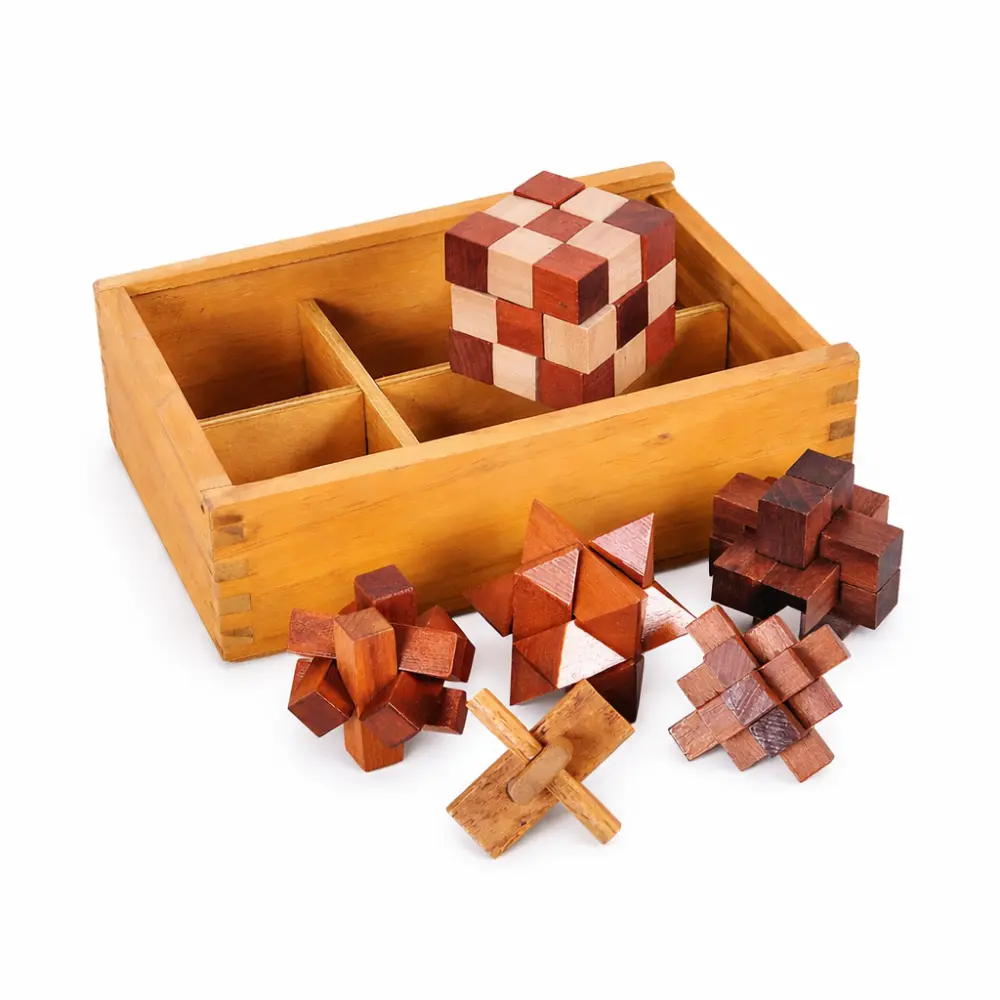
During assembly, clear the table of drinks, phones, and pets. Loose laser-cut tabs roll; one dropped tab under a couch cushion becomes a mystery that derails the next session. The 6-in-1 Wooden Brain Teaser Set is compact enough to park on a high shelf between builds, and so is the puzzle below — both store cleanly without a dedicated box.
If a 10-year-old is on the younger end of the age band (just turned 10) and is building solo for the first time, plan to sit beside them for the first 20 minutes — not to build for them, but to confirm the snap-fit direction is correct. A wrong-orientation mistake in minute five is a boredom trigger in minute forty; a quick “that tab slots the other way” is the difference between finishing the model tonight and abandoning it in the original packaging.
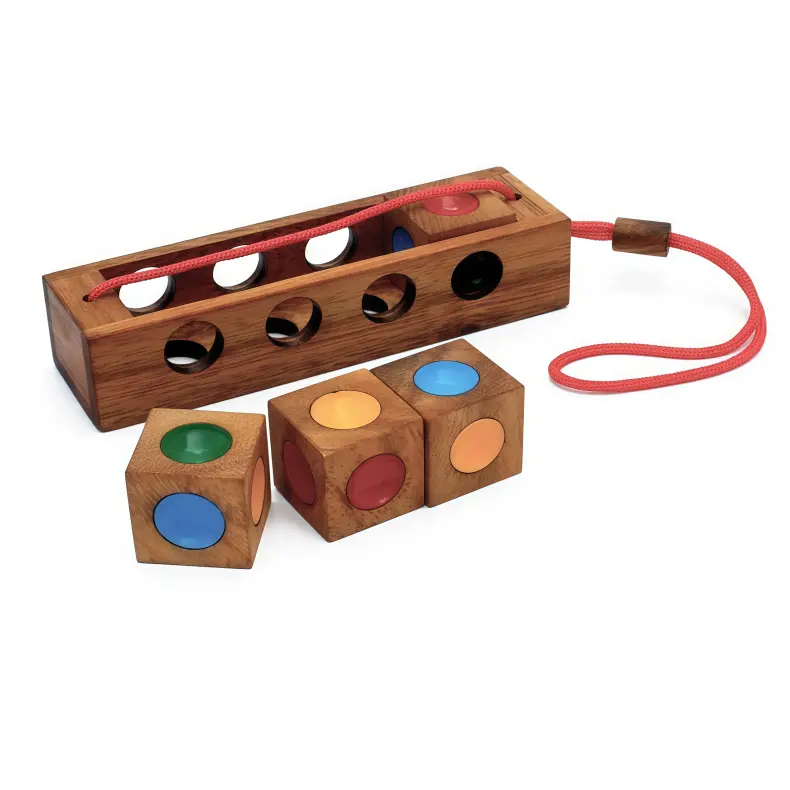
Kongming Lock Color Match — $16.99
Verification step you can do in two minutes: search the product’s review thread for “small parts,” “choking,” or “younger sibling” — parents who have a toddler in the house are blunt about whether loose pieces caused a problem. No mention is good news; a cluster of complaints is your cue to choose a larger-piece kit instead.
One last mismatch to avoid: a “for adults” brain teaser marketed to a 10-year-old. If the box copy leans on words like “expert,” “connoisseur,” or “sommelier-level challenge,” the recipient is not the reader. Stick to kits whose age band tops out at 14 or below, and the frustration-tolerance ceiling will match the child holding the pieces.
05. Decision Table: Matching Puzzle Type to a 10-Year-Old
Match the puzzle type to the child’s play style, then verify three things on the product page. Mechanical for cause-and-effect play, brain-teaser for quiet focus and replay, decorative for shelf display, themed for a single strong interest. One table, four rows, and the rule that ties the choices together.
| Type | Best for | Assembly time | Adult help | Check before buying |
|---|---|---|---|---|
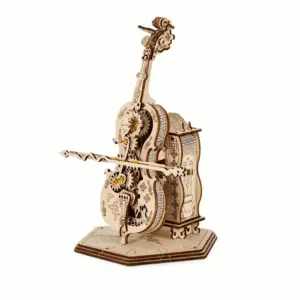
| Mechanical / moving model (vehicle, robot, marble run) | The child who wants gears, wheels, or motion at the end | Check the product page for the listed time | Sit nearby for the first 20 minutes when tabs feel stiff | Tool list, moving-parts durability in reviews, piece count |
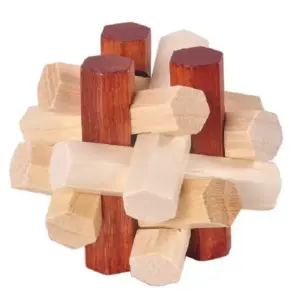
| Brain-teaser / interlocking (Luban lock, Soma cube) | The child who likes quiet focus and a “solve it again” replay loop | Check the product page for the listed time | None required — stay close on the first lock | Piece size for younger siblings in the home, material, age band, whether the kit is glue-free (Wooden.City markets its kids’ line as glue-free assembly) |
| Decorative / display model (carousel, clock, treasure box) | The child who wants a finished piece for a shelf or a second gift | Check the product page for the listed time | Plan to help on the fiddly steps | Tool list, glue requirement, finished dimensions |
| Themed / licensed kit (trucks, animals, space) | The child with one strong specific interest | Varies widely — read the box | Read the box | Age band tops out at 14, glue requirement, small-parts warning |
The rule that runs down the table: the more moving parts or the larger the build, the more likely an adult should plan to sit beside the child for the opening stretch. For a brain-teaser row, the same kid usually builds solo — but the first lock benefits from a calm grown-up in the room.
Within the brain-teaser row, the 12 Piece Crystal Luban Lock Set is the natural anchor gift for a 10-year-old: twelve interlocking pieces that feel substantial, ready for the birthday child to start building within minutes of unwrapping, and a replay loop that keeps it on the desk long after the cake is gone.
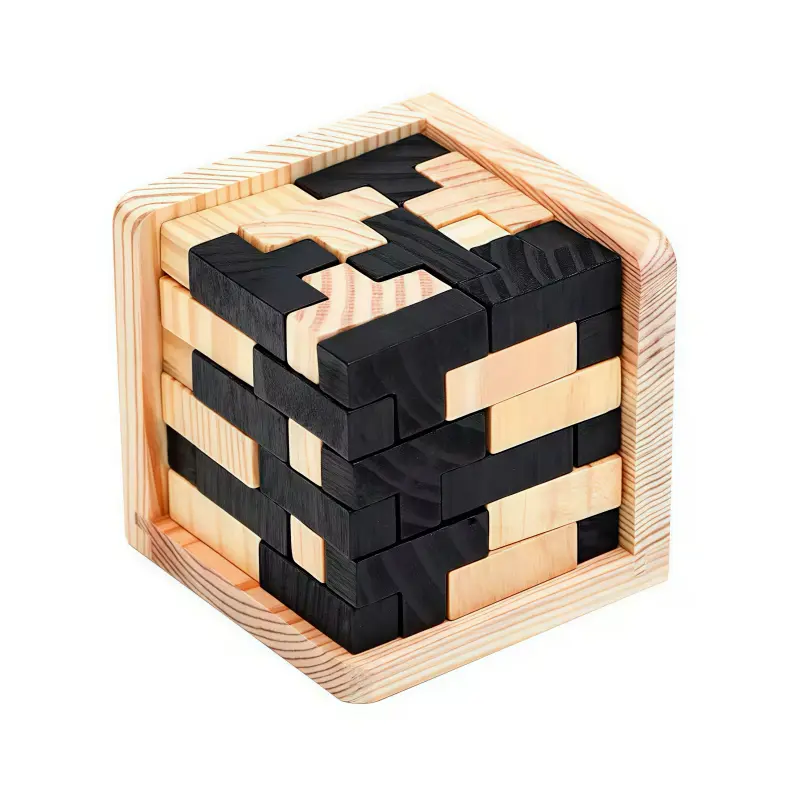
If you want to add a smaller, faster-build option to unwrap alongside the main gift, a single-object challenge like the 54‑T Cube Puzzle finishes in well under an hour and lets the child taste the format before tackling the bigger set.
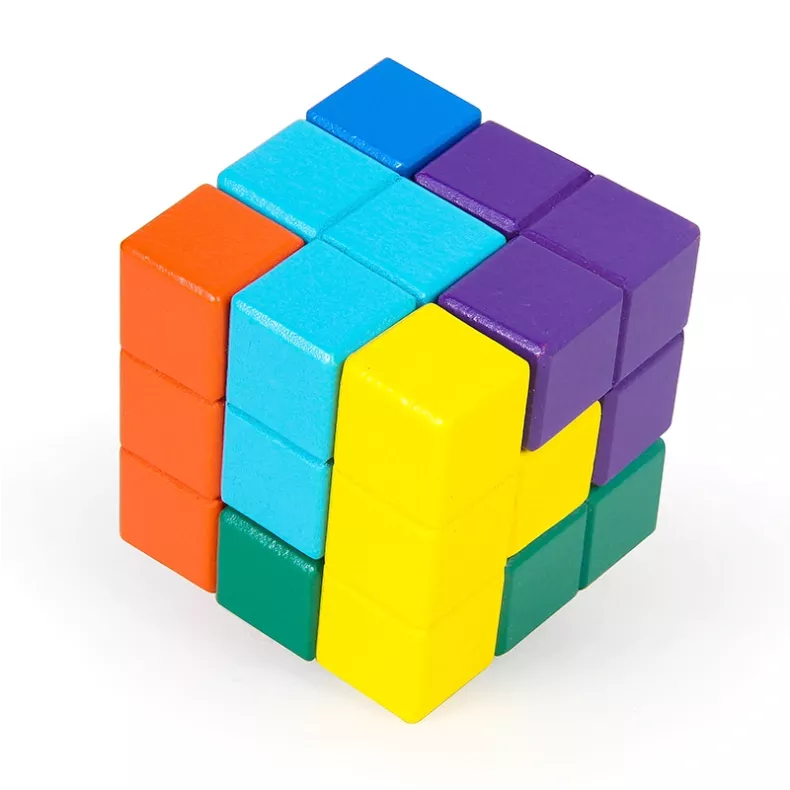
7 Color Soma Cube Puzzle — $21.88
A color-matching step like the 7 Color Soma Cube Puzzle extends the replay loop with the same glue-free, no-tool format, and pairs naturally with the main interlocking set as a two-puzzle gift bundle.
One practical next step: pick the type whose “Best for” column matches the child, then verify the three checks in the right-hand column on the product page before you add to cart. If two rows tie, choose the one with glue-free, snap-fit assembly — it opens cleanly on a birthday morning, needs no prep, and lets the child start building within five minutes of unwrapping. For a broader comparison of materials, see the wooden-vs-metal 5-point test.
Frequently Asked Questions
Short, confident answers to the questions parents, grandparents, and gift-givers actually ask before clicking buy. The right 3D wooden puzzle for a 10-year-old matches their fine-motor reality, attention span, and the moment you want the gift to create — not the loudest box on the shelf.
Is a 3D wooden puzzle too hard for a 10-year-old?
No — if piece count and assembly time match the child, not the age band printed on the box. A 45–90 minute build hits the sweet spot. Too easy and the puzzle goes in a drawer; too hard and frustration beats the model. Read the “estimated assembly time” on the product page and budget extra time for a first-time builder.
Will they need an adult, or can they build it alone?
A confident 10-year-old can build a snap-fit, glue-free kit alone once they understand the first two steps. Plan to sit beside them for the first 20 minutes, then step back — that is when the instruction language is decoded. If the kit requires glue or trimming, stay longer.
How long does assembly actually take?
Three bands: easy snap-fit kits 15–30 minutes; mid-range models with 100–300 pieces and moving parts 45–90 minutes; multi-hour builds (300+ pieces, detailed vehicles or buildings) 2+ hours, often across two sittings. Second builds tend to be quicker once the child learns the assembly pattern.
Do these puzzles need glue, and does it matter?
Glue-free, snap-fit kits are the right choice for a gift. The child opens the box, sees wooden pieces, and starts building within minutes. Glue-required kits are crafts, not gifts: they need a protected table, adult supervision, and a drying window. For a birthday or holiday, pick glue-free.
Are they safe with younger siblings or pets at home?
Mostly yes, with two checks. Read the small-parts warning — interlocking pieces are not a choking hazard at 10, but a younger sibling can pocket them. Also, laser-cut plywood tabs can be slightly sharp on cheaper kits; run your thumb along a sample tab before gifting, and verify the kit’s material spec on its product page.
What should I buy for a kid who likes machines versus one who likes detailed models?
For a child who likes a step-up mechanical challenge, pick a larger lock set — the 12 Piece Crystal Luban Lock Set or Luban Lock Set 9 Piece deliver the interlocking payoff. For a child who likes detailed display models, pick a quieter build — the 7 Color Soma Cube Puzzle or 6-in-1 Wooden Brain Teaser Set. A generalist will be happy with the Kongming Lock Color Match or the 54‑T Cube Puzzle.
Can this be both a birthday gift and a family activity?
Yes — and that is the underrated gift angle. Pick a kit with enough pieces that the birthday child can lead while a parent or sibling handles piece-sorting. The 12 Piece Crystal Luban Lock Set, 6-in-1 Wooden Brain Teaser Set, and Luban Lock Set 9 Piece all hold a 10-year-old and a co-builder for the full session.
One practical next step: pick the kit whose personality matches the child, verify the three checks from the decision table on its product page, and order it with lead time to wrap before the birthday morning. The 12 Piece Crystal Luban Lock Set is a strong first pick for a 10-year-old who likes a screen-free, hand-held challenge that lasts well past the unwrapping moment.
Where to Start
If the recipient and occasion checks above match, start with 12 Piece Crystal Luban Lock Set. Check the current product page for the specifications that matter to your choice.
Sources and verification
- Product details and current specifications: Tea-Sip product page
Last updated: August 20, 2026