Quick Answer
For most 12-year-olds, pick a 3D wooden puzzle with 100–300 pieces, a stated age range of 10+, and a finished model they can display or play with—not a flat jigsaw. The right match depends on three checks: whether the child likes building, mechanics, or display-worthy finished models; whether the parent wants a 2-hour build or a multi-day project; and whether the gift should be a solo activity or a parent-child build.
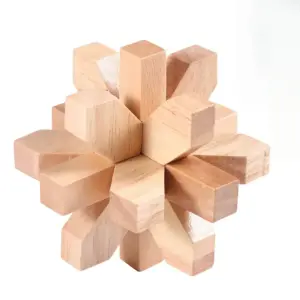
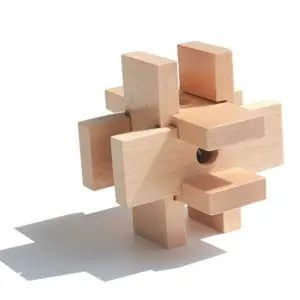
This guide sorts the decision by the tween, not by brand. Match the recipient’s personality to a puzzle type first, then verify the age range, piece count, and finished-model payoff before buying. The starting recommendation is the 12 Piece Crystal Luban Lock Set for builders who want a hands-on, glue-free construction.
Quick Picks by Recipient
| Recipient type | Top pick | What to verify on the product page | Listed price |
|---|---|---|---|
| The Builder | 12 Piece Crystal Luban Lock Set | Stated age range 10+, finished footprint, glue-free interlocking | $28.88 |
| The Mechanic | 6-in-1 Wooden Brain Teaser Set | Number of moving mechanisms, tools required | $38.88 |
| The Patient Solver | Luban Lock Set 9 Piece | Difficulty gradient across the 9 locks, solution key included | $39.99 |
| The Display-Oriented | 7 Color Soma Cube Puzzle | Number of buildable shapes, finished dimensions, color variety | See product page |
Pick this if the tween will set the finished model on a desk and show it off. Skip this if the child wants a 5-minute stocking stuffer or a flat 2D jigsaw. Browse more wooden puzzle options if none of the four archetypes fit, or jump to the age-fit checks in section 01 below.
01. Is a 3D Wooden Puzzle Age-Appropriate at 12, or Too Young?
No, a 3D wooden puzzle is not too young for a 12-year-old if you match the puzzle to the tween rather than the tween to the puzzle. The age-fit anxiety usually comes from gifting a flat-pack model that finishes in 20 minutes, not from the category itself. Three observable signals on the product page resolve the question in under a minute: the stated age range, the piece count, and what the finished model actually does.
Check 1: The stated age range on the box or product page
This is the single fastest filter. If the stated age range tops out at 8 or 10, the build is almost certainly too short and the pieces too chunky to hold a 12-year-old’s attention. Look for a stated age range of 10+ or 12+ on the product listing or packaging. The category is broad enough that some 3D wooden puzzles sit at ages 6+ while others explicitly target tweens, and the difference comes down to assembly time, piece density, and whether the finished model has moving parts.
A practical verification step: if the product page doesn’t list an age range, look for a piece count and a stated assembly time instead. A model with 100+ pieces or a multi-hour build is almost always marketed at 10+ regardless of how the photos look.
Check 2: Piece count in the 100–300 range
For most 12-year-olds, 100–300 pieces is the sweet spot. Under 50 pieces signals a model that finishes in under 30 minutes and reads as “kids toy” the moment it’s done. Over 400 pieces pushes into multi-day adult territory and risks losing a tween who hasn’t finished a long build before.
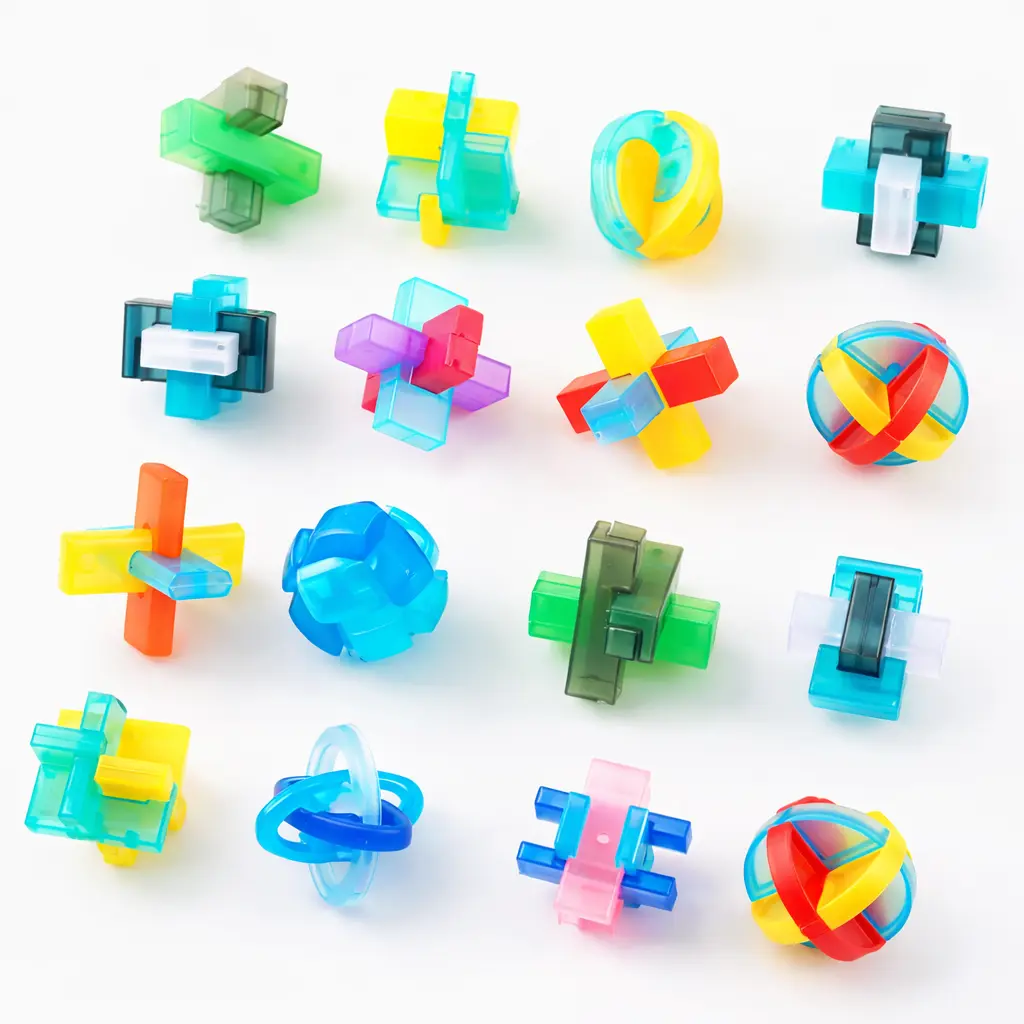
The piece count also tells you what category the puzzle belongs to. A 12-piece Luban lock set, for instance, has a low piece count by design—because the challenge sits in the interlocking mechanism, not the assembly volume. That’s a different age-fit question than a 300-piece model-building kit. Match the piece count to the type of engagement you want: low pieces for brain-teaser tension, higher pieces for build-time satisfaction.
Check 3: What the finished model actually does
This is the check most gift-givers skip, and it’s the one that determines whether the puzzle ends up on a shelf or in a drawer. The four sub-categories each carry a different age-fit signal at 12:
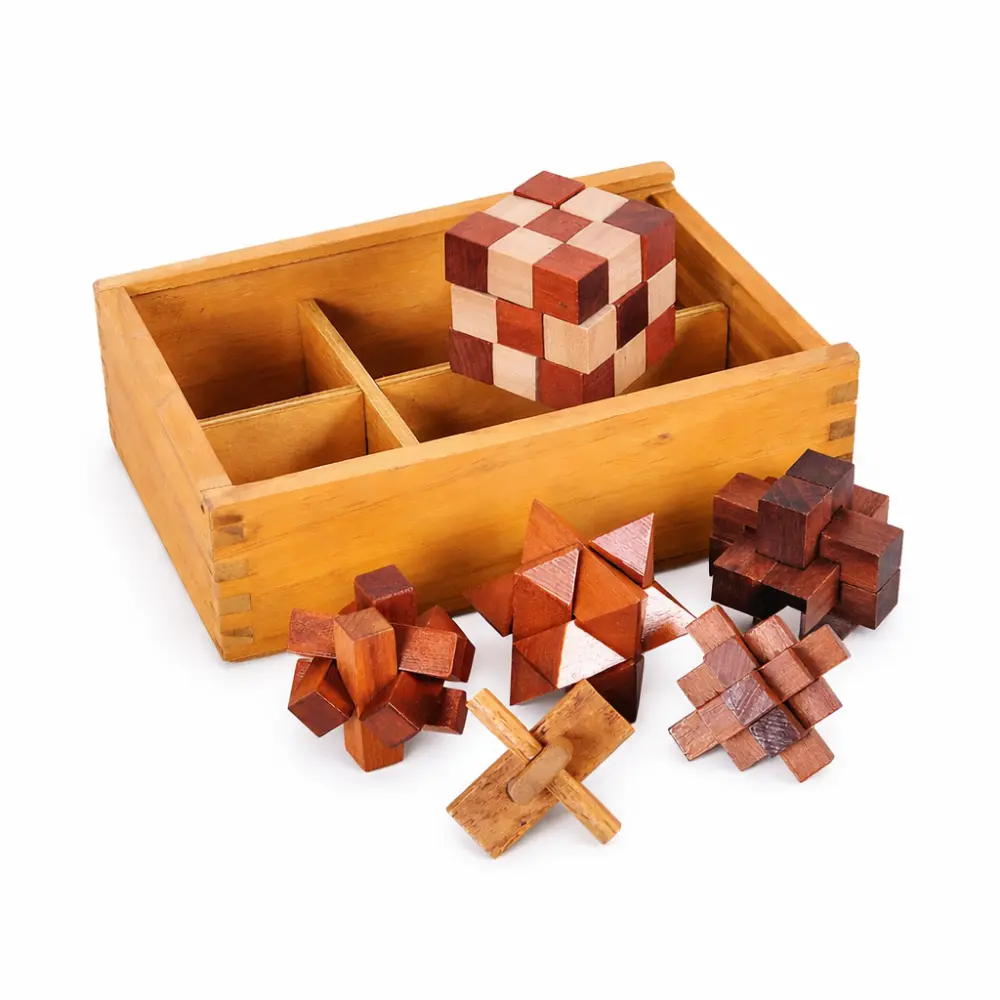
- Mechanical puzzles with moving parts (gears, locks, escapements): framed as the appropriate complexity tier for 12-year-olds who want more challenging builds, per a Kubiya Games review of mechanical 3D wooden puzzles. Wikipedia’s entry on mechanical puzzles categorizes these as a distinct subcategory from static model-building kits—the moving parts add a problem-solving layer that static models don’t.
- Model-building kits (vehicles, instruments, buildings): best when the tween will display the finished model or play with it repeatedly. Look for laser-cut plywood and a stated assembly time over 2 hours.
- Brain teasers and interlocking locks (Luban-style): best for the patient solver who wants a single-object focus. The challenge is solving, not building.
- Display pieces with clock or music functions: best for the tween who treats a puzzle as a desk upgrade. Verify finished dimensions and whether batteries are required.
A 12-year-old who loved Lego at age 9 will likely want a mechanical model with moving parts. A 12-year-old who loved jigsaw puzzles will likely want a model-building kit with a display-worthy finish. A 12-year-old who loved escape rooms will likely want a Luban lock or brain teaser they can take apart and reassemble.
What to skip
Skip the flat-pack 3D jigsaws marketed at ages 8–12 that have under 50 pieces and no moving parts. These finish in under 30 minutes and read as “too young” the moment they’re done. Skip any model that requires glue unless the tween has specifically asked for a craft project—glue-free assembly is the default for most age-12+ mechanical kits and removes a cleanup step that often kills momentum mid-build.
The one next action
Before you add to cart, verify three things on the product page: the stated age range, the piece count or mechanism count, and whether the finished model is mechanical, display, or brain-teaser. If any of those three are missing, the listing is incomplete and you should check the manufacturer’s site before committing. For a tween builder who wants a brain-teaser challenge with a desk-worthy finish, the 12 Piece Crystal Luban Lock Set at $28.88 checks those three boxes and is the natural starting point for the recipient-matching picks in section 02.
Pick this if the gift-giver wants a single-object, mechanism-driven puzzle with no glue and no flat-pack finishing. Skip this if the tween wants a multi-hour model-building build or a kit with a clock, music, or display function.
02. Which Type of 3D Wooden Puzzle Matches a 12-Year-Old’s Interests?
Match by personality, not brand: a 12-year-old who loves model kits and a 12-year-old who wants a five-minute desk fidget need completely different puzzles, and “best 3D wooden puzzle” lists ranked by brand miss this every time. The four archetypes below let you skip the brand debate and pick a category whose stated features match the kid you actually know. Once age-fit is confirmed, the decision shifts from “is this too young?” to “which kind of 12-year-old is this?”
The Builder
The Builder is the tween who already owns a model kit shelf, watches building content, or has finished a 500-piece jigsaw in a weekend. For this kid, the right 3D wooden puzzle is a model-building kit with 200+ pieces, laser-cut plywood, and a stated age range of 10+ or 12+. The finished object should take a multi-day build (8–20+ hours is common in this tier) and reward the time with a detailed, displayable result.
Look for kits that publish a piece count, a recommended assembly window, and a finished-model type. A kit that names its material signals build quality; a kit that hides its piece count usually has fewer than 100 parts. Examples in this tier include multi-piece vehicle, instrument, and architectural models with full spec sheets.
Pick this if the tween has asked for “a real project” and has a clear surface at home to leave a half-finished build.
The Mechanic
The Mechanic is the 12-year-old who takes apart a clock to see the gears or winds a music box just to hear it. For this kid, the right pick is a moving-parts wooden puzzle with interlocking gears, a working lock, a perpetual motion element, or a clock mechanism. A stated age range of 10+ is the floor; some moving-parts kits state 14+, which is a useful signal that assembly is genuinely complex.
A Kubiya Games review confirms that mechanical 3D wooden puzzles with movable parts sit at the right complexity tier for 12-year-olds who want more challenging builds, and this is the subcategory where a mechanism count matters more than a piece count. A 200-piece kit with one moving gear is less interesting to a Mechanic than a 90-piece kit with a working escapement. Brands like UGears describe their wooden puzzles for kids as assembled “just like jigsaws” but in 3D with moving parts, which is the defining trait for this archetype.
Pick this if the tween has ever taken something apart to see how it works and the gift-giver wants a build that does something when it’s done.
The Display-Oriented
The Display-Oriented tween picks the kit for how it will look on the shelf when finished. For this kid, the right pick is a model with a finished form factor: a carousel, a clock, a music box, a treasure box, a book nook, or a decorative mechanical piece. The build is the means; the display is the point. Check the product page for a finished-dimensions line; if it’s missing, the listing is incomplete.
A finished carousel or clock puzzle takes shelf space. A book nook tucks into a bookshelf. The right pick depends on where the tween will put it. If dimensions aren’t listed, ask the gift recipient’s parent for a quick measurement of the intended spot.
Pick this if the tween has a visible shelf, desk, or bookshelf where a finished object would actually live.
The Impatient Tinkerer
The Impatient Tinkerer wants “I solved it” without a four-hour build. For this kid, the right pick is a sub-2-hour build with under 200 pieces, no glue, and a single-object finish. Brain-teaser sets, Soma cubes, Kongming locks, and compact disentanglement puzzles all sit in this category. A multi-pack brain teaser set is the safest call because it gives the tween more than one thing to attempt.
This is also the category where most “3D wooden puzzle for 12-year-old” listings go wrong. They market small-piece, low-piece-count kits to tweens that finish in under 30 minutes and feel like a kid’s toy the moment they’re done. The fix: a multi-pack with stated piece counts in the 6–60 range per puzzle, and a stated age range that actually starts at 10 or 12. For a wider read on what 8 to 12 year olds gravitate toward in brain teasers, that breakdown walks through a dozen options held up to this age group.
For a tween who finishes one puzzle and immediately wants the next, a compact color-match or Kongming-style lock is a sub-30-minute option that still reads as age-12 appropriate.
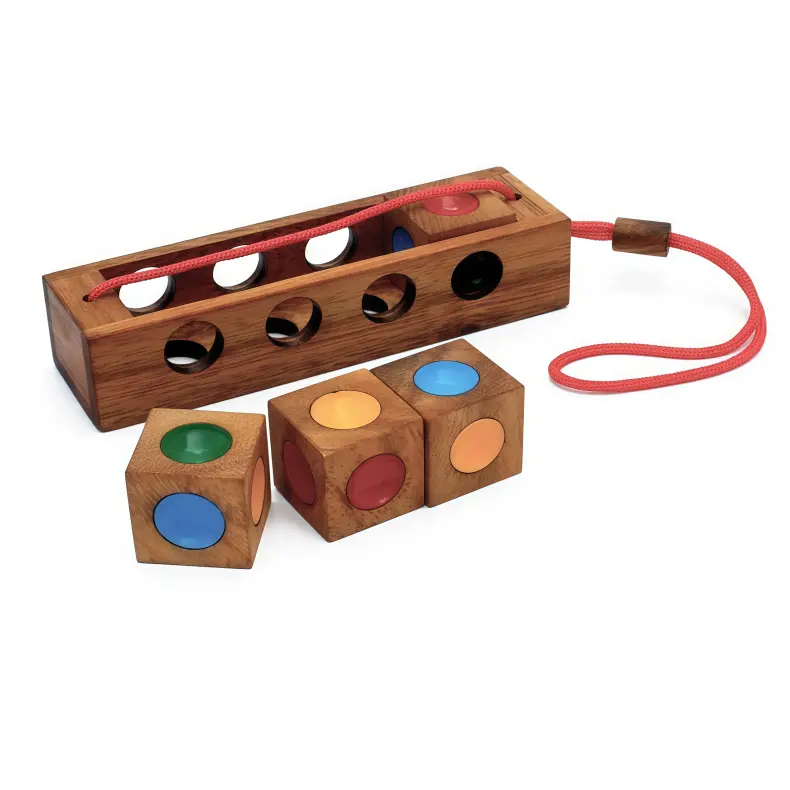
Kongming Lock Color Match — $16.99
Pick this if the tween wants a “puzzle” rather than a “build” and the gift is being opened, solved, and enjoyed in one sitting.
The one next action
Take 30 seconds to name which of the four profiles matches the recipient. Then check the product page for the three signals from section 01: stated age range, piece or mechanism count, and finished-model type. The intersection of personality match plus those three verified signals is the buy.
03. What to Look For (and What to Skip) Before Buying
Now that the personality match is set, the next filter is build quality. Skip any 3D wooden puzzle marketed to 12-year-olds with under 50 pieces—these flat-pack jigsaw-style kits finish in under 30 minutes and read as “too young” to a tween past the easy-build stage. The right check is laser-cut plywood, a stated age range of 10+, glue-free assembly, and a finished model that either moves or earns a spot on a shelf.
Material signals that predict durability. Laser-cut plywood is the standard for kits that survive being assembled, dropped, and re-assembled. The Wooden.City 3D wooden puzzle page describes their kits as “mechanical models crafted from certified birch plywood”—that is the durability baseline. Cardboard-backed “3D puzzles” with under 50 pieces are a different category: a flat jigsaw in disguise, not a model-building kit. For a 12-year-old, the cardboard version finishes in one sitting and ends up in a drawer. The plywood version is the one that gets displayed.
Stated age range, not a guess. Every legitimate 3D wooden puzzle lists an age range on the product page. For a 12-year-old, the floor is 10+. Kits labeled 6+ or 8+ are physically too easy and visually too juvenile. Kits labeled 14+ push the piece count into multi-day project territory, which works for the builder profile but overwhelms the impatient tinkerer. The age range is a shortcut—use it.
Glue-free assembly is a feature, not a compromise. Wooden.City’s product page explicitly positions glue-free assembly as a selling point for their children’s 3D wooden puzzles, and the same holds across the category. Glue-free kits use tab-and-slot joints that click together, which means no waiting for parts to dry, no messy table, and the option to disassemble and rebuild. For a gift, glue-free is the safer pick.
Moving parts and instruction clarity. Mechanical 3D wooden puzzles with moving parts—mechanical gears, cranks, escapements—signal a higher complexity tier, which is what the Kubiya Games blog recommends for 12-year-olds who want more challenging builds. But moving parts also introduce a failure mode: gears that slip, axles that loosen. The check is whether the kit includes a printed manual with numbered, illustrated steps. A pictogram-only sheet with no words is a risk for a tween assembling without parental help.
What to skip. Three categories routinely get marketed to 12-year-olds and routinely disappoint:
- Flat-pack 3D jigsaws under 50 pieces—finish in under 30 minutes, not display-worthy.
- “Easy” kits with primary-color cartoon themes—the age signal is wrong, even if the piece count is right.
- Kits requiring glue and a full weekend of sanding—the patience floor is too high for most tweens.
Decision table: the six checks before you buy.
| Check | What “pass” looks like | What to verify on the product page |
|---|---|---|
| Material | Laser-cut plywood | Confirm “birch plywood” or “natural wood” in the specs |
| Stated age range | 10+ to 14+ | Look for the “Ages:” line |
| Assembly method | Glue-free, tab-and-slot | Absence of “glue required” in the description |
| Moving parts | Gears or escapements that turn smoothly | “Mechanical” or “moving parts” in the title |
| Piece count | 100–300 for tween builders | Listed piece count in product specs |
| Instructions | Numbered steps, visual diagrams | Reviews that mention “clear instructions” |
Applying the checks to brain-teaser gifts. Not every 12-year-old wants a model-building kit—the impatient tinkerer profile from section 02 wants a solve, not a build. For that recipient, the same checks still apply, but the priority shifts to stated age range, material, and solve time. A brain-teaser option like the 12 Piece Crystal Luban Lock Set at $28.88 is worth verifying against those same three signals on its product page before purchasing. For a side-by-side look at how these signals play out across names, an honest comparison of six premium wooden puzzle brands walks through the tradeoffs.
The one next action. Open the product page of the puzzle you are considering. Run it through the six checks in the table. If it fails two or more, pick a different kit. If it passes all six, the buy is justified.
04. How to Compare Specific 3D Wooden Puzzles Without Testing Them
The six checks from section 03 still apply, but now you apply them row-by-row to actual products. The goal is simple: match the subcategory from section 02 to a specific kit, then confirm it passes the stated age range, piece count, material, and assembly method checks before checkout. No first-person testing required—just a product page and the table below.
The four-row comparison table.
| Subcategory (from Section 02) | Mechanism | Typical piece count | Stated age range | What to verify before buying |
|---|---|---|---|---|
| The Builder (model-building) | Tab-and-slot, laser-cut plywood | 100–300 pieces | 10+ or 12+ | Manufacturer’s stated assembly time and finished dimensions |
| The Mechanic (moving parts) | Gears, escapements, linkages | 150–400 pieces | 12+ or 14+ | Whether moving parts are functional (not decorative) and if glue is required |
| The Display-Oriented (desk piece) | Interlocking wooden panels | 50–200 pieces | 10+ | Final model dimensions and whether the finish can be displayed without a case |
| The Impatient Tinkerer (brain teaser) | Notched blocks, locking pins, sequential disassembly | 6–54 pieces | 8+ to 12+ | Stated solve time and whether a solution is included |
Reading the table in practice. For the Builder row, a 100–300 piece count signals a weekend project, not a 30-minute finish. For the Mechanic row, “functional” matters more than “mechanical”—some kits list gears that spin freely only after waxing, and that detail is almost never in the headline. For the Display-Oriented row, check the finished dimensions because a 6-inch desk piece and a 14-inch shelf piece serve different rooms. For the Impatient Tinkerer row, verify whether a solution sheet ships in the box, because a 12-year-old who stalls on a brain teaser for an hour without progress will abandon it, not persevere.
Applying the table to the impatient-tinkerer profile. A Luban-style interlocking set fits this row directly—small piece count, no glue, no display model, just a solve. Two concrete options worth comparing:
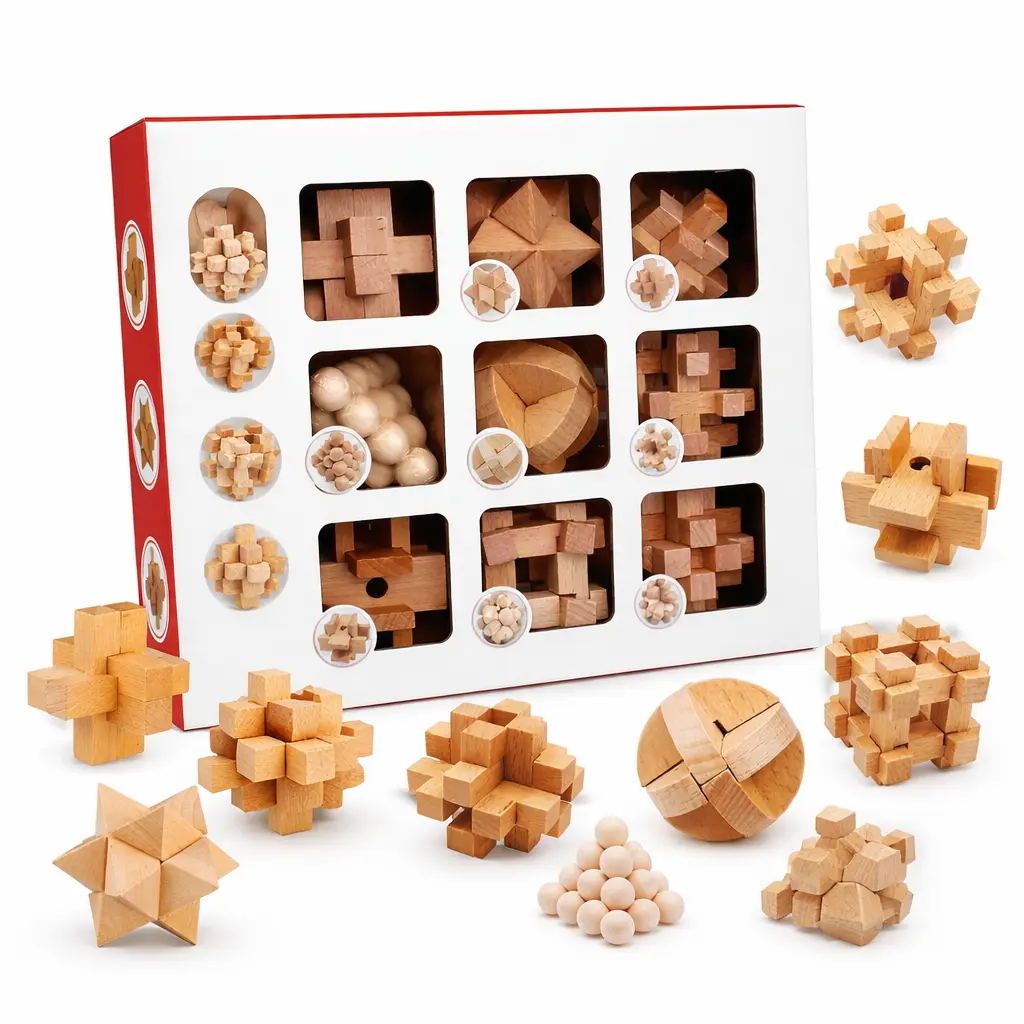
Luban Lock Set 9 Piece — $39.99
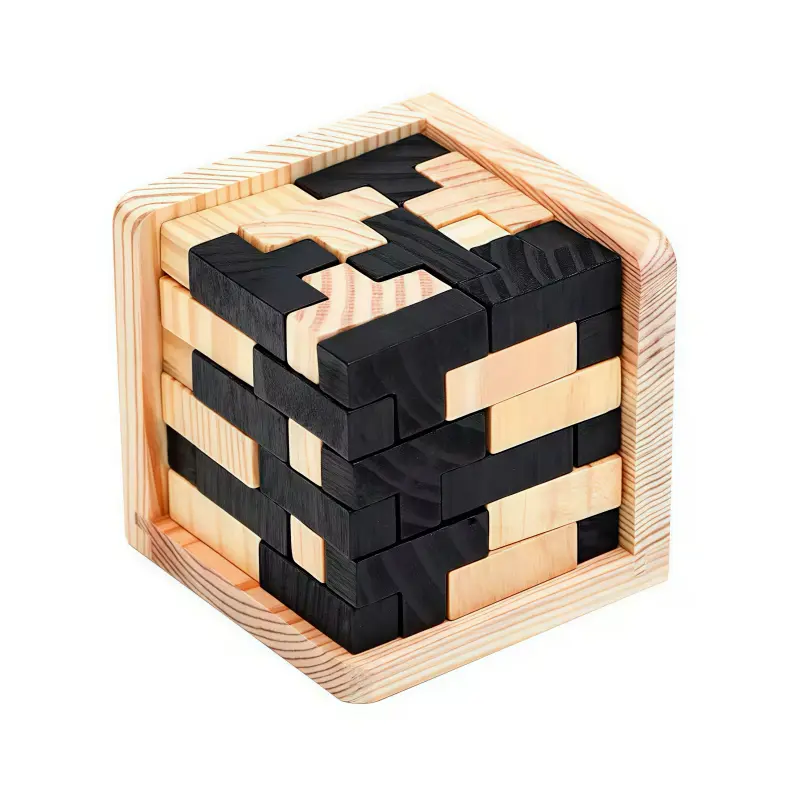
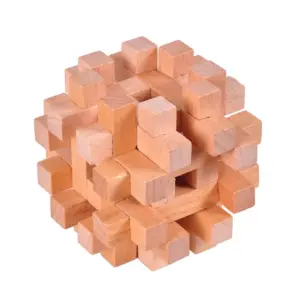
54‑T Cube Puzzle — $18.99
For the 9-piece set, verify the stated solve time and the included solution on the product page. For the 54-piece cube, confirm whether the goal is assembly, disassembly, or both, and check the listed age range before checkout. If you’re deciding between a Luban lock and a more complex mechanism like a wooden marble run or gear set, the Lego Technic versus wooden mechanical puzzles comparison is a useful cross-reference for how mechanical complexity scales with age.
The one next action. Open the product page of the puzzle you are considering, confirm the stated age range and piece count against the table row for your recipient’s profile, and only then check out.
Frequently Asked Questions
Before you check out, these are the questions that come up most often when a parent or relative is choosing a 3D wooden puzzle for a 12-year-old. The shortest version: the right pick depends on whether the child is a builder, a mechanic, a display-oriented collector, or a fast-finisher—and the three age-fit checks (stated age range, piece count, and finished-model type) apply to every option below.
Is a 3D wooden puzzle too young for a 12-year-old?
No—if the stated age range is 10+ and the piece count sits between 100 and 300. Mechanical gears and moving-part kits land in the right complexity zone for a tween. Flat-pack jigsaws under 50 pieces finish in under 30 minutes and tend to read as “too easy.”
What’s a good 3D wooden puzzle for a 12-year-old boy who likes mechanics?
Look for moving-part kits with stated age ranges of 10–14 and documented piece counts above 150. The 12 Piece Crystal Luban Lock Set, with its interlocking mechanism, fits the Builder profile and the Mechanic overlap.
What’s a good 3D wooden puzzle for a 12-year-old girl who likes building things?
Match the model to the room, not the stereotype. Display-worthy builds (clock-style models, decorative book nooks) reward a tween who wants something to show off after the build. The 54‑T Cube Puzzle rewards a tween who wants a repeated hand challenge.
How long does it take to assemble a 3D wooden puzzle?
Solve times are not listed in the supplied data. Verify before buying: check the product page for stated assembly time, and budget 2–6 hours for most tweens, with multi-day projects for sets above 200 pieces.
Do 3D wooden puzzles need glue?
Most laser-cut plywood kits, including the Tea‑Sip Luban sets, are designed for glue-free assembly. Confirm on each product page before checkout, especially for moving-part builds where glue can actually jam the mechanism.
What’s a good gift for a 12-year-old who likes puzzles and building?
A two-part gift—start with a multi-piece interlocking set (the Luban Lock Set 9 Piece, for example), then add a brain-teaser set (the 6‑in‑1 Wooden Brain Teaser Set) as a follow-up. This pairs the builder satisfaction of a first kit with the repeat-play value of a second.
One final step. Open the product page of your top pick, confirm the stated age range and piece count match the profile row from the comparison table, and only then place the order. The universal 6-step method for 3D wooden puzzles is worth bookmarking for the first evening your 12-year-old sits down to build.
Where to Start
If the recipient and occasion checks above match, start with 12 Piece Crystal Luban Lock Set. Check the current product page for the specifications that matter to your choice.
Still comparing options? Use the matching Tea-Sip collection to compare the same decision criteria, rather than restarting the search from scratch.
Sources and verification
- Product details and current specifications: Tea-Sip product page
Last updated: August 20, 2026