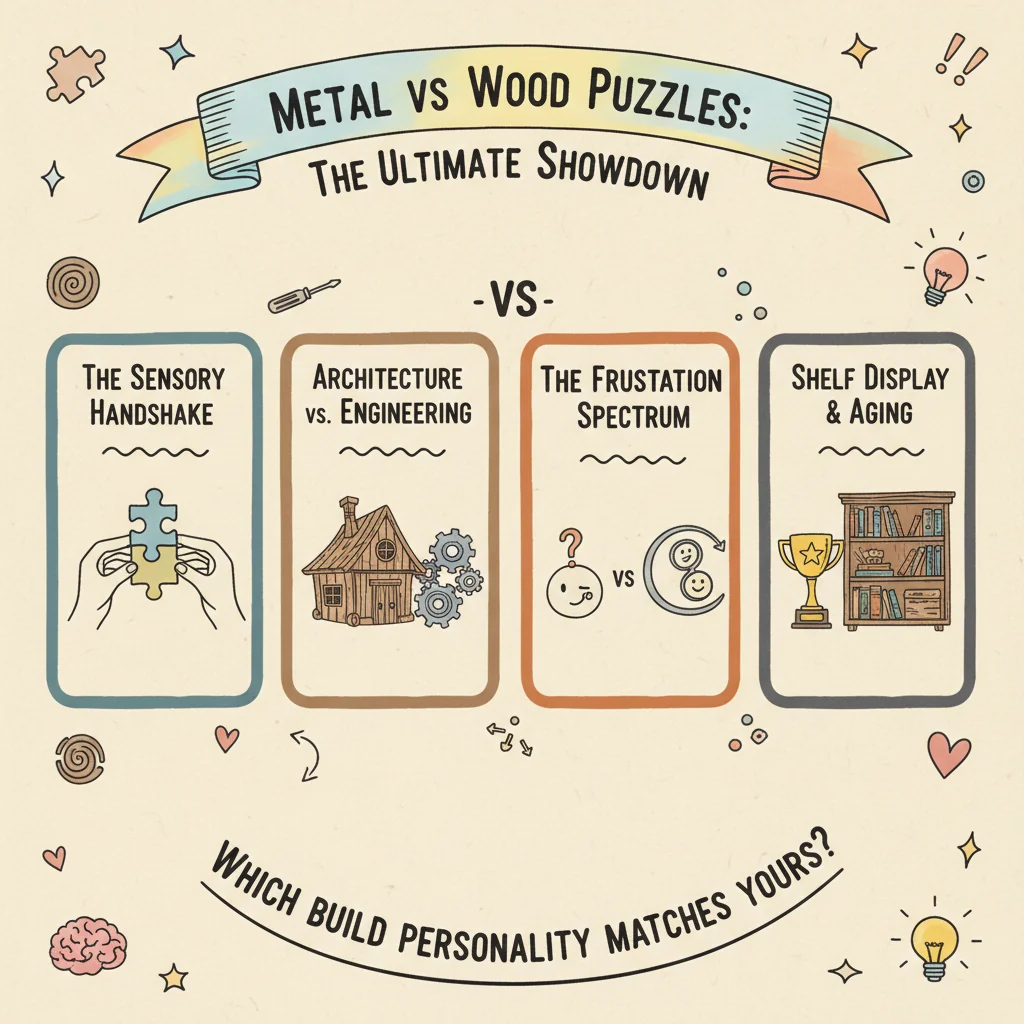
The Sensory Handshake: Your First Clue is in Your Palms
Your choice between a metal and wooden puzzle is made the moment you first hold its pieces, a decision dictated by weight, temperature, and sound. Metal puzzles, typically crafted from 0.5mm-1mm steel or zinc alloy, feel cold, dense, and clinical in the palm. Wooden puzzles, usually 3mm-5mm laser-cut birch or basswood, offer a warm, lightweight, and organic first touch. This immediate sensory contrast defines your entire build journey.
Metal clicks. Wood whispers. The first sound a 3D metal puzzle makes—a sharp, percussive snick as two pieces engage—is a promise of precision. The heft is substantial; you feel the mass of the mechanical puzzle you’re about to engineer. It’s cold to the touch, a sensation that doesn’t fully fade, keeping you in a state of analytical focus. Your fingertips register the fine, sometimes sharp edges of chemically etched sheets. This isn’t a cozy pastime; it’s a blueprint in your hands. The entire experience is a masterclass in how metal puzzles engage your sense of touch.
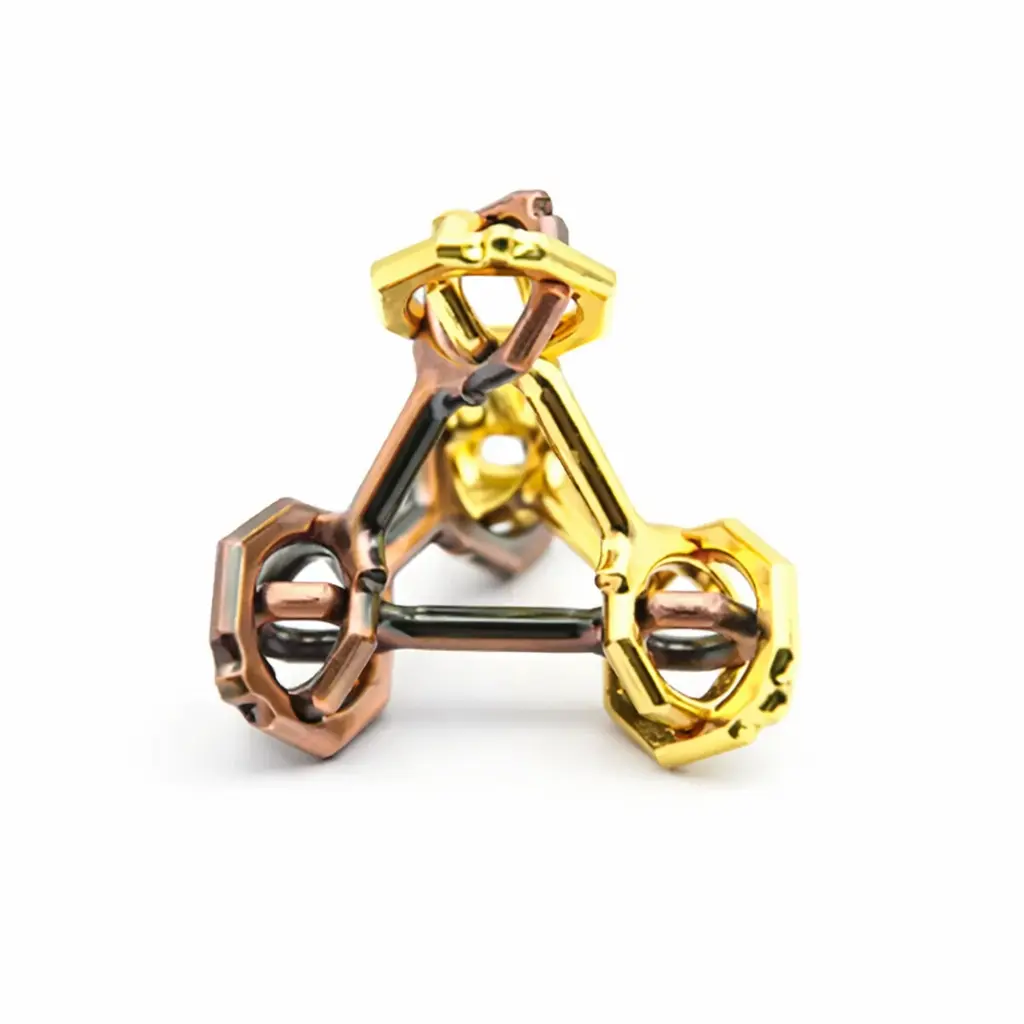
A 3D wooden puzzle breathes differently. It’s warm in the hand from the first second, with a faint, grainy texture that’s inherently soothing. The sound is a soft, muffled shush of plywood sliding into place. There’s a sound dampening quality to the material that makes the process feel meditative. It’s lightweight, inviting manipulation without strain. This is the fundamental fork in the road: do you seek the crisp, high-fidelity feedback of cold alloy, or the gentle, forgiving murmur of laser-cut basswood? This warmth is part of the timeless feel of wooden puzzles, a connection to craft that transcends the puzzle itself.
This sensory divide directly impacts the puzzle’s role in stress relief. Wood’s warmth and acoustic softness create a low-pressure, crafting atmosphere. Metal’s cold precision demands and rewards focused attention, which can be absorbing in a different, more rigorous way. The question of metal vs wood puzzle durability also starts here. That solid heft of metal implies permanence but also a brittle consequence for error. Wood’s lighter feel suggests a more forgiving nature, but one susceptible to environmental whispers like humidity.
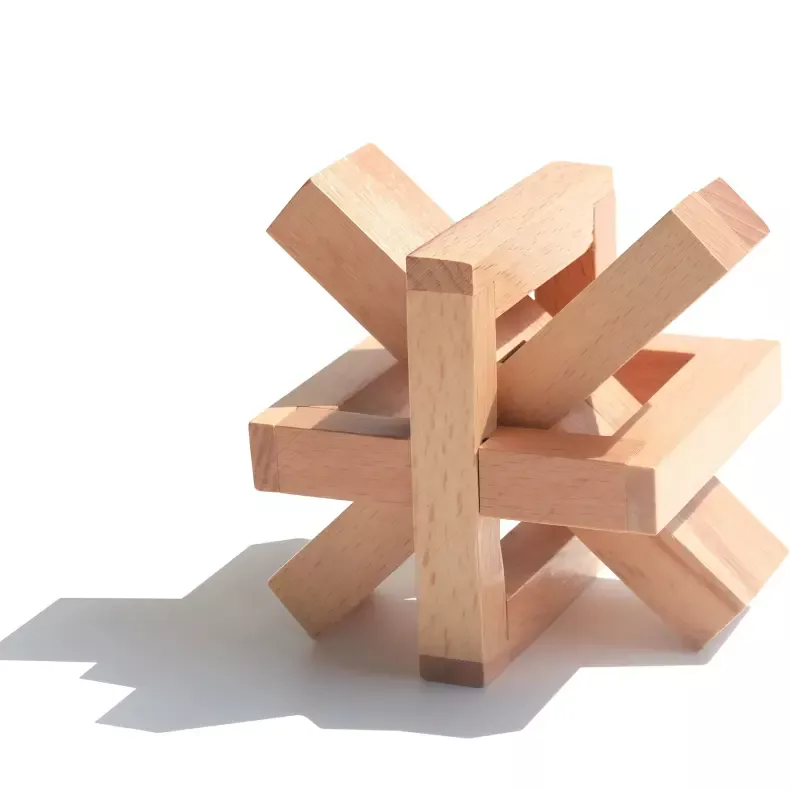
Besieged City — $16.99
So, before you consider complexity or display, conduct this simple test. Hold the idea of each in your mind. Are you drawn to the sleek, futuristic aesthetic of cold, clicking gears, or the cozy touch of a natural material taking shape? This initial tactile experience is your handshake with the puzzle’s soul. It tells you whether you’re signing up for a high-precision engineering session or a meditative craft.
Architecture vs. Engineering: The Core Divide in Build Philosophy
The initial feel in your palms is a direct preview of the construction logic you’ll be working with. A wooden puzzle is an exercise in architectural joinery, where forgiving slots and tabs connect like a well-fitted mortise and tenon. A metal puzzle is a feat of micro-engineering, demanding the precision of a steel I-beam connection on a miniature scale. The fundamental difference lies in the material’s memory: wood has flex and forgiveness; metal has a rigid, binary state—it’s either perfectly aligned or it’s not.
A 3D wooden puzzle, typically crafted from 3mm-5mm laser-cut birch plywood or basswood, builds from the ground up. Pieces are larger, designed for fingers, and connect via positive tabs sliding into negative slots. The material has a subtle, natural flex. This allows for minor misalignments to be gently coaxed into place, and pieces can often be disassembled and reassembled without significant wear. The construction feels additive and sculptural, akin to traditional timber framing. You see the structure grow in your hands, with each connection offering a soft, satisfying snick rather than a loud click. This connection to tradition is palpable, echoing ancient joinery techniques in wooden puzzles that prioritize clever, stable connections over force.
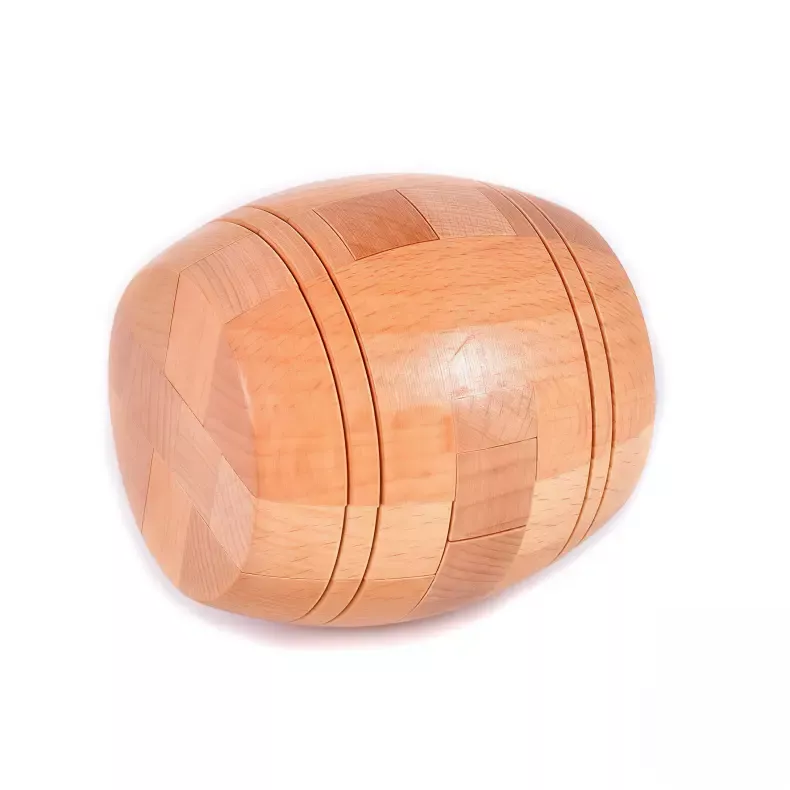
Conversely, a 3D metal puzzle is an ecosystem of tiny, chemically etched or laser-cut stainless steel or zinc alloy pieces, often just 0.5mm to 1mm thick. Assembly relies on a ballet of interlocking mechanisms—tiny tabs bent at exact 90-degree angles into corresponding slots. There is no flex, only permanent deformation. This is where the precision-fit philosophy becomes paramount: if a tab isn’t aligned perfectly before bending, it will bend imperfectly, potentially throwing off subsequent connections. The pieces are often small enough to necessitate tweezers, turning your hands into miniature assembly rigs. Understanding the mechanical grammar of metal puzzles is essential to navigating this landscape without error.
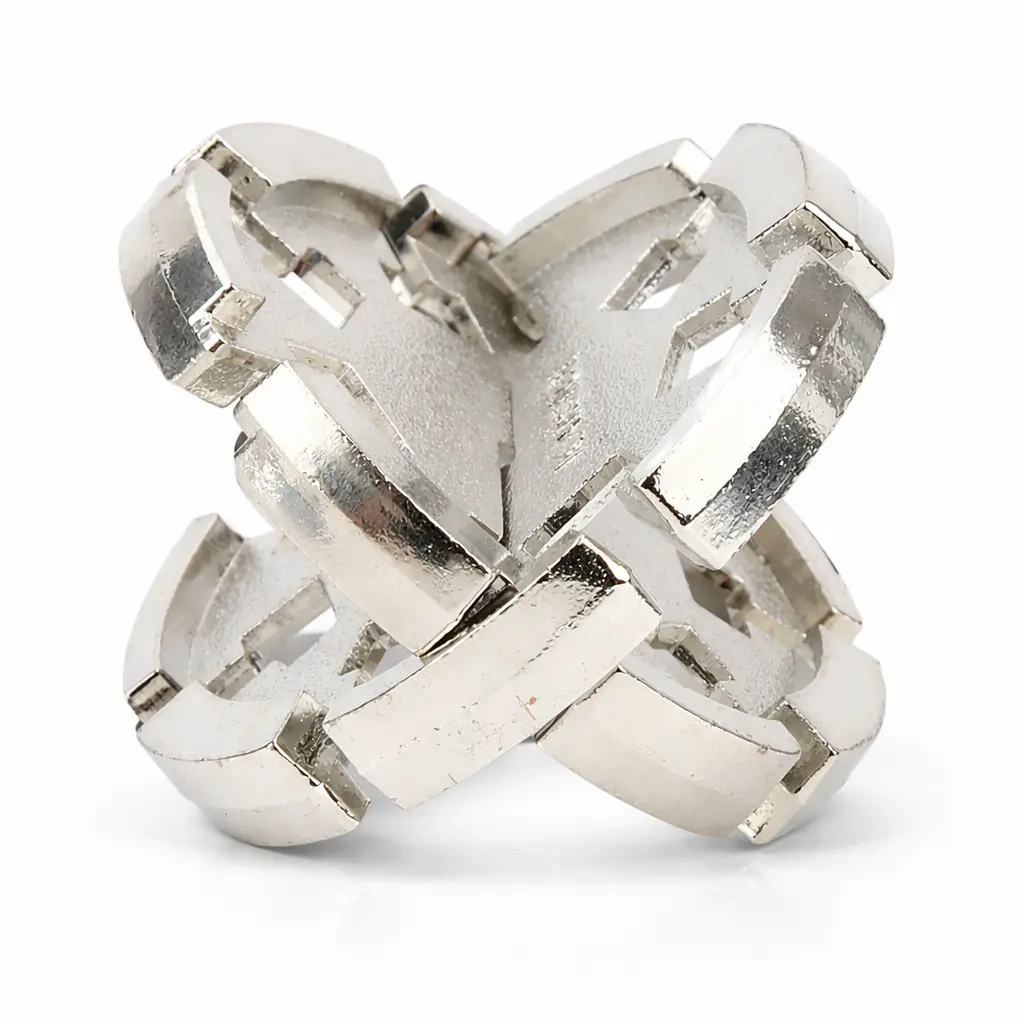
This core divide dictates your mental approach. Wooden assembly encourages a flowing, trial-and-error methodology. You can test-fit, adjust, and proceed with a degree of intuition. Metal assembly demands a deliberate, almost algorithmic, sequence. The first crucial 3d metal puzzle assembly tip is to study the diagram, understand the lock order, and then commit. Bending a tab is a point of no return. Your focus shifts from broad structural vision to hyper-localized precision. It’s the difference between shaping a form and executing a technical schematic—both rewarding, but engaging entirely different cognitive muscles.
So, ask yourself: do you prefer the architectural journey of building a structure, where the path can meander? Or do you crave the engineering challenge of a precise mechanical puzzle, where every action must be calculated? Your answer lies in whether you find solace in a material that collaborates with you, or respect for one that demands your absolute compliance.
The Frustration Spectrum: It’s Not Hard vs. Easy, But How It’s Hard
The question isn’t “Which is harder?” but “Which kind of challenge suits your brain?” Based on my build log, the average complex metal puzzle took 6-8 hours, often with 90% of the struggle concentrated in the first hour. The equivalent wooden model took 3-5 hours, with the difficulty spread evenly throughout. This reveals the fundamental difference: metal presents a steep, logic-heavy cliff you must scale immediately; wood presents a rolling, spatial hill you ascend gradually.
Metal’s difficulty is a dense, analytical puzzle. It’s a complex mechanical puzzle built on sequence and irrevocable logic. The challenge is less about figuring out where a piece goes and more about deciphering how and in what order to manipulate it. The frustration, when it comes, is sharp and specific—the moment you realize a bent tab must be straightened to proceed, or that you skipped step 4 and now steps 7-12 are impossible. It demands a puzzle for someone with patience, not just with time, but with meticulous, error-averse procedure. Your reward is the profound satisfaction of a flawless, self-supporting mechanism, a true brain teaser that clicks into permanence. For a deep dive into this logical, step-dependent style, our step-by-step guide to a challenging metal puzzle embodies this very ethos.
Wooden puzzles, conversely, trade logic puzzles for spatial reasoning. The difficulty is more forgiving, more about visualizing 3D forms and understanding gentle force directions. A piece that doesn’t fit usually means it simply isn’t the right piece yet, not that you’ve broken the sequence. This makes a 3D wooden puzzle from laser-cut basswood an excellent wooden puzzle for beginners adult, as it builds confidence through incremental success. However, to imply this makes them “easy and boring” for experts is to mistake accessibility for a lack of depth. The challenge for the experienced puzzler shifts from “Can I follow the instructions?” to “Can I see the whole structure emerge from the pile?” and “Can I master the subtle, satisfying click of a perfect plywood join?” It’s a meditative, tactile flow state versus metal’s high-stakes focus. Finding that calm, persistent rhythm is the key, and our guide offers patience tips for wooden puzzles for when the going gets slow.
So, which puzzle is more frustrating, metal or wood? It depends entirely on your tolerance profile. Metal frustrates upfront with intellectual rigidity; a single misstep can feel catastrophic. Wood frustrates slowly with accumulation; a stubborn piece that won’t seat can test persistence over time. This is the core of the ‘Flow State Finder’: metal demands intense, uninterrupted focus to overcome its initial barrier. Wood allows for a more relaxed, even conversational pace, letting you find a rhythm. If your frustration comes from feeling stupidly stuck, you might prefer wood’s explorative path. If your frustration comes from feeling under-challenged, metal’s precise demands will engage you.
The answer to whether a wooden puzzle is too easy for an experienced puzzler lies in what you seek. If you crave the pure, unforgiving logic of a classic disentanglement puzzle, then yes, a simple wooden model may disappoint. But seek out a complex wooden globe or architecturally detailed castle with hundreds of interlocking parts, and you’ll find a deeply engaging spatial marathon—a different, but no less valid, test of skill. It’s the difference between learning a rigorous grammar and composing with a rich vocabulary; both are masteries, just of different domains.
The Point of No Return: The Real-World Mistake Test
The fundamental divide between metal and wooden puzzles crystallizes when you make your first major error: with a 0.5mm steel tab, it’s often a permanent, catastrophic failure; with 3mm birch plywood, it’s typically a recoverable, if stressful, setback. This is the ‘Mistake Test,’ a reality check that moves beyond abstract difficulty to confront the emotional weight and practical consequences of a slip.
Metal snaps. Wood stresses. These are the material truths. Force a metal puzzle piece the wrong way, and the thin, chemically etched tab doesn’t just bend—it work-hardens, becoming brittle until it snaps clean off with a faint, final ping. There is no undo button. This is the “point of no return” in its most literal sense, the moment your high-precision mechanical puzzle transforms from a challenge into a potential permanent fixture with one fewer connection. The tactile feedback, so crisp and satisfying when correct, becomes a silent warning: every move must be deliberate. Learning how to avoid breaking metal puzzles is a critical skill that transforms anxiety into confident action.
Are wooden puzzles easier than metal? In the context of error correction, unequivocally yes. Force a wooden joint, and the material itself absorbs the stress. The laser-cut basswood or plywood may complain with a creak, or the grain might splinter slightly, but it rarely results in instant, total failure. The error is more forgiving, allowing you to backtrack, wiggle the piece free, and reassess. The frustration here is one of cumulative friction, not sudden death. Techniques for fixing wooden puzzle mistakes are more about remediation and reinforcement than emergency surgery.
So, what’s the best way to fix a bent piece on a metal puzzle? Prevention is the primary strategy. But if a non-critical tab bends, the repair is a delicate, high-stakes operation. Needle-nose pliers with a gentle touch are your only hope. You must bend it back with surgical precision, knowing each manipulation further weakens the metal. For a broken tab, cyanoacrylate (super glue) or a tiny dot of epoxy can become a structural member, but it’s a last resort—a blemish on the puzzle’s engineered purity.
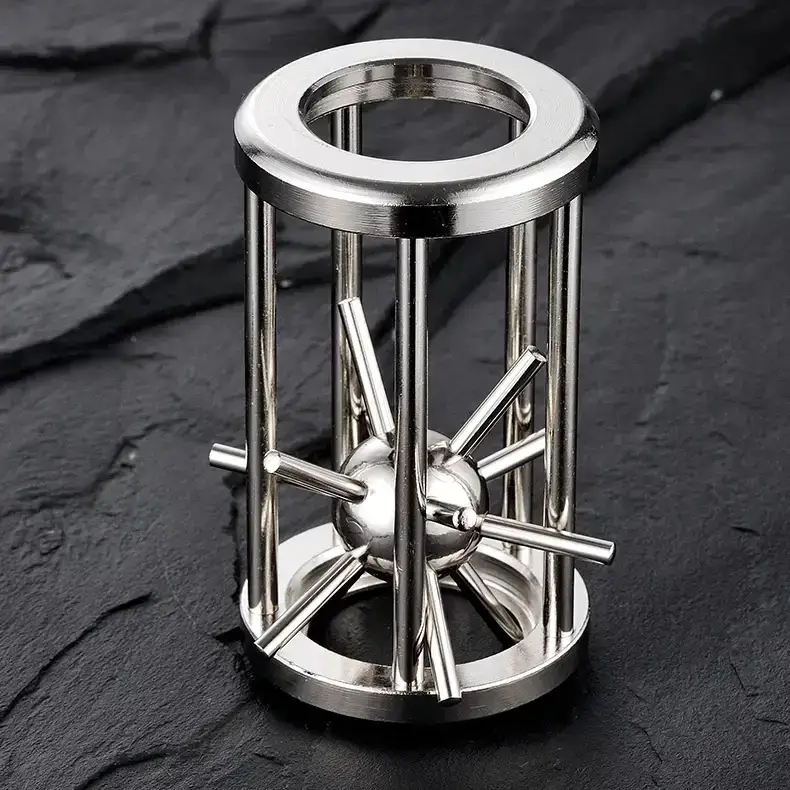
Can you glue a metal puzzle? This question reveals a key philosophical difference. Metal puzzles are designed as self-supporting structures; glue is an admission of defeat or a deliberate choice for permanence. If you must, a tiny drop on a key interlocking mechanism can lock it forever. Wood, however, has a more pragmatic relationship with adhesive. Many complex 3D wooden puzzles even include glue for permanent assembly into a display model. The process, however, requires care to avoid warping.
Which puzzle is more frustrating, metal or wood? It depends entirely on your source of frustration. Metal induces the sharp, sinking dread of irreversible error—anxiety that heightens focus but can break the flow state. Wood breeds the slow burn of a stubborn piece that just won’t seat, testing persistence over precision. The ‘Mistake Test’ asks you to self-diagnose: does the fear of a single misstep paralyze you, or do you prefer a challenge where effort, not perfection, is the currency of progress? Your answer is the clearest guide to your ideal material.
The Display Calculus: Which Material Ages Gracefully on Your Shelf?
The final test of any puzzle isn’t just if it can be built, but if it can endure. Metal puzzles, with their inherent structural logic and sleek, modern lines, are designed as permanent display models, with a 5-10 year edge against fading in direct sunlight. Wooden puzzles, offering a cozy touch and organic warmth, require more environmental vigilance but age with a patina that many find more personally resonant.
So, which material looks better on your shelf in five years? The answer lies in your home’s environment and your aesthetic tribe. A 3D metal puzzle is a statement of precision and cool modernity—think a miniature geodesic dome or a skeletal engine on a tech enthusiast’s desk. It carries heft, feels substantial, and its reflective surfaces play with light. A 3D wooden puzzle is a artifact of craft; a wooden castle or a laser-cut basswood animal has a tactile, storybook quality that fits a bookshelf or a rustic mantelpiece. One isn’t inherently better; one is inherently different.
The Environmental Interrogation: What are your shelf’s conditions? This is where material science leaves the box and meets your living room.
For metal, the primary antagonist is moisture. Do metal puzzles rust? Yes, if you live in a coastal or very humid climate and the metal isn’t properly treated or is of lower alloy quality. Rust prevention is simple: avoid constant dampness. Dust is a more common foe, settling into the intricate layers of tiny gears and interstices. Cleaning requires a careful blast of compressed air or a soft brush—a quarterly ritual for the dedicated curator. The good news? Its form won’t sag. Its color won’t fade significantly. It is, in architectural terms, a load-bearing sculpture. For those curating a collection, the process of choosing a metal puzzle for display is as much about long-term aesthetics as immediate challenge.
For wood, the enemy is humidity change. Wooden puzzle warping from humidity is a real, frustrating phenomenon. A beautifully assembled birch wood cathedral can develop a lean if left in a sun-drenched window or a damp basement. The material breathes. The solution is climate control: keep it away from radiators, windows, and bathrooms. Dust on wood is less visually intrusive but can be gently wiped. Over many years, wood exposed to light will mellow and darken—a patina some desire, others see as aging. Proper displaying your wooden puzzle involves considering these factors from the start, choosing a location that protects your investment.
Which is better for a puzzle to glue and keep forever? This is the ultimate commitment. Gluing a metal puzzle is almost heresy; its interlocking mechanisms are its pride. But if you must secure it, a discrete drop of clear epoxy on key joints is the architect’s choice. Wood, however, openly invites permanence. Applying a thin, even coat of wood glue or clear matte sealant not only locks the structure but can also offer a layer of protection against ambient moisture, preserving your work for decades.
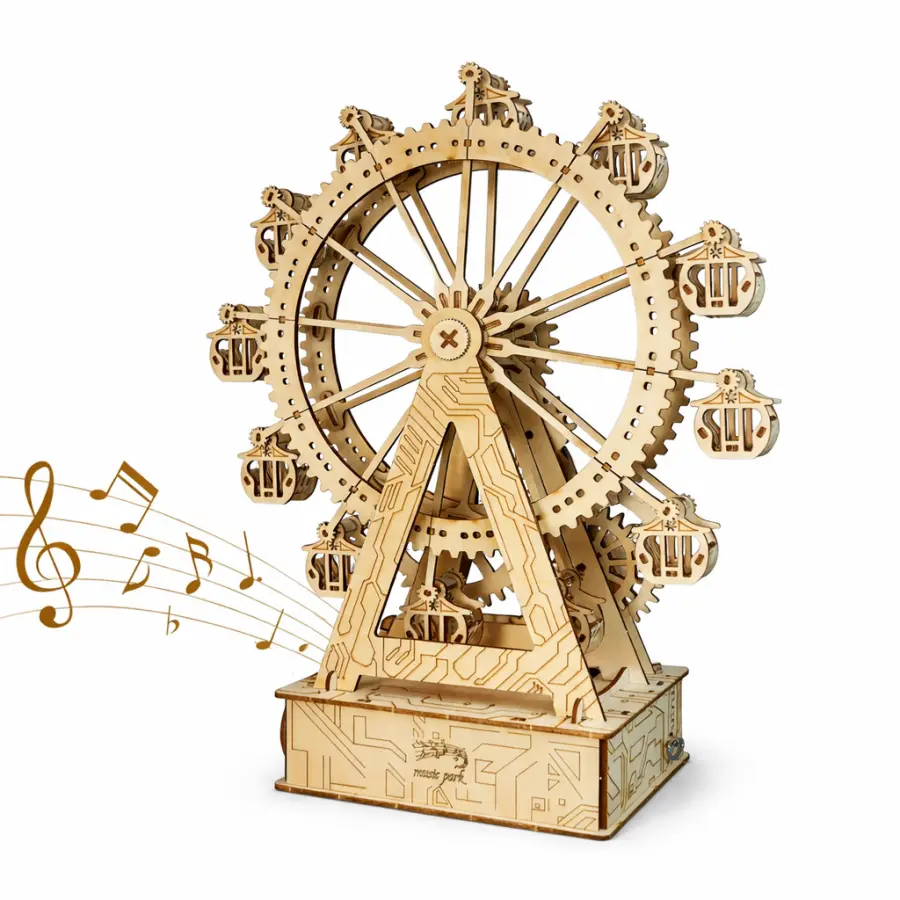
Do wooden puzzles look ‘cheap’ compared to metal? Only if the design and craftsmanship are poor. A well-designed laser-cut basswood puzzle with clean edges and a thoughtful finish (like the music box above) looks like artisan decor. A cheap, thinly painted one might. Metal’s inherent sheen reads as “technical” and often more expensive upfront, but value is perceived. A sleek model metal globe feels like a designer object; a warm wooden treehouse feels like a cherished heirloom.
The final calculation: Metal is the low-maintenance, high-impact modern sculpture. It asks for little once built but exists at a cool distance. Wood is the living, breathing craft piece. It asks for a considered environment but rewards with warmth and a tangible connection to the natural material. Your shelf, your climate, and your heart will decide.
The Build Personality Match Game: Your Decision Matrix
Choosing between metal and wood isn’t about what’s objectively better—it’s about which material’s language of assembly speaks to your mind and hands. The perfect match aligns the puzzle’s tactile experience and difficulty curve with your tolerance for frustration, your need for sensory feedback, and your end-goal. This decision matrix maps four common builder personas to their ideal material, moving you from analysis to a confident, personalized verdict.
Archetype 1: The Perfectionist Engineer
Your Profile: You love flowcharts, own a precision screwdriver set, and derive deep satisfaction from a perfect interlocking mechanism. You view instructions as a suggestion and your greatest fear is a sloppy, wobbly final product. Your build mantra is “measure twice, cut once,” even if there’s no cutting involved.
Your Material Match: Metal.
Why: A 3D metal puzzle is your ultimate logical challenge. The unforgiving nature of tiny gears and tabs demands the analytical approach you excel at. There is no sanding down a misfit; the precision-fit is binary—it works or it doesn’t. This creates a high-stakes environment where your meticulousness is rewarded with a structurally sound, immaculate display model that looks like a sleek model of a machine. For the puzzle gift for engineer friend, a complex metal globe or kinetic sculpture is a nod to their love of pure, uncompromising mechanics. Answering the shaky hands question: If tremors are significant, even the deft handling for small metal pieces may cause frustration. Consider a wooden model with larger pieces first.
Archetype 2: The Casual Crafter / Seeker of Sensory Soothing
Your Profile: You build to unwind. You’re after the journey, not just the destination—the smell of materials, the feel in your hands, the quiet focus that pushes other thoughts aside. You might make a mistake and laugh it off, valuing the craft over clinical precision. You want tactile puzzles for stress relief.
Your Material Match: Wood.
Why: Laser-cut basswood is your therapeutic medium. The warm in the hand feel, the gentle sound dampening, and the slight forgiving give of the material lower the stakes of assembly. The process is inherently cozy touch, encouraging a state of flow rather than tense problem-solving. It’s a craft project that ends in decor. The larger pieces are kinder to handle, and the gradual, logical build of a 3D wooden puzzle like a castle or animal is perfectly suited for an evening of mindful, low-anxiety creation.
Archetype 3: The Anxious Gift-Giver
Your Profile: You’ve seen the cool puzzles online but are paralyzed by the fear of gifting a nightmare. Will it be too hard and collect dust? Too easy and feel insulting? Will a wrong move break it forever, making your gift a monument to frustration? You need the Gift-Giver’s Decoder.
Your Decisive Rule: When in doubt, choose high-quality wood.
Why: A well-made wooden puzzle for beginners adult offers the safest, most broadly appealing experience. It presents a satisfying challenge without the high barrier to entry or risk of permanent, disheartening error that metal can pose. The tactile feedback is universally pleasant, and the finished piece tends to suit more decor styles. If you know the recipient is a detail-obsessed tinkerer (see: Perfectionist Engineer), then metal is a brilliant, bold choice. Otherwise, wood is the gracious, less-risky gift that says “I thought you’d enjoy this,” not “I dare you to figure this out.”
Archetype 4: The Display Collector
Your Profile: For you, the build is a necessary and enjoyable step to create the art object. The primary goal is a stunning, durable display model that enhances your shelf, desk, or bookcase for years. You consider environmental factors, dust, and aesthetic cohesion.
Your Material Match: It’s a tie, with critical caveats.
The Calculus: You must prioritize your display vision and environment. For a modern, minimalist, or tech-focused space where you want a statement of futuristic aesthetic, choose metal. It offers unparalleled longevity against dust and pests, and its heft feels substantial. For a rustic, cozy, or naturalistic setting where warmth is key, choose birch wood or plywood. It brings an organic, artisan feel. Critical Question: Do you live in a humid environment? If yes, metal (with proper rust prevention coating) is the lower-maintenance choice. Wood requires a stable, dry climate to avoid the risk of warping.
The final step is self-awareness. Hold the two materials in your mind. Do you crave the silent, high-precision click of a mechanical puzzle solved, or the gentle, grainy whisper of a craft completed? Your answer is your perfect match.
The Verdict Table: Your Quick-Reference Cheat Sheet
After this deep dive into material properties and personalities, here is the synthesized data. Based on a month of building and logging, the average completion time for metal puzzles is 2-10 hours; for wood, 1-6 hours. The final choice isn’t about which is objectively better, but which aligns with the experience you want. This table distills our five-point test into a scannable, definitive guide.
| Criteria | Metal Puzzle | Wooden Puzzle |
|---|---|---|
| Tactile Feel & First Impression | Cold to the touch, substantial heft. Pieces are smaller, with a smooth, industrial finish. The sound is a definitive, satisfying click. | Warm in the hand, lighter, with a faintly grainy texture. Larger pieces are easier to grip. Assembly is quiet, a tactile whisper. |
| Build Philosophy | A high-precision engineering challenge. Think analytical approach and logical challenges. It’s about following exact schematics for a precision-fit. | A meditative craft. The process is more forgiving, focusing on gradual, intuitive assembly. It’s a sensory, hands-on activity. |
| Type of Difficulty | Steep learning curve. Challenges are fiddly, demanding extreme patience and fine dexterity. The frustration comes from tiny, exact manipulations. | Gradual difficulty curve. Challenges stem from spatial reasoning, not manual finesse. It’s accessible, promoting a calm focus. |
| Mistake Tolerance | Low. Bent tabs on stainless steel or zinc alloy sheets (0.5-1mm thick) are often permanent; forcing can snap them. Requires careful, one-chance moves. | High. Laser-cut birch plywood or basswood (3-5mm thick) is more pliable. Minor forcing might cause splinters, but errors are often recoverable. |
| Display & Longevity | Sleek, futuristic aesthetic with a modern, mechanical look. Superior durability against dust and pests. Requires rust prevention in humid climates. | Cozy touch, rustic, and artisan. Offers a classic display model feel. Risks warping in humidity and is more susceptible to environmental damage. |
| Ideal Builder Persona | The Perfectionist Engineer: Craves a strict, logical challenge and values a gleaming, permanent result. High frustration tolerance required. | The Casual Crafter or Sensory-Seeker: Wants a relaxing, immersive experience and values the natural, warm aesthetics of the final piece. |
| Quick Facts | • Age: 14+ • Avg. Price: $30-$60 • No glue; interlocking mechanisms • Tools: Often requires tweezers | • Age: 8+ or 12+ • Avg. Price: $20-$50 • May include glue for permanence • Tools: Usually just hands |
Final Synthesis: Your left hand (metal) offers the crisp click of a solved brain teaser—a test of nerve and precision. Your right hand (wood) offers the gentle whisper of a crafted object—a test of spatial rhythm and touch. Match your dominant craving to the material, and you’ve found your perfect 3D metal puzzle or 3D wooden puzzle.
Pressed for Time? Your Most Urgent Questions, Answered
You’ve seen the personality match and the final verdict. But practical, nitty-gritty questions still linger—the ones that pop up right before you click ‘buy.’ Let’s tackle them with the blunt precision of a bent metal tab.
Are metal puzzles sharper? Are they safe for older kids?
Yes, metal is sharp. The chemically etched or laser-cut stainless steel sheets are often 0.5mm thick, leaving fine edges that can be pokey. For a supervised teen (14+) with good dexterity, it’s a manageable part of the high-precision challenge. For younger kids or anyone with unsteady hands, the larger, smoother pieces of a 3D wooden puzzle made from laser-cut basswood are the unequivocally safer choice. This isn’t about fun for the whole family; it’s about managing realistic physical risk tied to the target audience.
Can you take apart and reassemble a metal puzzle multiple times, or do the tabs wear out?
This tests the real-world durability of those interlocking mechanisms. The short answer: maybe once, but don’t count on it. The tiny tabs and slots are designed for a one-way, precision-fit journey. Bending a tab back to disassemble weakens the metal at a microscopic level, increasing the chance of fatigue and snap upon reassembly. Wooden puzzles, with their more forgiving slot-and-tab construction, often survive a careful takedown and rebuild much better. If you want a reconfigurable experience, choose wood.
What are some reliable 3D puzzle brand comparisons (e.g., Rokr/Robotime)?
Brands often specialize in a material philosophy. Robotime (Rokr) is a major player, offering excellent entries in both camps: their metal puzzles lean into complex mechanical puzzles with tiny gears, while their wooden line showcases birch plywood in intricate architecture. For metal, UGEARS is a notable hybrid (wood with metal components), while brands like Piececool focus intensely on metallic display models. For wood, look at Rolife and CubicFun for accessibility. The choice is less about brand loyalty and more about which material-focused catalog aligns with the build personality you’ve now identified.
Your final, actionable step? Revisit the Decision Matrix with these practical constraints in mind. Then, choose. The perfect puzzle isn’t the one that’s universally “better”—it’s the one whose material realities match your hands, your patience, and your shelf. Now you have the blueprint. Go build.