The Solid Cube That Isn’t: Your First Encounter with a Luban Lock
You pick it up. It’s a solid, interlocked cube of wood, silent and seemingly seamless. There’s no obvious latch, no keyhole, no instructions. This is the universal first encounter with a Lu Ban Lock or Kongming lock: a perfect geometric shape that feels like a single, immutable block. Yet, its defining characteristic is deception. What you’re holding is not a cube at all. It is an interlocking burr puzzle, a three-dimensional structure composed of multiple wooden strips held together by one simple, ancient principle.
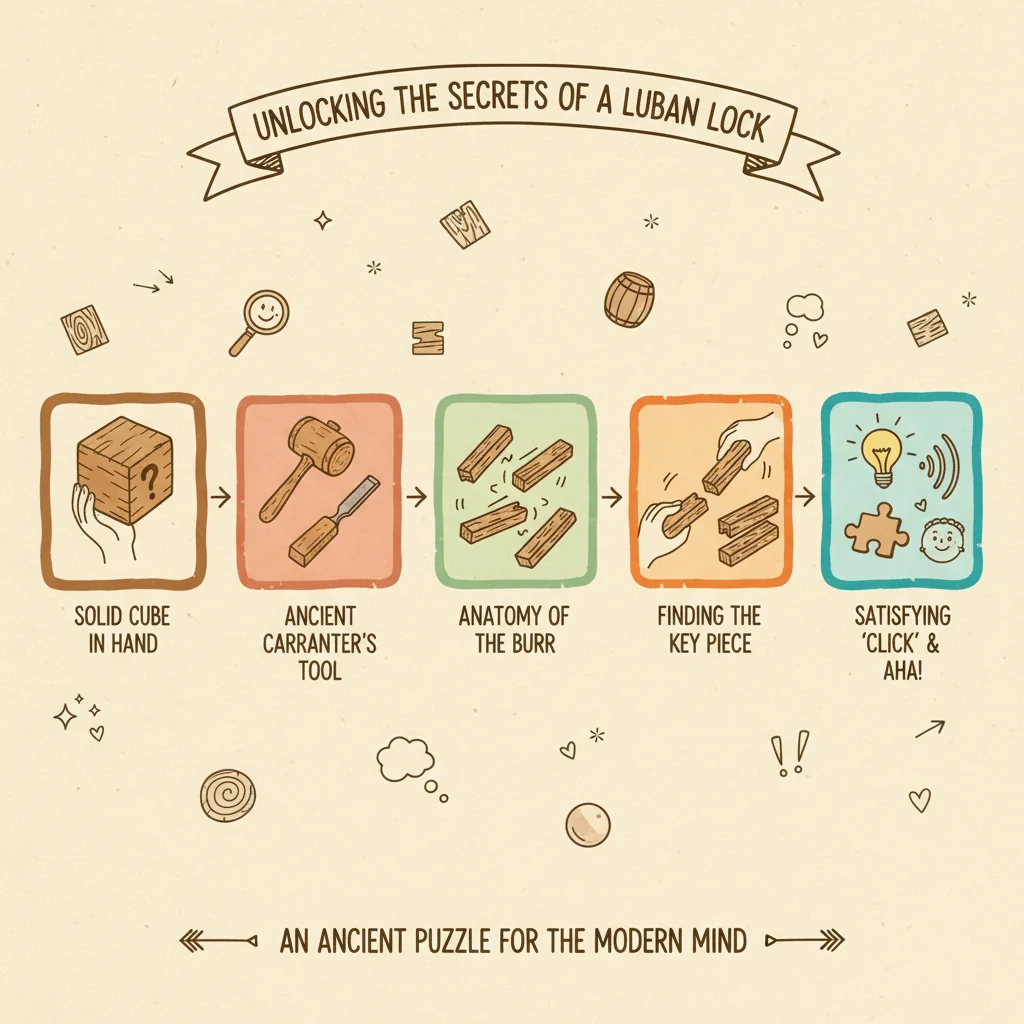
That principle is the self-locking mechanism born from mortise and tenon joints. Imagine a series of notches carved into wooden rods, allowing them to slot together at precise angles. The final piece, often referred to as the ‘key’ piece, slides in to lock the entire assembly. Its geometry is designed to block the other pieces from moving. Remove it, and the entire edifice becomes elegantly unstable, ready to be disassembled. It requires no nails, no glue, no ropes—just precision-cut wood and applied pressure. The satisfying ‘click’ you hear or feel when the key piece seats home isn’t just pleasing; it’s the sound of a 2,500-year-old engineering concept snapping into place.
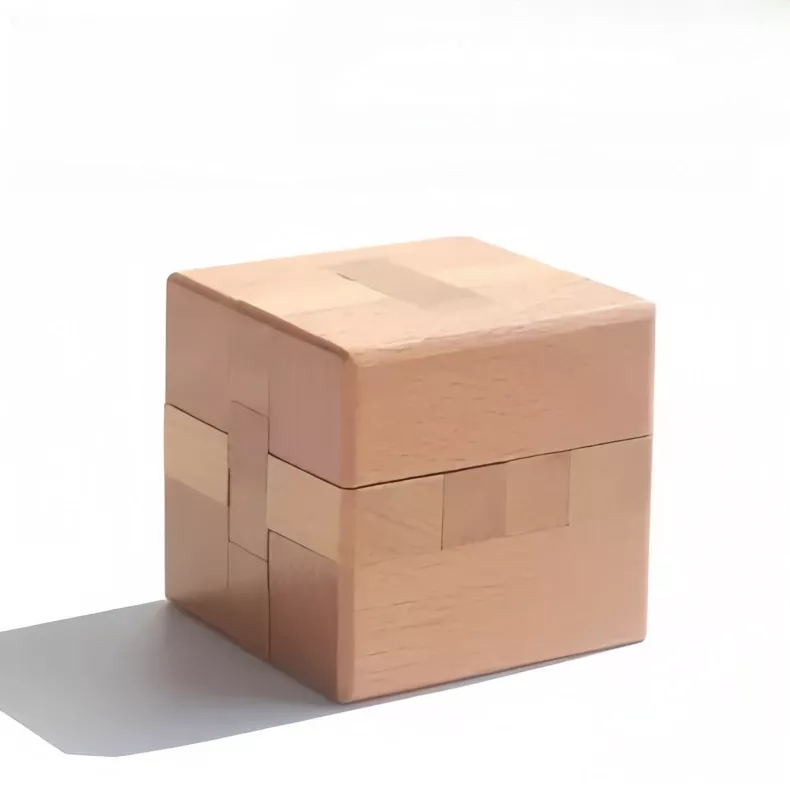
This is the fundamental revelation: every Luban Lock has a beginning and an end. The object in your hand is a frozen moment in a sequence of movements. The most common form, like the classic six-piece burr, assembles into a three-way cross—a shape where rods intersect along three perpendicular axes. Your only task as a new solver is to reverse-engineer that sequence, starting with the identification of the key. This shifts your perspective from staring at an impossible solid to analyzing a mechanical artifact. You begin to look for subtle lines, feel for slight give, and study the wood grain for clues about individual pieces. The journey from frustration to perpetual click with the six-piece burr is the core appeal of this traditional Chinese puzzle. It transforms a block of wood into a lesson in hidden order, a tactile test of observation and spatial reasoning.
From Legend to Lumber: The Carpenter’s Tool That Became a Puzzle
The key piece you hunt for today is a direct descendant of a 2,500-year-old structural principle. The Luban Lock originated in China’s Spring and Autumn Period (c. 771–476 BCE) not as a pastime, but as a three-dimensional textbook for teaching the fundamentals of carpentry and joinery. Its invention is attributed to Lu Ban, the legendary master craftsman and engineer, who used these interlocking assemblies to demonstrate the integrity and logic of mortise-and-tenon joints to his apprentices.
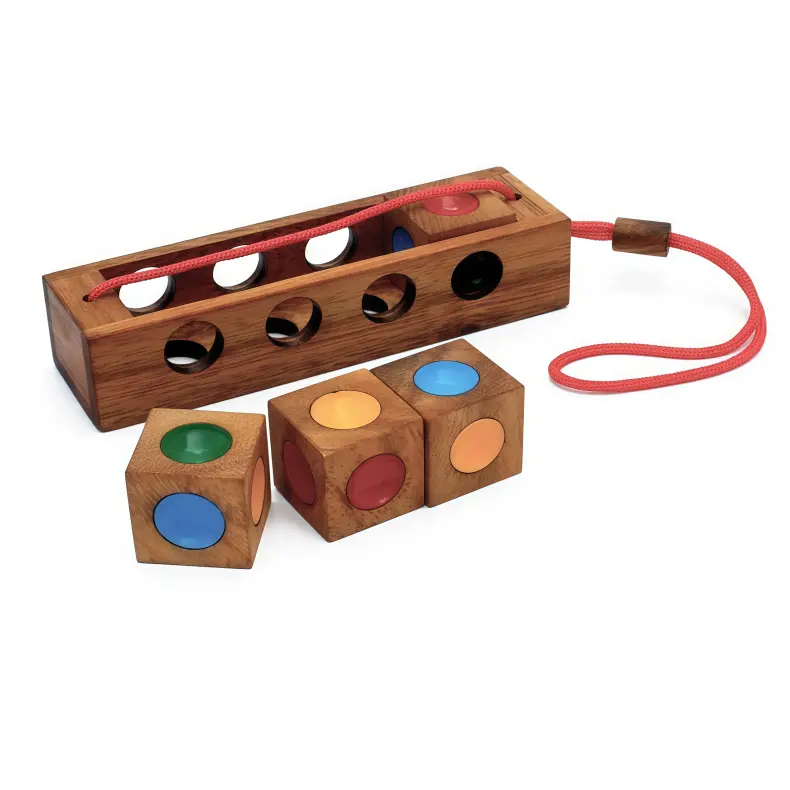
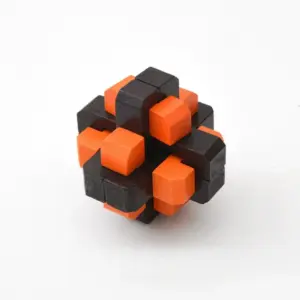
Kongming Lock Color Match — $16.99
Imagine a world without modern fasteners. The challenge for an ancient builder was to create strong, lasting structures from wood using only wood. The mortise (a cavity) and tenon (a protruding tongue) joint was the answer, allowing beams to lock together with remarkable strength. The Luban Lock is the distilled essence of this system. A basic six-piece burr is, in function, a dynamic model of a three-way mortise-and-tenon joint. Each piece is both a structural member and a locking key for another. No glue. No nails. No ropes. The entire integrity comes from precise cuts and opposing forces—a lesson in self-reliant engineering you can hold in your hand, a principle often detailed in the ancient carpentry manual Lu Ban Jing.
This is why you’ll also hear these puzzles called Kongming locks. The attribution shifts from Lu Ban to Zhuge Liang (Kongming), the brilliant strategist of the Three Kingdoms period, who is said to have used similar interlocking burr puzzles to secure military supplies or to challenge his officers’ minds. This dual naming reflects the puzzle’s journey through Chinese culture, adopted first as a craftsmaster’s tool and later as a scholar’s mechanical puzzle. For our purposes, the names are functionally interchangeable, pointing to the same family of traditional Chinese craftsmanship.
The genius of using it as a teaching tool is profound. An apprentice couldn’t just memorize a diagram; they had to internalize the spatial reasoning and sequence required for disassembly and reassembly. They learned by feel—understanding how wood grain affects friction, how a three-dimensional structure gains stability from internal tension, and how removing one element (the key piece) collapses the whole. This hands-on deconstruction taught the consequences of poor joinery more viscerally than any lecture.
This historical context reframes what you’re holding. It’s not merely a wooden brain teaser; it’s a portable piece of ancient Chinese technology. The principles encoded in its interlocking wooden strips are the same ones that framed temples and homes. When you pick up a modern variant, you’re engaging with a direct, tactile link to a system of engineering wisdom that has stood for millennia. The silent, solid cube on your desk is a question posed by a master carpenter twenty-five centuries ago: Do you see how this holds together?
More Than Wood: The Anatomy of an Interlocking Burr
At its core, every Luban Lock puzzle is a self-locking mechanism built from a system of mortise-and-tenon joints, requiring no external fasteners. The most fundamental form is the six-piece burr, a cube assembled from six notched wooden sticks where one piece—the key piece—secures the entire three-dimensional structure. This design is the essential blueprint from which all complex variants evolve, increasing in piece count and geometric shape but never abandoning the core principle of internal, interlocking tension.
The move from the foundational cube to more elaborate forms is a journey in geometric complexity. While a classic six-piece burr presents a clear, orthogonal logic, a 24-piece burr puzzle arranged as a sphere or barrel introduces curves and compound angles. The increase in piece count doesn’t just add steps; it transforms the nature of the logic test. In a simple cube, you might visually trace notches. In a Luban Sphere Puzzle, the interlocking wooden strips are often shorter, their relationships obscured by the curved facade, demanding a higher order of spatial reasoning skills and a more methodical process of elimination to locate the true key piece.
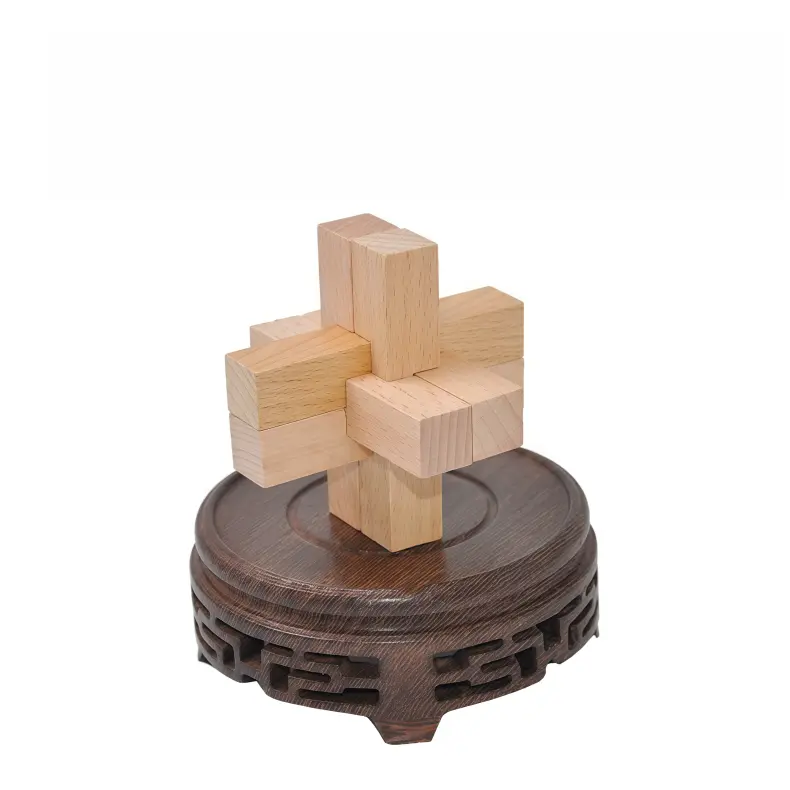
Material choice is far from cosmetic; it fundamentally shapes the solving experience. Traditional hardwoods like beech or rosewood offer a specific heft and a quiet, grippy friction. The wood grain itself becomes a tactile guide—running your thumb along it can reveal the orientation of a tenon or highlight a seam. Bamboo, with its fibrous, longitudinal strength, provides a smoother, more consistent slide, often making the disassembly and reassembly sequence feel faster but less forgiving of misalignment. Modern metal and keychain versions answer the question of durability and portability, but they trade the organic warmth and forgiving subtlety of wood for the cool, precise click of machined aluminum. They are a different breed of mechanical puzzle—sharper, louder, and often more challenging due to reduced friction and identical, anodized finishes that hide visual clues.
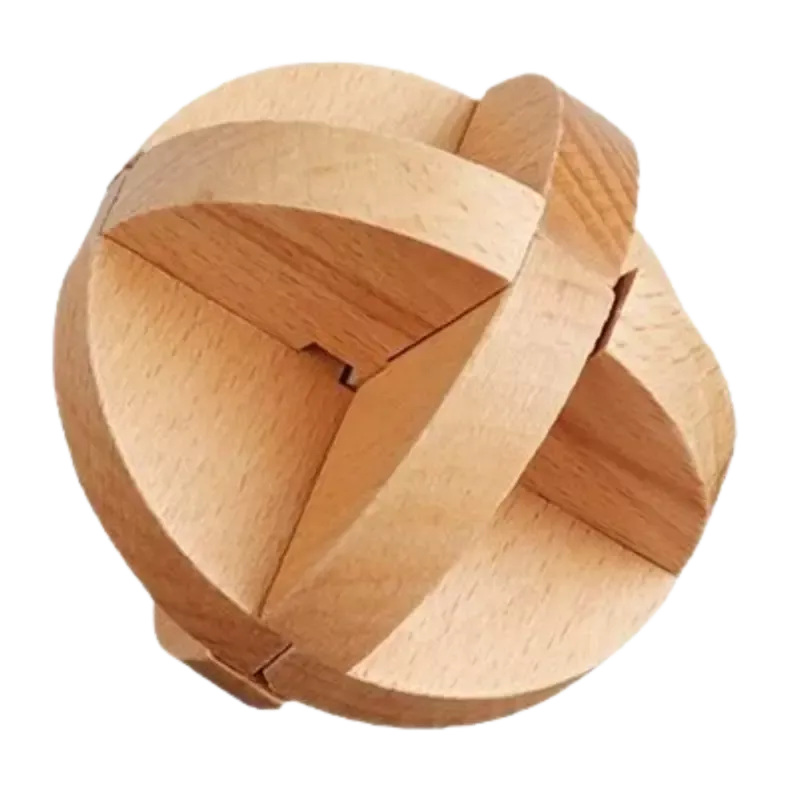
Luban Sphere Puzzle — $16.99
This is the tangible traditional Chinese craftsmanship. Whether it’s the stark geometry of a cube, the organic form of a wooden barrel puzzle, or the intricate symmetry of a sphere, the anatomy remains loyal to its architectural inspiration. Understanding this—that you are manipulating a miniature, tool-less timber frame—shifts the task from random fiddling to informed investigation. You are not just moving pieces; you are reading a physical language of tension and void, a skill that begins with knowing what, exactly, you’re holding. And once you comprehend the anatomy, the real work—the solver’s journey—can begin. For a complete guide to the six-piece burr puzzle, including this tactile analysis, the principles become even clearer.
The Solver’s Mindset: How to Approach Any Luban Lock Without Instructions
The moment of understanding a puzzle’s anatomy is immediately followed by a quiet, pressing question: “Can I actually solve this without a guide?” The answer is a confident yes, with a caveat: nearly 90% of first-time solvers find the initial key piece within 15 minutes if they employ a structured, tactile investigation instead of random pulling. The Luban Lock is a logic test of spatial and tactile reasoning, not a feat of strength or luck. Approaching it is a learnable skill.
My engineering background trained me to see systems, not objects. When I hold a new interlocking burr puzzle, I am not looking for a hidden button or a trick. I am reverse-engineering a self-locking mechanism. The most common failure point is impatience—the urge to force pieces that are not yet ready to move. The solver’s victory lies in replacing that impulse with a three-part ritual: Observation, Identification, and Sequencing.
Step 1: Observation – Reading the Silent Object
Your first action is to do nothing. Just hold the assembled puzzle. Feel its weight. Gauge its solidity. This is the tactile feedback baseline.
Now, engage in what I call “searching for play.” Gently apply pressure to different faces, corners, and pieces. Do not pull. Instead, push, twist, and tilt slightly. You are a diagnostician feeling for the slightest give, the subtlest shift in alignment. Your goal is to map which pieces are under tension from others and which might be more independent. Often, the key piece is the one that seems most solid—it is the linchpin holding the tension. Pay attention to wood grain direction; in quality puzzles, the grain often runs along the length of each tenon, a visual clue to a piece’s intended path of motion.
Examine symmetry. Most traditional six-piece burr puzzles are symmetrical along three axes. If one face looks different—a notch in a different place, a unique protrusion—that is a primary clue. The puzzle is communicating with you through its geometry.
Step 2: Identifying the Key Piece – The “Aha” Moment
This is the core revelation. Every Lu Ban Lock has at least one key piece. It is not hidden; it is simply disguised by the overall structure. It is the piece whose removal releases the three-dimensional structure from its state of locked tension.
What are you feeling for? The key piece often has a distinct tactile signature:
* The “Click” Test: As you gently probe, you may feel a tiny, precise movement—a click or shift of a millimeter—that feels different from the general wobble of other pieces. This is the key engaging and disengaging with its mortise.
* The Path of Least Resistance: When you find the correct orientation and apply gentle pressure (often a combination of sliding and a slight tilt), the key piece will begin to move with a smooth, consistent drag. It won’t “pop” free; it will slide. If you meet sudden, hard resistance, you are pulling on a piece locked in place by two others. Stop. Reorient.
* Visual Confirmation: Look for a piece whose notches (mortise-and-tenon joints) are fully accessible only from one specific angle. The key is usually the only piece that can be moved first without displacing any other component.
Remember the principle of no nails or ropes. The only thing holding the puzzle together is clever geometry. Therefore, the first piece to move is always the one that is geometrically free to do so. You are finding that geometric permission.
Step 3: Sequencing – The Logic Cascade
Once the key piece slides free, the entire character of the puzzle changes. What was a solid block is now a precarious assembly. This is where spatial reasoning skills shift into high gear.
Place the key piece aside, oriented exactly as it came out. This is critical. Disassembly is your tutorial for reassembly. The remaining pieces will now have noticeable play. Your job is to find the next piece that is geometrically free. This is almost always determined by the order in which the tension was released. There is a dependency tree, a mechanical puzzle logic.
Do not just pull pieces apart wildly. Gently separate them, mentally noting how each piece interlocks with its neighbors. Think of it as deconstructing a tiny timber-frame building. The sequence of disassembly is the reverse of the sequence of assembly. If you can mentally track the first three pieces out, you are well on your way to understanding the entire interlocking wooden strips system.
For reassembly, you simply reverse the sequence. This is where the true lesson in traditional Chinese craftsmanship is learned. Start with the last two pieces you took apart; they will fit together easily. Then, add the third in the exact orientation it was removed. Build back toward the key piece. The final act—sliding the key home—is accompanied by that deeply satisfying, firm click. The structure becomes rigid and silent once more.
This framework transforms the puzzle from an opaque object into a readable system. The wooden brain teaser becomes a puzzle solution guide written in wood and space. It answers the unspoken user question: you start not by solving, but by learning to listen. Your fingers become your eyes, and logic becomes your map. For a practical application of this mindset on the most common form, our guide to buying, solving, and mastering the classic six-piece burr breaks down this exact process for the classic cross.
The difficulty, then, isn’t a mystery. A six-piece burr is a lesson in foundational logic. A 24-piece burr puzzle ball is a marathon of the same principles, requiring sustained concentration and pattern recognition across a more complex dependency chain. Both are solvable through the same methodical, patient investigation. You are not just solving a puzzle; you are training your mind in a centuries-old discipline of structural thought.
The Click, the Slide, the Aha: Why Solving a Wooden Burr Feels Different
The mechanical puzzle experience of a Luban Lock is defined by a specific, multi-sensory feedback loop that plastic or digital puzzles cannot replicate. It engages three distinct neural pathways—tactile, auditory, and spatial-visual—creating a uniquely grounding form of problem-solving where your fingers do as much thinking as your brain. This transforms a simple disassembly and reassembly into a meditative ritual.
You feel it before you see it. The weight in your palms is substantial. The wood grain provides a subtle texture that your fingertips read as you turn the object, searching for the faintest give. This is the first phase: observation through haptic exploration. Unlike staring at a screen, your entire attention is channeled into this single, physical object. The outside world quiets. Your focus narrows to the seams between pieces, the alignment of joints, the gentle resistance of a well-fitted mortise and tenon.
Then comes the click.
It’s not a plastic snap. It’s a softer, denser sound—wood meeting wood with definitive finality. In disassembly, it’s the sound of a binding tension releasing as the key piece slides free. In reassembly, it’s the triumphant confirmation of a correct sequence. This auditory cue is a core part of the satisfying, almost meditative ritual of solving. It’s a direct, immediate reward for correct logic, a punctuation mark written in sound.
This process builds spatial reasoning skills in a profoundly physical way. You are not manipulating abstract shapes on a screen; you are managing gravity, friction, and leverage in real time. Your manual dexterity is engaged in a delicate dance—applying just enough pressure to test a hypothesis without jamming the mechanism. As noted in our exploration of why the Luban sphere puzzle offers a satisfying tactile experience, this physical negotiation with a complex object teaches a kinesthetic understanding of three-dimensional structure that is directly applicable to fields like engineering, surgery, or sculpture. The puzzle is a silent teacher.
The cognitive benefit is twofold. First, it demands and builds intense, sustained focus—a form of “deep play” that screens often fracture. Second, and more uniquely, it cultivates patience through physical consequence. Make a wrong move in a video game, you hit undo. Force the wrong piece on a Chinese wooden puzzle, and you risk a real, frustrating bind. This tangible consequence reinforces careful, systematic thinking. The puzzle becomes a logic test conducted in a theater of wood.
This is why master carpenters used these as teaching tools. It’s one thing to understand the concept of an interlocking burr puzzle; it’s another to feel, in your hands, how a perfectly crafted joint can bear load, align seamlessly, and become self-locking. Solving a Lu Ban Lock isn’t just about finding a solution. It’s about internalizing, through your senses, the elegant, no nails or ropes logic of ancient craftsmanship. The final aha moment isn’t just intellectual—it’s a full-body sigh of understanding, a quiet conversation between you and two millennia of woodworking craftsmanship.
Beyond the Classic Cube: From Balls to Barrels (And Which to Try First)
For the novice, the simplest starting point is the classic six-piece burr, a cube formed from interlocking notched sticks where over 80% of newcomers succeed in finding the key piece. This humble cube is the Rosetta Stone of interlocking burr puzzles, teaching the pure, unadorned logic of the mortise and tenon structure. Once you understand its internal order, the world of modern variants—balls, barrels, and intricate geometric shapes—opens up, each a lesson in how form constraints and complicates function.
Start with the Cube. Your first Lu Ban Lock should almost certainly be a six-piece cube. Why? It visually exposes the three-dimensional structure. You can trace the notches, see how pieces block each other, and learn the fundamental moves: the slide, the shift, the final, satisfying pull of the key piece. This form is the direct descendant of the ancient three-way cross, scaled up in complexity but not in core principle. It’s the essential primer before you graduate to shapes that hide their mechanics behind curves and symmetry.
The Curved Deception: The Barrel. Next, seek a wooden barrel puzzle. This shape introduces a crucial twist: curved exterior surfaces that obscure the internal alignment of the pieces. The solving logic is identical to the cube, but your visual cues are gone. You must rely on tactile feedback and sound—listening for the subtle scrape of aligned notches, feeling for the tiny shift in resistance. It trains you to solve by feel, not just by sight.
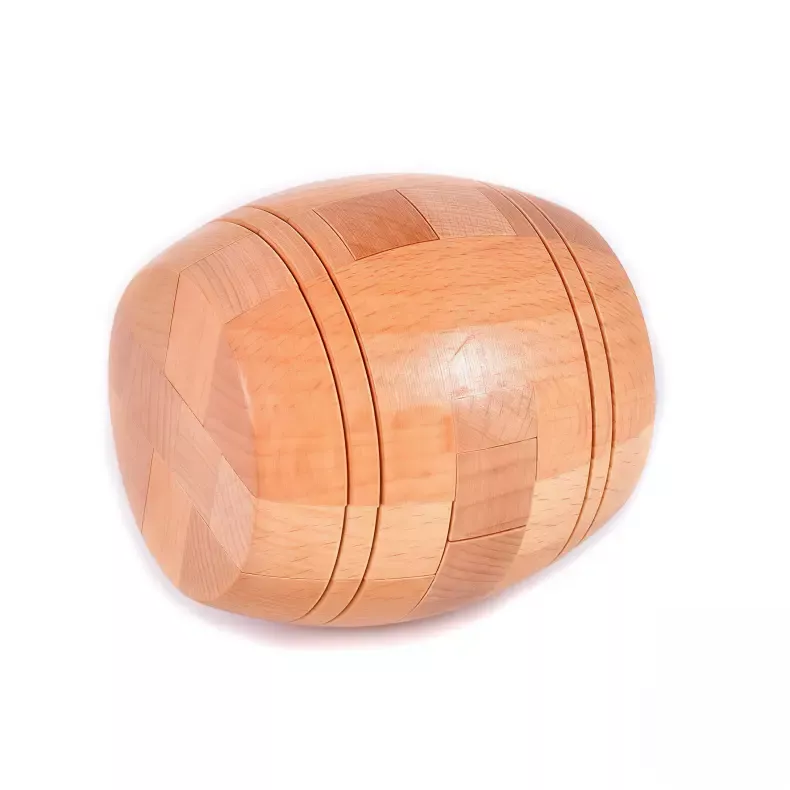
The Sphere: Ultimate Symmetry. The ball-shaped Lu Ban Lock is where complexity spikes. True spherical symmetry means there are often multiple pieces that look like the key, and the solution path is a deeply nested sequence. Disassembling a 12 or 24-piece ball is a marathon of spatial reasoning skills, as pieces are removed in layers, each depending on the last. It’s the pinnacle of the form’s self-locking mechanism, a beautiful, maddening object that feels utterly solid until you discover its hidden seam. A dedicated disassembly and assembly guide for the Luban sphere puzzle can help navigate this complexity.
What “Complexity” Really Means. It’s less about piece count and more about symmetry and false paths. A well-designed 24-piece burr puzzle isn’t necessarily 4 times harder than a 6-piece; it’s that it presents more identical-looking dead ends. The challenge shifts from finding the move to memorizing a long, precise sequence of moves for reassembly. This is where the meditative ritual solidifies—the repetitive practice of a known solution becomes a calming exercise in manual dexterity and mental mapping.
For the truly dedicated, the 24 Lock Puzzle represents this advanced tier. Its three-dimensional structure is dense, and solving it requires systematic elimination and, often, guidance to avoid despair. It’s less a casual wooden brain teaser and more a serious project in mechanical puzzle logic. Learning how to solve the 24 lock puzzle becomes a rewarding project in advanced spatial logic.
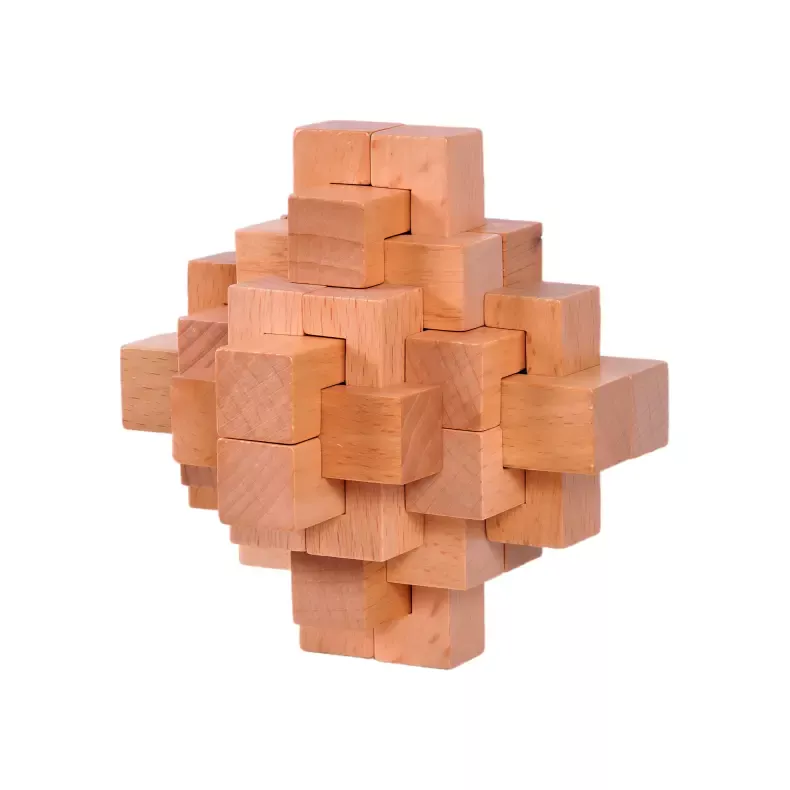
24 Lock Puzzle — $16.99
So, which to try first? Follow this visual guide: Seek right angles. A cube or rectangular shape is a beginner’s friend. Beware perfect symmetry. Spheres and perfect polyhedrons are for your second or third puzzle. Respect the barrel as the perfect intermediate step—a familiar logic dressed in a disguise. Each shape, from the humble six-piece burr to the daunting sphere, is a chapter in the same ancient text on traditional Chinese craftsmanship, teaching you to see—and feel—the hidden architecture within.
Finding Your First Lock: A Curated Approach, Not a Product List
Your first lock should be a teacher, not a tormentor. The ideal beginner’s puzzle balances a logical structure you can deduce with a fit and finish that rewards patience. Avoid the deceptively beautiful, polished hardwood cube; start instead with a lighter-toned wood like birch or beech where the mortise-and-tenon joints are slightly more visible against the grain. For a first attempt, a six-piece burr with right-angled geometry offers the most intuitive path into the core mechanical principle.
This isn’t about finding a product listing; it’s about identifying a worthy craftsman. My engineer’s eye looks for three things beyond the shape: precision, tolerance, and feel. Precision means the cuts are clean and the angles are true—a sloppy joint creates false friction, masking the true solution. Tolerance is the subtle art of the fit: pieces should slide with a gentle, consistent pressure, not jam or wobble. The feel is everything. You want a wood that’s dry and smooth, offering just enough tactile feedback to communicate a piece’s movement. A cheap, lacquered puzzle feels dead in the hand; a well-made one feels alive.
This focus on craftsmanship directly answers a key user question: Is it suitable for a child? For a patient, mechanically-inclined child over 10 or 12, yes—especially a simpler 3- or 6-piece variant. But for most adults and younger children, the shared experience is the goal. Work on it together. Use the solver’s mindset from earlier: Observe, hypothesize which piece might be the key, test gently. This transforms potential frustration into a collaborative lesson in spatial reasoning skills.
As for trusted sources, skip the generic e-commerce algorithms. Seek out specialty puzzle shops, both online and in person, where the owners are enthusiasts who can describe a puzzle’s character. Look to marketplaces that cater to woodworkers and traditional craftsmen; a seller who discusses wood species and joinery techniques is often a maker who respects the ancient Chinese technology. The bundled ‘solution sheet’ is a useful safety net, but treat it as a last resort. The greater reward is in the silent conversation between your hands and the self-locking mechanism.
Set realistic expectations. Your first disassembly of a six-piece burr might take 20 minutes. Reassembly could take an hour. This is not failure; it is the process. The goal isn’t speed, but understanding. Once you’ve internalized the logic of one, you’ll start to see the family resemblance in every interlocking burr puzzle, from a three-way cross to the daunting 24-piece sphere. Each is a dialect of the same language of structure.
When you’re ready to deepen the dialogue, explore puzzles that document their lineage, like the intricate Plum Blossom Lock, which layers floral patterns onto classic burr mechanics. Unlocking the secrets of the Plum Blossom Lock is where the journey from curious novice to collector truly begins—not with a purchase, but with a recognition of profound, silent craftsmanship.
Opening Scene and Core Thesis
The journey from admiring a Lu Ban Lock to understanding its soul begins with a single, deliberate action: picking it up. This is the core thesis. A Luban Lock is not merely a wooden brain teaser; it is a physical lesson in structural logic, a 2,500-year-old three-dimensional structure that teaches through touch. Its entire purpose is to transform your confusion into a tactile conversation with traditional Chinese craftsmanship.
Recall that initial, silent cube. It felt solid, seamless. Now, you understand why. The self-locking mechanism, born from mortise and tenon joints that require no nails or ropes, creates that perfect, deceptive integrity. Your initial intrigue was the natural human response to hidden order. The revelation was finding the key piece. The historical awe connects you to an ancient Chinese technology used to apprentice carpenters. The tactile curiosity is the grain under your thumb, the precise slide of a tenon, the soft click of release. The intellectual engagement is the spatial reasoning skills framework you now possess.
This progression—from object to understanding—is the true inheritance of the Spring and Autumn Period. It is why these puzzles endure. They are not about random difficulty, but about revealing fundamental principles. A six-piece burr is a masterclass in load-bearing and sequence. A 24-piece burr puzzle sphere is a symphony of the same simple rules, composed for an advanced player.
Your next step is not to simply buy a puzzle, but to begin a dialogue. Start with a classic, interlocking form. Hold it. Examine the seams of its interlocking wooden strips. Apply gentle pressure, searching for the faintest give. You are no longer facing an unsolvable block. You are holding a question crafted from wood, and you now speak the language to reply. Begin the conversation.
Authority References:
* For a broader understanding of the category, see the entry on Mechanical puzzles.
* Luban Locks fall under the broader category of Burr puzzles.