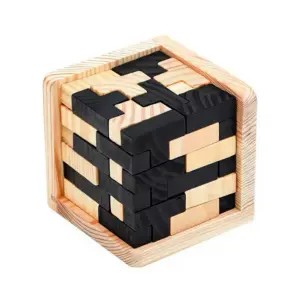
Quick Answer: Beginner Puzzle Set Gift for Men Who Have Everything
For a man who has everything, the right beginner puzzle set is a sampler of three to five different puzzle types in the $30–$75 range, not a single heirloom piece. The recommendation changes if he already owns puzzles (choose a specialty single piece instead), wants a display object (choose a puzzle box), or shares the activity with family (choose a jigsaw-plus-game hybrid). A variety set is the safer gift because it insures against “not his thing.”
For shoppers weighing a broader set of options across the category, the 13 puzzle gifts for someone who has everything, tested guide runs wider selections from the same buyer-problem angle.
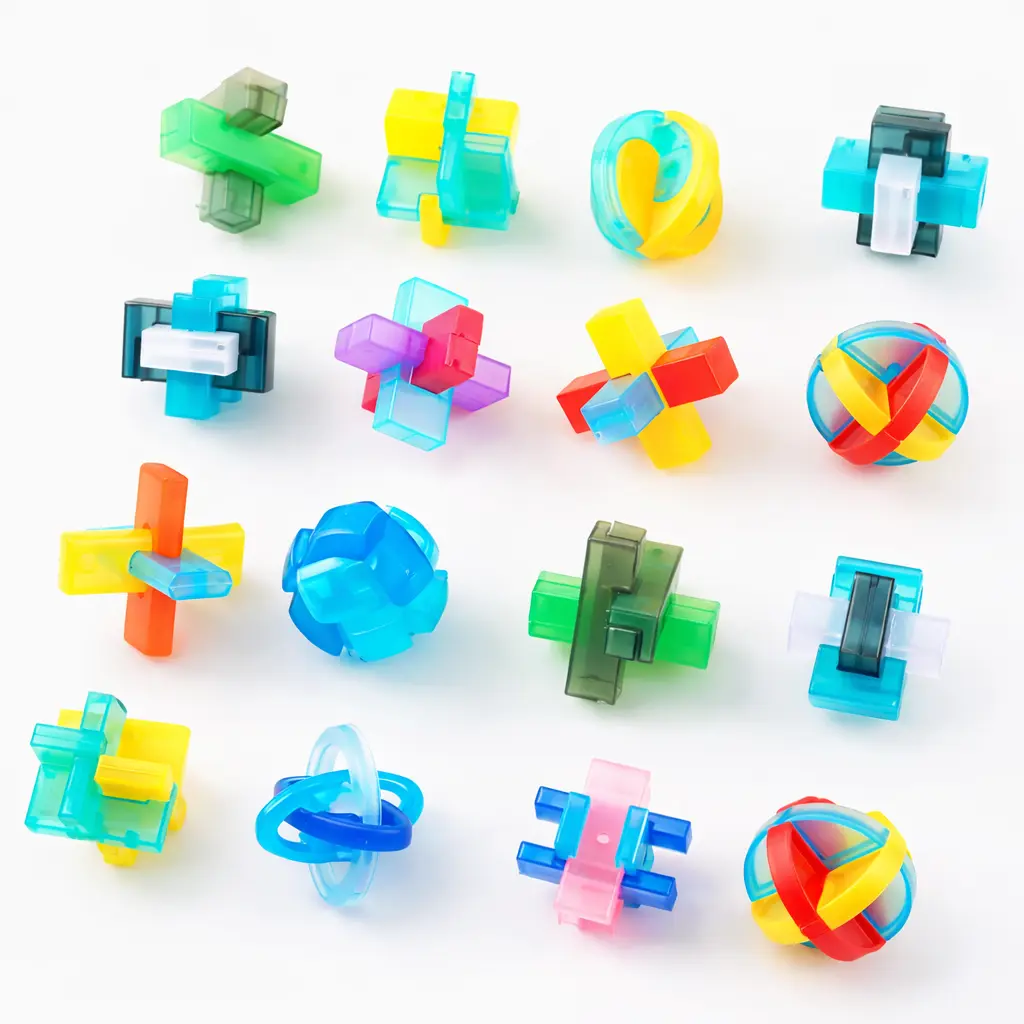
The starting pick: the 12 Piece Crystal Luban Lock Set at $28.88. Twelve different interlocking puzzles in one box let a non-puzzler sample mechanical, sequential, and key-style challenges without committing to one specialty type. It is the entry point a gift buyer can hand over without explaining what a “burr” is.
The three checks that shift the pick:
- Already owns puzzles → skip the sampler, choose one specialty item.
- Wants desk or shelf display → choose a wooden puzzle box, not a hand-held set.
- Solves with a partner or kids → choose a game-style hybrid, not a solo disentanglement.
Decision table — which beginner set format matches which recipient
| Set format | What it is | Best for | What to check before buying |
|---|---|---|---|
| 12-piece interlocking sampler (e.g., Luban Lock Set) | Multiple small mechanical locks in one box | A non-puzzler discovering what he likes | Count of distinct puzzle types; whether pieces feel cheap |
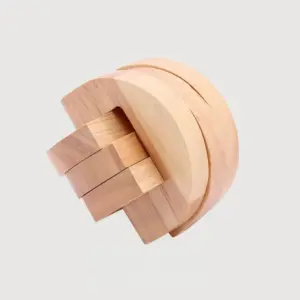
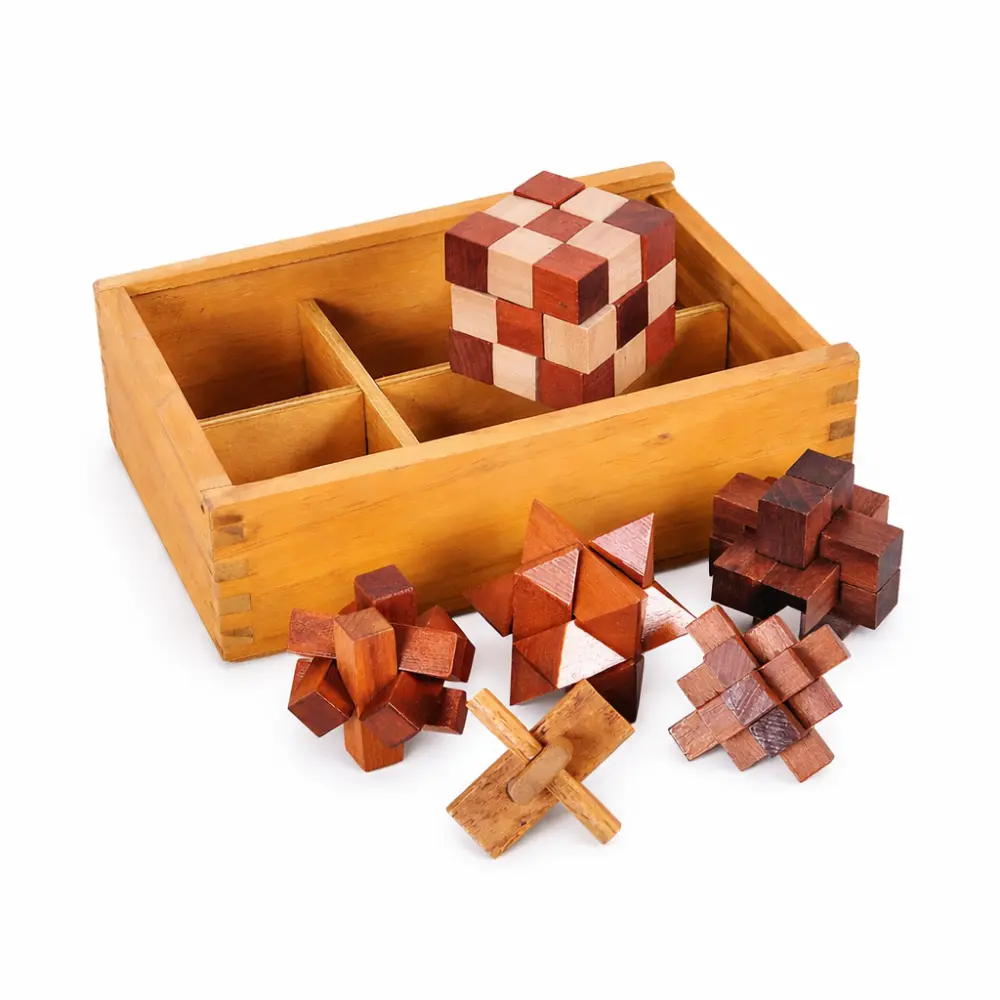
| Wooden brain-teaser set (6-in-1) | Six wooden puzzles on one tray | The desk hobbyist who keeps things visible | Material (solid wood vs. MDF); whether it stores or scatters |
| Single puzzle box | One mechanical box to open | The man who values the reveal moment | Re-settability; whether it doubles as storage |
| 3D wooden model kit | A build project, not a logic puzzle | The weekend project lover | Build time stated; tools included or not |
If the recipient has never solved a puzzle and you cannot read his taste from a shelf, a 12-piece sampler is the lowest-risk gift in the category.
01. What Counts as a Beginner Puzzle Set (And What Doesn’t)
A beginner puzzle set is a bundle of three to five different puzzle types packaged together, sold as one gift, designed so the solver can sample mechanisms before committing to a specialty purchase. The set format is the answer to the gift-buyer problem the previous table surfaced: a non-puzzler with no readable taste signal needs variety, not a single bet on the right mechanism. By a standard definition, a mechanical puzzle is one whose pieces have no fixed arrangement and can be manipulated to reach a goal state, which is why a varied sampler reads as a hobby and a single jigsaw reads as a one-off activity.
Three formats actually qualify as beginner sets, and they are not interchangeable.
Sampler box. A flat tray or carton containing several small, independent puzzles. Each puzzle is a self-contained solve, and the box itself is the storage. A 12-piece sampler of interlocking locks gives the recipient twelve short challenges in the price range of one specialty puzzle. The 12 Piece Crystal Luban Lock Set at $28.88 is the cleanest example: twelve distinct lock mechanisms, each solvable in minutes, all in one box, all clearly the same hobby without being the same puzzle. This format suits the man whose only known quality is that he has no current puzzle hobby.
Type-specific multi-pack. A single puzzle type repeated at ascending difficulty, usually packaged on a wooden tray or in a fitted case. The 6-in-1 Wooden Brain Teaser Set at $38.88 is a textbook example: six wooden puzzles on one tray, each a different mechanism, each stored in its own slot. The recipient explores one material family (wood, metal, plastic) across a range of challenges, which makes the set feel cohesive rather than scattered. This format suits the desk hobbyist who wants the set to live on a shelf and look intentional. For a closer look at how each of the six mechanisms works in practice, the hands-on guide to the 6-in-1 wooden brain teaser set walks through what each one requires from the solver.
Curated kit. A themed bundle that pairs a puzzle with accessories — a build-it-yourself model kit, a puzzle box that doubles as a keepsake container, or a metal disentanglement set packaged with a solution booklet. The 3D Wooden Mechanical Pistol Kit at $29.99 sits in this lane: a build project that ends in a display object, not a logic solve. This format suits the weekend project lover who treats the gift as something to construct over a Saturday.
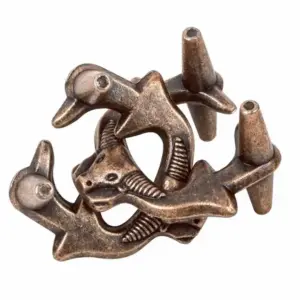
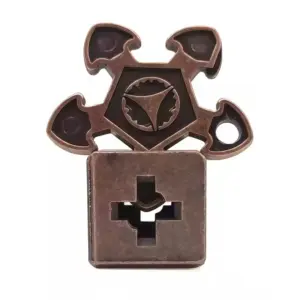
The puzzle categories that belong inside any well-composed beginner set are mechanical disentanglement (the “take the ring off the chain” family), wooden burr and interlocking assembly, sliding tile and pattern puzzles, sequential discovery puzzle boxes, and the jigsaw family. Each category teaches the solver something different. Disentanglement teaches patience and physical feel. Burr and interlocking teach spatial reasoning. Sliding tiles teach planning ahead. Puzzle boxes teach sequential logic and reward the moment of opening. Jigsaws teach pattern recognition and have the lowest intimidation threshold. A set that includes four or five of these categories is a tasting menu; a set that includes five disentanglements and nothing else is a wardrobe.
A beginner set is also not the same as a single heirloom puzzle. Heirloom pieces — a karakuri box, a luxury sequential discovery, a hand-finished burr — assume the recipient already knows the hobby and wants a specific addition to a collection. For the man who has everything but no current puzzle hobby, an heirloom piece reads as another object on a crowded shelf. A beginner set reads as an invitation.
The word beginner is doing real work here, and it should not be confused with easy. Beginner means welcoming to someone who has never solved a mechanical puzzle, which can include challenges that take twenty minutes to an hour. A common verification step: look for a difficulty range or solve-time range printed on the box, the listing, or the product page. If the seller does not state one, ask. A set that claims all pieces are solvable in under two minutes is not a beginner set; it is a novelty set, and the recipient will finish it in a single sitting.
The one practical check before buying any beginner set: confirm that the pieces are stored in the box they arrived in. A set that scatters across a drawer becomes clutter within a week. A set that stores in its own tray or case stays on a desk, on a coffee table, or in a visible cabinet, which is the whole point of giving a sampler instead of a single puzzle.
The next step is to match one of these three formats to the specific man in your life, which is what the checks in the following section are built to do.
02. Four Checks That Decide Whether a Beginner Puzzle Set Is Worth Buying
Three puzzle-set formats exist, but only one will match the specific man on your list. Four checks make that decision concrete: count the distinct puzzle types inside the set, confirm the difficulty range welcomes a non-puzzler without insulting one, judge whether the materials earn desk or coffee-table space, and confirm the price sits in the band where a set stops feeling like a stocking stuffer. Run those four checks against any set you are considering, and the choice usually clarifies itself.
Check 1: Puzzle-type count and category spread
Variety is the whole point of a set. A bundle that offers the same disentanglement mechanism in six sizes teaches one skill, not six, and if that one skill is not his thing, the gift is over. A well-composed beginner set mixes mechanism families: at least one disentanglement or chain puzzle, one wooden interlocking or burr, one sliding tile, and ideally a small puzzle box. What to look for: a product page that names each mechanism individually and shows a distinct photo of each type, not a single stock image labeled “12 puzzles.” A six-in-one wooden set listing each brain teaser by name is doing this well. A twelve-piece set works only if the pieces actually vary in mechanism, not just color. The pack-size question is real, and the 3-pack vs 9-pack dilemma for choosing a wooden brain teaser set covers it in more depth for anyone torn between two cluster options.
Check 2: Difficulty range, not a single difficulty level
Beginner does not mean trivial. A set where every puzzle solves in under a minute is a stocking stuffer, not a hobby entry point, and a set where every puzzle demands an hour is a frustration he will quietly shelve. The right beginner range includes a warm-up solvable in two to five minutes, a middle layer at fifteen to thirty minutes, and at least one piece that earns its keep on a weekend afternoon. What to look for: any product description that gives a solve-time range, or a progression labeled “level 1” through “level 3” or similar. When neither is stated on the page, the reader can verify by checking individual puzzle reviews, asking the seller for a difficulty statement, or starting with the smallest piece in the set as a calibration point before working up.
Check 3: Materials and whether the set doubles as decor
Materials decide whether the set earns desk space. The man who has everything already owns every object he needs, so the puzzle set either sits on the desk as a display piece or goes into a drawer and is forgotten by February. Wood reads warm and tactile, metal reads precise and engineered, crystal reads decorative. A wooden burr on a home office desk signals “this is mine.” A polished metal disentanglement puzzle on a coffee table signals the same. Packaging matters too: a felt-lined case or wooden chest adds gift-reveal value at no extra cognitive cost to the recipient. What to look for: materials that match where he will actually keep the set, and packaging sturdy enough to live on a shelf rather than the recycling bin. A plastic carrying case is fine for travel and wrong for a display object.
Check 4: Price band where the set stops feeling cheap
Price is the easiest check to run. Below roughly fifteen dollars, a puzzle set reads as a stocking stuffer, even when the contents are technically interesting. Competitor data places true beginner puzzle gifts in the fifteen to thirty dollar range, which is the floor for “real gift” status. Between thirty and seventy-five dollars, a set can hold five to ten well-made pieces in varied mechanisms without crossing into heirloom territory, and the twelve-piece crystal Luban lock set at twenty-eight dollars and the six-in-one wooden brain teaser set at thirty-eight dollars both sit comfortably in that range. Above seventy-five dollars, a purchase starts behaving like a single heirloom object, which is the wrong fit for a man who has not yet shown he wants the hobby. What to look for: a total price in the thirty to seventy-five dollar range, with at least three distinct mechanism types inside. Check the product page for the current listed price.
The decision reduces to one question. Does this set give him three different puzzles to try, in materials he would leave on his desk, at a price that says “I thought about this”? If yes, buy it. If any one of those answers is no, keep looking — the right set passes all four checks, not three out of four.
03. Which Beginner Puzzle Set Format Matches the Man You Are Buying For
The four checks in the last section answer the floor question — “Is this set good enough?” — but the ceiling question is harder. Which format actually matches how this man spends a Saturday afternoon? A sampler that lives on a desk is the wrong shape for a man who wants a hands-on project, and a multi-hour build is the wrong shape for a man who only steals five minutes between calls. Match the format to the use case, then the mechanism details stop mattering.
The fastest way to fail this gift is to buy for the version of him you see in your head. Buy for the version that actually shows up.
Desk hobbyist: small sampler of mechanical disentanglements
He has a desk, a phone, and ten minutes between calls. Pick a compact sampler of five to twelve pieces he can finish during a coffee, then set back on the tray. The 12 Piece Crystal Luban Lock Set at $28.88 is the strongest fit here — twelve distinct lock mechanisms, each solvable in a few minutes, all small enough to keep in a desk drawer. It satisfies the variety rule from section 02 and stays under the seventy-five-dollar ceiling where beginner sets start feeling like heirlooms nobody asked for. Fidget toys are widely understood as small objects used to aid focus or relieve stress, which is exactly the daily-use slot a desk sampler fills.
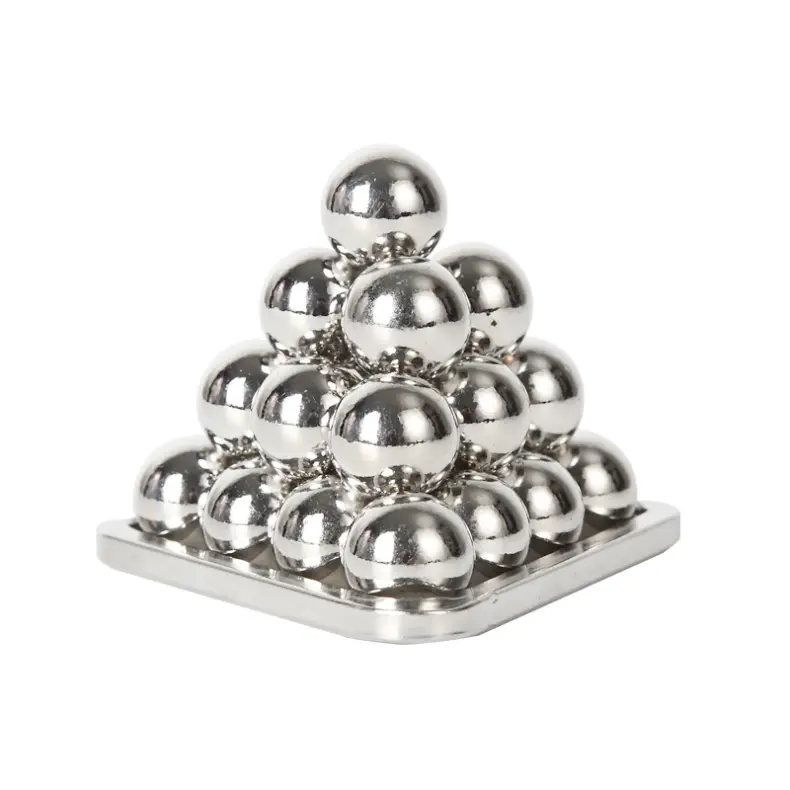
Pair it with one metal piece for visual contrast. The 6 Piece Steel Ball Pyramid Puzzle at $11.98 adds a heavier, colder mechanism to the rotation and works as a coffee-table object when he is not solving it.
What to check: every piece fits in one hand, and at least three different mechanism families appear across the set — locks, slides, disentanglements. If the set is all one mechanism type in twelve colors, he has not been given variety. He has been given a uniform.
Weekend project lover: 3D mechanical build with longer solve time
He is the man who builds the chair, then shows you the chair. Buy a kit that takes two to four hours and ends in a finished mechanical object he can actually display. This is the slot where a 3D wooden build earns its place.
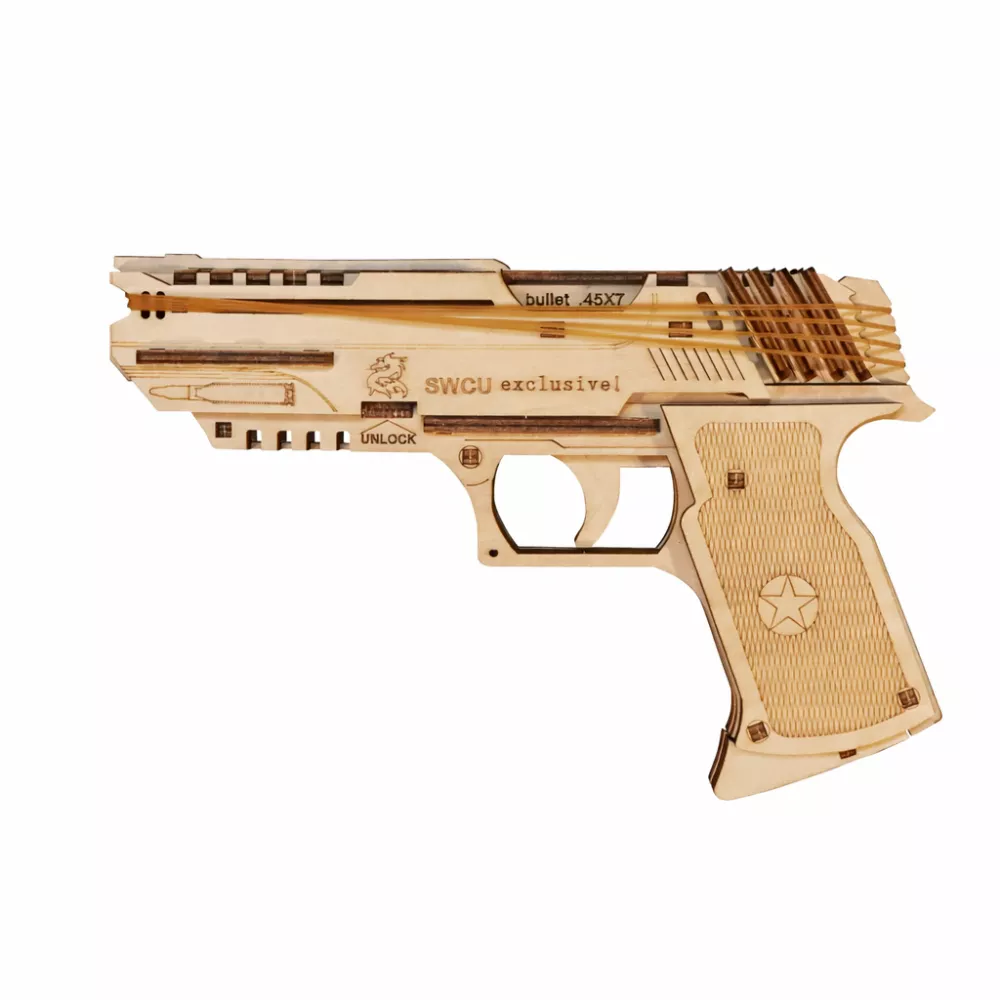
The 3D Wooden Mechanical Pistol Kit at $29.99 fits the slot exactly: snap-fit wooden pieces, a working mechanism at the end, and a finished object that earns shelf space rather than drawer space. It also gives him a project to talk about, which is the underrated half of any hobby introduction gift.
What to check: the kit ends in a functional object, not a decorative shape. A puzzle kit whose finished form is a static figurine teaches less than one whose finished form actually moves, clicks, or stores something.
Social solver: jigsaw-and-game hybrid for two or more
He hosts game night. He plays cards with the in-laws. A solo mechanical puzzle misses the point entirely for this recipient, so the right set is one that brings at least one other person into the solve — a two-person cooperative build or a puzzle-plus-game hybrid he can set up after dinner. Stay inside the thirty to seventy-five dollar range so the set still reads as a starter rather than a commitment to a new weekly ritual he never asked for.
What to check: the set explicitly names a second player, a shared solve, or a post-puzzle game. A solo puzzle described as “fun for groups” usually means he will solve it alone while everyone else watches.
Collector-leaning non-puzzler: one display-worthy piece plus a sampler
He already owns nicer things than you do. A plastic sampler reads as cheap, and a single heirloom piece reads as a commitment. The middle path is a curated kit that includes one display-worthy object — usually a wooden puzzle box with a hidden compartment — bundled with two or three smaller, low-stakes puzzles. The box earns a spot on the shelf; the smaller pieces give him permission to try the hobby without investing in it.
For readers comparing gift formats across the category, the 6 archetypes of brain teaser gifts for men beyond jigsaws lays out the same collector-vs-casual split from a different angle.
What to check: the set names one specific display-worthy piece, and the smaller puzzles can be left in a drawer without looking abandoned. If everything in the box looks identical, the set is not curated. It is a bulk pack.
The next action
Pick the sub-scenario that matches his week, not his personality. For the desk hobbyist — by far the most common match for the “man who has everything” — the starting pick is the 12 Piece Crystal Luban Lock Set at $28.88: twelve locks, varied mechanisms, real gift weight without heirloom pricing. Check the product page for the current listed price and any bundle options before you order, then move on to the decision table in the next section.
04. Beginner Puzzle Set Formats Compared: Variety, Solve Time, and Display Value
A beginner puzzle set is a hobby tasting menu, not a bulk pack. The right format is the one that matches his daily environment — desk, coffee table, workshop bench, or shared living room — and the three formats below are defined by what the recipient can actually do with them.
Three beginner set formats cover almost every gift scenario.
- Sampler box: a mixed grab of small puzzles spanning several categories.
- Type-specific multi-pack: several puzzles from one category, such as locks or disentanglements.
- Curated kit: one display-worthy lead piece plus two to four smaller supporting puzzles.
The sampler box is the lowest-commitment entry point for a man with no current puzzle habit. The other two formats assume the recipient already knows which style he prefers, or that the gift itself is the showcase.
Decision table: beginner set formats compared
| Format | Best for | Typical puzzle-type count | Solve-time range per piece | Display vs. put-away use | What to check on the product page |
|---|---|---|---|---|---|
| Sampler box (e.g., 12 Piece Crystal Luban Lock Set, $28.88) | Desk hobbyist with no current puzzle habit | Multiple, across categories | 5-45 min — verify on listing | Put-away; rotates on the desk | Confirm each puzzle is a distinct mechanism, not duplicates |
| Type-specific multi-pack (e.g., 6-in-1 Wooden Brain Teaser Set, $38.88) | Solver who already likes one family of puzzles | 3-6 from one category | 10-60 min — verify on listing | Display-worthy when solved | Confirm mechanism variety — a true multi-pack should not be three of the same trick |
| Curated kit (e.g., 3D Wooden Puzzle Treasure Box – Mechanical Jewelry Storage Gift, $29.99) | Coffee-table display plus hands-on reveal | 1 hero piece plus 2-4 supporting | 30-90 min for the hero — verify on listing | Hero piece earns shelf space; smaller pieces rotate in a drawer | Confirm the lead piece stands alone if the supporting puzzles are ignored |
How to read the columns
Puzzle-type count beats total piece count: twelve identical locks teach one skill, while twelve locks of twelve different mechanisms teach a habit. Solve time is the second check, separating the five-minute coffee-break distraction from the ninety-minute weekend project. For the desk hobbyist, look at the ten-to-thirty-minute range; for the weekend project lover, look at forty-five-minute-plus solve times.
The “What to check” column exists because retailer listings rarely print solve time. Look for mechanism count, stated difficulty, and photos showing the puzzle in a hand or on a desk. If a product page lists none of those, the set is probably a bulk pack dressed as a sampler.
How to avoid a format mismatch
Mismatched formats waste the gift, even when the set is good. A sampler box is wrong for a man who already owns a puzzle drawer; the variety reads as clutter. A type-specific multi-pack is wrong for someone with no current puzzle habit; one category feels like homework. A curated kit is wrong for the desk hobbyist who wants a hands-on fidget; the display piece sits untouched while the supporting puzzles gather dust.
The starting pick for the most common match — the desk hobbyist with no current puzzle habit — remains the 12 Piece Crystal Luban Lock Set at $28.88. Verify each lock is a distinct mechanism, confirm the set fits his desk, and check the product page for the current listed price before you order.
05. Beginner Puzzle Set Gift Questions, Answered
The comparison narrows the choice. The next decision is simpler than the research suggests: a beginner puzzle set is the right gift for a non-puzzler when the format is a sampler in the $30 to $75 range, and the wrong gift when he already owns a puzzle drawer or wants a single display piece.
What do you buy a man who has everything? Buy him a hobby entry point, not another object. A multi-piece puzzle set gives him a low-commitment way to sample mechanical, wooden, and disentanglement puzzles without forcing a single $200 specialty purchase that may not match his taste.
Are puzzles a good gift for someone who doesn’t already do puzzles? Yes, if the set is a sampler rather than a single challenge. A tasting-menu format means even if he dislikes the first puzzle, three or four other styles wait in the same box, so the gift keeps working after the first try.
What is a beginner puzzle set vs. just one puzzle? A set bundles several distinct mechanisms (locks, burrs, sliding tiles, disentanglements) for under $75 total. One puzzle commits him to a single style, which is risky for a non-puzzler who has no prior preference to anchor the choice.
How much should I spend on a beginner puzzle set as a gift? The $30 to $75 band is the sweet spot: enough to feel like a real gift, low enough to avoid the heirloom-price pressure of $150-plus specialty pieces. The 12 Piece Crystal Luban Lock Set at $28.88 fits the lower end, and the 6-in-1 Wooden Brain Teaser Set at $38.88 sits in the middle of that range.
What if he never opens the puzzle box after I give it to him? A variety set is the lower-risk format because at least one piece is likely to draw him in within a month. A single high-end puzzle with no fallback mechanism is the higher-risk choice, even at the same price.
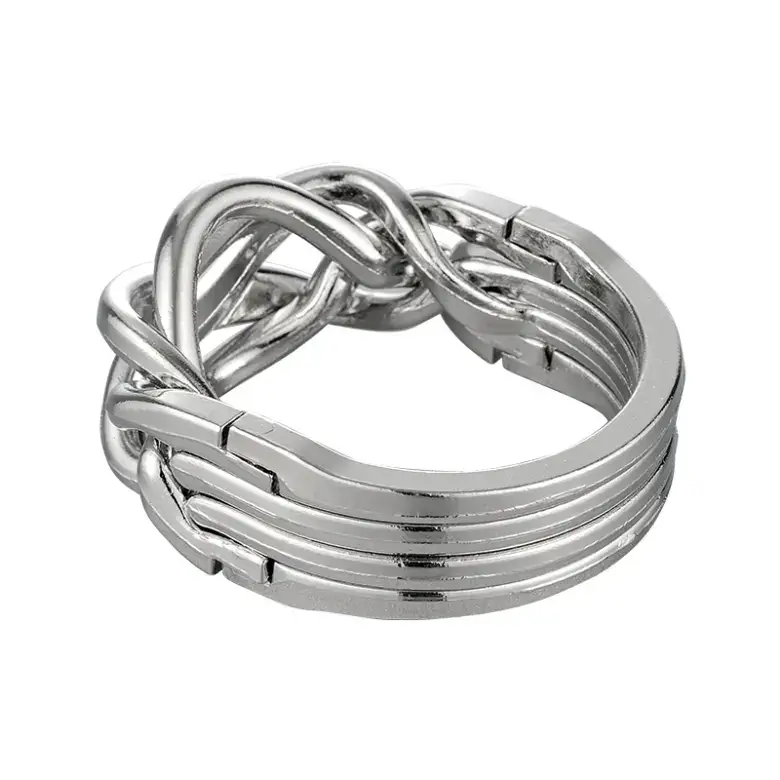
4 Band Puzzle Ring — $11.99
Are wooden puzzles better than metal puzzles for beginners? They teach different things. Wooden burrs and brain teasers reward spatial reasoning and feel warmer in the hand; metal disentanglements reward sequential logic and read more like desk fidget toys. A set that mixes both covers more solver styles.
What’s the difference between a brain teaser and a puzzle? A brain teaser is one mechanism; a puzzle is the whole category. The puzzle vs brain teaser: why one is a subset of the other article lays out the full relationship, but the short version is that every brain teaser is a puzzle, while jigsaws, 3D models, and mechanical assemblies are puzzles that are not brain teasers.
Can puzzles be a hobby for adults who have never done them? Yes, and the entry path is exactly what a beginner set provides. Mechanism variety, manageable solve times, and a low-stakes first purchase are how casual solvers graduate into regular hobbyists.
The next step. If the desk hobbyist profile matches your recipient, order the 12 Piece Crystal Luban Lock Set and confirm the listed price and mechanism count on the product page before checkout. If he already owns a puzzle or two, swap to a single specialty piece from the same category instead.
Where to Start
If the recipient and occasion checks above match, start with 12 Piece Crystal Luban Lock Set. Check the current product page for the specifications that matter to your choice.
Sources and verification
- Product details and current specifications: Tea-Sip product page
Last updated: August 28, 2026