Quick Answer
For a true beginner, pick a graduated jigsaw bundle of 100–500 pieces with a Christmas theme for children, or a compact mechanical-puzzle set for adults and teens who want a tactile, replayable challenge. Skip 1000-piece single-box sets. Skip metal disentanglement bundles if the recipient has never solved one before. Four checks change the pick: piece count, age rating, theme, and set variety.
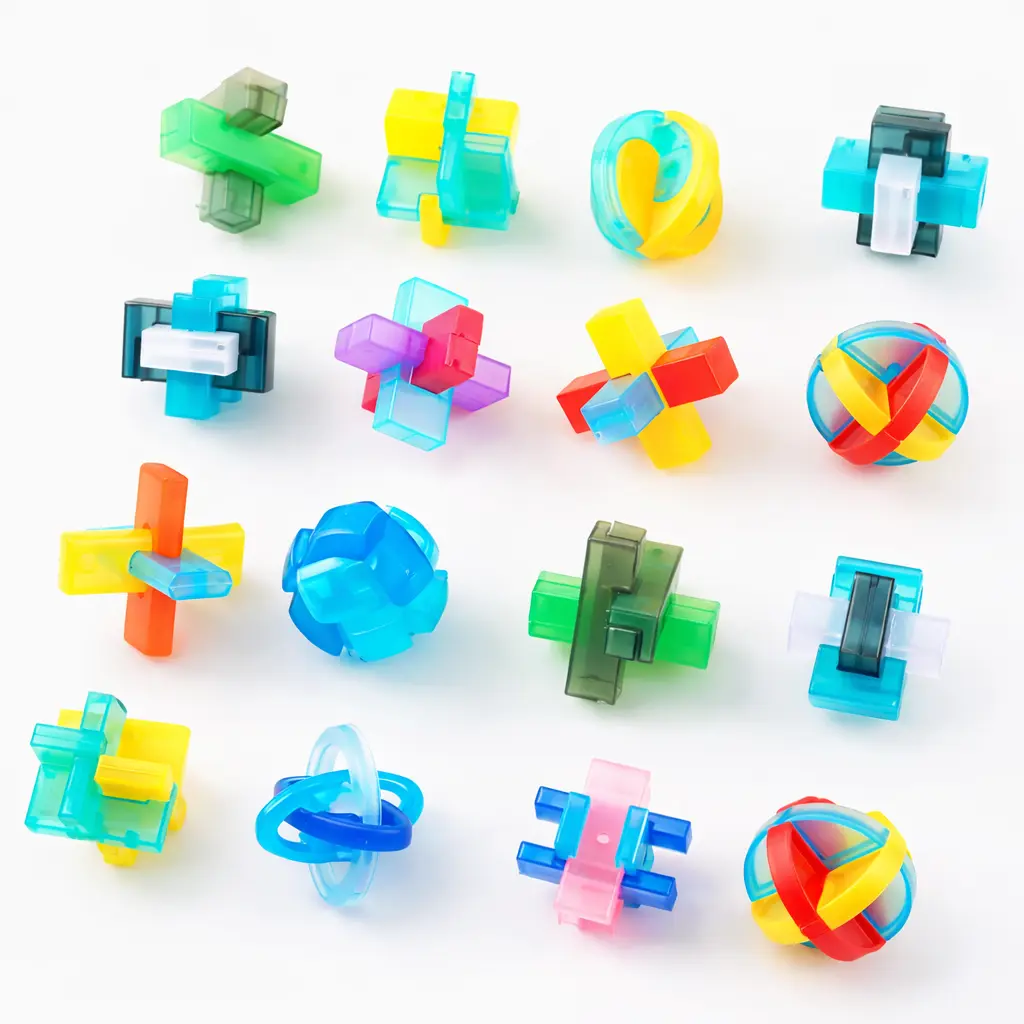
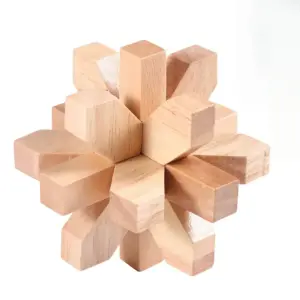
For an adult or teen first-timer, the 12 Piece Crystal Luban Lock Set earns the top spot: twelve distinct small challenges in one gift-sized box, a price that sits in stocking-stuffer range, and a format that doubles as a desk display long after the wrapping paper is gone. Compare it to the rest of the shortlist below before you add to cart.
Run these four checks
- Piece or puzzle count — match to the recipient’s age using the cheat sheet below.
- Age rating — confirm on the product page; metal and mechanical sets often list 12+ or 14+.
- Theme — Christmas or winter imagery gives bold color blocks that sort faster than abstract art.
- Set variety — graduated bundles (small, medium, larger) keep interest past day one.
Age-to-piece-count cheat sheet
- Under 6: 24–60 large pieces
- 6–8: 60–100 pieces
- 9–12: 100–300 pieces
- Teens: 300–500 jigsaw pieces or a 3D wooden set
- Adults: 500+ jigsaw pieces or a 3D/wooden mechanical set
- Seniors: 300–500 pieces with a 1:1 reference poster
Shortlist at a glance
| Pick | Price | What to verify on the product page |
|---|---|---|
| 12 Piece Crystal Luban Lock Set | $28.88 | Piece count, recommended age, display value |
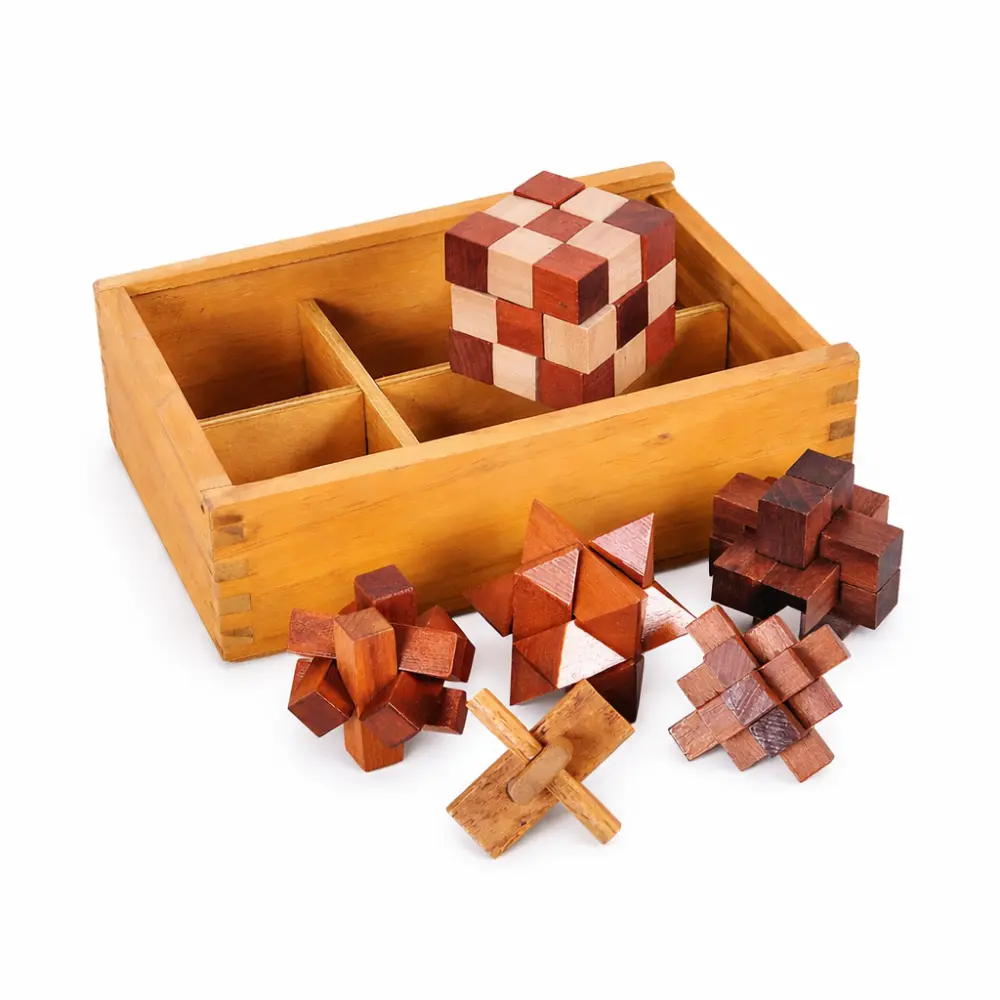
| 6-in-1 Wooden Brain Teaser Set | $38.88 | Puzzle count, wood finish, recommended age |
| 4 Band Puzzle Ring | $11.99 | Sizing, band count, recommended age |
| 54‑T Cube Puzzle | $18.99 | Wood type, difficulty, recommended age |
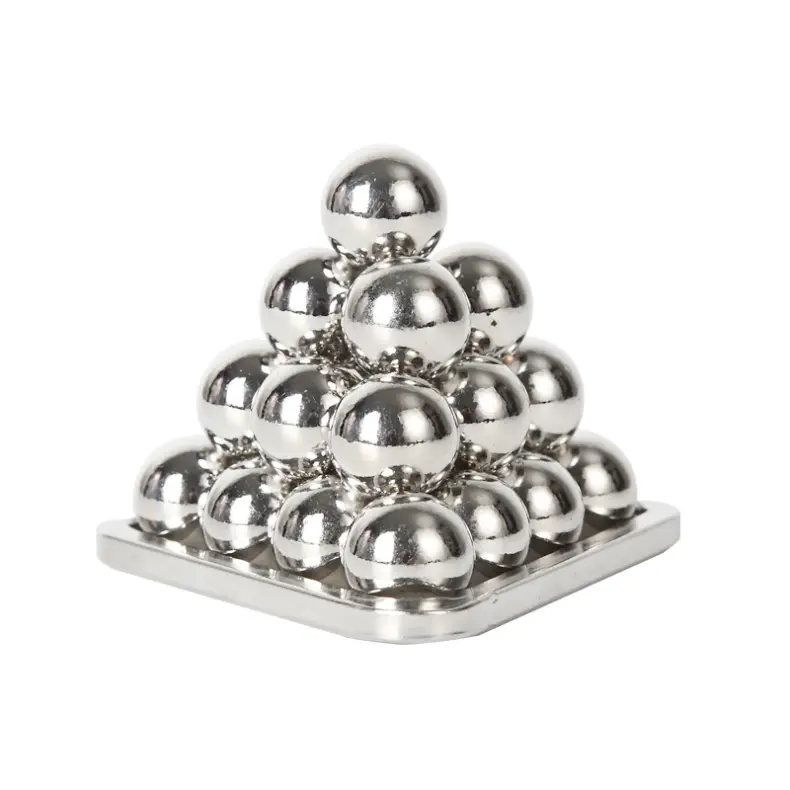
| 6 Piece Steel Ball Pyramid Puzzle | $11.98 | Piece count, metal finish, recommended age |
The next section breaks down each beginner-fit check (cut quality, image clarity, age rating, themed artwork) so you can finish the purchase in under ten minutes with confidence the set matches the recipient.
01. What Actually Makes a Puzzle Set Beginner-Friendly (5 Checks Before You Buy)
A beginner-friendly set is one the recipient can finish, frame, and ask to do again. The age-to-piece-count ranges from the cheat sheet above tell you where to start; the five checks below tell you whether the specific box on the product page will actually deliver on that fit.
Piece count alone is not enough. Two 300-piece Christmas puzzles can feel completely different depending on how the pieces are cut, how bold the image is, and whether the box lists a realistic age range. Treat the following as a five-point filter you can run on any product page in under a minute.
Check 1: Piece count band and the graduation principle. Match the count to the recipient’s age bracket first, then ask whether the set walks the difficulty up. A graduated set of three puzzles at 100, 250, and 500 pieces keeps a first-timer engaged far longer than a single 500-piece box, because each finished puzzle teaches pacing and confidence for the next. For brain-teaser or wooden sets, the same idea applies: a multi-puzzle bundle that starts with a simple disentangle and ends with a multi-step lock gives the recipient a built-in progression rather than a single one-shot challenge. The 12-piece crystal Luban lock set applies this same logic to mechanical puzzles, using twelve individual lock pieces in one box so a first-timer gets twelve graduated wins instead of one intimidating build.
Check 2: Cut quality, piece thickness, and replay value. A cleanly cut puzzle clicks together without forcing; a poorly cut one warps, frays, or leaves gaps that make beginners think they placed a piece wrong. On the product page, look for phrases like “precision die-cut,” “random cut,” or “ribbon cut,” and skim reviews for words like “dust,” “loose fit,” or “torn backing.” For wooden and 3D sets, laser-cut plywood with consistent thickness reassembles cleanly and survives being taken apart and rebuilt, which is the point of a replayable family activity rather than a one-afternoon burn.
Check 3: Image clarity and color blocks. Bold, high-contrast color zones make sorting dramatically easier for a first solve. This is exactly why Christmas-themed art works for beginners: the deep reds of a Santa suit, the green bands of a tree, the white of snow against a dark sky all create natural sorting buckets that the eye grabs in seconds. Abstract art or photorealistic scenes with similar tonal values — foggy forests, muted still lifes, gradient skies — can stall a beginner for hours. When in doubt, look at the box image and ask: could a child point to four distinct color regions without help?
Check 4: Age rating printed on the box. Manufacturer age ranges vary more than buyers expect, and they are not just a safety guideline for small parts. A 500-piece jigsaw rated “ages 6+” is a very different product from the same count rated “ages 10+,” because the second manufacturer has already adjusted cut complexity, piece thickness, and image contrast for a younger solver. Always check the printed rating against the recipient’s actual age, and when the box is silent, scan the product description for an explicit “suitable for ages X to Y” line before adding to cart.
Check 5: Theme recognizability. Familiar motifs speed up the first hour of sorting — the hour a beginner is most likely to walk away. Trees, Santas, snow globes, gingerbread houses, and reindeer are all immediately sortable shapes that double as visual anchors. For adult recipients, the same rule applies with a twist: choose a winter scene or a Christmas-market illustration over an abstract gradient, because even a patient adult solves faster when the reference image tells a clear story.
Run those five checks against the shortlist above, and one set will usually separate from the rest. The next section maps the same five checks to specific beginner types — kids 4–8, kids 9–12, teens, adults, and seniors — so the recommendation lands on the right person.
02. Age-to-Piece-Count Mapping: Picking the Right Beginner Set for Each Recipient
The same set never fits two beginners. Match piece count to the recipient’s age first, then confirm that the theme and cut quality pass the five checks from the previous section. A graduated set that walks a first-timer from 100 to 500 pieces keeps interest longer than any single box, because the next challenge is already on the table.
Kids 4–5: 24–60 large, thick pieces
Count fewer than 60, not more. Tiny hands and developing fine-motor control need chunky, oversized pieces that snap into place with a satisfying click. A 24-piece Christmas stocking stuffer — three small puzzles bundled together — works as a Day-1 success that builds confidence before the wrapping paper is off the floor. Check the box for a “safe for ages 3+” or “ages 4+” label, and skip anything that mixes in small parts or thin cardboard.
Kids 6–8: 60–100 pieces
Step up to 60–100 pieces. This is the bracket where kids who finished their first 24-piece set start asking for a “real puzzle.” Look for rounded edges, sturdy board, and Christmas images with bold color blocks — red-and-white Santas, green trees against a blue background, a single ornament in close-up. The image sort should take under five minutes; if the box is one busy collage with no anchor shape, the puzzle will feel harder than the piece count suggests.
Kids 9–12: 100–300 pieces
Cross the 100-piece line for tweens. At this age, kids can sustain a 200-piece solve over a weekend, and a 300-piece Christmas scene becomes a family-table project that fills an afternoon. The reference poster check matters here: a printed 1:1 image inside the lid turns a 300-piece box from “I’ll try” to “I’ll finish.” Skip random-cut designs — a predictable cut helps a child build the sorting strategy they will use for years.
Teens: 300–500 pieces, or a 3D wooden model
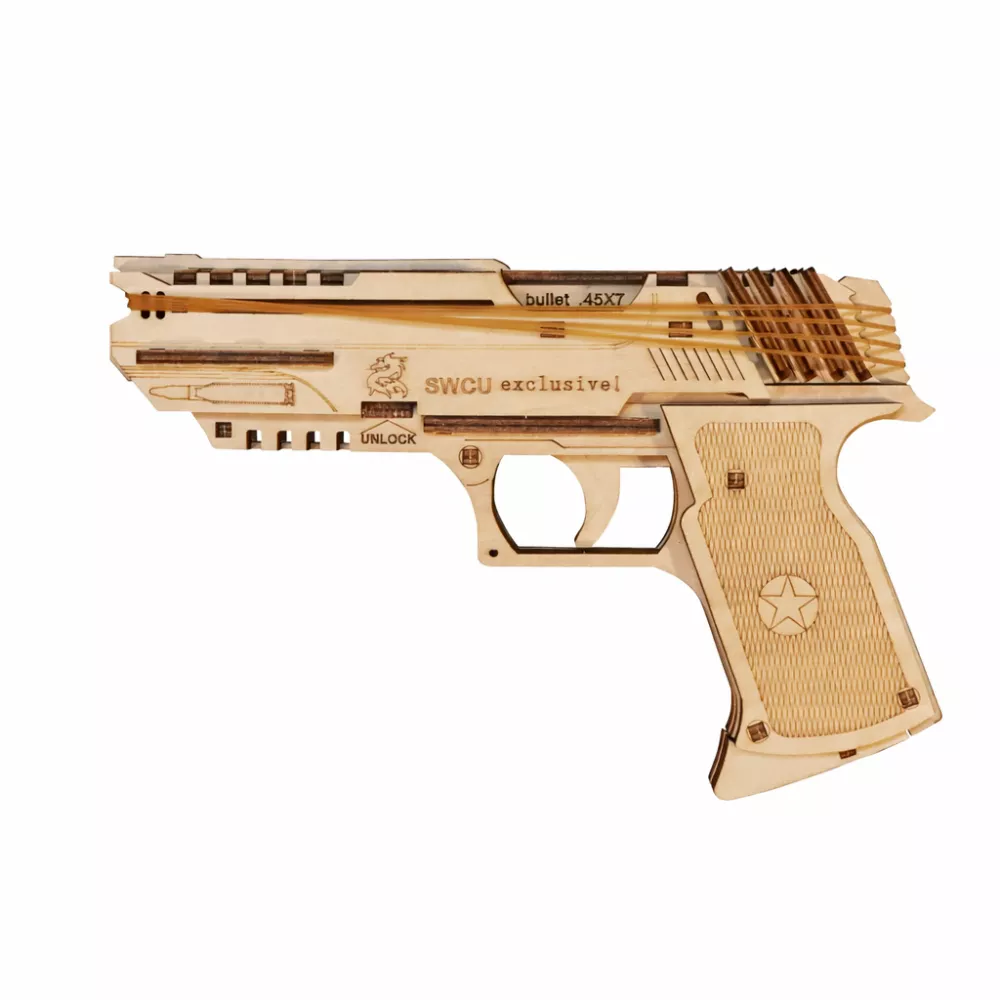
For teens, 300–500 pieces is the right starting zone, and the format should match their interest. A teen who likes mechanical objects will outgrow a flat jigsaw in one sitting; a 3D wooden model — a perpetual calendar, a music box, or a small pistol kit — gives them an object to display on a shelf after the build, which extends the replay value past the holidays. Christmas-themed kits exist, but a neutral design often lasts longer because it stays on the desk in February.
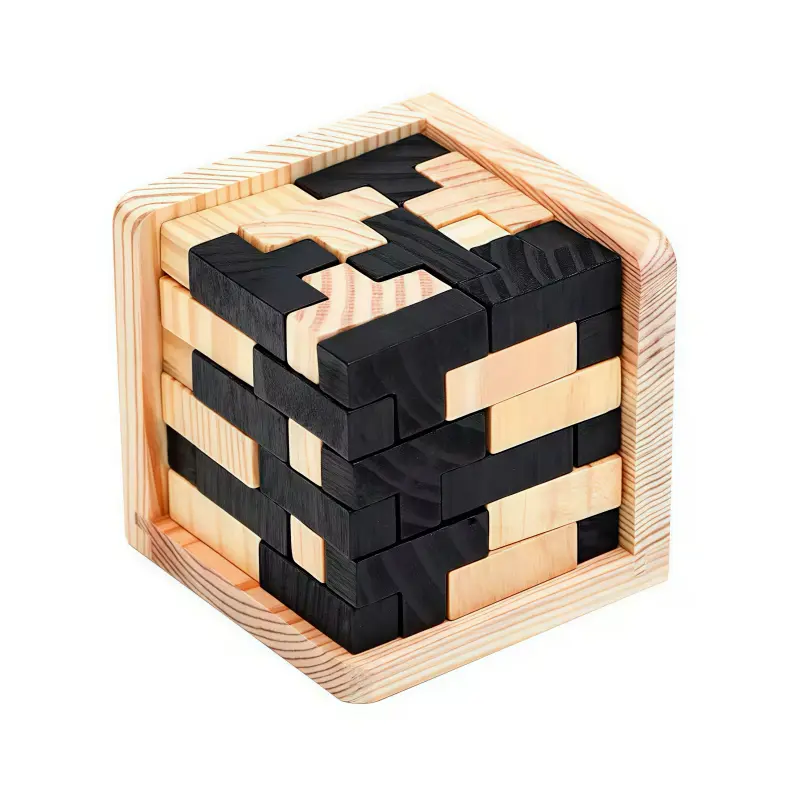
54‑T Cube Puzzle — $18.99
Adults: 500+ jigsaw, or a 3D wooden set
Start at 500 pieces for adults new to jigsaws. Below 300, an adult finishes in one evening and the gift feels light for the price paid. A 500-piece Christmas scene with a reference poster gives the recipient a project to return to over several sittings, and the poster doubles as a sorting reference during the first hour. For adults who prefer tactile builds, a 3D wooden kit — a treasure box, a clock, or a mechanical model — delivers a “first solve” that lives on a shelf. A graduation set that bundles 300, 550, 750, and 1000 pieces (as some multipacks do) lets a first-time adult chart their own progression through the holiday break without guessing the next step.
Seniors: 300–500 pieces, always with a reference poster
Stick to 300–500 pieces for seniors, and never skip the reference poster. Aging eyes benefit from large, high-contrast pieces and an image they can glance at without reaching for reading glasses. A 500-piece winter-scene puzzle with a 1:1 included poster is a manageable evening project; a 1000-piece without a poster is a different gift entirely. If a senior is buying back for a grandchild, a 24-piece Christmas set in three different images fits in a stocking and turns into a shared family activity the same afternoon.
The graduation principle, in one line
A beginner set that walks the recipient from one bracket to the next — 100 to 250 to 500 pieces, or three wooden kits of rising complexity — teaches pacing and removes the “now what?” moment that kills a first hobby. Map the recipient to a starting bracket above, add a reference poster where the box allows, and the Christmas puzzle set becomes a family activity that keeps giving past New Year’s.
03. Christmas-Themed Set Types Worth Shortlisting (Jigsaw, Wooden 3D, Brain-Teaser, Stocking Stuffer)
Choose a jigsaw multipack for first-timers who want a frameable winter scene, or select a wooden 3D assembly set for adult beginners who prefer a tactile, mechanical project that doubles as home decor. While brain-teaser sets are excellent secondary gifts for desk display, you should skip standalone metal disentanglement puzzles for true beginners because their high cold-start difficulty and lack of clear progression often lead to early frustration rather than holiday engagement.
Jigsaw Multipacks: Best for the Graduation Principle
Jigsaw bundles are the most reliable choice for a household of new puzzlers. Look for sets that specifically include a range of piece counts, such as a bundle containing 300, 500, and 750 pieces. This allows the recipient to start with a “quick win” on Christmas morning and work their way up as their sorting skills improve. Christmas-themed imagery is particularly helpful here; the bold color blocks of a red Santa suit or a green tree make the sorting process far more intuitive than abstract designs.
Wooden 3D Sets: Best for Tactile Adult Beginners
For teens and adults who find 2D jigsaws too passive, a 3D wooden puzzle set provides a more technical entry point. These sets focus on assembly and mechanical movement rather than just image matching. A 3D wooden puzzle brain-teaser guide can help you identify which kits use interlocking joints versus those that require glue, which is a critical check for a beginner who may not have a dedicated hobby workspace.
Brain-Teaser Sets: The Desktop “Mind Game” Option
Mechanical puzzle sets, often marketed as “mind games,” focus on disentanglement or assembly. According to Logica Giochi, these sets are highly versatile Christmas gifts for children and adults alike because they offer immediate, repeatable play. However, for a true beginner, avoid “ninja-level” metal sets. Instead, look for sets with a clear difficulty rating on the box. A variety pack that includes different materials—like wood and metal—keeps the interest high because the solving logic changes with each piece.
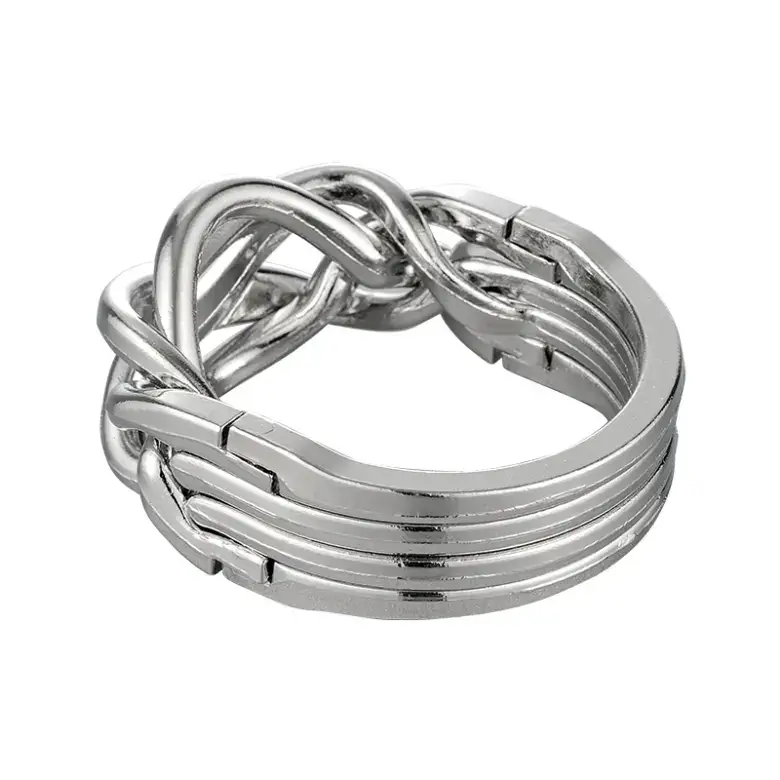
4 Band Puzzle Ring — $11.99
Stocking Stuffers: The 24-Piece Triple Check
For the youngest recipients, the best beginner set is often a trio of small jigsaws. Verified product data shows that Christmas jigsaw sets featuring three separate 24-piece puzzles are ideal stocking fillers for children. This format prevents the “overwhelm” of a large box while providing three distinct “wins.” When buying these, check the product page to ensure the images are different enough that the pieces won’t get mixed up between puzzles.
Summary of Next Steps
To finalize your choice, match the recipient’s patience level to the mechanism. If they enjoy quiet, long-form focus, buy a graduated jigsaw multipack. If they prefer a fidget-friendly, tactile challenge for their desk, opt for a wooden assembly kit or a multi-material brain-teaser set. Avoid single-box 1000-piece puzzles unless the recipient has already expressed a desire for a multi-day project.
04. Decision Table: 6 Beginner Christmas Puzzle Sets Compared on Checks You Can Verify
Match the recipient’s patience to a set that starts easy and steps up; the graduation principle beats a single-box gamble on day one. The table below lines up six beginner-friendly sets against the four checks from earlier: piece count or mechanism, recommended age, Christmas fit, and one verification step. Where exact piece counts or age ranges are not in the supplied product data, the “What to check” column tells you what to confirm on the product page before you click buy.
| Set | Piece Count / Mechanism | Age | Theme | What to Check |
|---|---|---|---|---|
| 12 Piece Crystal Luban Lock Set | 12 individual lock pieces in one box | See product page | Translucent crystal — keepsake aesthetic | Confirm recommended age and difficulty rating on the product page |
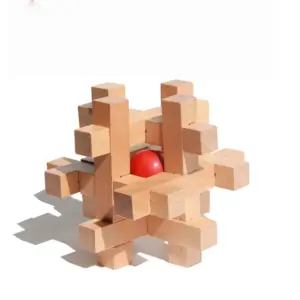
| 6-in-1 Wooden Brain Teaser Set | 6 wooden mechanisms in one box | See product page | Warm wood — neutral, gift-ready | Confirm the difficulty ladder runs easy to medium |
| 3D Wooden Mechanical Pistol Kit | 3D mechanical wooden build with moving parts | See product page | Pistol model — display-worthy build | Confirm assembly method and moving parts |
| 54‑T Cube Puzzle | Wooden cube with 54 interlocking pieces | See product page | Classic wooden cube — neutral | Confirm difficulty and wood finish |
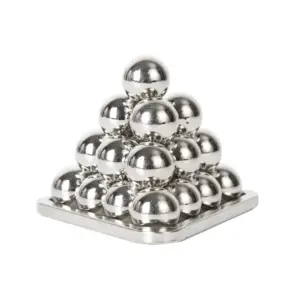
| 6 Piece Steel Ball Pyramid Puzzle | 6-piece metal assembly | See product page | Polished steel — desk-friendly | Confirm pieces separate and re-form cleanly |
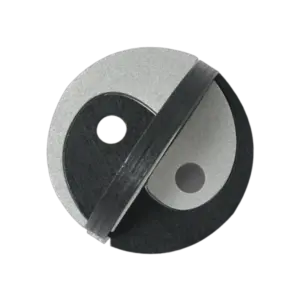
| 4 Band Puzzle Ring | Single ring, 4 interlocked bands | See product page | Jewelry-style — fits a stocking | Confirm ring size for adult or child wearer |
Read-Out: The Graduation Principle
The graduation principle is the single most important check in the table. A stepped bundle that walks the solver from a smaller starting count up to a larger finish lets a beginner build confidence across sessions, which is exactly the logic behind choosing a multi-puzzle box over a single 1000-piece gamble. Bits and Pieces echoes the same idea, noting that beginners generally do best with Christmas jigsaws in the 100–500 piece range. The 12 Piece Crystal Luban Lock Set at $28.88 applies that same logic to mechanical puzzles: twelve small locks create twelve graduated wins instead of one intimidating box. For the youngest recipients, one widely sold stocking-stuffer set ships three 24-piece Christmas jigsaws in one box, a compact graduation of small finishes. Logica Giochi’s metal and cast gift sets offer a hard-intermediate-beginner difficulty mix, but skip those bundles for a true day-one beginner; cold-start difficulty is high and there is no built-in progression. If you are weighing a single jigsaw box instead, the “reference poster included” check still applies — a 1:1 poster turns a 500-piece puzzle from intimidating into approachable.
The one practical next step: pick the set whose graduation ladder matches the recipient’s patience, not the loudest box on the shelf. For a true day-one beginner who wants a keepsake-style Christmas gift with built-in pacing, start with the 12 Piece Crystal Luban Lock Set at $28.88.
05. What to Check Before You Add to Cart (and the One Beginner Mismatch to Avoid)
Once the decision table narrows your shortlist, the last step is a quick packaging and product-page audit. The single biggest beginner mismatch is a 1000-piece single-box set with no reference poster. Most first-timers quit in the first hour, not because the image is bad, but because there is no full-size guide to cross-check edge pieces against, so every match feels like guesswork.
Here is the pre-purchase checklist to run before you commit:
- Reference poster included. A 1:1 printed poster transforms a 500-piece puzzle from intimidating to approachable. Verify “reference poster” or “1:1 poster” in the product description.
- Matte, not glare-coated, box art. Glossy box lids reflect overhead light and make color matching harder. A matte finish keeps the image readable under typical room lighting.
- Age rating printed on the box. A printed “suitable for ages 6+” or “8+” is a real check; a vague “for all ages” line is not. Cross-reference with the recipient.
- Single-image artwork for first-timers. Multi-image collages and abstract patterns force the solver to re-sort every 20 pieces. One bold image with clear color blocks (a Christmas tree, a snow globe, a fireplace) speeds up sorting.
- A return-friendly seller. Confirm the seller’s return window on the product page before checkout, since the first puzzle you unwrap may not match the recipient’s taste.
A note on brain-teaser sets. A mechanical puzzle is one the solver takes apart, reassembles, or unlocks — a different skill from fitting pieces to a printed image. That is why a 12-piece crystal lock set is closer to a logic puzzle than to a Christmas jigsaw — still beginner-friendly, but it asks for patience, not pattern recognition. A wooden brain-teaser guide can help you compare which wooden sets use interlocking joints versus glue, and which sit in the true beginner range rather than the “ninja” bracket.
The one-line graduation reminder. A beginner set that walks the recipient up in difficulty — 100 pieces first, then 250, then 500 — teaches pacing and keeps interest longer than any single box. Check the product page for piece counts in a graduated ladder, and skip any set where the smallest box still tops 500 pieces.
Frequently Asked Questions
Before you check out, the last questions that trip up gift buyers are usually about piece count, age fit, and whether brain-teasers count as “real” puzzles. The short answer: a graduated jigsaw set teaches pacing, a small mechanical set teaches patience, and a Christmas-themed stocking stuffer teaches a child that a puzzle can be a present.
What piece count is good for a true beginner?
Start at 100 pieces for children and 250 pieces for adults, then ladder up to 500. Bits and Pieces recommends Christmas puzzles in the 100 to 500 piece range, which is exactly the range that supports the graduation principle and keeps interest past the first solve.
Is a puzzle set a good Christmas gift for an adult who has never done one?
Yes, if it ships with a 1:1 reference poster and a recognizable image. A 500-piece Christmas jigsaw with bold color blocks — a tree, a fireplace, a snowman — is approachable for a first-timer. Skip 1000-piece single-box sets until the recipient has finished at least one shorter puzzle.
What age is a 100-piece Christmas puzzle appropriate for?
Roughly ages 6 to 8 with larger knob-style pieces, and ages 9 to 12 with standard cuts. For under 6, start with 24 to 60 large pieces; a set of three 24-piece Christmas jigsaws is a common stocking-stuffer format for that range.
Are wooden 3D puzzle sets good for beginners?
Yes, for teens and adults with patience and a flat workspace. A 3D wooden model — a clock, a music box, a mechanical kit — is a build, not a solve. It takes hours, not minutes, and the finished piece doubles as desk decor. Confirm the recommended age and estimated build time on the product page before checkout.
Should I get a jigsaw set or a brain-teaser set for a beginner?
Pick jigsaw if the recipient likes images and sorting. Pick brain-teaser if they like taking something apart and putting it back together. A 12-piece mechanical lock set sits closer to a logic puzzle than to a jigsaw, so it asks for patience, not pattern recognition — still beginner-friendly, just a different skill.
What’s a good stocking-stuffer puzzle for kids?
A small 24-piece Christmas jigsaw in a set of three fits a stocking and gives a child three short wins. Look for bold, single-image artwork and a sturdy box, then verify the age rating on the product page before you buy.
Pick the set that matches the recipient, not the season, and the Christmas box under the tree will do the rest. When the set is in your cart, run the four checks one last time — piece count, age range, image clarity, return window — and the click becomes a confident one.
Where to Start
If the recipient and occasion checks above match, start with 12 Piece Crystal Luban Lock Set. Check the current product page for the specifications that matter to your choice.
Sources and verification
- Product details and current specifications: Tea-Sip product page
AI gate
This guide was produced with AI assistance and reviewed by an editor for accuracy, structure, and compliance with our publishing standards before publication. All product recommendations, prices, and links reflect the Tea-Sip catalog at the time of writing.
Last updated: August 16, 2026