Quick Answer: Beginner Puzzle Set for Corporate Gifts: The Non-Puzzler Edition
For corporate gifting, the best beginner puzzle set is one a non-puzzler can complete in 20–60 minutes without instructions — choose wooden disentanglement or 100–300 piece jigsaws for desk-drop gifts, and choose puzzle boxes only when the unboxing experience is part of the message. Three checks decide which format wins: difficulty calibration, recipient context, and bulk-order logistics.
Most corporate puzzle gifts overshoot the recipient’s skill because piece count and solve time are calibrated for a hobbyist, not a first-timer. Design the gift around the least experienced person in the room, and the format lands as clever rather than defeating. For a format-by-format breakdown of which corporate gifting picks tend to survive a real office environment, the 7 metal puzzle corporate gift ideas that actually get used guide maps each common scenario to a tested product type.
Decision table: Match beginner puzzle format to gifting scenario
| Gifting scenario | Best-fit format | Solve-time target | What to check before ordering |
|---|---|---|---|
| New-hire desk-drop | Compact disentanglement or 100–300 piece jigsaw | 20–45 min | Per-unit weight, individual gift box, drop-ship address format |
| Client thank-you | Puzzle box or branded jigsaw | 20–60 min | MOQ for customization, personalization lead time, approval proof turnaround |
| Conference swag (tote-bag friendly) | Mini disentanglement or 48–100 piece giveaway jigsaw | 15–30 min | Finished dimensions, assembled weight, unboxed footprint |
| Holiday gifting | Entry-level puzzle box or multi-puzzle brain-teaser set | 30–60 min | Gift box inclusion, first-order setup fee, holiday production cutoff |
Verify the solve-time estimate with a single unit on your desk before scaling to bulk. A non-puzzler tester reveals whether the piece count and mechanism are truly entry-level in practice, not just on the spec sheet. Once that check passes, move to the supplier shortlist.
01. What ‘Beginner’ Means for a Non-Puzzler Corporate Recipient
Define a non-puzzler by three observable signals before choosing a format: no puzzle owned in the last year, no completed jigsaw or mechanical puzzle in the last 12 months, and no stated interest in brain teasers as a hobby. When any one of these signals is present, treat the recipient as an entry-level solver and calibrate for 20–60 minutes of total engagement, not a weekend project. This skill-floor approach is what separates a corporate gift that lands from one that ends up in a desk drawer.
Most corporate puzzle gifts miss because the calibration was built for a hobbyist. A 500-piece branded jigsaw sounds generous on a supplier’s product page, but it takes a casual solver 4–8 hours across multiple sessions — a commitment most new hires, conference attendees, and client contacts will not make. The same pattern shows up in mechanical puzzles: a Hanayama-rated Level 6 cast-metal piece is a lovely desk object, but it is not a first-puzzle experience. For a non-puzzler, the gift must complete in a single sitting, ideally during a coffee break or a quiet hour between meetings. If the recipient needs to set it aside and come back, the engagement signal is already lost.
The practical test you can run on your recipient list takes about 60 seconds per name. Ask three questions: Does this person already own a puzzle or brain teaser? Have they mentioned enjoying logic games in conversation? Will they have uninterrupted time within the next week? Two “no” answers means treat them as a non-puzzler and default to compact formats under the 60-minute solve ceiling. One “yes” lets you move into the mid-range formats in the decision table above. Three “yes” answers and you can safely send the more intricate puzzle boxes or multi-piece sets without calibration risk.
For a one-to-many drop — onboarding kits, conference swag, large client mailers — assume the least experienced person in the room sets the floor. A 25-person new-hire cohort likely includes at least a few people who have not touched a puzzle since childhood. Pick the format that the most cautious solver can finish without help, and the rest of the group will still find it engaging. Group size changes the logistics more than the difficulty: under 25 units, you can usually order with no minimum and use off-the-shelf SKUs; 25–100 units triggers MOQ conversations and setup-fee territory at most custom suppliers; 100+ units requires a packaging plan and a confirmed lead time before the gift date is locked.
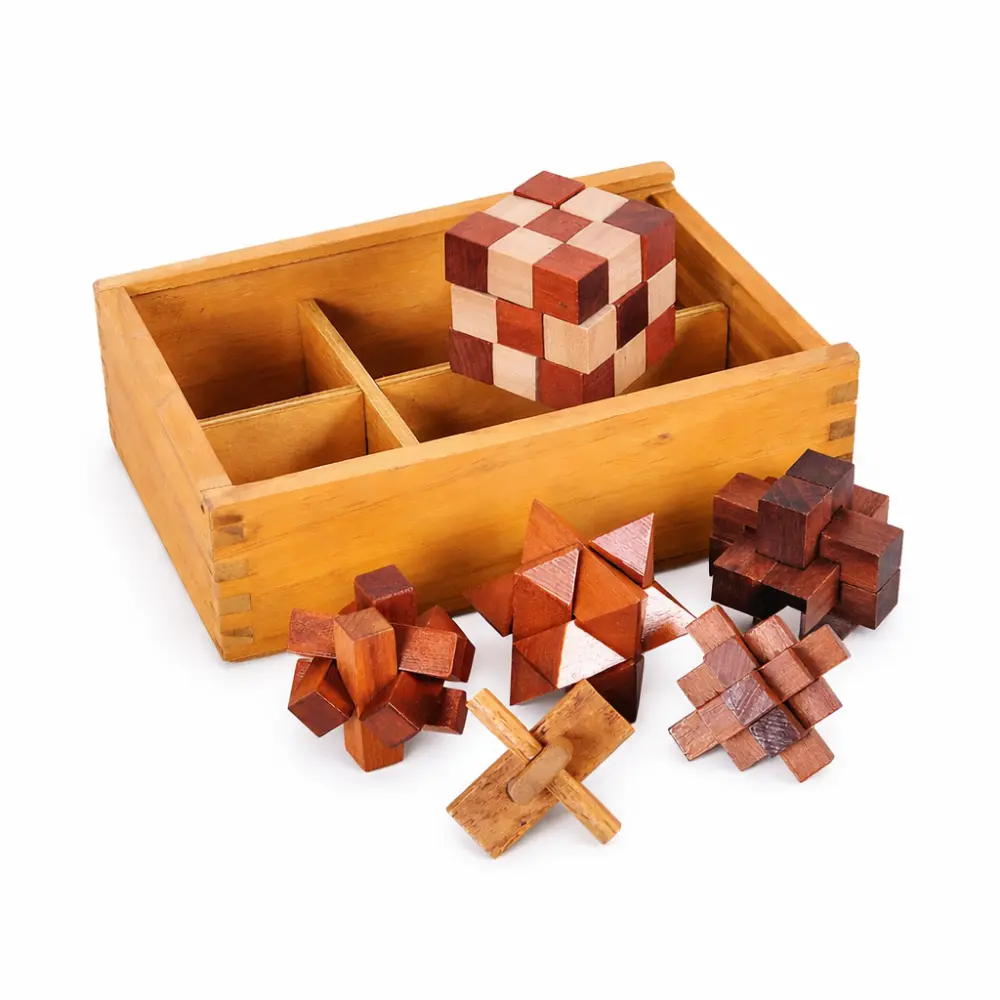
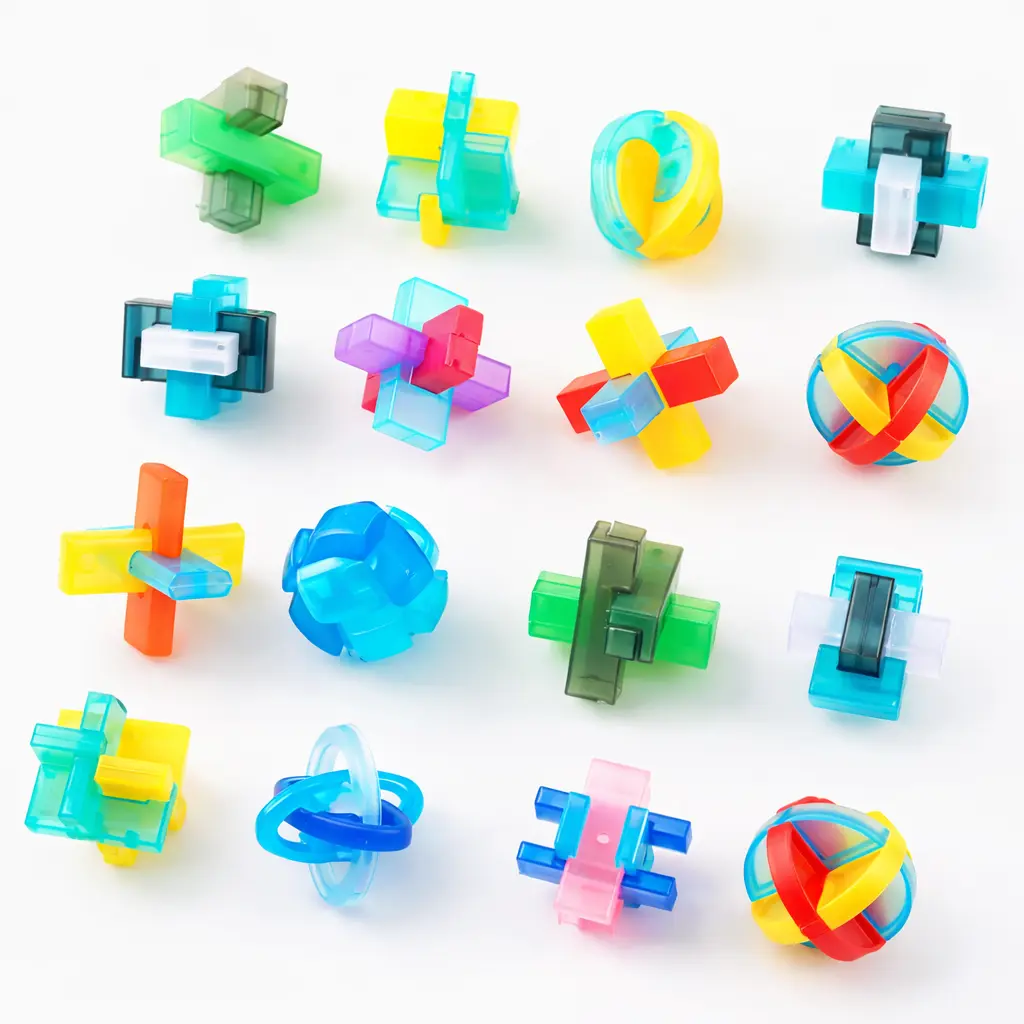
A multi-format set like the 6-in-1 Wooden Brain Teaser Set works well when your recipient list mixes experience levels. Each piece offers a different mechanism and difficulty, so the cautious solver can start with the simpler disentanglement and stop at any point, while the more confident solver keeps moving through the full set. The variety also functions as a “find your format” sampler, which is useful for a team where you cannot reliably predict individual skill. For a one-to-one gift where you know the recipient has never engaged with puzzles, a single compact mechanism is often a cleaner message than a multi-piece set.
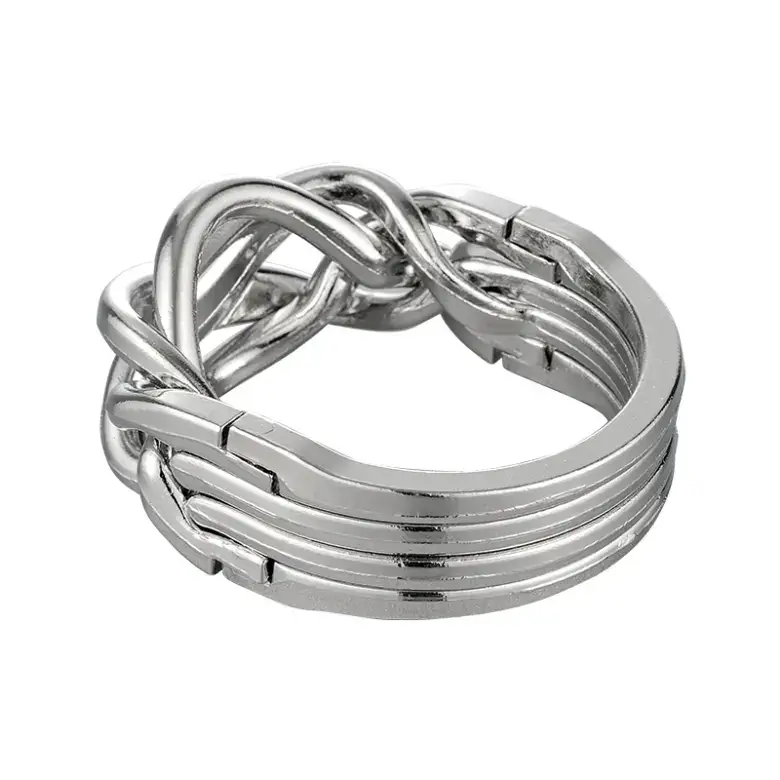
4 Band Puzzle Ring — $11.99
The 4 Band Puzzle Ring fits the opposite end of the spectrum: a single wearable object that takes 5–15 minutes to figure out and stays on the recipient’s hand afterward. It is a good fit for a client thank-you where the gift needs to feel personal and unobtrusive, and where the budget per unit sits in the $10–15 range.
Your next action is straightforward: run the three-question test across your recipient list, tag each name as non-puzzler or casual solver, and default the format to whatever the non-puzzler tag can finish in one sitting. Once that filter is applied, the supplier shortlist in the next section becomes a much faster decision.
02. Match Puzzle Format to Gifting Scenario and Recipient Context
Once each recipient is tagged as a non-puzzler or casual solver, the format decision reduces to three mechanism types and four gifting scenarios. Pick a disentanglement puzzle when the gift lives on a desk and resets later; pick a small jigsaw when the box ships into a shared tote; pick a puzzle box only when the unboxing experience matters more than the solve. Format and scenario must align so the non-puzzler finishes in one sitting without an instruction sheet in hand.
Format 1: Disentanglement puzzles — onboarding, client, and holiday
Pick a wooden or metal disentanglement puzzle when the recipient will set it on a desk and reattempt it later. The mechanism is a single object the non-puzzler rotates, slides, or pulls apart in roughly 5–20 minutes, then resets without losing pieces. That single-object loop is what separates a desk-drop gift from a one-time novelty. This category sits within the broader family of mechanical puzzles — physical objects solved through manipulation of the mechanism — and the format wins on the no-instructions test for corporate audiences.
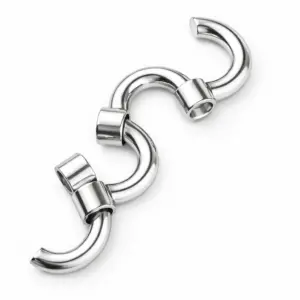
The top recommendation in this format is a 12-piece mechanical lock set, where each lock is its own short challenge. The set reads as a curated object rather than a single throwaway, and the recipient can solve one lock per coffee break instead of committing to one long session. For a non-puzzler who has never opened a lock puzzle, the 5–15 minute per-lock solve time lands inside the time budget of a single workday.
A 6-piece steel ball pyramid sits at the other end of the same format: one pyramid, one solution, 10–20 minutes total. It works when the budget per unit is tighter, the gift ships into a holiday pool, or the recipient list skews toward tactile objects over mechanical ones. The pyramid is also easier to ship in individual gift sleeves than a multi-piece lock set.
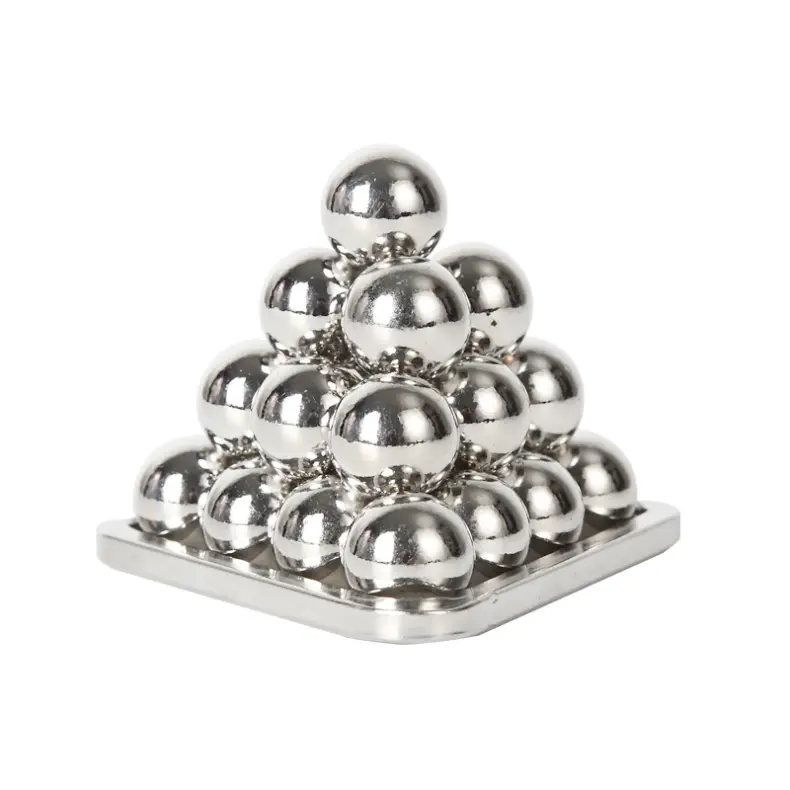
For each disentanglement order, verify the piece count, the absence of an instruction sheet, and the per-unit bulk discount tier before placing the order. Suppliers vary widely on packaging — a set that ships in a foam-lined box is a different logistics exercise than one that ships in a poly bag, and that detail changes the minimum order quantity conversation.
Format 2: 48–100 piece jigsaws — conference and event swag
Pick a 48–100 piece jigsaw when the gift has to fit a folded canvas tote, survive a carry-on, and finish before the recipient leaves the booth. The piece count is high enough to feel like a real puzzle and low enough to finish in 20–45 minutes. MakeYourPuzzles describes its 48–100 piece “Trade Show Mini Giveaways” as quick-build sets designed for exactly this — the image has to read clearly at small scale, and the box has to survive being stuffed into luggage.
Verify finished dimensions, box weight, and a confirmed bulk discount tier before committing. The trade-off with jigsaws is image legibility: a brand-heavy collage works, but a single low-contrast photograph turns into a frustrating first-time solve for a non-puzzler, which is the opposite of what a corporate gift should produce.
Format 3: Entry-level puzzle boxes — client reveal and executive gifting
Pick a puzzle box only when the unboxing experience is the message. A client thank-you or executive gift often lives or dies on the reveal: the recipient opens a gift box, finds a smaller box inside, and solves a short mechanism to access whatever is stored inside. Solve time lands at 15–30 minutes for a non-puzzler, and the box doubles as a display object afterward. Skip this format for onboarding kits or conference swag, where the recipient will not sit with a single object for that long.
Verify the box closure (it must close flush), the option for individual gift-box shipping, and whether the supplier can imprint a logo without raising the minimum order quantity above 25 units, since Piecework Puzzles and similar custom suppliers gate custom artwork behind that threshold.
Decision table: format vs. scenario
| Format | Scenario fit | Solve time | Recipient signal | What to check |
|---|---|---|---|---|
| 12-piece mechanical lock set | Onboarding, premium client, holiday | 5–15 min per lock | Non-puzzler who wants a “real” object | Box dimensions, instruction-free design, bulk tier |
| 48–100 piece mini jigsaw | Conference swag, event totes | 20–45 min | Casual solver, group setting | Finished size, image legibility, bulk discount |
| 6-piece steel ball pyramid | Holiday gifting, desk drop | 10–20 min | Non-puzzler who likes tactile objects | Material weight, packaging, individual sleeves |
| Entry-level puzzle box | Client reveal, executive gift | 15–30 min | Recipient who values the unboxing experience | Box closure, individual shipping, logo MOQ |
The format that wins is the one the recipient can finish without instructions and still feel clever afterward. Your next step is to map each name on the recipient list to a scenario row, then verify the supplier’s minimum order quantity, lead time, and packaging against the per-unit budget before placing the bulk order.
03. Solve Time and Piece Count Benchmarks for the Office
Choose a format the recipient can finish in 20–60 minutes without instructions, then verify the bulk-order logistics before checkout. A corporate gift that takes longer than an hour to solve will sit on a shelf; a gift that takes less than five minutes will be forgotten before the afternoon meeting. The 20–60 minute band is the office-appropriate solve time because it fits a single focus block, a long lunch, or the quiet hour before a deadline, and it gives the recipient a small “I did that” feeling that justifies the gesture.
A 48–100 piece jigsaw works as a 20–45 minute coffee-break build. Suppliers like MakeYourPuzzles list this exact piece-count range as their trade show giveaway tier, designed for recipients who have never opened a puzzle box and need a finish line they can see from their desk. Check the finished dimensions before you order: a 48-piece jigsaw that collapses to the size of a postcard signals “novelty,” while one that builds to 8×10 inches or larger signals “real project.” The first one ends up in a drawer; the second one ends up on a credenza.
A 100–300 piece jigsaw stretches into a 60–90 minute afternoon project and works best for desk-drop gifts where the recipient is staying put for a full block. A 100-piece custom corporate puzzle with your logo or brand imagery is also the easiest format to scale at low MOQ — one supplier, CreateJigsawPuzzles, lists a 12-piece, 10×8 custom puzzle starting at $17 with no minimum order, which is a useful benchmark for what a small-run onboarding kit can cost before logo setup fees apply.
A wooden disentanglement or interlocking puzzle fits the 5–15 minute repeatable reset. This is the format most beginners will actually pick up a second time, because the “one more try” loop is short and the object earns a place on the desk. Compact interlocking and burr-style puzzles satisfy the no-instructions rule because the goal is visible from the moment the box opens — separate, rearrange, re-form. Examples that fit this band include the 54‑T Cube Puzzle and the Interlock Puzzle Sphere, both small enough to keep in a drawer and challenging enough to feel like a real solve.
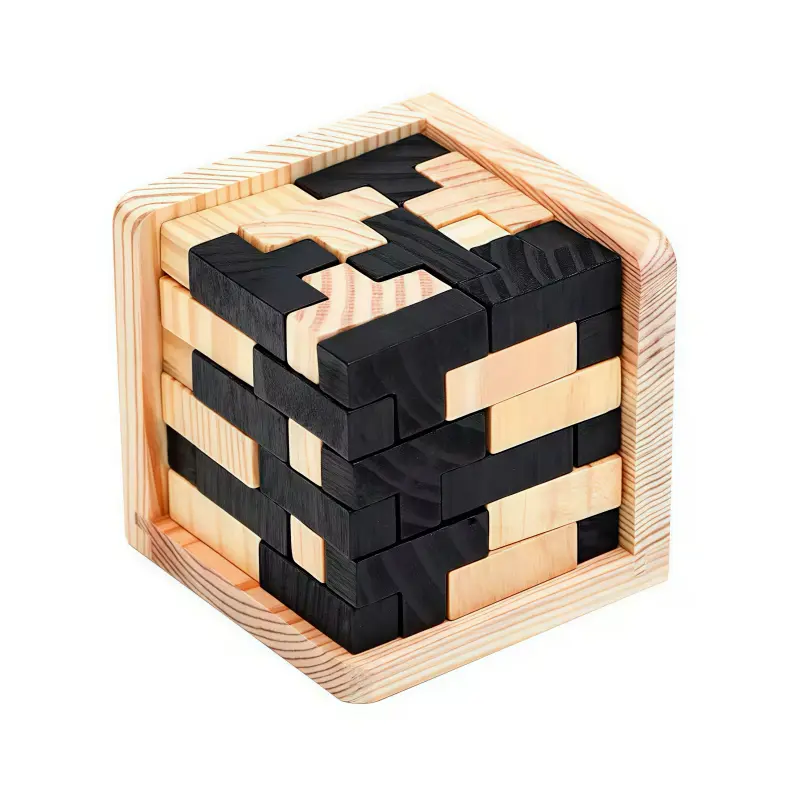
54‑T Cube Puzzle — $18.99
The “no instructions required” rule matters more for corporate gifting than for personal gifts because the recipient has no built-in patience buffer. A friend will tolerate a cryptic mechanism, watch a YouTube walkthrough, or call you for hints; a new hire or a client will not. They will silently set the puzzle aside and never pick it up again, and your gift becomes the object that defeated them. Puzzle types that pass the instruction-free test are disentanglement and interlocking puzzles with a visible goal, low-piece jigsaws with a reference image on the lid, and puzzle boxes where the box itself is the hint. Puzzle types that quietly fail the test are sequential-discovery puzzles with hidden steps, logic puzzles that require written notation, and any item labeled “level 3+” or “expert.”
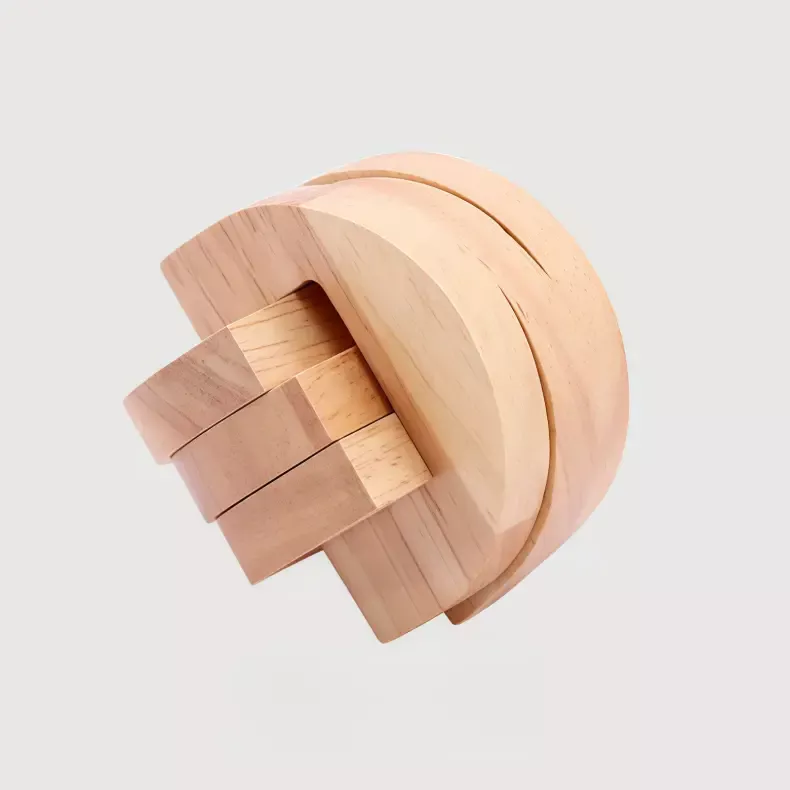
Interlock Puzzle Sphere — $17.99
For desk-drop and onboarding kits, a set that mixes formats — one short disentanglement challenge, one interlocking object, one small jigsaw — gives the recipient a choice without overwhelming them. A 12-piece lock-based set such as the 12 Piece Crystal Luban Lock Set sits at the entry-level end of this mix, with each lock solvable in minutes and the full set spreadable across a week of desk breaks. Verify the box dimensions and whether each piece ships in an individual sleeve before you commit to a bulk tier; suppliers treat “individual packaging” as a customization step that changes the per-unit cost. For desk-worthy executive picks that suit the in-house gift-box assembly route, the metal puzzles for your office desk roundup covers eight quiet, executive-grade formats worth shortlisting alongside the supplier conversation. Your next action is to map the recipient list to a format band, confirm the solve time with the supplier’s product page, and lock the lead time against your event date.
04. Vetting Suppliers: MOQ, Setup Fees, and Customization Limits
Now that the recipient list is mapped to a format band, the next procurement gate is supplier tier — choose an over-spec vendor only when the order size justifies its setup cost, and default to low-minimum printers for pilot runs under 25 units. Three supplier classes serve three order sizes, and each has a different gate that will quietly inflate the per-unit price if missed.
For orders under 25 units, skip the custom-artwork pipeline entirely and use a stock supplier that ships individual pieces with no setup fee. CreateJigsawPuzzles offers a 12-piece, 10×8 custom puzzle starting at $17 with no minimum order quantity, which makes it the right vendor for a 10-person pilot kit or a one-off client thank-you. Verify the turnaround window in writing before sending the PO, because no-MOQ printers often run on longer lead times than their bulk counterparts and a missed event date is harder to recover from than a higher per-piece price.
At the 25-unit threshold, the supplier class changes. Piecework Puzzles notes that custom-artwork orders are processed for you once the order contains 25 or more corporate gifts, which is the point where personalized packaging, branded box inserts, and premium gift boxes become available without a per-unit surcharge. Before committing, ask the supplier three questions: whether the 25-unit count includes samples, whether re-orders inherit the same art file or trigger a new setup fee, and whether the gift box ships assembled or flat-packed for your team to assemble on-site.
For 100+ units, the relevant gate is the first-order setup fee, not the per-piece price. Puzzle Lab charges a one-time $150 setup fee on first custom orders, which amortizes cleanly at 100 units but becomes the largest line item on a 25-unit pilot. Reddit r/mechanicalpuzzles threads on supplier pricing repeatedly flag the revision-fee trap — quoted per-unit prices assume the art file is finalized, so confirm the revision policy in writing and request a sample run of 3–5 finished units before authorizing the full production batch.
Reddit r/GiftIdeas threads on corporate gifting also surface a packaging mismatch the vendor brochures rarely highlight: a “gift-ready” puzzle is one thing, but a puzzle that ships in a plain mailer with no outer sleeve is another. Ask whether individual sleeves, belly bands, or branded outer boxes are included in the quoted price or treated as a customization line item. Bulk-tier suppliers often quote the puzzle unit only and add the sleeve as a $2–$4 upcharge per piece.
Across all three tiers, the verification checklist is the same: minimum order quantity, setup fee schedule, revision policy, individual packaging (sleeve vs. gift box), and lead time against your event date. The Tea-Sip roster — the 12 Piece Crystal Luban Lock Set, 6-in-1 Wooden Brain Teaser Set, 4 Band Puzzle Ring, 54‑T Cube Puzzle, and 6 Piece Steel Ball Pyramid Puzzle among others — ships without custom-artwork setup fees and is suited to in-house assembly into your own gift boxes at any order size, which removes the setup-fee gate entirely and lets your team control the packaging narrative. Your next action is to request quotes from two suppliers in the matching tier, compare lead times in writing, and confirm the packaging format before authorizing production.
05. Packaging, Unboxing, and Bulk Distribution Logistics
Choose individual gift boxes when the unboxing experience is part of the gifting message (client thank-you, executive onboarding, holiday gifts); choose bulk-shipper packing when the puzzle will be handed out in a meeting room or pulled from a conference tote bag. For a desk-drop or trade show swag, mailer-style bulk packing keeps per-unit cost down and speeds fulfillment. For a client-facing gift, the reveal is part of the value, and the typical $2–$4 per-unit sleeve or rigid box upcharge is usually justified by how the recipient perceives the gesture.
The conference-tote-bag constraint eliminates anything over roughly 8 × 6 × 3 inches. This rules out most large wooden brain-teaser gift sets and anything boxed in a rigid display case. Compact mechanical formats such as the 4 Band Puzzle Ring, 6 Piece Steel Ball Pyramid Puzzle, and the 12 Piece Crystal Luban Lock Set all fit within that envelope, which is why they’re reliable swag-puzzle candidates regardless of supplier choice. A pre-event sample mailed to your office is the cleanest way to confirm fit before committing to volume, and a low minimum order quantity makes that sample easy to justify internally.
Fragile formats need a separate shipping decision. Crystal puzzles, assembled wooden models, and 3D mechanical kits with small moving parts survive transit best in a rigid mailer with an inner tray or foam insert; a polybag alone risks cracked acrylic or dislodged components. Ask the supplier to walk you through the inner packaging photograph by photograph. A damaged-on-arrival rate above 2–3% negates any per-unit savings your procurement team is chasing.
For HR and marketing handoffs, the address-list mechanics matter as much as the box design. Confirm whether the supplier accepts a CSV upload with recipient names for individual gift tags, or whether they ship in bulk to one address for your team to distribute. The first option adds setup time and per-unit cost; the second gives you control over the personalization and the moment of gifting, which is often the point of sending a physical gift at all.
One question to put in your first email to any supplier: “Does the quoted price include individual gift sleeves and inner trays, or is packaging billed as a separate line item at our volume?” That single question surfaces most packaging mismatches before the deposit clears. For international rollouts, the worldwide shipping metal puzzles logistics map covers the cross-border variables that domestic buyers often miss.
Frequently Asked Questions
The first email question to ask any corporate puzzle supplier is whether packaging is itemized in the quote — because individual gift sleeves, inner trays, and address-list handoffs are where most bulk budgets quietly double. Below are the buyer questions that show up most often in corporate gifting inboxes, answered with the piece counts, solve-time ranges, and verification steps your procurement team can act on this week.
What is a good first-puzzle gift for someone who has never done a puzzle?
A 12-piece entry-level set designed around a single solve path. The 12 Piece Crystal Luban Lock Set at $28.88 fits that brief: a compact, mechanism-driven chain puzzle that a non-puzzler can pick up, attempt, and finish without instructions or a learning curve. Choose it when the recipient needs a desk-drop item that rewards five minutes of curiosity without becoming a side project.
How many pieces should a beginner corporate puzzle have?
For jigsaws, cap it at 48–100 pieces for desk-drop recipients; the 48–100 range is what custom-jigsaw vendors label “trade show mini giveaways” for non-puzzler audiences. For mechanical or disentanglement puzzles, treat the 12-piece threshold as the equivalent ceiling — any higher and the non-puzzler starts to feel tested rather than entertained.
How long should a beginner puzzle take to solve at the office?
Target 20–60 minutes for a first attempt. Mechanical disentanglements land on the low end (a non-puzzler finishes inside a coffee break); small jigsaws on the upper end. If a supplier cannot give you a typical solve-time range for a non-puzzler audience, ask them to walk through one in writing before you commit to volume.
What is the minimum order quantity for custom corporate puzzles?
It varies sharply by format. Custom cardboard jigsaws can start at single-unit runs; custom wooden and custom-artwork jigsaw projects tend to begin at 25 units for personalization. Verify per format rather than assuming a blanket number, and ask whether the quoted MOQ is per design or per total order.
What puzzle gift works as conference swag that fits in a tote bag?
Flat-packed or palm-sized items under 4 oz. The 4 Band Puzzle Ring at $11.99 and the 6 Piece Steel Ball Pyramid Puzzle at $11.98 both fit the swag envelope, survive shipping, and can be paired with a printed insert card inside the tote.
Can puzzle gifts ship in individual gift boxes for recipients?
Yes, when the supplier quotes packaging as a separate line item and accepts a CSV for per-recipient gift tags. Confirm both in writing before the deposit clears.
Next step: Pull your recipient list, pick the scenario (onboarding, client thank-you, event swag), and shortlist two Tea-Sip SKUs against the piece-count and solve-time caps above. The 12-piece Crystal Luban Lock Set is the safest default when in doubt — check the product page for current price and packaging options before you finalize the PO.
Where to Start
If the recipient and occasion checks above match, start with 12 Piece Crystal Luban Lock Set. Check the current product page for the specifications that matter to your choice.
Sources and verification
- Product details and current specifications: Tea-Sip product page
Last updated: August 23, 2026