Quick Answer: Beginner Puzzle Set Gift for Adults With ADHD: A Buying Checklist
The best beginner puzzle set for an adult with ADHD pairs low-floor difficulty with varied mechanism types — look for a set of 3–6 puzzles mixing metal, wooden, and sequential-disassembly pieces, individually packaged, and priced between $20 and $45. Mechanism variety matters more than piece count because novelty resets the dopamine loop that a single-puzzle set loses by the third solve.
Four checks separate a real gift from a stocking stuffer:
- Difficulty calibration — each piece should be solvable in 10–25 minutes.
- Mechanism variety — mix disentanglement, sequential-discovery, and assembly types.
- Material and sensory range — weight, texture, and sound should differ across the set.
- Gift presentation — individual boxes or a rigid gift box, not a polybag.
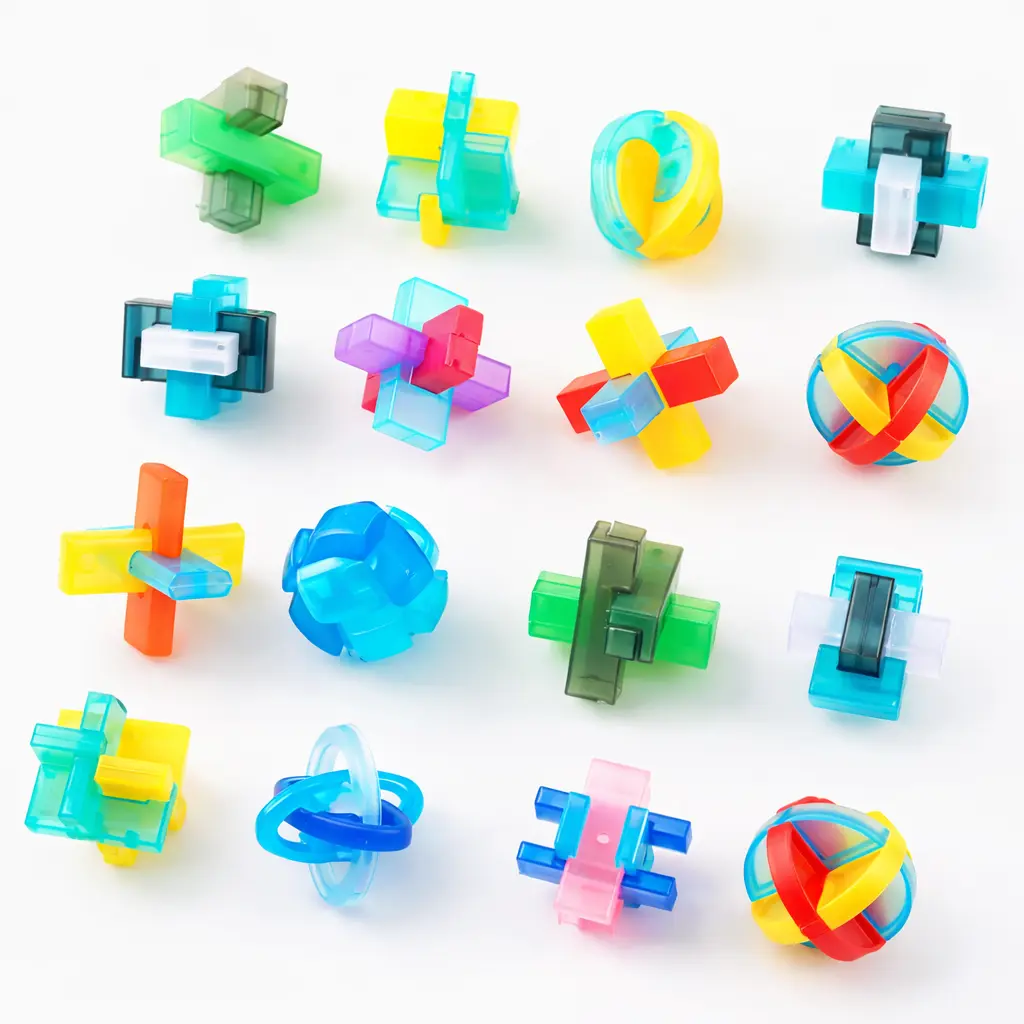
Top pick for the dominant buyer: the 12 Piece Crystal Luban Lock Set delivers 12 lock pieces in a single set — enough volume to stay novel through a long evening without overwhelming a true beginner. Listed at $28.88, it sits in the target price band and reads as a grown-up gift rather than a party favor.
Decision Table: Which Set Archetype Fits the Recipient
| Recipient need | Best archetype | What to check |
|---|---|---|
| First puzzle ever, wants quick wins | Multi-lock set (8–12 pieces, sequential) | Each lock looks visually distinct; solve time listed per piece |
| Loves tactile weight and desk presence | Mixed metal + wood (3–6 pieces) | At least one weighted piece, one wood piece; packaging is individual boxes |
| Wants a display piece after solving | Wooden assembly kit (1–2 pieces) | Finished dimensions listed; intended display surface stated |
| Building a year of small challenges | Bulk mixed set (12+ pieces) | Mechanism types listed, not just “brain teasers” |
| Very tight budget | Single metal disentanglement | Material and difficulty level stated on page |
Change the pick if: the recipient already owns a Luban-style lock set (move to a different mechanism), prefers silent fidgeting over problem-solving (choose a weighted metal piece), or needs something travel-sized (verify dimensions before buying).
01. What ‘Beginner’ and ‘ADHD-Friendly’ Actually Mean for a Puzzle Set
“Beginner” for an adult puzzle set means a quick solve and visible feedback per move, not a small piece count. That’s the only definition worth using when you’re buying for an adult with ADHD, where a half-finished jigsaw on the kitchen table tends to stay half-finished for months. A 12-piece metal lock set delivers the same cognitive satisfaction in a single sitting — and arrives looking like an adult gift rather than a stocking stuffer. The framing below separates “beginner” by mechanism, not by piece count.
The word “beginner” gets attached to two very different things in the puzzle aisle. A 500-piece jigsaw with a large image is technically beginner, but it asks the solver to sit still for several hours, hold a half-finished state in their head, and tolerate long stretches without a clear win. A 12-piece metal disentanglement puzzle is also technically beginner, but each move is a discrete attempt, each solve lands within a single sitting, and there is no half-finished state to abandon or feel guilty about. For an adult who values novelty and quick feedback, the second definition is the one that matters.
A useful way to sort mechanical puzzles is by mechanism — disentanglement (separate two interlocked pieces), sequential discovery (open a box by performing steps in the right order), and assembly (rebuild a shape from disassembled parts) — and each family produces a different cognitive texture. Disentanglement is fast and tactile. Sequential discovery rewards patience and pattern recognition. Assembly adds spatial reasoning on top. Mixing mechanism types inside one set is what keeps the novelty loop alive, because the same hand posture and mental approach don’t work twice in a row.
Three observable traits tell you whether a puzzle set is ADHD-friendly before you click add to cart. First, a difficulty gradient within the set — a graded run from an easy first puzzle to a harder last puzzle, ideally with solve time or skill level listed per piece. Second, tactile material feedback — metal pieces have weight and a cool hand-feel, wood has warmth and grain, and a set that mixes both gives the hands more information to work with. Third, a clear win condition per puzzle — a defined moment when the puzzle is solved, usually accompanied by a click, a separation, or a finished shape. If you can’t tell from the product page when a puzzle is “done,” the recipient won’t be able to either.
These three traits — difficulty gradient, tactile feedback, visible win — also map onto the specific buying checks in the decision table above. A sequential multi-lock set with individually rated difficulties is the clearest fit. A mixed metal and wood set with a weighted piece is the second. Both let the recipient feel visible progress within a single sitting, which is what an adult puzzle set needs to deliver on. If the product page doesn’t list mechanism type or solve time, treat that as a signal to verify before buying, not as a default pass.
A small reframing before the next section: beginner-friendly does not mean childish, and difficulty-graded does not mean graded-school. A compact metal lock set, individually boxed and priced like a considered gift, is an adult product. It just happens to be one a beginner can finish — and the difference between those two framings is the entire reason this checklist exists.
02. The 4 Checks That Separate a Gift Set From a Drawer Filler
A presentable beginner puzzle set for an adult with ADHD clears four checks before anything else matters: difficulty range, mechanism variety, material, and packaging. Skip any one of these and the gift either ends up in a drawer by week two or never gets opened at all.
The reason packaging sits alongside difficulty on this list — not buried at the end — is that the recipient sees the box first. An adult with ADHD will often decline to start a project that looks like a classroom prize. So the four checks below are read in the order the buyer actually encounters them: open the box, see the first puzzle, touch the material, and try the first mechanism. Each step either reinforces the gift or quietly undermines it.
Check 1 — Difficulty range. The set should span at least two difficulty tiers so the recipient can self-select and feel an early win. A flat-difficulty set forces the recipient to fail in public; a graded set lets them start with the easiest piece and earn the harder ones. Look for a product page that names a difficulty per puzzle (easy / medium / hard, stars, or numbered levels). If the listing only says “challenging” for the whole set, assume the floor is too high and the recipient will disengage after the first miss.
Check 2 — Mechanism variety. At least two of metal disentanglement, wooden sequential-discovery, brain-teaser cube, and wire or chain puzzles. Mechanism variety matters more than piece count for this audience because novelty resets the dopamine loop that a single-puzzle set loses by the third repetition. A 12-piece set of identical metal locks is a worse gift than a 6-piece set that mixes two metal locks, two wooden sequential-discovery puzzles, and two wire disentanglements. The variety is the point.
Check 3 — Material. Mix metal and wood for tactile contrast. Pure plastic reads as party-favor bulk, and a 24-pack plastic cube carton is the default commercial framing in this category for a reason — it ships cheaply and looks like a stocking stuffer, not a gift. Wood and metal weigh differently in the hand, click differently when a piece seats, and sit differently on a desk. A set that pairs both signals that someone chose it; a set that ships one material signals it came out of a wholesale bin.
Check 4 — Packaging. Individual boxes, a printed sleeve, or a fitted case — not a plain polybag or 24-pack carton. Packaging is the most visible gap between a real gift and a bulk buy, and it is the easiest check to run from a product photo. Look for: each puzzle in its own box, a printed outer sleeve with the recipient’s-eye view, and a box that doesn’t list “party favors” or “goodie bag” anywhere on the copy.
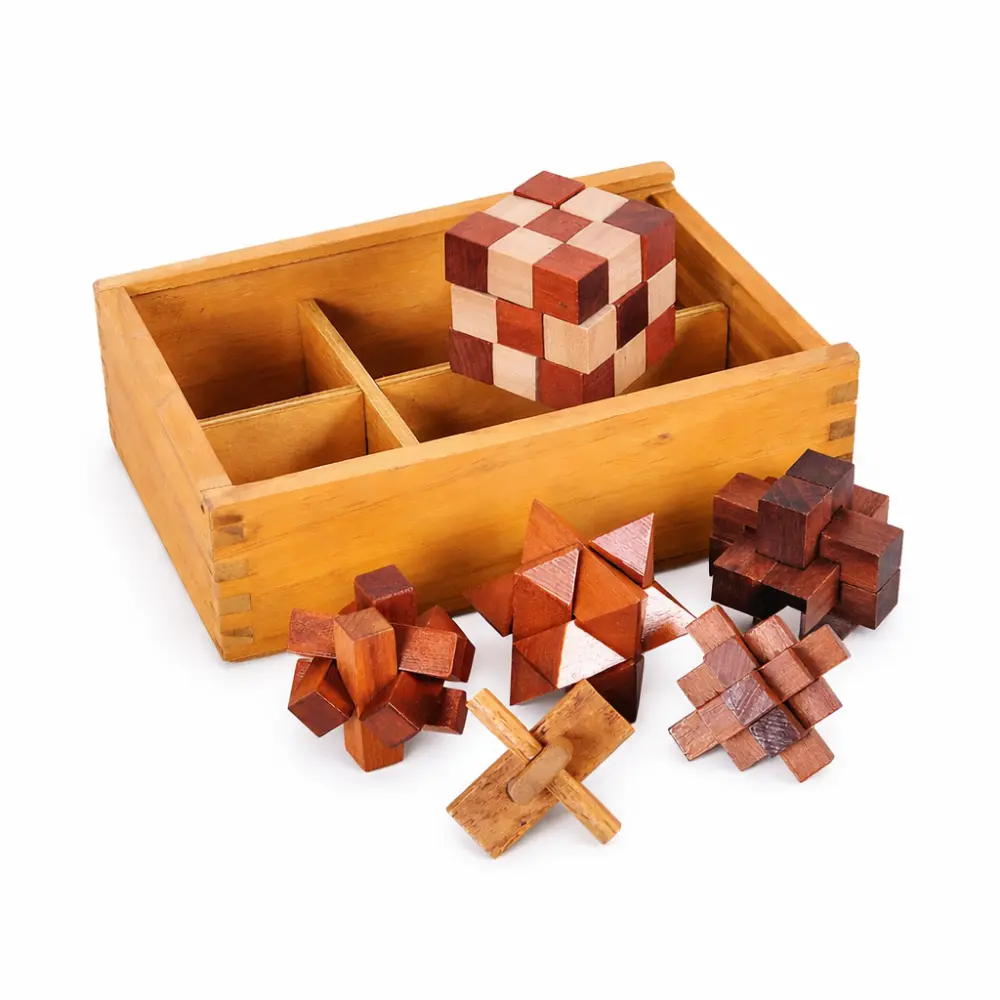
A set that clears all four checks becomes a candidate. The 6-in-1 Wooden Brain Teaser Set at $38.88 is a clean example of the third and fourth checks passing: wood-based, individually compartmented, and presented in a sleeve rather than a polybag. From there, verify the first two checks on the product page — confirm difficulty is graded across the six pieces, and confirm that at least two distinct mechanism types appear in the set.
A practical shortcut: if a product page mentions “24 pack,” “goodie bag filler,” “treasure box,” or “classroom prizes” anywhere in the copy, treat it as a hard skip. Those phrases signal the wrong buyer and the wrong occasion. The sets that clear the four checks above will not use them.
03. Map ADHD Traits to Set Features You Can Verify on a Product Page
Once the four checks have separated real gift sets from bulk-pack fillers, the next question is what actually makes a set work for an ADHD brain. Every trait a gift-buyer worries about — novelty-seeking, frustration intolerance, the need for visible progress — maps to a specific feature the listing either names or hides. Read the product page with this three-row filter, and the decision becomes mechanical.
Novelty-seeking → mechanism variety within the set, not more copies of the same puzzle. A 12-pack of identical disentanglement puzzles delivers one dopamine loop, then plateaus by the third repetition. A set that mixes metal disentanglement, wooden burrs, and a sequential-discovery lock resets the novelty factor every time the recipient opens a new mechanism. The verification: the listing should name at least two or three distinct mechanism types, not “12 metal brain teasers” but “mixed disentanglement, burr, and lock puzzles.” Mechanism variety is what keeps the executive function engaged past the first sit-down. If the recipient leans toward metal specifically, the metal puzzles for ADHD adults that actually work guide goes deeper on which metal mechanisms tend to hold attention for this audience.
Frustration intolerance → a difficulty gradient and short solve times, ideally under 15 minutes for the first puzzle. A brain that abandons a puzzle after a few failed attempts rarely returns. The protective design feature is a gradient built into the set: easier puzzles the recipient can crack in one sitting, harder ones saved for later. If the listing reads “expert level” or “challenge for seasoned puzzlers,” treat it as a mismatch regardless of how presentable the gift box looks. Beginner-friendly does not mean childish — it means solvable in one sitting, with a win inside the first quarter hour.
Need for visible progress → sequential-disassembly or step-reveal puzzles. A puzzle that produces tactile feedback — a click, a slide, or a partial disassembly with each correct move — delivers the micro-reward an attention-seeking brain craves. Sequential-discovery puzzles, where one move opens access to the next, are the clearest example. Jigsaws and pure logic puzzles, by contrast, show progress only at the end, the wrong shape for a brain that disengages from unresolved problems. Visible progress, step by step, is what keeps the dopamine loop alive.
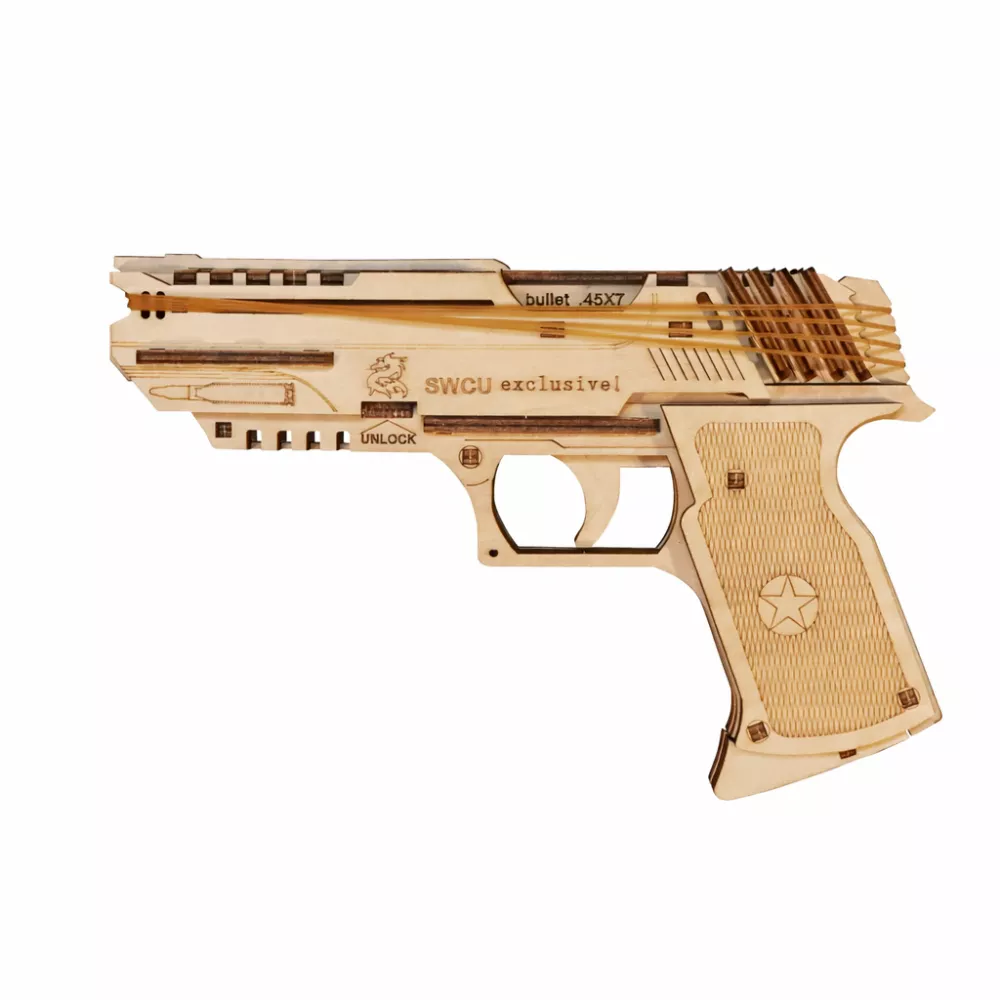
A build-style kit like the 3D Wooden Mechanical Pistol Kit illustrates the visible-progress criterion in a different mechanism family: the recipient watches the model take shape one component at a time, with each part clicking or seating into place. It is a useful counter-example to disentanglement sets, because the reward is not a single “aha” at the end but a stream of small completions spread across an evening.
Product copy that promises to “improve focus” or “treat restlessness” is making a therapeutic claim the page can’t back up. A listing that names the mechanism type, gives a solve time range, and lists the materials is making a design claim you can verify. That distinction shapes how a buyer should read product copy.
Before clicking buy, open the product page and run three checks: the listing names the mechanism type (disentanglement, burr, sequential discovery, build), it gives a solve time or difficulty range rather than a vague “challenging,” and it lists the materials by name. If any of those are missing, the set is asking the buyer to trust marketing instead of specs — and for an ADHD recipient, that is a gamble the gift-giver should not have to make.
04. Who a Beginner Puzzle Set Is (and Isn’t) Right For
The three checks from the previous section narrow the field, but they do not guarantee a fit. A beginner puzzle set is the right gift for a novelty-curious adult who wants short, screen-off challenges and a tangible sense of progress, and the wrong gift for someone who already collects mechanical puzzles or wants a long, immersive project. Match the recipient before you match the mechanism.
The right match. A partner or sibling who was recently diagnosed and is actively exploring focus tools will read the gift as acknowledgment, not as a toy. A coworker who jitters through meetings and already keeps a stress ball on standby will use a compact metal or wooden set at their desk because the pieces are quiet, tactile, and small enough to palm. A parent or friend who always liked brain teasers at restaurants but never owned a personal set gets the same dopamine hit, this time with a display piece. In each case, mechanism variety matters as much as materials, because novelty resets the dopamine loop that a single puzzle loses by the third attempt.
The wrong match. A serious mechanical-puzzle collector will find a 3–6 piece beginner set under-stimulating and will already own the classic disentanglements. A person who dislikes tactile objects or has cold-sensitive hands may avoid metal pieces entirely and never open the box. A recipient who treats puzzles as long projects — a 500-piece jigsaw, a 1,000-piece build — will feel patronized by a 12-piece starter set. If any of these apply, a single premium mechanism at a higher difficulty rung is the better gift, or skip the category entirely.
Occasion fit. A puzzle set works for a birthday, a stocking stuffer, a recovery gift, or a housewarming because the price band is forgiving and the packaging can be as plain or as giftable as the buyer chooses. The “puzzle set under $30” framing is real, but only if the buyer accepts fewer mechanism types per box or accepts simpler inner packaging. A four-piece metal set with a printed outer sleeve lands in that band; a 12-piece mixed-material set in a rigid gift box reads as a real present and lands closer to the $40–$50 mark.
Next action. Pick the closest match from the three right-fit profiles above. If none fits, skip this category. If one fits, head to the decision table and match that profile to a set archetype that already meets the four checks for difficulty, mechanism variety, materials, and packaging.
05. 5 Set Archetypes Compared: Piece Count, Mechanisms, Price Band, and What to Check
With the right-fit profile in hand, the next move is to match it to a set archetype. Compare on mechanism mix, material, and packaging first. Piece count alone hides the real differences that matter for an adult beginner with ADHD: a 12-piece set of varied lock mechanisms delivers more novelty per dollar than a 6-piece set of nearly identical wire disentanglements.
| Set Archetype | Typical Piece Count | Mechanism Mix | Price Band | What to Verify Before You Buy |
|---|---|---|---|---|
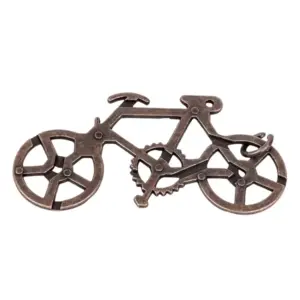
| Metal puzzle set | 3–6 | Wire/ring disentanglement, escape-style loops | $20–$40 | Material disclosure (cast vs plated); whether each piece uses a different mechanism, not five visual variants of the same wire |
| Wooden sequential-discovery set | 3–5 | Step-by-step opening boxes, hidden-compartment reveals | $25–$50 | Wood type and finish; hinge and pin quality; gift-box packaging vs plain brown |
| Mixed metal + wood variety set | 4–12 | Locks, disentanglements, wooden boxes combined | $28–$50 | Mechanism variety per piece; individual labeling; readable outer box |
| Brain-teaser cube set | 3–6 | Soma-style assembly, sliding tiles, block-and-pin | $15–$30 | Wood density and finish; whether the assembly goal is named; difficulty labeling per cube |
| Bulk “24-pack” party-favor set | 24+ | Repetitive mini-cubes, simple sliders | $10–$20 | Whether mechanisms repeat; whether the listing names each puzzle type; packaging quality |
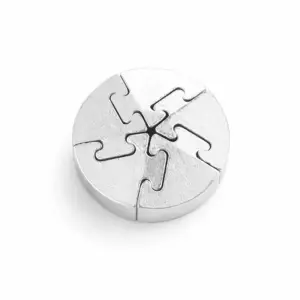
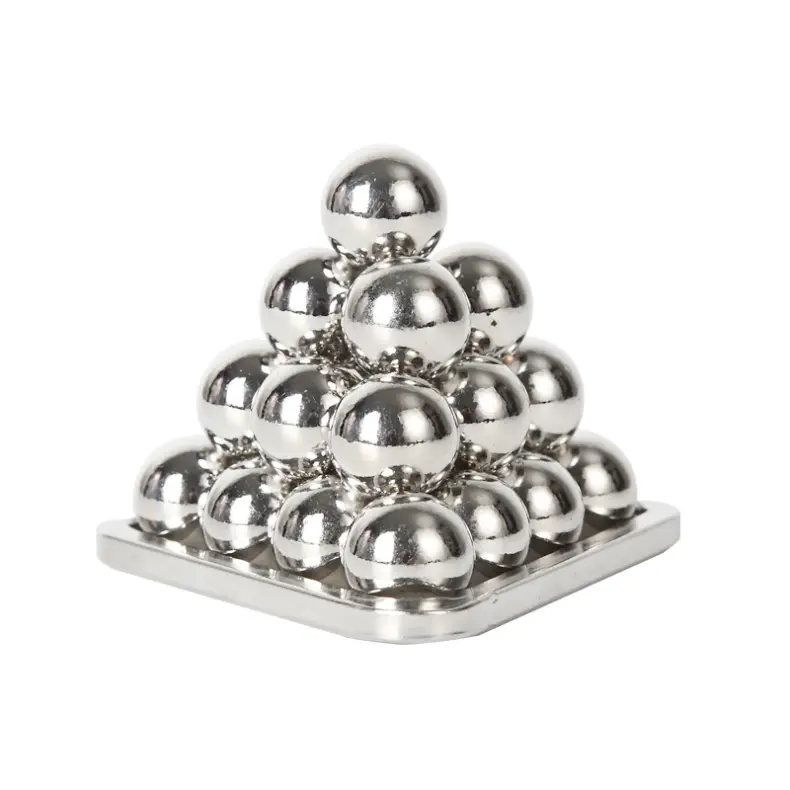
Metal puzzle set. The 6 Piece Steel Ball Pyramid Puzzle sits in this archetype at the lower end of the price band. The verification question is whether the six pieces test different logic or repeat the same one — variety reads as a set, repetition reads as one puzzle printed six times.
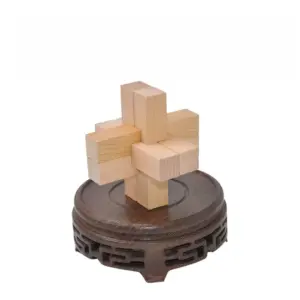
Wooden sequential-discovery set. The 6-in-1 Wooden Brain Teaser Set and the Besieged City sit here. These reward patient, step-by-step solving — a 54-T Cube Puzzle rewards a different kind of spatial patience and lands closer to the brain-teaser cube lane. If the real decision is between a smaller and a larger wooden bundle, the 3-pack vs 9-pack wooden set comparison lays out where the extra pieces actually help and where they add bulk.
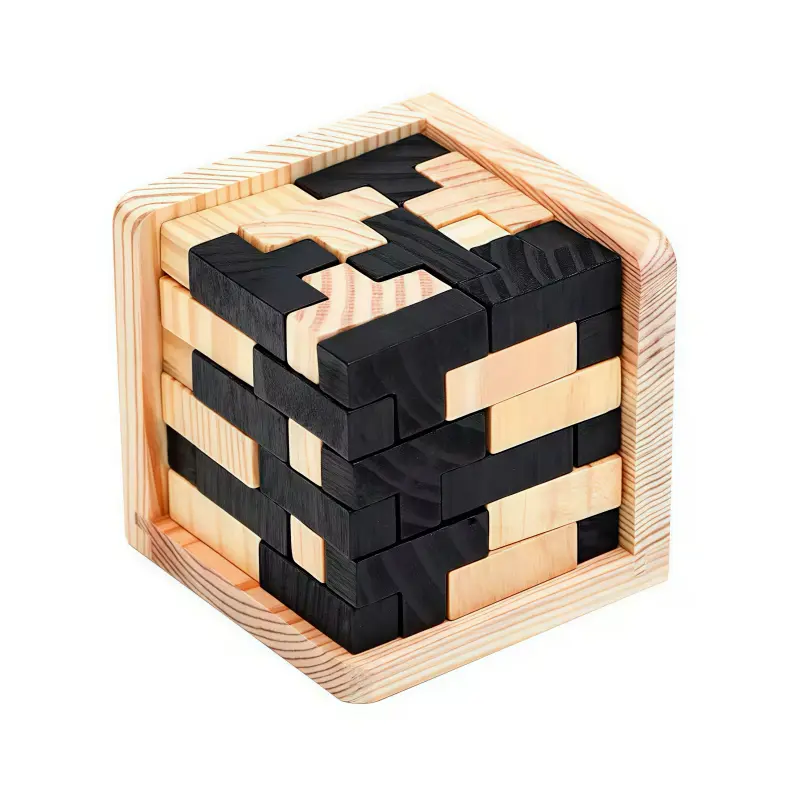
54‑T Cube Puzzle — $18.99
Mixed metal + wood variety set. This is the strongest match for a beginner adult with ADHD, and the top recommendation. The 12 Piece Crystal Luban Lock Set at $28.88 gives 12 pieces in one box — individually packaged, and priced inside the gift band. A larger set of 12 pieces delivers more novelty resets than 6 pieces of similar wire, provided the mechanisms inside actually differ.
Brain-teaser cube set. The 54-T Cube Puzzle fits here. Verify the listing names the assembly goal rather than calling it a generic “brain teaser,” and that wood density and finish match across pieces.
Bulk “24-pack” set. This is the easiest archetype to mismatch: if the listing cannot name each mechanism, the set is bulk filler, not a gift set. A 24-pack of identical mini-cubes kills the novelty loop by piece three.
Closing rule. If the listing cannot name the mechanism, the material, and the difficulty for each puzzle, downgrade that set to backup-gift status.
Frequently Asked Questions
The five archetypes above narrow the field, but the real buying questions are simpler: single puzzle or set, metal or wood, and how to spot a set that’s too hard before gift day. The shortest answer: pick a 12-piece set in the $20–$45 band — a fresh piece resets the novelty loop that a single puzzle loses by the second attempt.
Should I buy a single puzzle or a set?
A set wins for almost every ADHD-adult recipient. A single puzzle delivers one solve, then loses its pull. A 12-piece set like the 12 Piece Crystal Luban Lock Set at $28.88 gives the recipient a new piece to open each time the novelty loop resets. A set also reads as a “real” present, while a single puzzle can feel like an add-on.
How do I know if a puzzle set is too hard for a beginner?
Judge by mechanism, not piece count. A 12-piece metal disentanglement puzzle is more beginner-friendly than a 500-piece jigsaw — each attempt is short, reversible, and solvable in one sitting. Look for listings that name the solve goal and average solve time. If neither is stated, assume the upper end and check the product page directly before gifting.
Are metal or wooden puzzles better for adults with ADHD?
Both work; the question is what the recipient will do with them. Metal disentanglement puzzles (like the 6 Piece Steel Ball Pyramid Puzzle) survive pocket carry and desk fidgeting. Wooden brain teasers (like the 6-in-1 Wooden Brain Teaser Set at $38.88) read as more gift-worthy on a shelf and offer richer tactile feedback. A mixed-material set captures both.
Are puzzle sets actually helpful for ADHD focus?
Puzzles offer two traits ADHD adults tend to respond to: visible progress and a contained endpoint. Fidget toys, which puzzles overlap with, are commonly recommended for redirecting restless movement or attention. Frame the gift as a calm, screen-free ritual. If focus support is the goal, pair the puzzle with a 10–20 minute timed block rather than expecting it to substitute for other routines.
What’s the difference between a fidget toy and a puzzle set for adults?
A fidget toy is loop-based — manipulate it indefinitely without a finish line. A puzzle has a solve state. A puzzle set bridges both: each piece behaves like a fidget during the attempt, then delivers a solved-or-not result. That hybrid structure is why a 12-piece set outlasts a single fidget cube over weeks.
What is a good puzzle gift under $30 for an adult?
The 12 Piece Crystal Luban Lock Set at $28.88 sits inside the $20–$45 gift band and includes 12 individual pieces. For tighter budgets, the 54-T Cube Puzzle at $18.99 or the 6 Piece Steel Ball Pyramid Puzzle at $11.98 also fit the under-$30 line. Check the product page for the current price before checkout.
What’s the one thing to verify before I buy?
That the listing names the mechanism, the material, and a stated difficulty or solve time for each puzzle. If any of those three are missing, the set is bulk filler, not a gift set. Walk past it.
Where do I go from here?
Pick the archetype that matches your recipient, confirm the three listing checks, and order the 12 Piece Crystal Luban Lock Set if mechanism variety in the $20–$45 range is your goal.
Where to Start
If the recipient and occasion checks above match, start with 12 Piece Crystal Luban Lock Set. Check the current product page for the specifications that matter to your choice.
Sources and verification
- Product details and current specifications: Tea-Sip product page
Last updated: August 26, 2026