Quick Answer
A beginner puzzle set for grandma works best when piece count stays under 500, pieces are oversized with high-contrast imagery, and the set bundles 2–3 puzzles (or a puzzle plus accessories) so she has variety without overwhelm. The pick shifts if she prefers tactile hand-puzzles over flat jigsaws, wants display-worthy décor, or has arthritis or low vision.
The three checks that decide the gift:
- Piece count. 100–500 pieces fits a first-time senior puzzler. Below 100 can feel childish; above 500 often stalls completion.
- Piece size and finish. Oversized pieces (at least 1.5× standard) with a matte or linen finish reduce glare and make gripping easier.
- Set composition. A genuine set bundles two or more puzzles, or pairs a puzzle with accessories like a sorting tray or magnifying glass.
Decision Table: Matching the Recipient to the Set
| Recipient profile | Recommended pick | Why it fits | What to check on the product page |
|---|---|---|---|
| First-time puzzler, wants a display-worthy result | 12 Piece Crystal Luban Lock Set — $28.88 | Compact, short solve, sculptural finish | Piece count, age guidance, current price |
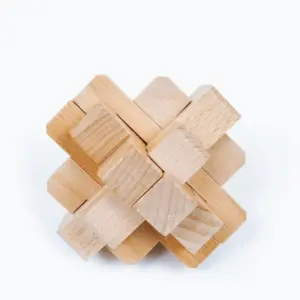
| Wants variety in one box | 6-in-1 Wooden Brain Teaser Set — $38.88 | Six challenges, warm wood feel | Number of puzzles, difficulty range, material |
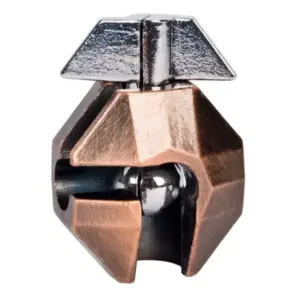
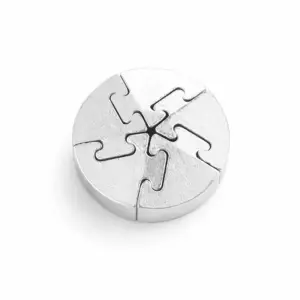
| Limited grip strength or dexterity | 6 Piece Steel Ball Pyramid Puzzle — $11.98 | Chunky metal, minimal dexterity needed | Weight, piece dimensions, instructions |
The first row, the 12 Piece Crystal Luban Lock Set, is the strongest starting point for a grandmother new to puzzling, with limited hand strength, or who wants a gift that looks as good on a shelf as in use. Solve time is short enough for one sitting, and the piece scale suits older fingers.
For another senior-friendly angle, see unique puzzle gifts for a retirement celebration.
01. What Counts as a Beginner Puzzle Set for an Older Adult
A beginner puzzle set for an older adult works best when the piece count lands between 100 and 500, the pieces are oversized with a matte or linen finish, and the package delivers two to three projects rather than one. Below 100 pieces, the result can read as a children’s toy. Above 500, the project often stalls before the last corner is filled.
That one rule reframes everything that follows. A “beginner” puzzle for a 30-year-old and a beginner puzzle for a 70-year-old share a label, not a specification. The differences are physical, optical, and emotional, and they all show up on the product page before the box is ever opened.
Piece Count: The 100-to-500 Sweet Spot
Piece count matters more than most gift guides admit. The 100-to-500 range covers the full beginner arc for an older recipient without crossing into either frustration or condescension. At 100 pieces, the puzzle finishes in a single comfortable sitting and feels like an accomplishment. At 500, the project stretches over a week or two of evenings, which keeps the hobby alive without exhausting it.
Pushing lower than 100 starts to feel juvenile. Cartoony illustrations, foam-backed cardboard, and chunky snap-together shapes are designed for children, and most grandmothers will notice. Pushing higher than 500, especially past 750, introduces a different problem: the project takes so long that the box ends up in a closet. A 1,000-piece landscape is a satisfying winter project for an experienced puzzler and a heavy commitment for a beginner.
What “Beginner-Friendly” Looks Like on the Product Page
Four features separate a beginner-friendly senior piece from a standard adult piece, and most gift lists skip all of them.
First, oversized dimensions. Standard puzzle pieces run roughly 0.75 inches across. Senior-targeted pieces are usually 1.5 to 2 times that size, which makes them easier to spot on the table and easier to pick up between thumb and forefinger.
Second, a matte or linen finish. Glossy pieces reflect overhead lamps and window light, which strains tired eyes. A matte surface absorbs glare and reads as more sophisticated than a toy-store shine.
Third, thick chipboard. Pieces cut from heavy cardstock hold their shape, snap together with a satisfying click, and don’t bend when lifted. Thin pieces warp, fold, and frustrate.
Fourth, high-contrast imagery. Artwork with clear color blocks, defined outlines, and a few large focal areas helps even when reading glasses are not at hand. Busy impressionist paintings and similar-toned photographs can stall a beginner for hours.
The product photo will not tell you about finish, weight, or contrast, so check the dimensions and the manufacturer’s description for words like “oversized,” “large grip,” or “easy-grip.” If those terms are absent, the puzzle was probably not designed with a senior beginner in mind.
What Makes a Product a “Set” Instead of a Single Puzzle
A “set” is a bundle, and the format changes how the gift lands. Three structures work for a first-time senior puzzler.
A bundled set ships two or three puzzles of different piece counts in one box. This is the most beginner-friendly format because the recipient can start with the easiest and progress upward, and the giver’s job is to choose a coherent theme.
A puzzle-plus-accessory kit pairs a puzzle with sorting trays, a magnifying glass, or a puzzle mat. The accessories do most of the work to make the gift feel giftable, and they are especially helpful when the recipient has arthritis or vision changes.
A subscription box ships a new puzzle on a fixed schedule, often monthly. This format only works if the recipient has the space to store several boxes and the energy to keep up. For a grandmother who is new to puzzling and unsure whether she will enjoy it, the commitment can be heavy.
For a first-time senior puzzler, a bundled set of two to three puzzles, or a single primary puzzle plus one or two accessories, delivers the strongest first impression. It signals that the giver thought about the experience, not just the product.
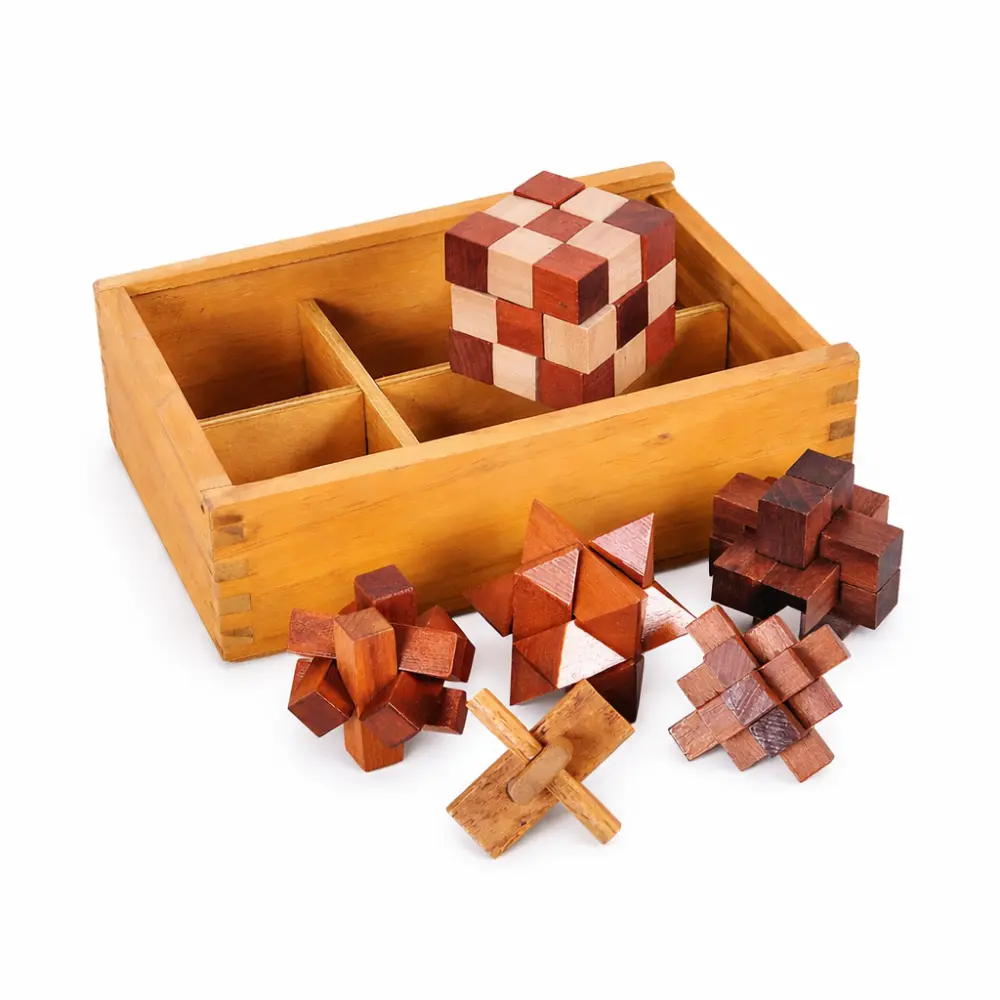
For a senior who prefers variety in one box, a multi-puzzle set built around a single mechanism tends to work especially well. The 6-in-1 Wooden Brain Teaser Set groups six different disentanglement and assembly challenges into a single gift, which lets the recipient rotate through short solves rather than committing to one long project. Each challenge has a defined start and finish, the wooden pieces are easy to grip, and the whole set travels well between the living room and a favorite chair.
The format decision also shapes how the gift is received. A single 500-piece jigsaw in a plain brown box can feel like an afterthought. A boxed set of two or three themed puzzles, or a puzzle paired with a sorting tray and a small magnifier, reads as a thoughtful gift rather than a casual purchase. The difference lives in the unboxing and the first hour of puzzling, not in the puzzle itself.
For readers weighing a wooden brain-teaser format specifically, the 3-pack vs 9-pack wooden brain teaser set dilemma walks through how set size changes the gift experience for adult recipients.
The next section narrows the format choice further by comparing jigsaw, wooden brain-teaser, and photo-collage options against the same senior-fit criteria.
02. Jigsaw vs Wooden Brain-Teaser vs Photo-Collage: Which Format Fits a Senior Beginner
Choose a jigsaw when she enjoys long, quiet projects and has steady hands and good reading vision. Choose a wooden or mechanical brain-teaser set when the gift should deliver a short, repeatable hand challenge she can finish in one sitting. Choose a photo-collage puzzle when the emotional payoff of seeing family faces matters more than the puzzling itself.
Each format fits a different kind of senior beginner, and the tradeoffs are not about quality; they are about what the gift is asking of the recipient’s hands, eyes, and patience. A jigsaw puzzle demands sustained visual focus and steady fingertip pressure for 30 minutes to several hours per session. A mechanical puzzle is solved through physical manipulation rather than knowledge or trivia, so the challenge is short, tactile, and finishable in one sitting. A photo-collage puzzle adds an emotional layer that overrides the mechanics; the picture is the point.
For senior beginners, the comparison comes down to six observable criteria: piece size, grip comfort, visual contrast, session length, emotional payoff, and dexterity demand.
Piece size and grip. Jigsaws aimed at older adults use oversized pieces, often noticeably larger than standard adult size, and thicker chipboard so pieces do not bend when lifted. Wooden brain-teasers use solid blocks, knobs, and rings that fill the hand and require a firm but not precise grip. Photo-collage puzzles follow the same piece-size rules as regular jigsaws, so check the product page for actual dimensions rather than trusting a “grandma puzzle” label.
Visual contrast. Jigsaws and photo-collage puzzles both rely on printed imagery. For a senior beginner, look for matte or linen-finish prints rather than glossy stock; glare under a reading lamp is one of the most common reasons older puzzlers lose patience with a project. Wooden and metal brain-teasers are mostly single-color or two-tone, so contrast is built into the shape rather than the image, which actually helps anyone with reduced color vision.
Session length. This is where the formats diverge most sharply. A 300- to 500-piece jigsaw can take a relaxed puzzler anywhere from a few afternoons to a week of evenings. A wooden brain-teaser usually takes 5 to 30 minutes per solve, and most can be reset and repeated. A 100-piece photo-collage falls in between, but the emotional content tends to slow the solving because she will pause to look at the faces.
Emotional payoff. A photo-collage can include up to 65 family photos in one puzzle, turning the gift into a memory object as much as a hobby. A themed jigsaw (gardens, cats, quilts, travel scenes) delivers aesthetic pleasure when finished but no personal connection. A brain-teaser set delivers the satisfaction of “I figured that out,” which is repeatable but not sentimental.
Dexterity demand. Jigsaws require fine fingertip control and the ability to bend forward over a table for long stretches. Wooden brain-teasers require two-hand coordination and the ability to manipulate small joints, but sessions are short. Photo-collage puzzles inherit the same demands as the jigsaw format they are built on.
When a wooden brain-teaser set is the right call for a senior beginner. It is appropriate only if the pieces are large enough to grip easily and the goal is a short repeatable challenge rather than a long project. A compact set she can keep on a side table and return to for 10 minutes at a time fits a different rhythm than a 500-piece jigsaw spread across a dining table. Fidget-style wooden and metal brain-teasers also fall into the broader sensory-stimulation category, which is a reasonable framing for a gift that lives on a coffee table or a reading nook. The right description is a calming, screen-free focus, not any kind of therapeutic claim.
The practical decision rule is simple. If she has a regular table she can leave a project on and enjoys longer sessions, start with a jigsaw or photo-collage. If she prefers short, varied challenges and a gift she can set down and pick up, start with a brain-teaser set.
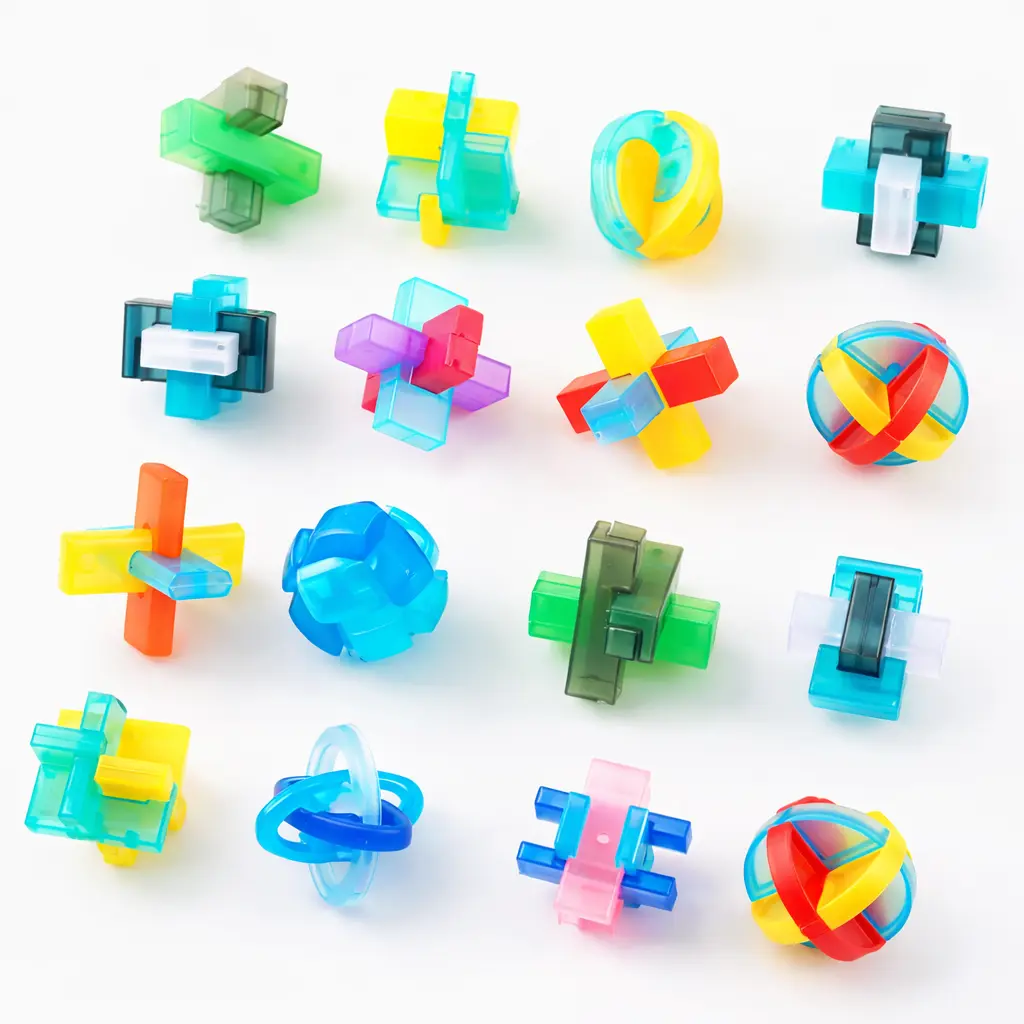
For the brain-teaser path, a compact, ready-to-give set keeps the unboxing simple and gives her several different mechanisms to try without committing to one. A 12-piece crystal Luban lock set is small enough to hold in one hand, finished in colors that read well even in low light, and light enough to move from the table to the couch without rearranging the room. The 12 distinct mechanisms give her variety without the cognitive load of a 500-piece image.
For readers who already know they want a wooden or metal brain-teaser, a comparison of metal and wooden puzzle formats across 50 kits walks through how the materials change the solving experience and which formats tend to frustrate older hands.
The next section narrows the decision further: once the format is chosen, how do you pick the specific set she will actually finish.
03. How to Match the Puzzle Set to Her Interests, Hands, and Eyes
Once the format is settled, the puzzle that actually gets finished is the one that matches the person holding it. Match the set to her theme preferences first, then verify four on-page details: imagery she’d frame, contrast strong enough to sort without readers, a piece finish that suits her grip, and one optional accessory that turns a single box into a curated kit.
Start With the Theme She’d Frame on the Wall
Theme matters more than brand or piece count when the gift has to feel personal. The right image turns a finished puzzle into a keepsake she might actually keep and frame. A safe shortcut is to anchor the theme to an archetype you already know.
A gardener is usually well-served by botanical or cottage-garden imagery with a defined color palette she can sort into sections. A traveler responds to maps, vintage travel posters, or recognizable city scenes from places she has actually visited. Cat lovers tend to light up around illustrated or photographic cat art, especially breeds or poses that match a pet she has known. Quilters connect to folk-art patterns, samplers, or textile-inspired prints that echo the projects on her sewing table. Churchgoers often appreciate scripture-verse puzzles, stained-glass imagery, or traditional hymns paired with vintage art. Bakers gravitate toward kitchen still-lifes, vintage recipe illustrations, and warm-toned bakery scenes that feel like a Sunday morning.
When the goal is a gift that doubles as a display piece, a 3D crystal build is worth considering. A finished crystal rose can sit on a side table after assembly, which is the kind of payoff a flat jigsaw cannot match.
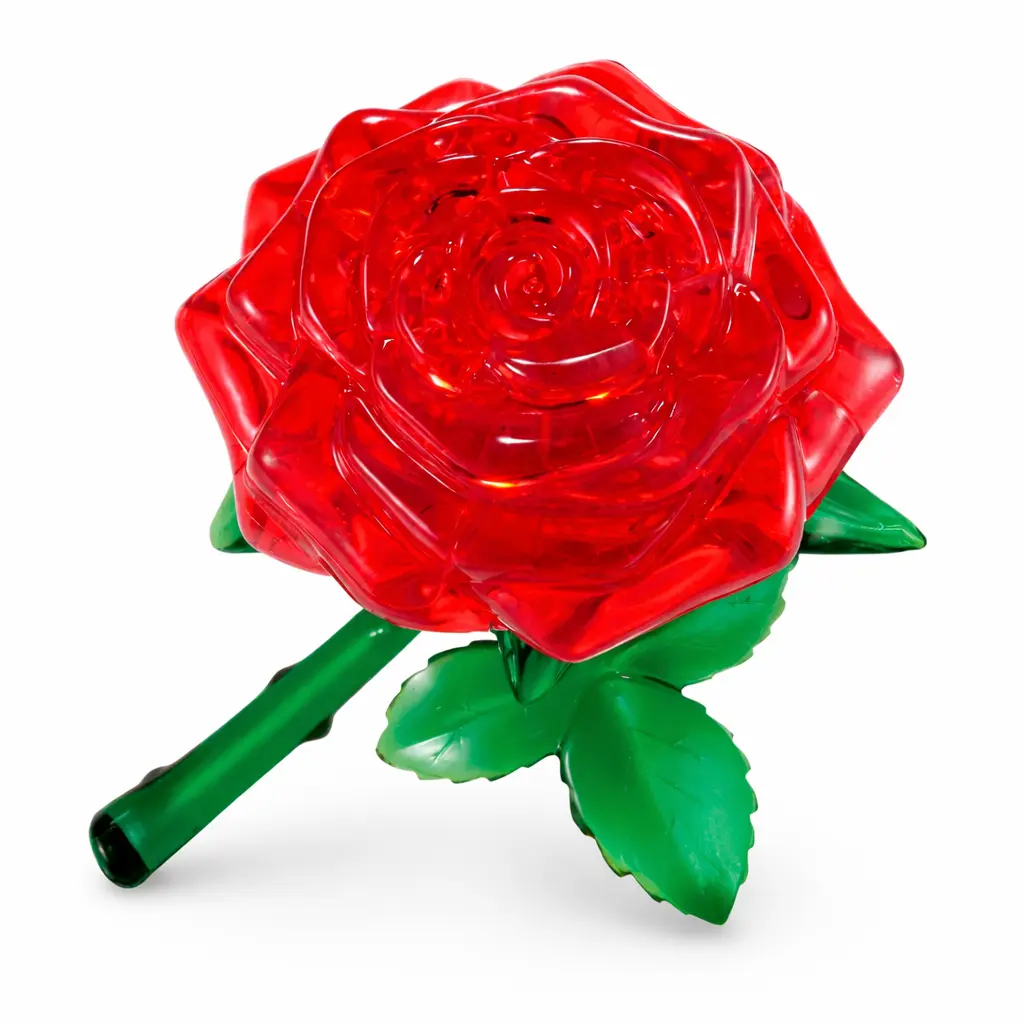
3D Crystal Rose Puzzle — $19.99
Verify Four Details Before You Click “Add to Cart”
A product page can show a beautiful image and still hide deal-breakers. Check these four before committing.
Imagery she’d keep. Look past the cover art. Ask whether she would frame the finished puzzle, set it on a mantel, or pass it along as a memento. If the honest answer is “throw it away,” the theme was wrong, not the format.
Contrast strong enough to sort without reading glasses. High-contrast imagery, including bold reds against deep greens, black-and-white photography, and geometric or folk-art patterns, lets her sort by color block instead of squinting at tiny details. Soft pastels, foggy landscapes, and tonal gradients are the hardest to sort at any age. One way to verify: zoom into the product image and check whether the colors stay distinct or blur into each other when enlarged.
Piece thickness and finish that suit her grip. Oversized pieces with a matte or linen finish reduce glare and are easier to pick up between thumb and forefinger. Glossy, thin chipboard can slip in older hands, especially if she has any arthritis or tremor. For wooden or metal brain-teasers, the same rule applies: pieces should feel solid and weighty in the hand, not light and fiddly.
One paired accessory. A puzzle plus one small add-on reads as a curated set rather than a single impulse gift. Experienced puzzlers most often recommend sorting trays, a magnifier, a roll-up puzzle mat for pausing mid-solve, and a comfy lap cushion for longer sessions. A photo-collage format is one more option worth considering; providers such as puzzleYOU state their collage layouts can include up to 65 family photos in a single puzzle, which makes the finished piece a family-history object rather than just a hobby project.
Pair the Primary Puzzle With One Companion
The 12 Piece Crystal Luban Lock Set is the primary recommendation when the goal is a beginner set that feels curated and giftable. The 12-lock format gives her a week of varied challenges in one box rather than a single afternoon’s project, and each lock is a self-contained solve that ends with a satisfying click. The crystal finish also means the pieces can be displayed afterward instead of going back in the box.
For a quieter companion, a small metal or wooden accent piece fills out the kit without doubling the price. The 4 Band Puzzle Ring is a compact tactile add-on she can keep in a handbag, and the 6 Piece Steel Ball Pyramid Puzzle is a short, repeatable challenge that fits on a coffee table. Add one of these to the Luban Lock box and the gift becomes a “puzzle set” in the truest sense: multiple formats, one theme of thoughtful accessibility.
04. Which Set to Buy Based on Her Personality and Puzzle History
The Luban Lock Set paired with one companion piece covers most grandmother profiles, but the right second add-on shifts based on her puzzle history, hand comfort, and vision. Match the recipient to the table below, confirm the “what to check” column against the product page, and the gift becomes a confident, specific pick rather than a hopeful guess.
| Recipient profile | Recommended set type | What to check on the product page |
|---|---|---|
| First-time puzzler, early-to-mid 70s | 12 Piece Crystal Luban Lock Set + 4 Band Puzzle Ring | Confirm each lock is a self-contained solve (no single block of 200+ pieces); confirm piece size is large enough to grip without pinching |
| Former puzzler returning after years away | 6-in-1 Wooden Brain Teaser Set + 54‑T Cube Puzzle | Check whether the difficulty ladder progresses gradually; verify the pieces separate smoothly without forcing |
| Hands with arthritis or tremor | 12 Piece Crystal Luban Lock Set | Confirm pieces are oversized and matte-finished (not glossy, which slips); check that disassembly uses a pull-and-twist motion, not fine pinching |
| Low-vision recipient | 12 Piece Crystal Luban Lock Set | Verify high-contrast color blocking between pieces; ask the product page whether magnification or a sorting tray is recommended as an add-on |
| Memory-care or assisted-living setting | 12 Piece Crystal Luban Lock Set (one lock per session) | Confirm each lock solves in a short, contained time window (check the product page for any stated solve time) so it fits a structured activity slot; check whether staff can reset the box without tools |
| Long-distance grandma who would enjoy ongoing mail | 12 Piece Crystal Luban Lock Set as the opening gift + subscription follow-up | Confirm the Luban set arrives gift-wrapped or boxed; pair with a subscription that lets her pick from a range of options each month — Buffalo Games notes its puzzle subscriptions ship on the 15th of every month and let the recipient choose from a range of possibilities |
If she is brand-new to puzzling, the 12-lock format works because each solve ends with a clear “click.” That makes the day feel productive even on a slow afternoon. The 4 Band Puzzle Ring slides into the same gift without changing the theme.
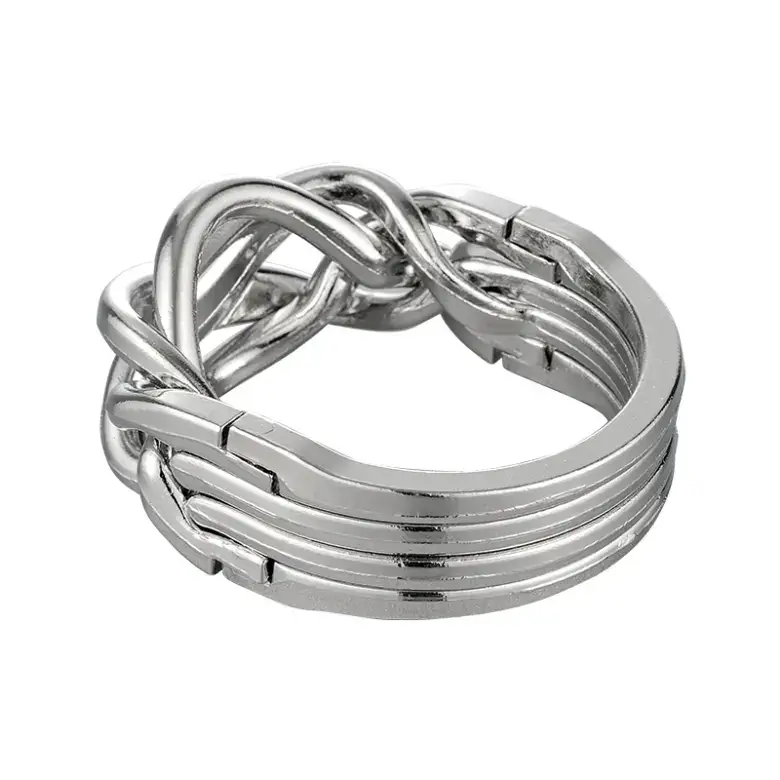
4 Band Puzzle Ring — $11.99
For a returning puzzler, the 6-in-1 Wooden Brain Teaser Set or the 54‑T Cube Puzzle adds a shape-shifting challenge that recalls the wooden puzzles of the 1970s and 80s. Both products live in the wooden brain-teaser family that the Kubiya Games Player Subscription Puzzle Box describes as appropriate for beginners, so the difficulty ceiling stays manageable.
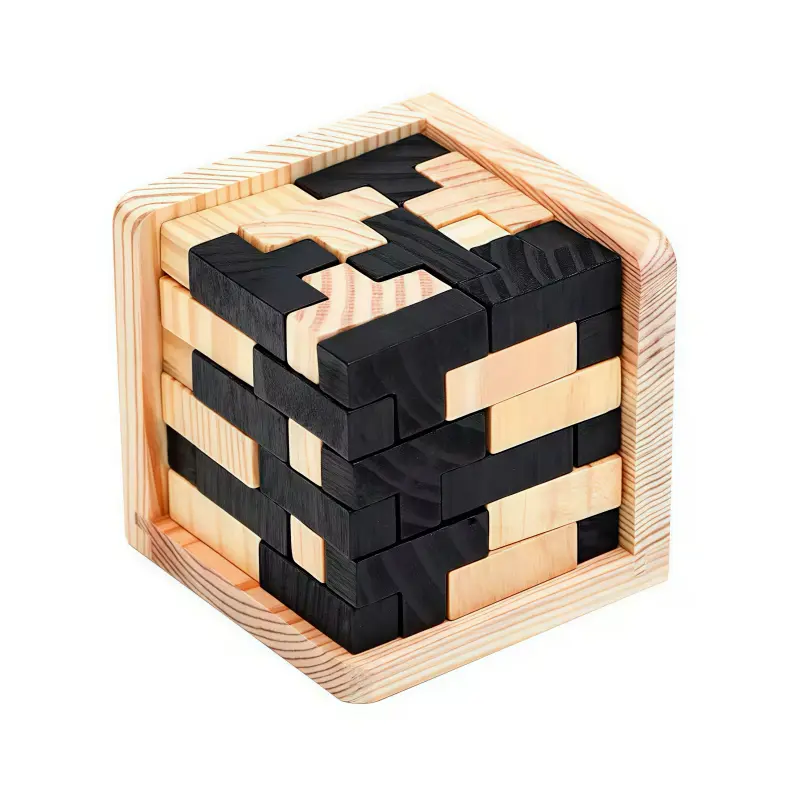
54‑T Cube Puzzle — $18.99
When a Subscription Makes More Sense Than a Single Set
If you live far away and want the gift to keep arriving, lead with the Luban Lock box at Christmas or her birthday, then follow with a subscription so the monthly delivery becomes the next thing she looks forward to. Buffalo Games notes that its puzzle subscriptions ship on the 15th of every month and let the recipient pick from a range of options, which removes the guesswork of choosing themes on her behalf. The Luban set stays on her desk as the tactile anchor between monthly mailings.
The next step is the FAQ, which answers the practical questions gift-givers still hesitate on: piece count, customization, subscription logic, and the “is this too childish?” worry.
Frequently Asked Questions
The practical questions that still hover after the set is chosen come down to four things: piece count, customization, subscription logic, and price. Here are the answers gift-givers most often pause on, starting with the worry that the gift will read as childish.
What piece count is good for a beginner grandma?
Aim for 100–500 pieces for a first-time adult puzzler. Below 100 reads as a children’s puzzle; above 500 risks a stalled project that ends up in a closet. For a true beginner, start at 100 or 250 and confirm the box says “adult” or “ages 14+” so the imagery stays grown-up. Listings commonly offer 100, 250, 500, and 1000 piece tiers, so 250 or 500 is easy to find.
Are large-piece jigsaw puzzles easier for older hands?
Yes, when vision or arthritis is a factor. Oversized pieces are easier to pick up, turn, and slot. Reddit’s r/crafts and r/Jigsawpuzzles threads on grandparent gifting both surface large-print puzzles as the most-mentioned accessibility choice. Verify the piece dimensions on the product page; a listing that only states “300 pieces” without size forces you to guess.
How do I avoid giving a puzzle that looks childish?
Theme matters more than piece count. Pick adult art, fine-art reproductions, nostalgic scenes, or a custom photo collage rather than cartoon characters. Wentworth Puzzles positions nostalgic and fine-art imagery as the core appeal of grandparent-targeted puzzles, which is a useful benchmark when scanning any product page. Skip anything labeled “kids” or “ages 3+” even if the piece count is right.
Is a wooden brain-teaser set appropriate for a senior beginner?
Yes, with one check. A multi-piece set like the 12 Piece Crystal Luban Lock Set works well for a senior who prefers tactile, repeatable challenges rather than long sit-down sessions. A mechanical puzzle is solved through physical manipulation rather than knowledge, which keeps the barrier low. Pick sets that include a solution sheet so she never gets stuck without a way out.
Can I make a custom photo puzzle as a gift?
Yes. puzzleYOU lets you include up to 65 family photos in a single collage puzzle, ideal for grandparents who live far from the family. Upload high-resolution images and choose around 100–300 pieces so individual photos stay recognizable when assembled. Verify turnaround time on the site before ordering around the holidays.
Are puzzle subscriptions a good gift for a grandmother?
Yes, if she already enjoys puzzling. Buffalo Games notes its subscriptions ship on the 15th of each month and let the recipient pick from a range of options, reducing theme-mismatch risk. Kubiya Games describes its Player Subscription Box as appropriate for beginners, so it isn’t only for experienced puzzlers. A subscription works best as a follow-on to a physical starter set, not a standalone first gift.
What accessories should I pair with a puzzle gift?
Sorting trays, a magnifying glass, and a soft seat cushion are the most-mentioned items on puzzle forums. A roll-up puzzle mat lets her pause mid-project without losing progress, useful if she shares a dining table. Keep the list short: one sorting aid, one vision aid, one comfort item is plenty.
What is a reasonable price for a beginner puzzle set gift?
For a single starter set, plan on $20–$50 depending on piece count and material. The 12 Piece Crystal Luban Lock Set lists at $28.88, the 6-in-1 Wooden Brain Teaser Set at $38.88, and the 3D Crystal Rose Puzzle at $19.99. Pair a primary set with one small accessory and budget $40–$60 total. Check the product page for the current price before checkout, since listed prices can change.
Where to Start
If the recipient and occasion checks above match, start with 12 Piece Crystal Luban Lock Set. Check the current product page for the specifications that matter to your choice.
Sources and verification
- Product details and current specifications: Tea-Sip product page
Last updated: August 20, 2026