Quick Answer
Start with the 6-in-1 Wooden Brain Teaser Set from Tea-Sip — it is the top pick for a beginner puzzle set gift for a mother-in-law. The six-puzzle wooden set suits a beginner, doubles as a shared activity when you visit, and leaves a displayable finished object. Pair it with a 100–500 piece adult jigsaw if she prefers solo hobbies; skip anything under 100 pieces or over 1000.
Three checks before you buy:
- 01 Theme and imagery — Does it match her interests, or is it a generic landscape?
- 02 Piece count and difficulty — Is it in the 100–500 piece beginner zone, not 1000+?
- 03 Format — Solo jigsaw, or a set built for shared time when you visit?
Quick decision table
| Gift type | Best for | Piece count or complexity | What to check |
|---|---|---|---|
| Adult jigsaw (landscape, botanical, fine art) | A mother-in-law with a quiet, solo hobby | 100–500 pieces | Theme reflects her interests; reference image is clear; box art is display-worthy |
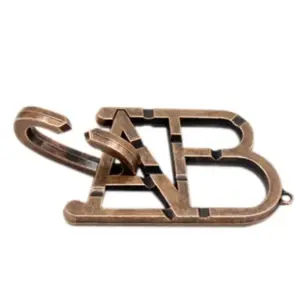
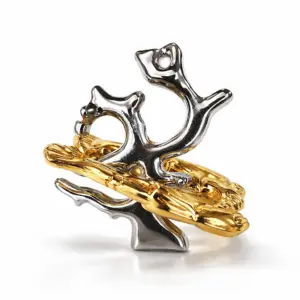
| Wooden brain-teaser set | Shared activity when you visit | 6 puzzles, beginner to medium | Pieces are wood, not plastic; each puzzle has a visible “solved” state; fits on a coffee table |
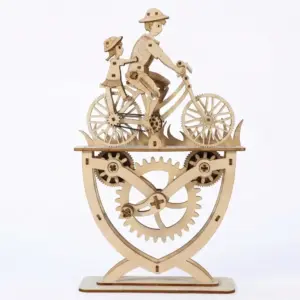
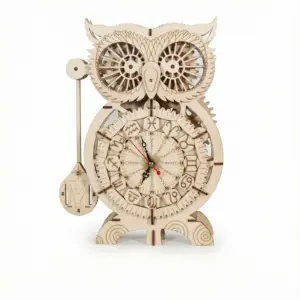
| 3D wooden puzzle or puzzle box | A displayable finished object she can keep on a shelf | Assembly, not jigsaw | Finished piece has shelf or desk presence; instructions are diagram-based, not text-heavy |
What to avoid
Novelty-shaped pieces (animals, holiday motifs), licensed characters, kids’ brands, and puzzles with a “silly” tone. Skip religious or political imagery unless you know her views. And resist the urge to “upgrade” to 1000 pieces for impressiveness — a half-finished puzzle stored in a closet is the opposite of a thoughtful gesture.
Backup plan if she doesn’t love it
A wooden brain-teaser set doubles as a display object after solving, which softens the gift if puzzles aren’t really her thing. Pair it with a card that frames the puzzle as something to try together on your next visit. The invitation to share the activity matters as much as the object itself.
01. How to Pick a Puzzle Theme That Signals You Chose It for Her
A puzzle theme is the single strongest signal that this gift was chosen for one specific person, not pulled from a generic gift shelf. Pick a theme that connects to something she already loves — her garden, a city she traveled to, an artist she follows. A generic “beautiful scenery” box reads as default. A specific choice reads as research.
The theme is the part of the gift that does the most quiet work. She will describe the gift to her friends by naming the theme, and if she frames the finished puzzle, that theme is what lives on her wall long after the box is recycled. The theme is the message. The piece count is just the format.
The safest theme categories read as adult and display-worthy without being personal enough to overstep. Botanical prints, museum art reproductions, and landscape photography are the three that work for almost any mother-in-law relationship, while travel and architectural photography work when you know she has been to a specific place — the Amalfi coast, Kyoto temples, the New England coast. Fine art reproductions signal taste without intimacy: Monet gardens, Van Gogh irises, Hokusai waves, Klimt’s gold period. These themes are specific enough to feel considered, generic enough to be safe.
Seasonal themes carry a different calculus. A winter forest or autumn still life is safe but forgettable; a Christmas-themed puzzle is fine if your family celebrates together and it lands as part of a holiday gift. A Valentine’s puzzle for a mother-in-law is almost always a misread. The rule of thumb: seasonal works when it matches the occasion you are gifting for, not as a standalone gesture.
Read the room on more personal themes. A puzzle of her actual wedding venue or the church where her children were baptized is too much too soon. Religious imagery, political symbols, and anything that requires knowing her views on a charged subject belongs in a later gift, if ever. The test: if the theme would make a thoughtful dinner guest smile, it works; if it would make her ask “why this one?”, it is a miss.
A finished jigsaw she can frame and hang or leave on the coffee table is the gift working twice — once when she solves it, again every time she walks past it. This is the display value angle most buying guides ignore. A 500-piece botanical print is not just a puzzle; it is a future framed object with your name attached in her memory, so choose themes where the reference image would look as good on her wall as in a gift catalog.
The reference image quality matters as much as the theme itself. A puzzle with a faded, low-resolution, or awkwardly cropped image telegraphs “cheap gift” even when the theme is perfect. Look for puzzles with museum-quality reproductions, sharp photography, or artwork where the source credit is printed on the box — because the box art is also part of the gift, and she will see it on her shelf before she ever opens it.
Your ten-minute homework: list three things she has mentioned liking in the past six months — a garden she tends, a trip she took, a painter she mentioned in passing, a museum she visited. Then search “puzzle” plus each one. The first two results on each search are usually the strongest options. Skip anything that requires you to know her taste better than you currently do.
02. What Piece Count Actually Suits a Beginner Mother-in-Law
A theme is half the gift. Piece count is the other half. For an adult beginner, 100–500 pieces is the zone where she can finish in a weekend without giving up — and anything above 1000 is a trap, even when it looks more impressive on the shelf.
The piece-count trap is social, not practical. A 1500-piece set signals that you did not think through whether she would actually finish it. An unfinished puzzle on her dining table becomes a quiet reminder of your thoughtful gesture — the wrong kind. The goal is a finished puzzle on her coffee table, not a generous one on her to-do list.
Under 100 pieces reads as childish. The box lands, she opens it, and her face reads “this is for a grandchild.” The gesture collapses before she touches a piece. Avoid the lower bracket entirely for a mother-in-law gift.
The 100–300 range is the safest beginner zone for someone who has not done a jigsaw in years. She can sort by edge, build the border, and finish the center in two or three sittings. It is the equivalent of a three-mile walk: visible progress, no exhaustion, and the option to leave it set up on the table and return to it.
500 pieces is a stretch goal. Pick this if she has casually mentioned doing puzzles, or if she is the type who finishes the Sunday crossword over coffee. The 500-piece mark is where beginners discover whether they enjoy the hobby or quietly resent it. You do not want your gift to be the test that ends the experiment.
1000 pieces and above is for confirmed hobbyists. Skip it. She knows who she is, and you would already know.
For brain-teaser and mechanical puzzle sets — objects built around hands-on manipulation rather than a reference image, with jigsaw puzzles being the most familiar subcategory — “beginner” is usually labeled on a 1–6 difficulty scale, and the first two levels are where you want to land. Most makers publish this rating on the box or the product page; verify the scale and the specific piece count on the product page before you buy, since “18 pieces” on a wooden mechanical puzzle is a single object built from many small parts, and the finished product is display-worthy on her desk or side table.
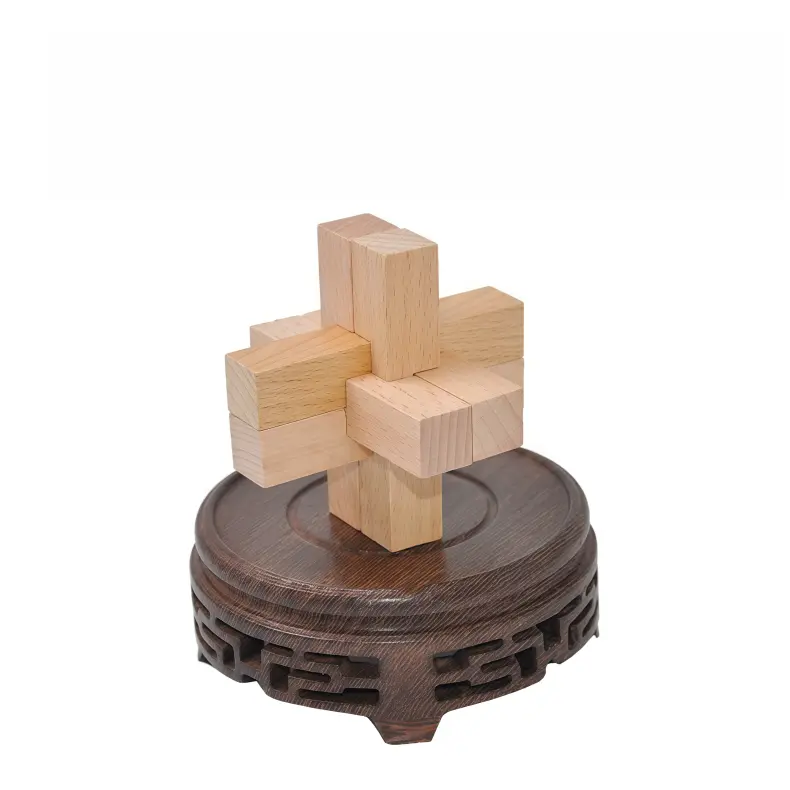
Six-Piece Burr — $17.99
The Six-Piece Burr is a classic beginner-level mechanical puzzle. It fits in one hand, finishes in a single sitting, and leaves a finished object on her shelf rather than a half-built picture on her table.
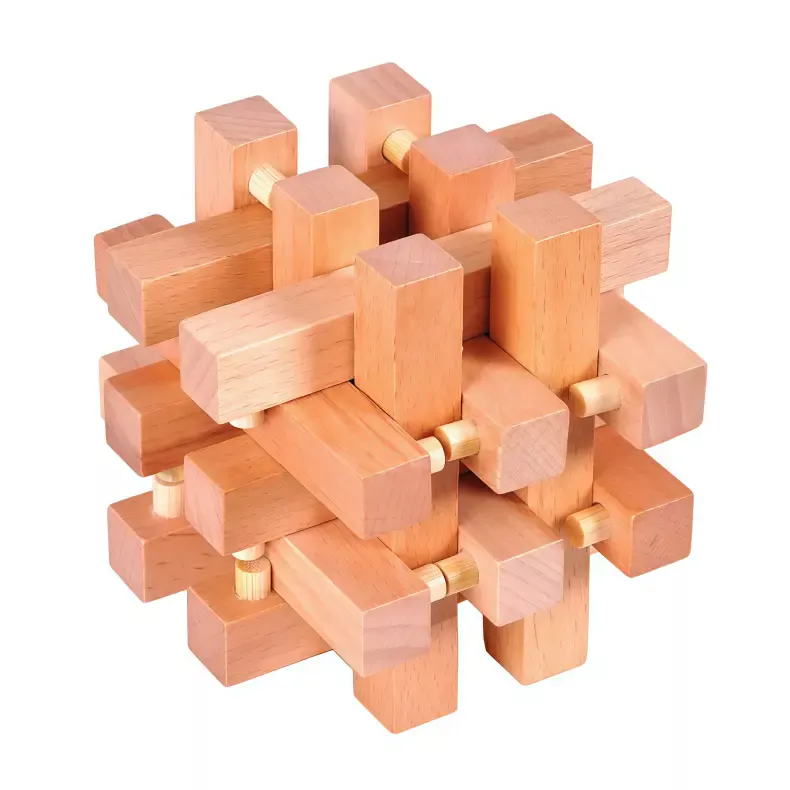
18 Piece Wooden Puzzle — $16.99
The 18 Piece Wooden Puzzle sits in the same beginner mechanical family. It is small enough to solve in one sitting and produces a finished object she can leave out on a tray or a bookshelf. Neither of these is a jigsaw — if you want a jigsaw specifically, stay between 100 and 300 pieces for a mother-in-law who has not done puzzles in years, and consider 500 only when her interest is already clear.
Your one practical check before buying: has she done a puzzle in the last decade? If the answer is no, stay at 300 or below for jigsaws and Level 1–2 for brain-teaser sets. If the answer is yes, you have room to push to 500. Above that, you are buying for a hobbyist, not a beginner.
03. Should It Be a Solo Jigsaw, a Puzzle Box, or a Shared Brain-Teaser Set
The piece count is settled. Now the format question — and format is where the relationship signal actually lives. Pick a solo jigsaw when your mother-in-law lives alone and values solo hobbies. Pick a puzzle box when she prefers compact gifts or travels between homes. Pick a 2–4 person wooden brain-teaser set when you visit regularly and want a “do this with us” activity. The right format depends less on what she already does and more on the kind of time you want to signal.
Choose a solo jigsaw when your mother-in-law lives alone, already values quiet hobbies like reading or gardening, and the gift is meant to keep her company during her own hours. A 300-piece landscape or botanical stays on her coffee table for a week, then quietly disappears into a drawer. Read the room. If she talks about crosswords, sudoku, or her garden, a jigsaw will land. If she has never mentioned a hands-on hobby, start smaller and more social.
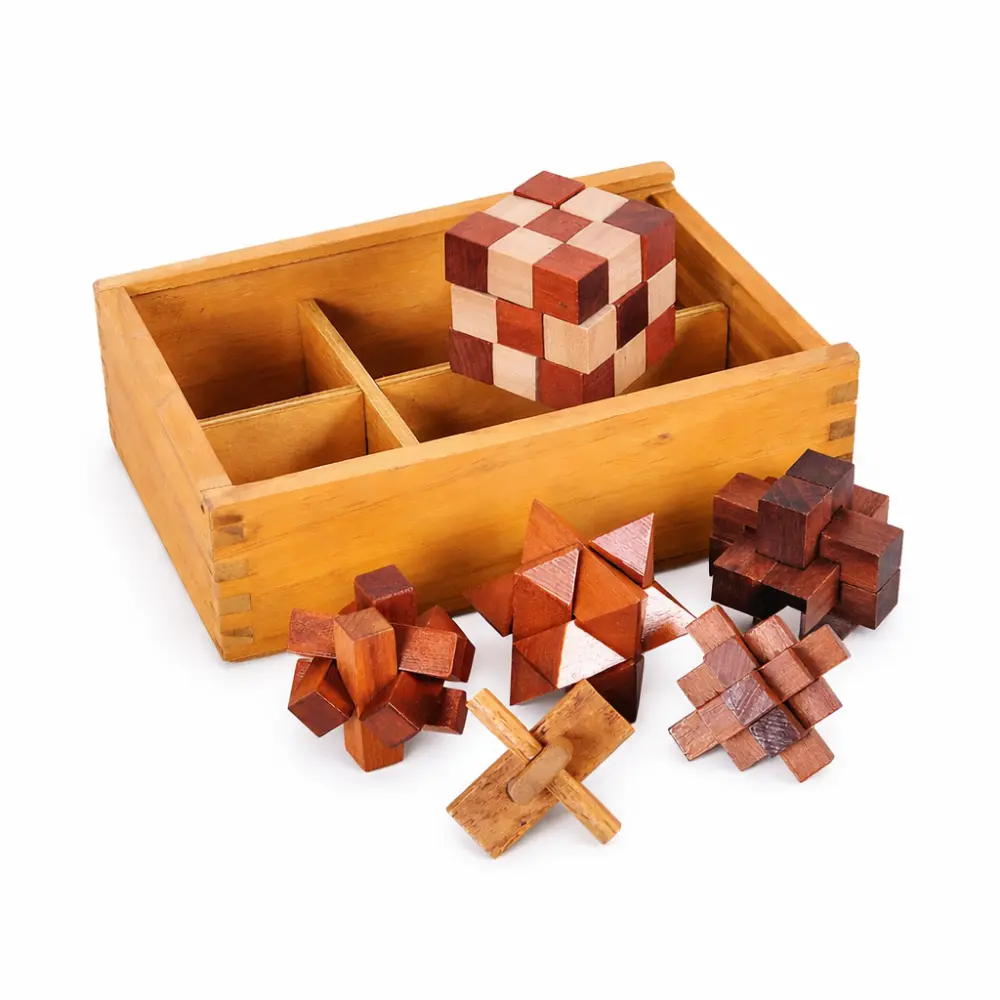
Choose a shared wooden brain-teaser set when you visit her regularly, want an activity to share, and the gift doubles as a recurring invitation. This is the format that signals “we want to spend time with you” without writing it in a card. A multi-piece wooden set works well because the difficulty is low enough that one person can solve it, yet the format invites a second pair of hands and a laugh. The 6-in-1 Wooden Brain Teaser Set covers that ground — six distinct challenges in one box, beginner-friendly mechanics, and a wooden finish that looks presentable on a side table. For a closer look at each of the six solves and how the difficulty progresses, this hands-on guide to the 6-in-1 wooden brain teaser set walks through the full set in more detail.
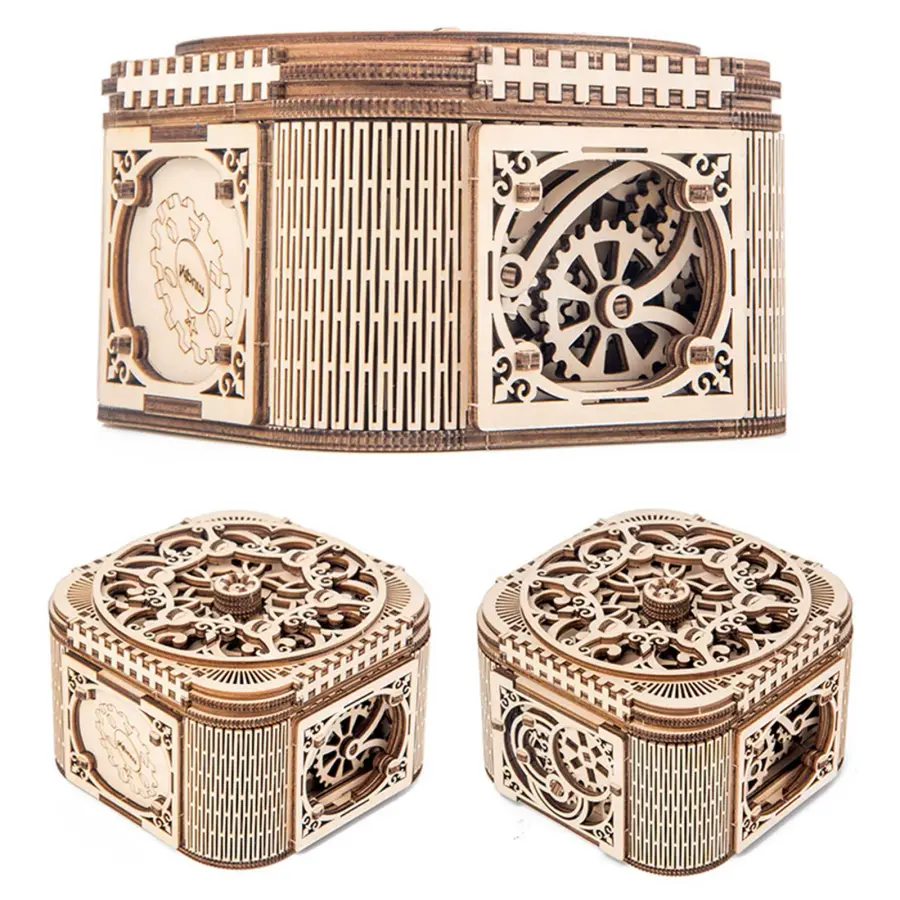
Choose a puzzle box when she prefers compact gifts, moves between homes, or keeps a small living space where a 500-piece jigsaw would be unwelcome. A mechanical puzzle box is also the right answer when the gift is meant to be opened, solved, and then used — not stored, framed, or revisited weekly. A treasure-box format is the cleanest example: she assembles it, and it becomes a small keepsake for a dresser or shelf.
Combining two formats in one gift is reasonable when the budget allows. A jigsaw for her solo hours plus a small brain-teaser pair for when you visit is a thoughtful pairing that covers both sides of the relationship. The single rule: do not stack formats unless you have already seen her engage with at least one of them. Two guesses is one guess too many for a single gift.
Your one practical check before buying: how often do you see her, and when you visit, do you actually sit together doing nothing? If the answer is “weekly and yes,” go shared. If “monthly and not really,” go solo jigsaw. If “rarely and she travels,” go puzzle box. The format is the message.
04. Matching the Gift Type to Her Living Space and How She’ll Use It
A 1000-piece puzzle is a poor fit for a small apartment table. A wooden brain-teaser set is wasted on someone who lives alone and never hosts. Match the gift to her actual space and her actual routine, not your idea of who she might be when she finally has free time.
The format you chose in the last section is the right starting line. The next question is where the finished puzzle will live after she’s done with it. A framed or mounted jigsaw has a second life as wall decor, which is why museum art and landscape themes earn their higher price. A completed brain-teaser on a side shelf is a quiet trophy of her patience; a calendar she assembled herself and now adjusts each morning is something she touches every day — the gift that keeps showing up.
Picture the gift in her living room before you check out. If the only available surface is a narrow side table, a sprawling landscape puzzle is the wrong fit. If her shelves are crowded with family photos and a few small objects, a compact wooden set earns its footprint. If her mantel has a single ceramic vase and one framed photo, a display-ready wooden model is welcome where a flat puzzle never would be. If a finished wooden object reads as more her style than a flat jigsaw, a quick look at wooden puzzles chosen for provenance and display value gives a tighter sense of the finish quality to look for in that lane.
Decision table: match format to her space and habits
| Gift type | Best for | Piece count or complexity | What to check |
|---|---|---|---|
| Solo jigsaw (museum art, botanical) | A hostess with a coffee table to fill | 100–500 pieces | Theme reads as adult; reference image is on the box |
| Wooden brain-teaser set | Shared visits, 2–4 people | 6–18 pieces or mechanisms | Each puzzle is independently solvable; verify piece count on the product page |
| Puzzle box (e.g., Treasure Box) | The “what’s inside?” reveal moment | Mechanical | Opens cleanly after assembly; interior fits a real use; confirm current price |
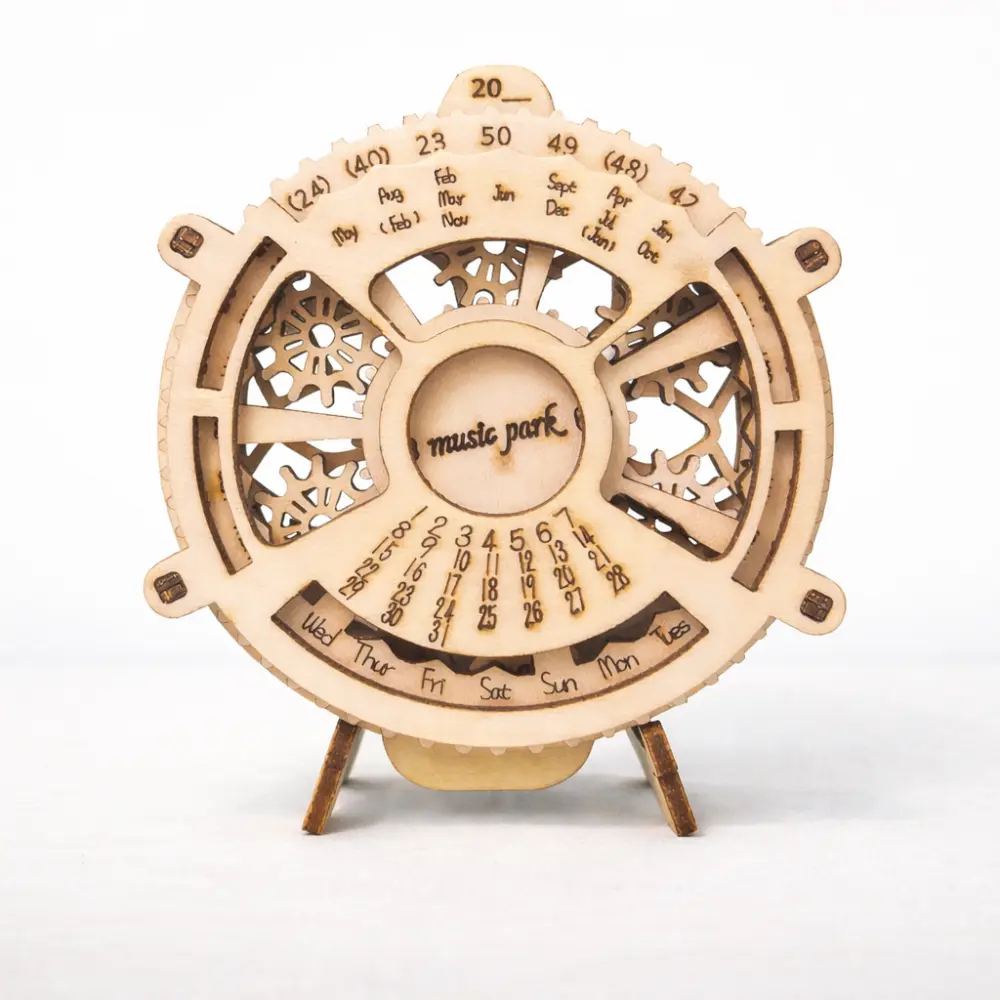
| Display + function (Perpetual Calendar) | A woman who likes objects with purpose | Mechanical assembly | Picture it on her desk, not yours; check the product page for current details |
The row that earns the top pick for this guide is the wooden brain-teaser set, specifically the 6-in-1 Wooden Brain Teaser Set at $38.88 — verify the current price on the product page. It pairs one compact box with six independent solves, which means she can put it down and pick it up without losing progress.
For the woman who wants a finished object with daily function, the 3D Wooden Perpetual Calendar Puzzle gives her a build, a place to display it, and a reason to touch it every morning.
Read the room. Skip the gift that needs a dedicated table you don’t know she has. One last check before you click: picture the puzzle on her coffee table, not the store shelf. If you can see it there for the next six months, you have your answer. If you can’t, step down a size or shift the format.
05. What to Avoid: The In-Law Gifting Faux Pas Around Puzzles
You can see the puzzle in her living room. Now run one more filter: the etiquette layer. Most puzzle gift lists skip this entirely, treating a mother-in-law present like any other recipient. The social calculus is different here. The goal is to show respect and thoughtfulness without presuming an intimacy you may not have earned yet. A puzzle that makes her laugh for the wrong reason — in front of her partner, her adult children, or her friends — costs you more than a less ambitious gift would have.
Skip novelty-shaped pieces first. Animal silhouettes, holiday-themed cuts, oversized novelty shapes that break the grid — these read as a gag gift, not a considered one. A puzzle where the final image is a dog wearing sunglasses is a present for a close friend’s white elephant exchange. For a mother-in-law, the finished image should be something she wouldn’t mind framed on the wall.
Skip licensed cartoon characters and kids’ brands. Disney tie-ins, cartoon mascots, anything that would slot into a children’s birthday party — these undercut the gesture the moment she opens the box. The signal you want to send is “I thought about you as an adult with a life and taste.” Even a beautifully illustrated cartoon puzzle will be quietly filed under “nice try” in her memory.
Skip religious imagery unless you already know her faith and have seen her display it openly. A stained-glass cathedral puzzle is a sincere gift for a devout Catholic mother-in-law. It is an awkward gift for one whose beliefs you have never discussed. The same goes for politically themed puzzles, political-cartoon art, and anything that invites a values conversation you aren’t ready to have over the dinner table.
Skip puzzles marketed as “silly,” “weird,” or with adult humor. The labeling exists for a reason — those puzzles are designed for a buyer who shares the maker’s sense of humor. You probably don’t share that with your mother-in-law yet, and even if you do, the box sitting in her linen closet when guests visit tells a different story.
Watch the “too personal” trap. A custom photo puzzle — your wedding photo, a family portrait, the grandkids’ faces — can read as either deeply thoughtful or as overstepping, depending on how new the relationship is and how public her home is. If you are early in the marriage, a jigsaw of a couple’s engagement photo is a gift that belongs to your partner’s sibling, not to you. When in doubt, choose a theme tied to her interests, not to your shared history.
One final check before you buy. Picture her opening it. Picture it sitting on her coffee table the next time you visit. Picture it mentioned casually in conversation with her own mother or her bridge group. If any of those mental images make you hesitate, choose something quieter. A thoughtful gesture that flies under the radar is worth more than a memorable one that lands wrong.
Frequently Asked Questions
A few practical questions keep surfacing even after the mental-imagery test settles. The five below are the ones that show up most often when the gift in question is a beginner puzzle set — and the answers are short enough to act on before you check out.
Is a puzzle a weird gift for a mother-in-law?
Not at all. A beginner-friendly puzzle reads as low-stakes and thoughtful, not odd. The awkwardness usually comes from the wrong piece count or wrong theme, not from the gift category itself. Stick to adult-oriented imagery in the 100–500 piece range and you’re well within the safe zone for a new in-law gift.
What piece count is best for a beginner adult puzzle?
A 100–500 piece jigsaw sits in the beginner zone where an adult can finish it in a weekend without losing interest. Below 100 reads as childish; above 1,000 turns a relaxing hobby into a project she may never complete, which signals you didn’t think about whether she’d finish it. Verify the exact count on the box before you buy — it’s printed on the front, not buried inside.
What if she doesn’t do puzzles — will this sit in a closet?
Possibly, if it’s a traditional jigsaw. A wooden brain-teaser set or a 3D puzzle box tilts the odds in your favor — even if she never solves it, the object itself earns a place on a shelf or side table. When in doubt, choose something that works as decor first and a puzzle second.
Should I get her a jigsaw or a brain-teaser set?
A jigsaw is a solo activity she’d work on alone with a reference image. A wooden brain-teaser set invites a shared moment when you visit — something to pick up together over coffee. If your relationship is newer, the solo jigsaw is the safer signal. If you want to communicate “I want to spend time with you,” a shared set does that job.
What do I write in a card with a puzzle gift?
Keep it short and specific to her, not to the gift. One line about the theme you chose — “I thought of your garden when I saw this” — is worth more than a paragraph about the puzzle itself. A second line inviting a future visit, something like “Looking forward to seeing how it turns out,” turns the card into a small bridge rather than a closing statement.
One last thought. If none of these checks feel like a fit, the puzzle might be the wrong tool for this relationship right now — and that’s a useful answer too. A simple, well-chosen object that survives the coffee-table test is the goal, and a quiet miss is better than a loud misfire. Take one more pass through the three checks from earlier — theme, piece count, format — and trust the result.
Where to Start
If the recipient and occasion checks above match, start with 6-in-1 Wooden Brain Teaser Set. Check the current product page for the specifications that matter to your choice.
Sources and verification
- Product details and current specifications: Tea-Sip product page
Last updated: August 25, 2026