Quick Answer: Beginner Puzzle Set Gift for Someone Who Has Everything: A Curator’s Guide
For a beginner who has everything, the best puzzle gift set is a three-piece mechanical collection in metal or wood. Choose metal for a heavy, fidget-friendly desk piece; choose wood for a classic, tactile bookshelf aesthetic. The key is selecting ‘Level 1-2’ challenges that reward logic rather than brute force to ensure the recipient experiences a rewarding ‘aha!’ moment rather than frustration. The 12 Piece Crystal Luban Lock Set is the premier choice for its visual transparency and approachable difficulty.
The ideal choice depends on the recipient’s “Desk Personality”:
| Recipient Type | Recommended Material | Primary Solving Mechanism | Key Selection Factor |
|---|---|---|---|
| The Executive | Metal / Zinc Alloy | Disentanglement | Heft and “fidget” quality |
| The Librarian | Hardwood / Bamboo | Interlocking (Burr) | Visual symmetry and grain |
| The Technologist | Acrylic / Crystal | Sequential Discovery | Internal transparency |
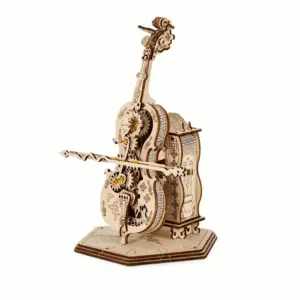
| The Tinkerer | Plywood / Balsa | Assembly (3D Kits) | Mechanical movement |
To verify the suitability of a set, check the manufacturer’s difficulty rating. For those who own everything, the object must function as a “desk artifact”—a piece of decor that invites interaction. Avoid sets with more than 12 pieces per individual puzzle, as high part counts often signal complexity that exceeds beginner comfort levels. Focus on “low-friction” movements where parts slide or rotate with precision, indicating high-quality machining or woodworking.
01. Material Selection: Why Zinc Alloy and Hardwood Outperform Plastic for High-End Gifting
Select a puzzle set crafted from zinc alloy or solid hardwood to ensure the gift functions as a permanent desk artifact rather than a disposable toy. For a recipient who already owns high-quality consumer goods, the value of a beginner puzzle lies in its tactile feedback—the specific weight, temperature, and sound of the components as they interact. Metal puzzles offer a cool, heavy “fidget-to-focus” experience, while hand-finished wood provides a classic, architectural aesthetic that complements a professional bookshelf or home office.
When evaluating a puzzle set for someone who appreciates longevity, the “Material Check” is your most reliable indicator of quality. Unlike mass-produced plastic alternatives that may have visible mold lines or light, hollow parts, high-end mechanical puzzles rely on precision tolerances. In metal sets, look for zinc alloy or brass; these materials develop a subtle patina over time, reflecting the recipient’s engagement with the object. The parts should glide with a low-friction “click” that signals intentional engineering. In wooden sets, prioritize hardwoods like monkey pod or bamboo over soft plywood. A quality wooden puzzle, such as those found in a structured 6-in-1 collection, uses the natural grain to hide the solution’s seams, making the object look like a solid sculpture until it is manipulated.
The distinction between a “toy” and an “artifact” is often found in the finishing. A beginner who has everything will likely notice if a puzzle feels flimsy or “gritty” during the solve. To verify quality before purchasing, check the product specifications for the specific material type. For a more sophisticated visual appeal, a crystal-style set—like the 12 Piece Crystal Luban Lock Set—provides a unique transparency that allows the beginner to observe the internal mechanics of the “lock” as they work through the sequence. This visual feedback is crucial for a Level 1-2 experience, as it rewards logic and spatial reasoning rather than trial and error.
Beyond the solve, consider the storage and presentation. A high-end gift should include a dedicated wooden box or a structured display tray. This transforms the puzzle from a singular activity into a curated collection. For the recipient, the ability to reset the puzzle and return it to a handsome container is part of the “Artifact” appeal. It suggests that the object is meant to be shared with guests or revisited during moments of deep work.
To determine if a material matches your recipient’s environment, follow this decision path:
1. The Executive Desk: Choose zinc alloy or cast metal. The weight provides a grounding sensory experience.
2. The Library or Den: Choose hardwoods. These blend with traditional decor and offer a warm, organic feel.
3. The Modern Studio: Choose acrylic or crystal-style polymers. The transparency and light refraction suit a minimalist aesthetic.
Ultimately, the goal is to provide a “low-friction” entry point into mechanical puzzles. By prioritizing material density and surface finish, you ensure the gift is perceived as a meaningful mental tool rather than a cluttered distraction. The right material choice elevates a simple “Level 1” challenge into a sophisticated ritual of focus.
02. The ‘Aha’ vs. The ‘Grind’: Selecting Low-Friction Logic Puzzles Over High-Complexity Challenges
Select a “Level 1-2” mechanical puzzle set for a beginner to ensure the experience is defined by logical discovery rather than physical frustration. A “low-friction” puzzle relies on a single, clever “aha!” moment that can be reached through observation, whereas high-complexity “grind” puzzles often involve dozens of repetitive movements that discourage a first-time solver. For a gift, the goal is to provide a cognitive reset that feels rewarding within ten to twenty minutes.
This distinction is critical because of the “Level 1 Trap.” Many gift-givers assume that a higher difficulty rating implies a more “impressive” gift for an intelligent recipient. However, starting a newcomer with a Level 5 challenge is the fastest way to ensure the object is abandoned in a desk drawer. According to mechanical puzzle definitions, these objects are solved by the manipulation of parts to achieve a specific goal, such as separation or alignment (Source: Mechanical puzzle — Wikipedia). If the mechanism is too tight or the logic too obscured, the tactile feedback becomes a source of frustration.
To match the puzzle mechanism to the recipient’s personality, evaluate these three primary “Solve Experiences”:
- Sequential Discovery: These puzzles require a specific order of operations. They often look like solid blocks or boxes but contain hidden compartments or moving internal pins. Choose these for the recipient who enjoys “unfolding” a mystery. They offer satisfaction because each step provides a tangible click or shift, signaling progress.
- Disentanglement: Often made of cast metal or wire, these require the solver to detach one piece from another. These are excellent for high-performers who need a tactile outlet during meetings, as they can be manipulated blindly once the logic is understood.
- Mechanical Interlocking: These are the classic “burr” or “lock” puzzles where multiple pieces must be fitted together to form a solid shape. These favor spatial reasoning. A well-made set, such as the 12 Piece Crystal Luban Lock Set, serves as a “desk artifact” that invites guests to try their hand at a solve.
Before purchasing, perform a “Reset Check” by reviewing the product description. A beginner-friendly gift must be as easy to put back together as it is to take apart. If a puzzle requires a complex 50-step sequence to return to its original state, it loses its value as a repeatable mental exercise. Look for sets that emphasize “low-friction” movements—parts that glide or rotate without force. High-quality zinc alloy or polished hardwoods provide this smooth interaction, ensuring the “aha!” moment is the result of logic, not brute strength.
The most successful beginner sets are those that offer variety. A collection featuring different mechanisms allows the recipient to find their preferred “solve style.” This variety transforms the gift from a single task into a curated introduction to a new hobby. By prioritizing “Level 1-2” logic, you provide the recipient with the confidence to explore more complex spatial challenges in the future.
03. The Solve Experience: Matching Disentanglement or Sequential Puzzles to Recipient Personality
Select a metal disentanglement puzzle for a recipient who values “fidget-to-focus” tactile feedback; choose a sequential discovery or interlocking wooden set for those who prefer a slow, methodical ritual of deconstruction. Matching the puzzle’s mechanical style to their cognitive habits ensures the gift becomes a functional desk artifact rather than a forgotten novelty.
For the high-performer who has everything, the “Fidget-to-Focus” connection is a primary selling point. Mechanical puzzles provide a low-stakes cognitive anchor that can assist with screen-free focus during deep-thinking sessions (Source: Fidget toy — Wikipedia). A metal set, such as the 6 Piece Steel Ball Pyramid Puzzle, offers a distinct “heft” and cool-to-the-touch surface that grounds the user. These are often categorized as disentanglement puzzles—the goal is to separate two or more pieces that appear inextricably linked. The solve is usually a singular “aha!” moment of spatial realization.
In contrast, sequential discovery and interlocking puzzles, like the 6-in-1 Wooden Brain Teaser Set, require a different mental gear. These objects demand that the user find a specific order of operations—sliding a panel, rotating a pin, or applying pressure to a hidden seam. For a beginner, these sets are superior because they offer multiple “micro-wins” as each piece is successfully manipulated.
To avoid a gift mismatch, evaluate the recipient’s typical “solve style” using the following criteria:
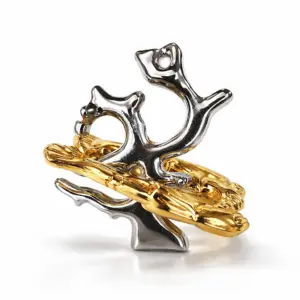
- The Tactile Fidgeter: They prefer objects they can manipulate blindly while thinking. Look for metal alloys, smooth rotations, and pocket-sized dimensions. The 4 Band Puzzle Ring is a classic example of a wearable, tactile challenge that doubles as a conversation piece.
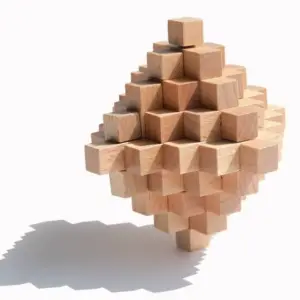
- The Desktop Architect: They appreciate symmetry, geometry, and the way individual components form a solid whole. Interlocking wooden cubes, such as the 54-T Cube Puzzle, fit this profile perfectly. They look like minimalist sculptures when solved and provide a satisfying alignment when the final piece slides home.
- The Narrative Solver: They enjoy the “story” of the object. A 3D Wooden Mechanical Pistol Kit provides a clear beginning, middle, and end. The reward is not just the solve, but the functional object that remains afterward.
Before finalizing your choice, verify the “reset” difficulty. A common “Level 1 Trap” occurs when a puzzle is easy to take apart but nearly impossible for a beginner to reassemble. For someone who has everything, frustration is the enemy of appreciation. Ensure the set includes a clear, illustrated solution guide. This allows the recipient to master the object and then perform the solve for others, transforming the gift from a solitary task into a social “desk artifact.”
04. Presentation and Storage: Why the ‘Artifact’ Aesthetic Matters for Minimalist Environments
For a recipient who values a clutter-free environment, select a puzzle set that doubles as a desk artifact or bookshelf sculpture. Choose a collection of varied mechanisms over a single complex object to provide a broader introduction to the hobby without overwhelming the space. The visual appeal of the material—whether the high-shine finish of a 12 Piece Crystal Luban Lock Set or the matte grain of a 6-in-1 Wooden Brain Teaser Set—determines if the gift remains on display.
When gifting to someone who “has everything,” the object’s presence during its “idle state” is as important as the solve. A high-quality puzzle should not look like a toy; it should look like a deliberate design choice. Sets that include a dedicated storage tray or a high-end presentation box are preferable because they establish a “home” for the pieces. This prevents the “Level 1 Trap” of scattered components and ensures the gift feels like a curated collection.
A multi-piece set offers a distinct advantage for beginners: it provides a “difficulty ladder” within a single gift. By starting with a Level 1 disentanglement puzzle and moving toward a Level 2 sequential discovery piece, the recipient builds confidence. This progression turns the gift into a multi-session experience. If one puzzle proves momentarily frustrating, the recipient can pivot to another in the set, maintaining the “Aha!” momentum that makes mechanical puzzles so satisfying.
To verify the quality of a potential gift, perform a “clutter check” by evaluating three specific criteria:
* The Footprint: Does the set occupy a small square of desk space? For minimalist environments, compact footprints are essential.
* The Silhouette: Does the puzzle maintain a clean shape (like a cube, sphere, or pyramid) when solved? Solid geometry, such as that found in a 6 Piece Steel Ball Pyramid Puzzle, translates better to modern decor.
* The Reset Factor: Can the puzzle be returned to its original “sculptural” state easily? A puzzle that stays in pieces because the reassembly is too complex ceases to be an artifact.
The practical next step is to match the set’s material to the recipient’s existing office or home aesthetic. If their desk features brushed aluminum and glass, a zinc alloy or crystal-style set provides a seamless visual match. If their environment leans toward leather and warm tones, a polished wood set like the 6-in-1 Wooden Brain Teaser Set is the superior choice. This ensures the gift is perceived as a thoughtful addition to their lifestyle.
05. The Beginner’s Decision Table: Verifying Difficulty and Reset-ability Before Purchase
To verify if a puzzle set is appropriate for a beginner who has everything, prioritize sets with a “Level 1-2” difficulty rating and a “closed-loop” reset mechanism. A beginner-friendly gift must offer a logical “aha!” moment within 10 to 20 minutes. Ensure the set includes solution guides, as the ability to reset the object to its original “artifact” state is what maintains its value as a desk display.
Beyond the initial “solve,” the longevity of a mechanical gift depends on the tactile quality and the ease of reassembly. For a recipient who appreciates precision, a metal disentanglement puzzle should have a smooth, low-friction finish. For those who prefer organic textures, a wooden set must have precisely milled joints to avoid sticking. Before purchasing, use the following decision table to match the specific puzzle mechanism to the recipient’s personality and environment.
Beginner’s Mechanical Puzzle Comparison
| Puzzle Type | Best For | Material Check | Reset Difficulty |
|---|---|---|---|
| Interlocking (e.g., 12 Piece Crystal Luban Lock Set) | The Logical Architect | High-grade smooth synthetics; check for transparency. | Moderate; requires sequential steps to return to “sculpture” form. |
| Disentanglement (e.g., Alloy S Lock) | The High-Performer Fidgeter | Zinc alloy or brass; verify weight and “heft” for hand-feel. | Low; usually a 2-3 step reversal of the solution path. |
| Sequential Discovery (e.g., 3D Wooden Puzzle Treasure Box) | The Curious Explorer | Polished hardwood; check for laser-cut precision and moving parts. | High; often functions as a permanent storage vessel once solved. |
| Geometric Assembly (e.g., 6 Piece Steel Ball Pyramid Puzzle) | The Minimalist Professional | Metal and weighted bases; check for “desk footprint” size. | Low; intuitive reassembly makes it a repeatable focus tool. |
When evaluating a set, perform a “Safety and Finish” check. High-quality beginner sets, such as the 12 Piece Crystal Luban Lock Set, should feel substantial in the hand without being cumbersome. Avoid sets that lack clear instructions; for a person who has everything, their time is a valuable commodity. A gift that provides a solution path ensures the puzzle remains a source of satisfaction.
The final check is the “Reset-ability” factor. Ask: can this be returned to its unsolved state easily? For a desk artifact, the ability to quickly reset the puzzle for a guest or a second attempt is essential. If the reassembly is significantly harder than the disassembly, it may fail as a “beginner” gift. Aim for a balanced challenge where the logic of taking it apart naturally informs the logic of putting it back together.
Frequently Asked Questions
Determine if a puzzle is appropriate for a beginner by checking for a “Level 1” or “Level 2” difficulty rating and a low piece count, typically under fifteen components. A beginner-friendly gift should prioritize a single, clear “aha” moment over complex, multi-stage grinds. If the manufacturer does not list a level, verify the mechanism: simple interlocking joints or two-part metal disentanglements are safer entry points.
How do I know if a puzzle is too hard for a recipient?
The most reliable indicator of excessive difficulty is a high piece count combined with a mechanism that requires hidden tools. For a beginner who has everything, avoid puzzles that take hours to solve. Instead, look for sets like the 12 Piece Crystal Luban Lock Set, where the challenge is visual and tactile rather than a test of endurance. If a puzzle requires a manual longer than two pages to explain the basic movement, it is likely too complex for a casual desk artifact.
Are wooden or metal puzzles better for a gift?
Choose metal puzzles for recipients who value “heft” and durability; the zinc alloy construction provides a cool, industrial feel that suits modern office desks. Metal options, such as the 6 Piece Steel Ball Pyramid Puzzle, are often more compact and “fidget-friendly.” Select wooden sets for a classic, library aesthetic. High-quality wood, such as those found in the 6-in-1 Wooden Brain Teaser Set, offers a warm texture and often functions better as a shelf display piece.
What is a “disentanglement” puzzle?
A disentanglement puzzle consists of two or more interconnected parts—usually metal loops or rings—that must be separated and then rejoined. These are excellent for beginners because they rely on spatial reasoning rather than force. They provide immediate tactile feedback with no sharp edges. Because they are often small and durable, they serve as the ideal mental exercise for a high-performer who travels or spends time in meetings.
Can these puzzles be reset easily once solved?
Reset-ability varies by mechanism. Mechanical locks and interlocking wooden blocks are usually intuitive to reset because the reassembly logic mirrors the disassembly logic. However, always verify the “reset difficulty” on the product page. A gift like the 54-T Cube Puzzle is rewarding to solve, but the giver should ensure the recipient enjoys the process of reconstruction, as reassembling a geometric cube can sometimes be more challenging than the initial solve.
Do these sets come with solution instructions?
Most curated sets include a solution guide or a link to a digital walkthrough. For a recipient who has everything, a physical instruction card is preferred. Before purchasing, verify if the instructions are included in the box. A high-end gift should never leave the recipient frustrated; providing a “safety net” solution ensures the object remains a source of confidence rather than a permanent reminder of a failed challenge.
To select the right entry point for your recipient, identify their primary workspace aesthetic. If they favor a minimalist, metallic environment, begin with a weighted metal challenge. If their space is filled with books and natural textures, a wooden collection is the superior choice. Your next step is to verify the “desk footprint” of the 12 Piece Crystal Luban Lock Set to ensure it fits their intended display area.
Where to Start
If the recipient and occasion checks above match, start with 12 Piece Crystal Luban Lock Set. Check the current product page for the specifications that matter to your choice.
Still comparing options? Use the matching Tea-Sip collection to compare the same decision criteria, rather than restarting the search from scratch.
Sources and verification
- Product details and current specifications: Tea-Sip product page
Last updated: August 29, 2026
ARTICLE END