Quick Answer
For a Mother’s Day beginner puzzle set, choose a graduated wooden or metal brain-teaser set with 4–12 puzzles and clear printed instructions if mom is brand-new to puzzling. Pick a single 3D wooden kit or decorative puzzle box if she enjoys hands-on projects and wants a keepsake. Skip jigsaws over 300 pieces, photorealistic images, and any set with no solution guide.
The three checks that decide which type is right:
- Recipient profile. True beginner (never puzzles), returning puzzler (hasn’t done one in years), or hands-on tinkerer. Each one fits a different puzzle type.
- Piece count and difficulty ceiling. For jigsaws, 100–300 pieces with large-format pieces is the beginner sweet spot. For brain-teaser sets, look for graduated difficulty across 4–12 puzzles so she can build confidence.
- One-sitting completion. A beginner set should be finishable in a single afternoon, not a multi-week project. If the box says “1000 pieces” or “advanced,” it’s the wrong gift.
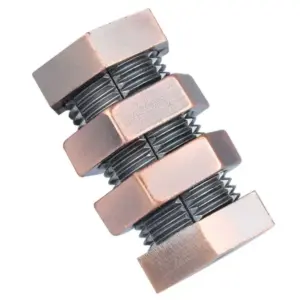
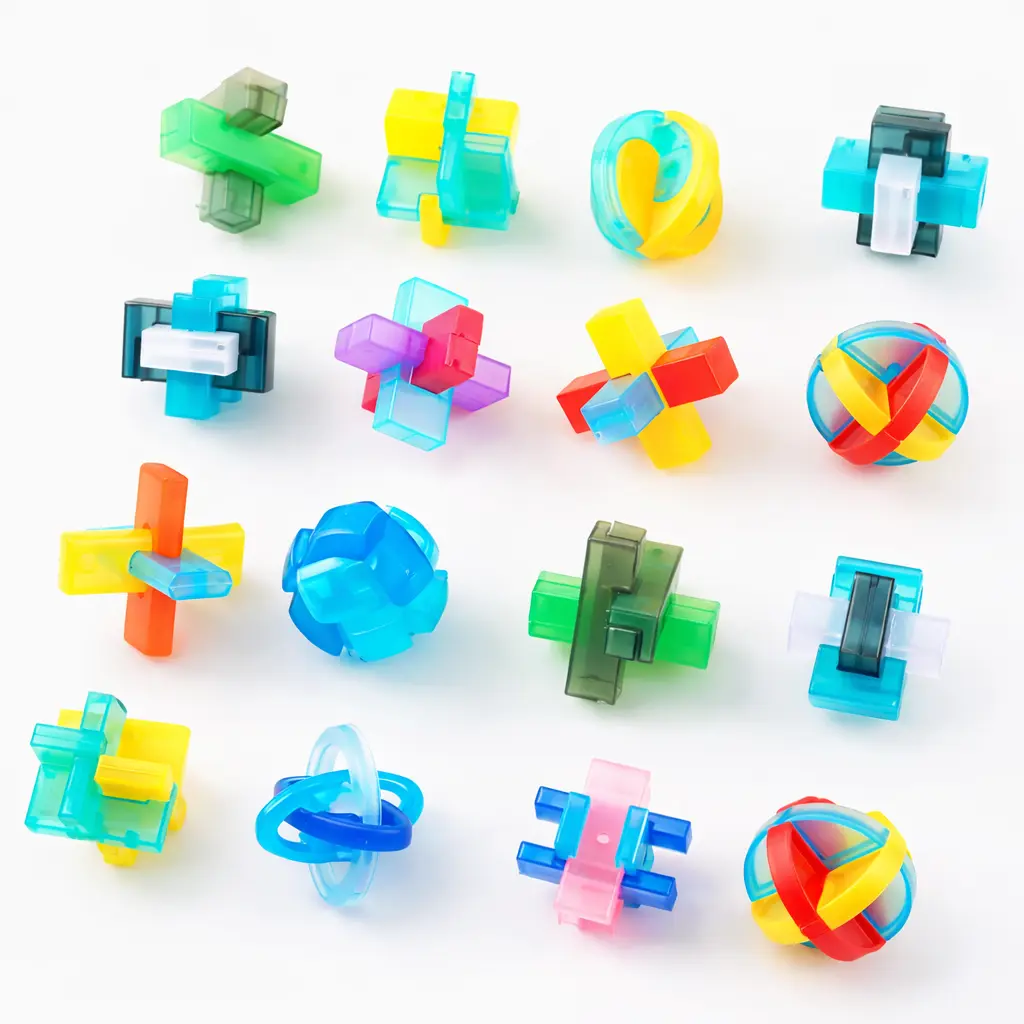
For a non-puzzler mom who wants something tactile, display-worthy, and completable in one sitting, a graduated brain-teaser set is the strongest fit. The 12 Piece Crystal Luban Lock Set ($28.88) is a compact 12-puzzle graduated set that fits the beginner criteria, sits beautifully on a desk or shelf, and solves in minutes per puzzle — ideal for a Mother’s Day morning reveal.
Quick Decision Table
| Mom type | Best fit | Beginner signal | Approx. price |
|---|---|---|---|
| True beginner / non-puzzler | Graduated brain-teaser set (12 interlocking puzzles) | Multiple puzzles, clear solution guide, one-sitting solve | ~$28.88 |
| Returning puzzler | 100–300 piece jigsaw with large pieces | Low piece count, high-contrast image, large-format pieces | Varies |
| Hands-on tinkerer | Single 3D wooden mechanical kit | Step-by-step instructions, display-worthy finished object | Varies |
| Grandma with grandkids | Large-piece jigsaw or shared brain-teaser set | Oversized pieces, cooperative play, short completion | Varies |
The next section defines what “beginner” means in puzzle-set design — the four observable signals that separate a true beginner set from an advanced one dressed up as a gift.
01. What Actually Makes a Puzzle Set Beginner-Friendly
A beginner puzzle set is defined by four signals you can verify before you buy: piece count under 300, large-format pieces, a clear high-contrast image, and a printed solution or instruction sheet. If the product page doesn’t confirm at least three of these, the set isn’t really beginner-friendly — it’s just small.
Piece count is the first number to check, and it’s the signal gift shoppers most often miss. A jigsaw-community thread titled “250 pieces, a gift for Mother’s Day from my eldest” treats that count as a recognized beginner-friendly size — enough to feel like a real project, few enough to finish in an afternoon. New York Puzzle Company’s Mother’s Day gift guide explicitly spans “100 pieces to 1000 piece puzzles” to suit “every mom,” which tells you the lower end of that range is where the casual gift buyer should start. For a mom who hasn’t picked up a puzzle in years — or ever — anything above 300 pieces becomes a commitment, not a gift.
Piece size matters even more than piece count for many moms. Large-format pieces are easier to see, easier to grip, and easier to sort on a kitchen table under lamp light. The same puzzle in 100 small pieces can feel harder than a 300-piece version with oversized pieces, because the bottleneck for a true beginner is rarely strategy — it’s hand fatigue and visual sorting. If your mom is over 60, has arthritis, or simply likes to puzzle in bed, piece size is the decision that decides whether the set gets finished or shelved.
Image complexity is the third signal. A high-contrast image with clear color zones — a single bright bouquet, a landscape with a defined horizon, a botanical illustration — gives the eye something to sort by. A photorealistic collage of muted tones, a gradient sunset, or a chaotic market scene removes that handhold. For a beginner, the image is doing half the work; the puzzle itself only has to be assembled, not interpreted.
Instruction quality is the fourth, and it’s the one most product pages skip. A printed solution guide, a step-by-step instruction sheet, or a clearly numbered order of assembly turns a puzzle from a guessing game into a project. Wooden brain-teaser sets and 3D kits are where this signal matters most — without a guide, a 12-piece interlocking set can feel impossible; with one, it becomes a 20-minute ritual.
The check on the box: before you add a puzzle set to your cart, open the product page and confirm three things in writing — the exact piece count, the piece dimensions or a “large pieces” note, and whether a printed guide is included. If the page only shows a lifestyle photo and a price, the answer is somewhere else, and that uncertainty is the gap that separates a thoughtful gift from one mom quietly returns.
Together, these four signals turn “beginner” from a marketing word into a set of conditions you can actually test. The next section maps those conditions onto the four puzzle types that genuinely suit a non-puzzler mom: jigsaw, wooden brain-teaser, 3D, and mechanical.
02. The Four Beginner Puzzle Types and the Mom Each One Fits
Pick the puzzle type by what you want mom to do on Sunday morning, not by what looks nicest in the box. A 250-piece jigsaw is for a quiet afternoon with a cup of tea. A graduated wooden brain-teaser set is for the 20-minute daily ritual. A 3D wooden model is for the project-doer who likes to build things. A mechanical disentanglement puzzle is for the hands-busy, screen-free focus seeker. The right type depends on the moment you want to create.
The four beginner-appropriate puzzle types are genuinely different objects — not variations of the same gift. Each one creates a different kind of engagement, takes a different amount of time, and signals a different kind of thoughtful gift choice. Mapping them out, with the beginner signals from the previous section, looks like this.
Flat jigsaw puzzle (100–300 pieces, large pieces)
The flat jigsaw is the most familiar format, and the one most gift shoppers default to — but it needs the beginner conditions applied strictly. A 250-piece jigsaw with a clear, high-contrast image and large pieces (often called large-format pieces) is the sweet spot for a mom who hasn’t picked up a puzzle in years. A 1000-piece photorealistic landscape, by contrast, will be abandoned in a week.
Who this is for: the mom who wants a quiet, slow afternoon project — something she can do at the kitchen table while the radio plays, and finish in one or two sittings.
The concrete check: confirm the piece count is printed on the box and that the image is bright and clearly defined. Photographic landscapes with subtle gradients are the hardest for beginners; illustrated florals, food art, and bold patterns are the easiest. If the box doesn’t list piece count or the image is washed out, skip it.
Wooden brain-teaser set (graduated puzzles, solution card)
A wooden brain-teaser set is a collection of 4 to 12 small interlocking or disentanglement puzzles, usually graduated from easy to hard and packed with a printed solution card. The format works well as a beginner gift because the puzzles are short — often solvable in 10 to 30 minutes each — and the variety keeps a new puzzler engaged without overwhelming her. This is the format that fits a Sunday morning ritual: one puzzle with coffee, the next on Monday.
Who this is for: the mom who likes a daily focus ritual but isn’t ready to commit to a single large project — or the mom who enjoys small, satisfying wins.
The concrete check: confirm the set is graduated (4 to 6 puzzles is the beginner sweet spot), includes a printed solution guide, and is clearly labeled by difficulty. Wooden brain-teaser sets pair naturally with the screen-free, hands-busy ritual many gift shoppers are looking for — the kind of focus object that sits on a desk and gets picked up between phone calls.
For a graduated wooden set that walks mom from easy to advanced, the 12 Piece Crystal Luban Lock Set is the strongest fit — twelve interlocking puzzles, all in one box, designed for the same sit-down-for-20-minutes rhythm. A graduated set like this is also a natural keepsake gift, because the box stays on her shelf long after the puzzles are solved.
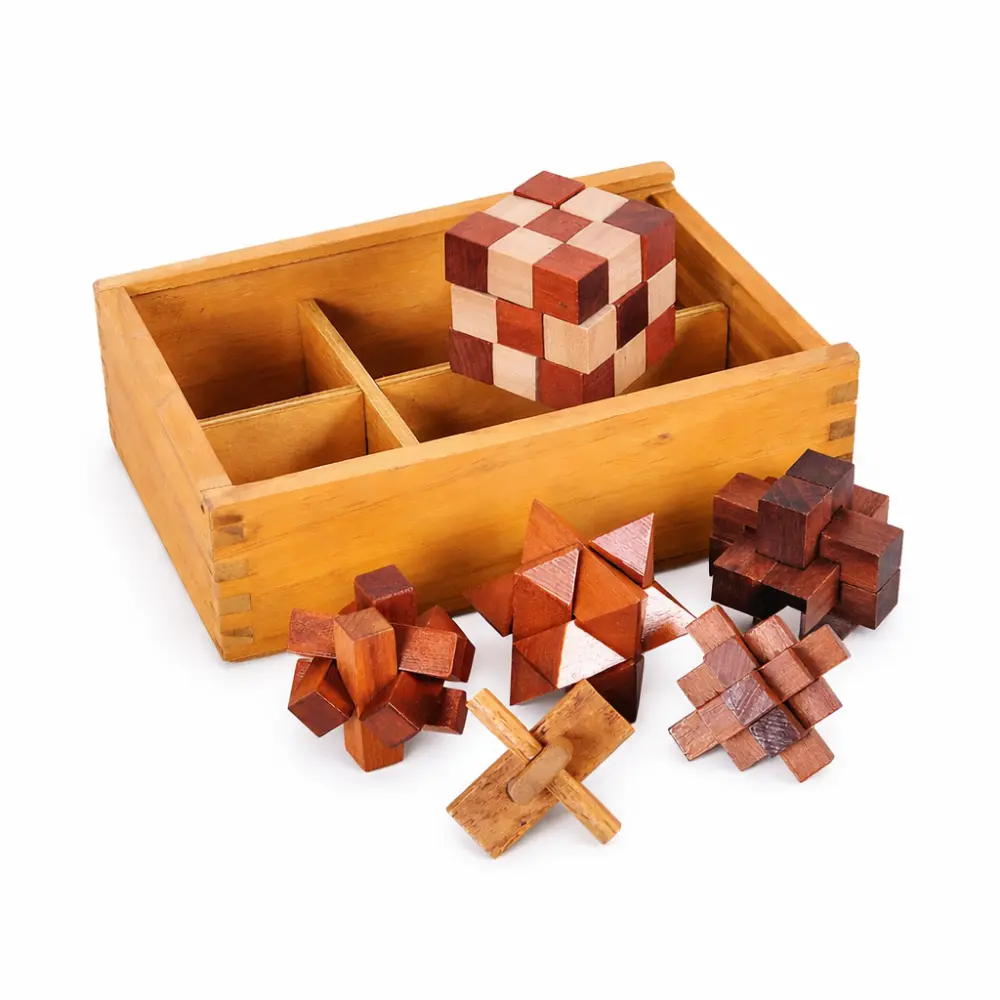
If mom prefers a wider variety of shapes and mechanisms in a single compact box, the 6-in-1 Wooden Brain Teaser Set above is a close second — same graduated structure, different puzzle geometries.
3D wooden puzzle (mechanical, builds an object)
A 3D wooden puzzle assembles into a finished object — a music box, a clock, a model car, a treasure box. The category sits in a curious place: it’s a beginner-friendly project for someone who already likes hands-on building (think: flat-pack furniture, LEGO, model kits), but a poor match for someone who has never built anything.
Who this is for: the mom with a craft or building hobby already — the knitter, the sewist, the model-maker. The shared build is the appeal.
The concrete check: confirm the kit includes a printed step-by-step instruction booklet (not just a reference photo) and that the piece count is under 100. Anything over 100 pieces or without numbered steps is not a beginner project, no matter how it looks on the shelf.
Mechanical puzzle (single disentanglement or interlocking object)
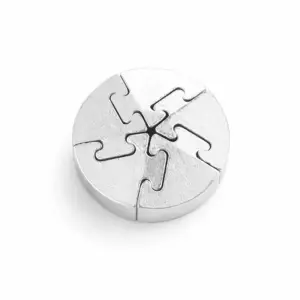
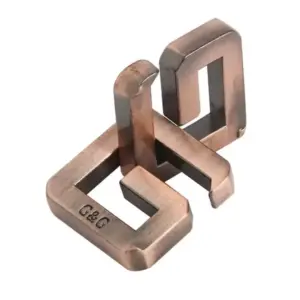
A mechanical puzzle is a single object — a metal disentanglement ring, a cast spiral, a wooden lock — that has to be manipulated into a solved state. Wikipedia’s Mechanical puzzle entry describes the category as objects with a solved state that requires manipulation, rather than assembly, which is the key distinction from a 3D kit.
Who this is for: the mom who keeps a puzzle on her desk and picks it up between calls — a hands-busy focus aid rather than a sit-down project.
The concrete check: confirm the puzzle comes with a solution card or printed solve instructions. Without one, a metal disentanglement puzzle can feel like a defective product. Beginners do best with cast metal or wooden interlocking puzzles in the 4 to 8 piece range, where the solve path is achievable but not obvious.
How the four types compare
| Type | Best for mom who… | Typical time per session | Solo or shared |
|---|---|---|---|
| Flat jigsaw (100–300 pieces) | Wants a quiet afternoon project | 1–2 hours | Solo or shared |
| Wooden brain-teaser set (graduated) | Likes a daily focus ritual | 15–30 minutes | Solo |
| 3D wooden puzzle (under 100 pieces) | Already likes building kits | 1–3 hours | Shared |
| Mechanical puzzle (single object) | Wants a hands-busy desk object | 5–15 minutes | Solo |
The most common beginner-gift mistake is buying the format you wish mom enjoyed rather than the format her habits already support. Match the type to the person, not to the picture on the box.
03. Matching the Puzzle Set to Your Mom’s Puzzling History
The right beginner set depends less on mom’s age and more on whether she has touched a puzzle in the last decade. That single signal — recent hands-on experience, or none at all — is the axis that separates a gift she’ll actually finish from one that ends up regifted by July. Stave’s Mother’s Day collection makes the same point in plain language: their puzzles “come in varying levels of difficulty” for “beginner or advanced” puzzlers, and the level — not the novelty — is the real decision.
A mom who already keeps a small hands-busy object nearby is signaling that she tolerates short, repeatable focus sessions. A mom whose last puzzle was the cardboard one your family abandoned at the cabin in 2014 is signaling something different: she may welcome the activity, but she needs the on-ramp to be gentle.
Mom the true beginner. No recent puzzling, no established habit, possibly a little skeptical that she’ll like it. Match her to a wooden brain-teaser set with graduated difficulty — four to six puzzles that start obvious and build toward a real solve. The 6-in-1 Wooden Brain Teaser Set is built around exactly this idea: a range of challenges in one box, so mom can start with the easy disentanglement and work up. Each individual puzzle solves in minutes, which matters more than it sounds — a beginner who finishes something on day one is a beginner who picks the box up on day two.
Mom who used to puzzle. She remembers doing them with you as a kid, but her hands and patience are not what they were. A 100–300 piece jigsaw with large-format pieces and a high-contrast image is the right call. The piece count is low enough to finish in an afternoon, the pieces are forgiving on older hands, and the picture gives her something to look at while she sorts. As one Reddit puzzler noted when describing a 250-piece Mother’s Day gift, that piece count is widely treated as the sweet spot for a return-to-puzzling mom.
Mom with grandkids. The activity is the gift, not the object. She’ll enjoy the puzzle, but what she’s really going to enjoy is sitting at the table with a six-year-old while the two of them sort edge pieces. A 3D wooden puzzle under 100 pieces, or a 3D Crystal Rose Puzzle she can put on a shelf afterward, fits this case well. The build is shared, the result is displayable, and the project has a clear endpoint before a small child’s attention wanders.
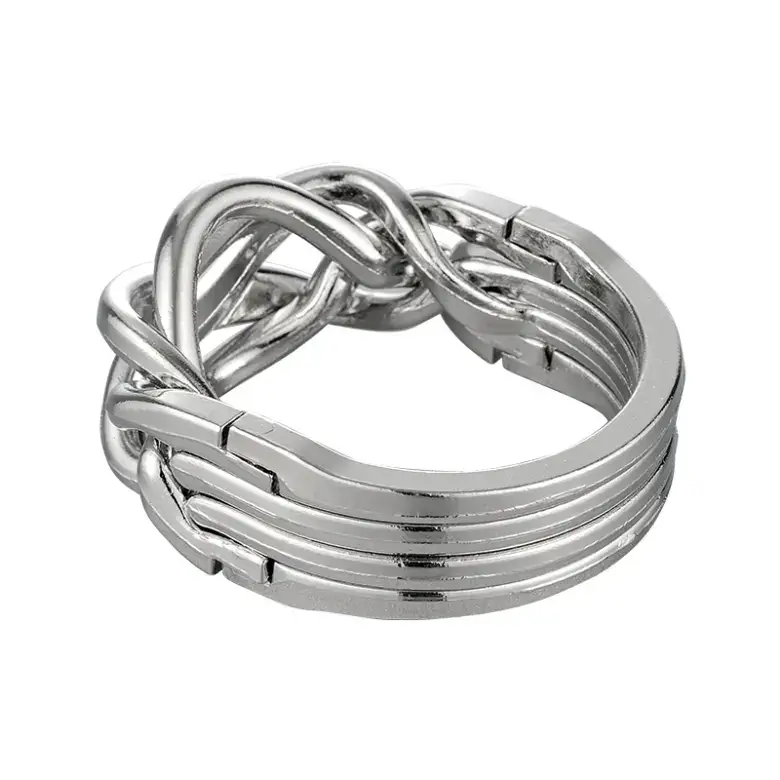
4 Band Puzzle Ring — $11.99
A small note on a fourth case the personas don’t cover: mom who wants jewelry but also likes clever objects. A 4 Band Puzzle Ring solves in seconds, looks like a ring, and doubles as a pocket puzzle she can fidget with during a long phone call. It is the lowest-commitment option in the beginner range and the easiest add-on if you’re pairing a main puzzle with something small.
If mom already gravitates toward hands-busy objects or wants something she can pick up one-handed between calls, the same logic extends to a wider hands-busy format — see fidget and puzzle picks for new moms for how the one-handed focus object works as a Mother’s Day pairing alongside a main set.
Next action: pick the persona, then read the matching row of the comparison table in the next section before you add anything to a cart.
04. Beginner Puzzle Types Compared: Difficulty, Time, and Presentation Value
Match the puzzle type to your mom’s persona first, then read only the matching row. The table below turns the four types into a single decision — piece count tells you whether she finishes it, presentation value tells you whether it earns a spot on her shelf.
| Type | Best For | Pieces in Set | Solo or Shared | Presentation Value | What to Check Before Buying |
|---|---|---|---|---|---|
| Jigsaw (100–500 pcs) | Mom who used to puzzle | 100–500 pieces | Solo or shared | Medium — flat, framable | Image contrast, piece size for older hands, finish-in-one-sitting time |
| Wooden brain-teaser set | True beginner mom | 4–6 puzzles | Solo | High — desk display | Solution sheet included, graduated difficulty across puzzles |
| 3D wooden puzzle | Mom with grandkids | Varies — check page | Shared (parent + child) | High — finished object displays | Glue required? Snap tolerance. Age range |
| Mechanical disentanglement | Mom who likes clever objects | 1 puzzle, 6–12 steps | Solo, pocket-sized | Medium — small, decorative | Step count, interlocking vs. smooth fit, solution card included? |
For jigsaws, the piece count on the box decides whether a beginner will finish in one sitting. New York Puzzle Company’s Mother’s Day range runs from 100 to 1,000 pieces to cover “every mom” — a tenfold spread, and most non-puzzler moms land between 100 and 500. A Reddit r/Jigsawpuzzles post titled “250 pieces, a gift for Mother’s Day from my eldest” confirms 250 is widely read as a beginner-friendly Mother’s Day size, a useful anchor even if your mom has never held a puzzle piece.
For brain-teaser sets, count the puzzles inside the box — 4 to 6 graduated puzzles is the beginner sweet spot. For 3D kits, confirm whether glue is required; true beginners prefer glue-free interlocking snap-fit. For mechanical sets, count the steps from closed to solved; anything over 12 stops being a beginner gift.
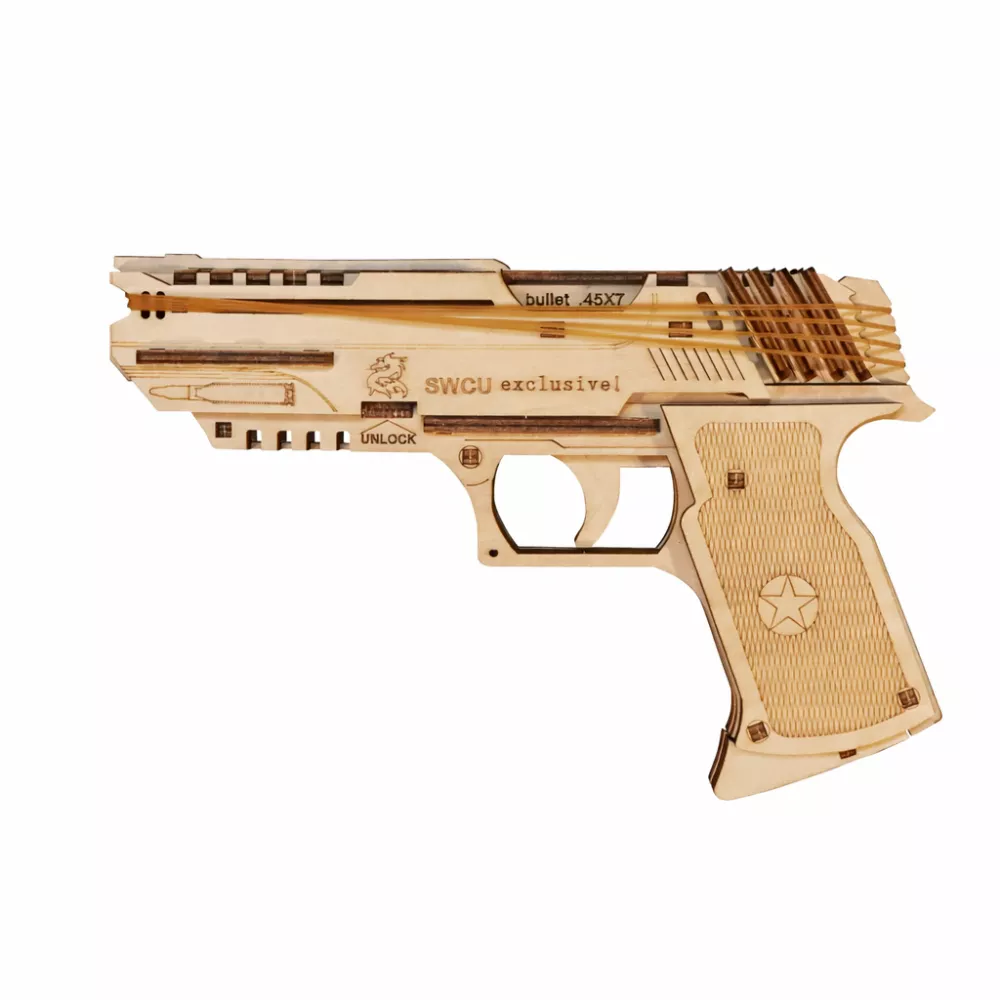
If a 3D-plus-mechanical overlap appeals — a project mom builds, then displays — the 3D Wooden Mechanical Pistol Kit sits in that overlap. Check the product page for current piece count and assembly time before you buy.
Next action: pick the row that matches your persona, then open the product page for the set that clears every “What to check” item.
05. Three Beginner Puzzle Gift Mistakes That End Up in the Closet
A beginner puzzle that isn’t finished on Mother’s Day weekend is a beginner puzzle that won’t be opened next year. The right row in the comparison above still has to clear three checks that have nothing to do with piece count alone — because the fastest way to retire a thoughtful gift is to pick a puzzle mom can’t start, can’t hold, or can’t finish in an afternoon.
Mistake 1: gifting a 1000-piece photorealistic puzzle to a non-puzzler.
Photorealistic images — a dense maple-leaf photo, a cityscape, a gallery of tiny faces — reward pattern recognition, color sorting, and patience across long sessions. None of those are beginner muscles. A Reddit thread in r/Jigsawpuzzles describing a Mother’s Day gift confirms that a 250-piece count is widely treated as a beginner-friendly size for a casual recipient (reddit.com/r/Jigsawpuzzles). The product-page check: if the image is photorealistic and the piece count sits above 500, walk away — no matter how beautiful the box looks.
Mistake 2: ignoring piece size for older hands.
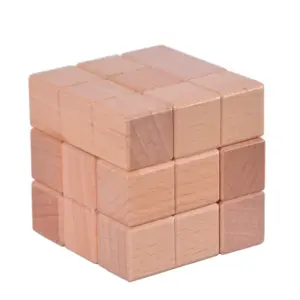
Piece count tells you how long the puzzle takes. Piece size tells you whether mom can pick the pieces up at all. Standard pieces on a 1000-piece jigsaw are small enough to lose on a placemat — fine for steady hands, frustrating for anyone with mild arthritis, recovering from a hand injury, or just working without reading glasses. The check on the product page: look for “large pieces,” “jumbo pieces,” or “easy-grip” in the description. Wooden brain-teaser sets with chunky hand-sized components sidestep the issue by making each piece a tactile object in its own right — and a compact interlocking puzzle like the 54‑T Cube takes the same approach at a smaller scale.
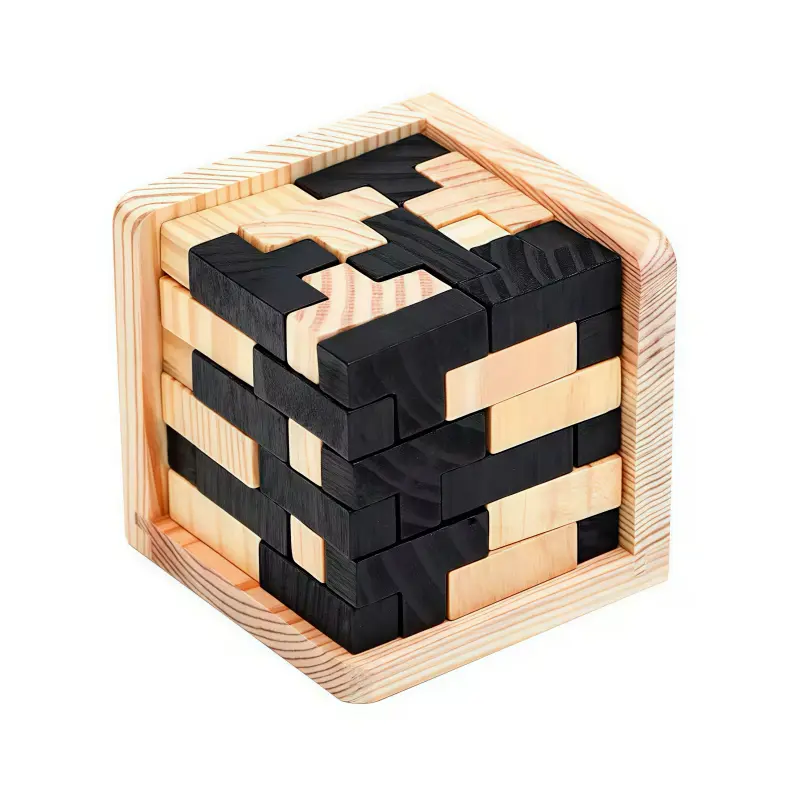
54‑T Cube Puzzle — $18.99
Mistake 3: choosing a puzzle that can’t be completed in one sitting.
A 1000-piece jigsaw, a multi-day 3D build, or a complex mechanical kit all share the same failure mode: the box goes on a shelf on Sunday and stays there until the next visit. A Mother’s Day beginner puzzle should reach “finished” in a single afternoon — ideally while the giver is still there to share the moment. The check: read the solve-time or assembly-time on the product page and ask whether the listed minutes fit a 2–3 hour window with tea. Compact wooden puzzles, 6–12 piece mechanical sets, and small graduated brain-teaser kits are designed for exactly that one-sitting payoff.
Next action: before checkout, run the three checks — image complexity, piece size, and one-sitting solve time — against any candidate set. If any one fails, move to the next row in the comparison above rather than buying the box and hoping.
06. How to Present a Puzzle Set as a Mother’s Day Ritual, Not a Chore
The gift is the moment you set up, not just the box you hand over. A beginner puzzle becomes a keepsake only when the presentation signals “this is for you, slowly, with me” — wrapping, timing, and a few small pairing choices do that work better than any price tag. The rule: turn the set into a shared ritual before she ever opens the lid.
After working through the three beginner-gift mistakes — image complexity, piece size, one-sitting solve time — the last decision is how the box arrives. A well-chosen set presented flat, without context, can still feel like a small errand. Four small moves change that.
Move one: pair the puzzle with tea or flowers. A box on the kitchen table next to a teapot, a small bunch of her favorite flowers, and a handwritten card sends a clear message — this is an afternoon, not a task. The pairing also gives her permission to stop whenever she wants, which is the kindest possible signal to a non-puzzler.
Move two: schedule a “puzzle afternoon” instead of insisting she open it on Sunday morning. Mother’s Day mornings are crowded. Pick a quieter day the same weekend, or the following Saturday. Solving time becomes time together — exactly the tone a screen-free, low-stakes set is designed to support.
Move three: write a short note on the inside of the box lid. Two or three sentences — a memory, a small joke, a wish for the year ahead. It is the first thing she sees when she lifts the lid, and it stays with the set long after the pieces are back in the bag.
Move four: frame the finished puzzle as a keepsake. If she completes a small jigsaw or 3D build, slip it into a simple frame — the same logic behind photo/keepsake puzzles, where the finished object is meant to be displayed rather than broken down. A crystal rose puzzle, for instance, earns a place on a shelf rather than a drawer. For more display-worthy options in the same vein, these crystal puzzle gift ideas for her collect several pieces in one place.
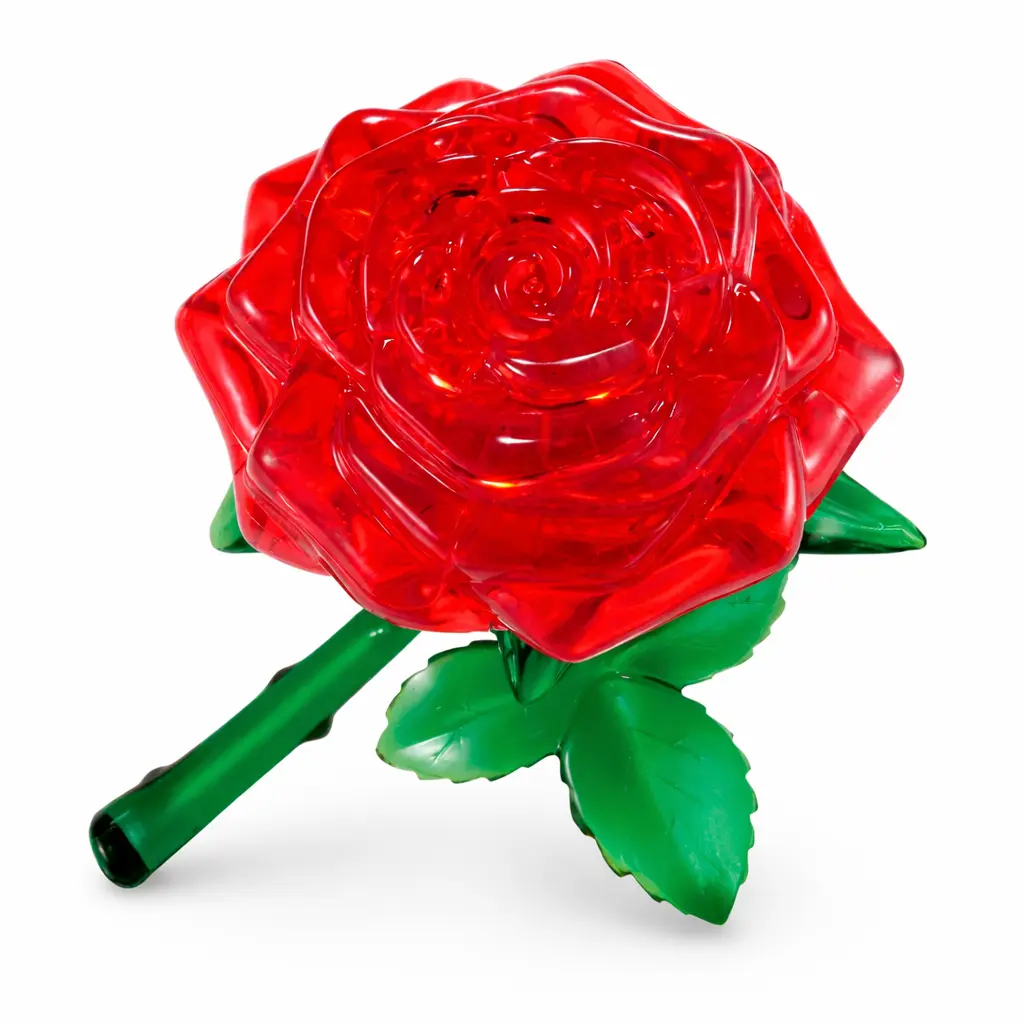
3D Crystal Rose Puzzle — $19.99
Next action: before the box goes in the gift bag, decide the afternoon, brew the tea, write the note, and choose a place for the finished piece to live. The puzzle itself is the smallest part of the gift — the moment around it is what she’ll remember.
Frequently Asked Questions
A beginner puzzle set reads as thoughtful — not cheap — when it matches mom’s actual experience level, gives her a clear path to completion, and is presented as a shared moment rather than a task. The seven questions below cover the rest of the worry: piece count, piece size, puzzle type, and the “is this childish?” check.
Is a 250-piece puzzle good for someone who has never done one before?
A 250-piece count is widely cited as a reasonable starting point for adult beginners — compact enough to finish in one sitting, large enough that the image stays motivating. Reddit’s r/Jigsawpuzzles thread “250 pieces, a gift for Mother’s Day from my eldest” confirms 250 is a recognized beginner-friendly Mother’s Day size. For someone who hasn’t puzzled in decades, 250 beats 100 (which can read toy-like) and far beats 500+.
How many pieces should a beginner puzzle have?
Use three tiers: 100–300 for true beginners or returning puzzlers, 300–500 for casual puzzlers, 500+ only if she’s specifically asked. The New York Puzzle Company gift guide ranges from “100 pieces to 1000 piece puzzles” to suit “every mom” — verify the exact count on any product page before committing.
What is the difference between a jigsaw puzzle and a brain teaser set?
A jigsaw asks the solver to assemble a flat image from interlocking pieces. A brain teaser — wooden or metal — asks the solver to manipulate a single object until it reaches a solved state. Wikipedia defines mechanical puzzles as objects with a solved state that requires manipulation. Jigsaws are collaborative and visual; brain teasers are compact, solo, and replayable.
Are wooden brain teaser puzzles good for beginners?
Yes — when the set uses graduated difficulty, starting with a 4-piece disentanglement and stepping up. The 6-in-1 Wooden Brain Teaser Set follows that pattern, giving a beginner a visible progression rather than a single all-or-nothing challenge.
Can a beginner finish a 3D wooden puzzle?
Most can, in 30–90 minutes, if the kit includes pre-cut pieces, a printed step-by-step guide, and no glue. The 3D Crystal Rose Puzzle uses this format — confirm the included instructions and a reference photo on the product page.
What size puzzle pieces are easiest for older hands?
Large-format pieces — visibly bigger than a thumbnail — reduce eye strain and are easier to grip. The 18 Piece Wooden Puzzle and the 6 Piece Wooden Puzzle Key both use chunky pieces. The product page’s piece dimension is the most reliable guide.
Is a puzzle set a thoughtful Mother’s Day gift or does it feel cheap?
It reads as thoughtful when three conditions meet: the difficulty matches mom, the finished object has a place to live (a shelf, a frame, a desk), and the giving is paired with a moment — tea, an afternoon, a handwritten note. None of that requires a high price.
Next step: pick one set from the four types, match it to the persona your mom fits, and decide the moment before you decide the puzzle. The framework is the gift; the set is the receipt.
Where to Start
If the recipient and occasion checks above match, start with 12 Piece Crystal Luban Lock Set. Check the current product page for the specifications that matter to your choice.
Sources and verification
- Product details and current specifications: Tea-Sip product page
Last updated: August 20, 2026