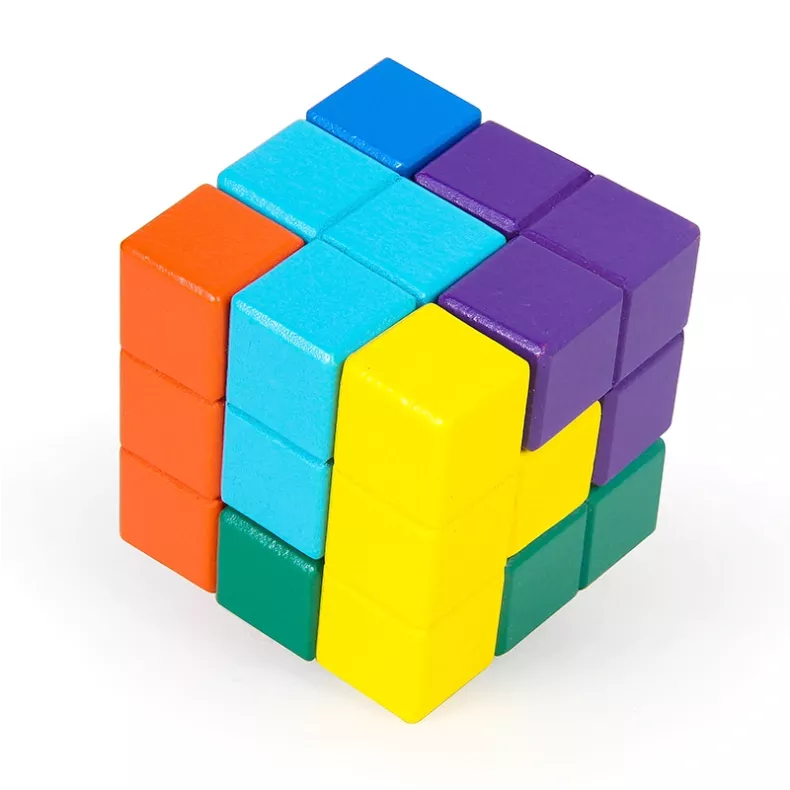
Quick Answer: Buy 7 Color Soma Cube Puzzle: Which Set to Pick
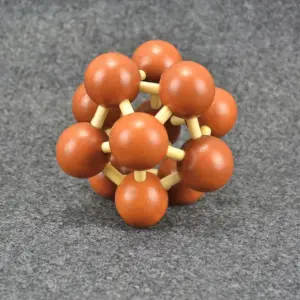
The 7 Color Soma Cube Puzzle is the right pick when you want the classic 3×3×3 Soma with each of the seven pieces stained a distinct color, so the 240 documented solutions are easier to track and the cube works as a real assembly puzzle rather than a decoration. Choose a different wooden puzzle if the recipient needs color matching beyond seven pieces, a multi-puzzle gift set, or a harder interlocking build.
Three checks change the pick:
- Material and color application — dye-stained solid hardwood is the standard; printed-color alternatives and foam versions are softer but read differently in the hand.
- Piece count and color count — the Soma is fixed at seven pieces; if you need a color-coded set with more pieces, the brief shifts to a different puzzle.
- Age of recipient — solid hardwood fits ages 5 and up; soft foam belongs on the shortlist only for under-3 hands.
| If you need… | Pick | Why it fits | What to check |
|---|---|---|---|
| The standard 7-color Soma cube with each piece in its own hue | 7 Color Soma Cube Puzzle ($21.88) | Dye-stained solid hardwood, seven nonidentical pieces, the Piet Hein 1933 design that supports 240 distinct solutions | Confirm finished dimensions and dye safety statement on the product page |
| A color-coded wooden puzzle that teaches shape-and-hue matching at a lower complexity | Kongming Lock Color Match ($16.99) | Color carries the solving logic, so it reads as a learning puzzle rather than a packing challenge | Recommended age, total piece count |
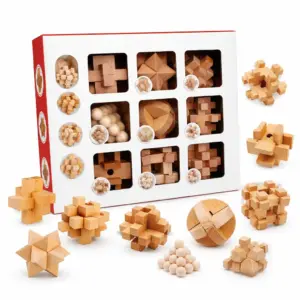
| A multi-puzzle wooden gift box for a household of different ages | 6-in-1 Wooden Brain Teaser Set ($38.88) | Six puzzles in one box, so each solver gets a difficulty that fits | List of the six individual puzzles inside |
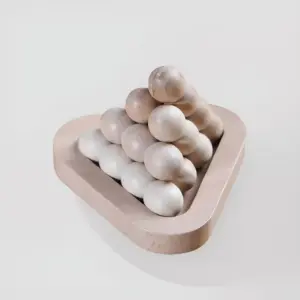
| A higher-piece-count cube for a solver who finishes the 7-piece Soma too quickly | 54‑T Cube Puzzle ($18.99) | More pieces raise the assembly challenge without abandoning the wooden tactile feel | Total piece count, assembly method |
| A different mechanical wooden block for an adult desk | Blockade Puzzle ($16.99) | Shifts away from Soma geometry but keeps the wooden hand feel | Material, finish, and intended solve time |
The 7 Color Soma Cube Puzzle belongs in the cart when the question is specifically which 7-color version of the Soma to buy. For a broader look at how the colored-piece approach plays out in the 2025 STEM-toy market, see this roundup of 7 color Soma cube STEM puzzles. The next section explains what “7 color” actually means — piece geometry, why the colors exist, and which 240-solution figure is the one to trust.
01. What a 7-Color Soma Cube Actually Is and Why the Colors Exist
A 7-color Soma cube is the standard 7-piece packing puzzle, but each of the 7 non-identical pieces gets its own color so a solver can tell pieces apart at a glance. The colors exist to solve a tracking problem, not for decoration — and the “240 solutions” figure is the one to trust, not the higher marketing numbers from older plastic sets.
A 7-color Soma cube is identical in piece geometry to the natural wood version: 6 pieces built from 4 unit cubes each, plus 1 piece built from 3 unit cubes, all packed into a 3×3×3 cube. The difference between the two versions is purely cosmetic at the wood-grain level, and purely functional at the cognition level. Each of the 7 non-identical pieces is color-coded, which means a buyer can look at any partially assembled configuration and immediately identify which piece is which. The geometry itself is unchanged from Piet Hein’s 1933 invention, when the puzzle was originally a single-color wooden block.
The “240 solutions” figure is the one to trust. According to the Soma cube entry on Wikipedia, the puzzle has 240 distinct ways to assemble the 3×3×3 cube when you count only orientationally unique packings. The higher figure of 1,105,920 that appears on some older packaging comes from the Parker Brothers plastic version marketed in the 1970s in blue, red, and orange — and that number includes rotations, reflections, and rotations of the individual pieces, not genuinely different assemblies. So if a product page claims “over a million solutions,” that is a reissue of the Parker Brothers marketing copy, not a separate mathematical result. The 240-solution count is what holds for any standard 7-piece Soma, including every color version on the market in 2025.
The history is short and worth knowing. Piet Hein, a Danish inventor, devised the Soma cube in 1933 during a lecture on topology, and the puzzle spread through the mathematical community long before Parker Brothers produced the first commercial plastic set in the 1970s. Those Parker Brothers versions used only three colors across the whole set (blue, red, and orange), and the modern 7-color hardwood versions sold by Maple Landmark, MoMath, and the Wissner RE-Wood set are a direct continuation of the colored-resin logic Parker Brothers introduced — just with each piece color-coded individually rather than the whole set using only three colors. The MoMath and Maple Landmark product pages both still describe their color cubes as “a great holiday stocking stuffer,” which is the same market position the colored plastic version held fifty years ago.
Here is the practical point competitors miss: the 7 colors are not decorative. They are a tracking tool. When you are working through the 240 solutions or trying one of the non-cube shapes that come with a printed guide, you need to identify pieces by shape, position, and orientation. A 7-color version lets you say “the red L-tetromino” and “the blue T-tetromino” without putting the cube down to recheck which piece you are holding. A natural-wood version forces you to track by grain alone, which is harder for color-blind solvers and impossible for anyone who has set the pieces face-down on a coffee table.
The Wissner aktiv lernen RE-Wood version, for example, ships with 7 polycubes in red, blue, white, yellow, green, purple, and black — one color per piece. The Maple Landmark Color Soma Cube and the MoMath Color Cube follow the same one-color-per-piece scheme, though the exact palette should be confirmed on each product page before checkout, because the maker updates dye batches periodically. Piece count, geometry, and solution count are identical across all three; only the dye and the substrate change.
A buyer who has only handled the natural-wood Soma is essentially looking at the same puzzle without the tracking layer. The 7-color version is the same piece geometry, the same 240-solution problem, and the same Piet Hein design — with the addition of a piece-identification system that the natural version leaves to the solver’s own visual memory.
The piece count is fixed at seven. The color count is not.
02. How to Check a 7-Color Soma Cube Before You Buy
The piece count is fixed at seven — but what the seven pieces are made of, and how the color is applied, is where every 7-color Soma listing diverges. Before you add one to your cart, run three checks against the product page: material, piece fit, and intended age. If any one is wrong for the recipient, the puzzle is the wrong one.
That is the rule. Here is how to apply it.
Material — the substrate under the dye matters more than the color itself.
Four material families show up in the 7-color Soma market, and they behave very differently in the hand.
- Solid hardwood (Maple Landmark, MoMath, Creative Crafthouse). Each piece is a single block of hardwood — typically maple or birch — that has been dye-stained so the color penetrates below the surface. Scratches do not reveal raw wood underneath. The MoMath and Maple Landmark product pages both describe this construction, and it is the same build used for the Made in USA natural-wood Soma. Creative Crafthouse similarly crafts from solid wood and bundles a 5-page guide of 60 shape challenges with their set.
- RE-Wood (Wissner aktiv lernen). RE-Wood is a compressed recycled-wood composite, not solid lumber. The color is bonded to the surface during manufacture. It is lighter than hardwood and dimensionally stable, but the palette is fixed at the factory. Worth flagging: the Wissner product titled “Soma-Cube in 7 colours” is actually a 150-cube classroom set in 6 colors, not the classic 7-piece Soma — verify the piece count and color count on the product page before checkout.
- Foam (ECR4Kids SoftZone). The ECR4Kids 7-piece set sold at Target is a soft foam build aimed at toddlers. Color is integral to the foam itself, so it will not chip, but the tactile feel is closer to a couch cushion than a wooden brain teaser and the tolerances are loose by design.
- 3D-printed and hand-painted variants. Smaller Etsy and Amazon sellers offer 3D-printed Soma cubes and painted sets. Color durability varies by maker; the verification step is to scan recent owner reviews for any mention of paint chipping or layer peeling.
Color application — dye-stained, printed, or painted, and why it matters for color-fastness.
The most common owner complaint on colored wooden puzzles is not geometry; it is fading or chipping at the corners. Dye-stained hardwood holds color best because the pigment is in the wood, not on it. Surface-printed or painted pieces can wear at the contact points where pieces meet during assembly. Before you buy, look for one of these three phrases on the product page: “dye-stained,” “penetrating stain,” or “food-safe dye.” If the listing only says “colored” or “painted,” ask the seller which it is — that one word decides how the cube will look in two years.
Piece fit — the 240-solution count assumes tight tolerances.
The classic 3×3×3 Soma packs 27 unit cubes into 7 nonidentical pieces. If each piece is loose by even a millimeter, the assembled cube will rock and the visible “solution” stops being convincing. Solid hardwood sets from established makers (Maple Landmark, Creative Crafthouse, MoMath) generally hold tight tolerances because the wood is machined, not molded. Foam and 3D-printed sets vary more. Owner reviews on the product page are the most reliable fit check — look for phrases like “pieces sit flush” or “no wobble in the assembled cube.”
Intended age — the same geometry, three different age ratings.
A 7-color Soma cube is the same piece geometry whether it is sold as a toddler foam set, a child hardwood set, or an adult desk toy. What changes is the recommended age and the supervision level. The ECR4Kids foam set is the soft-build option for younger children in the under-3 range. The hardwood 7-color sets from Maple Landmark and MoMath are typically listed with a minimum-age recommendation and choking-hazard caveats for the small unit-cube pieces. Adult and gift buyers can ignore the upper end of the range; what matters is the lower end, and whether the recipient is past the mouthing stage.
If the color-coding idea appeals but you want a different colored wooden mechanism — a pull-apart color-match rather than a packing puzzle — the Kongming Lock Color Match sits in the same wooden-puzzle cluster and uses color as a solving aid rather than decoration.
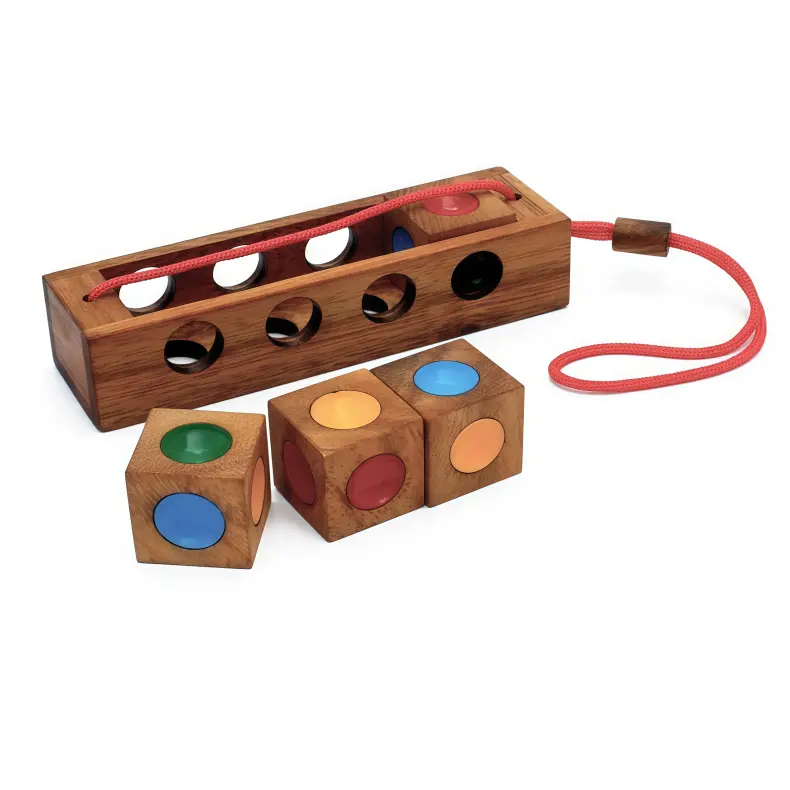
Kongming Lock Color Match — $16.99
Pre-checkout verification list.
Run these five checks against any 7-color Soma product page before you pay:
- Piece count is 7, color count is 7. The Wissner “7 colours” set is 150 cubes in 6 colors — confirm before adding it.
- Material is named explicitly — hardwood, RE-Wood, foam, or 3D-printed — not just “wood.”
- Color application is named — dye-stained, printed, or painted.
- Finished dimensions are listed. Maple Landmark and MoMath both cite approximately 2.25″ cubic; confirm the size matches the recipient’s hand.
- Age recommendation is on the page and matches the recipient.
If a product page skips two or more of these, the listing is incomplete and the comparison above does not apply — ask the seller for the missing detail, or move to a listing that publishes it. For a deeper look at how long wooden puzzles hold up under regular handling, the longevity buying guide covers the material-wear side of this same question.
03. Where to Buy a 7-Color Soma Cube in 2025, Compared by Use Case
The verification list filters out incomplete listings; the real choice now is which seller matches your use case. Seven distinct colored pieces form a 3×3×3 cube, and each piece’s color makes it easier to track position while working through the 240 documented solutions. Match the recipient’s age, your tolerance for imported RE-Wood versus dye-stained hardwood, and whether you need a printed solution guide. Seven channels sell something called a “7-color Soma cube,” and one of them is the same product appearing on two storefronts at two price points.
The recommended starting point is the channel that lists the seven distinct pieces by color and publishes the material at the lowest listed price.
Tea-Sip 7 Color Soma Cube Puzzle ($21.88). The current default for a buyer who wants all seven pieces in distinct colors on a hardwood set without a museum-shop markup. Sold as a 7-piece color-coded set in the wooden-puzzles category, with the standard piece geometry of six 4-cube polycubes and one 3-cube polycube. What to check: confirm the product page names the wood type and finished dimensions, confirm the color count is seven (not six), and ask the seller whether the color is dye-stained (penetrates the wood) or surface-painted (sits on top and can chip along edges over time) — the dye method matters for long-term color durability under regular handling. The piece count is fixed at seven. The color count, in some listings, is not.
Maple Landmark Color Soma Cube. The American woodworker version that most gift guides default to. The product page describes it as “Made in USA” and approximately 2.25″ cubic, with seven unique shapes that “combine into a simple cube” and “more than one solution.” The maker history runs back to Piet Hein’s 1933 invention; Parker Brothers produced plastic Soma cube sets in blue, red, and orange during the 1970s, and the modern 7-color resurgence comes from American woodworkers like Maple Landmark. What to check: confirm international shipping rates and lead time if the recipient is outside the US.
MoMath Color Cube. Read the product page and the language matches Maple Landmark almost word for word — “The Color Cube is our colorful version of the classic Soma puzzle. Seven unique shapes combine into a simple cube…and there’s more than one solution.” The MoMath listing and the Maple Landmark listing are effectively the same product, with MoMath adding a museum-shop margin and a stocking-stuffer framing. What to check: total price including shipping before assuming the museum listing is a premium version; for a tighter budget, the lower-priced channel wins.
Creative Crafthouse Soma Cube. The maker’s page states the set “measures about 2 7/8″ cubic” and ships with “a 5 page guide of 60 shapes to make plus their solutions.” That printed guide is the reason to pick this channel: the buyer gets shape challenges beyond the 240 documented cube solutions. What to check: confirm the guide ships in the box and is not a separate emailed PDF; the listing is the strongest in this comparison for buyers who want a puzzle that grows with the solver.
ECR4Kids SoftZone Brainy Building Blocks, 7-Piece. The Target-exclusive foam set is the only option for under-3 buyers, daycare settings, and any environment where a hardwood set is a safety risk. What to check: confirm the foam is certified for the recipient’s age range and confirm the piece count is exactly seven — some foam “Soma” sets bulk up the piece count with extra non-puzzle cubes.
Wissner aktiv lernen “Soma-Cube in 7 colours.” This listing is the trap of the seven. The page title promises a 7-color Soma, but the product body states “150 cubes (2 x 2 x 2cm) in 6 different colours made of RE-Wood.” That is a 150-piece classroom building set in six colors, not the classic 7-piece Soma. What to check: the piece count and the color count on the product body, not the page title.
Amazon resellers. Search results surface generic wooden Soma cubes from multiple sellers, plus magnetic-tile versions that are not the same puzzle at all. What to check: the seller rating, the material disclosure, and the return policy — Amazon listings are the least consistent on dye-versus-paint disclosure and on finished dimensions.
The remaining decision is maker versus price: a 7 Color Soma Cube Puzzle from Tea-Sip for the listed hardwood price, a Maple Landmark Color Soma Cube for the Made-in-USA gift, or a Creative Crafthouse Soma Cube for a printed shape guide. The other four channels only apply when the use case narrows the field — under-3 buyers go to ECR4Kids, RE-Wood classroom sets go to Wissner, the museum-shop route goes through MoMath, and Amazon is a last resort for buyers who have already filtered the rest.
For a buyer who finishes the Soma and wants the next step up in difficulty from the same maker, the 54-T Cube Puzzle covers a different packing problem in similar hardwood.
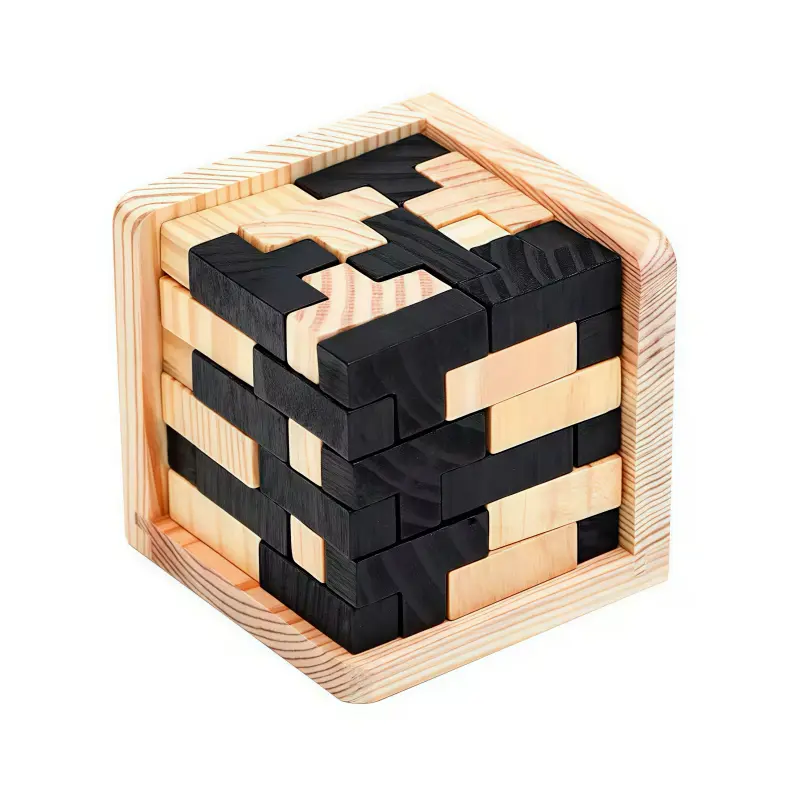
54‑T Cube Puzzle — $18.99
For a buyer who wants multiple puzzle types in one box, the 6-in-1 Wooden Brain Teaser Set bundles six disentanglement and assembly puzzles at a higher price point.
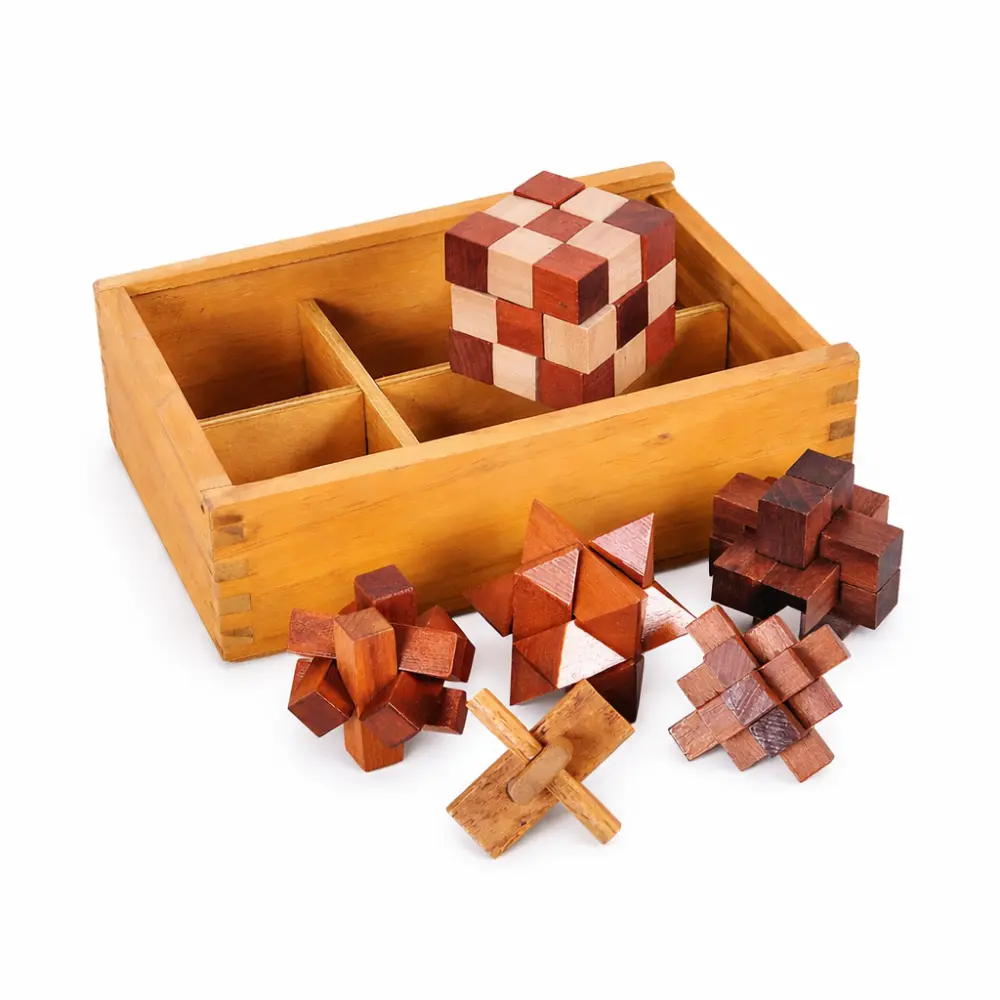
For a wider look at the wooden-puzzle category beyond the Soma, this guide to the best wooden puzzles for all ages maps the same decision criteria across other color-coded wooden options.
04. 7-Color Soma Cube Options Compared: Decision Table by Use Case
Choose a 7-color Soma cube by locking in two variables first: the recipient’s age and the material you want in hand. Solid hardwood fits ages 6+ and buyers who want a lasting object. Printed RE-Wood or printed-color foam fits classroom sets and younger hands. That single split — age and material — eliminates four of the six options below before you ever look at color application or piece fit.
Here is the same field of 7-color candidates read against one another, with a “What to check” column for the facts a buyer should verify on the product page rather than accept from a listing.
| Option | Best For | Material | Color Application | What to Check |
|---|---|---|---|---|
| Maple Landmark Color Soma Cube | Buyers who want a Made-in-USA hardwood version sized for stocking-stuffer gifting | Solid hardwood, ~2.25″ cube | Dye-stained, one color per piece | Confirm exact cube dimension and country-of-origin line on the product page; verify whether a printed solution guide is included |
| MoMath Color Cube | Gift-shop purchase, museum-store buyer who wants the same Maple Landmark product under a different storefront | Solid hardwood, same construction as Maple Landmark | Dye-stained, one color per piece | Compare total price including shipping against the Maple Landmark listing, since the two are effectively the same product |
| Creative Crafthouse Color Soma | Hobbyist who wants a built-in challenge booklet with the puzzle | Solid hardwood, ~2 7/8″ cube | Stained or dyed, one color per piece | Confirm whether the listed 5-page guide of 60 shapes ships in the box and whether the color finish is dye or paint |
| ECR4Kids SoftZone Brainy Building Blocks | Toddlers and preschool classrooms; the only safe option under age 3 | Soft printed-color foam | Surface-printed color, 7 pieces | Verify piece count is 7 and not a larger set, and check foam density on the product page |
| Wissner RE-Wood Soma-Cube (7 colours) | Classroom or math-lab buyer who wants recyclable material in the 7 distinct piece colors | RE-Wood, 6×4 attached cubes plus 1×3 attached cubes | Material-color in red, blue, white, yellow, green, purple, black | Confirm the listing is the 7-piece Soma set, not the separate 150-cube RE-Wood classroom set which lists 6 colors |
| Amazon / Etsy reseller listings | Buyers prioritizing lowest sticker price | Mixed — solid hardwood, birch, or 3D-printed plastic depending on seller | Varies by maker | Read the piece-count line, the material line, and the return policy; third-party listings often swap “colored” for “natural” without updating the headline |
The piece count is fixed at seven. The color count, the material, and the safety rating are not. A buyer who resolves those three against the recipient — and ignores the rest — will land on the right set.
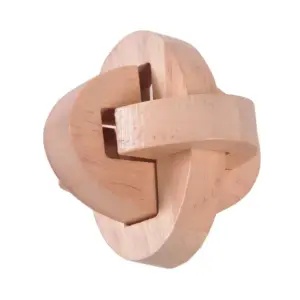
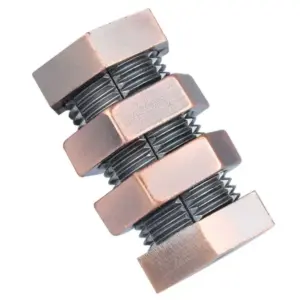
A second adjacent pick from the same roster is the Luban Cube Puzzle below — a different disassembly problem, same hardwood build.
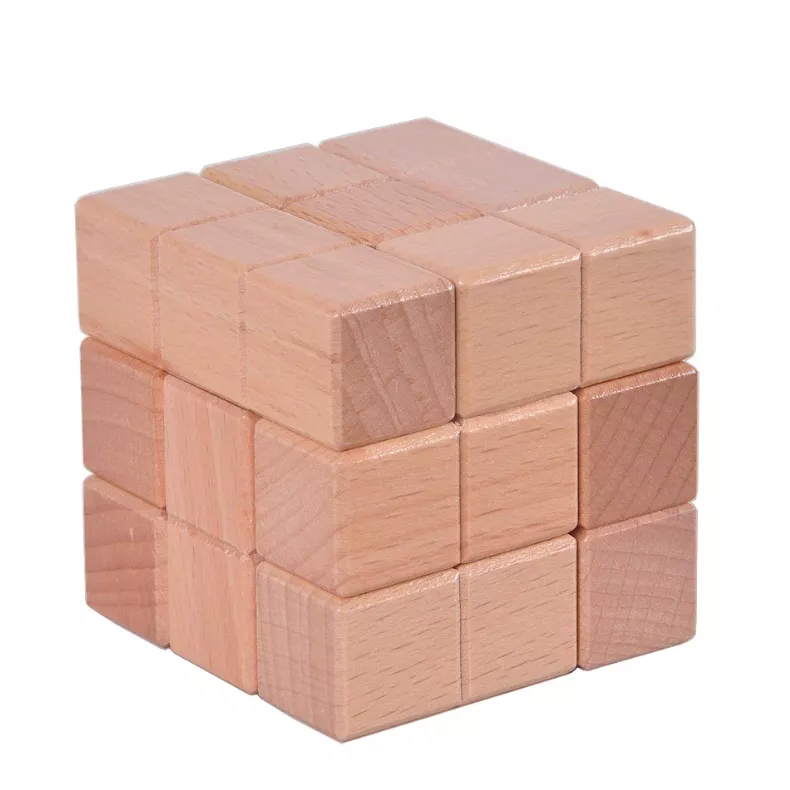
Luban Cube Puzzle — $21.99
For a side-by-side look at how the Tea-Sip hardwood build compares against other makers in the same price band, the premium wooden puzzle brands compared breakdown covers the relevant build-quality and finish differences buyers tend to ask about next.
The single practical next action: open the candidate’s product page and confirm piece count = 7, material matches the recipient, and the color application method (dye vs. surface print) is named. If any of those three are missing, pick a different listing.
Frequently Asked Questions
A 7-color Soma cube is the right pick for any age-6+ buyer who wants a color-coded way to track the 240 documented solutions — and the right pick is a foam set if the recipient is under 3. The piece-count, material, and color-method checklist from the previous section covers the buying side; the answers below cover the practical questions left over once that checklist is done.
What does a 7-color Soma cube look like when assembled?
A solid 3×3×3 cube. The Maple Landmark Color Cube measures roughly 2.25″ per side. Each of the 7 distinct pieces wears a different color, so the assembled block reads as a checker pattern rather than a uniform block. That visual hook is also why the colors exist — see section 01 for the full reason.
Is the 7-color Soma cube the same as the MoMath Color Cube?
The product copy is near-identical. Both MoMath and Maple Landmark use the line “Seven unique shapes combine into a simple cube…and there’s more than one solution” and both call the puzzle a “holiday stocking stuffer.” The Maple Landmark version is Made in USA; check the MoMath listing for current terms before treating the two as interchangeable.
How many solutions does a 7-color Soma cube have?
240 unique solutions for the standard 3×3×3 Soma when counted without rotations or reflections. The Parker Brothers 1970s plastic set advertised 1,105,920, which includes those symmetries plus individual piece rotations. The 7-color version doesn’t change geometry, so the count matches the natural wood version exactly.
Is the color version harder or easier to solve than the natural wood one?
Easier to learn, equally hard to master. Each piece has a unique color identity, so a beginner can match a solution guide piece-to-color without asking “which L-shape is which.” The 240 solutions don’t change; the colors just remove the visual ambiguity that frustrates first-time solvers. If the buyer wants pre-built shape challenges, the Creative Crafthouse version adds a 5-page guide of 60 shapes — a useful extension past the cube itself.
What age is a colored Soma cube appropriate for?
That depends on the material, not the colors. Solid hardwood versions like the Tea-Sip 7 Color Soma Cube Puzzle ($21.88) carry a typical minimum-age rating because small pieces are a choking hazard. Foam versions like the ECR4Kids SoftZone set are designed for younger children. Confirm the listed age range on the product page before checkout.
Do the colors chip or fade on wooden 7-color Soma cubes?
It depends on whether the color is dye-stained into the wood or surface-printed on top. Dye holds the longest; surface print can wear at corners with heavy handling. The product page should name the method. If it doesn’t, ask before checkout or pick a listing that does — a missing color-method line is a reason to move on, not to guess.
Is there a foam 7-color Soma cube for toddlers?
Yes. The ECR4Kids SoftZone Brainy Building Blocks set is a 7-piece foam Soma-style product. Foam is the right material when the recipient is under 3 or still mouths objects, and the soft construction tolerates drops that would split a hardwood set.
Where can I buy a 7-color Soma cube that matches this guide’s spec?
The Tea-Sip 7 Color Soma Cube Puzzle ($21.88) is the matching listing in this guide’s roster — 7 pieces, hardwood build, color-coded. Open the product page, run the three-line checklist (piece count, material, color method) from the previous section, and place the order once all three lines are explicit on the page. If any line is missing, switch to a listing that names it.
Where to Start
If the difficulty, mechanism, and use-case checks above match, start with 7 Color Soma Cube Puzzle. Check the current product page for the specifications that matter to your choice.
Sources and verification
- Product details and current specifications: Tea-Sip product page
- Background reference: Soma cube – Wikipedia
Last updated: August 4, 2026