Quick Answer: Where to Buy Metal Brain Teasers Online
The Cast Hook metal brain teaser sits at the sweet spot for first-time buyers — cast alloy construction, a two-release disentanglement mechanism, and a typical first-solve time of 30–90 minutes that delivers the satisfying ‘click’ moment most cheap wire puzzles skip. At $13.99, it outperforms the $14–20 Amazon white-label sets that flood search results under 15+ identical brand names.
| Option | Best For | Price | Skip If |
|---|---|---|---|
| Cast Hook (top pick) | First-time buyers wanting a genuine 30–90 min challenge with real alloy weight in the hand | $13.99 | You want a multi-puzzle variety set in one box |
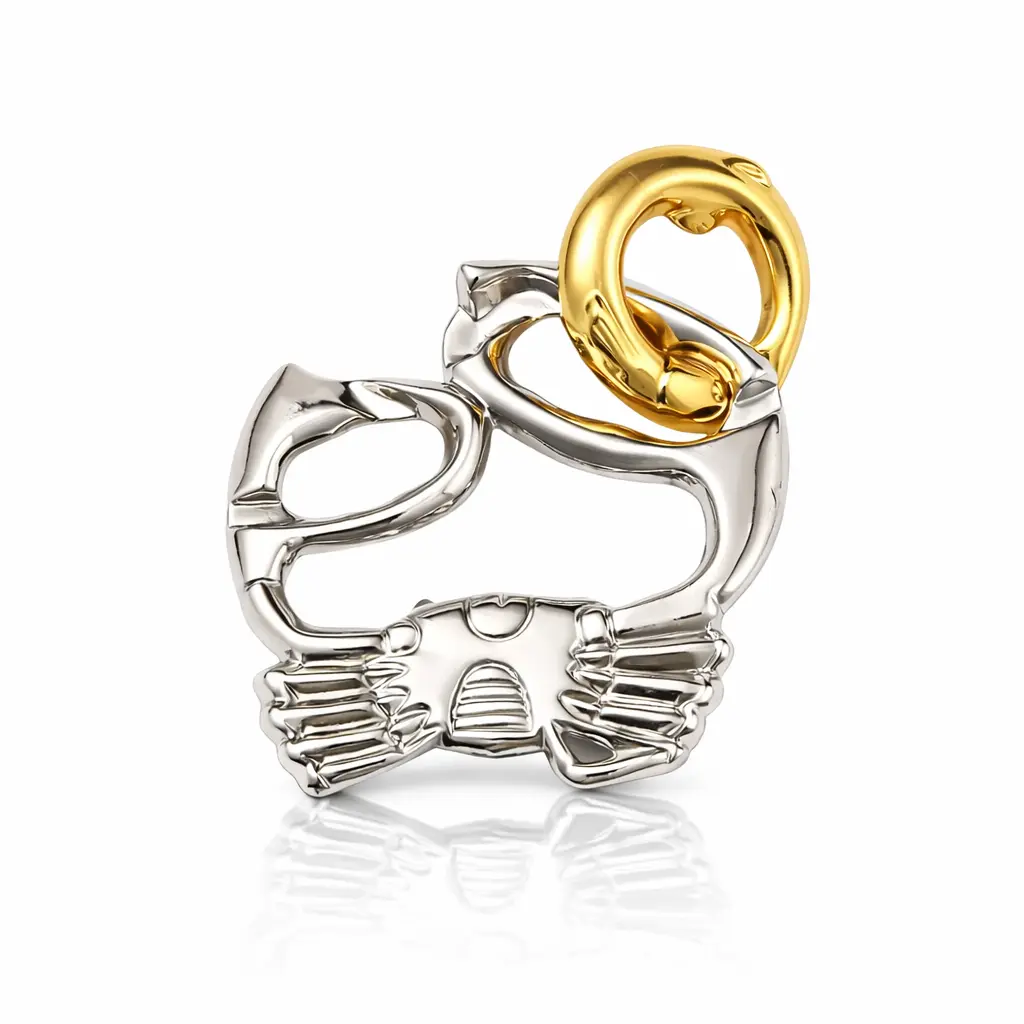
| Metal Crab Puzzle Cast Brain Teaser with Gold Ring | Buyers seeking a unique cast alloy design with a satisfying disentanglement challenge | $13.99 | You prefer simpler, quicker wire puzzles |
| 5 Piece Cast Spiral Metal Puzzle | Those ready for a multi-step sequential discovery puzzle with increasing complexity | $16.99 | You’re new to puzzles and want an instant solve |
| Alloy S Lock Puzzle | A more robust, cast alternative to flimsy wire puzzles, with a clear mechanism | $10.99 | You only want a traditional bent-wire style puzzle |
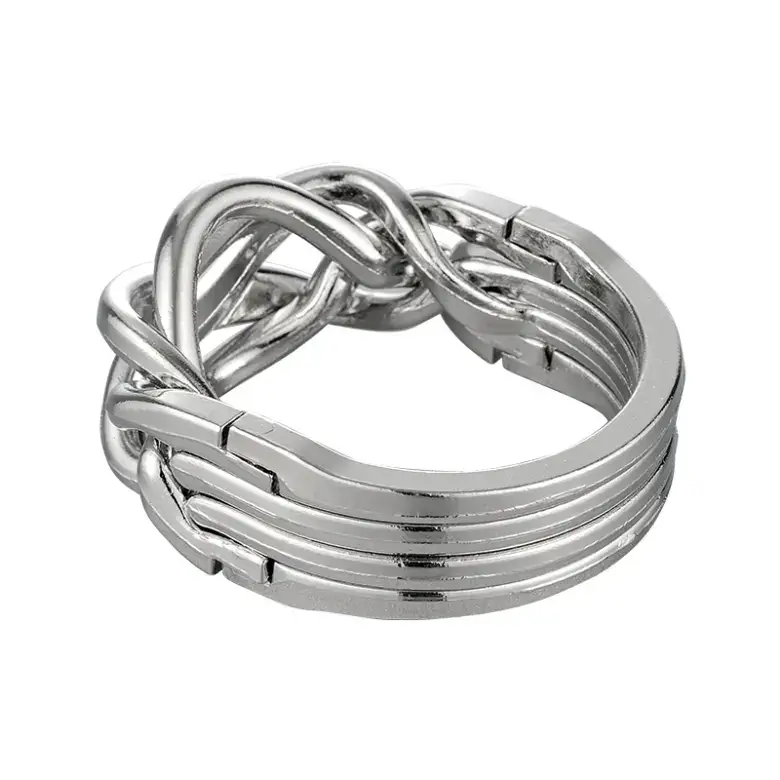
4 Band Puzzle Ring — $11.99
For buyers who want something even simpler, the 4 Band Puzzle Ring solves in under 5 minutes and doubles as a wearable desk fidget at $11.99.
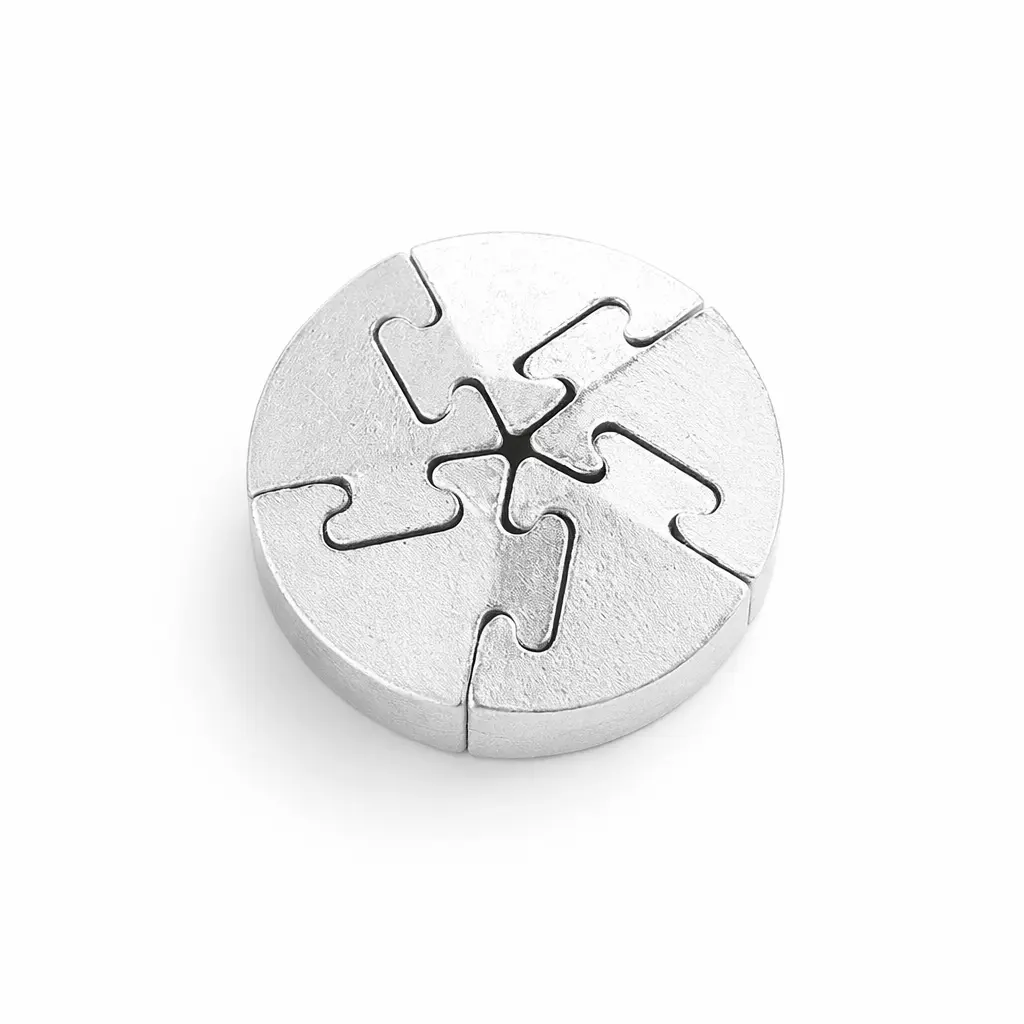
Step up in complexity without crossing into the $25+ artisan tier — the 5 Piece Cast Spiral Metal Puzzle at $16.99 adds a layer of sequence discovery while staying in cast-alloy weight class.
The Four Mechanism Types of Metal Brain Teasers Explained
Metal brain teasers sold online fall into four mechanism families — wire disentanglement, cast sequential discovery, stamped interlock, and 3D metal assembly — and they range from $4 wire sets to $80 artisan builds, with first-solve times spanning 30 seconds to several weeks. Knowing which type you’re buying matters more than the brand name on the box, because two puzzles that look nearly identical can offer completely different solving experiences based on which family they belong to. For a broader overview, you can explore the six types of metal puzzles adults actually buy first.
Wire disentanglement puzzles are the classic linked-rings and twisted-wire shapes — think the Chinese-style linked rings or the nail-and-rope tricks you see in escape rooms. They’re typically 2–6 pieces of bent or stamped steel (or zinc alloy, in the cheap ones) where the goal is to physically separate two interlocked components without forcing them. The difficulty curve here is steep on the input side: a $5 wire puzzle can look impossible and solve in 40 seconds, while a $15 version might require 20 minutes of careful manipulation. These are the puzzles most prone to the “bent on the second attempt” problem I mentioned in the opener — thin-gauge wire in the $4–8 range deforms permanently if a frustrated solver uses pliers. Hanayama, Eureka, and the dozens of marketplace brands all sell into this category, and they’re the lightest, most pocketable puzzles in the metal brain teaser universe. Average first-solve time: 2–20 minutes depending on construction quality.
Cast sequential discovery puzzles are the family that put Hanayama on the map and now dominates the gift-shop shelf. These are solid cast-alloy pieces — zinc, brass, or plated zamak — where the solver must figure out a multi-step sequence of moves (rotate, slide, lift, separate) to disassemble the object. The cast hook puzzle is a textbook example: two interlocked metal forms where the solution hinges on discovering the correct release angle and rotation order. Cast sequential puzzles weigh noticeably more than wire puzzles of similar size (a $14 cast hook typically runs 80–150 grams, versus 20–40 grams for a comparable wire version), and that weight is the single best field-test for material claims — zinc feels hollow, brass feels dense, plated steel feels cool to the touch. Average first-solve time: 30 minutes to 4 hours, with the sweet spot for a first-time gift buyer landing around the 45-minute mark.
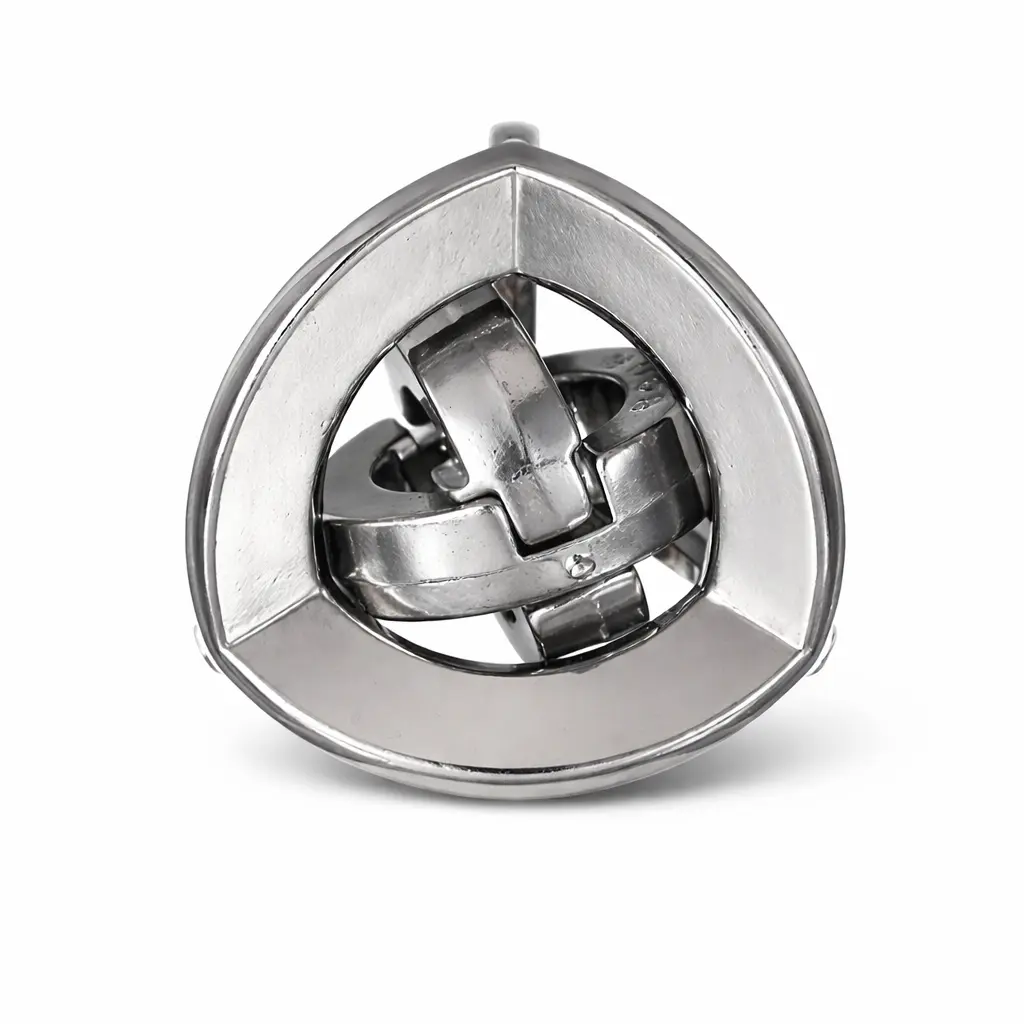
Stamped interlock puzzles are flat or near-flat pieces of stamped sheet steel that fit together in a specific configuration — burr puzzles, lattice pieces, and the traditional Chinese “bagua” lock format fall here. These tend to be less decorative than cast puzzles but offer higher piece counts and more complex solution paths. The tolerances are tighter (stamped steel doesn’t forgive the same slop that cast alloy does), so a well-made stamped puzzle has a satisfying mechanical precision that cast puzzles sometimes lack. Average first-solve time: 15 minutes to 2 hours for standard 6–12 piece versions.
3D metal assembly puzzles are the heavy hitters — the artisan builds from European makers, the Hanayama Cast Coil line, and the multi-piece disentanglement sets that ship in wooden display boxes. These are the puzzles a hobbyist keeps on a shelf after solving, often running $40–80 for a single piece. Assembly puzzles sometimes combine elements of all three other categories: wire components inside a cast frame, or stamped plates that must be layered in sequence. They’re the right choice for someone who already owns a few cast puzzles and wants the next step up, but they’re a poor first purchase for a gift buyer because the solve time can stretch into days.
The taxonomy matters because the “metal brain teaser” Amazon search treats all four as interchangeable. They’re not. A wire puzzle and a cast hook are as different in solving experience as a crossword and a Rubik’s cube — both use logic, but the hand feel, the frustration curve, and the replay value live in completely different places. This is a core concept for understanding mechanical puzzles as a hobby.
Cast Zinc vs Stamped Stainless: How Metal Changes the Solve
A cast zinc-alloy puzzle the size of a Hanayama Cast Loop weighs roughly 130 grams, while a same-volume stamped stainless equivalent tips the scale at 180–220 grams — that 40–60% weight gap is the single best field test for material claims when you’re shopping online and can’t touch the product first. Most “metal brain teasers” in the $10–20 range are cast zinc alloy (sometimes called Zamak), a dense but soft metal that machines cheaply and takes plating well. The $20–60 tier shifts toward stamped or machined stainless steel, which holds tighter tolerances and keeps its finish longer. Knowing which you’re actually getting changes the solve experience more than any other spec on the listing. This is one of the five key differences between cast and wire puzzles that serious buyers need to understand.
Hardness is where the difference becomes tactile. Cast zinc sits around 80–100 Brinell — firm enough to feel solid in the hand, soft enough that a determined solver with pliers can deform it. Stamped stainless lands closer to 150–200 Brinell, which is why the premium cast coil and interlock puzzles survive decades of desk fidgeting without warping. I learned this the hard way reviewing a $4 wire set bought from a marketplace seller: two pieces bent on the first serious attempt, and the alloy had visibly creased where a stainless version would have shrugged off the pressure. If a listing claims “stainless steel” and the puzzle weighs less than 150 grams in a 3-inch cast form factor, the claim is almost certainly marketing.
Finish retention separates the two materials in a subtler way. Cast alloy puzzles typically carry a plated finish — nickel, brass, copper, or black oxide — that looks gorgeous on day one but starts showing fingerprints within minutes of handling and wears at the contact points after a few months of regular use. Stamped stainless puzzles often ship with a brushed or polished finish that hides fingerprints better and develops a soft patina rather than flaking. For a desk toy that lives in a coworker’s line of sight, the difference matters. The Cast Hook metal brain teaser from Tea-Sip uses a cast alloy body with a plated finish that holds up well to casual handling, though — like all plated cast puzzles — it appreciates an occasional wipe-down with a microfiber cloth.
The resonance test is the one I rely on most when a puzzle arrives and I haven’t decided whether to keep it. Tap a solved metal brain teaser gently against a wooden desk. A quality cast alloy piece produces a clean, ringing “tink” that decays over about two seconds. A cheap cast piece with internal porosity or thin walls produces a dull thud. A stamped stainless piece produces a higher-pitched, longer ring. The community over at r/mechanicalpuzzles calls this the “bell test,” and consensus threads on material identification consistently cite it as more reliable than reading the product description. The sound correlates with how well the puzzle will hold tolerances during repeated solving — a dull thud usually means the piece will loosen up or develop play within weeks.
Price delta tracks material more closely than brand name. A genuine cast Hanayama retails $14–30 individually, with the Cast Loop, Cast Hook, and Cast Marble hovering around $15–20. A “Hanayama-style” generic from a white-label Amazon seller lists at $8–15, and the weight tells you why: the generic uses thinner cast walls and a lower-density alloy blend to hit that price point. The mechanism works, the solution is identical (Hanayama licenses many of the designs), but the satisfaction of the solve drops because the click feel is softer and the finish shows wear faster. For first-time gift buyers, the $5–8 savings rarely justify the downgrade. This is one of the seven tests that prove the Hanayama-vs-generic price gap.
If you want the specific comparison: the Metal Crab Puzzle cast brain teaser with a gold ring at $13.99 sits in the cast alloy tier with a plated finish, and the weight feels right for its size when it arrives.
The stamped stainless tier makes more sense for a desk puzzle that gets handled dozens of times a day, but for a first cast puzzle or a gift, the cast alloy category — including the Cast Hook metal brain teaser that anchors this guide — delivers the core mechanical puzzle experience without the premium markup. Check the product page for the current price before you order, since metal costs shift seasonally.
Wire Disentanglement Puzzles: Cheap Thrills, Real Caveats
Wire disentanglement puzzles retail for $5–15 online, take 2–15 minutes for a first-time solver, and account for most of the $4–12 Amazon listings that bend on the second attempt. The same white-label Chinese design appears under at least 15 different brand names on Amazon — and a high share of those listings are the exact same zinc-alloy piece with a different logo stamped on it. These are classic disentanglement puzzles.
That last point is the one that frustrates me most as a reviewer. The category is so flooded with identical stock that the only way to tell most of them apart is to look at the box, not the puzzle itself. The Ancient Metals 12-piece set (ASIN B08B7SXM4K) is the canonical example: it sits on page one of the Amazon results for “metal brain teaser,” holds 4.5+ stars across 2,000+ reviews, and costs $14–20. It’s a perfectly fine introduction if you know what you’re getting — 12 small disentanglement and bent-wire puzzles averaging maybe five minutes each to solve, with enough variety to keep a curious adult busy for an afternoon. The problem is that the same 12 designs (sometimes literally the same 12 castings) appear under brand names like ROKR, MUJIA, KOMAL, and about a dozen others I could list from memory. They aren’t knockoffs of each other. They’re the same product, sourced from the same two or three factories in Guangdong, and the only difference is the wrapper.
And here’s what I wish more reviewers would say out loud: the wire puzzles in those sets are the pieces most likely to disappoint. Cast Hanayama-style pieces can take a beating because the alloy is thick and the joints are forged into the casting. Wire pieces are thin rods bent into shape, often with no heat treatment and no reinforcement at the stress points. Twist too eagerly and they permanently deform. That’s the typical failure mode — not that the puzzle is unsolvable, but that you solved it once and bent it before you could hand it to the next person.
My grandfather handed me a wire disentanglement puzzle on a flight out of Taipei in 2008. I was sixteen, and I’d never seen anything like it — two twisted loops of steel that looked like they should slide apart and absolutely refused. I spent four hours failing. He told me, smiling, that he’d had it for thirty years and that the patina on the wire was from being handled, not rust. That detail stuck with me. A good wire puzzle, properly made, should be a tactile object — heavy enough to feel substantial, springy enough to bounce back from a missed move, and finished well enough to survive being fished out of a carry-on at the bottom of a backpack.
That’s not what most Amazon wire puzzles feel like. They feel like craft wire. And the field test for that is the same one I use for every cast piece: pick it up. A genuine steel or brass wire puzzle of two-inch size weighs somewhere between 40 and 80 grams; the zinc-alloy counterfeits are usually under 25 grams for a comparable form. If the wire bows when you grip it firmly with two fingers, put it back in the bin. Weight is the single best field-test for material claims, and it costs you nothing to perform.
For the gift buyer, the practical recommendation is this: if you’re buying a wire puzzle as a stocking stuffer or a “see if they like puzzles” test, the Ancient Metals set or any of its 15 aliases will do the job. Expect a 2–15 minute first solve, expect a small chance of bending on a vigorous attempt, and don’t spend more than $15. If the recipient solves it and wants more, that’s the moment to graduate them.
The graduate-up option is a step away from thin wire entirely — to a heavier stamped or cast mechanism that captures the same disentanglement satisfaction without the fragility. The Alloy S Lock Puzzle, at $10.99, is the kind of piece I wish had existed on my grandfather’s flight: cast alloy instead of bent wire, a defined mechanism (a sliding S-shaped bar that releases a hidden catch), and enough mass in the hand to feel like an object instead of a trinket.
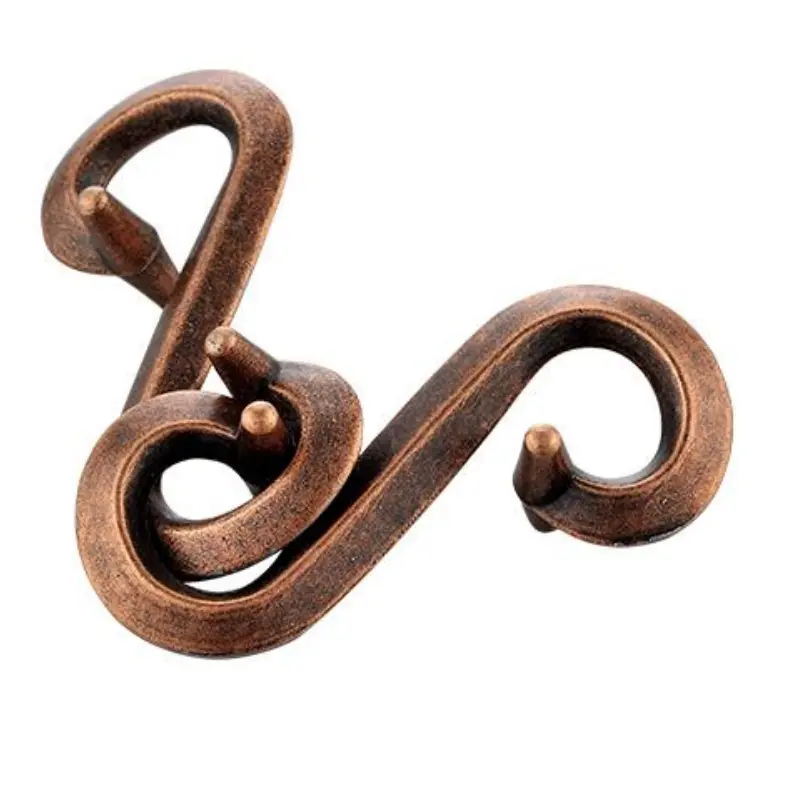
Alloy S Lock Puzzle — $10.99
Solve time is longer — most first-timers spend 20–40 minutes on it — and the difficulty is sequenced rather than brute-force, meaning you actually learn the mechanism instead of randomly wiggling. It’s not a wire puzzle. But it’s the puzzle I now recommend to anyone who started with a wire set, finished it in an afternoon, and emailed me asking “what’s next, but still in that same headspace?”
If you want a head start on those wire sets before they bend, our guide on the three-move trick that solves most wire puzzles is worth a read. Otherwise, save the $4 wire buy for a party favor and spend the real money on a mechanism that will still be on the desk in ten years.
Cast Puzzles Like Hanayama: The Mainstream Gift Pick
Hanayama cast metal puzzles retail for $14–30 individually, hold a 4.7+ star average across the full line, and span roughly 60+ designs — each one built around a plated cast alloy mechanism that looks nearly identical to $12 generics in product photos but moves with a tighter tolerance in the hand.
So you’ve burned through the wire set. Maybe you bent one, maybe you solved them all in an afternoon and felt that hollow “now what?” This is the category most gift-buyers actually mean when they type “metal brain teaser” into a search bar — the small, dense, cast alloy puzzle that comes in a printed card sleeve, looks sculptural on a desk, and takes somewhere between twenty minutes and three hours to open for the first time. It’s the middle of the hobby: past the disposable wire phase, before the artisan-tier investment pieces.
Hanayama is the brand that built this category’s reputation. Designed in Japan and manufactured through a long-running partnership, the line includes roughly 60 mechanical puzzles graded from level 1 (the Cast Loop) to level 6 (the Cast Equa). The vocabulary is its own thing: disentanglement, interlock, sequence discovery — each puzzle has a defined solution path rather than a brute-force wiggle. The plated finish (usually nickel, copper, or a tinted bronze) hides fingerprints better than polished stainless, and the weight in the hand is the first tell. A genuine cast puzzle has a satisfying density — you feel the mechanism inside, not hollow air.
The look-alike problem is real. A flood of white-label cast puzzles entered online marketplaces after 2020, and many of them use the same Chinese factory tooling with different brand stickers on the sleeve. Here’s how I authenticate one in under thirty seconds from product photos:
- The brand logo is engraved or printed crisply on the puzzle itself, not a sticker that will peel
- The packaging card is a folded printed sleeve with the puzzle name, difficulty rating, and designer credit
- The finish is uniform — no blotchy plating at the edges, no visible mold seams on the curves
- The weight on the spec sheet is consistent with cast alloy at that size (a 2-inch piece should sit at 40–60 grams minimum)
If the listing shows the puzzle loose in a plastic bag with no card, no logo, and no difficulty rating, it’s a generic. The good news: the generic isn’t necessarily bad — many of them use the same mechanism designs as the branded originals. The bad news: the tolerance is looser, the plating chips faster, and the solution often drifts apart rather than clicking into place. The click matters. It’s the difference between solving a puzzle and just disassembling a thing.
Authenticating a Hanayama can be a challenge on general marketplaces due to the prevalence of look-alikes. When purchasing, look for clear brand logos, uniform finish, and consistent weight specifications from reputable sellers.
But here’s what I want to be honest about: you don’t need a Hanayama to get the Hanayama experience. The cast puzzle category as a whole — regardless of brand — offers the same fundamental pleasure: a small, dense object with a hidden mechanical logic that yields to patience. And you can find that experience at a comparable price point without worrying about authentication, international shipping, or which seller has the legitimate sleeve.
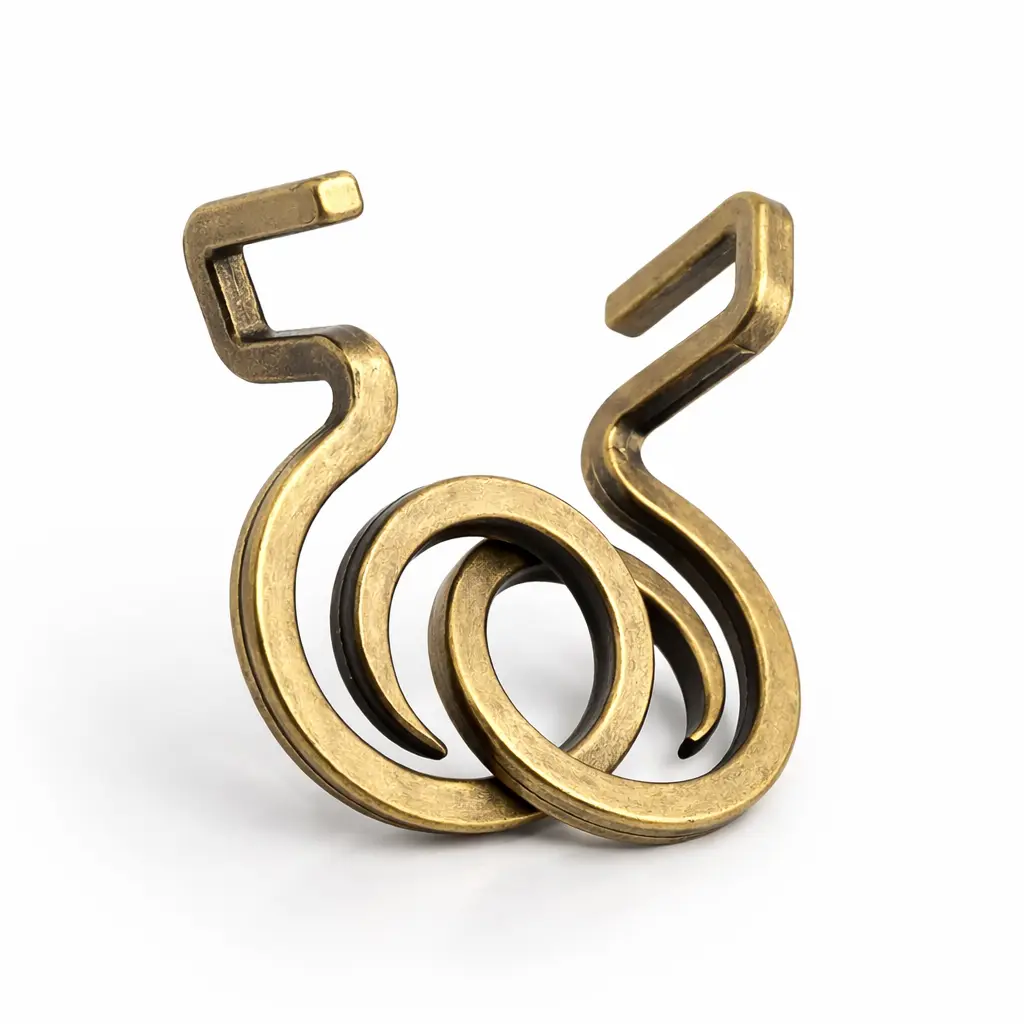
This is the one I hand to people who want a single cast puzzle that lands in the middle of the difficulty curve — not a 30-second party trick, not a week-long obsession. The Cast Hook Metal Brain Teaser takes most first-time solvers somewhere between 30 and 90 minutes, and the mechanism (two interlocked pieces that release in a specific sequence) teaches the same patience-and-observation habit that the best Hanayama puzzles do. It weighs 65 grams, the plating is uniform across both pieces, and it comes apart with a real click — not a drift. At $13.99, it sits in the same gift-friendly price band as a Hanayama Level 3, with the same satisfaction of the solve.
If you want to extend the same “rotate-and-discover” logic one step further, the Metal Orbit Ring Cast Puzzle is a single satisfying mechanism that runs 20–40 minutes, and the 5 Piece Cast Spiral Metal Puzzle is a longer sequence discovery that takes 45–90 minutes for a first-timer. At $14.99 and $16.99, they bracket the Cast Hook nicely if you want a small graduated set rather than a single piece.
For a pure desk fidget replay — the kind of cast puzzle you solve, set down, and pick up again forty minutes later just to feel the mechanism click — the Cast Coil Pocket Puzzle at $18.99 is what stays on my desk. It’s noticeably heavier, the tolerance is tighter, and the sound it makes when the pieces seat is a small bright resonance that I will not apologize for caring about. If you want a fuller map of what’s in this category right now, our the most popular viral metal puzzles right now covers the current lineup in more detail, and the Hanayama cast puzzle buyers guide and which one to buy is the right read if you do want to chase the genuine Japanese line.
One honest note before you buy: cast alloy is not indestructible. Drop a cast puzzle on tile and the plating can chip at the edges, and the finish will show wear over months of daily desk handling. That’s normal. That’s also why a cast puzzle feels like an object rather than a toy — the surface records the time you spend with it.
Assembly and 3D Metal Puzzles: For the Patient Solver
3D metal assembly puzzles in the consumer market retail from roughly $11 to $40, with first-time disassembly typically running 30 minutes to several hours and reassembly from memory taking two to ten times longer than the original solve — making this the one segment of the metal puzzle market where price genuinely tracks quality more reliably than anywhere else.
Coming off the cast puzzle discussion, you’ll notice the line between “disentanglement” and “assembly” is already getting blurry. Many cast puzzles are technically take-apart puzzles — you disassemble them, then put them back together. The mechanism type is sequential discovery, but the play pattern is assembly. This is the part of the taxonomy that frustrates beginners and delights hobbyists, because once you solve a cast puzzle, you haven’t really finished — you’ve just started the second puzzle, which is putting it back exactly the way it was. I spent twenty minutes one evening last month re-assembling a four-band ring I’d solved in eight minutes flat, and the re-assembly was harder. The re-assembly is always harder.
That gap is the central distinction worth understanding before you buy.
Take-apart assembly puzzles come apart with a specific sequence of moves, and the challenge is figuring out the order. Once you know it, the puzzle is “solved” in the sense that you can take it apart, but the real hobbyist value is in the re-assembly — recreating the original configuration from a pile of loose pieces, ideally without looking at a solution. The Cast Hook Metal Brain Teaser at $13.99 is exactly this pattern: two interlocked pieces, two release moves, and a satisfying click when the pieces separate. It takes most adult solvers 30–90 minutes on a first attempt, and the re-assembly is harder than the take-apart — a mid-range difficulty driven by that two-move sequence. The cast alloy holds tolerances well, which is why the click is clean instead of mushy.
Put-together assembly puzzles start as a pile of parts and your job is to figure out how they form the target object. The 6 Piece Steel Ball Pyramid Puzzle at $11.98 is a textbook example — six identical steel balls and a hidden structural element you have to coax into a stable pyramid formation. The challenge isn’t the disassembly; it’s the moment you realize the structure exists at all. This is where price correlates most tightly with quality: the difference between a $5 stamped-steel version and a $15 machined-steel version is whether the tolerances let the pieces actually seat, or whether they rattle and refuse to lock. (The Steel Ball Pyramid I keep on my desk weighs 142 grams and feels like a paperweight — that’s the field test for genuine steel content.)
A solve-time cheat sheet for this category, drawn from typical first-timer experience:
- Cast-hook-style two-move puzzles: 30–90 minutes first take-apart, 15–45 minutes re-assembly
- Multi-piece cast assemblies (4–6 parts): 1–4 hours first solve, 2–8 hours re-assembly from memory
- Steel ball / wire-and-pin assemblies: 2–8 hours first attempt, often requires spatial visualization some brains just don’t do well
The high end of the wire disentanglement category actually overlaps with assembly puzzles — European artisan makers build wire-and-pin mechanisms that require you to thread, rotate, and reassemble the wire path rather than just slide it free. Those run $40–$80 and can take days or weeks. If you want the feeling of solving one of those without the $60 price tag, the Tea-Sip metal puzzles collection is the closest consumer-market equivalent.
Who should buy this category: the patient solver, the person who likes models and mechanical objects, the gift for a 16-year-old who already has Lego fatigue. Who should skip: anyone who wants instant gratification, anyone buying for a confirmed puzzle-phobic, and anyone who will be frustrated by a puzzle that doesn’t have a clean “done” moment — because this category’s whole point is that the puzzle isn’t done when you think it is.
Where to Buy Metal Brain Teasers: Amazon, Etsy, and Specialty Shops
While many specialty retailers offer a wide selection of metal puzzles, Amazon’s “metal brain teaser” search often returns the same zinc-alloy disentanglement set re-skinned under 15+ different brand names — and the gap between those two experiences is the entire reason this section exists. After sorting through assembly and wire categories in the previous sections, the natural next question is where to actually buy the piece you want without ending up with the same cast alloy set under yet another brand name.
After 47 mechanical puzzles purchased across four years of reviewing, I’ve bought from every channel I’m about to describe. Some I bought on purpose. A few arrived because a brand sent them. The honest takeaway: where you buy determines what you actually get, even when the product name on the listing is identical.
Amazon: The White-Label Flood
The most common metal brain teaser on Amazon is the 12-piece “Ancient Metals” disentanglement set (the same SKU under ASIN B08B7SXM4K), which has aggregated 4.5+ stars across 2,000+ reviews and sells for $14–$20. Search the same product under a dozen different brand names and you get the same zinc-alloy pieces, the same stock photography, the same generic “hours of fun” copy. The brand name on the listing is essentially irrelevant. What matters is whether the listing is one of the flooded resellers or a known maker like Hanayama being sold direct.
How to spot a white-label Amazon listing in 10 seconds:
- The product photos are staged on velvet or driftwood — not on a hand, not next to a coin for scale, not in the actual retail packaging
- The brand name is a generic noun phrase: “Ancient Metals,” “Brain Teaser Set,” “IQ Toys,” “Metal Puzzle Co”
- The material description is just “metal” — no alloy, no finish spec, no weight
- There is no difficulty rating (1–6, 1–10, beginner to expert) anywhere on the listing
- The reviews cluster at 4.5 stars and read like unboxing reactions, not solve descriptions
If you see three or more of those, you’re looking at the same puzzle that’s been re-listed hundreds of times since 2020. The category saw a major influx of identical white-label products after 2020 — and the same zinc cast now appears under at least 15 brand names. I bought a $4 wire version from a marketplace seller that bent on the second solve. That’s the floor. It isn’t representative of what a real metal brain teaser is.
Etsy: The Handmade Mirage
Etsy metal brain teaser listings skew copper, brass, and “handmade” — averaging $25 to $60 per piece. A meaningful share of those shops are buying the same cast zinc-alloy stock from Chinese wholesalers and re-listing it with artisan copy. I tested three “artisan brass” disentanglement rings from different Etsy shops in 2023; two of them had identical internal mechanisms and identical spring tensions. Only one was actually machined in the shop’s claimed country.
The genuine handmade shops on Etsy are real. They tend to be obvious: they name the alloy, they post process photos, they specify tolerances, and their prices reflect actual machining time (usually $60 and up for a single piece). If a listing doesn’t do those things, treat it as a markup on the same white-label product you’d find on Amazon.
Where Tea-Sip Fits
If you want the cast-puzzle experience without marketplace search fatigue, the Tea-Sip metal puzzles collection consolidates the most-respected cast formats into one catalogued lineup. The lineup starts with the Cast Hook metal brain teaser at $13.99 as the lead recommendation, alongside the Metal Crab Puzzle with Gold Ring at $13.99, the 5 Piece Cast Spiral at $16.99, the Cast Coil Pocket Puzzle at $18.99, and the Metal Orbit Ring at $14.99. Each has a named mechanism, a stated difficulty, and product photos showing the piece in a hand for scale. The product page for each one tells you what you’re actually buying.
For a deeper comparison of the two channels, my hands-on breakdown of Amazon metal puzzles versus specialty stores compared walks through the same categories with the actual pieces in front of me. And if you’re trying to track down a specific cast metal puzzle in the US, my where to buy cast metal puzzles in the USA from trusted retailers maps out which shops stock which makers.
The pattern across all channels is the same: price is a function of alloy, tolerance, and branding — not a measure of difficulty. A $14 cast piece and a $14 white-label set occupy completely different positions in the solve-quality spectrum. Buy from a channel that tells you which one you’re getting.
Solve Time, Difficulty, and Gift Match: A Buyer’s Cheat Sheet
Knowing where to buy a metal brain teaser is only half the equation — the other half is knowing what you’re actually handing someone. A first-time solver spends 2–15 minutes on a wire disentanglement, 30 minutes to 4 hours on a level-4 cast Hanayama, and 1–3 days on a level-6 cast puzzle; gift buyers usually want the 30–90 minute zone because it challenges without stranding the recipient.
The solve-time to difficulty cheat sheet I keep taped to the back of my review notebook looks like this: wire disentanglement, 2–15 minutes (the puzzle my grandfather handed me in Taipei in 2008 took me four hours, but I was 12 and didn’t know to look for the rotating link — most adults clear a wire piece in under 10); cast level-1 to level-2, 5–30 minutes (the Cast Hook at $13.99 lives here — two interlocked release moves, satisfying click at the end); **cast level