Quick Answer: Cast Metal Puzzle Gift for Gamer: Match by Mechanism
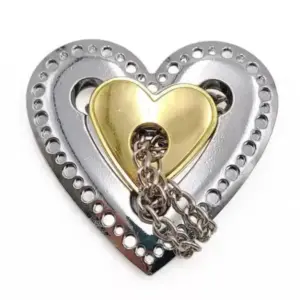
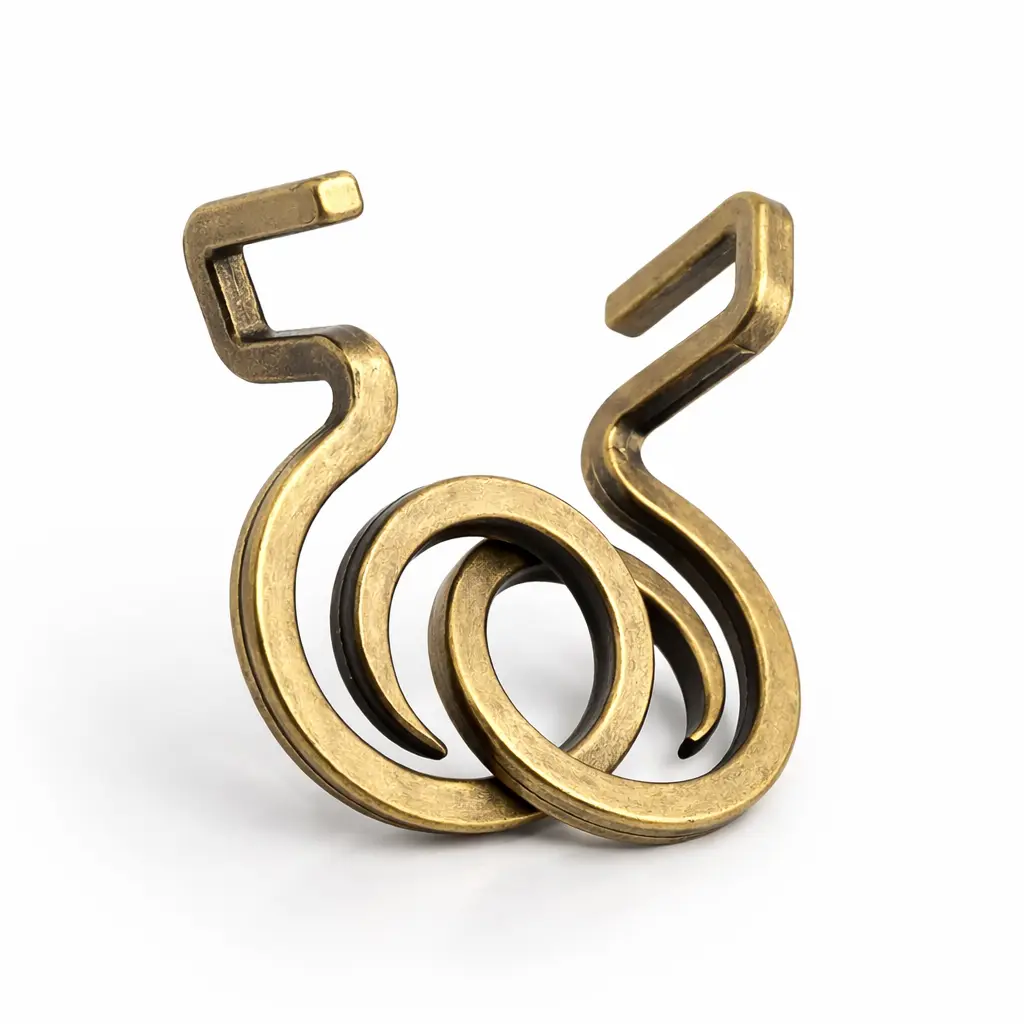
A cast metal puzzle is the right gift for a gamer who enjoys mechanical thinking off-screen. Pick by mechanism family: disentanglement for puzzlers, interlocking burr for builders, sequential discovery for speedrunners, take-apart for collectors. The Cast Hook Metal Brain Teaser at $13.99 is the top pick for first-time buyers. Apply four checks before checkout: mechanism type, difficulty rating, display footprint, and plating durability.
Match the mechanism to the gamer sub-type:
| Gamer sub-type | What they play | Best-fit mechanism | Start here |
|---|---|---|---|
| Puzzler | Portal, The Witness, Returnal | Disentanglement | Cast Hook Metal Brain Teaser — $13.99 |
| Builder | Minecraft, Factorio, Satisfactory | Take-apart / interlocking | 5 Piece Cast Spiral Metal Puzzle — $16.99 |
| Speedrunner | Any% runs, Celeste | Sequential discovery | Cast Coil Pocket Puzzle — $18.99 |
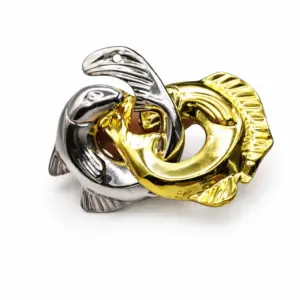
| Collector | Display-driven, shelf curation | Sculptural form | Metal Crab Puzzle with Gold Ring — $13.99 |
The fastest path: a compact disentanglement puzzle like the Cast Hook Metal Brain Teaser for the mechanically curious gamer; the Spiral or Coil for the spatial-builder type; the Crab for the display-first collector.
The four checks before checkout:
Mechanism type decides whether the gift matches the recipient’s brain; difficulty rating (level 1–6 on the Hanayama scale) decides whether it lands in “satisfying afternoon” or “frustrated by dinner”; display footprint decides whether it earns a permanent spot on the battlestation or vanishes into a drawer; plating durability and tolerance decide whether the finish survives pocket carry or only desk display. Verify each at a glance: feel how the pieces slide, check the weight, scan for plating chips on the edges.
01. Match the Gamer Type to the Puzzle Mechanism
The four checks from the Quick Answer (mechanism, difficulty, display footprint, plating) only become useful once you match the mechanism to the recipient’s brain. Cast metal puzzles fall into four mechanism families — interlocking burr, take-apart, disentanglement, and sequential discovery — and the people you might be shopping for split into four gamer sub-archetypes: the puzzler, the builder, the speedrunner, and the collector. Match the mechanism to the sub-archetype first; difficulty, size, and finish become secondary filters. For a broader taxonomy of what is in the cast metal family, Metal Puzzles For Adults: The 6 Types And What To Buy First maps the same landscape without the gamer lens.
Gamer sub-archetypes read like raid roles. The puzzler lives for environmental puzzles, cipher tables, and the moment a logic gate clicks open. The builder is the Minecraft engineer or Factorio optimizer — they care about how pieces interlock and whether the tolerances reward careful assembly. The speedrunner wants the cleanest path through a known system and will re-solve the same puzzle to shave seconds. The collector values shelf presence and provenance; the solved state is a trophy, not a task. None of these are the “social/casual” gamer who only wants multiplayer co-op — skip cast metal for that recipient.
Mechanism-to-gamer decision table
| Gamer sub-archetype | Best mechanism family | Why it fits | What to check |
|---|---|---|---|
| Puzzler | Sequential discovery | Rewards patient, step-by-step logic, like a puzzle room walkthrough | That steps are non-obvious but not random |
| Builder | Interlocking burr | Tight tolerances and piece symmetry mirror crafting/gear optimization | That pieces seat flush with no wobble |
| Speedrunner | Disentanglement | One elegant path, repeatable, fast reset — a stealth mission in metal | That the solve path is documented as short |
| Collector | Take-apart | Clear “solved” state, displayable geometry, raid-boss payoff | That the pieces form a stable rest shape |
Take-apart puzzles behave like raid bosses: a clear end-state, a finite set of moves, and a tactile “solved” notification when the last piece separates. Disentanglement puzzles are stealth missions — one path, no force, and a satisfying click when the loop releases. Sequential discovery mirrors a puzzle room walkthrough where each clue unlocks the next constraint. Interlocking burr puzzles are the crafting/gear optimization loop: tolerance is everything, and the reward is pieces that seat flush.
The screen-fatigue use case is the reason this gift often lands harder than expected. A 5–20 minute tactile break between ranked matches or raid queues — the fidget-toy mechanism, not the generic “stress relief” pitch — lets the gamer’s problem-solving brain run on a different substrate. The Cast Hook form factor earns the descriptor: pocketable, two-handed, and quick enough to finish before the next queue pops.
Mismatch is the failure mode. A disentanglement puzzle gifted to a builder is friction; an interlocking burr gifted to a speedrunner feels like homework. The gift lands when the mechanism reads as the same genre the recipient already plays.
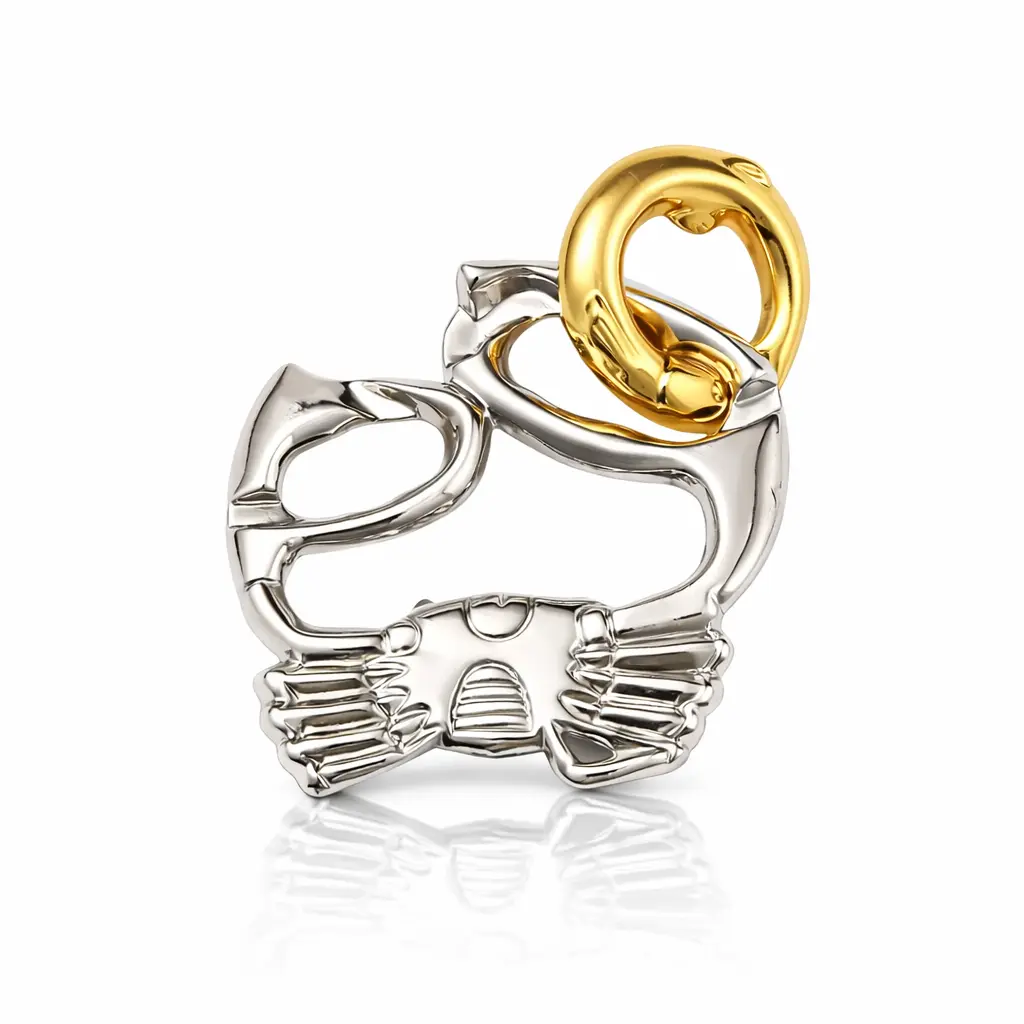
The Metal Crab Puzzle Cast Brain Teaser with Gold Ring is a take-apart form factor, which makes it a clean fit for the collector who treats the solved state as desk art. The gold ring introduces a secondary findable piece that lifts the reveal beyond a single separation; the crab silhouette holds together as a stable rest shape on a shelf. Check before checkout: that the gold ring is seated and the claws close without binding.
For the builder sub-archetype, mechanism choice matters more than decoration. The interlocking burr family rewards tolerances you can feel in the hand — pieces that glide but do not wobble, and a final assembly that snaps rather than guesses. A spiral or coil mechanism is the same family, with the added value of visible piece count that lets the recipient inventory the challenge before they start.
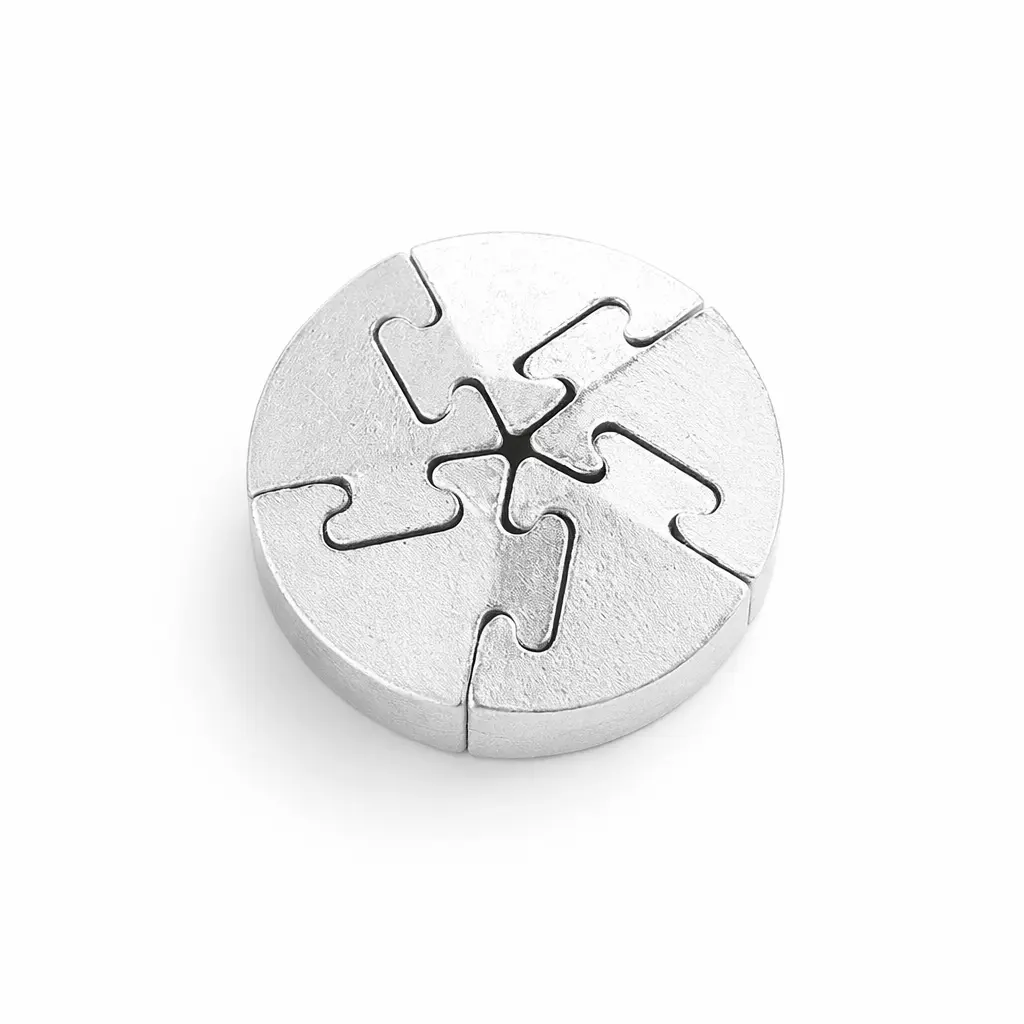
The 5 Piece Cast Spiral Metal Puzzle gives the builder a countable mechanism — five pieces, one assembly path, tolerances visible at the seam. Verify at a glance: that the spiral ends sit flush, and that the piece count on the listing matches what is in the box; a miscount is the fastest way to kill a builder’s first impression.
The single practical next action: identify the recipient’s sub-archetype before you open a product page, then filter by mechanism family first, difficulty second, and display footprint third. The table above is the filter. The next section translates difficulty into a patience budget you can match to the games they already play.
02. How to Read Hanayama Difficulty Levels 1–6 for a Gamer
Match the Hanayama 1–6 difficulty rating to the recipient’s patience threshold before you buy. The scale is printed on the bottom of the box and reproduced on retailer listings like Brilliant Puzzles, and the r/mechanicalpuzzles community treats it as the consensus benchmark for cast metal difficulty. A level 3 puzzle is a safe starting point for a casual gamer; a level 5 only fits a player who already finishes puzzle games without a walkthrough. The scale is not strictly linear — Cast Puzzle Difficulty Levels Explained: Why A Level 4 Can Be Harder Than A Level 6 walks through the cases where the printed number understates the actual solve.
The scale runs from 1 (warm-up) to 6 (expert), and each rung roughly widens the patience budget above it. Most cast metal puzzles in the $13–$18 range cluster between levels 3 and 4; levels 1 and 2 are typically sold as introductory pieces, and level 6 is stocked by specialist retailers because the solve time stretches from minutes into hours. You can verify the rating at a glance: the box lists a number between 1 and 6, and retailer product descriptions reproduce it in the spec block.
Translate the scale into gamer-skill anchors a non-gamer can recognize. A player who clears portal-style puzzlers like Portal or The Witness handles levels 1–3 with ease. A Souls-like completionist who enjoys optional dungeons and cryptic NPC quest lines can attempt level 4 and 5. A collector who already owns 10+ mechanical puzzles is the only safe match for level 6. Patience threshold matters more than genre self-identification: a narrative-driven gamer who plays for story will abandon a level 4 piece inside ten minutes, while a builder-type who spent 200 hours in Minecraft redstone will quietly solve the same puzzle over a weekend.
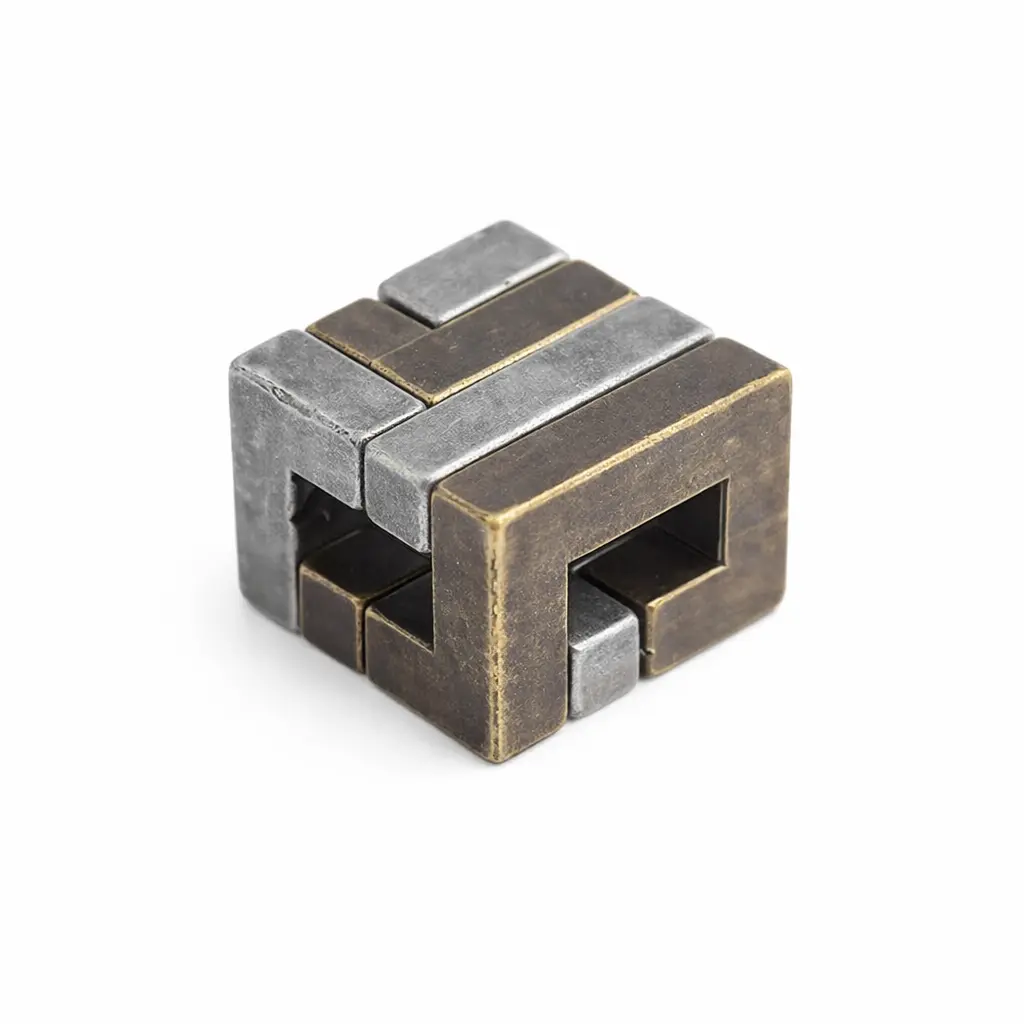
Cast Coil Pocket Puzzle — $18.99
The Cast Coil Pocket Puzzle sits in the level 3–4 band — a two-hand disentanglement mechanism with tolerances tight enough to feel mechanical, loose enough to solve inside a single sitting. The format is intentional: cast metal puzzles in the lower-middle difficulty range are the ones gamers actually finish on a first attempt, and the ones they replay on the desk because the “solved” state holds until you deliberately scramble the pieces again.
Levels 4 and 5 shift the mechanism, not just the patience budget. A level 4 take-apart puzzle behaves like a raid boss — there is a clear “solved” state at the end, and the path is one long sequence of small correct moves rather than a branching map. A level 5 interlocking piece reads as a stealth mission: the geometry hides the next move, and the only way forward is to stop and observe. Both are within reach for a gamer who beats mid-tier puzzle games without external hints, and both are frustrating for someone who reaches for a walkthrough the moment a quest log stalls.
Level 6 is a separate purchase. The solve times stretch from one sitting into multiple days; the mechanisms require a working surface, a quiet room, and a tolerance for being stuck. The reference point in the puzzle content world is Chris Ramsey, a YouTuber whose Hanayama solve videos run long precisely because level 6 pieces resist casual play. If the recipient already follows Ramsey or watches hour-long puzzle content, level 6 is a credible gift; if not, you are buying a piece that may end up shelved unsolved, a bad outcome for a $15–$25 spend.
One verification step closes the decision. Look at the recipient’s game library, not their genre self-identification. A library heavy on roguelikes, puzzle-platformers, and Souls-likes signals a patience budget that handles level 4 comfortably and can attempt level 5; a library heavy on narrative adventures and competitive multiplayer signals a budget that tops out at level 3. If the recipient already owns a Hanayama piece and has asked for a harder follow-up, jump two levels, not one — the gap between 3 and 5 is more satisfying than the gap between 3 and 4. The single practical next action: pick the difficulty level that matches the library, then filter the mechanism family from the table in the prior section.
03. The Four Checks Before You Buy
Verify four observable features before checkout: the printed 1–6 difficulty number, the hand feel when the pieces meet, the plating’s resistance to a thumbnail scratch, and the solved shape’s footprint on a desk. With the difficulty level already matched to the game library in the prior section, these checks take 30 seconds in a product photo and prevent a $15–$25 shelf-queen outcome.
Check 1 — Difficulty rating
The 1–6 number printed on the box or in the product description is the single best filter. A retailer that buries the rating, or lists the puzzle as a “hard challenge” without a number, is asking you to guess. Match the number to the recipient’s game library using the chart in the prior section, then move on; the puzzle community treats levels 3–5 as a comfort zone for gifts because solve times stay predictable and the failure mode — stuck — is recoverable in one sitting. Level 1–2 reads as a stocking-stuffer for a casual player, and level 6 reads as a challenge piece for someone who already follows hour-long puzzle content.
Check 2 — Hand feel
Hand feel splits into three observable signals: cast weight, finger clearance in the negative space, and tolerance between sliding surfaces. A well-cast piece feels heavier than its size suggests; a thin-walled casting feels tinny. Verify from the product photo by comparing the piece’s dimensions to a coin or a standard keychain the recipient owns — if the puzzle is smaller than expected, the finger clearance for an adult hand will be tight, and the recipient will end up using a tool, which breaks the fidget-quality premise. The Cast Hook Metal Brain Teaser at a desk-toy scale offers the negative space an adult hand needs and a casting weight that reads as substantial — both visible in the product photos against any standard reference object the buyer places next to the screen.
Check 3 — Plating durability
Plating is the part of the puzzle the recipient will touch every day; it has to survive thumbnail scratches, pocket lint, and a year of desk-fidgeting. Three finishes to look for: nickel (silver-toned, scratch-resistant, common), brass (gold-toned, warm, oxidizes over time), and copper (rosy, fastest patina). Run your eye along the product photo’s edges — a visible seam line, a sandblasted patch, or a color shift in the finish predicts plating wear inside three months. For the full comparison of base metal versus plating, the Materials Used In Metal Puzzles: 6 Metals Compared For Weight, Feel, And Durability guide covers what holds up and what dulls.
Check 4 — Display footprint
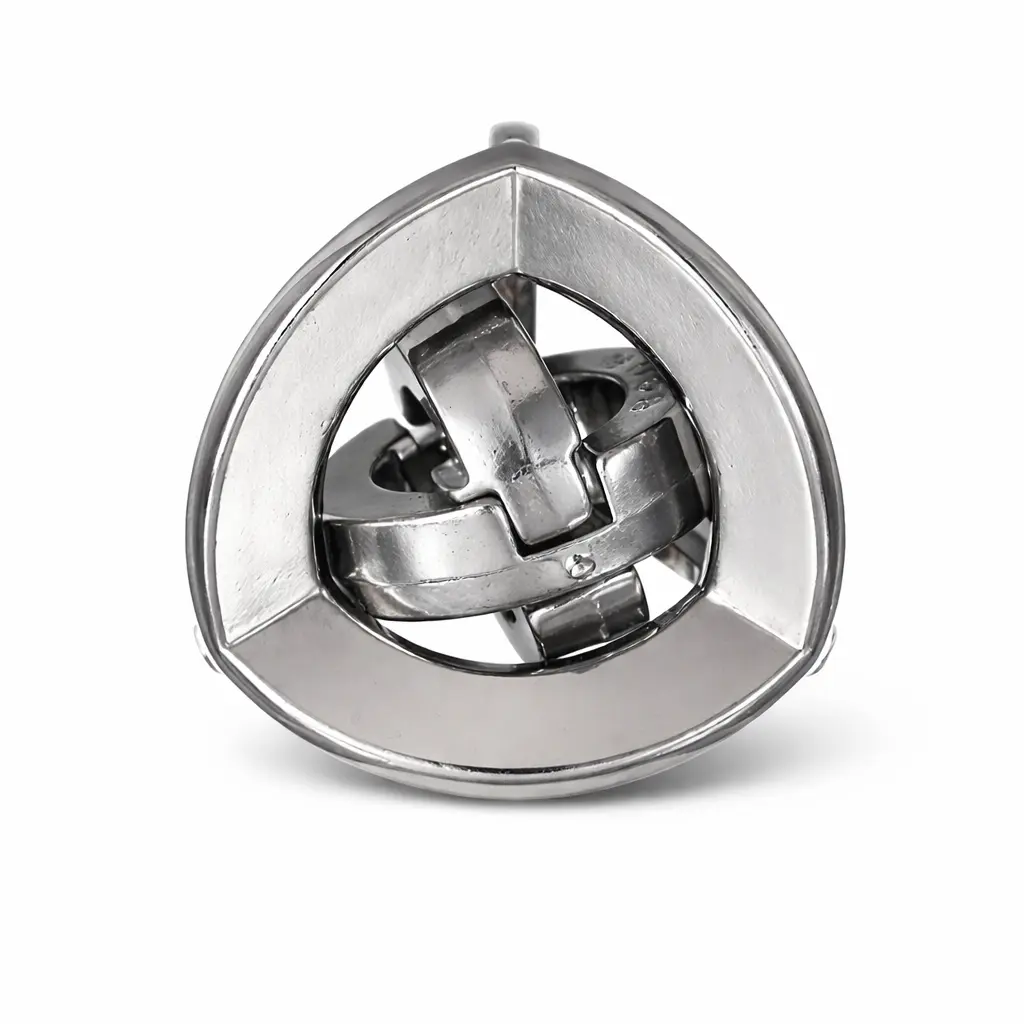
The solved shape is what sits on the desk after the dopamine spike fades. Ask three questions: does the silhouette read at a distance, does the base sit flat without rocking, and is a stand or a case included? Pieces that nestle into a felt-lined box double as presentation; pieces that arrive in a blister pack need a separate display solution the recipient has to source. The Metal Orbit Ring is a useful reference here — its solved state is a closed ring with a flat footprint that sits cleanly on a monitor stand or shelf edge without tipping.
The one next action
Run the four checks in this order: difficulty number, hand feel, plating, display footprint. Shortlist two pieces that pass all four, then choose by mechanism match from the gamer-archetype table in the prior section. The Cast Hook remains the top pick for first-time buyers because it pairs a level-appropriate difficulty with a compact solved footprint that doubles as desk decor, sits flat without a stand, and ships with packaging that does not spoil the solved shape on the front of the box.
04. Price Tiers and No-Spoiler Gifting Logistics
Once the four checks pass, the next decision is price — and what changes at each step is casting weight, surface finish, and whether the box itself spoils the solved shape; not difficulty, not mechanism. A $13.99 compact cast and a $25.99 themed cast solve to the same standard; a $40+ set adds display-grade plating or a multi-puzzle bundle, not a sharper puzzle.
The $10–$20 tier buys a single cast piece in a standard printed retail box. Brilliant Puzzles lists individual cast puzzles such as the Cast Vortex and Cast Loop at $14.99 each, and the r/mechanicalpuzzles community confirms the same range is widely stocked on Amazon — establishing the mainstream entry point for a first-time buyer. Tea-Sip’s Cast Hook Metal Brain Teaser sits at $13.99 with a matching compact footprint; the Metal Crab Puzzle with Gold Ring lands at the same price for buyers who want a themed silhouette. The casting is lighter; the plating is functional; the box typically shows the solved shape on the front. That last point is the trade-off worth naming: at this tier, the reveal is often spoiled before the recipient ever touches the metal.
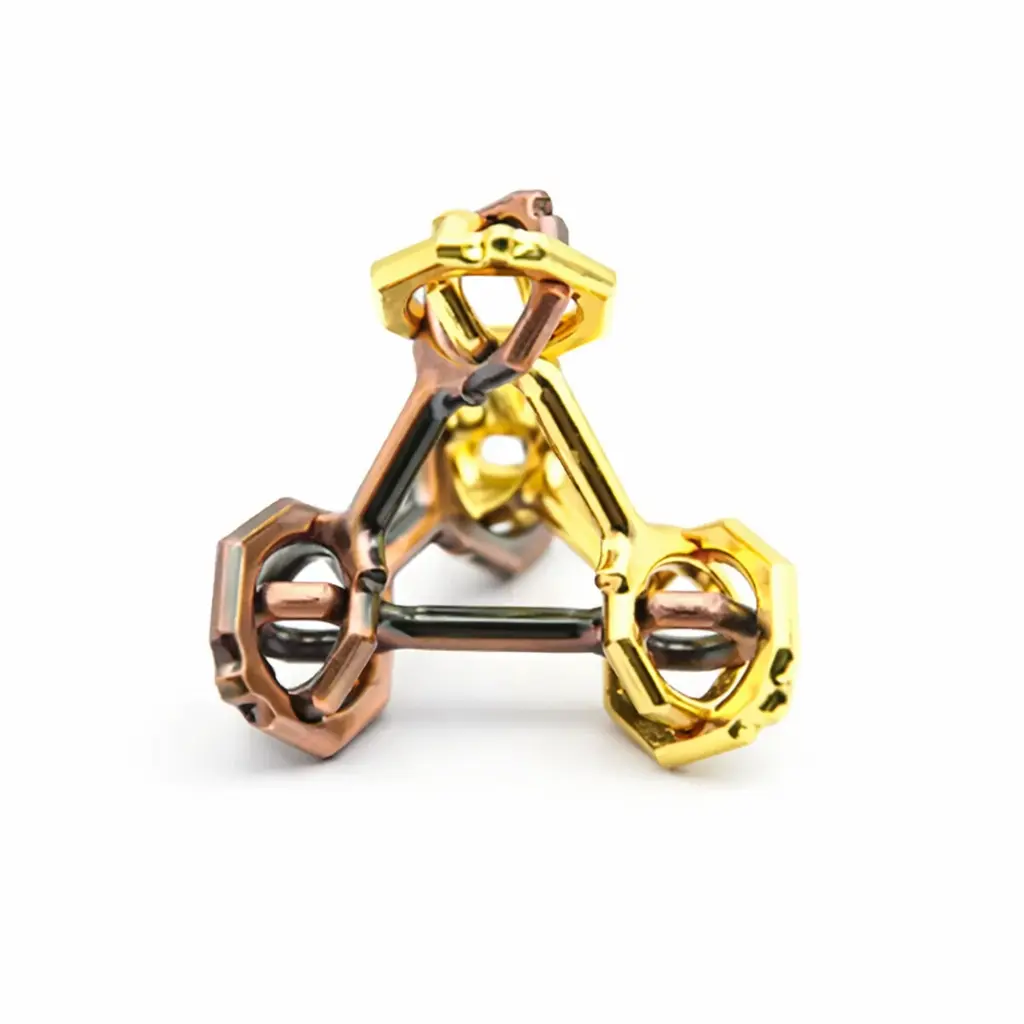
Step up to $20–$40 and three things change in the hand and on the shelf: the castings feel heavier, the surface plating reads more deliberate, and the packaging starts offering genuine gifting options. Themed multi-puzzle sets, opaque tins, and presentation sleeves begin to appear at this level. The Cast Coil Triangle Puzzle is a clean example — a heavier casting at $25.99 that holds its own on a display shelf between solves.
Above $40 the purchase stops being about puzzle difficulty and starts being about presentation: display-grade plating, wooden display stands, custom reveal boxes, or themed multi-puzzle bundles. None of that changes the mechanism under the metal; the solve is identical to a $15 piece. Buy at this tier only if the gift moment matters more than the solve, or if you are building a set for a collector who already owns the entry-level range.
The no-spoil problem deserves its own check. Most cast puzzles print the solved silhouette on the front of the box, killing the reveal the moment the wrapping comes off. Two packaging cues solve this without spoiling the shape yourself: look for opaque tins or sealed sleeves that hide the silhouette entirely, and look for plain brown inner boxes that strip away the printed outer cover. The Cast Hook ships in packaging that does not telegraph the answer on the front; a $14.99 budget cast in a glossy printed box costs you that moment. For a desk-bound gamer who solves and re-solves the same piece between ranked sessions, that reveal — the first 30 seconds of “wait, how does this work?” — is the entire gift. The deeper question of how sleeve, tin, and box type change that experience is covered in How Cast Puzzle Packaging And Presentation Turns A Box Into A Collectible.
The one next action: stay in the $10–$20 tier for a first-time gift to a gamer; spend the difference on packaging that does not spoil the silhouette, not on a bigger puzzle. The Cast Hook checks every box from the prior section and ships with a front that lets the reveal land.
Frequently Asked Questions
A cast metal puzzle suits a gamer when the packaging hides the solved silhouette and the recipient enjoys mechanical problem-solving off-screen; skip it for narrative-only or social-multiplayer players. The four checks above already narrow the catalog. The answers below handle the small details that decide between a piece solved once and one that earns a permanent desk spot.
Are Hanayama puzzles good gifts for someone who plays video games?
Yes — when the recipient already solves mechanical problems on-screen. Cast puzzles use the same pattern-recognition vocabulary as a raid encounter, stealth mission, or puzzle-room walkthrough in a 5–20 minute physical format. r/mechanicalpuzzles names Hanayama as the starting recommendation, and puzzle YouTuber Chris Ramsey has solved many of them, giving the gift a discoverable thread if the recipient wants to watch first.
What difficulty level cast metal puzzle should I buy for a gamer beginner or a casual player?
Start at Hanayama level 1–3 if the recipient has never held a cast piece, regardless of their gaming skill. Reflexes and casual playtime do not transfer directly; the muscle memory for feeling a tolerance shift is its own practice. Move to level 4 after two consecutive solves under 10 minutes, and reserve level 5–6 for a gift meant to stump them for a weekend.
How long does it take to solve a cast metal puzzle?
Plan for 1 to 20 minutes on an entry-level piece, and 30 minutes to several hours on a level 5–6 cast. The metal’s tolerance is the time governor, not the solver’s speed — a tight cast physically resists the wrong move even if the solver sees the right one. Check the box or product page for the level number, then budget time accordingly.
Do you have to know the answer to put a cast puzzle back together?
No solution ships with most cast puzzles; reassembly is part of the solve. The reverse path uses the same mechanical logic as the forward path, so a solver who understood the first sequence can usually reconstruct the second. This is why the solved silhouette matters for display — the interlocking geometry holds its shape indefinitely without a stand or adhesive.
What’s the difference between a cast puzzle and a wire disentanglement puzzle?
Cast puzzles use solid interlocking pieces with controlled tolerance; wire disentanglements use flexible metal threading through rings, hooks, or loops. The cast feels like a locked mechanism you decode; the wire feels like a maze you navigate. A gamer who likes spatial logic tends to prefer the cast; a gamer who likes routing and pathfinding tends to prefer the wire.
Can a cast metal puzzle be displayed on a desk after it’s solved?
Solved silhouettes are the main reason cast pieces outlast fidget spinners on a working desk. The interlocking geometry holds its shape without a stand, so the cast parks upright between ranked sessions. A desk-bound gamer re-solves the same piece in 1–5 minutes between matches, which beats a one-time puzzle that loses its challenge after the first solve.
Is a $15 cast metal puzzle worth it, or should I spend more?
A $15 cast delivers the same mechanism as a $40 piece; the price difference is plating, finish, and presentation, not the solve itself. Spend under $20 for a first-time gift; spend over $25 only if the recipient collects cast pieces or you want a display-grade finish. The Cast Hook at $13.99 hits the value line — solid casting, fast solve, plain enough to re-solve repeatedly between sessions.
Where to Start
If the recipient and occasion checks above match, start with Cast Hook Metal Brain Teaser. Check the current product page for the specifications that matter to your choice.
Sources and verification
- Product details and current specifications: Tea-Sip product page
Last updated: August 10, 2026