Quick Answer
A cast metal puzzle is a mechanical puzzle that works as a sister gift when the recipient likes tactile challenges and a lasting keepsake object more than another consumable. Match the difficulty to her puzzle experience, pick a shape that signals intent (heart- or key-themed reads personal, abstract shapes read neutral), and confirm the price fits a gifting budget. For most buyers, a compact disentanglement puzzle in the $13–$20 range is the right starting point.
The rest of this guide uses three checks before you commit to a model: mechanism type (disentanglement vs. assembly vs. sequential discovery), difficulty calibrated to the recipient, and display-worthy design that earns a place on her desk. If the answer to “she’ll actually keep this on her desk” is yes, you’re looking at the right category. Skip if she’d rather receive something consumable — a cast metal puzzle is meant to be solved, re-assembled, and revisited.
Decision table: shortlist by sister type
| If your sister is… | Pick this model | Mechanism | Difficulty | Theme signal | What to check |
|---|---|---|---|---|---|
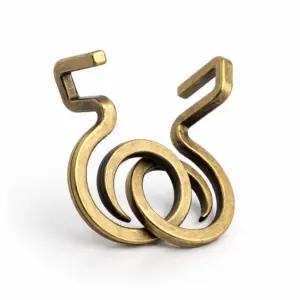
| A casual desk puzzler who wants a quick win | Cast Hook Metal Brain Teaser ($13.99) | Disentanglement | Easy–Medium (per maker rating on product page) | Hook silhouette — abstract, gender-neutral | Solve time estimate; gift box included? |
| A keepsake-focused sister who reads sentiment into shape | Metal Crab Puzzle Cast Brain Teaser with Gold Ring ($13.99) | Disentanglement | Easy–Medium | Decorative crab with gold ring — ornate | Whether the gold ring stays attached during play |
| A fidget-first sister who keeps things on her work desk | Cast Coil Pocket Puzzle ($18.99) | Disentanglement | Medium | Coil silhouette — pocketable, desk-friendly | Pocket-ability and satin finish quality |
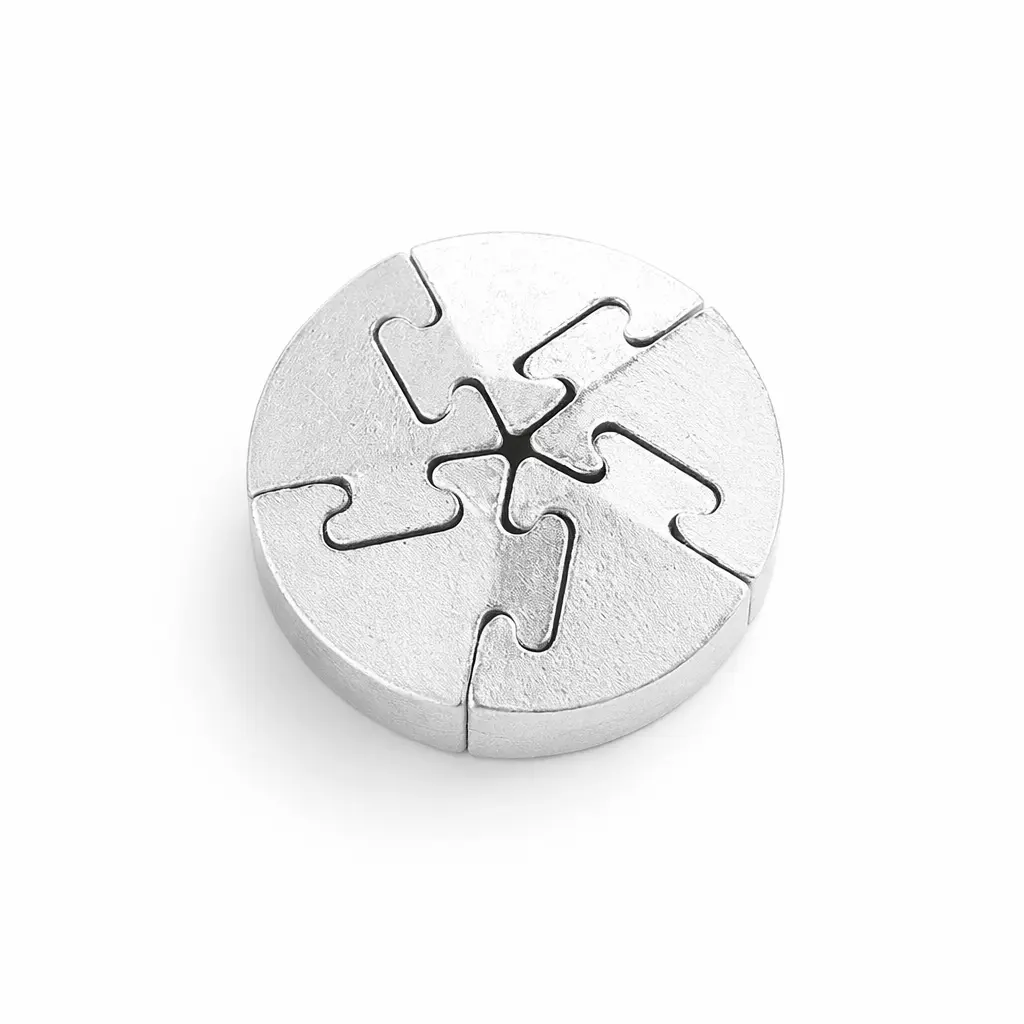
| A visual / aesthetic sister who’ll judge the object first | 5 Piece Cast Spiral Metal Puzzle ($16.99) | Assembly (5 pieces) | Medium | Sculptural spiral — display-piece look | Number of pieces and reassembly steps |
| A puzzle-curious sister with no prior cast-metal experience | Cast Keyhole Gold & Silver ($13.99) | Disentanglement | Easy | Key form — symbolic, “unlocking” frame | Two-tone finish and product page solve-time |
The Cast Hook is the default starting pick because it sits at the price floor, reads as a clean desk object, and is widely cited as a one-to-three minute disentanglement in the solution guide — meaning even a first-time solver finishes it in one sitting and still has a displayable object left over.
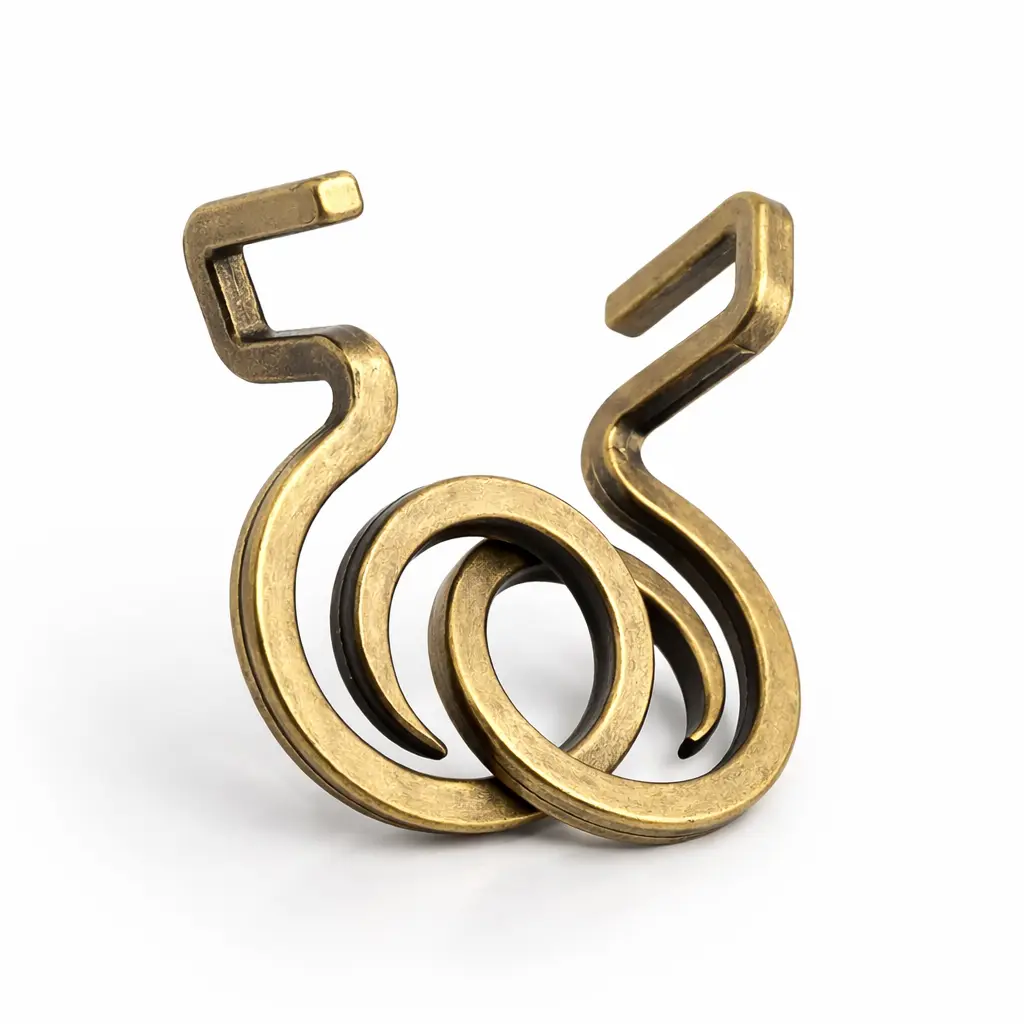
Action step: Open the Cast Hook product page, confirm the listed difficulty matches your sister’s tolerance for being stuck, and check that the gift box is included before you finalize the order.
01. Match the Puzzle to Your Sister’s Puzzling Style
The same metal puzzle does not fit every sister. Match the mechanism to her habits first: a compact disentanglement puzzle like the Cast Hook for the sister who picks up fiddly objects at her desk, a multi-piece assembly like the 5 Piece Cast Spiral for the one who likes taking things apart, and a sculptural keepsake like the Metal Crab with Gold Ring for the one who will actually display it on a shelf. The archetype decides the gift before difficulty or theme do.
This is the filter that most cast metal puzzle pages skip. Retail listings sort by difficulty, by mechanism, or by shape — none of which is how a gift buyer thinks. You are not browsing a catalog. You are asking: which one of these is she? A sister who solves Wordle in bed is a different buyer from the one who keeps a worry stone in her laptop bag, even if both would enjoy a Level 3 puzzle in principle. Spending sixty seconds on this question is the difference between a gift that gets solved once and tucked in a drawer, and one that ends up on her desk for years.
The creative sister. She is the one who sends you links to design objects, who notices the shape of a teapot, who treats a beautiful object as a small daily ritual. For her, the mechanism is secondary; the silhouette and the materials are the point. Cast pieces shaped like recognizable symbols (a key, a heart, a fish, a seahorse) signal that the maker thought about her, not about a generic puzzle lover. The Cast Keyhole Gold & Silver fits this archetype well: the key form is symbolic, the gold-and-silver two-tone reads as ornamental rather than mechanical, and the price sits at the same level as a nice bottle of wine without crossing into “this is too much for a sibling” territory.
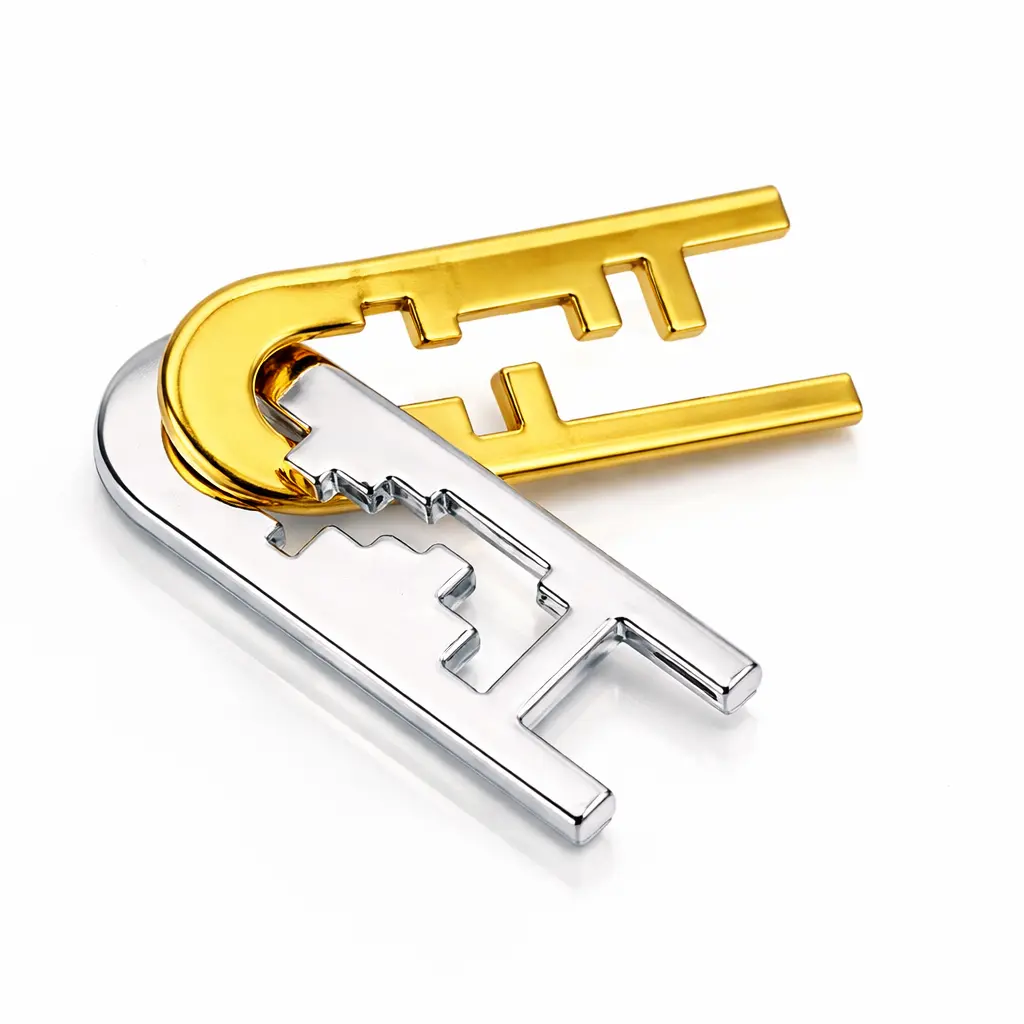
Cast Keyhole Gold & Silver — $13.99
The desk-puzzler sister. She works at a screen eight hours a day and keeps one tactile object within reach — a worry stone, a spinner, a pen she clicks when she’s stuck on an email. For her, the gift is a desk object that happens to be a puzzle. The Cast Coil Pocket Puzzle is the cleanest fit: a coil-shaped disentanglement piece that fits in a hand or jacket pocket, takes two hands and a few minutes, and looks intentional next to a monitor. The Cast Hook Metal Brain Teaser plays the same role with a more compact, hook-shaped silhouette that fits in a hand. Hanayama’s Cast Loop and Cast Vortex, both listed at $14.99 on specialty retail sites, are the closest comparable shapes in the wider market if she already has the Tea-Sip pieces.
The keepsake-focused sister. She is the one who keeps matchbooks, ticket stubs, and the birthday card from 2014. The gift she values is the one that holds a place on her shelf and gets pointed out to friends. For this archetype, reach for a puzzle that is sculptural, weighted, and finished well enough to live as a display object. The Metal Crab Puzzle Cast Brain Teaser with Gold Ring sits in this slot: a crab silhouette with a gold ring detail, around $14, and built to look like a small bronze paperweight when it is not being solved. The Cast Coil Triangle Puzzle at $25.99 is the step-up option if the occasion calls for a slightly more premium piece. Skip if she lives in a tiny studio with no shelf space — the keepsake archetype only works when the object has a place to live.
Action step: Before you look at difficulty ratings or theme words, name the archetype out loud — creative, desk-puzzler, or keepsake — and pick the one or two cast metal puzzles that match her before anything else.
02. Read the Hanayama Difficulty Rating Before You Buy
Pick the Hanayama difficulty level before you pick the model — the rating is the single most reliable filter for whether the gift will be solved in an evening or ignored for a year. Once you have named the sister archetype in the previous section, the difficulty number is the next gate.
Hanayama rates its cast metal puzzles on a 1–6 scale, with 1 being a friendly first-timer challenge and 6 sitting at the edge of what most casual solvers can finish without hints. The number appears on the front of the box and on most retail listings, and it is set by the maker itself rather than by an independent benchmark — meaning the rating functions as a self-reported signal, not a verified solve time. Worth knowing before you assume any printed number maps to minutes in hand.
For a typical adult beginner or a sister who is “casually curious” about puzzles, Levels 1 and 2 are the safest zone. These are usually disentanglement puzzles — two or more cast metal pieces that have to be separated and then re-assembled — and a first-time solver can often work through them in a single sitting. Cast Loop and Cast Vortex are the standard reference points in this range, both retailing around $14.99 at specialty puzzle stores (Brilliant Puzzles lists each at that price). If your sister is a non-puzzler who simply wants a tactile desk object, this is the level to default to.
Level 3 sits in the middle — a step up in mechanism complexity, often a sequential discovery puzzle where you have to find the right order of moves rather than just pull two pieces apart. A committed hobbyist will enjoy this; a casual sister may leave it half-solved in a drawer. Verify the exact mechanism on the product page before you commit, since “Level 3” alone doesn’t tell you whether it is a longer disentanglement or an entry-level assembly.
Levels 4 through 6 are where cast metal puzzles stop being gifts for a casual recipient and start being gifts for someone who already collects mechanical puzzles. The Trinity puzzle, for example, is a three-piece assembly that Kubiya Games describes as “very difficult,” with uneven piece shapes that make the correct configuration hard to spot. A Level 6 like the Cast Enigma is, by the maker’s own framing on retail listings, “among the most difficult of all puzzles” in the line. These take an evening, a weekend, or longer depending on the solver’s experience — verify the box for the maker’s stated solve-time range, and treat any third-party “minutes to solve” claim as marketing copy unless it comes from a verified review.
Two practical checks before you buy. First, the difficulty rating only helps if the puzzle is well-made enough that the mechanism actually behaves as rated — cheaper cast copies can ship with tolerances that make a Level 1 feel like a Level 4. Second, the rating does not tell you whether the sister will enjoy the type of solve: a person who loves pattern recognition will tolerate a hard assembly puzzle, while a person who likes quick wins will not. Match the level to her patience, not to her resume.
Action step: Decide on a difficulty number (1–2 for casual, 3 for interested, 4–6 for committed) before you browse specific shapes — the number will narrow the field faster than any theme keyword. For how the official Hanayama rating actually maps to real solve time, the field notes in that review break the levels down by what they actually feel like in hand.
03. Choose a Theme That Signals ‘This Is for You’
The shape of a cast metal puzzle carries the gift’s message more than its difficulty does. Once a difficulty is set, theme becomes the deciding factor between a puzzle that reads as a sentimental keepsake and one that reads as a pure design object. Pick the shape that carries the message, not the shape with the nicest product photo.
A theme-signal framework breaks the cast metal category into three clusters.
Sentimental shapes — Heart, Amour, Key, Trinity — read as “this is for you.” A Cast Heart or Cast Amour is the closest a cast metal puzzle gets to a Valentine without being jewelry. A Key shape (Cast Key, Key II) carries the “unlock the moment” message that fits a graduation, a new job, a move. Trinity and Infinity-style shapes, where three or more pieces lock into a continuous form, read as continuity — siblings, halves, an unbroken loop. These themes work when the gift’s meaning matters as much as the solve. A satin-silver Heart reads more delicate; a brushed-gold Heart reads more like a milestone.
Design-object shapes — Vortex, Loop, Coil, Spiral — read as desk sculpture first and puzzle second. A sister who keeps a curated workspace will see the design before the difficulty. From the Tea-Sip roster, the Cast Coil Pocket Puzzle ($18.99) and the 5 Piece Cast Spiral Metal Puzzle ($16.99) sit in this design-object zone — abstract forms that look intentional on a shelf and resolve into a satisfying click when the moment calls for it. The Cast Coil Triangle Puzzle ($25.99) at the top of the price band reads as a deliberate display object.
Character shapes — Crab, Seahorse, Gold Fish, Keyhole — sit between the two. They have a recognizable form (a creature, a lock-and-key silhouette) but the symbolism is playful rather than sentimental. They fit a sister with a specific affinity — coastal, zodiac, collector of a particular motif, a fan of ornamental keys.
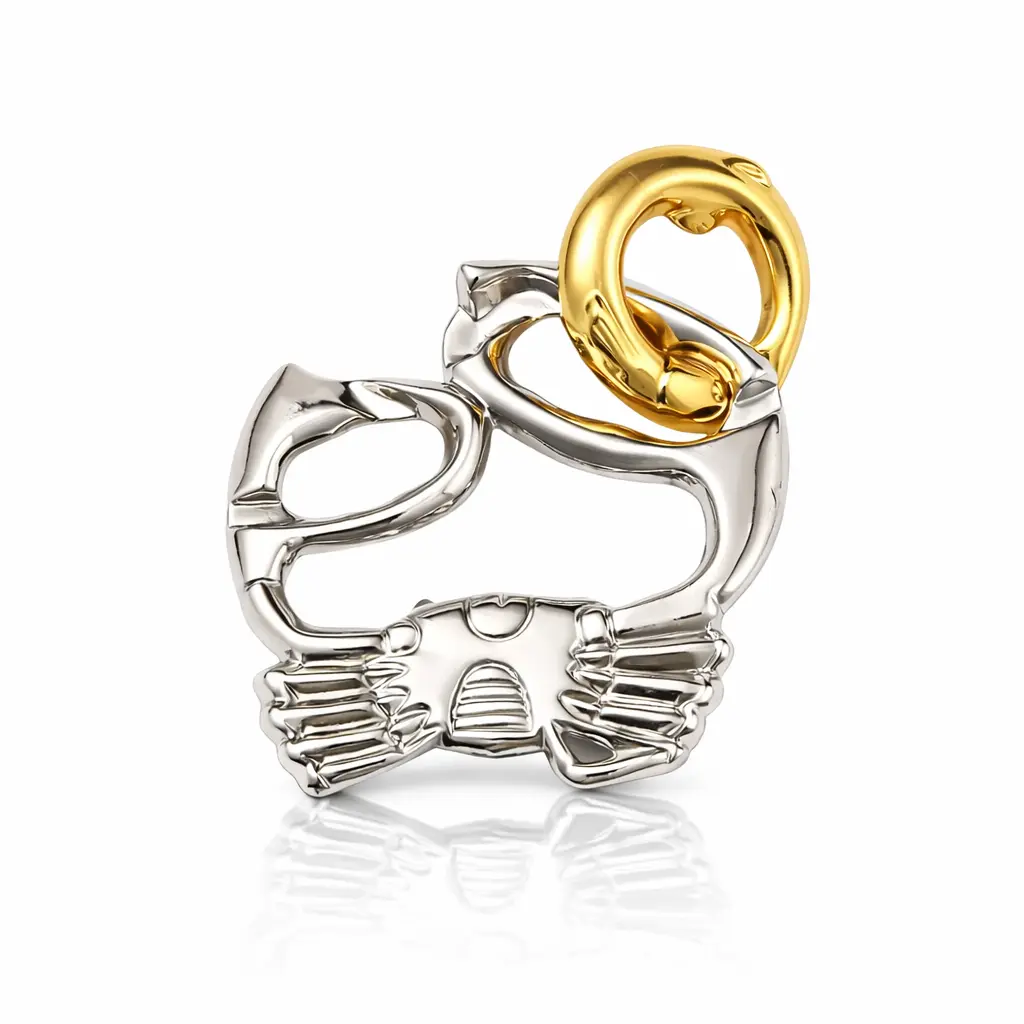
Map the shape to the message. The romance-symbolism sister is the Heart, Amour, or Cupid’s Arrow silhouette. The “unlock the moment” sister is a Key — and the Cast Keyhole Gold & Silver ($13.99) reads as a literal keyhole-and-key pair, which makes the message land. The bond-and-continuity sister is the Trinity or any loop that visibly interlocks. The design-purist sister is the abstract zone — Spiral, Coil, Orbit, Galaxy. The creature-loving sister is the Crab, or other creature-themed shapes from the wider cast metal market.
Worth knowing. The same puzzle reads very differently depending on how it’s gifted — a Heart on a plain desk looks sentimental, the same Heart in a black satin box with a handwritten card looks like a deliberate keepsake. The box, the wrapping, and the note do as much work as the shape itself.
Skip if the puzzle is going straight into a stocking with no context. A Key shape without the “why this key, why now” message becomes just a metal object with teeth.
Action step: Pick the shape that matches the message you want the gift to carry, not the shape that looks nicest in the product photo.
04. Compare 5-6 Cast Metal Puzzles Side by Side
The shape carries the message, but the table does the side-by-side work. Once the theme is set — Heart for sentiment, Key for the “unlock” metaphor, abstract Spiral for the design purist — the next decision is mechanism and difficulty. Match those two checks to your sister, and the right cast metal puzzle stops being a guess.
The five cast metal puzzles below come from the same family of compact, gift-boxable cast metal brainteasers. The top pick is the Cast Hook Metal Brain Teaser at $13.99, because it covers the widest range of sisters: small enough to sit on a desk, mechanical enough to fidget with, and abstract enough that it reads as a keepsake object rather than a Valentine’s piece. The other four round out the shortlist by theme.
| Model | Type | Difficulty (Hanayama 1–6) | Theme | What to Check |
|---|---|---|---|---|
| Cast Hook Metal Brain Teaser ($13.99) | Disentanglement | What to check: confirm the included difficulty rating on the product page or box sleeve | Abstract hook silhouette | Confirm mechanism is disentanglement (separate two halves) rather than sequential remove-and-replace |
| Cast Keyhole Gold & Silver ($13.99) | Disentanglement | What to check: confirm the included difficulty rating on the product page or box sleeve | Key and keyhole — “unlock the moment” | Confirm the two-tone gold/silver finish if that color story matters to you |
| Metal Crab Puzzle with Gold Ring ($13.99) | Disentanglement | What to check: confirm the included difficulty rating on the product page or box sleeve | Creature — crab with gold ring detail | Confirm the gold ring is part of the solve (not decorative only) |
| 5 Piece Cast Spiral Metal Puzzle ($16.99) | Assembly | What to check: confirm the included difficulty rating on the product page or box sleeve | Abstract spiral — five interlocking pieces | Confirm the solve requires reassembly, not separation, before buying for a disentanglement fan |
| Cast Coil Pocket Puzzle ($18.99) | Disentanglement | What to check: confirm the included difficulty rating on the product page or box sleeve | Coil — pocketable, desk-friendly | Confirm pocketable dimensions if the gift is meant to travel in a bag |
Why the “What to Check” column instead of a hard 1–6 number. The product pages list difficulty, but the rating only matters if it matches the recipient. A Level 1–2 Hanayama disentanglement finishes in a few minutes for an adult beginner; a Level 5–6 takes days. Verify the rating on the box sleeve or the product page before committing.
For a quick visual on a mid-range assembly pick, the Spiral is a five-piece reassembly in a satin finish, which makes it a good “one step up from beginner” choice for the desk-puzzler sister.
For the keepsake-focused sister who wants something more tactile than a key shape, the Coil sits in the hand like a worry stone — that physical weight is part of the gift.
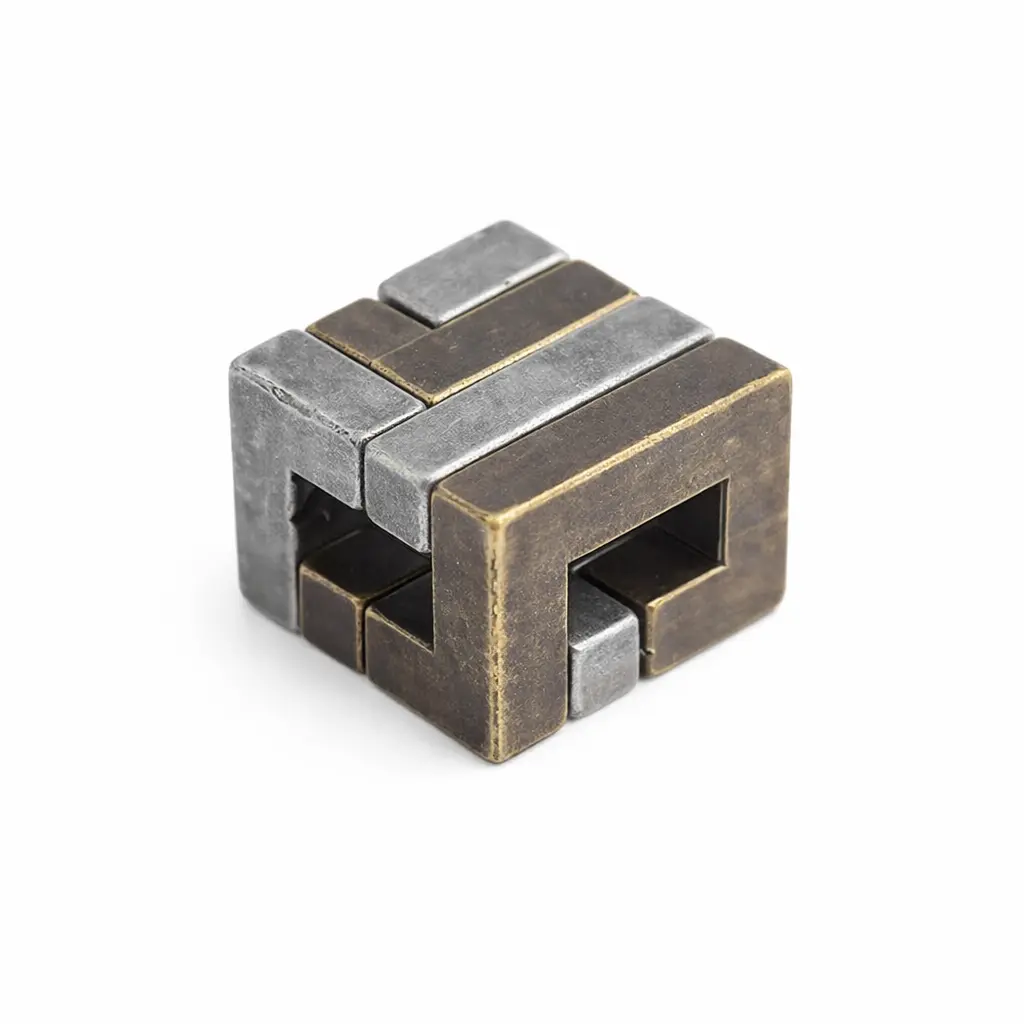
Cast Coil Pocket Puzzle — $18.99
A short note on Hanayama names. Several shapes the Hanayama line is known for — Cast Amour, Cast Heart, Cast Vortex, Cast Loop, Cast Key, Cast Trinity — are referenced across retailer catalogs as named designs in the cast puzzle category. The Tea-Sip roster above maps to the same mechanism family (disentanglement and assembly, zinc alloy, satin finish, gift box) and covers the same sister-fit archetypes without the brand premium. For a structured Hanayama cast-puzzle buyers walkthrough that maps the same shapes against each other, the field notes in that guide break the Hanayama line down by what each design actually feels like in hand.
Action step: Narrow to two or three models from the table before reading the FAQ — one sentimental, one abstract, one creature or design-led — so the final pick is a single line item, not a comparison re-run.
05. Are Cast Metal Puzzles Worth the Money? Price, Quality, and Where to Buy
The table above gave you two or three finalists — now the real question is whether the price on the product page is justified, and whether a cast metal puzzle is materially different from a $5 wire puzzle on Amazon. It is, and the difference is visible on the box before you ever pick up the puzzle.
A cast metal puzzle in this category — whether Hanayama’s original line or the Tea-Sip cast roster — runs roughly $11.99 to $25.99. Retailer listings for the Hanayama Cast Vortex and Cast Loop establish a price floor near $14.99 for the standard cast design, confirmed across the Brilliant Puzzles catalog. Below that floor, you are usually looking at a wire-and-bent-steel puzzle rather than a cast zinc alloy body, and the giveaway is the box: cast puzzles ship with a solution leaflet, a fitted insert, and a finished satin or plated surface. Wire puzzles typically arrive loose in a poly bag with no instructions and no gift packaging.
Observable quality checks the buyer can apply on the product page or in hand:
- Material language. “Cast metal,” “zinc alloy,” or “cast brass” signals a molded body. “Bent steel wire” or “iron loop” signals a different mechanism family — still a valid puzzle, but not what most people picture when they say “cast metal puzzle.”
- Finish. A satin or plated finish holds up to being handled and set on a desk. A raw wire finish scuffs and can catch on fabric.
- Packaging. A solution leaflet inside the box means the recipient can reset the puzzle if they get stuck. No leaflet means you may end up solving it for her or watching it gather dust.
- Weight and balance. Cast puzzles have a heft that suggests “object,” not “trinket.” Wire puzzles are lighter because they are mostly empty space.
On sellers, reputable cast metal puzzle retailers in the U.S. include Brilliant Puzzles, Kubiya Games, Solve It, and Tea-Sip directly — each carries the same manufacturer-licensed cast shapes under different names. A scout’s guide to trusted USA retailers for cast metal puzzles maps the same landscape in more detail if you want to compare. The verification step is the same for any of them: confirm a solution leaflet is included in the product photos, and check the return policy in case the difficulty level does not match the recipient. Hanayama’s official line is also available through Amazon, where multiple sellers carry the line; buying direct from Japan is optional and not required to receive a genuine product. Confirm the seller and product listing details before ordering.
Skip if your budget is under $10 or your sister would rather have a one-time novelty than a lasting desk object. For everyone else, the price floor is a fair trade for a puzzle she can keep, reset, and hand back to you in six months.
Action step: Before clicking buy, confirm the product page shows a solution leaflet and a fitted gift box — those two items are what separate a lasting cast puzzle from a $5 wire alternative.
Frequently Asked Questions
A cast metal puzzle is a confident sister gift when the recipient enjoys tactile challenges and you match difficulty to her puzzling experience — start with a fast-solve (1–5 minute) level for casual gifters and step up to a longer assembly puzzle only for committed hobbyists. The questions below cover the specifics most buyers ask before clicking buy, building on the price and retailer notes in the previous section.
What difficulty should a first-time sister puzzler start with?
A beginner range works for most adult women who enjoy crosswords, sudoku, or escape rooms but do not collect puzzles. The Cast Hook Metal Brain Teaser sits in that fast-solve bracket and works as a one-evening introduction without frustration. Check the product page for a stated solve-time estimate before ordering.
What if my sister is not a hardcore puzzler?
A compact, themed cast puzzle still works as a keepsake even if she never solves it — many owners keep them as desk objects. The Cast Keyhole Gold & Silver reads as jewelry-adjacent, and the Metal Crab Puzzle Cast Brain Teaser with Gold Ring doubles as a bag charm. Pick the shape she would display, not just the one she would finish.
How long does a beginner-level cast puzzle take?
Entry-level cast puzzles typically solve in 1–10 minutes for an attentive adult. Mid-range puzzles run 30 minutes to a few hours, and high-difficulty assembly shapes like the Cast Enigma or Trinity can take days. If timing matters, look for a solve-time line on the product page or ask the seller before buying.
Is a cast metal puzzle a good desk fidget?
Yes, in the sense of a screen-free fidget toy object. The weight of zinc alloy and the satin finish of the Cast Coil Pocket Puzzle make it satisfying to turn over in hand. Skip this category if you want a silent spinner — moving parts make a soft click.
What is the difference between a licensed cast puzzle and a cheap wire puzzle?
Material, mechanism precision, and included solution leaflet. A licensed cast puzzle arrives with a fitted gift box and a printed solution, which a generic wire puzzle usually does not. Verify the listing shows both before checkout.
Action step: Start with the Cast Hook Metal Brain Teaser for a sister new to cast puzzles, then browse the full metal puzzles collection if you want a harder solve or a themed shape.
Where to Start
If the recipient and occasion checks above match, start with Cast Hook Metal Brain Teaser. Check the current product page for the specifications that matter to your choice.
Still comparing options? Use the matching Tea-Sip collection to compare the same decision criteria, rather than restarting the search from scratch.
Sources and verification
- Product details and current specifications: Tea-Sip product page
Last updated: August 12, 2026