Quick Answer: Cast Metal Puzzle Gift for Teen Boy: How to Match Difficulty and Style
Pick a beginner-rated cast metal puzzle ($13–$17) for a first-time teen solver. Step up to a level 3 or 4 piece if he’s already watched YouTube walkthroughs. The mechanism matters too — interlocking cast pieces display better than wire disentanglement sets.
Four checks before you buy:
- Difficulty level — beginner for first-timers, mid for walkthrough-watchers. Hanayama’s six-level Mensa-rated scale is the industry reference.
- Mechanism type — interlocking cast pieces display better; wire sets are pocketable but rarely desk-worthy.
- Material feel — solid cast alloy beats hollow stamped steel.
- The desk test — if it doesn’t earn shelf space, it ends up in a drawer.
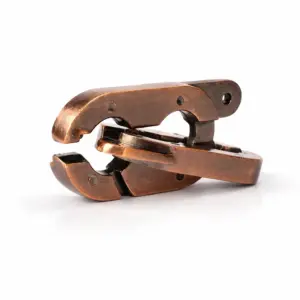
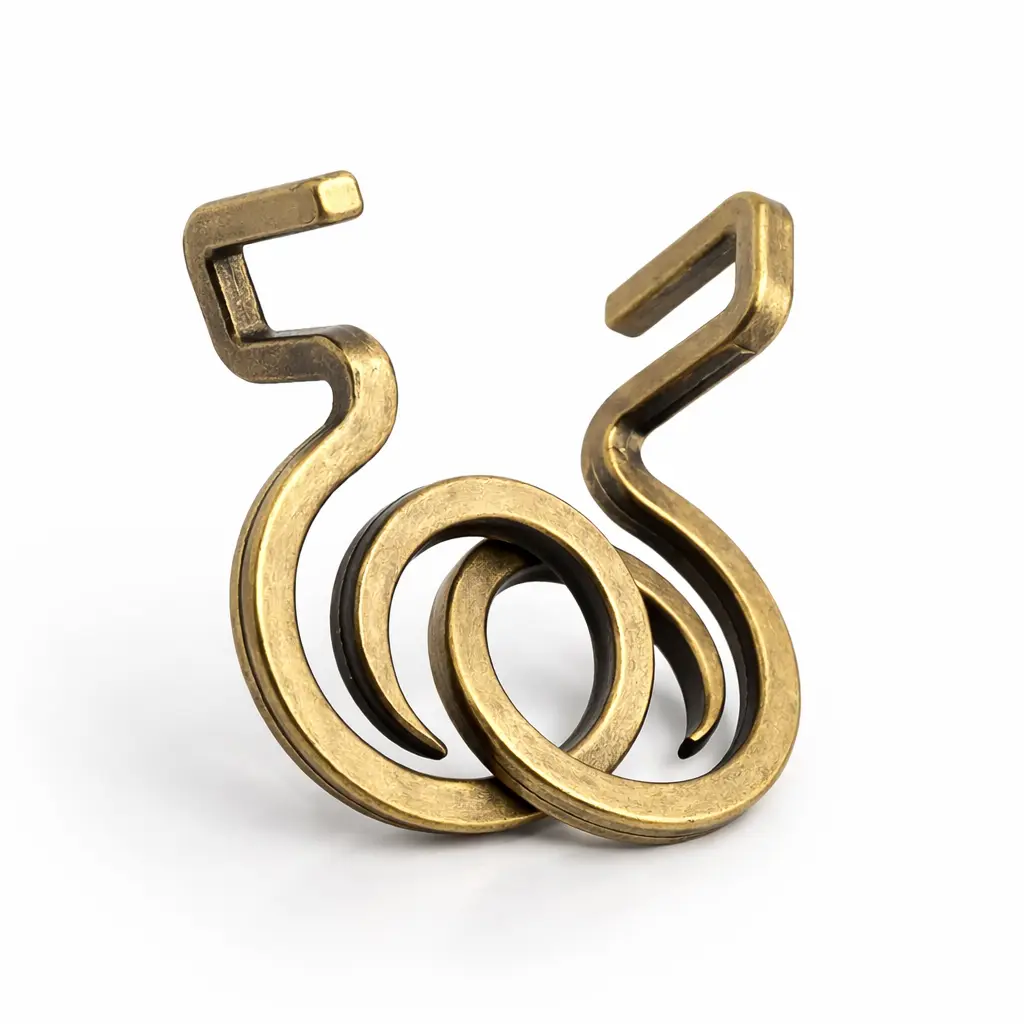
The dominant scenario is a teen who has never solved one. Top starting pick: the Cast Hook Metal Brain Teaser — a compact interlocking cast brain teaser at $13.99.
Decision Table: Mechanism × Difficulty × Price
| Mechanism | Best for | Difficulty range | Typical price band | Pocket / Desk |
|---|---|---|---|---|
| Wire / coil disentanglement | Fidget use, pocket carry | Easy–mid | $17–$26 | |
| Interlocking cast pieces | Display + repeat solve | Level 1–4 | $13–$15 | Both |
| Puzzle box / lock | Centerpiece, one-time solve | Variable | $10–$20 | Desk only |
The Cast Hook Metal Brain Teaser sits in the interlocking column at $13.99 — a first-puzzle entry point with enough mechanism to earn desk space. Not a toy. A puzzle.
01. What “Cast Metal Puzzle” Actually Means (And the Three Mechanism Types)
Pick a mechanism by where the puzzle will live. A pocket-carried disentanglement gets tossed in a backpack; a cast metal interlocking piece earns desk space; a puzzle box stays on a shelf until someone wants a reveal. The category is broader than the Amazon listings suggest, and the mechanism — not the brand — predicts how a teen boy will actually use the gift.
A cast metal puzzle is a mechanical puzzle — a puzzle whose pieces are physical objects — produced by pouring molten metal into a mold. That casting step is what separates a $15 puzzle from a $3 wire-and-bead toy. Cast pieces have weight, defined edges, and a finish that holds up to handling. Wire puzzles are also mechanical puzzles, but the steel is bent and welded rather than cast. Both belong to the same family, but they solve differently and they live in different places.
Three mechanism types dominate what a gift buyer will actually see.
Wire and coil disentanglement. A bent metal shape — often a hooked hook, a chain, or a coiled loop — that the solver must separate and reassemble. This is the format sold in 6-packs and 12-packs at low prices, and the bent-wire mechanism works well as a pocket fidget item between tasks. The mechanism is repeatable (solve it, scramble it, hand it to a friend), which makes it a pocket toy rather than a one-time challenge. Wire puzzles survive a backpack because they have no small parts to lose. They do not display well, because they look identical to a tangle of hardware until you know what you are looking at.
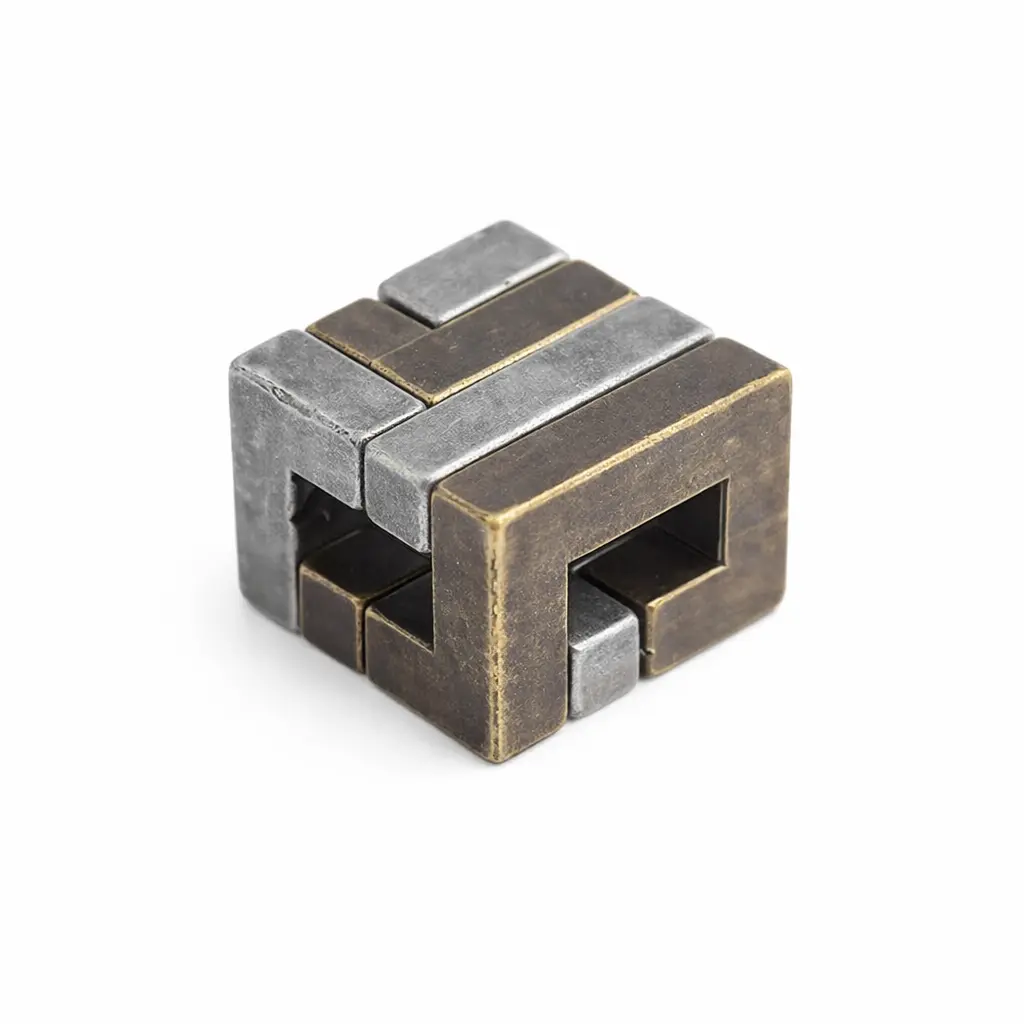
Interlocking cast pieces. Two or more solid metal pieces that fit together with no visible fasteners. Hanayama built its reputation here, and specialty retailers like Solve It and Kubiya Games stock them as the “finished” version of a metal puzzle — Mensa-rated, cast metal, with smooth release motion. The moment the pieces separate is the payoff. These puzzles double as desk objects because the weight, finish, and shape look intentional on a shelf rather than like a toy.
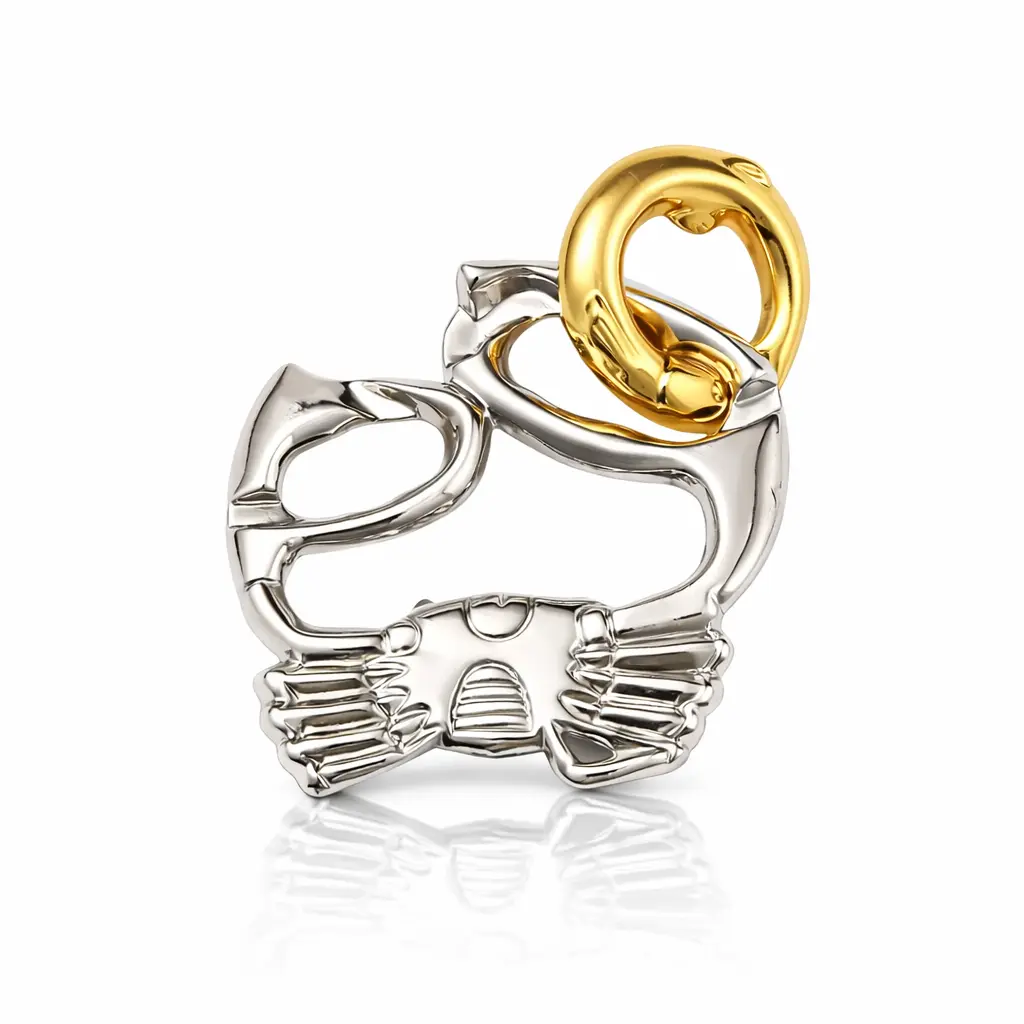
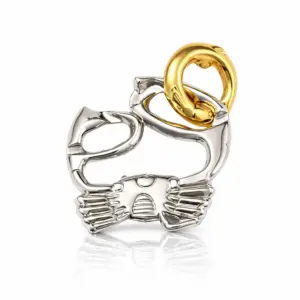
The crab-shaped cast piece above earns the desk-display label at a stocking-stuffer price. A teen picks it up, works the gold ring free, and drops the crab on his desk where it sits looking like an object, not a toy. Check the mechanism on the product page before you commit: if the photos show two or more separate cast metal pieces that lock together, it is an interlocking puzzle and it will display.
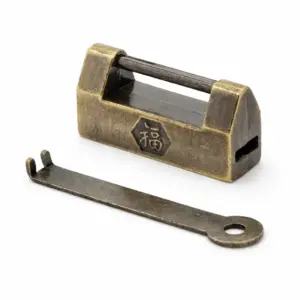
Puzzle boxes and lock mechanisms. A container that opens only after a sequence of moves. This format has its own collecting community and its own price ceiling, and a wooden-and-metal box can run from $40 to several hundred dollars. For a teen boy’s first metal puzzle, a box is usually the wrong call — it solves once, then sits.
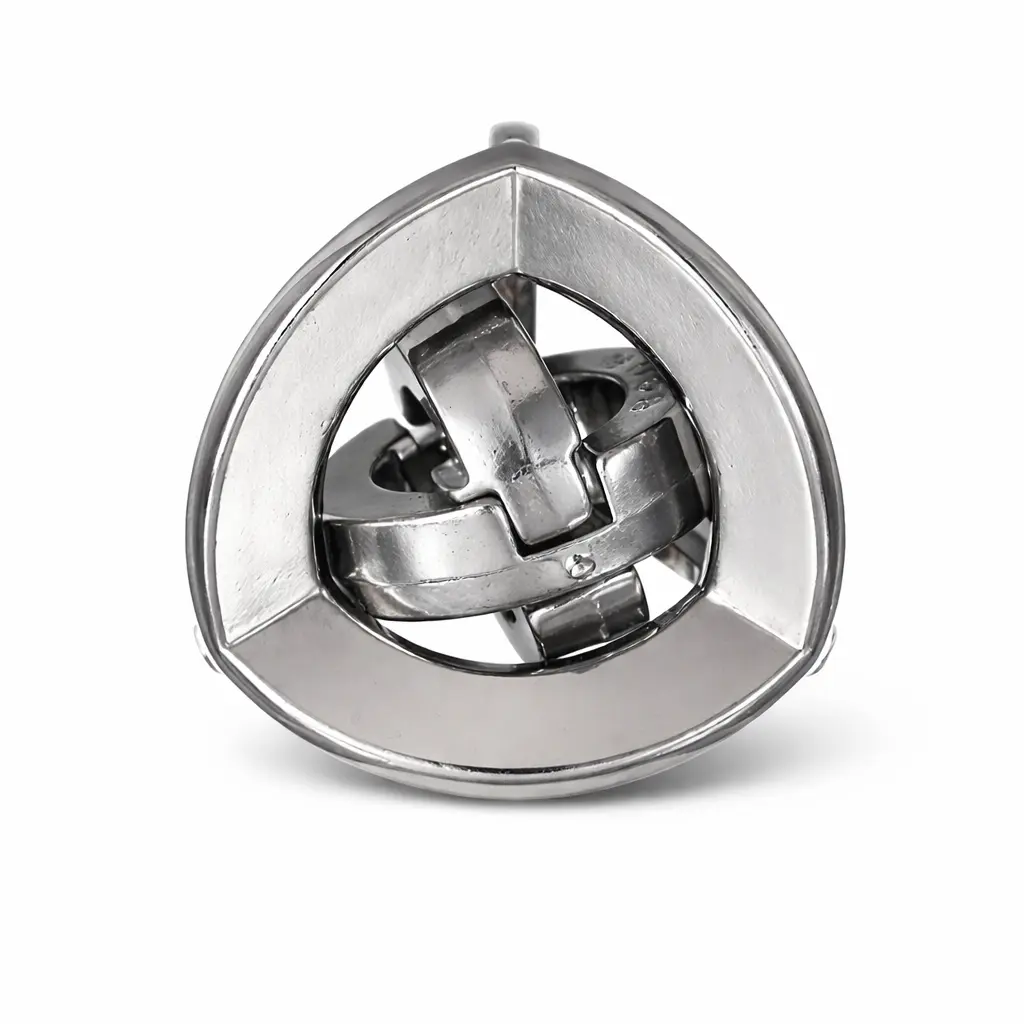
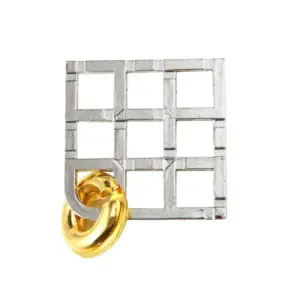
The decision rule that survives contact with a real teen: if you want the object to leave the box and enter daily use, pick a small interlocking cast piece. If you want a disentanglement the teen can toss in a backpack, pick a wire format. If you want a one-sitting centerpiece he will talk about, pick a box. For most teen-boy gifts, the middle option — a cast interlocking piece around $13–$15 — is the right call. The orbit ring above is a clean example: a single mechanism, a clear solve, a shape that holds a desk.
For a closer look at how different interlocking cast metal brain teasers stack up on repeat-solve quality and display feel, the interlocking cast metal brain teasers ranked breakdown covers the mechanism differences in more detail. Not a toy. A puzzle.
02. How Hanayama’s 1–6 Difficulty Levels Map to a Teen Boy’s Experience
Match the Hanayama level to the teen’s puzzle history, not his age. For a first-time solver, start at level 1 or 2. For a teen who has already watched YouTube walkthroughs, move up to level 3. The level number is the single biggest factor in whether the gift gets solved or sits in a drawer.
The Hanayama 1–6 scale is a real rating system, not marketing. Specialty retailer Solve It! describes Hanayama cast puzzles as “some of the world’s finest brain teasers” with “six challenging, Mensa-rated levels of difficulty.” Each level adds a layer of mechanical subtlety — hidden sequences, counterintuitive moves, tight tolerances. A level 1 might take 10 minutes. A level 6 sits at the top of the Mensa-rated scale and is built for the most experienced solvers. The level number is printed on every box, alongside the age label. Read both before you buy.
Here is how to map each level to a teen-boy profile:
Level 1–2: First-time solver. This is the safe pick for a 12-, 13-, or 14-year-old who has never held a cast puzzle. The solve is achievable in one sitting, and the “aha” moment lands. The Cast Hook Metal Brain Teaser at $13.99 fits this bracket: compact, tactile, and forgiving on first attempts. Level 2 nudges up in difficulty but stays inside the same one-sitting zone.
Level 3: Watched-walkthroughs solver. This is the BePuzzled-branded tier, labeled “for kids and adults ages 12 and up” — meaning a teen can handle it, but expect some friction. Good for a 14- to 16-year-old who has seen YouTube solutions and wants to earn his own. The solve may take an evening or a weekend, not a coffee break.
Level 4: YouTube-obsessed solver. For a teen who actively hunts puzzle content. The mechanism gets deliberately tricky, and the solve path often requires a specific sequence. He will finish it — just not in one afternoon, and probably not without rereading the puzzle three times.
Level 5–6: Parent-as-helper or adult. Skip these for a teen gift. These puzzles frustrate experienced adult solvers and will end up in a drawer, not on a desk. A gift the recipient cannot solve is not a gift. The only exception: a teen who already collects cast puzzles and has specifically asked for a harder one.
The age-rating trap catches most parents. A Hanayama labeled “ages 12 and up” does not mean a 12-year-old can solve the level 5 version of that same brand. The 12+ label refers to safety — no choking hazards, no sharp edges — not to difficulty. For a 13-year-old, a level 1 or 2 is appropriate. A level 3 is a stretch gift that may require a sibling or parent to share the solve. A level 4 or higher belongs to a teen with a track record of finishing harder puzzles.
Concrete check: Before you buy, ask whether the teen has solved any cast metal puzzle before. If no, pick level 1 or 2. If yes, level 3. If he runs a puzzle YouTube channel, level 4. The level number is printed on every Hanayama box — read it, not the age label.
For a fuller breakdown of what each level feels like in the hand, the Hanayama difficulty levels decoded guide maps each tier to time-to-solve and frustration profile. A level 1 gift says “I picked this because you will finish it.” That is the right message for a first-time solver.
03. The “Leave-It-on-the-Desk” Test: Will the Puzzle Get Used or Forgotten?
Difficulty solved. Mechanism understood. Now the question that decides whether a cast metal puzzle lives on a shelf or dies in a drawer: will a teen boy actually pick it up again after the first solve? Most parents never ask this, then wonder six months later why the gift never moved from the gift bag. The audit below is a four-check filter you can run on any product photo or in-store before paying.
The rule: A cast metal puzzle earns desk space when it is small enough to live in a hand, heavy enough to feel like an object, finished enough to look intentional on a shelf, and repeatable enough to solve more than once. Miss any one of those four and the puzzle slides toward the drawer.
Check 1: Size — pocket carry beats display only
A teen will fiddle with a puzzle that fits in a hand. He will leave a palm-filling display piece in a box. The sweet spot sits between roughly 1.5 and 3 inches — small enough for a backpack pocket, large enough to manipulate with two hands. Anything bigger reads as “desk ornament” and competes with every other thing on that desk. A pocket-size cast coil or interlocking piece disappears into a jacket and reappears on a bus ride, between classes, during a TV commercial. A display-only puzzle stays in its packaging.
Check 2: Weight — substantial, not heavy
Cast metal should feel like cast metal — solid, cool, a little hefty in the palm. Too light and it reads as cheap stamped tin, even if the mechanism works. Too heavy and it stops being pocket carry. The reference point: a well-made cast puzzle has a satisfying clink when you set it on a wood desk. That sound signals “object” to a teen, not “toy.”
Check 3: Finish — the “leave it visible” test
Matte cast metal with a clean patina or a two-tone gold-and-silver look survives being out in the open. Shiny chrome reads as keychain. Painted finishes chip. The finish is what a teen’s eye lands on when he clears his desk at the end of a school year. If the puzzle still looks good in May, it has a future. If it looks worn by February, it gets buried.
Check 4: Repeatability — the solve-twice rule
Wire disentanglement puzzles reset in seconds and beg for another attempt. Interlocking cast pieces take longer to reset but offer a “click” moment when pieces separate. Both work. What fails is a one-shot mechanism: a puzzle that, once solved, just sits there as a finished object. The teen will solve it once, photograph it, and never return. Look for a mechanism that invites a second run within five minutes of the first solve.
The buying move: Filter any product page to a pocket-sized cast puzzle with a repeatable mechanism and a finish that survives open display. If it passes all four checks, it earns its place on the desk — and your gift stops being a drawer casualty. Browse the full cast metal puzzle collection to run the audit against current stock.
04. Single Premium Puzzle vs. Multi-Pack Wire Set: A Real Trade-Off, Not a SKU List
Buy one well-made cast puzzle when the teen will display it on a shelf or desk. Buy a multi-pack wire set when he’ll toss it in a backpack and want quick options between classes. The single puzzle earns its space through mechanism depth and finish quality. The multi-pack delivers variety and pocket-portability at the cost of display appeal.
That desk audit from the last section is the dividing line. A premium interlocking cast piece is a leave-it-on-the-desk object. It has weight, a finish that catches light, and a mechanism that rewards a second attempt weeks later. A wire disentanglement set, especially the 9- or 12-packs common on Amazon for $15–$25, is a pocket item — light, repetitive, and best when a teen has five spare minutes. Both formats work. They serve different habits.
The deeper question parents ask: what’s the actual difference between a Hanayama-style cast puzzle and the cheaper wire sets at a similar price? The answer is material and mechanism. A quality cast puzzle is die-cast metal with a precision-machined interlocking or rotational mechanism — the puzzle lives in the geometry of the pieces themselves. Wire sets rely on bending a rigid wire through a frame; once a teen watches one YouTube walkthrough, he’s seen the trick. A cast puzzle hides its solution in the relationship between pieces, which makes it harder to spoil and easier to revisit. A side-by-side look at how those differences play out is in this Hanayama vs generic cast puzzles comparison — a useful read before you commit to a single-purchase path. Hanayama cast puzzles are Mensa-rated across six difficulty levels, while most Amazon wire sets carry no standardized rating — a real gap in challenge depth, not just branding.
For a teen who has never solved a cast puzzle, the Cast Hook Metal Brain Teaser at $13.99 is the right single-puzzle starting point. It’s compact enough for a backpack, the mechanism is repeatable, and the finish holds up to open display — passing all four checks from the last section.
If you’d rather spread the same $15–$25 across multiple smaller puzzles for variety, a multi-pack serves a different purpose: stocking stuffers, party favors, or a “puzzle of the week” rotation. A 5 Piece Cast Spiral Metal Puzzle sits between the two extremes — still cast metal with a real mechanism rather than disposable wire.
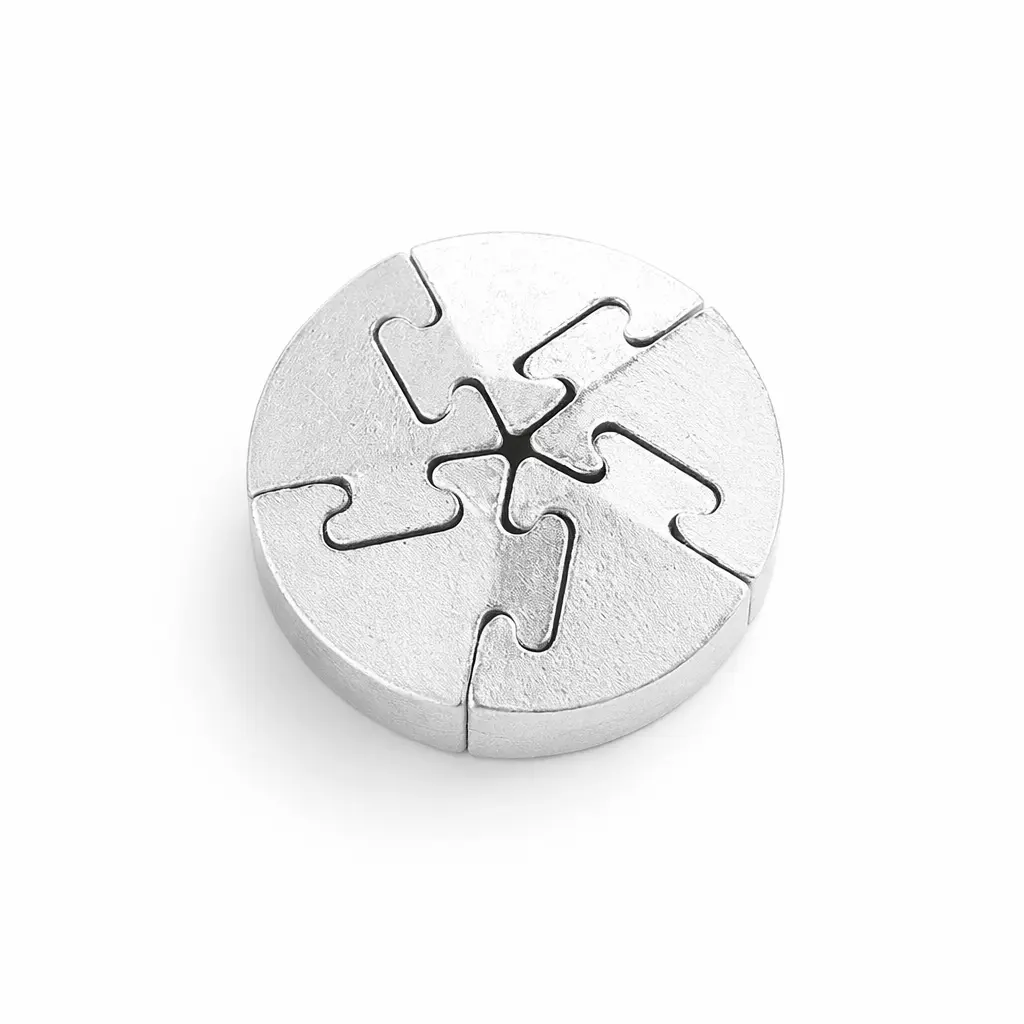
The trade-off in one line: depth and display value (single) versus variety and portability (multi-pack). Neither is wrong. The match is the teen’s actual habit — desk-sitter or pocket-carrier.
The buying move: If the teen has solved zero cast puzzles, buy one quality interlocking piece. If he’s already a fan of wire puzzles, a multi-pack adds range. Either way, check the product page for current price and difficulty fit.
05. Stocking Stuffer, Birthday Centerpiece, or Just Because: Matching Puzzle to Occasion and Age
Once you’ve matched the habit — desk-sitter or pocket-carrier — the next filter is occasion and age. A pocketable $14–$19 cast disentanglement piece works for a stocking stuffer; a $20–$26 cast puzzle with a display-worthy shape works for a birthday centerpiece. A “just because” gift lands in the same $14–$22 band but should match a mechanism the teen hasn’t tried yet.
Stocking stuffer. The wrapping paper gets torn open in three seconds and the puzzle hits the floor. It needs to survive a drop and a backpack, cost under $20, and disappear into a pocket. Cast metal handles the durability check; a compact form factor handles the rest. The Cast Hook Metal Brain Teaser at $13.99 fits that slot directly — small, cast, and a mechanism most teens haven’t held before. For a teen who already owns one, the Cast Coil Pocket Puzzle at $18.99 adds a different shape without breaking the budget. For a wider look at compact picks that survive the stocking, these metal puzzle stocking stuffers have been tested for solve-time feel and pocket-ability.
Birthday centerpiece. The gift gets unwrapped slowly, passed around the table, then sat on a desk display. Spend the extra $5–$10 for a shape that holds visual weight — a triangle, a ring stack, a themed animal. The 5 Piece Cast Spiral Metal Puzzle at $16.99 reads as a set without crossing into “impersonal gift box” territory. For a bigger milestone, the Cast Coil Triangle Puzzle at $25.99 sits flat on a shelf and looks deliberate.
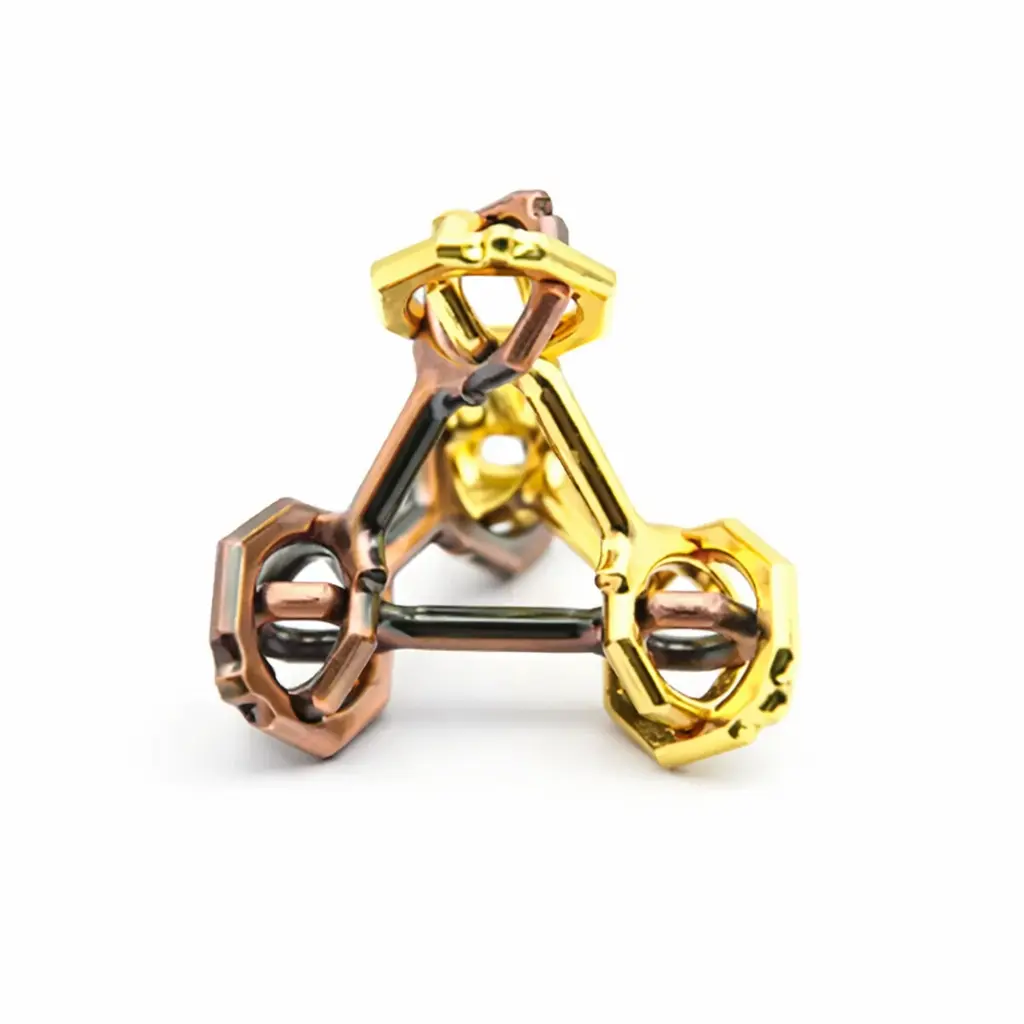
Just because. Same budget, different logic. The teen already has wire disentanglements, so give an interlocking cast piece. Or the reverse. The point is to rotate the mechanism, not repeat it. A small, low-friction “I saw this and thought of you” gift works best when it introduces one new variable — a different finish, a different motion — rather than another copy of what he already owns.
The age trap. “Ages 12 & Up” on cast metal puzzles refers to small parts safety, not solvability. A 13-year-old first-timer should land on beginner-level difficulty (Hanayama 1–2). A 14-year-old who’s seen a few YouTube walkthroughs can usually handle Hanayama 2–3. A 15- or 16-year-old who’s watched walkthroughs and tried a wire puzzle can step up to Hanayama 3–4. Levels are Mensa-rated, but the label is the floor, not the recommendation.
How much to spend. For a single cast piece: $14–$26. Below that, the finish and mechanism quality drop. Above that, you’re buying presentation, not puzzle. Check the product page for the current price before you commit — pricing shifts, and the listed number is the starting point.
The buying move. For a 13- or 14-year-old first-timer who needs a gift that works for any occasion, the Cast Hook Metal Brain Teaser at $13.99 is the top pick — cast, compact, and priced for repeat gifting across birthdays and stockings without crossing into “fragile display piece” territory.
Frequently Asked Questions
Once the difficulty and price band are set, the remaining questions come down to execution. Here are the ones a parent, relative, or family friend actually asks before clicking buy.
What does the Hanayama difficulty level actually mean?
Hanayama’s system runs 1 to 6, Mensa-rated, with each step adding a layer of hidden mechanism. Level 1 is a few minutes of fiddling. Level 6 is the highest Mensa-rated tier and is built for experienced solvers. The label is a solvability range, not a grade — a level 3 means a first-timer can finish it, not that they will in under a minute.
Are Hanayama puzzles too hard for a 13-year-old?
No, as long as you start at level 1 or 2. The “Ages 12 & Up” tag refers to small-parts safety, not skill. A 13-year-old first-timer finishes a level 1 in a sitting and feels competent. A level 4 handed to the same teen usually ends in a drawer.
Hanayama vs. cheap wire puzzles on Amazon — what’s the real difference?
Mechanism type and finish. Hanayama-style cast pieces are solid, weighted, and built to survive a backpack. Wire disentanglement sets are lighter, cheaper, and usually solve in seconds once you spot the trick. Neither is “better” — they serve different goals. Pick cast for a display-worthy gift. Pick wire for a stocking stuffer that disappears fast.
Will a cast metal puzzle just sit on a shelf?
It sits on a shelf if it’s the wrong difficulty or the wrong mechanism. A compact cast piece with a satisfying motion gets picked up. A 32-piece wire set gets dumped in a bag. The leave-it-on-the-desk test is the single best predictor.
How much should I spend?
For a single cast piece, $14 to $26 covers the quality range. Below that, the mechanism starts to feel loose. Above that, you are paying for packaging. Check the product page for the current price before you commit.
Are cast metal puzzles durable?
Yes — the cast zinc alloy used in pieces like the Cast Hook Metal Brain Teaser holds up to drops, pocket carry, and the occasional toss across a bedroom. The risk is losing small parts, not breakage.
Next step: Pick one mechanism, one difficulty, and one occasion. The Cast Hook Metal Brain Teaser at $13.99 fits first-timers and repeat gifting. If the teen already owns a hook-style piece, the Metal Orbit Ring Cast Puzzle at $14.99 offers a different motion in the same price range.
Where to Start
If the recipient and occasion checks above match, start with Cast Hook Metal Brain Teaser. Check the current product page for the specifications that matter to your choice.
Still comparing options? Use the matching Tea-Sip collection to compare the same decision criteria, rather than restarting the search from scratch.
Sources and verification
- Product details and current specifications: Tea-Sip product page
Last updated: August 17, 2026