Quick Answer: Cast Metal Puzzle Review: Which Hanayama Level Should You Buy First?
A cast metal puzzle — almost always a Hanayama Cast model — is worth buying for adults who want a compact, screen-free challenge that also sits nicely on a desk. The right first pick depends on three things: experience with mechanical puzzles, frustration tolerance, and whether the mechanism or the presentation box matters more. Here is how to read any cast puzzle before spending the money.
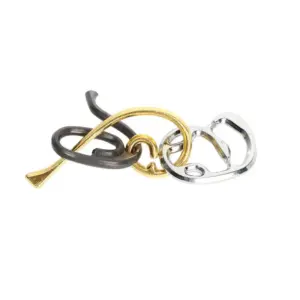
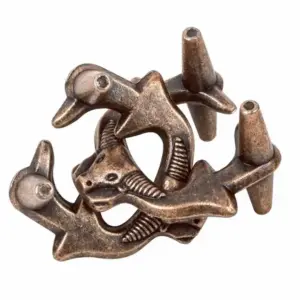
The Cast Hook Metal Brain Teaser is the cleanest starting point for most first-time buyers. Its hook-and-frame design gives the solver a visible target — free the inner piece and return it to its starting position — which is the kind of clear goal a first-timer needs before graduating to a multi-axis Level 5 or 6 model.
Before you click buy, run this quick decision check:
| Your situation | Start at | What to check on the box |
|---|---|---|
| First cast puzzle ever, gift for an adult | Cast Hook or any single-axis entry design | Piece symmetry, visible seam line, no solution print on packaging |
| Solved a few beginner metal puzzles | Multi-axis mid-range model | More than one moving direction, modest plating, no print spoiler |
| Experienced puzzler or collector | Counterintuitive Level 5–6 mechanism | Hidden solution, layered piece geometry, heavier weight in hand |
The single biggest reason new buyers regret a cast puzzle purchase is skipping the “read the box” step. Look for the rated difficulty number and the mechanism type printed on the packaging. For a full Cast Loop to Cast Rotor progression across all six levels, see the complete Hanayama cast puzzle buyer’s guide.
01. What a Cast Metal Puzzle Is and Why Hanayama Dominates the Category
A cast metal puzzle is a compact mechanical puzzle, usually small enough to hold between thumb and forefinger, machined from zinc, brass, or stainless steel into interlocking pieces that must be disassembled and then reassembled. The category covers two broad mechanism types: disentanglement puzzles, where a piece is freed from a frame along a specific path, and take-apart puzzles, where two or more joined pieces must be separated and rebuilt. According to Art of Play, Hanayama is “world-famous for its cast metal mechanical puzzles, which are small enough to fit in your pocket,” and the goal is “simple: first, disassemble the parts, then reassemble them to the starting position.” That pocket-friendly scale, combined with a uniform six-step difficulty scale, is the main reason Hanayama sets the standard other cast metal makers are measured against.
The reason Hanayama dominates is less about marketing than about three observable markers that show up the moment you unbox any Cast-series model. First, plating: the finish across the visible piece should read as even, without obvious patchy zones between the two halves of a piece or across curved surfaces. Second, the seam line — the thin cast parting line running along the piece’s edge — should sit as flush as possible with the surrounding metal rather than forming a raised ridge. Third, the weight in the hand should feel solid for the size. These three signals — plating, seam, weight — are the cheapest, fastest quality check a buyer can run without opening the packaging.
The second check is on the box itself, and this is where the “read the box” protocol from the decision table above pays off. A genuine Hanayama Cast puzzle box prints four things clearly: the word “Hanayama” on the side or back, the model name (Cast Coil, Cast Keyhole, Cast Galaxy, and so on), a numeric difficulty rating from 1 to 6 inside a small star or circle icon, and a short designer credit. Counterfeit or unbranded metal puzzles often omit the difficulty number entirely or print it in a different style from the rest of the text, which is a strong tell that the puzzle is either a copy or a private-label design sold by another brand. The 1–6 level print is also a quick proxy for how the puzzle will feel: Level 1–2 models tend to have a single visible axis of movement, while Level 5–6 designs usually involve two or more axes that are not obvious from the outside.
For a buyer evaluating any cast metal puzzle, the practical sequence is: confirm the Hanayama markings and difficulty number on the box, then inspect the seam line and plating on the visible piece, then feel the weight. If all three pass, the model is almost certainly a genuine Hanayama and will behave like the Cast-series puzzles the rest of this guide describes.
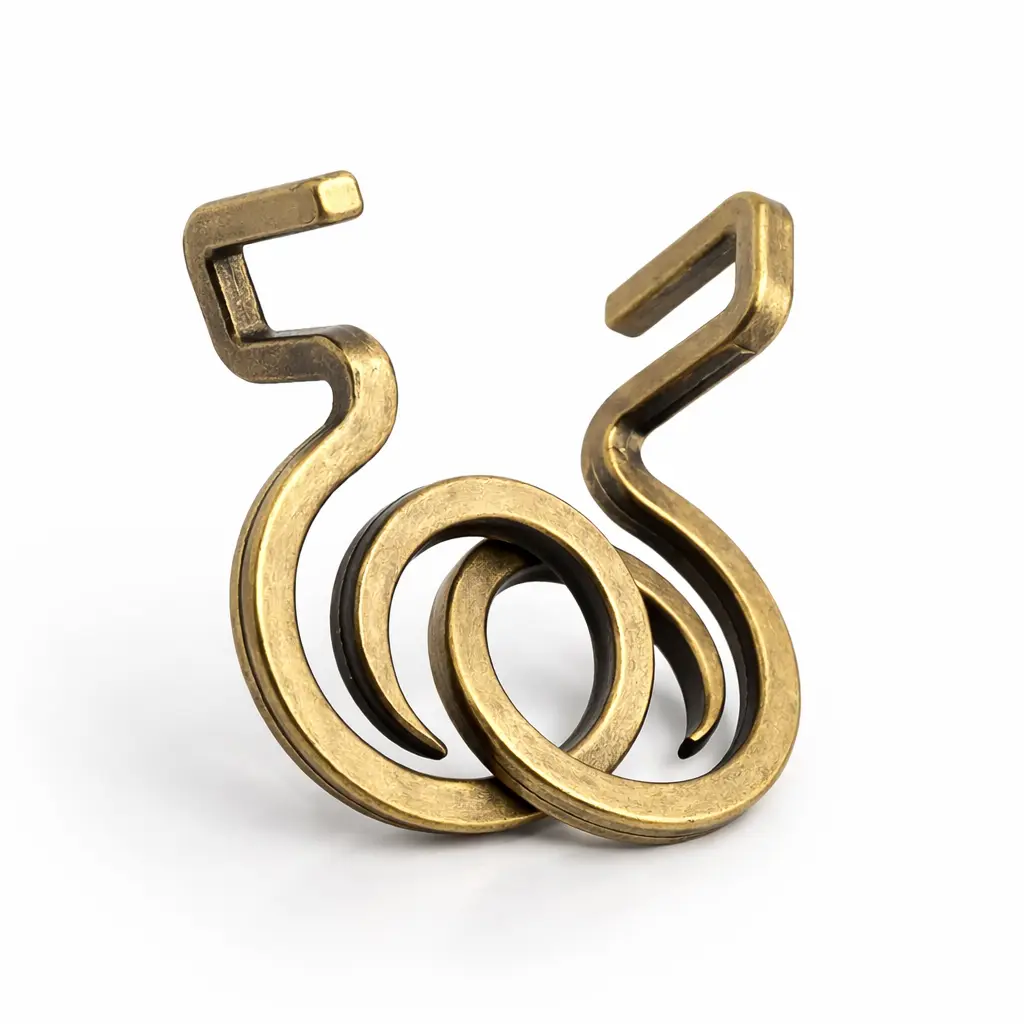
Cast Coil Pocket Puzzle — $18.99
The Cast Coil Pocket Puzzle is a clean example of what the Hanayama standard looks like in a mid-range design: two coiled halves that lock into a compact pocket-sized form, with a uniform finish and a clearly printed difficulty rating on the box. For readers who want a more detailed knockoff-spotting walkthrough, the five in-hand tests to spot a Hanayama knockoff break each visual and tactile check into a separate step.
Once the “is this real Hanayama?” question is settled, the next decision is which level to start at, which is where the 1–6 difficulty scale starts to matter more than the brand.
02. How the Hanayama 1–6 Difficulty Scale Actually Behaves in the Hand
Choose Levels 1–2 for a first-time buy, a desk-toy audience, or anyone with low frustration tolerance; choose Levels 3–4 once a few Cast puzzles have been solved and the mechanism logic clicks; reserve Levels 5–6 for committed hobbyists who enjoy multi-day challenges. The scale is real, but it measures mechanism complexity more than raw solve time.
The single most useful framework for predicting how a cast metal puzzle will actually feel is single-axis versus multi-axis movement. A single-axis puzzle moves along one plane — the pieces slide, rotate, or tilt in a controlled direction, and the next move is usually visible once you find the first. Hanayama’s Level 1 and Level 2 designs, including the well-known Cast Loop and Cast O’Gear, behave this way: the piece feels forgiving, the seam line stays predictable, and a patient first-timer can finish one in a sitting. A multi-axis puzzle rotates on two or more planes at once, so every move can lock the mechanism further or open a new path. The Cast Keyhole, for instance, requires a counterintuitive, multi-axis maneuver where the pieces have to be coaxed through a route that feels almost like a violation of the metal. Level 5 and Level 6 designs — Cast Enigma, Cast Vortex, Cast Hourglass, and Cast Rotor — all behave this way, which is why owner feedback consistently puts them in the same difficulty bracket despite very different shapes.
A concrete progression that builds skill rather than just accumulating boxes looks like this. Start with a Cast Loop or Cast Marble for the single-axis feel and a clean first solve. Move to a Cast O’Gear or Cast Slider for symmetric sliding logic and tighter tolerances. Step up to a Cast Box or Cast Keyhole for the first taste of multi-axis thinking — here the seam line stops being a reliable guide and the solution depends on feeling out hidden degrees of freedom. Graduate to Cast Spiral, Cast Enigma, or Cast Vortex for full multi-axis behavior and repeatable disassembly. The terminal rung of the official line, Cast Rotor, is described in r/mechanicalpuzzles threads as sitting right alongside Vortex and Hourglass, with multiple move types competing for attention and a solution that can take weeks for an experienced solver. Treat the printed “Level 6” as a reliable signal that the puzzle is multi-axis, and treat the listed difficulty as a floor, not a ceiling.
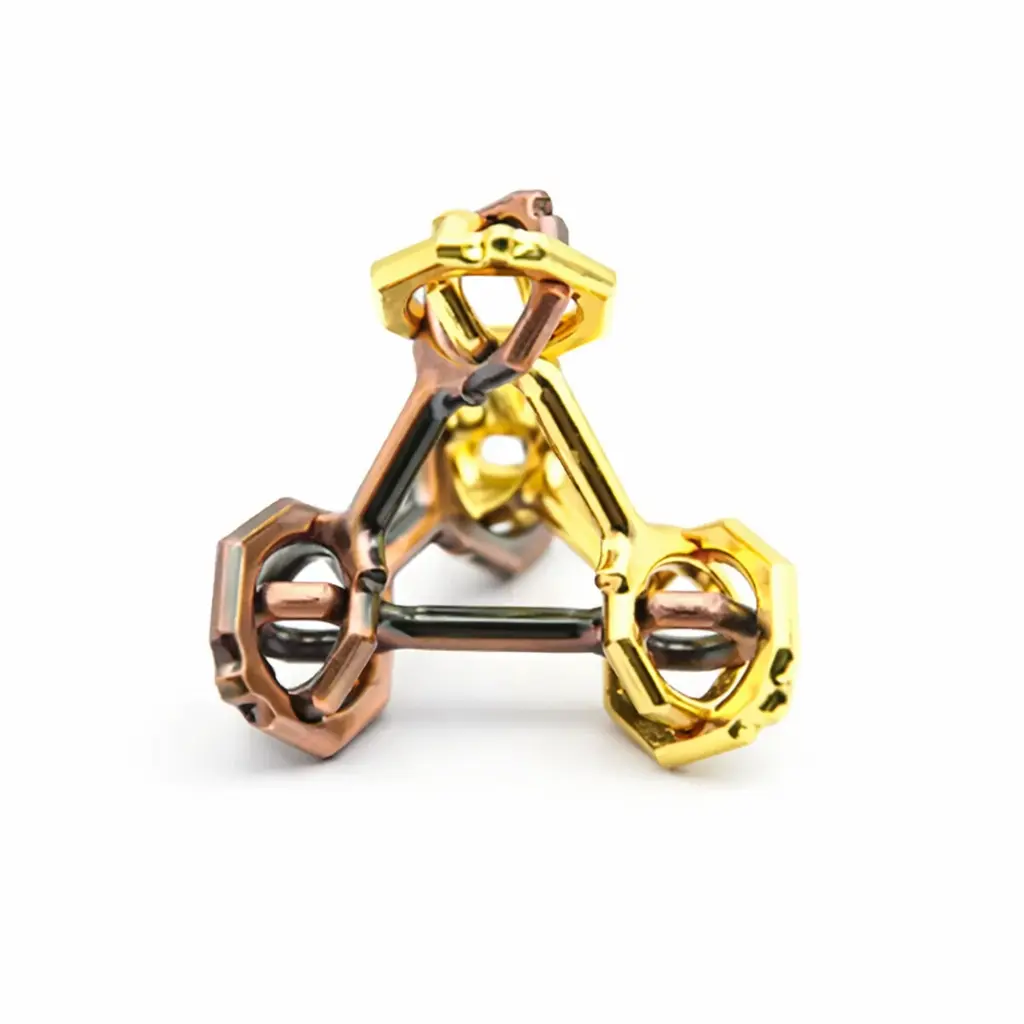
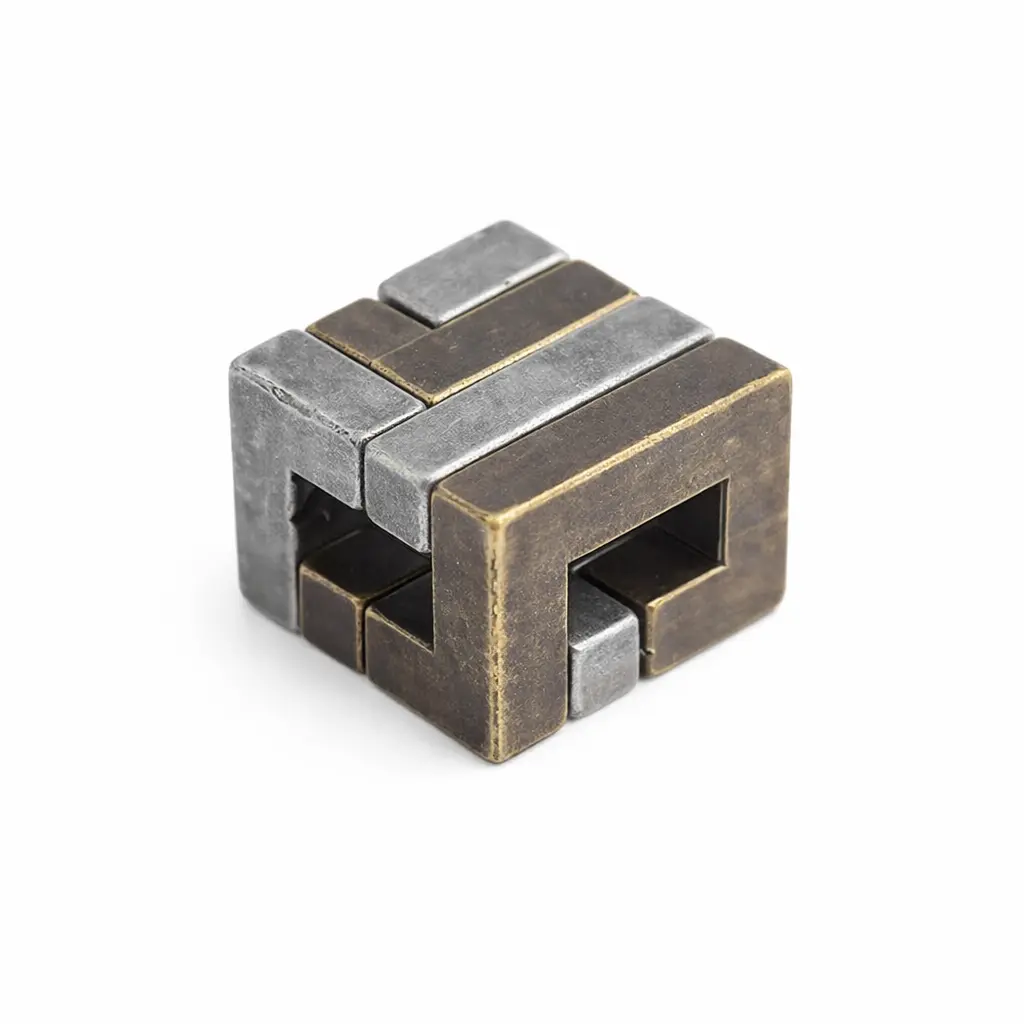
Cast Coil Triangle Puzzle — $25.99
A few caveats worth carrying into the buying decision. The 1–6 rating is calibrated against other Cast puzzles, not against all metal puzzles, so a Level 4 Cast can occasionally frustrate harder than a Level 5 with a more familiar mechanism. A few designs — notably Cast Loop, Cast Marble, and Cast Spiral — reward repeat handling because the disassembly and reassembly motions stay satisfying long after the “aha” moment. Most others feel anticlimactic once solved and live best as a solved display piece. For readers who want the full reasoning behind these bracket assignments, the breakdown of why a level 4 cast puzzle can be harder than a level 6 walks through three specific cases where the printed rating undersells the actual challenge.
Before picking a level, check one thing on the box: whether the printed difficulty matches the single-axis or multi-axis description above. If the listing says “Level 1” but the piece visibly rotates on more than one plane, the rating is being applied loosely and the solve will feel harder than the number suggests.
03. Best Hanayama Cast Puzzles by Skill Level: A Decision Table for First-Time Buyers
Pick the Hanayama level that matches your tolerance for being stuck, not the level that flatters your self-image. The 1–6 scale is calibrated against other Cast puzzles, so a number is only as reliable as the mechanism behind it. The right first puzzle fits the time and patience you actually have, not the one with the lowest number or the most eye-catching photo.
| Hanayama level | Model | Mechanism in plain language | What to check (solve time) | What to check (price) |
|---|---|---|---|---|
| Level 1 (entry) | Cast Loop | Two interlocking rings, single-axis rotation | Read owner-reported times on retail review pages | Check the current listing on your preferred retailer |
| Level 2 | Cast News | Two-piece take-apart with a paper-fold-inspired release | Look for first-solve anecdotes on Puzzle Master or similar | Verify the price on the product page before buying |
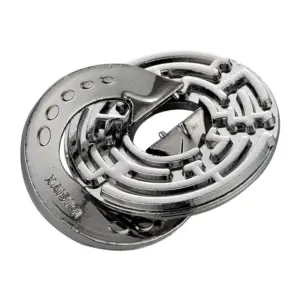
| Level 4 | Cast Keyhole | Two-piece multi-axis disentanglement maze with a long hidden path | Expect 20+ minutes; check reviewer notes | Compare across at least two retailers |
| Level 5 | Cast O’Gear | Gear-driven multi-axis rotation, multiple states to discover | Look for “weeks” or “gave up and came back” reports | Use the box rating, not a deal price, as your cue |
| Level 6 (advanced) | Cast Vortex | Tight tolerances, often described as Level 6 even when boxed lower | Expect a “come back to it” experience | Don’t buy on discount; a deal is not the difficulty |
| Level 6 (expert) | Cast Rotor | Multi-axis disentanglement with three or more distinct move types | Plan for repeated sittings; some owners shelve it for months | Verify it’s a current production model before paying a premium |
Solve time and price both vary by individual and retailer, so the table leaves those as “What to check” rather than committing to a number. Treat the level as one input among several. The mechanism description, the seam line you can see when you hold the piece, and at least one owner review are the other inputs that decide whether a Cast puzzle becomes a 10-minute coffee break or a month-long desk companion.
A few patterns are worth knowing before the box arrives. Many Cast puzzles feel anticlimactic once solved: the disassembly reveal is the payoff, and reassembly exists mostly so the piece can be returned to the gift box. Three designs resist that arc. Cast Keyhole, Cast Rotor, and Cast O’Gear all reward repeat handling because their mechanisms invite slow, deliberate motion long after the “aha” moment. The Keyhole’s multi-axis maze invites lingering exploration, the Rotor’s three move families each reveal a different facet of the solution, and the O’Gear’s gear-driven rotation encourages the same kind of fidgeting that draws people to cast metal puzzles in the first place.
For a first-time buyer who wants a compact, take-apart entry point, the Cast Hook Metal Brain Teaser is the natural starting point — its two-piece mechanism mirrors the Level 1–2 range of the Hanayama Cast series, and the price sits in the same bracket as the entry-level Hanayama models. It is the recommended buy from this article for anyone who has not solved a Cast puzzle before.
If the Keyhole-style multi-axis maze is what you’re after, the closest Tea-Sip equivalent in mechanism is:

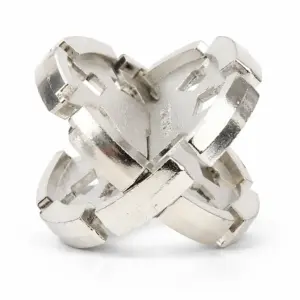
For a four-piece beginner option with a different mechanism family, the Cast Galaxy 4-Piece Silver is a useful comparison point:
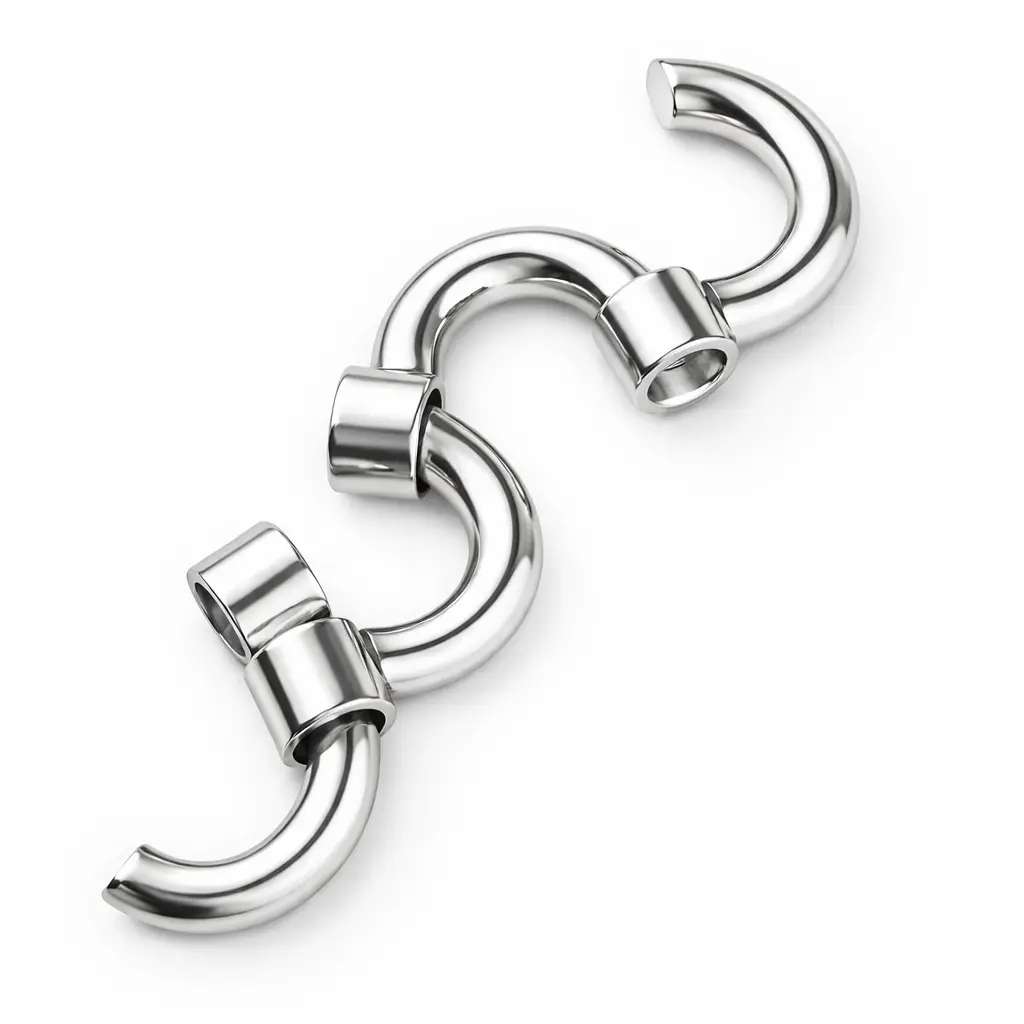
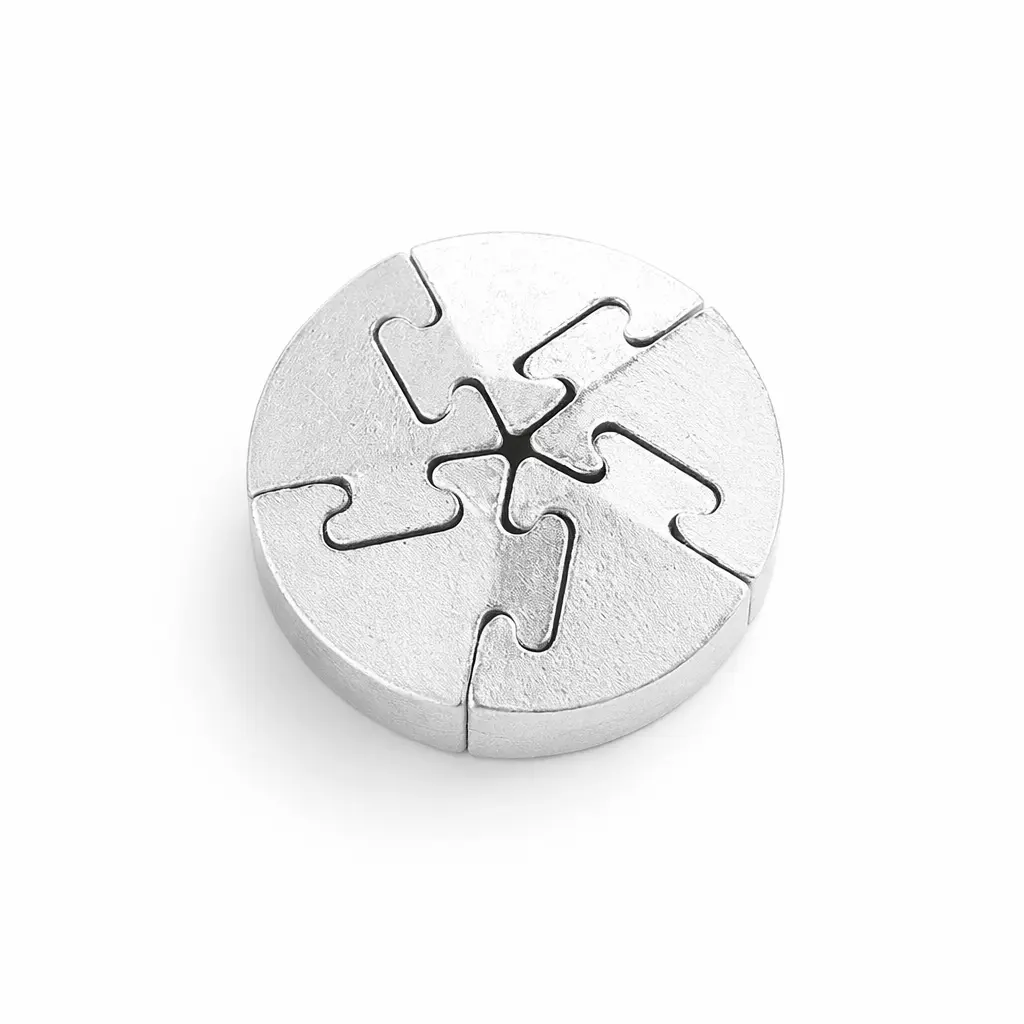
Cast Galaxy 4-Piece Silver — $14.88
The most concrete next step: pick one model from the table that sits one tier below where you think your skill is, use the “What to check” column to verify the price and at least one owner-reported solve time on the product page, and treat the level number as the starting point, not the destination. The mechanism and your tolerance for being stuck decide whether the puzzle stays on the shelf or becomes the one you keep coming back to.
For a broader ranking that weighs satisfaction against frustration across the full line, the ten best Hanayama puzzles ranked by satisfaction and table-flip factor covers the line in more depth.
04. What Real Owners and Reviewers Consistently Report About Cast Puzzle Quality
Before committing to a tier, aggregate what other owners and reviewers actually report. Feedback across retailer pages, YouTube walkthroughs, and r/mechanicalpuzzles threads converges on three consistent observations: cast puzzles have a notably heavy feel in the hand, their plating stays smooth under repeated handling, and the upper end of the 1–6 scale produces frustration that the level number alone does not telegraph.
The first quality marker is density. Owners and unboxing reviewers routinely describe cast metal puzzles as heavier than expected, a result of solid cast bodies rather than hollow shells. That weight registers on first contact and is part of the appeal for desk-toy and pocket-carry buyers. The second marker, plating durability, also appears with notable consistency: collectors who handle the same piece daily report that finishes hold up to skin oils and the friction of repeated solves, though darker plated surfaces show micro-scratches sooner than bright silver or gold tones. Both observations apply across most of the line, regardless of difficulty.
The third observation is where the buying decision sharpens. The gap between Level 4 and Level 6 is wider than the 1–6 number suggests. A Puzzle Master customer review of Cast News warns that “the complete solution is more complex than some reviewers here might have realized,” and the same pattern recurs across the upper tiers. On r/mechanicalpuzzles, the Cast Rotor is grouped with Vortex and Hourglass as the hardest in the series, a clustering that aligns more with the multi-axis, three-different-kinds-of-moves framework than with the printed level alone.
The Tea-sip buying guide sums up the consensus in one line worth keeping: “Hanayama’s cast puzzle series offers exceptional quality for the price, with a huge range of difficulties and clever designs.” Layered on top of the owner-reported weight, plating, and frustration patterns, that line is the reliability floor the rest of the line is measured against.
The practical next step before any purchase above Level 3: read at least two independent sources, not the listing photo. Cross-check the retailer page for the current price, one YouTube walkthrough to see the mechanism in motion, and one r/mechanicalpuzzles or PuzzleMad-style review for owner-reported solve time. If all three agree on the level, the mechanism, and the frustration rating, the purchase is low risk. If they disagree by more than one difficulty tier, drop a level or switch models — the goal is a first solve that builds confidence, not a shelf piece.
Buyers building a small desk display rather than a single piece can start with a curated set of five precision cast puzzles that applies the same cross-check criteria to a matched selection.
05. Buying Checklist: 7 Things to Verify Before You Click Buy on a Cast Puzzle
The cross-check pattern from the previous section translates into a faster rule: treat the box itself as the spec sheet. Most design signals that predict how a Cast puzzle will feel in the hand are visible before opening, and a ten-minute visual audit filters out most shelf-killers.
For a disentanglement or take-apart Cast puzzle, seven checks matter, in inspection order:
The level number on the package. The printed Hanayama rating (1–6) is the most reliable signal. Level 1 or 2 rewards a first-time solver; Level 5 or 6 is a “know your recipient” purchase. If the listing omits the level, treat that as a verification gap.
The visible seam line. Rotate the puzzle under a lamp. A clean, minimal seam points to tighter casting tolerances; a wide or rough seam can catch skin during handling. This is a manufacturing quality marker, not a difficulty clue.
Plating consistency. On two-tone models, examine the gold-and-silver transitions. Even color suggests better plating control; patchy zones suggest the finish will develop uneven patina after repeated handling. Cross-reference owner photos in reviews.
The solution sheet. Hanayama boxes ship with a folded solution card so the buyer can always reassemble the puzzle after solving. If the listing does not confirm it, ask the seller before paying.
Piece symmetry. Symmetrical pieces usually mean single-axis movement and gentler learning curves. Asymmetrical pieces (a hook beside a ring, three non-matching segments) signal multi-axis designs that fight the solver longer.
Single-axis versus multi-axis mechanism. Watch one short video before buying. If every movement is a slide or rotation along one plane, the mechanism is forgiving. Twisting, tilting, and flipping in sequence means prepare for a longer sit.
The seller return policy. A casting flaw or a missing piece occasionally arrives. A seller who accepts returns on unopened boxes removes the last layer of purchase risk, especially for the higher difficulty levels.
If a puzzle does arrive with a stuck mechanism, the seven safe methods to unstick a cast puzzle walk through non-destructive techniques for the most common lockups.
For gift buyers, the check order collapses: levels 1 and 2 suit anyone who enjoys a quiet desk challenge. Levels 5 and 6 should only ship when the recipient already collects Cast puzzles or has explicitly asked for a difficult metal puzzle. If the answer to “have they solved one before?” is no, default to a Level 1 or 2 and let the box earn the upgrade.
Frequently Asked Questions
The buying checklist clears the decision; the practical questions below close the gaps that show up once a cast puzzle is in the cart and the recipient is holding the box. Each answer is grounded in the same design markers, owner feedback patterns, and difficulty-scale evidence that shaped the rest of this guide.
Are cast metal puzzles worth the price?
Cast puzzles generally sit in the $10–$26 range and are widely cited for build quality that holds up to repeated handling. The value holds because they are reusable: solve, take apart, reassemble, repeat. A retail source describes Hanayama’s cast series as offering “exceptional quality for the price,” a useful benchmark for the category.
Which is the best cast puzzle to start with?
Look for a Level 1 or 2 with symmetrical pieces and single-axis movement. The Cast Hook Metal Brain Teaser fits that brief and is the entry point this guide builds toward.
How accurate is the 1–6 difficulty scale?
Useful for ordering, not for predicting solve time. Owners consistently report that Level 4 and 5 designs can run from 30 minutes to several days of intermittent work, depending on experience and the specific mechanism.
Are cast puzzles reusable?
Yes. The stated goal is to disassemble, then reassemble, and most boxes include a folded solution card so the puzzle can be reset and shared without spoiling the next solver.
What if the puzzle will not come apart after a long attempt?
Forcing a cast metal puzzle almost always damages the plating or bends a piece. Set the puzzle down, change your grip, and look for the move the piece is resisting — most Cast lockups are a missed step, not a stuck joint.
Do the metal finish and plating hold up after handling?
Reviews of cast designs consistently report that plated brass and zinc-alloy finishes wear slowly under normal hand use. For long-term patina, keep the piece dry and avoid pocket carry with keys or coins; verify the exact finish on the product page before buying.
Is a cast puzzle a good gift for a non-puzzler?
A Level 1 or 2 suits someone who enjoys quiet, screen-free focus. A Level 5 or 6 is a gift for a solver, not a casual recipient — default to the lower rung unless the person has already collected Cast puzzles.
Ready to start? Begin with the Cast Hook Metal Brain Teaser at the entry rung of the progression laid out in Section 03, and verify the current listed price on the product page before checkout.
Where to Start
If the difficulty, mechanism, and use-case checks above match, start with Cast Hook Metal Brain Teaser. Check the current product page for the specifications that matter to your choice.
Sources and verification
- Product details and current specifications: Tea-Sip product page
Last updated: August 3, 2026