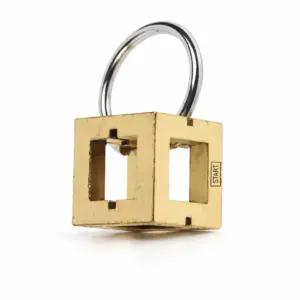
Quick Answer
Pick a cast metal puzzle in the mid-difficulty range for a partner who enjoys occasional brainteasers, a low-difficulty model for a first-time solver, and a gold or limited edition only when the milestone year is 40 or the recipient already collects puzzles. Match the mechanism to personality: disentanglement for patient solvers, interlocking for hands-on tinkerers, and compact pocket pieces for desk-display use. Check three things before buying: the difficulty grade, the mechanism type, and the packaging or plating tier.
The three checks that pick the puzzle
- Difficulty grade. Mid-range suits most non-puzzler partners. Low-range suits a complete beginner. High-range suits a hobbyist who already owns cast puzzles.
- Mechanism type. Disentanglement puzzles reward patience. Interlocking puzzles reward tinkering. Pocket coils double as desk objects after solving.
- Edition tier. Standard cast puzzles work for most anniversaries. Limited gold or numbered editions earn their premium for a 40th milestone or for a collector.
Decision table: cast puzzle picks by recipient
| Rank | Model | Form / Type | Difficulty | Best for | Price | What to check |
|---|---|---|---|---|---|---|
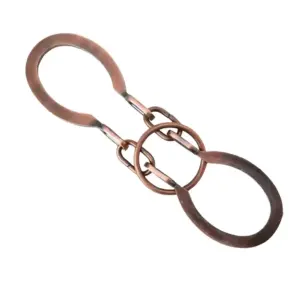
| 1 | Cast Hook Metal Brain Teaser | Hook-and-ring | See product page | First-time puzzler partner | $13.99 | Ships in a giftable box |
| 2 | Metal Crab Puzzle with Gold Ring | Crab form with ring accent | See product page | Couple’s desk display, sentimental touch | $13.99 | Gold ring as keepsake element |
| 3 | 5 Piece Cast Spiral Metal Puzzle | 5-piece spiral | See product page | Hands-on tinkerer | $16.99 | Five pieces fit together without instructions |
| 4 | Cast Coil Pocket Puzzle | Coil, pocket-sized | See product page | Pocket carry, repeat solving | $18.99 | Pocket-friendly form factor |
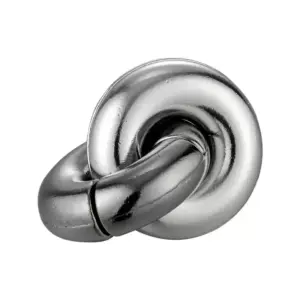
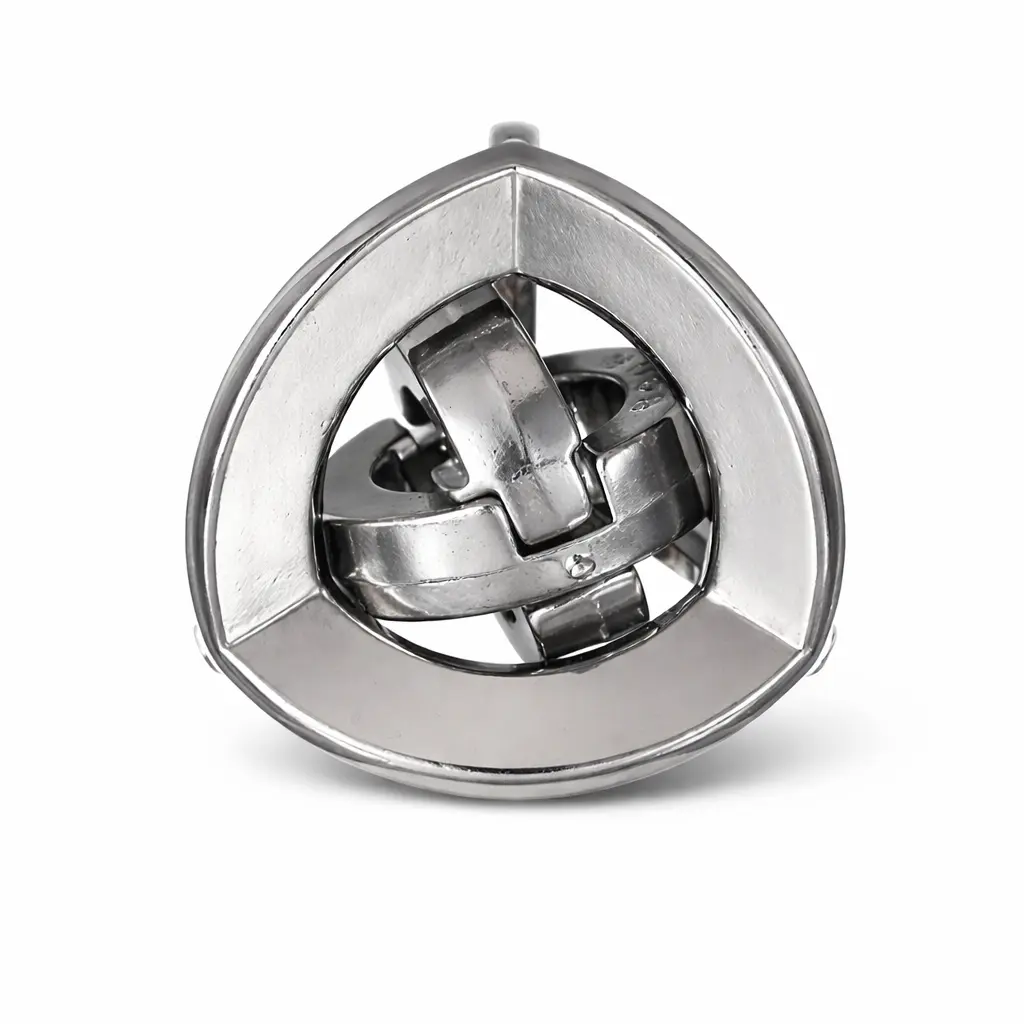
| 5 | Metal Orbit Ring Cast Puzzle | Orbital ring | See product page | Desk display after solving | $14.99 | Fidget-toy framing for post-solve use |
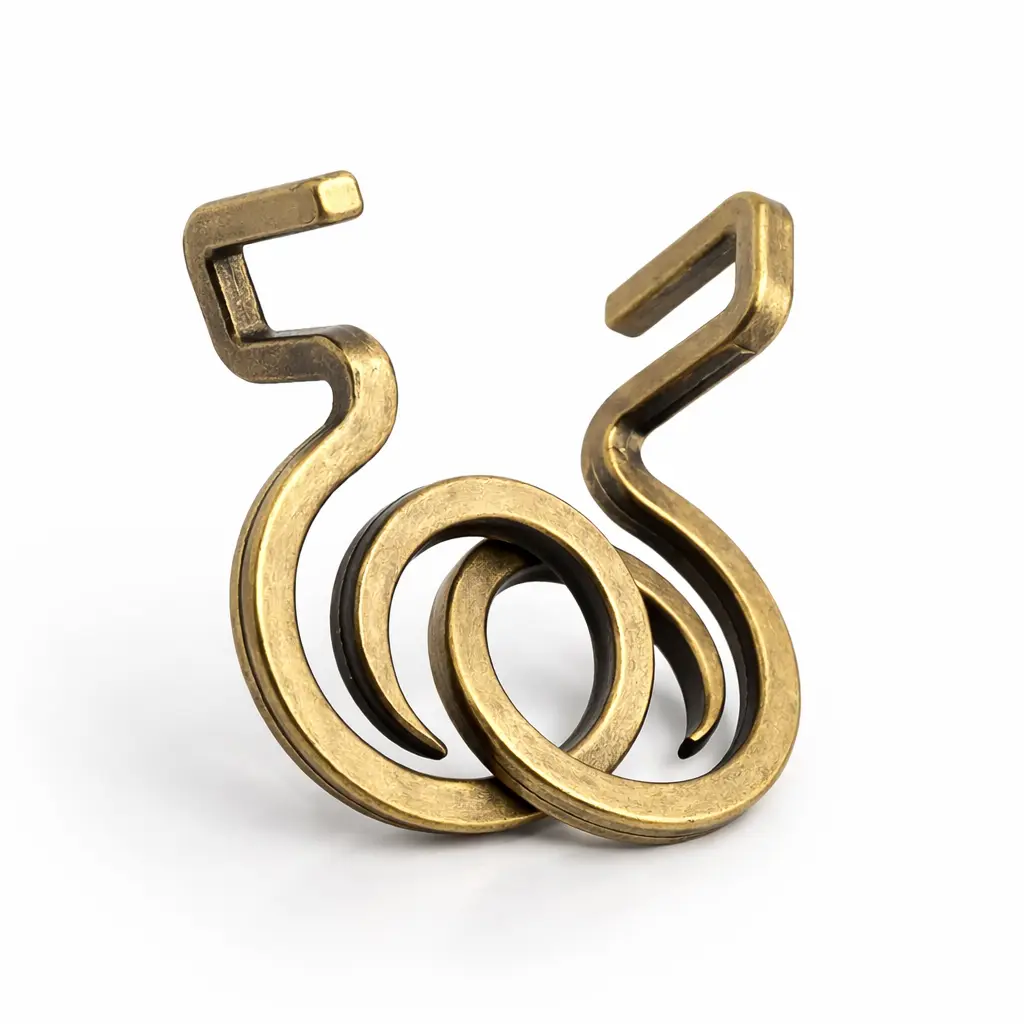
The Cast Hook is the strongest starting point for a gift buyer. It is a compact, hook-and-ring style cast puzzle that fits a first-time solver, sits cleanly on a desk, and the listed $13.99 keeps the present within a typical anniversary budget. Verify the listed difficulty and mechanism on the product page before checkout. If the recipient already owns metal puzzles, shift up the table toward the spiral or pocket coil for more challenge.
01. What a Cast Puzzle Is and Why It Fits an Anniversary
A cast puzzle is a compact metal mechanical brainteaser, most often associated with the Hanayama Cast / Huzzle line that became a widely recognized benchmark in the cast-puzzle category. It belongs to the broader mechanical puzzle category — physical objects solved by manipulation, not paper — and most cast puzzles use a disentanglement mechanism where two metal pieces must be separated and then reconnected.
The word “cast” refers to the metal casting process used for the puzzle body — a heavier, solid form that distinguishes these pieces from wooden or paper brainteasers. The pieces feel weightier than a jigsaw or a wooden brainteaser, and that weight is part of the appeal: a solved cast puzzle earns a permanent spot on a desk rather than a drawer. Wikipedia’s entry on mechanical puzzles places these objects alongside Rubik’s-style cubes, sliding-tile puzzles, and sequential-discovery boxes. The 3D metal construction is what separates them from custom photo jigsaw puzzles, which lead with a sentimental image rather than a solving challenge, and from wooden puzzle boxes, which hide a compartment inside a cabinet-style object. For an anniversary, that contrast matters: a photo puzzle is a keepsake of the past, while a cast puzzle is a keepsake of a shared activity the couple (or individual) does together after unwrapping it.
Four mechanism types dominate the cast puzzle catalog, and matching the mechanism to the recipient is the first gift-fit check.
Disentanglement puzzles ask the solver to separate two interlocked metal pieces and then figure out how to put them back together. A hook-and-ring style cast puzzle in this family looks simple until the solver realizes the escape path is not where they expected. The compact, single-piece form factor suits patient, methodical partners who enjoy working a single problem over a few evenings. No instructions, no solution sheet — just the piece in the hand.
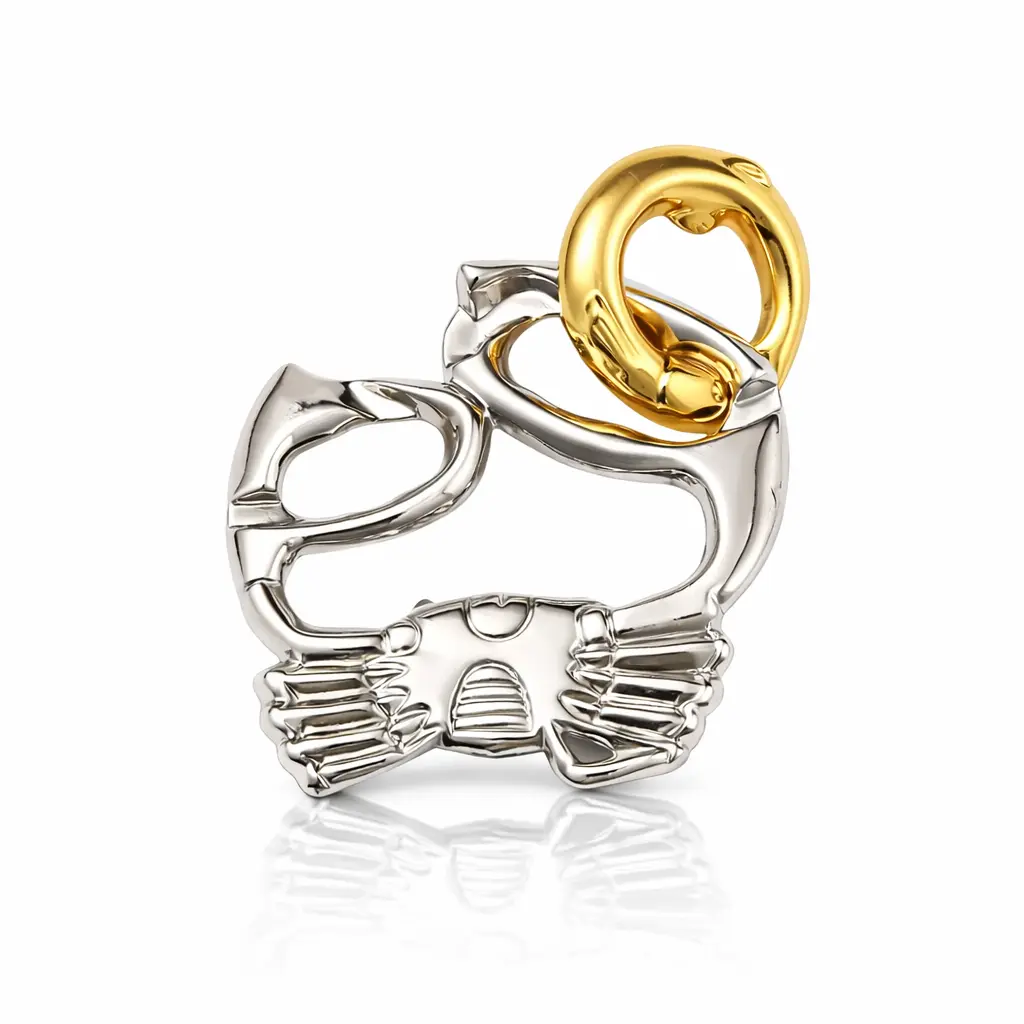
The Metal Crab puzzle, with its crab form and a gold-ring accent, works as a companion gift or a standalone first puzzle for a recipient who is curious but not yet committed. The ring detail also reads as a slightly more ceremonial option for a milestone year.
Interlocking puzzles are made of multiple cast metal pieces that must be assembled into a single shape with no obvious starting point. These suit hands-on tinkerers who like to lay the parts on a table and try combinations. The 5 Piece Cast Spiral Metal Puzzle, the Cast Coil Pocket Puzzle, and the Cast Coil Triangle Puzzle all sit in this multi-piece family, and they double as a small sculpture once solved — a property that matters more for a gift than for a personal buy.
Sequential discovery puzzles require a specific order of moves; one wrong step sends the solver back to the start. These fit analytical personalities who enjoy logic gates and chess-style thinking, and they tend to be the puzzles reviewers describe as “complex solutions” rather than quick reveals. Puzzle box mechanisms hide an opening behind rotating, sliding, or pressing panels, and they appeal to recipients who enjoy a reveal moment — the gift itself contains a small secret, which mirrors the unwrapping ritual of an anniversary. The mechanism is the personality filter; the difficulty grade, covered next, is the experience filter.
The mechanism match is the first decision. The Hanayama 1–6 difficulty level is the second. Together, those two checks turn a single product page into a chosen anniversary gift. For a deeper look at the broader Hanayama Cast catalog, the Hanayama Cast puzzle buyer’s guide walks through the same lineup from a different angle.
02. How to Match Hanayama Difficulty Level and Mechanism to the Recipient
The Hanayama 1–6 scale is a gift-picker, not a hardness label. Read it as three tiers tied to the recipient’s experience rather than a rising ladder of “easy to hard.” Level 1–2 suits a first-time or non-puzzler partner. Level 3–4 suits someone who enjoys an occasional brainteaser. Level 5–6 suits a self-described puzzle fan. Each tier pairs with a mechanism type, and that pairing is the buying decision.
Tier one: Level 1–2, for first-time and non-puzzler partners. This is the safest anniversary buy. Recipients at this level need a puzzle that reveals its solution in a few minutes, not a multi-day project. Disentanglement puzzles in compact form — two pieces that pull apart, slide back, or separate with a single move — land best here because the goal is visible from the start. Interlocking puzzles with only two or three cast pieces also fit this tier. Skip sequential discovery at this level; one wrong move sent twice in a row turns the gift into a frustration. A compact disentanglement is the anniversary equivalent of a crossword clue that almost solves itself.
Tier two: Level 3–4, for partners who enjoy an occasional brainteaser. This is where most non-puzzler partners actually sit once they have solved a Level 1–2 and want something more substantial. Interlocking mechanisms with four or more cast pieces, or a sequential discovery puzzle with a forgiving reset, work well here. The solve takes an evening or a weekend rather than a single sitting, and the aha moment is strong enough to share. If the recipient has ever finished a 500-piece jigsaw without help, Level 3–4 is the safer bet over Level 1–2. A puzzle that takes eight minutes feels forgettable. A puzzle that takes ninety minutes becomes a story the couple retells.
Tier three: Level 5–6, for self-described puzzle fans. Recipients who already collect mechanical puzzles, watch puzzle-solving channels, or own a previous Hanayama piece want something harder than their last solve. Sequential discovery and puzzle box mechanisms dominate this tier. A 40th Anniversary gold edition fits here when the recipient collects cast puzzles or when the milestone year reaches 40-plus; the difficulty becomes part of the collectible value. For an advanced recipient with no interest in collectibles, a standard Level 5–6 cast piece is the right call, and the gold plating premium is unnecessary.
The rating scale warning. Third-party retailers rate Hanayama puzzles on their own scales. Puzzle Master notes that Hanayama Level 1 is equivalent to Puzzle Master Level 5, and Level 6 is their hardest. The same physical puzzle can read as “Level 2” on a retailer’s page and “Level 5” on Hanayama’s own grading. When comparing two listings of the same model, check which scale the seller uses. The Hanayama scale is the consistent reference; the retailer’s scale is local. Cross-check by reading the puzzle’s described mechanism rather than the number alone, since the mechanism type — disentanglement, interlocking, sequential discovery, or puzzle box — is stable across retailers.
The next action. Pick the tier first, then the mechanism that fits the recipient’s personality, then a specific model. For a Level 1–2 disentanglement that doubles as a desk piece after solving, the Metal Orbit Ring Cast Puzzle sits in that bracket. The Metal Puzzle Levels guide walks through the same scale from a hobbyist angle if the buyer wants a second reference before committing.
03. The 40th Anniversary Gold Editions: When the Premium Is Worth It
“Anniversary” carries two meanings in this gift category. The buyer’s occasion — a 10th, 25th, or 40th wedding anniversary — is what the gift celebrates. The Hanayama Cast line’s 40th anniversary milestone produced the gold-plated limited editions that appear in the current specialty-retailer catalog. Pick a gold edition only when those two anniversaries line up: milestone year 40 or higher, or a recipient who collects cast puzzles. Otherwise, a standard cast puzzle delivers the same solve at lower cost.
The scale warning from the previous section matters most when weighing a gold premium, because the difficulty number is identical to the standard version. What changes is everything else.
What the gold plating actually adds. Three 40th Anniversary Hanayama Huzzle pieces appear in the current specialty-retailer catalog: the Cast Donuts Andromeda Gold, the Cast Shift Hashtag Gold, and the Cast Loop Pisces Gold. Each is the same mechanism as a standard model — disentanglement, sequential discovery, or interlocking respectively — with four observable upgrades. First, the finish shifts from standard nickel or chrome plating to a gold tone. Second, the retail packaging moves from a printed sleeve to a presentation box sized for display. Third, the run is limited, with a serial-numbered certificate in some listings. Fourth, the piece is built to sit on a desk or shelf after solving rather than return to a drawer.
These four changes are real, but they are cosmetic, collectible, and presentational — not mechanical. The gold-plated Loop still separates the same way the standard Loop separates. The Hashtag still shifts on the same axis. The solve does not get easier or harder.
The comparison that decides it. A standard cast puzzle in the $15–25 range and a 40th Anniversary gold edition of the same shape typically retail for two to four times more. Before paying the premium, check the seller’s listing for four specifics: whether the packaging is a printed sleeve or a hard box, whether a serial number is included, whether the finish is gold-plated or gold-toned, and whether the production run is numbered or simply described as “limited.” The premium pays for plating, packaging, serial numbering, and the collectible status of a closed production run. It does not pay for a different puzzle. A buyer who wants the recipient to feel a moment when they open the box gets that from the gold edition. A buyer who wants the recipient to feel a moment when they crack the mechanism gets that from any well-chosen cast puzzle at a fraction of the cost.
Authenticity check before paying the premium. A gold edition is only worth the collectible premium if the piece is actually a limited Hanayama release, not a gold-toned knockoff. Run the 5 in-hand tests that separate an authentic Hanayama cast from a knockoff before checkout — finish weight, engraving depth, mechanism tolerances, packaging print quality, and seller track record are the five things a buyer can verify in seconds.
The decision rule. Choose the gold edition when at least one is true: the wedding anniversary milestone is 40 years or higher (40th, 45th, 50th), the recipient is a known cast-puzzle collector, or the presentation box itself is part of the gift because it will live on a shelf or mantel. Skip the gold edition when the recipient has never solved a cast puzzle before, the milestone is below 40, or the gift competes in a budget with other anniversary expenses. The premium makes sense for a closing-of-a-decade marker. It does not make sense as a default upgrade.
The next action. Confirm the milestone year first, then the recipient’s puzzle experience, then the mechanism type. A standard cast puzzle at the right level beats a gold-plated cast puzzle at the wrong level every time. For a first-time solver, a non-collector, or a milestone under 40 years, the Cast Hook Metal Brain Teaser covers the gift at a level the standard cast-puzzle category is built around — same category, lower spend, and the recipient gets the part of the gift that actually lasts: the solve.
04. Presentation, Packaging, and Shipping Considerations for a Gift
Confirm packaging before ordering, because the standard cast-puzzle box and the 40th Anniversary gold edition box are not the same gifting experience. Standard cast puzzles typically ship in a plain printed cardboard sleeve with a clear window — presentable, but not display-grade. Limited gold editions ship in a coordinated presentation box designed to sit on a shelf. For a milestone anniversary where the box will be kept, the difference matters. For a first-time solve where the gift gets opened and played with immediately, the standard sleeve is fine. The specific look of each format — sleeve, hard box, foam cradle, display case — varies by listing, so check the product photos for the actual packaging before you commit.
The deliberate absence of written instructions is part of the gift. No instructions. No solution sheet. Just the piece. This is a feature, not a gap: the puzzle invites the recipient to work the problem rather than read the answer. If your partner enjoys the “aha” moment, this restraint is the appeal. If they tend to get frustrated without guidance, mention before gifting that the challenge is meant to be worked by hand — or offer to sit with them on the first attempt. One reviewer of the Cast Love noted that even after solving, the piece “will sit on your desk as a fidget toy” — a recurring use that standard packaging actually supports better than a sealed display case, because the recipient is meant to pick it up, turn it over, and reset it.
Replayability is real. Cast puzzles reset to their starting state once solved, so a couple can take turns, race each other, or pass it back and forth across anniversaries. The Cast Loop Gold Limited Edition and similar gold editions are no different in mechanism — the plating and box are collectible, but the solve is repeatable. Buy based on the recipient’s puzzle experience and your presentation needs, not on the assumption that a higher price means more plays.
One pre-order check: look at the product page photos for the packaging and confirm whether the puzzle arrives in a gift-ready box or a plain sleeve, and factor that into whether you need a separate gift wrap or presentation card. For a closer look at how box design shifts a cast puzzle from puzzle to keepsake, see how cast puzzle packaging turns a box into a collectible.
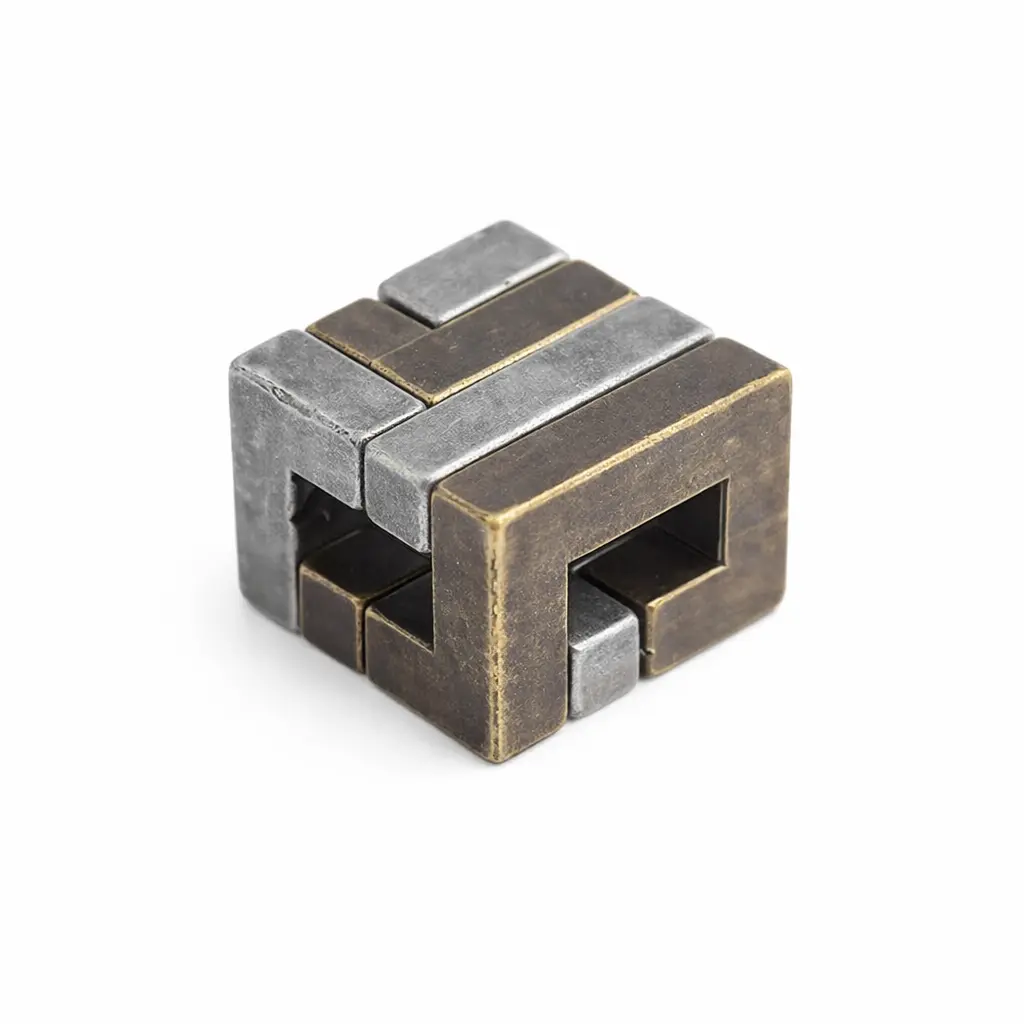
Cast Coil Pocket Puzzle — $18.99
For a pocket-sized option that travels well to restaurants, offices, or weekend trips — and that resets cleanly for repeated shared solves — the Cast Coil Pocket Puzzle fits a gift that gets used rather than shelved. For the presentation-led milestone where the box itself is part of the memory, the gold editions remain the better call. Match the format to the moment, and the cast puzzle earns its place as an anniversary gift that lasts past the first solve.
05. Cast Puzzles Compared by Use Case: A Decision Table
With the format and presentation settled in the previous sections, the next decision is matching the model to the use case. The right gift depends on whether the recipient wants a one-evening challenge, a desk companion for months, or a presentation piece that doubles as a keepsake. This table pairs the available Tea-Sip models with the gifting scenarios they fit. Difficulty and mechanism details should be confirmed on each product page, since retailers and grading systems vary.
Read left to right. Mechanism names the solve type. Where the table reads “See product page,” the difficulty and mechanism need to be verified on the listing because grading scales differ by retailer. Price reflects the current listed Tea-Sip price.
| Model | Mechanism | Difficulty | Best For | Approx. Price | What to Check |
|---|---|---|---|---|---|
| Cast Hook Metal Brain Teaser | Hook-and-ring (verify) | See product page | First cast puzzle, low-stakes first anniversary | $13.99 | Mechanism type, current price |
| Cast Coil Pocket Puzzle | Coil form (verify) | See product page | Repeatable shared solve, travel-friendly | $18.99 | Reset ease, pocket dimensions |
| 5 Piece Cast Spiral Metal Puzzle | Multi-piece spiral (verify) | See product page | Multi-piece display, longer engagement | $16.99 | Piece count, plating finish |
| Cast Coil Triangle Puzzle | Triangle form (verify) | See product page | Desk companion, statement piece | $25.99 | Size, tactile quality |
| Metal Crab Puzzle Cast Brain Teaser with Gold Ring | Crab form with ring (verify) | See product page | Sentimental keepsake, ring accent | $13.99 | Ring detail, gift-ready packaging |
| Metal Orbit Ring Cast Puzzle | Orbital ring (verify) | See product page | First-time solver, low-difficulty | $14.99 | Mechanism type, finish |
The Tea-Sip rows cover common gifting scenarios under $26. The hero pick at the top — the Cast Hook Metal Brain Teaser — fits a first cast puzzle or a low-stakes first anniversary where the recipient has never solved one. For a recipient who has already handled a hook-and-ring piece or who prefers a ring-style mechanism, the Metal Orbit Ring Cast Puzzle is the adjacent step up at a similar price. For context on how the wider category grades difficulty across brands, 10 best Hanayama puzzles ranked by satisfaction and table-flip factor walks through a Hanayama-only ranked view with satisfaction ratings and the puzzles most likely to earn a second attempt.
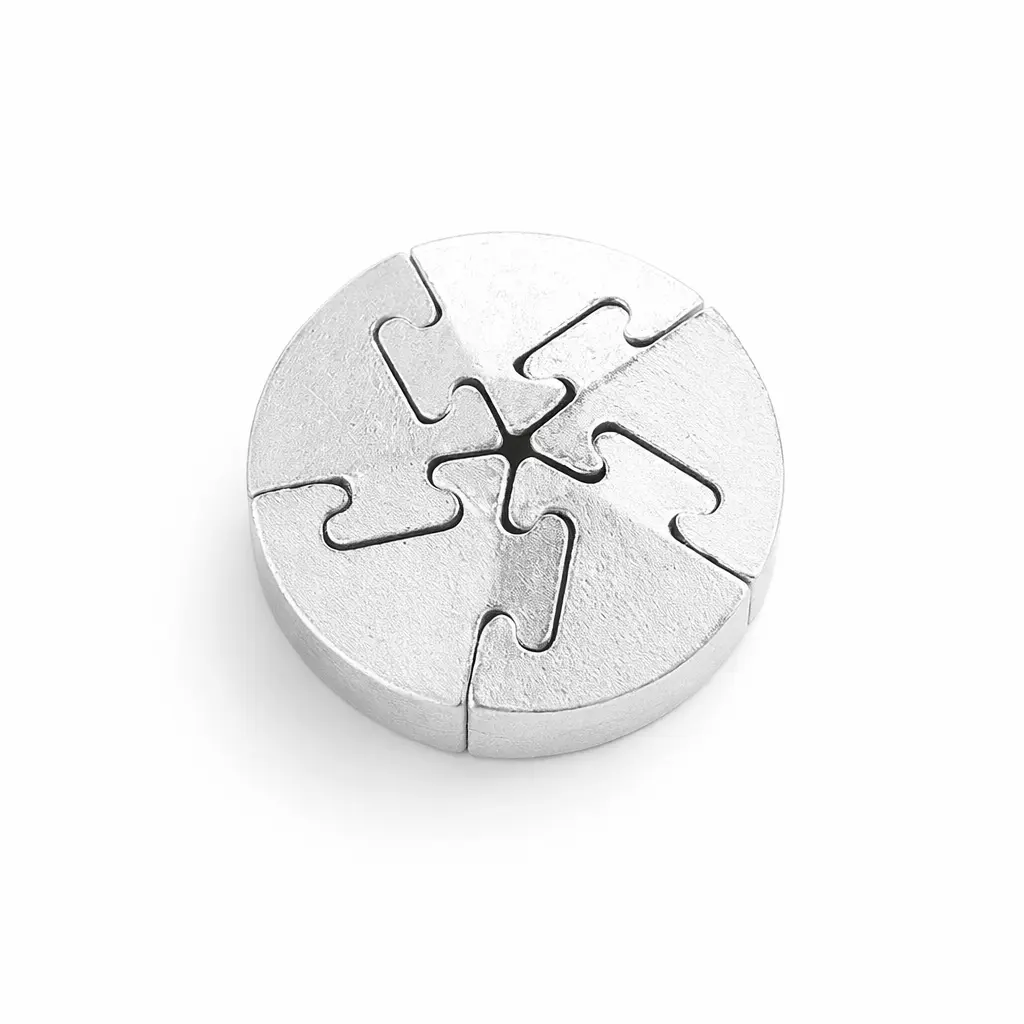
For a recipient who already owns one or two cast puzzles, the multi-piece format adds visual weight and a longer solve. The 5 Piece Cast Spiral Metal Puzzle sits in the mid-price tier and reads as a display object after the solve, which matters if the gift doubles as desk decor.
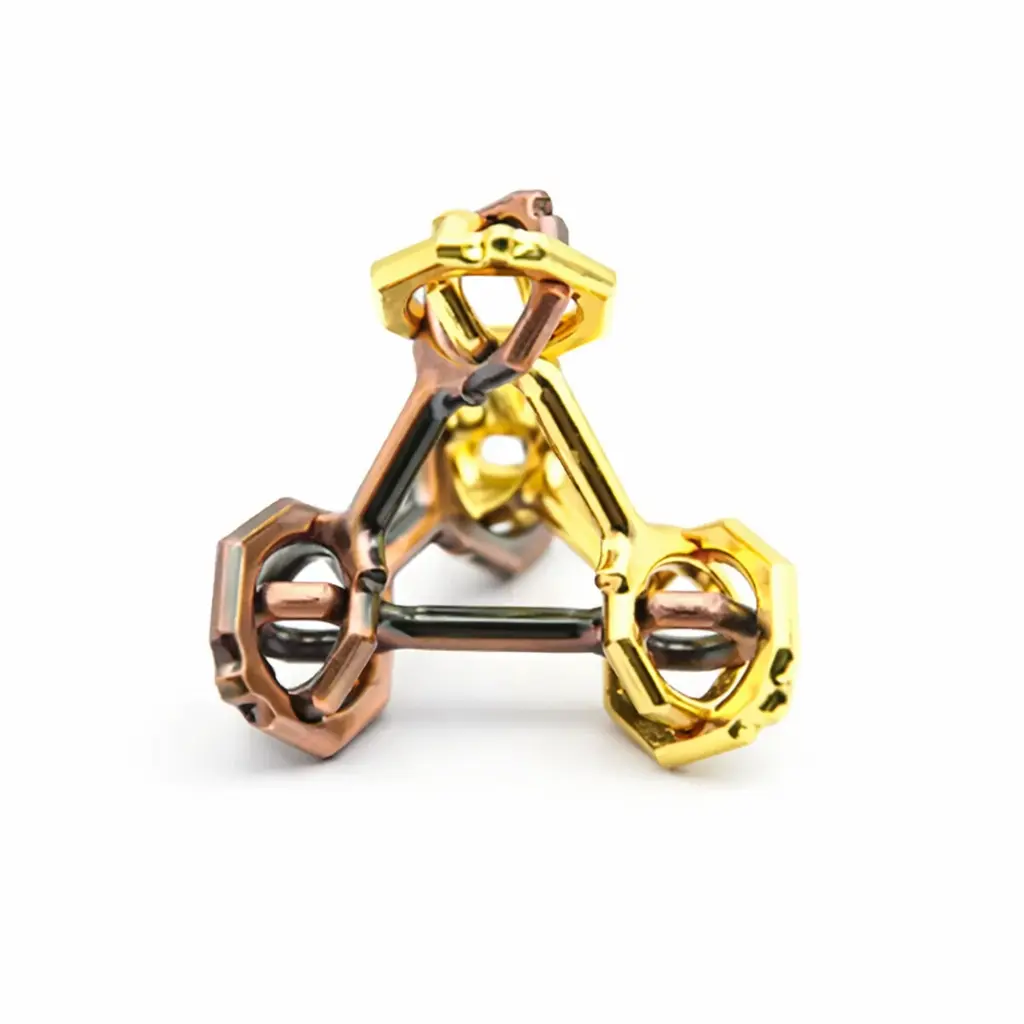
Cast Coil Triangle Puzzle — $25.99
For a long-running desk companion, the triangle format signals a longer engagement and a stronger shelf silhouette. The Cast Coil Triangle Puzzle is the highest-priced Tea-Sip pick in this table, and the right call when the budget allows a single statement piece rather than a paired set.
If the milestone is a 40th wedding anniversary and the recipient collects cast puzzles, the gold editions remain the better call. For everything else, the table above gives a Tea-Sip path that stays under $26 and reads as a real gift, not a stocking stuffer.
Frequently Asked Questions
The decision table above narrows the field to a handful of Tea-Sip models under $26. These final checks answer the questions gift-buyers ask most often after a model is chosen but before checkout, covering what “cast” actually means, how difficulty maps to a non-puzzler partner, and how 40th Anniversary gold editions differ from standard plating.
What does “cast puzzle” mean, and is it the same as Hanayama?
A cast puzzle is a metal brain teaser produced through metal casting, with pieces that interlock, separate, or slide on a hidden track. Hanayama is a well-known manufacturer in this category, and the Cast and Huzzle lines are widely recognized examples. Other makers produce cast metal puzzles in the same basic mechanism types. The Tea-Sip catalog falls into this broader category of cast metal brain teasers.
What difficulty level should I buy for a partner who has never solved one?
A Level 1 or Level 2 cast puzzle suits a true first-time solver. The Cast Hook Metal Brain Teaser and the Metal Crab Puzzle with Gold Ring both arrive without instructions, which keeps the discovery honest. Check the product page for the listed difficulty before checkout, since each retailer uses its own grading rather than Hanayama’s scale, and a “Level 2” on one listing can read as a “Level 5” on another.
Are the 40th Anniversary gold editions worth the premium?
Worth the premium when the milestone year is 40, or when the recipient already collects cast puzzles and the serial-numbered packaging matters. Not worth it for a casual buyer, since the gold plating, presentation case, and limited-run serial number are collector features rather than gameplay upgrades. A standard cast loop or cast shift delivers the same solving experience at a lower price.
Does gold plating wear off with handling?
The 40th Anniversary editions are display-grade. Buyers who intend to keep the piece on a shelf rather than handle it daily will see the plated finish hold up best with light handling. For a hands-on solver, a standard cast puzzle in its standard plating is the more predictable choice under repeated handling.
Can a cast puzzle be solved more than once?
Yes. Cast puzzles are repeatable. Once the solution is known, the piece resets and presents the same challenge again, which is one of the practical reasons cast puzzles work as anniversary gifts: they hold interest well past the unwrapping. For a structured walkthrough of the solving process, the proven 5-step method covers any cast metal puzzle in the catalog.
Is a cast puzzle a good gift for someone who is not a “puzzle person”?
It depends on patience more than puzzle interest. A cast puzzle works for a non-puzzler who enjoys small, repeatable hand challenges and has a desk or shelf for display afterward. It does not work for someone who wants a single-occasion experience or expects instructions in the box. Level 1 or 2 keeps the solve time honest and reduces the risk of frustration.
Decision made? Confirm the box situation on the product page before checkout. If the inner packaging is a plain mailer rather than a presentable sleeve, budget a small gift box or wrapping layer so the unwrapping reads as intentional rather than improvised. That single packaging check is the detail that separates a polished gift from a puzzle that arrives looking like an afterthought.
Where to Start
If the recipient and occasion checks above match, start with Cast Hook Metal Brain Teaser. Check the current product page for the specifications that matter to your choice.
Sources and verification
- Product details and current specifications: Tea-Sip product page
Last updated: August 7, 2026