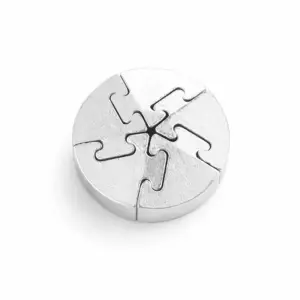
Quick Answer: Choosing a Beginner Puzzle Set Gift for Adults with Anxiety
For an anxious adult who’s new to puzzling, choose a hand-held 12-piece mechanical lock set, a 300–500-piece jigsaw with a calm image and matte finish, or a small wooden puzzle box — match the format to how the recipient already copes. Below are the four checks that decide which one.
The four checks: (1) piece count and time-to-first-solve, (2) the recipient’s anxiety pattern, (3) portability and setting, and (4) gift-ready packaging. For most buyers — partners, siblings, and close friends shopping for someone who already fidgets or reaches for a stress object — a compact, multi-piece mechanical set is the safest top pick. It is low-stakes, solvable in 10–20 minutes, and works at a desk, on a couch, or during a commute.
The four checks in detail
| Check | What to ask | What “right” looks like | What to verify |
|---|---|---|---|
| Piece count & solve time | How long can they focus before frustration or fatigue sets in? | 12 pieces per challenge, under 20 minutes per solve | Check the product page for the stated piece count and any solve-time range |
| Anxiety pattern | Do they ruminate, fidget, or shut down under overwhelm? | Rumination → jigsaw or box; Restlessness → hand-held; Overwhelm → one small puzzle at a time | None — match the format to what you’ve seen them actually do |
| Portability & setting | Where will they use it — desk, couch, public transport? | A pocket-sized lock set fits any of those | Confirm dimensions on the product page |
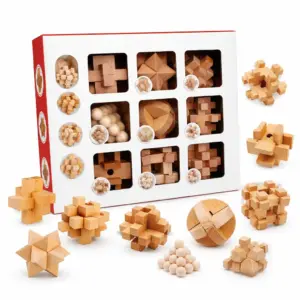
| Gift-ready feel | Does it look like a present or a study aid? | A boxed multi-piece set with each puzzle in its own slot | Open the product page images to check the packaging |
A 12-piece set clears all four checks at once. The rest of this guide shows why “beginner” in puzzling means something specific, how to match format to the person you’re shopping for, and what separates a giftable set from a bare box of parts.
01. What ‘Beginner’ and ‘Anxiety-Friendly’ Actually Mean in Puzzle Terms
“Beginner” for an anxious adult is defined by piece count, image difficulty, finish, and time-to-first-piece — not by age or skill. For a first jigsaw, 300–500 pieces with a low-noise image, matte finish, and a reference poster covers all four checks. For a first mechanical puzzle, fewer than 20 pieces and a stated solve time under 30 minutes keeps the activity low-stakes. Both ranges are concrete enough to verify on a product page, and both fit the framing used on mindfulness-puzzle listings — a bounded, screen-free activity rather than a problem to defeat. That’s the frame worth keeping.
Piece count sets the floor for confidence
Piece count is the single most verifiable number on any puzzle listing, and it’s the one anxious beginners notice first. A 1000-piece scenic jigsaw can take a first-timer ten hours or more; a 500-piece version of the same image usually takes three to five. Mechanical puzzles scale differently — a 12-piece lock set with 12 discrete challenges can be reset and re-solved indefinitely, so the “total time” is less important than the time per single solve. Look for a product page that states a piece count and, when possible, a per-puzzle solve range. If neither is listed, the product is not ready for a beginner.
Image difficulty is about contrast, not art
Image difficulty is the variable competitors almost never explain. A puzzle with a sky, a beach, or a uniformly dark background is harder than its piece count suggests, because every piece looks like every other. A puzzle with strong color blocking, distinct edges, or a clear central subject gives the eye something to anchor on. Matte finish matters here too: glossy paper catches overhead light and hides the printed edge pattern, which is the only tool a beginner has for sorting. A matte or linen finish reads more clearly under a living-room lamp, and that reduces the small frictions that turn a calming activity into a frustrating one.
Time-to-first-piece is the real anxiety test
Time-to-first-piece is the metric that most directly maps to how an anxious recipient will feel in the first ten minutes. Open the box, dump the pieces, find a sorting tray, and start an edge section. If they can do that in under fifteen minutes, the format is working. If they spend twenty minutes staring at 500 identical cardboard shapes with no reference poster, the format is working against them. A reference poster — a printed copy of the finished image, often included inside the lid — collapses that ramp. No instructions to read, no rules to internalize, no decision to make beyond “where do I start.” A 12-piece lock set clears this bar even faster: open the box, pick one lock, see if you can open it. The first connection happens in seconds.
What the evidence supports, and what it doesn’t
The calming-repetition framing for puzzles shows up across mindfulness-puzzle listings because the activity is bounded, screen-free, and self-paced — a Wabiandushi product page describes puzzling as “your moment of calm, one satisfying fit at a time,” and a mindfulness-puzzle listing frames the same format as a “therapeutic escape from daily stress and digital overload.” The working definition a buyer needs is even simpler: no phone, no app, no instructions to read before the first move. What the catalog does not support is a clinical claim that any specific puzzle treats anxiety, improves focus in a measurable way, or produces a predictable physiological effect. Treat the framing as a calming, screen-free ritual — not as therapy. The Tea Sip guide on how fidget toys help anxiety walks through the broader evidence in plain language if you want the wider picture.
The next buying action
Before you look at packaging or price, confirm four numbers on the product page: stated piece count, stated solve time per challenge, stated dimensions, and whether a reference poster or sorting tray is included. If three of those four are missing, the product is not beginner-ready, regardless of how it looks on the shelf. The next section applies those four numbers to the person you’re actually shopping for.
02. Match the Puzzle Format to How the Recipient Already Copes
Now point those four numbers at the person, not the product. The right puzzle format is the one that mirrors the recipient’s existing anxiety pattern, not the one with the prettiest box. The three formats — jigsaw, sequential-discovery puzzle box, and fidget — each pair with a different coping pattern, and the choice is less about what looks gift-worthy on a shelf and more about how the person already tries to feel calmer. Match the format to the pattern, not the wrapping.
Jigsaw puzzles pair with rumination and the need for an absorbing task
A jigsaw gives the brain somewhere to land. Rumination is the loop of replaying worries without resolution, and the format that helps interrupt it is one that quietly fills working memory so the loop loses airtime. The eye scans, the hand sorts, the brain clocks out — no decisions required. For an adult beginner, the image matters as much as the piece count. A calm image with clear color zones, a matte (not glossy) finish that doesn’t catch glare, and a reference poster on the side are what separate a soothing first experience from a frustrating one. Glossy cardboard, dark or visually noisy images, and pieces that all look the same are the fastest way to turn a “calming ritual” into something abandoned on the table.
Sequential-discovery puzzle boxes pair with overwhelm and the need for a bounded challenge
A puzzle box gives the day a finish line. Overwhelm is the feeling that there are too many open tabs, and the format that helps is a single task with a visible end. A sequential-discovery puzzle box or mechanical puzzle is exactly that — one object, one goal, done in one sitting, usually 15 to 60 minutes for a beginner-friendly design. The hands move, the mind focuses on the mechanism, and there is a clear “solved” moment rather than a project that sprawls across a week. As a gift, this is also the most unwrap-able format: a wooden or crystal box on a desk signals “I thought about this” without saying so.
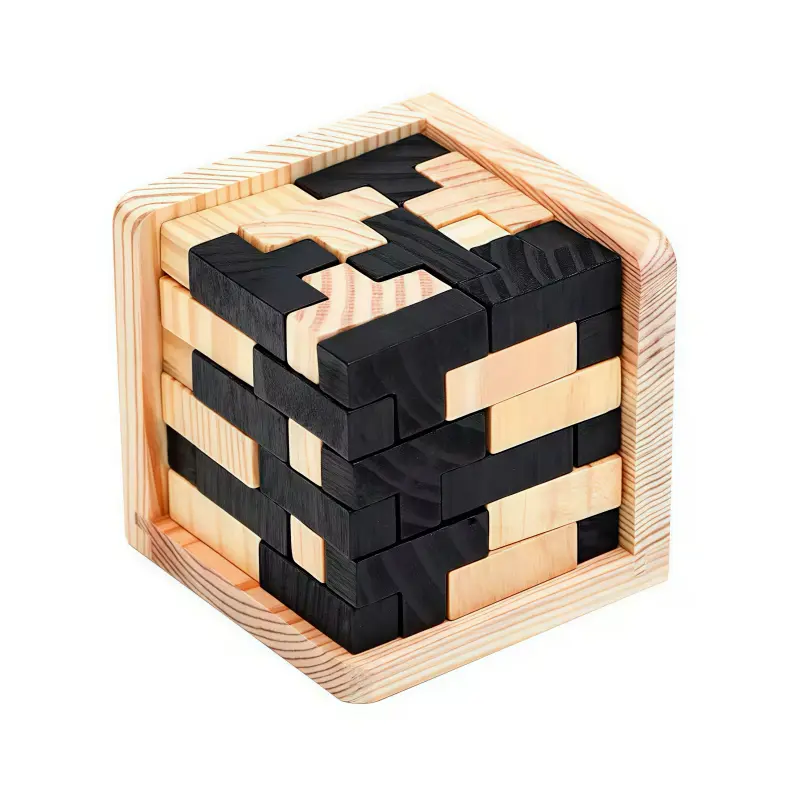
54‑T Cube Puzzle — $18.99
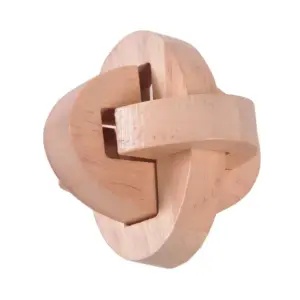
For someone who needs that bounded, one-sitting challenge, a compact wooden or crystal puzzle in the $15–$30 range is a sensible pick. The Tea Sip 54‑T Cube Puzzle sits in that lane: a single object, a single solution, small enough to leave on a coffee table as a quiet conversation piece. The buyer-side check is solve time — if the product page doesn’t list it, ask before you buy.
Hand-held fidget puzzles pair with restlessness and the need for tactile micro-movement
A fidget puzzle gives the hands a job. Restlessness is the body wanting to move while the mind waits, and the format that helps is one the hands can run on autopilot. A hand-held fidget puzzle — a metal disentanglement, a wooden brain teaser, a chain link, a Luban lock — gives the hands a task that doesn’t need the eyes, which is why Tea-Sip’s metal-puzzle fidget guide treats the hand-held format as the in-the-moment, hands-only lane. For a gift, the format works because there’s no setup, no cleanup, and no “are you doing this right?” — the recipient picks it up during a phone call, on the train, or in the two minutes before a meeting. The trade-off is that fidget puzzles don’t sit on a shelf as decor, so the gift reveal is more about the moment of receiving it than about the object on display afterward. If you’ve already tried simple fidgets and found they don’t hold attention, see our breakdown of when simple fidgets fail at anxiety relief for a fuller comparison.
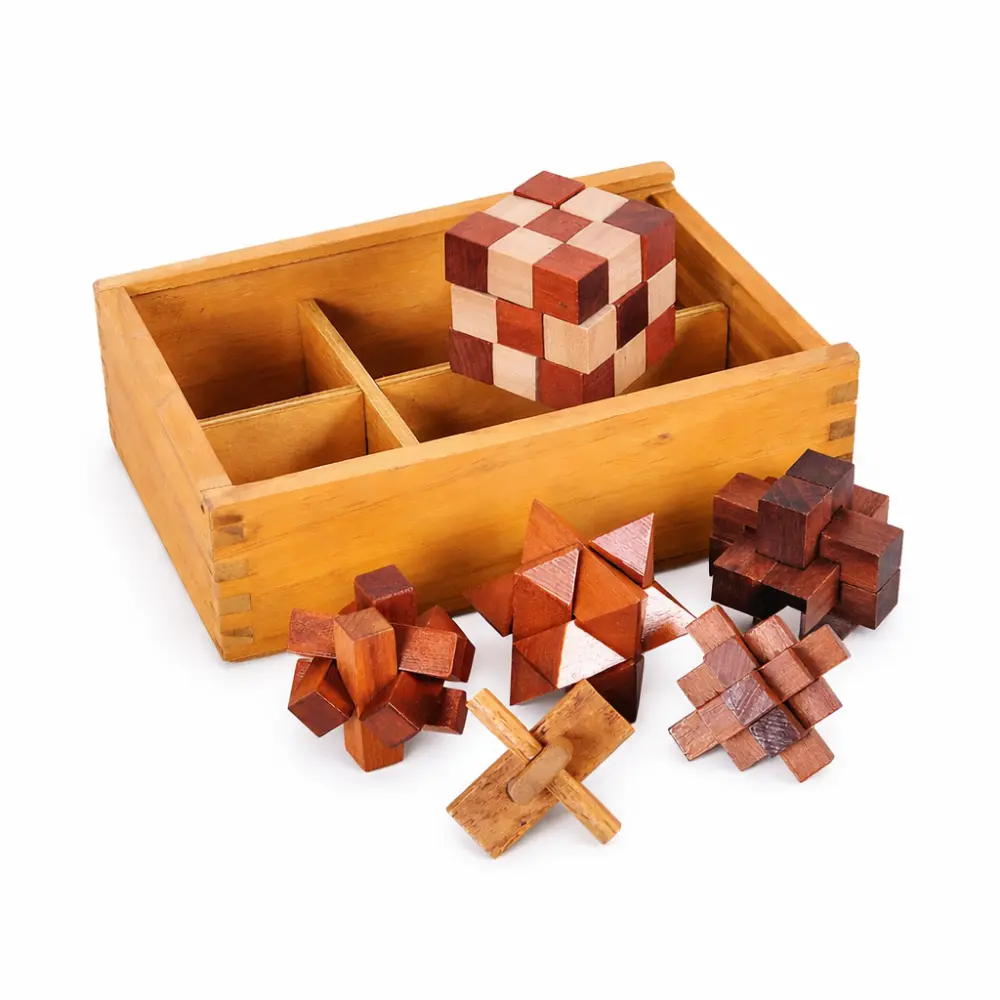
For someone who needs variety — or who doesn’t yet know which mechanism they prefer — a small set of different formats in one box is a low-risk way to let them find their own fit. The Tea Sip 6-in-1 Wooden Brain Teaser Set sits in that lane: six distinct challenges in one package, so the recipient can rotate rather than commit to a single type.
What if they don’t fit one profile?
Most people don’t. Someone can ruminate in the evening, feel overwhelmed on a Sunday morning, and fidget during a work call. The format that “matches” is the one that matches the worst moment, not the average one — that’s when the gift is most likely to get used. If you’re still torn between two formats, the safest move is a small multi-puzzle set, which lets the recipient self-select in real time without you having to predict it.
The next buying action
Pick one format, then verify four numbers. On the product page, confirm piece count or number of puzzles, stated solve time, stated dimensions, and whether any reference material is included. The decision table in the next section puts the three formats side by side so you can sanity-check your pick before you commit.
03. Red Flags: Puzzle Features That Frustrate Anxious Beginners
Once you’ve narrowed your format and started reading product pages, the next move is a rejection pass — features that disqualify a puzzle before you read the description. A puzzle is wrong for an anxious beginner if any of these four features are present, regardless of how nice the box looks.
Use this as a one-minute scan. Any single red flag is enough to close the tab.
Glossy or reflective finish. A glossy surface turns jigsaw sorting into a lighting test — the recipient tilts pieces under lamps, trying to read colors that should be obvious from across the table. Matte-finish pieces cut glare and let the eye settle. That’s the point. Spot this from the product photo: if the box art shows reflections on the printed surface, the pieces will behave the same way.
Dark or visually uniform image. A nighttime cityscape, a star field, a deep-ocean scene, a portrait in mostly-monochrome tones. These force the puzzler to read tiny value differences under tired eyes — the opposite of a calming activity. High-contrast images with clear color blocks (a yellow umbrella against a blue wall, a green forest against an orange sunset) sort faster and forgive lighting mistakes. If you have to zoom in to tell what’s on the product image, the recipient will too.
No reference poster included. A reference poster is the adult version of the picture on a children’s puzzle box. Without one, the recipient returns to the box lid again and again, or works from memory — both add cognitive load at exactly the moment the puzzle should be reducing it. Most beginner jigsaws in the 100-500 range include a folded poster. If the product description doesn’t mention one, assume it isn’t included and ask the seller before buying.
Piece counts above 750 with no sorting tray. A 1000-piece jigsaw without a tray becomes a 1000-piece mess by hour two. The recipient sorts by hand, by color, by shape — and the system collapses halfway through, creating a fresh wave of overwhelm. Drop to a smaller count (300-500 is the beginner sweet spot) or confirm a tray, sorting surface, or roll-up mat is in the box. Brands that skip the tray are usually skipping other beginner-friendly features too.
The four red flags apply mostly to jigsaws, because jigsaws are the format where image, finish, and piece count all matter at once. Wooden mechanical puzzles and metal disentanglements don’t have a glossy image to fail on, but they carry their own checks: a piece too heavy to hold comfortably, a mechanism with no clear starting move, or a price that signals collector item rather than pocket companion.
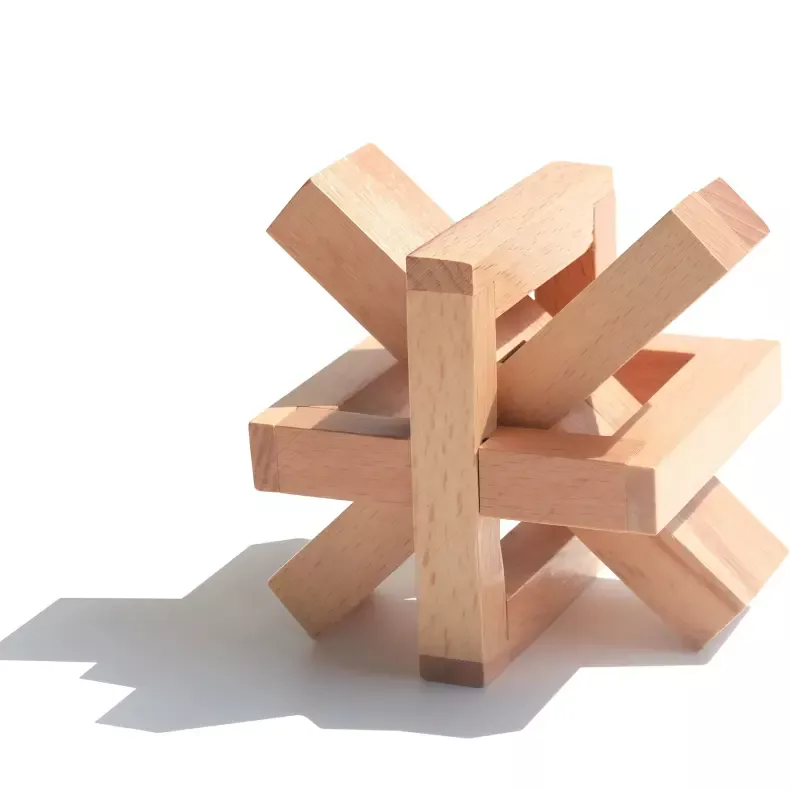
Besieged City — $16.99
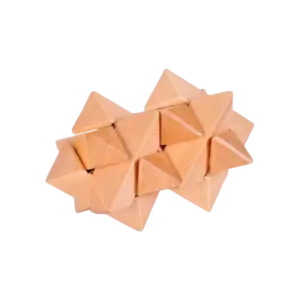
A wooden interlocking set like the Besieged City clears the image-based red flags by design — no printed picture to misread, no glossy layer, no piece count to spiral. Mechanical formats are a useful fallback when any one of the four jigsaw red flags shows up on a product page.
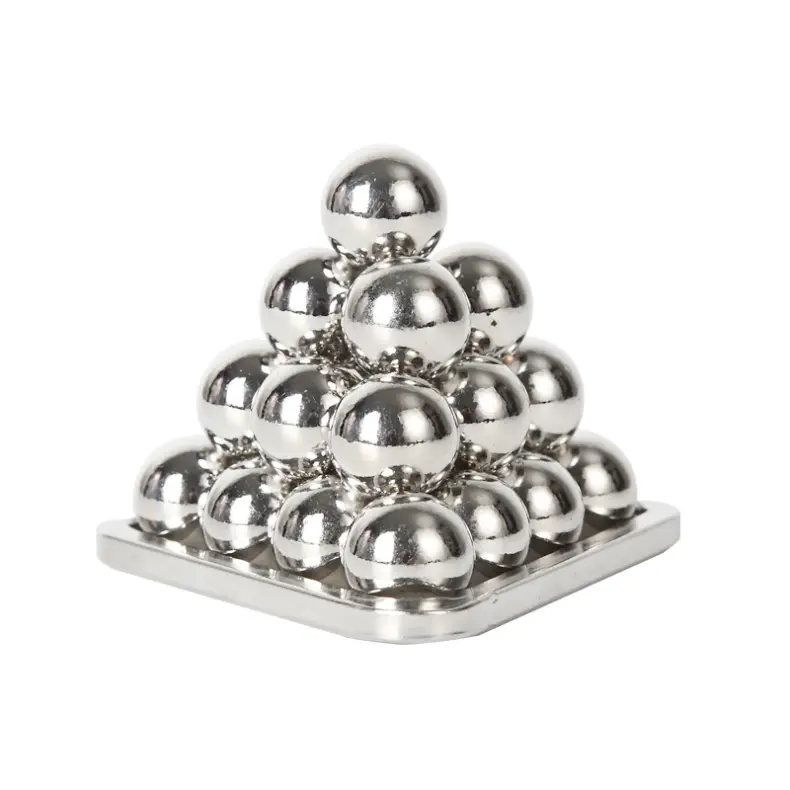
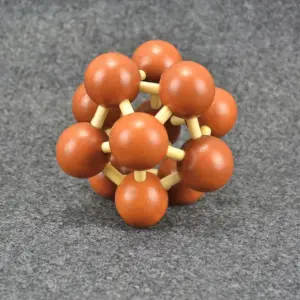
The 6 Piece Steel Ball Pyramid is a hand-held format where most of these red flags simply don’t apply — no image to read, no finish to glare, no tray to forget. The fastest pass on a product page is often the simplest: if the format doesn’t trigger any of the four red flags in the first place, you’ve already cleared the rejection filter. The next move is to confirm the format still matches the recipient’s anxiety pattern — red flags rule out, they don’t choose for you.
04. What Makes a Puzzle Set Feel Like a Gift Instead of Just a Product
A puzzle becomes a gift the moment the recipient can start it within five minutes of opening the box, without hunting for missing parts.
Once the red flags are clear and the format matches the anxiety pattern, the question shifts from “is this puzzle right?” to “does this puzzle feel like someone actually thought about giving it to me?” The answer lives in the unboxing, the extras in the box, and whether the format can be touched, shared, or stored without ceremony.
Start with the packaging. A giftable puzzle arrives in a box that doesn’t need tape, scissors, or a second box to be presentable. A puzzle set pre-sorted in a tray, a labeled bag, or a wooden puzzle box with a lift-off lid lands differently than one sealed in shrink wrap with a parts list taped to the back. The format matters: a compact metal or crystal puzzle needs almost no packaging to feel considered, while a 500-piece jigsaw in a beautiful box can still feel anonymous if the image is wrong.
Then check what’s inside. For a jigsaw, a reference poster and a sorting tray most change the first session. The poster removes the “where do I start” paralysis; the tray gives restless hands a place to sort without scattering pieces across the table. Brands sell across the full beginner-to-advanced spectrum — piece-count ladders like 110, 252, 520, and 1014 show how much room there is to match experience to format. A 252-piece puzzle with a calm image and a poster is a genuinely different gift than a 1014-piece dark cityscape, even from the same brand.
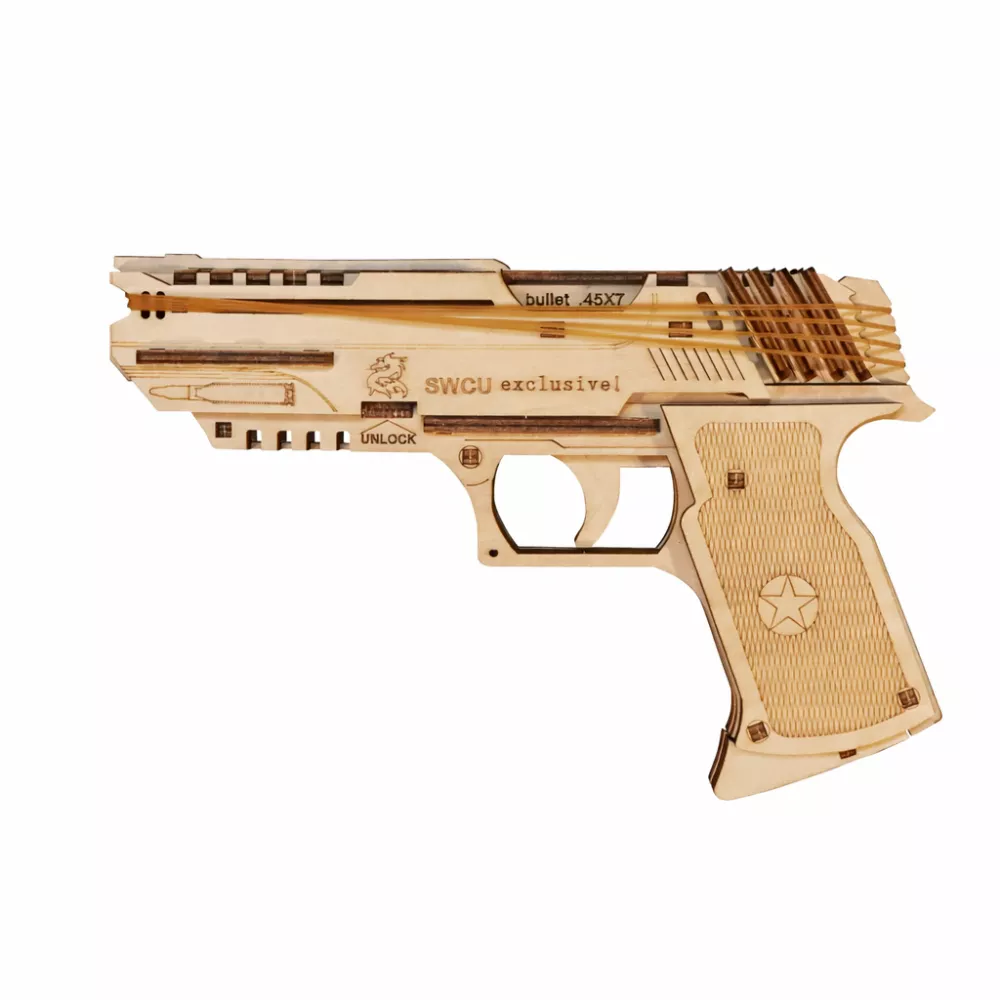
Next, match the format to the recipient’s living situation. A hand-held puzzle — small enough for a jacket pocket, bedside drawer, or work bag — moves with the person. That portability helps during commutes, waiting rooms, or the ten minutes before sleep when the brain won’t slow down. A larger build-it-yourself kit, like a 3D wooden model, is less portable but earns its place on a desk or shelf. The recipient works on it in one spot and ends up with something to display. That’s a gift-with-a-finish-line, which matters when open-ended tasks spike anxiety.
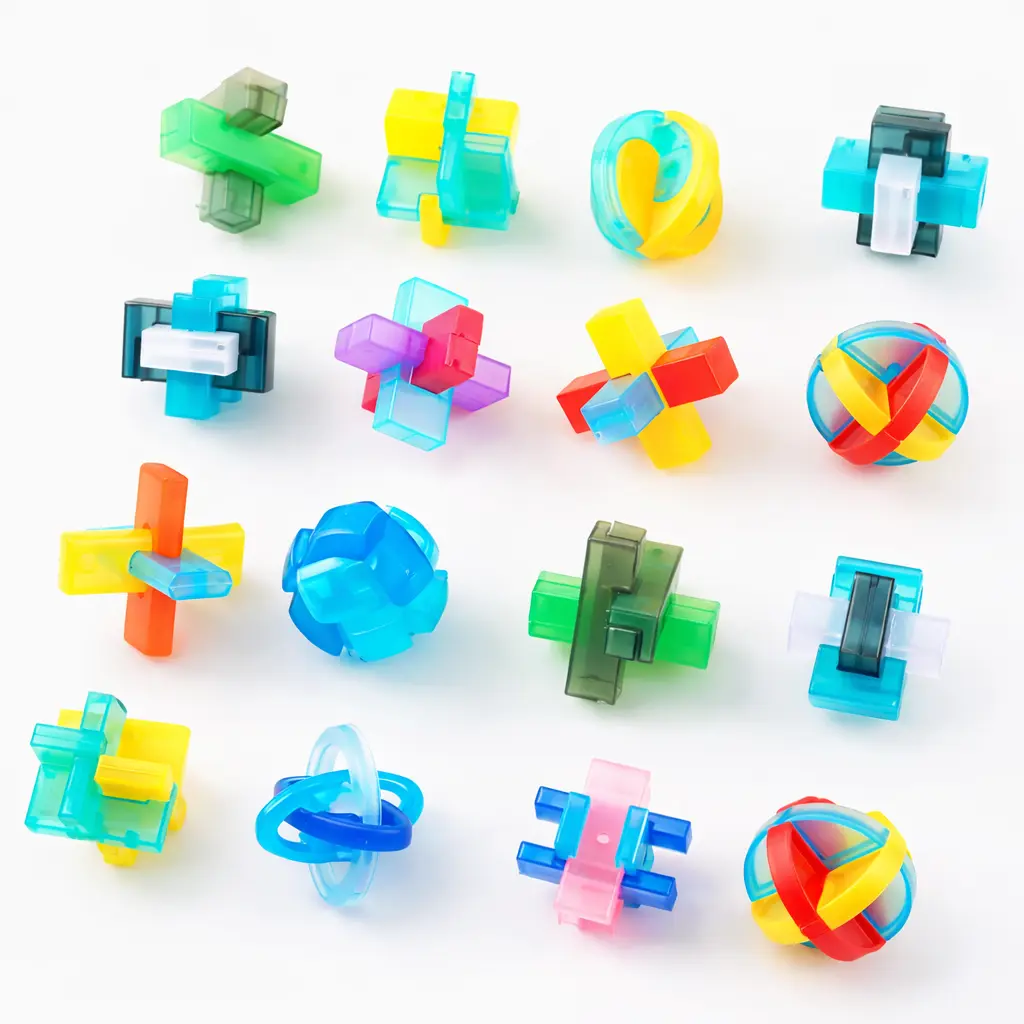
For a multi-puzzle set, the gift becomes a sampler: several formats in one box, each short enough to finish in a sitting. The 12 Piece Crystal Luban Lock Set, which offers twelve distinct sequential puzzles in one package, is built around exactly this idea. The recipient isn’t committing to a multi-day project — they choose a small challenge, solve it, and choose again. That choice loop mirrors how an anxious beginner already copes: small, contained, repeatable, with a low-stakes finish.
Last, match the format to solo or shared use. Some people unwind alone and want a format that doesn’t ask for a partner. Others settle better when someone sits beside them and sorts while they place. A hand-held disentanglement puzzle is a solo object. A sequential puzzle box is solo with a reveal moment worth sharing. A larger build kit often works best as a shared first session. Know which one you’re shopping for, and the right format becomes obvious.
One check before you buy: open the product page, look at every photo, and ask whether the recipient could go from sealed package to first piece in under five minutes without any extra tool, download, or instruction video. If yes, the gift lands. If not, the format isn’t anxiety-friendly for a true beginner — no matter how nice the box looks. For a closer look at how wrapping and presentation shape whether a puzzle gets opened at all, see how to gift a puzzle that actually gets opened.
05. How to Present the Puzzle So the Recipient Actually Starts It
Presentation should remove every barrier to starting. The gift lands when the format matches the recipient’s anxiety pattern and the first session feels low-stakes, so the wrapping and note should never add friction. Three small moves do most of that work: a one-line note that reframes the activity as a calming ritual, pre-broken cellophane, and avoiding any “challenge” language on the tag.
First, write a short note that frames the puzzle as permission to slow down rather than a task to finish. Something like “for quiet evenings, no timer, just you and the pieces” is enough. This isn’t filler — it tells the recipient the puzzle is a calming ritual, not homework. A Wabiandushi product page frames puzzling as “your moment of calm, one satisfying fit at a time,” and that tone is worth borrowing because it signals rest instead of performance. A note that mentions solving or beating sets an implicit stopwatch, which is the opposite of what an anxious beginner needs.
Second, break the cellophane before you wrap. If the box has a factory seal or shrink wrap, slice it cleanly and reseal with a small piece of tape so the lid lifts without a fight. The recipient shouldn’t need scissors, a thumbnail, or a tutorial to reach the first piece. Friction at the packaging stage is one of the most common reasons a thoughtful gift sits untouched on a shelf. Pre-breaking the seal makes the first session feel like the default, not an event. That’s the point.
Third, keep the tag or card short and free of words like “solve,” “conquer,” or “challenge.” Say “explore” or “enjoy” instead. Language matters more than most gift guides admit — a single verb can reframe the whole experience from a test to be passed into a low-stakes activity to return to. For an adult who is new to puzzling and already carries a quiet internal timer, that shift is the gift within the gift.
A quick gut-check before you wrap: can the recipient open the box, see the image, and place a first piece in under five minutes with nothing but their hands? If yes, presentation is doing its job. If not, simplify — swap the sealed box, skip the heavy outer packaging, or move to a format with fewer setup steps. That’s the entire presentation playbook: a right-format puzzle, a brief note framing it as calm rather than competition, and a box that opens without resistance.
From here, the next move is the buy itself — browse the puzzle toys collection for formats that match the profile you’ve identified.
Frequently Asked Questions
With the format and presentation set, six common questions close out the choice. Choose a hand-held metal or crystal disentanglement puzzle when the recipient already fidgets in meetings, and a 300–500-piece jigsaw when they prefer long, quiet evenings. Each answer below gives a concrete check and one product-page verification step before checkout.
What kind of puzzle is best for someone with anxiety?
The format that matches how they already self-soothe. If they fidget with pens or jewelry during meetings, a hand-held disentanglement or sequential-discovery puzzle keeps their hands busy without a setup. If they prefer long, quiet evenings, a 300–500-piece jigsaw with a calm image and matte finish is the lower-friction option. Match the format to the existing habit, not the other way around.
How many pieces should a beginner adult start with?
Between 250 and 500 is the range most first-timers can finish and feel good about. Brands commonly market 110-piece sets as a gentle entry and 1,000-piece sets as the “real” challenge — neither is wrong, but skipping straight to a 1,000-piece scenic image is a fast path to giving up. Start in the middle and let the recipient graduate on their own terms.
Are jigsaw puzzles calming or just frustrating?
Both, depending on the image, the finish, and the piece variety. A matte, high-contrast image with clearly different piece shapes and a reference poster is reliably calming for adults new to the hobby. A glossy, monochromatic, or near-identical-piece set is reliably frustrating, no matter the person’s temperament. The format isn’t the variable — the details are.
Is a puzzle or a fidget toy better for anxiety?
Fidget toys work in shorter, more frequent moments — meetings, waiting rooms, the ten minutes before sleep. Puzzles work in longer, sustained sessions — an evening, a Sunday morning. Most adults with anxiety benefit from having both, which is why a small set that mixes a hand-held metal disentanglement with a compact wooden puzzle tends to be more useful than either alone. One format covers in-the-moment restlessness; the other covers slow, deep focus.
What if they give up halfway through?
Pick a format where “halfway” still feels like progress. A 300-piece jigsaw with a printed reference poster, or a sequential-discovery puzzle box you can leave on a shelf, both let someone return without losing their place or rebuilding the whole thing. That’s the entire point of a low-stakes gift: the exit ramp is part of the design.
Are wooden puzzle boxes good for adults with anxiety?
Yes, when the goal is a single, contained moment of focus rather than a long session. A wooden puzzle box opens, gets worked through in one sitting, and closes again — a clean loop with a built-in ending. The 12 Piece Crystal Luban Lock Set follows the same pattern in a brighter, more displayable format, which is why it’s a natural fit for the fidget-lane profile described earlier. Check the product page for the current piece count and exact solve difficulty.
When the format, the piece count, and the packaging all line up, the gift usually does too. Pick one item from the puzzle toys collection, verify the details on the product page, and you’ve finished the job.
Where to Start
If the recipient and occasion checks above match, start with 12 Piece Crystal Luban Lock Set. Check the current product page for the specifications that matter to your choice.
Still comparing options? Use the matching Tea-Sip collection to compare the same decision criteria, rather than restarting the search from scratch.
Sources and verification
- Product details and current specifications: Tea-Sip product page
Last updated: August 27, 2026