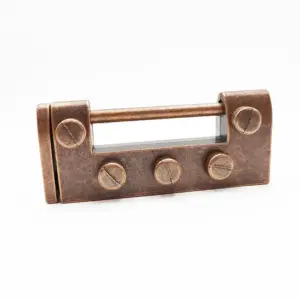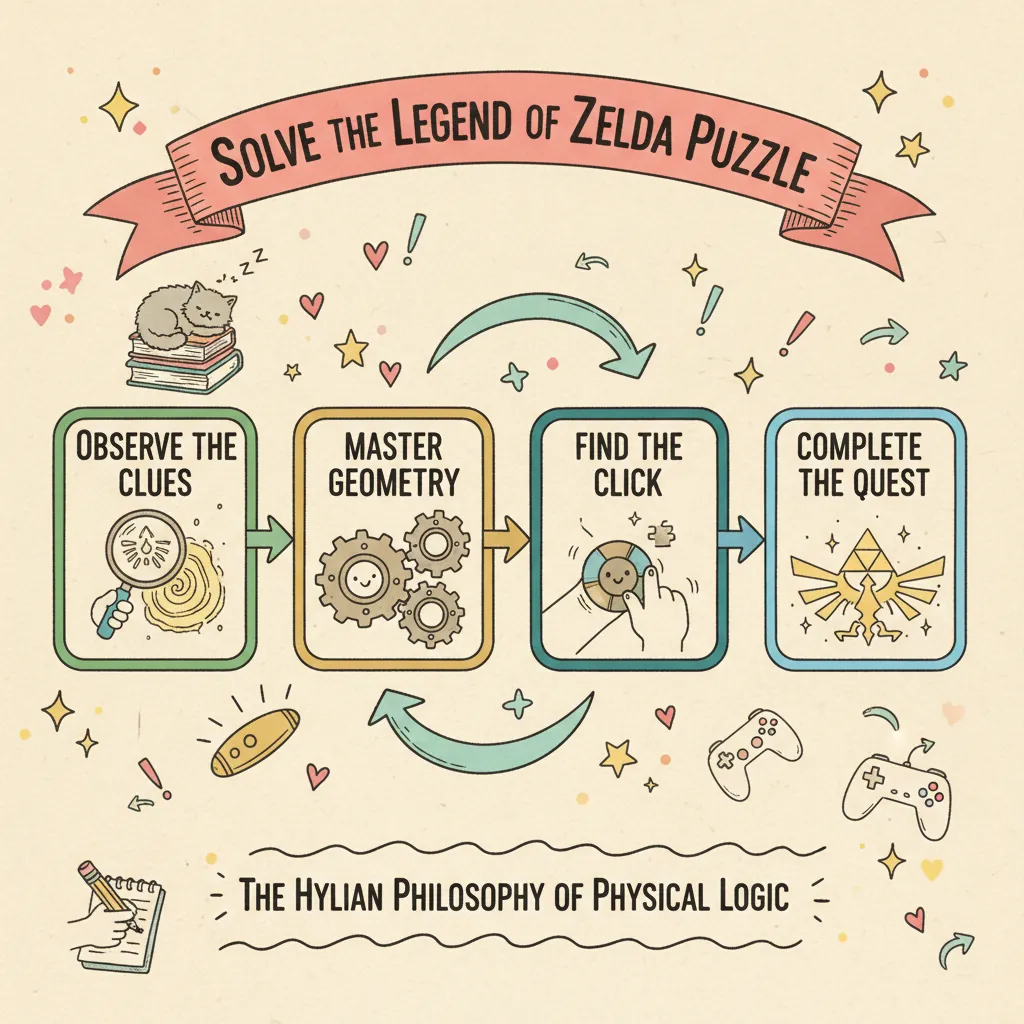
The brass pin on my desk caught the afternoon sun, mocking me. I had been fiddling with a specific interlocking metal mechanism for forty-five minutes, trying to channel the logic of a 1998 forest temple. My thumbs were slightly sore, the “clink-clink” of the alloy was starting to annoy my cat, and I was no closer to separating the two halves than I was when I started. Then, I stopped looking at the seams and started feeling the internal weight. A slight tilt, a gentle slide, and click.
If you grew up with a controller in your hand, you know that sound. It’s the sonic reward for lighting the right torches or pushing a block onto a hidden switch. But in the physical realm, a “Legend of Zelda puzzle” isn’t always about the Triforce logo or a picture of Link. True Zelda-esque puzzles are about the marriage of geometry and intuition. They are objects that demand you stop overthinking and start observing the subtle clues hidden in plain sight.
Among the 200+ mechanical puzzles I’ve tested, the most rewarding ones follow the Hylian philosophy: the solution is never forced, only discovered. Whether you are building a curated library of tactile riddles or just looking for something to keep your hands busy during a meeting, the right brain teaser should feel like a dungeon room waiting to be solved.
The Hylian Philosophy of Physical Logic
The Universe of The Legend of Zelda is built on a very specific type of spatial reasoning. You see a cracked wall; you know it needs a bomb. You see a frozen eye switch; you know it needs fire. In the mechanical puzzle community, we call this “affordance”—the object tells you how to interact with it through its design.
When I hold a metal puzzle, I’m looking for those same cues. Is there a slight rattle? That suggests a moving internal pin. Is one surface polished while another is matte? That might be a visual hint for orientation. Most mass-market “Zelda” merchandise is just a plastic figurine, but a real enthusiast looks for items that challenge the physics of interlocking metal components.
The best puzzles punish impatience. If you try to force a metal piece, you’ll likely mar the finish or bend a precision-machined gate. Instead, you have to treat it like a mini-boss. You observe the pattern, test the boundaries, and wait for the moment where the logic reveals itself.
Cast Keyhole Gold & Silver
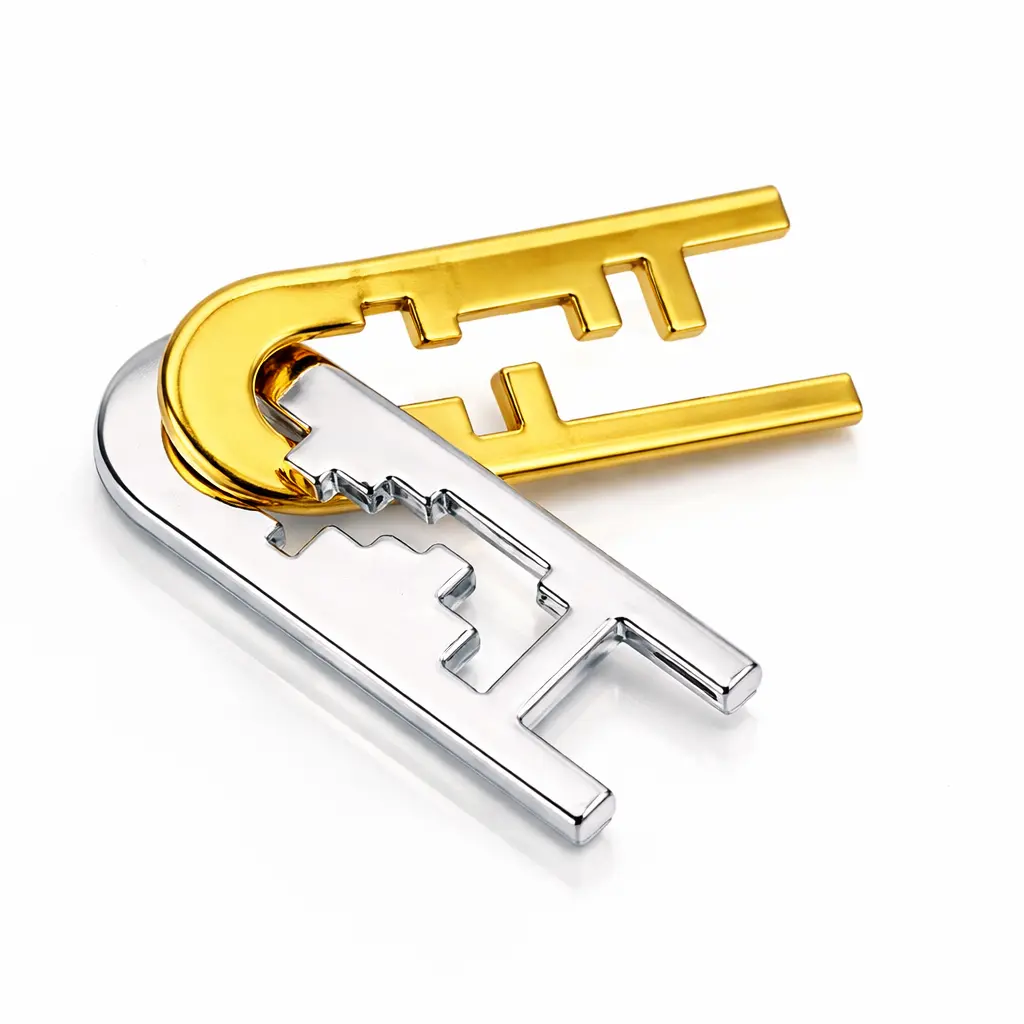
The Cast Keyhole Gold & Silver is the closest physical approximation to a Zelda dungeon key I’ve ever handled. Priced at $13.99, it consists of two interlocking pieces that look like flat, notched keys. The gold and silver contrast isn’t just for aesthetics; it helps you track your progress through what is essentially a 3D maze hidden inside a flat surface.
When I first picked this up, I assumed it would be a simple slide-and-release. I was wrong. The notches are angled in a way that requires you to twist and turn simultaneously. It’s a pocket-sized challenge that rewards the same kind of lateral thinking required to navigate the Lost Woods. The polished finish is high-quality, though it does pick up fingerprints quickly. After a week on my desk, the mechanism remains as smooth as the first day, proving that simple designs often have the tightest tolerances.
Metal vs. Wood: Choosing Your Hylian Material
In the Zelda series, materials matter. You can’t use a wooden shield in a volcano, and you can’t use a metal one near an electric Keese. The same logic applies to your collection.
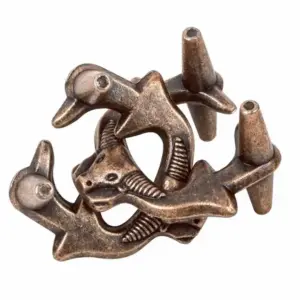
Metal puzzles, often made of zinc alloy or brass, offer a level of precision that wood simply can’t match. They feel permanent. There is a weight to the Gold Silver Double Fish Metal Puzzle ($13.99) that makes the solve feel significant. When the two fish finally part, the “ping” of the metal is incredibly satisfying. These are the “Master Swords” of the puzzle world—durable, sleek, and demanding of respect.
Wood, on the other hand, brings a sense of ancient history. When you are mastering the mechanics of hidden joints and seams, you are engaging with a craft that predates video games by centuries. A wooden puzzle feels like something Link would find in an old chest in the back of a village shop. If you prefer the aesthetic of the Great Deku Tree over the ancient tech of the Sheikah, wood is your medium.
5 Piece Cast Spiral Metal Puzzle
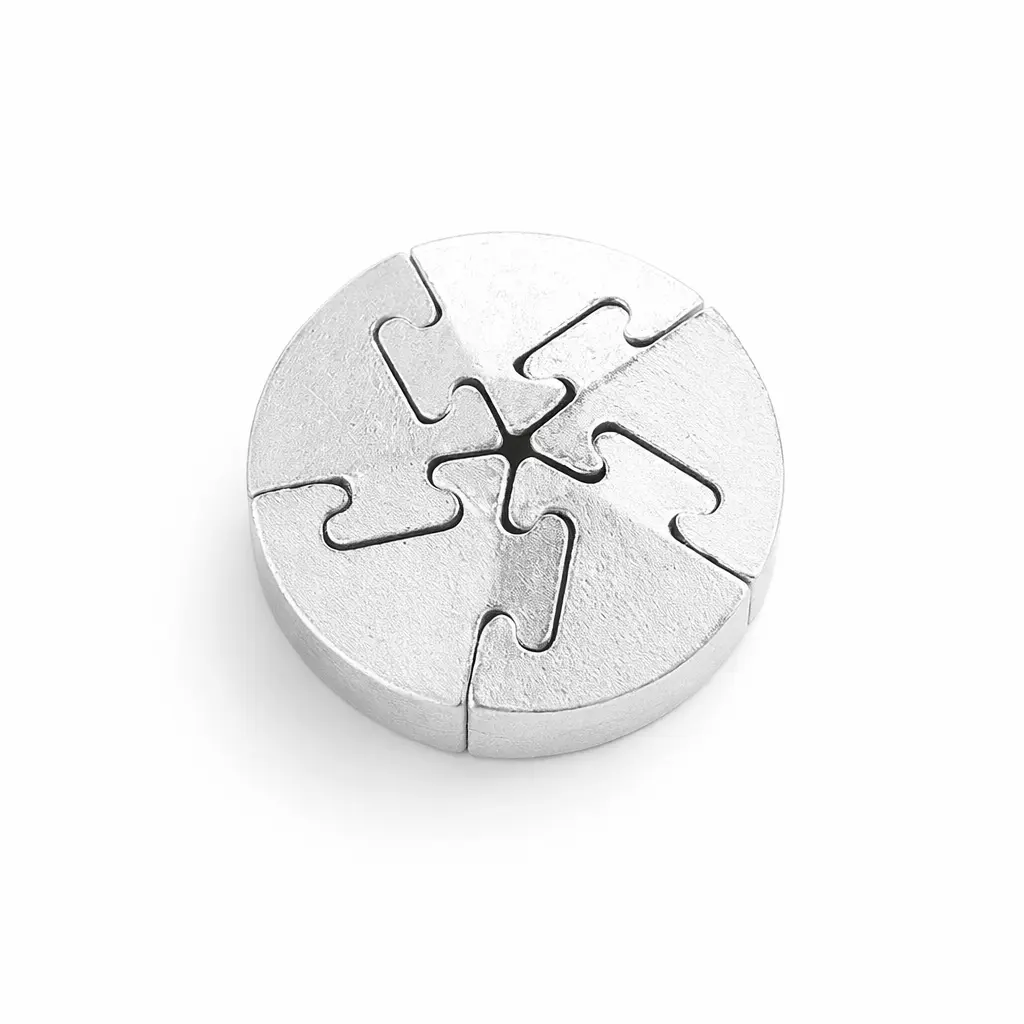
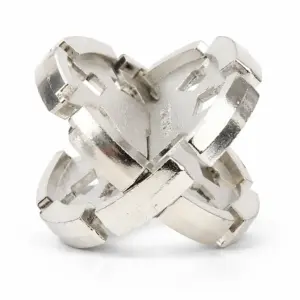
If you’ve ever been stuck on a puzzle where every piece looks identical—like the shifting sands of the Desert of Mystery—the 5 Piece Cast Spiral Metal Puzzle (check current pricing) will feel familiar. It’s a solid alloy disc comprised of five wedges. At first glance, it looks like a single, solid object.
The trick here is finding the “key” piece. In my testing, it took about four minutes to find the initial movement, but nearly twenty to actually disassemble it. The real nightmare, however, is the reassembly. Because each wedge is a mirror of the others, you can easily get four pieces into place only to find the fifth is blocked. It’s a brilliant exercise in spatial orientation that fits in the palm of your hand. It’s the kind of thing I’d recommend for anyone who enjoys classic arcade-style spatial challenges where the rules are simple but the execution is grueling.
The PEAK Moment: The “Water Temple” of Physical Puzzles
Every puzzle enthusiast has a “Water Temple”—that one challenge that feels impossible until a single, tiny realization changes everything. For me, that moment happened with a set of traditional joinery puzzles.
I once handed a guest a single piece from a complex set and asked them to find where it fit. They spent twenty minutes trying to force it into a gap that was clearly too small. The “Peak” of my puzzle-solving career wasn’t just solving a hard box; it was the realization that mechanical puzzles are a conversation between the designer and the solver. The designer leaves a gap, a loose pin, or a specific weight to guide you.
When you stop fighting the object and start listening to it, the difficulty doesn’t disappear, but the frustration does. I’ve seen a mechanical engineer struggle with a simple ring puzzle for an hour while a ten-year-old solved it in seconds. Why? Because the child didn’t assume the puzzle was “broken” or “stuck.” They just kept exploring the movement. This is the core of the Zelda experience: curiosity is more valuable than brute force.
Luban Lock Set 9 Piece
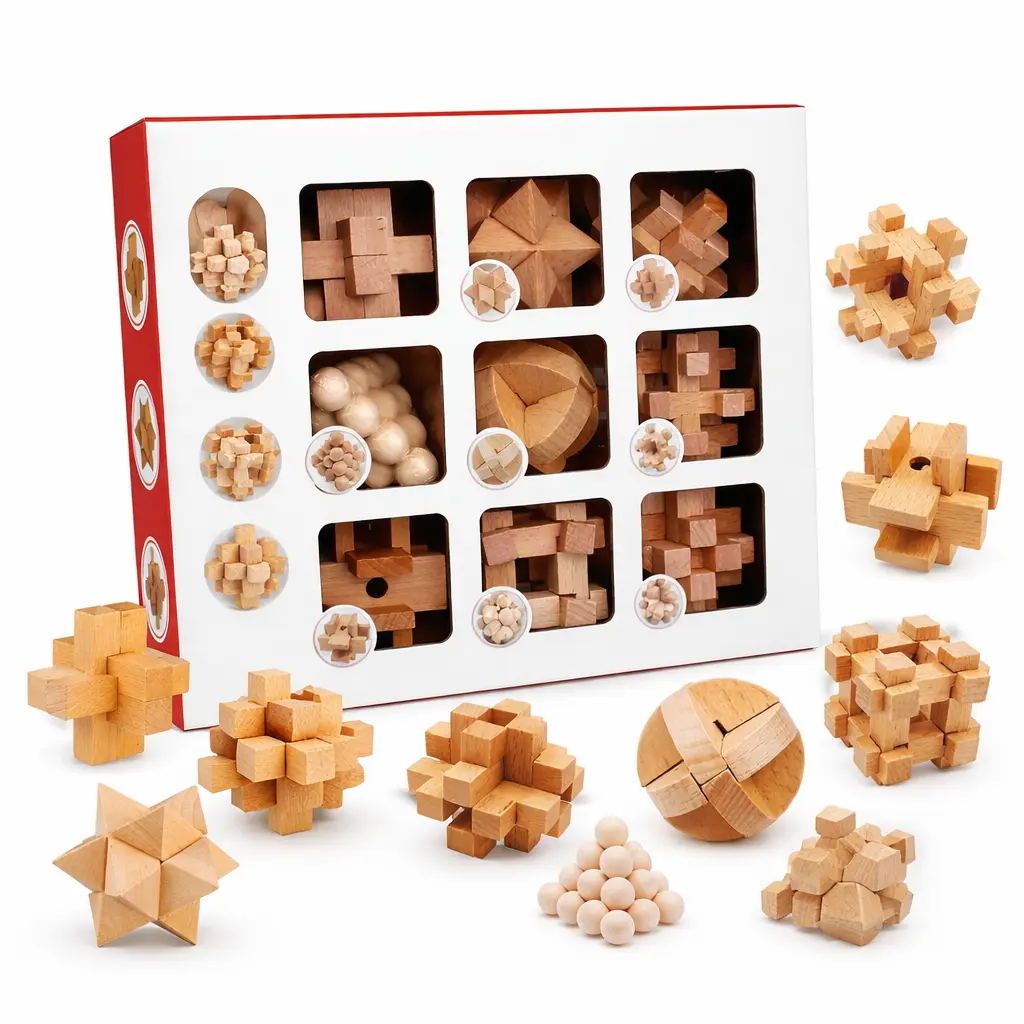
The Luban Lock Set 9 Piece is the ultimate “Water Temple” for your coffee table. Priced at $39.99, these are based on 2,500-year-old Chinese carpentry techniques. There are no nails or glue here—only mortise-and-tenon joints held together by gravity and friction.
Each of the nine puzzles in this set requires a different sequence of moves. Some are “burr” puzzles where one central piece must be slid out before the rest collapse. Others are more like the history of lock-based brain teasers, where the pieces must be rotated in a specific order. I’ve had this set for months, and I still can’t reassemble the “Ball Lock” without a few minutes of trial and error. It is a masterclass in how different alloys affect the solving experience, or in this case, how the grain and cut of wood dictate the difficulty.
The Art of the Fidget: Desk-Sized Brain Teasers
Sometimes you don’t want a “temple” solve. Sometimes you just want a “shrine”—a quick, five-minute distraction that resets your brain between tasks. This is where the smaller metal puzzles shine.
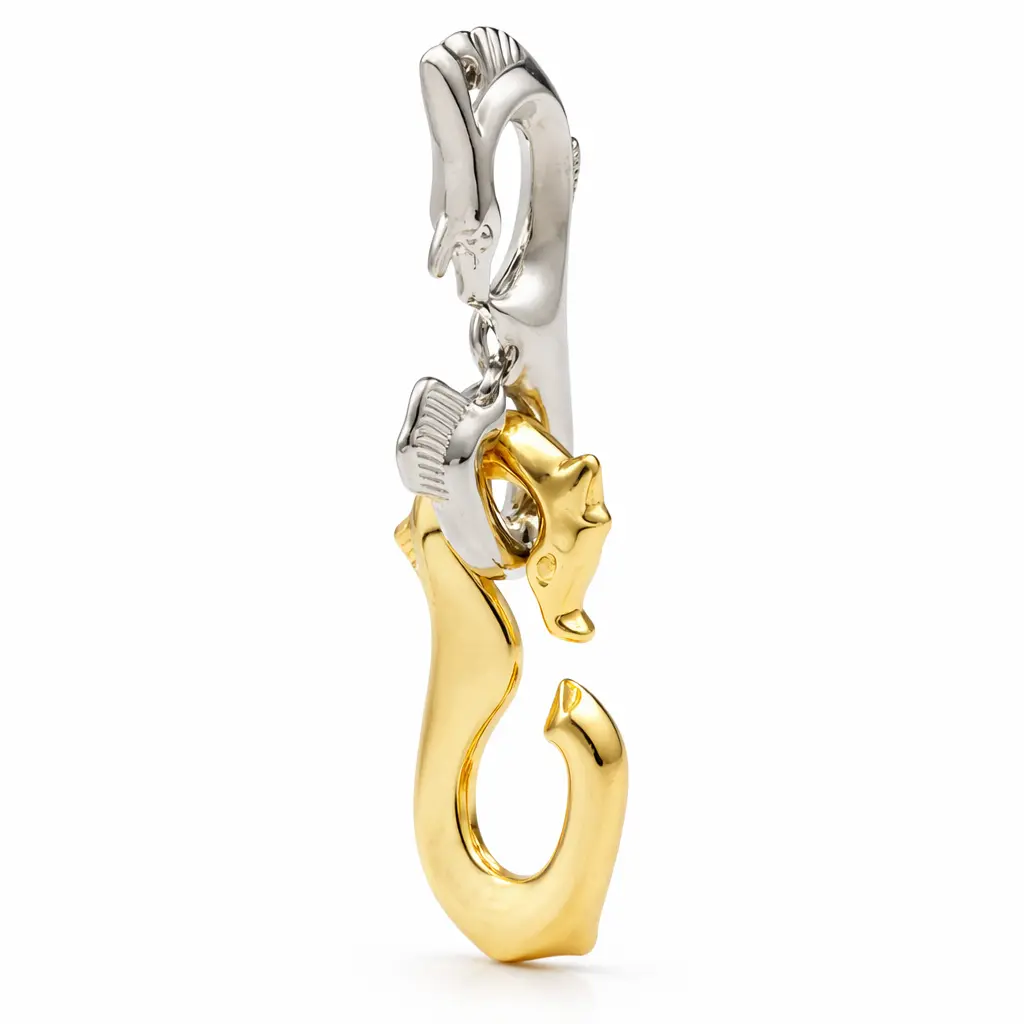
I keep the Dual Seahorse Gold & Silver Brain Teaser ($14.99) right next to my mouse. It uses a hidden screw mechanism that is incredibly intuitive once you find it, but looks like a solid knot to the uninitiated. It’s great for those moments when you’re on a long call and need to keep your hands busy.
Similarly, the Metal Starfish Puzzle Ring ($13.99) is a fantastic entry-level piece. It’s less about complex engineering and more about finding the one specific angle that allows the starfish to slip off the ring. It’s the kind of thing you’d give to someone who is just starting to build their collection, perhaps as a way of transforming a boring gift into a memorable challenge.
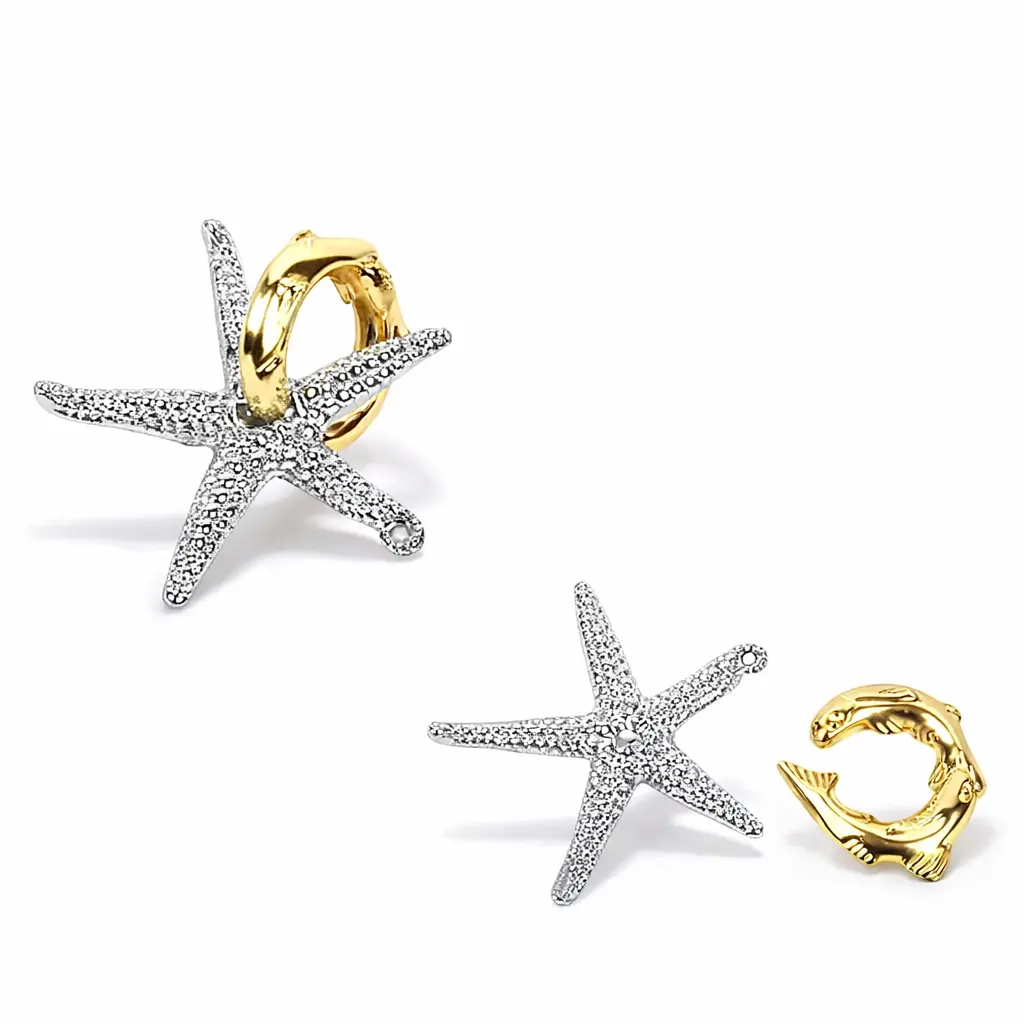
Metal Starfish Puzzle Ring — $13.99
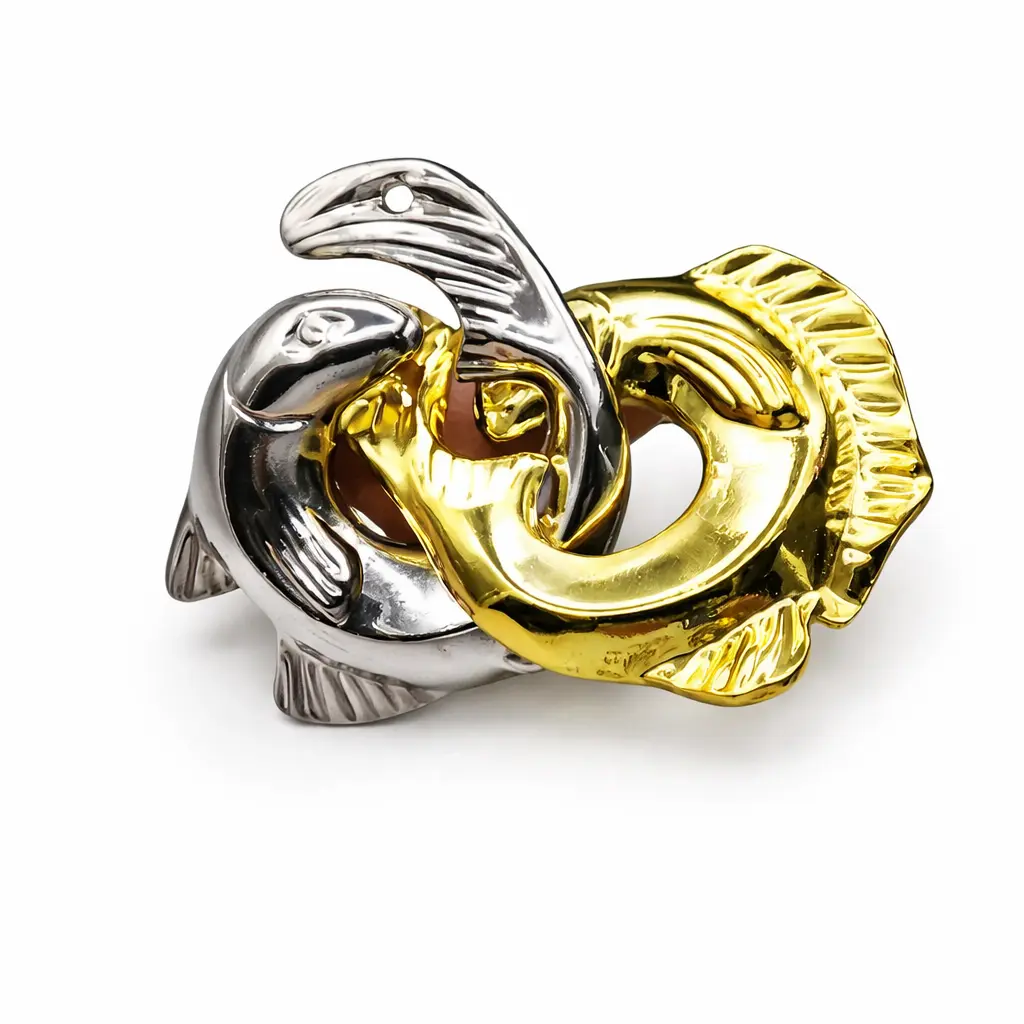
If you’re looking for something that feels a bit more “nautical”—perhaps reminiscent of The Wind Waker—the Gold Silver Double Fish Metal Puzzle ($13.99) is a solid choice. It’s a 60mm palm-sized puzzle that feels like a small artifact you’d find in a Zora’s Domain treasure chest.
Building the Legend: 3D Kits and Musical Boxes
While metal puzzles are about the “solve,” 3D wooden kits are about the “journey.” They are the “overworld” of the puzzle world—expansive, detailed, and requiring hours of dedication.
DIY Castle Music Box Night Light Shadow Box Kit
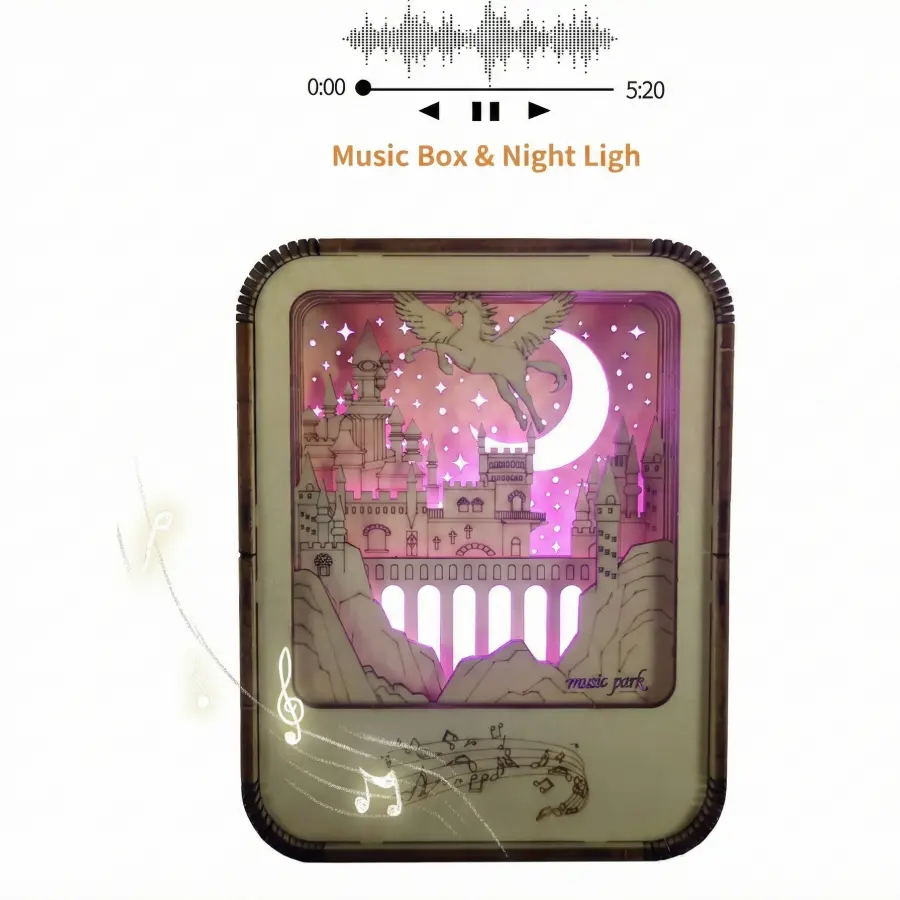
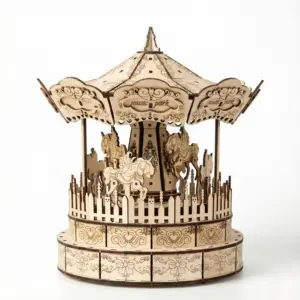
The DIY Castle Music Box Night Light Shadow Box Kit ($33.99) is as close as you can get to building your own Hyrule Castle. This isn’t just a puzzle; it’s a 28-piece mechanical assembly that combines laser-cut wood, LED lighting, and a music box.
What I love about this kit is the layering. As you assemble the shadow box, you create a sense of depth that mimics the parallax scrolling of the older Zelda games. The six LED modes allow you to change the atmosphere from a “Blood Moon” red to a “Zora” teal. It’s a therapeutic build that takes about two hours, and the result is a functional piece of art. For those who enjoy working with translucent interlocking pieces, the way the light interacts with the wooden cutouts provides a similar visual payoff.
Inline Mechanical Kits
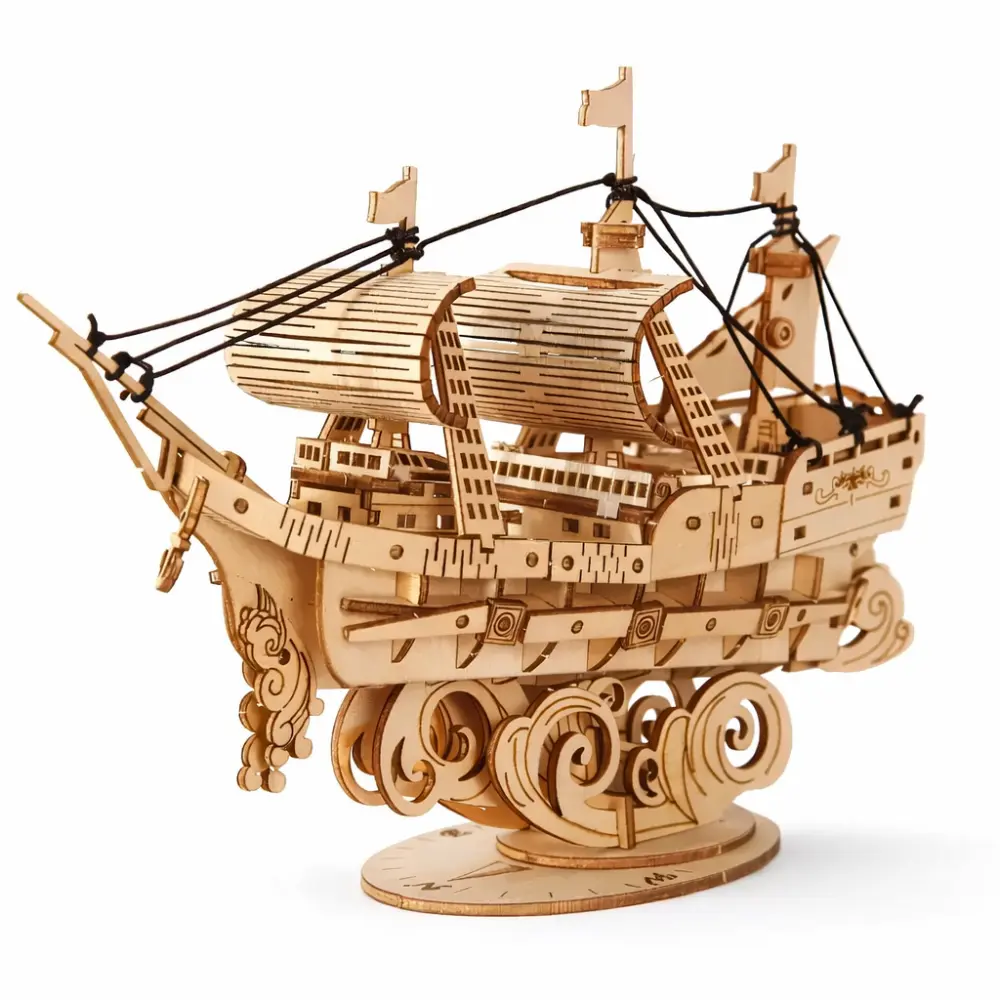
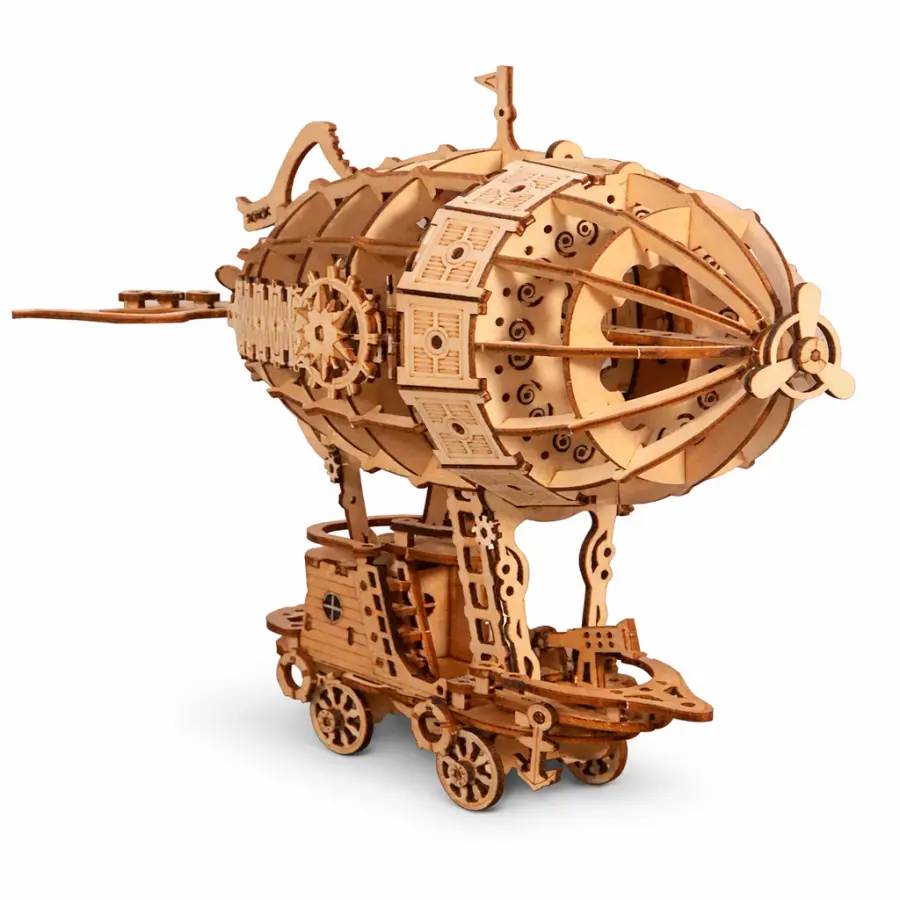
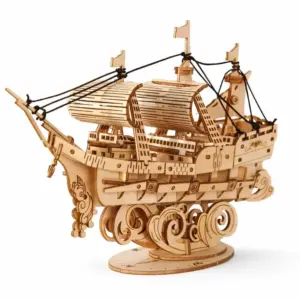
If the castle is too “fantasy” for you, there are options that lean into the “Ancient Tech” aesthetic of Breath of the Wild. The Steampunk Airship 3D Wooden Puzzle ($26.66) and the Galleon Ship 3D Wooden Puzzle Model Kit (check current pricing) both offer that retro-futuristic vibe. The airship, with its 160 pieces and spinning propeller, feels like something the Rito would use to patrol the skies.
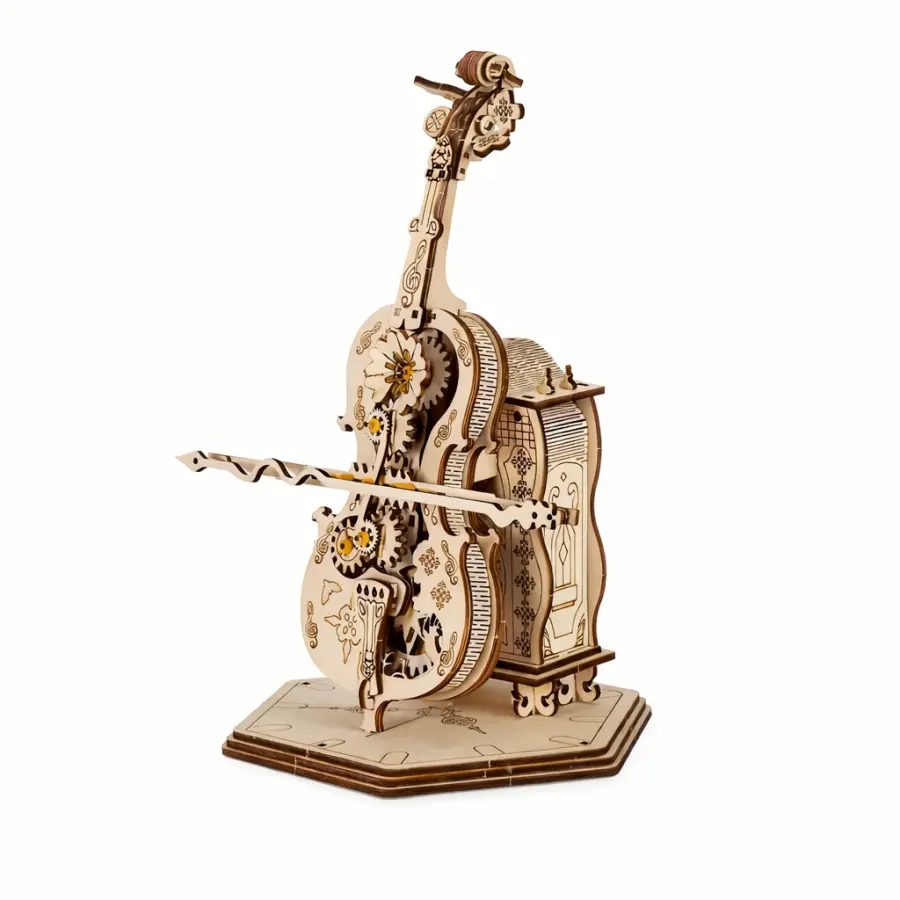
For the more musically inclined, the 3D Wooden Cello Puzzle Model Kit ($29.99) captures the elegance of the series’ legendary soundtracks. It’s a more complex build than the castle, focusing on the curves and internal gears of the instrument. It’s a great way to relive the golden age of pixelated logic while creating something tangible for your shelf.
Quick-Reference Comparison Table
FAQ: Solving the “Legend of Zelda Puzzle” Experience
What are the hardest puzzles in the Legend of Zelda series?
According to community debates on forums like Reddit, the “Water Temple” in Ocarina of Time and the “Ice Ruins” in A Link Between Worlds often top the list. However, many fans point to the “Twin Statues” puzzle in Twilight Princess as a peak of frustration. In the physical world, puzzles like the 5 Piece Cast Spiral Metal Puzzle mimic this difficulty by using identical-looking pieces that require perfect sequencing.
Are metal puzzles durable enough for kids?
Yes and no. While the Gold Silver Double Fish Metal Puzzle is made of solid alloy and can survive being dropped, metal puzzles are precision-machined. If a child tries to force the pieces together or apart, they can bend the internal gates, effectively “breaking” the logic of the puzzle. I generally recommend metal puzzles for ages 12 and up. For younger children, a wooden assembly kit is often more forgiving.
How do I solve a puzzle without a walkthrough?
The key is to change your perspective. If you are stuck on a metal puzzle, try holding it in a different light or using your non-dominant hand. Often, we get stuck in a “mental rut” where we keep trying the same move. In the Zelda games, this is where you’d use the Lens of Truth. In reality, it’s about feeling for the “give” in the metal. If it doesn’t move easily, it’s not the right way.
Do these puzzles come with instructions?
Most high-end metal puzzles, like the Cast Keyhole Gold & Silver, do not come with solutions in the box. The whole point is the discovery. If you get truly stuck, there are communities online that offer hints without spoiling the entire solve. Mechanical kits like the DIY Castle Music Box Night Light Shadow Box Kit, however, come with detailed step-by-step assembly guides.
What’s the best way to clean metal puzzles?
Over time, the oils from your hands can dull the finish of polished puzzles. A simple microfiber cloth is usually enough to restore the shine. Avoid using harsh chemicals, especially on two-tone puzzles like the Dual Seahorse Gold & Silver Brain Teaser, as you don’t want to strip the plating.
Is the Luban Lock set too difficult for a beginner?
The Luban Lock Set 9 Piece is actually great for beginners because it includes nine different puzzles of varying difficulty. You can start with the simpler 3-bar locks and work your way up to the complex spheres. It’s a great way to see how different alloys affect the solving experience—or in this case, how different wooden geometries interact.
Why do some people prefer wooden puzzles over metal ones?
Wood has a tactile warmth and a natural friction that metal lacks. Some solvers find the “clinking” of metal distracting, while the soft “thud” of wood is more relaxing. Additionally, wooden puzzles like the 3D Wooden Cello Puzzle Model Kit often double as beautiful display pieces that fit a more traditional home decor.
Can I buy Zelda puzzles that are officially licensed?
There are many officially licensed jigsaw puzzles featuring art from Breath of the Wild or Tears of the Kingdom. However, if you are looking for mechanical puzzles (the kind you take apart), the selection is much smaller. Many enthusiasts prefer “Zelda-style” puzzles that capture the spirit of the game’s logic rather than just having the logo.
What is the “Secret Found” chime in puzzle terms?
In the mechanical puzzle world, that “chime” is the physical sensation of a piece sliding freely for the first time. It’s the moment the resistance disappears and you realize you’ve cracked the code. It’s a dopamine hit that is hard to replicate with any other hobby.
How long does it take to assemble the Steampunk Airship?
The Steampunk Airship 3D Wooden Puzzle usually takes about an hour for an experienced builder, or up to two for a novice. It’s a “Level 1” build—satisfying but not overwhelming. It’s a great project for a rainy Sunday afternoon.
Are these puzzles good for stress relief?
Absolutely. Research has shown that engaging in tactile, problem-solving activities can lower cortisol levels. It’s a form of “active meditation.” When you’re focused on the Metal Starfish Puzzle Ring, you aren’t thinking about your inbox or your mortgage. You’re just thinking about the ring.
What should I look for in a high-quality metal puzzle?
Look for “clean” seams and a lack of burrs (sharp metal edges). The weight should feel substantial for its size. If a puzzle feels “tinny” or light, it’s likely made of cheaper materials that won’t hold up to repeated solves. The Cast Keyhole Gold & Silver is a gold standard for this—it feels like a solid piece of hardware.
Why do some puzzles have two colors?
In puzzles like the Gold Silver Double Fish Metal Puzzle, the two colors serve as a visual anchor. They help you remember which piece was where before you started moving them. It’s a subtle way for the designer to give you a “map” of the puzzle.
Can these puzzles be solved more than once?
Yes, but the second solve is a different experience. The first solve is about discovery; the second is about mastery. I often find that putting a puzzle back together is harder than taking it apart, as you have to reverse-engineer the logic you just discovered.
What is the best “Zelda” gift for an adult?
I would recommend the Luban Lock Set 9 Piece. It’s sophisticated, looks great on a bookshelf, and offers hours of gameplay. It’s a gift that says you respect their intelligence and their love for classic gaming logic.
The Final Solve: Why We Keep Playing
The afternoon sun has moved across my desk, and the brass pin that was mocking me is now part of a disassembled heap of metal. The frustration is gone, replaced by that quiet, smug satisfaction of having outsmarted a piece of inanimate matter.
We don’t solve these puzzles because we have to; we solve them because they remind us that every problem has a solution if you’re willing to look at it from a different angle. A “Legend of Zelda puzzle” isn’t just a toy—it’s a reminder of the curiosity we felt the first time we stepped out onto Hyrule Field.
If you’re ready to start your own quest, I’d suggest beginning with the Cast Keyhole Gold & Silver ($13.99). It’s the perfect introduction to the “Aha!” moment that has defined the Zelda series for forty years. It taught me more about the value of a slow, deliberate approach than any strategy guide ever could.
Next, you might want to explore the mechanics of hidden joints and seams to see how the world of wooden trickery compares to the precision of metal. The journey is the reward, and the next secret is always just one “click” away.