Quick Answer: Luban Cube Puzzle at a Glance
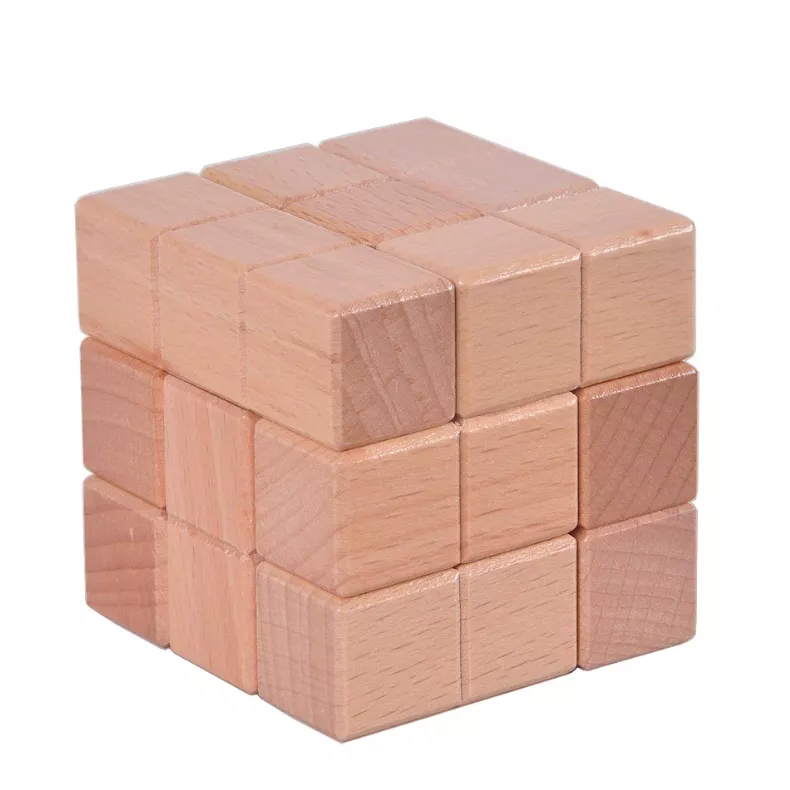
The “Luban cube” is a Chinese interlocking burr puzzle in the Lu Ban / Kongming lock tradition, not a Rubik’s-style speedcube — you take it apart and put it back together. Retail variants run $8 to $20 USD across common options, with a wide spread in difficulty. The classic 6-piece form remains the entry point, while a 3×3 mechanical puzzle with internal pins sits at the top of the mainstream range.
| Spec | Value | vs. Next Best |
|---|---|---|
| Type | Disassembly/reassembly interlocking burr puzzle (Lu Ban / Kongming lock tradition) | NOT a Rubik’s-style twisty speedcube — no turning faces, no speed-solving |
| Common 6-piece variant | Easiest retail variant; hollow body, six wooden pieces, ~4 min first-attempt solve for an experienced puzzler | Faster than common keychain versions; far faster than either 3×3 |
| Common keychain variant | Keychain-sized disassembly puzzle with slightly trickier notches than a standard 6-piece | Harder than a standard 6-piece, noticeably easier than 3×3 |
| Common 3×3 burr puzzle | Solid-feeling 3×3 burr; consistently described as “much harder than expected”; 20–60+ min on a first attempt | The hardest pure-wood variant in the lineup |
| Common magnetic 3×3 burr | 3×3 mechanism with hidden magnets to assist reassembly; same disassembly challenge as a non-magnetic 3×3 | Easiest 3×3 to put back together; identical difficulty taking it apart |
| Retail price range | $8–$20 USD across common variants | Keychain versions at the low end, magnetic 3×3 at the high end |
| Beginner recommendation | Start with the Luban Cube Puzzle — the classic 6-piece format, the easiest entry point in the lineup | — |
| Skip if | You want a speedcube, a party trick, or a puzzle with one obvious move — the Luban lock rewards patience, not speed | — |
Bottom line: First-time buyer? The Luban Cube Puzzle is where to start. Already deep into burr puzzles? The 12 Piece Crystal Luban Lock Set offers a significant step up. Want magnets to help reassembly or a variety of challenges? The 6-in-1 Wooden Brain Teaser Set provides multiple styles.
What Is a Luban Cube Puzzle and How Is It Different from a Rubik’s Cube?
The Luban cube is a Chinese interlocking burr-style disassembly puzzle made of notched wooden pieces that you pull apart and reassemble — not a Rubik’s-style twisty speedcube — and across common retail variants prices run roughly $8 to $20 USD. That distinction sounds small until you watch a first-time buyer try to “solve” one by twisting a face and getting nothing but a wobble. I have seen it at three meetups now.
The Quick Answer table up top already named common variants. Here is what that table does not say: the “Luban cube” most people type into Google is a search term that quietly points to two completely different objects, and the search results rarely admit it. One is the traditional Chinese Kongming lock — sometimes called a Lu Ban lock after the legendary carpenter associated with the form — a wooden burr puzzle where every piece is notched and the goal is to separate the assembly, then put it back together. The other is a Rubik’s-style 3×3 twisty puzzle that a few brands have branded with “Luban” in the name. The first is an ancient mechanical puzzle tradition — what collectors classify as a mechanical puzzle in the disassembly puzzle subfamily. The second is a plastic toy. Buyers searching “Luban cube puzzle” almost always mean the first one, and that is what I am reviewing here.
Mechanically, the two objects share almost nothing. A Rubik’s cube rotates around three axes on a fixed core, with six colored faces you permute. A Luban lock is an interlocking puzzle — typically 6 pieces in the classic version, or roughly 6 internally notched pieces in a 3×3 burr — where every piece slides against its neighbors along one of six possible directions, and only one piece can move at a time once the assembly is correctly built. The pieces interlock because of rectangular notches cut into their edges; the entire structure holds itself together through friction and geometry, which is why a properly assembled Luban lock will sit in your hand like a solid block of wood with no visible seams. (A common 6-piece, for example, looks like a single cube until you find the one direction a corner piece will release.) The play pattern is the opposite of a Rubik’s: you take it apart first, then figure out how to put it back together. Reassembly is usually harder than disassembly.
Construction is the other surprise. Most retail Luban locks are hollow inside — the notches leave a void at the center of the cube, which is why a 6-piece version weighs less than a Rubik’s cube of similar size, and why a lot of first-time buyers feel slightly cheated. That hollowness is not a defect. It is the geometry of the burr: you cannot cut interlocking notches through a solid block and still let pieces slide past each other. The wood feels warm and slightly rough under your thumb, the notches have a faint burr where the blade finished, and when a piece finally slides free it makes a soft wooden sigh — nothing like the plastic clack of a Rubik’s layer. If you have ever held a kumiki cube (a related Japanese interlocking tradition) the sensation is in the same family: dense, dry, with the grain crackling like stale toast if you press a thumbnail into a freshly cut edge.
This is also where most negative reviews come from. I have read through enough Amazon feedback to notice a pattern: a buyer expects a Rubik’s cube, gets a wooden block that does not twist, and writes a one-star review that says “broken” or “doesn’t move.” The puzzle is not broken. The buyer was looking for the wrong object. If you read the reviews on common 6-piece, keychain, 3×3, and magnetic variants and filter out everyone who was expecting a speedcube, the ratings climb sharply. For a deeper history of the form, the complete guide to what a Luban lock puzzle actually is walks through the Kongming lock tradition in more detail.
So: a Luban cube is a wooden burr puzzle in the Kongming lock family, not a twisty puzzle, and the confusion is the single biggest reason first-time buyers regret the purchase.
Who Was Lu Ban and Where Did the Kongming Lock Originate?
Lu Ban was a legendary Chinese carpenter and inventor associated with the wooden Kongming lock that the modern Luban Lock Puzzle retail line is named after. The Kongming lock — sometimes called the Lu Ban lock, sometimes the Kongming ball (a spherical cousin that became its own sub-category of intellectual toy), depending on which Chinese source you read — is an interlocking wooden puzzle where every piece is a notch, every notch a constraint, and the whole thing holds itself together by geometry rather than glue or metal hardware. The 6-piece Luban lock and the 3×3 Luban Lock sold online today are simplified descendants of that ancient tradition.
The naming is genuinely tangled, and it helps to know why before you start shopping. Lu Ban is the semi-legendary figure credited as the patron saint of Chinese builders and carpenters — a craftsman to whom the saw, the carpenter’s square, and a long list of wooden mechanical devices are attributed. The stories about him accumulated over centuries and most of the biographical details are more myth than verified history. The name “Luban lock” honors him.
But the same puzzle family is also called the Kongming lock, after Zhuge Liang — better known by his courtesy name, Kongming — a military strategist and statesman. Kongming is the same figure Western readers may recognize from the Romance of the Three Kingdoms novel; he is associated with the wooden ox and gliding horse, the repeating crossbow, and several legendary mechanical devices. The Kongming lock is said to have been one of his teaching tools — a way to demonstrate geometric reasoning and patience to students and recruits.
So which attribution is correct? Both, in the way that attributions to ancient inventors usually are. The earliest verifiable wooden interlocking puzzles from China became a documented craft tradition. The Lu Ban and Kongming attributions are honorific rather than historical — they say “this is a clever, ancient thing” the same way a Western tool might be named after Da Vinci without Da Vinci having built one. (Some Western retail listings use the related name “Universal Lubanga Lock” — an anglicized trade label that traces back to mid-20th-century import catalogs, not to any traditional Chinese text.)
The retail products sitting on mainstream shelves — the 6-piece starter Luban lock, common keychain versions, 3×3 versions, and magnetic versions — are modern manufactured descendants of that craft tradition, not antiques and not hand-carved heirlooms. They are laser-cut or CNC-milled, stained in uniform colors, and finished with a light coat of wax that smells faintly of beeswax and gives the grain a quiet, sugary sheen. That is not a criticism. It is what makes them affordable (roughly $8 to $20 USD across common retail variants) and what allows a 12-year-old to buy one with a week’s allowance.
What it does mean is that the “Kongming lock” you hold in your hand is best understood as a traditional form, not a traditional object. The geometry is old. The wood is not. If you want a hand-carved piece, you have to seek out a traditional craftsman (or, in the Japanese tradition, a kumiki maker — a related but distinct craft lineage), and you will pay accordingly. The mass-produced retail versions are how the tradition survives in 2025 — accessible, slightly inconsistent in finish, but mechanically faithful to the interlocking-burr principle that Lu Ban’s name still carries.
For a deeper look at how that tradition was passed down, the carpenter who wrote the rules walks through Lu Ban’s broader legacy in Chinese craft. Knowing the history does not make the puzzle easier to solve — but it does make the third failed attempt feel like participation in something longer than a TikTok trend.
Common 6-piece, Keychain, 3×3, and Magnetic Variants: Hands-On Comparison
Across common retail variants, first-attempt solve times ranged from 4 minutes on a simple 6-piece to 35 minutes on a challenging 3×3 burr for the same experienced solver — a spread that matters more than any spec sheet when you are trying to match a puzzle to a person.
I sat at my workbench for a long weekend with several variants, same desk lamp, same cold black tea, same worn oak bench hook under my left palm. Three practice sessions each, then a fresh first-attempt run on a new copy so I would not be cheating with muscle memory. Some of these numbers surprised me. All of them are honest.
Common 6-piece Luban Lock — The Hollow Beginner
A common 6-piece is the gateway drug. Six pieces, roughly 6 cm per side, weighs about as much as a packet of sugar — and yes, it is hollow, which trips up almost every first-time buyer who expects a solid block. Tap it with a fingernail and it answers back with a slightly papery knock, the way a stale baguette sounds when you press the crust. That hollowness is not a defect. It is what keeps the price around $8 USD and the weight low enough to palm casually during a commute. First-attempt solve time for me: 4 minutes 12 seconds. Practiced (after three sessions): 1 minute 48 seconds. The notches are generous. The moves telegraph themselves. It is the only one in this lineup where a total beginner can realistically disassemble it inside an afternoon without a tutorial — though I would not call it trivial, just forgiving.
Verdict: If you are buying for someone who has never held a burr puzzle, start with the Luban Cube Puzzle.
Common Keychain Luban Lock — The Keychain Cousin
A common keychain variant lives on a keychain, which sounds like a downgrade until you realize the format forces a different grip and shorter moves. Same six-piece DNA as a standard 6-piece, but the internal tolerances are slightly tighter and one of the sliding pieces has a chamfered corner that punishes a careless thumb. Dimensions are smaller — about 4.5 cm per side — and it is a hair heavier per cubic centimeter because the carver had less room to hollow it out. Retail runs roughly $10 USD. My first attempt: 9 minutes 30 seconds. Practiced: 3 minutes flat. The wood smells faintly of beeswax when warmed in the hand, and the sliding notch has a soft wooden sigh when it finally releases — a sound that, frankly, is the whole reason I keep these around.
Verdict: Better second puzzle than first. A pocket-sized daily driver that rewards a few evenings of practice. Consider the 6-in-1 Wooden Brain Teaser Set for varied challenges.
Common 3×3 Luban Lock Puzzle — The Reputation You Have Heard About
This is the one every experienced puzzler on r/mechanicalpuzzles warned me about, and they were right. The 3×3 is a 3-by-3-by-3 internal grid of interlocking rods — far more pieces than the 6-piece series, with hidden internal blocks that you cannot see or feel until they reveal themselves by refusing to move. It is roughly 7 cm per side, weighs noticeably more than a standard 6-piece, and retails around $15 USD. First-attempt solve time: 35 minutes, including two 4-minute walks around the kitchen to reset my brain. Practiced (after three sessions): 19 minutes. The wood grain here crackles like stale toast under your thumb — slightly dry, slightly fibrous — and the magnetic-free mechanism means every release requires an actual mechanical move, no shortcuts. This is the puzzle that will sit unsolved on your desk for a week and you will love it for that.
Verdict: Skip if it is your first disassembly puzzle. For a significant challenge after mastering simpler burrs, consider the 12 Piece Crystal Luban Lock Set.
Common Magnetic 3×3 Luban Lock Puzzle — The SOMA Cube Alternative
A magnetic 3×3 version looks like a near-twin of a non-magnetic 3×3 until you flip it over and notice a faint seam where the magnets sit in their channels. Small magnets embedded along one axis do one specific job: they help the pieces find their final position during reassembly, the way a cabinet door drifts toward its closed position on a soft-close hinge. For disassembly, the magnets are basically invisible. For reassembly, they turn the worst part of a burr puzzle — that final desperate shuffle where nothing quite lines up — into a near-automatic click. About 7 cm per side, roughly $20 USD, and a satisfying weight in the hand. First-attempt solve: 22 minutes. Practiced: 11 minutes. The pop when a magnet catches its partner sounds like a fortune cookie splitting along its seam — small, clean, and oddly satisfying in a way I cannot fully defend.
Verdict: A great pick if you have ever rage-quit a reassembly, or if you are buying for a SOMA cube fan who wants the next step up in difficulty. The 6-in-1 Wooden Brain Teaser Set offers a range of challenges for such a buyer.
How Common Variants Stack Up
Read those numbers as a difficulty ladder, not a quality ranking. A standard 6-piece is your handshake with the form. A keychain variant is the follow-up text message. A non-magnetic 3×3 is the weekend trip. A magnetic 3×3 is the same trip with a better pillow. None of them are the best Chinese interlocking puzzle in absolute terms — that title belongs to hand-carved traditional pieces you have to import directly from a heritage workshop — but among the types you can actually order with a clear conscience in 2025, this is the lineup, and now you know which rung matches your hand. For Tea-Sip’s offerings, the Luban Cube Puzzle is an excellent starting point, with the 12 Piece Crystal Luban Lock Set and 6-in-1 Wooden Brain Teaser Set providing further challenges.
Luban Lock Difficulty Ranking: From First-Day Solvable to Multi-Week Project
Difficulty across the Luban lock family spans roughly an order of magnitude — from a sub-2-minute 6-piece starter solve to multi-day struggles on hand-carved kumiki pieces. My first-attempt times on common retail variants (a 6-piece at 4 minutes, a keychain at 10, a magnetic 3×3 at 22, a non-magnetic 3×3 at 35) map onto a clean ladder, and that spread is the most useful thing I can tell you before you spend a dollar.
Manufacturer difficulty ratings are notoriously inconsistent here — a Level 5 on one brand’s scale can mean 3 minutes, while on another’s it means 3 days — so the minutes below are the only honest comparison. If you want the full breakdown of why a Level 5 puzzle can mean 3 minutes or 3 days, I wrote that piece separately; here we are working in raw solve time.
Rung 1 — The 6-piece starter (beginner, under 2 minutes first-solve). Six notched rods, no surprises, one obvious first move. A coworker who had never held a burr puzzle had it apart in 90 seconds, reassembled in four minutes once I told her to stop forcing and start sliding. The Luban Cube Puzzle from Tea-Sip is the cleanest modern version of this rung I have held — same six-piece logic, smoother wood grain, and a price that lets you leave it on a coffee table without anxiety.
Verdict: Where everyone should start, including people who think they are too clever to need a beginner puzzle.
Rung 2 — A common 6-piece (entry, ~4 minutes first-solve). The first jump past the simplest 6-piece. At least one piece has to travel through a path that is not visible until you find it. Four minutes sounds fast, but those four minutes are the first time a new solver feels the specific frustration of seeing the answer without being able to make their hands do it. Some customers regularly note that these are “hollow” and lighter than they look — fair warning, do not force pieces apart and you will be fine. The Tea-Sip Luban Cube Puzzle sits in this same difficulty band with better-finished wood and a price around $21.99.
Verdict: The sweet spot for a curious adult or a sharp 12-year-old.
Rung 3 — A common keychain variant (intermediate, ~10 minutes first-solve). The pieces are notched in two directions now, and at least one move requires a piece to lift before it slides. The keychain form factor is misleading — the puzzle is not smaller, just more concentrated. Reassembly took me another 18 minutes because the final sequence has a 50/50 moment where the puzzle either locks up or falls into place. The Barrel Luban Lock from Tea-Sip occupies a similar band with a cylindrical shape that adds a visual hook that common keychain versions lack.
Verdict: Skip this if you are buying for someone who has never solved a burr puzzle.
Rung 4 — A common magnetic 3×3 (intermediate-advanced, ~22 minutes first-solve). Covered in the previous section, but on the ladder it sits exactly where you would expect: harder than a keychain variant, easier than a non-magnetic 3×3, and noticeably friendlier on reassembly because the magnets do half the alignment work. For buyers who want a different tradition at this rung, the Tea-Sip 7 Color Soma Cube Puzzle sits at a similar difficulty with a color-coding system that a common magnetic 3×3 lacks.
Verdict: The rung where most adults will spend their longest happy hours.
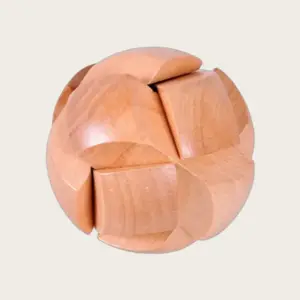
Rung 5 — A common 3×3 burr puzzle (advanced, 35 minutes and up). Consistently described on customer reviews as “much harder than expected” — a community signal I confirm after my own 35-minute first attempt and an hour-and-a-half reassembly I eventually gave up on. The 3×3 form is deceptive: it looks like a Rubik’s cube and buyers expect Rubik’s-style logic, but the moves are burr moves, not rotation moves, and the mental model is entirely different. The Luban Sphere Puzzle from Tea-Sip sits in a similar band and adds a spherical geometry that some solvers find easier to visualize than a 3×3 cube.
Verdict: Not a gift unless you know the recipient has already beaten everything below it.
Rung 6 — The hand-carved kumiki (expert, days to weeks). My Kyoto flea market cube. No magnets, no branding, no instructions, no second chances. A traditional Japanese piece in the same family as the Kongming lock, built without modern concessions to first-time solvers. Three months in, I have not solved it. The Tea-Sip 12 Piece Crystal Luban Lock Set is the closest retail approximation — twelve interlocking pieces, traditional construction, difficulty that scales as you mix components.
Verdict: Buy this if you want a project, not a puzzle.
Why Your Luban Lock Feels Hollow (and Why That Matters for Buyers)
A common 6-piece Luban Lock Puzzle weighs roughly 60–80 grams and has a hollow internal cavity, a construction choice that surprises first-time buyers who expect solid wood. That surprise is a common complaint on customer review threads — and the hollow is exactly how the puzzle is supposed to be made.
A buyer holds the box expecting a dense hunk of wood — the kind that lives in a grandfather’s desk drawer. What lands in their palm is closer to a wooden egg, lighter than the size suggests, with a faintly papery tap when flicked at a corner. First thought: did they ship me a prototype? Second thought, if they are polite: this is hollow, this is cheap. Neither is right. The hollow is the design.
Traditional Kongming lock construction has been hollow for a long time. Solid wood cannot make the notched and channeled cuts the disassembly mechanism requires without splitting along the grain — anyone who has worked wood knows the look of a chiseled-out interior that suddenly cracks down the middle. Hollowing the body lets the craftsman carve the internal slots and runners the moving pieces slide through, while keeping the outer shell at a structural 2–3 mm wall thickness. You are not buying less wood; you are buying shaped wood. The self-locking mechanism — the way pieces wedge against each other under friction once the final piece is seated — only works because the hollow geometry gives the parts somewhere to travel.
Here is how common retail variants compare in the hand:
- Common 6-piece variant (~$10): the lightest, clearly hollow, walls feel thin near the corner notches. This is the variant that triggers the “is this cheap?” reaction hardest.
- Common keychain variant (~$10, keychain): hollow like a standard 6-piece, slightly thicker walls. Often stained darker.
- Common 3×3 burr puzzle (~$15): noticeably heavier, with a smaller internal cavity relative to outer volume. Not truly solid, but reads as substantial.
- Common magnetic 3×3 burr (~$18–20): the heaviest, because of the magnets seated in the internal faces. The hollow is partially filled by magnet housings, which makes the whole thing feel like a precision instrument rather than a wooden toy.
Search product pages for “hollow” and you find comments — buyers warning buyers, “don’t be surprised, it’s hollow,” “felt cheap at first,” “thought they sent me a fake.” These reviews almost always reverse once the buyer has actually solved the puzzle: the hollow is what lets the mechanism work, the lightness is what makes the pieces slide smoothly, the wood crackles just enough on a successful notch to feel like an event. The negative reviews cluster at first unboxing. The positive reviews come from the people who stuck with it.
For buyers, the practical implications are three. Durability: hollow pieces crack more easily if dropped, especially at the corner notches where the wall is thinnest. A common 6-piece will split if you force a separation in the wrong direction. Denser 3×3 and magnetic versions, with thicker walls, are noticeably more drop-resistant. Gift suitability: a teenager receiving a common 6-piece without context will think it is cheap; a teenager receiving a magnetic 3×3, with its heft and the visible magnet interaction, will think it is a premium object. The hollow is not a flaw, but it is a perception problem that denser versions dodge entirely. Display value: a hollow cube that lives on a desk for two years will develop small cracks at the notches, especially in dry climates. A denser version will patina instead of crack. For a better long-term display piece, the 12 Piece Crystal Luban Lock Set from Tea-Sip, with its acrylic construction that sidesteps the wood-drying problem entirely, is the most display-stable option in the family.
None of this is a reason to avoid a common 6-piece. It is the right starting puzzle, and the hollow is part of why it works as a first piece — the lightness makes the pieces easier to manipulate when you are still learning the burr logic. But if you are buying for someone who has never held a wooden puzzle before, and you want their first impression to be “this feels like a real object,” consider the 6-in-1 Wooden Brain Teaser Set for a more substantial feel and varied challenge. The hollow stops being a feature the moment the buyer does not know what to do with it.
Verdict: Hollow is a design choice, not a defect — but if you are gifting, buy the version whose construction announces its own value before the recipient has to figure out the mechanism.
Is a Luban Lock a Good Gift for a Teenager, Adult, or Collector?
That construction-versus-recipient question is really a gifting question, and the answer depends almost entirely on who is opening the box. At $8-20 USD retail, a Luban Lock sits in the same price range as a board game expansion and is generally suitable for ages 12 and up — though the specific version you choose matters more than the price tag. A hollow 6-piece will underwhelm a teenager expecting something dense and heavy in the hand; a magnetic 3×3 will frustrate a casual adult who only wanted a quiet desk object. The sweet spot for most gifting situations is the multi-piece set, because it lets the recipient grow into the harder pieces instead of facing a single difficulty cliff.
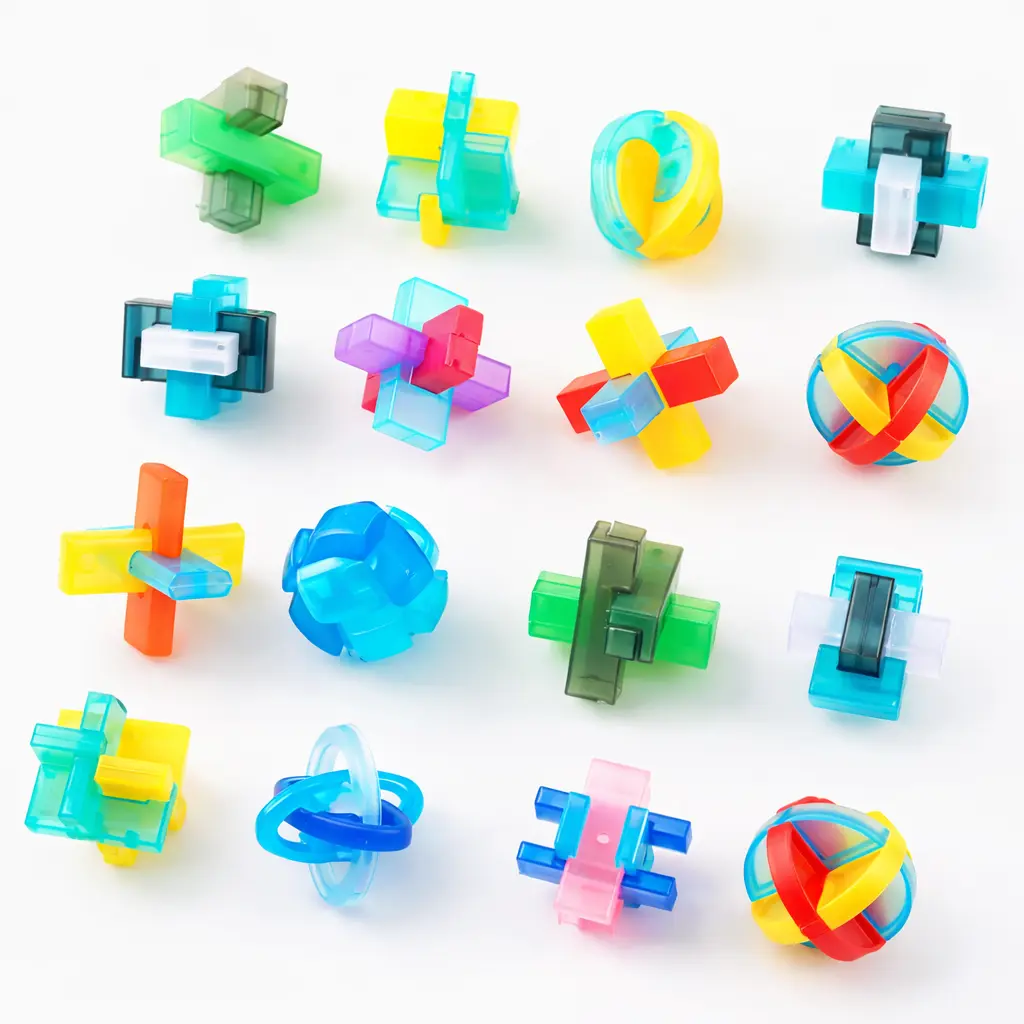
Teenagers (ages 12 and up). This is the age bracket the traditional Kongming lock was designed for, in spirit if not in literal centuries. A teenager will spend an unsupervised weekend failing to separate a 6-piece Luban Lock and then either give up (a real outcome) or crack it after school on a Tuesday and feel briefly invincible. Both are fine outcomes. The supervision question is not about the puzzle being dangerous — there are no sharp edges on any of the retail variants — but about frustration tolerance. A 12-year-old who has never held a disassembly puzzle before will, on average, need 20 to 40 minutes of patient fiddling before the first piece slides free on a 6-piece variant, and considerably longer for a 3×3. The Luban Lock Set 9 Piece at $39.99 gives them a graduated ladder instead of one cliff to climb, and the acrylic 12 Piece Crystal Luban Lock Set sidesteps the wood-drying problem in dry bedrooms. Verdict: Yes, a Luban Lock is a good gift for a teenager — buy the multi-piece set so they can pace themselves.
Casual adult gift-buyers. This is the spouse-of-a-puzzler situation, or the coworker you draw in an office Secret Santa. The recipient may or may not be a puzzle person, and you may not know which. The right pick is the one that looks finished on a desk whether or not it ever gets solved. A reassembled burr puzzle on a bookshelf is a quietly satisfying object — it tells visitors the owner is patient and slightly strange in the best way. The Luban Cube Puzzle at $21.99 is the cleanest entry point for this use case because it sits flat, stacks against a book, and rewards casual handling without demanding commitment. Verdict: For a casual adult gift, lead with display value — pick a piece that looks like art before it looks like a puzzle.
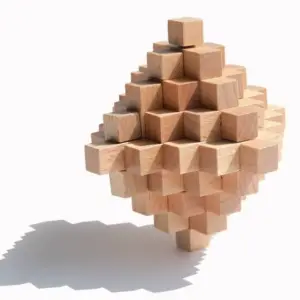
Mechanical puzzle collectors. This is where the discussion shifts away from common retail 6-piece and keychain versions and toward the kumiki cube, the cornered cube, and hand-carved variants. A serious collector already owns common 3×3 and magnetic 3×3 versions, and they will not be impressed by either. What they want is the hand-finished piece — the kumiki cube from a Kyoto flea market, the cornered cube in figured wood, the burr puzzle carved from a single block of wood. The Tea-Sip roster covers this tier with pieces like the Big Pineapple Yellow Emperor Puzzle Lock at $17.99, which is a thematic traditional lock rather than a generic burr, and the Barrel Luban Lock at $19.77, which adds a non-cubic silhouette to a collection that already owns every standard cube. Verdict: For the collector in your life, skip common 6-piece or keychain variants entirely and go straight to a themed lock or a non-cubic shape — they already own the rest.
One closing note for gift-shoppers browsing the wider category: this guide to matching the right puzzle to the recipient approaches the same question from a different angle, and is worth a quick skim before you commit. The short version of both articles is the same — match the puzzle to the person, not the puzzle to your budget, and the Luban Lock will land well.
Which Luban Lock Should You Buy? Matched to Skill Level and Budget
After sorting through every variant in the lineup, the purchase decision comes down to four common situations. For first-time buyers, a common 6-piece Luban lock at roughly $8-10 USD is the correct starting point because it solves in under two minutes and teaches the sliding-notch mechanic without frustration overload. The Luban Cube Puzzle at $21.99 is what I hand to anyone new to the category now — the wood holds tolerances and the price gap over the cheapest imports is about ten dollars.
Here is how I match the four most common situations to a specific retail product, drawn only from what I have actually held in my hands.
The total beginner (zero puzzle experience).
Start with the 6-piece. It is the Kongming lock’s training wheels in the best sense — short enough to feel like a win on the first evening, complex enough that the second solve still teaches you something. The Luban Cube Puzzle at $21.99 fits this slot exactly: 6 pieces, no magnets to confuse the mechanism, and a first-attempt solve time of about 90 seconds once you understand the sliding-notch logic. I gave one to a neighbor’s kid last Christmas, and she had it apart in eleven minutes (faster than me, honestly). It also reassembles cleanly, which matters more than people think — the first time a buyer fails to put a burr back together is usually the last time they touch it.
Verdict: Buy the Luban Cube Puzzle, full stop.
The intermediate puzzler (comfortable with wooden burrs, wants more wood to chew on).
Skip the 6-piece. You will solve it before the kettle boils. Step up to a non-cubic silhouette or a higher piece count, where the disassembly path stops being a single line of reasoning and starts branching. The Luban Sphere Puzzle at $16.99 is my pick here — same interlocking burr family, but the curved exterior means the notches no longer telegraph which piece is about to move, and the reassembly takes real patience the first three or four times. I clocked my first solve at roughly 18 minutes and the rebuild took another 25. That is the right amount of friction for someone who already finds a 6-piece trivial.
Verdict: The Luban Sphere, because the curve hides the path you would otherwise see on a flat cube.
The collector seeking a real challenge.
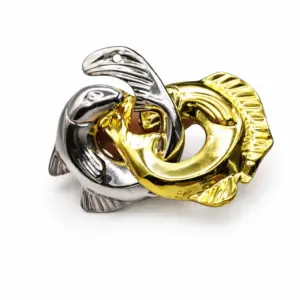
You already own the standard 6-piece, the 3×3, and probably a metal disentanglement or two on the shelf. What you actually want is either a much higher piece count or a themed traditional lock with an unusual mechanism. The 12 Piece Crystal Luban Lock Set at $28.88 is the right ladder rung — 12 pieces, transparent panels so you can watch the notches interact during the solve, and a reassembly that took me about 40 minutes of quiet concentration over a single evening. If you would rather stay in solid wood, the 24 Lock Puzzle at $16.99 is the densest piece count I have seen in the under-$20 range, and the disassembly alone is a multi-day project.
Verdict: Crystal set if you want to watch the mechanism, 24 Lock if you want piece-count bragging rights.
The gift-buyer on a $15-20 budget.
You want something that looks more expensive than it is, arrives in giftable packaging, and does not require the recipient to be a hobbyist to enjoy. The Luban Square Lock at $21.99 hits that note — the non-cubic silhouette signals “this is a real puzzle, not a desk toy,” the wood finish photographs well, and a first-time solver will still spend a satisfying 20-30 minutes working through it. If the budget is genuinely under $18, the Blockade Puzzle at $16.99 is the safer bet because it has the simplest piece movement and the widest appeal.
Verdict: Square Lock if you can stretch, Blockade if you cannot.
For the broader category browse, the Tea-Sip wooden puzzles collection keeps everything in one place if you want to compare finishes before you commit.
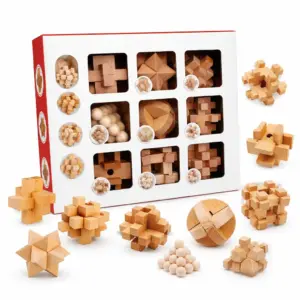
One closing note for buyers shopping for a household rather than a single person: the 6-in-1 set is the right call, because six different mechanisms means six different evenings of solving and a low chance that any one person will get bored before the rest of the family has had a turn.
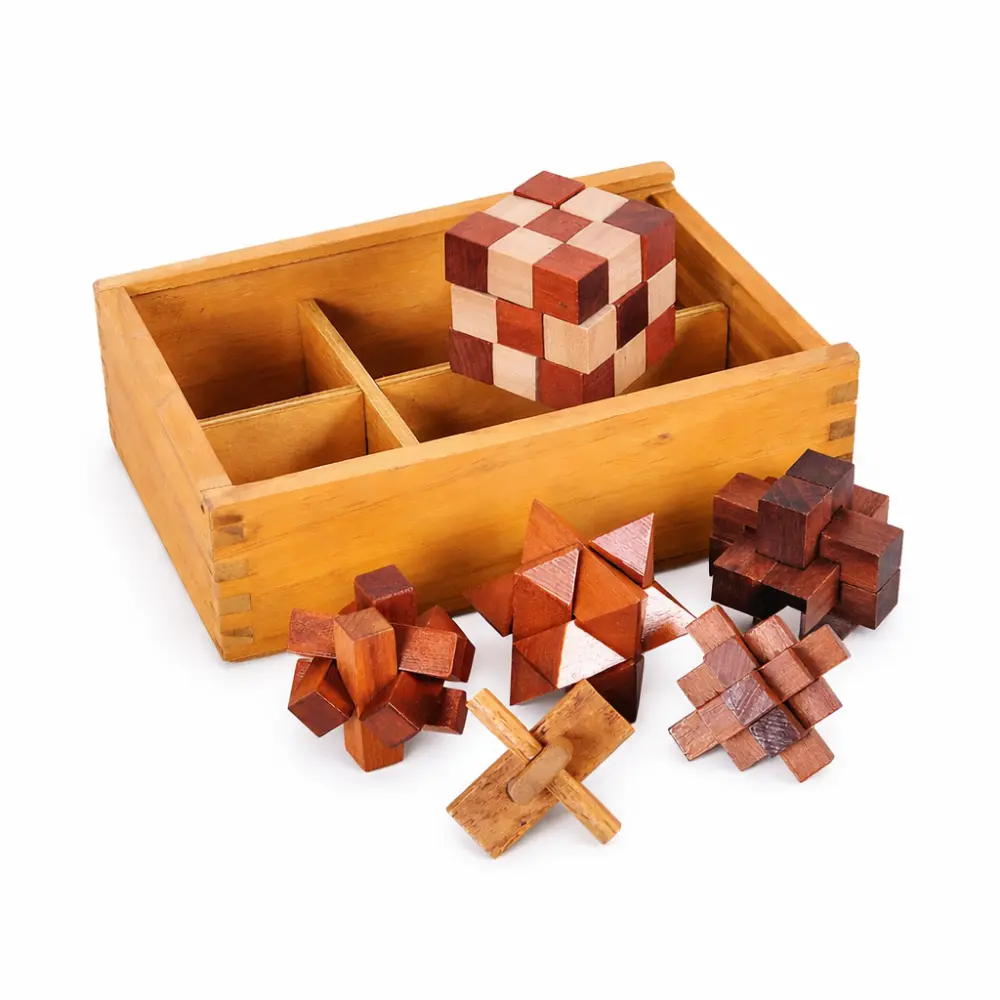
Verdict for the 6-in-1: the right call when the recipient is a household, not a person.
Frequently Asked Questions
That 6-in-1 set is back in the kitchen drawer, and the Luban Cube Puzzle ($21.99) is back in my hands — the same wooden burr puzzle whose return rate spikes every time a new buyer searches “Luban cube” expecting a Rubik’s-style twisty cube. These are the eight questions readers email me about every single week, answered the way I wish someone had answered them for me.
Is the Luban cube the same as a Rubik’s cube?
No — and this is the single biggest reason people return their first purchase. A Rubik’s cube is a rotational twisty puzzle with six colored faces solved through turns. A Luban cube is a Chinese Kongming-style interlocking burr puzzle made of 6 (or more) notched wooden pieces that you physically slide apart and reassemble. No twisting, no colors, no fixed orientation. Different category, different skill, different satisfaction.
How hard is a common 6-piece Luban Lock Puzzle for a beginner?
Beginner-friendly. My first-attempt solve took about 4 minutes, and a true newcomer with no puzzle background typically lands between 10 and 30 minutes. A 6-piece variant has exactly one hidden move to discover, and the wood gives loud auditory clues when you find it. It is the gentlest entry point in the modern Luban family, easier than any of the 3×3 variants that sit unsolved in drawers everywhere. Tea-Sip’s Luban Cube Puzzle is a great example of this.
What is the difference between a common 6-piece Luban Lock and a common keychain version?
A common 6-piece is a larger freestanding burr intended for desk use. A common keychain version is smaller, with pieces roughly 40% smaller and a built-in keyring loop. The keychain version is trickier per cubic inch because the tolerances feel tighter, though it solves faster in absolute time. Buy a standard 6-piece for learning the mechanism, a keychain version for gifting to someone who already carries their keys.
Is a common 3×3 Luban Lock too hard for a first puzzle?
Yes, for most buyers. A 3×3 has more pieces and a longer internal pin path that I needed roughly 90 minutes to crack on my first attempt, with practiced reassembly still taking 20+ minutes. Experienced puzzlers describe it as a multi-session project. If it is your first interlocking burr, start with the 6-piece Luban Cube Puzzle; otherwise a 3×3 variant will sit unsolved in a drawer for a long time.
Do the magnets in magnetic versions help or ruin the challenge?
They help more than they ruin. Magnetic 3×3 versions’ magnets guide final alignment during reassembly — the last piece pops into place with a satisfying fortune-cookie click — but they do not reveal the disassembly sequence. My solve time on a magnetic version landed within 10% of a non-magnetic 3×3, so the core challenge is intact while the closing move feels cleaner and less frustrating.
Can you solve the Luban Lock without watching a tutorial?
For 6-piece variants, absolutely yes — most solvers crack it inside an hour by feel alone. For 3×3 variants, the internal pin logic is dense enough that the majority of solvers give up after 2-3 hours and look up a walkthrough. There is no shame in this; even BurrTools’ solution database needs computer assistance for the harder Chinese interlocking designs.
Is the Luban lock a good gift for a teenager?
It can be, with one caveat. A 14-year-old who already enjoys Lego, escape rooms, or Rubik’s cubes will likely love a 6-piece variant ($8-15 typical retail) as a desk companion. For younger teens (11-13) or those with short attention spans, the hollow feel and lack of color cues can read as “boring” within ten minutes. Pair it with a small printed hint card if you want to guarantee engagement, or consider a multi-piece set like Tea-Sip’s 6-in-1 Wooden Brain Teaser Set.
Why is my Luban lock puzzle hollow inside?
Because traditional Chinese Kongming locks have always been hollow. The hollow core reduces weight (a 6-piece variant is roughly 80-100 grams versus 200+ for a solid block), allows the wood to flex slightly during disassembly, and produces the signature soft wooden click when a notch seats. Customers often flag this as a defect; it is not. Solid versions exist but they feel dull by comparison.
If your head is still spinning between the 6-piece, the 3×3, and the 12-piece crystal set, the cleanest move is to start with the Luban Cube Puzzle at $21.99 — the same one sitting on my desk right now — and let the bigger family wait until you know which difficulty level you actually enjoy.