Quick Answer
For an office metal fidget that won’t disturb coworkers and won’t read as a toy, a compact cast-metal disentanglement puzzle is the strongest default — silent, weighted, and visually defensible as a desk object rather than a gadget. Choose a magnetic haptic clicker only if you accept some click, and a precision spinner only as a between-call pocket item. Three checks decide every pick: noise level, desk presence, and tactile durability — and the right answer for most open-plan and meeting-heavy desks is a cast metal puzzle that satisfies all three at once.
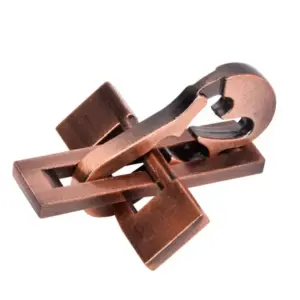
The Cast Hook Metal Brain Teaser fits that slot: cast metal, no moving bearings, no click profile, and a shape that reads as a small desk object — a paperweight-class item you can solve one-handed during a call.
Quick decision table
| Mechanism | Noise profile | Desk presence | Motion | Best office scenario |
|---|---|---|---|---|
| Cast metal disentanglement puzzle | Silent (no bearings) | Reads as a desk object | Two-handed problem-solving | Open-plan desk, on-camera meetings |
| Magnetic haptic clicker | Variable — some models ship with 3 levels (loud–quieter–quiet) | Reads as a tech gadget | Click | Private desk, solo focus |
| Precision spinner | Silent spin, light start tap | Pocket item, not a desk object | Spin | Between-call reset, walking |
| Sliding coin / triple slider | Silent | Compact, neutral | Slide | Quiet reading, slow background motion |
| Infinity cube | Soft click possible | Mid — geometric, noticeable | Fold | Casual desk, low-stakes calls |
A cast puzzle also sidesteps the two failures that sink most office fidgets: the Velcro-ripping click profile that reviewers flag as unusable, and the brightly colored toy look that fails the office camouflage test. For buyers who already want a desk object and a hand challenge in the same item, the full office metal brain teaser buying guide maps cast puzzles against sliders, clickers, and spinners in more detail.
01. The Noise Budget: How Loud Is Too Loud in Which Room
The comparison table above shows what each mechanism sounds like at a glance — the practical question is which of those sounds belongs in which room. Match the mechanism to the room first, and the mechanism to the task second: a metal fidget passes the office test only if its peak sound falls below the room’s existing ambient noise. Keyboard chatter sets the ceiling for open-plan desks, pen clicks set the ceiling for shared offices, and phone notifications set the ceiling for video calls.
That single rule is what the meeting noise budget framework reduces to. Instead of asking “is this fidget quiet?” — a question with no fixed answer — you ask “what is the loudest sound this fidget makes, and what office sound is it louder than?” The answer decides whether the toy survives your environment before the first minute of the first meeting.
Here is the reference scale most office buyers fall back on, drawn from sounds already accepted at a desk:
- Mechanical keyboard keystroke — the loudest sound that goes essentially unnoticed in an open-plan office
- Ballpoint pen click — the upper limit for a shared private office or quiet meeting room
- Phone notification chime — the threshold most people still consider polite in a video call
- Velcro rip — the dividing line between usable and unusable; reviewers describe any fidget louder than this as “impossible to use for any length of time”
Any fidget that exceeds the Velcro line at peak — a sharp snap, a plastic pop, or a ratcheting click — fails the noise budget the moment you sit down. A reviewer testing a Velcro-style fidget clicker found the rip sound made the toy unusable past the first few seconds, and abandoned it entirely. That is a structural failure of the mechanism for shared rooms, not a personal preference.
A magnetic haptic clicker with stepped settings — some Amazon listings advertise “3 noise levels: loud–quieter–quiet” — gives you control within the same mechanism. You can run the quietest setting in a client call and the middle setting at your private desk without swapping tools. The trade-off is that you are still carrying a gadget-shaped object some readers will read as a toy, and the “loud” step on the same device can still breach the Velcro line if you forget to switch it down.
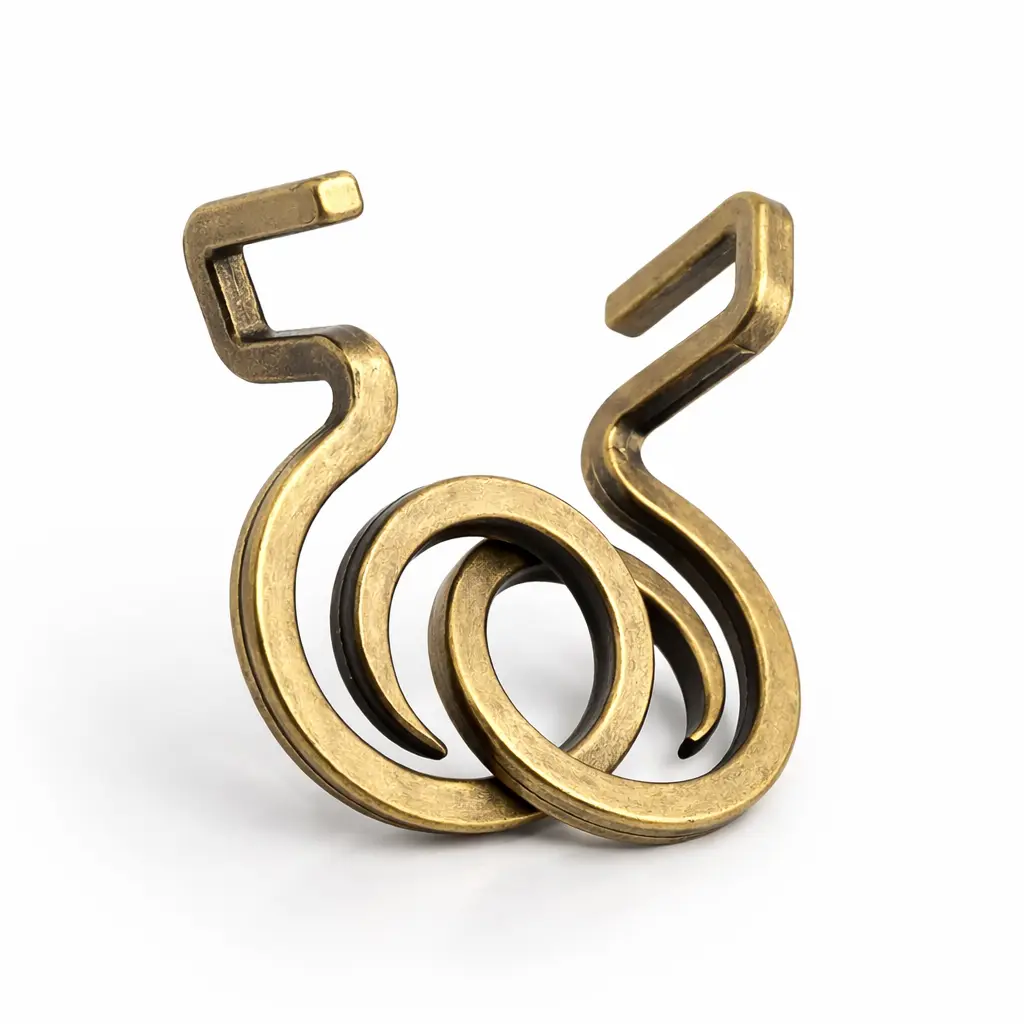
A silent mechanism removes the question entirely. A cast coil pocket puzzle makes no sound at all — no bearings, no magnets, no click. It is two-handed problem-solving in a piece of metal small enough to live in a desk drawer. The noise budget for that category is zero, which is the only value that passes every room test without adjustment.
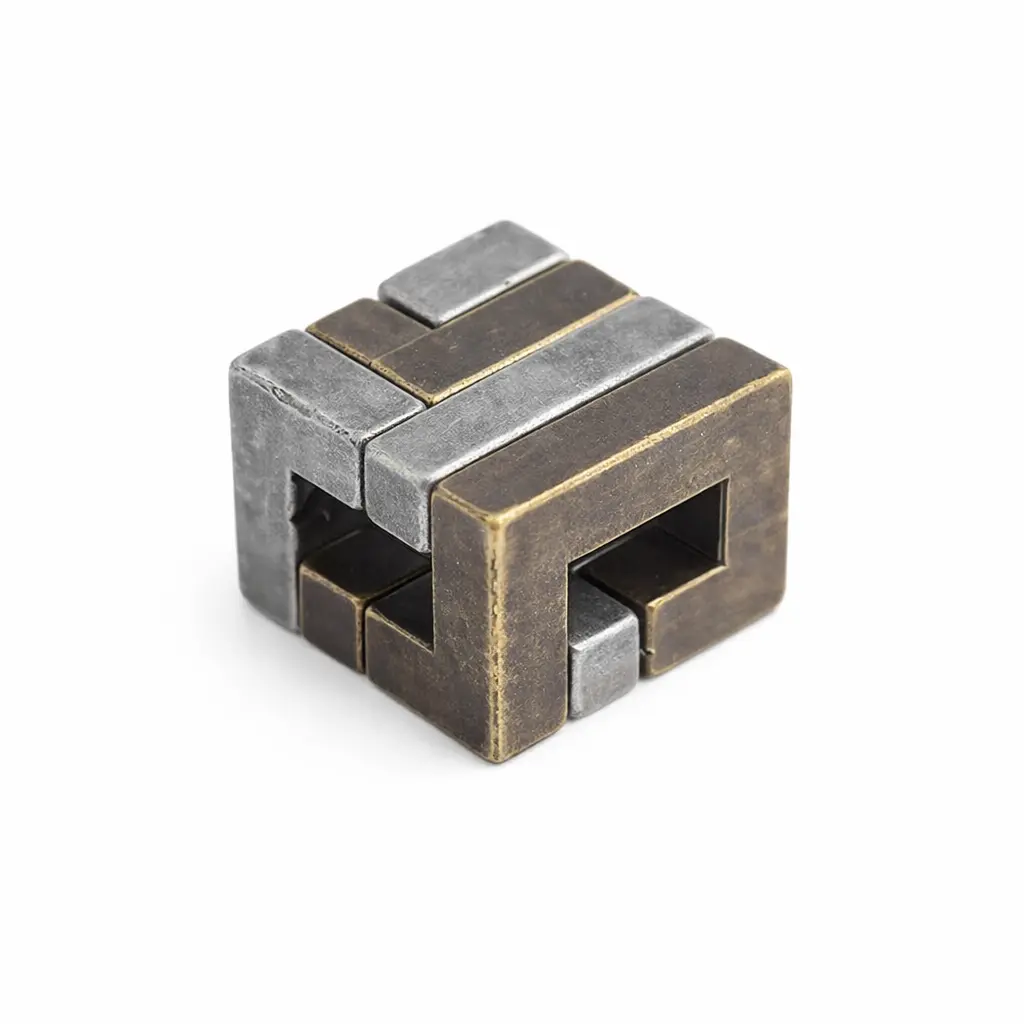
Cast Coil Pocket Puzzle — $18.99
A quick self-check for any product page: scan the listing for words like “crisp click,” “loud snap,” or “satisfying pop.” Those are the marketing language for sounds that will fail the noise budget. Listings that describe a toy as “silent,” “whisper-quiet,” or “desk-friendly” are at least pointing toward the right end of the scale — though only an in-hand test in the actual room confirms the match. For buyers who can’t test first, a zero-sound mechanism is the only default that survives every office environment without a setting to remember.
For a deeper comparison of decibel readings across fidget types, data-driven decibel tests for quiet environments run the same reference scale against specific mechanism categories.
02. The Desk Camouflage Test: Why ‘Doesn’t Look Like a Toy’ Matters
Once the noise budget is under control, the second filter is visual: will this object survive a coworker’s glance without being read as a toy? If a fidget could plausibly be mistaken for a paperweight, a keychain, or a piece of desk hardware, it passes. If it looks branded, brightly colored, or novelty-shaped, it fails — regardless of how quiet it is.
The reason this filter exists is practical. A fidget that reads as a toy gets put away when someone walks by, hidden during video calls, and never used when focus actually matters. r/ADHD posters describe the out-of-sight-out-of-mind problem: a fidget in a drawer does nothing for concentration during a long meeting. r/BuyItForLife threads frame the same need from the other side — asking for “high-quality desk toys/decor/fidgets (for very ‘professional’ adults with ADHD)” — and the answers lean toward objects that double as decor: machined metal pieces, glass-topped spinners, and compact disentanglement puzzles with neutral finishes.
The desk camouflage test applies three questions to any candidate before you buy:
1. Is it branded? Stickers, logos, character art, or licensed IP read as a giveaway item, not a personal object. Unbranded pieces — especially those with a plain cast or machined finish — blend into a desk. A small engraved mark is fine; a full-wrap graphic is not.
2. Does it have bright colors? Primary reds, electric blues, and neon greens signal “toy” instantly against a monitor, a notebook, and a pen. Gunmetal, brushed silver, warm bronze, brass, and matte black read as office-appropriate metal. r/fidgettoys users consistently note that a fidget “left out all the time” is one that matches the desk palette.
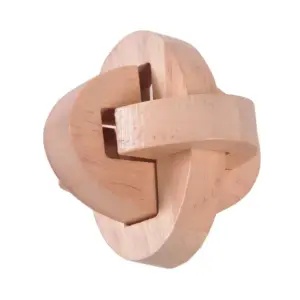
3. Could it pass as a paperweight or a pen? A heavy, compact metal object that sits flat and doesn’t roll can be a paperweight. A cylindrical piece the size of a marker can pass as a pen. A spinner with a visible bearing cap usually fails. A cast metal disentanglement puzzle with a closed-form silhouette — shaped like a knot, a hook, or jewelry — passes.
Mechanism matters here. Precision spinners with exposed bearing caps fail more often than closed-form puzzles. Loud clickers fail the moment they make sound on camera. Haptic coins are borderline. A cast metal disentanglement puzzle is the strongest camouflage because it reads as an object first and a puzzle second.
The Cast Hook Metal Brain Teaser fits all three checks: no visible branding, a neutral cast metal finish that matches wood desks and leather notebook covers, and a closed silhouette that reads as machined jewelry. At $13.99, it sits in the price range where cast metal feels substantial rather than disposable.
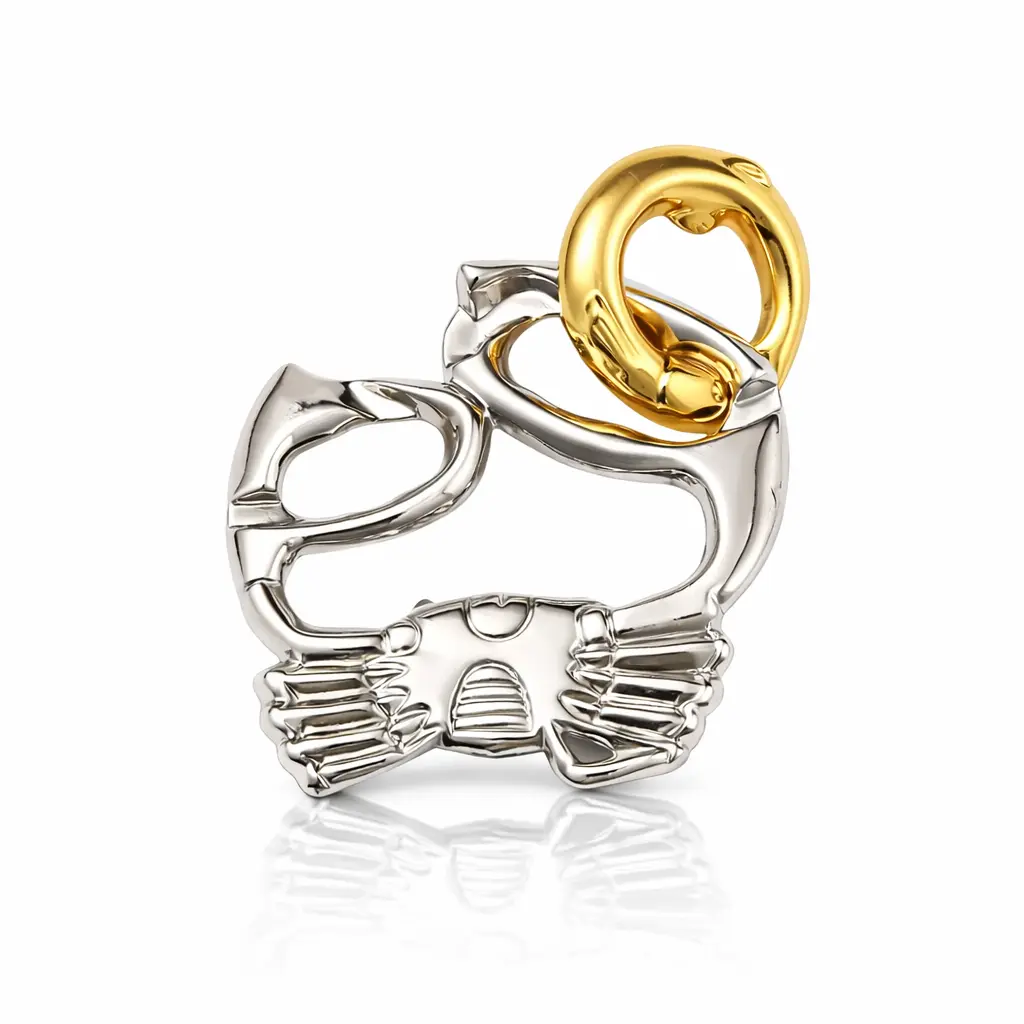
The Metal Crab Puzzle Cast Brain Teaser with Gold Ring passes the same three tests with a warm antique-bronze finish and a sculptural silhouette that disappears into a desk composition. Both pieces sit at $13.99, within the range where cast metal reads as a real object rather than a novelty.
A practical next step: photograph your desk in natural light and place the product image — or the physical object if you already own similar pieces — against that background. If the silhouette clashes with the monitor, notebook, and pen tray, the camouflage score is low and the toy ends up in a drawer. If it disappears into the composition, it will get used.
For a wider survey of pieces that pass this test, 8 quiet executive-grade metal puzzles for your office desk walks through similar camouflage scores across mechanism types.
03. Mechanism Match: Which Motion Fits Which Work Task
Once a fidget passes the desk camouflage test, the next question is motion-to-task fit. Match the mechanism to the specific work moment — focused reading, on-call waiting, post-meeting reset, deep-work entry — because the wrong motion for the room is the most common reason a fidget ends up in a drawer. A metal slider moves. A spinner spins. A clicker clicks. Each motion has a natural office scenario, and each fails the moment you mismatch it.
| Mechanism | Noise profile | Visibility on desk | Motion type | Best work scenario |
|---|---|---|---|---|
| Slider / haptic coin | Silent to faint haptic | Low — reads as a small metal object | One-directional push or click | Focused reading, deep work, quiet calls |
| Precision spinner | Silent (bearing hum only) | Medium — still associated with the 2017 fad | Continuous rotation | Breaks between calls, post-meeting reset |
| Magnetic clicker (3-level) | Adjustable: loud → quieter → quiet | Low to medium | Repetitive click | Private desk; not open-plan meetings |
| Roller (aluminum or steel) | Silent | High — weight signals “real object” | Linear glide | On-call waiting, standing-desk pacing |
| Infinity cube (metal) | Faint click at fold | Medium | Sequential snap-and-flip | Visual focus during long reads |
| Cast disentanglement puzzle | Silent | High — sculptural, reads as decor | Problem-solving | Post-meeting reset, between-task transition |
The Flipo Flip illustrates the cost of mismatch. Reviewers note it is “more active than many other fidget toys” and “not ideal for serious meetings,” though enjoyable for “breaks, casual office use, or skill-based play.” That is a mechanism designed for a specific moment. Forcing it into a quiet conference call is the mistake.
Sliders and haptic coins win the open-plan office. Reddit’s r/ADHD thread on professional settings surfaces a related logic: “spinning rings, pens that you can unscrew & take apart (silently)” — objects whose motion is either invisible to neighbors or produces zero decibels at desk distance. A cast disentanglement puzzle operates on the same principle but adds a cognitive layer: the hands work while the mind settles into a single thread.
A metal slider moves across the desk. It produces no click profile, no bearing hum, nothing the person on your left can hear.
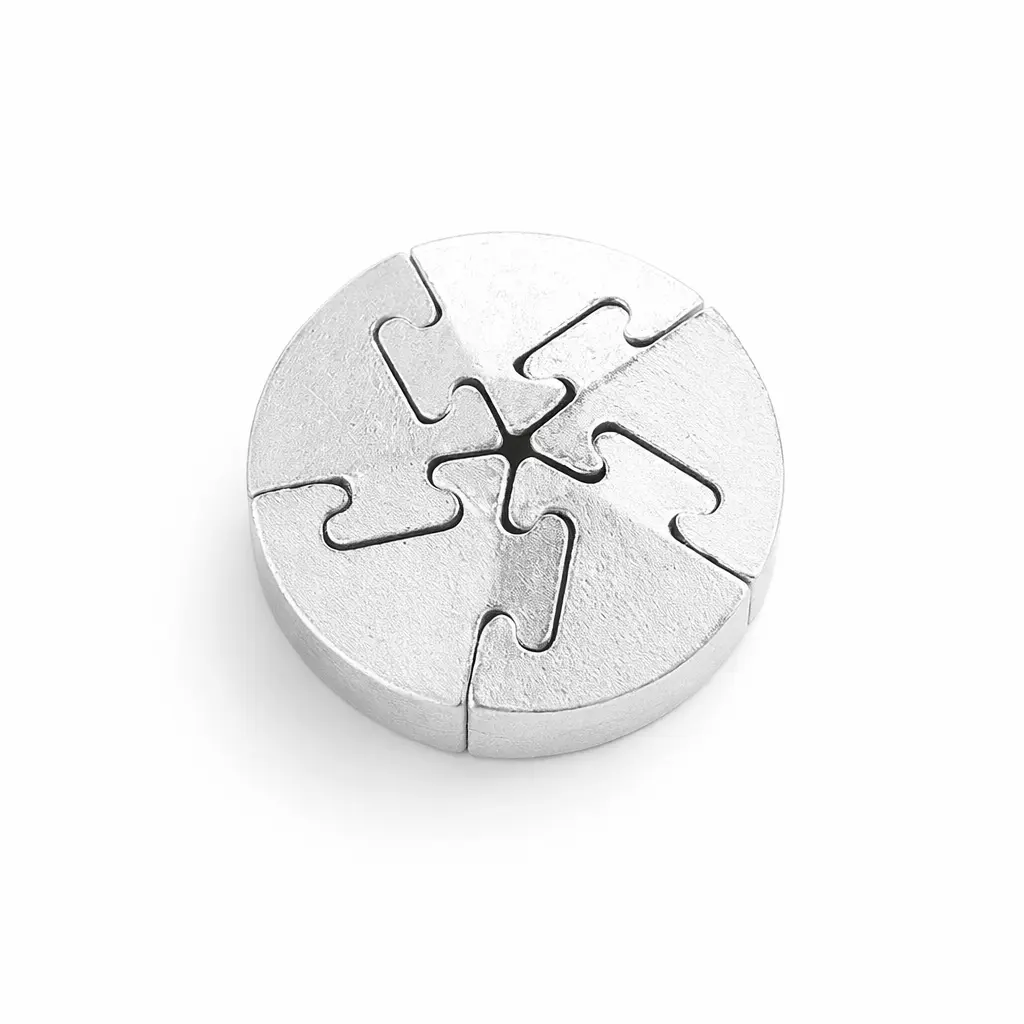
Rollers, including aviation-grade aluminum and stainless steel designs, earn the on-call waiting slot because their weight signals “object” rather than “toy.” An r/fidgettoys user describes an ONO roller as “great quality, quiet” — the same combination industry guides recommend for “aviation-grade aluminum rollers or metal infinity cubes” in office settings. The motion is linear, contained, and produces no click profile.
Infinity cubes in metal occupy the visual-focus niche — useful when the task is a long read or a dense report and the hands need a sequential snap-and-flip rhythm to stay anchored. They are not silent (a faint fold click is part of the mechanism), but the sound is softer than a pen cap and predictable to the user.
Clickers require a harder check. The Amazon Magnetic Haptic Fidget Clicker is explicitly engineered with “3 Noise Levels, Loud-Quieter-Quiet,” which means the buyer can downgrade sound for the room. But the default Velcro-style clicker — tested by wpsychservice — produces an “extremely loud sound… akin to ripping apart Velcro” that testers found “difficult… to use for any length of time.” If the fidget only ships in one sound mode and you cannot test it, assume it is louder than the listing photo suggests.
Cast puzzles and coil designs fill the post-meeting reset — the moment you hang up and need sixty seconds of hand engagement before the next task. The Cast Coil Triangle Puzzle below is a coil-mechanism piece: linear, silent, and heavy enough to pass the camouflage test in a private office.
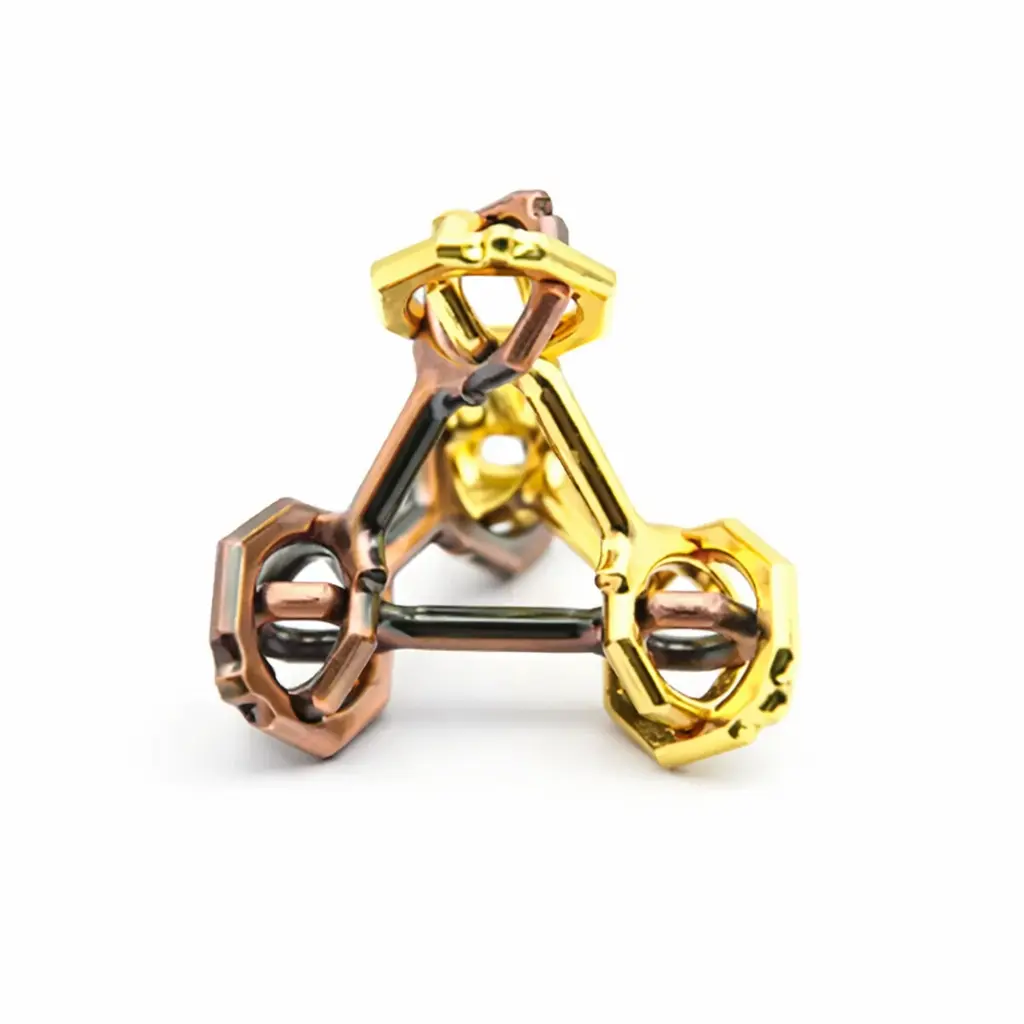
Cast Coil Triangle Puzzle — $25.99
Practical next step: name the work moment you fidget through most often — focused reading, on-call waiting, or post-meeting reset — before you pick a mechanism. The mechanism follows the moment, not the other way around.
04. Material Safety: Stainless Steel vs Titanium vs Aluminum vs Zinc Alloy
Once you’ve matched a mechanism to a work moment, the next filter is the metal itself — because this is the surface your hand touches for hours each day. Stainless steel and titanium are the safest daily-handle defaults; aluminum is the lightest carry option; zinc alloy is where you read the fine print.
Stainless steel hits the desk-fidget sweet spot for most office buyers. It’s non-reactive against skin, holds a finish through pocket-and-palm use, and rarely needs plating — so there’s no coating to wear through. When a product page says “stainless steel” without naming a grade (304, 316), that’s a signal to ask the seller for confirmation, since grade affects corrosion resistance in humid climates.
Titanium is the premium upgrade. It’s lighter than steel, biocompatible, and develops a soft matte patina instead of flaking plating. The price is higher and the options thinner, but if you already carry titanium EDC gear, the consistency of material across your pocket is a quiet plus.
Aviation-grade aluminum lives in the middle. It’s light, machines into precise shapes, and anodizes well for color options that don’t rely on paint. The trade-off: aluminum is softer, so edges and knurling can show wear faster under heavy thumb use.
Zinc alloy is where adult buyers need to slow down. Zinc alloy itself is common in cast metal fidgets — the casting process allows the intricate shapes (interlocking rings, puzzle links) that machined metals can’t easily produce. The concern isn’t the zinc; it’s what else is in the alloy and what’s on the surface.
Two specific questions to put to any zinc-alloy seller before you buy:
- Lead content. Zinc and lead often appear together in low-cost castings. Reputable sellers disclose alloy composition; if a product page only says “premium zinc alloy” without a breakdown, that’s a gap. Work-fidget buying guides consistently advise checking that “the metal is safe and doesn’t have lead” with safer defaults being “stainless steel, titanium, or aluminum.”
- Plating vs. solid alloy. Many cast zinc fidgets get a chrome, nickel, gold, or antique finish on top. That plating is what your skin touches — and plating is what wears first under daily thumb contact, exposing the base metal. Ask whether the color is in the alloy (cast-through) or applied as plating. Cast-through finishes age better; plating can shift to a dull gray at the high-wear points.
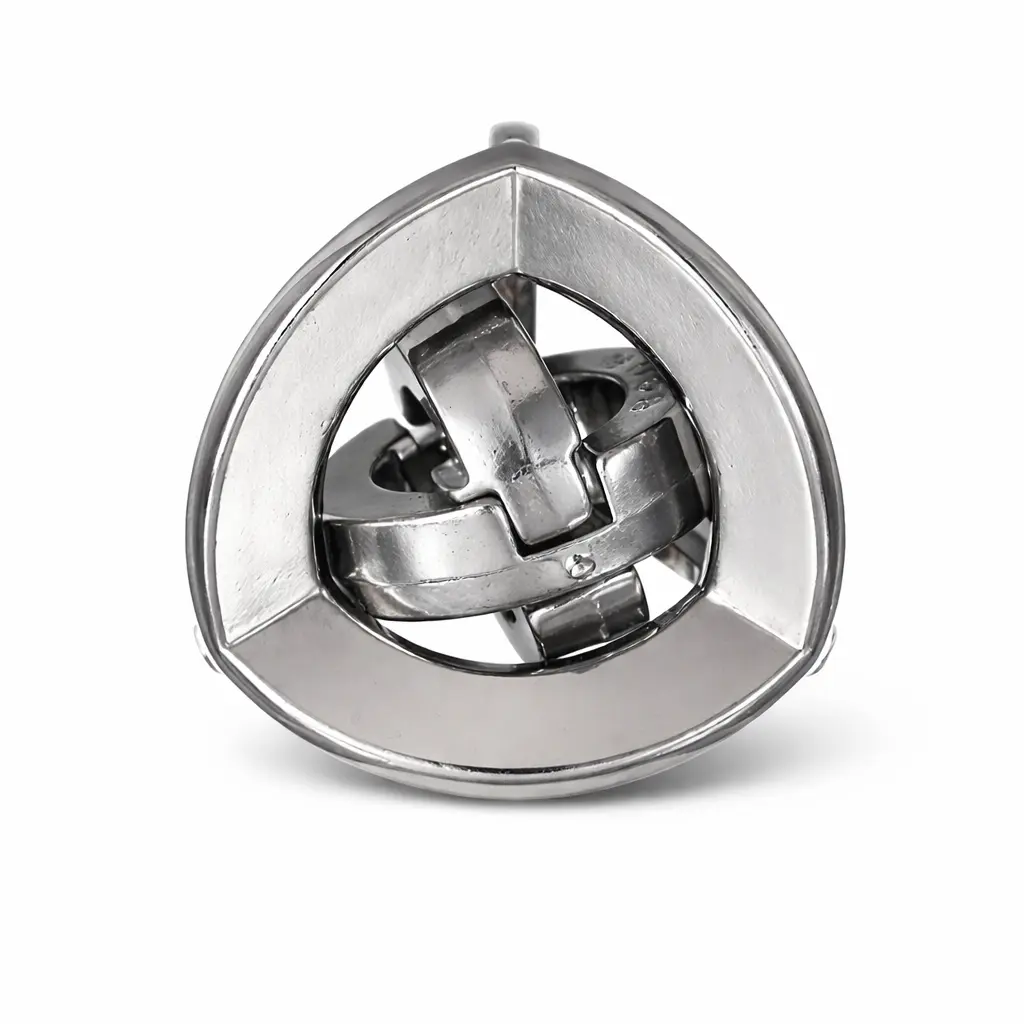
The orbit-ring style shows why alloy choice shapes the mechanism. Two interlocked rings holding a bearing-mounted bead need either tight tolerance (easier in machined steel) or careful casting (where zinc alloy becomes the practical option). Tea-Sip’s 6 metals compared for weight, feel, and durability walks through which alloys suit which puzzle type if you want the full breakdown.
Verification checklist before you buy:
- Alloy named on the product page — not just “metal.”
- Plating status disclosed: cast-through color or applied finish.
- Sharp-edge or deburring note — also worth checking for “sharp edges or small pieces that could break off.”
- Nickel-free or hypoallergenic claim if you have skin sensitivities.
For shared office spaces where coworkers may briefly handle the same object, stainless steel and titanium also resist fingerprint oils and wipe clean with a dry cloth — another reason they sit well in a meeting room.
Practical next step: before you pick a mechanism, decide whether you want a skin-safe default (stainless steel, titanium) or a more intricate cast shape (zinc alloy, with the verification questions above). The metal choice narrows the catalog more than the mechanism choice does.
05. What Doesn’t Work at the Office (and Why)
A mechanism fails the office test the moment it makes contact noise, reads as a branded toy, or demands visual attention. Material is now settled — the mechanism is where most “quiet” metal fidgets lose the room.
Velcro-style clickers fail first. A reviewer at Wpsychservice described the sound as “akin to ripping apart Velcro” — the kind of sharp rip that carries through glass partitions and across open-plan rows. If you can hear it from three desks away, the meeting is over for everyone near you, and the user can’t run the toy for any length of time without breaking their own focus.
Spinners with loose or worn bearings fail the noise budget even when nothing is visibly moving. The rattle of an unbalanced mass inside a metal frame reads louder than a pen tap, especially on a hard desk surface. Cast zinc spinners suffer this most, since tight bearing tolerance is harder to hold in cast parts than in machined steel.
App-connected fidgets fail for a different reason. They tether attention to a phone screen, invite notification distraction, and break the desk-camouflage rule the moment you pull out a handset to adjust settings. Office-focused buying guides specifically advise avoiding “anything requiring batteries or app pairing.”
High-action novelty pieces fail the camouflage test outright. A r/BuyItForLife user called the Wanwu Breaker fidget revolver “overpriced and not a good rec for most people especially in a public office” — a spinning cylinder that resembles a toy gun reads as a toy, no matter how precisely it’s machined. EDNTOY’s review reaches the same conclusion for the Flipo Flip: “more active than many other fidget toys… not ideal for serious meetings,” though fine for breaks or casual desk time.
Quick fail-test before you buy:
- Tap the moving part against your palm — if it audibly clicks, rule it out for open-plan offices.
- Hold it next to a stapler. If it looks more playful than the stapler, it will read as a toy.
- Check for any battery compartment, Bluetooth pairing, or app requirement. Remove from shortlist.
The pattern is consistent: if a fidget’s defining feature is motion or sound, it will eventually draw the room’s attention. A cast hook puzzle, a coil pocket puzzle, or a metal orbit ring solves in your hands without moving the air around you.
06. Your Office Metal Fidget Buying Checklist
Before you buy any metal fidget for office use, run a six-point pre-checkout pass. Each check compresses a framework from this article — noise, camouflage, mechanism, material, finish, and safety — into a single yes-or-no question, and the whole pass takes about a minute. If any item fails, the toy goes back on the shelf, no matter how good the product photos look.
Run this before you buy:
- Noise budget pass. No clicks, no rattles, no spinning bearings against a hard desk. Silent in-hand motion only.
- Camouflage test. Reads as a desk object — paperweight, keychain, or pen-cap — not a toy. Holds up next to a stapler.
- Mechanism-task match. You can name the specific work moment it serves: pre-call reset, deep-work entry, post-meeting decompression, or on-call waiting.
- Material disclosure verified. Stainless steel, titanium, aviation-grade aluminum, or zinc alloy with a stated lead-free spec. If the seller won’t say, ask or walk away.
- Finish note reviewed. Plated coatings wear with daily handling — a polished gold or chrome cast will show scratches in weeks. Raw, anodized, or PVD-coated metals age more predictably.
- Safety statement read. No sharp edges, no small detachable parts, no battery compartment, no app pairing.
A pocket-sized cast metal puzzle that solves silently in the hand passes all six by design. The mechanism is the solution itself — the noise budget stays at zero, the motion happens inside the metal, and the desk camouflage is built into the form factor. That’s why a cast hook metal brain teaser, a coil pocket puzzle, or a metal orbit ring puzzle each meet the criteria without compromise on any axis.
One practical next action: pick one mechanism, run the six checks, then buy from a seller who publishes the alloy spec and finish type on the product page itself — not only in marketing copy.
Frequently Asked Questions
Once the six-point checklist has narrowed the field, the questions that follow usually come down to material safety, plating durability, and which mechanism is quiet enough for the specific room. These are the questions that surface most often in r/ADHD and r/fidgettoys threads, answered with the same evidence-anchored approach used throughout the rest of this guide.
Is zinc alloy safe to handle all day?
It is safe when the seller states the alloy is lead-free and nickel-safe on the product page. Historical zinc alloys used lead as a machining aid, so the spec matters — if the listing does not name the alloy or show a compliance line, choose a different piece. Cast stainless steel or titanium sidesteps the question because the base metal is inert.
Do metal fidget toys lose their plating with daily handling?
Yes, thin electroplated coatings — bright gold, mirror chrome, painted finishes — show wear within weeks of regular hand contact. The scratch is cosmetic, not structural, but it is visible. Anodized aluminum, PVD-coated stainless, and raw or brushed cast metal age more predictably, and a matte finish hides handling marks better than a polished one.
What is the quietest mechanism for an open-plan office?
Slider coins, spinning beads, haptic coins, and cast disentanglement puzzles all operate below conversational volume — masked by any background noise beyond a quiet private office. Magnetic haptic clickers with adjustable settings and infinity cubes sit in the middle: silent in motion but with an audible click at the end of each cycle. Spinners are the loudest because the bearing whir carries even before the spin ends.
Can a magnetic haptic clicker be used during meetings?
A clicker set to its lowest noise mode is workable in long meetings where occasional low-volume clicks blend into ambient room tone. The louder settings are not meeting-appropriate in any setting, and the middle mode is borderline for open-plan floors. Treat the quietest setting as a private-desk option rather than a conference-room tool.
What do people with ADHD actually use at the office?
The consistent r/ADHD recommendation is spinning rings, silent spinning beads, pens that disassemble quietly, and small cast metal objects that read as desk weight. The criteria are silence, neutral color, and a form factor that could pass as a paperweight. Cast metal brain teasers — hook puzzles, coil puzzles, orbit rings — meet all three because the motion happens inside the metal and the form reads as a desk object, not a toy.
Are titanium and stainless steel worth more than zinc alloy or aluminum?
For daily carry, the premium buys corrosion resistance, a plating-free lifespan, and a heavier hand feel. For a desk-only object, the difference is mostly aesthetic — a heavier stainless or titanium piece stays put and ages more gracefully, but both materials function. The deciding factor is where the object lives, not which alloy is objectively superior.
A cast metal puzzle from the Tea-Sip catalog — the Cast Hook Metal Brain Teaser for a hook-style solve, the Cast Coil Pocket Puzzle for a smooth take-apart, or the Metal Orbit Ring Cast Puzzle for silent orbital motion — satisfies every item on the six-point checklist. Next action: pick the mechanism tied to the work moment, confirm the alloy spec on the product page, and order the one that passes all six checks.
Where to Start
If the checks above show that you need a compatible puzzle rather than another solve step, start with Cast Hook Metal Brain Teaser. Check the current product page for the specifications that matter to your choice.
Sources and verification
- Product details and current specifications: Tea-Sip product page
Last updated: August 6, 2026