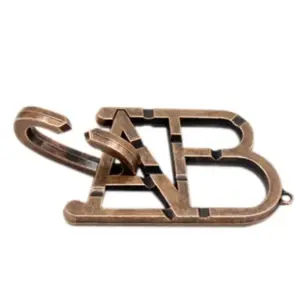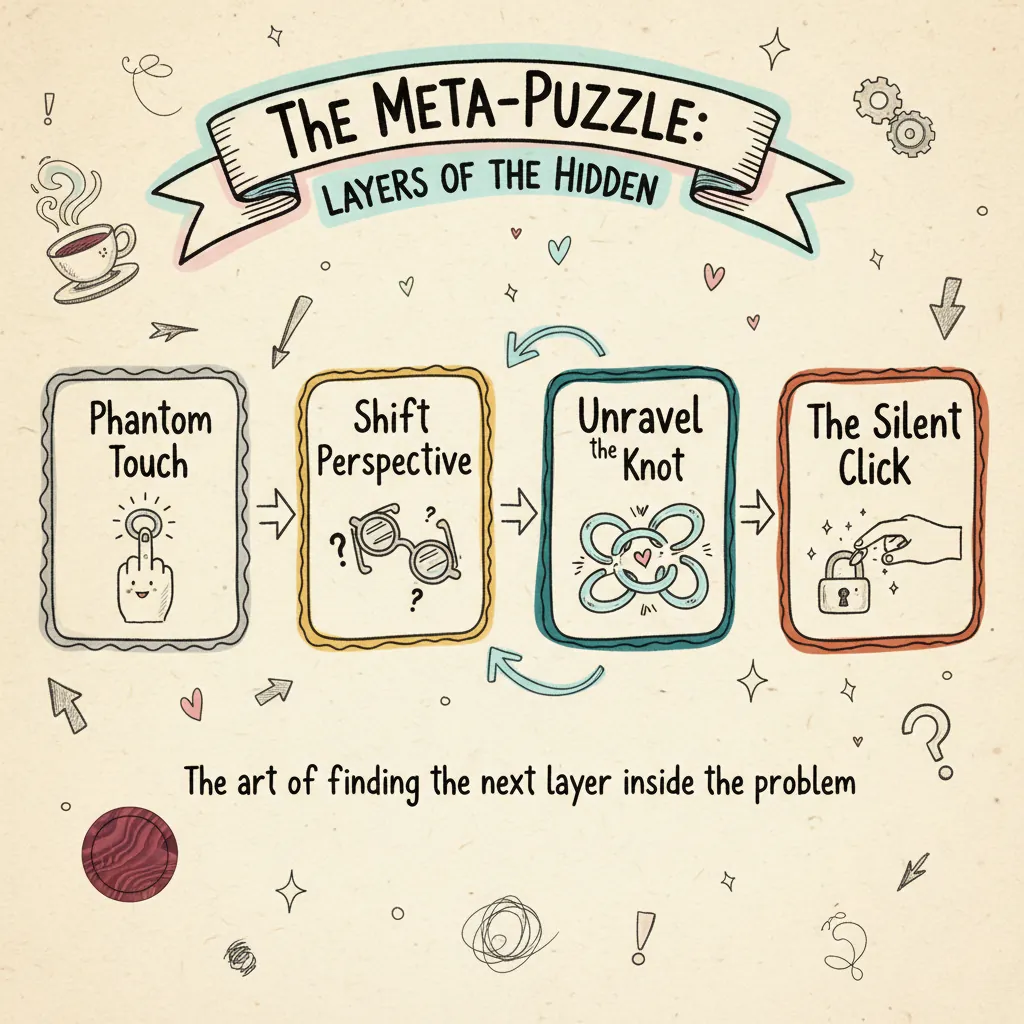
The third time the silver-plated arm of the Galaxy puzzle slipped past my thumb and clicked back into its locked position, I didn’t swear. I set it down on the mahogany coaster, walked to the kitchen, and started a fresh pot of coffee. My fingertips felt that familiar, faint metallic hum—a phantom sensation that comes from forty minutes of trying to “feel” a seam that refuses to exist. This is the reality of the high-level mechanical enigma. It isn’t just a toy; it’s a physical argument between you and the designer.
The most rewarding “puzzle in puzzle” experiences aren’t solved when you simply separate two pieces. They are solved when you realize the pieces themselves are the next layer of the problem. This “meta-puzzling” requires a shift in perspective, moving from a brute-force mindset to one of quiet observation. Whether it’s a nested metal ring or a wooden safe with a hidden gear, the thesis remains the same: the best challenges punish impatience and reward the ability to see the invisible structure within the object.
The Lure of the Hidden Layer
Most people think a puzzle is a linear path from A to B. You start with a mess, and you end with a completed shape. But “puzzle in puzzle” designs—often categorized under the broader umbrella of mechanical puzzles—operate on a vertical axis. You aren’t just moving forward; you are moving deeper.
I’ve spent the better part of two decades collecting these objects, and the ones that stay on my desk—the ones I actually return to—are those that hide their true nature. You might find a humbling experience with pocket-sized metal that looks like a simple knot but behaves like a combination lock. That transition from “this is easy” to “I have no idea what I’m doing” is the hook that keeps us coming back.
Cast Galaxy 4-Piece Silver
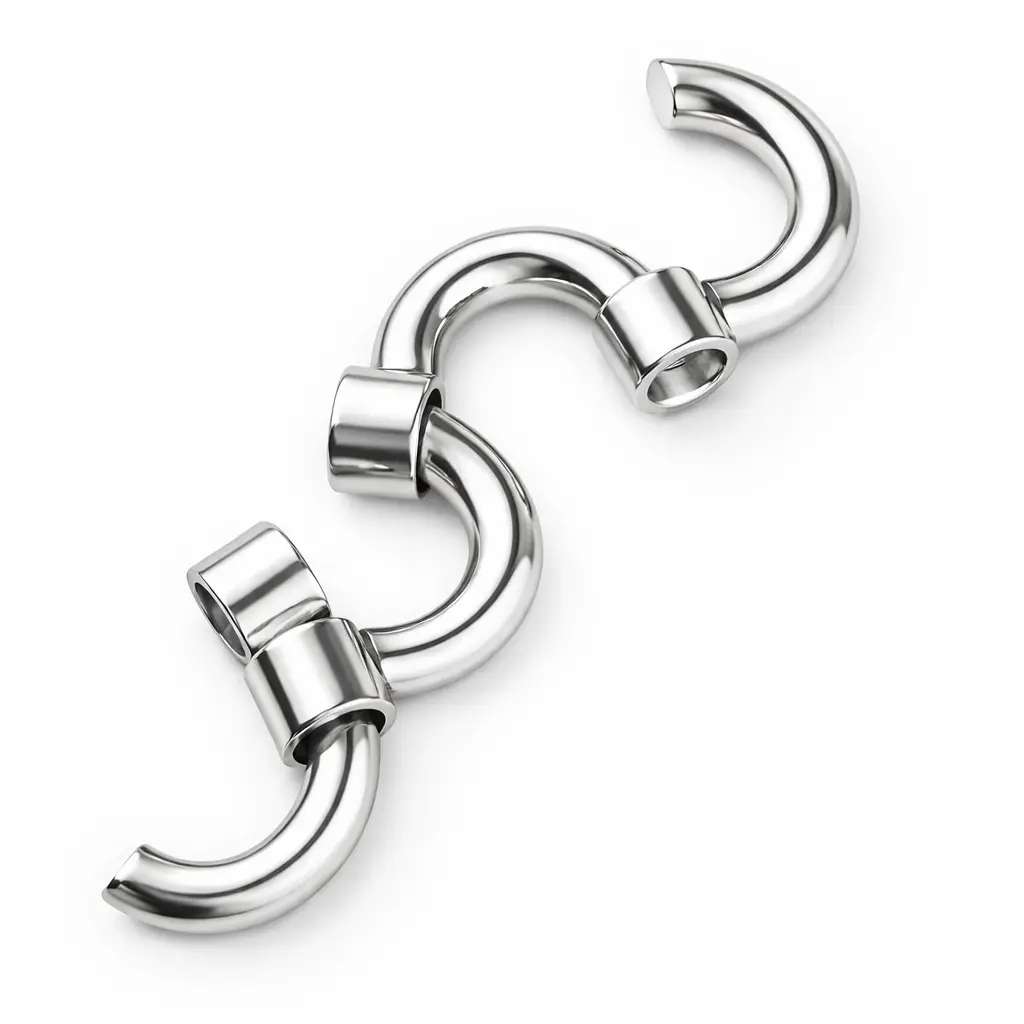
Cast Galaxy 4-Piece Silver — $14.88
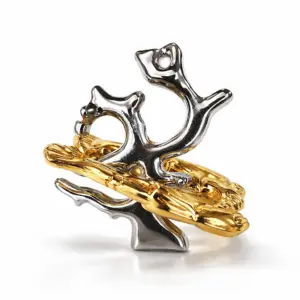
The Galaxy is a masterclass in deception. At $14.88, it’s an accessible entry point, but don’t let the price tag fool you into thinking it’s a triviality. It consists of four curved metal pieces that interlock to form a swirling, cosmic disc. Taking it apart is almost insulting; the pieces seem to melt away from each other with a gentle rotation. You’ll feel like a genius for approximately twelve seconds.
Then comes the reassembly. This is where the “puzzle in puzzle” element shines. You aren’t just putting four pieces back together; you are navigating a specific sequence of nested rotations. One arm must sleeve into its partner at a precise angle, or the entire structure binds. I’ve handed this to “smart” friends who dismantled it in a heartbeat and then spent their entire Saturday afternoon trying to restore its original shape. It demands spatial memory that most of us have let atrophy in the age of GPS.
When Metal Becomes Fluid
There is a specific tactile joy in high-quality cast alloy. When the tolerances are tight, the metal feels less like a solid and more like a heavy liquid. You can feel the air displacement when a piece slides into its housing. This is particularly true for orbital designs where the challenge is to navigate a piece through a “maze” that you can’t actually see because it’s tucked inside the frame.
If you are just starting to build a collection, understanding the framework for building a serious collection usually begins with these tactile metal pieces. They are durable, they have a satisfying weight, and they don’t wear out like plastic or cheap wood.
Metal Orbit Ring Cast Puzzle
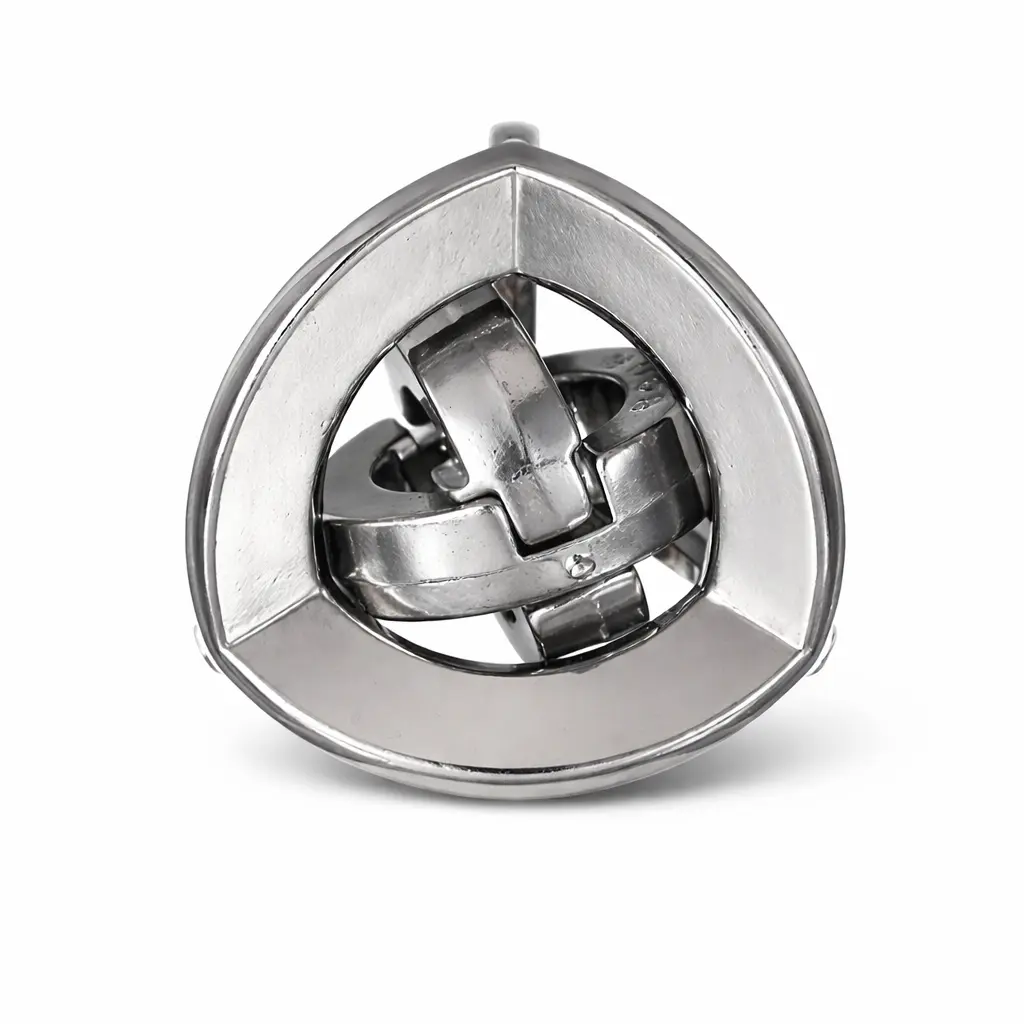
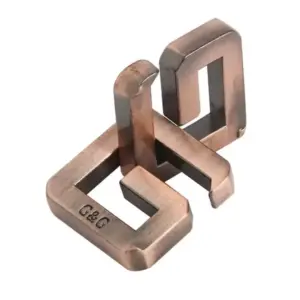
At just 44mm across, the Orbit Ring ($14.99) is tiny. It’s the kind of thing you keep in your “Everyday Carry” (EDC) kit for those moments when you’re stuck in a waiting room and your phone battery is at 4%. It features a triangular frame and two interlocking C-rings. The “puzzle in puzzle” aspect here is the way the rings must be manipulated simultaneously to clear the internal geometry of the triangle.
My personal verdict? The polished alloy finish is excellent for the price, though it does pick up fingerprints quickly. The weight is substantial enough that it won’t go flying if your hand slips. It’s a “fidget” puzzle in the best sense—you can spend hours just rolling the rings around the frame, learning the bumps and notches by touch alone. It’s less about a single “Aha!” moment and more about developing a physical intuition for how the pieces nest.
The Architectural Logic of Wood
While metal puzzles are about precision and “flow,” wooden puzzles are about architecture and friction. There is a warmth to beechwood or plywood that metal can’t replicate. When you work with wood, you are dealing with a material that was once alive, and it reacts to the environment. On a humid day, a wooden puzzle might be slightly tighter; on a dry winter afternoon, the pieces might slide with a hollow, percussive click.
Many of these designs draw from ancient construction techniques. For instance, some of the best ways to sharpen adult focus involve engaging with mortise-and-tenon joinery, the same system used to build temples that have stood for a thousand years.
6-in-1 Wooden Brain Teaser Set
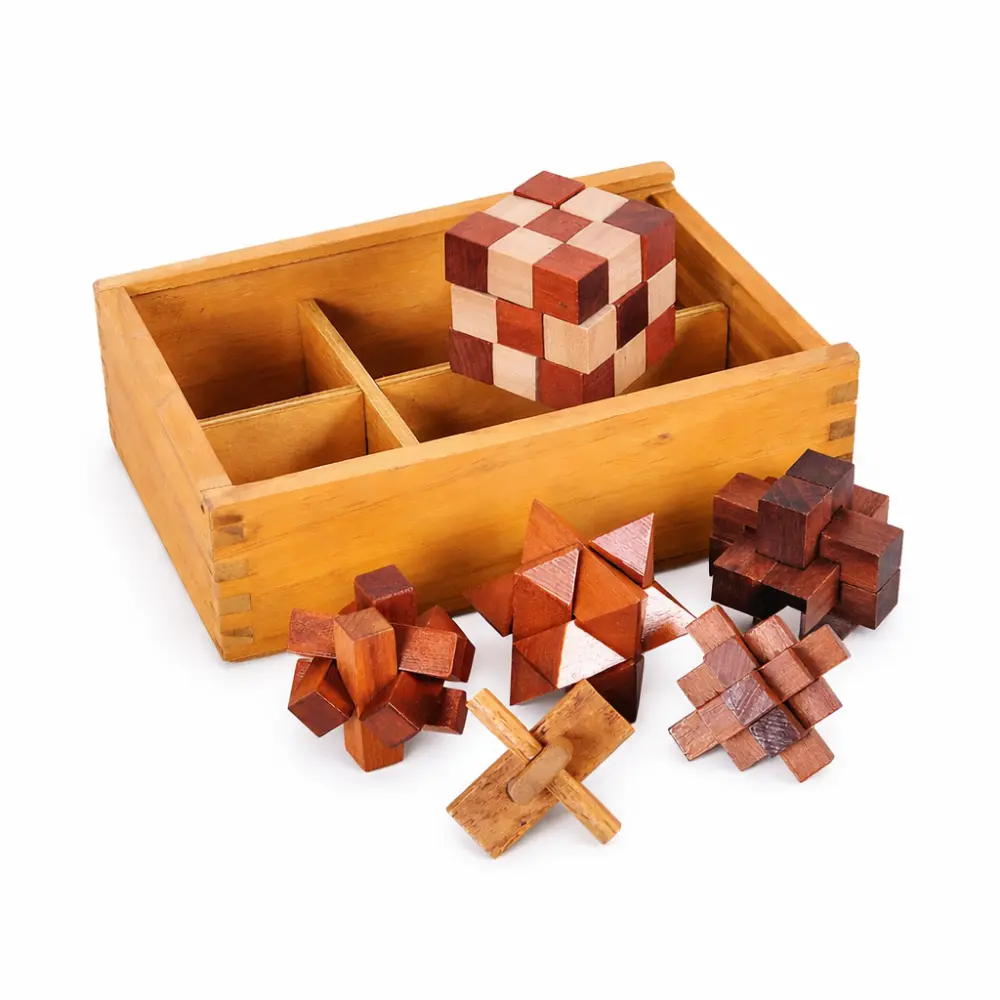
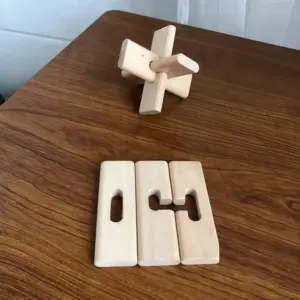
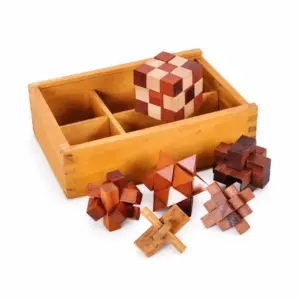
This set ($38.88) is essentially a history lesson in a box. Each of the six puzzles uses joinery inspired by the Forbidden City. There isn’t a single nail or drop of glue in the solve. Instead, you are looking for the “key piece”—the one notched stick that, when removed, causes the entire structure to collapse into your palms.
I’ve had this set on my office shelf for six months. The beechwood is solid and hasn’t splintered, which is a common failing of cheaper sets. The “puzzle in puzzle” nature here is the sheer variety. You move from a star shape to a ball, then to a cross, each requiring a slightly different mental model of how the internal notches overlap. It’s a fantastic way to reset your brain during a long day of Zoom calls. If you find yourself getting frustrated, I often suggest taking a break with strategic games for a mental reset to clear your head before returning to the wood-grain logic.
Mechanical Secrets: Safes and Locks
The ultimate expression of the “puzzle in puzzle” is the secret compartment. This is where the object serves a dual purpose: it is a challenge to be solved, and it is a vessel for a secret. This category includes everything from traditional Japanese himitsu-bako (secret boxes) to modern mechanical model kits.
These are often traditional mechanisms that hide secrets through a series of sequential discoveries. You don’t just solve it; you unlock it.
3D Wooden Puzzle Safe
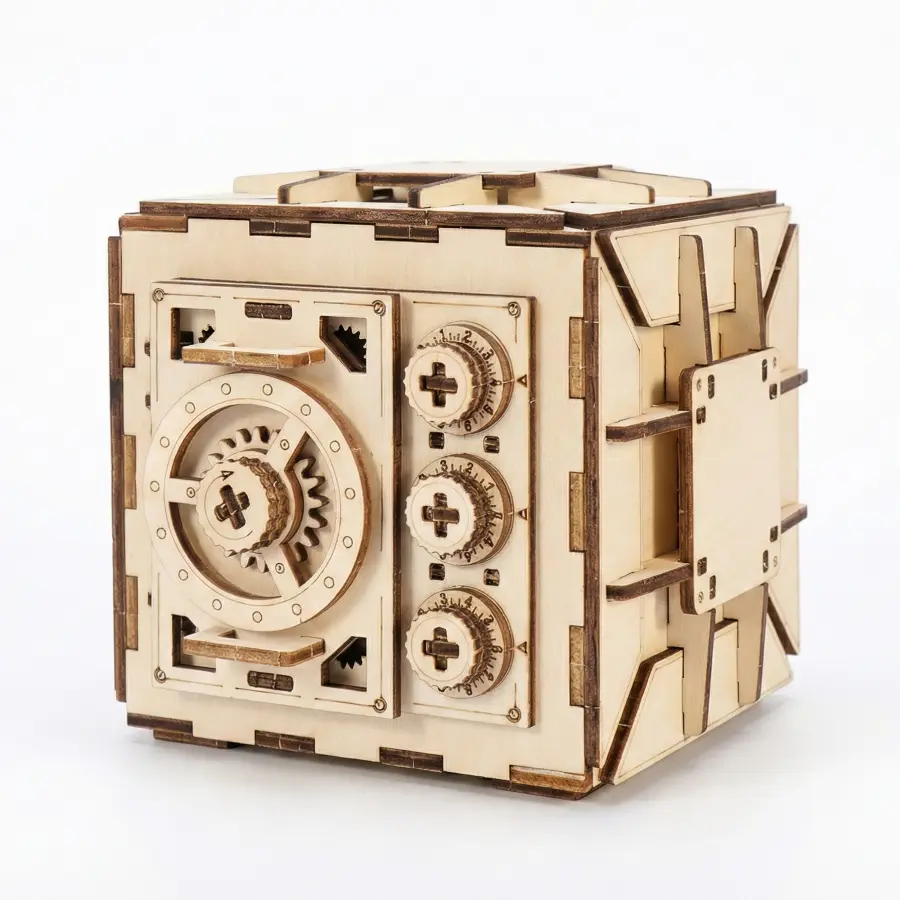
Priced at $30.99, this is more of a project than a quick brain teaser. With 111 pieces, you are essentially building your own challenge. The “puzzle in puzzle” here is the gear system. As you assemble the 3-digit combination lock, you begin to understand the mechanical logic required to open it. It’s a “meta” experience: you build the maze, then you solve it.
I built mine over a rainy Sunday afternoon. It took me about two hours, which is slightly longer than the 1.5 hours the box suggests, but I tend to be meticulous with sanding the gears. One honest negative: if you misalign a single gear by a fraction of a millimeter during the build, the final lock won’t turn smoothly. It demands precision. But once it’s done, having a functional safe on your desk that you built yourself is immensely satisfying. It’s a great way to store small treasures—or perhaps the key to another puzzle.
Beyond the Solve: Functional Enigmas
Some of the most interesting pieces in my collection aren’t just there to be solved; they are there to be used. These functional puzzles integrate the challenge into a piece of decor or a tool. This makes the “puzzle in puzzle” concept literal—the puzzle is inside a functional object.
Light-Up Gothic Wooden Lantern 3D Puzzle
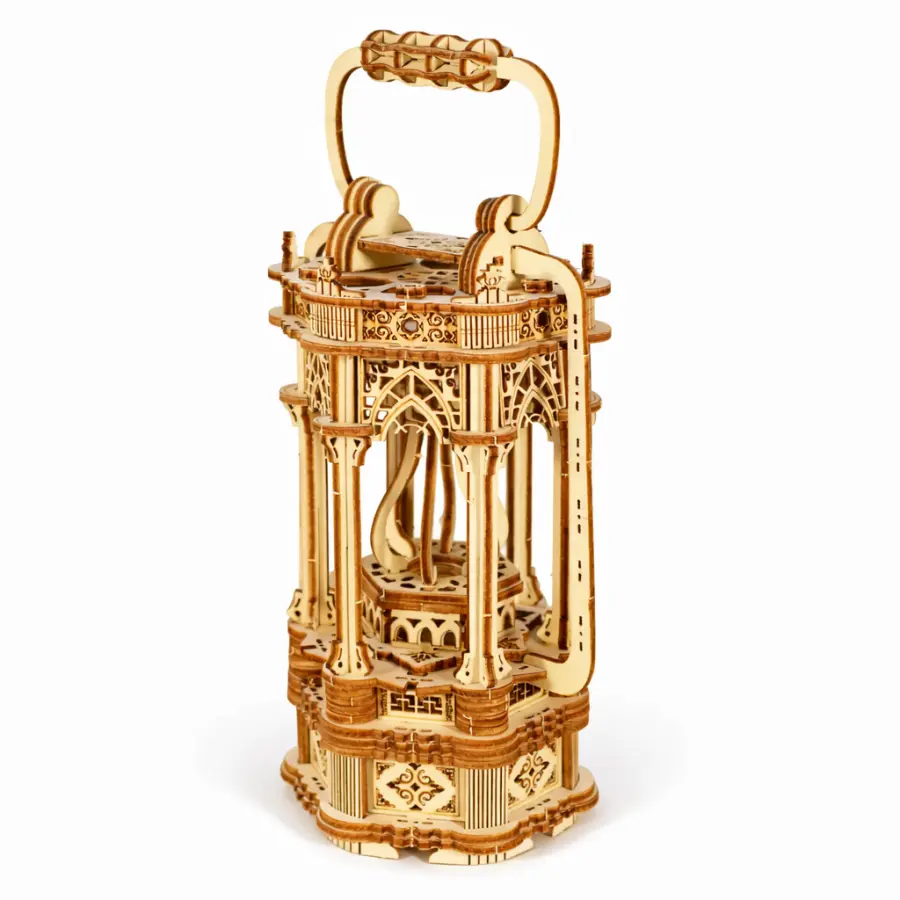
This is a sprawling 154-piece kit (check current pricing) that results in a stunning piece of tabletop decor. The Gothic arches and intricate cutouts throw beautiful shadows when the internal LED “wick” is lit. The challenge here is the assembly of the layered wooden panels. You are essentially building a cathedral in miniature.
The structural integrity is surprisingly good for laser-cut plywood. I’ve found that these types of kits are excellent curated selections for the cognitively curious because they offer a lasting reward. Once the “solve” (the assembly) is over, you’re left with a conversation piece. Just be careful with the delicate finials; they can be brittle if you apply too much pressure during the snap-fit process.
The Aesthetic of the Enigma: Locks and Music
Sometimes the “puzzle in puzzle” is about the history of the object itself. A puzzle that looks like a 16th-century lock carries a different weight than a modern plastic cube. It connects you to a lineage of locksmiths and tricksters who used these devices to protect real wealth.
Chinese Koi Puzzle lock
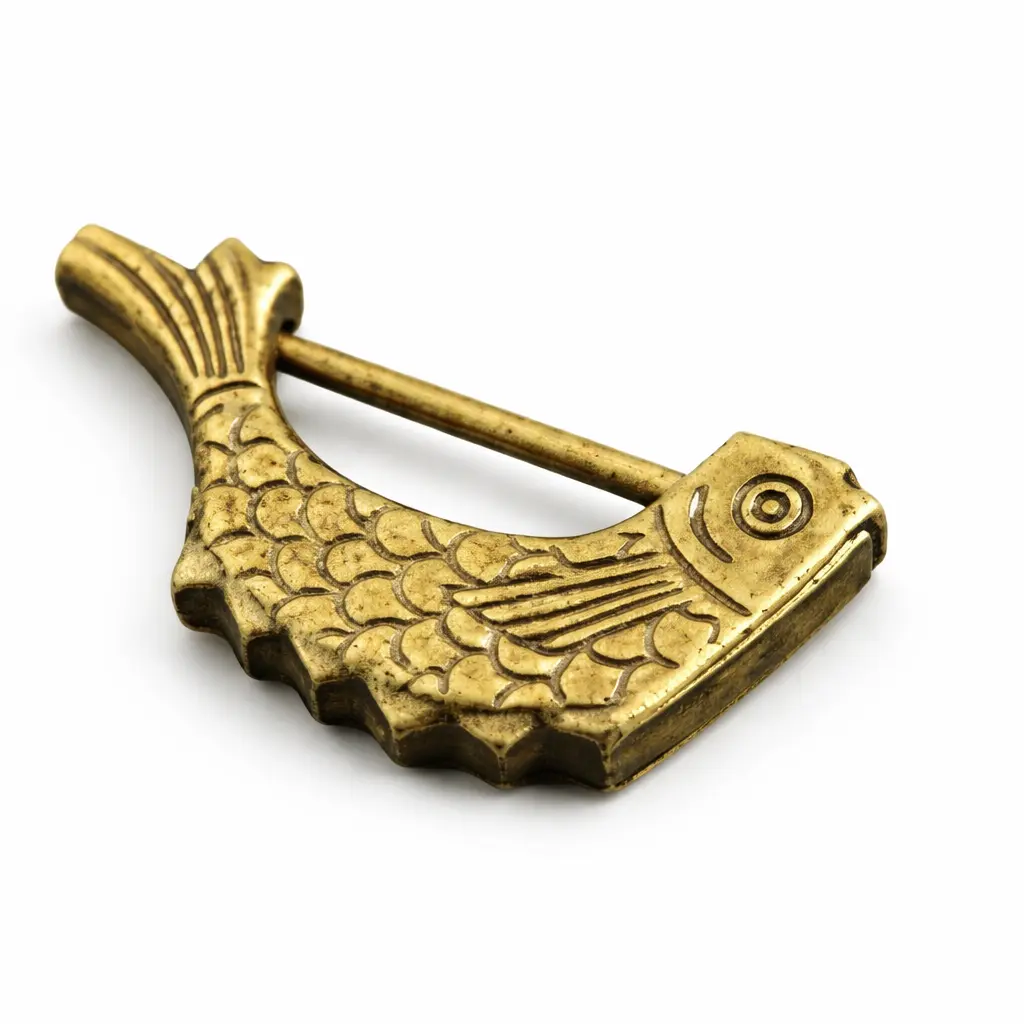
At $16.99, this 59mm fish-shaped lock is a gorgeous piece of weathered bronze. It looks like it was pulled from an antique merchant’s chest. The “puzzle in puzzle” here is the internal mechanism. Traditional Chinese locks often require you to find a hidden sliding panel or a specific sequence of key movements to release the shackle.
The hand-detailed scales give it a great texture, though the “weathered” finish can occasionally leave a slight residue on your hands when it’s brand new. It’s a “low-difficulty, high-satisfaction” piece. It’s not going to keep a seasoned pro busy for hours, but it’s the perfect thing to hand to a guest who wants to see something “cool” on your desk.
3D Wooden Cello Puzzle Model Kit
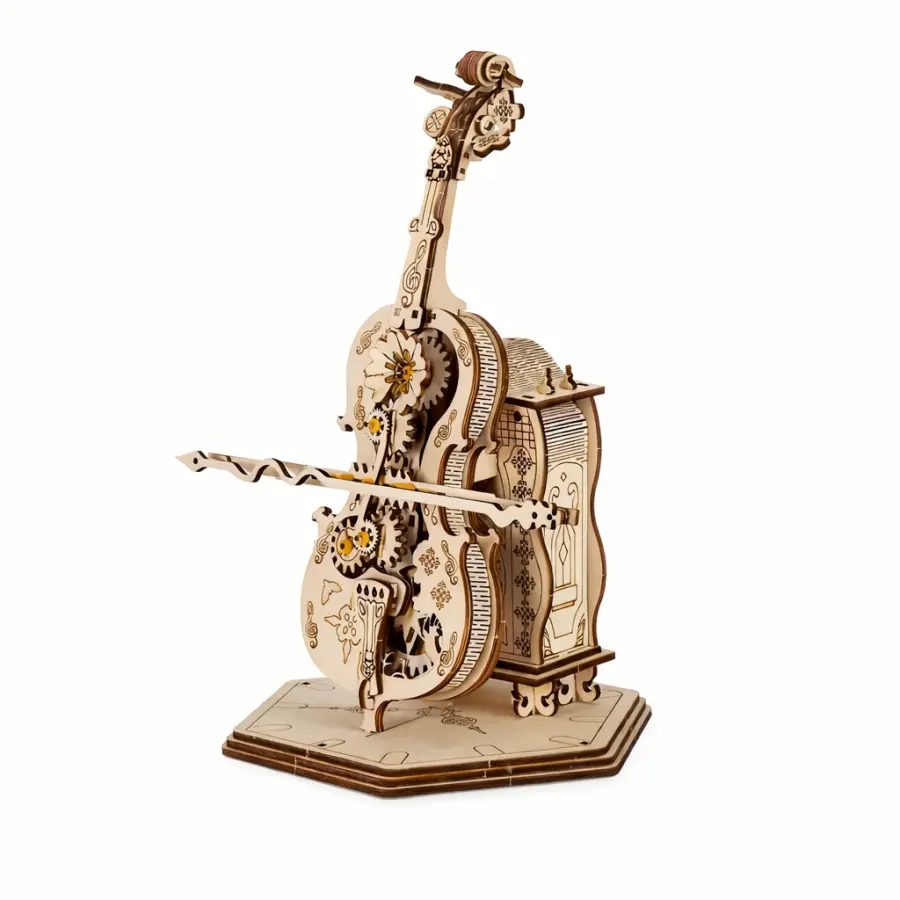
This $29.99 kit is for the person who loves the intersection of music and mechanics. It features Victorian engravings and steampunk-style gears. Like the safe, the “puzzle in puzzle” is the internal assembly of the mechanical components that make the model feel “alive.”
It’s a complex build. If you have large hands, you might find some of the inner bracing a bit fiddly. I’d recommend having a pair of tweezers nearby. But the end result—a wooden cello that looks like a prop from a Jules Verne novel—is worth the effort. It’s a reminder that puzzles can be art.
The EDC Factor: Puzzles for the Pocket
A puzzle you can’t carry is a puzzle you won’t solve. I’m a huge advocate for “pocket puzzles”—small, durable items that can survive being tossed in a bag or a pocket with your keys. These are the items that truly test your patience because you pick them up for five minutes at a time, over several days.
Cast Coil Pocket Puzzle
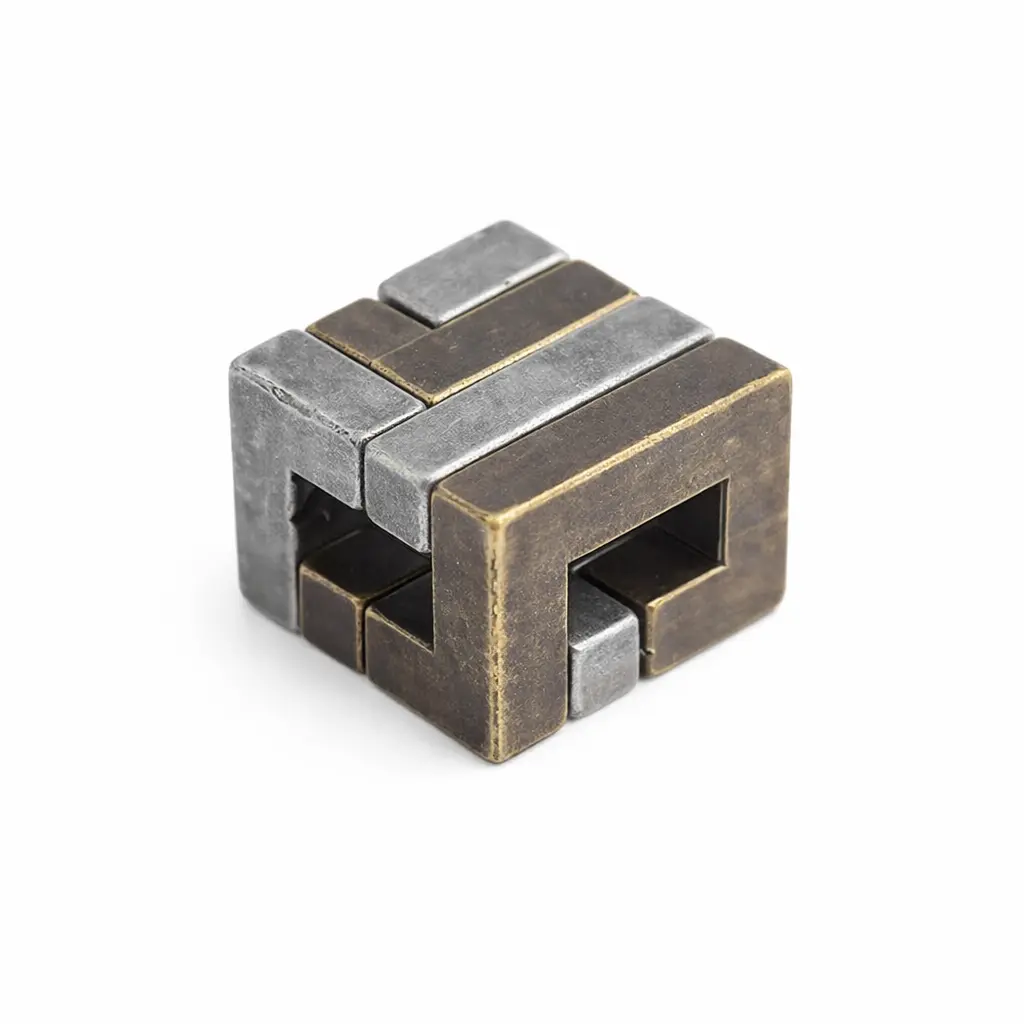
This is one of my favorites for travel. At $18.99, it features two interlocking pieces—one bronze, one silver. The goal is to find the exact sliding angle that allows them to separate. It looks like a solid lump of metal, but there is a “ghost” path through the center that you have to discover.
I’ve had this on my keychain for months. The finish has held up remarkably well, developing a nice patina from the friction of my keys. It’s a “spatial humility” lesson because the solution is so simple, yet so difficult to find if you are trying to force it. If you find yourself stuck, maybe take a quick break with digital logic puzzles for short breaks to reset your pattern recognition.
6 Piece Wooden Puzzle Key
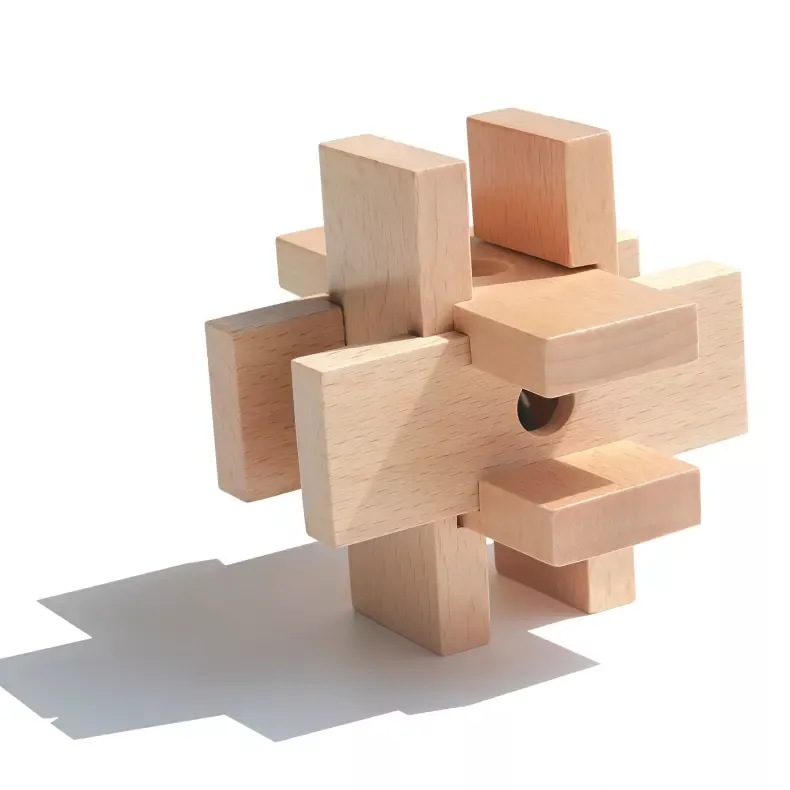
This $12.99 hardwood puzzle is the embodiment of “Wu Wei” or effortless action. It’s six pieces that form a key shape. If you try to force the pieces together, the wood will bind. If you let them find their own path, they slide into place with a soft, organic click.
It’s the cheapest item on this list, but in some ways, it’s the most philosophical. It’s a “puzzle in puzzle” because the challenge isn’t the geometry—it’s your own temperament. It’s a quiet, meditative solve.
Wooden Desk Organizer with Perpetual Calendar | Puzzle Pen Holder
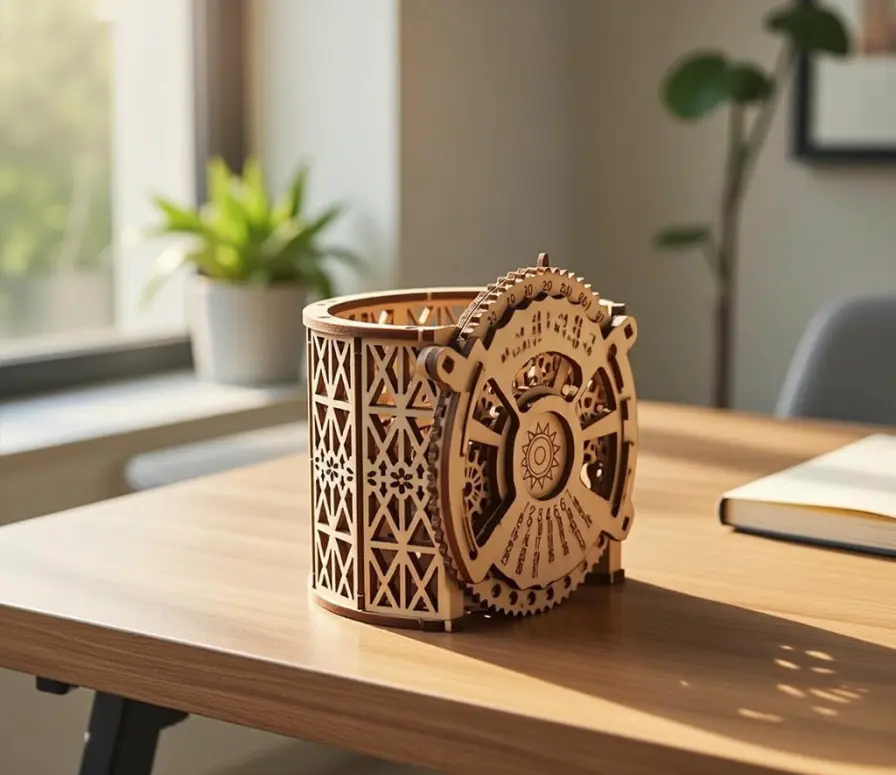
Finally, for the person who wants their puzzles to work for them, this $19.99 organizer combines a pen holder with a perpetual calendar. The “puzzle” is the calendar mechanism itself, which you have to align to show the correct date from 2023 to 2050.
It’s a practical application of the gear-logic found in the safe. It’s not a “brain teaser” in the sense that you’ll be stumped for hours, but it’s a constant, small engagement with mechanical logic every time you change the month. It’s a great way to keep your desk organized while keeping your mind slightly “on.” For those who enjoy this kind of visual layering, you might also enjoy exploring translucent layered challenges which offer a different take on the “puzzle in puzzle” theme.
FAQ: Everything You Need to Know About Layered Puzzles
What is a “puzzle in puzzle” exactly?
The term usually refers to two things: either a puzzle that contains a secondary challenge (like a box with a hidden compartment) or a puzzle where the pieces themselves are smaller puzzles (like a 3D jigsaw where each section is a mini-build). In the world of mechanical puzzles, it often refers to “nested” logic—where solving one part of the mechanism reveals a new, deeper challenge.
Are metal puzzles harder than wooden ones?
Not necessarily, but they require different skills. Metal puzzles usually have tighter tolerances, meaning there is very little “wiggle room.” You have to be exactly right to move a piece. Wooden puzzles are often more about “sequential discovery”—finding the right order to move pieces that might have a bit more give. If you’re curious about the specifics of metal, you can read more about tangible lessons in spatial reasoning to see how metal challenges your brain.
How do I know if a puzzle is too hard for me?
Check the “level” if provided, but a better metric is the piece count and the type of movement. A 4-piece metal puzzle like the Cast Galaxy can be harder than a 100-piece wooden model because the logic is more abstract. If you’re a beginner, start with something tactile like the Metal Orbit Ring or the 6 Piece Wooden Puzzle Key.
Do these puzzles come with solutions?
Most do, but I always tell people to throw the solution away immediately. The value of a puzzle isn’t the “solved” state; it’s the 15 hours of frustration and the 1 second of clarity. If you look at the solution, you’ve essentially paid $15 to watch someone else be smart.
Are these suitable for kids?
Generally, mechanical puzzles like these are best for ages 12 and up. The wooden kits like the 3D Wooden Puzzle Safe or the Gothic Lantern require fine motor skills and patience that younger children might lack. However, they are great “together” projects for a parent and child.
How do I maintain my puzzles?
For metal, a quick wipe with a microfiber cloth is usually enough. If a metal puzzle feels “gritty,” a tiny drop of dry lubricant (like PTFE) can help, but avoid WD-40. For wood, keep them out of direct sunlight and away from high humidity, which can cause the wood to swell and the pieces to jam.
Why are some puzzles so much more expensive than others?
It usually comes down to material and machining. A precision-cast alloy puzzle with hand-polished surfaces costs more to produce than a laser-cut plywood kit. You’re also paying for the “design”—the intellectual property of the puzzle creator.
What’s a good “first” puzzle to gift someone?
The Cast Coil Pocket Puzzle is a safe bet for almost anyone. It’s inexpensive, looks great on a desk, and has a very satisfying “solve.” For someone who likes decor, the Chinese Koi Puzzle lock is a winner.
Can I “break” a puzzle by forcing it?
Yes, and you probably will if you aren’t careful. The golden rule of mechanical puzzles is: Never use force. If a piece is meant to move, it will move with the pressure of a single finger. If you’re pushing hard, you’re doing it wrong.
Is puzzling actually good for your brain?
There is significant evidence that engaging in spatial reasoning tasks can help maintain cognitive health. It’s basically “weightlifting” for your prefrontal cortex. It forces you to build mental models and test hypotheses, which is a core part of problem-solving in real life.
What should I do if I’m truly, hopelessly stuck?
Put it down. Seriously. Go for a walk, sleep on it, or play a different kind of game. Often, your brain will continue to work on the problem in the background. I’ve solved dozens of puzzles while brushing my teeth or driving to work because a new “path” suddenly clicked in my mind.
What are “sequential discovery” puzzles?
These are puzzles where you find “tools” inside the puzzle to help you solve the next stage. For example, you might find a small pin hidden in a drawer that you then use to poke a hole in another part of the puzzle. The 3D Wooden Puzzle Safe has elements of this.
Are 3D wooden kits considered puzzles?
Yes, but they are “assembly puzzles.” The challenge is the construction. Once they are built, the “puzzle” is over, though some (like the Safe or the Lantern) have functional elements you can continue to use.
Where can I find more advanced challenges?
Once you’ve mastered the basics, you might look into high-end “puzzle boxes” or limited-edition metal puzzles from designers like Hanayama or Wil Strijbos. But be warned: it’s an addictive (and sometimes expensive) hobby.
Conclusion: The Final Click
The Galaxy puzzle is back in its original shape now. It took me three days and two pots of coffee, but that final, sliding click—where the four arms nested perfectly into each other—felt like a physical release of tension. That is the “why” of the puzzle in puzzle. It isn’t about the object itself; it’s about the moment your internal model of the world finally aligns with the physical reality in your hands.
If you’re looking to start your own journey into nested logic, I’d suggest picking up the Cast Galaxy or the Metal Orbit Ring. They are small, affordable, and perfectly illustrate the “meta” solve. Just remember: don’t force the pieces. The solution is already there, hidden in the geometry. You just have to be quiet enough to hear it.