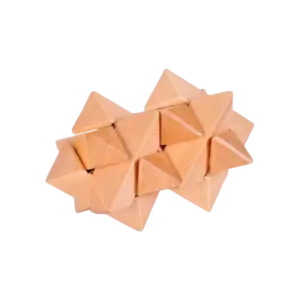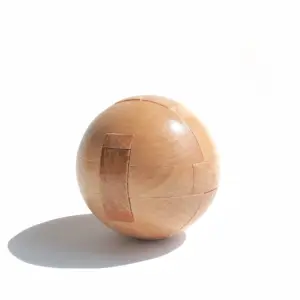
My thumb is still slightly indented from a stubborn piece of beechwood I tried to force three nights ago. It was a classic rookie mistake. I knew better, but the coffee was wearing off and my patience was thin. I was wrestling with a specific joint in a Chinese interlocking puzzle, trying to make the wood obey my will rather than listening to what the geometry was telling me. When the piece finally slid home—not because I pushed harder, but because I finally aligned the internal notches—the sound wasn’t a snap, but a soft, woody “thwack.”
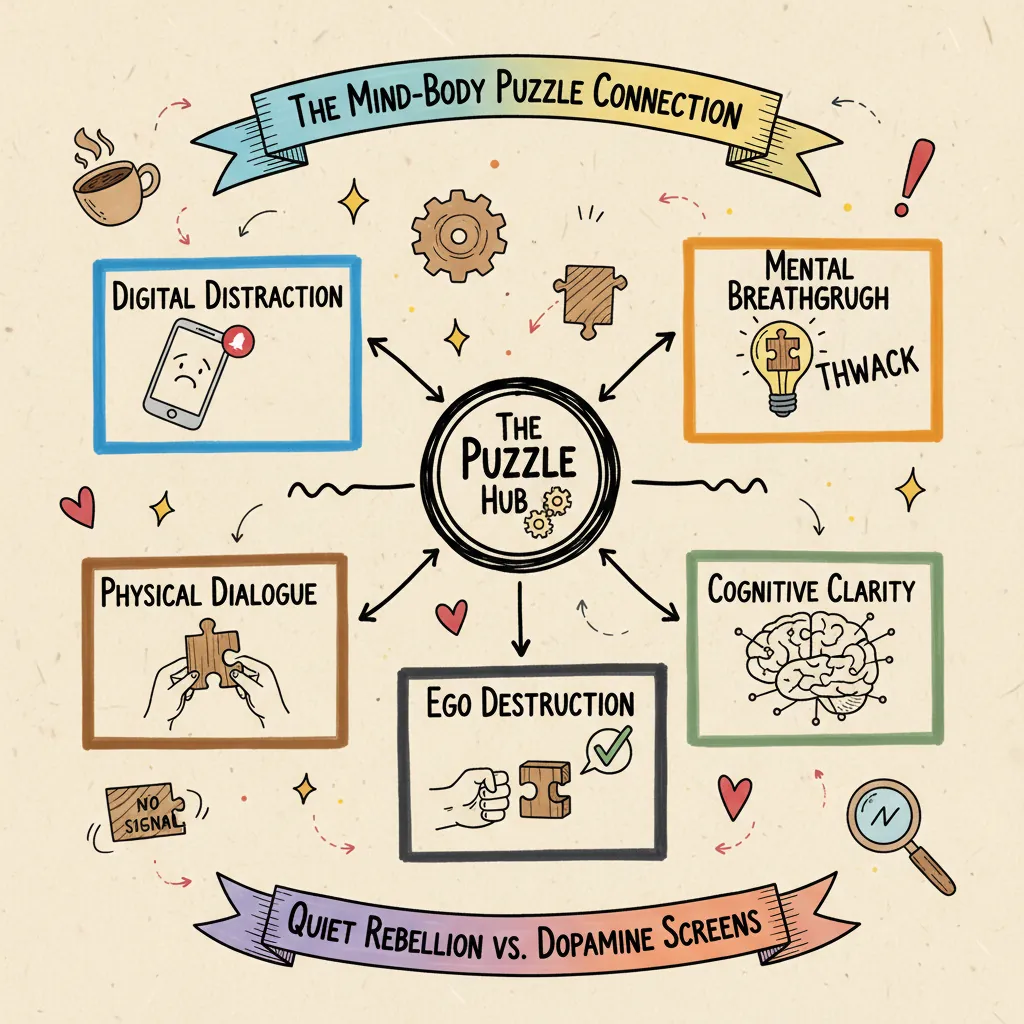
That sound is why I’ve spent the last decade collecting and reviewing over 200 mechanical enigmas. In an era where every “challenge” is delivered via a high-refresh-rate screen designed to harvest your dopamine, the brain teaser wooden puzzle is a quiet act of rebellion. It is a physical dialogue between you and a designer who might have lived two thousand years ago.
The thesis of my collection, and this review, is simple: the best wooden puzzles don’t just test your IQ; they punish your ego. They reward the specific type of observation that we’ve largely lost in the digital age. If you can’t sit with a handful of notched sticks for twenty minutes without checking your notifications, you’ve already lost the game. But if you can, these objects offer a level of cognitive clarity that no app can replicate.
The 2,500-Year-Old Geometry of Frustration
Most people assume the “brain teaser” is a Victorian invention. While the British certainly loved their tavern puzzles, the real heavy lifting in wooden joinery happened much earlier. The foundation of almost every interlocking puzzle you see today—including the ones on my desk right now—is the mortise and tenon joint. This is the same structural logic that allowed ancient architects to build palaces without a single iron nail.
When you hold a well-made wooden puzzle, you aren’t just holding a toy; you’re holding a piece of architectural history. The wood reacts to the oil on your skin, the humidity in your room, and the pressure of your grip. This variability is what makes wood superior to metal for certain types of logic. Metal is honest—it either fits or it doesn’t. Wood has “give.” It has personality. It requires you to develop a “feel” for the mechanism.
I’ve found that the psychological resilience built through mechanical frustration is a transferable skill. When you learn that a stuck piece usually means you’re looking at the problem from the wrong axis, you start applying that same logic to your spreadsheet errors or your household repairs.
Luban Lock Set 9 Piece
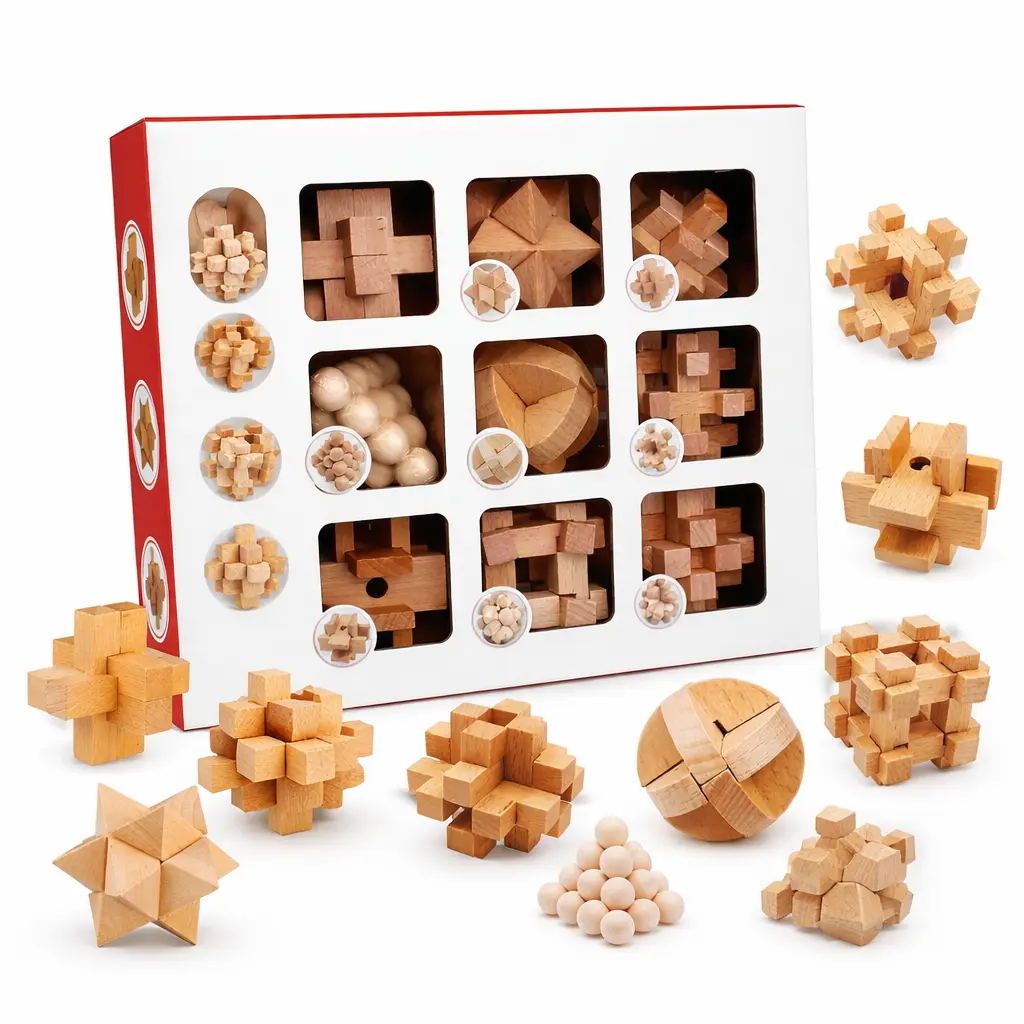
The Luban Lock Set 9 Piece is effectively the “Greatest Hits” of ancient Chinese carpentry. Priced at $39.99, this set is where I tell every serious beginner to start. These aren’t just random shapes; they are recreations of the puzzles Lu Ban—the godfather of Chinese woodworking—reportedly used to test his disciples’ spatial reasoning around 500 BCE.
What I love about this specific set is the sheer variety of joinery. You get nine distinct challenges, each focusing on a different interlocking principle. Some rely on a single “key” piece that slides out to release the tension, while others require a coordinated, multi-finger movement to keep the whole structure from collapsing as you pull the first rod. The beechwood used here is dense and holds its edges well. After three months of heavy use, the friction points on my set haven’t rounded off, which is the mark of a quality build. If the pieces get too loose, the puzzle loses its “bite.” These stay crisp.
Why Your Brain Stalls (And How the Solution Emerges)
There is a specific phenomenon in puzzle solving called “functional fixedness.” It’s a mental block where you can only see an object working in one specific way. In a wooden puzzle, this usually manifests as trying to pull a piece “out” when it actually needs to be rotated “around.”
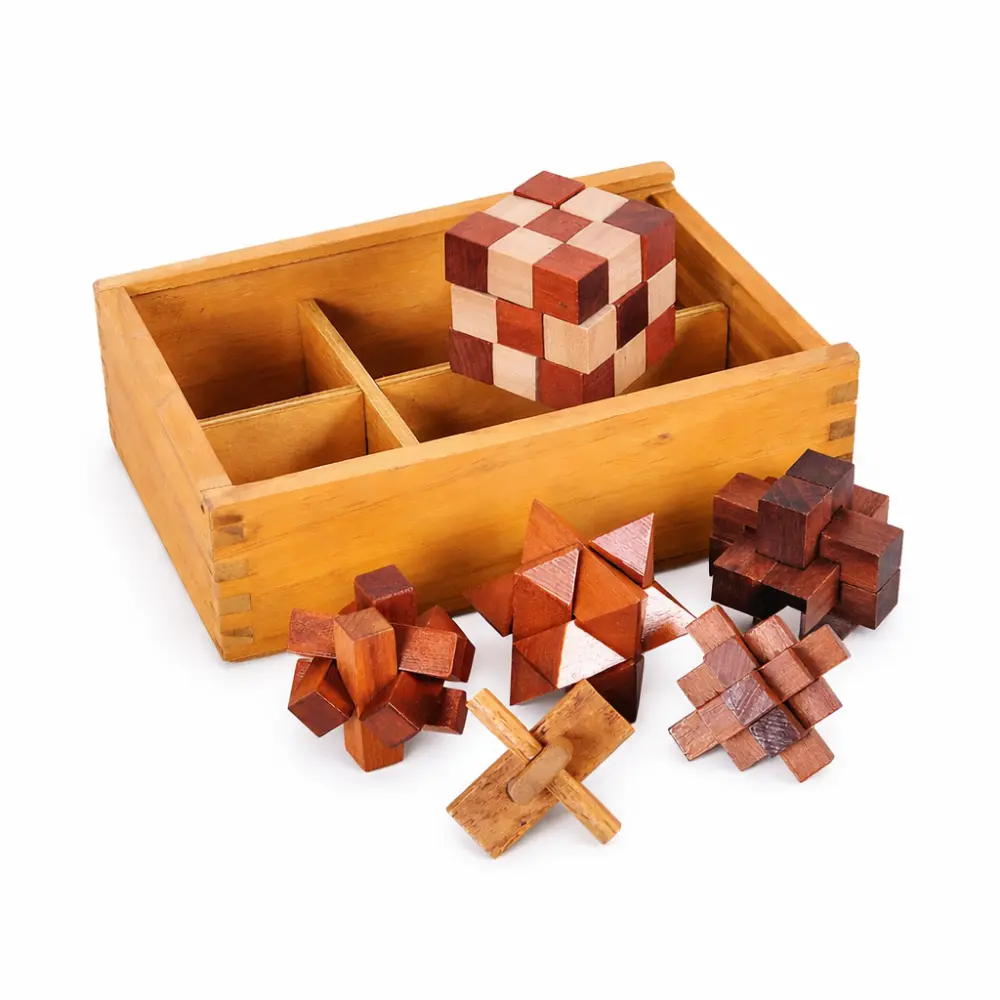
I’ve noticed that when I hand a newcomer the 6-in-1 Wooden Brain Teaser Set, they almost always try to use force within the first sixty seconds. This $38.88 collection is a masterclass in deceptive simplicity. Each of the six puzzles fits in the palm of your hand, and each one looks like it should just… fall apart. But because they use the same mortise-tenon logic that holds the Forbidden City together, they are incredibly stable until you find the one “unlucky” piece that serves as the lynchpin.
The 6-in-1 Wooden Brain Teaser Set is my go-to recommendation for a “desk fidget” for adults. Unlike a plastic spinner, these demand a high level of systematic ways to bypass mental blocks. You can’t solve these mindlessly. You have to feel for the slight gap, the millimetric wiggle that signals a sliding path. The satisfaction of the rebuild is actually higher than the teardown. Getting those six notched sticks back into a perfect star shape requires a level of manual dexterity that feels like playing a very slow, very quiet instrument.
The Mechanical Pivot: Moving Into 3D Assembly
While interlocking puzzles are about disassembly, a newer category of wooden brain teasers focuses on the “maker” experience. These are the 3D kits that require you to understand mechanical engineering from the ground up.
3D Wooden Puzzle Safe with Combination Lock
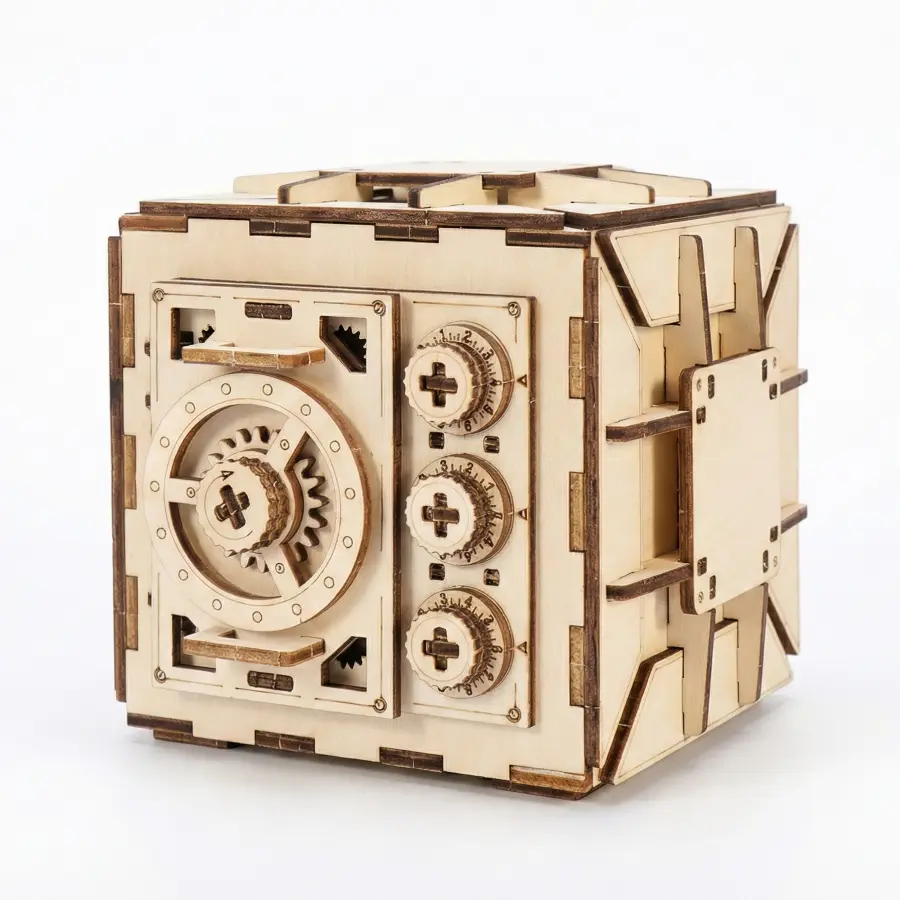
I spent a Saturday afternoon with the 3D Wooden Puzzle Safe with Combination Lock, which retails for $30.99. This isn’t a “puzzle” in the sense that you’re trying to figure out how to open it (though you do set the code); it’s a puzzle of assembly. With 111 laser-cut plywood pieces, the challenge is in the precision. If you misalign a single gear by a fraction of a millimeter, the 3-digit combination lock simply won’t engage.
The honest negative here? The instructions are decent, but you need to be comfortable with a hobby knife to clean up the occasional burr on the plywood. It’s not a “snap and go” toy for kids. It’s a project for someone who enjoys the sensory feedback of a well-fitted joint. Once finished, there is a genuine thrill in turning the wooden dial and hearing the internal tumblers drop into place. It’s a functional piece of art that teaches you exactly how a real safe works.
The Peak: The Neurochemistry of the “Aha!” Moment
Why do we do this to ourselves? Why spend hours frustrated by a $20 object? There is a biological reason. Neuroscientists have mapped what happens in the brain during the “Aha!” moment—the instant the solution to a puzzle becomes clear. It’s called a Gamma-band oscillation.
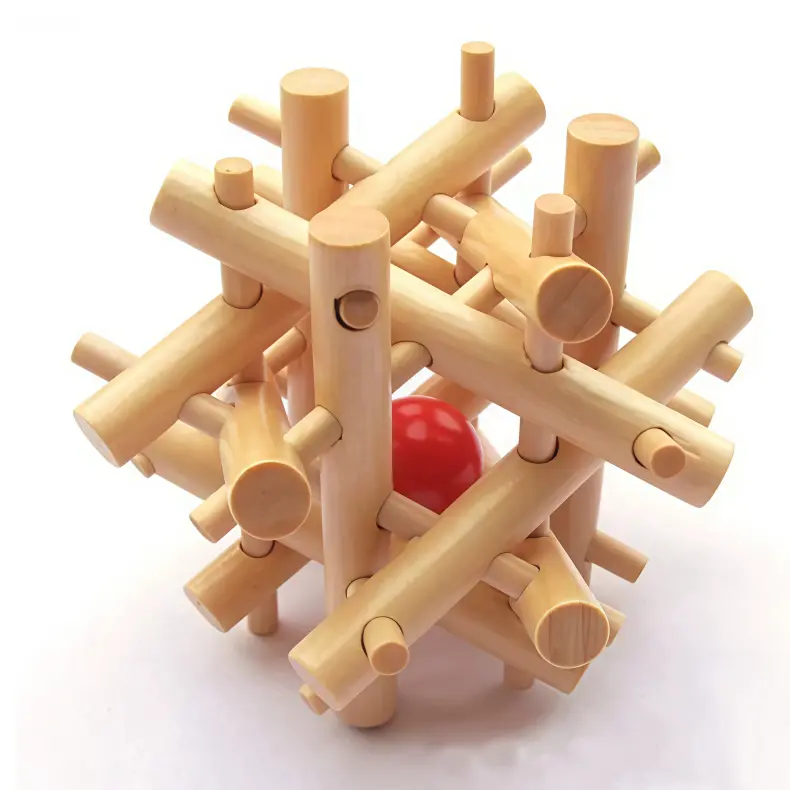
When you are struggling with a puzzle like the Twelve Sisters Puzzle, your brain is in a state of high-beta tension. You are scanning, testing, and failing. But the moment you realize that the crimson center sphere is the key to the tension, your brain releases a burst of dopamine coupled with that Gamma spike. It is a literal “high” that provides a sense of profound resolution.
Twelve Sisters Puzzle — $19.99
The Twelve Sisters Puzzle, priced at $19.99, is particularly good at triggering this. It consists of 12 thick rods and 12 interlocking sticks. It looks like a chaotic bird’s nest. However, it is governed by a very strict geometric symmetry. Solving it is a meditation on how navigating the various types of timber-based enigmas can lead to a calmer state of mind. I’ve found that the more complex the visual “noise” of a puzzle, the more satisfying the eventual order becomes.
Aesthetics vs. Action: When Puzzles Become Decor
Not every brain teaser needs to look like a pile of sticks. Some of the most interesting modern developments in the hobby involve blending mechanical puzzles with traditional crafts, like music boxes or nautical models.
Layered Butterfly Wooden Music Box
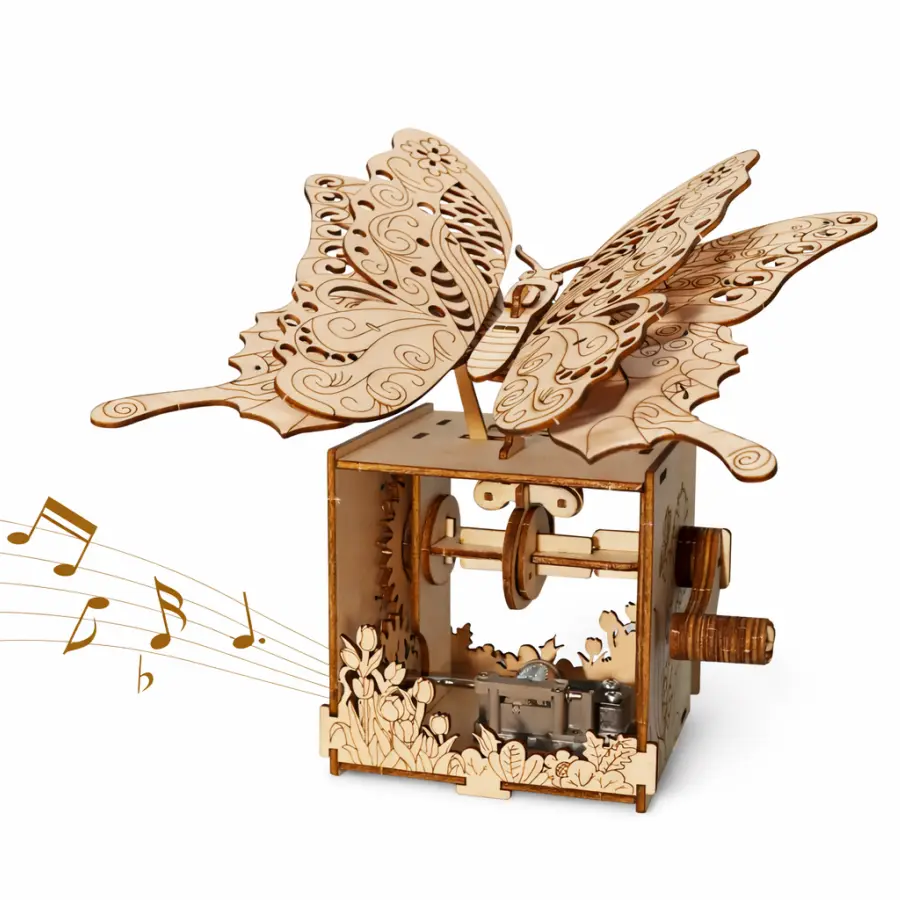
The Layered Butterfly Wooden Music Box ($28.99) is a prime example. Most music boxes are black boxes—you wind them up, and the music happens inside. This kit forces you to build the visible gearbox. You see how the pinned cylinder plucks the steel comb. When you turn the handle, the butterfly’s wings flutter via a series of wooden linkages. It’s a beautiful demonstration of how nested logic layers increase difficulty exponentially when you’re trying to sync movement with melody.
I’ll be honest: the butterfly wings are delicate. If you have “sausage fingers” like mine, you’ll want to use tweezers for the smaller pins. But the end result is a piece that guests will inevitably pick up off your shelf, only to be surprised that it’s a fully functional mechanical device.
The Minimalist Challenge: Less is More
Sometimes, the most difficult puzzles are the ones with the fewest pieces. This is a trap for the arrogant solver. We see three pieces and think, “I’ll have this done before the kettle boils.” Two hours later, the tea is cold and the pieces are still mocking us.
Circular Lock — $16.99
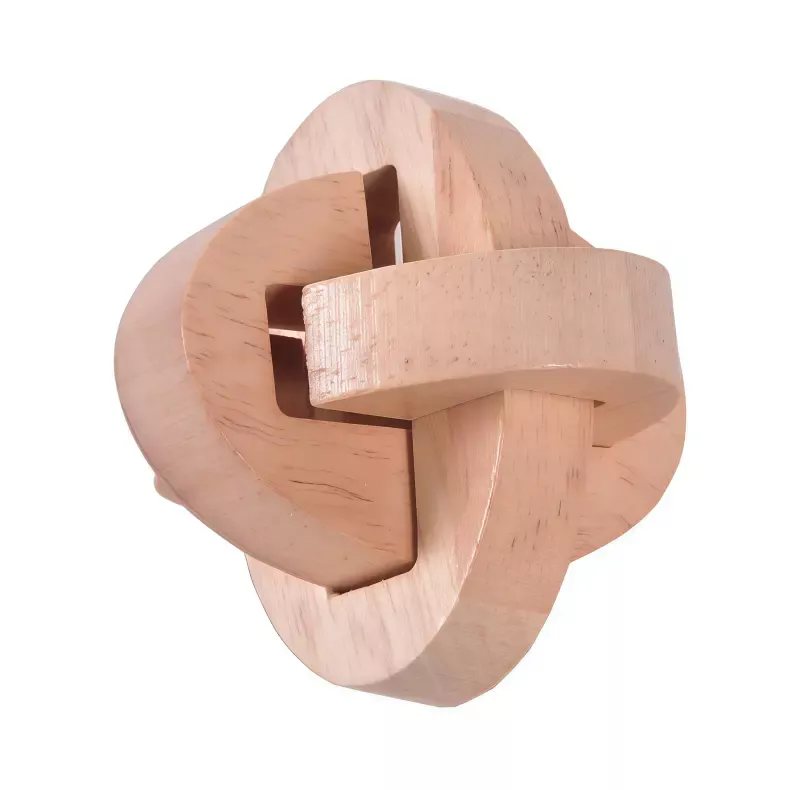
The Circular Lock ($16.99) is the ultimate ego-bruiser. It’s only three pieces. They are precision-cut and smooth. There are no hidden buttons or magnets. It’s pure geometry. This is what the community calls a locking puzzle brain teaser, where the pieces must move in a specific, non-obvious sequence to clear each other’s paths. I’ve had this on my desk for three weeks, and I still find myself absentmindedly fiddling with it during Zoom calls. It has a “meditation in motion” quality that more complex kits lack.
Similarly, the 6 Piece Wooden Puzzle Key ($12.99) is a study in “Wu Wei” or effortless action. If you try to force the pieces, they bind. If you hold them loosely and let gravity assist the sliding movements, the solution often presents itself. It’s a great entry point for someone who wants a “fidget toy” that actually requires a brain.
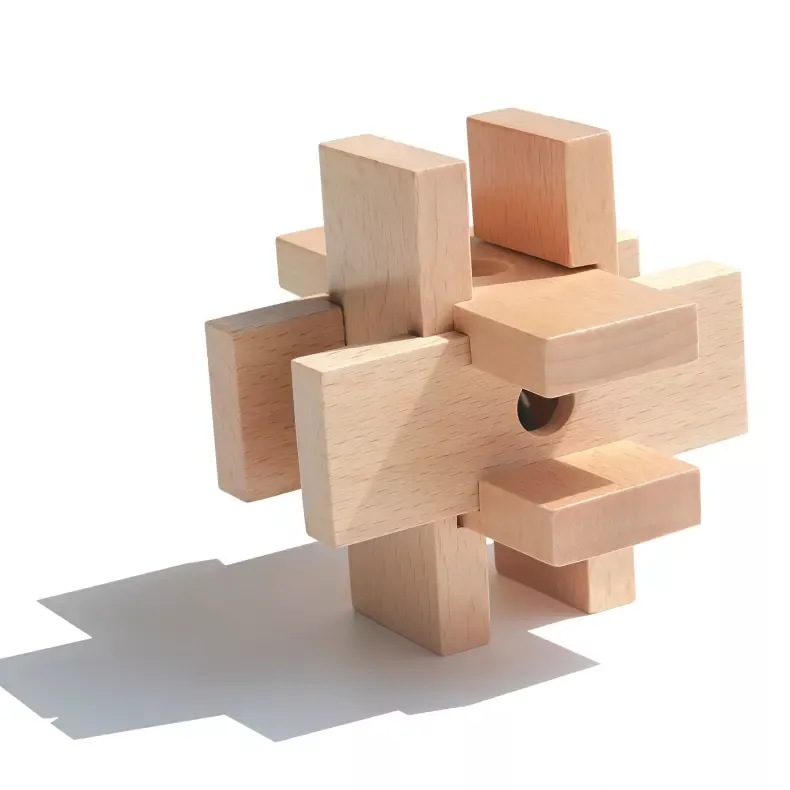
6 Piece Wooden Puzzle Key — $12.99
I often suggest that if you find yourself getting too frustrated with these mechanical blocks, you should take a break and try switching to paper-based logic games for a bit. It uses a different part of the brain—deduction rather than spatial manipulation—and can often “reset” your perspective so you can come back to the wood with fresh eyes.
Kinetic Sculpture: Puzzles That Move
For some, the “solve” isn’t about taking something apart, but about the journey of construction. This is where 3D puzzles cross over into model making.

The Wooden Sailboat 3D Puzzle Kit DIY Ship Model ($25.55) is a 57-piece challenge that results in a surprisingly detailed display piece. While it’s not a “brain teaser” in the traditional sense of having a hidden solution, the “puzzle” is in the assembly sequence. You have to think three steps ahead to ensure the internal supports are placed before the “hull” is closed. It’s a great way to develop the same spatial skills used in spatial strategy games that challenge the same brain regions.
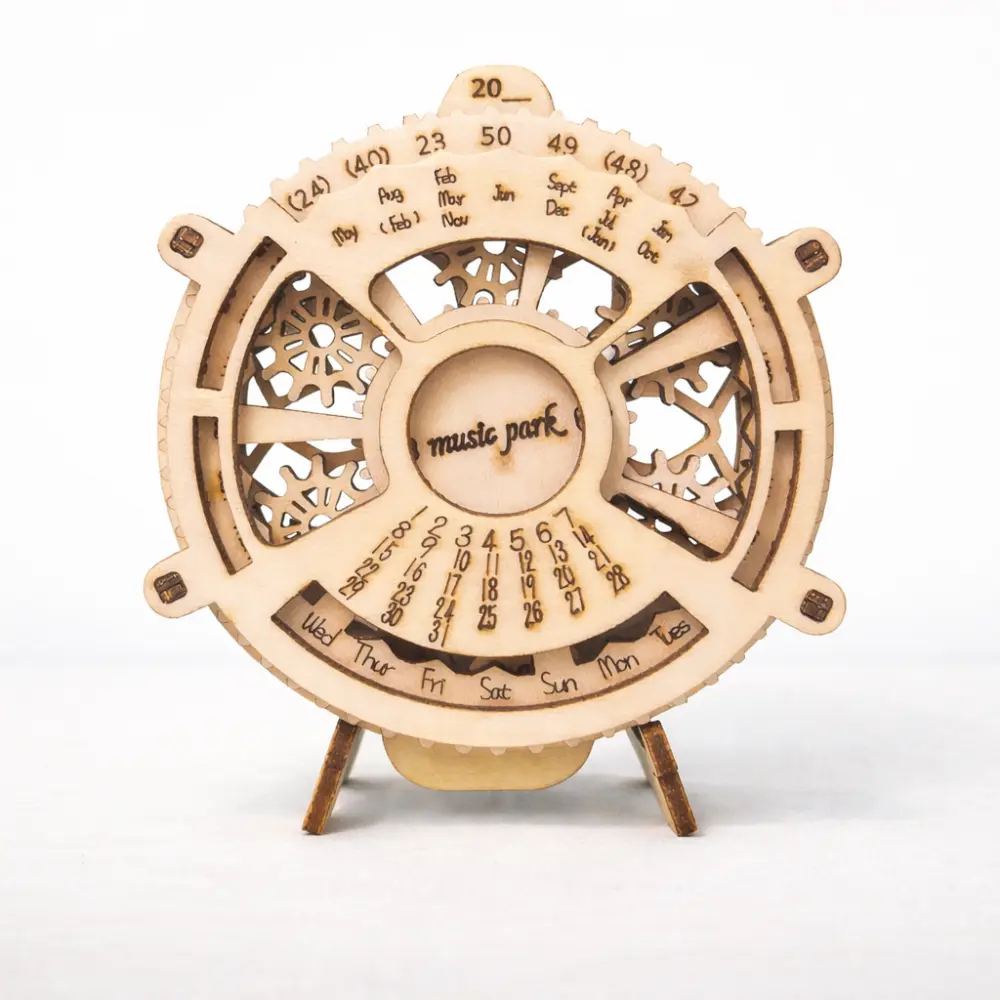
Then there is the 3D Wooden Perpetual Calendar Puzzle ($39.99). This is one of the most functional puzzles in my collection. You build a gear-driven system that allows you to calculate the day of the week for any date between 2023 and 2050. The math is based on Gregorian calendar algorithms that have been around since 1582. Building it is a 2-hour investment in understanding how gears can translate linear time into a circular display.
The Deceptive Simpleton: The Bead Pyramid
Finally, we have the Wooden Bead Pyramid Puzzle ($18.88). If I’m hosting a dinner party and want to keep people occupied, this is the one I put on the coffee table. It consists of six strands of beads. The goal is to stack them into a perfect tetrahedron.
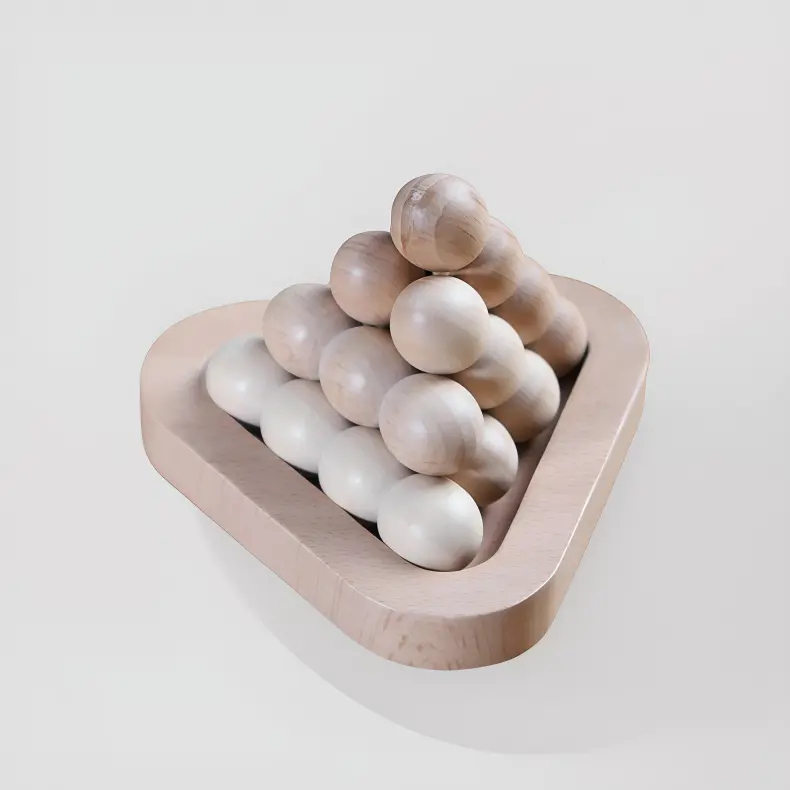
Wooden Bead Pyramid — $18.88
It looks like a child’s toy. It is, in fact, an exercise in 3D packing logic. Most people can get the first two layers easily, but the final three beads require you to deconstruct what you’ve already built to make room for the internal supports. It’s a perfect example of how wooden brain teaser puzzles can be used to teach “subtractive thinking”—the idea that sometimes you have to take a step back to move forward.
Quick-Reference Comparison Table
FAQ: Everything You’re Afraid to Ask About Wooden Puzzles
How do I solve a wooden brain teaser without the instructions?
The most honest answer is: observation. Before you move a single piece, look for the “seams.” In most interlocking puzzles, there is one piece that has more “wiggle” than the others. That is your starting point. If you get truly stuck, many enthusiasts use a program called BurrTools to simulate the movements, but I recommend against it for your first 50 solves. The frustration is part of the product you paid for. If you skip it, you’re just paying for a pile of wood.
Are wooden puzzles better than metal ones?
They are different. Metal puzzles, like the Hanayama series, are about precision and often involve hidden magnets or gravity pins. They feel “colder” and more clinical. Wooden puzzles are about friction and fit. Wood can swell or shrink depending on the humidity, which adds a layer of “living” difficulty. I prefer wood for long-term desk toys because the tactile warmth is more inviting during a stressful workday.
What happens if I break a piece?
This is the downside of wood, especially laser-cut plywood. If a tab snaps on your 3D Wooden Puzzle Safe, a tiny drop of wood glue (PVA) and a toothpick will usually fix it. For solid wood puzzles like the Luban locks, breaking a piece usually requires significant force. If you’re pushing hard enough to snap beechwood, you aren’t solving the puzzle; you’re fighting it.
Are these suitable for children?
Most of the products I review are rated for ages 14 and up. This isn’t because they are “dangerous,” but because they require a level of patience and fine motor control that younger children haven’t developed. A 10-year-old will likely get frustrated and try to force the pieces, which leads to broken tabs and tears. For younger kids, stick to simpler 2D jigsaws or large-scale building blocks.
How do I maintain my wooden puzzles?
Keep them out of direct sunlight and away from radiators. Extreme heat will warp the wood and make the tolerances either too tight to move or too loose to stay together. If a puzzle becomes “gritty,” a tiny amount of dry paraffin wax on the sliding surfaces will make it smooth as silk. Never use oil or WD-40; it will soak into the grain and ruin the wood.
Why do some puzzles smell like “burnt toast”?
If you buy a laser-cut kit like the Layered Butterfly Wooden Music Box, that smell is the carbonized wood from the laser beam. It’s a hallmark of modern precision manufacturing. The smell usually fades within 48 hours of opening the box. I actually find it quite pleasant—it’s the “new car smell” of the puzzling world.
Can these puzzles actually improve my memory?
There is significant research suggesting that puzzle-solving activities enhance visuospatial cognition. While it won’t necessarily help you remember where you put your car keys, it does train your brain to rotate 3D objects mentally. This is a core component of “fluid intelligence,” which is the ability to solve new problems without relying on previous knowledge.
Is the “Twelve Sisters” really that hard?
It’s a Level 7 or 8 out of 10. The difficulty isn’t in the number of pieces (25 is manageable), but in the fact that it looks the same from every angle. You lose your “place” very easily. It’s a great test of focus.
Do I need tools for the 3D kits?
Most kits, like the Wooden Sailboat, are “glue-free.” However, I always keep a pair of needle-nose pliers and a small piece of sandpaper (usually included) nearby. Sometimes a tab is just a hair too thick for its slot, and a quick sand makes the difference between a smooth fit and a broken piece.
Why are some wooden puzzles so much more expensive than others?
It comes down to wood quality and tolerance. A $10 puzzle is likely made of soft pine or cheap plywood with loose fits. A $40 set like the Luban Lock Set 9 Piece uses hardwood like beech or rosewood, which is harder to machine but lasts a lifetime. You’re paying for the “click.”
Can I set my own combination on the wooden safe?
Yes, but you have to do it during the assembly phase. You can’t “reset” it once it’s built without taking the door apart. This adds an extra layer of “consequence” to the build that I find very satisfying.
What is the “Circular Lock” made of?
It’s usually a high-density hardwood. The key is the finish; it’s polished so that the pieces slide against each other with almost zero resistance. It feels like a high-end worry stone.
I’ve solved everything. What’s next?
If you’ve mastered the 3D kits and the interlocking blocks, I recommend moving into sequential discovery boxes. These are puzzles that hide tools inside themselves—you find a key to open a drawer, which contains a pin to unlock a hidden compartment, and so on. It’s the ultimate evolution of the wooden brain teaser.
The One Puzzle That Teaches You How All the Others Work
If I had to throw away my entire collection and keep just one item to explain the hobby to a stranger, it would be the Luban Lock Set 9 Piece. At $39.99, it’s not the cheapest, but it is the most honest. It doesn’t rely on gears, music, or “tricks.” It relies on the fundamental truth that two things cannot occupy the same space at the same time—unless they are designed to dance around each other.
Solving these puzzles has taught me more about patience than any self-help book ever could. It has taught me that when I feel like “forcing” a solution in my life or my work, I am probably missing a simple rotation. The wood doesn’t lie. If it doesn’t fit, you’re wrong. And there is something incredibly refreshing about that kind of objective truth in 2026.
If you’re ready to trade your screen time for something that actually leaves you feeling smarter, start with the 6-in-1 Wooden Brain Teaser Set for $38.88. It’s the perfect introduction to the “Forbidden City” logic that has baffled smarter people than us for two millennia. Once you hear that first “thwack” of a piece sliding into place, you’ll understand why we’re all so obsessed.
If this clicked for you, our guide to the various types of timber-based enigmas will help you find your next obsession. The rabbit hole goes deep, and the wood is always waiting.