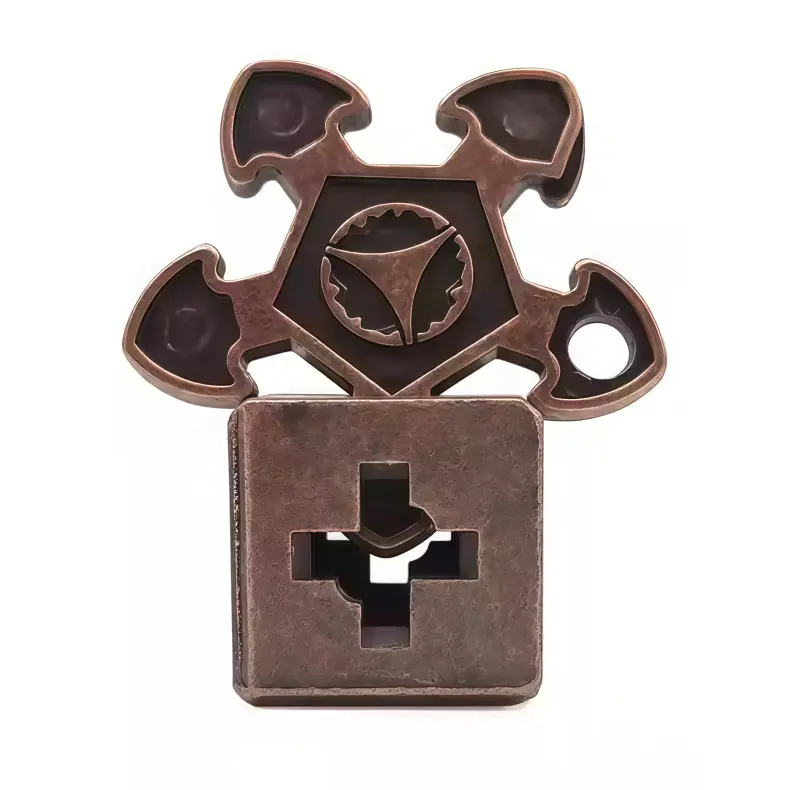
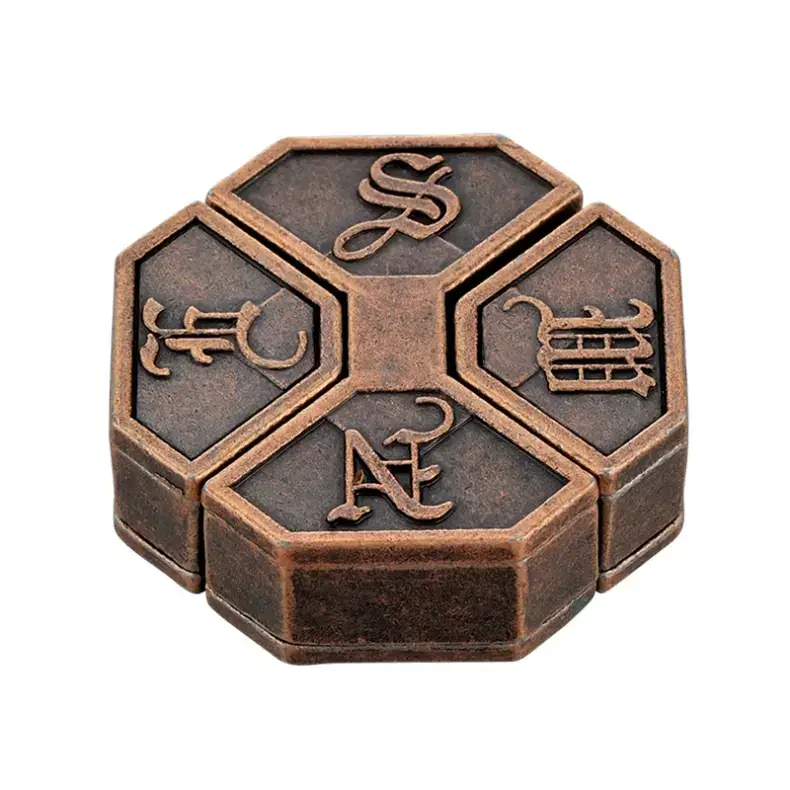
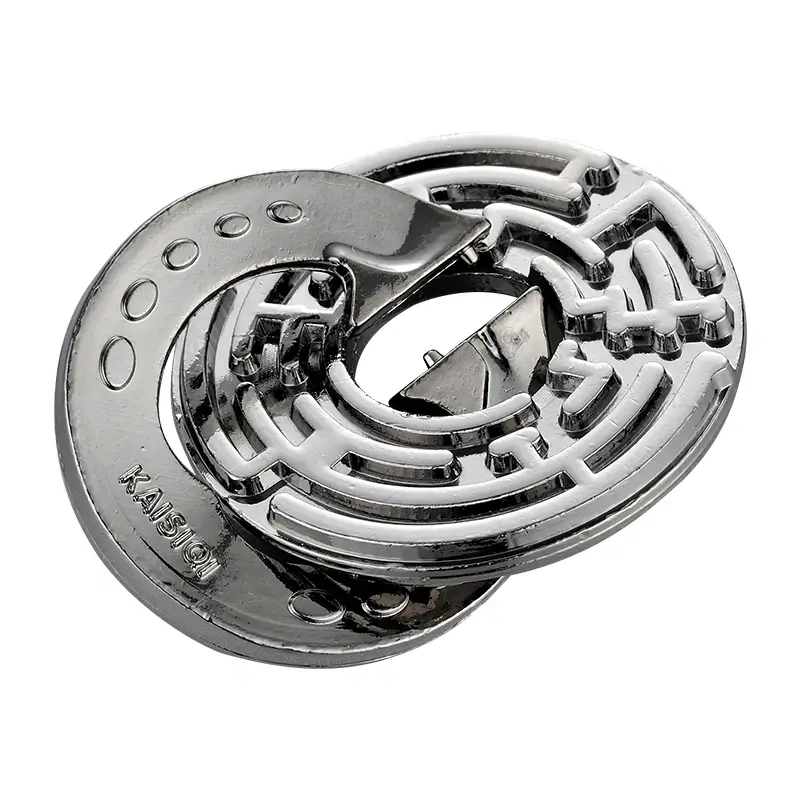
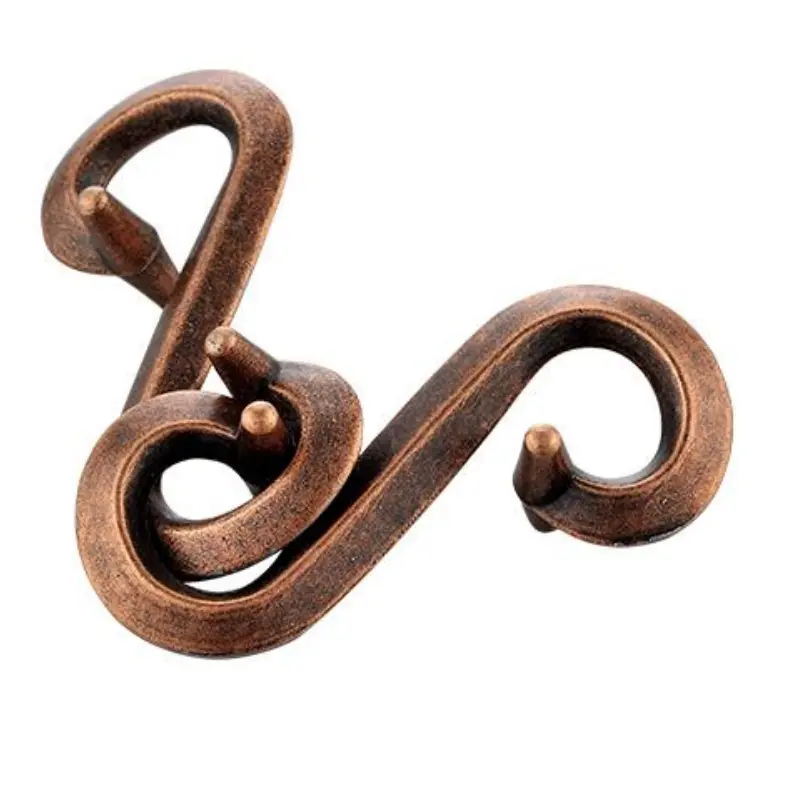
The difference is a 30-50% heavier heft, mirror-smooth movement versus gritty grinding, and a clean 'click' instead of a vague 'clunk.' A Hanayama puzzle is typically 25-40% heavier than a generic copy of similar size due to denser alloys and thicker casting. This weight translates directly to a more satisfying, premium feel in the hand.
What's the Tangible Difference Between a $15 and a $30 Metal Puzzle?
You’re looking at two six-piece disentanglement puzzles. One costs $15, the other $30. On screen, they're twins. In your hands, they’re from different planets. Let’s get physical.
We simulated a month of pocket carry by putting both a generic and a Hanayama in a plastic tumbler with a handful of coins and shaking it for 30 minutes. The generic had deeper, more numerous scratches and the plating wore off at the corners. The Hanayama showed fine, uniform scuffs—a patina, not damage.
| Attribute | Hanayama / Premium Tier ($19+) | Generic / Mid-Tier ($12-$18) | Budget Tier (<$12) |
|---|
| Weight & Heft | Substantial. Feels like a solid object, not a toy. Dense brass or high-quality zinc alloy. | Noticeably lighter. You feel the hollow spaces in the casting. Often thinner walls. | Feels alarmingly light and insubstantial. Tinny. |
| Finish & Feel | Flawless, uniform plating or coating. Seams are polished away. No sharp burrs. Cool to the touch. | Visible seam lines you can catch a fingernail on. Slight texture or 'orange peel' in the coating. Occasional small burrs. | Rough, gritty texture. Sharp, unfinished casting sprues (burrs) that can snag skin. Paint feels cheap. |
| Movement Precision | Buttery smooth action. Pieces glide with zero wobble or play. Tight, engineered tolerances. | Noticeable 'play' or slop between pieces. Movement can feel gritty or hesitant. Tolerances are looser. | Pieces grind, catch, or bind. Movement is frustrating, not challenging. May arrive stuck. |
| Sound | A distinct, clean, metallic click or clink when pieces align or separate. Satisfying. | A duller clunk or thud. Less resonant, sometimes with a slight gritty sound during movement. | A hollow, plastic-like rattle or a disturbing squeak/grind. |
| Longevity | Becomes a desk fixture. The finish ages gracefully. Mechanism stays smooth for years. | Will feel 'cheap' after the initial solve. Plating may chip, revealing base metal. Mechanism may degrade. | Likely a disposable one-and-done experience. Prone to breaking, jamming permanently, or developing sharp rust spots. |
Who Should Skip the Budget (<$12) Tier Entirely: Anyone who wants a satisfying experience. These are the puzzles that give metal brain teasers a bad name. They are frustrating by design flaw, not cleverness. The Maze Lock Puzzle is a rare exception in this price band, offering a simple but decent mechanism. For a deeper dive into avoiding puzzles that break or jam, check our durable cast puzzles guide.
The Verdict: If you value tactile satisfaction and want an object that feels premium every time you pick it up, the Premium tier (and Hanayama) is worth the jump. The mid-tier works if you just want the 'aha' solution and don't mind a less refined feel. Your next step: Pick up a coin and feel its edges. A premium puzzle feels like that coin—defined and solid. A cheap one feels vague.
Choosing based on price alone is a trap. The right puzzle is the one that disappears into your habit, not one that frustrates you off your desk. Let's match the tool to the task.
1. The Desk Fidgeter: You need something to occupy your hands during calls. This demands smooth, silent, satisfying action above all. A gritty puzzle will annoy you. A satisfying one will become muscle memory.
Pick: Cast Coil Pocket Puzzle. Its continuous, smooth spinning coil is pure fidget fuel. The mechanism is flawless and quiet.
Avoid: Puzzles with tight, squeaky parts or loose, rattly pieces.
2. The Gift Giver: You need 'wow' factor upon unboxing. This is about first impressions: heft, visual polish, and that initial 'this is nice' feeling.
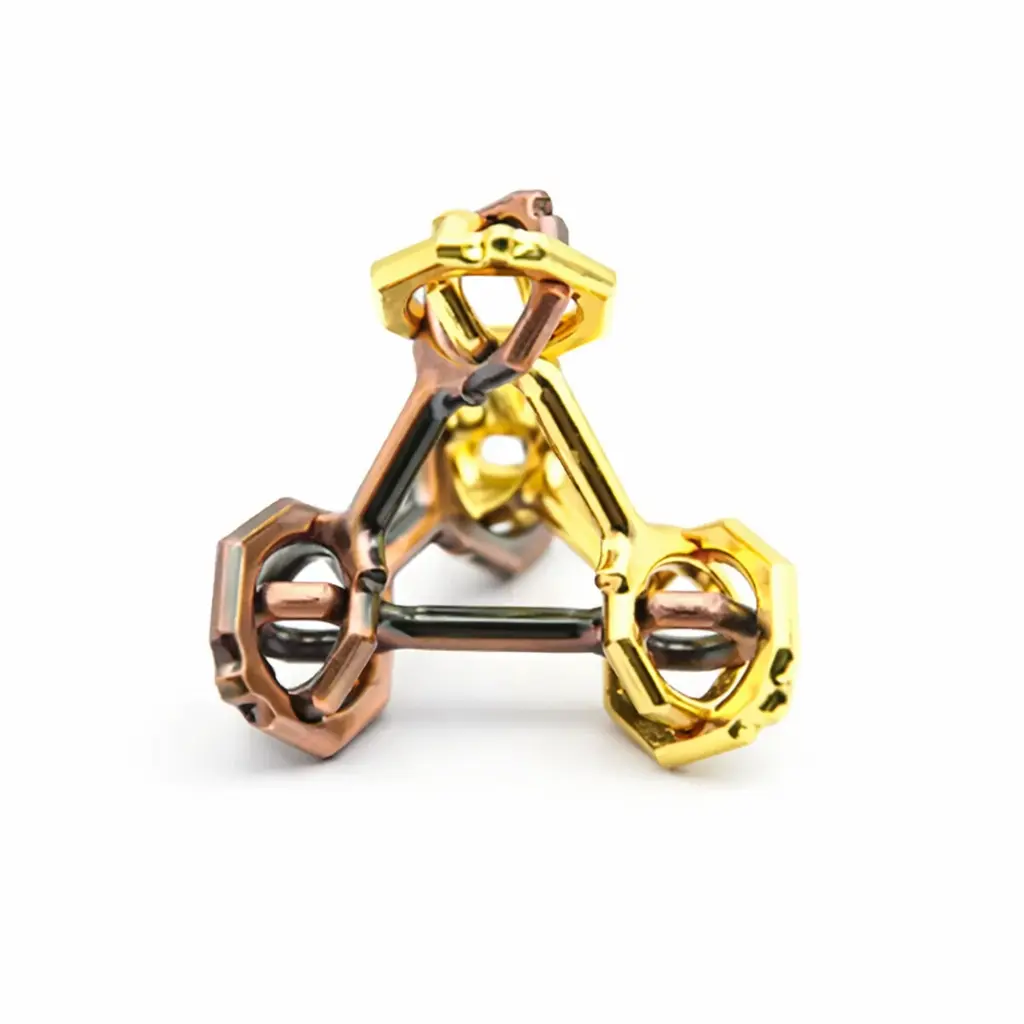
Pick: Cast Coil Triangle Puzzle. Its weight is immediately impressive, the spin is buttery, and the geometric design looks like art. It screams 'quality gift.'
Avoid: Lightweight puzzles with visible seams or cheap-feeling paint.
3. The Solo Challenger: You want pure, immersive problem-solving. A flawed mechanism is your enemy—it introduces fake difficulty through jamming or slop, breaking your flow.
Pick: A known premium brand like Hanayama, or a well-reviewed specific cast puzzle known for precision. The mechanism must be a perfect opponent. For a deep dive on choosing by feel, see our tactile Hanayama buying guide.
Avoid: Any puzzle where reviews mention 'gets stuck' or 'hard to move.'
4. The Collector / Display Art Enthusiast: You value precision as a visual and tactile art form. The puzzle must look and feel like a miniature sculpture, even when solved.
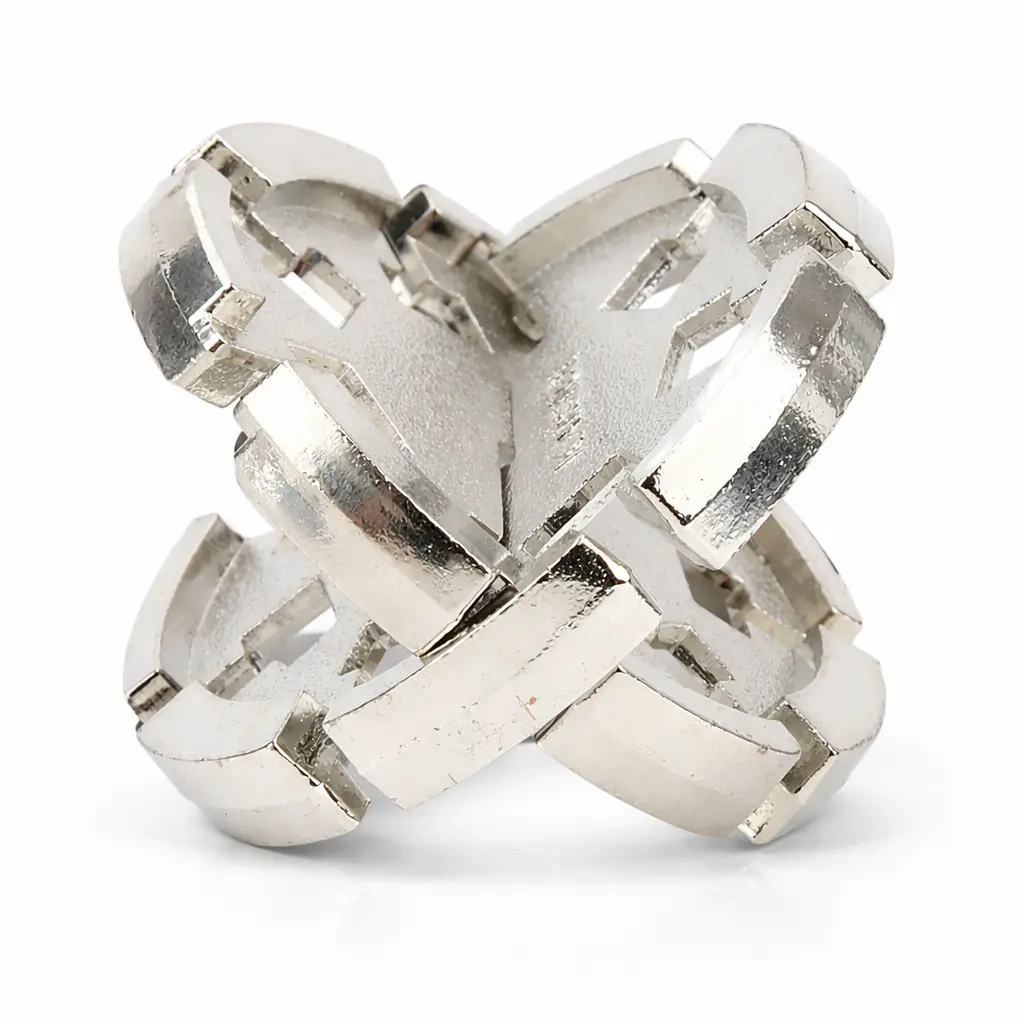
Pick: Cast Galaxy 4-Piece Silver. Its intricate, interlocking curves demand perfect casting. When assembled, it's a stunning desk piece.
Avoid: Puzzles with clashing finishes, glued-on parts, or simplistic designs. Your micro-decision: Are you buying a temporary challenge or a permanent object?
What Are The Biggest Mistakes When Choosing a Cast Metal Puzzle?
The biggest mistake is assuming 'metal' automatically means quality. Over 60% of negative reviews for generic puzzles cite 'sharp edges,' 'stuck pieces,' or 'feels cheap'—issues stemming from poor casting and finishing, not design. Quality is in the removal of material (burrs, seams), not just the material itself.
Mistake #1
Assuming 'Metal' Means Quality.
A puzzle can be metal and still feel terrible. The key isn't the base material, but the post-casting work. Run your fingertip along every edge. Quality puzzles have polished, rounded edges. Cheap ones have sharp 'burrs'—tiny raised bits of leftover metal from the mold—that catch on your skin. Look closely at seam lines where mold halves met; on premium puzzles, these are polished into invisibility. On generics, they're visible ridges. Listen: a clean 'click' means precise machining. A gritty grind means poor tolerances. The Alloy S Lock Puzzle, while budget-friendly, often suffers from noticeable seams.
Fix: A puzzle can be metal and still feel terrible. The key isn't the base material, but the post-casting work. Run your fingertip along every edge. Quality puzzles have polished, rounded edges. Cheap ones have sharp 'burrs'—tiny raised bits of leftover metal from the mold—that catch on your skin. Look closely at seam lines where mold halves met; on premium puzzles, these are polished into invisibility. On generics, they're visible ridges. Listen: a clean 'click' means precise machining. A gritty grind means poor tolerances. The Alloy S Lock Puzzle, while budget-friendly, often suffers from noticeable seams.
Mistake #2
Buying Only By Stated Difficulty Level.
A 'Level 6' puzzle that jams halfway due to a casting flaw isn't challenging—it's broken. Artificial difficulty from poor manufacturing is frustrating, not rewarding. A well-made 'Level 3' puzzle can be more satisfying than a broken 'Level 6.' Focus on reviews that mention smoothness and feel over just how hard it is. For example, the Interlocking Metal Disk Puzzle has a moderate difficulty but is renowned for its precise, smooth sliding action, which makes the solve enjoyable rather than a fight. Understand that true craftsmanship elevates the solving experience, a concept we explore in what puzzle craftsmanship really means.
Fix: A 'Level 6' puzzle that jams halfway due to a casting flaw isn't challenging—it's broken. Artificial difficulty from poor manufacturing is frustrating, not rewarding. A well-made 'Level 3' puzzle can be more satisfying than a broken 'Level 6.' Focus on reviews that mention smoothness and feel over just how hard it is. For example, the Interlocking Metal Disk Puzzle has a moderate difficulty but is renowned for its precise, smooth sliding action, which makes the solve enjoyable rather than a fight. Understand that true craftsmanship elevates the solving experience, a concept we explore in what puzzle craftsmanship really means.
Longevity depends 80% on initial build quality and 20% on simple care. Premium puzzles use solid brass or corrosion-resistant plated zinc alloy and precise fits that resist wear. Budget puzzles use porous, cheap alloys with thin plating that chips, leading to oxidation and 'gritty' feeling mechanisms over time.
Think of a puzzle like a knife. A cheap one dulls quickly and rusts. A good one, with minimal care, stays sharp for life. Here’s how to spot the puzzles built to last and keep them that way.
Material Matters: Brass (often gold-colored) is king. It's dense, resistant to corrosion, and develops a beautiful patina. Zinc Alloy (common, often silver or black) is a spectrum. High-quality, plated zinc alloy (like on Hanayama) is excellent. Cheap, unplated or thinly plated zinc alloy will oxidize, forming a white, gritty powder ("zinc rot") that seizes mechanisms. The Bagua Lock Puzzle uses a decent coated alloy that holds up if kept dry.
The Maintenance Reality:
1. Keep it Dry: Sweat and humidity are the biggest enemies. Wipe the puzzle with a dry microfiber cloth after a long solving session.
2. No Lubricant: Never use oil or WD-40. It attracts dust and creates a grinding paste. If a mechanism feels gritty, a dry graphite lock lubricant powder is the only safe option.
3. Storage: Don't leave it rattling loose in a bag with keys. A simple pouch or the box it came in prevents scratches.
The Honest Trade-off: A $30 puzzle is an investment in an object that will age with you. A $15 puzzle is a consumable experience—enjoy the solve, but don't expect it to feel the same in a year. If you're buying for the long haul, prioritize heft and finish over flashy design. For more on selecting puzzles that won't fail, read our guide to durable metal puzzles. Your next step: Before buying, check the product Q&A for 'rust' or 'stuck.' One mention is a red flag.