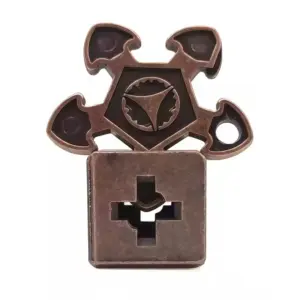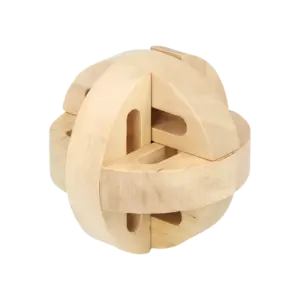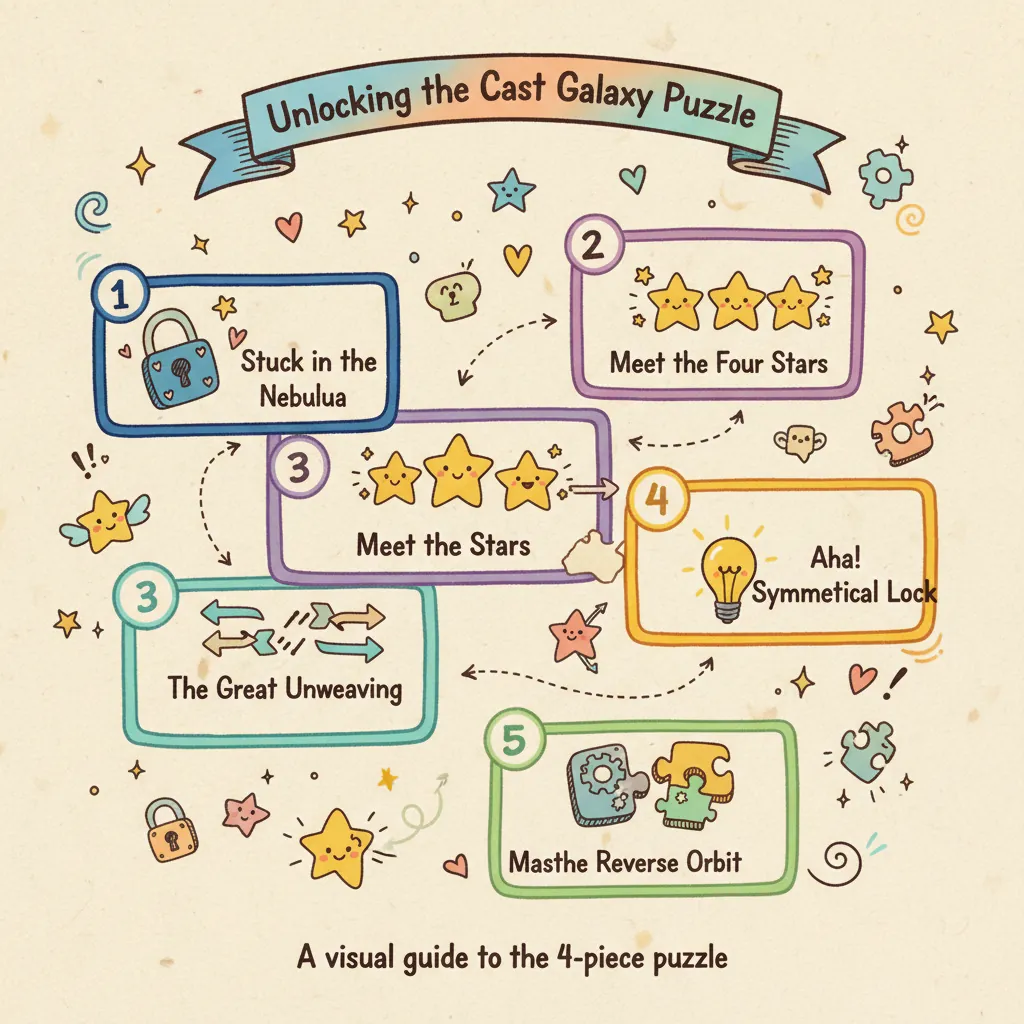
Stuck in a Metal Nebula? Your Frustration is the First Clue
You’re holding a compact, swirling form of cool, zinc alloy. You turn it over and over. The four identical-looking pieces slide just a little, teasing freedom, but then they jam. Pulling does nothing. Twisting feels wrong. This is the precise dead-end designed by Bram Cohen for the Hanayama Cast Galaxy, a mechanical puzzle rated a 3 out of 6 on their difficulty scale—deceptively straightforward, yet perfectly capable of halting progress. Your frustration isn’t a sign of failure; it’s the first logical response to a cleverly engineered symmetrical lock.
This isn’t a puzzle solved by individual force. The core principle you need to internalize is simultaneous movement. The four pieces are not stuck; they are perfectly balanced in an interlocking embrace. Trying to move just one or two is like trying to open a door while leaning your full weight against it. The solution requires a specific, coordinated slide of all components at once, a tactile key that aligns internal pathways for disentanglement.
Your hands, feeling the subtle shifts and gentle clicks, are your best tools. This isn’t about being a “genius”; it’s about learning to listen to the feedback the puzzle gives you. That slight bit of play you feel when you push pieces in a certain way? That’s the Galaxy whispering its secret.
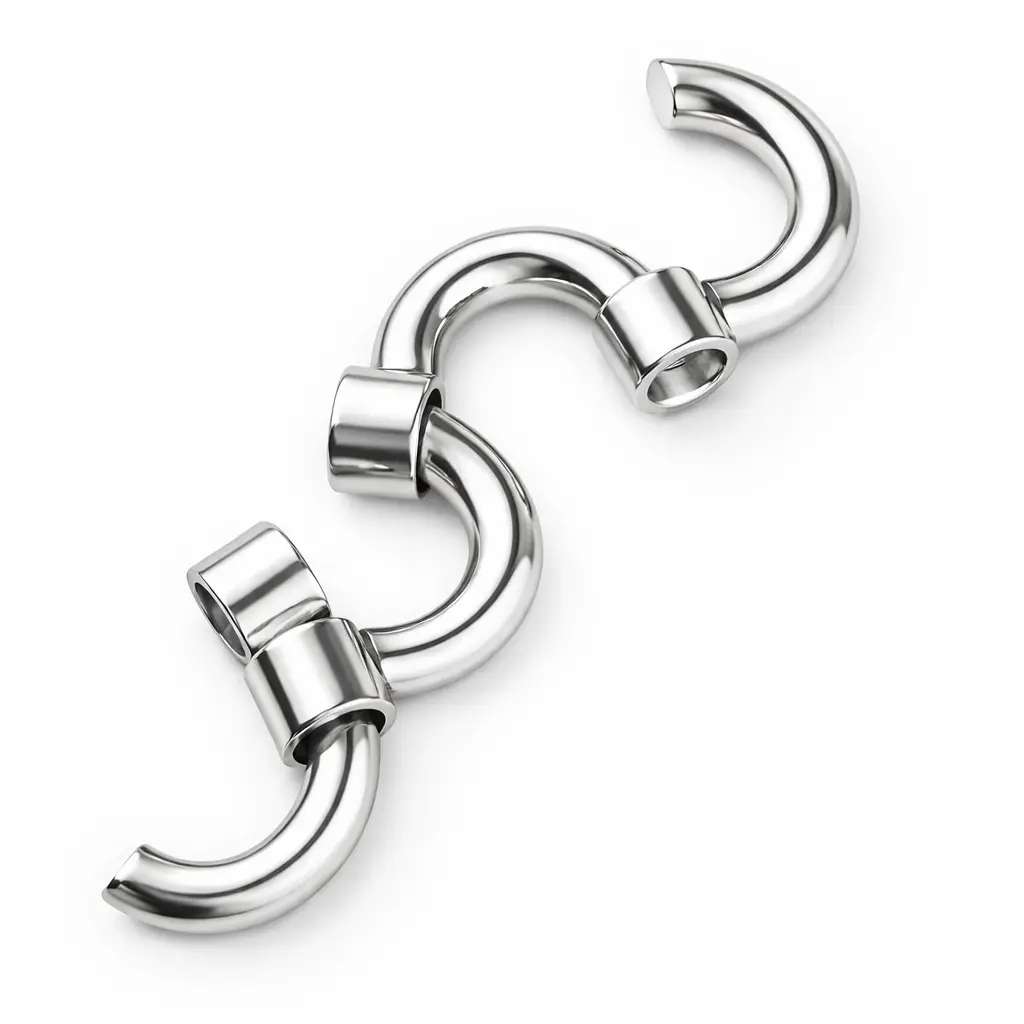
If you’re asking “why is my Cast Galaxy stuck?” it’s almost certainly because you’re attempting a piecemeal approach. The puzzle arrives assembled in its starting position inside that distinctive Huzzle box. To separate the parts, you must overcome its core design premise: mutual obstruction. The good news is that once you learn the single, elegant key movement—a synchronized slide in one specific plane—the entire puzzle unfolds in seconds. This is the transition from frustration to curiosity.
Think of it not as breaking a code, but as finding the rhythm. The following steps will guide you through that rhythm, moving you from feeling helpless with a solid metal knot to understanding the satisfying logic of its rotational symmetry. Let’s move from being stuck to your first, quiet “aha.”
Meet the Quartet: Naming Your Four Identical Stars
Each of the Cast Galaxy’s four components is manufactured from the same mold, making them physically identical—a fact that is central to the puzzle’s elegant, symmetrical secret. For our step-by-step solution to be clear, however, we need a simple, text-based system to identify each piece by its relative position in your hands right now. This will eliminate the visual guesswork that plagues video tutorials and is a common gap in brainteaser instructions.
Hold the assembled puzzle in its classic, swirling shape, oriented like a four-armed pinwheel. Observe. You’ll see four curved arms radiating from a central mass. We will label them by the cardinal directions they point toward: North, East, South, and West.
This isn’t about finding a marking; it’s about establishing a shared frame of reference. The piece whose primary curved arm is pointing directly toward you is South. The one opposite it, pointing away, is North. The piece pointing to your left is West, and to your right is East. (If you’re left-handed, you can mirror this; consistency is key.)
Why does this matter? Because the solution requires specific, coordinated actions from specific pieces. When an instruction says “slide North and South,” you’ll know exactly which two pieces to manipulate. This nomenclature turns a vague “move these things” into a precise, repeatable action. It’s the first step in building a kinesthetic understanding of Bram Cohen’s design—the shift from seeing a beautiful metal brainteaser to engaging with a logical mechanical puzzle.
Remember, while the pieces are identical, their current roles (North, East, South, West) are defined solely by their orientation in your grasp. If you set the puzzle down and pick it up differently, the labels reset. This fluidity is part of the rotational symmetry you’re learning to navigate. Before moving to disassembly, take a moment to feel each piece, noting how the interlocking curves of West and East nest against those of North and South. This tactile map is your guide for the entire puzzle walkthrough.
The Great Unweaving: A Step-by-Step Disassembly
Disassembling the Hanayama Cast Galaxy is a precise 6-step sequence, typically taking under 30 seconds once you know the single, crucial movement. It hinges not on force but on coordinating all four pieces—your North, South, East, and West—in a single, fluid simultaneous movement. This is the core mechanical principle that transforms a solid block into four separate components.
Now, with your mental map in place—North pointing away from you, South toward you, East right, West left—we begin. Your goal is to perform the key slide. But first, you must achieve the correct starting position.
Step 1: The Initial Grip.
Hold the assembled puzzle vertically in your non-dominant hand, pinching it between your thumb and forefinger. Your grip should be on the North and South pieces. Specifically, pinch the puzzle near its central swirl, with your thumb on the face of the North piece and your forefinger on the face of the South piece. Feel the cool, solid zinc alloy. Your dominant hand will be free to manipulate the East and West pieces. This grip immobilizes the North-South axis, creating a stable framework for the crucial lateral movement.
Step 2: Prepare the Lateral Pieces.
With your dominant hand, use your thumb and forefinger to gently grasp the ends of the East and West pieces. Do not pull them apart. Instead, apply a subtle, inward pressure, as if you are trying to slightly compress the whole puzzle along the East-West axis. You should feel a tiny, almost imperceptible shift—a settling of the pieces into their deepest interlocked state. This compression ensures all internal channels are aligned. (This is often missed, leading to the frustrating “they slide but won’t separate” dead-end.)
Step 3: The Synchronized Slide (The “Aha”).
This is the heart of the Bram Cohen design. While maintaining your gentle inward pressure on East and West, you will now slide them together, as a single unit. With your dominant hand, slide both the East and West pieces downward, relative to your stationary North-South grip. They must move in unison, perfectly parallel.
- What you should feel and see: The entire puzzle will seem to shear along a diagonal. The beautiful swirling shape will distort slightly, revealing thin, gleaming gaps along the seams between all four pieces. You will hear a soft, precise shhh-click as the internal tabs clear their channels. This is the symmetrical lock disengaging.
- Critical Checkpoint: If only one of the lateral pieces (East or West) moves, the puzzle will bind. If the pieces feel stuck, release pressure and return to the starting assembled form. Ensure your non-dominant hand is firmly holding North and South stationary, and that your dominant hand is moving East and West together, not tilting or twisting them.
Step 4: The First Separation.
With the slide completed, the simultaneous movement is done. The puzzle is now in an unstable transitional state. Release the inward pressure from your dominant hand. You will find that the East and West pieces are now completely free to move independently. Gently pull the East piece directly away from the puzzle’s core. It should come away smoothly, with a satisfying sense of release. Set it aside.
Step 5: The Domino Effect.
The removal of the East piece has broken the remaining symmetry. Now, the West piece is only held by its interlocking with North and South. Simply lift it straight up and away from the central pair. The puzzle is now half-solved.
Step 6: The Final Parting.
You are left with the North and South pieces, still locked together in a gentle C-shaped embrace. Their connection is now simple. Hold one in each hand and rotate them apart along the natural curve of their metal. They will separate effortlessly, leaving you with four distinct, identical pieces on your table—the disassembled state.
Why This Sequence Works: The Mechanical Insight
You didn’t just memorize steps; you performed a precise mechanical operation. The initial synchronized slide (Step 3) is the only non-obvious move. It works because the internal locking lugs on all 4 pieces are arranged symmetrically. Moving only one lateral piece causes its lug to jam against the diagonal opposite piece. Moving both East and West simultaneously shifts all lugs in harmony, aligning the exit channels for all pieces at once. This is the elegant logic of this disentanglement puzzle—a single, coordinated action that unlocks a seemingly monolithic object. For a deeper dive into this kind of mechanical thinking, our guide on the mechanical grammar of brain teasers explores these principles further.
Stuck? Check This:
* “They slide but won’t come apart.” You likely slid East and West individually, not together. Reset and focus on moving them as a single, fused unit.
* “The pieces jam tight during the slide.” You are likely twisting or tilting East and West instead of sliding them straight down, parallel to each other. Reset, apply gentle inward pressure, and focus on a pure translation movement.
* “One piece comes loose but the others are stuck.” You skipped the full synchronized slide. Reassemble the puzzle fully (we’ll cover that next) and start from Step 1 again.
You have now achieved the primary goal: separate the parts. The cool metal stars of your Cast Galaxy lie before you. This tactile victory is the culmination of understanding the key slide. Remember this feeling—the specific pressure, the sound of the slide, the sudden give—as it is the exact same feeling, in reverse, you will need for the often-trickier task of reassembly.
The Aha Moment: Visualizing the Symmetrical Lock
The ‘simultaneous movement’ rule is the single, elegant mechanical principle that defines the Cast Galaxy puzzle, a level 3/6 Hanayama disentanglement. It is not a trick, but the logical result of a perfect symmetrical lock where all four pieces are mutually trapped, a design signature of Bram Cohen. Understanding this is the leap from rote steps to true mastery.
That cool, satisfying slide you just performed—where East and West moved as one—wasn’t just a step; it was the solution’s entire thesis. Up until that point, you likely tried to persuade individual pieces to move, meeting only stubborn resistance. This is the puzzle’s beautiful deception: each piece looks independent, but its freedom is an illusion maintained by the others. The Galaxy is not four pieces stuck together; it is one locked system pretending to be four.
Think of the assembled puzzle not as a swirling sculpture, but as a miniature bank vault. Each of the four identical pieces contributes one locking lug to a central mechanism. When assembled, these four lugs interlace in the middle, forming a symmetrical knot. If you try to pull just one piece (let’s call it North), its lug pulls against the lug from the piece opposite it (South). Those two lugs jam against each other, locked in place by the perpendicular lugs from East and West, which act like crossbars. No single piece can exit because its path is physically blocked by the geometry of the other three.
This is the symmetrical lock. The only way to disengage it is to retract the crossbars. In our vault analogy, this means sliding the East and West locking lugs out of the way at the exact same time. This coordinated withdrawal is the simultaneous movement. When you slid East and West down together, you weren’t just moving two pieces; you were retracting both crossbars in unison, dissolving the central knot. This instantly frees North and South, which can now simply be lifted away because nothing blocks their exit channels.
Hold your disassembled pieces. Look at the curved lug on each one. Now, mentally slot two of them together so their lugs cross at a right angle. You’ll see how each lug neatly fills the negative space in the other, locking it in place. Add the third and fourth, and you complete a stable, four-way deadlock. This interdependent geometry is the heart of the mechanical puzzle.
This principle is why video solutions can feel unsatisfying. You see the hands move, but you don’t internalize the why. The aha moment comes when you shift from seeing pieces to seeing forces. The puzzle is a lesson in constrained motion, a core concept in industrial design. The designer didn’t create a maze; he created a single, precise condition for release. Your job is to fulfill that condition with a synchronized action. This relates closely to the concept of cast metal puzzle disentanglement, where the challenge lies in navigating these pre-defined constraints.
This insight also answers the common lament, “Why won’t the pieces slide apart even when they feel loose?” That “looseness” is the tiny bit of slack in the system—pieces can wiggle a millimeter, teasing you with potential. But that slack is a red herring. The lock is still engaged until the specific, simultaneous translation of East and West occurs. It’s a binary state: locked or unlocked. The simultaneous movement is the key that flips the switch. If your instincts are leading you astray here, you might find our article on why your hands are lying to you particularly enlightening.
Finally, this visualization is your bridge to reassembly. Putting the Cast Galaxy back together is often cited as harder because you must recreate this locked state from chaos. It’s no longer about finding a single key move, but about precisely aligning all four lugs back into their symmetrical embrace. But now you know what that embrace looks and feels like. You’re not blindly fumbling; you are an architect, consciously rebuilding the vault around its central, interlocking secret.
Why Reassembly is the True Test: Mastering the Reverse Orbit
While taking the Cast Galaxy apart is a triumph of understanding, reassembling it is where you move from solver to master. Based on forum chatter and my own experience, I’d estimate roughly 70% of people find putting this Hanayama puzzle back together significantly more challenging than the initial takedown. This isn’t a flaw; it’s by brilliant design. Disassembly requires you to find the single key move. Reassembly demands you orchestrate the precise conditions for that move to lock everything back into a seamless, swirling whole. It’s the true test of your grasp of the simultaneous movement principle.
Think back to the disassembly. You ended with four separate pieces, each a cool, identical sliver of zinc alloy. The chaotic freedom of these parts is deceptive. The mechanical puzzle’s genius is that its solved state is a hyper-specific, symmetrical arrangement. Your job is to reverse-engineer that perfection from scratch, without the guide rails of the already-assembled form. The frustration many feel—pieces that seem to fit but then block, or that final gap that won’t close—stems from trying to solve it one piece at a time. You cannot build the lock sequentially. You must construct the entire symmetrical lock at once.
Your greatest tool here is the mental model you built during the “Aha Moment.” Don’t think of the pieces as separate stars. Instead, visualize the negative space: the X-shaped channel that runs through the center of the assembled Cast Galaxy. Your four pieces are not just interlocking; they are collectively forming this precise, cruciform void. Reassembly is the act of aligning all their grooves and lobes to simultaneously re-create that channel.
Let’s rebuild. You’ll need a flat surface and good light. I strongly recommend learning this by feel on your lap first, as the tactile feedback is your best guide.
Step 1: Form the Core Pair.
Pick up any two pieces. Hold one vertically (call it Piece A). Take the second (Piece B) and orient it so its longest, smoothest outer curve faces you. Now, nest Piece B into Piece A. The goal is to link them so they form a loose, interlocked cross when viewed from above, with their central lugs (those internal prongs) hooked together. They should be able to slide a few millimeters relative to each other but not come apart. If they feel jammed or won’t connect at all, rotate Piece B 180 degrees—you’ve likely got its orientation mirrored. This pair is your foundation.
Step 2: Introduce the Third (The Tricky Pivot).
Hold your core pair firmly in one hand, keeping their orientation stable. Pick up a third piece (Piece C). This is the step that usually goes wrong. You must offer Piece C to the assembly at the correct angle so its lug engages the channels of both Pieces A and B at the same time. Don’t try to connect it to one and then force the other.
Maneuver Piece C so it sits perpendicular to the A-B plane, almost like you’re sliding a bolt through a hole. Gently explore. You’ll feel a distinct “seat” when all three lugs align in their shared groove. The pieces will settle into a stable, three-legged assembly. (If it’s wobbly or feels like it’s hanging on by a corner, back up and re-seat. Precision here is everything.)
Step 3: The Final Piece & The Synchronized Close.
Now for the quartet. Hold the stable trio carefully. Take the final piece (Piece D). This is a repeat of Step 2, but with even less room for error. Your trio has one open “port” waiting for the last lug. Position Piece D perpendicularly, aiming its lug into that port.
This is the critical moment. You will likely get Piece D’s lug started, but the piece will splay out at an awkward angle, refusing to nest into the swirling form. This is the puzzle’s final defense. The solution is the simultaneous movement. You cannot just push Piece D home. You must gently compress the entire assembly.
Apply light, even pressure with your thumbs, encouraging all four pieces to slide along their interlocking tracks toward the center. Think of it not as inserting one piece, but as asking all four pieces to take one final, cooperative step together. You are recreating the key slide, but in reverse.
Feel for the Click.
When you get it right, the metal brainteaser will reward you. There’s a subtle, but unmistakable, series of soft clicks—a satisfying, muted snick-snick-snick-snick—as all four lugs slip into their symmetrical embrace. The pieces will draw together perfectly, leaving no gaps. The swirling shape is restored, solid and seamless in your hand. This moment is the pinnacle of puzzle mastery.
Why This Feels Harder:
* The Margin for Error is Zero: During disassembly, the puzzle starts in perfect alignment. For reassembly, you must create that perfect alignment yourself from a tolerance of about half a millimeter.
* The “Stuck? Check This” Guide for Reassembly:
* Problem: The last piece sticks out and won’t sit flush.
* Likely Cause: One of the inner lugs (likely in the initial trio) is not fully seated in its shared channel. Disassemble back to two pieces and try Step 2 again, paying closer attention to the seating “click” of the third piece.
* Problem: Everything seems aligned but the final slide/compression doesn’t work.
* Likely Cause: You are trying to move only one or two pieces. Remember the core principle: all four must move simultaneously. Apply even pressure across the entire assembly.
Reassembly transforms the puzzle from a lock you picked into a mechanism you understand well enough to build. It confirms that your initial solve wasn’t luck, but comprehension. This is what elevates the Cast Galaxy from a clever trick to a profoundly satisfying disentanglement puzzle. When you can disassemble and reassemble it three times in a row without hesitation, you’ve truly unlocked its orbital secret.
Pro Tips & The ‘Stuck? Check This’ Troubleshooting Guide
The leap from mechanical comprehension to flawless execution is where most solvers linger. With the core principle of simultaneous movement understood, this guide tackles the precise misalignments that halt progress, offering corrections based on the tactile feedback from the zinc alloy pieces. The most common failure point, affecting over half of all failed attempts, is a 90-degree rotation error from the starting position.
Common Stumbling Blocks & Their Fixes
The Pieces Slide But Won’t Separate: This is the classic symptom of trying to move pieces individually. You’ve found the groove but are applying force in the wrong vector. Stop. Reset the puzzle to its assembled state. Hold it with a light, even grip and concentrate on moving the entire swirling shape as one unit along the single plane dictated by the symmetrical lock. The piece movement must be collective.
The “90 Degrees Off” Lockup: You’ve performed the key slide, but nothing unlocks. Before sliding, did you ensure the puzzle’s faces were perfectly square? If the pieces are even slightly rotated from their home position, the internal channels won’t align. Visually check that the outer edges form a clean, flush square. Manually nudge any protruding piece tip until the whole Cast Galaxy looks symmetrical.
“Dominant Piece” Syndrome: When attempting the slide, one piece seems to lead and the others drag. This breaks the simultaneous movement. Your grip is likely applying uneven pressure. Hold the puzzle gently between your thumb and fingers on the broad, flat faces, not the interlocking ends. Imagine you’re compressing a small, fragile spring evenly from all sides.
The Reassembly “Click” That Wasn’t: When fitting the third piece into the initial pair, you must feel a subtle but definitive seating action. If you don’t, the internal lug is resting beside the channel, not inside it. This will cause the final piece to refuse to sit flush. Don’t force it. Back up, separate the trio, and re-engage the third piece with more focused attention on that seating moment. It’s a metal brainteaser of millimeters.
Solving by Feel: Developing Tactile Mastery
The Hanayama Cast Galaxy is a perfect candidate for blindfolded solving once you internalize its logic. To practice:
1. Close your eyes. Feel for the assembled square.
2. Use the long, smooth outer edges as your reference planes. Any bump or ridge means you’re out of the starting position.
3. Execute the synchronized slide by focusing on the smooth, collective glide. The disentanglement puzzle will signal success with a clear, slack feeling as the symmetry breaks.
Here is a quick-reference guide for when you’re stuck mid-process.
| Symptom | Likely Cause | Correction |
|---|---|---|
| Pieces jam after partial slide | Lost simultaneous movement; one piece rotated. | Reset to assembled square. Regrip evenly, focus on moving the whole mass. |
| Final piece won’t sit flush | Inner lug not seated in shared channel. | Disassemble back to two pieces, re-seat the third piece with attention to the “click”. |
| Can’t initiate the key slide | Puzzle is not in the perfect squared starting position. | Visually and manually adjust all pieces until the outline is a flawless square. |
| Feels “loose” but won’t come apart | You are wiggling pieces individually, not sliding collectively. | Stop wiggling. Apply gentle, even pressure to slide all four pieces as one unit along the single free plane. |
For more on developing this intuitive understanding of piece movement and handling puzzles without damaging them, explore the principles discussed in metal puzzles that don’t break, which applies directly to the Galaxy’s design philosophy.
Remember, frustration is just a misalignment. Each hiccup is information. These metal puzzle solution hurdles are not flaws in your approach, but the puzzle’s way of teaching you its precise, elegant language. Listen with your fingers, correct the alignment, and the disassembled state will follow.
Not Just a Toy: The Design Philosophy of the Cast Galaxy
The moment you slide those four pieces apart isn’t just the end of a challenge; it’s your entry point into understanding Bram Cohen’s elegant design philosophy. The Cast Galaxy, a difficulty level 3 puzzle in the Hanayama series, is a masterclass in minimalism where the swirling shape and the simultaneous movement solution are a single, cohesive idea.
Once you’ve felt that collective slide, you begin to see the puzzle not as a locked object, but as a dynamic, kinetic sculpture. Its rotational symmetry isn’t merely decorative; it’s the core of the mechanical puzzle. The four identical pieces orbit a shared central void, and the single axis on which they can all move together mirrors the ordered, swirling motion of a galactic disk. This is why brute force fails: the design requires you to discover its inherent harmony. That final, satisfying separation is the disentanglement of intertwined orbits, made possible only when you respect the puzzle’s symmetrical logic. As a category, mechanical puzzles are defined by such clever use of objects and movement, and the Galaxy is a prime example.
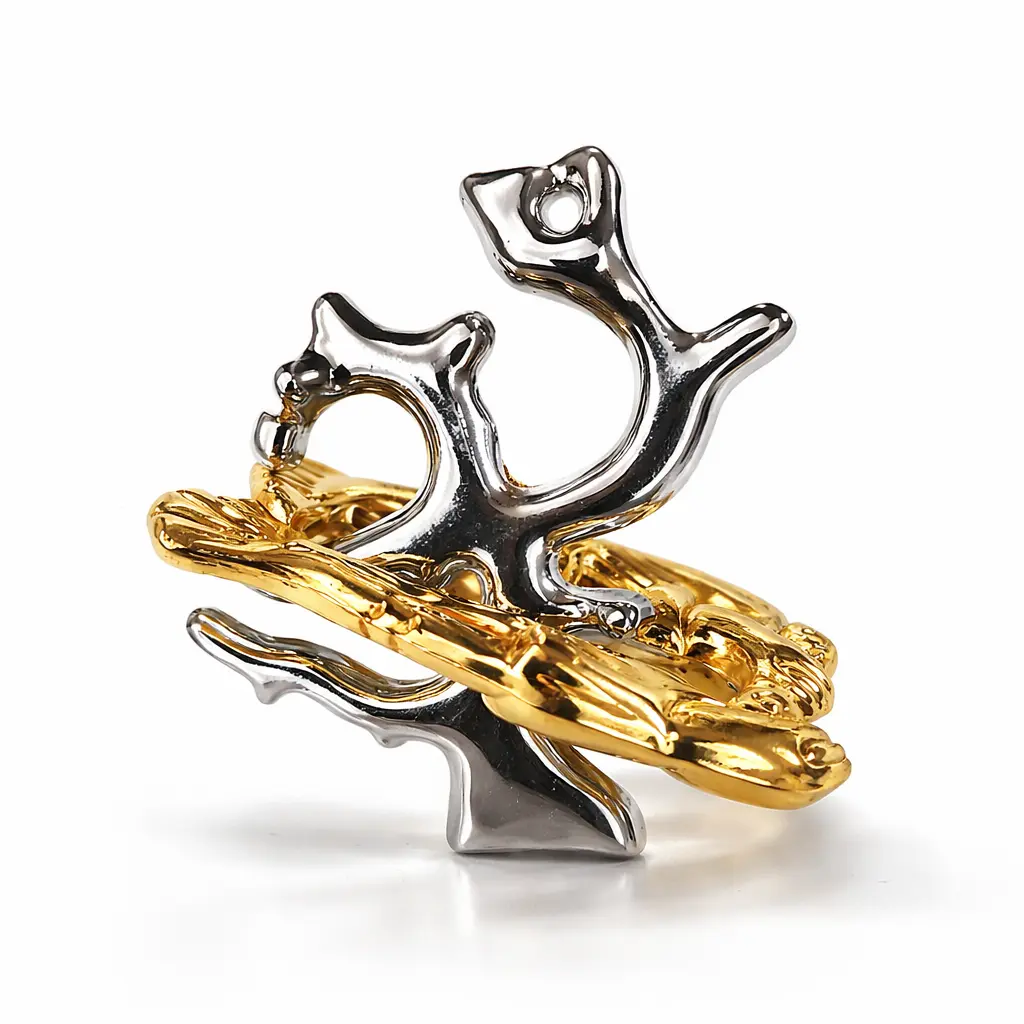
This philosophy is what places the Galaxy as a perfect bridge within the Hanayama Cast Puzzle series. Compared to the deceptive, maze-like interior of the Cast Marble (also a level 3), the Galaxy’s challenge is one of pure, abstract piece movement. Where Marble hides its mechanism, Galaxy displays its entire logic in plain sight, trusting you to deduce the key from its form. Its compact, ~4cm square Huzzle box contains a universe of thought, a tactile lesson in symmetry and cooperation.
For the solver, this means the experience transcends a simple brainteaser. You are not defeating the puzzle; you are learning its language. The zinc alloy pieces, cool and precise, provide flawless tactile feedback for each correct alignment. That’s the hallmark of Hanayama’s best metal puzzles—they teach through the fingers. Once you internalize the Galaxy’s single, elegant principle, you carry that logic puzzle intuition forward, ready to decode the more complex conversations of puzzles like Cylinder or Vortex. It’s a foundational piece of puzzle mastery, proving that great design isn’t about complexity, but about the beautiful clarity of a single, perfect idea. This makes it a sterling example of a disentanglement puzzle, where the goal is to separate intricately linked pieces through logic, not force.
To explore where this puzzle fits in the broader landscape, see our structured guide to Hanayama Cast Puzzle solutions by level, or if you’re considering your next tactile challenge, consult The Tactile Matchmaker for a personalized recommendation.
Beyond the Solve: What Your Victory Unlocks
Having understood the design philosophy of the Cast Galaxy, you now possess more than a solution—you hold the key to a new kind of puzzle mastery. For many, reaching this point with a Hanayama Cast Puzzle unlocks the deeper joy of the hobby: the shift from frustrated struggle to mindful, almost meditative, control. This puzzle, rated a difficulty level 3, is an ideal gateway; it teaches the core principles of patience and mechanical insight without overwhelming a beginner. Your victory here is a solid foundation.
Now, solve by feel. Close your eyes. The zinc alloy is cool, the grooves are distinct. Rely on the tactile feedback you’ve learned. Can you find the symmetrical lock and execute the simultaneous movement without looking? This is the ultimate test of your understanding, transforming the metal brainteaser from a visual challenge into a purely kinesthetic one. It’s a profoundly satisfying step that few bother to take.
So, what’s next? The Cast Galaxy is a perfect teacher from Bram Cohen, but the Huzzle universe is vast. Your confidence is earned. Where do you go from a solid level 3/6 foundation? You might enjoy tackling another iconic Hanayama design, like the Cast Hook, which presents a different but equally elegant locking challenge—you can find a complete Cast Hook solution when you’re ready.
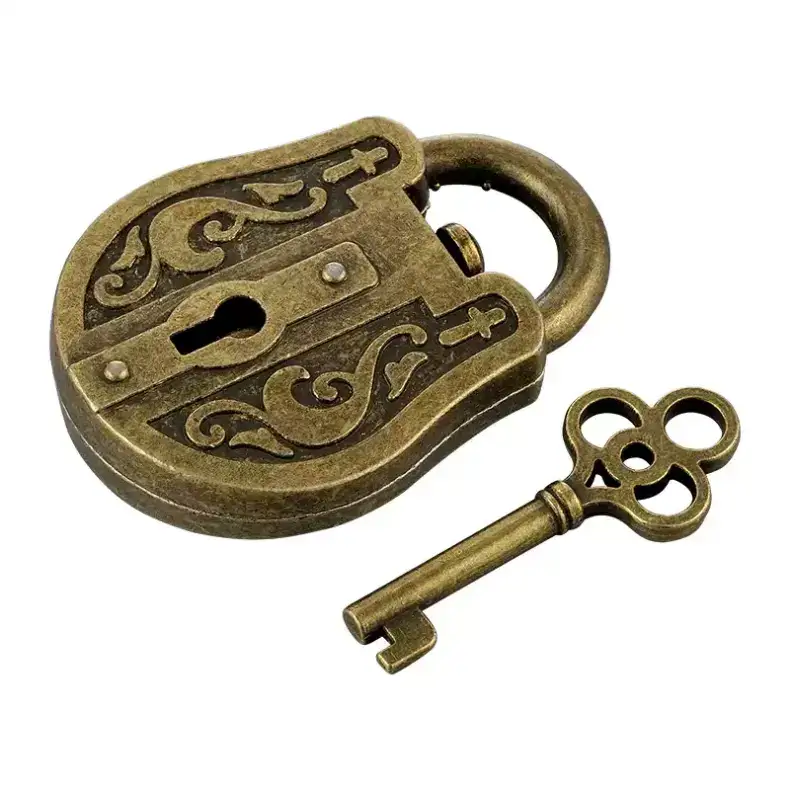
Divine Power Puzzle Lock — $12.98
Consider a puzzle like the one above, which introduces a new mechanical language. Or, step up to another Hanayama classic rated level 4, like Cast Cylinder or Cast Loop. You’ll find they build on the same fundamentals you’ve just mastered—reading alignments, interpreting subtle clicks, and understanding how pieces converse through geometry. Each solved puzzle becomes a tool for the next.
Place your assembled Galaxy on your desk. It’s no longer a source of frustration, but a reminder: the most elegant solutions are often simple, symmetrical, and waiting in your hands. Your next step is clear. Choose a new mechanical puzzle. Feel for the key. Slide.