My thumb was turning a dull shade of red, and the gold-plated seahorse hadn’t moved a millimeter. It was 11:15 PM on a Tuesday, and I was losing a fight against two ounces of zinc alloy. I’ve tested over 200 mechanical puzzles in the last decade, from $500 Japanese secret boxes to plastic stocking stuffers, yet here I was, being outsmarted by something that looked like it belonged on a charm bracelet.
The metal felt cold, heavy, and entirely indifferent to my frustration. That is the fundamental truth of the wire metal brain teaser: it is a physical manifestation of a logical knot. Unlike a digital game that flashes “Game Over” or offers a hint button, these objects simply exist. They wait for you to stop trying to overpower them and start trying to understand them.
My thesis is simple: the best metal puzzles are not tests of strength, but tests of observation. We live in an era of glass screens and haptic vibrations that simulate reality; these puzzles provide the reality. They punish impatience and reward the kind of quiet, spatial reasoning that most of us haven’t used since high school geometry. If you are looking for a way to kill twenty minutes, buy a crossword. If you want to recalibrate how your brain handles a “dead end,” you need something made of wire and spite.
The Physicality of the “Aha!” Moment
There is a specific sound a metal puzzle makes when you find the solution. It’s a clean, metallic clink—the sound of two pieces of precision-machined alloy sliding past each other without resistance. Before that sound, there is usually an hour of “clunking”—the sound of metal hitting a dead end.
Most people approach a new disentanglement puzzle with the same flawed strategy: they pull. They assume that if they just find the right angle and apply enough force, the pieces will separate. This is how you end up with bent wire and a ruined afternoon. These objects are designed with tolerances of less than a millimeter. If it doesn’t slide easily, you are doing it wrong.
When I first picked up the Cast Keyhole Gold & Silver, I spent the first ten minutes trying to “un-key” it by sliding the pieces horizontally. I was convinced the notches were the key. I was wrong. The realization that the solution was actually a 3D spiral path felt like a physical weight lifting off my shoulders. That is the “Aha!” moment—the instant your mental model of the object finally matches the physical reality of the object. It’s a dopamine hit that no mobile app can replicate.
Why Metal Trumps Wood for Desktop Fiddling
I love tactile timber collections as much as the next enthusiast, but for a desk toy, metal is king. Wood is organic; it breathes, it swells in humidity, and it eventually wears down. Metal is honest. It doesn’t change because it’s raining outside.
A well-made cast puzzle, like the ones from the Hanayama-inspired lineages, has a weight that feels significant in the palm. When you’re stuck on a grueling conference call, that weight acts as a ground. You aren’t just “fidgeting”; you are engaging in a mechanical puzzle that demands a small percentage of your subconscious mind, often leaving the rest of your brain clearer for the task at hand.
While some people prefer hand-carved logic challenges for their aesthetic warmth, metal puzzles like the Metal Starfish Puzzle Ring ($13.99) function as desk sculptures. They catch the light. They look intentional. They don’t scream “I’m bored”; they whisper “I’m thinking.”
Cast Keyhole Gold & Silver
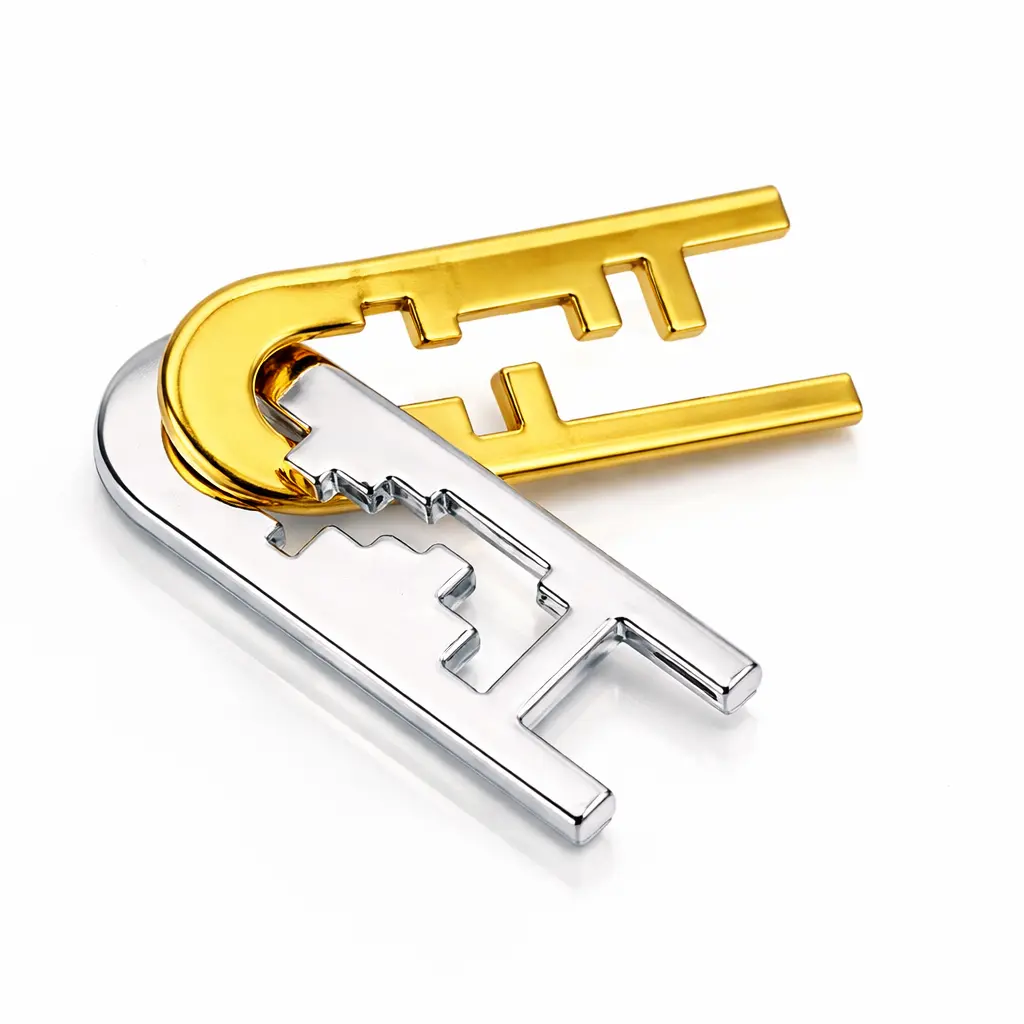
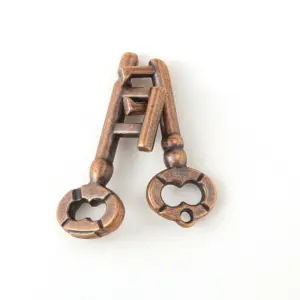
The Cast Keyhole Gold & Silver ($13.99) is the puzzle I hand to people who claim they are “good at this stuff.” It looks like two flat pieces of metal that should just slide apart. It’s a lie. The gold and silver pieces are actually a 3D maze disguised as a 2D object.
The finish is polished to a mirror shine, which means you’ll spend as much time wiping off fingerprints as you will solving it, but the tactile feedback is top-tier. There is zero wiggle room here. You have to be precise. I’ve had this one on my shelf for years, and even knowing the solution, reassembling it remains a challenge. It’s the “putting it back together” part that usually breaks people. If you want a puzzle that fits in a coin pocket but takes an hour to master, this is the one.
Gold Silver Double Fish Metal Puzzle
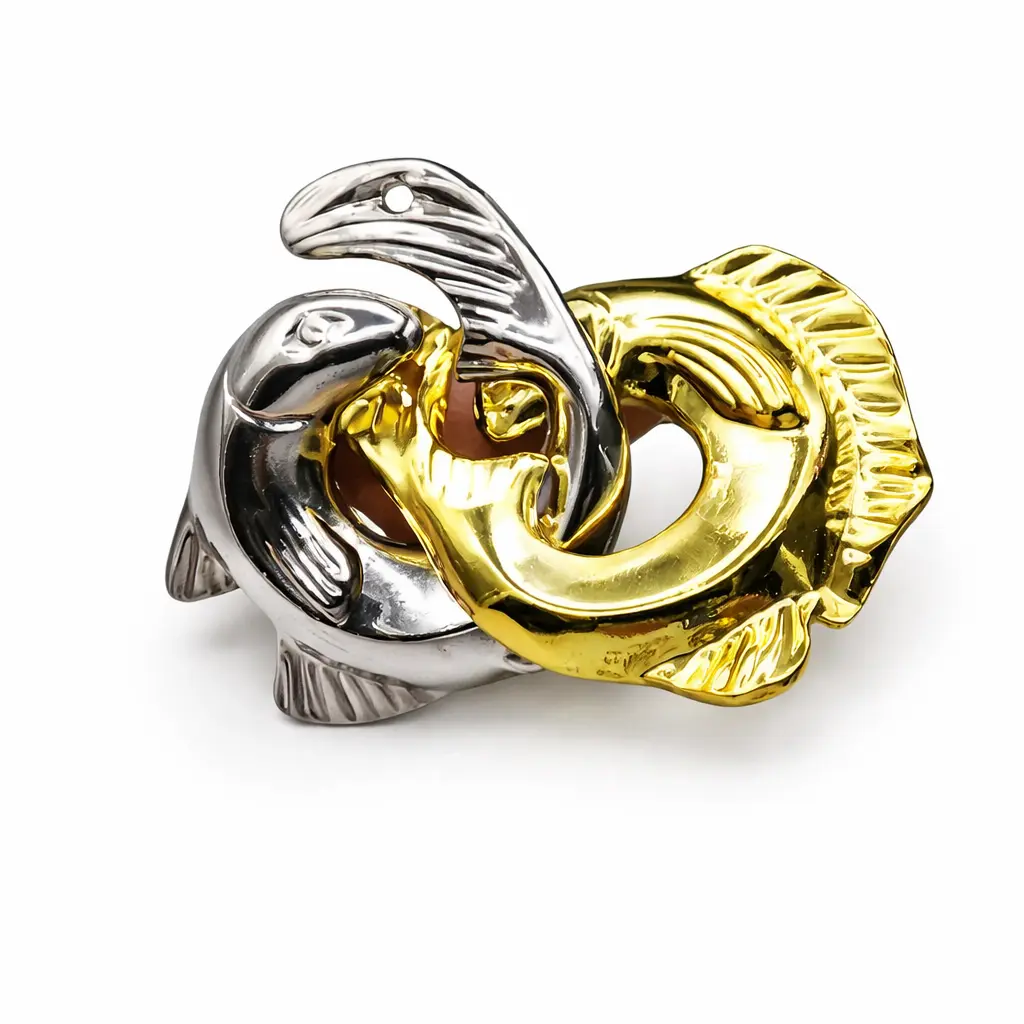
If the Keyhole is about precision, the Gold Silver Double Fish Metal Puzzle ($13.99) is about flow. It’s smaller—roughly 60mm—which makes it the perfect size for one-handed manipulation while you’re reading an email.
The two-tone finish isn’t just for show; it helps you track which “fish” is which as you rotate them through the interlocking loops. I found that this one rewards a lighter touch. If you grip it too tightly, you actually block the path the pieces need to take. It’s a great introductory piece for someone who hasn’t touched a wire puzzle since childhood. It’s approachable but not “easy.” My niece solved it in five minutes; it took me twelve. I’m still not over it.
Dual Seahorse Gold & Silver Brain Teaser
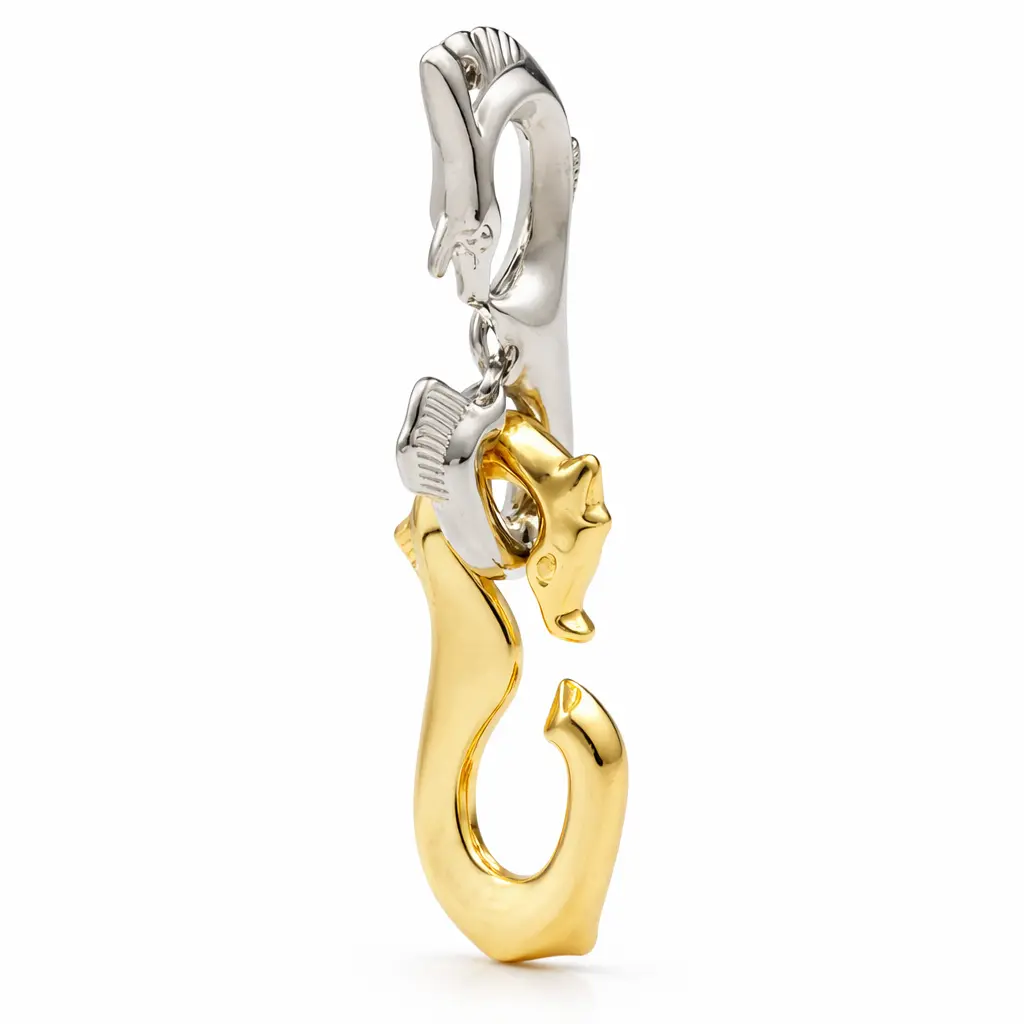
The Dual Seahorse Gold & Silver Brain Teaser ($14.99) is the “meanest” puzzle in this list. Most wire puzzles are about loops and gaps. This one incorporates a hidden threaded mechanism. You can rotate these seahorses for hours and get nowhere because you haven’t realized that you’re actually “unscrewing” a path that you can’t see.
It’s a brilliant bit of misdirection. The mirror-polished finish makes it look like a piece of jewelry, but the internal logic is purely mechanical. I recommend this for the person who thinks they’ve seen every trick in the book. It’s a reminder that what you see isn’t always what is happening inside the metal. Just don’t lose your temper and try to pull them apart—the threads are delicate, and force will ruin the “click” forever.
5 Piece Cast Spiral Metal Puzzle
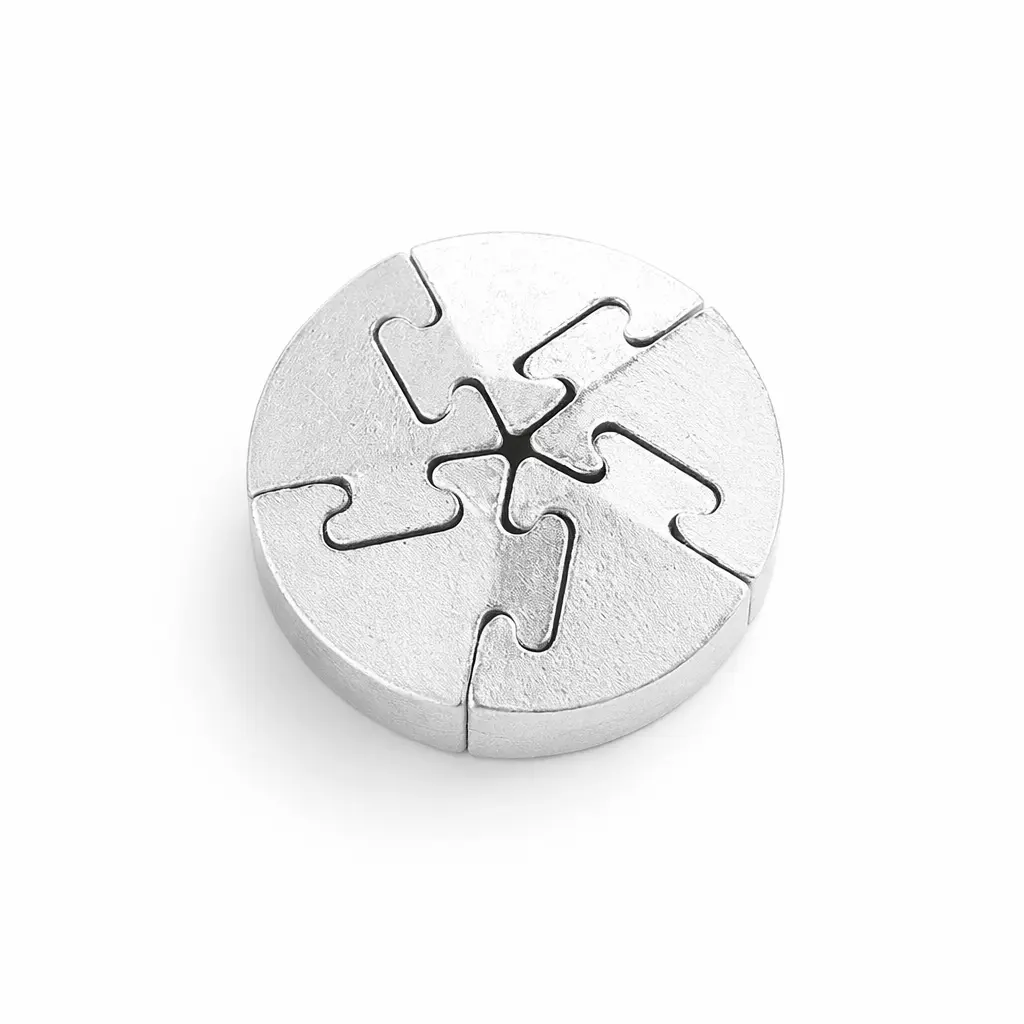
The 5 Piece Cast Spiral Metal Puzzle (check current pricing) is a masterclass in symmetry. It’s a palm-sized disc made of five identical-looking wedges. In most puzzles, you’re looking for the “odd piece out.” Here, the “odd piece” is whichever one you happen to move first.
Taking it apart is a lesson in centrifugal force and patience. But the real nightmare—the beautiful, frustrating kind—is the reassembly. Because the pieces are so similar, it’s incredibly easy to get four pieces in place only to realize the fifth one is physically blocked. It’s like a 3D jigsaw puzzle where the pieces are made of solid alloy. This is the one I keep in my bag for long flights. It’s compact, silent, and deeply absorbing.
Metal Starfish Puzzle Ring
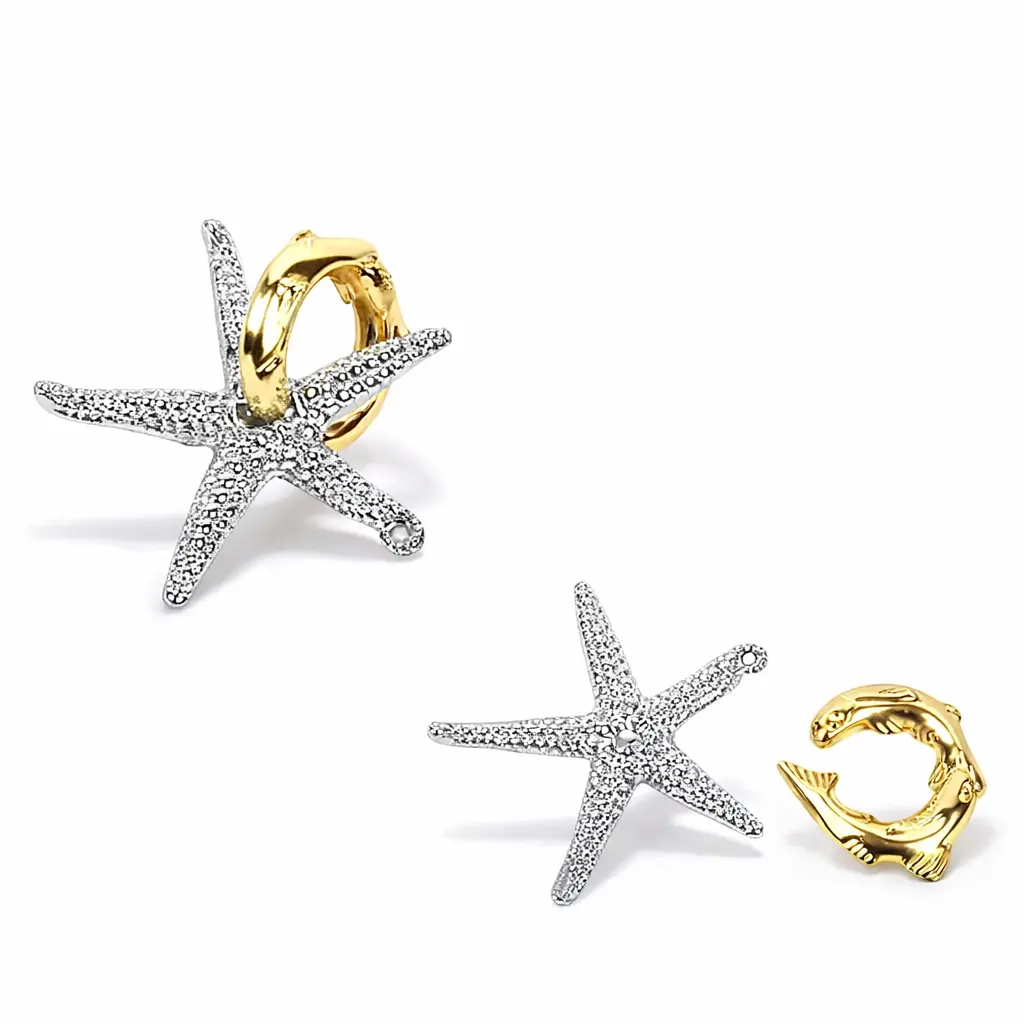
The Metal Starfish Puzzle Ring ($13.99) is what I call a “social puzzle.” It’s the one you leave on the coffee table when friends come over. It’s visually striking—a chrome starfish trapped on a gold twisted ring—and the goal is immediately obvious: get the fish off the ring.
Unlike the Spiral or the Keyhole, the Starfish is more about spatial orientation. You have to “walk” the starfish through the twists of the ring. It’s a great example of a puzzle that feels like it’s getting more stuck right before it finally comes free. It’s satisfying, it’s pretty, and at under fifteen dollars, it’s an easy win for anyone looking to start a collection.
The Peak: The 40-Minute Wall and the “Listening” Hand
After testing hundreds of these things, I’ve noticed a pattern in how people solve them. There is a “Peak” moment of frustration—usually around the 40-minute mark—where the solver is ready to give up. They’ve tried every move they can think of. They’ve looked at it from every angle. They are convinced the puzzle is defective or that they are simply not “wired” for this.
This is exactly when the solve happens.
In my testing of the Dual Seahorse, I hit that wall. I was convinced the pieces were fused. I stopped “thinking” with my eyes and started “listening” with my fingers. I closed my eyes and just felt the minute vibrations of the metal. I felt a tiny, almost imperceptible “give” when I rotated the silver seahorse clockwise while tilting the gold one.
That’s the secret: metal puzzles communicate through friction. If you feel a slight increase in resistance, you’re hitting a wall. If the metal feels “smooth,” you’re on the path. The moment I stopped looking at the seahorses and started feeling the threads, the puzzle fell apart in my hands. It wasn’t a victory of intellect; it was a victory of sensory awareness. Most people assume these are “brain” teasers, but the data—and my sore thumbs—suggest they are actually “nervous system” teasers.
Identifying Quality in a Sea of Cheap Wire
Not all wire puzzles are created equal. If you go to a big-box store and buy a bucket of 24 wire puzzles for ten dollars, you’re going to be disappointed. The wire will be thin enough to bend, meaning you can “cheat” the solution without even trying. Worse, the seams will be rough, catching on your skin.
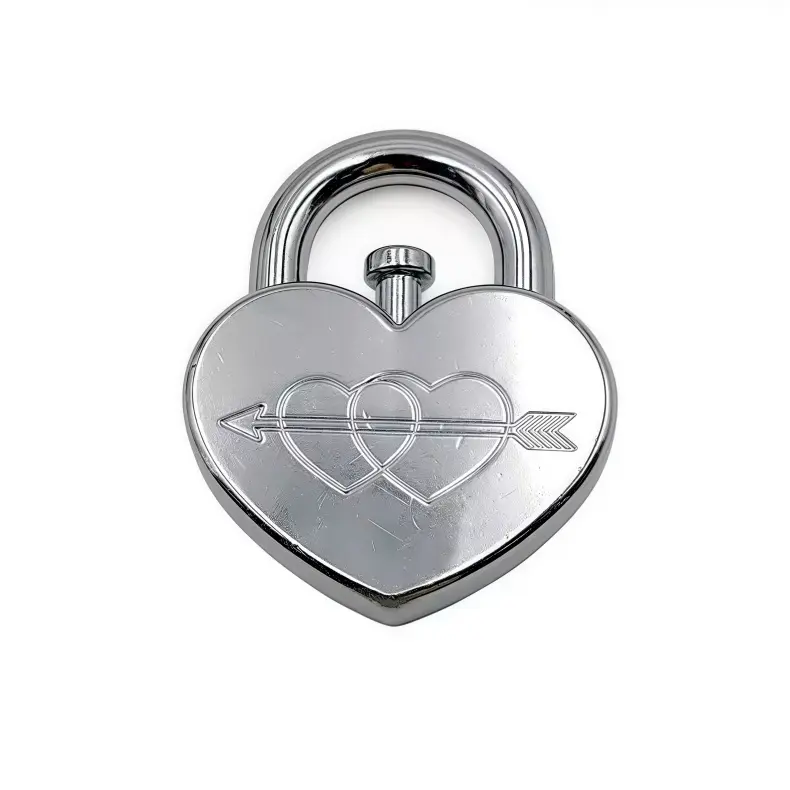
When you’re looking for a keeper, you want “cast” metal or heavy-gauge chrome-plated steel. You want something like the Silver Heart Lock Puzzle ($18.89).
Silver Heart Lock Puzzle — $18.89
It has a weight and a silver-plated finish that feels like a real tool, not a disposable toy. The interlocking mechanism is precise; there’s no “slop” in the movement.
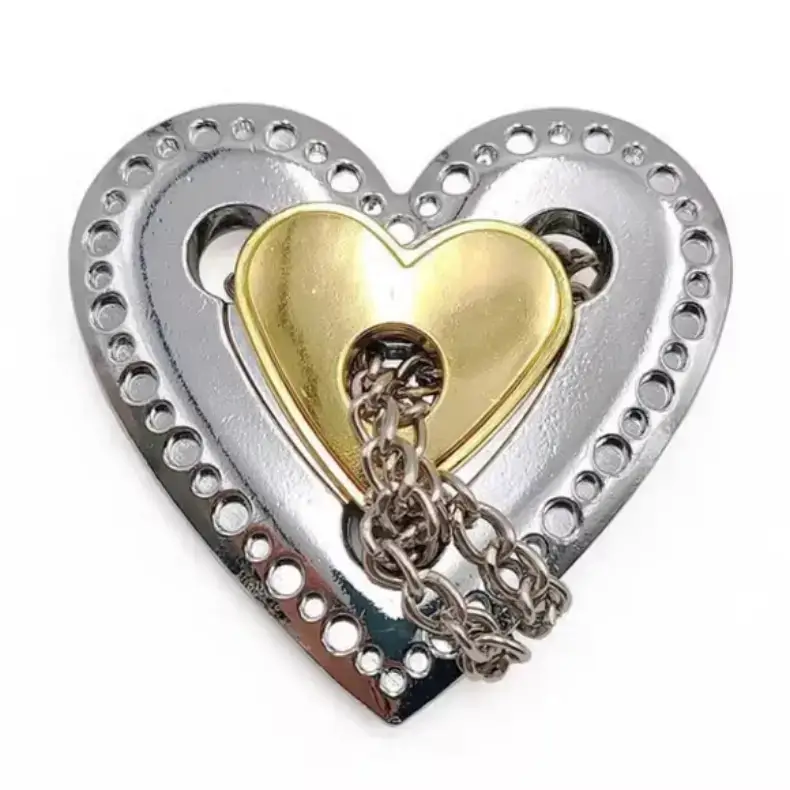
I’ve seen people give up on the hobby because they started with poor-quality products that felt like junk. If you’re going to spend your time on a challenge, the object itself should feel like it’s worth the effort. Even a simpler piece like the Cupid’s Heart Chain Puzzle ($13.15)
Cupid’s Heart Chain Puzzle — $13.15
needs to have that smooth, snag-free finish to be enjoyable. If the metal is biting into your hands, you aren’t solving a puzzle; you’re just suffering.
For those who want a break from the metal-on-metal grind, I sometimes suggest switching gears to strategic board games or even competitive spatial reasoning apps, but I always find myself coming back to the weight of a cast alloy object. There’s a permanence to it.
The Evolution of the “Ring and String”
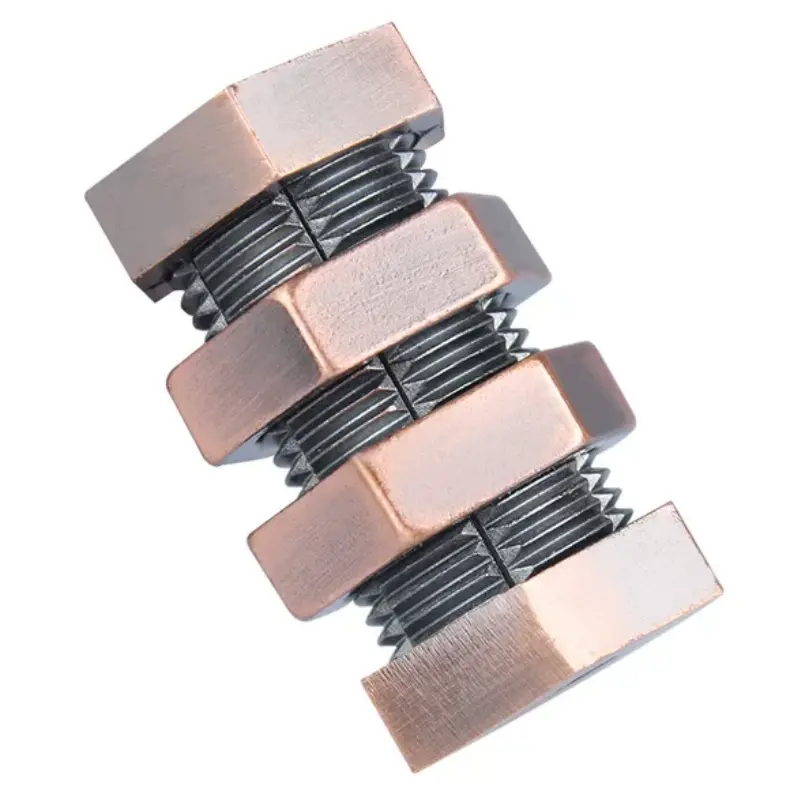
The “wire” puzzle category actually has deep roots in Chinese culture, specifically the “Nine Linked Rings,” which dates back centuries. The modern versions we see today, like the Metal Screw Interlock Riddle ($13.98),
take those ancient principles of disentanglement and apply them to industrial shapes.
The Screw Interlock is particularly clever because it uses a familiar object—a nut and bolt—and turns it into a mechanical lie. You think you know how a screw works. This puzzle proves you don’t. It’s a great example of how the genre has evolved from simple bent wire to complex, machined enigmas.
If you’re looking for something that feels more like a traditional “lock” but with a whimsical twist, the Monster Mouth Fish Escape Puzzle ($11.89)
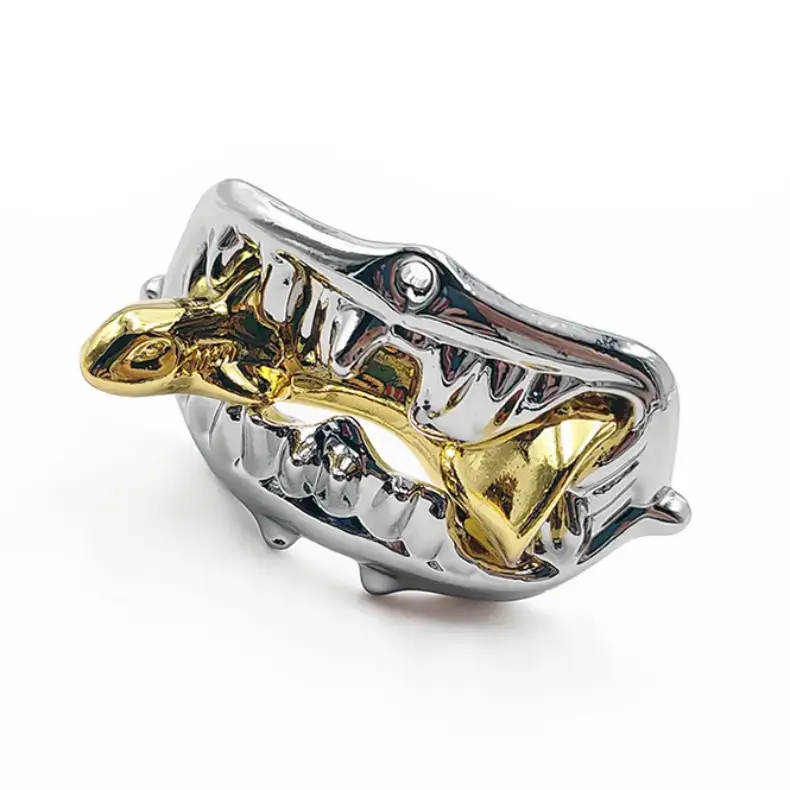
is a fantastic bridge. It’s an alloy “monster” that traps a fish. It’s less abstract than a ring puzzle and more about navigating a specific mechanical “mouth.” It’s the kind of thing that makes a great gift because the goal is so visually obvious, yet the solution remains hidden behind the alloy “teeth.”
Quick-Reference Comparison Table
FAQ: Everything You Wanted to Ask While Frustrated
How do I solve a metal wire puzzle without a guide?
The best strategy is to map the “dead ends.” Move the pieces until they stop, then analyze why they stopped. Is it a corner? A loop? A hidden thread? Most solvers fail because they keep repeating the same three moves. If a move doesn’t work the first five times, it won’t work the sixth. Change your orientation. Flip the puzzle upside down. Use your non-dominant hand. Often, vibrant desk sculptures can provide a mental reset when you’re too focused on a single wire loop.
Are these puzzles suitable for children?
Generally, yes, for ages 8 and up. However, the cast alloy puzzles like the Keyhole are quite heavy and have small tolerances. Younger children might get frustrated and try to force (and bend) the metal. For teens and adults, they are perfect. They help develop hand-eye coordination and, more importantly, the ability to sit with a problem without an immediate reward.
Why does my puzzle feel “stuck” even though I’m following the right path?
This is usually a sign of a high-quality, tight-tolerance puzzle. If the pieces are misaligned by even half a millimeter, the “gate” won’t open. Ensure you aren’t applying any pressure. Let the pieces hang naturally under gravity. Sometimes, the weight of the piece itself is what helps it slide through the gap.
Can I clean my metal puzzles?
Yes. Since these are handled frequently, they pick up skin oils. A simple wipe with a microfiber cloth usually does the trick. For polished silver or gold-tone finishes, you can use a tiny bit of jewelry cleaner, but avoid anything abrasive that might scratch the plating.
What is the difference between “wire” and “cast” puzzles?
“Wire” puzzles are made from bent rods of steel or brass. They tend to be about loops and “threading” one shape through another. “Cast” puzzles are made from molten alloy poured into a mold. They allow for much more complex, 3D shapes (like the Cast Spiral) and often hide their mechanisms better.
I lost the solution paper. Am I doomed?
Never. Part of the hobby is the “un-solve.” In fact, many veterans (myself included) throw the solution paper away immediately. The internet is full of video walkthroughs, but I’d argue that once you see the solution, you’ve “killed” the puzzle. Try to solve it yourself, even if it takes weeks. The satisfaction is worth the wait.
Is it “cheating” to use a tool?
Absolutely. If you need pliers, you’ve already lost. These are designed to be solved with human hands and logic. If you use force, you’re not a puzzle solver; you’re a blacksmith.
Why do some puzzles have two different colors?
It’s usually a navigation aid. In a complex disentanglement, it’s easy to lose track of which piece you were moving. The gold/silver contrast in the Double Fish helps your brain maintain a “map” of the solve.
What should I do if I can’t even get the puzzle to move at all?
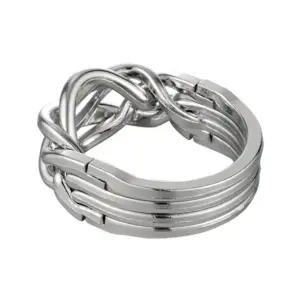
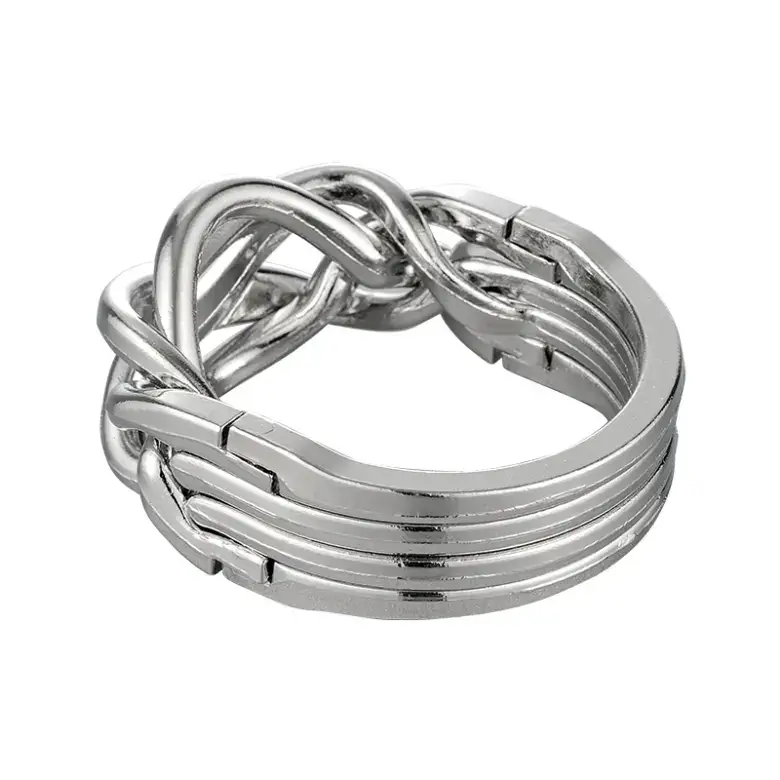
Check for a hidden mechanism. Some puzzles, like the 4 Band Puzzle Ring ($11.99),
4 Band Puzzle Ring — $11.99
require you to find a specific starting position before anything else will budge. If it’s a “ring” style puzzle, look for where the bands overlap.
How long should a “good” puzzle take to solve?
A quality brain teaser should take a first-timer anywhere from 15 minutes to 2 hours. Anything less than 5 minutes is a “fidget toy”; anything more than 5 hours is usually a “sequential discovery” puzzle or just poorly designed.
Do these puzzles help with anxiety?
Many users find them “grounding.” The focus required to solve a disentanglement puzzle forces you into a flow state, which can quiet “busy” thoughts. It’s a form of active meditation.
Are the gold/silver finishes real gold and silver?
No, they are typically gold-tone and chrome/nickel plating over a zinc alloy base. This makes them durable and affordable while still looking like high-end display pieces.
What is the best “first puzzle” to buy?
I always recommend the Gold Silver Double Fish ($13.99). It’s satisfying, logical, and looks great on a desk. It’s the perfect “hook” to get someone into the hobby.
Can these puzzles be solved more than once?
Yes, but the real challenge is the second solve: putting it back together. Often, reassembling the puzzle is harder than taking it apart because you don’t have the “visual cues” of how it started.
Why are some puzzles so much more expensive than others?
It comes down to the complexity of the mold and the quality of the finish. A precision-cast puzzle with no visible seams is much harder to manufacture than a piece of bent wire.
What 40 Hours of Brass and Frustration Actually Taught Me
If you spend enough time with these objects, you start to realize they aren’t really about the metal at all. They are about your own reaction to being stuck. When I first started collecting, I would get angry. I’d toss a puzzle into a drawer and not touch it for months. I’ve since realized that the “stuck” feeling is actually the most valuable part of the experience. It’s the moment your brain is forced to abandon an old way of thinking and try something new.
The Cast Keyhole Gold & Silver ($13.99) taught me more about patience than any self-help book ever could. It taught me that sometimes, the way forward is actually to go backward. It taught me that “force” is the loudest way to fail.
If you’re ready to trade your screen time for something more tactile, start with the Cast Keyhole Gold & Silver. It’s a $13.99 investment in your own focus. Once you’ve mastered the metal, you might find that you have a new appreciation for the hand-carved logic challenges that offer a different kind of complexity. But for now, just pick up the metal, feel the weight, and wait for that first, glorious clink.
The solution is already in your hands; you just have to stop pulling.