Quick Answer: 3D Wooden Puzzle Father’s Day Gift: Match Dad, Order in Time
A 3D wooden puzzle works as a Father’s Day gift when the model matches the dad’s personality, fits a realistic build time, and can be ordered with enough lead time before the holiday. The right pick is a mechanical model kit for the tinkerer dad, a display piece like a globe or vintage vehicle for the desk-proud dad, and a brain-teaser puzzle box for the dad who enjoys a single-session challenge.
Three checks that change the pick:
- Build time vs. patience — a 200-piece mechanical kit can run 6–10 hours across several evenings; a brain-teaser box resolves in under an hour. Match the kit to how your dad actually spends a Sunday.
- Piece count and mechanism — moving-parts models (gears, linkages, differentials) reward patience and display well. Static builds lean decorative.
- Shipping cutoff — direct-from-manufacturer kits often need 10–14 business days; for Father’s Day 2026 (June 21), the safe ground-shipping order date is roughly June 7. Verify each retailer’s stated cutoff before checkout, since handmade kits ship on different schedules than stocked SKUs.
| Dad archetype | Best match | Key check before buying |
|---|---|---|
| Tinkerer / builder | Mechanical model kit with moving parts | Piece count vs. stated assembly time |
| Desk-proud collector | Display piece (globe, clock, vintage vehicle) | Finished size and dust-free surface |
| Brain-teaser fan | Puzzle box or sequential discovery | Single-session solve time, reopenability |
| Hands-off / sentimental | Pre-assembled display or photo keepsake | Whether dad will build it or wants it finished |
Does your dad want to build it, display it, or solve it in one sitting?
01. Why a 3D Wooden Puzzle Works as a Father’s Day Gift
A 3D wooden puzzle works as a Father’s Day gift when the model matches what the dad will do with the finished piece — display it on a shelf, rebuild it on a slow Sunday, or solve it once and pass it on. It fails as a gift when the recipient has no patience for assembly, the build time exceeds a weekend, or the finished product looks like a toy rather than a desk-worthy object.
The category borrows the best of traditional jigsaw puzzles — the satisfaction of fitting a piece into place — but the finished result is a three-dimensional object with weight, mechanism, or display value. UGears, one of the better-known manufacturers, frames these kits explicitly as “not typical jigsaw puzzles” that “only borrowed their best features,” a useful way to set expectations before a buyer commits to a 200-piece order. A buyer who understands this distinction stops hunting for the lowest piece count and starts asking what kind of object the kit becomes. For a closer look at how the category performs across many builds, the 3D wooden jigsaw puzzles for adults guide walks through what forty assembled models reveal about this product type.
That object question is where most competitor guides go quiet. They list models, they show photos, and they leave the reader to guess whether dad will leave the finished clock on his desk, dismantle the gearbox for a second build, or hand the completed ship to a grandchild. The display-versus-rebuild distinction is the real decision a gift-buyer needs to make, because a kit designed to be disassembled and rebuilt — most no-glue mechanical models fall into this category — costs the same as a one-and-done static model but returns a different kind of value. A dad who rebuilds gets a recurring weekend project. A dad who displays gets a permanent desk trophy. A dad who solves gets one satisfying session, a small box on a shelf, and possibly a hand-off to a curious nephew.
The gift-psychology case also becomes concrete here. A 3D wooden puzzle earns its keep by hitting three observable markers: a finished size that fits a real surface in a real room, moving parts or a mechanism that demonstrate the builder’s hand, and a material that looks like a keepsake rather than a craft-store toy. Kits laser-cut from plywood with no-glue assembly tend to clear all three — the wood grain reads as furniture, the mechanism shows the build experience, and the assembled object survives being moved and shown off. A kit that arrives as a thin laser-cut sheet with brittle tabs, visible glue residue, or printed decals clears none of them, which is why the verification checklist in Section 03 matters as much as the archetype match.
This is also the reason the archetype table in the Quick Answer does the work most gift guides skip. It collapses the buyer’s question from “which model should I pick” to “which use case fits my dad,” and the rest of the decision — piece count, mechanism, budget — follows from that answer. The next section walks through each archetype in turn and points to the puzzle type that best serves it.
02. Which 3D Wooden Puzzle Fits Your Dad’s Archetype
Match the 3D wooden puzzle to how your dad will use it after the build — not to how it looks in the unboxing photo. A dad who leaves finished projects on the desk wants a display piece with a visible mechanism; a dad who resets a Rubik’s cube for fun wants a sequential discovery puzzle that rewards repeat solving. Choose by the use case, and the piece count, mechanism, and price tier all fall into place. For a deeper personality-based framework, the 7 perfect puzzle gifts for dad based on his personality type guide covers the same archetype logic with more buyer-side scenarios.
The archetype match is the single decision that protects the gift. Buy a 100-piece mechanical vehicle for a dad who never picks up a screwdriver, and it sits half-built in a closet. Buy a five-piece brain teaser for a dad who restores clocks on weekends, and the gift feels thin. The five archetypes below cover the realistic spread of dads who receive puzzle gifts — tinkerer, display-proud, brain-teaser lover, sentimental, and hands-off — and each one points to a specific puzzle category with a clear verification step.
The tinkerer is the dad who reads owner’s manuals for fun, owns a socket set organized by size, and will sit at the kitchen table for three hours without noticing. The right pick is a mechanical model kit with visible moving parts — gear trains, a working music box mechanism, a clockwork-style movement. These kits typically run 80–200+ pieces and ask for a 3–6 hour build, which is the point. Verify the listing shows a finished model with a working mechanism in the photos, and confirm the kit is rated 14+ or adult-level — child-rated kits often swap wood axles for plastic and the gears strip within a season.
The display-proud dad builds once and never takes the model apart. He wants finished size, wood grain, and a recognizable silhouette — a vintage vehicle, a globe, a ship, a working clock. These kits run larger because the display value is the gift. Verify the finished dimensions in the product photos against a real surface in your dad’s home, and check that the model uses real plywood rather than printed cardboard. Mechanical clock kits and the tanker truck from the Tea-Sip roster sit in this lane.
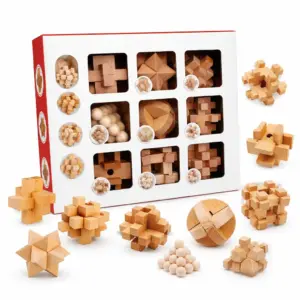
The brain-teaser lover treats the puzzle as a single-session challenge he can reset, hand off, or show off to a visitor. The right category is a sequential discovery puzzle or a Luban lock set — 6 to 15 interlocking pieces that take 20 minutes to an hour to solve, with no assembly required. This is the lead recommendation for the largest slice of gift-buyers, because the category works for every skill level and never becomes shelf clutter.
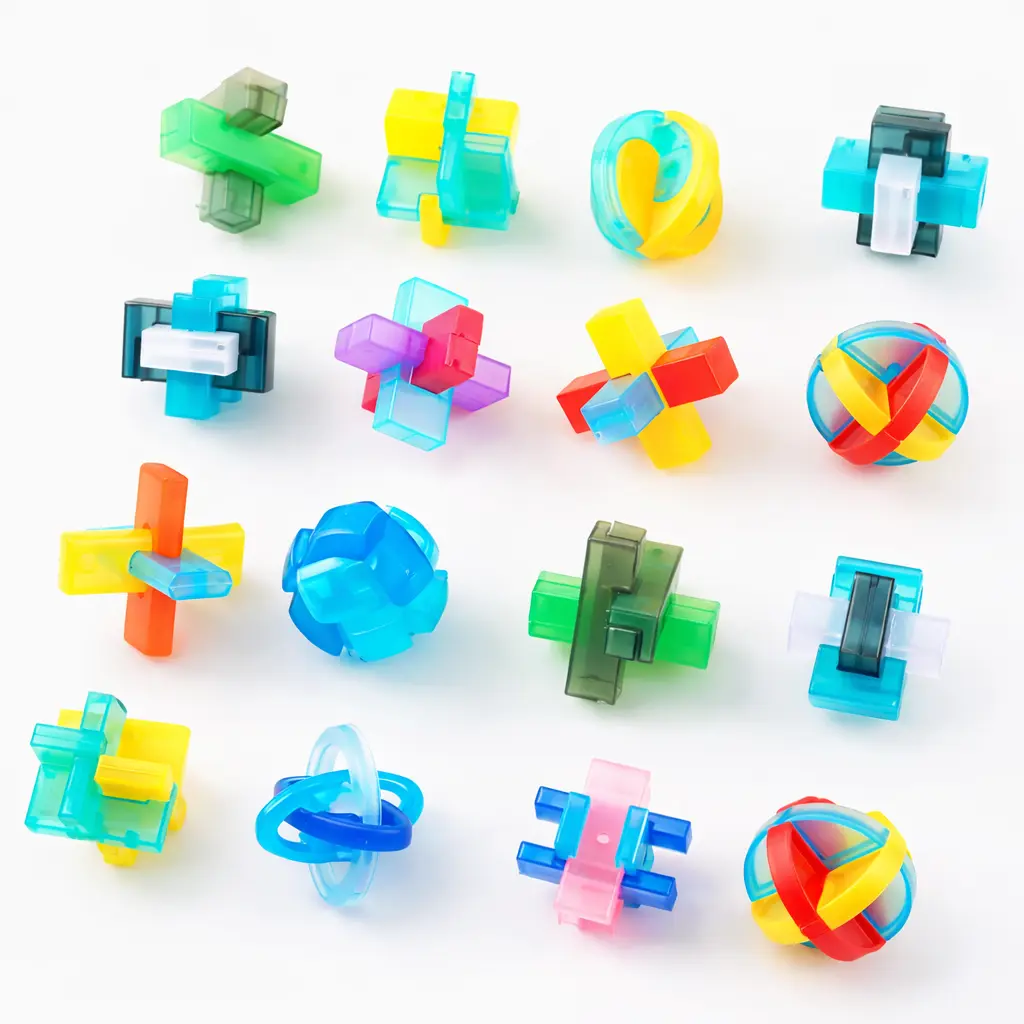
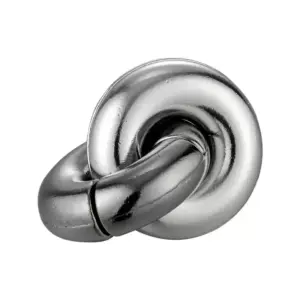
The 12 Piece Crystal Luban Lock Set is the top pick in this category because twelve pieces give enough complexity to feel like a real challenge without crossing into a multi-hour build. The “display vs. rebuild” question resolves differently here — a Luban lock is a solved-then-handed-off object, not a model kit. Verify the piece count on the product page and confirm the mechanism is the take-apart-and-reassemble kind rather than a one-time unlock, since the repeat play is what makes it a long-term gift rather than a single moment.
The sentimental dad is the hardest archetype to buy for, because the gift has to carry meaning beyond the build. A puzzle that encodes a shared memory — a father-child bike, a meaningful date, a hobby that defines the relationship — does the work that a generic vehicle cannot. This is where the gift shifts from a product decision to a curation decision, and where verifying the finished model against a real photo matters most.
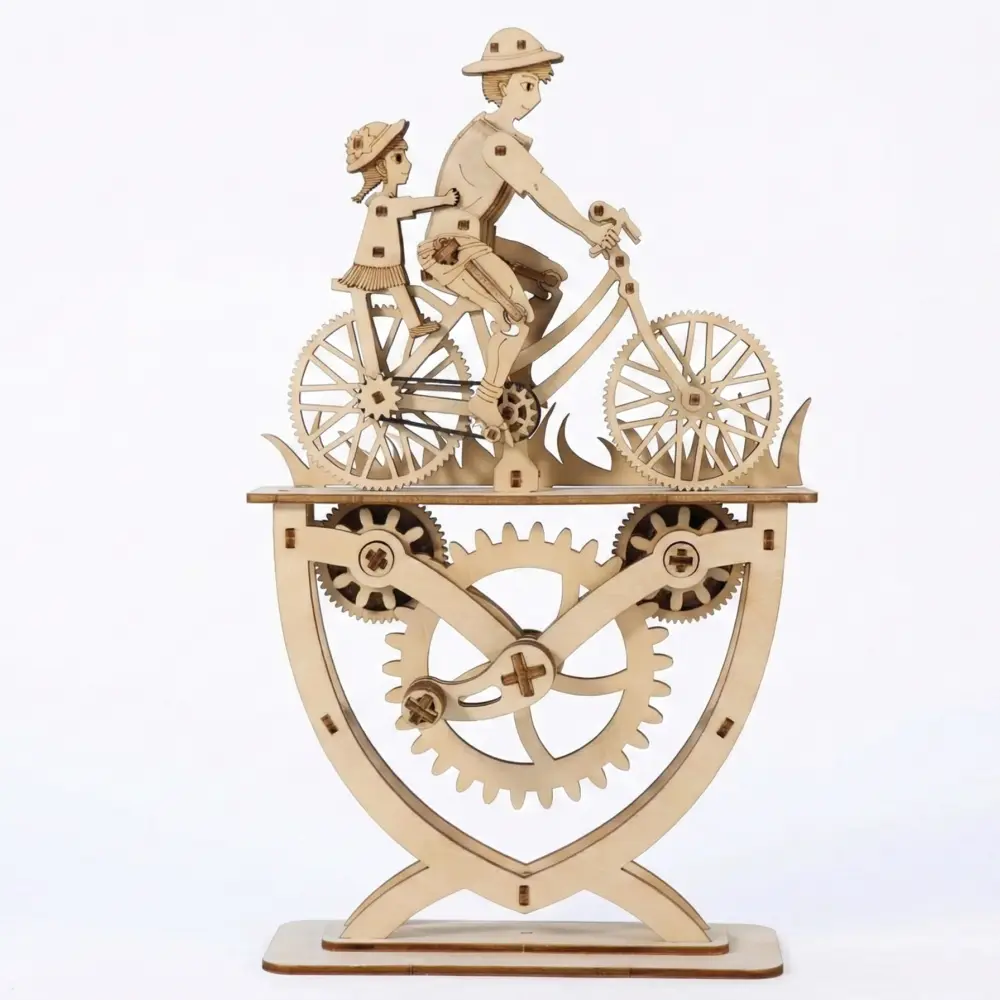
The Father and Daughter Bicycle 3D Wooden Mechanical Puzzle is the clearest example in this category — a moving-parts model that tells the specific story of a parent and child, and that finishes as a desk object rather than a one-afternoon project.
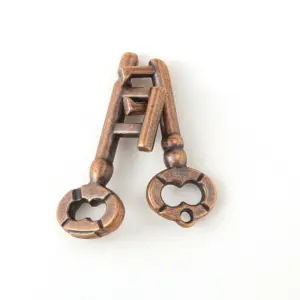
The hands-off dad does not build, does not want to build, and does not pretend to enjoy building. The right gift is a pre-built display piece or a low-piece-count model that finishes in under an hour. A finished 24 Lock Puzzle on a stand, a solved Luban Cube, or a small mechanical clock kit with a 30-minute build all fit. Verify the kit is rated for casual or first-time builders and that the finished model is interesting to look at even if it never gets touched again.
The archetype match narrows the catalog from dozens of options to a single category — and the next question is how to avoid a kit that looks great in photos but arrives as warped plywood with brittle tabs. Want the verification checklist before you order?
03. How to Read Piece Count, Mechanism, and Realistic Build Time
The spec sheet is what separates a Father’s Day gift that gets built on a Sunday afternoon from one that returns to the box untouched. Read piece count, mechanism type, and age rating together — not in isolation — and the right build-time bucket becomes obvious.
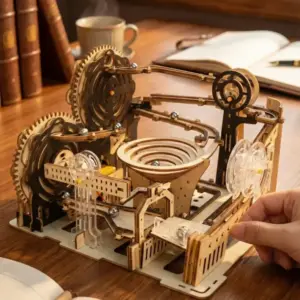
A 3D wooden puzzle’s difficulty is not its piece count. A 200-piece marble run with simple tab-and-slot construction can finish in a single evening, while a 90-piece mechanical clock with gears, linkages, and a sequential discovery sequence can take a full weekend. The mechanism — not the raw count — drives build time, patience requirements, and whether the finished model is meant to be displayed, rebuilt, or passed down.
Build-time buckets a gift buyer can sanity-check
Most adult-rated kits fall into four build-time ranges:
- Under 30 pieces, no moving parts — a 30- to 60-minute session. The 12 Piece Crystal Luban Lock Set fits here. A single-evening gift, or a backup alongside something larger.
- 30 to 100 pieces, simple tabs — one evening, two to three hours. The 3D Wooden Puzzle Tanker Truck Kit sits in this range. Linear build, forgiving parts, display-ready the same night.
- 100 to 250 pieces, multi-stage mechanism — a full weekend. Expect two sessions of three to four hours each, plus tuning.
- 250+ pieces, complex linkage — a multi-day project. Detailed ship replicas and large vehicles belong here.
Piece count is a useful proxy, not a guarantee. Treat any “assembly time” figure on the listing as a manufacturer estimate, not a promise — and confirm the bucket on the product page before you commit.
Mechanism types and what each demands
Five mechanism families dominate the category, and each makes a different demand on the builder:
- Gears and gear trains — clocks and calendars. Demands patience and a flat surface for calibration. Most rated 14+; gear-train models with small parts often carry an 18+ tag.
- Linkages and cams — mechanical pistols and vehicle suspension. Skipping ahead usually breaks the mechanism. The how to solve 3D wooden puzzles universal method works better than brute force.
- Marble runs — marble mazes and track-based display pieces. The build is fast; tuning is the long part, because a single warped ply changes the marble’s path.
- Hinged boxes and puzzle boxes — the Luban lock family. Parts are designed to come apart, which is why these models survive being passed around the family.
- Music boxes and wind-up mechanisms — carousels, ferris wheels, cellos. The spring-and-comb assembly is unforgiving if forced. Verify the model uses replaceable rubber bands rather than glued joints.
The four checks that protect the gift
Before clicking order, run the listing through these filters:
- No-glue claim — quality kits rely on tab-and-slot construction. If the listing says “glue included” but not “no glue required,” budget for wood glue at home.
- Laser-cut finish — look for reviews mentioning “clean cuts,” “no splinters,” and “pieces press out firmly.” Warping or brittle tabs are the strongest signal of a dud.
- Age rating — 14+ covers most simple kits; 18+ flags complex gear trains and small parts. No rating at all is a warning, not a shortcut.
- Rebuild design — premium kits use rubber bands, pegs, and interlocking joints that come apart without damage. Glued-at-factory kits are display-only.
One check the spec sheet will not show: the manual. Customer reviews that praise the instructions are the strongest predictor the build will actually finish. Run those four checks on any kit in the running, and the spec sheet becomes a buying tool instead of a guessing game. Ready to see the actual picks by budget tier?
04. 3D Wooden Puzzle Picks by Budget Tier for Father’s Day 2026
Those four checks land you in one of four price brackets. Match the tier to what dad will do with the finished model, not to the price ceiling. Under $25 buys a single-session brain teaser or compact display piece. The $25–50 range covers meaningful mechanical kits with moving parts and a real build experience. Above $50, the gift becomes a display piece — music boxes, large vehicles, and clockwork models that earn shelf space rather than storage-box time.
The $25–50 tier is where this gift category earns its keep. That range covers kits with enough piece count to feel like a weekend project, not a single-afternoon distraction. The lead pick in this range is the 12 Piece Crystal Luban Lock Set at $28.88 — twelve interlocking pieces, no glue required, and a finished footprint that fits a desk drawer or display shelf. It suits the brain-teaser dad who wants a reset-and-pass-it-on challenge. The Father and Daughter Bicycle 3D Wooden Mechanical Puzzle at $29.99 also sits in this range for buyers who want a moving-parts model with a sentimental story.

Under $25 rewards the desk-proud dad who wants a finished object without committing to a multi-hour build. The 3D Wooden Puzzle Tanker Truck Kit at $22.99 fits the vehicle-loving archetype — a smaller piece-count build with a model that holds its own on a workbench. This tier favors single-session challenges over multi-hour projects, which makes it a safe range for a dad who has never built a 3D wooden puzzle before. For a broader scan of the under-$25 category — including picks that survive repeated handling after the holiday — the 12 puzzle gifts under $25 that actually get reused shortlist lines up additional options worth weighing.

The $50–100 tier is the display piece. The Wooden Ferris Wheel Music Box Kit at $59.99 combines a mechanical build with a working music box — the kind of model that ends up on a side table rather than back in a box. This is the tier for a dad who has built kits before and wants a finished object that earns its display space. Above $100, the Tea-Sip roster does not currently extend. If you go higher, the build time jumps from an afternoon to multiple sessions, and replacement parts become harder to source — check the manufacturer’s stated build hours and replacement-parts policy before ordering, since a single warped sheet can stall a long project and a missing-piece claim filed after the first hour of assembly is hard to dispute.
Decision table: budget tier by dad archetype
| Budget tier | Lead archetype | What to check |
|---|---|---|
| Under $25 | Brain-teaser dad, first-time builder | Piece count; whether rubber bands replace glued joints |
| $25–50 | Tinkerer, mechanical-kit fan | No-glue claim, manual quality, age rating |
| $50–100 | Display-proud, collector | Finished dimensions, mechanism durability, footprint |
The mismatch to avoid: buying a $60 display piece for a dad who has never built a kit before. Large-format mechanical models assume a baseline of patience and a flat, well-lit workspace. A 70-year-old first-time builder will be more satisfied with the Luban Lock set in the $25–50 tier than with a music box in the $50–100 tier — even if the higher price tag feels more gift-like. Match the tier to the recipient, then check the product page for current pricing and lead time before ordering.
05. Father’s Day 2026 Shipping Deadlines, Returns, and Recourse for Damaged Kits
Order by the first week of June 2026 for any 3D wooden puzzle that ships from a manufacturer or third-party marketplace, because Father’s Day falls on Sunday, June 21, 2026, and most laser-cut kits — especially mechanical models and globe puzzles — ship from overseas warehouses where a customs delay or a missing-parts claim can consume the buffer a domestic retailer would normally absorb. The exact cutoff shifts by seller, so verify it on the product page before completing checkout.
Direct-from-manufacturer orders carry the longest lead times. Brands that cut and pack their own plywood sheets typically list a handling window of three to seven business days before dispatch, and international shipping from Eastern Europe or East Asia adds another ten to twenty-one days at sea or seven to fourteen by air — a 3D wooden globe puzzle marketed on Amazon for adult buyers follows this same path, since the manufacturer rarely stocks U.S. retail shelves. The working rule: place the order at least thirty days before Father’s Day to leave room for a replacement-parts claim, and treat forty-five days as the safer ceiling for any kit with more than 200 pieces or a complex cam-and-gear mechanism.
Third-party marketplace listings and direct-to-consumer websites compress that window, but only for in-stock items. When a domestic warehouse already holds the SKU, ground shipping can deliver in three to five business days — which means a mid-June order is still viable. The catch is inventory: kits that are popular in the weeks before Father’s Day regularly sell out by late May, and a “ships in 1–2 weeks” tag on the listing page signals a restock order that will not arrive in time without expedited shipping, which most sellers do not offer for oversized boxes.
Recourse for a damaged or incomplete kit runs along three tracks, and the track you use depends on where the kit was purchased. Direct-from-manufacturer orders route through the brand’s customer service — most reputable makers of mechanical model kits will replace a single warped sheet or a handful of snapped tabs if you send a photo within seven days of receipt, though the replacement parts themselves can take two to three weeks to arrive. Marketplace orders fall under the platform’s return policy, which typically allows a thirty-day window for a defective-item claim. A kit that proves too fiddly for a 70-year-old first-time builder is harder to return, since “changed my mind” falls outside most defect policies; the practical workaround is to test-fit the first five minutes of assembly before gifting, or to choose a lower-piece-count Luban Lock set that has no patience threshold to begin with.
Before you click purchase, screenshot the listed build time, the piece count, and the return-policy URL — these three pieces of evidence resolve nearly every dispute if a kit arrives short, warped, or simply too intricate for the dad on your list.
Frequently Asked Questions
A damaged or missing-parts dispute ends with the screenshots you saved before clicking purchase, so the practical questions below are the ones to resolve before you order — not after. Each answer ends with what to verify on the product page itself, since the listed price, build time, and piece count are the only numbers you can hold the seller to.
What is a good 3D wooden puzzle for a dad who has never built one before?
A no-glue Luban Lock set is the safest starting point because it skips the laser-cut sheet stage entirely. The 12 Piece Crystal Luban Lock Set at $28.88 is built for a first-timer, has no patience threshold, and produces a finished shape he can hold in one hand — verify piece count and recommended age on the product page before ordering.
How long does it take to assemble a 3D wooden puzzle kit?
A realistic rule: 50 pieces equals roughly one hour for a comfortable adult, 200 pieces equals three to four hours, and 400-plus pieces fills a full weekend. Match piece count to dad’s patience rather than to your budget — verify the listed assembly time on the product listing, since brands estimate differently.
Do you need glue to build a 3D wooden puzzle?
Most mechanical model kits in this category are designed as no-glue assembly, with tabs and slots holding the structure together. Luban lock sets, the Crystal Lock Set included, are also glue-free by design. Confirm “no glue required” in the product description before checkout.
What is the best 3D wooden puzzle for a dad who likes cars or motorcycles?
The 3D Wooden Puzzle Tanker Truck Kit is the only vehicle-style model in the verified short list and fits a mid-range piece count. Verify finished dimensions and recommended age before ordering.
Can a 70-year-old dad build a 3D wooden puzzle, or are they too fiddly?
Fiddliness tracks piece count, not age. A 30-piece Luban Cube is buildable at 70; a 400-piece mechanical model is fiddly at 40. Choose piece count first, then confirm tab thickness in the listing photos.
What is the difference between UGears, ROKR, and other 3D wooden puzzle brands?
UGears and ROKR both use laser-cut plywood with rubber-band drive mechanisms, while Luban-style locks use interlocking wooden burr construction. The build experience is slower and more methodical with locks; the moving-parts payoff is stronger with mechanical kits. Compare by mechanism type, not by brand prestige.
When should I order a 3D wooden puzzle to arrive by Father’s Day?
Standard direct-to-door shipping should be placed at least 10 business days before Father’s Day 2026 (June 21, 2026), with a one-week buffer if the brand ships from overseas. Verify the cut-off date on the retailer’s shipping policy page.
What do I do if pieces are missing or the wood arrives damaged?
Photograph the damaged sheet, count the missing pieces against the manual’s parts list, then contact the seller within seven days for replacement parts. The 30-day marketplace return window only applies to purchases made through a marketplace — direct orders go through the maker’s policy. Verify which policy applies before you buy.
Where to Start
If the recipient and occasion checks above match, start with 12 Piece Crystal Luban Lock Set. Check the current product page for the specifications that matter to your choice.
Sources and verification
- Product details and current specifications: Tea-Sip product page
Last updated: August 12, 2026