The third time the brass-colored key piece of the Jiutong Lock slipped past my thumb and clicked back into its “stuck” position, I set the puzzle down and walked to the kitchen to make coffee. It was 11:30 PM on a Tuesday. I’ve solved over 200 of these mechanical enigmas, yet here I was, being outsmarted by nine pieces of precision-cut wood. My mistake wasn’t a lack of intelligence; it was a lack of observation. I was trying to force a solution I had already decided was correct, rather than listening to what the wood was telling me.
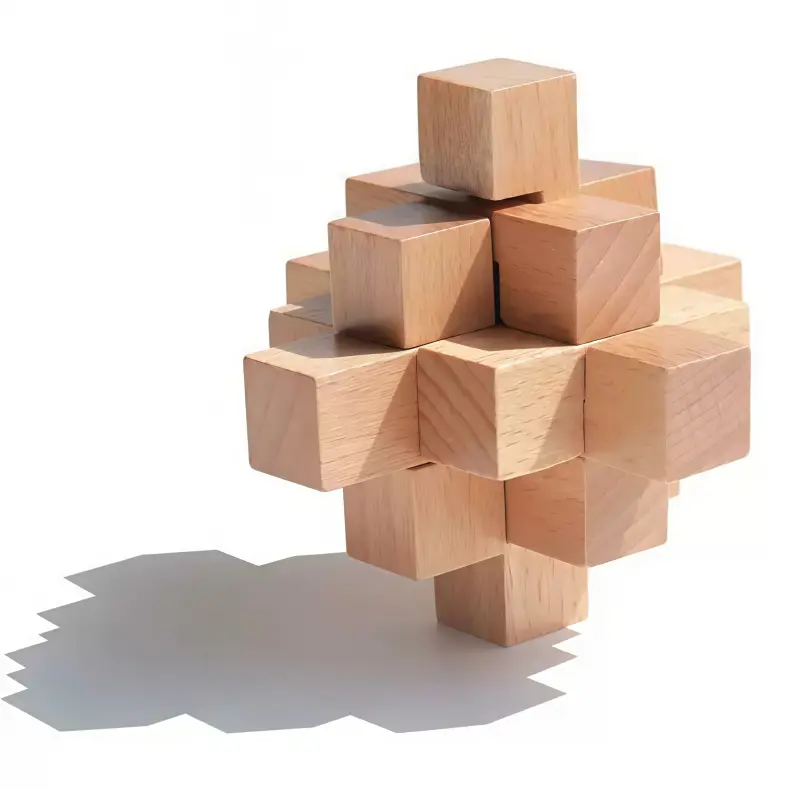
Jiutong Lock — $16.99
The search for “wooden puzzle answers” usually starts in this exact moment of friction. You’re frustrated. You think a piece might be glued shut. You’re convinced the manufacturer made a mistake. But after years of testing everything from $100 limited editions to the $16.99 classics on my desk, I’ve learned a fundamental truth: the “answer” isn’t a sequence of moves you find on YouTube. The real answer is a shift in your own perception.
In this guide, I’m going to break down why your brain struggles with 3D geometry, how to read the physical clues hidden in the grain, and which specific puzzles offer the most rewarding “aha” moments without requiring a PhD in structural engineering.
The Myth of the “One Right Way”
Most people approach a brain teaser like a math problem. They assume there is a linear path from A to B. However, the history of science puzzles shows us that mechanical challenges were often designed to mirror the complexities of the natural world. They aren’t linear; they are cyclical.
Take the Jiutong Lock.
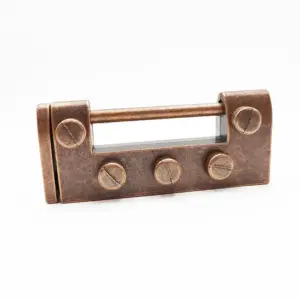
The Jiutong Lock is a masterclass in what I call “hidden complexity.” At $16.99, it feels substantial in the hand, featuring three skeletal strips and five unique locking blocks. Most beginners try to yank the master key piece out first. That’s the “linear” trap. This puzzle is built on the ancient principle that profound discoveries come from focused contemplation. When I first tested this, I spent twenty minutes just sliding the blocks back and forth without trying to remove anything. I was looking for the “play”—that tiny fraction of a millimeter where the wood gives way. If you’re looking for the answer to this one, stop pulling. Start sliding. The blocks have to align in a specific internal “street” before the key can exit. It’s a tactile lesson in the idea that wisdom requires no journey when you finally understand the form in your hands.
Reading the Grain: Physical Clues You’re Ignoring
Wood is a living material. Unlike the visual transparency of plastic counterparts which show you their internal guts, wood hides its secrets. But it also leaves clues. When you are stuck on a burr puzzle, look at the grain.
If the wood grain on a specific piece runs perpendicular to the pieces surrounding it, that piece is likely a structural anchor or the “key.” If you see a slight wear mark or a polished edge on a corner, that’s evidence of movement. Someone—or the machine that cut it—intended for that corner to pass by another.
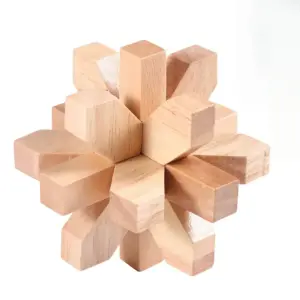
I’ve found that the Plum Blossom Lock is particularly good for practicing this kind of “visual listening.”
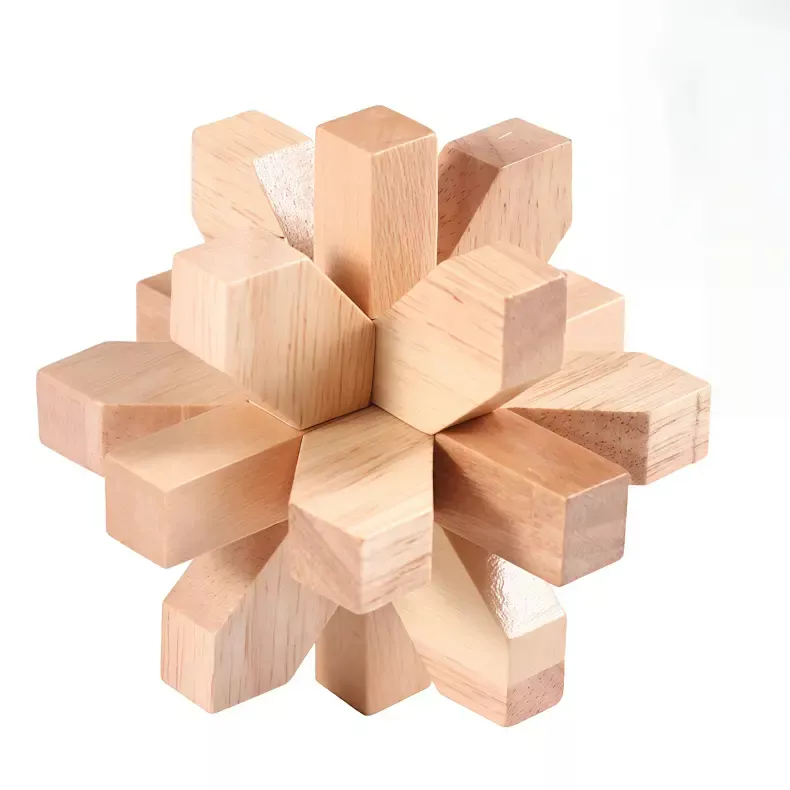
Plum Blossom Lock — $16.99
Priced at $16.99, the Plum Blossom Lock consists of nine precision-cut pieces, including five thick “petals.” It’s an interlocking marvel. The “answer” here isn’t about brute force; it’s about finding the harmonious completeness of the shape. When I handed this to a friend who usually prefers digital patterns of classic arcade titles, he tried to pry the pillars apart. I told him to look at the symmetry. The moment he realized that the three pillars formed a central axis that governed the petals, the puzzle “solved itself” in his mind before his hands even moved. It teaches a subtle ancient principle: true wealth isn’t the next conquest, but mastering contentment with the geometry right in front of you.
The “Aha” Moment vs. The “Oops” Moment
There is a specific sound a wooden puzzle makes when you find the right move. It’s a soft, wooden thunk. It’s different from the “Oops” moment, which is the sound of a piece falling onto the floor because you forgot how it was oriented.
The Luban Sphere Puzzle is famous for creating both.
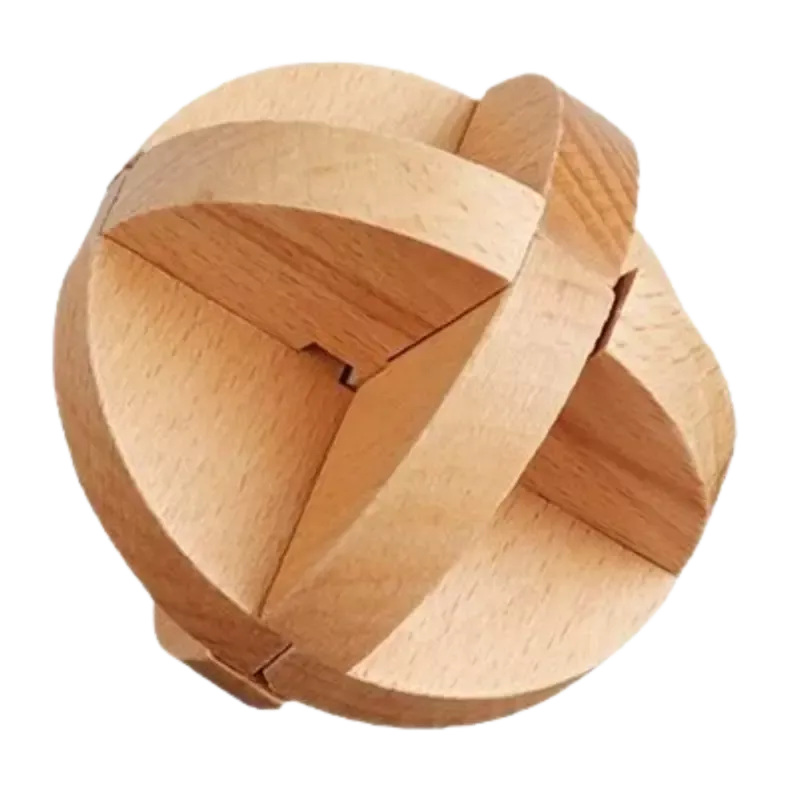
Luban Sphere Puzzle — $16.99
At $16.99, the Luban Sphere Puzzle is often sold as a meditation tool, and for good reason. It’s a 3D riddle of self vs. form. The sphere is composed of six interlocking pieces. The “answer” is found in the sequence of disassembly. If you take it apart too fast, you lose the map for reconstruction. I’ve had this sphere on my desk for months, and I still find the reassembly more challenging than the solve. It forces you to focus on the quiet wisdom of the journey. If you’re struggling, the trick is to identify the one piece that has no internal notches—that’s your “king” piece, and it’s always the last one in and the first one out.
Why Your First Solve Will Be an Accident (And That’s Okay)
I’ve watched hundreds of people solve puzzles, and for about 40% of them, the first successful disassembly is a total accident. They’re fiddling with it while watching TV, and suddenly, it falls apart. They look down in horror because they have no idea how to put it back together.
This is actually a vital part of the learning process. Mechanical puzzles are essentially extreme mechanisms that defy logic until you see the “void” inside them.
Consider the Wood Knot Puzzle.
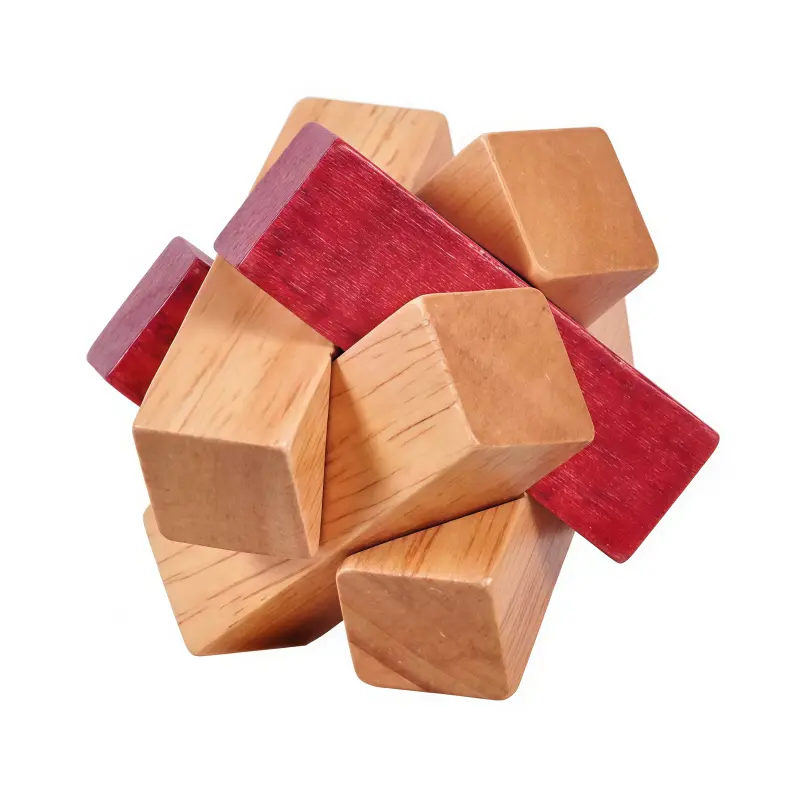
Wood Knot Puzzle — $16.99
The Wood Knot Puzzle, also $16.99, is a beautiful example of premium wooden engineering. It uses six hardwood pieces with no glue or screws. It embodies the Taoist teaching that “great form has no shape.” When you solve this by accident, you’re actually witnessing geometric harmony. The “answer” to the Wood Knot is understanding the “foundation.” If you don’t establish the first two pieces in a rock-solid ‘X’ configuration, the rest of the structure will never lock. It’s a mindful practice that connects ancient joinery with modern frustration.
PEAK MOMENT: The 10-Year-Old vs. The Engineer
Last summer, I conducted an informal experiment. I took the Ring Rescue and gave it to two people: a senior mechanical engineer and my 10-year-old nephew.
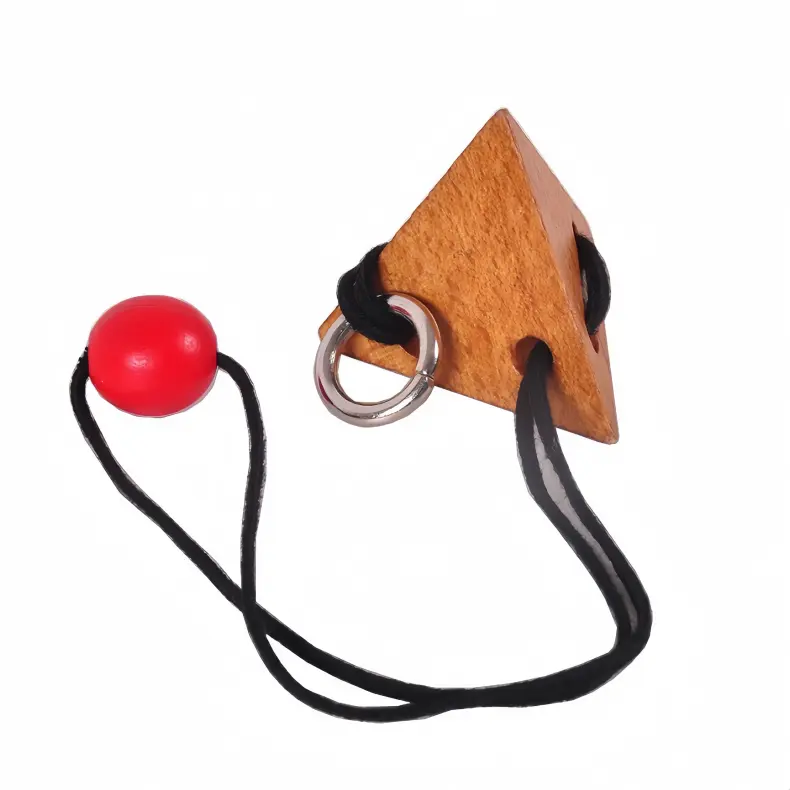
Ring Rescue — $14.99
The engineer spent fifteen minutes analyzing the rope tension and the diameter of the red bead. He was looking for a mathematical “out.” My nephew, on the other hand, just started “walking” the ring along the rope. He wasn’t thinking about physics; he was thinking about the path.
The Ring Rescue costs $14.99 and is a deceptively simple triangle puzzle. It features a black rope, a red bead, and a silver ring. The engineer was convinced the bead was too large for the ring (it is). The “answer” is that you don’t pass the bead through the ring; you pass the loop of the rope through the hole in the wood, then over the bead. My nephew found this in three minutes because he wasn’t overthinking it. He “got the One,” as the old saying goes. He went back to basics and spotted the single path. This is the peak insight of puzzle solving: complexity is often just a series of simple steps we’ve decided to make difficult.
The Architecture of the Burr: Why Six is the Magic Number
If you look into the history of jigsaw puzzles and their 3D cousins, you’ll find that the “six-piece burr” is the gold standard. It’s the perfect balance of stability and complexity.
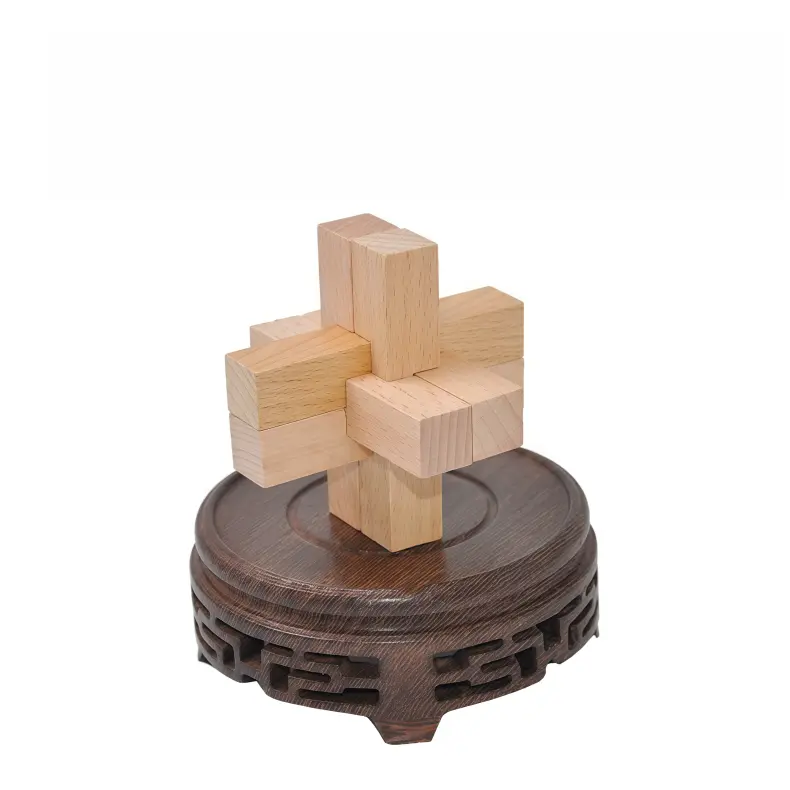
Six-Piece Burr — $17.99
The Six-Piece Burr ($17.99) is the quintessential “Chinese Cross.” Each piece plays a vital role—no shortcuts, no excess. The “answer” to a burr puzzle is always found in the “key” piece. In this version, the key is the only piece that can slide without being blocked by another’s notch. If you’re trying to solve this, feel for the piece that has the most “wiggle.” That’s your starting point. This puzzle rewards those who seek balance over brute strength. If you find yourself pulling hard enough to make the wood creak, you’re doing it wrong.
This kind of structural thinking is very similar to the strategic foresight found in tabletop gaming. You have to see three moves ahead to understand how the internal notches will clear each other.
Love, Legend, and Logic: The Heart-Lock Challenge
Sometimes the “answer” to a puzzle is buried in a story. This is a common trope in the tactile history of secret compartments.
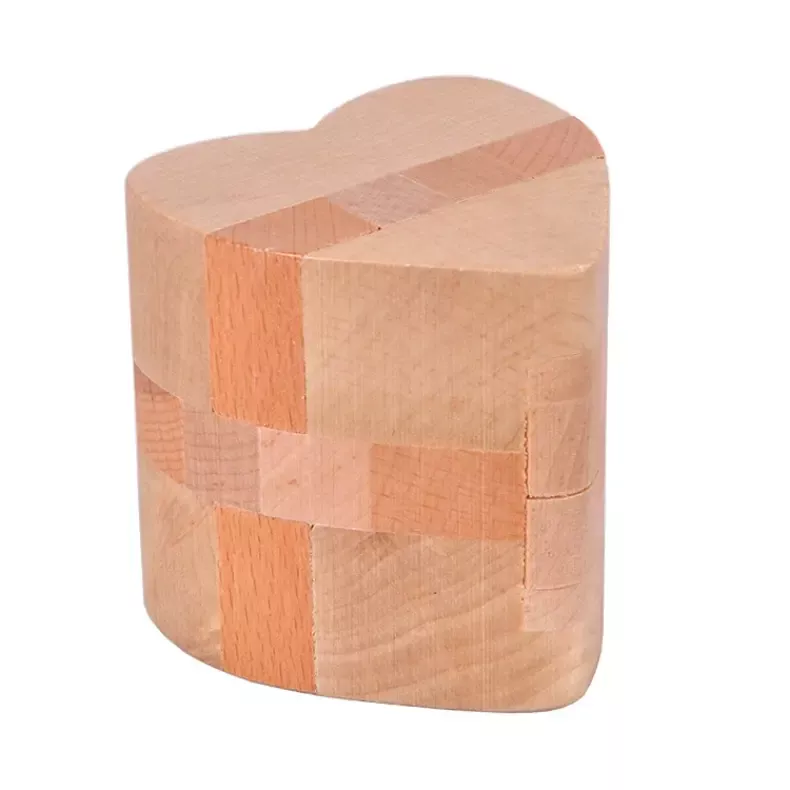
The King Wen of Zhou heart-lock puzzle ($17.99) is a tactile fable. It’s based on the legend of King Wen and Tai Si. While most puzzles feel like cold geometry, this one feels like history. The mechanics are elegant, designed to mirror the Daoist principle of returning from confusion to harmony. To find the “answer,” you have to navigate the grooves and notches like a map of a relationship—sometimes you have to move backward to go forward. It’s a bit more sentimental than a standard burr, but the mechanical challenge is just as rigorous.
The Minimalist’s Answer: The 6 Piece Key
If you’re the type of person who finds the 3D puzzles too cluttered, you might prefer a minimalist approach.
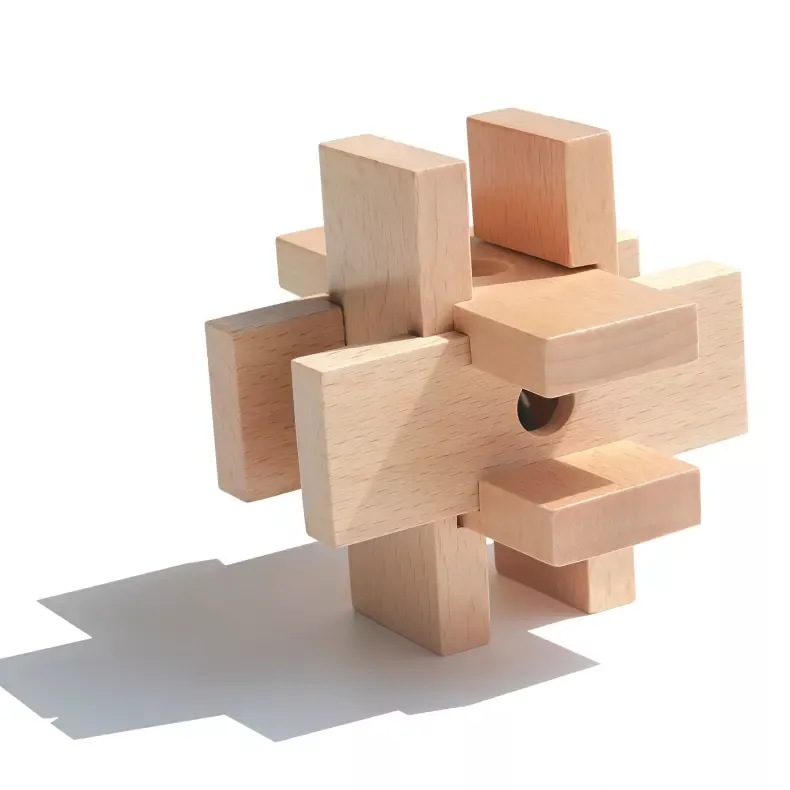
6 Piece Wooden Puzzle Key — $12.99
The 6 Piece Wooden Puzzle Key is priced at a modest $12.99. It’s a study in “Wu Wei” or effortless action. There are zero electronics and only six hardwood pieces. The “answer” here is about pattern recognition. When you stop forcing solutions, the patterns emerge naturally. I often recommend this as a “first real puzzle” because it doesn’t overwhelm the solver with pieces, yet it still provides that rich, satisfying click when the final piece slides home.
Quick-Reference Comparison Table
FAQ: Everything You Wanted to Ask While Frustrated
How do I find the answer to a wooden puzzle without a manual?
Most wooden brain teasers don’t come with manuals because the struggle is the product. However, the “answer” is almost always hidden in the piece with the most movement. Start by gently wiggling every piece. One will have slightly more “play” than the others. That is almost always the first piece of the sequence. If you’re stuck, try rotating the puzzle. Sometimes gravity is the secret ingredient that holds a pin in place.
Why won’t my wooden puzzle budge?
Wood is susceptible to humidity. If you live in a very damp or very dry climate, the wood can swell or shrink by a fraction of a millimeter. This is enough to lock a high-precision puzzle like the Circular Lock ($16.99).
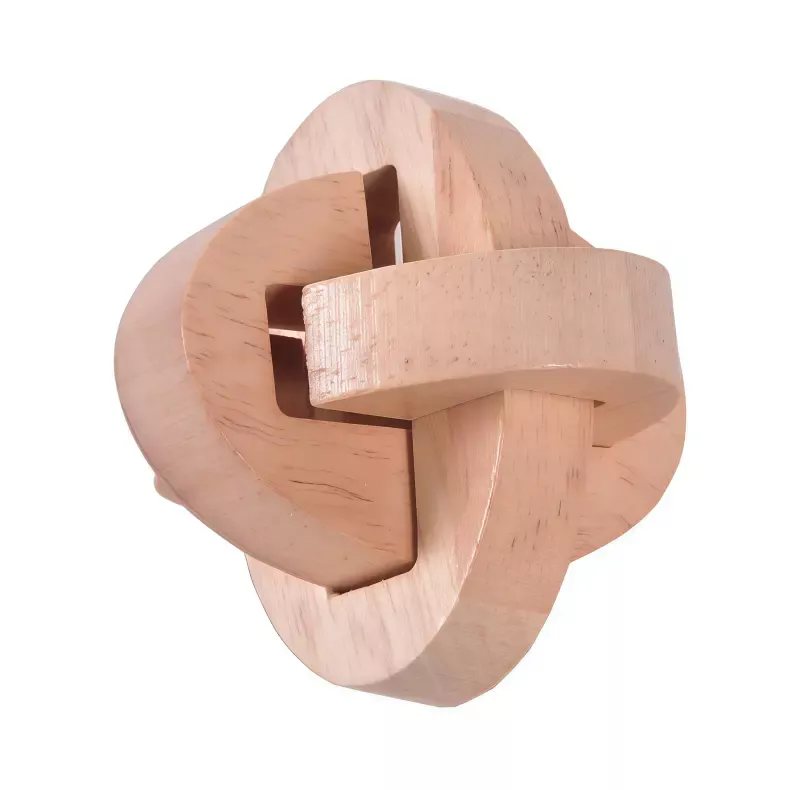
Circular Lock — $16.99
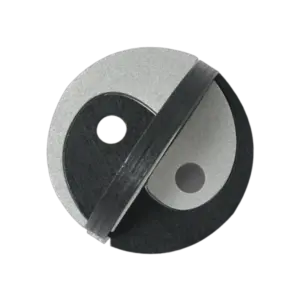
The Circular Lock features three precision-cut pieces that should interlock with smooth motion. If it’s stuck, don’t force it. Try putting it in a climate-controlled room for 24 hours. Once the wood stabilizes, the focus it requires will become a meditation in motion rather than a test of grip strength.
Are these puzzles suitable for children?
While many are marketed for ages 6+, I find the sweet spot is 10 and up. Younger children often lack the fine motor control to keep the pieces aligned during a complex solve. However, something like the Kongming Lock Color Match is a great entry point.
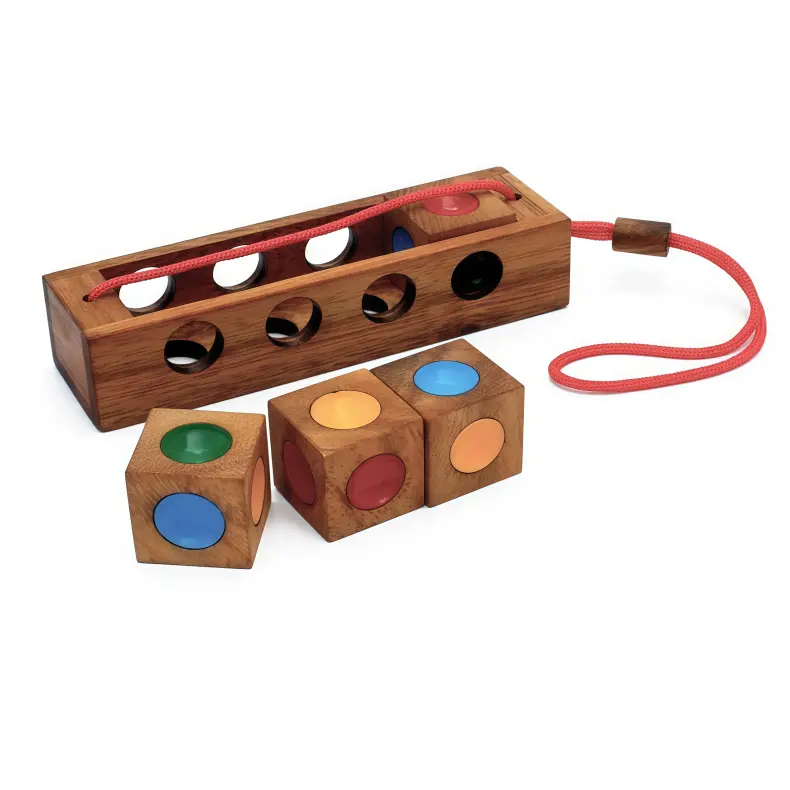
Kongming Lock Color Match — $16.99
The Kongming Lock Color Match ($16.99) challenges you to transform four chaotic blocks into a single whole where colorful opposites align. It’s less about complex joinery and more about spatial reasoning. It’s a perfect “family” puzzle because the goal is visually clear even if the path is tricky.
I lost a piece. Can I still solve it?
In short: no. Mechanical puzzles are systems of perfect equilibrium. If you lose one piece of the Six-Piece Burr, the entire structure loses its integrity. I always recommend solving these over a tray or a felt mat. It prevents pieces from rolling off the table and into the “black hole” of the living room rug.
How do I put a wooden puzzle back together?
This is the real challenge. Disassembly is often intuitive; reassembly requires a memory of the internal voids. My expert tip? Take a photo after every piece you remove. It creates a “reverse map” that you can follow back to the beginning. Many people find that reassembling the Luban Sphere Puzzle is actually more satisfying than taking it apart because it requires a deeper understanding of the internal geometry.
Is it “cheating” to look up the solution?
I respectfully disagree with the “purist” view that looking at a solution is cheating. If you’ve been stuck for three days and the puzzle is no longer bringing you joy, look at the first step of the solution. Often, just knowing which piece moves first is enough to jumpstart your brain and allow you to finish the rest on your own.
What is the hardest wooden puzzle?
Difficulty is subjective. For some, the rope-based logic of the Ring Rescue is impossible. For others, the multi-block movement of the Jiutong Lock is the ultimate test. If you want a challenge that feels infinite, the Jiutong is my pick for the “hardest” in this price bracket.
How do I clean my wooden puzzles?
Never use water or harsh chemicals. A dry microfiber cloth is all you need. If the wood feels “thirsty” or becomes rough, a tiny amount of food-grade mineral oil on a cloth can restore the luster and keep the pieces sliding smoothly.
Do wooden puzzles help with brain health?
While I’m a reviewer and not a doctor, there is significant anecdotal evidence that tactile problem-solving helps maintain cognitive flexibility. It forces the brain to switch between 2D planning and 3D execution. It’s a much more engaging workout than scrolling through a phone.
Why are some puzzles $15 and others $100?
It comes down to tolerances and wood type. A $17 puzzle like the Six-Piece Burr is mass-produced with high-quality machines. A $100 puzzle is often hand-milled from exotic hardwoods like Ebony or Rosewood, with tolerances so tight you can’t see the seams when it’s closed. For most hobbyists, the $15-$20 range offers the best “bang for your buck.”
Can I solve these with one hand?
Most interlocking puzzles like the Plum Blossom Lock require two hands to keep the structure from collapsing as you remove the key pieces. They are great for developing bilateral coordination.
What’s the best way to gift these?
Don’t just give the box. Solve it first, hide a small note or a $20 bill inside (if it’s a hollow design like some burrs), and reassemble it. It turns the puzzle into a treasure hunt.
What 40 Hours of Wood and Frustration Actually Taught Me
After years of testing, I’ve realized that the “answer” to these puzzles is almost always a lesson in ego. When we can’t solve something, we blame the object. We say it’s broken or poorly designed. But the Jiutong Lock isn’t broken; it’s just waiting for you to stop rushing.
The moment the last panel clicks into place isn’t just a win for your ego; it’s a moment of clarity. You’ve successfully navigated a 3D maze that someone designed centuries ago. You’ve connected with an ancient form of logic that doesn’t require a battery or a Wi-Fi connection.
If you’re ready to start your own collection, start with the Six-Piece Burr. At $17.99, it’s the most honest introduction to the genre. It doesn’t use tricks or magnets; it just uses pure, uncompromising geometry. It taught me more about patience than any self-help book ever could.
Once you’ve mastered the burr, the next logical step is to explore the tactile history of secret compartments to see how these interlocking principles are used to hide physical objects. The rabbit hole goes deep, but the first step is always the same: set the puzzle down, make some coffee, and look again. The answer is already in your hands; you just haven’t felt it move yet.