Quick Answer: Beginner Puzzle Set Gift for Dad: How to Match the Set to Him
The 12 Piece Crystal Luban Lock Set at $28.88 is the best beginner puzzle set gift for most dads: it bundles 12 graduated locks in one gift-ready box, fits a hands-on fixer archetype, and clears the three beginner-set checks — difficulty gradient, format fit, and gift-ready packaging. Skip it if he already collects advanced mechanical puzzles or asked for a single heirloom piece. A beginner puzzle set for dad works best when it bundles 3–6 puzzles of gradually increasing difficulty, arrives pre-packaged as a gift, and matches a format he already enjoys — wooden/mechanical for tactile dads, jigsaw for patient ones, brain-teaser for word/number dads.
Three checks change the pick:
- Difficulty gradient — does the set include more than one level?
- Format fit — does it match how he spends downtime (desk, couch, workshop, with grandkids)?
- Gift-presentation quality — does it arrive gift-ready without rewrapping?
| Set Format | Pieces / Puzzles | Skill Level | Best For | Price | What to Check |
|---|---|---|---|---|---|
| 12 Piece Crystal Luban Lock Set | 12 pieces | Beginner-suitable; verify range on product page | Hands-on fixer | $28.88 | Confirm 12 distinct pieces + instructions included |
| 6-in-1 Wooden Brain Teaser Set | 6 puzzles | Beginner variety; verify range on page | Word/number thinker | $38.88 | Confirm range covers easy → moderate |
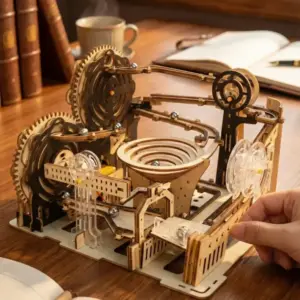
| 3D Wooden Mechanical Pistol Kit | 1 build model | Beginner build; verify tools needed | Hands-on fixer (hobbyist) | $29.99 | Check build time and tool requirement |
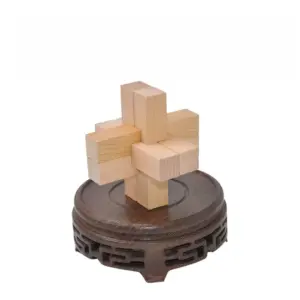
| 54‑T Cube Puzzle | 1 multi-solution cube | Intermediate spatial; verify solutions | Word/number thinker (spatial) | $18.99 | Confirm solution sheet included |
| 6 Piece Steel Ball Pyramid Puzzle | 6 metal puzzles | Beginner–intermediate tactile; verify storage | Hands-on fixer (pocket carry) | $11.98 | Check whether all 6 pieces store together |
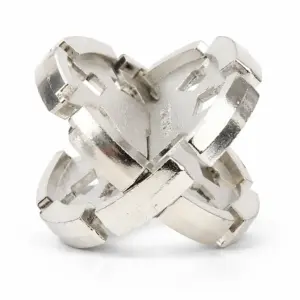
| 4 Band Puzzle Ring | 1 ring puzzle | Beginner single; verify size | Patient relaxer | $11.99 | Confirm ring size or adjustability |
A set clears the “beginner puzzle set” bar when it passes all three checks and arrives as one gift-ready package — not a single challenge, not an expert heirloom. The Crystal Luban Lock Set currently passes all three for the most common buyer: a curious-but-uncommitted dad and a gift-giver who wants one decision, not twelve. The next section defines what “beginner puzzle set” actually means as a product category and why bundling beats a single puzzle for a first-time recipient.
01. What a Beginner Puzzle Set Actually Means (and Why a Set Beats a Single Puzzle for a First Gift)
A beginner puzzle set is a single gift-ready package that bundles three to six puzzles along a shared difficulty arc, sold as one unit and sized for a first-time solver. A single puzzle only works as a gift when the recipient already owns or has asked for puzzles before; otherwise the set is the safer bet because it offers a path in, not a single chance to lose interest.
A set beats a single puzzle for beginners for one reason the table above already hints at: it spreads risk across multiple attempts. One lock that is too hard ends a gift; one lock out of twelve being too hard is just a skip-able entry. Creative Crafthouse’s gift-guide framing puts it plainly — “A beginner-friendly puzzle is not a weak gift if it gets played and enjoyed. An expert puzzle is not a better gift if it ends up ignored because it is too punishing.” That single sentence is the entire reason a bundled set exists as a product category at all. The buyer is not optimizing for difficulty; the buyer is optimizing for the dad opening the box on Sunday morning and reaching for it again on Tuesday.
The “set” requirement
A “set” is a specific product shape, not a marketing word. It has to clear three observable checks before it counts:
- Multiple puzzles, one package. Three to six pieces is the common range; below three, it reads as a single puzzle with extras. Above six, the package starts to feel like homework.
- A shared difficulty arc. The easiest puzzle in the box should be solvable in a few minutes; the hardest should still feel reachable in under an hour. Without that gradient, the set is just a grab-bag of unrelated objects.
- Gift-ready presentation. The box should not require the buyer to wrap or bag loose items. A set that arrives in a single rigid box or tray is the format; a set that arrives as twelve pieces in a poly bag is not.
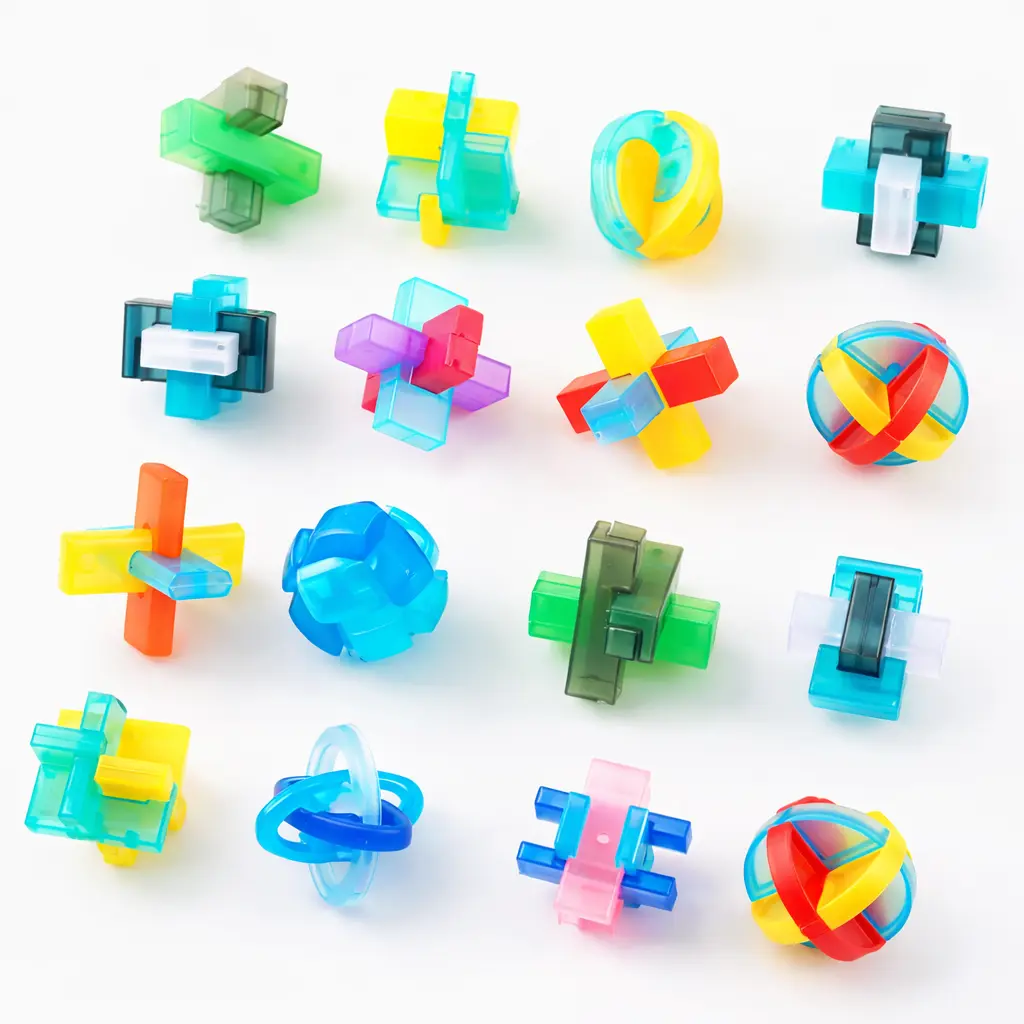
A 12-piece lock set like the Crystal Luban Lock Set fits this shape directly — one box, twelve graduated locks, a tray that keeps each piece in its slot. The buyer makes one purchase decision and the dad gets a sequence of small wins rather than a single binary challenge.
The “beginner” cap
“Beginner” is also a specific zone on a common scale. Creative Crafthouse uses a 1–4 difficulty ladder; Kubiya Games recommends that for a first-time recipient, the buyer should “start with something on the easier side.” Translated into something a buyer can act on, the beginner cap means:
- Difficulty rating 1–2 out of 4 (or the equivalent on a 1–5 scale), usually printed on the box or product page.
- Solve time of 10–30 minutes per puzzle for the average adult. Anything under 5 minutes feels trivial; anything over 45 minutes risks abandonment in a new solver.
- Solution instructions included. A beginner set that requires the buyer to find a YouTube walkthrough is a set that has already failed at the gift moment.
The Reddit thread where a user is hand-making a puzzle book for their dad shows the same instinct from a different direction: curated, progressive, solvable in one sitting. The format is less important than the gradient.
The set-vs-single-puzzle threshold
The single decision rule for this article is short enough to repeat:
If your dad has never asked for a puzzle, has never owned one, and does not describe himself as a “puzzler” — choose a set. A single puzzle is a gift for someone who is already inside the hobby; a set is a gift for someone who might want to be.
This is also why the table in the prior section ranks the 12-piece lock set first. It is the only format on the list that bundles twelve discrete, graduated challenges in one box for a price that reads as a small gift rather than a commitment.
The next action
If your dad has never owned a puzzle, default to a set. Pick the format his archetype fits (covered next), confirm the box shows a difficulty rating of 1–2 and includes solution steps, and treat anything below three puzzles or above six as a format risk worth verifying on the product page before checkout.
02. Which Beginner Puzzle Set Fits Your Dad’s Archetype
The rule for choosing a beginner puzzle set is to skip the puzzle aisle and read the person first. Pick the set category from how your dad already spends his hands or his downtime, not from a product listing. A dad who tinkers, fixes, and owns a real tool drawer reads differently from a dad who works the daily crossword — and the format has to match that existing habit, not invent a new one. Archetype before format, every time.
That “next action” from the prior section — pick the format his archetype fits — is the whole decision tree below. Four dad archetypes cover most beginner-dad gift buyers; one set category fits each. Choosing outside them is the most common gift miss. If you’re matching a dad across a broader gift set, the same archetype-first logic shows up in the six archetypes of brain teaser gifts for men.
Hands-on fixer
- Already tinkers, fixes things around the house, owns a real tool drawer.
- Reads a manual before he reads the gift card.
- Wants a tactile, repeatable challenge, not a display object.
- Best set: a mechanical or wooden brain-teaser variety pack with 6+ discrete puzzles.
- Tea-Sip match: the 6-in-1 Wooden Brain Teaser Set.
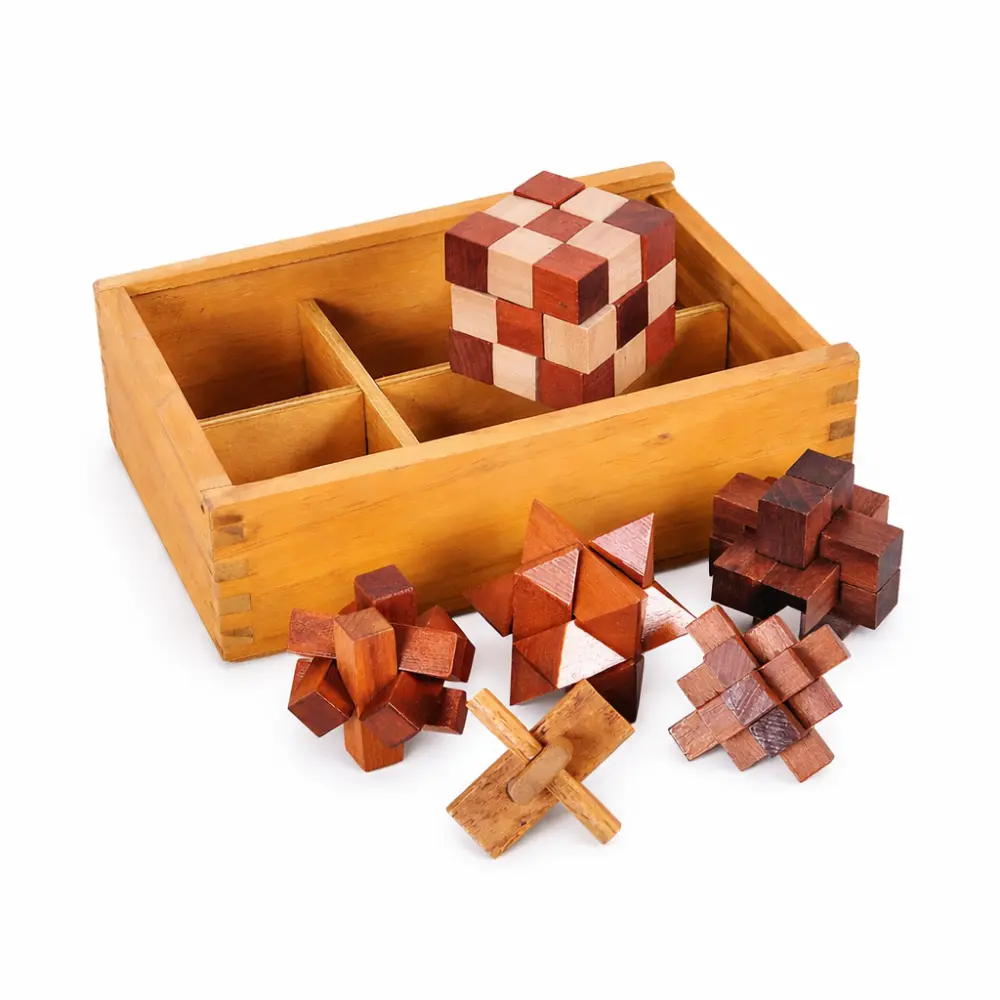
The 6-in-1 Wooden Brain Teaser Set fits this archetype because it bundles six wooden disentanglement and assembly challenges in one gift-ready box, and the format mirrors what a hands-on dad already does — pick up an unfamiliar object, study it, take it apart mentally, and solve it before bed. The packaging reads as a gift; the contents read as a project. For a dad who has never asked for a puzzle, that’s the framing that gets the box opened a second time.
Patient relaxer
- Reads for hours, watches full matches, sits through three-hour films without complaint.
- Doesn’t fidget — he settles in.
- Will return to the same project night after night and not need to be told to.
- Best set: a themed jigsaw bundle or a 3D wooden model kit he builds slowly.
- Tea-Sip match: the 3D Wooden Mechanical Pistol Kit.
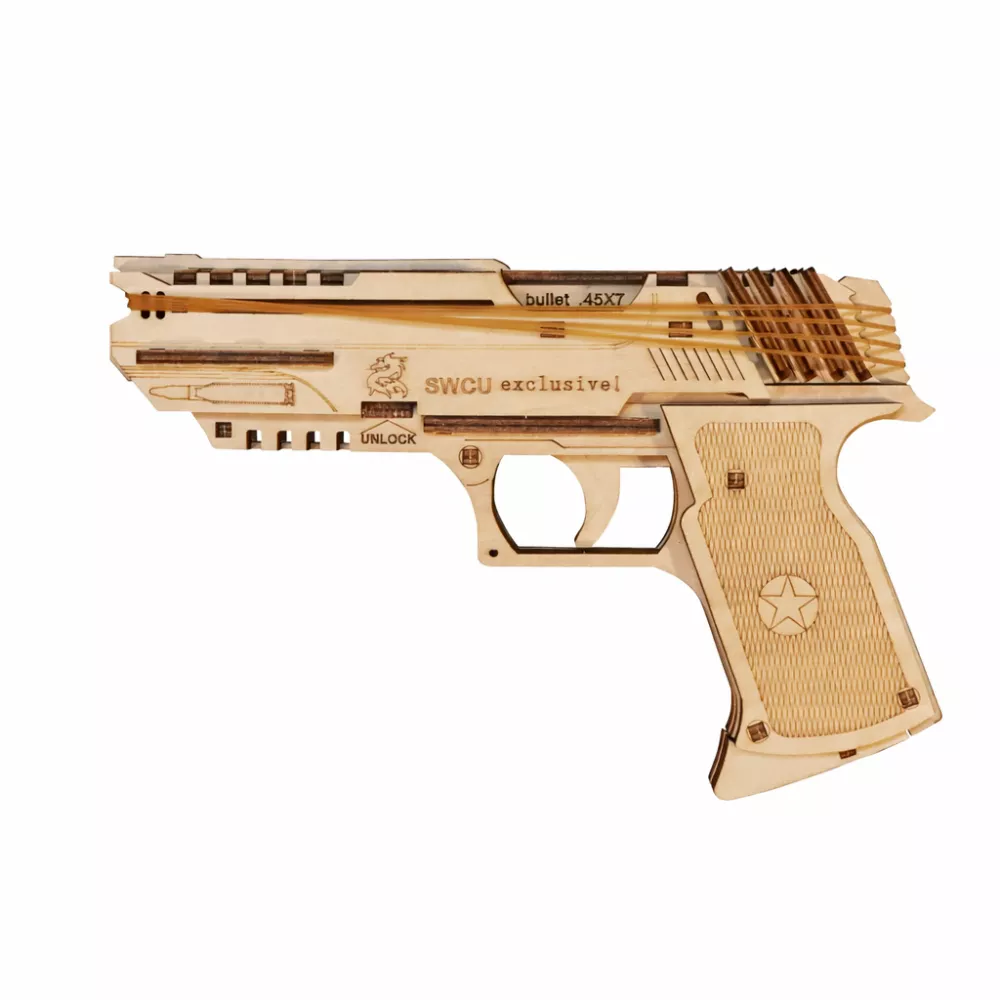
The Pistol Kit works for the patient archetype because the build takes hours across multiple sittings, the satisfaction is a finished display object, and the format doesn’t require any prior puzzling vocabulary. He’s not “doing a puzzle” — he’s building something. That framing matters for a dad who would never call himself a puzzler.
Word/number thinker
- Does the daily crossword, sudoku, or cryptic quiz in the paper without fail.
- Likes structure, ladders, and ranked difficulty.
- Has probably already rejected a sudoku book because the difficulty curve was wrong.
- Best set: a graded brain-teaser book or a multi-difficulty logic set.
- Tea-Sip match: 54‑T Cube Puzzle for multi-solution spatial logic, with the 6 Piece Steel Ball Pyramid Puzzle as a graded entry point.
These formats give him a defined sequence — start with the easiest, finish with the hardest, and the box has a stated order. The 6 Piece Steel Ball Pyramid Puzzle is the easier entry point on the same shelf; the 54‑T Cube Puzzle is the harder cap. The same logic is why a 1000-puzzle Sudoku book with four difficulty levels is repeatedly recommended in puzzle forums as appropriate “even if your dad is still a beginner” — the gradient is the gift, not any single page.
Family player
- Grandkids visit, kids still come over on weekends, dinner table has four chairs minimum.
- The gift has to survive other hands without breaking or frustrating.
- Best set: a simple, low-frustration shared challenge with an instant reset.
- Tea-Sip match: 4 Band Puzzle Ring for a single short challenge, or 6 Piece Steel Ball Pyramid Puzzle when several people each want to take a puzzle.
These formats work because the reset is instant, the rules fit on the box, and a 7-year-old can play them with him on a Sunday afternoon. A dad in this archetype isn’t buying a hobby — he’s buying a shared activity. That’s also why piece count and durability matter more than difficulty here; if a grandkid can break it in a minute, it fails the use case.
The next action
Write your dad’s name at the top of exactly one of those four lists. Then shop only that set category. Mixing categories — a wooden puzzle for a patient relaxer, a sudoku book for a hands-on fixer — is the most common beginner-set miss, because the format contradicts the habit instead of reinforcing it. Archetype first, format second, price third, packaging fourth — in that order.
03. Four Observable Checks to Run on a Puzzle Set Before You Buy
Now that you’ve pinned the archetype, the next move happens on the product page, not on the brand name. Before reading a single review, scan the box photo for four things: a difficulty scale, a printed instruction sheet, packaging that won’t fall apart, and a material finish your hands can trust. This is where most beginner-set gifts quietly succeed or fail.
Check 1: Is there a printed difficulty scale — and is at least half the set marked beginner?
A beginner set has no business shipping a “level 4” puzzle first. Look for a visible 1–4 difficulty scale on the box or the inner card, the same scale Kubiya Games uses across its gift sets and the four-level structure A Crazy Family applies to its 1000-Sudoku beginner-friendly book. “Easy” or “beginner” should appear on at least half the puzzles inside, with harder puzzles placed at the back so dad gets a win before the first weekend is over.
Action before checkout: If the listing only says “challenging” or “expert level” without a printed scale, skip it. The 12 Piece Crystal Luban Lock Set earns its beginner-friendly label by front-loading simple locks and saving trickier combinations for later — that’s the gradient working for him, not against him.
Check 2: Are real instructions included — not just a QR code?
A printed booklet or fold-out instruction sheet signals that the brand expects the recipient to solve solo. A QR-only link is a gift-presentation red flag: dad will need his phone, a signal, and a sign-in just to start, and any grandkid who grabs the box will be stuck in two seconds. Look for a separate paper insert, ideally with diagrams matched to each puzzle in the set.
Action before checkout: Zoom in on the product photos. If you see only a card with a URL, treat the set as a self-assembly homework assignment, not a gift.
Check 3: Does the packaging hold up to a wrapping paper reveal?
The unwrapping is half the gift. Watch for three signals: a magnetic closure box, fitted foam or cardboard trays, and no loose ziplock bag rattling inside a fancy outer sleeve. A 6-in-1 Wooden Brain Teaser Set that arrives in fitted wooden trays feels like one object, not seven loose parts. A nested set in a flimsy printed carton feels like a parts bin.
Action before checkout: Read the dimensions and the included-component list. If the seller describes the “package” only as “gift box” without naming the closure type, that wording is a soft warning — compare two more listings before you commit.
Check 4: Does the material match the claim?
Wood should feel smooth — no splinters, no rough end grain, no visible glue lines. Cardboard puzzles should have a sturdy back, not a thin stock that warps the first time it gets damp on a coffee table. Metal should have weight in the hand, not a hollow feel. Plastic should be solid, not the brittle, cloudy type that snaps the first time it’s dropped. A non-toxic, water-based finish matters when the set will live on an office desk and get handled daily.
Action before checkout: If the listing says “wooden” but the photos show a printed laminate over particleboard, that’s a downgrade. The product page should describe the wood species or finish used; if it doesn’t, cross-check the 3D Wooden Mechanical Pistol Kit or another listing where the materials are spelled out in plain language.
The single takeaway
Run these four checks in order: scale, instructions, packaging, material. A set that passes all four is a gift dad can open, solve one puzzle from, and return to on a Sunday without setup, frustration, or a phone in his hand. The box photo is doing the talking for you — read it like a buyer, not a fan.
04. Beginner Puzzle Set Formats Compared: Difficulty, Count, and Price Cues
Now that you can read a puzzle set’s box like a buyer, the next decision is format. Compare beginner set formats on three observable signals: puzzle count in the box, difficulty gradient from easy to hard, and packaging that looks gift-ready. A set that scores well on all three is almost always a safer first gift than a single high-difficulty puzzle in a plain white box.
The table below maps eight common beginner set formats against your dad’s archetype from Section 02. Format, not brand reputation, is the variable that matters here. The right-hand column flags what to verify on the product page before you check out.
| Format | Typical Puzzle Count | Skill Level | Best For Dad Archetype | Approx Price Range | Key Check |
|---|---|---|---|---|---|
| Mechanical variety pack (locks) | 6–12 puzzles | Easy to medium, step-up | Hands-on fixer | Check product page | Difficulty labels or numbered locks; gift-ready box |
| Wooden brain-teaser set | 4–6 puzzles | Easy to medium | Hands-on fixer or patient relaxer | Check product page | Wood species stated; smooth finish; instructions included |
| Metal disentanglement variety | 5–8 pieces | Easy to hard, short solves | Hands-on fixer | Check product page | Storage pouch or box; weight in the hand |
| 3D wooden build kit | 1 large model | Medium, longer solve | Patient relaxer or family player | Check product page | Build time stated; tools included; no glue required |
| Sequential discovery box | 1 box | Easy to medium | Hands-on fixer | Check product page | Does the reveal match the difficulty? |
| Themed jigsaw bundle | 2–4 puzzles | Easy to medium | Patient relaxer | Check product page | Piece count per puzzle; theme relevance to dad |
| Sudoku / logic book set | 500–1,000 puzzles | Easy to hard, labeled levels | Word/number thinker | Check product page | Difficulty levels labeled; paper quality; binding |
| Cooperative / family set | 1–2 games | Easy, short rounds | Family player | Check product page | Player count; age range; rules length |
The format that consistently scores highest for a beginner dad is the mechanical variety pack. The 12 Piece Crystal Luban Lock Set at $28.88 bundles 12 step-up challenges into a single gift-ready box, ships with instructions, and reads as a present the moment it lands in his hands. If your dad is a hands-on fixer, this is the row to anchor on.
The wooden brain-teaser set is a close second for fixers who prefer wood over plastic — same four checks apply. The 6-in-1 Wooden Brain Teaser Set at $38.88 fits the patient relaxer or the hands-on fixer who likes a tactile wood finish. If the wood-versus-metal choice is what is stalling the decision, the 5-point test to find your perfect match between metal and wood breaks the trade-off into five observable checks.
For a dad who already fidgets with keys, bolts, or small tools at the kitchen table, a metal disentanglement set is the budget entry point. Six short challenges in one box at roughly $11.98 makes it an easy add-on or stocking stuffer.
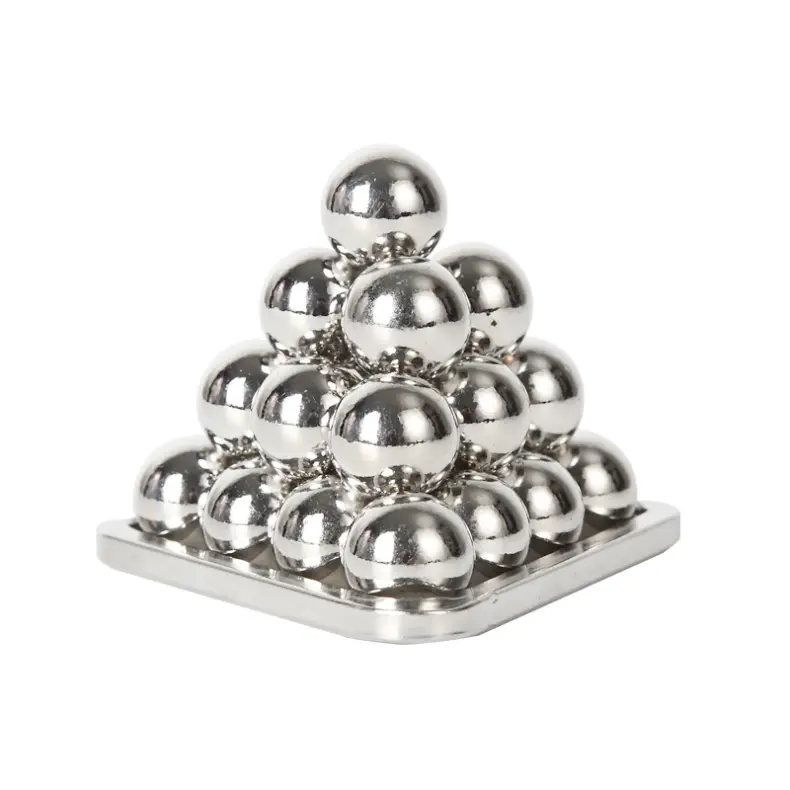
The catch with metal disentanglements is packaging — the boxes are small and often read as a desk toy rather than a present. Pair with a greeting card, slip into a gift bag, or fold into a larger “puzzle starter” bundle.
A single-piece metal puzzle is technically not a set, but it’s a useful comparison point. At $11.99, the 4 Band Puzzle Ring buys one short challenge a beginner can solve in 10–20 minutes. If your dad engages, the next gift is a full mechanical variety pack.
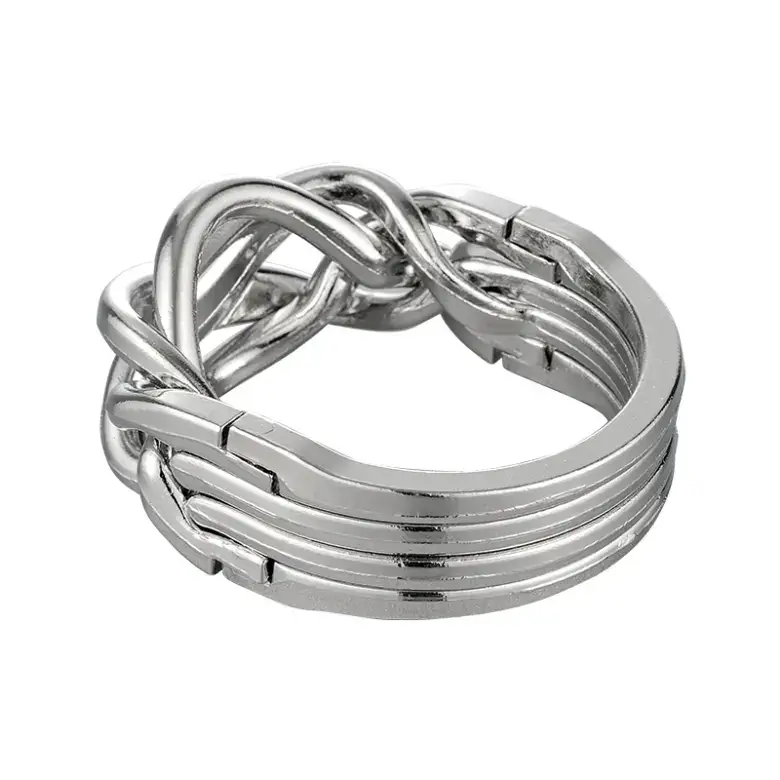
4 Band Puzzle Ring — $11.99
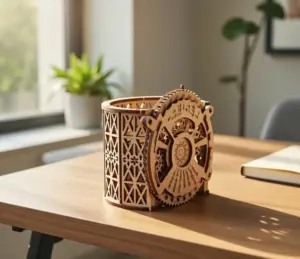
Sequential discovery boxes (combination locks, treasure boxes) are the second-best format for a beginner because the reveal is built into the solve. A 3D wooden safe or treasure box gives the dad a visible end-goal — open it — rather than an abstract challenge. Check the product page for stated difficulty and material before you buy.
The 3D wooden build format trades the “12 short challenges” feel of a variety pack for a single visible end product on the desk. The 3D Wooden Mechanical Pistol Kit at $29.99 is one representative: one model, medium difficulty, a weekend build, often a father-and-child project.
Themed jigsaw bundles and sudoku/logic book sets are format-level fits for the patient relaxer and the word/number thinker, but they require more theme-matching effort. A collage of beer cans only works if dad likes beer; a sudoku book only works if he already does the daily puzzle. The format is right; the curation is on you.
The practical next action
Pick two rows from the table that match your dad’s archetype. Run Section 03’s four checks on each row’s specific product page: scale, instructions, packaging, and material. Buy the one that passes all four. If neither passes cleanly, the format is wrong — go back to Section 02 and pick a different archetype, or step down to a single puzzle as a trial run.
Frequently Asked Questions
A beginner puzzle set is a good gift for a dad who doesn’t currently do puzzles when it bundles several low-stakes challenges and arrives gift-ready. The set’s job is to lower the “will I even like this?” risk that a single harder puzzle creates. Twelve small, individually-winnable challenges with no single failure point — like the 12 Piece Crystal Luban Lock Set at $28.88 — work because the dad doesn’t have to commit to one big solve.
Is a beginner puzzle set a good gift if my dad isn’t a “puzzler”?
Yes, and a set is lower-risk than a single puzzle. A 1,000-piece jigsaw or hard sequential puzzle asks your dad to commit hours to one challenge he may not finish. A variety pack asks for ten to thirty minutes per puzzle — he can stop after any one without guilt. The format signals “low-stakes try-it” rather than “homework.”
How many puzzles should be in a beginner set?
Three to six is the sweet spot. Fewer than three feels sparse; more than six becomes a project. A 12-piece set like the crystal Luban locks works because each puzzle is small enough to stay portable. A 6-in-1 wooden brain teaser set works because each of the six is a different mechanism — genuine variety without repetition.
Wooden, metal, or plastic — which material is best for a beginner dad?
Material matters less than mechanism variety. Wood feels premium and desk-worthy. Metal has a satisfying weight. Plastic is lightweight, affordable, and clearly a “puzzle object” rather than a toy. Match the material to where the dad will use it: desk = wood or metal; coffee table = wood; travel bag = plastic or metal.
What if the first puzzle is too hard or too easy?
That’s the case for a difficulty gradient. In a well-built set, puzzle one solves in five to ten minutes, and the hardest is still under an hour. Check the product page for stated difficulty or solve time before buying — if neither is listed, the seller hasn’t built a gradient.
Should I wrap the set or hand it over open?
Wrap it. The unwrapping is part of the gift, and the box signals “this is a present” rather than “I saw this on a shelf.” If the box itself is plain, a small gift bag with tissue paper works.
What price range is reasonable?
For a Father’s Day, birthday, or Christmas gift where the dad is a beginner, $20 to $50 covers the well-curated options. The 12 Piece Crystal Luban Lock Set at $28.88 and the 6-in-1 Wooden Brain Teaser Set at $38.88 both sit in that range. Check the product page for the current price before you buy.
Can we solve it together as a family?
Yes. Sets with multiple small puzzles (12 luban locks, 6-in-1 wooden brain teasers) work well because each person takes one. Single-build 3D wooden kits fit one parent and one child, not a full room.
Your next step
Open the 12 Piece Crystal Luban Lock Set product page. Confirm the twelve-puzzle count, difficulty progression, and gift-ready packaging. If those three match your dad’s archetype, order it for the next occasion. If not, return to Section 02 and pick a different archetype.
Where to Start
If the recipient and occasion checks above match, start with 12 Piece Crystal Luban Lock Set. Check the current product page for the specifications that matter to your choice.
Sources and verification
- Product details and current specifications: Tea-Sip product page
Last updated: August 11, 2026