Quick Answer: Beginner Puzzle Set Gift for Sister: How to Choose the Right One
For a sister who is new to puzzling, choose a set in the 100–500 piece range with high-contrast imagery and at least one accessory (a roll-up mat, sorting trays, or reference poster). Pick a 3D wooden puzzle set if she likes decor, and a brain-teaser set if she prefers a single-sitting challenge. The two checks that change every recommendation are piece count and what’s included in the box.
The piece count rule matters because under 100 pieces reads as a novelty and won’t sustain a first-time builder, while 500–1000 pieces can stall a newcomer before she finishes. The 100–500 range is the true beginner window, especially when the image offers high-contrast landmarks (a skyline, a bold botanical, a clear color block) rather than repeating patterns. The bundle rule matters because a single puzzle in a shrink-wrapped box rarely feels gift-ready on its own.
Two checks drive the picks below:
- Piece count — match the range to her real experience, not the box’s promise of “easy.”
- What’s included — sorting trays, a roll-up mat, a reference poster, or a display frame turn a puzzle into a set.
Quick comparison at a glance
| Set format | Best for | Beginner fit | What to check on the listing |
|---|---|---|---|
| Jigsaw set (100–500 pcs) | First-time builder who likes a weekend project | High — image contrast matters more than count | Confirm piece count, image style, and whether a reference poster is included |
| 3D wooden puzzle set | Sister who wants a finished decor object | Medium — read the difficulty rating | Check part count, no-glue assembly, and finished dimensions |
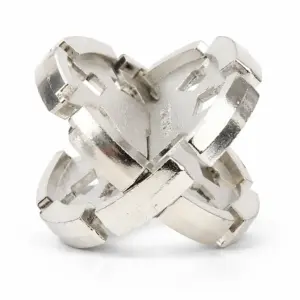
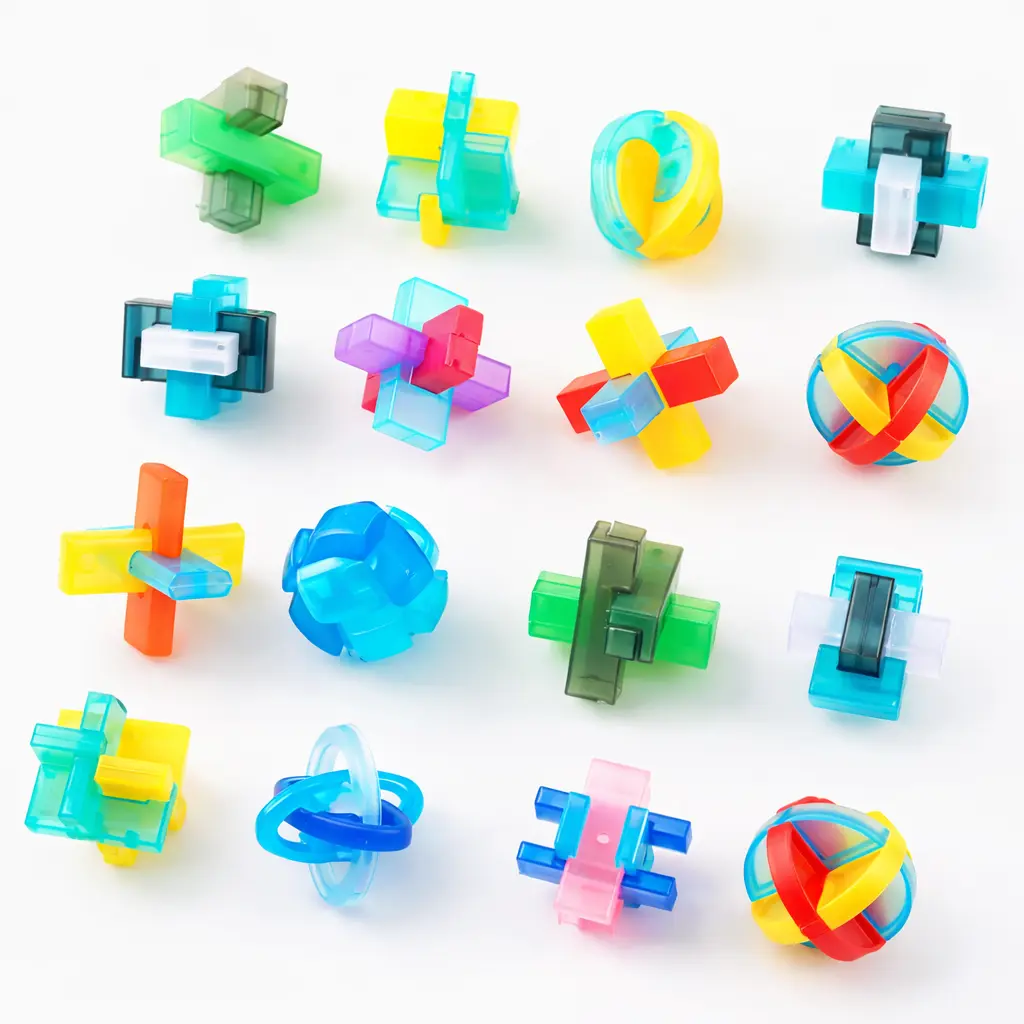
| Brain-teaser set (e.g., 12 Piece Crystal Luban Lock Set) | Sister who wants a 20–30 minute single-sitting challenge | High when difficulty is labeled | Confirm piece count, material, and any included solution guide |
The format choice is where sister personality starts to matter, and section two breaks down what “beginner” really means in puzzling.
01. What ‘Beginner’ Actually Means in Puzzling: Piece Count and Image Style
The Quick Answer table above sorted sets by format, but format alone won’t tell you whether a puzzle is actually beginner-appropriate — piece count and image complexity decide that. For a true beginner sister, 100–500 pieces is the sweet spot: enough to feel like a real project, low enough to finish in an evening or a relaxed weekend without frustration. Under 100 pieces reads as a novelty, and 500–1000 is a confident-beginner range, not a first-timer range. Match the count to her actual experience, and the rest of the gift falls into place.
The three beginner tiers, by observable thresholds
Most gift guides skip this and leave you guessing. Here is the concrete breakdown a buyer can use before clicking “add to cart”:
- Under 100 pieces — A novelty, party favor, or stocking stuffer. Fine for a child or a complete novice who wants a 15-minute win, but it usually doesn’t feel like a “set” gift. If you’re spending meaningful money, this tier is rarely the right call for an adult sister.
- 100–500 pieces — The true beginner sweet spot. She can finish it in one to four sittings, the image is large enough to use as a reference, and the challenge is real but not demoralizing. Le Puzz’s beginner-targeted 81-piece option exists for the cautious end, and their 500-piece option is described as “neither too easy nor too devilishly difficult” — both still land in this accessible band.
- 500–1000 pieces — A confident-beginner range. Fine if your sister has completed a 300-piece puzzle before and is asking for more, but too much for a true first-timer. Save this for someone who has already shown she enjoys the hobby.
Why image contrast matters more than piece count
This is the part most beginner-puzzle lists miss. A 300-piece puzzle with a dense, pattern-heavy image (think camouflage, abstract art, or busy floral wallpaper) is harder than a 500-piece puzzle with a clear skyline, a single animal portrait, or one focal object. Experienced puzzlers on the r/Jigsawpuzzles beginner thread consistently recommend a skyline or high-contrast image for a first-time builder for exactly this reason — the eye can sort pieces by color and shape quickly, which keeps momentum up and avoids the “I’m stuck after 20 minutes” dropout that kills a new hobby.
Two practical checks before you buy:
- Subject clarity — Can you describe the image in one sentence (“a fox in a snowy forest,” “the Manhattan skyline at dusk,” “a single sunflower”)? If yes, it’s beginner-friendly. If you need a paragraph, it’s not.
- Color blocking — Look at the listing photo and ask whether the image breaks into 4–6 obvious color zones. Sky, water, building, foreground — that kind of structure. If the whole image looks like one continuous tone, she’ll be sorting by shape only, which is slow and discouraging.
Piece count versus image complexity
Think of these as two dials, not one. A 100-piece puzzle with a chaotic image is harder than a 300-piece puzzle with a clean subject. A 500-piece puzzle with sharp color zones is faster to finish than a 250-piece puzzle with a moody, low-contrast gradient. The beginners who finish puzzles and come back for more are the ones whose first puzzle had both — manageable count and a friendly image. That combination is the real definition of “beginner-appropriate.”
When you’re comparing two listings at the same price, pick the one with the clearer image and slightly fewer pieces over the one with more pieces and a busier picture. The finish rate is what makes a beginner feel like a puzzler.
With the piece-count rule and the image-contrast check in hand, the next decision is format — jigsaw set, 3D wooden puzzle set, or brain-teaser set — and which one matches your sister’s actual personality.
02. The Three Set Formats Worth Considering: Jigsaw, 3D Wooden, and Brain-Teaser
Pick a jigsaw set if your sister enjoys calm, screen-off activities; pick a 3D wooden puzzle set if she likes decor or display pieces; pick a brain-teaser set if she prefers a single-sitting challenge she can finish in one evening. The format choice matters more than the piece count once you’ve cleared the 100–500 beginner threshold from the last section.
A jigsaw set is the most familiar format: flat, cardboard or paper pieces that interlock to recreate a single image. For a beginner sister, the jigsaw set works when the gift is meant to be a slow, multi-evening activity — something she can leave set up on a coffee table and return to over a week. Hobbyist communities consistently recommend that first-time builders start with a skyline or high-contrast image rather than a complex pattern, because distinct color zones give the eye somewhere to start. Skip the jigsaw set if she lives in a small space or shares a dining table — half-finished puzzles and dinner plates do not mix.
What to check on a jigsaw set listing:
– Piece count (stay inside 100–500 for a true beginner)
– Finished dimensions (a 300-piece puzzle can be 12″×18″ or 24″×36″ — check it fits her table)
– Whether a reference poster is included in the box
– Cardboard thickness if she’ll be sliding pieces on a felt or fabric surface
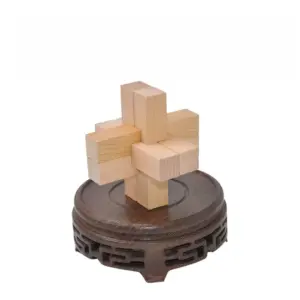
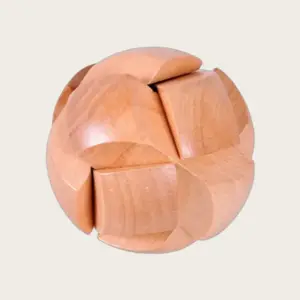
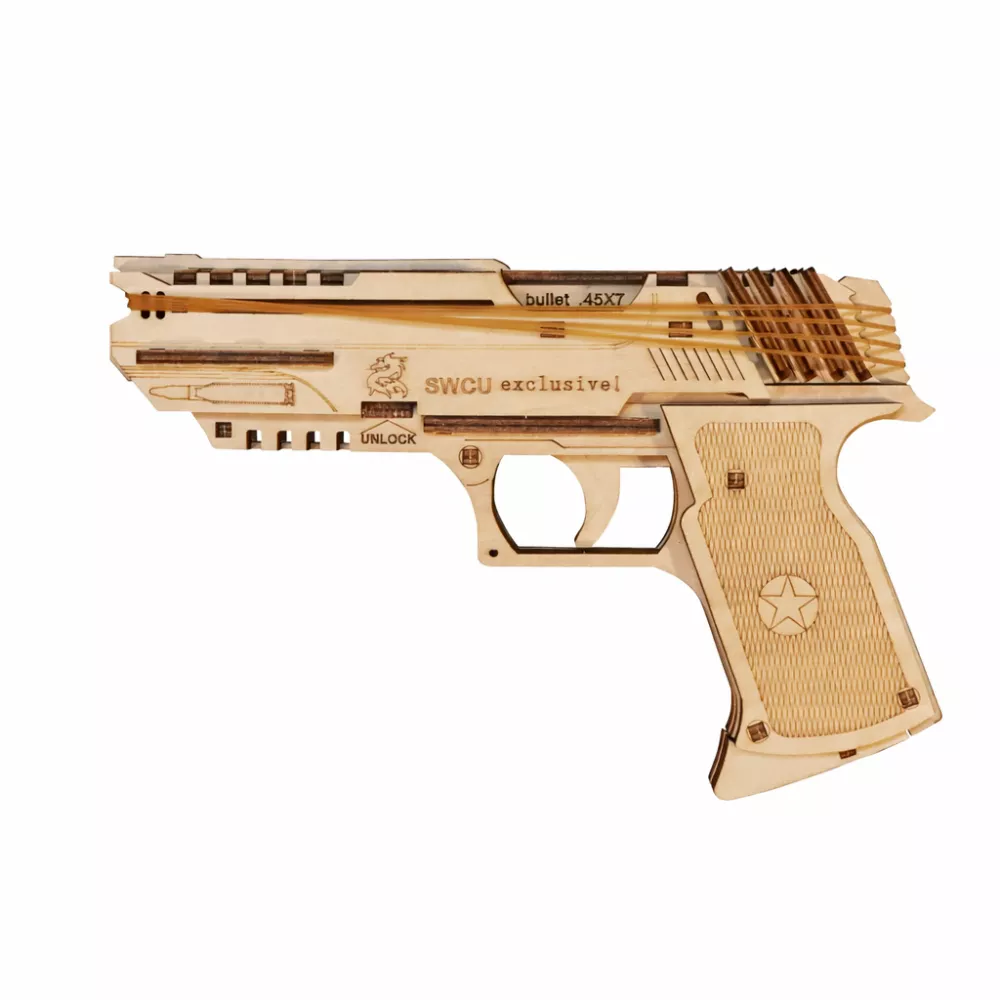
A 3D wooden puzzle set is built from pre-cut wooden pieces that slot together into a model — a clock, a music box, a vehicle, a treasure box — with no glue required. The finished object becomes desk decor or a shelf piece, which is the real gift: the build is the experience, the model is the keepsake. This format suits a sister who likes to make something rather than assemble a flat image, and who’ll appreciate having a finished object to display once the last tab clicks into place.
What to check on a 3D wooden set listing:
– Number of wooden pieces and whether any glue or tools are required for assembly
– Finished model dimensions (some are 4″ desk toys, others are 12″+ display pieces)
– Whether moving parts — gears, lids, music box mechanisms — are part of the build
– Whether the listing shows the model at multiple stages of assembly, not only finished
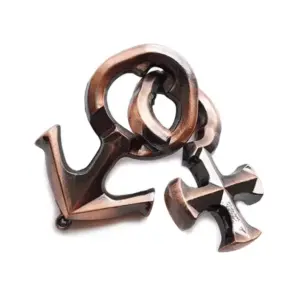
A brain-teaser set groups logic puzzles, metal disentanglements, or lock boxes that are solved once and then kept on the desk for repeat handling. These are “pick up, solve in one sitting, set it back down” gifts — the kind of object a sister might keep next to her laptop and fidget with between meetings. If she’s wavering between a transparent crystal-style lock and a traditional 3D wooden build, the crystal puzzle vs regular 3D puzzle comparison walks through the difference in mechanism visibility, material feel, and shelf display before you commit to either format.
The 12 Piece Crystal Luban Lock Set is the strongest match for a beginner who wants a multi-puzzle bundle in one box: twelve interlocking mechanisms that share a consistent style, so the learning curve carries from one lock to the next rather than resetting every time she opens a new box. Skip this format if she’s the type who wants a project to come back to over several days — brain-teasers are one-sitting wins, not multi-evening builds.
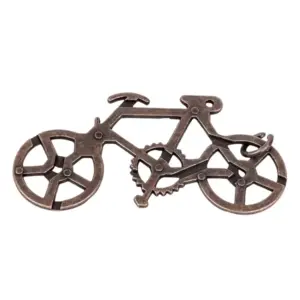
For a smaller, pocket-sized take on the same single-sitting format:
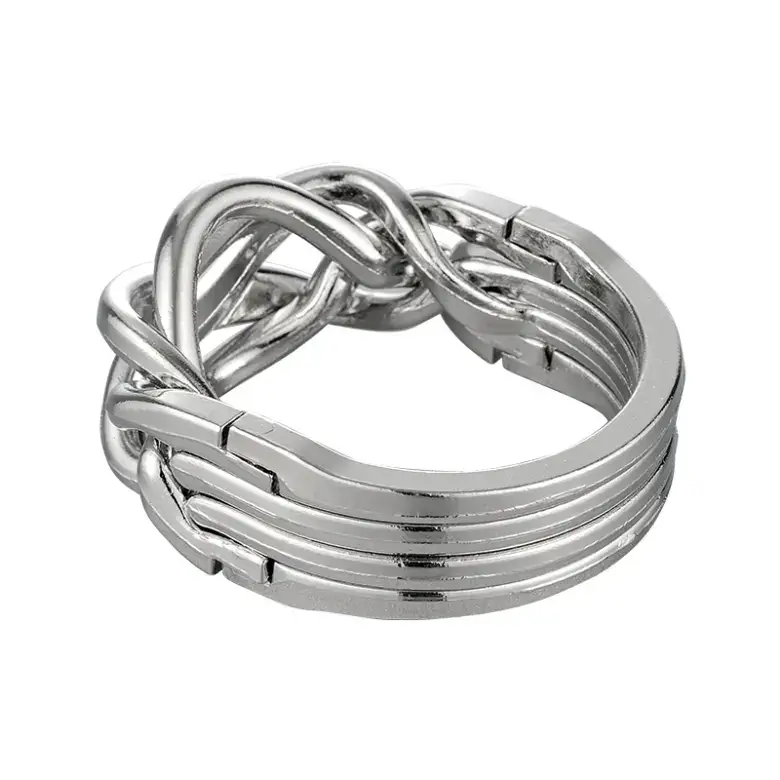
What to check on a brain-teaser set listing:
– How many puzzles are included in the bundle (one is a puzzle, six or twelve is a set)
– Whether each puzzle uses the same mechanism or a different one
– Approximate solve time per piece (beginners benefit from 10–30 minute solves)
– Whether the solved object has a display function or gets stored in a drawer
Side-by-side: how to read a listing at a glance
| Format | What it actually is | Sister personality match | What to check on the listing |
|---|---|---|---|
| Jigsaw set | Flat pieces that interlock into a single image; 100–500 pieces for a beginner | The screen-off, slow-evening hobby type who’ll leave a half-finished puzzle on the table | Piece count, finished dimensions, reference poster included |
| 3D wooden set | Pre-cut wooden pieces that assemble into a display model, no glue | The maker or decor type who wants a finished object to keep or show on a shelf | Finished model size, number of parts, whether moving parts are part of the build |
| Brain-teaser set | Logic, lock, or metal disentanglement puzzles solved once and kept for repeat handling | The “one-sitting challenge” type who likes a quick mental win between tasks | How many puzzles in the bundle, solve time per piece, display function after solving |
With the format pinned to her personality, the next decision is what turns a single puzzle into a “set” — and which accessories actually matter for a beginner.
03. What Makes a Puzzle a ‘Set’: Accessories That Earn the Name
With the format decided, the question shifts to what comes with the puzzle — and which accessories actually move a product from “a single box” to a “set.” A real beginner puzzle set bundles at least one working accessory: a roll-up mat, sorting trays, a reference poster, or a multi-puzzle bundle. The product itself is the starting point; the accessory is what makes the recipient feel like she unwrapped something considered rather than a standalone box she could have picked up at any shop.
Not every add-on earns its place for a first-time puzzler. Here’s how to sort the genuinely helpful from the decorative.
Matters for a beginner:
– Roll-up mat — lets her build a few pieces at a time and store the in-progress puzzle without losing her spot, which removes the single biggest friction point for casual solvers
– Sorting trays — give edges and color families a dedicated home so the table doesn’t disappear under loose pieces
– Reference poster — a full-size printed version of the image she can glance at while sorting, removing the need to crouch over the box lid
Nice but optional:
– Frame or display stand — useful only if she plans to hang or showcase the finished puzzle
– Puzzle keyring or shaped plaque — a sentimental add-on that works for siblings but doesn’t help the solve
– Magnifying glass — solves a problem most beginners don’t yet have
The pattern hobbyist puzzlers describe online reinforces this split. In a Reddit thread asking for gift ideas for a new puzzle hobbyist, experienced solvers repeatedly point to a puzzle board with drawers and a dedicated light source as the accessories that actually changed their experience — not novelty add-ons, but tools that solved real workflow problems. A listing that includes a similar functional accessory is doing more for a beginner than one that pads the box with a keychain and a sticker sheet.
A common worry deserves a direct answer: a 100-piece puzzle is not too easy for an adult sister, as long as the set includes something beyond the box itself. A multi-puzzle bundle — six small challenges in one package, for instance — gives a beginner variety without the intimidation of a single large image, and the “more than one puzzle” structure is itself the value-add. The 6-in-1 Wooden Brain Teaser Set illustrates this format: one purchase, several short solves, and a display object she can keep on a desk afterward.
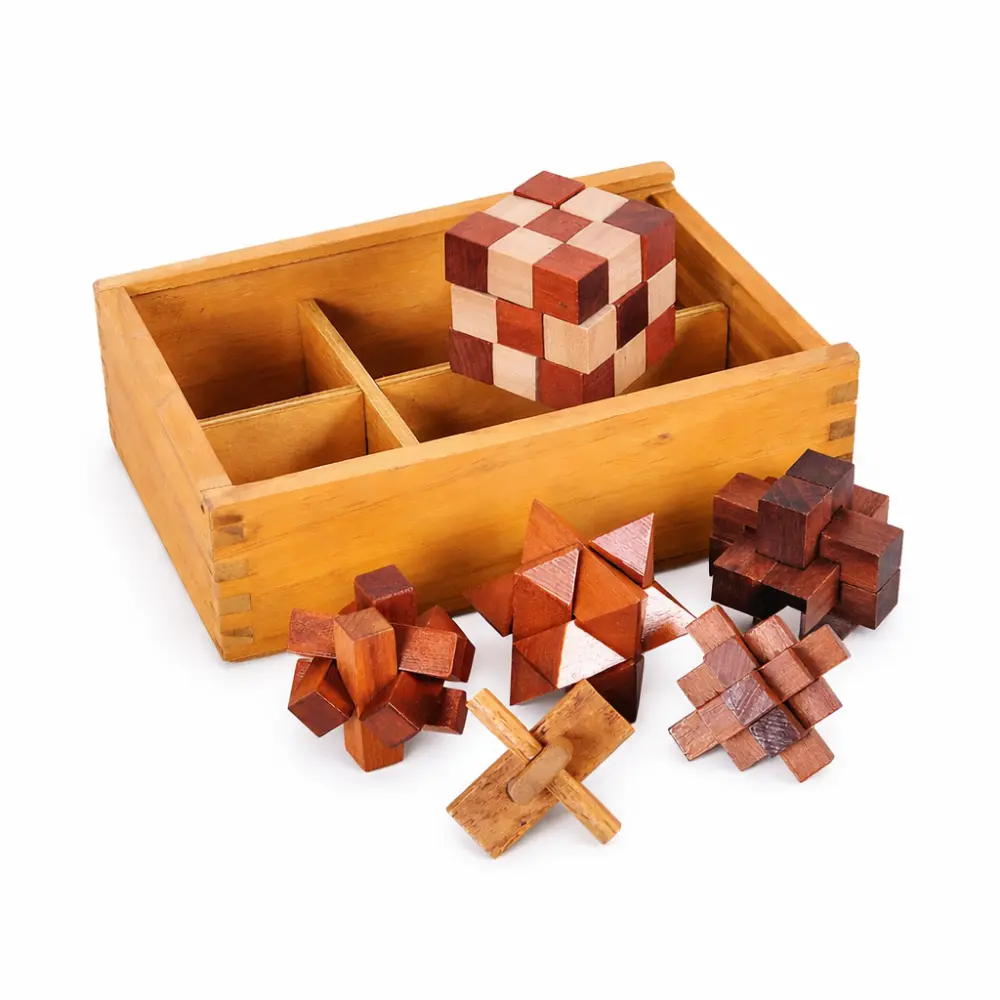
Whether the accessory is a roll-up mat, a set of sorting trays, or a second and third puzzle in the same box, the rule is the same: the included item should solve a real beginner friction point, not just decorate the packaging. The next step is learning how to read a listing closely enough to tell which sets actually deliver the accessories they advertise and which ones list them in name only.
04. How to Verify a Puzzle Set Listing Before You Order
Treat the listing as the contract — verify piece count, finished dimensions, included accessories, and (for personalized puzzles) print quality and piece thickness before you click buy. This is the step that separates a set she’ll actually use from one that looks generous in photos but arrives as a single flimsy box.
The first check is piece count. The number should appear in the product title or the first bullet, not buried in a specification table no one scrolls to. A listing that says “jigsaw set” without a piece count is asking the buyer to assume, and assumptions go wrong in both directions — an 81-piece beginner set and a 1000-piece challenge sit in completely different categories even if both are marketed as gifts for adults. Confirm the number matches the image complexity described in the listing copy, because a 500-piece puzzle with a near-monochrome gradient is a harder build than a 500-piece puzzle with clear, separated regions of high-contrast imagery.
The second check is the word “set” or “bundle” doing real work in the listing. Scan the bullet list for concrete accessory language: roll-up mat, sorting trays, reference poster, frame, spare pieces, or a second puzzle included in the same package. Vague phrases like “everything you need to get started” usually mean the box and a bag of pieces. If the listing names a mat, look for the mat’s dimensions; if it names trays, confirm the count.
The third check is the review section, specifically the one- and two-star reviews. Beginners report missing pieces, warped boards, and accessories that arrive cracked or in the wrong color. A listing with twenty glowing five-star reviews and a handful of complaints about missing puzzle pieces tells you the accessory quality is inconsistent.
For personalized photo puzzles, add a fourth check: scan for a real photograph of the finished build, not just a mockup. Confirm the print resolution, ask whether the pieces are thick enough to survive framing, and verify the seller shows the actual puzzle surface at close range — because the difference between a crisp photo reproduction and a pixelated one only becomes visible once the puzzle is complete and ready to display. Next: how to present the set so the unboxing itself feels like part of the gift.
05. Presentation and Personal Touches That Make the Gift Feel Considered
The unboxing is part of the gift — a ribbon, a handwritten card naming why you chose this set, or a printed reference photo turns a puzzle box into a keepsake. For a sister new to puzzling, the framing of “why I picked this one” often matters more than the box itself, and it costs almost nothing to get right.
Building on the listing checks from the previous section, here are concrete presentation moves that change how the set lands:
- Fold a short note explaining the piece count. Two sentences are enough: “I picked 300 pieces because it’s finishable in a weekend, and the high-contrast floral image means you won’t get stuck sorting blues for an hour.” This signals that you thought about her as a beginner, not just grabbed the first thing off a gift list — and it gives her permission to abandon a frustrating section without feeling like she’s failing.
- Add a small theme-extender. A puzzle-shaped bookmark, a sticker sheet, or a printed photo of the completed image tucked under the ribbon gives her something to look at before she opens the bag. These extras run a few dollars and show the gift was curated, not grabbed at the register. They also double as a reference if the original box art gets misplaced mid-build.
- Offer a “first piece together” moment. If you’ll see her in person — birthday, Christmas, a weekend visit — propose opening the box together and sorting edge pieces as your first shared activity. For a true beginner, having someone guide the first ten minutes removes the intimidation factor and turns the gift into a shared memory rather than a solo homework assignment.
- For personalized or handmade puzzles, build in lead time. Custom photo puzzles, convoluted puzzle designs, and NYT-style game kits are described in r/Gifts discussions as high-thoughtfulness sibling gifts precisely because they require planning ahead. Order two to three weeks early, confirm the print proof, and wrap the reference image separately so she sees the finished photo first.
Skip generic gift wrap. Brown kraft paper, a single washi-tape strip, and the handwritten note signal more care than a pre-printed bag — and they photograph better if she’s the type to post her unboxing on social media.
For a gift that comes with its own backstory, tuck a short reading companion into the box. A printout of the deep dive into the 12-piece crystal Luban lock set explains the engineering tradition behind each lock — useful context for the sister who wants to know why the mechanism moves the way it does, not just how to pop it open. It turns a single-sitting puzzle into a two-part gift: the solve and the story.
These touches work because they answer a beginner’s unspoken question: “Will I actually be able to finish this?” Next: the questions readers most often ask before they click buy.
Frequently Asked Questions
Before you click buy, these are the questions most gift shoppers ask about beginner puzzle sets — answered with the same piece-count and accessory rules from this guide.
What piece count works for a sister new to jigsaws?
Start at 100, cap at 500. Below 100 reads as a novelty item; above 500 trips up first-timers. Pair the count with a high-contrast image — a skyline, a floral, a bold animal — so she sorts edges and corners faster than any piece-count trick.
What is the difference between a jigsaw and a 3D wooden puzzle set?
A jigsaw set is a flat picture finished on a table in one sitting. A 3D wooden set is a buildable model — a pistol kit, a perpetual calendar, a carousel music box — she constructs from laser-cut pieces and keeps on display when complete.
Are brain-teaser sets appropriate for a beginner?
Yes, when the set spans difficulty levels. The 12 Piece Crystal Luban Lock Set and the 6-in-1 Wooden Brain Teaser Set both bundle multiple challenges, so she can start with the easier lock and work up. Single-sitting options like the 6 Piece Steel Ball Pyramid Puzzle also fit a beginner evening.
Is a 100-piece puzzle too easy for an adult sister?
No. A 100-piece puzzle with a memorable image — a pet, a favorite skyline, a shared photo — is a considered gift because it is finishable in one sitting. Completion, not difficulty, is the point of a beginner gift.
Can a personalized photo puzzle be a beginner puzzle?
Yes, but verify piece thickness, print quality, and whether the image will survive framing on the listing. Confirm the resolution in the proof before approving production, and order two to three weeks ahead so it arrives in time.
What puzzle accessories actually help a beginner?
A roll-up mat, sorting trays, a reference poster, and good light. A puzzle board with built-in drawers is the most-cited upgrade by hobbyists who already puzzle, according to recurring Reddit threads on beginner gifting.
How do I know if a puzzle set listing is good quality before I order?
Check three things on the product page: the exact piece count, the finished dimensions of the build, and whether the description names each included accessory by quantity. If any of those are missing, message the seller before paying.
What is the safest first pick if I am unsure which format she will like?
A brain-teaser bundle — the 12 Piece Crystal Luban Lock Set — covers more personalities than a single jigsaw, working as a one-evening challenge, a desk display, and a conversation piece. Confirm the piece count and included locks on the product page before checkout, and your sister has a beginner puzzle set ready to unwrap.
Where to Start
If the recipient and occasion checks above match, start with 12 Piece Crystal Luban Lock Set. Check the current product page for the specifications that matter to your choice.
Still comparing options? Use the matching Tea-Sip collection to compare the same decision criteria, rather than restarting the search from scratch.
Sources and verification
- Product details and current specifications: Tea-Sip product page
Last updated: August 18, 2026