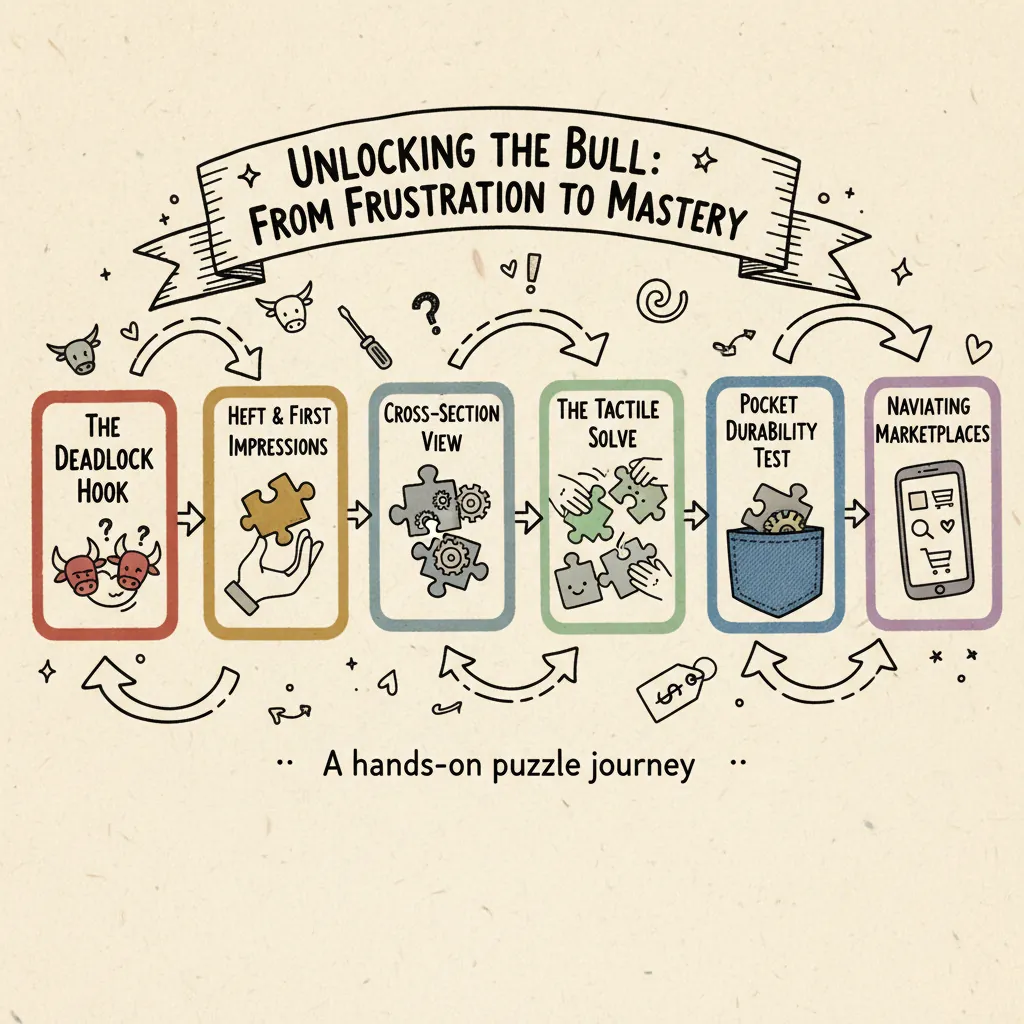
The Deadlock on My Desk: Where This Puzzle Hooks You
The two-piece bull head lock puzzle feels like a solid, 60-gram lump of brass impossibility in your hand. This is where most people give up. Your thumbs are pressing hard against the stylized horns, your index fingers straining on the muzzle. You pull. You twist with increasing desperation. The pieces only bite tighter, creating a frustrating deadlock that seems to mock your logic. That specific, wrong angle—where the horns are parallel and the bodies cross—is the puzzle’s first and most effective hook. It’s the thin line between elegant intrigue and utter defeat, a silent challenge cast in metal.
I first saw it in a fleeting TikTok scroll—a hand gracefully rotating two interlocked bull heads until they magically slipped apart. The algorithm served it up as a fad. But my eye, trained by years of collecting mechanical puzzles, saw something else: a clean, modern take on the ancient Luban lock principle. Within minutes, I was on Etsy, ordering not one, but three variants from different sellers to compare. What arrived was this compact, 2.5-inch enigma now frozen on my cluttered workshop desk.
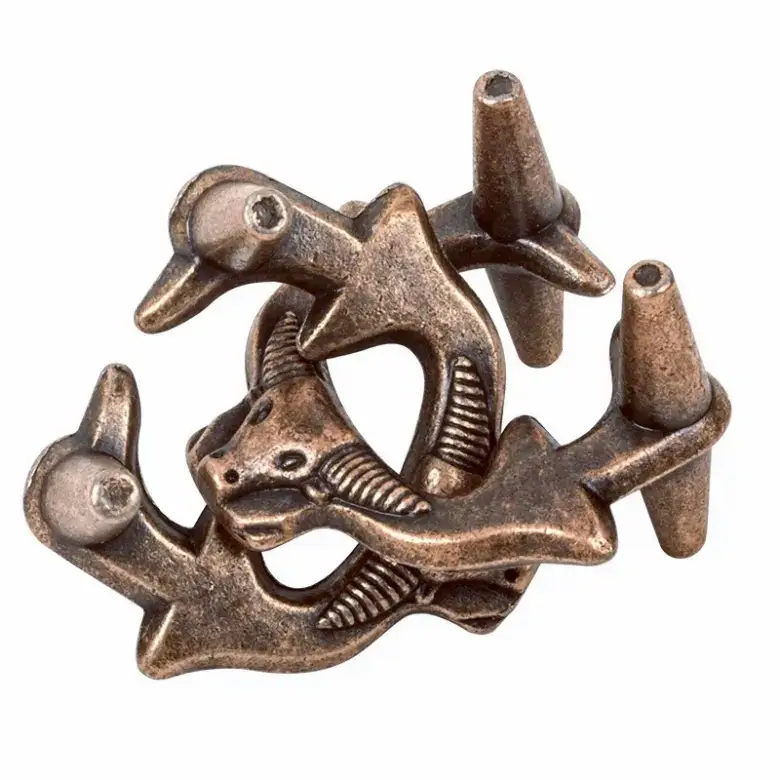
Its appeal is immediate. The weight promises substance. The cast metal finish, whether brass or zinc alloy, gives it the heft of a miniature sculpture. You recognize it as the intellectual bull head buckle from those videos, but off-screen, it becomes a deeply personal tactile object. The initial confusion is the point. Your brain knows these are just two pieces. Your fingers report an unbreakable weld. This dissonance sparks the mechanical curiosity that defines a good puzzle: How could two solid pieces possibly interlock like this?
That question is what separates this from a mere TikTok trend. It’s not a video you watch; it’s a physical problem you hold. The solve isn’t in a combination or a hidden button. It’s in understanding a single, clever axis of rotation hidden in plain sight. Before we get to that click of release, you have to appreciate the hook of its stubborn silence on your desk. It’s a silent teacher, and the first lesson is always: stop forcing it.
Unboxing the Bull: Weight, Heft, and First Impressions
That initial mechanical curiosity starts in the hand. The two-piece metal bull puzzle arrives in a simple padded envelope or bubble wrap—no ornate box, no instructions. This is an object, not a product. Mine, a brass version, hit my palm with a solid clunk. Its weight is the first data point: roughly 50 grams (1.8 oz), with dimensions just under 3 inches (7.5 cm) long. This heft is crucial—it feels like a substantial artifact, not a disposable trinket. It immediately answers a primary user question: this is not flimsy, cheap pot metal. The density of the cast metal is palpable.
The finish tells a story of process. Zinc alloy versions have a cooler, grey-silver matte feel, often with a slight grain from the casting mold. The brass variant in my hand has a warmer, deeper luster, with machining marks visible as fine, concentric circles inside the curves of the horns—the telltale sign of a lathe. These aren’t flaws; they’re a record of manufacture. Run your thumb over the surface. It’s smooth but not polished to a mirror shine. This is a working finish, meant to develop a patina from handling, not sit behind glass.
Your eyes immediately go to the seam. The two pieces—the bull’s head and the locking horn segment—mate together with a visible line. But here’s the first intrigue: you cannot see how they connect. The seam is clean, with no obvious gaps or protrusions. It creates the illusion of a single, solid sculpture. This is where you perform the initial, futile test everyone does: you pull. Straight out, along the axis of the bull’s snout. Nothing. Not a millimeter of give. You try twisting randomly. The pieces bind, offering only a disconcerting, gritty resistance if forced. This is your introduction to the puzzle’s machining tolerances. The fit is precise enough to feel seamless, yet it must contain a hidden channel for movement.
Holding it under a lamp, you inspect the quality. A cheap copy would have flashing—thin, sharp edges of excess metal from a sloppy mold. A good one, like this, has crisp, defined edges. The bull’s features are clear. You notice the “locked” state has the secondary piece sitting flush, its horns wrapping around the main head’s horns in a way that seems geometrically impossible to separate. It feels like a Luban lock in its purest, most minimal form: just two elements in a state of perfect equilibrium.
This physical inspection directly addresses the “TikTok vs. reality” question. The object in your hand has more presence than any video can convey. The cool metal warms slowly to your touch. The weight makes it a satisfying desk presence. Before you even attempt the solve, it passes the initial quality check. It feels like a tool for a specific, intellectual task. As noted in guides on durable cast metal brain teasers, this first impression of substance is what separates a lasting puzzle from a gimmick. It tells you that the solution will be found in geometry and finesse, not in brittle plastic or forced violence. The stage is set. The puzzle is silent, heavy, and apparently impossible. Now the real exploration begins.
Anatomy of a Deadlock: A Cross-Section View of the Mechanism
The puzzle won’t come apart because your hands are lying to you. The core principle is that the two zinc alloy or brass pieces are not designed to be pulled apart on a linear axis; they must rotate around a hidden axis of rotation you cannot see. This is a fundamental rule for solving many two-piece interlock puzzles, where the obvious path is a dead end.
So you have this solid, cast metal bull in your hand, the secondary piece locked seamlessly against the main head. It feels like it should just slide apart, but every tug meets with absolute, jarring resistance. The frustration point is precise: you’re holding the bull by its main head and the locked piece, trying to pull them directly away from each other along the line of the horns. This is the wrong grammar. To understand why, we need to look inside.
Imagine a simple cross-section. I’ve sketched it on my whiteboard a hundred times. The main bull head has a central cavity—a negative space shaped roughly like a rounded ‘U’. The locking piece, which forms the bull’s muzzle and lower horns, has two protruding prongs (the horns) and a central stem. When locked, these prongs sit inside that ‘U’-shaped cavity in the head. The trick is their orientation. The cavity isn’t a straight tunnel; it’s a curved channel. The prongs are not parallel to the direction you want to pull; they are canted, angled inward.
This creates a rotational lock. The prongs are trapped in the cavity until you align them with the one exit path. That path isn’t forward or backward; it’s rotational. You must pivot the locking piece relative to the main head. The point where the pieces touch and pivot is that hidden axis of rotation. Finding it is the entire puzzle.
This is why it’s classified as a Luban lock variant. Traditional Luban locks are intricate wooden interlocking structures that rely on precise angles and gravity, not keys, and are part of the wider family of burr puzzles. This bull head puzzle distills that principle to its absolute minimum: two pieces, one precise move. It differs profoundly from multi-piece burr puzzles, which involve complex sequences of sliding and disentangling multiple components. This is a binary state: locked, or unlocked. The transition between them is a single, elegant rotation.
Why can’t you feel this axis? Because the machining tolerances are incredibly tight. A well-made puzzle has almost zero slop. The pieces fit together so perfectly that they feel like a single, fused object. There’s no wiggle to hint at the solution. This is the puzzle’s genius and its primary source of frustration. Your brain screams “pull,” but the geometry demands “twist.” As explored in the guide on the mechanical grammar of brain teasers, this conflict between intuition and physical law is the heart of a good metal puzzle.
Let’s apply this to the bull. Visualize the two sets of horns. In the locked state, they are interwoven, one set curving around the other. They are not overlapping in a flat plane; they are occupying different heights in a three-dimensional space. The “cage” formed by the main head’s horns blocks the path of the secondary horns… until you rotate. The solution involves tilting the locking piece downward (or upward, depending on your perspective), bringing its horns out of the plane of obstruction and into the clear channel of the cavity.
Turn. Don’t pull.
That’s the mantra. The pressure you feel isn’t a sign of force being needed; it’s a sign of incorrect alignment. When you finally find the correct rotational alignment—often by relaxing your grip and experimenting with subtle tilting motions rather than forceful tugs—the pieces will disengage with a smooth, almost silent satisfying release. The horns will clear each other not with a click, but with a soft, metallic whisper. That moment is the ‘Aha!’ insight, the transition from confusion to mechanical clarity.
Compared to a common Hanayama puzzle like the Cast Padlock, the mechanical principle is actually quite similar (both involve finding a hidden rotational axis), but the bull head is far more minimalist. The Padlock has more moving parts and red herrings. The bull head’s two-piece design makes its core concept purer, even if the initial solve time can be comparable. It’s a more focused lesson in rotational thinking.
Understanding this internal geometry transforms the object. It’s no longer a frustrating trinket. It becomes a lesson in spatial reasoning, a physical demonstration of how simple angles can create profound constraints. This knowledge is what you carry forward, making the next puzzle, and the next deadlock, a little less intimidating.
The Solve: A Tactile Walkthrough (Not Just a Visual Guide)
Solving the bull head lock puzzle isn’t about seeing the solution—it’s about feeling the single correct axis of rotation. Unlike a Hanayama Cast Padlock with multiple false paths, your success here hinges on recognizing one specific tactile cue: a minuscule, 3-5 degree rotational “give” when you stop pulling and start twisting. This is the puzzle’s only moving part.
Now, let’s translate the cross-section diagram into your hands. Forget the bull’s face, the horns, the decorative details. In your palms, you have two interlocked geometric blocks. Your goal is to find the hidden pivot.
First, diagnose the deadlock. Hold the assembled puzzle in one hand, with the bull’s face looking at you. Grip each piece firmly near its base, not the horns. Apply gentle, opposing pulling force. Feel that solid, unyielding resistance? That’s the false path. The puzzle is telling you, “No linear motion will work here.” Remember this feeling—it’s your baseline for failure. Release the tension.
The key is to stop pulling. Completely. Relax your grip so the pieces can settle into their natural locked position. Now, with your thumbs on the bull’s “forehead” and your fingers behind, apply a gentle twisting force. Not a yank. Think of trying to turn a stubborn, threaded cap on a glass bottle. You’re exploring for rotational play.
Explore the rotational plane. You’re feeling for a specific alignment. Slowly rotate one piece relative to the other, maintaining light inward pressure. You will feel hard stops—these are the horns and cavities blocking each other. Cycle through a full 360 degrees if you must. You are searching for the one orientation where the geometry of the internal channels and horns aligns to create a potential exit path. It is not a random position; it is a precise, machined alignment.
When you find it, you will feel a subtle shift. A tiny “click” of movement, not of release, but of alignment. This is the axis of rotation engaging. The pieces will now have a small, distinct amount of angular play—maybe a few millimeters of arc—that was not there before. This is your green light.
Now, execute the move. With your thumbs, apply steady, smooth rotational force along that newly found axis. Do not pull the pieces apart. You are not separating them linearly; you are unscrewing them along a helical path dictated by the interlocking channels. Imagine turning a key. The motion should feel deliberate and mechanical. If you meet sudden, hard resistance, you’ve lost the alignment. Go back to the start, relax your grip, and search for that tiny rotational give again.
The moment of release. When you rotate far enough—typically between 90 and 180 degrees—the locking geometry will be completely disengaged. The satisfying release happens not with a dramatic snap, but with a quiet, metallic disengagement. The pieces will simply come apart in your hands with no remaining force. There is no spring, no catch. It is the pure, silent consequence of correct geometry. This is the soft metallic whisper of the horns clearing each other.
To reassemble, reverse the process. It is often harder than taking it apart, as you must manually align the internal channels to the same helical path. Interlock the pieces in the orientation they came apart. Apply light pressure to keep them engaged, then reverse the rotational move you used to separate them. Feel for the same smooth, twisting motion until the pieces seat fully home with a final, soft turn. A definitive click usually signals it’s locked. If it feels loose or jiggles, you’re 180 degrees out of phase; rotate one piece halfway around and try again.
Common pitfalls to feel for:
* Forcing the pull: This is the number one mistake. The puzzle will fight you until you exhaust yourself.
* Ignoring the “give”: That tiny rotational play is your only clue. If you’re not feeling for it, you’re solving blind.
* Gripping the horns: This torques the pieces and binds the mechanism. Hold the solid body.
This bull head puzzle toy tutorial is about trust. Trust the metal. Trust the machining tolerances. And most of all, trust that the solution is a feeling in your fingertips, not a secret you need to see. Once you’ve solved it this way—by feel alone—the object transforms from a confusing trinket into a precise mechanical device you understand in your hands, perfect for a puzzle lock fidget toy session at your desk. The memory of that specific rotational alignment becomes muscle memory, making subsequent solves a matter of seconds, and the reassembly a satisfying test of your new spatial intuition. This approach is at the core of any good metal puzzle guide.
Fidget or Folly? The One-Week Pocket Durability Test
So you’ve mastered the mechanism. The satisfying release is now a simple twist of your wrist. This is where a new question emerges from the workshop clutter: Is this a museum piece, or can it live in your pocket? To answer that, I subjected my brass bull to a one-week pocket and keychain trial. The verdict? It’s a surprisingly robust fidget companion, gaining character through use, but with caveats. After seven days of constant carry, the 40-gram puzzle developed a subtle, even patina and its mechanism became noticeably smoother, though my keys left their signature scratches.
The transition from solved puzzle to pocket candidate requires a mindset shift. On the desk, it’s a discrete problem. In your pocket, it becomes a tactile object in a harsh environment. I clipped it to my key ring, letting it jostle against house keys, a car fob, and a pocket knife. The first 24 hours were the most telling.
Day 1-2: The Breaking-In. The initial clink-clank was jarring. Every movement produced a symphony of metal-on-metal contact. I was certain the polished horns would be gouged. Inspecting it after the first day, I found the first evidence: fine, hairline scratches on the bull’s cheeks and forehead from incidental contact. No deep gashes. More importantly, the puzzle lock fidget toy potential immediately surfaced. During idle moments—waiting for coffee, on a call—my fingers would find it. The act of solving and reassembling became subconscious, a kinetic meditation. The mechanism, which started with a precise but slightly gritty feel, began to wear in. The rotational movement lost its microscopic hesitation.
Day 3-5: Patina and Performance. By the mid-point, the brass started to darken in the recesses and around the horn details, where oils from my skin accumulated. The high points, constantly abraded by my keys and pocket lining, stayed brighter. This contrast gave the bull a “lived-in” look I found more appealing than the sterile, shiny original. Crucially, the locking mechanism itself benefited from this gentle abrasion. The mating surfaces inside the interlock polished themselves against each other through dozens of daily solves. The satisfying release became even more so—a slick, whisper-quiet disengage. I conducted a deliberate “shake test” each evening: a vigorous jangling of the entire key ring. The bull never once accidentally disengaged. The machining tolerances, once aligned, create a stable lock that vibration alone can’t defeat.
Day 6-7: The Fidget Factor Assessment. The final days confirmed its role. I stopped seeing it as a puzzle and started seeing it as an actuator. Its size and weight are perfect for one-handed manipulation. You can solve it by feel alone while it’s still clipped to your belt loop, a definitive point over bulkier cast metal brain teasers. However, this is not a silent fidget. The metallic click on reassembly is audible in a quiet room. If you need stealth, this isn’t your tool.
The Wear Report Card:
* Finish: Expect a personalized patina and fine scratches. This isn’t a flaw; it’s a record of use. A zinc alloy version would likely show more obvious silver-colored scratches instead of a warm brass burnish.
* Mechanism: Improves with moderate use. The action gets smoother, not looser. No perceived slop or degradation in the lock’s security.
* Structural Integrity: Zero issues. No bending, warping, or weakening. The cast metal construction, while not jewelry-grade, is plenty tough for EDC (everyday carry).
* Accidental Opening: Never observed. The solution path is deliberate enough to prevent random unlocks.
So, fidget or folly? It’s a legitimate, high-satisfaction fidget toy for those who appreciate mechanical feedback. The folly would be buying it as a pristine showpiece and then being afraid to touch it. Its value accrues through handling. As a keychain, it’s durable and functional, though it will aesthetically age alongside your keys. If you’re the type who polishes their gear weekly, keep it on the desk. If you like objects that tell a story, clip it on and let the story begin. For more on how puzzles handle this kind of daily wear, check out our veteran’s guide to cast logic.
Hanayama Cast Padlock vs. The Bull: A Solve-Feel Comparison
Coming off the pocket test, you’ve felt the bull head’s durability as an object. But how does it stack up as a puzzle? For many, the benchmark is Hanayama, the Toyota of cast metal puzzles. Against their popular Cast Padlock (Level 4/6 difficulty), the bull head is decisively simpler—a gateway puzzle. A first-timer might solve the bull in 2-3 minutes of focused experimentation, while the Cast Padlock can legitimately stump someone for 20-30 minutes or more. The difference isn’t just time; it’s conceptual complexity.
The bull head is a pure, elegant two-piece interlock. Its challenge is spatial: finding the single axis of rotation where the horns clear. Once you see it, the solve is a single, smooth motion. The Hanayama Cast Padlock, while also a disassembly puzzle, involves three distinct pieces that interact through a sequence of slides and rotations. You’re not just finding one position; you’re managing a cascade of precise alignments. The bull head teaches you to think in terms of rotation and clearance. The Cast Padlock adds the dimension of sequential, interdependent movement.
Tactile satisfaction differs, too. The bull’s satisfying release is a quiet, whispering disengage—a subtle snick of metal on metal as the horns part. The Cast Padlock’s solve is more of a staged reveal. A piece slides, another rotates, and finally, the shackle lifts free with a definitive click. It’s a multi-act play versus the bull head’s one-act ballet. For fidget factor, the bull wins. Its simple, repeatable solve makes it a better kinetic companion. The Padlock’s longer solve path makes it less of a casual spinner and more of a dedicated session puzzle.
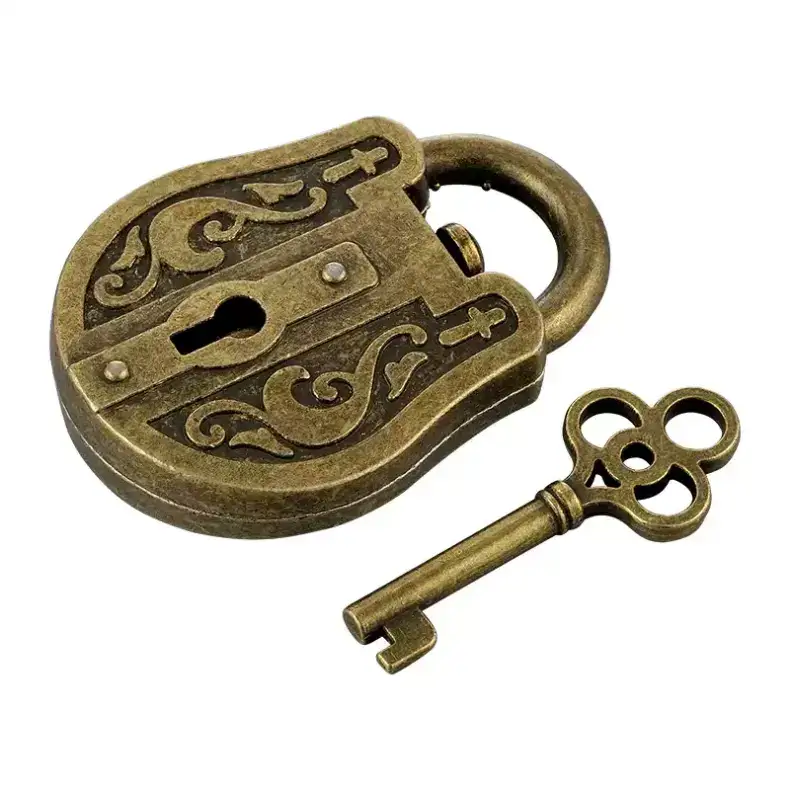
Divine Power Puzzle Lock — $12.98
So, who’s each for? If the bull head puzzle difficulty question brought you here, the answer is clear. The bull is the perfect first metal puzzle. It’s approachable, its solution is logical and physically intuitive, and that quick win builds confidence to tackle more complex interlocking problems. It answers the “how could this work?” question beautifully. The Hanayama Cast Padlock is for the next step. You’ve grasped the concept of hidden paths; now you’re ready for layered sequences and false exits. (For a deeper dive into Hanayama’s range, I’ve broken down their tiers in my Hanayama puzzle buy guide).
This isn’t to dismiss the bull head as “easy.” Its elegance is in its simplicity. In my collection, it sits not as a challenge to be conquered, but as a specimen of clean machining tolerances and intelligent design. It’s the puzzle I hand to curious friends who’ve only seen these things on TikTok. The Cast Padlock is the one I give to the friend who solves the bull in 30 seconds and asks, “What else you got?”
In the end, the Hanayama vs bull head lock debate isn’t about superiority. It’s about purpose. The bull head is a magnificent entry point and a satisfying desk toy. The Hanayama Cast Padlock is a more traditional, graded puzzle challenge. One opens the door. The other invites you deeper into the maze. For the hobbyist, there’s room—and need—for both on the shelf.
For the Curious, The Collector, and The Gift-Giver
This bull head lock puzzle is a specific tool for a specific job. It’s best suited for the tactilely curious adult—the person who fidgets with a pen cap during a call or appreciates the heft of a well-machined object. Based on my week of testing and observations from puzzle communities, its sweet spot is the first-time metal puzzle solver or the collector seeking elegant, functional artifacts rather than brutally difficult challenges.
For the puzzle-curious, it’s a flawless desk toy. At 40-60 grams, it has a satisfying presence. The fidget factor is high; once you internalize the axis of rotation, solving and reassembling becomes a subconscious, calming ritual. It’s a gateway. It teaches the core language of two-piece interlock puzzles without the vocabulary test. If the Hanayama Cast Padlock is a novel, this is a perfectly crafted haiku.
For the collector, its value lies in its form and execution as a modern Luban lock variant. It’s a study in minimalist, clever geometry. While it won’t stump a veteran for hours, it earns its place on the shelf as an example of how a simple concept, executed with decent machining tolerances, creates endless tactile satisfaction. It’s a piece you hand to a guest with a smile, knowing they’ll experience that satisfying release within minutes.
Gift scenarios are clear. It’s an ideal small gift for a mechanically-inclined friend, a coworker who needs a screen break, or a partner who enjoys hands-on hobbies. Pair it with a note that says “Turn. Don’t pull.” It is explicitly not for young children (small parts) or anyone seeking a long-term, grueling cerebral trial. Its difficulty is a feature, not a bug—it’s designed to be solvable, to provide a quick win.
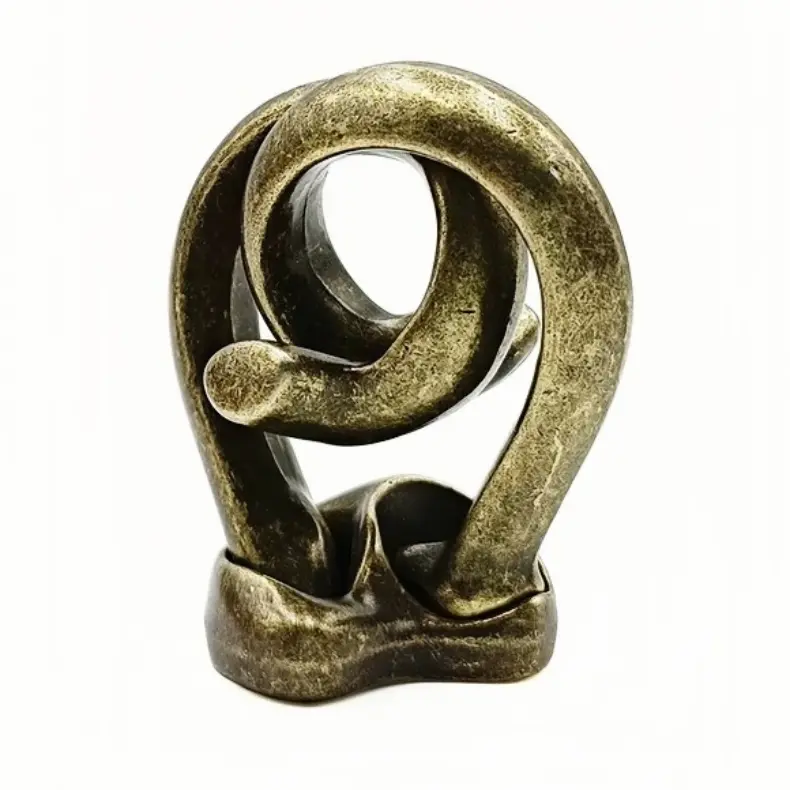
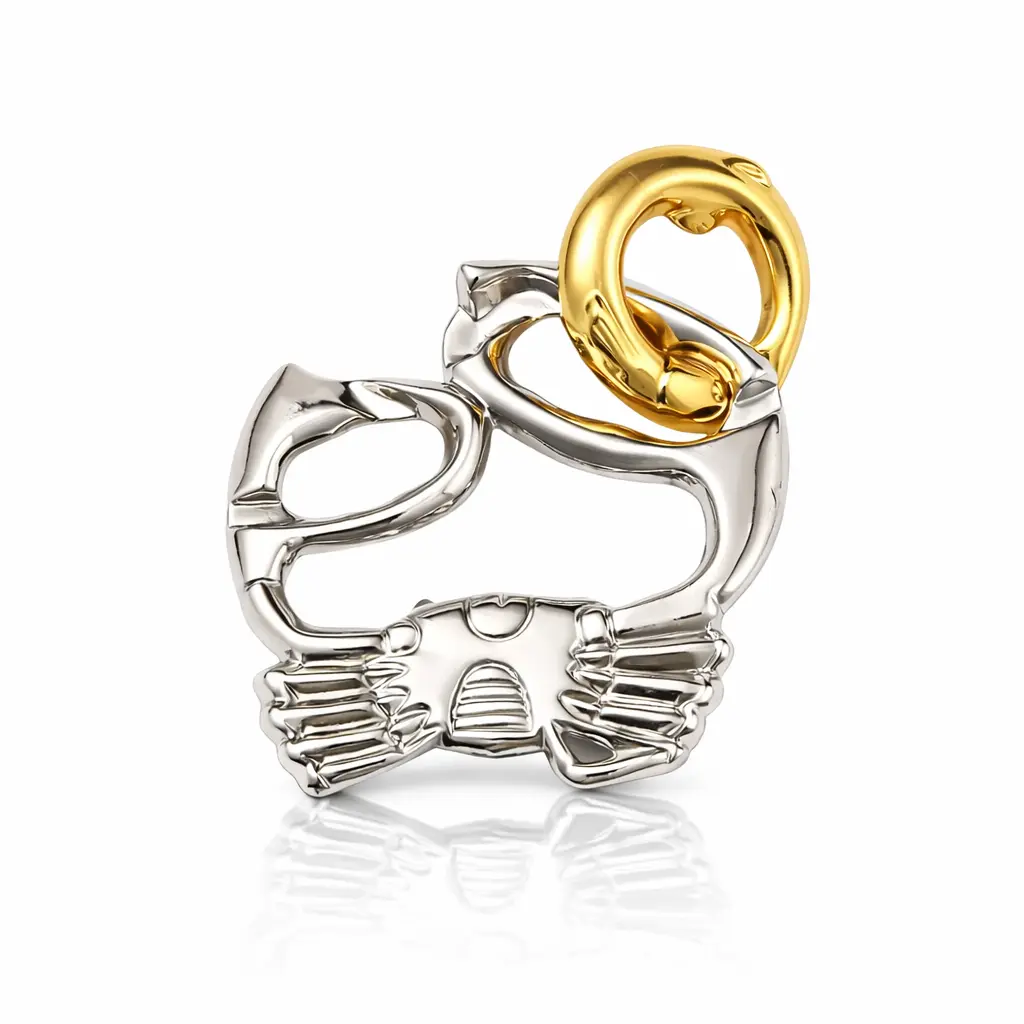
Magic Golden Mandarin Lock — $18.98
Which brings us to the inevitable question: is this just a TikTok fad? The viral clip is a spark. The physical object is the ember that remains. The appeal on video is the quick, magical separation. The lasting appeal in your hand is the subtle click, the warm patina from daily handling, the geometry you now understand intimately. Fads are ephemeral; a well-designed cast metal mechanism is not. It transcends the algorithm.
So where do you find an authentic version? Skip the generic marketplaces where photos are stolen and metal is suspect. Seek out dedicated puzzle sellers on Etsy or specialty shops. Read reviews mentioning “smooth action” and “good weight.” Expect to pay $15-$25 for a properly machined piece, not a brittle casting. It’s the difference between a tool and a trinket. For those bitten by the bug, this puzzle serves as a perfect introduction to a wider world of mechanical intrigue, like the ones explored in our guide to The Best Metal Puzzles For Adults.
In your pocket or on your desk, the bull head lock is a quiet reminder. A reminder that solutions often lie in a simple turn, not a forceful pull. And that’s a satisfying thought to hold.
Navigating the Marketplace: Etsy, AliExpress, and Authenticity
Your search for a bull head lock leads to a fragmented digital bazaar, where price and promise vary wildly. For a genuine, well-machined puzzle you won’t regret, your best bet is a curated Etsy shop from a puzzle or metalwork specialist, where prices typically range from $15 to $25. Generic marketplaces like AliExpress list it for as low as $10, but consistency, material integrity, and seller support are significant gambles.
That last note on your desk—the decision to possess one—now requires navigating a marketplace where the same CAD file is rendered in brass, zinc alloy, or dubious pot metal. The difference is in the hand, the solve, and the longevity. Let’s talk sourcing.
Etsy: The Curated Workshop. This is where I bought my three variants. You’re often buying directly from a small-scale seller, sometimes a machinist or puzzle enthusiast themselves. The listings tend to be more honest. They’ll specify “brass” or “zinc alloy,” and reviews frequently mention the “satisfying release” and “good weight.” You pay a premium, usually $18-$25, for that transparency and for better customer service if something arrives flawed. Search for “bull head luban lock” or “intellectual bull head buckle” and scrutinize the reviews for mentions of machining tolerances and “smooth action.” This is the platform for the collector who values the object as much as the solve.
AliExpress & Generic Marketplaces: The Volume Play. Here, you’ll find the lowest prices, often between $8-$14. The risk is inversely proportional. Listings use the same stock photos, making material quality a mystery. You might get a decent copy, or you might get a poorly cast piece with rough internal channels that grind instead of glide. Descriptions are vague, calling it a “metal puzzle toy” without specifics. If you go this route, manage expectations. It may be a fun, disposable fidget, not a lasting desk toy. Shipping times are long, and returns are often impractical. It’s a budget option for the purely curious.
How to Spot a Scam or Low-Quality Listing.
Look beyond the first image.
* Vague Materials: “Metal” is a red flag. “Zinc alloy” is acceptable; “brass” or “aluminum” are better specifics.
* Missing Dimensions: No listing should omit the size (~2-3 inches long). If it does, assume it’s tiny or not to scale.
* Review Imagery: The most telling reviews include customer photos. Look for shots of the actual finish in someone’s hand. Text reviews that say “rough edges” or “stuck immediately” are clear warnings.
* Overblown Hype: Beware descriptions littered with “amazing brain teaser” and “perfect gift for all ages.” Serious sellers describe the object, not just the hype.
The Authenticity Question. There’s no single “authentic” brand, but there is an authentic experience. It’s defined by precise casting, clean internal geometry, and a smooth axis of rotation. Whether you buy from a hobbyist on Etsy or roll the dice on a marketplace, you’re seeking that specific tactile feedback. The puzzle that appears in the viral TikTok videos is almost always a decent-quality version—the solve looks magical because the parts move as designed.
Your actionable next step is this: set a budget for your curiosity. If it’s under $15, browse AliExpress but accept the variability. If you want the puzzle as a lasting object—a fidget factor companion or a display piece—invest in an Etsy seller with detailed photos and material specs. Read the reviews for the words we’ve used here: “tolerances,” “smooth,” “solid.” For more on the specifics of this puzzle, you can explore our dedicated Two Bull Head Lock Puzzle guide.
Then order it, and prepare for that first, frustrating, wonderful deadlock. Your fingers are about to learn a new language. As a category of mechanical puzzles, its enduring appeal lies in that very moment of tactile, intellectual discovery.