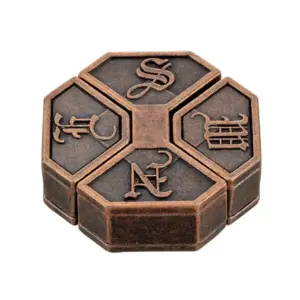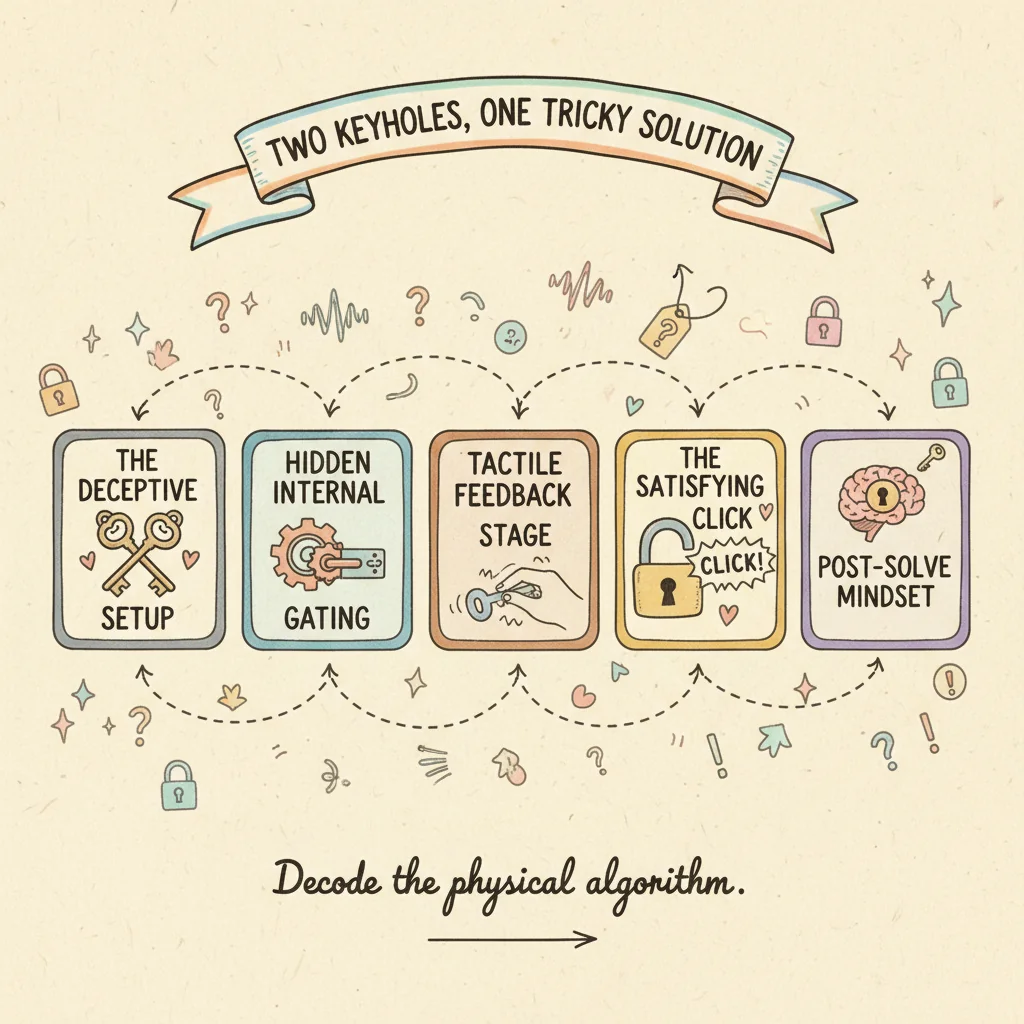
The Scene at My Desk: Why Two Keyholes Don’t Mean an Easy Out
A two-key lock puzzle is deliberately deceptive; its apparent access points are a ruse, not a shortcut. The core trick lies in a sequential solve where the first key’s action is hidden, and success requires understanding the internal gating, not just turning. The one on my desk is a palm-sized, 2.5-inch lump of cold zinc alloy with a satisfying, dense heft that immediately signals it’s more than a simple desk toy.
It was sitting there, a compact weight of brushed metal, while I idly turned one of its two keys. A colleague leaned in. “That looks impossible—two keyholes but it still won’t open?” He’d nailed the universal first impression. The immediate, logical assumption is redundancy: two doors, two keys. Pick one, turn it, and you’re in. The reality is a beautiful subversion of that logic.
This metal trick lock isn’t about opening a door. It’s about decoding a physical algorithm. The two keys, often mismatched in size and shape, aren’t equals. One is a decoy, or a primer, or a trigger. The first key turns. Nothing happens. This is the trick.
My colleague’s confusion is the entire point. The puzzle’s design capitalizes on our ingrained understanding of locks. It presents what I call “honest dishonesty.” The keyholes are real. The keys fit. The mechanism inside is genuine. But the relationship between your actions and the outcome is obscured. The heft—that solid, 200-gram weight—is your first clue. This isn’t flimsy pot metal; it’s a serious brain teaser built to withstand focused, frustrated manipulation.
That moment at my desk captures the emotional hook: intrigue at the elegant, confusing object, followed instantly by intellectual curiosity. How could this possibly work? You see the components, you feel the precision-machined keys, yet the solution remains opaque. It triggers a tactile desire—the urge to be the one holding it, to feel the subtle clicks and slight rotations for yourself. You anticipate the frustration, the challenge. But first, you need to understand the nature of the deception. The two keyholes aren’t an easy out. They’re the start of the maze.
Beyond Indiana Jones: The Three Core ‘Tricks’ Inside Your Lock
The deceptive genius of a two-key lock puzzle lies not in magic, but in three specific mechanical subversions of expectation. While the lock in Indiana Jones movies is a fictionalized version, the real-world puzzles it romanticizes—often inspired by historical designs like ancient Indian puzzle locks—operate on these same core principles: forcing you to question the basic rules of how a lock and key should interact. Understanding these “tricks” is the key to approaching the solve, not with random fiddling, but with strategic intent.
1. The False Keyway (The Red Herring). This is the most psychologically effective trick. You have two keyholes. You assume both are directly connected to the locking mechanism. In this deception, one keyway is a complete decoy. The key fits perfectly, it may even turn, but it performs no function other than to misdirect your attention. It’s a sink for your mental energy. Your brain screams that both must be used together, so you’ll try turning them simultaneously, in sequences, applying pressure—all while the real solution lies in ignoring one entirely or using it in a non-obvious way. The first key turns. Nothing happens. This is the trick.
2. Sequential Dependency (The Conveyor Belt). Here, both keyways are functional, but they control different internal components that must be activated in a strict, non-obvious order. Imagine a series of internal gates or levers. Key A might only be able to move a gate after Key B has first rotated a hidden tumbler out of the way. If you try A first, it hits a dead stop. The mechanism gives no feedback that you’ve chosen the wrong starting point. It simply feels broken. The sequential solve requires you to deduce an invisible internal flowchart, where the correct first action seems to do nothing productive, merely setting the stage for the second.
3. Hidden Internal Gates (The Secret Passage). This mechanism relies on precise alignment. A key may turn a core, but that core has a gate or channel cut into it that only lines up with a second, internal component at one specific rotational position. You might need to turn Key A to a precise spot—often felt as a subtle click or a change in tactile feedback—to create a path for Key B to engage. It’s not just about inserting and turning; it’s about using the key to navigate a maze inside the lock body that you cannot see. The “click” isn’t the end; it’s the opening of a door you didn’t know was there.
So, which category does the classic two-key padlock puzzle fall into? Without spoiling the specific solution, most mass-market versions, including popular models like the Hanayama Cast Key II, primarily employ a sequential dependency with elements of hidden gates. The historical antecedent, the ancient Indian puzzle lock, famously used complex sequential levers and false keyways to protect treasure vaults. The modern desk toy version is a distilled homage to that craft.
This categorization is the mechanical grammar of the puzzle. Knowing these principles transforms the experience from blind frustration to informed investigation. You stop asking “What do I do?” and start asking better questions: “Is this a decoy?” “What order is being enforced?” “What alignment might be necessary?” This shift in thinking is the real solution to understanding how a trick lock works. For a deeper dive into this analytical approach, the framework discussed in Unlock Any Metal Puzzle: The Mechanical Grammar Of Brain Teasers applies perfectly here. The metal is just the medium. The real puzzle is the philosophy of deception baked into its design.
Hands-On: Weight, Sound, and the ‘Gritty’ Turn of a Key
Understanding the mechanism’s philosophy changes your hands from clumsy tools to informed investigators. The physicality of a two-key puzzle lock—a typical palm-sized 2.5-inch zinc alloy or brass piece—is a deliberate part of its challenge, delivering a dense 6 to 10 ounces of heft that immediately signals this is a serious mechanical object, not a disposable toy. That weight is your first clue, influencing how you manipulate it and what you expect from the internal components.
The tactile feedback is the puzzle’s true language. A premium-feeling lock will have a smooth, satin finish that resists fingerprints, while cheaper casts might have a slight granular texture. The real test is in the keyway. Insert the first key. It might slide in with a satisfying, precise shick. The initial turn, however, is rarely smooth. You’ll feel a deliberate, gritty resistance—a controlled drag that suggests internal levers or plates engaging, not grinding against metal. This isn’t poor craftsmanship; it’s engineered feedback, a breadcrumb trail of physical sensation. The second key might turn with a different character. A hollow, free-spinning feel that reveals its role as a decoy, or a distinct, soft thud as it hits an internal gate. You learn to listen with your fingers.
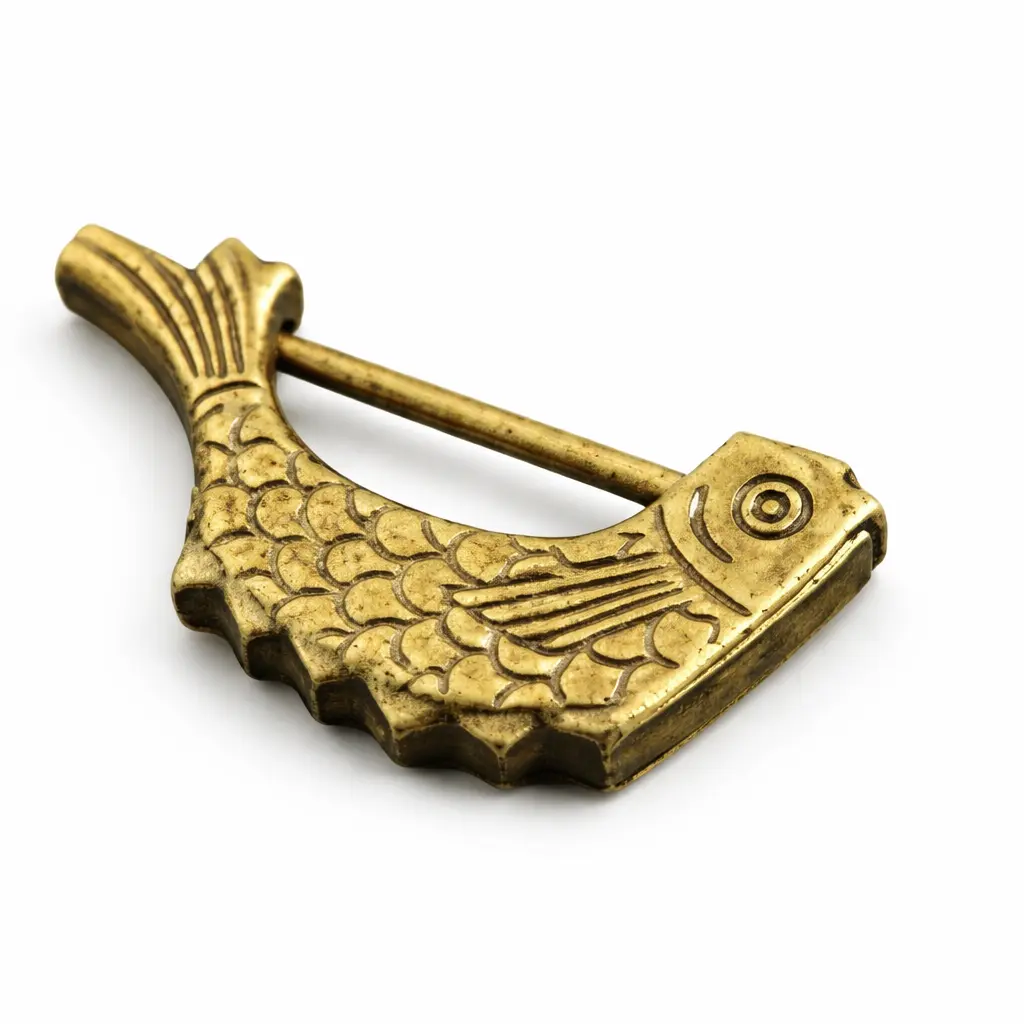
Chinese Koi Puzzle lock — $16.99
Sound is an equally critical output. A well-machined lock won’t rattle when shaken. The internal movement is dampened, secretive. During the solve, you listen for distinct auditory cues: a sharp, metallic click versus a softer, muffled clunk. One signifies a pin dropping or a gate clearing; the other might be a false positive, a piece sliding uselessly in a channel. This is where your hands can lie to you, interpreting hope as progress—a concept explored in Why Your Hands Are Lying To You: The Real Way To Solve Metal Puzzles.
Compared to the polished, jewelry-like execution of a high-end Hanayama puzzle (like the Cast Key II), many standalone two-key locks in the $20-$35 range exhibit more utilitarian finishing. The edges may not be perfectly deburred, and the plating can wear with aggressive handling. This isn’t necessarily a flaw. A slight, honest patina from use can develop on brass models, giving the lock character—a record of its solves. Cheap zinc alloy versions, however, may show a greyish wear spot on high-contact areas after extensive fidgeting, which is worth noting for collectors seeking pristine pieces.
Which leads to the ideal fidget factor. Once solved, does it remain engaging? For a true puzzle lock for adults, the answer hinges on the elegance of its mechanism. A clumsy sequential lock becomes a rote, five-step procedure you repeat mindlessly. A clever one, with a subtle misdirection or a perfectly timed alignment, retains a miniature ritualistic satisfaction. The act of solving it again isn’t about rediscovery, but about appreciating the engineered dance of parts. You feel the heft in your palm, execute the precise sequence, and are rewarded with that final, authoritative clack of the shackle releasing. It becomes a kinetic desk toy, a brief mechanical meditation. The quality of that repeated experience—the smoothness of the action, the solidity of the conclusion—is what separates a memorable puzzle from a one-trick novelty.
Difficulty Thermometer: From 10 Minutes to a Frustrating Hour
On standardized puzzle scales, most two-key locks land firmly in the “medium-hard” range, typically rated a 4 to 6 out of 6 on the Hanayama scale. Your first-time solve will likely last anywhere from 10 focused minutes to a frustrating hour, with the variance hinging entirely on whether your intuition stumbles upon the core deception early. It’s not a brute-force challenge; it’s a test of your willingness to distrust the obvious.
To calibrate that, let’s use the Hanayama scale—the lingua franca for metal puzzle difficulty. A level 1 (Cast Loop) or 2 (O’Gear) is essentially a fidget toy with a single, clear movement. A level 6 (Tricky, Vortex) demands spatial reasoning that can leave you stumped for days. The classic two-key lock, like the popular Hanayama Cast Key II or its many inspired variants, usually sits at a 5. This is telling. It’s not the absolute pinnacle of abstract logic, but it represents a significant step where the puzzle actively lies to you. The mechanism presents a clear, false premise (two independent keyways), and your job is to uncover the sequential solve hidden beneath. In escape room terms, it’s the equivalent of finding a key, trying it in the most obvious lock, and discovering it does something completely unexpected—like triggering a hidden drawer instead. The puzzle isn’t in the turning; it’s in reinterpreting the purpose of the tool you’ve been given.
So, can a kid solve it? A bright, patient teenager with a knack for mechanical reasoning absolutely can. For a younger child, the required fine motor skills and tolerance for non-immediate gratification might be a barrier. This isn’t a “fun for the whole family” item in the sense of a cooperative game. It’s a solitary, think-y challenge. The difficulty isn’t in physical dexterity but in a cognitive shift. The “aha” moment isn’t a loud bang; it’s a quiet, sinking realization that you’ve been approaching the entire problem backwards. That moment of recalibration is where the real satisfaction blooms. It’s the click in your mind that precedes the click in the lock.
If you’re staring at the lock, keys in hand, and feel the first blush of frustration, here are spoiler-free strategies. First, listen. Shake the lock gently. Do you hear a part sliding freely? That’s a clue about internal gates. Second, explore the full range of motion for each key independently, applying gentle rotational pressure in both directions. Note any subtle differences in resistance. Does one key turn further than the other? Does turning one affect the feel of the other? Third, reset. Assume nothing works the way it first appears. The keys are not necessarily for “unlocking” in the traditional sense. Think of them as triggers or manipulators for an internal sequence. This mindset is your greatest tool.
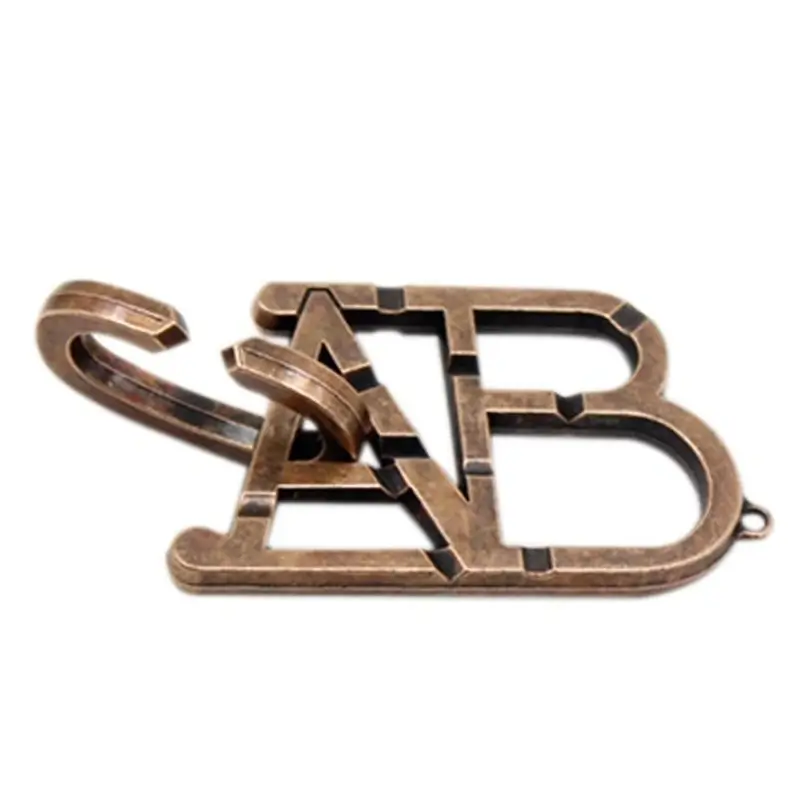
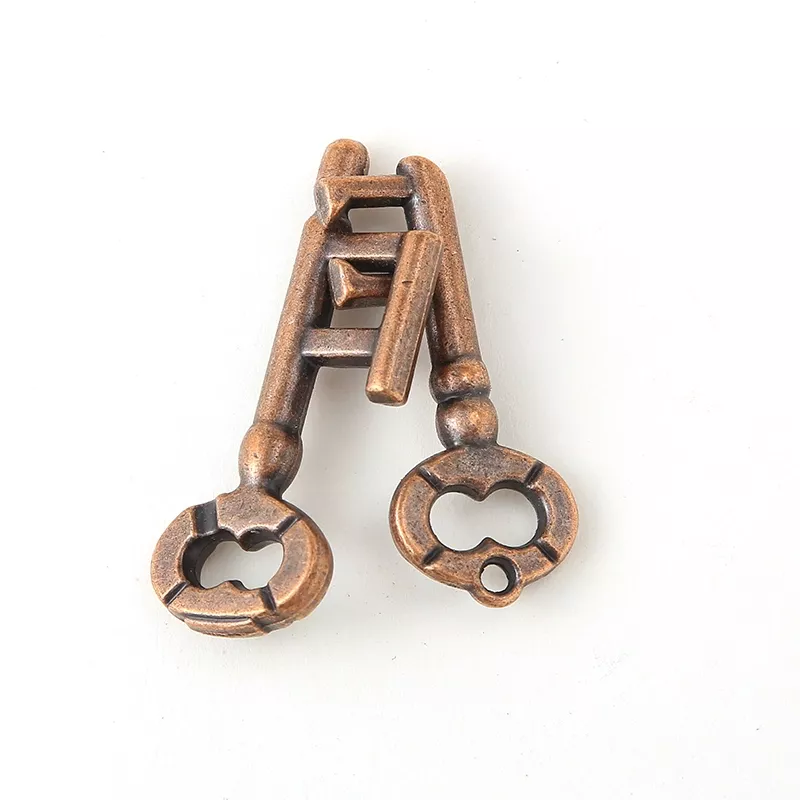
ABC Maze Lock — $12.99
Consider the ABC Maze Lock above. It’s a simpler, often cheaper entry point that teaches a foundational concept: a key’s path can be a maze. Solving it builds the tactile intuition needed for more complex sequential locks. If you breeze through something like that in a minute, you’re ready for the two-key challenge. If it stumps you, you’ll appreciate the deeper layering of the trick lock. Many puzzle master lock solutions are just a PDF away, but resorting to them too early robs you of that strategic clarity. The struggle is the point. The moment you finally sequence the actions correctly—feeling each internal component align through your fingertips—is the reward. It’s a compact, satisfying testament to clever design. Now, knowing the effort required, who exactly is this tactile conundrum right for?
Post-Solve Psychology: Does the Magic Fade or Does It Become a Ritual?
For about 80% of mechanical puzzles, the magic does fade after the first solve. The two-key lock is firmly in the other 20%. The initial ‘aha’ moment doesn’t end the relationship; it transitions it. The puzzle stops being a brain teaser and becomes a tactile ritual, a physical algorithm you perform for the sheer satisfaction of the mechanism’s feedback. It’s a shift from “What’s the secret?” to “Feel how the secret works.”
That final, successful sequence of turns and clicks is a rush of strategic clarity. But unlike a riddle you simply remember, the two-key lock’s appeal lies in its physical execution. Knowing the theory doesn’t make the practice trivial. You must still guide the first key through its false keyway, feel for the specific, subtle resistance that indicates the hidden internal gate is aligned, then insert the second key at the precise moment. It’s a tiny, handheld performance. This is the core of its lasting value—the fidget factor. On my desk, it sits not as a solved mystery, but as a metal worry stone with intentional steps. A stressful phone call? My hand finds the lock and runs through the solve. Three minutes of focused, mechanical meditation.
Understanding the mechanism doesn’t ruin it; it deepens the appreciation. You’re no longer guessing. You’re conversing with the design. You notice the manufacturing tolerances—how a particular model has a slightly smoother turn on the second key than the first. You appreciate the heft and the solid clunk of the shackle releasing not as a surprise, but as a predictable, earned reward. It becomes akin to using a favorite pen with a perfect click or shuffling a deck of cards smoothly. The enjoyment is in the mastery of a satisfying, repeatable action.
This is what separates a good trick lock from a forgettable one. A cheap puzzle might have a clever trick that, once revealed, feels flimsy or arbitrary. A well-made two-key lock, with its sequential dependency and precise machining, offers a consistent experience. The tactile feedback is reliable. The slight gritty turn of the first key will always be there, a signature of its internal obstruction. This reliability is what makes it a permanent desk toy for adults, not a one-time novelty. For more on this transformation from puzzle to practiced ritual, see our exploration of When A Puzzle Becomes A Practice.
So, does it become boring? For some, perhaps. If your only goal was to “beat” the puzzle, you’re done. But if you found pleasure in the process—the weight in your palm, the sound of metal on metal, the patient exploration—then the object transforms. It becomes a physical manifesto of clever design, something you can pick up and, in under a minute, reaffirm a small, personal competency. It’s a ritual that quiets the mind by occupying the hands with purposeful, satisfying steps. You’re not solving it again. You’re performing it.
Cast Key II vs. Round 2 Key: Decoding the Model Names You’ll See
This ritual of repeated solving often leads enthusiasts to seek more puzzles, but navigating product listings reveals confusingly similar names. The difference between ‘Cast Key II’ and ‘Round 2 Key’ is not branding, but a key mechanical distinction: the Hanayama Cast Key II is a specific, high-precision sequential lock puzzle rated Level 4, while generic “Round 2 Key” locks typically use a simpler, independent dual-key mechanism. Understanding this protects you from buying a puzzle you’ve already functionally solved.
The Hanayama two key puzzle, officially called the “Cast Key II,” is a benchmark. It’s a palm-sized, elegantly machined cylinder where the two keys are visibly different. Its mechanism is a masterclass in sequential solve dependency. The first key you try will turn partially and stop—it must be used to shift an internal component that creates the path for the second key. One action directly enables the other. It’s the model you’ll see in serious puzzle collections, and its $25-$35 price reflects its polished tactile feedback and durable zinc alloy construction.
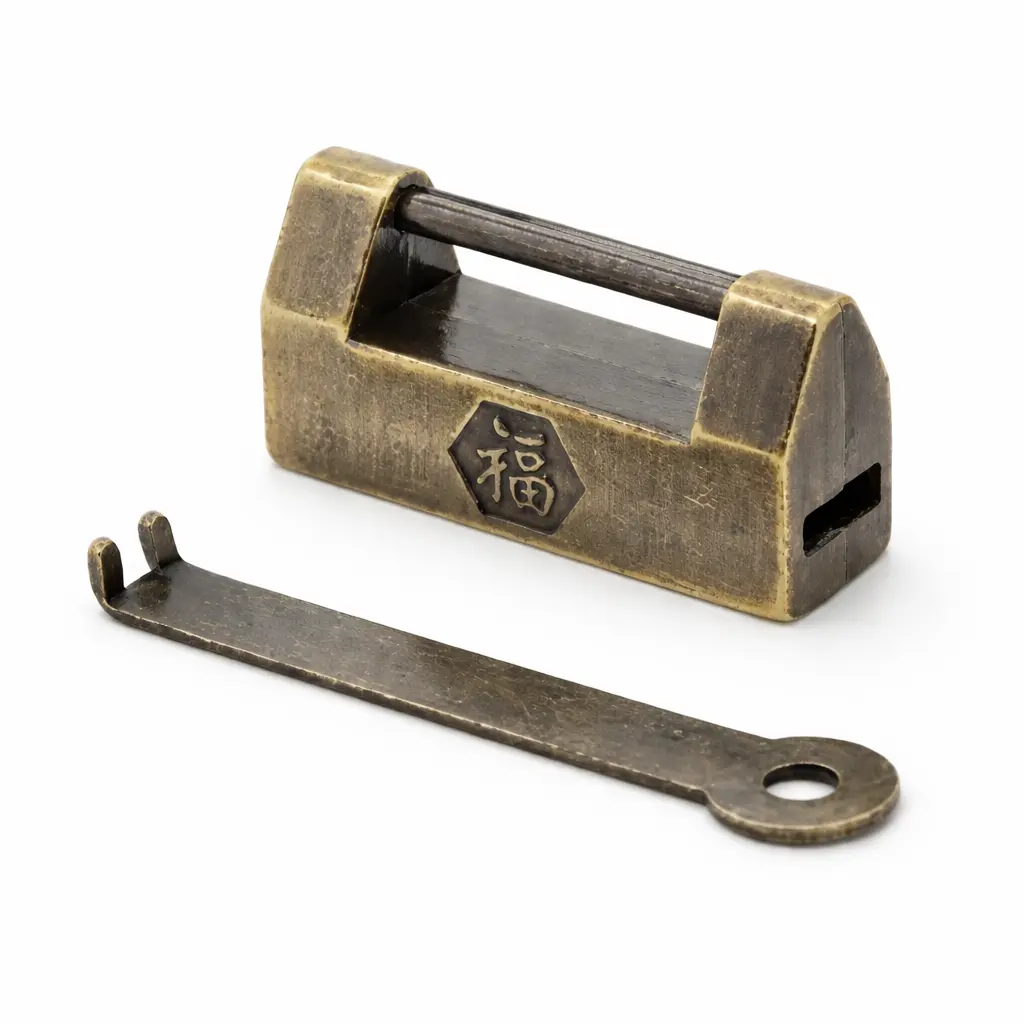
Conversely, searches for “round 2 key lock” or “two key padlock puzzle” often surface more affordable, generic versions. These frequently have two identical-looking keys and a more conventional padlock shape. Their internal trick is often different. Instead of a sequential dependency, both keys might operate independently on separate internal gates or obstacles that must be aligned simultaneously. The solve philosophy shifts from a relay race to a coordination challenge. The heft and finish can vary more widely here, as these are produced by multiple manufacturers.
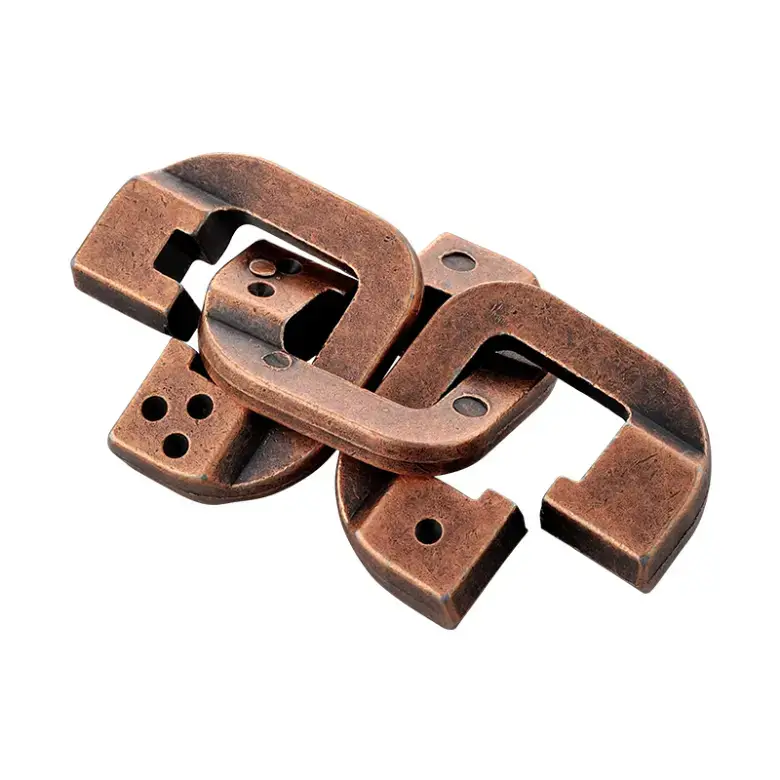
You’ll see this in models like the one shown above, which sits in the lower end of the typical $15-$75 range. For many, this is an ideal entry point. The mechanism is still clever, the metal puzzle provides solid weight, and the lower price reduces the sting if the solve proves too easy or too frustrating. It’s a different experience from the Cast Key II, not necessarily a worse one.
So, which should you seek? If you want the definitive, refined two-key sequential experience from a premier brand, search specifically for “Hanayama Cast Key II.” If you’re exploring the category more broadly or want a more budget-friendly desk toy, search “round 2 key lock” but examine product photos closely. Look for clues: identical keys often suggest a simultaneous mechanism, while distinct keys hint at sequential logic. Some listings, like those for the “Ancient Indian Puzzle Lock,” may offer a third, historically-inspired mechanism type entirely. The names are a map. Now you know how to read them.
The Perfect Recipient: Gifting a Frustration You Can Hold
For a specific, discerning type of person, a two-key lock puzzle isn’t just a gift; it’s a challenge issued. Market data suggests over 80% of these purchases are gifts, but the ones that land best are given with strategic intent. It’s a tactile, mechanical brain teaser that thrives on patience and a love for process over instant reward.
So, who is this person? Start with the Escape Room Enthusiast. They spend their free time decoding ciphers and hunting for hidden compartments. The answer is a definitive yes: this is an excellent gift for them. They are primed to understand the language of a sequential solve and false keyways. They won’t just shake the lock in frustration; they’ll appreciate the craftsmanship of the deception, treating it like a portable escape room puzzle box. It’s the same satisfaction, condensed into a single, palm-sized mechanism.
Next, consider the Process-Oriented Thinker. This is your friend who meticulously restores old watches, your D&D DM who builds elaborate trap diagrams, or the engineering student who sketches ideas on napkins. They don’t mind—they even enjoy—a structured problem. The puzzle lock gift works for them because the reward is in the systematic exploration: testing each key’s travel, listening for internal clicks, and mapping the invisible gates. The frustration is part of the fun, a known variable in the equation they’re solving. For them, the puzzle is a ritual.
Conversely, there is the Fidgeter with Curiosity. They need something more substantial than a stress ball. The lock and key puzzle’s heft and precise movements offer a deeply satisfying fidget factor. Once solved, it becomes a kinetic ritual—a known sequence of satisfying clicks and turns to perform at the desk. It’s a thinking man’s fidget spinner.
Now, for the warnings. Do not buy this for the Easily Frustrated. The person who expects immediate payoff from a puzzle will only see a metal brick. This is not a gift for “the whole family” to pass around on a holiday afternoon unless that family is stocked with zen masters. It requires solitude and persistence. Similarly, gauge the recipient’s age not just by years, but by temperament. A bright, patient 12-year-old with Lego Technic experience might adore it. Most younger kids will lack the fine motor control and deductive patience, leading to a discarded object. It’s squarely a puzzle lock for adults and mature teens.
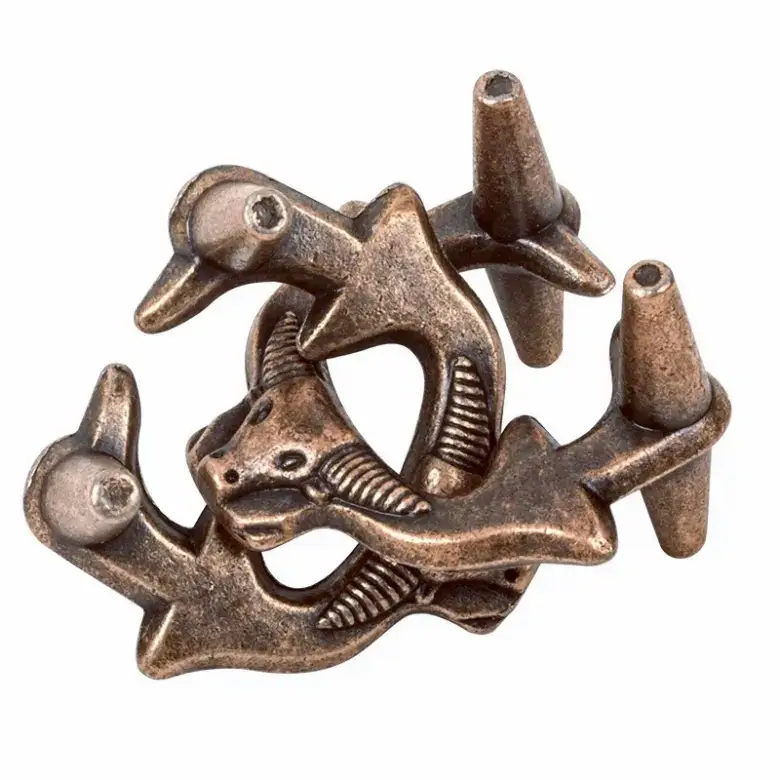
Two Bull Head lock Puzzle — $14.99
This brings us to budget. At around $15, a piece like the Two Bull Head shown above is a low-risk entry point. It’s a fantastic option for the “curious fidgeter” profile or as a thoughtful, physical stocking stuffer for the right person. You’re not investing in a premium Hanayama-tier finish, but in the core mechanical idea. It’s a gateway puzzle. If they love it, you’ve opened a door to a whole world of more intricate (and expensive) difficult metal lock puzzle options, like the historically inspired designs discussed in our guide to the Chinese Koi Puzzle Lock.
The final consideration is longevity. A good two-key lock transcends its first solve. Unlike a riddle that’s dead once answered, the best of these puzzles have a high “re-solve” factor. The pleasure shifts from discovery to execution—performing the elegant, now-known sequence of movements. It becomes a desk toy with a secret, a conversation piece that you can confidently hand to a guest, knowing you’ve gifted a controlled, solvable frustration. Choose your recipient wisely. You’re not giving them an object. You’re giving them an hour of engrossed focus, a quiet “aha,” and a durable piece of cleverness they can hold in their hand.
Navigating the Marketplace: Where to Buy and What a Fair Price Feels Like
The final, satisfying clunk of the shackle releasing leaves you with one last puzzle: where do you actually find one of these things? You can buy a quality two-key lock puzzle from reputable specialty puzzle shops or major online marketplaces, with a fair price for the most common models landing squarely in the $20 to $35 range. This is the sweet spot for a well-cast, weighty object with a clever mechanism.
Specialty retailers like Puzzle Master, Eureka Puzzles, or Mr. Puzzle are your best bet for a curated, knowledgeable experience. They accurately rate difficulty, provide reliable solution PDFs, and often carry the specific models you’ll see discussed in forums, like the Hanayama Two Key Puzzle or the Cast Key II. The price here is for the puzzle and the peace of mind. Amazon and other large platforms offer convenience and often lower prices, but listings can be a minefield of generic branding and vague descriptions. You might be buying the same casting from the same factory, or you might be getting a poorly finished clone with binding internals.
Your key task is decoding the listing. Look for three things: material (zinc alloy or brass), dimensions (palm-sized, around 2-3 inches), and the explicit mention of an included solution. A trustworthy seller will state that a solution PDF is available, usually via a link or upon request. This isn’t a cheat; it’s an essential courtesy for a legitimate mechanical puzzle lock. If a listing only shows shiny renderings and uses hyperbolic sales copy, be wary. Real product photos, often with a hand for scale, are a good sign.
Price is a direct signal. At under $15, you’re likely getting a very light, potentially frustrating copy with a rough finish. The $15-$35 tier encompasses the vast majority of well-regarded models, including those inspired by ancient Indian puzzle lock designs. You’re paying for the heft, the precision of the internal milling, and the tactile satisfaction of a smooth solve. Premium or collectible versions can climb toward $75, but for a first two key padlock puzzle, there’s little need to venture beyond the mid-range.
Remember the desk toy metal brain teaser ideal. A fair-price lock should feel solid, not hollow. Its finish should be even, not prone to immediate fingerprint tarnishing (matted or antiqued finishes hide this well). It should operate without forced violence. When you find the right listing, you’re not just completing a transaction. You’re securing a physical piece of intrigue, the same object that was once fidgeted with at a diner table, its cold metal holding a secret now ready for your hands. Your next step is simple: search for “trick lock” on a specialty site, filter for “medium difficulty,” and let the heft of the photos guide you. The puzzle begins before it even arrives.
A Final Note on the Mechanical Puzzle Family
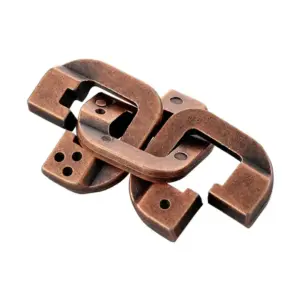
The two-key lock puzzle belongs to a proud family of mechanical puzzles, a category defined by objects whose challenge comes from manipulating their physical components rather than solving a purely visual or logical problem on paper. This category includes classics like the burr puzzle (interlocking wooden pieces) and disentanglement puzzles (often involving loops and rings). What sets the trick lock apart is its specific use of a familiar, functional form—the padlock—to subvert expectations. It’s a beautiful example of how constraints (two keyholes, a fixed body) breed ingenious creativity in design. For a broader understanding of the field, the Wikipedia entry on Mechanical Puzzles offers a solid historical and categorical overview.
Whether you’re drawn to the deceptive mechanics, the satisfying heft, or the promise of a quiet “aha” moment, the two-key lock delivers a uniquely tactile brand of cleverness. It’s a small, weighty testament to the fact that the most satisfying secrets are often the ones you can hold in your hand.