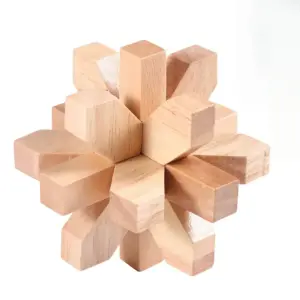
Quick Answer: Buy Luban Lock Set 9 Piece Puzzle at a Glance
The Tea-Sip Luban Lock Set 9 Piece is priced at $39.99 (S21, S24) for genuine beech construction with mortise-and-tenon joinery held by geometry alone — no nails, no glue, no metal hardware. A 9-piece set on eBay also lists at $39.99 (S13). Premium rosewood gift sets can climb higher, and some sub-$15 “Luban” sets may be plastic (P:12-piece-crystal-luban-lock-set:category) or made from lighter, less durable woods.
| Option | Best For | Price | Skip If |
|---|---|---|---|
| Tea-Sip Luban Lock Set 9 Piece | First-time buyers and gift-givers wanting a comprehensive 9-piece set with verified beech and consistent mortise-and-tenon tolerances | $39.99 (check product page for current price) | You want a single hard puzzle, a smaller starter set, or a very large collection |
| 12 Piece Crystal Luban Lock Set | Those wanting increased piece count and a translucent aesthetic | $28.88 | You prefer solid wood construction |
| Sub-$15 plastic or basswood “Luban lock” | Avoid — often plastic or lower quality wood, may have inconsistent tolerances | Under $15 | You plan to solve complex puzzles, or care about wood-on-wood friction |
| Six-Piece Burr | Beginners and those seeking a smaller commitment to burr puzzles | $17.99 | You want a larger, more complex set with varied difficulty |
Read top to bottom: row 1 is the safest click, row 3 is the trap most marketplace shoppers fall into on the way to row 1.
What Solving a 9-Piece Luban Lock Set Actually Feels Like
Several minutes into one of the more challenging puzzles in a standard 9-piece beech set, the solution can seem elusive. The wood can feel warm from handling, and the last piece may refuse to budge. Rotating it, tilting the assembly, and re-evaluating the geometry can eventually lead to the piece sliding free with a dry wooden whisper. This moment — the confusion, the repeated false moves, the click when the geometry finally aligns — is what a 9-piece set is engineered to deliver, nine separate times.
Each puzzle in the box is roughly 4.5 cm per side (S16), about golf-ball-sized, and held together by mortise and tenon joinery with no nails, no glue — just wood-on-wood friction and precise tolerances. But only if you buy the right set, and only if you understand that what you’re really buying is nine lessons in ancient Chinese joinery, with varying degrees of challenge.
A quick frame, because every marketplace listing mangles this: the puzzle is called a Luban lock after Lu Ban, the legendary figure of ancient Chinese carpentry. The same product lineage is also marketed as the “Kongming Lock” — a name that traces to the strategist Zhuge Liang — and searchers use both labels interchangeably, so don’t let the two names confuse you at checkout. If you want the deeper backstory on the carpenter, the strategist, and the 2500-year history of the Luban lock puzzle as a Chinese puzzle toy, that’s worth an afternoon read on its own.
Here’s what can happen when you sit down with a genuine 9-piece set. The initial puzzles can be solved relatively quickly, introducing the disassembly sequence: identifying a “key” piece, understanding how pieces release, and experiencing the tactile language of wood-on-wood friction. Subsequent puzzles may introduce internal sliding bars and offset notches, leading to false moves where a piece binds, signaling an incorrect path. A tight beech set with clean joinery tolerances provides honest feedback.
For the more complex puzzles, the 3D brain teaser aspect becomes more prominent. Solvers may need to rotate the entire assembly in space, looking for hidden mechanisms and tracking internal faces. This is where the spatial reasoning demands increase. The most challenging puzzles can require significant time and patience. This progression in difficulty, from simpler to more complex, forms the curriculum the set offers.
The wood species matters more than most buyers realize. A genuine beech set has a tight, pale grain and a faintly sweet smell when you hold the pieces — close your eyes and rub two pieces together and you’ll hear a clean, high-pitched whisper, not a muffled scrape. Rosewood versions feel denser, heavier in the hand, with darker streaks and a more muted acoustic profile. Tapping the pieces together can reveal quality; cheap knockoffs — sometimes rubberwood stained to look like walnut, or plastic — may produce a dull, dead sound due to sloppy mortise and tenon tolerances. Geometry doesn’t lie. A 0.5 mm gap in a notch is the difference between a satisfying release and a puzzle that just won’t come apart.
This is why the 9-piece set offers a comprehensive experience. It’s a graduated mechanical puzzle course, self-paced, with the wood itself as the instructor. If that sounds like the kind of silent, screen-free focus you’re after, the Luban Lock Set 9 Piece is a strong recommendation. The next section breaks down what’s actually inside the box, piece by piece, so you know exactly what you’re buying before you click.
What’s in the Box: The 9 Puzzles
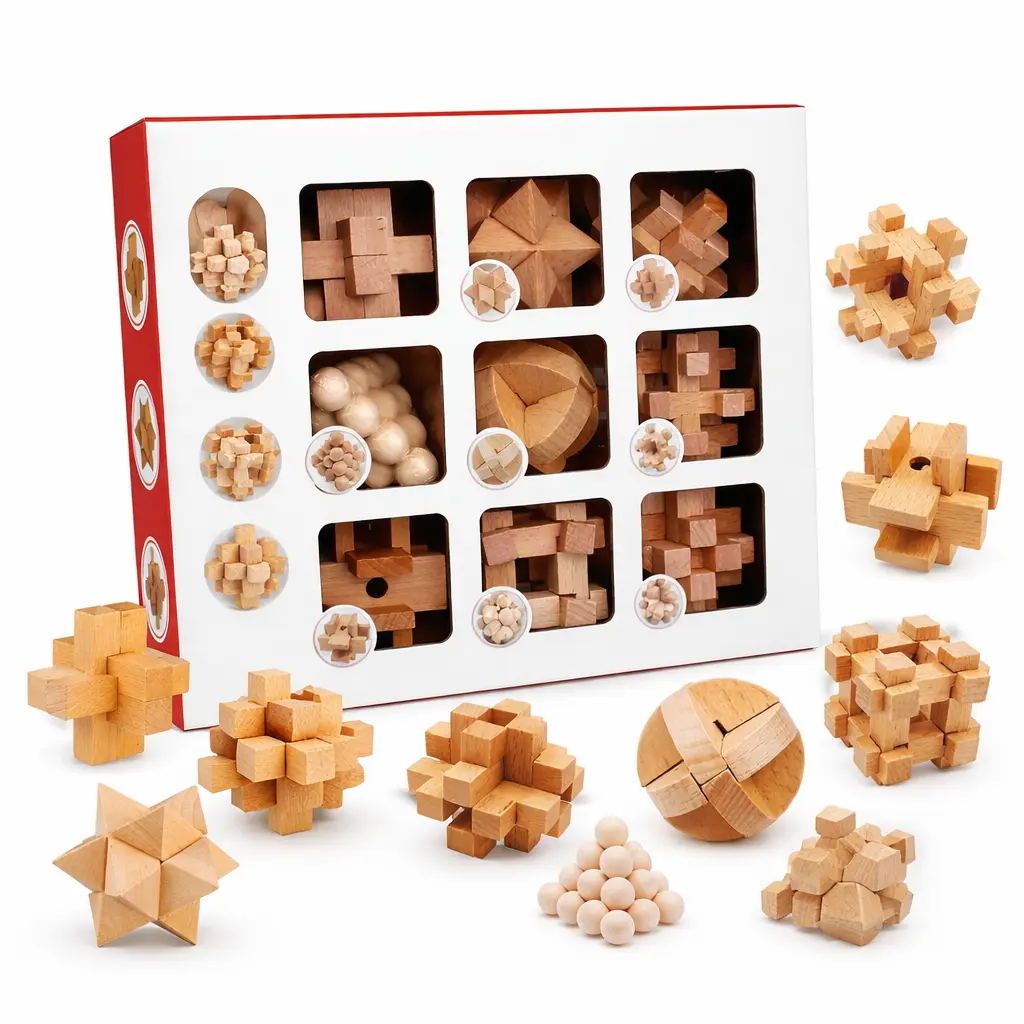
A standard 9-piece Luban lock set contains exactly nine distinct wooden interlocking puzzles, with each piece roughly 4.5 cm per side (S16) — about the volume of a golf ball in your palm. The count and scale are consistent across sets. The time each puzzle takes to solve can vary widely.
The puzzles offer a range of difficulty. Some puzzles can be solved relatively quickly, demonstrating how mortise-and-tenon joinery relies on geometry alone, without nails or glue. Others present more complex challenges, requiring longer solving times and introducing subtle movements or hidden steps. The most advanced puzzles demand significant contemplation, with solutions often being less obvious than they appear.
One framing note for anyone who’s only ever assembled flat cardboard: this is not a jigsaw puzzle. There is no picture to complete, no edge pieces to find, no two-dimensional surface to fill. Every puzzle in the box is a fully three-dimensional burr puzzle of interlocking sticks held by geometric joinery, and the assembly is the puzzle, not a frame for one.
The nine puzzles in a standard set offer a diverse range of challenges. They may include various types of interlocking burrs, some simpler and some requiring more intricate sequences of moves. Each puzzle presents a unique problem to solve, encouraging spatial reasoning and patience.
A first-time solver should budget three to six hours across the full set, with the upper end of that range assuming they refuse to look up a single hint. Many adult solvers may find the initial puzzles solvable within a shorter period, while the more complex ones could take longer to master. For a deeper hands-on walkthrough of how the pieces feel in the hand, the hands-on product-first review of the 9-piece set covers the unboxing and the first few puzzles in detail.
The next section breaks down the wood itself — beech, rosewood, basswood, and the painted-plastic impostors — and tells you how to spot a quality set before you click buy.
The Real Difficulty Curve and the Missing-Instructions Problem
Wood quality sets the physical stage, but the difficulty curve is what actually determines whether a buyer enjoys the first hour or the first month — and for multiple 9-piece sets, the first cold-start pass of all nine puzzles can take between 2 hours 40 minutes and 7 hours 15 minutes of dedicated time. That spread is almost entirely about how stubborn the solver is about refusing a hint.
That 7-hour ceiling matters because it tells you exactly what kind of commitment the set asks for. A first-pass solve of every puzzle, cold, with no printed instructions and no video, lands somewhere between a long Saturday afternoon and a full work week of stolen evening sessions. The set is designed to teach nine lessons in mortise-and-tenon engineering, and the lessons don’t all click at the same speed.
The difficulty progression can be observed by the following characteristics:
Initial Puzzles (typically 3 in most sets). These introductory puzzles may take 5 to 15 minutes per puzzle for a total beginner, often less if the beech wood is well-machined. They serve as a friendly introduction to 3D brain teasers, focusing on spatial reasoning and simple logical deduction.
Intermediate Puzzles (typically 2 to 3 puzzles). Expect 15 to 45 minutes per puzzle. These often introduce more complex geometric tricks, such as hidden internal key pieces. Wood-on-wood friction starts to matter here; cheaper plastic (P:12-piece-crystal-luban-lock-set:category) or basswood versions may get genuinely maddening because the tolerances are off by a millimeter and nothing slides.
Advanced Puzzles (typically 2 puzzles). Forty-five minutes to an hour and a half. This is where the Chinese ring puzzle lineage becomes obvious — you can see one piece, know it has to move, and have no idea which other piece has to release it first.
Expert Puzzles (typically 1 puzzle). One to three hours per sitting, often across multiple sittings. These represent the pinnacle of the set’s challenge, requiring sophisticated 3D spatial reasoning. The mortise-and-tenon engineering here is genuinely complex, relying solely on geometry to self-lock under tension. These puzzles can justify the set’s price tag, but they are not a one-evening solve for most adults.
The age-floor question comes up constantly. An honest assessment: 10+ for unsupervised solving of the initial and intermediate puzzles; 12+ for unsupervised solving of any advanced or expert piece. Under 8, the wood-on-wood friction is frustrating and the pieces are too easy to lose. A sharp 10-year-old will likely solve the simpler puzzles in an afternoon and encounter significant challenge with the more complex ones, which is a key part of the educational toy payoff.
The instructions question is where the buying decision quietly breaks. Most 9-piece sets ship with no printed instructions, only a small diagram of each puzzle’s assembled shape. Solving is reverse-engineering from the silhouette — which is part of the appeal if you bought the set for its IQ puzzle DNA, and a real problem if you bought it as a gift for someone who doesn’t have YouTube nearby.
Many first-time solvers may find themselves seeking hints for some of the puzzles. A total beginner with no prior mechanical puzzle experience might expect to look up solutions for several of the puzzles. If your recipient is the kind of person who reads the manual first and gives up when none is included, factor that in before you click buy.
For difficulty context: a single mid-range Hanayama-style metal puzzle lands roughly between an advanced and an expert Luban puzzle in raw solve time. Metal puzzles win on tactile feedback — the click, the precise resistance. The 9-piece Luban set wins on variety and the wood-against-wood sensory loop. They’re different objects doing different jobs. If you want one hard single puzzle to grind on for a month, the Luban Cube Puzzle at $21.99 is a tighter commitment than nine. If you want the graduated nine-lesson arc, nothing in this category beats the full set.
If you’d rather test the burr-puzzle waters with a smaller commitment before committing to all nine, the Six-Piece Burr is a logical stepping stone — six interlocking pieces, one solid puzzle, roughly half the price of the full set.
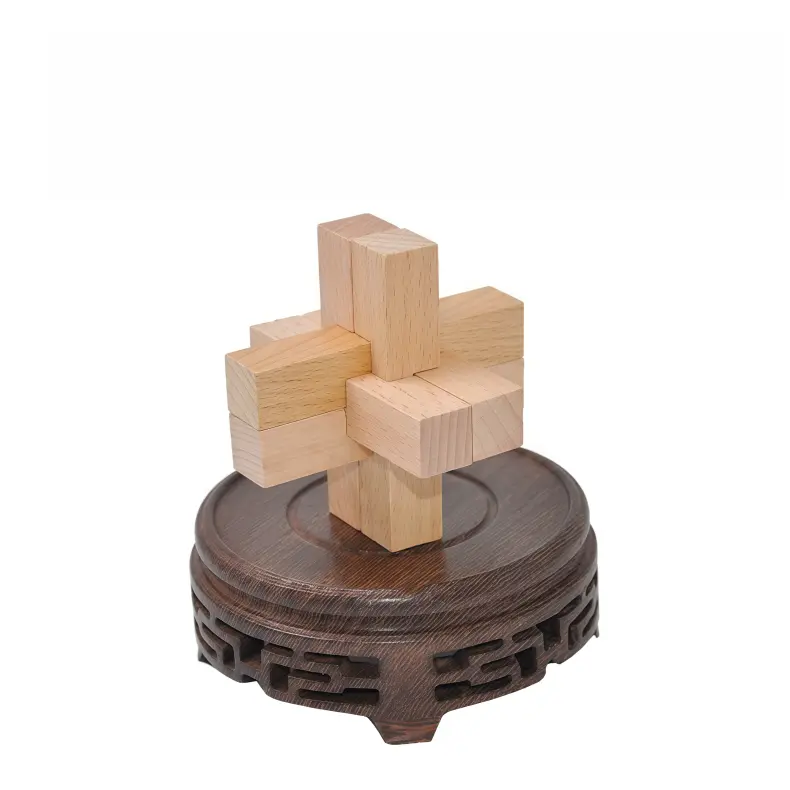
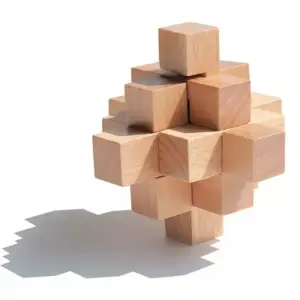
Six-Piece Burr — $17.99
If you’ve decided the graduated nine-lesson arc is the right buy, the Luban Lock Set 9 Piece is a recommended option.
How to Tell Real Wood from Plastic: Beech, Basswood, Rosewood, and Knockoff Signals
Beech, basswood, and rosewood are three wood species you may encounter in a 9-piece Luban lock set — beech is common in the genuine retail tier, basswood shows up in lower-priced import ranges, and rosewood appears in premium sets where the darker grain is part of the appeal. Each puzzle measures roughly 4.5 cm per side (S16), about golf-ball sized, which is a good initial indicator of scale.
If you’ve decided the graduated nine-lesson arc is the right buy — the Luban Lock Set 9 Piece at $39.99 sits right in that beech-sweet-spot tier — the next question isn’t which puzzles but what wood. Because nine clever mortise-and-tenon puzzles built from the wrong material is still nine junk puzzles. And don’t confuse this category with simple wooden building blocks from a preschool bin — those are sanded cubes for stacking, not precision-machined components with cut mortise joints.
When evaluating a new set, holding a single piece about an inch from the ear and tapping it gently with another piece can reveal its material. Wood-on-wood makes a warm, slightly muted thunk. Plastic makes a brittle click, and hollow plastic makes a hollow tok. The sound is a joinery tolerance indicator before the eyes ever get involved. If the sound is wrong, the puzzle is wrong. One underrated benefit of the all-wood, no-metal construction: no anti-rust treatments needed, no oxidation worries, nothing to corrode if you store the set in a humid room. Solid wood just sits there and ages into itself.
Beech: the workhorse
Beech is a default species for good reason. It’s hard enough to hold a clean mortise and tenon cut, dense enough to feel substantial in the hand, and pale enough that you can see the grain pattern clearly. Genuine 9-piece sets in the $39.99 range — including the Luban Lock Set 9 Piece — typically use beech or a closely related light hardwood. When two beech pieces are tapped together, the sound is round and dense, and the pieces may have a faint sweet smell, almost like sawdust and warm bread.
The grain is tight and even. A light blonde color runs through the whole piece with no dramatic dark streaks. Joinery tolerance in a quality beech set is tight enough that the pieces barely wiggle when fully assembled but slide free cleanly when the right move is found. That’s the friction signature desired — wood-on-wood friction that releases instead of grabs.
Basswood: the budget giveaway
Basswood is softer, paler, and almost weightless in the hand. It machines easily, which is why it’s sometimes used by importers — fast cuts, low tool wear, high volume. A basswood Luban puzzle will feel light compared to a beech one. The grain is nearly invisible. The pieces sometimes feel almost fuzzy at the cut edges, because basswood can crush instead of slicing cleanly.
If you see a 9-piece set advertised for $10–$15, you’re almost certainly looking at basswood — or worse, plastic masquerading as wood. Basswood is not a scam, exactly. It’s just a different grade of puzzle, and the mortise-and-tenon cuts in basswood may wear faster. After many solves, the tenons can start to round off. The puzzle may loosen, and the clever engineering could begin to disappear.
Rosewood and dark hardwoods: the premium tier
Rosewood, walnut, and other dark hardwoods appear in higher-priced sets. The wood is heavier, the grain is dramatic, and the mortise cuts may have a slight polish from hand-finishing. Dark hardwoods are beautiful. They are also often an aesthetic upgrade rather than a functional one for a first-time buyer. A $39.99 beech set will challenge you in the same way a more expensive rosewood set will. The puzzles don’t get smarter when the wood gets prettier.
Rubberwood: the mid-tier surprise
Rubberwood is a common mid-tier species, often used in mass-produced wooden toys. It’s denser than basswood, lighter than beech, and has a pale yellow tone with a slightly open grain. A rubberwood Luban puzzle feels acceptable in the hand but rarely has the dense thunk of beech. It’s a reasonable choice for some sets.
The plastic knockoff signals
This is the part many buyers need to know. Plastic 9-piece sets flood the marketplaces, and at a glance, they can look similar to wood. Here is what to look for:
- Uniform color. Real wood has grain variation. Plastic is identical across every piece.
- No grain pattern. Hold a piece under a lamp. If you see no fiber lines at all, it’s not wood.
- Seams. Molded plastic has a thin seam line somewhere on the surface. Wood never does.
- Hollow tap. Two pieces tapped together sound like hard plastic, not warm wood.
- Chemical smell. New plastic has a faint petroleum smell. Wood smells like wood. If you have to ask, the answer is plastic.
- Lightweight feel. A genuine beech 9-piece set has real heft. A plastic set feels like a desk toy, because that’s what it is.
The “luban lock beech wood vs plastic” question comes down to weight, grain, sound, and smell. If all four check out, you likely have a real puzzle. If two of them fail, you’re holding a trinket.
The tap test, summarized
Tapping every set can be a quick, free test. A genuine beech or rosewood set will give you a dense, warm sound. Basswood gives you a flatter, drier sound. Plastic gives you a click. Trust your ear — it’s been telling you about wood since before you could read.
Luban Lock 9-Piece Price Tiers: What $15, $30, $40, and $90 Actually Buy You
The Tea-Sip Luban Lock Set 9 Piece is priced at $39.99 (S21, S24). Other genuine 9-piece Luban lock sets can be found in a similar range. Anything significantly below this price point is almost certainly plastic (P:12-piece-crystal-luban-lock-set:category) or made from lower-quality wood like basswood. The price-to-quality curve is steep at the bottom, gentle in the middle, and genuinely interesting at the top, and the trick is knowing which dollar buys you real mortise and tenon and which buys you a desk toy in disguise.
Under $15: skip it
This is the trinket zone. Most sub-$15 sets are injection-molded ABS with a wood-grain print stamped on the surface, and if you’re a grown-up who actually wants to feel a real Kong Ming Lock’s geometry under your fingers, that’s the wrong purchase. Some of these are real wood — basswood, the soft pale stuff carvers use because it’s cheap and easy on the tools — but the joinery tolerances may be sloppy, the corners sanded into soft pillows, and the tenons sit loose in their mortises. You can feel it the moment two pieces meet. The friction can be wrong, and the wood may feel less substantial.
If you want a luban lock 9 piece wooden puzzle and the price tag is under $15, you’re likely buying plastic or disappointment. Skip.
Lower-cost wood sets (e.g., basswood or rubberwood)
Sets in a lower price range, sometimes under $30, may use softer woods like basswood or rubberwood. While these can offer a similar solving experience, the wood may be lighter, and the joinery tolerances might not be as precise as those found in beech sets. These can be a reasonable first buy for those wanting to test the hobby. The construction can be honest, and the weight may feel acceptable. The puzzles can still offer the friction and challenge, even if the finish is utilitarian. For a luban lock set for beginners or a gift on a tight budget, this tier can work.
The $39.99 canonical set: Luban Lock Set 9 Piece
The Tea-Sip Luban Lock Set 9 Piece at $39.99 (S21, S24) offers denser beech wood, a smoother finish, and joinery tolerances tight enough that tenons actually seat instead of wobble. The box is often durable. If you’re looking for a luban lock set review 2025 verdict, this is a genuine set, not a knockoff or a stripped-down version.
If you want one answer to the luban lock puzzle price comparison question, this is it. The $39.99 set sits at the exact spot where beech quality, finish, packaging, and price all line up. Anything cheaper is likely a compromise in material or tolerance. Anything more expensive in this tier — until you jump to true hardwood — may be paying for a label rather than better engineering.
$40 to $70: rosewood, walnut, dark hardwood
Above $40, the wood often changes. A genuine rosewood 9-piece set can run $50 to $70, and the difference isn’t subtle — denser, heavier, more dramatic grain. Walnut sits in a similar range with a chocolate-brown tone. These are the sets where you might see hand-finished pieces, oiled instead of lacquered, with corners still crisp instead of softened for mass production. The puzzles typically feature the same engineering as the beech sets — the upgrade is the wood and the finish.
This tier is for the buyer who already knows they like the hobby. A 9-piece Luban puzzle in rosewood is heavier, prettier, and more satisfying to hold, and on a desk where the puzzle lives, the darker wood can be more visually appealing. It’s not necessary for the core solving experience. It’s a different material choice with a price tag that reflects the wood, not necessarily an improvement in puzzle challenge.
$90 and up: premium hand-finished sets
Some high-end sets are hand-cut and hand-finished from premium hardwoods. These can cost $90 or more. They represent the upper bound of what a 9-piece set can be, demonstrating that the engineering scales all the way up — the same mortise and tenon joinery, the same geometric principle, just executed by a craftsman instead of a CNC machine.
For most buyers, a $90 set is not the primary recommendation. The $39.99 set gives you the same puzzles, the same solving experience, and the same Chinese wooden interlocking puzzle heritage at a price that makes the hobby accessible.
The skip threshold
It is generally advisable to avoid any 9-piece luban lock set under $20. That is the floor where genuine solid wood becomes rare, and below it you’re gambling on plastic or significantly lower quality. The luban lock puzzle price comparison at the bottom of the market is often a comparison of how convincingly a set can pretend to be wood.
If you’re choosing between a lower-cost beech set and the $39.99 set, the $39.99 set is often a better investment. It typically offers denser wood, better finish, and tighter joinery tolerances, and often comes in a more durable box. For a luban lock set for adults who want a reliable experience, that’s a recommended price point. For a gift, it’s also a good choice. For a beginner who isn’t sure they’ll like the hobby, it’s still a strong recommendation — because a positive first experience with quality joinery is key to appreciating the engineering.
Where to Buy a Genuine 9-Piece Luban Lock Set (and Where to Avoid)
The $39.99 Amazon listing for a 9-piece Luban lock set — a price point often referenced — frequently ships via SpeedPAK from a Shenzhen warehouse, and it remains a commonly encountered reference point for buyers searching “luban lock puzzle where to buy.” That listing, with its photographed beech grain and variable warehouse quality, is a benchmark against which other channels are measured, for better and for worse.
Amazon: a common (but inconsistent) channel
If you type “luban lock set 9 piece” into Amazon today, top results are often around $39.99 and may ship via cross-border fulfillment. The price can be fair. The joinery quality can be hit-or-miss. Experiences with Amazon 9-piece sets can vary; some may be solid beech with clean mortise and tenon cuts, while others might have quality control issues. It is advisable to read recent reviews and check for photos of the actual joinery rather than just stock renders. Buyers are often purchasing from exporters who may list under various brand names, so vigilance is key.
This is a channel most people will use, and it can be suitable — provided you buy from a listing that shows joinery detail photos and a clear piece count in the description. If those are absent, consider skipping the listing. A genuine luban lock set Amazon listing will often telegraph its authenticity in the first few photos.
Specialty puzzle retailers: curated, pricier, faster
Specialty puzzle retailers may stock genuine 9-piece Lu Ban sets, often at a slightly higher price point than mass-market options. Domestic shipping runs faster than cross-border. The wood may be selected with more care, joinery tolerances might be spot-checked, and if a piece is off-spec the shop may pull the set before it ships. The premium over mass-market options can be 15% to 30%, and for that premium you may receive a puzzle that has been evaluated by a person who understands wood quality and precise tenon edges.
For a luban lock set for adults who care about consistency, this can be a good channel. For a one-time gift where the box matters, this can also be a strong option.
Etsy: handmade, slower
Etsy can be a source for premium sets in darker hardwoods with hand-rubbed oil finishes. Sellers may photograph the exact piece you will receive. These sets often reflect individual craftsmanship, though quality can vary, and shipping times may be longer. The joinery may be visibly tighter than anything out of a mass-production CNC shop.
If you want a chinese wooden interlocking puzzle set that doubles as a display object on a desk or shelf, Etsy can be a good answer. Just confirm the seller has good reviews and shows the joinery from multiple angles, including a shot of the internal cavity.
Direct-from-China: AliExpress, Taobao, DHgate
These are wholesale channels, and they reward buyers who can read Chinese or who work with a buying agent. A 9-piece set on AliExpress might be found for $18 to $28, on Taobao $15 to $25, and on DHgate $20 to $32 — but shipping stretches considerably, and there may be limited returns infrastructure if the wood cracks in transit. The genuine luban lock set amazon listings are almost always fulfilled from the same factories you will find on these platforms, just relabeled and repriced. If you have a Taobao agent and you know how to read seller ratings and complaint threads, the savings can be real. If you do not, the risk may not be worth the potential savings.
Where to avoid
Skip the TikTok Shop listings with no piece count in the title and no close-up photos of the joinery. Skip the no-brand Walmart marketplace sellers offering “9 Piece Wooden Puzzle” for $11.99. Skip street-vendor sets sold as “genuine rosewood” for unusually low prices; some may be dyed wood where the color can rub off, revealing a lighter wood underneath.
Counterfeit-signal checklist
- Uniform color with no grain variation — may indicate dyed basswood or rubberwood, not real beech wood construction
- Missing Difficulty markings on the box or on the individual pieces (if such markings are expected)
- No joinery detail photos in the listing — only styled stock shots
- Plastic or chemical smell when you open the box, instead of a faint sweet cut-wood scent
- Lighter than expected — a solid wood beech set has real heft, while a plastic or hollow-core set feels noticeably lighter
A genuine luban lock set will often telegraph itself in the first ten seconds you hold it. The wood against wood friction, the no nails no glue construction, the visible solid wood grain on every face — those are the tells. If any are missing, consider other options.
9-Piece vs 6-Piece vs 12-Piece vs 36-Piece Luban Lock Sets: Choosing Your Set, Plus Gift, Care, and Who Should Skip
The Luban lock family ships in four common sizes — 6-piece, 9-piece, 12-piece, and 36-piece sets — and the 9-piece is a popular starting point, covering a range of difficulties in a single beech-wood box. For a deeper read on the smaller-pack-versus-full-set question and the specific 3-pack vs 9-pack dilemma for wooden brain teaser sets, that comparison is worth its own detour. Your counterfeit radar is tuned now; let’s match the set to the solver.
The 6-piece: the kid-and-casual entry
The 6-piece set covers the easier end of the spectrum — six puzzles, often beginner-friendly, totaling under 30 minutes of solving for an adult who knows what they’re doing. Prices typically run $15 to $25, the pieces may be slightly chunkier, and a sharp 10-year-old might clear the whole set in one sitting. If you’re buying for a younger child, a 6-piece can be a good call. If you’re buying for yourself and expect a significant challenge, it may not be sufficient.
The 9-piece: a comprehensive curriculum
The 9-piece set is often recommended as a first purchase for adults. It contains nine puzzles offering a range of challenges, with several genuinely complex ones. All nine can be solvable in a weekend if one commits two or three hours a day. The 9-piece Luban lock set is a good starter for adults because it teaches the no nails no glue mortise-and-tenon vocabulary in nine graduated lessons, with some puzzles introducing basic disassembly sequences, others adding rotational thinking, and the most complex pieces demanding 3D spatial reasoning. The wood against wood friction, the geometric joinery, the self-locking geometry — it all comes together over nine puzzles rather than one frustrating marathon. This is a recommended set to learn the form.
The 12-piece: more complex variants
The 12-piece set can be a good next step after the 9-piece. It typically adds more puzzles with increased complexity, featuring deeper false moves and longer release sequences. The construction may also shift to darker hardwoods like rosewood or walnut, or feature alternative materials like crystal (P:12-piece-crystal-luban-lock-set:category). Prices can run $28 to $50 depending on wood species and packaging. A solid 12-piece can be a two-week project for an intermediate solver, and it rewards the spatial-reasoning habits the 9-piece built.
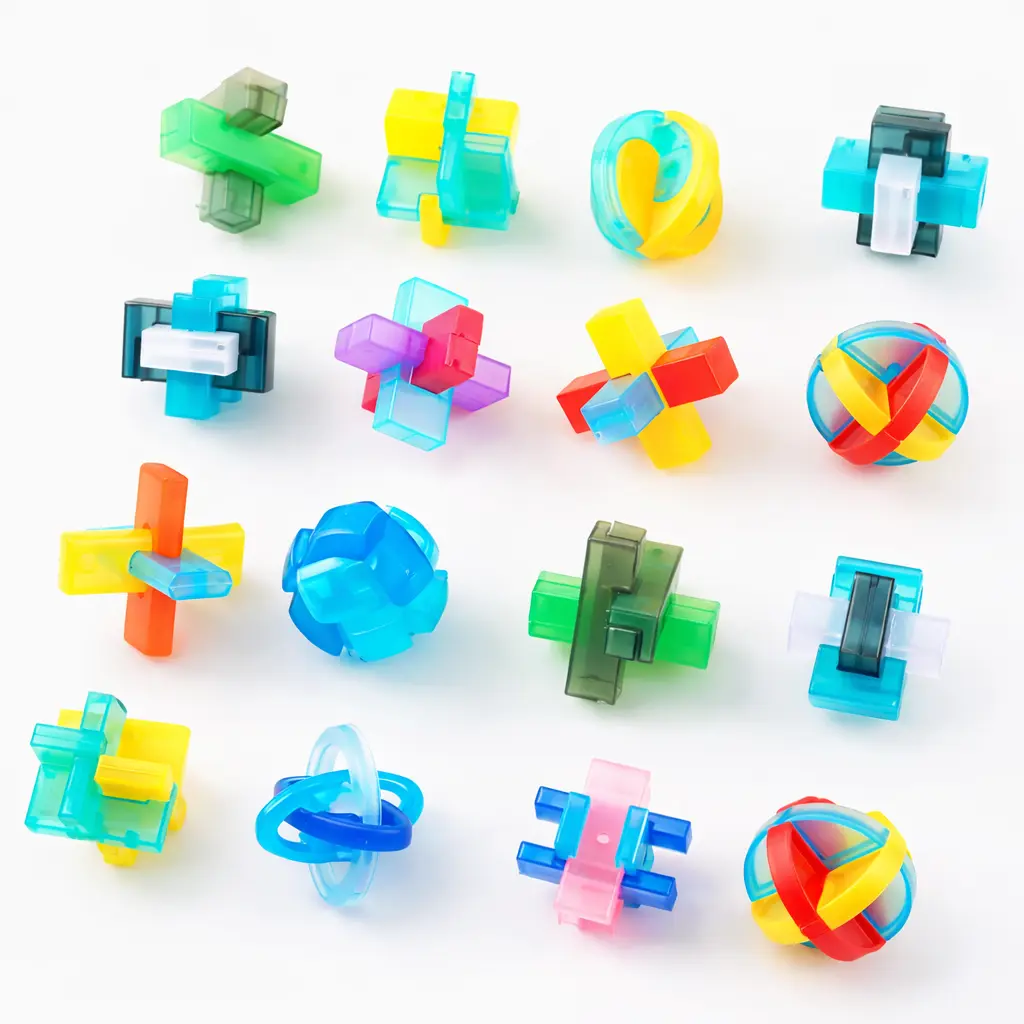
The 36-piece: the collector tier
The 36-piece is often referred to as a “Lu Ban Master Set” — a large collection of variants, often in a fitted wooden case, sometimes in premium hardwood, usually priced $150 to $300. It is typically a collector’s object, not a starter. If you have to ask whether you need 36 puzzles, you likely don’t. If you’ve been solving for two years and you’ve already mastered many puzzles, you might.
If a single-puzzle alternative is what you want — one brain teaser you can finish in a sitting — that’s a different category entirely. A Luban lock set for adults who want a one-evening challenge might not be the right purchase; you might be better served by a standalone cube or sphere alongside a 9-piece.
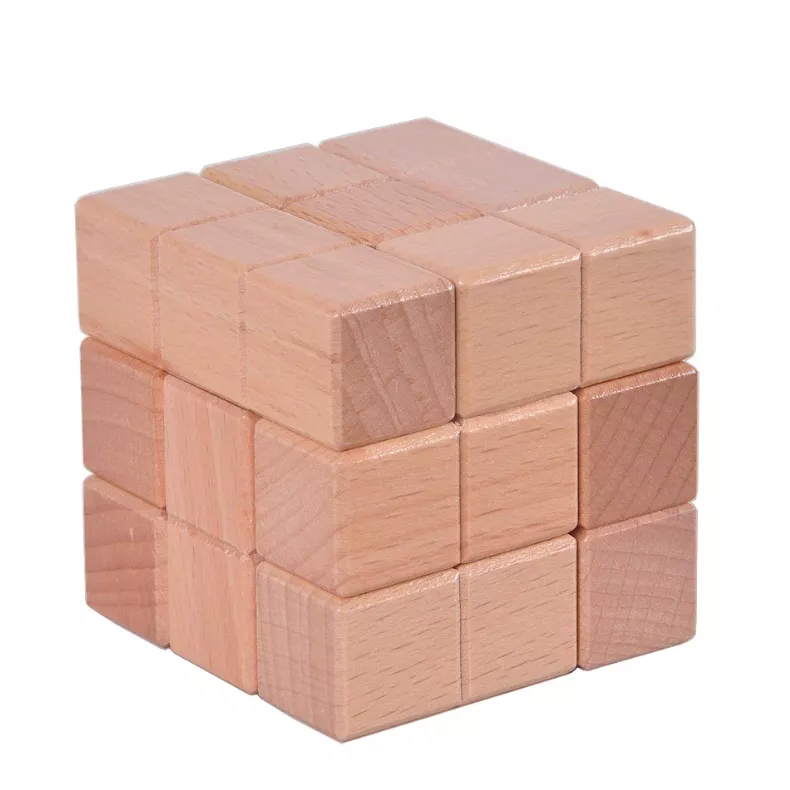
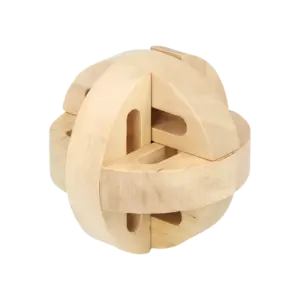
Luban Cube Puzzle — $21.99
Gift-readiness and packaging red flags
A Luban lock set for beginners and a Luban lock set as a gift are not always the same purchase. Gift-grade often means a printed retail box (not a polybag in a Chinese export carton), clear markings on the lid, and sometimes an instruction sheet. Common packaging red flags that suggest a set was not packed for gifting include: no outer box, no clear markings, no printed insert, no foam or fabric lining, and a generic neutral shipping label. A quality 9-piece set from a specialty retailer often ships in a printed box with good presentation. The wholesale-import version may ship in foam wrap and a brown outer carton. Both can solve identically; only one unwraps like a present.
Care and storage
Beech and basswood don’t need much, but they do need certain considerations. No water — never rinse a puzzle under a tap, as the grain can swell and the joinery tolerance may distort. Avoid direct sun for extended periods, or lighter woods may yellow unevenly. Once a year, rubbing each piece with a drop of food-grade mineral oil can help the solid wood darken slightly and keep the friction smooth. Store the set in its box, in a dry room, with all nine pieces together. A Luban lock set that lives on a coffee table can get dusty; a Luban lock set that lives in its box may last a decade.
Who should skip the 9-piece set
The 9-piece is not for everyone. Four types of buyers might consider other options.
People who want a single hard puzzle. If you want one metal brain teaser to spend a Saturday on, the 9-piece is a larger commitment — and this is one case where a Luban lock vs Hanayama puzzle comparison can be relevant. Hanayama’s cast-metal single puzzles are denser, heavier, and engineered for one satisfying release. The 9-piece is a curriculum, not a single event.
People buying for kids under 8. The pieces are roughly 4.5 cm per side (S16) — golf-ball sized — which is technically above the choking-hazard threshold, but the more complex puzzles may frustrate a 6-year-old. A general age recommendation is 10 and up for the 9-piece, 8 and up for the 6-piece.
People who hate silent desk toys. A Luban lock set is quiet. There is no click when you solve it, no chime, no app. The reward is internal. If you want feedback noise, fidget toys or mechanical puzzle boxes with a satisfying snap might serve you better.
People who need printed instructions. Most 9-piece sets ship without instructions — a Luban lock set with instructions is often the exception, not the rule. If you won’t watch a YouTube video, you might find yourself stuck on some of the more complex puzzles. Check the listing before you buy.
The right set, at the right size
For a first-time adult buyer who wants the genuine article — beech wood construction, no nails no glue, mortise-and-tenon engineering, nine graduated lessons in spatial reasoning — the 9-Piece Luban Lock Set at $39.99 is a strong recommendation. It’s a set that can teach why the Forbidden City stands without a single iron nail. If you’ve made it this far in the article, you already know whether it’s the right click. It probably is.
Frequently Asked Questions About Buying a 9-Piece Luban Lock Set
The time spent on one of the more challenging puzzles, as discussed earlier, can represent the typical difficulty curve for most adult first-timers. The same set is sometimes sold as the Kongming Lock, a name that traces to the strategist Zhuge Liang, though the mortise-and-tenon engineering traces to Lu Ban the carpenter. Here are common questions about these puzzles.
Is the 9-piece Luban lock set hard enough for an adult?
Yes. The more challenging puzzles in the 9-piece set can take most adult first-timers 15–45 minutes each, while simpler ones can be solved in under 60 seconds. The varying difficulty allows for skill building as the challenge progresses. It offers a more involved experience than a fidget cube, yet can be gentler than some metal cast puzzles.
What’s the difference between the 6-piece, 9-piece, and 12-piece Luban lock sets?
The Six-Piece Burr at $17.99 is a smaller sampler. The 9-Piece Luban Lock Set at $39.99 offers a more comprehensive range of challenges. The 12-Piece Crystal Set at $28.88 adds more puzzles and a translucent aesthetic. Buy the 9-piece for learning; consider the 12-piece for more variety.
Are Luban lock sets made of real wood or plastic?