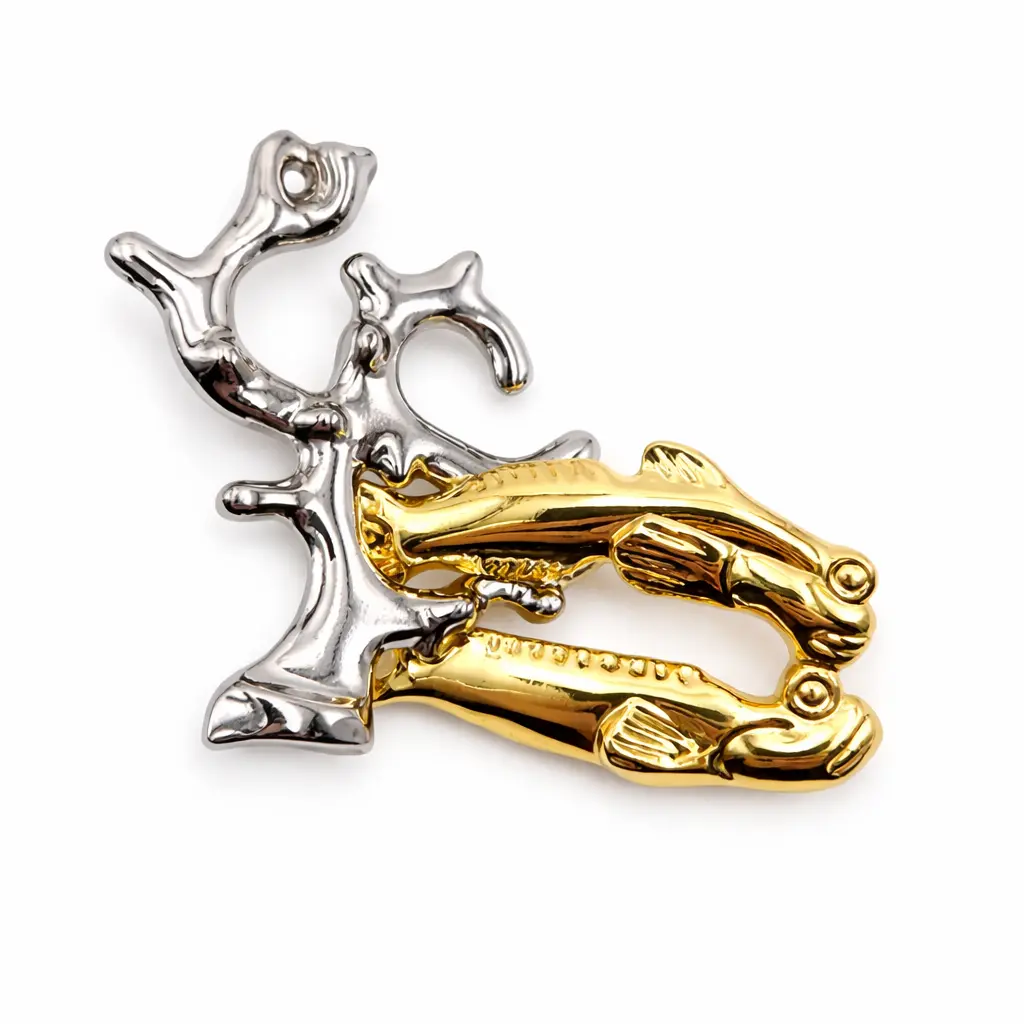
The gold fish sat inside the silver coral on my desk for four hours before I admitted I had no idea what I was doing. Two pieces of cast metal, each small enough to close my fist around, and I could not separate them. Not with logic, not with rotating, not with the slow methodical approach I usually bring to cast metal puzzles. The reef had me trapped, same as the fish.
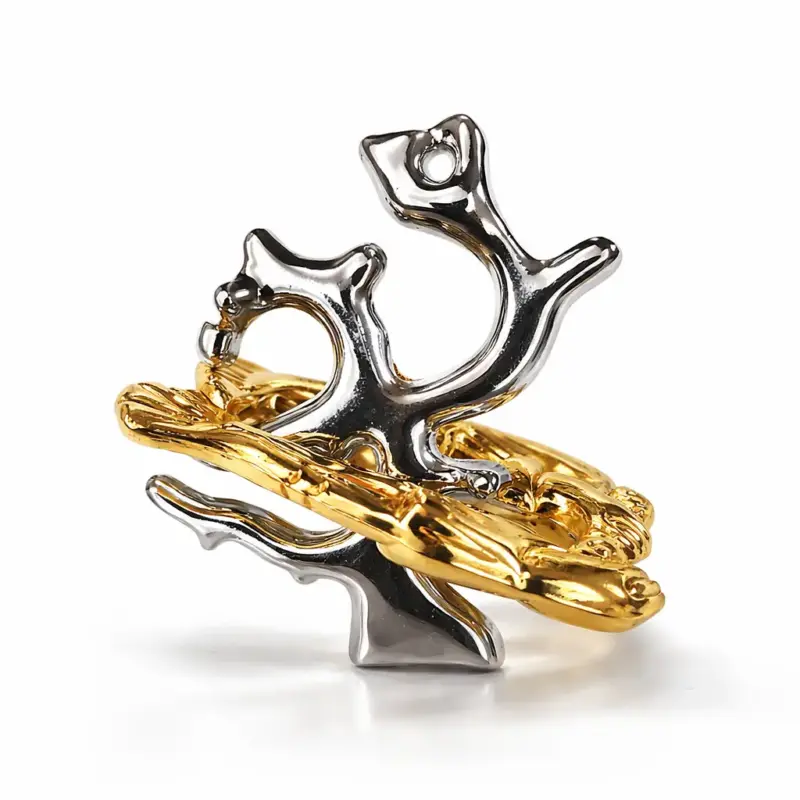
Gold Fish & Silver Coral Reef Cast
A cast metal brain teaser built around a single premise: free the gold fish from the silver coral reef, then lock it back in. At roughly 51 × 56 mm, it fits your palm and rewards patient technique over brute force. The two-tone polished finish makes it a small sculpture when you are not solving. No batteries, no screens, no setup. Just one fish that refuses to leave until you find the right path.
- Free the gold fish from the silver coral
- Polished two-tone cast metal finish
- Palm-size at approximately 51 × 56 mm
- Technique-based — force will not help
- Doubles as a desk display piece
That changed around hour five. And what I learned in the process taught me more about patience and spatial reasoning than any puzzle I have handled in the past two years.
What Makes the Cast Reef Puzzle Different from Other Metal Brain Teasers
Most cast metal brain teasers present an obvious challenge: rings to separate, pieces to slide, hooks to disentangle. You look at them and your brain starts generating hypotheses immediately. The cast reef puzzle does something far more disorienting — it looks like a sculpture first and a puzzle second.
The gold fish piece is curved, organic, detailed with scales and fins that catch light at different angles. The silver coral piece branches outward in multiple directions, each arm ending in a smooth bulb that resembles living coral. Together, they interlock so naturally that some people display them on shelves without realizing there is a puzzle to solve at all. If you enjoy objects that double as desk display pieces and conversation starters, the reef design delivers that immediately.
The mechanism belongs to the disentanglement family. Two rigid pieces, no sliding components, no hidden springs. The solution requires finding a specific three-dimensional path that threads one piece through the openings in the other. It sounds simple until you realize that the organic shapes create visual noise — your eyes tell you there are openings that do not actually exist, and real openings hide behind curves you overlook.
The designer Akio Yamamoto conceived the puzzle after watching fish at an aquarium, and that origin story matters. The shapes are not random. Every curve on the coral serves a mechanical purpose while simultaneously looking biological. That dual function is what makes the puzzle deceptive.
My First 30 Minutes: Every Instinct Was Wrong
I picked up the cast reef expecting a fifteen-minute solve at most. Two pieces, no moving parts — how complicated could the path be?
Very, as it turned out.
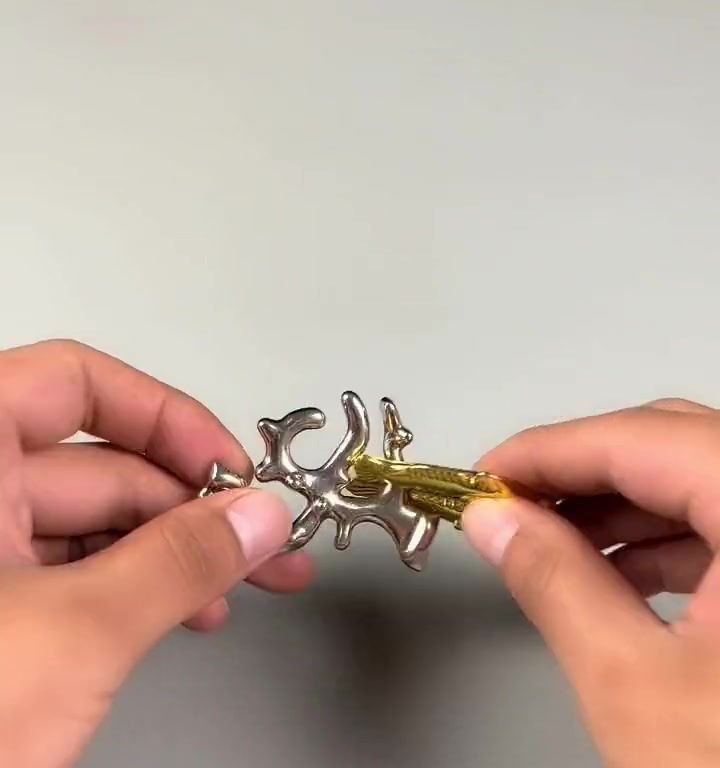
Show Image Step 1: The starting position. The gold fish sits firmly within the silver coral branches.
My first instinct was to try pulling the fish straight out through the largest gap in the coral. The gap looked wide enough. It was not. The fish’s tail fin catches on the inner rim of the coral every time you attempt a direct pull. Force would only scratch the finish.
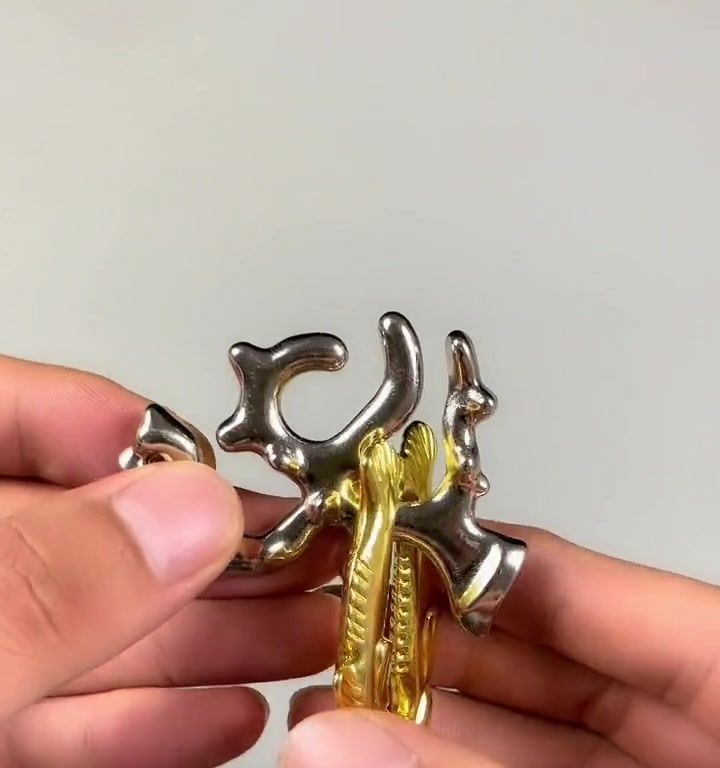
Show Image Step 2: Close-up showing how the fish body is trapped within the coral structure. Every obvious exit is blocked.
My second approach — rotating the fish 90 degrees and trying to slide it down — also failed. The coral has what I started calling “false exits,” gaps that look passable from one angle but narrow to nothing when you actually try to thread the fish through them. I wasted twenty minutes exploring paths that led nowhere.
Anyone who has worked through cast coil puzzles will recognize this frustration. The difference is that coil puzzles at least telegraph their mechanism type. The reef disguises its pathway behind organic aesthetics.
The Turning Point: Stop Moving, Start Looking
Around the forty-minute mark, I did what every experienced puzzle solver eventually learns to do — I stopped.
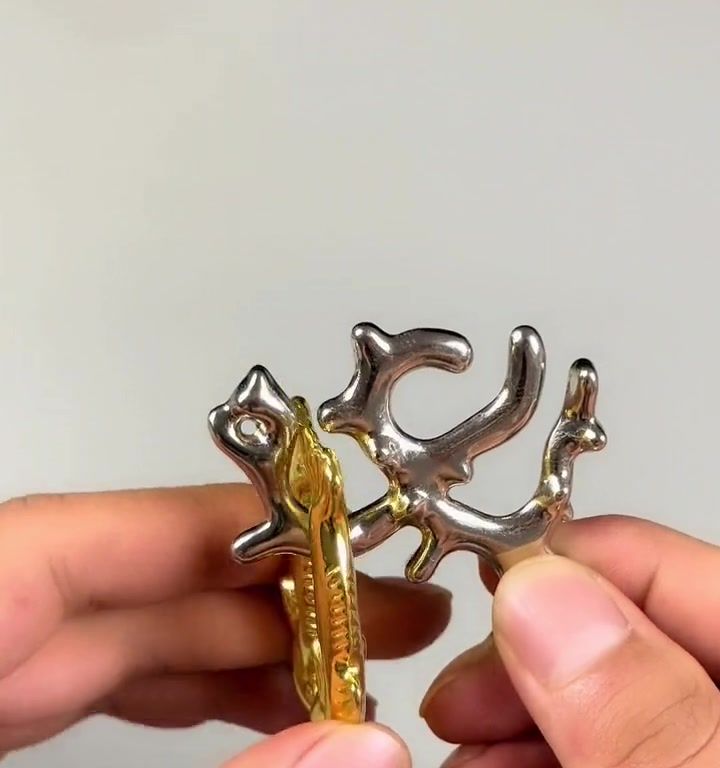
Show Image Step 3: The breakthrough moment. Instead of trying random movements, study the coral’s branch structure and identify the actual openings.
I held the puzzle at eye level and slowly rotated it, examining the coral from every angle without touching the fish. What I had been treating as a symmetrical shape was actually asymmetric. The coral’s branches are not evenly spaced. There is a specific cluster of openings — a middle layer, a top gap, and a bottom passage — that form a connected channel. The fish can only exit through this particular sequence of gaps, navigated in a particular order.
The insight was not about finding a hidden trick. It was about seeing the three-dimensional path that was always there, hidden by the visual complexity of the coral form. Research in cognitive science on spatial reasoning suggests that humans default to two-dimensional analysis even when handling three-dimensional objects. The cast reef exploits that tendency brilliantly.
If you are someone who enjoys puzzles that reward careful observation over brute force manipulation, this puzzle was made for you.
Solving the Cast Reef: A Step-by-Step Experience Guide
What follows is not a complete spoiler walkthrough. Instead, I am documenting the general flow of the solution — the sequence of orientations and the physical sensations at each stage — so you can calibrate your own attempts. I would rather give you a compass than a map.
Phase 1: Threading the Middle Layer
The first real move involves guiding the fish through the middle section of the coral. This is counterintuitive because your instinct says to pull the fish outward, but the actual path requires pushing it deeper first.
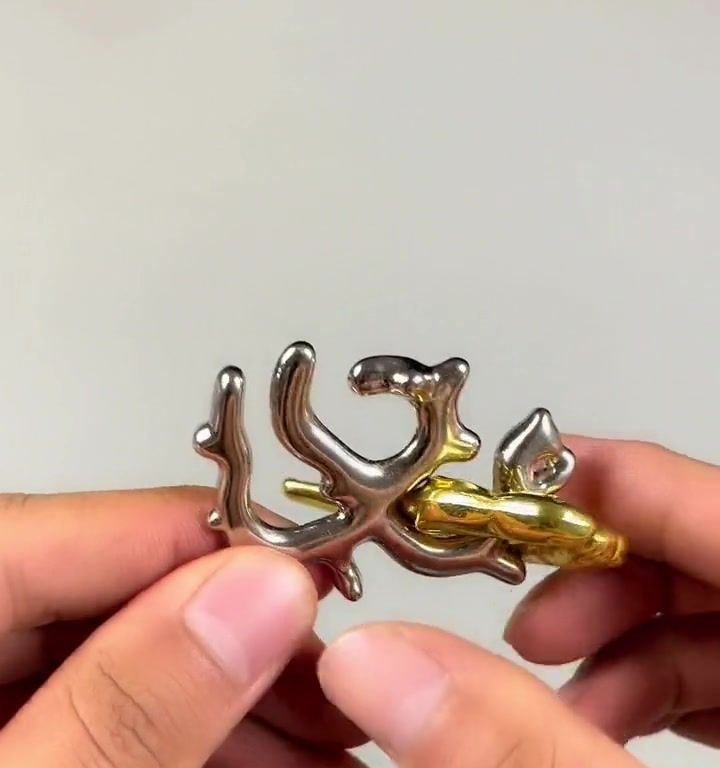
Show Image Step 5: Guide the fish body through the middle gap in the coral structure. The path goes inward before it goes outward.
The metal-on-metal contact at this stage produces a satisfying low scraping sound. The pieces fit with almost zero wobble — the casting tolerances on the reef puzzle are tight enough that you feel resistance at wrong angles but smooth gliding at correct ones. That tactile feedback is your primary guide.
Phase 2: Reaching the Top Opening
Once through the middle, the fish needs to be angled upward toward the top of the coral structure. There is a specific opening near the apex of the coral where the fish can pass through.
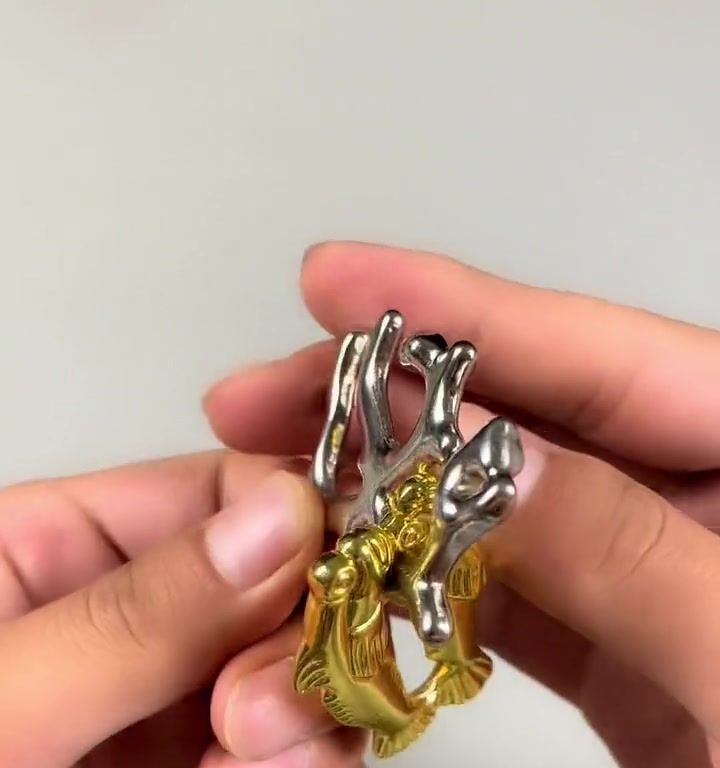
Show Image Step 6: The fish moves through the gap near the top of the coral. This is where the path changes direction.
This is the stage where most people give up. The fish appears stuck at an angle that offers no further movement in any direction. The secret — and I will be deliberately vague here — involves reorienting the fish so its head and tail swap positions relative to the coral.
Phase 3: The Orientation Flip
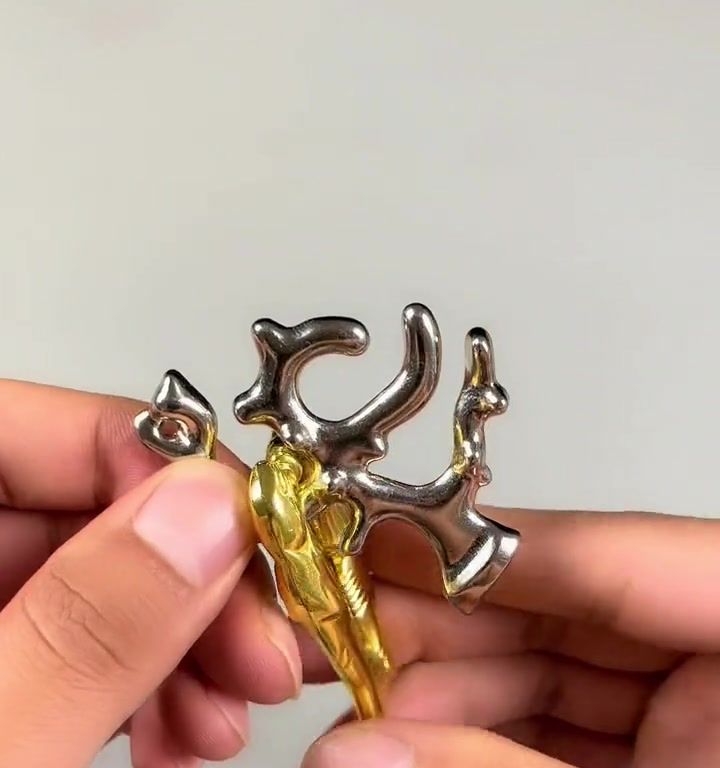
Show Image Step 7: The critical reorientation — fish head faces inward while the tail points outward. This unlocks the next sequence.
The thing nobody tells you about this moment is how unnatural it feels. Every instinct screams that you are moving away from the solution by pushing the fish’s head deeper into the coral. But the organic curves of both pieces are specifically designed so that this inward rotation opens a new pathway underneath. Those who enjoy the meditative quality of locking puzzle brain teasers will find this phase particularly satisfying.
Phase 4: The Horizontal Slide
After the orientation flip, you lay the fish horizontally across the bottom of the coral. This is the move that initially looks impossible because the fish seems too wide to pass through the lower channel. It is not — the fish’s body has a specific flat section designed to clear the coral’s lower branches with millimeters to spare.
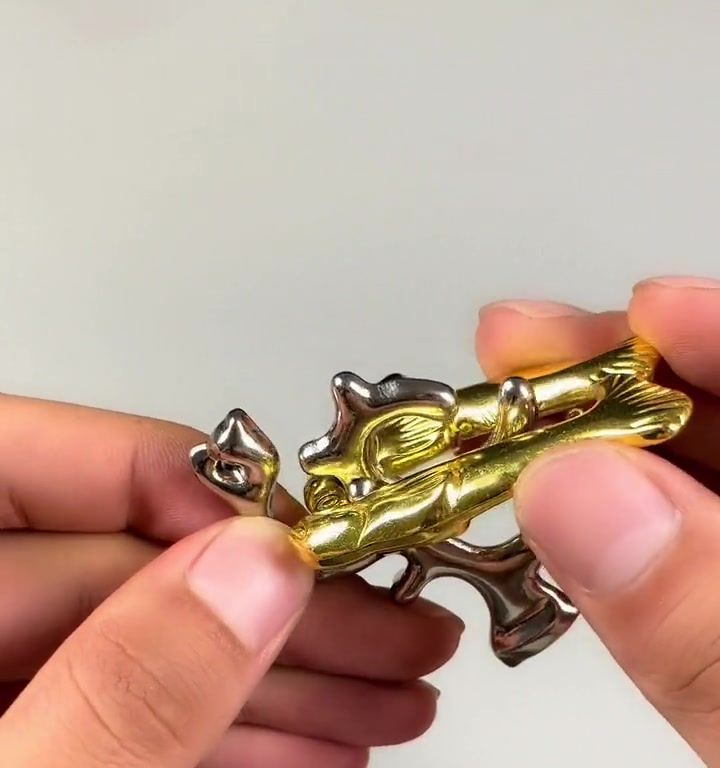
Show Image Step 8: Lay the fish flat beneath the coral. The slim profile of the fish body just barely clears the lower coral branches.
Phase 5: Bottom Exit
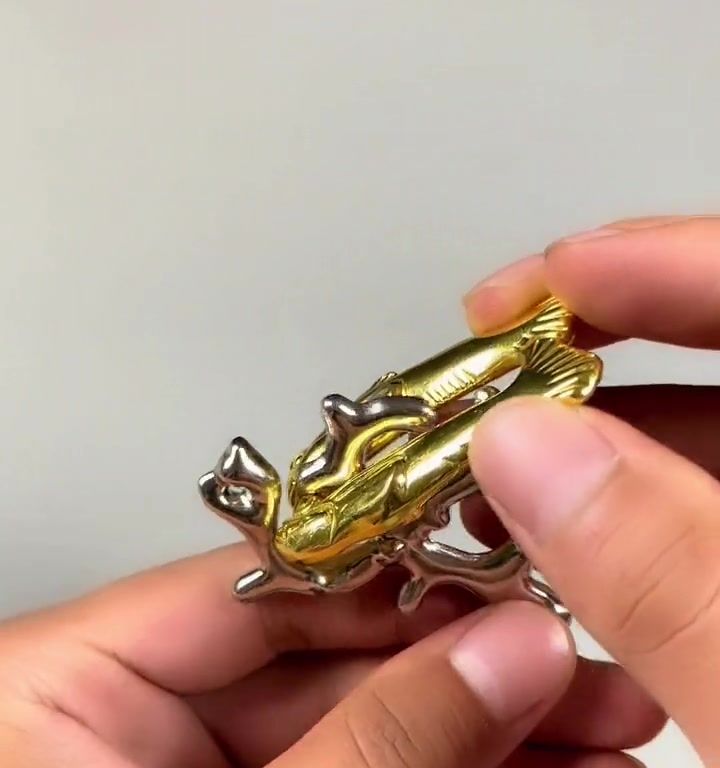
Show Image Step 9: Thread the fish from beneath the coral. The path follows the underside contours.
This is where patience matters most. The fish needs to pass from the bottom of the coral with its orientation reversed — tail inward, head outward. The margin for error is extremely small, maybe two or three millimeters of clearance.
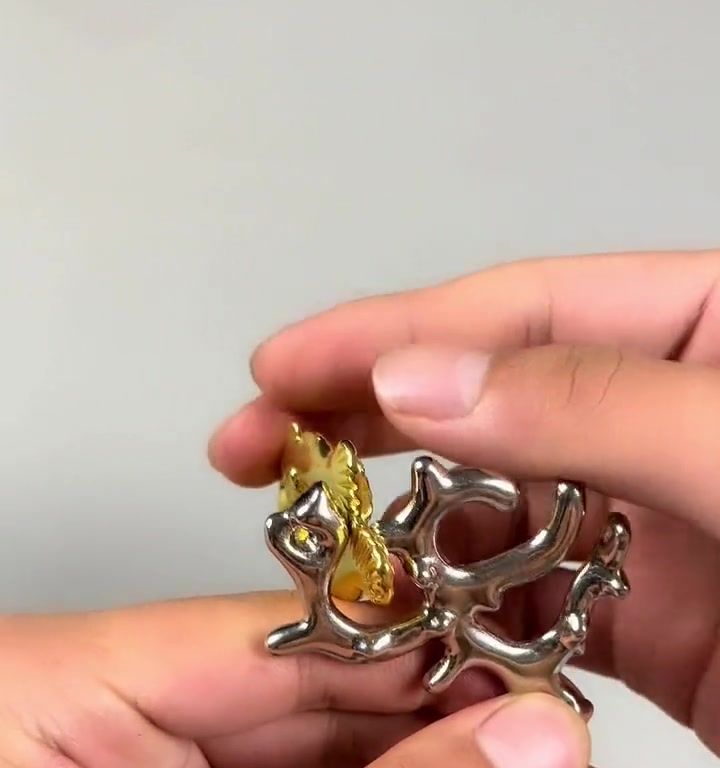
Show Image Step 10: Final position before separation — tail points inward, head faces outward. One gentle pull away from freedom.
Phase 6: Separation
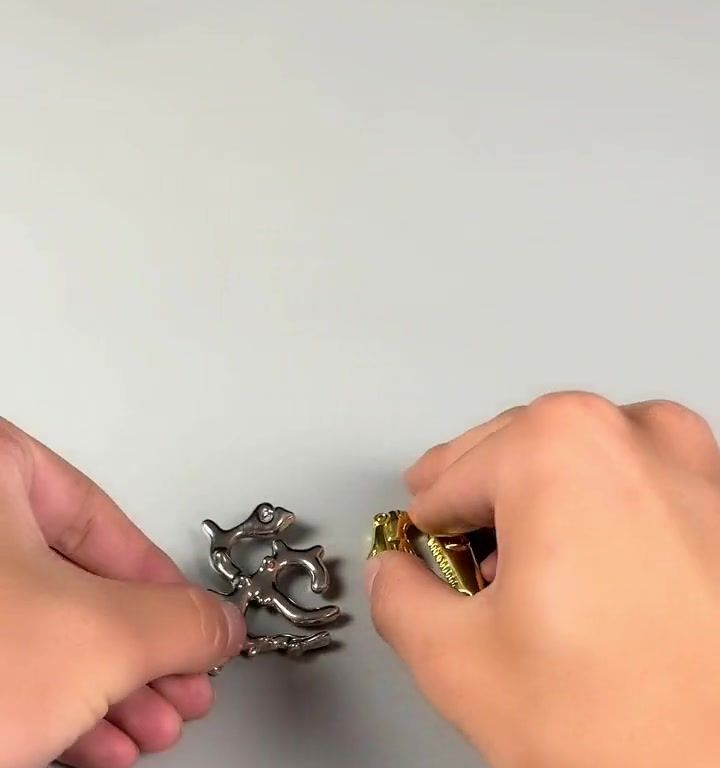
Show Image Step 11: The moment of separation. After finding the correct path, the fish slides free with almost no resistance.
When you finally find the correct exit angle, the fish slides out of the coral with a soft, clean release. No force required. The contrast between the hours of struggle and the effortless final movement is what makes this puzzle memorable. It is not about strength or speed. It is about finding the one path among dozens of dead ends.
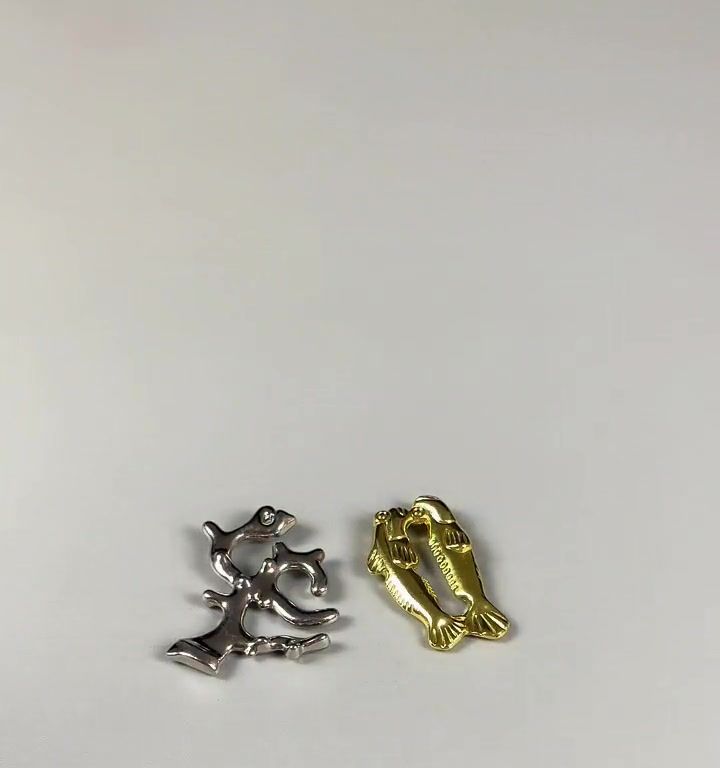
Show Image Step 12: The solved state. Gold fish and silver coral, separated and ready to be reassembled — which is its own challenge.
Why Reassembly Is Harder Than Disassembly
Most people assume that once you have separated the pieces, putting them back together is simple reverse engineering. It is not. The organic shapes make it surprisingly difficult to remember the exact sequence of orientations, especially the Phase 3 flip. I failed my first reassembly attempt even though I had just completed the disassembly ten minutes earlier.
This is actually a valuable feature. A puzzle you can take apart but struggle to put back together has double the replay value. The dual seahorse brain teaser shares this characteristic — its organic sea-creature shapes create a similar confusion during reassembly.
Material Quality and Build Assessment
The cast reef uses a zinc alloy construction with two distinct plating finishes: a warm gold for the fish and a cool silver-chrome for the coral. The weight sits around 60 grams — enough to feel substantial without being heavy. The casting detail is genuinely impressive, particularly the individual scales on the fish body and the bulbous ends of the coral branches.
After three weeks of daily handling, I can report zero finish degradation. No flaking, no tarnishing, no wear marks at the contact points where the pieces rub during solving. This matters because cast metal puzzles with poor plating start showing brass underneath within days of regular use.
The surface texture varies between the two pieces. The fish has a smoother, almost polished surface that picks up fingerprints but wipes clean easily. The coral has a slightly more matte finish with subtle texture variation along the branches. These different textures actually serve a functional purpose — they help your fingers distinguish which piece you are gripping during the solve when you cannot see the puzzle clearly.
For comparison, if you have handled the interlocking metal disk puzzle from the same material family, the reef has noticeably better detail resolution in its casting. The organic shapes demand precision that simpler geometric puzzles do not require.
Who Should Buy the Cast Reef Puzzle
The reef sits at an interesting difficulty intersection. It is too challenging for complete beginners — the lack of obvious mechanical cues means a first-time puzzle solver will likely get frustrated before finding the observation-based approach needed. But it is not so difficult that experienced solvers will be stuck for days.
The ideal buyer falls into one of three categories.
The patient observer who enjoys puzzles as meditation rather than competition will get the most out of this. The reef rewards the person who stops, looks, and thinks before moving. If that sounds like the approach you take with wooden brain teaser puzzles, you will transition naturally to this one.
The gift buyer looking for something that doubles as art will find the reef solves the common problem of puzzle gifts that look cheap on a desk. The gold-and-silver color combination and the aquatic theme give it genuine display value. It sits nicely next to desk items, and people pick it up without being told it is a puzzle. The 3D crystal rose puzzle serves a similar decorative-plus-puzzle function, but the reef has a more sophisticated aesthetic.
The collector building a cast metal collection needs this one. The marine theme, the two-tone finish, and the organic mechanism design make it distinct from the geometric puzzles that dominate the category. If you already own pieces like the metal starfish puzzle ring or the metal crab puzzle, the reef extends your aquatic sub-collection logically.
Who Should NOT Buy This Puzzle
Honesty matters more than sales. Skip the cast reef if any of these apply to you.
You want a quick-solve fidget puzzle for idle hands. The reef demands focused attention. It is not something you solve while watching television or waiting for a meeting to start. If you want a pocket fidget, the cast coil pocket puzzle is a better fit.
You get frustrated by puzzles that offer no intermediate progress signals. Unlike sequential puzzles where you feel pieces unlocking step by step, the reef gives you almost no feedback until you find the correct path. You feel stuck, stuck, stuck — then suddenly free. That dynamic is thrilling for some people and infuriating for others.
You prefer puzzles with clearly defined mechanical actions. If you like the click-and-slide satisfaction of puzzle locks or the step-counted approach of maze puzzles, the reef’s organic disentanglement will feel too ambiguous.
You are buying for children under 10. The small pieces and the fine motor coordination required for Phase 3 make this inappropriate for young children. The memory match game or a simpler puzzle would be better choices for younger minds.
The Reef in the Context of Cast Metal Puzzle Design
Cast metal disentanglement puzzles have a design history stretching back decades, evolving from simple ring-and-hook designs to the organic, narrative-driven forms we see today. The reef represents what I would call the “sculptural generation” — puzzles where the visual story (fish trapped in coral) directly informs the mechanical experience (navigating organic three-dimensional paths).
This is a meaningful design evolution. Earlier cast puzzles separated form from function. They were geometric shapes — squares, circles, spirals — that happened to interlock. The reef’s achievement is making form and function inseparable. The organic curves are not decoration added after the mechanism was designed. The mechanism IS the organic curves.
Academic research in cognitive psychology demonstrates that spatial reasoning tasks with organic shapes engage different neural pathways than tasks with geometric shapes. The visual cortex processes smooth, biological contours differently from sharp angles and flat planes. This may explain why the reef feels subjectively harder than geometric puzzles of similar mechanical complexity — your brain is processing two layers of information simultaneously, the aesthetic and the spatial.
I have written previously about how the gold and silver double fish metal puzzle uses a similar dual-fish theme but with a fundamentally different mechanism. The double fish is a paired interlocking design where both pieces are identical. The reef introduces asymmetry — the fish and coral are completely different shapes serving completely different roles. That asymmetry is what generates the puzzle’s primary difficulty.
Care, Handling, and Display Tips
Keep the puzzle dry. The zinc alloy and plating handle normal humidity fine, but direct water contact can cause spotting, particularly on the gold-finished fish piece. If you carry it in a pocket, a small drawstring pouch prevents the finish from getting scratched by keys or coins.
For display, the puzzle looks best in its interlocked state with the coral pointing upward and the fish visible through the branches. The two-tone metal catches light well on any surface with natural illumination. If you collect multiple cast puzzles, the reef serves as a natural focal point because its organic shape stands out against geometric companions like the 5-piece spiral metal puzzle or the metal orbit ring.
Do not use lubricant on the contact surfaces. The designed friction between the pieces is part of the tactile solving experience. Lubricating the puzzle makes the fish slide too freely, which paradoxically makes solving harder because you lose the resistance feedback that tells you when you are on the right path.
Frequently Asked Questions
How long does the cast reef puzzle typically take to solve on the first attempt?
First-solve times vary enormously. I have seen people crack it in twenty minutes and others struggle for several hours. The median appears to be around 45-90 minutes for someone with moderate puzzle experience. The Chinese puzzle community, which has extensive experience with this particular design, considers it a high-difficulty challenge despite its modest piece count. Patience and careful observation matter far more than mechanical skill or speed.
Is the cast reef puzzle safe for teenagers?
Yes, for ages 12 and up. The pieces are solid metal with no sharp edges or points. The main concern is the small size — the assembled puzzle fits in an adult palm — which makes it unsuitable for very young children. Teenagers who enjoy brain teasers and logical challenges will find this appropriately challenging.
Can the puzzle be damaged by incorrect solving attempts?
Not under normal handling. The zinc alloy construction is durable enough to withstand thousands of manipulation cycles. However, using excessive force or tools to pry the pieces apart will scratch the plating and can deform the more delicate coral branches. If you feel significant resistance, you are on the wrong path — back up and try a different angle. The correct solution requires almost zero force at any point.
What is the difficulty level of this puzzle compared to other cast metal puzzles?
In the broader cast metal puzzle spectrum, the reef sits at medium-high difficulty. It is harder than basic ring-disentanglement puzzles and most two-piece geometric interlocks. It is easier than multi-step sequential puzzles or designs with hidden mechanisms. The difficulty comes almost entirely from the visual complexity rather than the mechanical complexity — once you see the path, the physical movements are straightforward.
Does the puzzle come with a solution guide?
Tea Sip does not include printed solution guides, which I consider the right choice. A solution guide eliminates the discovery experience that gives the puzzle its value. If you get truly stuck after extended effort, community-created visual hints exist online, and the step-by-step progression images above provide directional guidance without complete spoilers.
How does the gold fish and silver coral theme affect the solving experience?
More than you would expect. The two-tone finish helps you track orientation during solving — you can immediately identify which piece is which even when they are deeply interlocked. The visual theme also provides a mental narrative (“free the fish”) that keeps you emotionally engaged during long solving sessions where pure abstract puzzles might lose your attention.
Is this a good gift for someone who has never solved a cast metal puzzle before?
Conditionally yes. It makes an excellent gift because of its visual appeal and conversation-starting design. But gift it with realistic expectations — tell the recipient that it is genuinely challenging and that taking several sessions to solve is normal, not a sign of failure. Pairing it with a simpler puzzle like the cast coil triangle puzzle gives the recipient an easier warm-up before tackling the reef.
What makes this puzzle different from other fish-themed metal puzzles?
The asymmetric two-piece design. Most fish-themed puzzles use identical or near-identical fish shapes that interlock symmetrically. The reef puzzle uses two completely different shapes — an organic fish and a branching coral — that create an asymmetric disentanglement challenge. This asymmetry means you cannot apply the same technique to both pieces. You must navigate the fish through the coral’s specific topology, which is a fundamentally different cognitive challenge than separating two matching shapes.
Can I solve this puzzle multiple times and still find it enjoyable?
Yes, and here is why: even after you know the solution conceptually, the organic shapes make it surprisingly difficult to execute the path consistently. I have solved it over a dozen times and still occasionally take a wrong turn during reassembly. The yin-yang puzzle game provides a similar experience where knowing the rules does not make execution trivial.
How does the weight and size compare to other desktop puzzles?
At approximately 60 grams and a maximum dimension of about 60mm, the reef is comfortable to hold and manipulate for extended periods without hand fatigue. It sits in the Goldilocks zone — heavier than wire puzzles, lighter than large wooden brain teasers. For comparison, the antique bronze metal keyring puzzle is about half the weight, while wooden puzzle boxes can weigh several hundred grams.
Final Verdict
The cast reef puzzle earned its place on my desk permanently — not in a drawer, not in a collection box, on the desk where I can see it and pick it up when I need a mental reset between tasks. That says more than any rating system could.
It is beautiful enough to display, challenging enough to respect, and well-made enough to last. The organic asymmetric design represents the best of modern cast metal puzzle engineering. And the solving experience — hours of frustration dissolving into a single moment of clean, effortless release — captures something I genuinely believe about problem-solving in general: the answer is always simpler than the struggle suggests.