Quick Answer: How to Choose a 3D Crystal Puzzle Gift for a College Student
A 3D crystal puzzle works as a college student gift when the recipient has shelf or desk space, enjoys a 1–3 hour build, and would use the finished model as decor; skip it if they prefer screens, dislike fiddly assembly, or live in a triple with no display surface. The decision comes down to four checks: size and shape, difficulty tier, display footprint, and price-per-piece. For buyers still weighing crystal versus traditional 3D formats, the crystal puzzle vs regular 3D puzzle comparison breaks down the practical differences.
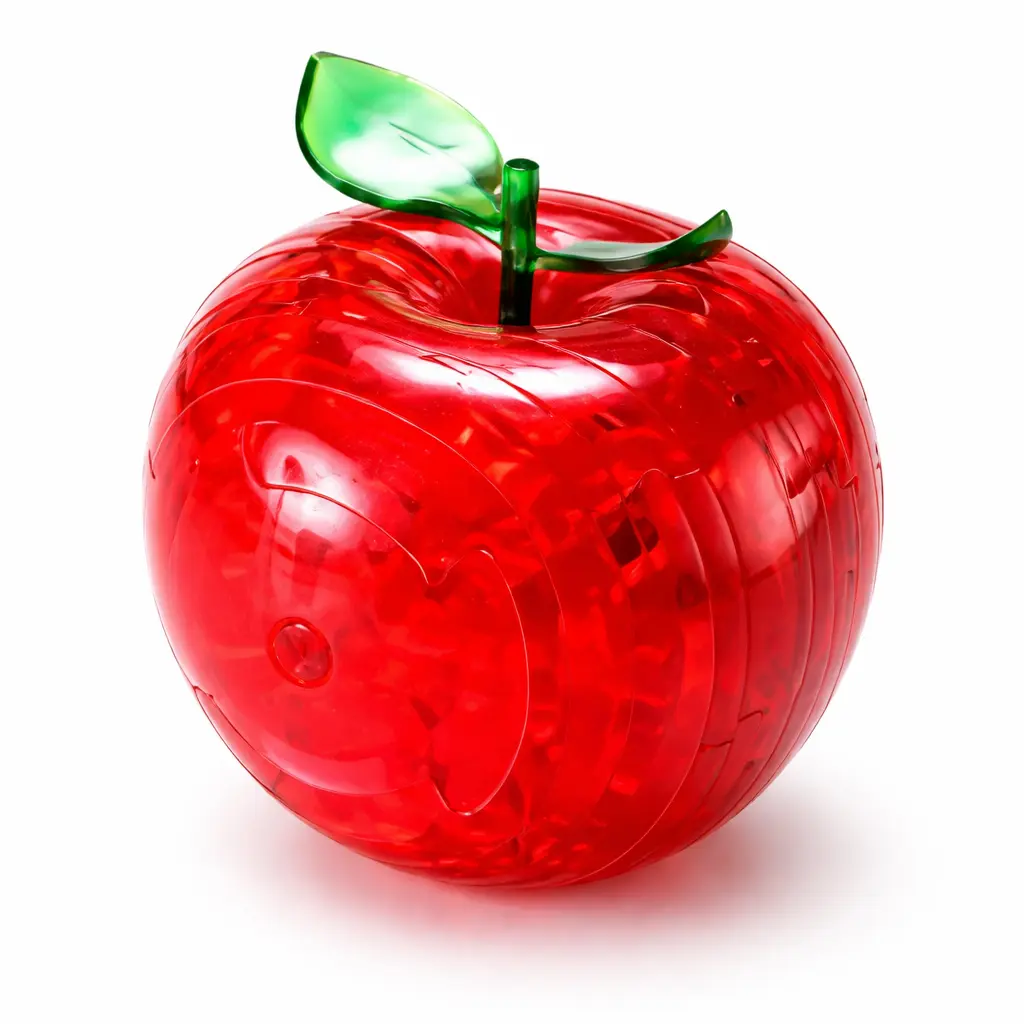
For a dorm-friendly starting point, the 3D Crystal Apple Puzzle at $18.88 delivers a compact finished model, a manageable piece count for a first-time builder, and a listed price that fits a care-package or birthday budget.
Run these four checks before you commit:
| Check | What to verify on the product page |
|---|---|
| Finished dimensions | Listed length × width against the student’s desk or shelf — confirm in the specs tab |
| Piece count | Match to free-time tolerance: under 30 reads as a study break, 40+ reads as a project |
| Difficulty tier | Look for “beginner” or “standard” labels if the recipient is a non-puzzler |
| Price-per-piece | Divide the listed price by piece count; lower per-piece cost signals better display value |
When those four checks line up and the shipping window covers the graduation or birthday date, the pick is settled.
01. Why a 3D Crystal Puzzle Fits the College-Student Reality
A 3D crystal puzzle earns its place in a college student’s room when the finished model fits the available shelf or desk real estate, the build window fits between class blocks, and the recipient actually enjoys a tactile, off-screen challenge. A three-dimensional jigsaw puzzle is a distinct format built from flat plastic pieces that snap into a three-dimensional form, which is exactly why they translate well to small dorm spaces — they ship flat, store flat, and only become “big” once assembled.
Dorm-friendly footprint is the first argument most gift guides miss. A typical dorm desk offers limited real estate, with a sizable share of the surface usually buried under a laptop, notebooks, and a water bottle. The clear finished model of a compact crystal puzzle usually measures between 3 and 5 inches in its longest dimension, which leaves room for a coffee mug and a textbook without forcing a reshuffle. Measure the available shelf or desk zone before ordering; if the clearance is under 4 inches in any direction, the apple, rose, or small gift-box formats will sit comfortably, while larger skull or architectural models need their own dedicated display surface.
A screen-free study break is the second argument, and it is the one college-student buyers will actually value. The mechanical-puzzle classification treats interlocking 3D puzzles as a subtype requiring spatial reasoning, which means the brain is engaged but the eyes are off a phone or laptop. A 30-to-90-minute build slot between a 2 p.m. lecture and an evening study session gives a tired mind a tactile reset without the dopamine hit of scrolling. Tactile manipulation objects, like fidget toys, are commonly used for focus and stress regulation — the fidget-tool framing applies here, not the “meditative cure” framing. Frame it to the recipient as a hands-on reset, not a clinical benefit.
Conversation-starter display value is the third argument, and it is the one that separates a 3D crystal puzzle from a regular jigsaw that lives in a box under the bed. A clear apple, rose, or geometric shape catches the light from a dorm window and reads as decor, not clutter. Visitors notice it; roommates ask about it. The BUILD / DISPLAY / COLLECT logic that brands like AreYouGame use on their product pages applies to dorm life too — once the model is built, the next decision is where it lives, not whether to dismantle it. If the recipient shares a triple, place the finished piece on their personal shelf rather than the shared windowsill, which respects the room’s display etiquette.
Move-in and move-out portability is the fourth argument, and it is the one that makes the gift last past graduation. Crystal puzzles are light, shatter-resistant relative to glass decor, and pack flat in the original box. A student who assembles one in September can take it to a summer sublet, a study-abroad room, and eventually a first apartment without it becoming a moving-day liability. That portability is what turns a $19-to-$30 gift into a four-year object rather than a one-semester desk item.
Run the four-check table from the Quick Answer before clicking buy, then match the shape to the room. For a compact dorm desk with limited display clearance, a small-format crystal puzzle lands better than an architectural model that dominates the shelf.
02. How to Match Size, Difficulty, and Display Footprint to a Dorm Setup
Match the 3D crystal puzzle to the desk before you match it to the person. A finished model that overhangs a shelf or crowds a laptop is a problem on day one, not after graduation. Start with the recipient’s display space, then filter by piece count and difficulty, and the right shape usually picks itself.
The four checks below turn that instinct into a concrete buying decision.
Check 1: Piece count as a proxy for build time. A 38-piece crystal gift box sits in the safe middle — fast enough for a first-time builder, slow enough to feel like an activity rather than a chore. A 49-piece skull, by contrast, pushes toward two to three hours of assembly and suits a student who already enjoys mechanical puzzles and wants an off-screen study-break that lasts an evening. Under 30 pieces, the build often finishes in under an hour, which can feel too light for a birthday or graduation window. Below 20 pieces, the model can finish before the recipient has committed to the build, which makes the gift feel small. Piece count is the single most reliable knob to turn.
Check 2: Difficulty rating on the product page. Most 3D crystal puzzles list an age recommendation — age 14 and up is a common threshold for the 40-plus-piece skull and architectural shapes. Treat the age line as a proxy for finger dexterity and patience, not a hard rule for a college-aged recipient. If the product page omits a difficulty line entirely, check the piece count, read a customer Q&A if one exists, and favor anything tagged beginner if the recipient has not built a 3D puzzle before.
Check 3: Finished dimensions against a real dorm surface. A standard dorm desk is modest in size, and the shelf depths of typical dorm furniture are limited. Most crystal puzzles finish well under 6 inches in their longest dimension, so shelf clearance is rarely the bottleneck. The real question is the model’s footprint on the desk — a wide base can crowd a laptop, a monitor arm, or a coffee mug. Before clicking buy, measure the listed finished size on the product page against the actual shelf or desk space you have in mind — a ruler or a phone screenshot overlay both work.
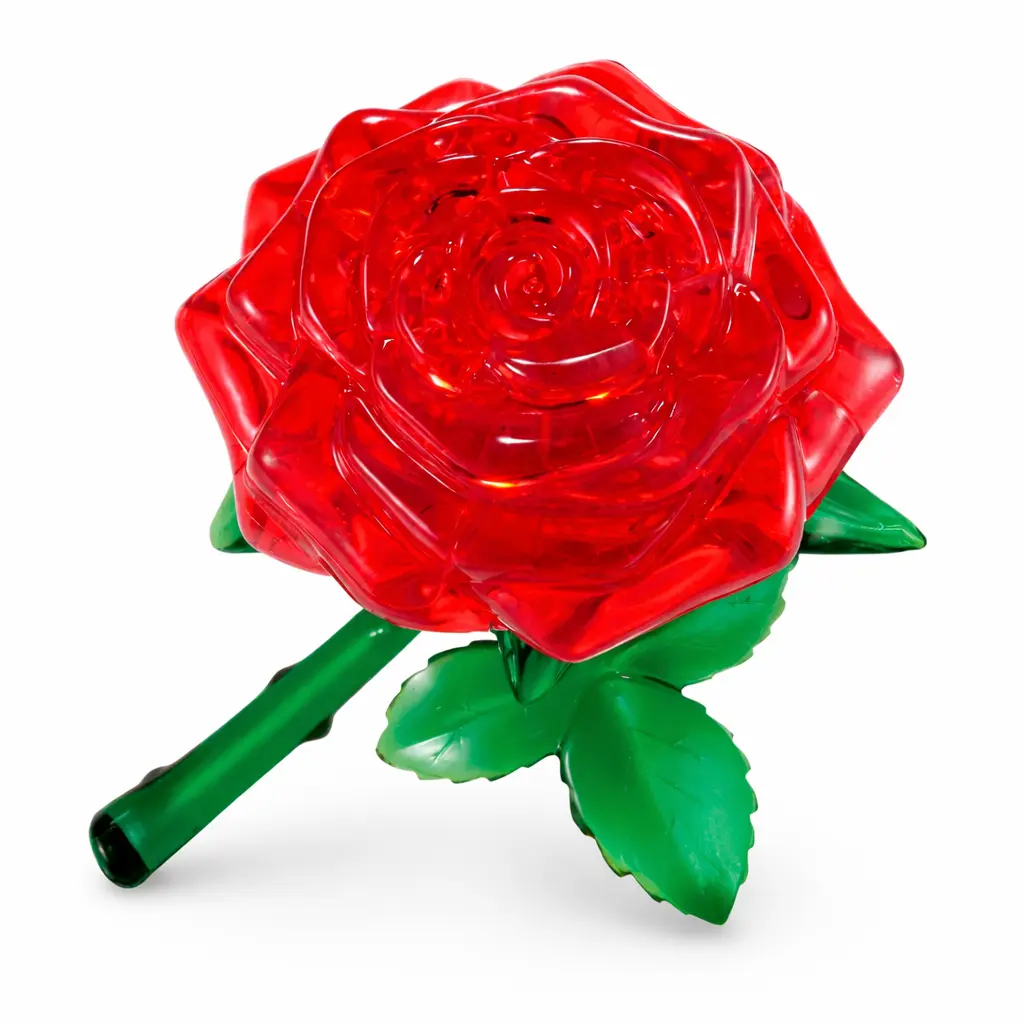
A small-format shape like a rose or apple has a dorm-friendly footprint — the base stays tight even when the silhouette is tall and decorative.
Check 4: Whether a light-up wood base is worth the upgrade. Some crystal puzzles — including the 49-piece skull — offer an optional wood base with a built-in LED. The upgrade earns its price when the display piece lives on a dim shelf or doubles as a low-key nightlight in a dorm that lacks an overhead lamp. Skip it if the recipient has no outlet near the display spot, or if the piece will sit on a desk that already competes with a monitor’s glow. The base is a comfort feature, not a necessity.
Next action. Pull up two product pages and write down the piece count, the listed finished dimensions, the age recommendation, and whether a light-up base is included or sold separately. Those four numbers, side by side, make the choice obvious without further research.
03. Top 3D Crystal Puzzle Picks by Gift Scenario
Match the crystal puzzle shape family to the gift occasion first, then verify the four checks from the previous step — piece count, finished dimensions, age rating, and light-up base option. A graduation present reads differently from a birthday, and a care package has to survive flat-rate shipping. The picks below are organized by scenario, not by brand score, so each shape can be judged against the student’s likely dorm reality.
Graduation gift: 3D Crystal Apple Puzzle ($18.88). The apple shape carries a built-in academic echo without feeling like a textbook trophy — it reads as a polished display piece rather than a classroom prop. At $18.88, it leaves room in the budget for a card, wrapping paper, and shipping, which matters when buying graduation gifts for an entire cohort of friends or siblings. The plastic crystal form has a dorm-friendly footprint and holds up to the inevitable move-out at semester’s end; it can ride home in a backpack pocket without snapping. For buyers who want a single reliable graduation pick, the 3D Crystal Apple Puzzle is the safe first call. For a broader shortlist of graduation-appropriate puzzle gifts beyond the apple, see the 7 puzzle gifts for graduation that beat cash roundup.
Birthday gift: 3D Crystal Rose Puzzle ($19.99). Roses read as decorative rather than academic, which keeps a birthday gift from feeling like a graduation repeat. At $19.99, the rose lands in the same under-$25 tier as the apple but with a longer display life — most students will keep a rose on a shelf or desk for years, while an apple may feel more occasion-specific. The rose’s vertical silhouette also fits a narrow windowsill that wider animal shapes can’t occupy, and it doubles as an off-screen conversation starter that doesn’t compete with a laptop. Check the 3D Crystal Rose Puzzle product page for the current finished height before buying.
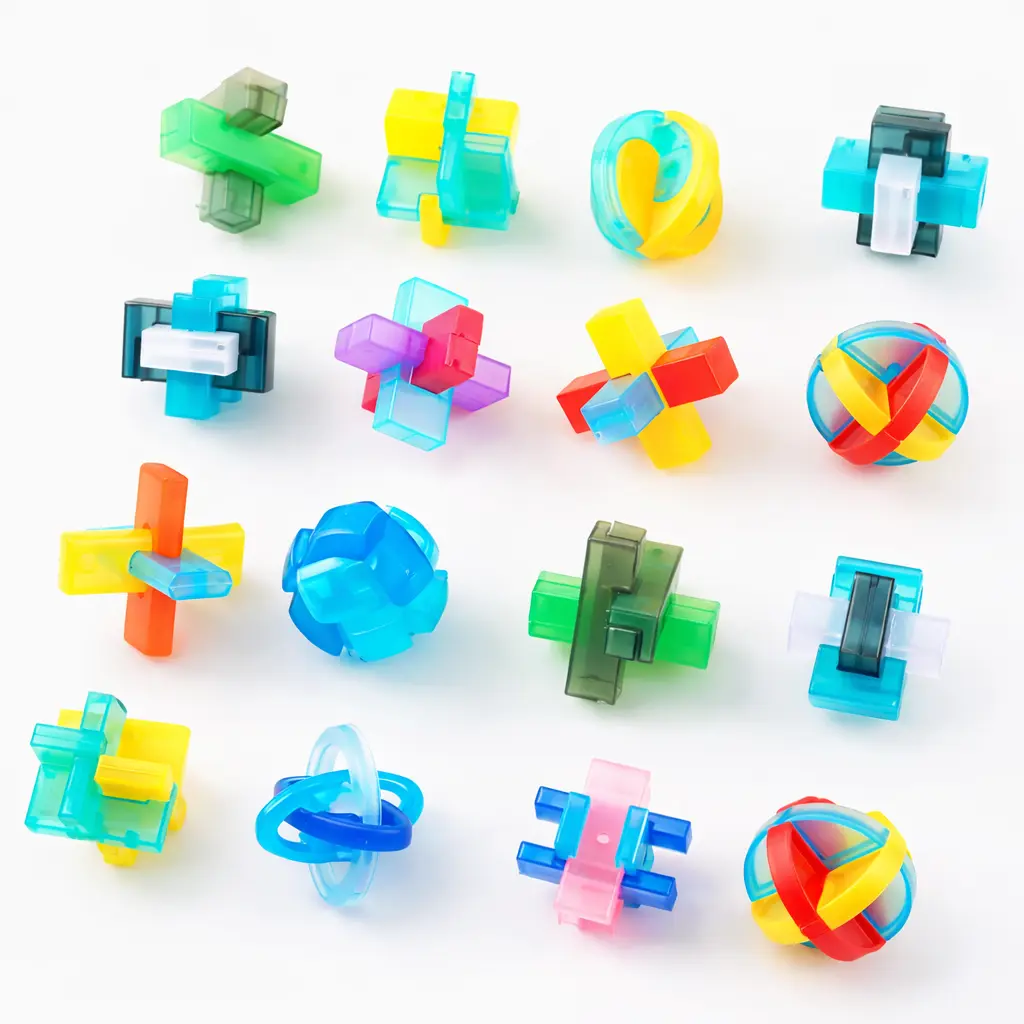
Care package: 12 Piece Crystal Luban Lock Set ($28.88). A care package has to ship flat, survive a long route, and offer more than one session of engagement. The Luban Lock set breaks into 12 small individual challenges, so the recipient can pull one out during a 20-minute study break instead of committing to a 1–3 hour build. At $28.88, it sits at the top of the care-package price tier, but the per-piece cost drops to roughly $2.40 — a reasonable rate for a multi-week study-break activity that travels well in a padded envelope.
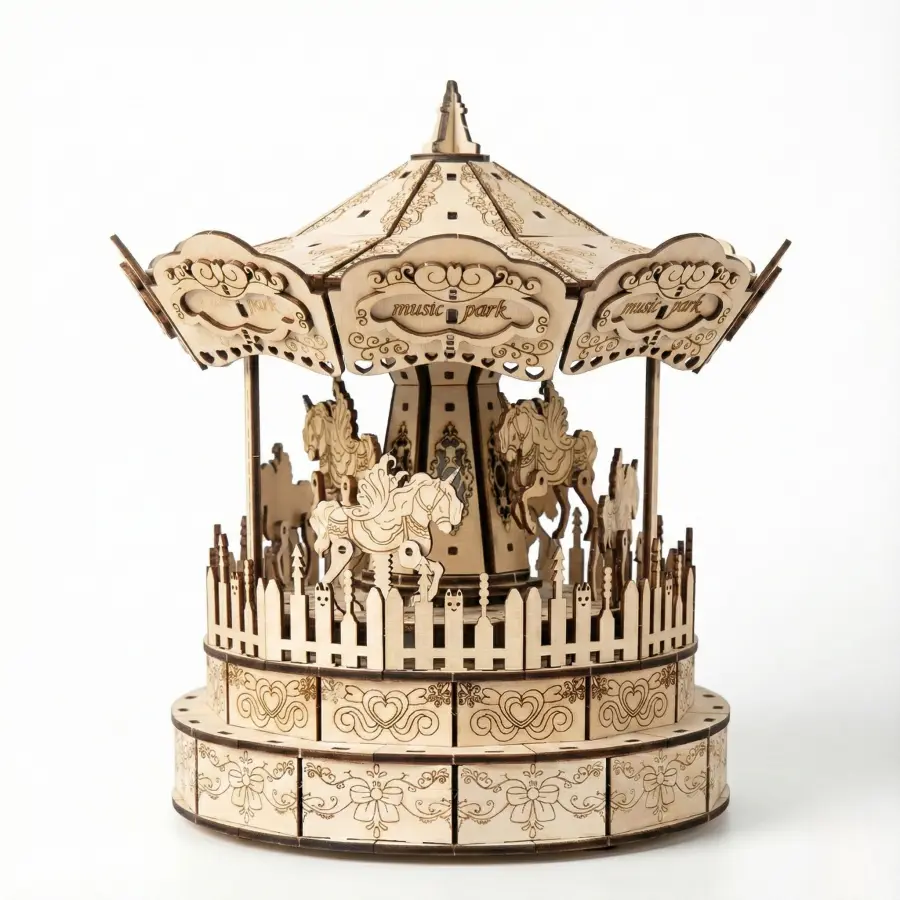
“No idea what to get” gift: 3d Wooden Carousel Music Box ($43.99). When the recipient’s taste is a blank slate, the carousel earns the step-up price with a finished display that actually moves and plays. The wood base sits firmly on a desk, the rotation reads as kinetic decor rather than a static shelf piece, and the $43.99 price signals a real gift without crossing the $50 ceiling that makes college budgets flinch. For a parent who doesn’t know whether the student is into puzzles at all, the music box offers display value a single crystal shape can’t match.
Avoid the mismatch. If the recipient is an engineering major who already owns screwdriver sets and metal disentanglement puzzles, a basic crystal shape may feel too light. A wooden model kit carries more technical credibility in that crowd, even at a similar price point. The shape family should match the recipient’s known interests, not just the buyer’s budget.
Next action. Pick the scenario that matches the calendar date first, then match the shape family to the recipient’s known display surface. The apple anchors graduation, the rose suits a birthday, the lock set fits a care package, and the music box covers the no-preference case.
04. Price-Per-Piece Math and the Shipping-Window Check
A finished 3D crystal puzzle earns its place on a dorm shelf only when the price-per-piece matches the display ambition, so do the division before the recipient tears the wrapping paper. Run two numbers side by side: the listed price and the piece count on the box. A puzzle at $18.88 with roughly 38 pieces lands near $0.50 per piece, which is the comfortable middle for a dorm-friendly display. A 49-piece skull at a similar price tier lands slightly under $0.50 per piece, but the skull occupies a taller vertical footprint and a narrower audience. The math matters less than the ratio: if a buyer is paying above $0.80 per piece, the shape or material has to justify it with display value the recipient will actually want on a shelf.
The Tea-Sip roster sits in a narrow band. The 3D Crystal Apple Puzzle ($18.88) and the 3D Crystal Rose Puzzle ($19.99) both clear the $25 ceiling a college-gift budget usually draws, and the 12 Piece Crystal Luban Lock Set ($28.88) crosses that line only because it ships as a set rather than a single build. The 3d Wooden Carousel Music Box ($43.99) breaks the $30 mark because it adds a movement feature, not just plastic pieces, which is a different gift category entirely. Check the current price on the product page before committing, because the page is the only field that reflects today’s number.
Price-per-piece math protects against the most common mistake: a buyer pays for a larger piece count and ends up with a finished model too tall for a standard dorm shelf. Lofted bunks can leave limited clearance between the desk surface and the upper frame, which may cap the display height before the piece count does. Match the piece count to the available vertical space first, then check the math.
The second decision is the shipping window. Some puzzles can take longer than expected to arrive, which is a common reason a graduation or birthday gift arrives late. Before clicking buy, locate three page fields: the lead time, the ship-by date, and any in-stock indicator. A product that lists a ship-by date is safer than one that only states “ships within X days,” because the ship-by date is a firm calendar anchor. Order at least 10 business days ahead of the event whenever the calendar allows, and longer for international shipments.
A compact 38-piece shape around $18.88 hits the dorm-shelf sweet spot without crowding the budget, and a 12-piece set opens the door for a care package with multiple small reveals. Confirm lead time, ship-by date, and in-stock status on the product page, then place the order with enough buffer to absorb a carrier delay. The buyer who runs both checks — the price-per-piece division and the shipping-window verification — is the buyer who arrives at the dorm with a gift that fits, displays, and shows up on time.
05. What to Check Before You Buy: A Decision Checklist
The single most-missed check is the finished-model height, not the piece count. A 38-piece gift-box shape and a 49-piece skull can both describe themselves as “compact,” yet one may stand twice as tall as the other once assembled. Measure the recipient’s shelf or desk corner first, then compare against the assembled dimensions on the product page. The next step is a quick page scan before checkout, and that is where the checklist below earns its place.
| What to check | How to verify | Why it matters |
|---|---|---|
| Piece count | Product title or specs line | Maps to build time and difficulty; 12–49 pieces covers most first-time college solvers |
| Finished-model dimensions | Specs line or photo with a ruler reference | Determines fit on a dorm shelf, desk corner, or windowsill |
| Difficulty tier | “Beginner,” “intermediate,” or age rating on the box | 3D crystal puzzles are interlocking mechanical puzzles that call for spatial reasoning; a first-timer should start at the easier end |
| Light-up base | “Base included” or “sold separately” tag on the listing | Turns the model into a nightstand display piece rather than a daytime-only shelf item |
| Age rating | “Age 12+” or “Age 14+” on the packaging | College students are adults, but a higher age rating typically signals a more challenging build |
| Return policy | Returnable or final sale indicator on the product page | Assembled puzzles are often final sale once the box opens; confirm before checkout |
| Ship-by date | “Order by [date]” or “Ships by [date]” on the listing | The firm calendar anchor for graduation or birthday delivery |
The rows that catch most buyers are the last three. Return policies on opened puzzle boxes tend to be restrictive, and the absence of a “Ships by [date]” line is the most common reason a gift arrives after the event. A phone screenshot of the dimensions, a single quick email to the seller to confirm the ship-by date, and a 30-second scroll through the return policy are the three pre-click habits that close the loop.
One habit separates a confident gift-giver from a return-prone one: read the page twice. The first read is for the spec numbers; the second is for the shipping, return, and packaging language. A buyer who catches “ships within 3–5 business days” on a Friday order can pivot to a faster option before checkout. The single next action is simple: open the product page, scroll to the specs and shipping sections, and confirm the two numbers that govern fit and timing before closing the cart.
06. 3D Crystal Puzzle Gift Questions, Answered
With the pre-click habits behind you — dimensions confirmed, ship-by date verified, return policy scanned — the remaining decision lives on the recipient’s side of the page. Three checks decide whether a 3D crystal puzzle is the right college gift: shelf or desk space, a one-to-three-hour appetite for assembly, and a finished model that earns its keep as decor. Clear all three, and the gift is a fit. Here are the eight questions most gift-givers still ask before buying.
Are 3D crystal puzzles good gifts for college students?
Yes, when the recipient has a shelf, a dorm desk, or a study-break window of one to three hours. Skip the gift if the student lives in a triple with no display surface, hates fiddly assembly, or treats every free minute as screen time.
How hard is a 3D crystal puzzle for someone who doesn’t do puzzles?
A 38-piece box or a 49-piece skull is the safe middle for a first-time builder — short enough to finish in one sitting, with an age rating that starts at 14 and up. If the student has never done a 3D puzzle before, skip anything labeled “challenging” or “advanced.”
How long does it take to finish?
Plan on a 1–3 hour build for a standard piece count in this category. That window fits an afternoon, a study break, or a single evening — which is why these puzzles match a college schedule.
Will it be used or collect dust?
The dust risk is real when the shape is generic. An apple, a rose, a gift box, or a skull earns its shelf by looking like decor first. Match the shape to the student’s actual room and the model stays on display through finals and into the first apartment.
What size fits a typical dorm desk?
A finished model under roughly 4 inches in any direction fits a standard dorm desk without crowding a laptop, a lamp, or a roommate’s elbow. Always check the listed dimensions on the product page before checkout.
How much should I spend?
The working range for a college student gift is $15–$30. That covers the safe-middle piece counts without crossing into “too expensive to risk” territory. The product page is the final word on the current price.
Are there versions with a light-up base?
Yes. A wood display base with an LED insert is a common add-on for skull and architectural shapes, turning the puzzle into a nightlight or desk accent. Check the listing for a “light-up base” or “LED base” option before checkout.
Can it ship in time for a graduation or birthday?
Standard domestic shipping clears most windows if ordered well ahead of the date. International or made-to-order puzzles carry more risk — confirm the explicit ship-by date on the listing, and treat its absence as a reason to choose a different option.
The decision loops back to the opening test: shelf or desk space, a one-to-three-hour appetite, and a finished model worth keeping. Clear those three, and the cart closes with confidence. Next step: open the product page, confirm the finished dimensions and ship-by date, and buy.
Where to Start
If the recipient and occasion checks above match, start with 3D Crystal Apple Puzzle. Check the current product page for the specifications that matter to your choice.
Still comparing options? Revisit the four checks in the Quick Answer and run them against the 3D Crystal Apple Puzzle product page before exploring alternatives.
Sources and verification
- Product details and current specifications: Tea-Sip product page
Last updated: August 25, 2026