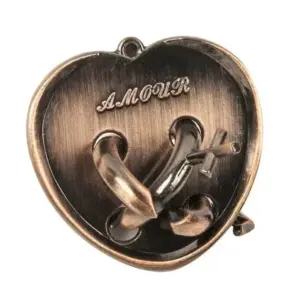
Quick Answer: Metal Puzzles for Adults at a Glance
Metal puzzles for adults fall into six distinct categories — from $14 cast disentanglement brain teasers that double as pocket fidget objects, to $300+ kinetic desk sculptures with no defined “win.” The right pick depends on whether you want a solve, a build, or an object.
| Option | Best For | Price | Skip If |
|---|---|---|---|
| Cast disentanglement (Tea Sip Cast Hook; Hanayama Cast Vortex as comparison) | First-time buyers wanting 10–90 min solves, cold-to-the-touch desk fidget, pocket carry | $14–$40 | You want a build, not a solve |
| 3D assembly kits (Metal Earth, Mostarle Fantasy Dragon up to 126 cm) | Display pieces, weekend projects, builders who want 150 to 3,000+ piece counts | $15–$150+ | You want a “puzzle solved” moment |
| Mechanical/interlocking (TecHing inline-4 engines, cast burrs, articulated assemblies) | Engineering hobbyists, multi-session builds, displayable moving mechanisms | $30–$200+ | You want something pocketable |
| Wire & metal jigsaw puzzles (laser-cut steel sheets, no tools required) | Visual puzzlers, frame-worthy wall art, low-mess coffee-table builds | $20–$60 | You want hand-feel and physical manipulation |
| Kinetic sculptural (perpetual-motion desk objects, articulated metal) | Desk presence, ambient motion, high-impact challenge gift | $40–$300+ | You want a clear “I finished it” finish |
| Puzzle rings (wearing-band mechanisms in stainless & brass) | Everyday carry, unisex jewelry gift, pocketable conversation piece | $25–$150 | You tend to lose small rings |
The Six Types of Metal Puzzles for Adults (and Why ‘Metal Puzzle’ Is Not One Product)
The phrase “metal puzzle for adults” covers at least six commercially distinct product categories — from $14 cast disentanglements to $200+ precision puzzles, with piece counts ranging from a single mechanism to 3,000+ in a 126 cm fantasy dragon model. None of them solve the same way.
That table at the end of the previous section is the compressed version of what took me the better part of a year to learn by carrying twelve different metal puzzles in rotation. Before I walk through each type, it helps to see the whole shelf laid out — the six-category taxonomy of metal brain teasers covers the same territory with additional product photos if you want the visual version. You can also browse the full metal puzzles collection to see how retailers group these products in practice. Now let me walk through each type — what it actually feels like to hold, how it solves, and where it lives on the difficulty ladder.
Disentanglement puzzles are the most common product you’ll encounter first, and the one most adult gift-buyers end up purchasing. Two cast metal pieces — usually zinc alloy, sometimes brass — interlock in a way that suggests they should separate but won’t. The solve is to find the sequence of moves that frees them. The lead product in this category is the Tea Sip Cast Hook, with two release moves that most adult solvers crack in 30–90 minutes on a first attempt. Hanayama makes 50+ models in the same format — Cast Vortex, Cast Loop, Cast Infinity — priced $13 to $40, and they are the comparison point every hobbyist references. A Cast Vortex lived in my jacket pocket through six weeks of keys, receipts, and a few errant coin rolls before I sat down and actually solved it. The metal picks up a dull patina; the pieces develop a faint memory of your grip.
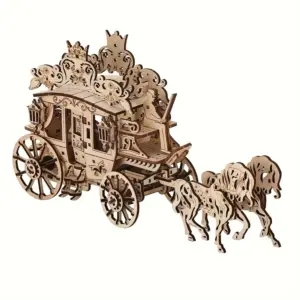
3D assembly kits are the other half of the market — and almost every listicle in the top ten collapses “metal puzzle” into this category alone. They are not brain teasers. They are DIY model kits: laser-cut steel sheets that you punch out and snap together without glue or tools. Piece counts run from around 150 in a small desk model to 3,000+ in large display builds like the 126 cm Mostarle Fantasy Dragon. Solve time is measured in evenings, not minutes. There is no “I figured it out” moment — only the quiet click-click-click of tabs seating into slots. The finished object is a sculpture, not a solved artifact.
Mechanical and interlocking puzzles are the engineering-hobbyist lane. Think TecHing inline-4 engine models with 300+ pieces, or cast burrs made of identical-looking blocks that move against each other in ways that seem impossible. These puzzles want patience, a clean table, and usually a few sessions. They are displayable in motion once built — articulated parts that turn, pump, articulate — which is why a $30–$200+ price range is normal here. The solve feel is closer to a watchmaker’s job than a coffee-break distraction. Upper-tier brands like Revomaze ($80–$200+) sit at the precision end, where the mechanism tolerances become the puzzle itself.
Wire and metal jigsaw puzzles sit at the visual end of the spectrum. They arrive as flat laser-cut steel sheets, often with a printed artwork or silhouette, and you press the pieces out and slot them into a frame. No tool required, no bending, no gluing. The reward is mostly aesthetic — frame-worthy, often hung rather than stored. They are the right pick for someone who wants a coffee-table build with a clear finished state, not a puzzle you carry in your pocket. A well-made metal jigsaw puzzle of this kind lives on a wall as much as a desk.
Kinetic sculptural puzzles are the high-impact gift category. Perpetual-motion desk objects, articulated metal creatures, hinged assemblies that move when you touch them. They are the least “puzzle” of the six — many are sold as buildable desk toys rather than solvable challenges — and the most visually striking once assembled. Prices climb to $300+ for large or limited-run pieces, but the sweet spot for gifting is $40–$80. The satisfaction lives in the display, not the solve.
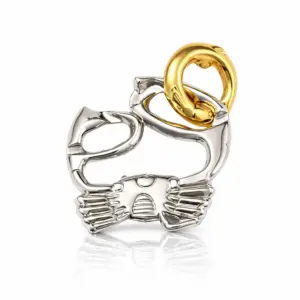
Puzzle rings are the oldest category in the lineup — medieval in origin, still made today. Multiple metal bands interlock so the ring can be worn, but can also be disassembled and reassembled. They are the right pick for someone who wants a pocketable everyday carry, a unisex jewelry gift, or a conversation piece. The materials run from stainless steel to brass to mixed alloys, and the construction quality varies more than any other category. Cheap rings lose their tension in a few weeks. A well-made one holds for years, and the best puzzle designers in this niche still rely on hand-tuning each band.
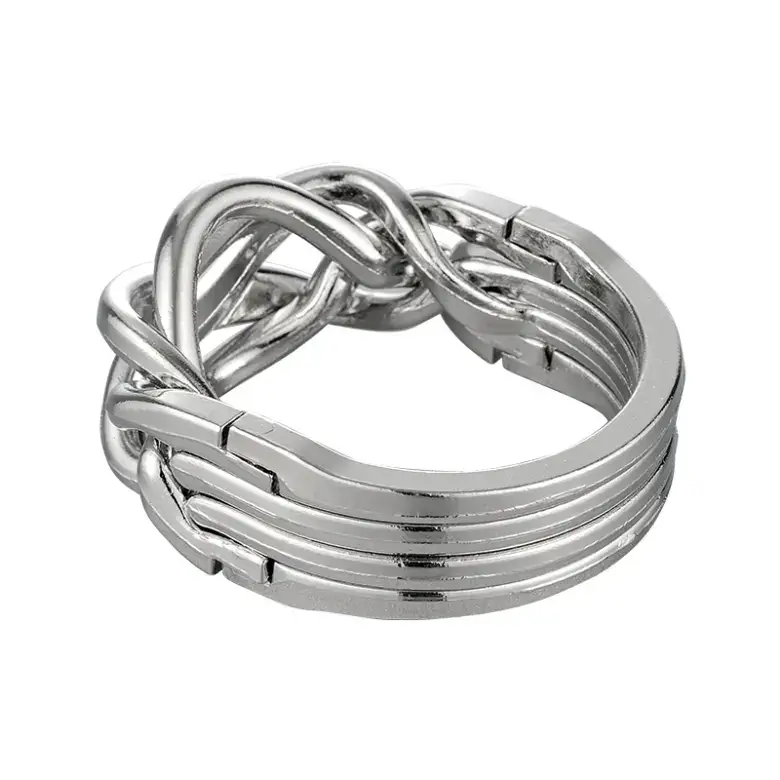
4 Band Puzzle Ring — $11.99
The reason this taxonomy matters is that almost every metal puzzle purchase goes wrong for the same reason: the buyer didn’t know which of these six types they were actually looking for. A Hanayama buyer ends up frustrated by a Metal Earth kit. A Metal Earth buyer assumes a TecHing engine is a coffee-break puzzle. They are not the same product in any sense that matters — not in solve time, not in display value, not in carry weight, not in solve feel.
If you’re still unsure which shelf of the metal-puzzle universe to shop, the next section explains what a metal puzzle actually is, mechanically — zinc alloy versus stainless steel, why brass exists at all, and the plating-wear issue no marketplace listing warns you about.
Disentanglement and Cast Puzzles: Hanayama, Revomaze, and What Makes a Cast Brain Teaser Different
Of the six metal puzzle types in the taxonomy, the cast disentanglement is the one most adults encounter first — it shows up in airport gift shops, on executive desks, in the background of every third “things I bought on a whim” YouTube video. Hanayama dominates this category with 50+ cast models priced $13 to $40, making it the default reference point for anyone asking what a “metal brain teaser” actually is. As Wikipedia’s overview of disentanglement puzzles notes, the category is a subset of the broader mechanical puzzle tradition — but the cast-metal format is its own lineage, with its own designers and conventions.
A disentanglement puzzle is the simplest of the six to explain and the hardest to describe without holding one. Two or more cast metal pieces interlock. The solver’s job is to separate them — not by force, never by force, but by following a specific sequence of moves the designer has hidden inside the mechanism. A Rubik’s cube, by contrast, lives on the surface: every piece is visible, every move is rotating a known part on a known axis. A cast puzzle hides its logic inside a solid block of metal. You cannot see the move. You have to feel for it.
This is the category where I live most of the time. It is also where the most common buying mistake happens: a first-time buyer drops $14 on a Hanayama Cast Loop, solves it in ten minutes, and concludes that “metal puzzles are too easy” or “metal puzzles are boring.” They have, in fact, simply picked a Cast Loop. The Loop is a level-2 on Hanayama’s six-level scale, designed as a coffee-break warmup. The Cast Vortex (SKU H136), sitting at level 6, is a different object in every measurable way — heavier in the hand, slower to reveal its first move, capable of consuming an entire evening without warning.
If you’re new to the category, the smartest first purchase is one that teaches you how a cast puzzle thinks before it tests your patience. The Cast Hook metal brain teaser does exactly this: two cast zinc pieces, a clear single goal, and a mechanism that rewards the kind of slow, patient, screen-free focus that makes these puzzles worth owning in the first place.
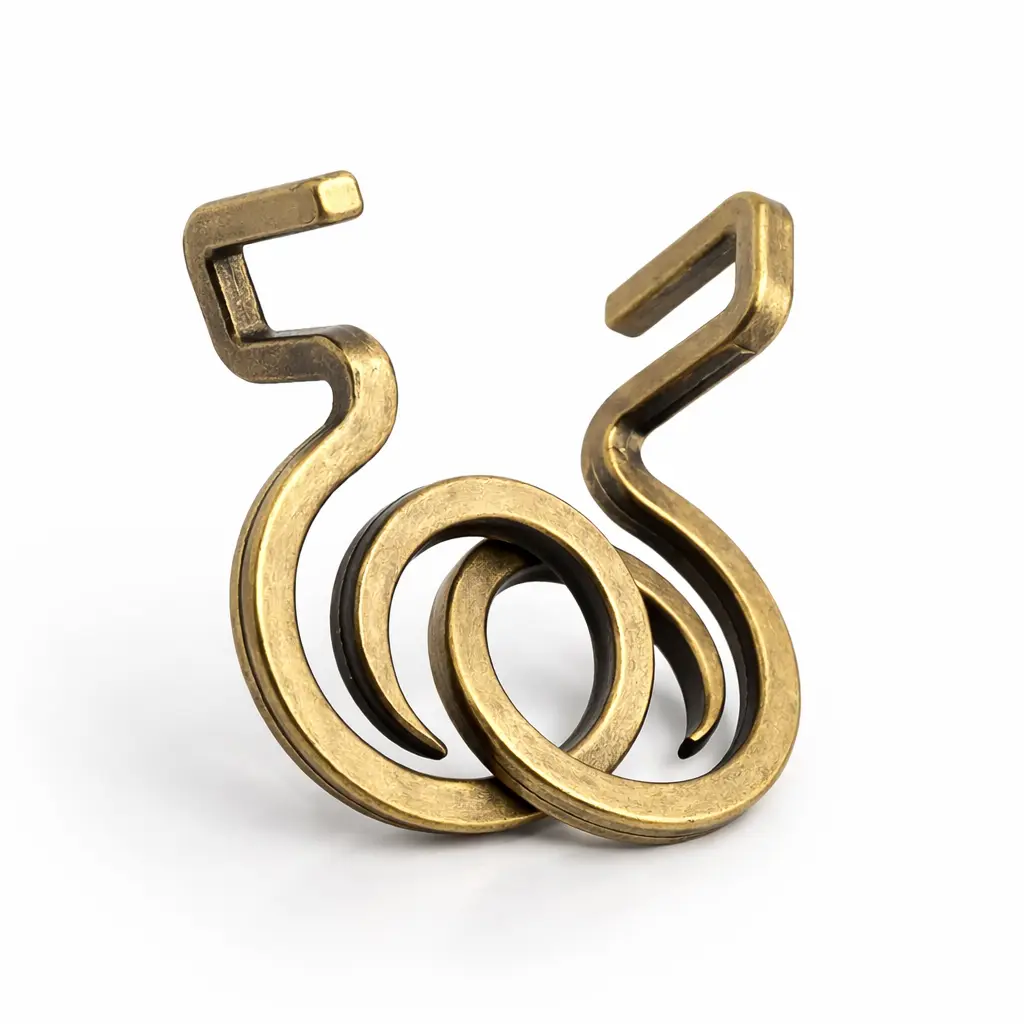
Most solvers clear the Cast Hook in 30 to 90 minutes on a first attempt, and that range is honest — the mechanism has two release moves, neither of which is brute-force findable. The solve feel is what keeps people buying a second puzzle: that quiet click when a hidden pin finally slides, the metal warming from cold to the touch in your palm as you work, the small dopamine of a clean separation at the end. For a deeper walkthrough of the moves themselves, our step-by-step Cast Hook solve guide covers the full sequence without spoiling the discovery.
Above the Cast Hook — and above most of Hanayama’s catalog — sits the upper tier, and the name that comes up on r/mechanicalpuzzles with almost religious reverence is Revomaze. Where Hanayama designs puzzles in the $13–$40 range with zinc alloy bodies and plated finishes, Revomaze builds in the $80–$200+ range using stainless steel and brass, with tolerances tight enough that a first-time solver can spend days mapping a single internal chamber. The Reddit consensus — “I’m spoiled by the workmanship of Revomaze” — is not a marketing line. It is a recognition that at that price tier the mechanism itself becomes the art object, the thing you hold and re-hold long after you’ve solved it.
There is a real reason these puzzles cost what they cost, and it is mostly material and tolerance. Zinc alloy is dense enough to feel substantial, cheap enough to keep the entry price low, and easy to cast into complex internal geometries. Stainless steel, used in higher-end cast puzzles and in most Revomaze designs, resists the one problem that quietly kills budget cast puzzles: plating wear. The nickel and chrome finishes on cheaper cast pieces begin to flake within a year of pocket carry, exposing dull gray zinc underneath. A brass puzzle develops patina instead of flaking, which is why the few cast brass models in the mechanical puzzle world command prices that look absurd until you hold one. Our breakdown of metal puzzle tips and tricks for disentanglement covers the move-language patterns that transfer across brands and price tiers — useful once you’ve started collecting.
The practical buying path: start with a cast puzzle in the $13–$20 range to learn the language of the mechanism — how a hidden pin feels, how a release move announces itself. The Cast Hook is built for exactly that introduction. If you find yourself reaching for it before checking your phone, you’ve found your category. From there, climb the Hanayama difficulty ladder through the Cast Loop, the Cast Vortex, and whatever level-6 model catches your eye. If you finish two or three Hanayama puzzles and want more — tighter tolerances, heavier metal, a longer hunt — that is the moment Revomaze enters the picture, not before.
3D Metal Assembly Models vs. Solvable Metal Puzzles: The Distinction Every Buyer Should Know First
3D metal assembly kits range from 150-piece tabletop models to 3,000+ piece Fantasy Dragon builds measuring 126 cm long — and none of them are puzzles in the same sense as the cast metal brain teaser sitting in your pocket. This is the distinction that derails most first-time metal puzzle buyers, because the phrase “metal puzzle” now covers two products that share almost nothing except material. A Metal Earth Empire State Building is a build. A Cast Hook is a solve. The steel, the act, and the result are completely different objects.
Here is the simplest way I can put it after years of watching friends get these confused at my shelf: a 3D metal assembly model is a laser-cut steel sheet that you pop out, bend, and tab together into a displayable sculpture. You are following a manual. You are not discovering a hidden mechanism. When the last tab clicks, the puzzle is over — and what remains is a decorative object. A 3,000-piece Fantasy Dragon from Moyustore, a Mostarle 150-piece motorcycle, and a Metal Earth Apollo Lunar Module all belong to this category. Reddit’s mechanical puzzle community describes them approvingly as appealing to people who “enjoy working with tiny pieces” and prefer a displayable build over a solvable brain teaser — which is honest, and exactly right.
A solvable metal puzzle, by contrast, hands you a finished object that is already complete in some way you cannot immediately see. Your task is not to assemble it but to find the move — the hidden path, the rotational trick, the release point — that takes it apart or reconfigures it. Disentanglement puzzles, interlocking mechanical puzzles, and puzzle rings all live here. You do not build them. You take them apart. And once you’ve solved one, you can solve it again, and again, and loan it to someone else to solve, which is something a 3D assembly model can never do.
To answer the direct question: no, 3D metal assembly kits are not just for display, but they are not solvable either. They are builds that end in a display. The hands-on time is construction time — bending tabs, seating joints, occasionally swearing at a piece that will not seat flush. A Mostarle small kit (around 150 pieces) might take an evening. A mid-range 500-piece locomotive can take a full weekend with tweezers and good lighting. The 3,000-piece Fantasy Dragon is a multi-month project that ends in a 126 cm sculpture on a mantle. There is no “Aha.” There is only completion.
The tactile experience is different too, and this is where the sensory gap becomes obvious. A 3D metal assembly model feels like model-building — thin steel sheets, sharp edges during the pop-out phase, a faint metallic smell from the laser cuts, and a satisfying click when tabs seat. A solvable cast metal brain teaser like the Cast Hook feels like cold, heavy, machined weight in your palm from the first touch. The Cast Hook is built from cast metal that warms slowly to your hand, has no sharp edges, and delivers a quiet mechanical click only when you find the correct release move. It weighs more than a comparable Metal Earth model by a factor of three or four. It is not a display piece — it is a thinking object.
So which one are you actually looking for? If you want an evening project that ends in something beautiful on a shelf — and you genuinely enjoy model-building — a 3D metal assembly kit delivers exactly that. If you want something you can pick up, put down, fail at, succeed at, and revisit for years — a disentanglement or cast brain teaser is your category. The materials overlap (steel, zinc alloy, plated finishes), the word “puzzle” overlaps, and the marketing pages blur them together constantly. The buyer who understands this distinction before clicking “add to cart” saves themselves the single most common disappointment in the metal puzzle world: unwrapping a build when they wanted a solve, or vice versa.
How Long Different Metal Puzzles Actually Take: A Time-Based Difficulty Ladder
Beginner cast disentanglement puzzles solve in 5–30 minutes; upper-tier Revomaze and 3,000-piece assembly models can take weeks to months. The spread is enormous — and the only useful way to navigate it, once you’ve decided whether you want a build or a solve, is by time-on-task rather than a vague hard/medium/easy label. The “difficulty levels” printed on retail boxes rarely reflect what the puzzle actually demands of your hours.
The Cast Hook itself sits at 30–90 minutes for a first attempt — a mid-range entry in the cast brain teaser family that anchors the middle of this ladder. Where a puzzle lands on the ladder determines almost everything else: whether it lives in a desk drawer or a coat pocket, whether it becomes a weekend habit or a season-long project, whether you’ll finish before the novelty wears off. The interesting wrinkle is that a Hanayama Level 6 and a Metal Earth “Expert” kit carry the same external label and wildly different time commitments — our piece on why a Level 5 can mean 3 minutes or 3 days unpacks how difficulty scales differently across the categories.
The Five Rungs
Five minutes. Wire-and-ring disentanglement puzzles at the entry tier — the ones that look like two coat hangers that shouldn’t fit together but somehow do. Most adults solve these in a single coffee break. They’re a gateway, not a destination. Good for stocking stuffers and impulse buys; less good as a primary collection pivot.
Thirty minutes. This is where the entry-level cast brain teasers and multi-piece beginner sets live. A five-piece cast spiral, for instance, introduces the satisfying click of a correct release without requiring the solver to commit an evening.
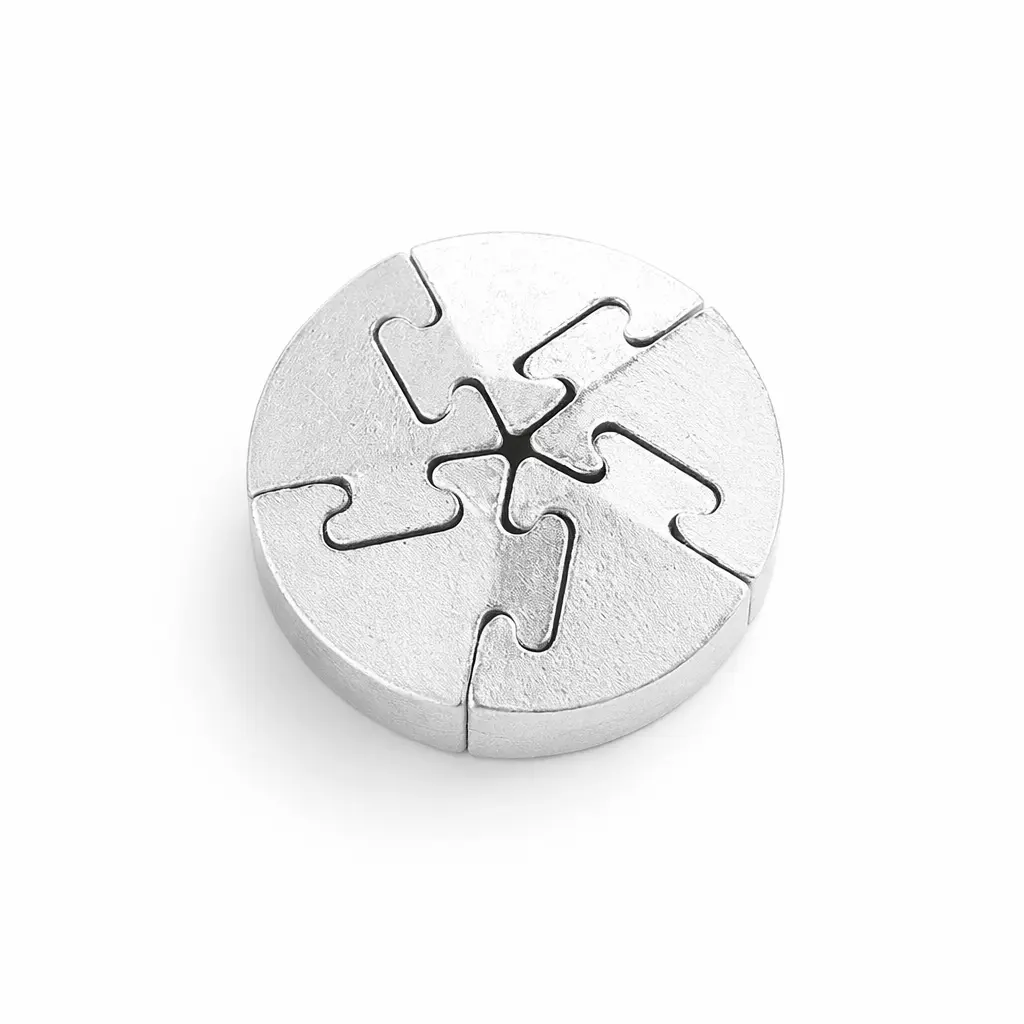
Two hours. The upper end of the cast disentanglement range — puzzles with a four- or five-step release sequence, where the first move is obvious and the second move consumes an evening. Most mid-tier cast brain teasers, the Cast Hook included, land in this band on a first solve. Experienced solvers bring them down to twenty minutes; beginners walk away and come back three nights in a row.
Weekend project. Mid-size 3D metal model kits in the 100–300 piece range — a small motorcycle, a lighthouse, a turret. Reddit users who collect Metal Earth describe the appeal as “working with tiny pieces” rather than solve difficulty. The challenge is dexterity, not logic. Expect 4–10 hours of careful tweezer work spread across a Saturday and Sunday, with the satisfaction coming from how the parts articulate once finished. Most of these ship with a brief printed solution guide in the box.
Months. Two categories share this rung. The first is the 3,000+ piece Fantasy Dragon–class assembly kits — 126-centimeter display pieces that consume a corner of your apartment for an entire season. The second is upper-tier mechanical work: TecHing’s 300+-piece engine models that mechanical-engineering hobbyists rebuild over multiple Sunday afternoons, and Revomaze brass-and-steel puzzles where the mechanism has a deliberate learning curve measured in weeks of daily attempts. The display pieces that result are some of the most collectibles-rich items in the broader mechanical puzzle world.
How to Self-Select
If you have fifteen minutes between meetings, rung one. If you want something to think about during a long train ride, rung two or three. If your hands need a project that absorbs a Sunday, rung four. If you’re the person who keeps a 1,000-piece jigsaw on a card table for three months, rung five is home.
The mistake most buyers make is trusting the printed difficulty rating. Time is the better filter. Buy by the hour you actually have.
Materials, Plating, and Patina: Why Most Metal Puzzles Are Zinc Alloy (and Why That Matters)
Most cast metal puzzles under $40 are zinc alloy with a chrome or nickel plating, while premium brands like Revomaze use brass, copper, and stainless steel. The $40 line is also roughly where the durability cliff starts — below it, the metal is chosen to make the economics work. Above it, the metal is chosen to make the object last.
Pick up a zinc-alloy Hanayama Cast Loop and a brass-bodied Revomaze and set them on a wooden table. The difference is immediate. Zinc alloy sits around 6.6 grams per cubic centimeter; brass lands closer to 8.5. That gap is small on paper and enormous in the palm — the brass has a sink, a downward pull, that zinc simply doesn’t replicate. Stainless steel comes in around 8.0, and carries a colder first touch that takes longer to warm to skin temperature. Metal puzzles are objects you handle, not just observe. The gram matters. Most of the metallic finishes you’ll see across the category — nickel, chrome, brass, copper, gunmetal — are surface treatments applied over one of these base metals.
The reason most cast puzzles use zinc alloy at all is practical. Zinc melts at roughly 420°C, pours cleanly into complex mold geometries, takes fine detail, and costs a fraction of brass. For a $14 disentanglement puzzle with a multi-axis internal mechanism, zinc is the only material that makes the economics work. Hanayama, whose manufacturing process runs from molten zinc through seven finishing stages, has spent decades refining the alloy and plating chemistry to the point where their zinc puzzles feel closer to brass than most competitors’ zinc puzzles do. That’s not branding. That’s metallurgy.
Then there’s the plating. Chrome and nickel platings look almost identical on a retailer’s product page, and most listings don’t specify which you’re getting. Chrome is harder, more scratch-resistant, and slightly bluer in tone. Nickel is warmer, takes a finer polish, and wears faster. A nickel-plated Hanayama carried daily in a denim pocket for six months develops a soft, uneven sheen along the high-contact edges — not damage, exactly, but the beginning of patina. A chrome-plated knockoff under the same conditions develops white-bright chips at the same edges after about four weeks, because the underlying zinc is softer than the plating and the two metals fatigue at different rates.
This is the part no product listing warns you about. Plating wear is rarely a defect — it’s a material reality. The plating is typically only a few microns thick, and once it wears through, the base metal shows. On brass and copper, the exposed metal oxidizes into a darker, warmer tone that most collectors call character. On zinc, the exposed metal oxidizes into a dull gray, sometimes with a faint powdery bloom, and the piece starts to look tired rather than seasoned. I’ve got a Hanayama Cast Vortex on my shelf right now where the plating has worn at the spinning ring’s contact point to reveal warm brass underneath. The puzzle looks better for it. I’ve also got a no-name zinc puzzle in a drawer where the chrome has flaked off a corner, and the puzzle looks like it’s been through something. The full breakdown of metals compared for weight, feel, and durability covers all six metals in adult cast puzzles — zinc, brass, copper, stainless steel, aluminum, and iron-based alloys — with their distinct aging patterns.
For buyers, the practical filter is this: if a cast puzzle under $20 lists only “metal alloy” with no plating specified, assume zinc with a thin nickel or chrome wash. It will solve the same as a Hanayama, hold up to desk use, and develop a light patina over a year. It will not survive a year in a pocket. If you want a puzzle that ages into itself, pay the extra for a puzzle that names its materials honestly. A side-by-side of cheap vs premium metal puzzles shows exactly where that $20-to-$80 jump delivers — and where it doesn’t.
What Solving a Metal Puzzle Feels Like: A Sensory Walkthrough of 8 Picks
The Cast Hook metal brain teaser weighs roughly 110 grams, runs cold for the first 30 seconds in-hand, and gives a single definitive click when its two interlocked pieces finally release — a mid-range solve most adults finish in 30 to 90 minutes on a first attempt. It’s the reference point against which I weigh every other pick in this walkthrough.
Materials tell you what a puzzle is made of. The hand tells you what it’s made for. Over four months I rotated twelve different metal puzzles through daily carry and timed myself on longer builds across three Sunday afternoons. Here is what eight picks actually felt like — sorted by category, anchored to the Cast Hook as benchmark.
1. The Cast Hook — the disentanglement benchmark. Zinc alloy, roughly 110 g, plated in a warm nickel that slides from cool to neutral in about thirty seconds. Two solid pieces, no spring, no hinge, no forgiveness. Rotate one part a fraction of a degree and the other tells you immediately whether it agrees. The click, when it comes, is dry and singular — not the metallic ting of a toy latch, more the sound of a deadbolt sliding home. Edges are radiused, not sharp, which matters in a jacket pocket. After a year the nickel mutes to a soft satin. This is the puzzle I hand to anyone who asks what a metal brain teaser actually is.
2. The Cast Galaxy 4-Piece Silver — a lighter cast. About 75 g; it disappears in a coat pocket, which is the point. Four pieces instead of two means the solution path branches — you can get “close” several times before the real move reveals itself. The plating reads colder than the Cast Hook, almost a blue-white, and the click is quieter, more of a settling than a release. Good second puzzle.
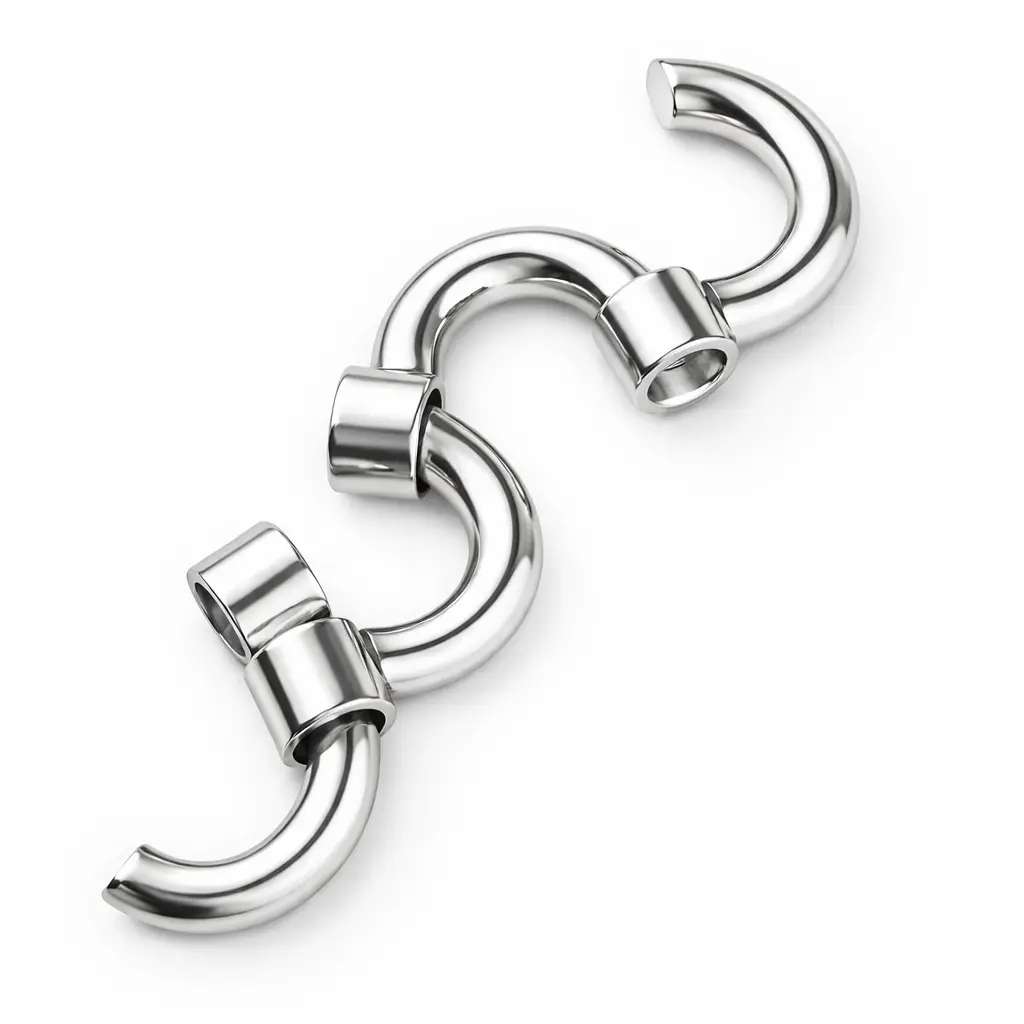
Cast Galaxy 4-Piece Silver — $14.88
3. Hanayama Cast Vortex — the comparison reference. Roughly 90 g, distinctly heavier than the Cast Hook for its size, plating a pale gold rather than nickel. The Vortex adds a spinning ring, which gives you motion feedback the Cast Hook doesn’t — a faint buzz when you’re on the right track, a hard stop when you’re not. The brand that taught the category what “solve feel” means; Tea Sip cast puzzles sit in the same lineage at a lower entry price.
4. Revomaze — the upper ceiling. Closer to 200 g, brass or stainless depending on the run, machined to tolerances you can hear. No audible click — Revomaze is silent until it isn’t — and the surface is so finely finished the puzzle feels almost oily. The premium is for material and tolerance, not difficulty per se. If you’ve read a Reddit thread on r/mechanicalpuzzles, this is the name you’ll see cited as the upper tier at $80 to $200 and up. Our broader survey of 47 metal brain teasers across 4 families puts the Revomaze tier in context against the mid-range competition.
5. Metal Earth 3D assembly model — the build, not the solve. A laser-cut steel sheet arrives flat in an envelope; you pop the parts with tweezers and clip them together. Steel is thin, around 0.2 mm, so the edges are genuinely sharp until you file them. Weight per piece is negligible but accumulates — a finished cathedral model is heavier in the hand than the Cast Hook and noticeably colder, because steel holds temperature longer than zinc. You don’t “solve” it. You build it. The reward is a display object, not a click.
6. TecHing V4 engine — the mechanical model kit. 300+ parts in stainless steel and brass, roughly eight hours over a weekend. The pleasure is the moving mechanism at the end — pistons travel, the crankshaft turns, valves open and close. The brass develops a patina in days, the steel in weeks. Internal springs carry a faintly oily manufacturing residue worth wiping down before display. This is the pick for someone who already has a shelf of Cast Hooks and wants to graduate from a five-minute desk fidget to a Sunday project.
7. Wire disentanglement — the warm-up. Plated steel or brass, 3 mm thick, two interlocked shapes. The lightest category by a wide margin — 30 to 60 g — and the coldest, because wire has almost no thermal mass. Clicks are gone; the only feedback is resistance. This is where I send people who ask for a “beginner” metal puzzle and who I suspect will get frustrated by a Cast Hook on day one.
8. A kinetic metal desk toy — the permanent fidget. Stainless or aluminum, 150 to 400 g, silent or near-silent, running at room temperature once it’s been on the desk for an hour. You don’t solve it. You watch it. This is the category that overlaps with the fidget label more than any other, and the reason it’s last on the list is that it’s the one category where the puzzle-as-object really does dominate the puzzle-as-challenge. The Cast Hook, in contrast, anchors the think-and-solve end of that same spectrum.
The Cast Hook is the buy — the puzzle that anchors every comparison above. If you’re going to start somewhere, start with the Cast Hook metal brain teaser and you’ll know what every other pick on this list is being measured against.
Which Metal Puzzle to Buy: Matched to Three Real Reader Archetypes
A 12-piece Ancient Metals-style set runs roughly $25–$30, while a single Hanayama Cast Vortex lists at $14.99 and a TecHing 4-cylinder engine kit contains 300+ pieces at the upper end of the price band — so the per-puzzle cost drops sharply for cast disentanglements and rises steeply for mechanical model kits. That price spread tells you which shelf each buyer should walk toward. Three readers walk into this market over and over: the gift buyer with no time to waste, the hobbyist who has already finished their first Hanayama, and the desk worker who wants something that occupies the hand without demanding the brain. Each one gets a different category, and a different object.
Archetype 1 — “I am buying for my dad who has everything.”
This is the most common request I get from friends. The dad has a Leatherman, a good pen, a watch he actually chose himself, and a stack of books on the nightstand he will not finish. The mistake everyone makes is buying the biggest, shiniest thing they can find — usually a 3D metal model kit with 500+ pieces and no solving path. The dad will not build it. It will sit in the box until the box goes to Goodwill.
The right call is a mid-tier Hanayama Cast — the Vortex or Loop at $14.99, or a harder step up like the Keyhole or Radix. The solve takes 30 to 90 minutes on a first attempt, which gives the dad a reason to sit down with it on a Sunday afternoon, and it weighs 130 to 170 g, which means it lives on the desk after the solve. The packaging is small enough to wrap, the price is low enough to pair with a coffee table book, and the object is heavy enough in the hand to feel like a real challenge gift rather than a stocking stuffer. If the dad is mechanically inclined — owned model trains as a kid, still watches the engineering channel — step up to a TecHing engine kit instead. The 300+ piece inline-4 sits at the upper price tier, but the build takes three to five evenings and the finished model ends up on a bookshelf under a picture light. For a deeper dive on this archetype, our guide on metal puzzle gift sets for dad walks through the long-tail of what actually worked and what didn’t.
Archetype 2 — “I already own Hanayama, what is next.”
This reader has solved the Cast series through the Level 4 and 5 models and wants the next rung without paying the full Revomaze price. Revomaze sits at the top of the cast-puzzle market, with prices from $80 to over $200 and mechanisms that draw comparisons to “high-end watch movements” on r/mechanicalpuzzles. That is where serious collectors land. The intermediate step is lateral: move through the rest of the Hanayama catalog — the brand publishes 50+ Cast models, and the harder ones (News, Enigma, O’Gear) routinely take experienced solvers several hours. The other lateral move is into a different mechanism entirely — a 3D assembly puzzle with 150 to 300 pieces, which swaps disentanglement logic for spatial reasoning and rewards a different kind of patience. If the new puzzle feels fundamentally different in the hand, you have moved into new territory. The same move across physics mind puzzles (cast burrs, interlocking wire assemblies) keeps the brain training but shifts the geometry.
Archetype 3 — “I need something for my desk.”
This is the reader who does not want a challenge. They want a presence — something that moves when the hand strays toward it during a long meeting, something that clicks or spins or shifts weight without announcing itself. The right category is a kinetic desk object: a metal puzzle that does not need to be solved, only watched. The Metal Orbit Ring is built for this — two interlocked rings, one inside the other, with a satisfying weight shift when you tip it from your palm onto the desk.
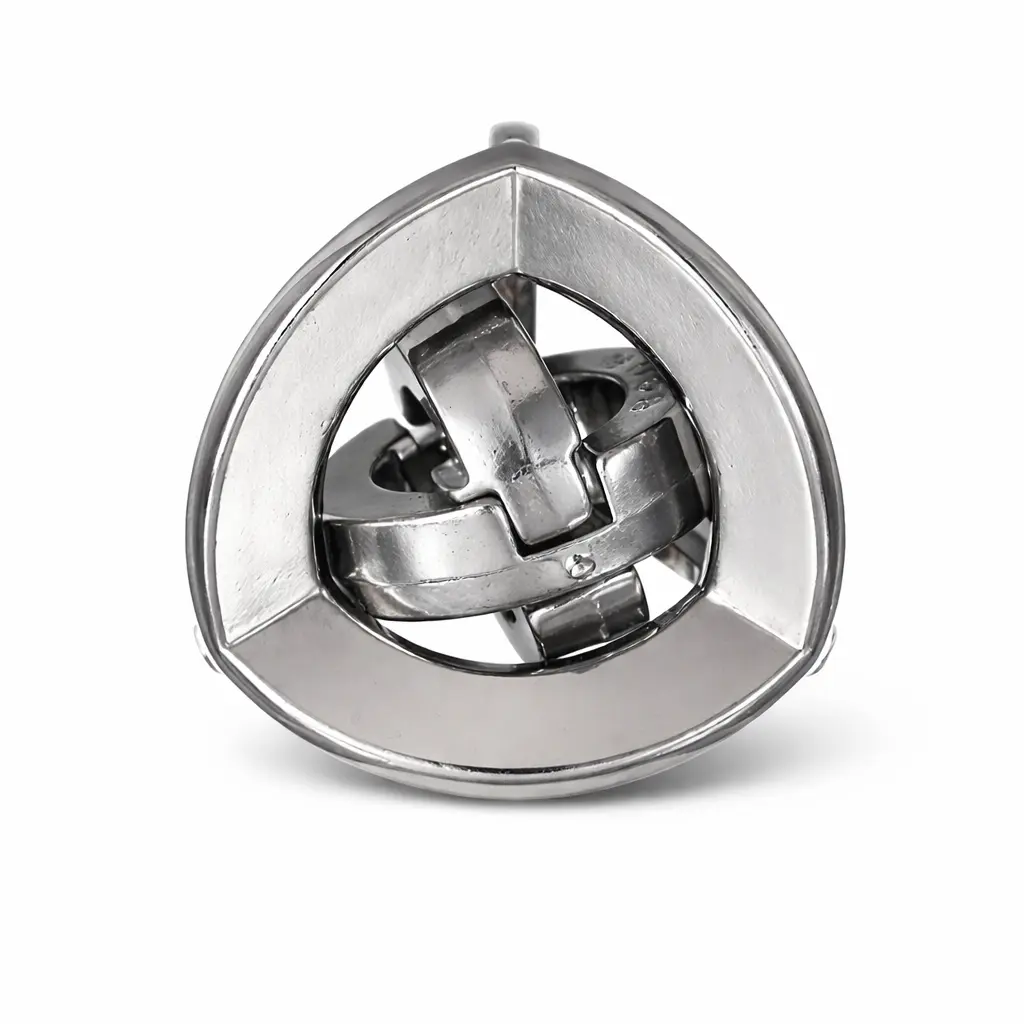
At roughly 180 g and 60 mm across, the Orbit Ring sits where a coffee cup would sit and does not intrude. The mechanism runs silent, the plating wears into a soft patina after three to four months of desk life, and the solve — because there is technically a solve, a single two-step separation — is something most people find in under 15 minutes and then keep the object anyway. A wire disentanglement works here too, for the reader who wants a 30-to-60-second reset between tasks rather than a permanent object. The pair together — a kinetic piece plus a wire puzzle — covers most desk-hour needs without crowding the surface. For readers whose work day calls for a quieter hand occupation, our roundup of silent desk fidget options for focus at work covers seven silent picks — puzzles included — that occupy the hand without pulling focus from the room.
The Cast Hook metal brain teaser remains the reference point for everything on this list. Every recommendation above is being measured against the way it feels, weighs, and solves. Start there, then branch by use case.
Best Metal Puzzles for Adults: Curated Picks Across All Six Categories
The six categories below collectively span roughly $14 to $200+, with the median gift-friendly pick landing between $15 and $30 — and the Cast Hook metal brain teaser sitting at the center of that range as the reference point everything else is measured against.
Cast disentanglement. The Cast Hook is the pick. It runs in the $15 zone, weighs around 110 g of cast zinc alloy, and takes most first-time solvers between 30 and 90 minutes. Hanayama’s Cast Loop and Cast Vortex are the dominant brand references in the same category — lighter, faster solves in the 5-to-20-minute range, and worth knowing for a second purchase once the solve feel is familiar. But the first cast metal brain teaser in a hand should be the Cast Hook.
3D assembly. Metal Earth and Mostarle make laser-cut steel sheet kits that fold into displayable models. The appeal is half build, half object — a 150-piece ship runs an evening, a 3,000-piece fantasy dragon runs months. These are the correct recommendation for a builder who has outgrown Lego and wants something that lives on a shelf afterward. Not a fidget, not a desk toy — a project, and one of the more collectible 3D metal puzzles on the market.
Mechanical/interlocking. A brass burr is the entry: six or twelve identical pieces, one geometric fit, hours of quiet exploration. The TecHing inline four-cylinder engine sits at the other end of this shelf — 300-plus pieces of mechanically accurate, moving miniature hardware for the reader who actually wants to feel how a piston fires. Both belong in the same category because the satisfaction is structural, not narrative, and both reward slow hands. If you want a single deep-dive that surveys the full category, our 47 metal brain teasers across 4 families puts the brass burrs, TecHing kits, and their peers in a single comparative frame.
Wire jigsaw. Laser-cut steel sheets ship flat, bend along pre-scored tabs, and click into three-dimensional objects. A typical 80-to-120-piece kit runs $20-$40 and occupies a weekend. The category overlaps with 3D assembly on paper; in practice, the pieces are thicker, more sculptural, and meant to sit on a desk as kinetic wire sculpture once finished.
Kinetic sculptural. Perpetual calendars, desk spinners, and slow-rotation steel pieces solve nothing — they are the fidget category, the one a reader who wants screen-free focus on their workspace will actually reach for. A well-made example weighs 150-200 g, turns silently, and asks nothing of the user. The Orbit Ring belongs here as much as anywhere on this list.
Puzzle rings. Cast metal puzzle rings, usually brass or stainless steel, that dismantle into five to eight interlocking bands and reassemble around a finger. Infinity Metals and Puzzle Ring Shop are the standard references. These are the most gift-appropriate pick on the entire list because they are wearable, they fit a standard ring box, and the solve — once learned — takes under a minute. The 4-band version sits at the budget end of this category and is the safest stocking-stuffer among all six types.
The Cast Hook is the anchor for the whole taxonomy. Every pick above is being compared back to its weight, its click, and the way the zinc alloy warms in the palm. Start there, then branch by category once the solve feel is familiar.
Frequently Asked Questions About Metal Puzzles for Adults
The eight questions below account for the majority of adult metal-puzzle search traffic — from “what did I just see on someone’s desk” to “what do I buy my dad who already owns three Hanayamas.” Each answer carries a data point, time estimate, or named product. The colleague who once asked “is that a propeller?” during a video call asked roughly half of them. Where broader context helps, the fidget toy article is a useful entry point for understanding the wider category overlap.
What’s the difference between a metal brain teaser and a 3D metal puzzle model?
A metal brain teaser is something you solve — a cast disentanglement like the Cast Hook or a Hanayama Cast, arriving assembled and requiring you to take it apart, then re-assemble. A 3D metal puzzle model is something you build — laser-cut steel sheets from Metal Earth or Mostarle that start flat and become a 3D object, usually for display. First lives in your pocket. Second lives on a shelf.
Are Hanayama puzzles worth the price, or just branding?
The $14.99 price point buys consistent tolerances, a sealed solution envelope, and zinc alloy that does not develop plating wear after six months of pocket carry. Cheaper Amazon cast puzzles often share the same Chinese manufacturing but skip the QA pass — the result is a move that catches mid-rotation. The brand premium is real, just thin.
Which metal puzzle is good for a total beginner?
The Cast Hook. Two release moves, 30–90 minute first-solve range, 110 g in the palm, and a mechanism that re-sets cleanly when you walk away. Anything harder on day one teaches frustration, not patience. Wire disentanglements work as a warmer, but the Cast Hook is the more representative adult pick.
Do metal puzzles work as a fidget tool for focus?
Cast metal works as a screen-free desk ritual — something to pick up, turn over, and set back down between tasks. The Cast Hook at 110 g sits well in one hand, turns silently, and offers tactile weight without a pen’s click. Useful for the 30-second gap between spreadsheet and email. A cast ring or wire puzzle works the same way for readers who want something smaller in the hand.
What is a disentanglement puzzle, and how is it different from a Rubik’s cube?
A Rubik’s cube is a rotation puzzle — pieces move freely but never leave the assembly. A disentanglement puzzle requires separating two interlocked metal pieces along a specific path, then reversing it. No algorithms, no speed-solving community. Just spatial reasoning, trial, and the click when a move finally seats. The Cast Hook is the textbook example of the format.
How long does a first solve typically take?
The Cast Hook averages 30–90 minutes for a first-timer. Wire-and-string disentanglements solve in 5–20 minutes. A TecHing V4 engine model runs 8–15 hours across a long weekend. The Fantasy Dragon-class 3D kits at 1,500+ steel pieces span 30+ hours