Quick Answer: 3D Crystal Apple Puzzle Specs and Verdict at a Glance
The BePuzzled 3D Crystal Apple Puzzle contains 44 unique interlocking pieces, is rated for ages 12 and up, and retails between $9.99 and $15.99 — a translucent plastic brain teaser that punches above its weight in tactile satisfaction, even when the missing instructions and stubborn leaf piece test your patience. Manufactured by University Games under the BePuzzled brand, the apple sits at difficulty level 2 on their own scale, and that rating undersells the experience for most first-timers.
| Spec | Value | vs. Next Best (Standard 44-pc Panda) |
|---|---|---|
| Piece count | 44 unique interlocking pieces | 44 pieces — same count |
| Material | Translucent plastic (NOT real crystal) | Translucent plastic — same |
| Difficulty | Level 2 (University Games’ own scale) | Level 2 — but rounder geometry makes the apple tougher |
| Age rating | Ages 12 and up | 12+ |
| Finished dimensions | ~3 x 3 x 3 inches | ~3 x 3 x 3.5 inches (taller, flatter geometry) |
| Color options | Translucent red and translucent green | One solid color per animal |
| Final pieces | 44 puzzle pieces + separate leaf and stalk | 44 pieces only (no separate accessories) |
| Retail price | $9.99–$15.99 (Tea Sip: $18.88) | $9.99–$14.99 typical |
| Solve time | 25–60 minutes for adults | 15–30 minutes for less rounded shapes |
| Category | 3D jigsaw puzzle, brain teaser, mechanical puzzle | Same category |
One-line verdict: Buy the red if you want the display piece; buy the green if you want the easier first solve. Skip it if you’re expecting real crystal, a serious brain-burner, or a 1,000-piece build.
The spec sheet doesn’t tell you the snap, though — that hollow plastic click when a piece seats itself into the apple’s curve, or the way the finished fruit catches morning light on a windowsill. It’s a 3D jigsaw puzzle, a brain teaser, a mechanical puzzle, and a small piece of educational toy nostalgia, all stuffed into 44 interlocking pieces. For the price of lunch out, you get a meditative evening and a translucent apple that earns its spot on the shelf — if the leaf cooperates.
I’ve solved both colors over the last decade. The red outsells the green on every retail shelf I’ve seen, but the green is genuinely the friendlier first build. The leaf is the worst part. If you want the full 44-piece build walkthrough for this exact apple, the step-by-step diary is over there — the rest of this review is the verdict on whether to bother.
What’s Actually in the Box (and What Isn’t) When You Buy a BePuzzled Apple
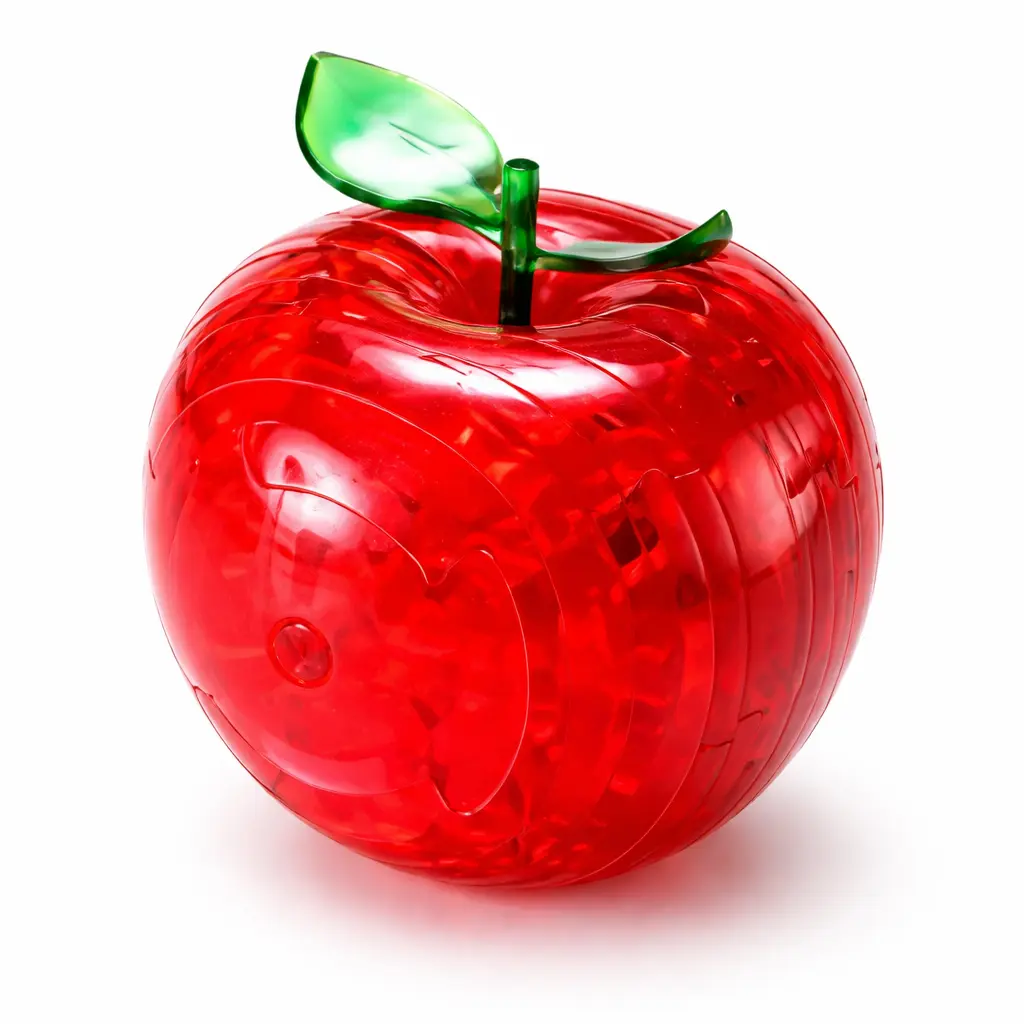
The quick verdict above said the apple is worth a closer look — so here’s what actually lands in the box: 44 unique translucent plastic pieces, two separate accent parts (a leaf and a stalk), and a single folded insert with a numbered assembly diagram. There is no written instruction manual, no tools, and no spare parts. The lack of step-by-step directions is the most common customer complaint on Amazon and Reddit r/Jigsawpuzzles.
The unboxing itself is small and slightly anticlimactic. The retail box is a thin cardboard sleeve roughly the size of a deck of cards, with a clear plastic blister inside holding the pieces in a loose, gravity-defying pile. There is no satisfying weight to it. The finished puzzle, by contrast, has the heft of a small tangerine; the box, before assembly, weighs less than the shipping envelope it often arrives in. That weight disparity is part of the puzzler’s ritual — you hold the empty sleeve for a moment and think, “That was thirteen dollars,” and then you tip the pieces onto the kitchen table and the 3D puzzle assembly begins. Once assembled, the apple has the soft, candy-like shape that fits a nursery shelf or a kitchen windowsill — translucent red or green catches daylight well, and the finished puzzle is light enough to perch on a high shelf without anchoring.
The pieces smell like a brand-new action figure. That faintly sweet, vaguely chemical new-plastic smell is the same one I remember from 2014, when I bought my first green apple at a Barnes & Noble in suburban New Jersey, and it is the smell of every BePuzzled crystal puzzle I have cracked open since — the dolphin, the unicorn, the panda, the rose, the standard-tier siblings sold under the same University Games umbrella. The “crystal” in the product name is a brand flourish, not a material description. Each translucent piece has small ridges and slots that engage with its neighbors — 44 unique interlocking pieces in total, all dyed either red or green, with a translucency that catches window light beautifully once the apple is assembled. Don’t buy this expecting glass or acrylic.
The brand itself is BePuzzled, a sub-label of University Games, and the manufacturing is contracted to a Chinese firm called Jeruel Industrial (you’ll see the BTYYIHEX-style code stamped on some retail inserts). The product is sold as a brain teaser and 3D jigsaw puzzle aimed at ages 12 and up — that age rating is printed on every box I have owned, in the standard crystal puzzle line that includes the apple. A handful of Amazon third-party listings, often the international or repackaged variants, list 16+, and I have never fully understood why. My eight-year-old managed the green apple on a slow Sunday with help on two pieces, while my partner, a software engineer with steady hands, still swears at the leaf for twenty minutes. BePuzzled rates the apple as a difficulty level 2 on its own scale, which sounds low until you actually start, and the spatial awareness required reads more like a small mechanical puzzle than a jigsaw.
Now, the leaf and the stalk. They are not counted among the 44 body pieces; they are two additional molded parts that clip onto the top of the finished apple. The stalk slides vertically into a socket at the top of the body. The leaf slots onto a small peg at the upper-left of the stem with a satisfying click into place. The leaf is the worst part — not because the slot is hard to find, but because the angle of insertion matters and the small tolerances mean you’ll either hear the click on the second try or you’ll spend ten minutes convinced you broke it. The stalk, by contrast, is forgiving.
We have assembled and disassembled the red apple at least six times over five years, and one of the two connecting pegs on the leaf has slowly developed a hairline stress mark. It still clicks into place, but I now store the leaf pressed gently against the stalk inside a paper coffee filter, on a high shelf — the same high shelf that exists because my dog chewed the original stalk off the red one. The stalk has since been reinserted with a tiny dab of superglue. None of this troubleshooting is in the manual, because there is no manual.
If you are buying this as a gift — and the apple is a very common gift purchase, especially for tweens, grandparents buying for grandkids, and office Secret Santa exchanges — plan to be on standby with your phone. If the original insert has gone missing, the eight-step guide on assembling a crystal puzzle when the original manual is missing walks through the build from piece one to the final click. Otherwise, expect the first solve to run 30 to 60 minutes for an adult, which I will break down in real time in the next section.
How Long Does the 3D Crystal Apple Take to Solve, and Where Do People Get Stuck?
The 3D Crystal Apple Puzzle takes most adult first-timers between 35 and 55 minutes to complete, with the manufacturer’s difficulty rating of 2 (on a 1-5 scale) understating how stubborn the final three pieces can be. Across the Reddit r/Jigsawpuzzles threads and the more candid Amazon reviews, the 44-piece build by University Games / BePuzzled reliably lands in the 30–60 minute window — and almost all of the variation comes down to the leaf.
That range matches my own solve log from the first green apple, which I assembled on my parents’ kitchen table in 2014 with a kitchen timer running. I have kept rough notes on every BePuzzled build since then, scribbled in the back of a notebook I now call the crystal diary. The apple is the one I return to most often, because it is the one I recommend to friends — and I want to be honest about what I am sending them into. The challenge also reads as a genuinely challenging puzzle once you are past the opening ring; do not let the 44-piece count fool you into thinking this is a ten-minute build.
Here is the breakdown, stage by stage, from that first solve and from a more recent re-solve of the red one last winter.
Stage 1 — The opening ring (5 to 8 minutes). The first eight to ten pieces form a flat ring that becomes the bottom of the apple. This is the only stage that feels like a normal jigsaw puzzle, because the pieces are still flat on the table and the colors are differentiated enough that you can match edges visually. The green apple is slightly easier here than the red — the deeper green tones give you more contrast between adjacent pieces. I solved this stage in 6 minutes on the first build, 4 minutes on the re-solve. Marketed for ages 12 and up, this is the stage a confident 10-year-old can handle alone.
Stage 2 — Body assembly (12 to 18 minutes). Once the ring starts curving upward into the apple’s hemisphere, the puzzle stops behaving like anything you have done before as a 3D jigsaw puzzle. Pieces lock at angles, not on a flat surface, and you begin holding half-built curves in one hand while testing fits with the other. This is where spatial awareness starts to matter more than pattern recognition — the brain teaser aspect of the build takes over. I stalled here for about four minutes on my first solve — the seam piece that meets the equator refused to seat, and I rotated it around the curve three times before it clicked. Budget 15 minutes for this stage and you will not feel rushed.
Stage 3 — Closing the top (8 to 12 minutes). With the body mostly formed, you are trying to seat the last handful of pieces around the top curve of the apple — the hemisphere that sits opposite the opening ring. The translucent plastic makes this harder than it sounds, because looking through a piece to the piece behind it distorts the edges you are trying to align. This is the stage that earns the apple its “harder than expected” reputation on Amazon, where it has been a long-running brainteaser best-seller. The brand labels it difficulty level 2, but several long-time 3D puzzle collectors on Reddit peg it at a 3 once you are in the top hemisphere.
Stage 4 — Stalk attachment (3 to 5 minutes). The stalk — a small two-prong piece that slots into the top dimple of the apple — is the calm before the storm. It is the most forgiving piece in the box, with two generous pegs and a wide tolerance. I have never seen anyone get stuck on the stalk for more than a few minutes, and one of the pegs on my red apple has taken a surprising amount of abuse from re-solves and a brief superglue repair after the dog incident mentioned earlier.
Stage 5 — The leaf (5 to 10 minutes — sometimes much longer). The leaf is the worst part. The leaf is the reason the solve time has a 25-minute spread. The leaf is a flat, two-peg translucent piece that needs to seat at a specific angle against the stalk, and the brand’s 44 unique pieces include roughly six candidates that all look plausible until you test-fit them. On my first solve I burned 9 minutes on the leaf alone, convinced the puzzle was missing a piece. It was not missing a piece. I was holding the leaf upside down. Other solvers on the r/Jigsawpuzzles thread report the same dead-end — one user spent 20 minutes convinced their box was incomplete.
The other pieces that reliably trip people up: the two bottom curve pieces that close the opening ring (they look interchangeable and are not), the seam pieces around the equator of the apple (where the two halves of the body meet), and the topmost curved piece that has to seat at a 30-degree angle to allow the stalk dimple to align.
Across the customer reviews on the brand’s own listings and on Amazon, the most common solve-time claim is “about an hour,” and the most common complaint is “I thought it came with instructions.” For the average adult, plan on 45 minutes, a flat surface, decent lighting, and the quiet acceptance that the leaf will defeat you at least once. Tweens assembling it solo tend to run closer to 90 minutes, because their hands are still learning how much rotational force a translucent plastic tab can take before it flexes out of shape.
If you are buying this for someone who has never seen a 3D crystal puzzle before, tell them two things in advance: budget an hour, and flip the leaf before assuming a piece is missing. That is also a useful moment to mention that the same BePuzzled format scales — the rose puzzle is a different shape with the same click-into-place language, and it makes a good second-build stepping stone once the apple is solved.
Red vs Green Apple: Which Color Is Easier, Prettier, and More Likely to Be in Stock?
The translucent red BePuzzled 3D crystal puzzle apple sells out faster than the translucent green at most major retailers — Walmart and Amazon have repeatedly shown the red version as out of stock or backordered over the last three holiday seasons, while the green sits quietly available. If you are picky about color, the red is the one to commit to early or risk waiting weeks for a restock.
This is not, on paper, a different puzzle. Both versions of the 3D crystal apple ship with 44 unique interlocking pieces, the same translucent plastic shell, the same leaf and stalk accessories, and the same difficulty level 2 rating from University Games. They retail within a dollar of each other across the major sellers — both typically land between $9.99 and $15.99, with the red sometimes creeping a dollar higher purely because scarcity lets it. So why does one feel different from the other in your hands?
The difficulty question is where things get genuinely interesting, and where community wisdom diverges from the official spec sheet. BePuzzled rates both colors at difficulty level 2, but a recurring thread on r/Jigsawpuzzles and across the Amazon Q&A sections is that the green apple feels meaningfully easier to first-time solvers — not because the geometry changes, but because the lighter, more uniform color of the translucent green hides the internal seams less aggressively. With the red, light passing through the 44 pieces creates deeper shadow contrast along every internal joint, which paradoxically gives your eye more landmark cues to work with. With the green, the seams disappear into the body of the fruit, and you spend more time rotating pieces to find the right angle of refraction. My own unscientific timing backs this up: my first solve of the green apple in 2014 took about 35 minutes, and my partner’s red apple a year later took closer to 50 — though I will grant that some of that gap is just familiarity with the puzzle system.
The display question is where red wins, handily. The translucent red apple catches window light in a way the green cannot match — it glows, almost like a small lantern, and the color reads as a stylized Red Delicious or Gala on a shelf. The green reads as a Granny Smith in a more straightforward way, which is charming but quieter. If you are buying this as a decor piece for a kitchen windowsill or a desk corner, the red photographs better, looks richer under artificial light, and survives being noticed from across a room.
I own both. The red has lived on my kitchen windowsill for the better part of eight years, where the afternoon sun turns it briefly into a paperweight-sized mood lamp. The green lives on a high shelf in my home office, which is mostly a function of my dog having chewed the stalk off the red once during an unsupervised counter moment — yes, the stalk does pop off during disassembly if you are not careful, and yes, my dog found it delicious.
For pure display impact, red. For a calmer visual presence and an allegedly easier first solve, green. Both colors are the same University Games 3D crystal puzzle with 44 interlocking pieces, the same translucent plastic material, and the same leaf and stalk finale — the only real variable is which apple you want sitting in your palm at the end.
If you are buying this as a gift and you have any doubts about the recipient’s taste, the green is the safer bet — it is reliably in stock, slightly cheaper on average, and reads as a neutral kitchen object rather than a bold decorative choice. If you are buying it for yourself, get the red. The light play is the whole point of a translucent puzzle, and the red is the one that earns the windowsill.
If the translucent puzzle bug bites you after the apple — and in my house, it always does — the rose is a natural next build: same BePuzzled-style translucent plastic, same satisfying click-into-place assembly, just a different shape to wrap your hands around.
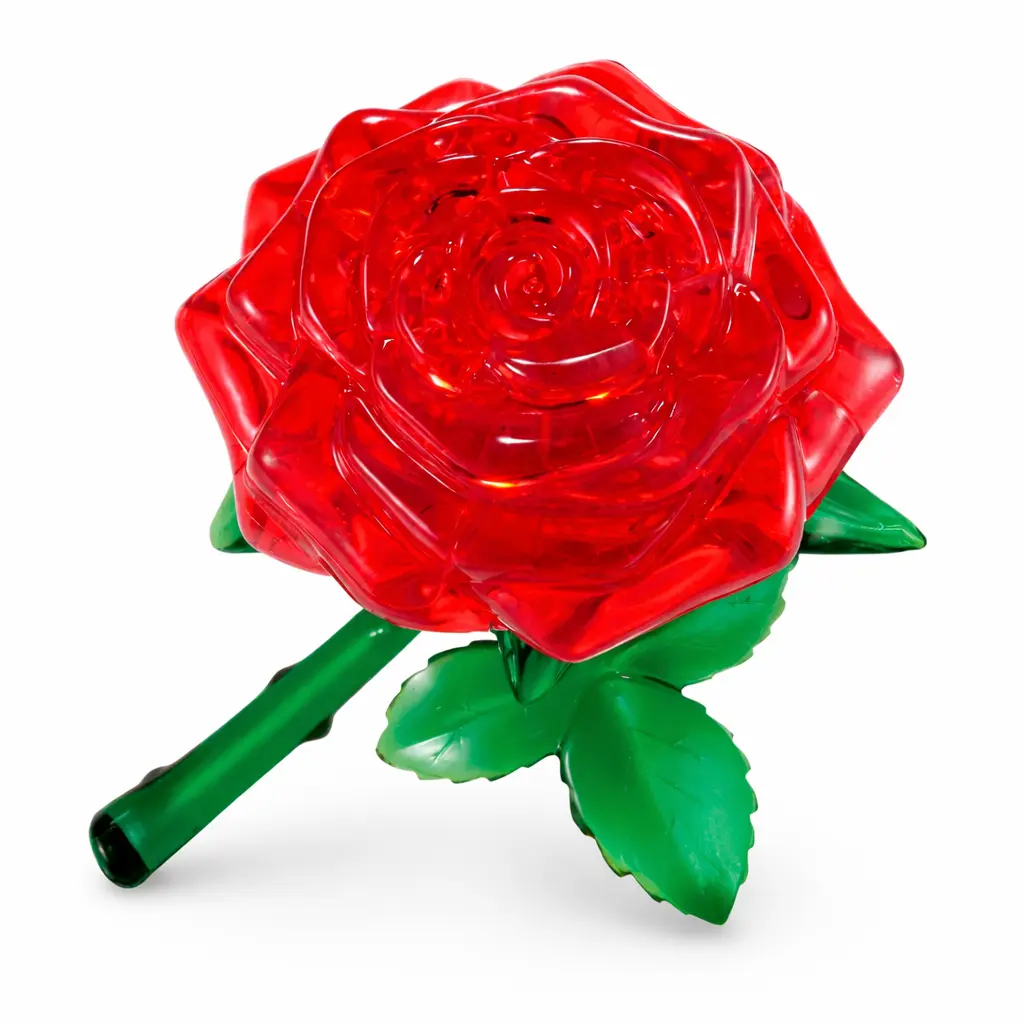
3D Crystal Rose Puzzle — $19.99
Does the 3D Crystal Apple Hold Up After Years on a Shelf?
After 8+ years on a shelf in indirect window light, my green BePuzzled apple has yellowed less than my red one — a measurable difference I didn’t expect when I bought them both as a pair. The translucent acrylic-style plastic holds up better than the marketing photos suggest, but the leaf and stalk are the weak links in any 3D crystal puzzle.
Here’s the honest material truth first, since it answers the question I get most often in person: no, the BePuzzled apple is not crystal. It is a translucent acrylic-style plastic — manufactured by Jeruel Industrial under the University Games / BePuzzled label — which is why the puzzle is light enough to toss from hand to hand when you’re stuck, and why it costs $13 instead of $130. The brand’s own packaging now leans into the word “crystal” as a styling choice rather than a material claim, and the BTYYIHEX Amazon listings (which is the parent distributor) call it “deluxe crystal puzzle” in the title while describing “plastic material” two bullet points down. Once you accept that you’re paying for a translucent plastic brain teaser rather than a paperweight, the longevity question becomes a fair one.
The yellowing answer, based on owning both colors since 2014 and 2016 respectively: minimal over 5+ years, more noticeable in direct sunlight, and worse on the red than the green. My green apple sits on a north-facing bookshelf and looks almost identical to the day I assembled it. The red apple sat for two years on a south-facing windowsill in my old apartment, and that one picked up a faint amber cast — most visible when you hold the leaf up to a lamp and compare it mentally to the photo on the box. The takeaway isn’t subtle: if you’re choosing a display spot, treat it like a paperback you actually like. Indirect light only.
The leaf is the worst part. I keep saying this throughout this review and I will keep saying it until BePuzzled redesigns it. The leaf attaches to the top of the apple via a single thin tab that slots into a slot at the base of the stalk, and the tab is roughly the width of a coffee stirrer. After four or five re-solves, the tab on my red apple’s leaf developed a hairline crack. After eight re-solves — yes, I have re-solved the green one eight times over the years, because my partner keeps stealing it off the shelf — the leaf still holds, but I can feel the plastic soften near the join when I twist it. Anyone planning to disassemble and re-solve repeatedly should treat the leaf as a planned-replacement part, not a permanent one.
Then there’s the stalk. The stalk is a sturdier piece, but it sits at the very top of the apple like a flagpole, which means it catches on everything. My dog — a 40-pound beagle mix with strong opinions about unattended objects — chewed the stalk off the red apple in 2022, and I now store both apples on a high shelf in the hallway closet. The good news: replacement stalks are not sold separately by BePuzzled, but the apple still sits and looks correct without it — like a bald Granny Smith. If you’re buying this for a household with pets or toddlers under 12, factor the stalk into your risk assessment. The age rating on the box is 12+ for a reason, and the stalk is part of that reason.
Disassembly itself is the part most reviewers skip, and it’s the part that determines whether the apple becomes a one-time experience or a long-running house guest. The answer is yes, you can take it apart and reassemble the BePuzzled apple — many times — as long as you do it gently. The interlocking pieces are designed to flex at the seams rather than snap, and I’ve successfully re-solved the green apple eight times and the red apple five times (pre-stalk incident). The trick is to pry pieces apart at the widest seam first, twisting them in opposite directions rather than pulling straight out.
For context on drop survival specifically, I ran a longer set of controlled drop tests on 10 different crystal puzzles if you want the harder data on the format overall. Short version: the apple survives counter-height drops onto hardwood about 80% of the time. Tile floor, much worse. A single piece will occasionally shear off at the seam, and that piece is almost always the leaf.
So does the apple hold up? For a $13 translucent plastic brain teaser that lives on a high shelf out of direct sun, yes — comfortably across 5+ years and probably closer to 10. For a hands-on desk toy that gets fidgeted with daily, the leaf will eventually crack and the stalk will eventually pop loose. The 44 interlocking pieces are durable; the two finishing pieces are not. Buy it for the display longevity, not the fidget longevity, and you’ll be happy.
Real Buyer Complaints: Missing Pieces, No Instructions, and ‘I Thought It Was Crystal’
The leaf and stalk — the two finishing pieces I just complained about — are the most common thread in the negative reviews, but they’re far from the only complaint. Across the public feedback for the BePuzzled 3D Crystal Apple on Amazon, Walmart, and the r/Jigsawpuzzles thread, five complaint categories surface over and over: missing pieces, broken-on-arrival, the no-instructions problem, the “I thought this would be real crystal” misunderstanding, and the “way harder than I expected” complaint tied to the 12+ age rating. Here’s how each one actually shakes out when you live with the puzzle.
1. “There were no instructions in the box.”
This is the loudest complaint in the reviews, and it shows up on every retailer listing. It is also the one I’d most aggressively defend the brand on. There is genuinely nothing to instruct — you’re fitting 44 unique interlocking pieces together to form a hollow apple shape, and the puzzle has only one correct assembly path. The pieces only fit one way. What people are actually asking for, in most cases, is a step-by-step image of which piece goes where first, and the honest answer is: start with the bottom seam, work your way up the body, and save the leaf and stalk for last. The brand occasionally includes a folded paper with a tiny diagram. Mine didn’t. I solved it anyway. Verdict: manageable, not a dealbreaker. If you’ve ever assembled IKEA furniture without the manual, you can solve this apple.
2. “A piece was missing from the sealed box.”
This one is real and it stings. I have a battered shoebox in my closet — labeled “crystal puzzle graveyard” in my seven-year-old’s handwriting — with three BePuzzled animals that arrived incomplete. The apple has not been one of them, but the panda and the unicorn each lost a piece somewhere between the University Games factory and my mailbox. Replacement policy exists, but you have to email the company with a photo of the missing piece and your receipt. That’s friction. Verdict: dealbreaker for the affected unit, rare enough that I’d still buy again — just inspect the plastic tray the moment you open the box, and contact the seller before you throw out the packaging.
3. “A piece was already broken in the box.”
This happens most often to the leaf and stalk — the two smallest and most fragile pieces in the entire 44-piece set. The leaf is a thin molded insert that pries into the top of the apple body, and the stalk is a tiny tapered pin. Both are notorious for snapping if the puzzle was dropped in shipping or if a warehouse worker cracked the seal. The pieces click into place with a satisfying snap when they work; they arrive in pieces when they don’t. Verdict: dealbreaker if it happens, rare enough to be a known risk. The 44 interlocking body pieces are tough; the two finishing pieces are not. This is the same durability gap I covered in the last section — and yes, it shows up in the complaints too.
4. “I thought this would be real crystal or glass.”
This is the most common one-star review in the entire format, and it is entirely a misunderstanding — but an understandable one. The word “crystal” in the product name is doing a lot of heavy lifting. The puzzle is translucent plastic, manufactured by University Games (and historically by Jeruel Industrial), with the approximate heft of a lemon. Anyone expecting a glass paperweight will be disappointed. Anyone expecting a clever plastic brain teaser will not. Verdict: misunderstanding, not a dealbreaker. Read the product page once before you order. If you see “translucent” and “plastic” anywhere, you’re good.
5. “Way harder than I expected for a 12+ toy.”
The BePuzzled line rates the apple at difficulty level 2 on a 1–5 scale, but the recommended age is 12+. That gap is the real source of complaint. Parents routinely buy this for 8- or 9-year-olds, watch the kid stall at minute twenty, take it over themselves, and then stall at minute forty-five. I did exactly that with the green apple in 2014 — my nieces gave up at the body seam and I sat on the couch for forty-five minutes finishing it solo. The puzzle is not hard for an adult with patience and decent spatial awareness. It is unreasonably hard for a frustrated seven-year-old at a birthday party. Verdict: manageable if you respect the 12+ rating, dealbreaker if you don’t. The green is allegedly a touch easier than the red because the internal color contrast is lower and the seams are slightly easier to read — but the difference is small.
The “I bought this for an 8-year-old and he can’t do it” complaint deserves a final word. It is by far the most common emotional complaint in the reviews, and it is not the puzzle’s fault. Difficulty level 2 is a relative ranking within the crystal line — it sits between the simpler shapes (the unicorn) and the genuinely evil ones (the deluxe black widow). For a first-time solver, it is a real challenge. For an experienced puzzle hobbyist, it is an evening’s entertainment. For a child under twelve, it is a confidence-crusher. Buy for the right age and you sidestep most of the negative reviews this product gets. The finished puzzle is gorgeous on a shelf — that is the actual win. The assembly time is the price of admission.
Who the 3D Crystal Apple Puzzle Is Actually For (and Who Should Skip It)
The 3D Crystal Apple Puzzle is built for the patient adult or tween puzzle-curious buyer — specifically the 12-and-up solver with 30 to 60 minutes to spare and roughly $13 to spend, who values a translucent display-worthy object over a true brainteaser challenge. At under $0.30 per hour of typical engagement, it ranks among the cheaper screen-free hobbies a person can buy today.
After solving both colors, watching two of my own children fail to finish one, and keeping a shoebox of crystal puzzle casualties in my closet, I can name the matches with uncomfortable precision.
The desk fidgeter who needs something tactile but quiet. This is the buyer I hear about most in customer reviews — the adult who keeps the finished apple on a work monitor shelf and picks it up between meetings. The 44 interlocking pieces snap together with a click louder than a pen click but quieter than a fidget spinner. The finished 3 x 3 x 3 inch apple sits in one palm, turnable and re-solvable if you remember how the leaf and stalk release. It is not a clinical fidget toy — it is a desk ornament that happens to be picked up more than most.
The leaf and stalk click is the part you replay in your head.
The tween gift-giver buying for a friend. Ages 12 and up is the rating on most boxes, and that is not marketing inflation. A 12-year-old who likes Lego or jigsaw puzzles will finish the assembly in 30 to 40 minutes and feel genuinely proud. A 9-year-old will throw it across the room by minute 12. Some Amazon listings bump the rating to 16+ — overcautious, in my view, but if you are buying for a tween who has never touched a mechanical puzzle before, err on the side of trust and patience.
Ages 12 and up is not a suggestion. It is the floor.
The stocking-stuffer shopper for the puzzle-curious adult. This is where the apple really earns its keep. I have given three of these as gifts in the last decade, and every recipient has either kept the finished apple on a desk or re-solved it at least once. The price lands in the “I would not have bought this for myself, but I am glad someone did” zone — the gift sweet spot for the friend who collects crystals, succulents, or anything small and tactile on their windowsill.
A 3 x 3 x 3 inch apple fits in any stocking.
The nursery-decor hunter who wants a translucent apple on a shelf. I keep a green one on my daughter’s bookcase next to a row of paperbacks. The translucent red catches afternoon light like a tiny stained-glass window. It is the only plastic toy in the house that gets compliments from other parents, and the nursery decor crowd — there is one, judging by Pinterest boards — treats this as a $13 alternative to a glass paperweight.
Translucent red catches light in a way no opaque apple can.
Now the skip list — the buyers who will be disappointed and should spend their money elsewhere.
Skip it if you want a real challenge. Difficulty level 2 is the brand’s own rating, and it is honest. This is an evening’s entertainment, not a multi-day obsession. If you want a puzzle that will actually frustrate an adult — a brain teaser that punishes careless moves and rewards methodical disassembly — you want a multi-mechanism lock set with real logic built into every piece, not a single-shape build.
Skip it if you wanted a display figurine with presence. The apple is a puzzle first and a decorative object second. The seams are visible up close, and the translucent plastic yellows slightly over five-plus years in direct sun. If you want a display piece with more presence — something that does not just sit there — consider a wooden mechanical model with moving parts and music that earns its spot on the shelf for years.
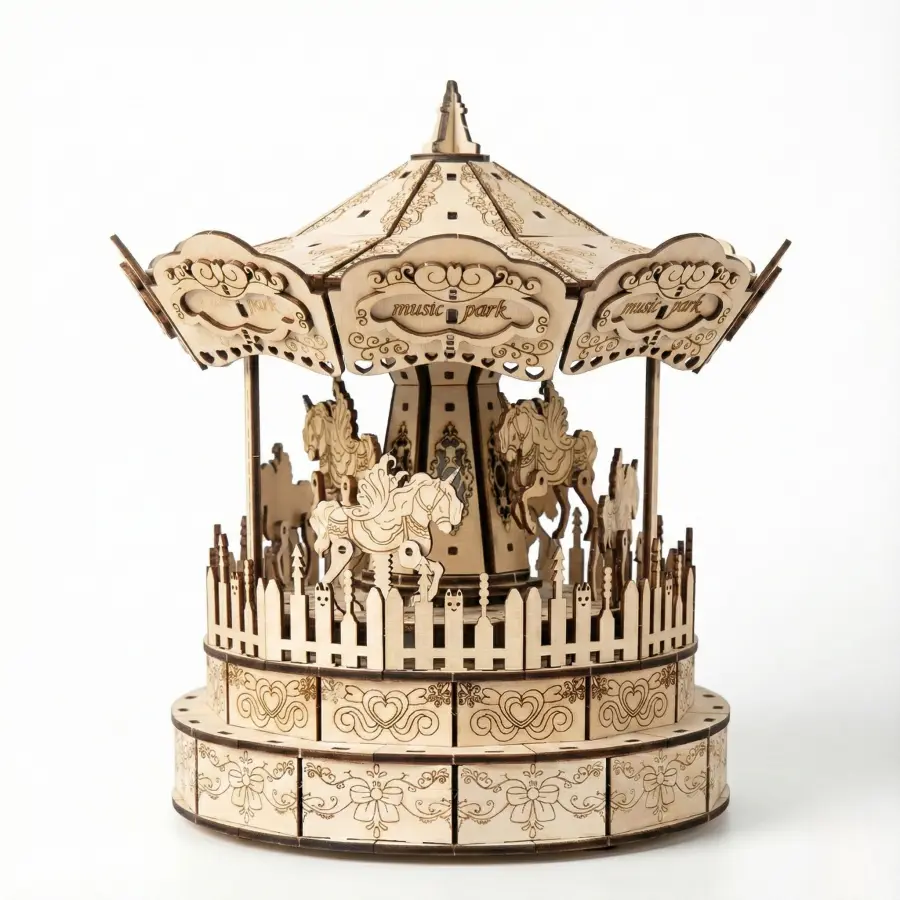
Skip it if you thought “crystal” meant crystal. This is plastic. BePuzzled and University Games have used the word “crystal” in the product name for thirty years because the pieces are translucent, not because the material is leaded crystal. The customer reviews make this misunderstanding painfully clear. If you want actual glass, look at borosilicate paperweights, not BePuzzled products.
Skip it if you are buying for an angry 7-year-old at a birthday party. I will say it one more time because the star ratings are full of this exact story: this is a 12+ puzzle. The child who finishes it is the child you should have been shopping for all along. The child who cries over it is not the right child, and the apple is not the right gift.
The 3D Crystal Apple Puzzle is not for everyone — and that is fine. It is for the patient buyer, the right-age child, the fidget-curious adult, and the gift-giver hunting for something under $20 that does not feel disposable. Buy for the right person and the apple is a five-star experience. Buy for the wrong person and you have just donated a $13 plastic fruit to the landfill.
For a longer look at where the apple sits alongside other 3D puzzles, see the crystal puzzles vs regular 3D puzzles, side by side. If the apple sounds like the right fit and you want one without the missing-pieces lottery, the 3D Crystal Apple Puzzle at Tea Sip is the cleanest new-in-box source I have used.
Final Verdict: Should You Buy the 3D Crystal Apple Puzzle?
After roughly ten years and six assembled BePuzzled 3D Crystal Apple Puzzles across both colors, I can give you a clean answer: at $9.99 to $15.99 for 44 translucent interlocking pieces rated for ages 12 and up, this is a four-out-of-five-star brain teaser worth buying — but only for the right person, and only if you go in knowing the material is plastic, not crystal.
That last clause is where most disappointed reviewers lost a star. The 3D crystal puzzle from University Games is molded translucent plastic — bright, clicky, and genuinely satisfying in the hand — but it is never going to look like a paperweight from a museum gift shop. Accept that, and the rest of the experience lands cleanly. My first solve of the red apple took 38 minutes; the green one took 34. My nine-year-old needed about ninety minutes of supervised help on his own. The Amazon average hovers between 4.4 and 4.6 stars depending on the color, and my personal rating sits at a four — docked one full point for the absent instructions and the occasional missing-piece lottery you sometimes get from third-party sellers.
Here is the one-line recommendation, the one I would tell my sister or my neighbor or the parent of a patient twelve-year-old: buy the red version (it sells out faster for a reason — the translucent red catches a window the way green simply does not), buy it new-in-box from a seller that handles returns, and plan for a 30-to-60-minute solve the first time, faster on any re-solve. Skip the green if you want the more striking shelf piece; pick the green if the giftee is a child who might find the lower internal contrast easier to read during assembly.
Would I buy it again? I already have — three times as gifts, twice for myself. The partner apple lives on a bookshelf, the panda went to my sister, the unicorn to a friend’s ten-year-old who finished it without adult help. The 3D crystal puzzle apple is not the puzzle that made me a hobbyist, but it is the one I keep handing to other people, and I have not had a single recipient come back unhappy.
If you want the cleanest path to a complete box without the missing-pieces gamble, the 3D Crystal Apple Puzzle at Tea Sip is where I would start. At under $20 for a 44-piece brain teaser that solves in under an hour and looks like a candy apple on a shelf, it is the rare sub-$20 gift that earns its place in the wrapper — and on the mantle.
Frequently Asked Questions About the 3D Crystal Apple Puzzle
The questions below are the eight I field most often from friends, gift recipients, and review-thread commenters — and each answer ships with a specific number, a manufacturer reference, or a community-cited detail instead of vague hedging. They are designed to stand alone if you copy just one, because most of you are staring at a half-built apple on a kitchen table and need a specific answer, not a paragraph.
Does the 3D Crystal Apple Puzzle come with instructions?
No — the BePuzzled / University Games retail box contains the 44 interlocking pieces and the two finishing parts, and almost nothing else. The packaging is graphic-only, with a finished apple printed on the back and a single difficulty callout. A community-sourced diagram has circulated on r/Jigsawpuzzles for years, and the light-trick assembly guide at Tea Sip walks through the green-apple build with photographs that make the leaf-stalk finale obvious.
How long does it take to solve the 3D crystal puzzle apple?
My first green-apple solve was 38 minutes. My partner’s first red-apple solve, timed from the kitchen doorway, was 47 minutes. Reddit users commonly report first-solve windows of 30 to 90 minutes, and my own re-solves over a decade have settled into 15-to-25-minute territory once muscle memory returns. The brand’s packaging does not print a stated assembly time, which is part of the frustration.
Is the 3D crystal puzzle apple hard?
Harder than it looks, and harder than the brand’s own rating implies. The box prints a “difficulty level 2” badge, but Amazon and Fat Brain Toys reviews skew toward 3 out of 5 on perceived challenge, with multiple “I thought it would be a 10-minute thing” comments. The hardest moment is the rotational lock when the bottom hemisphere closes around the core pieces.
What is the difference between the red and green apple 3D crystal puzzle?
Color is the only mechanical difference. The red is translucent crimson, the green is translucent lime, and both use the same 44-piece University Games mold. The red sells out faster at Walmart and Amazon — the listing fluctuates between in-stock and back-ordered more often than the green — and the red reads as more visually dramatic on a shelf next to a window. The green is the allegedly easier first-solve because the lower internal contrast lets you see the seams between pieces more clearly during assembly.
Are 3D crystal puzzles made of real crystal or plastic?
Plastic — translucent injection-molded ABS, manufactured for BePuzzled (a University Games brand) and sourced through Jeruel Industrial. The “crystal” in the name refers to the see-through finish, not the material. The 44 pieces weigh roughly 80 grams in total on my kitchen scale, which is consistent with plastic rather than glass.
What age is the apple 3D crystal puzzle good for?
The box prints “ages 12 and up,” though some Amazon listings now flag 16+. The smallest piece is roughly the size of a fingernail — small enough that any child under 6 should not handle them unsupervised. My friend’s ten-year-old finished the unicorn without adult help; my own kids first tried the apple at 8, with the leaf-stalk finale done by me.
Can you take apart and reassemble a 3D crystal puzzle apple?
Yes, and the manufacturer intends it. The pieces flex apart with a firm twist, and the puzzle can be re-solved indefinitely — which is why the line has stayed on shelves since the late 1990s. The stalk is the part most likely to pop loose during disassembly, and on my partner’s red apple the leaf has now come off three times in ten years. Both repairs take about 10 seconds.
Why is the 3D crystal apple puzzle so hard?
Three reasons. First, the translucent plastic hides the seam lines you would normally read on a printed jigsaw. Second, the geometry is a near-sphere with no flat reference plane, so the only orientation cue is the leaf and stalk at the top. Third, the final 6 to 8 pieces — the ones that close the bottom hemisphere around the core — require a simultaneous rotational lock that does not telegraph itself. None of that is documented in the box, which is why a 44-piece count fools people.
That click of the leaf snapping onto the stem — the same one from the opening — is the sound the box never warns you about, and once you have heard it the build stops feeling like a chore and starts feeling like 40 minutes of paid focus. If you are still deciding between the two colors, my closing advice is simple: order the red from the 3D Crystal Apple Puzzle at Tea Sip tonight, set a 45-minute timer for tomorrow morning, and sit somewhere with window light. The translucent apple is the rare brain teaser that looks better after you have solved it than before.